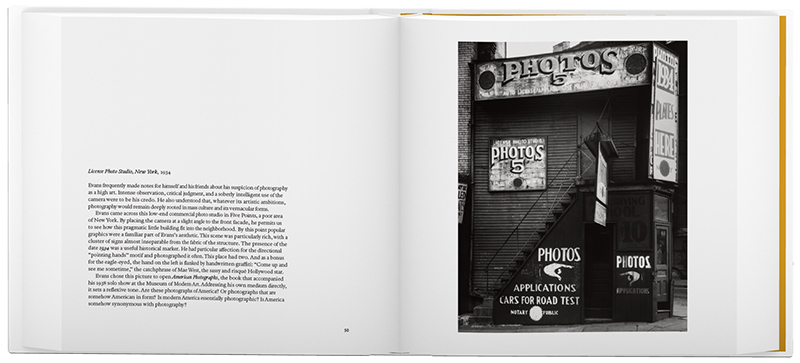
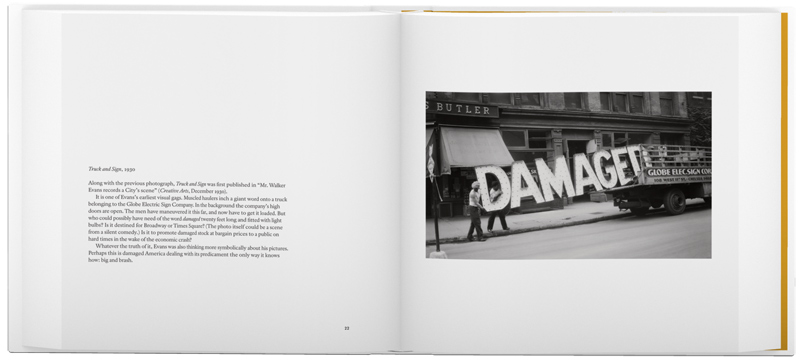
On Photographs

Posted on by David Campany

Thames & Hudson (UK), MIT Press (USA), Guilio Einaudi Editore (Italy), Eyrolles (France), Huazhong University of Science and Technology Press (China)

Publisher’s Summary:

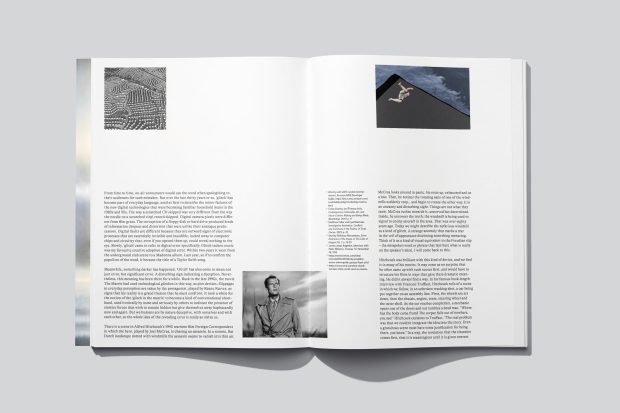
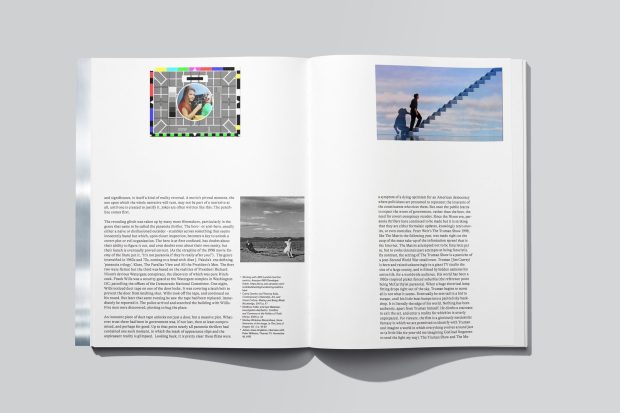
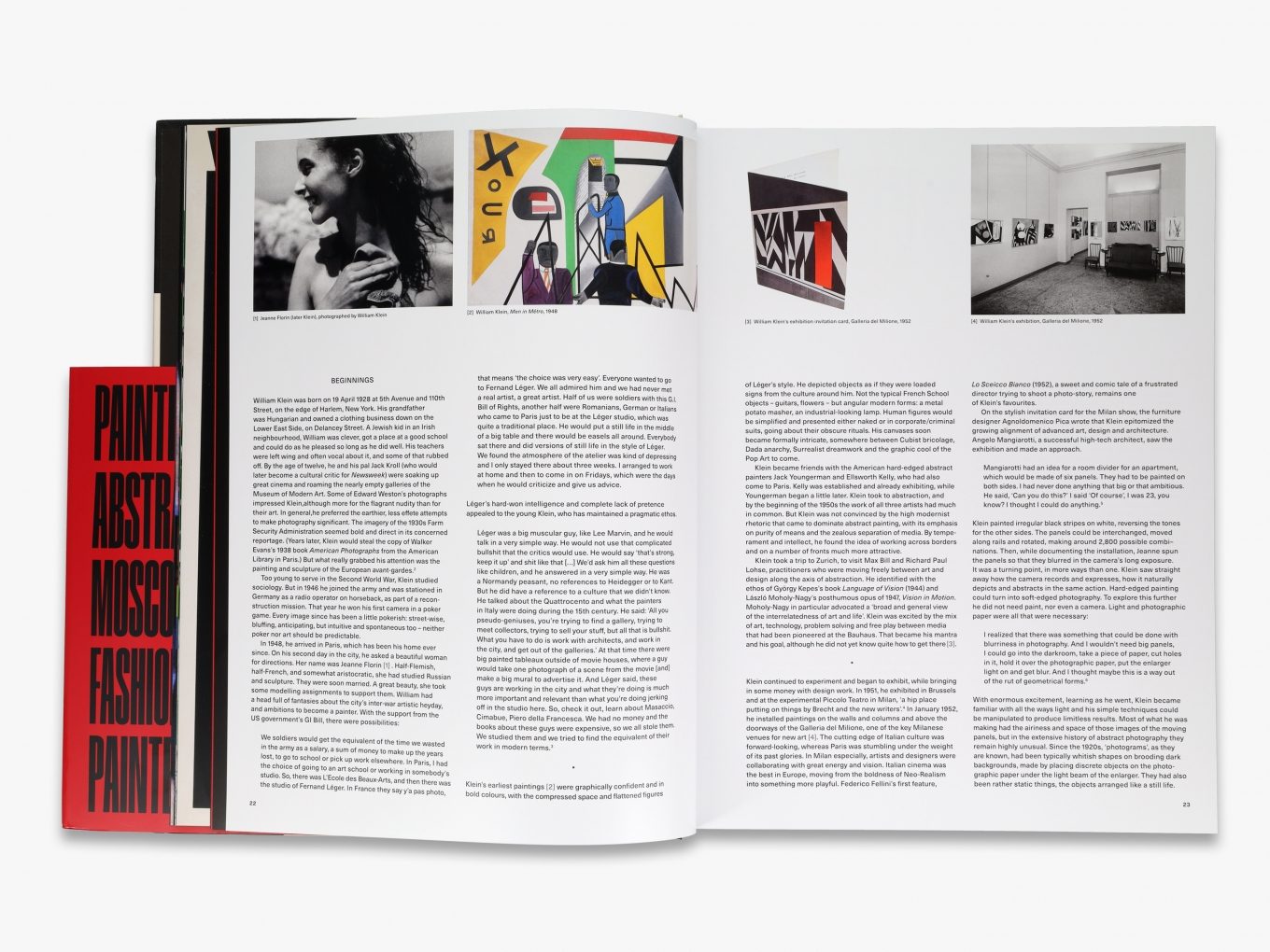
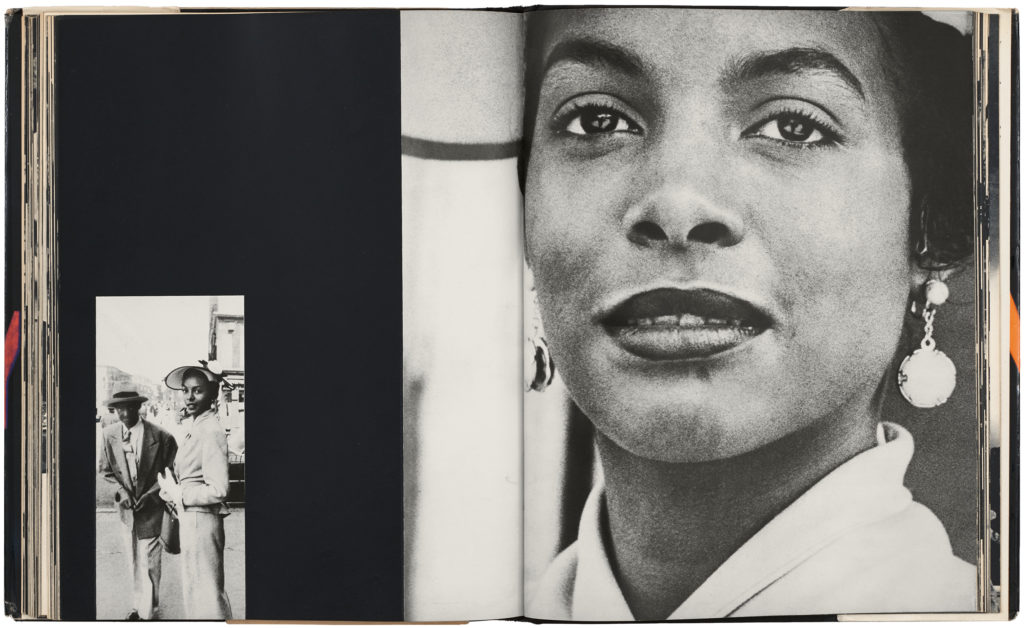
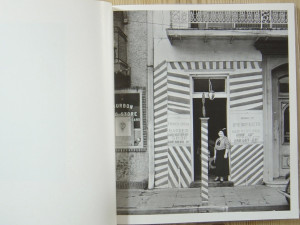
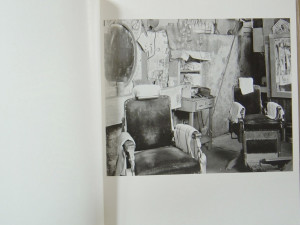
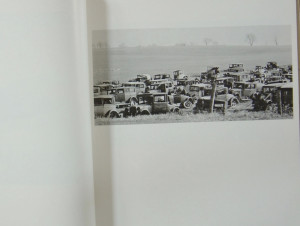
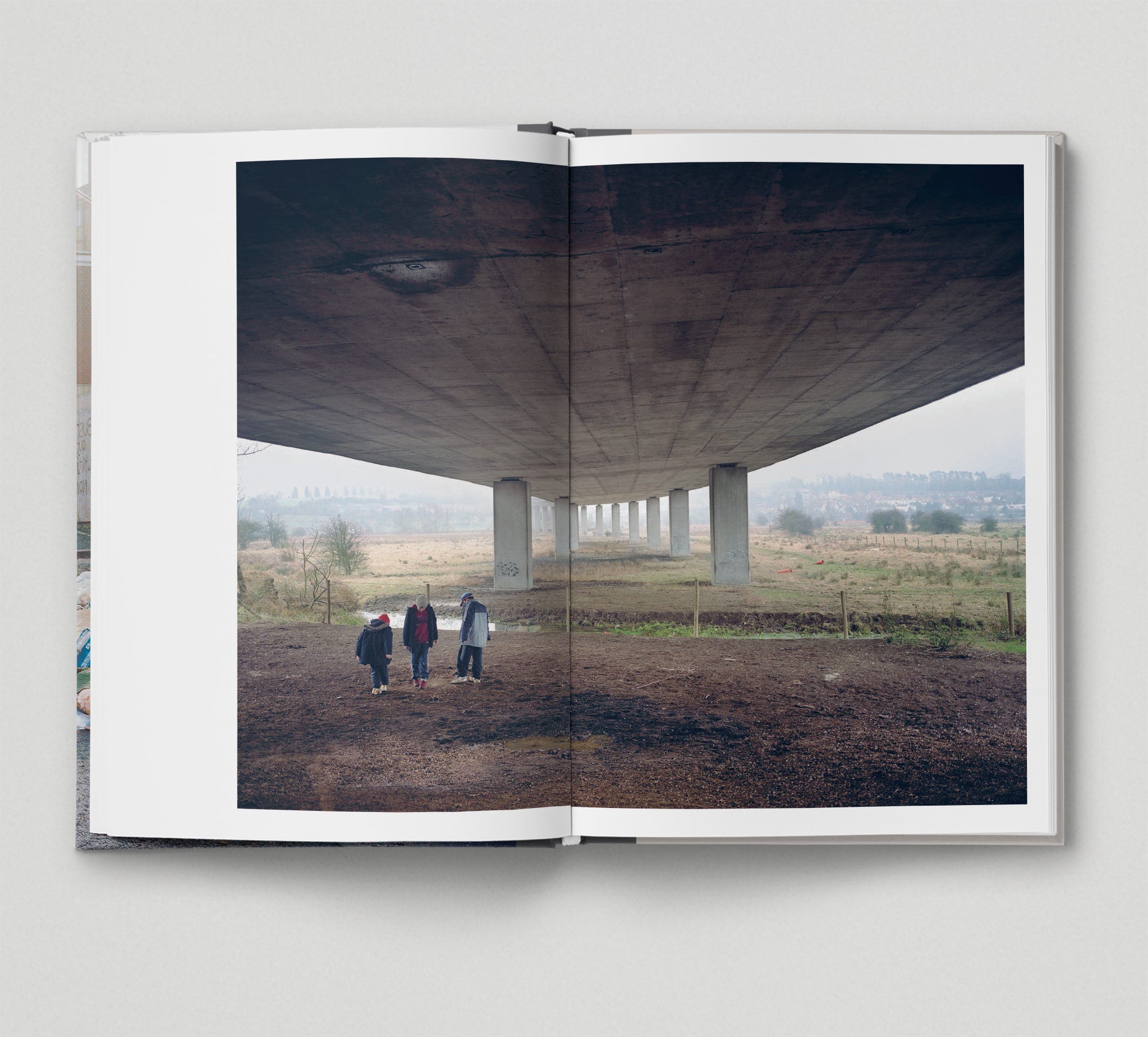
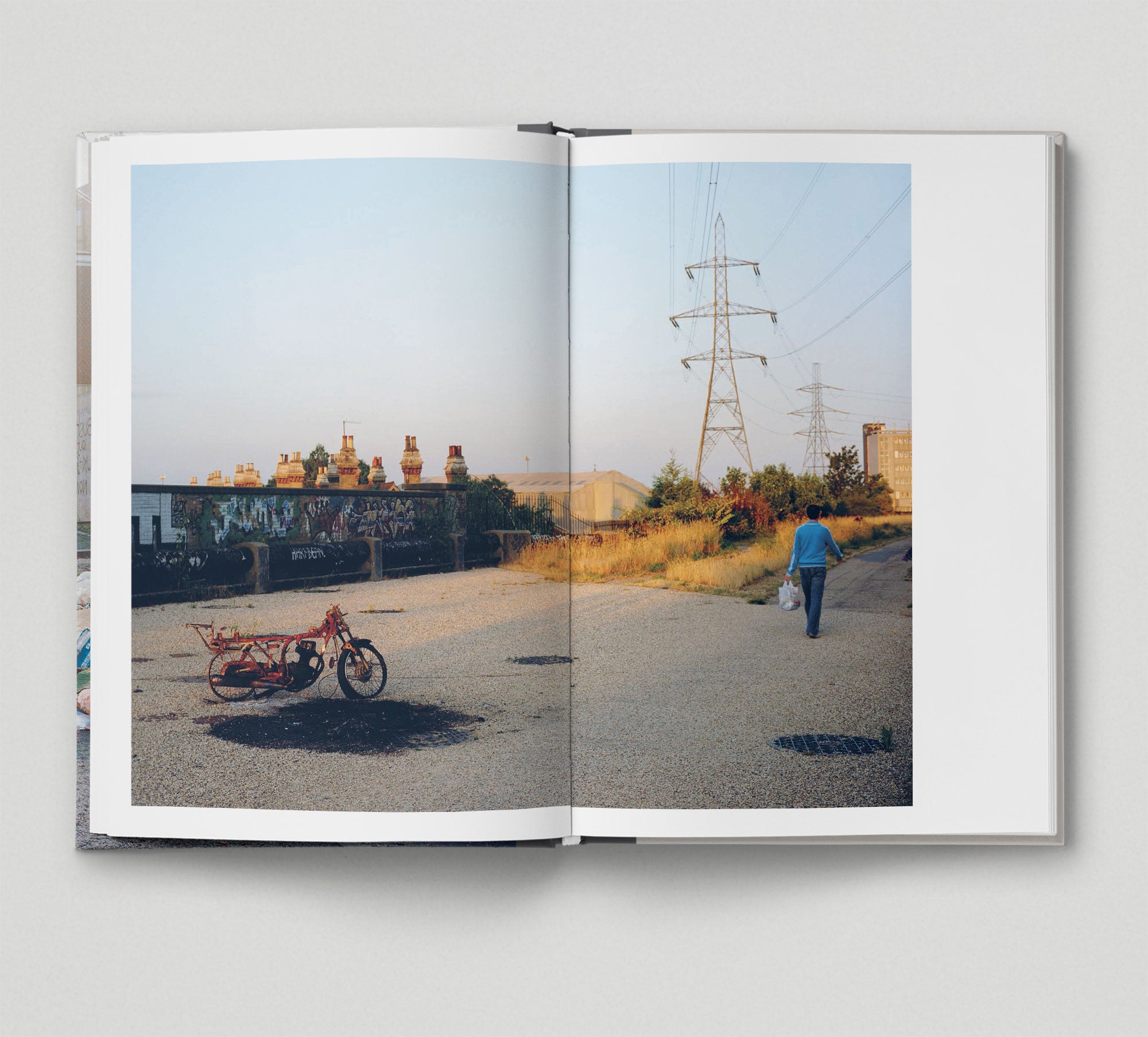
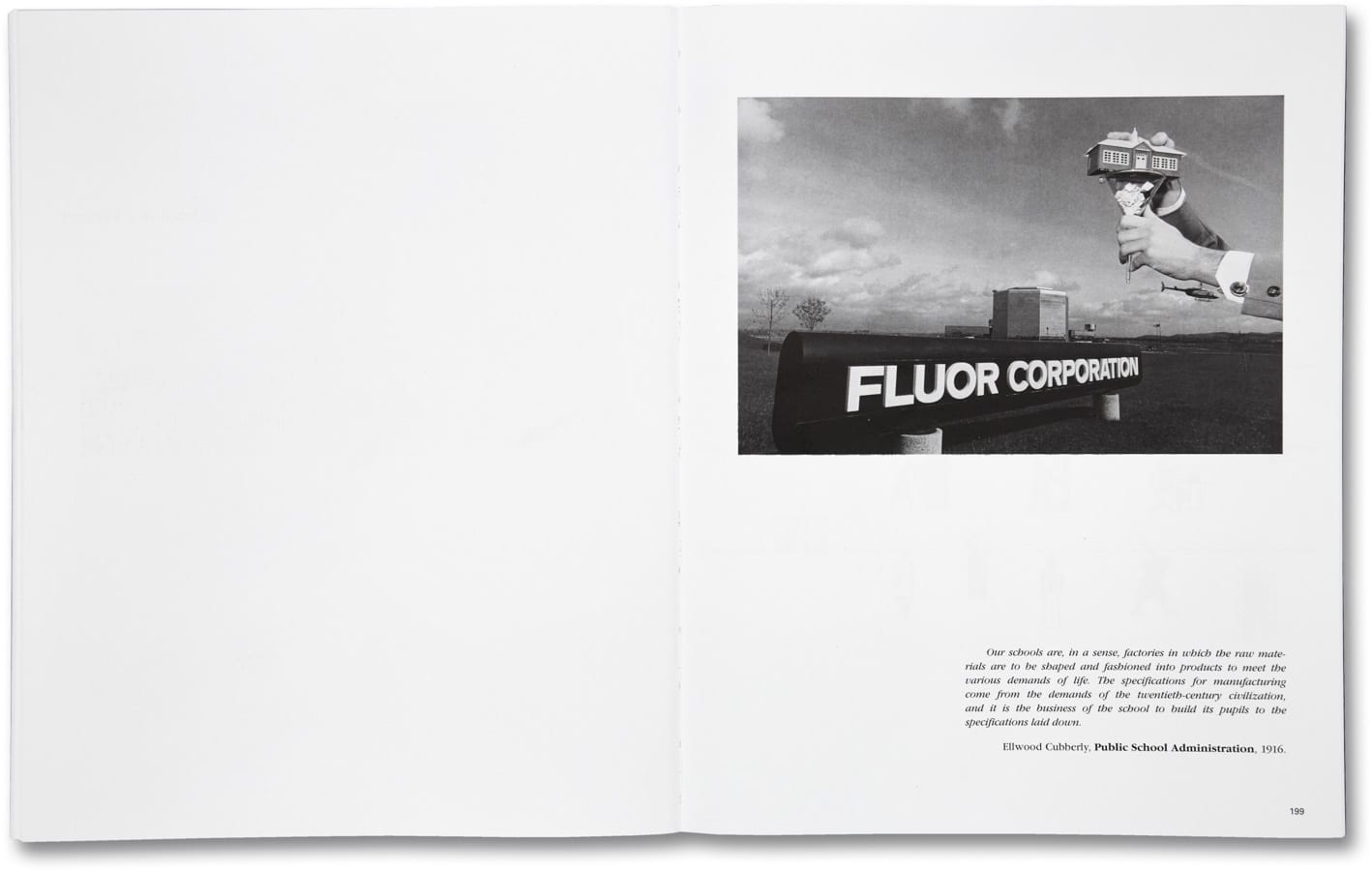
In On Photographs, curator and writer David Campany presents an exploration of photography in 120 images. Proceeding not by chronology or genre or photographer, Campany’s eclectic selection unfolds according to its own logic. We see work by Henri Cartier-Bresson, William Eggleston, Helen Levitt, Garry Winogrand, Louise Lawler, Andreas Gursky, and Rineke Dijkstra, Florence Henri, Anastasia Samoylova and many more. There is fashion photography by William Klein, one of Vivian Maier’s contact sheets, and a carefully staged scene by Gregory Crewdson, as well as images from magazines and advertisements. Each of the photographs is accompanied by Campany’s lucid and incisive commentary, considering the history of that image and its creator, interpreting its content and meaning, side-stepping readers’ expectations, and connecting and contextualizing it within visual culture. Image by image, we absorb and appreciate Campany’s complex yet playful take on photography and its history.

The title, On Photographs, alludes to Susan Sontag’s influential and groundbreaking On Photography. As an undergraduate, Campany met Sontag and questioned her assessment of photography without including specific photographs. Sontag graciously suggested that someday Campany could write his own book on the subject, titled On Photographs. Now he has.

An extract from the introduction to On Photographs

Photographs are often thought of as ways to hold things still, to calm the flux of a restless world. They allow us to gaze at fixed appearances, for pleasure or knowledge, or both. But very little else about them could be described as ‘still’. From the beginning, photography’s technologies have been in a state of constant change and development, and the tasks we have given the medium have continued to mutate and expand beyond measure. Moreover, photographs are highly mobile. They move over time, across culture and between contexts. They lose meanings, and acquire meanings. Indeed, they could not be quite so mobile were they not quite so fixed. The mute stillness of photographs permits their promiscuity and proliferation. And so, paradoxically, photographs have helped to produce the flux they promise to calm. They confuse as much as fascinate, conceal as much as reveal, distract as much as compel. They are unpredictable communicators. They cannot carry meanings in any straightforward way. A single photograph is unable to account for the appearance it describes, or even account for itself. Like Herman Melville’s Bartleby, a photograph is insistently there, but enigmatic. In each one there is a kind of madness.

All of this leaves photography open to those wanting to take charge of it, to use it in one way or another. Broadly, there are two ways this happens. The first is to give photography pictorial conventions. Images that follow a formula are less likely to surprise, and will give the impression of meeting needs and expectations, of being ‘functional’. Through convention, photography masks its madness. The second way is to accompany photographs with words. Writing, speech, discourse. Think of the complex legal system that secures the status of the police photo; or the connoisseur declaring this photograph better than that; the advertisement making claims in words for a product it depicts; the returning tourist narrating their vacation photos to friends; the caption for a news picture; or the photographic artist stating their intentions. The image cannot achieve any of this by itself. Words do many things for photographs, but in general they are used to oversee and direct them, the way parents supervise wayward children. Photographs can be bent to limitless wills, but never precisely so. They always have the potential to exceed the demands imposed upon them. And in that excess, photographs work upon us in ways we still barely comprehend.

If a photograph compels, if it holds our attention, it will be for more than one reason. The reasons may be unexpected, and even contradictory (mixed feelings are often the most compelling). When we are drawn to look at a photograph again and again, it is likely that our second or third response will not be quite the same as the first. Of course, most photographs do not stay in the mind for long at all, but this does not mean we can predict which ones will, or why, or whether a brief encounter with an image will leave some ineffable mark upon us. Photographs need less explanation than our responses to them.

Examples:


Jeff Wall. Photographs

Posted on by David Campany

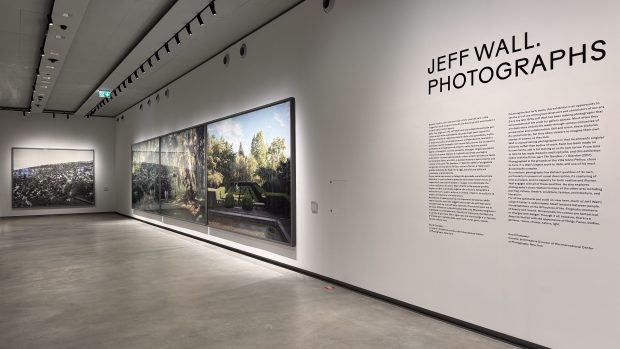
Jeff Wall   Photographs

Gallerie d’Italia, Torino

October 9, 2025 – February 1, 2026

Curator: David Campany

‘Jeff Wall & David Campany in Conversation’

Posted on by David Campany

Edited and co-ordinated by Honey Luard and Elaine ML Tam
Editorial assistance by Louise Parfitt and Miranda Yates
Designed by (Studio) Sandra Kassenaar

Printed by Robstolk, Netherlands
150 x 225 mm, softback
264 pages, colour illustrations throughout
ISBN 978-1-910844-79-3
Published by White Cube, September 2025

Companion, White Cube gallery’s annual reader, is a compilation of contemporary art and discourse. Visual essays, in-conversations, lectures, poetry, artist writings and newly commissioned texts are just some of the forms of creative expression and scholarship brought together in a single volume.

Available here


Jeff Wall and David Campany in conversation
21 November 2024, White Cube Bermondsey, London

David Campany: [To audience] It has just been one of the joys of my life to follow Jeff’s work since around the age of 18. I still remember that first show with White Cube in 1991, 30-some years ago, and that was not even the first time I had seen the work. Jeff, since this is a moment for looking back, I wanted to ask you about judging your past work. I know that you proceed with no great plan, just one picture at a time, as the opportunities arise. When you do look back, do you see particular lines of development and direction? Are you surprised by what you have done?

Jeff Wall: I have helped to plan the exhibitions that we have done this year. Martin Schwander and I discussed the plans for Fondation Beyeler for a long time and what became interesting was to group together pictures that seemed to have some resonance, whether it was formal or on the level of subject, or maybe what you might call a genre.
I deliberately try not to, one, look back; two, repeat myself; and three, work in groups. When I look back, I am surprised to see echoes between different pictures because I’m not conscious of that when I’m doing them. In fact, what I am conscious of is trying not to do anything I have ever done before. It is sort of disappointing or alarming that one sees things recurring. There are a lot of people sitting on the ground in my pictures, for example, and I don’t really have an answer for it.
One of the more interesting things that emerged was the presence of a pastoral motif. Pastoral, in the way that I interpret it, means the relationship people wished they had to nature, but don’t have. Or if they do have it, they are losing it, or it is conditional, which then makes it ‘anti-pastoral’. There is no longer the possibility of the pastoral relationship to nature that is seen in Classical art or Early Classical art, for the obvious reason that we don’t live in nature in that way anymore. I think that is one underlying subject of a lot of my pictures, which I had never thought about much until I started to look back.

DC: I am struck by the fact that your pictures do not feel dated. I suppose that expectation that they would is an inheritance from modernism, from what Walker Evans called the ‘documentary style’: the idea that photographs are timestamped, contingent. Made at this time of day, in this month, this year. That was an important part of what photography carried into the arts but also into its vernacular forms. When I look at your pictures though, I am genuinely amazed at how contemporary they feel. They are not timestamped in that emphatic or obvious way that we usually think about when we think of photography.

JW: Yes, that has occurred to me. I learned a lot from painting as I have said many times, though I do not do anything remotely like painting. People have said to me that my work is so like painting, it must be a sort of ersatz painting. I reject that point of view because what I am doing is photography, and everything that I do is photographic. Nonetheless, one of my experiences of painting is precisely that suspension of time, and paintings I like often do not seem to be time-bound.
I just went to see the Van Gogh exhibition [‘Van Gogh: Poets and Lovers’, National Gallery, London], and some of his pictures seem like they could have been painted today. There were a few in the exhibition that struck me in that way – streetscapes that looked like snapshots, for instance. I think painting has taught me a means of having a sovereign relation to time, that photography in its documentary sense didn’t want or – and I hate to say this – simply didn’t think of. The reason I hate to say it is because I don’t like to criticise photography because, after all, I am just another photographer.
Timestamping, I believe, is something that a lot of photographers want – to mark that moment. It is not primary for me. I like the fact that you can’t really tell if certain of my pictures are from the ’80s or ’90s; you can’t really distinguish much in them that could not be done now. You will see very few advertisements in the backgrounds of my pictures. I avoid them precisely because of that sort of thing. I am not against it, but I am also not for it. This picture, Tattoos and Shadows, 2000, is 25 years old, and it is a little dated maybe, but people are probably still wearing Bukowski t-shirts. I just think there is something compellingly beautiful about that suspension, where you are not locked into a moment and the image has a psychic and aesthetic freedom.

DC: Your White Cube show begins with one image that I have never seen exhibited before, Pleading [1982], which is redolent of those everyday details of the street. That was made differently to the way you usually work.

JW: It was a snapshot. I made it in Soho walking along the sidewalk in 1982 simply because I happened to be here and captured that moment, that gesture. I was just interested, like any photographer. When I saw the negative or the slide, I noticed that this young woman in the Salvation Army was almost praying for the wellbeing of the young man with the camera, with her eyes closed. It seemed like a gesture so meaningful, I just had to print it.
Recently, I realised that I foreclosed the idea of snapshots in my work back in the ’80s and ’90s. I have done one or two others, but very few. I think it was a real mistake to rule out snapshot photography as much as I have done. If I had not thought that way, I probably would have made five or six more pictures like Pleading. Though they would have been timestamped in a way that I may not want, I also totally accept when it happens. Actually, I misdated that photograph for many years; I thought it was made in 1984, but we noticed that the play on the poster with Glenda Jackson [Summit Conference by Robert David MacDonald] was staged in 1982 so, in fact, the photo had to be made in 1982.

DC: Do you feel it is too late to work with snapshots now?

JW: It is not too late. I have my camera with a new battery ready to go, so I may be able to do something. It may only result in two or three pictures, but who knows.

DC: What excited me when I first saw your work might have to do with the fact that cinema was my first love, and I sidestepped into photography from looking at film stills in books. To go back to Pleading and the idea of the snapshot – the snapshot closes the gap between observation and picture-making, so that they almost collapse into the same thing. I think of you as having expanded it. I know you often say you begin by not photographing; you might notice, read or hear something, and that might be the beginning of the adventure of trying to make a picture. Suddenly, there’s a much bigger gap between observation and the making of the picture. You may regret having passed up on the snapshot, but so much else has opened up in its place.

JW: Yes. Even when I say that I don’t photograph, I still consider ‘not-photographing’ an act of photography. It is a relationship to photography that has worked for me, in the sense of escaping the motif or what I call the subject. This escape is as decisive a moment or an experience as capturing it then and there. They are the same thing. Remember, the camera does not realise when it has missed a moment.
I think like a camera in that sense, in trying not to make judgements about whether I have done things the right or the wrong way, which also has to do with artistic freedom. If we really believe that there is such a thing as artistic freedom, that means we are free to develop our relationships to our materials, our subject matter, everything, as we want to. There is a real photographic relationship present in not making a photograph; the space that opens up has to do with my own personal capture, be it my memory or my decision about the validity of what I experienced. So, it is also a process of pondering the validity of what I saw. There is no real difference between all of that and a person who takes pictures and then rejects the picture after it has been made.
I think that is where the word ‘cinematography’ comes in, because what it allowed for was these other ways of making or, let us say, composing a picture.

DC: With the snapshot, people tend to think of the photographer as being less involved in the world, observing and reacting very quickly. On the other hand, trying to find a location for a picture, working with other people, or having to get into certain kinds of theatricality… all of those things we associate with cinema. But they have also been part of photography since forever. I assume you enjoy all of that.

JW: I think what I call cinematography follows on from those photographers who have had to work on films, who get themselves out of corners that they have been painted into by the situations they are obliged to deal with. That kind of creativity is very important, and it has led to a way of looking at photography that is more expanded, technically. As soon as you diverge from the direct relationship of the camera to the moment, you enter a space that is full of new problems. I must enjoy those problems.
My real commitment is to composition and picture-making. What we really like about pictures is their ‘goodness’ – meaning their ‘well-madeness’ – and the result of that, which we might call their ‘beautifulness’. And this is not to avoid the word beauty, which people don’t like to use anymore; we might call ‘beautifulness’ a quality that nobody wants to admit that they enjoy but do. ‘Goodness’ is the outcome of the making of the picture or the sculpture or whatever, the work of composition, which is what all artists do.
My only objection to straight photography was that it meant accepting less freedom than a poet, painter or musician would have. I did not see any reason to make that sacrifice in the name of some aspect of photography which is totally valid but not all encompassing. So yes, I like solving problems. Technical problems are fascinating in the way that all physical work is fascinating. It is very satisfying to make something well, no matter what it is. Art is not the only place where one makes well and enjoys it… it could be a shoe or a painting or a door handle.

DC: A big part of what I enjoy about your work is the stillness and the muteness – the way in which an image suspends a story or narrative, but also evacuates sound. There are a number of your pictures in this show where people are communicating but we can’t know what they are saying, for example The Storyteller [1986] and Listener [2015]. By their titles you would think the quality of muteness would be antithetical to these subjects of a picture. But in fact, they are fascinating precisely because of what the stillness and the muteness refuse to disclose.

JW: Yes, but I don’t think my pictures are any more still than anyone else’s. I think the effect that you are referring to is related to the presence of this tableau framework and the scale more than any motion capture issue, because every camera does that the same. It has to do with the compositions and the overall making. These pictures are so subject to gravity presented in this format, there is an enhancement of some of the ordinary or continuous qualities of photography. I like that, and that is something I did learn from painting because, remember, painting invented this sense of the scale of pictures. Pictures that can occupy space in a way that is close to how we occupy space, and that make us see what is in them in a way that is close to the way we see when we are not looking at pictures.

That is the gist of what we consider any realism in art to be: the artwork resembles what you see even when you are not looking at art, and scale fundamentally has to do with that. It is so familiar that maybe when it got transposed to photography – somewhat systematically in the ’80s – it seemed novel. Perhaps it has not been dealt with very much in the ways that photography has been discussed. Many of my pictures are at what I consider a universal scale, sometimes called ‘life scale’. That is the scale that we all see in organically, because the universe is in one scale apparently – or at least the part that we know – and that is the only scale we trust to be objective. There is an objectivity that enters the picture when you use universal scale that is profound in a way that is hard to grasp. It means you are getting close or analogous to the experience of something. I think that is why a larger picture has this strange ability to give you the illusion that it is more life-like than life.

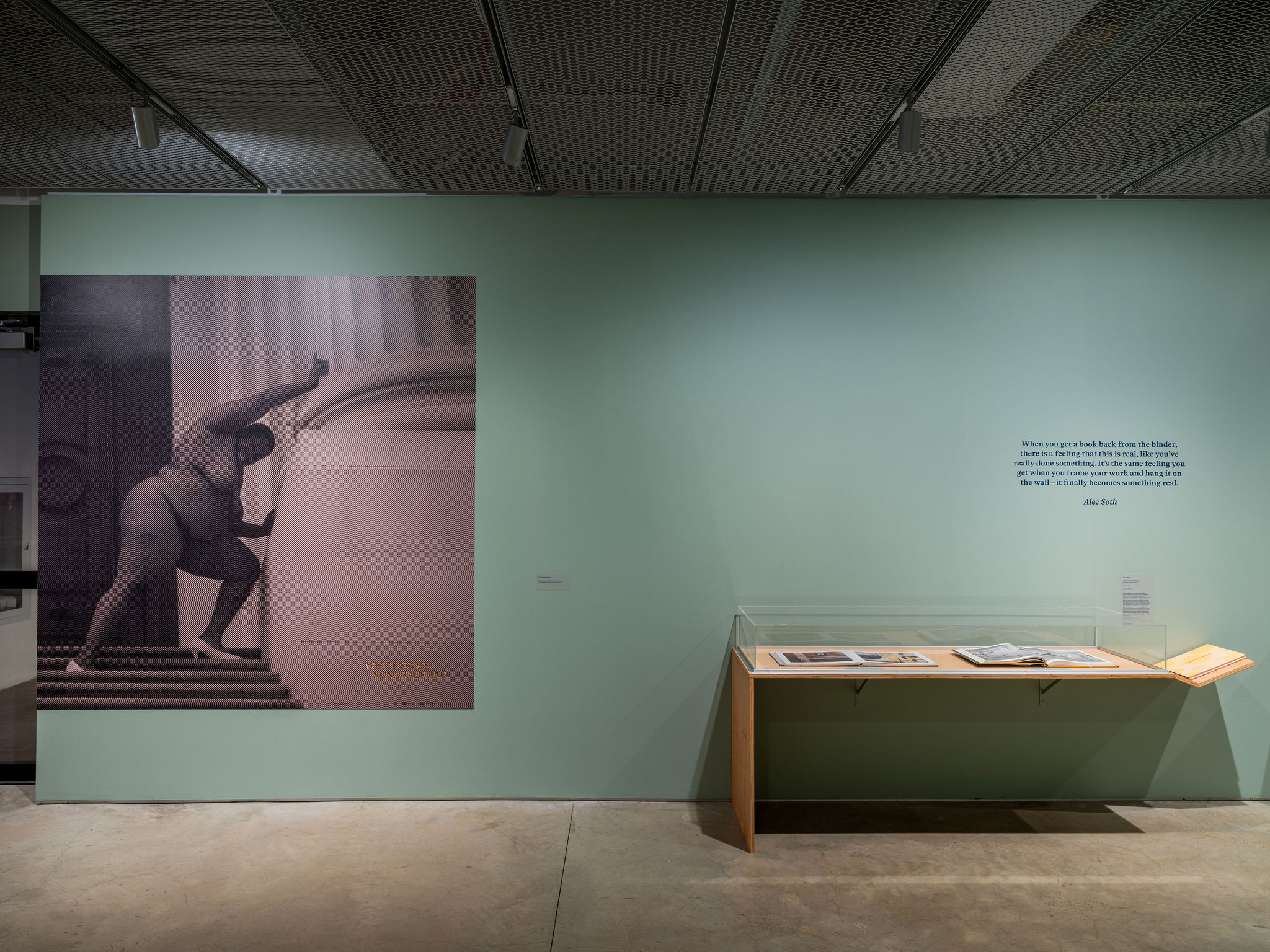
DC: Your relationship with White Cube started with an image that is a bit of a conundrum here. That first show I mentioned earlier debuted The Giant [1992], an image of a nude woman standing halfway up a staircase in a library. She is completely out of scale with the space that she is in. How did you decide on the dimensions of that one?

JW: Actually, it follows on exactly from what I have said. To do a picture of a giant at universal scale would be rather difficult – the giant would be 30 feet high in person but, even at that distance from the camera, she would be 12 feet high in the picture, so the overall picture would wind up 30 feet high. I am not Anselm Kiefer! It just seemed utterly implausible.
The fact that the giant is outside of universal scale suggests that the only way to deal with it would be – to use another painting analogy – to deal with it in the way that [Jan] van Eyck might, who, by the way, did a giant Madonna in a church. And that is another lesson that one learns: the game of universal scale is not played the same way all the time. I don’t claim that working in universal scale is the only good way to work though, I simply think it is a ground note that can determine a way of working and make it more interesting. What The Giant showed me was that I could make small pictures if I wanted to.

DC: You mentioned that the tableau form, the singular composed picture, is an invitation to make a judgement about whether one tableau is better than another. But what about your works that comprise more than one image; what is the artistic judgement of a diptych or a triptych?

JW: Judgement, in what sense?

DC: Well, what would make it good or not good?

JW: I think what would make it good would be the same as what would make anything else good. We think of ‘goodness’ as an aesthetic judgement. We don’t necessarily want to get into that topic right now because it is a big one… but it is a topic that anyone who is interested in art knows something about, in that we do make comparative judgements of artworks in all kinds of complicated ways that nobody really ends up agreeing about. I don’t think any formal aspect of the artwork makes the slightest difference.
Most of the time, I have made multi-panel pictures because something of the original subject escaped in the process of its making, and it requires me to respond to that. In some instances, I have dropped the subject or allowed the starting point to die. I say ‘die’, because if something escapes that cannot be resolved as a picture, it’s gone. On other occasions, a second picture emerges from the first; something may have escaped but it will get resolved differently, in another picture.
It is not in the show, but I did a picture of two views of the same apartment [Summer Afternoons, 2013]. It was the apartment that my wife and I lived in, here in London in the ’70s, and I reconstructed it because I wanted to do a picture of a man on the floor in the sunshine. It wasn’t about me, but I wanted it to be in that apartment. One part of the freedom that I like about the cinematographic approach is that subjects can be detached from where they originally occur and be moved to another place where they occur better artistically. I worked on the motif of the single man, and, at some point, I knew it was not going to work unless there was another person in that apartment. So, I added the woman in the second picture, which is photographed from a different angle. From the two angles, you can’t be sure that they were ever in that apartment together. That lack of certainty was also interesting. Point being, that second image grew out of the first, and it grew out of the first because there was something that required it.

DC: The reason I asked the question is that I find in a lot of your multi-panel pieces something quite psychically disturbing, but also disturbing of aesthetic judgement. If we take two examples, Pair of interiors [2018] and Actor in two roles [2020], they set up for the viewer this almost forensic checking of faces and details. In Pair of interiors, there is a couple sitting  in a room. Then, there is another view of  the same room and it might be the same couple, but if you look closely, you discover they are different people. That is very disturbing.

JW: Disturbing good or disturbing bad?

DC: I remember when I saw it for the first time at White Cube Mason’s Yard [2019], I found it kind of nightmarish.

JW: Well, that is a little melodramatic, I have to say! I don’t want to create any backstories to my pictures. These days, everyone has a backstory to their art, and I really don’t like that. I think the so-called backstory should be erased in the experience of the picture.

DC: Nevertheless…

JW: Nevertheless, I have always been struck – and this probably has to do with having a photographic eye – by resemblances between people who don’t actually look like each other. I always see people who remind me of someone else, and I wanted to find a way to bring that into visibility as a picture. I had spent a lot of time in that room because it is my house, and it seemed there was a way in which I could bring together a lot of energies. My multi-panel pictures also have a lot to do with how to photograph a room. If you look at it carefully, there are a lot of things about the way those rooms are photographed which are interesting aside from the subject of the two people. Resemblance is phantom experience, and many people don’t notice at first glance that they are not the same people. But that is not a trick that I am playing, that is just a condition of perception and of how we relate to other people. All of that seemed to be a rich subject for a picture. It didn’t seem like that could be done well in just a single panel. The disturbing element – yes, I guess that is disturbing. Identity, lack of identity. It is uncanny, I agree. There is an uncanny element, and I am not against that.

DC: I think it has to do with the shuttling of my eye between one panel and the other, which you have to do quite a lot in a work like I giardini / The Gardens Appunto / Complaint, Disappunto / Denial, Diffida / Expulsion order [2017] which is a very large, three-panel piece. You have made quite a few pictures in Italy, and though I don’t think of you as being regional in any way, can you say something about that?

JW: Not really! I floated to Italy in the same way I would float to anywhere else. [Henri] Cartier-Bresson made a point of circling the globe and photographing everywhere and that’s great, but I would never be able to do anything like that. I do not like travelling very much and my pictures emerge from stuff that floats toward me. For example, I had been in Ireland at some point years ago and loved the hills covered with the stones and the low stone walls. That would be a beautiful picture to make, I thought, and yet, I did it in Sicily. I didn’t have any particular affinity to Sicily or any backstory, I simply had this image of the stony hillside in my mind. I just thought Ireland might have good stone walls and hillsides, and I found one. What I like about that picture is that it seems so eternal.
In Giuseppe Tomasi di Lampedusa’s novel The Leopard [1958], set in Eastern Sicily, two of the characters are walking their dogs and maybe hunting up the hillside. Tomasi di Lampedusa comments on how this hillside would have been seen by the ancient Greeks – who were the occupants of Sicily 2,000 years ago – because it has never really changed, it has never been under cultivation. I could have done it in Sicily, but I like the opportunities that come my way, however they come. It’s not that I like Vancouver particularly but, because I live there, I have had many opportunities to make pictures without having to travel.

DC: People used to say of your work, as it relates to Vancouver, that Vancouver looks like many places. That, somehow, the lack of specificity in Vancouver allowed you to make pictures that would resonate in different parts of the world. I don’t recall if you yourself have never said that though – do you think of Vancouver in that way?

JW: I lived in London for three years in the early ’70s when I was struggling to start my work as an artist again, and I had a very strong impression that I could not do it here – that there was something about the cityscape of London that just wasn’t going to do it for me, that I was somehow a West Coast person, a New World person. I don’t think there was any real reason to make that decision, but I did make it.
Now, I think that was totally wrong. I could have made all the pictures in London that I had made in Vancouver. It’s true Vancouver is more of a generic city than London and there is a certain advantage in that it could look like a lot of places. But it also looks like itself too. I tried to avoid the most likely features that a place might have, because I am still enough of a modernist to know that the conventional becomes uninteresting artistically, at least from some angle. And yet, the most conventional thing can be interesting if you look at it from another angle.

DC: Does that relate to what you mentioned at the beginning, about modernity having somehow compromised the pastoral? Modern development alienates us from nature, while at the same time the local and particular aspects of urbanism succumb to the generic and internationalised.

JW: I think old Europe is getting to the anti-pastoral stage. Look at all the new protests against tourism, for example. I don’t think it is just a North American thing anymore; it may have been 40 years ago, but mass tourism has changed Europe a lot. In North America we don’t have that same kind of mass tourism as a matter of fact.

DC: To come full circle, a few years ago, I sent you a link to a video recording of Walker Evans talking to Garry Winogrand’s students.

JW: Right, yes. From the ’70s.

DC: I sent it because I thought one thing Walker Evans said might pique your interest. It is the moment where a student asks Evans if he still goes to the movies a lot, as he used to write film reviews anonymously for Time magazine. He said, “Yes, I go a lot. She then asks, “What have you seen lately, and he says, “Well, I’ve seen two movies by Robert Altman – The Long Goodbye [1973] and McCabe & Mrs. Miller [1971]. Have you seen The Long Goodbye? It is a marvellous bunch of photography!” I didn’t say anything else in that email, and about two weeks later, you wrote a long reply saying you would never have imagined coming across Walker Evans saying this. Evans understood that all cinematography was photography – that anything we do to make a movie we could do to make a photograph.

JW: Somehow, I don’t think it is that surprising anymore because artists who are re-attuned to the ‘goodness’ of their work are going to recognise it everywhere. Clement Greenberg once said that the good art of wildly disparate periods resembles each other, more than good art resembles the bad or less good art of the same period. It’s probably not exactly true, but it is an interesting thought. What it does resemble is the ‘goodness’, so Evans would recognise the qualities he was looking for in photography as something that Altman’s cinematographers also achieved.

DC: Those two films were shot by Vilmos Zsigmond.

JW: Who was very good. Zsigmond would probably not have worried about the distinctions between categories of the cinematographic, the documentary, and so on. Evans was the person who really put documentary photography into brackets by calling it a style, and that part doesn’t surprise me. I was, however, surprised to hear him say that there was a way to take the cinematographic technique and detach it from the cinema. He realised that the same approach could lead to different art forms.
Watching images in the cinema has no scale. Whereas a picture – and I refer to the tableau as an emphatic form of picture-making here – places an emphasis on itself. You look at it as much as you look at what it shows you. You register its presence and its formal qualities. Cinematography doesn’t only mean cinema, it is also a way of practising photography – of looking, of thinking about it again. It does not really surprise me that someone who was so accomplished – not only at making photographs, but talking and writing about them – should recognise that fact. I think that photography, from its very beginnings, had these affinities.
But now, I want to make a little aside about writing. In the early ’70s, I did think that I would make films, after that period of being very uncertain about what I would do. I did write some scenarios, and I even went to Hollywood and met people who liked them but knew I would never be able to carry them through. What I learned from paying a lot of attention to films in the ’60s and ’70s was that there was a writing inside of the image, inside of image-making, hard as it is to define. Some people outside theatre and cinema write up whole scenarios when they are trying to make pictures. But it is not called a scenario, it is a writing – a writing that does not take the form of writing.
Let us take the tattooed people in Tattoos and Shadows [2000], for instance. Maybe this is not a good example because this is something I actually saw so I didn’t have to write it, but anyway. “Tattooed people: the tattoo is permanent, and the shadows are fleeting…” That was the starting point. Another example would be the resemblance between two people just as we talked about. The key word is ‘resemblance’; they resemble each other but they don’t look like each other. Let us say that is the writing or literary content. It’s all there, even if it is never written down. To then make the picture is to erase the writing; I see my pictures as erasures of writing. Perhaps erasure has a similar relation to writing as not-photographing has to photographing. My procedure is kind of upside-down-backwards, but it works for me.
My real writing work – aside from the essays I have written – are the titles of my pictures. I take a lot of time or pay a lot of attention to them. Sometimes they are good and sometimes they are not that good. I think ‘Tattoos and Shadows’ is pretty good – it just tells you exactly what it is. What I find is that people often forget the titles of my pictures when they mention them to me. They always say, you know the picture with… but can’t remember the title. I see that as a good thing, because if I have erased the narrativity then the viewer must be writing it.

DC: Something does get re-inscribed with the titling. Thinking about it now, all your pictures have titles. You have never gone for ‘untitled’.

JW: That’s right. That has never worked. As I said, there are no rules, so there could always be an untitled picture, but it just hasn’t happened.

DC: I have a last, maybe obvious, question: why photography? I have heard you talk about a commitment to painting when you were young, and then you were involved in that conceptual moment which was quite anti-pictorial. You finally commit – if that’s the right word – to photography, at an age when most photographers of the prior century had already done their best work. You came to it a little bit late, in your early 30s. Obviously, photography has meant a great deal to you, but it wasn’t the case very early on…

JW: I was always drawing and painting as a child and now, when I look back on it, I had a detail-oriented eye. That must have had to do with my sensibility shifting to photography at some point. I first got excited about photography in the context of conceptual art, because it was different and exciting at that point in time, but the truth is, I have no idea. But I also know that if I had really wanted to be a painter instead, I would be.

Let me say one thing about the big painting that appears in the photograph Recovery [2017–18]. I made that painting to express the inner vision of this young man who had happily recovered from some, hopefully, passing affliction. For whatever reason, I wanted to realise his hallucination of the ‘beautifulness’ of the world in this way, because once you have recovered from something like that, all is well, at least for a second. I wanted to capture that because I knew that everybody could relate to it, and I related to it. There are any number of ways to go about creating a hallucinatory image, but somehow, it needed to be this painting that recalled the pastoral paintings of the early 20th century, like Matisse. I had to design the painting as if it were the thing that he was experiencing. People said, you are finally going back to painting. And while it is interesting that they should say that, the fact is the painting was of no more interest to me than, say, the construction I had to do to build the grave in The Flooded Grave [1998–2000], or the man’s room in After ‘Invisible Man’ by Ralph Ellison, the Prologue [1999–2001]. It was just another construction that I had to make. The only thing I can say is that if I ever were going to paint, I wouldn’t paint like that. That was not what it was for.


Climate Change and the Image

Posted on by David Campany

Climate Change and the Image ? 

David Campany

None of us doubt how vital images have been for raising awareness around climate change. There is no doubt, either, how important images have been for climate-related protest and activism.

What we do have doubts about, however, is exactly what kinds of image are effective. If we knew, we’d just get on with it and make them, right? But the way images “work” (if that’s even the right word) is not so straightforward. Here, I’ll try to break down why this is, what it might mean for us, and what we can do about it.

First of all, visual culture is never constant. It is always mutating – at different rhythms, in many directions. What resonates with some audiences at some moments, can be lost on others. Context is not everything – but it’s a lot.

Secondly, images do not carry meaning the way a truck carries coal. They can certainly feel more immediate than words, and even jump language barriers, but at root they are ambiguous things. They can show, or even provoke, but they cannot explain. They are imprecise, for better or worse.

Thirdly, there is really no metric for the effect or impact of images. True, the mass media likes to venerate certain images for having changed mass opinion, but most of the time those media outlets are doing self-promotion, patting themselves on the back for being important. In the previous century, when media were dominated by fewer outlets, certain images could be elevated through repetition to the status of “icons”. Today, our media landscape is much more fractured, and it may be no bad thing that an issue both as simple and as complex as climate change has produced no iconic images, certainly not in that older 20th century sense.

Fourthly, images ‘behave’ unexpectedly. They can take on unforeseen significance and effects. This can be quite unsettling, particularly for image-makers who feel they ought to be able to control and predict the outcome of their efforts.

I think of the poet Diane di Prima:

NO ONE WAY WORKS. It will take all of us shoving at the thing from all sides to bring it down. (‘Revolutionary Poem #8’)

In other words, the collective spirit is in the shoving, not in the sides, and exactly when or how things will be brought down will be unpredictable.

Shoving from all sides means being creative in our thinking and in our imagery.  Not for the sake of being “arty”, but because there is no clear path. No tried and tested way. No everlasting methods to follow. Knowing one’s audience and context can help, but do not rule out not knowing. “There’s a crack, a crack in everything,” sung Leonard Cohen, “that’s how the light gets in.”

I am the Creative Director of the International Center of Photography, here in New York. Our current exhibition is Edward Burtynsky: the Great Acceleration, a survey of over four decades of photography by one of the great chroniclers of the late industrial era. Oil use. Water use. Mining and quarrying. Food production. Manufacturing, waste and recycling. Farm and forest management. With many exhibitions, books and documentaries about his work, it is hard to think of a photographer with a greater reach or influence. And yet, what strikes me most about his photographs is not any campaigning spirit, but their clear-sighted and level-headed observation. Burtynsky thinks more in terms of revelation than accusation, and understands that his photography does not stand alone but will be fitted, haphazardly, into broad and wide conversations about geopolitics, consumer-capitalism, labor markets and, yes – climate activism.

An exhibition might get great reviews, great attendance, and positive public feedback, but change can also come from inviting those one or two policy makers with more surgical influence. This is something I learned working with the British photographer Mark Neville.  He had made an incredible book – half photos and half science reporting – titled Deeds Not Words. It’s about a small English town where the hasty clear-up of toxic steel industry land led to dust in the air, causing a large cluster of birth defects in new-born babies. Neville distributed the book to hundreds of local environmental health agencies, hoping to change the way such land is cleared. Nothing happened. Zero response. I then helped Neville make an exhibition in London, presenting the images and scientific information. The public loved it, but crucially we organised a meeting in the galleries for health officers and a key politician. The politician took their findings to the government and national policy was changed. A win!

But what can we learn for this? Make a book that fails, rescue it with a show, and then hope that the one person with influence sees it and does the right thing? Make just one book and get it into the right hands?

As I’ve said, there are no formulas to what we do. We have to be idealistic and hopeful, but we also have to be pragmatic, responsive, adaptable and speculative. Mass influence can be important and effective but so can quiet, focused influence. I suspect “awareness” of climate change has reached a high plateau with the general public. While we need to be extremely vigilant in order to keep it there, it is policy change that is going to make the difference.

Commissioned by Climate Week NYC and first published here.


Jeff Wall Photographs

Posted on by David Campany

Book accompanying the exhibition Jeff Wall  Photographs at Gallerie d’Italia, Turin October 9, 2025 – February 1, 2026, curated by David Campany

Jeff Wall Photographs, curated by David Campany, is the first and only volume published in Italian to date that presents the work of one of the leading figures in contemporary photography in such a comprehensive, in-depth, and visually refined manner. David Campany—curator, photography historian, and internationally renowned author—offers an erudite yet accessible reading of Wall’s work, organising it into a coherent critical path rich in theoretical and formal references.

Along with Campany’s illustrated essay, rhe book reproduces all 27 works in the exhibition along with enlarged details.

On(c)e More

Posted on by David Campany

Double Feature

Edited by Mark Alice Durant

Hardcover / 9.5 x 7.5 inches / 388 Pages / $40

Over 200 vernacular images from the collection of artist Patrick Pound accompanied by ekphrastic texts from 44 writers exploring ideas of  doubling / layering / twinning / mimicked gestures / simultaneous realties / blurring boundaries evoked by the photographs.


Texts: Kim Beil, Rebecca Bengal, Susan Bright, David Campany, Tim Carpenter, Melissa Catanese, Clément Chéroux, Kelli Connell, Danielle Dutton, Danielle Ezzo, Cherine Fahd, Gem Fletcher, Sophie Haigney, Jane Ursula Harris, Vanessa Holyoak, Christine Hume, Emmanuel Iduma, Jenny Irish, Kristin Keane, Brad Kessler, E.J. Koh, Jennifer Krasinski, Laura Larson, Ayden LeRoux, Jonathan Lethem, Nate Lippens, Klea McKenna, Lucy McKeon, Qiana Mestrich, Daniel Palmer, Ahndraya Parlato, Miranda Ramírez, Margaret Rhee, Margaret Sartor, Christina Seely, Jessica Shearer, Brea Souders, Danika Stegeman, David Levi Strauss, Shannon Taggart, Lynne Tillman, Genya Turovskaya, Jeannie Vanasco, Orin Zahra

Edward Burtynsky: The Great Acceleration

Posted on by David Campany

The Great Acceleration, the first solo institutional exhibition of world renowned photographer Edward Burtynsky’s work in New York City in over twenty years, reveals the depth of his investigation into the human alteration of natural landscapes around the world, showing their present fragility and enduring beauty in equal measure.

“Since Edward Burtynsky’s birth in Ontario, Canada, in 1955, the Earth’s population has roughly tripled, and its economy has grown tenfold. This “great acceleration,” to use the title of the (exquisitely curated and hung) retrospective newly installed at the International Center of Photography, on the Lower East Side, is the most anomalous stretch in human history, and during the past four decades Burtynsky has been almost certainly its greatest visual chronicler—a poet of scale.” – Bill McKibben, The New Yorker

Curated by David Campany, Creative Director at ICP, this retrospective exhibition presents over seventy photographs, including many of Burtynsky’s landmark images, and some of which have never previously been shown, along with three ultra high-resolution murals. The exhibition also includes a visual and narrative timeline of Burtynsky’s creative life. Intentionally scheduled to extend through Climate Week NYC in September 2025, The Great Acceleration will serve not only as an urgent call for action, but will also give visitors the opportunity to appreciate the sublimity that remains in the landscape, while also deepening our understanding of the challenges that confront us today. In this way, The Great Acceleration upholds ICP’s long-standing and core commitment to present concerned photography that can inspire new audiences.

“The Great Acceleration” is an established term used to describe the rapid rise of human impact on our planet according to a range of measures, among them population growth, water usage, transportation, greenhouse gas emissions, resource extraction and food production, each of which Burtynsky has photographed the outward signs of at length and in great detail over the past forty years. From open pit mines across North America to oil derricks in Azerbaijan, from rice terraces in China to oil bunkering in Nigeria, Burtynsky has travelled across the world and back again as part of his restless and seemingly inexhaustible drive to discover the ways, both old and new, that organized human activity has transformed the natural world. Though already unified by both the precision and formal beauty that Burtynsky deploys to create each photograph, The Great Accelerationfurther underscores that, like their respective subjects, each project remains fundamentally interconnected.

Catalogue edited and written by David Campany, published by Steidl

Curated by David Campany, Creative Director, International Center of Photography

Edward Burtynsky: The Great Acceleration

Posted on by David Campany

Book accompanying the exhibition Edward Burtynsky: The Great Acceleration at the International Center of Photography, June 19-September 28, 2025

Essay by David Campany, plus reproductions of all 72 works included in the exhibition.

Bread, Watermelon and David Campany

Posted on by David Campany

June 3, 2025

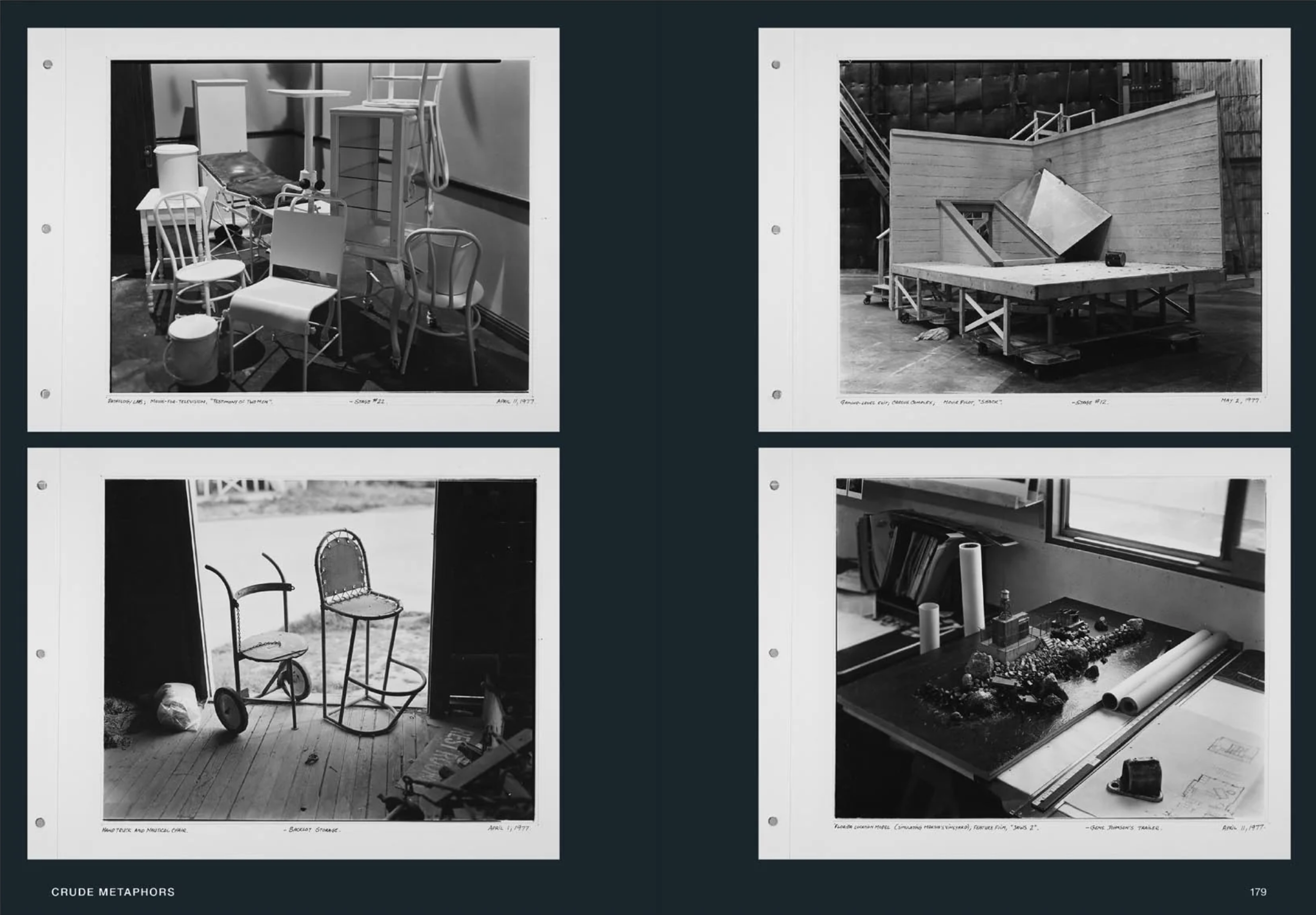
We recently sat down with David Campany to discuss a rather beautiful book he edited for us last year: Robert Cumming’s Very Pictorial Conceptual Art.

Cumming, who emerged in the 1970s Los Angeles art scene, was a quietly subversive figure in the world of conceptual photography. Trained as a painter and sculptor, he brought a meticulous, almost theatrical sensibility to the construction of his photographs—images that confound as much as they delight. His work is precise yet joyfully unresolvable: objects staged for the camera with the kind of studied mischief found in the margins of an architect’s sketchpad—part instruction manual, part visual riddle. The pictures remain playful without tipping into novelty, serious without ever turning solemn.

For this book, David brought a distinctive sensibility to the archive: selecting and arranging images with the quiet care of someone in conversation with the artist across time.

S/B: You are a writer, a curator, an image maker and a teacher. Do you find it difficult toggling between hats?

David Campany C: Not at all. Each is different but each provides its own way of being with photography – coming to understand it, thinking about it, and enjoying it.  Writing is intense in its solitary dimension. Teaching is deeply social. Image making is a lovely combination of thought and intuition.  I need them all. One of them alone wouldn’t work for me.

S/B: What’s the first photograph you remember having more than a passing interest in? 

DC: Difficult to say. I think it was the magazine feature in which the fists of the boxers Muhammad Ali and George Foreman were reproduced actual size. I would have been seven years old seven. In 2022 I was able to includes that magazine spread in an exhibition about actual size images. That was a nice feeling.

S/B: We seem to find ourselves at a moment when we are being bombarded with information. Look away from a screen for a week, and the world seems hardly recognisable. Do you still see a purpose for looking back at artist archives?

DC: I have never felt this, although I do understand it’s how many people feel. I hear the complaint often that there are too many images in the world (when did we reach a comfortable number??). The complaint is not new. It first appears in the 1920s during that sudden growth of what we now call the mass media. That’s where we first hear talk of ‘bombardment’, ‘flooding’  and ‘overloading’ by images. Whether you feel we are or not, it’s definitely helpful to put it in a historical perspective. It’s not an internet thing or smartphone thing.  I have a hunch the excess of photography is really nothing to do with the number of images. Each and every photograph is excessive, with more information than anyone could want. That’s the bombardment; that’s the overload. Open the shutter and the world as light floods in.

S/B: How did you first come across Robert Cumming’s Work? 

DC: I think I first came across Robert Cumming’s photographs in an old 1970s catalogue from California, for a group exhibition.  His strange but exquisitely made images seemed like nothing else I had seen. They still don’t. I could see something of a conceptual artist, driven by ideas and instructions, hypotheses and method. But there was such care and joy taken in the crafting of these pictures. I kept looking for more publications and eventually discovered h has self published quite a few books, so I tracked down those. Soon a whole Cumming universe seemed to open up.

S/B: Robert’s images are a joy to spend time with, but never tip over into one liners. What is your relationship with humour in art? 

DC: I generally think humour in art is a bad idea. But then bad ideas can sometimes make good art. Cumming seemed to intuit this. In the passage from idea to image something genuinely humorous but also profound and philosophical might emerge. He often said he never claimed to be funny but he knew humour was a consequence of what he was doing and making.

S/B: Would you describe Cummings’ work as mischievous?

DC: Yes, I do, in the sense that he took a certain pleasure from the fact that his work confounded expectations – perceptual expectations, aesthetic expectations, and also expectations of what an artist can been. I don’t think he set out to be mischievous, but he soon realised his approach was. 

S/B: Much of Cumming’s work seems to play with the boundaries between photography and sculpture. Do you see him more as a photographer who built things, or a sculptor who photographed?

DC: I see Cumming as an artist who had the insight that one could be a sculptor in the service of photography and a photographer in the service of sculpture.

S/B: Is there an image that you feel encompasses the book best? 

DC: ‘Watermelon/Bread’, which is quite an early work, is a favourite with many people, including me. A slice of bread sits perfectly embedded into the side of a watermelon, on a busy kitchen table. We have no idea why, or even why it occurred to Cumming to make this, but there it is. All the objects are familiar but the arrangement is so endearingly odd, but because the image is so perfectly well made, we just accept it as a fact, somehow. It’s like a still life from a lucid dream.

S/B: Did you find any surprises in Cumming’s archive that challenged how you’d previously read the work?

DC: Oh, there are endless surprises. I haven’t fully come to terms with the scope of his achievement even in his photography, let alone in painting, 3-D work and his book making. There is a big retrospective exhibition in the works and it’s going to be full of surprises.

S/B: The book requires several small design decisions to display Roberts’s work, could you talk me through what qualifies a diptych?  

DC: It qualities as a diptych if Robert said it was a diptych, and who are we to question it? Haha. He was quite precise. We followed Robert’s instructions very carefully in the book.  Diptychs are reproduced with a small gap between them, whereas pairings that I have made across the book’s spreads have a slightly wider gap. Then there are gatefolds for some multi-panel works, so that we don’t compromise the size of the images. Our book reproduces Robert’s work large on the page, so you can see all the amazing details he was able to capture with his 8×10 inch camera.

S/B: It feels distinctly American, but also oddly placeless. 

DC: There was a moment in the 1970s, particularly in California, when a number of artists were fabricating things to be photographed. That’s one context. There’s also something in Cumming’s idiosyncratic single-mindedness and self-taught know-how that feels somewhat American to me. Although he didn’t really see the connection to the art of Marcel Duchamp – with all its arcane craft, oblique humour and odd digressions that turned out to be far ahead of their time – I do, and very clearly. It’s interesting that Duchamp led a very transatlantic life and his art feels neither particularly American nor European.


S/B: Where do you locate him in the broader context of American conceptual photography?

DC: In the gaps and in the overlaps.

S/B: Do you think there’s a lineage between Cumming and contemporary artists working today?

DC: There’s a lineage but I couldn’t say for sure that it’s a direct influence. I certainly see affinities between Cumming and artists such as Lucas Blalock, Thomas Albdorf, Peter Puklus, and Shannon Ebner, for example. The impulse to make things and then photograph them is widespread today.

You can see more of Robert Cummings book here

Phoebe Cummings, Between Heaven and Earth

Posted on by David Campany

Intricate botanical forms, Baroque one moment and science fiction the next, appear to sprout and multiply. Drained of greens and the colours of flowers, the forms intensify and estrange our expectations of plant life. This is the work of British artist Phoebe Cummings. Her material is raw clay, the most primal of all substances. Give a lump of clay to a child, watch them transform it in their hands, and you can sense how connected we all are to its essential properties.

Very often, Cummings does not fire or glaze her clay to make it permanent. As it dries it becomes brittle, cracking and shedding in response to the atmosphere and vibrations. In art galleries, it lasts as long as the exhibition. Out in nature, wind and rain can reclaim it in minutes. All her artistic labour collapses and the clay returns to the base matter from which it came, leaving no trace but its documentation.

On the page here is a photographic image of a work Cummings made on the occasion of a music festival in the Nordic town of Risør in 2023. Walking to the town’s venues, the audiences might have come across it by chance. She recalls, “I was interested in the work as a performance between clay and the weather, and the way in which, like music, it belongs ultimately to the air.”

So much of the art we experience today comes to us as photographic reproduction. Books, catalogues, magazines, websites. Artworks must pass through a lens, mutating in the process. In being so temporary, Cummings’ art both relies upon and escapes the camera’s capture in particular ways. Yes, the image allows us to see what might have otherwise appeared and disappeared unseen. Yes, the camera’s attention to light and detail gives us a sense of Cummings’ craft. Each clay stem, leaf, root, and petal bear the impression of her own body – the lines on the palm of her hand, the smoothness of her inner arm, even the curve of her jawline. But does photography betray art of this kind? An image cannot allow us to walk around a sculpture, or feel it occupying its place. Still and mute, a photograph cannot capture the changes over time that are so characteristic of Cummings’ work. Temperature, humidity, odour, and texture all escape the image. We can feel we have experienced what in fact we have not.

Phoebe Cummings is careful with her camera. After immersing herself in the soft, wet materiality she cleans up and makes photographs. She knows the camera can compromise even as it idealises. It is easy to make an impressive photograph that makes us believe its vision is total. It is more difficult to make one that hints at what cannot be shown. Photography is an art unto itself, and how this art transforms the other arts is a delicate matter.

Italian version:

Grovigli botanici tra Barocco e fantascienza sembrano germogliare, moltiplicarsi. Private del verde e delle tinte dei petali, queste forme espandono e stravolgono le nostre aspettative sul mondo vegetale. Ogni stelo, foglia o radice reca l’impronta del corpo dell’artista che li ha realizzati: le linee del palmo della mano, la morbidezza del braccio, persino la curva della mascella. Per il suo lavoro, la britannica Phoebe Cummings usa un materiale primordiale, l’argilla grezza. Datene un pezzo a un bambino osservatelo mentre lo trasforma tra le mani e percepirete quanto siamo tutti legati alle sue proprietà elementari. Cummings non la cuoce né la smalta per renderla resistente. Man mano che si asciuga diventa fragile, si screpola e si sbriciola in risposta ad atmosfera e vibrazioni. Nelle gallerie le opere durano quanto la mostra. All’aperto, il vento e la pioggia possono riappropriarsi della materia in pochi minuti. Tutti gli sforzi dell’artista collassano, e l’argilla ritorna allo stato originario, senza che le sculture lascino traccia se non la loro documentazione.

In questa pagina si vede la fotografia di Between Heaven and Earth, realizzata da Cummings in occasione di un festival musicale nella città norvegese di Risør nel 2023. Il pubblico potrebbe essersi imbattuto nel lavoro per caso, camminando da un evento all’altro. “Mi interessava creare una performance tra gli agenti atmosferici e l’argilla”, ricorda l’artista; “in fondo anche questa appartiene all’aria, come la musica”.

Ormai gran parte dell’arte viene fruita come riproduzione fotografica. Libri, cataloghi, riviste, siti web. Le opere attraversano una lente e subiscono una mutazione. Nell’essere così effimere, quelle di Cummings dipendono dall’obiettivo e allo stesso tempo, in modo singolare, gli sfuggono. Certo, l’immagine ci permette di vedere ciò che altrimenti sarebbe apparso per poi scomparire senza essere visto. E la sensibilità della camera alla luce e ai dettagli ci dà un’idea della maestria dell’artista. Ma questa non è una forma di tradimento della sua disciplina? Un’immagine non ci permette di camminare attorno a una scultura né di percepire il modo in cui occupa lo spazio. Immobile e muta, non può catturare i mutamenti nel tempo, così caratteristici dei lavori di Cummings. La temperatura, l’umidità, l’odore e la matericità sfuggono alla fotografia. Potremmo avere la sensazione ingannevole di aver vissuto qualcosa, ma non è così.

Phoebe Cummings è accorta: dopo essersi immersa nella materia morbida e umida, pulisce tutto e scatta. Sa bene che quel mezzo distorce idealizzando. È facile ottenere un’immagine suggestiva con una parvenza di completezza. È più difficile realizzarne una che accenni a ciò che non può essere mostrato. La fotografia è un’arte a sé, e il modo in cui trasforma le altre è una questione delicata.

Béatrice Helg: Modern Hesitation

Posted on by David Campany

As I was beginning to gather my thoughts for this essay, I showed an earlier publication of Beatrice Helg’s work to an artist friend. She looked at it slowly. “These are extraordinary sculptures and installations, and they have been documented so beautifully,” she exhaled, with a mix of admiration, wonder and curiosity. I was on the cusp of pointing out that Helg’s photographs are the art, not the documentation of the art, but hesitated. Perhaps my friend’s response was led by being a sculptor and installation artist herself. Or perhaps it was the manner in which I shared the work, passing her a book, which somehow opened up the pleasurable confusion rather more than seeing Helg’s photographs in an exhibition might have done. Clearly, there is a sense in which Helg is a sculptor and an installation artist, as well as a photographic artist, and this would be so whether or not she was responsible for creating whatever was in front of her camera, or merely encountering it. It is her sensibility, for want of a better word, that is sculptural, installational, and photographic.

Making things or arranging environments and then photographing them has a long history. It was there in the 1920s in the work of Florence Henri and Man Ray, for example. It is there in the conceptual and post-conceptual work of Barbara Kasten, Robert Cumming, John Divola, David Haxton, and James Casebere. It is there in the expanded idea of the studio still life that we find in the work of Lucas Blalock, Jo Dennis and Anastasia Samoylova, among younger artists. Indeed, in the mid-to-late 1970s, when Helg was a student at the California College of Arts and Crafts, and then at the Brooks Institute in Santa Barbara, fabricating things to be photographed was a rich and excitingly open field. Many artists, particularly on the west coast of the USA, were exploring it. There was a free casting aside of the weighty dogma of modernist purity and medium specificity, to enter instead those once forbidden areas where the different arts overlap and intersect. How could photography not have a relation to sculpture and installation (or indeed to painting, architecture, cinema, theatre, and literature)? More to the point, how could the specific qualities of photography not reveal themselves through those overlaps and intersections?

I do not know for sure if Helg was shaped by that moment in Californian art. She certainly would not need to have been. Plenty of artists arrive at what they are doing quite without knowledge of precedents or parallels. Photography lets an artist dive right in, and finding that others have worked in a similar vein can be more of an affirmation than an influence. Whatever the case, it is clear that making work in this way has been enormously generative for Helg and for the many admirers of her work over a number of decades.

As with the work of Giorgio Morandi, Agnes Martin, Donald Judd or Vija Celmins, what seems at first to be a small and defined artistic territory slowly expands to become its own universe. Helg has her own universe: something about the movement between making, photographing, and making exhibitions – from environments to photographic objects, to photo-architectural spaces – is specific enough and expansive enough to make it so.

Of course, we were not there, so we cannot know exactly what was on front of Helg’s camera. We can only surmise on the basis of these ambiguous photographs, so already we must proceed with care. What do we see? Geometric forms – circles, squares, rectangles, rhomboids, trapezoids – evoking something ancient and even Platonic, but also something twentieth century modern (Cubism, Minimalism). There are traces of images of architecture, again ancient and modern. Elemental staircases. Soaring skyscrapers. There is solidity and monumentality, opacity and reflection, fragility and translucence. The aesthetic could be Western or Eastern, and possibly both. Secular or spiritual, and possible both. And throughout, there is attention to patina and the light that reveals it. Oxidation, rust, dust, staining, weathering, aging.

Then there is the image itself. In a profound way, photography turns things into signs. Not obvious signs, but signs nonetheless. Photography theatricalizes what it appears to show us. The ‘objectness’ of objects. The ‘surfaceness’ of surfaces. The ‘spatiality’ of space. This is not the representation of drama, but rather the drama of representation, so to speak, and it is something Helg seems attuned to in quite acute ways. Photography’s attention to the surfaces of the world is at its most intense, and most illusionistic when it is deflecting attention away from its own industrially smooth surface. We do not exactly look ‘through’ a photograph to a world beyond, as if through a window, but we do not look ‘at’ the photograph either, since there is so little surface character to hold onto. Does the eye slip through the surface? No, it cannot, since there is only flatness. So where does the eye dwell, exactly? Not in any material space, but in a psychical space. Perhaps.

In 1992, the photographic artist Craigie Horsfield wrote:

The surface of a photograph, the invisible place of a photograph, tangible and constantly deferred, uncompleted and unacknowledged, is the place of its evasion. Yet it was not inevitable that it should become so. At the beginning, photographs declared the surface; the techniques of manufacture were various and in the process of discovery, and the models were painting and printmaking, where the surface was clearly articulated. In photography, whether the support was of paper, metal, glass, or cloth, the different methods necessitated a degree of manipulation of the surface. Most significantly of all, the idea of surface was engaged. However, as the convention of the world catalogues and recorded evidence became the principal motive of photography, the presence, the fact of the photograph, became increasingly insignificant, no longer looked at but looked through, as though to a world apart.

Part of the bargain struck by modernist photography in the 1920s concerned its relation to surface. If it gave up its own surface and accepted its smooth, glassy, almost invisible condition, it would be better placed to attend to the surfaces of the world. But this ‘evasion’, as Horsfield calls it, plunges photography into other paradoxes, where it lacks what we might call a sovereign relationship to its own materiality and its own scale. There is image capture (the photographic negative, positive or digital file), and then there is output (the size of print, the choice of paper, the support, and so on). A painter does not paint their painting and then decide what size it will be. A painter does not paint their painting and then decide what materials it will be made from. Scale and materiality are sovereign to painting in the way they are barely sovereign at all to photography.

While Helg has clearly developed thoughtful, elegant and rigorous ways of arriving at appropriate scales and materials for her work, that lack of sovereignty is not, and cannot be overcome. Clearly this is not a failing, especially not in Helg’s deftly considered her work. Whatever sense of physicality and scale a photographic print and its support may have, as an image it always invokes an elsewhere. That is to say, an encounter with a photograph is always an encounter with its specifics as an object in the ‘here and now’ and a latent encounter with whatever its pictorial illusion suggests.

Let us return for a moment to my artist friend’s encounter with Helg’s work in book form, in which she was encouraged to look through the photographs to the art beyond. In the early decades of the medium – the 1830s and 1840s – making images of artworks (particularly classical sculpture) was an important genre in the newly forming art of photography. It was seen as practice of refined attention. A photograph of a sculpture can only be a partial and specific account of it: a chosen angle, framing, lighting, tonality and so on makes the photograph an interpretation, not a copy or facsimile, or reproduction. Photographing artworks was thus a way for this newest artform to ingratiate itself with the established ones. Over time, however, the confusion grew and the photographic page had a lot to do with this (what Horsfield called the “world catalogues and recorded evidence”). Books of painting, sculpture and architecture came to rely on photography as form of documentation and dissemination. Meanwhile photography was still struggling to become a recognised art in its own right, and its two roles would forever be at odds. As Walter Benjamin noted back in 1931, whatever impact photography might have as art would be dwarfed by the cultural impact of the photographic reproduction of all art.

Nevertheless, that separation between photography as art and photography as the supposedly artless documentation of art, can never be absolute. Every photograph is potentially an artwork and a document, with all the tension that involves. Moreover, photography’s embrace of the world in front of the camera is an embrace of the world’s own tensions between the artfully made and the not made. The camera’s encounter with and rendering of the built world is a pertinent example, and notably so in the work of Beatrice Helg since its dialogue with modernist architecture is so complex.

As the historian Beatrice Colomina recounts in her book Privacy and Publicity, modernist architecture was really the first moment in which built form and the photographic image became inseparable. Not only did people around the world learn of architectural modernism through illustrated magazines and books of the 1920s and 30s, it was a form of architecture that had somehow internalised the image. It was ‘camera conscious,’ to use a contemporary phrase. In important ways, modernist architecture and modernist photography developed symbiotically. In general, however, they saw something pristine in each other, something unblemished and resistant to the passing of time. Modernist architecture was happy to be idolised and idealised by the camera’s immaculate image, to the point that it either mistook itself for its own image, or relied upon its image to help perpetuate its timeless fantasy of itself.

As the photographer Jeff Wall put it in relation to Mies van der Rohe’s modernist Barcelona Pavilion (erected in 1929, reconstructed on the basis of photographs in 1986):

These buildings require an especially scrupulous level of maintenance. In more traditional spaces a little dirt and grime is not such a shocking contrast to the whole concept. It can even become patina, but these Miesian buildings resist patina as much as they can.

Of course, cameras find the presence of patina just as seductive, just as photogenic, as scrupulous cleanliness. In 1924, the American artist Edward Weston, high priest of photographed surfaces, declared: ‘The camera should be used for a recording of life, for rendering the very substance and quintessence of the thing itself, whether it be polished steel or palpitating flesh. The same year, the artist and educator Laszlo Moholy-Nagy spoke of photography’s rendering of ‘the precise magic of the finest texture: in the framework of steel buildings just as much as in the foam of the sea.’ The inorganic and the organic offer themselves to the camera, which flatters them in return.

Beyond modernism then, Helg’s embrace of patina, weathering and degradation (sealed off behind her pristine prints), recalls older practices of architecture that are more accepting of the passage and ravages of time. This brings us to Le Musée Reattu, and Helg’s major exhibition in its spaces. The constellation of buildings dates back to 1562, becoming a museum in 1868 (when photography was on the cusp of cultural dominance if not artistic confidence). There were major renovations in 1956, 1964 and 1991. The historic character of the architecture is clearly present, still, as are the mutations over time. There is evidence of the buildings previous functions (especially as a priory), but there is also an engagement with the white-walled purity that was the founding context and presentational default of twentieth century modern and contemporary art.

It almost goes without saying that this nuanced and idiosyncratic blend of ancient and modern is a perfect setting for Beatrice Helg. Not only do her works embody and embrace the palimpsest of time that we see in the building, but her spatial and architectural sensibility has led her to develop and unfolding sequences of rooms in which the form and character of photographic works are in dialogue with the form and character of the building. The gallery spaces do not simply present the work; rather, the gallery spaces and the photographs are the work.

And yet, are photographs ever entirely at one with the spaces in which they are presented, indivisible from them? Do photographs not present their own spaces too, however ambiguous and uncertain they may be? Photography never quite achieves architectural or installational integration. It brings with it some memory or projection of other locations. A visitor to Beatrice Helg’s exhibition at the Musée Reattu is gifted the experience two complimentary sets of spaces, histories and sensibilities – part real, part imaginary. It is not an experience this book in your hands can gift, although a book will have its own pleasures.

David Campany, 2025

Reputations: Sebastião Salgado & Lèlia Wanick Salgado

Posted on by David Campany

Sebastião Salgado, who died earlier this year, stands among the most significant photographers of the late 20th and early 21st centuries. There was an unmistakable power to his imagery and the moral force that underscored it. The photographs were an insistence that human life, labour, conflict and the natural world demand both representation and attention. To appreciate Salgado’s life and work is to recognize his unique position: he was a witness to some of the most wrenching transformations of the modern era, a campaigning activist, and an artist who sought a difficult beauty and sense of hope.

Born in 1944 in Aimorés, in the Brazilian state of Minas Gerais, Salgado grew up in a rural environment. His early life was marked by landscapes of pastures, rivers, and forests. He trained as an economist, earning a master’s degree and undertaking work in international development. This sharpened his sensitivity to systems of inequality and the forces shaping labour and migration. Economics also gave him a framework for understanding the large structures behind poverty, displacement, war, and land management. He soon realized that photography offered a more visceral and immediate means of communication, but also something more complex and contemplative.

In 1967 Salgado married Lélia Wanick. It was she who first gave him a camera, and she who would remain intimately involved with his work in the decades to come. When the political situation in Brazil grew intolerable the couple moved to Paris. Around 1973, Salgado began to devote himself seriously to a life as a photojournalist and his career developed rapidly. He joined the photo agencies Sygma and Gamma, and by 1979 he was a member of the prestigious cooperative Magnum Photos. His affiliation with Magnum connected him to the tradition of socially engaged documentary photography exemplified by Henri Cartier-Bresson and Robert Capa. Meanwhile, Wanick established the important magazines Photo Revue and Longue Vue, as well as a gallery space for Magnum Photos. She remained the great editor, curator and champion of Salgado’s work, eventually receiving an Oscar nomination as the producer of Salt of The Earth, the 2014 documentary about him, co-directed by Wim Wenders and the son of Salgado and Wanich, Juliano Ribeiro Salgado.

Right from the start, Salgado’s images were distinguished by their classical framing and deep chiaroscuro. In some ways, he seemed a man out of time, or at least a little late. The mid-century heyday of photojournalism, when the mass circulation illustrated magazines dominated visual culture, had clearly passed. Nevertheless, here was a photographer, working in black and white, composing his shots and printing his images to wring every ounce of pictorially coded emotion from every square inch of their surfaces. If Salgado’s visual sensibilityechoed anything it was the landmark Life magazine photo essays of W. Eugene Smith. Both men were staunchly independent, almost maniacally driven perfectionists whose commitment to their chosen themes and subjects seemed to stop at nothing. Life ceased publication in 1972, just asSalgado was getting going.

In the 1980s many documentarists, Martin Parr among them, switched to colour, while also switching from photographing the world of work and production to the world of leisure and consumerism. Salgado remained the rear guard, upholding that older set of concerns, and with an aesthetic that upheld the history of heroic photojournalism that was now being packaged as books, sold as prints, and taught in the expanding world of photo education.

Salgado’s first major publication, edited by Wanick, was Other Americas, 1986. Made over a period of seven years in rural Latin America, it was gentle and lyrical work, chronicling marginalized lives with both empathy and aesthetic rigor. It was his meditation on the persistence of traditional ways of life amid modernization and political upheaval. Indigenous peoples and rural workers are not relics but living communities negotiating transition. His compositions often recalled biblical scenes (groups on hilltops, central figures surrounded by a supporting cast, often bathed in unearthly light). Quite how conscious Salgado was of these ancient pictorial strategies is a moot point, but he continued to refine and even exaggerate them, often to the ire of his critics. Couldn’t he just photograph what he saw without turning it all into a history painting?

If Other Americas represented Salgado’s lyric humanism, his photographs of the Kuwaiti oilfields in 1991 showcased his capacity to capture apocalyptic devastation. In the aftermath of the Gulf War, retreating Iraqi forces set fire to hundreds of oil wells in Kuwait, creating one of the largest man-made environmental catastrophes in history. The sky darkened with smoke, the desert became slick with oil, and firefighters battled infernos under nightmarish conditions. In retrospect, it is clear that this was a moment in which war reportage was morphing into environmentalist photography. Salgado was making depictions not of war’s immediate carnage—dead bodies or combat—but rather of its ecological and existential aftermath. Destruction lingers long after battles end. This was photography almost as allegory: a vision of geopolitics at war with the planet. It also signalled Salgado’s growing preoccupation with global issues that transcend national borders—environmental catastrophe, industrial exploitation, and the consequences of modern economies dependent on extractive industries. Oil is a problem even when its wells are not being sabotaged.

Workers: An Archaeology of the Industrial Age was Salgado’s magnum opus on labour in the modern world. Published in 1993 after six years of work, it spanned continents and industries, presenting a vast visual archive of manual work. Miners in Brazil, ship breakers in Bangladesh, steel workers in China, coffee pickers in Central America, and countless others. The unifying theme was the dignity and intensity of human physical labour. At a time when automation and globalization were already transforming economies, Workers can be read as both celebration and elegy. It reveals the immense energy and sacrifice of workers whose toil built the contemporary world, while also suggesting that such forms of work were vanishing in the electronic age. Salgado framed labour not simply as an economic activity but as a cultural and historical phenomenon, something that deserves serious documentation.

Critics sometimes accused Salgado of aestheticizing suffering, of making exploitation look beautiful. Defenders argued that his commitment to form was inseparable from his grounded and engaged humanism. Seen as ‘iconic’ photographs alone on a gallery wall or the in white expanse of a coffee-table book, it can be hard to disagree with the critics. But that’s what happens when photographs are plucked from the bodies of work, and from the captions and stories from which they come. It seems churlish to blame Salgado for making sustained bodies of work that contained so many striking photographs.  

In 1998, Salgado and Wanick founded the Instituto Terra, a non-profit organization focused on environmental restorationand research, and reforestation in the Vale do Rio Doce region of Brazil. The area was a former cattle farm of utterly degraded land. Meanwhile Salgado was turning his cameraincreasingly toward environmental subjects, culminating in his project Amazônia 2021. Over several years he travelledthrough the Brazilian Amazon, working with Indigenous communities. The photographs present lush forests, sweeping rivers, and portraits, emphasizing ecological balance and cultural continuity. Indigenous peoples are understood as stewards of the environment, guardians of a knowledge that modern society is in danger of destroying. Amazônia also carried a strong activist dimension with a call to preserve the planet’s lungs.

It is worth noting that by this point Salgado had fully embraced digital photography, while still adhering to a black and white aesthetic rooted in the traditional photographic darkroom. He had found a way to manipulate his image files and then make prints that mimicked the highly wrought look of his analogue work. Many assumed he had simply ignored the digital realm altogether, rather than bending it to his own aesthetic will.    

It was around the time of the publication of Amazônia that I first met Salgado, hosting an online conversation with him for the International Center of Photography (ICP), where I am Creative Director. We were joined by an audience of over two thousand people from around the world – a testament to Salgado’s passionate global following. ICP has been particularly important for the reception and recognition of his work in the US. Founded by Cornell Capa in 1974, it has long championed concerned photography’ that is committed to social engagement and justice, an ethos well aligned with Salgado’s own, and we have hosted major exhibitions of hiswork, including Workers and Migrations.

I last saw Sebastião at his busy studio and office in Paris, in 2023. Gracious and welcoming, we sat and talked as he explained the incredible progress of the Instituto Terra and the reception of the Amazônia project. His public image was always of a man looking forward, embattled but optimistic, with a love of detail but an understanding wide enough to get big, visionary things done. In conversation however, a certain melancholy crept in, and with a moist eye. He never seemed to me a man of regret, but there was a sense that life – human life, and his own particular life, had taken a wrong turn with no path back, only forward. I wondered whether his attraction to photography, and Lélia’s inspired hunch that it would be his medium, were somehow connected with the camera’sapparent stopping of time, pausing the world between an irrecoverable past and a future both foreseen and unforeseen. “Come downstairs!”, he announced with a clap of his hands. In the basement, a dedicated team was embarked upon the gargantuan task of organizing and digitally archiving his life’s work. Half a century of intense photographic observation on every continent. Many extraordinary images, overlooked when they were first taken, were being discovered on his contact sheets.

When a major photographer dies, there is usually a period of a few years, perhaps half a decade, in which they are reduced to a media friendly set of ‘greatest hits.’ Undoubtedly, SebastiãoSalgado’s hits are as great as anyone’s. After a while, however, curiosity and the corrective nature of history revisits the work. Salgado left us as one of the most famous and influential photographers there has ever been, but I suspect we have yet to see the full scope of his achievement, and the full value of his legacy. No doubt Lélia Wanick will play a role in this, while the exemplary work of the Instituto Terra will continue.


Mythic Shores: Power and Politics Across the Mediterranean

Posted on by David Campany

In this essay, David Campany considers historical and contemporary photographic representations of the Mediterranean Sea.

In 1989, Hiroshi Sugimoto looked out over the Mediterranean Sea from Cassis to make one of his now-familiar seascape photographs. Shot from an elevated vantage point, the picture is half occupied by featureless water, below an equally featureless sky. No culture, no politics, no people, no land, no aircraft, no boats. Uncannily calm and eventless, the image evokes an almost-primordial past. It also invites any projections we may have of the very real facts of the sea’s present. It is hardly as if nothing happens in the Mediterranean.

hiroshi-sgimoto-mediterranean-sea-cassis-i
Hiroshi Sugimoto, Mediterranean Sea, Cassis I, 1989, gelatin silver print, 42 × 54 cm. Courtesy: © Hiroshi Sugimoto, Fraenkel Gallery, San Francisco and Lisson Gallery

Sugimoto’s photograph could hang in an exhibition about minimalism or about the cosmic spirituality of water or the fraught politics of the region. For a photograph, context is not everything but it is a lot, since the photographic image has no way of explaining what it visually describes, no way of asserting particular meanings, and no way of accounting for what might have motivated its creation. This is why photographers – and writers on photography – are often so keen to supply the missing intentions and back stories, speaking over and on behalf of that stubborn muteness, which is also a kind of radical openness. Seas are somewhat like this, too.

Even the name ‘Mediterranean’ is at once specific and elusive. Derived from the Latin mer mediterraneum (sea in the middle of the land), it carries a distant echo of the geological fact that it was once a sea which dried up completely six million years ago, only to flood again. Its present-day complexity becomes more apparent on a map. Trace your finger anticlockwise from the clenched jaw of the Mediterranean Sea, eastward along the north African coast, and back westward around the meandering southern edge of Europe to that anomalous British territory at Spain’s southern tip, and you lasso the impossible. Tangier, Oran, Algiers, Tunis, Tripoli, Alexandria, Gaza, Tel Aviv, Beirut, Mersin, Antalya, Rhodes, Athens, Valletta, Palermo, Marseille, Barcelona, Gibraltar. The rush of ideas and mental impressions held in this circumference is incommensurable, and the subject risks losing all useful meaning to lean instead on vague romances of the sea.

allan-sekula-exxon-valdez
Allan Sekula, The rechristened Exxon Valdez awaiting sea trials after repairs. National Steel and Shipbuilding Company. San Diego harbor. August 1990, 1990, ‘Fish Story’, 1989–1995, Cibachrome print, 59 × 83 × 4 cm. Courtesy: Allan Sekula Studio

The artist and writer Allan Sekula picked up on this tendency to gloss over the politics of the sea with comforting poetics. In 1990 the oil tanker Exxon Valdez, which had spilled 11 million gallons of crude oil into Prince William Sound on the south coast of Alaska a year earlier, was undergoing post-repair tests in San Diego harbour, California. To erase its notoriety, it was being renamed Exxon Mediterranean. Evoking a mythic sea 11,000 kilometres from the catastrophe was never going to be enough, especially with ‘Exxon’ still in its name. In Sekula’s gloomily un-Californian photograph, the vessel hulks like a paroled criminal hoping for a new identity in the far-off sun. Good weather has long been at the core of North American and Northern European idealizations of the Mediterranean. Vacations. Warm waters. Relaxation. The image was included in Sekula’s book and exhibition ‘Fish Story’ (1995). 30 years on, this photo-text epic of the sea stands as something of a stubborn prophecy, with its cautionary tales of trade wars, dangerous voyages of migration and ecological damage. While the myths of the Mediterranean persist in tourist propaganda, the region’s condition as a space of extraction, exploitation, difficult labour and geopolitical instability is now much more difficult to ignore.

anastasia-samoylova-view-from-a-cliff-monaco
Anastasia Samoylova, View from a Cliff, Monaco, 2022, photograph, 81 × 102 cm. Courtesy: the artist

Anastasia Samoylova, a resident of Miami Beach, depicts trouble in various wealthy paradises around the world. In 2022, sponsored by the high-end camera manufacturer Leica, she was in the monied playground of Monaco, that sovereign state on the riviera of fortress Europe. At the sea’s edge, she photographed downwards through lush vegetation as if from an overgrown castle. We see the azure water and the prow of a pleasure boat. The framing is pretty and the palette gorgeous, but the precipitous angle is just a little unsettling. An active mind will know the water that laps here also laps far less pampered parts of the Mediterranean. It’s the way a sea connects disparate places that gives it an unstable and disruptive power. It can sweep you away. Samoylova’s View from a Cliff, Monaco could be idyllic or nightmarish. She has made her name of late with knowing and calculated imagery benign enough to hang comfortably on the walls of those whose values she might just be criticising. Without captions her photographs permit one reading, then another. The word ‘Monaco’ in the title here could be enough to seduce her clientele into buying a print, while signalling something more damning to the rest of us. In these days of art as activism, the idea that ambiguity – unemphatic, risky, prone to complicity – could make for effective critique does not sit well with politically minded audiences wanting a clear position. But ambiguity is, in many ways, art’s most subversive if overlooked quality. It is also photography’s root condition.

daniel-castro-garcia-peri-tera
Daniel Castro Garcia, Ibra and the Rescue Mission, 2018, film still, ‘I Peri N’Tera’, 2015–ongoing. Courtesy: the artist

It is 1,500 kilometres from Monaco to Sicily, the Italian island at the heart of Daniel Castro Garcia’s decade-long project, ‘I Peri N’Tera’. In 2015, the photographer was shocked at the BBC’s unsympathetic and racially stereotyping news coverage of two boats that overturned in waters between Libya and Italy, leaving hundreds dead. It prompted Castro Garcia’s layered account of migration and the lives it impacts. His project title is a Sicilian colloquialism meaning, ‘Keep your feet on the ground.’ He got to know 12 boys who had been rescued during dangerous sea crossings from north Africa, and were living in the Zingale-Aquino Reception Centre for Unaccompanied Minors in Enna, Sicily, where they awaited relocation. Castro Garcia’s photographs and short films move between documentary realism and metaphor, but he is always alert to what Walter Benjamin called the ‘dialectical image’, in which the paradoxes of a situation become startlingly clear. In his video Ibra and the Rescue Mission(2017), Castro Garcia collaborates with a young man named Ibra, originally from Gambia. He films Ibra as he watches on his phone a YouTube clip of a search and rescue operation in the Mediterranean, much like the one that brought him to Sicily. Ibra would view this footage over and over. It helped him to work through his trauma, allowing him to focus on his dream of joining Médecins Sans Frontières and aiding in the rescue of others. Castro Garcia invites us to watch Ibra watching this harrowing imagery with its unexpectedly cathartic purpose.

alex-majoli-lesbos-greece
Alex Majoli, Refugees and migrants from Syria, Afghan­istan, Pakistan and Somalia, arrive on the northern shores of Lesbos Island after their journey from the Turkish coast, Lesbos, Greece, 2015. Courtesy and photograph: Alex Majoli/Magnum Photos

There is a similar double register in Alex Majoli’s trans-national project, SCENE (2011–19). Majoli takes his cue from Luigi Pirandello’s play Six Characters in Search of an Author, first performed in 1921. Its plot concerns a theatre director and actors who, while rehearsing, are interrupted by strangers. The presence of these strangers, with their complicated relationships and difficult pasts, forces the director to rewrite the script to accommodate them. The play is more than a theatrical game: Pirandello is interested in our relation to the demands of strangers and the adjustments we are obliged to make. How do we reset the ‘plot’ of our life, our society? The play within a play opens up an unexpected space to consider these issues.

A large part of Majoli’s SCENE concerns migration and, in 2015, he was based on the Greek island of Lesbos, which for reasons to do with European Union policy had become an eastern gateway for those wishing to enter Europe from Turkey. With a background in photojournalism, Majoli was searching for ways to balance the medium’s supposedly privileged access to actuality with something more theatrical that might counter the default visualizations of migrant and refugee experience. He took to using incredibly bright, off-camera flash in daylight, exposing for the highlights, and letting the rest of the scene fall into soupy darkness. His black and white images, some of which show people scrambling ashore from small boats, temper the evident urgency with something between crepuscular moonlight and an indoor stage. Yes, this approach runs the risk of inflecting real tragedy with art, but we’d do well to ask ourselves what kind of light is acceptable in photographs of such situations, if Majoli’s is not. Flash is part of most photojournalists’ tool kits, although generally it is used to fill in shadows, not transform the entire picture.


adam-rouhana-ain-aouja
Adam Rouhana, Ain Aouja (عين العوجا), taken at Ain al-Aouja spring near Jericho, 2022, archival pigment print, 148 × 222 cm. Courtesy: the artist

Photographs by the Palestinian-American Adam Rouhana also aim to resist familiar representations, although they could not look more naturalistic and easy going, but that’s precisely their point. His primary subject is everyday life in contemporary Palestine: its pleasures, its moments of imaginative freedom, the unlikely joys and bursts of good humour that are hard-won and cherished amid the ongoing brutalities. We have all seen images of Palestinian death and devastation. Rouhana’s photographs often show scenes of light relief, which in itself seems a determinedly political act of resistance and hope. Against the constant demonizing and dehumanizing, what could be more openhearted and human than joy and play? Some of Rouhana’s most ebullient images are of children and young adults having fun in the sea. Gaza has 40 kilometres of Mediterranean coastline. The sea here is itself an intensely militarized zone, with boat traffic and fishing constantly in the cross hairs.

Several years in the making, Rouhana’s project, titled ‘Before Freedom’ (2022–ongoing) and due to be published as a photobook soon, also includes scenes of occupation, colonization and the daily infringements that have made Palestinian life intolerable for so long now. What does it mean to make a book in the midst of such horror? Books carry with them a sense of posterity, of unknown audiences yet to be. That’s why we want to make them. And while we may own books, there is an implicit sense that they will not be destroyed, but will outlive us. We cannot say the same of magazines, websites or exhibitions, all of which feel more like finite events in time that come and go. As the photographer Dayanita Singh once put it, ‘A book is a conversation with a stranger in the future’.

jean-luc-godard-film-socialisme
Jean-Luc Godard, Film Socialisme, 2010, film still. Courtesy: VEGA Film

Documentary form had reengaged its experimental roots over the last generation or so, coming close to British filmmaker John Grierson’s founding definition from 1928: ‘The creative treatment of actuality with a social purpose.’ Form is no longer a given, and this seems particularly so in contemporary representations of the Mediterranean. Exactly how it is to be pictured is by no means clear, or obvious. If there is a recurring motif across the great range of attempts to come to terms with the subject, it is the boat or ship. From overloaded crafts carrying migrants, to tankers, container ships, fishing vessels, tourist liners and military boats, nothing else seems capable of registering the movements – local and global, physical and economic – that make the region such a flashpoint. The late Jean Luc-Godard shot the first third of his drama documentary feature Film Socialisme (2010) on a real Mediterranean cruise liner, the Costa Concordia. A sort of seafaring Las Vegas, the ship – a limbo of unreal luxury – allowed Godard to string together observational and fictional material in a shifting film essay. The passengers included a United Nations official, a Russian detective, a war criminal and the bourgeoisie’s go-to bohemian poet-musician, Patti Smith. The ship docked in various ports but the consumer experience was fleeting, disconnected and bleakly alienated. Upon its initial release, this was also what I thought of Film Socialisme itself. It teases with occasionally profound insights into the complex determinations of modern life, while tipping into an incoherent cacophony of references and allusions. Two years later, I saw news footage of the Costa Concordia on its side in shallow waters off Italy’s Isola del Giglio. Its captain was soon prosecuted for manslaughter. Amid the geopolitical turmoil that was leading to the awful deaths at sea of so many migrants, 32 people lost their lives on a capsized luxury cruise ship. Suddenly, the mess of Godard’s movie made much more sense. A decade on, Film Socialisme seems to be undergoing something of a reappraisal as one of the more telling accounts of the multiple and conflicting determinants of the Mediterranean today.

Paola Pivi, The Alicudi Project, 2001–ongoing, exhibition view, Actual Size! Photography and Life Scale, International Center of Photography, New York. Curator: David Campany


One of the instabilities of lens-based images that we seem to take for granted is their loose way with scale. Not only do they show us things reduced (and sometimes enlarged), but the image itself can be scaled according to use. One moment it’s an Instagram post, then a billboard, then a page of a book or a magazine. Such promiscuity seems so normal that it takes a special kind of presentation to make us think about it. In 2001, Paola Pivi made Alicudi Project, a 1:1 sized photograph of a volcanic island north of Sicily. Although Alicudi is small, at about three kilometres wide, only a fraction of the complete image – which would require 3,750 scrolls, measuring a total of 500 x 1822.5 metres – can be exhibited at any one time. It’s an absurdist work but, like all good absurdism, there is something profound about it. In 2022, as curator of the exhibition ‘Actual Size! Photography at Life Scale’ at the International Center of Photography in New York, I presented two scrolls from Pivi’s Alicudi Project on the double-height wall of the main gallery – one of the few venues large enough to take them. Although pixelated, the image clearly showed a section of the island’s steep, rocky cliffside. One day, I brought a friend to see it. She looked it up and down and said: ‘Imagine coming all the way across the Mediterranean by boat and having to climb that.’

Fotografia e cinema, diversi ma connessi

Posted on by David Campany

Fotografia e cinema, diversi ma connessi

Lo scrittore e curatore David Campanyriflette sulla permeabilità tra i due linguaggi dalle origini all’Intelligenza Artificiale

David Campany, creative director dell’International Center of Photography di New York, scrittore e curatore, è una delle voci più acute nella riflessione sul rapporto tra fotografia e cinema. Ha esplorato questa relazione in alcuni libri fondamentali, tra cui On Photographs (2020) e Photography and Cinema (2008), e soprattutto in The Cinematic (2007), antologia che raccoglie numerosi testi chiave sulla dialettica tra immagine fissa e immagine in movimento.

Nell’intervista che segue, Campany riflette sulla crescente permeabilità tra i due linguaggi: dall’estetica cinematografica nella fotografia contemporanea alle nuove intersezioni rese possibili dal digitale, per poi interrogarsi sulla persistenza della fotografia in quanto arte della staticità in un’epoca dominata dal flusso visivo.

Negli ultimi anni, il legame tra cinema e fotografia si è rafforzato, come provano la recente mostra di Wim Wenders a New York, il coinvolgimento di Jim Jarmusch a Paris Photo e i libri fotografici di Yorgos Lanthimos per Mack. Cosa rivelano questi progetti sull’evoluzione del rapporto tra i registi e l’immagine fissa?
Già i Lumière, con il loro background, integravano la fotografia nei film. Negli anni Venti, la mostra «Film und Foto» approfondì questo legame, avvicinando la fotografia al cinema anziché alla pittura. Esistono poi forme ibride, come il racconto fotografico e il foto-saggio, e molti registi hanno radici lì, nella fotografia: Stanley Kubrick iniziò come fotografo, mentre Helmar Lerski compì il percorso inverso. Anche Wenders, nei suoi primi film, spesso ritraeva personaggi intenti a scattare foto e si ispirava all’immagine fissa. Forse oggi viviamo un rinnovato interesse per il rapporto tra fotografia e cinema, anche se il dialogo è sempre stato vivo: chiunque può scattare foto e girare video, rendendo questa connessione ancora più evidente.

Questo rapporto è diventato più simbiotico o competitivo?
Entrambi. I fotografi spesso riflettono sul cinema, il che li porta a interrogarsi su ciò che la fotografia può fare e il cinema no. Allo stesso modo, i registi ispirati dalla fotografia la apprezzano profondamente, pur sapendo che il loro linguaggio è molto diverso, benché connesso. Nell’arte esiste sempre una tensione tra il simbiotico e il competitivo. Essere in competizione con qualcosa significa avere un legame forte con essa. La fotografia può scegliere se confrontarsi con il cinema, con la pittura, con la scultura… o con niente.

Crede che la fotografia contemporanea stia diventando sempre più «cinematica»?
La fotografia, nella sua essenza, si basa sulla staticità. Tuttavia, ogni foto ha un rapporto unico con tempo e spazio. Pochi fotografi cercano immagini completamente singole: la maggior parte lavora su serie o sequenze, come se una sola non bastasse. Jeff Wall è uno dei rari autori a concentrarsi su questo. Benché sia accostato al cinema, il suo interesse sta nell’immagine silenziosa e singolare. Si parla spesso di fotografi come «visual storytellers», e sebbene la fotografia possa raccontare storie, farlo con una sola immagine è complesso senza il supporto del linguaggio scritto o parlato. Per questo molti superano i limiti della fotografia aggiungendo altre immagini o testi, avvicinandosi talvolta al cinema.

Artisti come Gregory Crewdson e Cindy Sherman creano immagini costruite con un’estetica cinematografica. Questo snatura la fotografia?
Mi incuriosisce quando fotografi o critici parlano di un’immagine come «cinematografica». Mi verrebbe da chiedere: che tipo di cinema avete in mente? Il cinema non ha un’estetica unica, può assomigliare a qualsiasi cosa. Quindi, quando si definisce una fotografia «cinematografica», si sta dicendo più sul proprio concetto di cinema che sulla fotografia stessa. È vero che esistono fotografie con una certa teatralità. È ciò che Cindy Sherman esplorava già quasi cinquant’anni fa, e che ritroviamo in Gregory Crewdson. Ma l’altro giorno mostravo una foto agli studenti: sembrava il reportage di un incidente in strada. In realtà era stata scattata da Alfred Eisenstaedt durante la produzione di un film di Fassbinder.

La fotografia ha davvero un’essenza?
È proprio questo l’aspetto affascinante della fotografia: non può dirti se è documentaria, cinematografica o altro. Non ha modo di garantirlo da sola. Mi chiedo spesso cosa sia davvero il cuore o la purezza della fotografia. Forse non esistono. E forse, se li conoscessimo davvero, smetteremmo di esserne affascinati. Le persone reinventano, trovano nuovi modi di fare le cose, il che dimostra che non possiamo mai definire del tutto l’essenza o i limiti di un mezzo.

Nei film dove la fotografia è centrale, per esempio in «Blow-Up», fotografare diventa narrazione. Cosa rivelano questi film sulla percezione della fotografia e dei fotografi nella società?
Penso che il cinema abbia un certo accesso alla fotografia proprio perché è molto diversa. Mi interessa sempre il modo in cui il cinema oscilla tra due visioni: da un lato, considera la fotografia come una prova, una testimonianza; dall’altro, la vede come qualcosa di inaffidabile, così come il fotografo stesso. Sarebbe interessante analizzare come i fotografi vengono ritratti nei film: spesso sembrano osservatori esterni alla società, connessi al mondo ma anche distanti.

Data la fusione sempre maggiore tra fotografia digitale e video, la distinzione con il cinema scomparirà?
Negli anni ’20 esisteva già una camera che permetteva di scattare singole immagini o brevi sequenze. Una sorta di fotocamera ibrida. Nell’era digitale invece si parla spesso della fusione tra media e della scomparsa delle distinzioni, ma questo processo è ambivalente: chiarisce l’ibridismo e, al tempo stesso, rafforza certe differenze. Siamo nel 2025, e nessuno direbbe che questo è l’anno dell’immagine fissa e silenziosa; eppure, oggi si producono più immagini fisse e silenziose che mai. Questo significa che le persone continuano ad apprezzarle, a provare un certo fascino. All’interno di questa mescolanza, si possono ancora creare fotografie che conservano l’essenza di oltre un secolo di storia, ma è possibile anche realizzare immagini che dialogano con altri media o con l’IA per esempio.

La fotografia allora può continuare a essere autonoma?
Credo sia una forma visiva autonoma e, allo stesso tempo, un elemento ibrido all’interno di un linguaggio visivo più ampio.

Su quali progetti sta lavorando? 
Sto preparando «Stop the Movie», una mostra su fotografi che hanno scattato sui set cinematografici con una visione personale, senza essere parte della produzione. Da Margaret Bourke-White a Stephen Shore, in molti hanno esplorato questo spazio. Sarà un progetto ampio, ma stimolante.

English version:

In recent years, the link between cinema and photography has strengthened, as evidenced by Wim Wenders‘ recent exhibition in New York, Jim Jarmusch’s involvement in Paris Photo and Yorgos Lanthimos’ photo books for MACK. What do these projects reveal about the evolution of the relationship between filmmakers and the still image?

Already the Lumières, with their background, were integrating photography into films. In the 1920s, the ‘Film und Foto’ exhibition deepened this link, bringing photography closer to film than painting. There are also hybrid forms, such as the photo-narrative and the photo-essay, and many filmmakers have their roots there, in photography: Stanley Kubrick began as a photographer, while Helmar Lerski took the reverse route. Even Wenders, in his early films, often portrayed characters taking pictures and was inspired by the still image.

Perhaps today we are experiencing a renewed interest in the relationship between photography and film, although the dialogue has always been alive: anyone can take photos and shoot videos, making this connection even more evident.

Has this relationship become more symbiotic or competitive?

Both. Photographers often reflect on cinema, which leads them to question what photography can do and cinema cannot. Similarly, filmmakers inspired by photography deeply appreciate it, even though they know that their language is very different, albeit connected.

In art, there is always a tension between the symbiotic and the competitive. To be in competition with something is to have a strong bond with it. Photography can choose to compete with cinema, with painting, with sculpture… or with nothing.

Do you believe that contemporary photography is becoming increasingly ‘cinematic’?

Photography, in its essence, is based on staticity. However, each photo has a unique relationship with time and space. Few photographers look for completely single images: most work in series or sequences, as if one was not enough.

Jeff Wall is one of the rare authors to focus on this. Although he is compared to film, his interest lies in the silent, singular image.

Photographers are often referred to as ‘visual storytellers’, and although photography can tell stories, doing so with a single image is complex without the support of written or spoken language. This is why many overcome the limits of photography by adding other images or texts, sometimes approaching cinema.

Artists like Gregory Crewdson and Cindy Sherman create images constructed with a cinematic aesthetic. Does this distort photography?

I am intrigued when photographers or critics refer to an image as ‘cinematic’. I would like to ask: what kind of cinema do you have in mind? Cinema does not have a unique aesthetic, it can look like anything. So when you call a photograph ‘cinematic’, you are saying more about your concept of cinema than about the photograph itself.

It is true that there are photographs with a certain theatricality. This is what Cindy Sherman explored almost fifty years ago, and what we find in Gregory Crewdson. But the other day I was showing a photo to students: it looked like a report of an accident on the street. In reality it had been taken by Alfred Eisenstaedt during the production of a Fassbinder film.

Does photography really have an essence?

That is the fascinating thing about photography: it cannot tell you whether it is documentary, cinematographic or something else. It has no way of guaranteeing this on its own. I often wonder what the heart or purity of photography really is. Maybe they don’t exist. And maybe if we really knew them, we would stop being fascinated by them. People reinvent, find new ways of doing things, which shows that we can never fully define the essence or limits of a medium.

In films where photography is central, for example in Blow-Up, photography becomes narrative. What do these films reveal about the perception of photography and photographers in society?

I think cinema has a certain access to photography precisely because it is very different. I am always interested in how cinema oscillates between two visions: on the one hand, it sees photography as evidence, as testimony; on the other hand, it sees it as something unreliable, as does the photographer himself. It would be interesting to analyse how photographers are portrayed in films: they often seem to be observers from outside society, connected to the world but also distant.

Given the increasing fusion of digital photography and video, will the distinction with cinema disappear?

In the 1920s, there was already a camera that could take single images or short sequences. A kind of hybrid camera.

In the digital era, on the other hand, we often talk about the fusion of media and the disappearance of distinctions, but this process is ambivalent: it clarifies hybridity and, at the same time, reinforces certain differences. It is 2025, and no one would say that this is the year of the still and silent image; yet more still and silent images are being produced today than ever before. This means that people continue to enjoy them, to feel a certain fascination.

Within this mixture, one can still create photographs that retain the essence of more than a century of history, but one can also make images that dialogue with other media or with AI for example.

Can photography then continue to be autonomous?

I believe it is an autonomous visual form and, at the same time, a hybrid element within a broader visual language.

What projects are you working on? Can you give us some hints about the big Jeff Wall exhibition that you will curate at Gallerie d’Italia – Turin in 2025?

I am preparing ‘Stop the Movie’, an exhibition about photographers who shot on film sets with a personal vision, without being part of the production. From Margaret Bourke-White to Stephen Shore, many have explored this space. It will be a wide-ranging but challenging project.

With Jeff Wall, on the other hand, I have often collaborated, but never in a project dedicated only to him. The exhibition in Turin will include diptychs and triptychs, many interesting visual connections. Jeff is unique in photography: his work is unlike any other.


Black & White and Color

Posted on by David Campany

‘Black & White & Color’

by David Campany for True Photo Journal n. 11

Black-and-white and/or color? It’s a perennial question. Forty-five years ago, the cultural critic Roland Barthes wrote of color as “a coating applied later on to the original truth of the black-and-white photograph […] an artifice, a cosmetic (like the kind used to paint corpses).” That’s a vivid and strange idea, and to a large degree it was generational. Born in 1915, Barthes would have seen color arrive and replace black-and-white on the cinema screen, in the illustrated magazines, family snapshots, and television. Even so, he was onto something quite profound. On your smartphone, if you switch a color photo to black-and-white you do sense a kind of coating being removed. Switch it back to color and, for a second at least, it will feel like over-painting, an excess being applied.

That notion of truth being black-and-white might also be generational. Color came first to the advertising and fashion cultures of distraction and fantasy. Documentary and photojournalism embraced it much later. Clearly, the world is not black-and-white, and a color photograph is richer in information and more realistic. But if black-and-white is thought of as beneath a color coating, it is understandable how this might play into the idea of truth underlying what is superficial.

In the analogue days, one had to choose black-and-white or color film. Some photographers worked with two cameras, shooting both. On my desk as I write, I have a copy of Life magazine from 1958 with Henri Cartier-Bresson’s mix of color and black-and-white pictures of China, and a Sunday Times Magazine from 1968 with Don McCullin’s equally mixed work from the Vietnam war. In the digital era, choosing between the two could not be simpler, technically at least, but it is noticeable how few contemporary photographers actively combine black-and-white and color.

Anastasia Samoylova is known for her sunny palettes that are a fairly accurate rendition of the sunny geographies she prefers to look at (tropical Florida and the American south). She has photographed more drab worlds – New York, Paris, London, Moscow – but she tends to include advertising billboards or store fronts within her frames, importing the full-spectrum dazzle of consumerism. Nevertheless, her main bodies of work, notably FloodZone, Floridas, Image Cities and the forthcoming Atlantic Coast all contain small but important numbers of black-and-white images. Sometimes they set the scene (the aerial views in FloodZone, her study of life at the forefront of climate change). Sometimes, they evoke classic documentary photography. Sometimes, they riff on the work of photographers in the modern canon Samoylova so admires (Walker Evans, Lee Friedlander, Berenice Abbott). But always the black-and-white amid the color unsettles, keeping us thinking about what color and its absence can mean and do.

Over a number of years, I came to know Samoylova’s work well through editing her books. From time to time I would suggest an image might be more effective in black-and-white, for itself and amid the color, as a kind of jolt or counterpoint. Initially this came as a surprise to her: editors do not usually suggest such a dramatic transformation of the work. But black-and-white soon became an important part of Samoylova’s fast-evolving practice. Last year I edited Adaptation, an overview of her work to date. At one point in the process, I assembled of folder of all her black-and-white pictures, and began to think of them as a body of work in their own right. Yes, there is certainly more restraint here than in her work overall, although that’s bound to come with draining out the luxuriant pinks, blues and greens. There is also a less contingent sense of time. Some of these photos and subjects look as if they could be decades old. Or shot yesterday. What you see here comes from that folder I put together, although I include one color picture to keep us on our toes, and within the fold of Samoylova’s way mixing things up.

I doubt there is much we can say in general about what happens when we glance between black-and-white and color. We have to think about it case-by-case, which is how we experience it. Nevertheless, I think an awareness of this phenomenon is always there in people’s minds to some extent. After all, in daily life we do still encounter black-and-white and color, even if they are uncommon in the same body of work.

Meanwhile, I notice a lot of contemporary movies are switching between the two, perhaps to distinguish dream or memory from waking life; or one place from another; or one character’s perspective from another’s. It feels contemporary but it has a long history. In The Wizard of Oz 1939, do you remember the transition from the black-and-white of Dorothy’s Kansas farmstead to the Technicolor of the yellow brick road? The farmstead interior was painted in shades of grey. Dorothy wore a black-and-white dress and black-and-white-make up. When she opens the door the colorful land of Oz really overwhelms. This was the very first color movie that millions of people saw. In A Matter of Life and Death 1946, the transition from monochrome heaven to colorful earth happens in a close up of a rose, blooming from clay-grey to bright pink on the lapel of a descending angel. “We are starved of Technicolor up there,” he sighs knowingly as he touches down in a moonlit summer forest. Is black-and-white a kind of starving? Of what? Color? Pleasure? The full life? Perhaps it is, but there’s a place for that, and you feel it when the color comes.


Do

Posted on by David Campany


Three years after the opening of the main exhibition What does the picture do? The Museum of Photography in Krakow gives readers a book with the same title. However, it is not a classic catalog, but a collection of essays, articles and stories about photography, addressed to all those who like to take and view photos.

Among the authors answering the title question were: Aleksandra Boćkowska, David Campany, Jacek Dehnel, Weronika Kobylińska, Zofia Krawiec, Maciej Marcisz, Adam Mazur, Wojciech Nowicki, Kaja Puto, Radek Rak, Milena Soporowska, Filip Springer, Marcin Stachowicz, Monika Szewczyk-Wittek and Łukasz Zaremba. The texts cover a wide range of topics – from photography as a tool of expression and emancipation, through its role in shaping images and waging wars, to the relationship with artificial intelligence.

Published jointly with the Museum of Photography in Krakow

Trzy lata po otwarciu wystawy głównej Co robi zdjęcie? Muzeum Fotografii w Krakowie oddaje w ręce czytelników książkę pod tym samym tytułem. Nie jest to jednak klasyczny katalog, lecz zbiór esejów, artykułów i opowiadań o fotografii, skierowany do wszystkich, którzy lubią robić i oglądać zdjęcia.

Wystawa główna MuFo to jedyna w Polsce ekspozycja w całości poświęcona fotografii jako fenomenowi kulturowemu. Ukazuje widzom, jak od niemal dwustu lat medium to towarzyszy człowiekowi. Tytułowe pytanie, zarówno wystawy, jak i książki, skłania do refleksji na temat tego, czym jest fotografia, ale również jaki ma wpływ na naszą rzeczywistość. Książka zachęca do krytycznego patrzenia na fotografię, a tytuł Co robi zdjęcie?prowokuje, by udzielać własne odpowiedzi. To publikacja przede wszystkim do czytania, ale też do oglądania – teksty zostały uzupełnione bogatym wyborem zdjęć ze zbiorów MuFo i nie tylko.

W gronie autorów odpowiadających na tytułowe pytanie znaleźli się: Aleksandra Boćkowska, David Campany, Jacek Dehnel, Weronika Kobylińska, Zofia Krawiec, Maciej Marcisz, Adam Mazur, Wojciech Nowicki, Kaja Puto, Radek Rak, Milena Soporowska, Filip Springer, Marcin Stachowicz, Monika Szewczyk-Wittek oraz Łukasz Zaremba. Teksty poruszają szeroki wachlarz tematów – od fotografii jako narzędzia ekspresji i emancypacji, przez jej rolę w kształtowaniu wizerunków i prowadzeniu wojen, aż po relację ze sztuczną inteligencją.

Książka wydana wspólnie z Muzeum Fotografii w Krakowie

English language version below:

‘Do’

by David Campany

To think of photography as ‘doing’ something, doing anything, is to attribute to it some kind of animate agency which, of course, it cannot possibly have. Nevertheless, this kind of thinking is perfectly commonplace in the way we discuss technologies, particularly communications technologies (‘What does an iPhone do? What does the Internet do? What do headphones do? What does a typewriter do?’ And so forth). To ask what a technology or medium ‘does’ focuses us on those properties that we think are specific to it, or which it is best at, or commonly used for. But thinking about what something does is not quite the same as thinking about what it could do. And if we ask what something could do, we open up the gap between actual use and potential use. And what if photography had nothing to do? How would we then understand it? Could we understand it? Would we be able to envisage its potential differently?

To explore these questions, it is instructive to go back and consider the origins of what we think of as photography in the 1820s and 1830s. It was then that the already-known effects of light on certain chemical substances were combined with the already-known optical properties of lenses and the camera obscura.  Bringing these things together, as Nicéphore Niépce did in France and William Henry Fox Talbot did in England, gave rise to at least a general idea of photography and its condition as a medium. I will focus here on Talbot, for reasons that will become clear.

There is a lot of research being conducted at the moment into Talbot’s position as a wealthy man with connections to all the various technologies and natural resources that the new invention required (from lens manufacture and advanced cabinet making in London, to silver mining in Central America). Talbot was at the intersection of all the key technological and material components that made early photography and its standardization possible. Photography may not have been produced as a direct response to the demands of European capitalism, industry and empire, but its development and functions were certainly shaped by them (not entirely – such matters are never entire – but substantially). Talbot was also at the intersection of the arts, sciences, and various branches of new knowledge formation that were emerging from the industrial revolution. All this made him well situated to consider what photography might ‘do’ or, to put it more practically, what individuals and society might do with it.

Talbot attempted to speculate about all this in his remarkable publication The Pencil of Nature, issued between 1844 and 1846 in six parts, each containing four photographic prints paired with short texts. In these texts, Talbot explained the technical procedure of each image, but he also extrapolated what photography could be used for, and what its status might become within the arts and sciences. Perhaps because he so embodied the values of Victorian capital and industrialism, his list has proved to be uncannily prescient. He covered everything from classification, archiving, topography, social documentary, journalism and legal evidence, to art, promotion, and the making visible of things and phenomena beyond the reach of the naked eye. He considered the possible role of photography in the formation of knowledge and as a distinct aesthetic experience. He considered how photography might describe details in ways that are more practical, useful and engaging than either drawing or writing. He noted how, through the use of a negative, prints could be made from a single source in a potentially unlimited number. He noted photography’s potential use in the copying and replicating of documents. He noted its personal functions and state functions. He noted how photography’s perplexing tension between automation and intention, between cold fact and subjective wish or desire will never be fully resolved and will therefore remain a constant source of doubt and possibility.

Most importantly perhaps, in being a work of photography and writing, Talbot’s The Pencil of Nature foreshadowed in a profound way just how entwined with text the medium would become. Talbot understood that photography would not be able to ‘do’ much without the accompaniment of words. In fact, just about every field, institution and discourse in which photography would be given a role, would be ‘scripto-visual’, as the artist and writer Victor Burgin has put it.[i] The cultures of photography are really cultures of images and words combined. Of course, this is not to say photographs and writing are the same. Far from it. It is the specific differences between the two that are the foundation of their complex intertwining.

For example, photographs show (describe), but they cannot explain nor communicate intention with any great precision. Open the shutter and the world as light floods unbidden through the lens and onto the light-sensitive surface, containing quantities of visual information that can far exceed intention. This is an excess of potential meaning and function, and it is created every time a photographic exposure is made. The details of the image are specific in ways that its proposed meaning and function are not. A photograph, any photograph, can ‘do’ or ‘be’ many different things, and to emphasise one of those things over the others usually requires language, in one form or another. Remove the language and the image reverts to open ambiguity; change the language and the function or emphasis is changed.

Just as meanings and functions may change, photography’s technological basis changes constantly. However, this is not simply a matter of ‘development’ or ‘evolution’, as if there was some natural force at work. Changes need to be desired, although these desires can be quite inchoate and open-ended. One of the many genuinely profound things about photography’s technical advances is that their uses have far exceeded any of the desires that brought them into being. This is true for all mediums and their development, but especially so for photography. We could compare this to the invention of ‘radio’. It is said that upon Marconi’s successful receiving of a radio signal sent across the Atlantic Ocean, a journalist congratulating the inventor noted that one person could now communicate with millions simultaneously. One transmitter; unlimited receivers. This was a potential that had not fully occurred to Marconi, who had been focused on point-to-point signalling, one person or location sending a message to one other. For Marconi, radio had not been about what very soon came to be called ‘broadcasting’. Within a few years, the notion of ‘radio’ seemed inseparable from ‘broadcasting’. What a medium ‘is’ and what it can ‘do’ are not the same.

Such potential can lay dormant for very long periods before it is realised. In my book Photography and Cinema, I describe the example of what came to be known as ‘bullet time’, the cinematic effect by which a moving subject appears to freeze while a movie camera’s point of view moves around it or past it.[ii] The 1999 film The Matrix popularised the technique, and since that film was set in the future, audiences at the time assumed they were watching the very latest imaging technology, something that perhaps only the new digital possibilities could have brought to photography. In fact, ‘bullet time’ could have existed as far back as the 1880s. While Eadweard Muybridge is celebrated for his rapid, consecutive frame photography of humans and animals in motion, he also experimented with simultaneous photos shot by multiple cameras of the same moving subject. If he had animated these – turning simultaneous frames into consecutive frames with his primitive but effective Zoopraxiscope projector – we would have had ‘bullet time’ over a century earlier. So, while the technique had long been possible, it had not been imagined, not been desired. Quite why it came to be desired when it did (the mid-1980s), and quite why mass audiences were ready for it when they were (the late 1990s) are fascinating and important questions I must leave to others. But this is not an isolated example. It is perfectly commonplace. While we tend to think of innovation arriving with new technological forms, it can just as well come from older forms. In photography, there is nothing to foreclose an innovative use of the Daguerreotype, just as we cannot predict what image makers might do with the latest smartphone camera app.

There is a parallel here with what we might call the historicity of the ontology of the photographic image (please forgive this slightly awkward and contradictory phrase). If we look back at the various attempts to define photography, we can see that the task never quite escapes the social and psychological circumstances of those doing the defining. Just as photography was a product of its complex circumstance, so too have been the various approaches to theorizing it. For example, in his essay ‘The Ontology of the Photographic Image’ (published in 1949 but written a little earlier), André Bazin argued that what distinguishes the photographic image is its status as a deathly trace of life that once was.[iii] Roland Barthes in his celebrated book Camera Lucida (1980) came to a similar conclusion. However, Bazin was writing in the traumatic aftermath of the Second World War, and Barthes was writing while mourning the death of his mother. In other words, both were expressing some kind of desire to hold onto and privilege particular existential aspects or potentials of photography. The medium really does have important functions in relation to loss and trauma, but that does not mean they are its ontological foundation. A child born in 2014 with a life far away from the experience of death may well have a very different take on what photography essentially ‘is’, but if her parents die suddenly or her community is plunged into war, then we would not be surprised to find that the preserving and memorial functions of photography come to the fore. The medium may switch overnight for her, from a means of ephemeral and light-hearted exchange with friends to the preservation of her past.

Very often, the new technological forms of photography have the retroactive effect of making the older forms seem simpler than they really were. The arrival of Photoshop seemed to make people think that its rapid facility with image alteration threatened the supposed purity and integrity of photography, especially in such fields as photojournalism.  The reality was quite the opposite. The era of Photoshop led to a re-evaluation of photojournalism’s past, revealing how commonplace retouching and other forms of manipulation had always been.  Moreover, Photoshop led to the establishing of a much tighter code of conduct for professionals, much greater vigilance and scrutiny around digital image manipulation in photojournalism, and thus much lower occurrences of it. (The overheated but undercooked debates about so-called ‘AI’ are also confused by this kind of retroactive misunderstanding.) The broader point, however, is that, as Talbot had pointed out, if photography is going to be classified as evidence, it will be “evidence of a novel kind”, and “what the judge and jury might say to it, is a matter which I leave to the speculation of those who possess legal acumen.”[iv] In the end, the image itself is not the testimony. Someone, or an institution, must make a claim on behalf of the image for its evidential status (language again). They can also do this on behalf of a sound recording, a drawing, or even a memory. Indeed, a child’s drawing of a witnessed event may turn out to be more significant as evidence than a photograph made by a professional journalist. Or it may not.

In a similar way, photography’s artistic or aesthetic potential will always be shadowed by its descriptive and evidential potential. It is significant that John Grierson, who coined the term ‘documentary’, described it as “the creative treatment of actuality,” with the understanding that any separation of objectivity and subjectivity would be absurd. Similarly, the filmmaker Jean-Luc Godard and the photographer Jeff Wall have noted that even if a situation is staged in a highly artificial manner, the photographic image of it is a document of that artifice. In this way, all films and photographs could be understood as documents. The reverse is also true. Any image put forward for its evidential status will also have an aesthetic status, even if this is unmentioned or disavowed in its evidential claim. You get the idea. What a photograph can ‘do’ is bound to remain an open question.

[i] Victor Burgin, ‘Seeing Sense’ (1980), The End of Art Theory, MacMillan, 1986.

[ii] David Campany, Photography and Cinema, Reaktion Books, 2008.

[iii] André Bazin, ‘The Ontology of the Photographic Image’ (1949), What is Cinema? Vol. 1, University of California Press, 2004.

[iv] William Henry Fox Talbot, The Pencil of Nature, Longman, Brown, Green, & Longmans, 1844–46.


Abstraction as Event, Event as Abstraction

Posted on by David Campany

An essay on the relation between mid-century abstraction and photography Aperture magazine n.258, ‘Photography & Painting.’

Abstraction as Event. Event as Abstraction.


Every picture-constructing advantage accumulated

over centuries is given up to the

jittery flow of events as they unfold.  —Jeff Wall


This phrase seems a perfect description of the work of abstract painters such as Joan Mitchell or Jackson Pollock, who reinvented their medium to find different ways to get loose constellations of energetic, antifigurative marks onto their canvases. The quote, however, is from Jeff Wall’s 1995 essay “‘Marks of Indifference’: Aspects of Photography in, or as, Conceptual Art,” where he uses it to describe something quite different: the model of reportage taken up by many midcentury photographers, including Henri Cartier-Bresson and Helen Levitt. Compositions could be snatched from the fleeting world in almost instantaneous acts of picture making.

On the face of it, Abstract Expressionism and photographic reportage seem to have nothing much in common beyond reaching their North American peaks in the 1950s. The former was a turning away from description and the activities of the outside world; the latter threw itself headlong into both. Each was doing what it was thought to do best in the decade when the modernist doctrine of “medium specificity” was at its most intense. Imagine a visit to the commercial galleries of New York showing almost nothing but abstract painting, then stopping at a newsstand to buy a daily paper or the weekly Life magazine full of world events frozen as pictures. Life was also where you might see a feature on the latest abstract painter, while crowds flocked to the Museum of Modern Art to see The Family of Man (1955), a world-conquering showcase for the populist art of reportage .Such is the powerful myth of that era, but it only takes a slight shift in thinking to see how deeply connected abstraction and reportage really were, and still are.

In his 1952 essay “The American Action Painters,” the art critic Harold Rosenberg noted: “At a certain moment the canvas began to appear to one American painter after another as an arena in which to act. … What was to go on the canvas was not a picture but an event.” By “event,” he meant physical gesture: The daub, scrape, or splash on a surface now understood as a repository of kinetic traces. One could think of the photographic film in a camera in a similar way, as a surface on which events could leave their impressions. Abstract painting and reportage were circling around the challenge of making jittery flows visible.

Many photographers at the experimental edge of things were fascinated by this sidelong affinity with abstraction, and their work took two distinct directions. One of these was the pushing of photography’s powers of description toward material breakdown. William Klein’s New York photographs from 1954 to 1955 incorporate motion blur, grain, vague focus, thick shadow, and blown-out highlights. Such “mistakes” could be recoded as expressions of visceral and agitated city life. Klein had already spent much of 1952 in his darkroom, holding various opaque cards with holes cut in them over the photosensitive paper, moving them around under the enlarger’s light to produce black-and-gray shapes over white backgrounds. Out in the world, it was the same swirling energy he was after. Roy DeCarava’s New York images from this time express something similar. Acres of deep, impenetrable shadow could be offered up as metaphors for everything from Black consciousness dodging the glare of white media to the compositional abstractions of jazz.

Robert Frank was finding his own ways of intertwining description with abstraction. Trolley Car, New Orleans(1955), the signature image from his book The Americans (1958/1959) is a remarkable example. The bottom of the picture presents a monochrome rendering of the painted side paneling. Through the middle runs a sequence of square portraits (white passengers at the front, Black at the back, in accordance with the racism of the time), while the panels along the top resemble a strip of 35mm frames of varying degrees of abstraction. Frank’s intention here is not the issue. Having seen and framed the situation, he captured it all in a fraction of a second, making the picture’s order all the more extraordinary Abstract painters in the 1950s were exploring what was called “all-over” composition—flat and anti-hierarchical, with incident scattered evenly across the surface. A photograph, regardless of what’s depicted, is captured when the world as light leaves its mark on the evenly primed film. An all-over canvas might take a while to complete, whereas photography is all over in an instant, so to speak.

The second dialogue with abstraction at this time involved close attention to casually haphazard marks found around cities: spilled house paint, torn posters, patches of graffiti, and the ad hoc appearance of trash and construction sites. In his photo-essay “Color Accidents,” published in the January 1958 issue of Architectural Forum, Walker Evans noted that there were public walls offering as much visual fascination as anything on view in the upscale galleries. All one had to do was look carefully, and pick them out with a camera. Aaron Siskind, in his exacting photographs of blotches and daubs, was explicit in his homage to gestural abstraction, particularly the angular, black-on-white strokes of Franz Kline.  Straight and true, this was photography’s way of invoking the abstract without having to give up its special capacity for realist description.

Siskind’s work resembled not abstract painting itself, but abstract painting as it looked on the printed page. Rosenberg makes this point in Siskind’s book Photographs (1959), observing that “the printed page is where today most people see the paintings that they see.” In reproduction, all art is converted into image, unmooring it from its scale, materiality, and context. Painting, sculpture, photography, and even performance art are lent a spurious kind of equivalence on the page.

Reproduction was also an issue for Ernst Haas, who for decades photographed every kind of abstract-looking surface using his beloved 35mm Kodachrome transparency film. Good prints were almost impossible to make from these slides—the nuance of his colors was often lost in the chromatic sludge of page reproduction. Life made a fine attempt to print his New York color work in two issues in 1953, but Haas came to the conclusion that the ideal format would be a slideshow, where the images would be pure light, scaleless and immaterial. He worked on this slideshow for years, sequencing the visuals to music by the avant-garde composer György Ligeti and titling it Abstract (1984). Although Haas experimented elsewhere with distortions such as blur and long exposure, there’s nothing particularly abstract about the images in the slideshow. They are all correctly focused and exposed, and most of the time, it is fairly easy to identify the subject matter.

So, what makes us feel these images are somehow connected with abstraction? It might be the flatness and lack of perspective, combined with the scale of subjects, which implies Haas was about as far away from what he was photographing as we might stand while viewing an abstract painting. Geometric pattern and apparent formlessness also tend to get labeled “abstract” when seen in photographs. The world of photography is a little cursed by loose adjectives. We often hear images described as “painterly” or “abstract,” but painting can be so many different things, as can abstraction. Nevertheless, the vagueness can help suggest connections and overlaps.

Saul Leiter’s photography of the 1950s and 1960s is often described as painterly, but if it means anything, it is in relation to his two great influences, Henri Matisse and Pierre Bonnard. These were painters whose use of color threatened to overwhelm the figurative aspects, a red wall or a yellow curtain becoming its own near-abstract shape. Leiter began as a painter and that sensibility never left him. It’s there in his photographs, which offer lush or solid color as phenomena about to separate from worldly description. It is also there in his creative desire to paint over certain photographs—obscuring details, pushing the image beyond the machinic, adding texture to the industrial gloss of the print. The paintbrush and the mark of the hand can compensate for the glassed-off, hands-off stare of the lens. These works by Leiter are not like the kinds of painting indebted to photographic realism, nor are they like photography attempting to be “painterly” (whatever that means). They are their own rich and generative hybrid.

As with abstract painting from the 1950s, the photography that was in dialogue with it feels very much of the era. And yet, work so specific to its time always has a certain intensity that causes reverberations. Whenever the word abstract is invoked in relation to either painting or photography, that 1950s moment is never far away.

 David Campany

Ives Maes & David Campany in Conversation

Posted on by David Campany
€25,00, 17,5 × 23,5 cm, 96 p, ills colour, paperback with screenprinted pvc dustjacket, ISBN 9789083438467, design and editing: Jurgen Maelfeyt, text edit: Giorgia Basch, edition of 800, March 2025

Focussing on the intersection of architecture and photography, Maes has designed biodegradable refugee camps, photographed the remains of world’s fairs worldwide, and recaptured his homestead memories in photographic installations. His research postulates that architecture is inherently part of the photographic medium, initiated by the camera obscura pavilion. He proposes that world’s fairs came into being precisely because of the invention of a medium that could truthfully propagate them, and describes how this, in turn, affected architectural display strategies for photography. Campany has had a long career in curating and writing about photography exhibitions, with a focus on exhibition history, scale and design, temporality, and the role of both still and moving images within the exhibition context. Together, Maes and Campany discuss their own expanded practices and a multitude of historical examples such as the Crystal Palace at London’s Great Exhibition in 1851, Charlotte Perriand’s Agriculture Pavilion for the International Exposition of Art and Technology in Modern Life in 1937, the Pepsi-Cola Pavilion for the Japan World Exposition in 1970, and Simon Starling’s 2008 Plant Room for Kunstraum Dornbirn.

This publication was made possible with the support of the HOGENT Arts Research Fund and The Flemish Community, Department of Culture, Youth & Media.

A Conversation with David Campany

Posted on by David Campany

A Conversation with David Campany

Alice Zoo

“A creative life is a life that doesn’t fit – it is resistant, searching, unsatisfied.”

Last autumn, David Campany was invited to appear on a podcast. The conversation was to take the form of a panel discussion on the relationship between image makers and the photography industry. During the recording, the host asked how image makers should present themselves and their work, and two of the panellists “immediately started offering hyper-professional advice. Exactly what format a portfolio should take. Exactly how a statement should be written. Exactly how to talk about your work and even how to photograph yourself,” as Campany described in a widely-shared Instagram post afterwards. He was “a little horrified,” and told them so. “To me it seems extremely dangerous, and extremely lazy, to prescribe how people should present,” he wrote.

It feels increasingly as though the quality most desired in the artistic product — and it does often feel like a product — is palatability: work that is as available and consumable as possible, which means not only that the images themselves should be immediate and satisfying and easily read, but also that they should be packaged and prepared in a delectable way (when they are sent out to curators, editors, and so on). The artist themselves becomes part of the package.

I was thinking about this when I came upon these lines by Marguerite Duras, quoted by Deborah Levy in Real Estate:

I think what I blame books for, in general, is that they are not free.

One can see it in the writing: they are fabricated, organised, regulated; one could say they conform. A function of the revision that the writer often wants to impose on himself. At that moment, the writer becomes his own cop. By being concerned with good form, in other words the most banal form. The clearest and most inoffensive. […] Even young people: charming books, without extension, without darkness. Without silence. In other words, without a true author.

It made me think about photography, and the predicament of the photographer/artist. More and more it feels like the freedom Duras writes of — and the uncomfortable chaos or opacity that such freedom implies — is inadvisable for the contemporary photographer too, or at least the photographer that would like to make any kind of a living from their work. The cost of the widespread appetite for clearness and regularity, for frictionlessness, for charm, is that eventually artists begin to blur together into one undifferentiated mass, churning out images that feel more often like advertising than meaningful works of art. We are losing authorship, and becoming our own cops.

Perhaps part of the role of the curator today is to shoulder some of the fear of the freedoms and frictions of open space; of risk-taking; of focussing more on the ideas themselves than on smooth and intelligible surfaces. I am grateful that Campany’s work as a curator (he has just been appointed Creative Director of the International Center of Photography), as well as a writer and artist, defends the virtues of difficulty and freedom by its example. This includes the freedom of the work, and indeed the artist, to be strange or silent, to resist the imperative of fast and frictionless understanding.

When I saw his post at the end of last year, I wrote to him to ask about some of these things.

Alice Zoo: I first wrote to you in October after reading your Instagram post about your experience appearing as a guest on a (never-published) podcast.

It seems to me that the horror you described was produced by the ways that the conversation didn’t even pretend to aspire to the ideals of art — like experimentalism, innovation, strangeness — but rather instead to the ways that artists should smooth themselves and their work into products to be more easily sold, distributed, digested and consumed. You spoke, in your post, about the dangers of conformity. I’ve been thinking, since then, about the idea of genuine creative freedom, and the ambiguity and even chaos that can imply, and whether there’s space for it in the marketised version of industry art-making that these kinds of podcasts and articles encourage.

Is freedom a principle that is important in your work, and the work you’re drawn towards?

David Campany: Freedoms are always relative, not absolute, and clearly economics play a part. I think it was Roland Barthes who said the purest condition is that of the amateur, the lover of things, the one who does things for the love of it (in French the root connection to love, amour, is clearer than it is in the English use of the word). The amateur does not, or will not, or need not, place what they do under economic pressures. They either earn their money elsewhere or have access to money somehow.

Beyond this, living a creative life is always going to be a series of challenges. I think my horror at having to listen to over-professionalized advice from ‘industry’ people is related to the way ‘creative’ has become a noun. As if there are people we can call ‘creatives’. This to me sounds nauseatingly close to ‘content provider’, someone who works in the ‘creative industries’. I think this completely misunderstands (or actively refuses to see) how a creative life is a life that doesn’t fit, on some profoundly important level. It is beyond the given paradigms. It is resistant, searching, unsatisfied. I don’t want to romanticise the creative life but at the same time it’s not helpful to reduce it to professionalism or suitability to the economies of culture.

The other week I had dinner with an artist acquaintance who I have helped for a long time. She has recently learned how to ‘art world’ after years of struggle, and she’s going for it 150%. It’s kind of hilarious and creepy to watch the swing from disgust at a world that didn’t want her to total embrace of it because it has embraced her. Doors are opening. Opportunities. The seduction of money, the world of ‘high profile friends’ as she called them, quite unironically. She’s suddenly arrogant and self-important, and fake humble, in ways she doesn’t quite realise are annoying everyone. But it’s totally understandable. At the same time, another artist acquaintance makes work at least as good, doing it all in her spare time around her day job in a factory. She longs for something better, of course she does, but for now that longing is poured into her work, whenever she can make it. These cases are real extremes but we do live in extreme times, and I wish we didn’t.

AZ: I wonder, too, if part of the problem with the professionalisation discourse is that it shifts the burden of proof onto the individual artist — here’s how you can streamline yourself, and so on — rather than asking more fundamental questions about larger, perhaps more intractable problems, such as the fact that the UK government has progressively deprioritised the arts, defunding cultural organisations and destroying humanities departments at schools and universities. It seems to mirror the way that conversations around, say, health, or climate, are so often pointed at the individual rather than the corporations and structures that make it harder and harder to exist in the given paradigm.

I’ve long wanted to write a newsletter about day jobs, and the ways that the artists I know support themselves. I feel angry that even longevity and acclaim in the industry often don’t translate to a living wage. I’m saddened to think of all the work that never got made because the artist had to quit. I know brilliant artists, ones who have won the prestigious prizes and have been fully embraced by the institutions, who are on universal credit. I wonder what kind of refusal is genuinely possible within the structures and systems available if, say, a person doesn’t come from a well-off family, or have a partner with a stable job, or is a single parent. The system as it is anoints a few chosen ones, like the acquaintance you mention, and the rest are left fighting over scraps. Anecdotally it seems that, for all the noise about diversity and inclusion, it’s mainly the same kinds of people getting the money as always have. Do you think there are many of these different kinds of conversations happening — ones that agitate against the structures rather than the individual, and think radically about how those structures might be changed? And in the meantime, how artists might support one another, and consider themselves part of a community or ecosystem? Do we have to accept the economies of culture as they are?

DC: I’ve just been reading a book about the history of the NEA (the National Endowment for the Arts, a key funding body in the USA). When do you think NEA funding was at its height? It was under Nixon. Art culture had become politicised by the civil rights movement, by the new wave of feminism, and by the anti-Vietnam war movement. Someone in the Nixon government had a word in the president’s ear. ‘These artists will be less dangerous if we fund them.’ That’s a scary historical fact, from whichever angle you look at it.

Yes, there’s lots of talk and some action around getting together to form communities and art ecosystems within the larger economy. There are lots of ways to share costs of living, and share the burden of precarity. But that’s not specific to artists. That’s the history of communes and communal living under capitalism. It doesn’t work if those in the commune are all artists or all artists all of the time. You need farmers, builders, plumbers and all the rest. So it’s not a matter of ‘artists’ sticking together, so much as people wanting to live communally sticking together, and there is art in that wanting.

I saw a clip of Jeremy Deller being interviewed the other day. He was pointing out how often rich collectors talk about artists being visionaries who can change the world, when in fact it’s they, the rich, who can change the world. Instead they buy art and tell themselves they’re supporting change. As Terry Eagleton once put it, ‘the only thing the bourgeoisie won’t hang on its walls is its own political defeat’.

My interest has always been photography, and an important part of the reason for this is the many different ways it fits into culture and the economy. If you’re a painter or a sculptor, pretty much your only context is art. Photography’s scope and field of operation is much wider, although it’s no less precarious, especially when everyone has a camera in their pocket and AI threatens to usurp. But again, I don’t think photographers banding together is much of an answer. It’s people that have to band together. A community, an ecosystem, takes all sorts.

AZ: Last year I read your book-length conversation with Stanley Wolukau-Wanambwa, Indeterminacy, in which you wrote that “Arguably, ambitious culture, important culture, is grounded in the refusal of the fixed terms on offer in favour of keeping the door open to complexity, provisionality, possibility.”

It’s interesting that a refusal of your own (in the context of the podcast) resonated so widely — that your post about it on Instagram went semi-viral, and attracted far more kinds of people than would usually engage with your posts. It seems this is often the way: that a public refusal generates a huge public response, as though everyone is waiting for somebody to show them how. It seems like there’s more of an appetite for complexity than is generally accepted.

And then for artists, it seems often that when the right or usual way of doing things is given up on, significant new freedoms are possible, and new ground can be broken. There are many examples of this, but for some reason today Knausgaard comes to mind. He was frustrated, blocked and desperate, and so decided to abandon literary convention and just write everything down, in a project that would become a kind of death — to “empty every reservoir so there would be nothing left” — and the result was the six-part My Struggle, which he wrote extremely fast and which was received by many as a masterpiece.

Are there particular examples of creative refusal, contemporary or canonical, that feel important or totemic for you, that have made something possible in your own work?

DC: Being non-canonical in my approach to photography is so central, and feels so natural to me that I wouldn’t even call it a refusal, although some do see it that way. I’ve found the idea of a canon quite absurd, particularly in photography, a medium so dispersed across society. I prefer to follow the image, not the names, not the money, not the received wisdom about what’s important. I remember writing my first book, Art and Photography, a survey of the places of photography in art since the 1960s. I didn’t select on the basis of names, I chose images, which meant there are some big names that aren’t in the book and lots of lesser known names that are. In the exhibitions I curate, a postcard or a magazine spread might be placed next to an expensive print by a canonical artist. I don’t do this to elevate the postcard or magazine spread, nor to bring down the canonical work. It’s simply a result of being interested in images, and wanting to encourage others to do the same. But I would stress that I’m non- or a-canonical, rather than anti-canonical, which is why ‘refusal’ may not be quite the right word for it.

Something that does feel more like refusal for me is the wish to keep the spotlight firmly on the work I do. I avoid being photographed as much as I can although it’s not always possible.

I do worry that the arts in general are becoming conditioned by appearance, by a certain conformist presentability. This  might personalise the arts but it’s detrimental in the long run, not least because it excludes those who are reluctant to step into the given frame of visibility. I’m well aware that a lot of great work — art making, writing, curating — is done by those who would prefer to remain off-stage, so to speak. As I write this, I wonder if my thoughts are connected with my not really wanting to know about the lives of makers. I prefer the imaginary construction of the maker that naturally comes with an individual engagement with the work itself. When I read Virginia Woolf’s writings, I make for myself a ‘Virginia Woolf’ in my head, inevitably, but this is unlikely to be the same as the actual Virginia Woolf. I wonder too if something of this desire to escape the tyranny or the cult of the maker is why there is such a lot of interest in vernacular images, found images and so forth. Without a name attached, the viewer can feel much more free in their response.

AZ: It makes sense to me that attaching too strong a personality to a given work would limit its freedoms — that it would make it harder for a work to be surprising or subversive. I have a friend who, new to his second language, decided to read Pedro Páramo in the original Spanish, very slowly, dictionary in hand. After he was finished he read it again in translation, and found that the version he’d imagined from his cobbled-together text and misunderstandings was more interesting than the story as it was intended — it was stranger. I wonder if attaching a work so neatly to its maker is something like reading a work in translation, perhaps making it more intelligible but less interesting, shutting down some of the ambiguity that might allow us a deeper, odder engagement with it, and so bringing our own thinking to new and unexpected places. I feel like Instagram, where this conversation began, has a large hand in this conditioning by appearance: it places the emphasis on the person rather than the work, on building a following. As far as the images themselves are concerned, the algorithm prioritises the crowd-stopping single image rather than the body of work, or the sequence, or the strange or subtle or ‘wrong’ image. I’m often thinking of something Teju Cole wrote there — choosing between two images, he opts for the worse one. “Intransigence is what interests me,” he said.

It also seems as though the emphasis on appearance and presentability goes beyond just personalising the arts, making them more palatable, but is even coming to be a necessary part of the sales package. There has been conversation recently about the increasing emphasis on identity in art — this piece in Harper’s, for example, and then Martin Herbert’s (who incidentally wrote a great bookabout artists’ refusal to cooperate with the mechanisms of the art industry) response to it in ArtReview — and in my own anecdotal experience, as a reviewer at portfolio review days and so on, it feels like the self is more and more the preoccupation of young artists. I completely agree with what you say about photography, that interesting images come from everywhere, including from non-artists and vernacular sources — but in terms of the artist shows and books you’re seeing, have you noticed an increasing focus on work that concerns identity? Do you feel that artists are increasingly incentivised by the industry to put themselves and their contexts into their works? If so, what effect is that having?

DC: About a decade ago I was involved in a project instigated by Adam Broomberg and Oliver Chanarin, titled Alias. They asked about twenty artists and writers to each write the biography of an imaginary artist. Around 500 words. I invented a woman born in 1900. Among other things, she was bisexual, a kleptomaniac, and a collagist who fell in with the surrealists in 1920s/30s Paris. She died young when a jealous lover set fire to her house. I figured Broomberg and Chanarin were going to publish the biographies as a collection, but instead they asked us all to make the art our imaginary artist would have made. So I found myself trying to inhabit the persona of this artist I had invented, sourcing interwar Parisian magazines to cut up, and inventing a style of collage that could have existed but didn’t. A few years later I included the collages in a public talk I was giving about what it means to be a writer, curator, historian, and artist. A young woman in the Q&A stood up and said she suspected the collages were the most autobiographical and personal thing I’d ever made. I was taken aback but she was dead right. Then she quoted that great Oscar Wilde line: Give a man a mask and he will tell you the truth. It’s not always when we think we are making ‘diaristic’ or ‘confessional’ work that we are being ‘personal’ and ‘authentic’. Art culture, particularly photo art culture, has it all wrong. It didn’t used to. It used to be well aware of this, but you’re right, a sort of karoake version of the personal is now dominant, if not in the work itself then in the way it gets narrated and attached to a personality. It’s pretty tedious, most of the time, and it will soon become clear just how related it is to the rise of social media and the anxieties that come with living in a visual culture of permanent reputation management.

Speaking of surrealism and of Instagram, I posted recently about my favourite thing produced by the Surrealists: the artists’ portraits from the publication that accompanied the New York exhibition ‘The First Papers of Surrealism’ in 1942. They couldn’t find photos of all the artists so Marcel Breton and Marcel Duchamp, the curator-editors, appropriated portraits from various books and magazines. The choice of images was not random. Sometimes there’s a resemblance, sometimes there’s another kind of connection. Walker Evans’ photo of the sharecropper Allie Mae Burroughs was used to represent the painter Leonora Carrington. Picasso is represented by two people looking in different directions — a nod to Cubism’s multiple perspectives; Joan Mirò is represented by a man and a woman (I guess because in America ‘Joan’ would be read as a woman’s name); Duchamp chose for himself one of Ben Shahn’s photos of a woman farmer. She looks like Duchamp, who had long played with gender ambiguity. Who knows what the unsuspecting audience might have made of these ‘Compensation Portraits’, as they were called. Kind of refreshing in our era of endless promotional (self)portraits.

I was recently in the Toronto studio of the photographer Edward Burtynsky. He is, pre-eminently, a photographer of the world ‘out there’. A mural-sized test print of his latest image was unrolled on a large table and then pinned to a magnetised wall for viewing. It was shot in October 2024 on a trip to the Democratic Republic of Congo. It is a wide, elevated view of the steep escarpment of an open industrial copper mine. That is what the large machinery, dwarfed by even larger landscape, is here to extract. To get to it, however, many metres of surface rock must be removed, and in this rock there are small but valuable traces of cobalt. With the exponential rise in the world’s numbers of smartphones and electric cars, cobalt has become one of the most in-demand substances on the global marketplace for natural resources. It is a vital component of rechargeable batteries. Thousands of artisanal miners, including women and children, work with simple tools and bare hands in this hostile landscape. They break the rock to get to the cobalt, which is toxic to the skin. Working conditions in such mines are among the most hazardous and poorly paid in the world. Moreover, the cobalt supply chain is of such complexity — with any number of intermediaries between those working in the mines and the companies that manufacture batteries — that there are currently no guarantees that it does not involve child labor and other illegal forms of exploitation. It is tempting, of course, to read this image of cobalt extraction, and Burtynsky’s work in general, as somewhat dispassionate, distanced and even cold. About as far from ‘personal photography’ as one could imagine. By extension it is tempting to see Burtynsky as more interested in humanity than humans, perhaps; or more interested in scale and statistics than anything that might feel intimate. But reach for your iPhone, so close to your body. Think about the cobalt that keeps it alive and ready for you whenever you need it, twenty-four hours a day. Think of how insidiously integrated it is into your life, both as a device, and in terms of the images you make with it, perhaps diaristic or confessional images. There is a line of connection that reaches all the way from your hand in your pocket to the countless hands in the earth of that hellish mine. It’s a cliché, of course, but what is local is global, and what is global is local. What is personal is political, and what is political is personal. The webs of interconnection are tangled and intangible, but they are also undeniable. There is no ‘personal’ realm beyond or separate from what Burtynsky’s imagery asks us to see. His photograph of that cobalt mine ought to feel as personal to you as your latest selfie. Perhaps it needs a shift in perspective to grasp this.

Edward Burtynsky — Dry Tailings #1, Kolwezi, Democratic Republic of Congo, 2024

AZ: That feels like a good place to end, but just before we do I want to alight briefly on the idea of surprise, which often comes up in your writing. What has surprised you lately?

DC: I’m often surprised by the changes in my judgements, values, tastes and views. I like to revisit works of culture that have meant a lot to me. Certain novels, films, books of photos, buildings, pieces of music. It’s always a surprise to find that while they have not changed, I have, and sometimes quite dramatically. This can be a really illuminating measure of one’s own development.

The Power & Paradox of Photography – A Conversation with David Campany

Posted on by David Campany

In this thought-provoking episode, we sit down with the brilliant David Campany, an influential curator, writer, editor, educator, and the Creative Director of the International Center of Photography, New York. Known for his deep insights into photography’s evolving role in contemporary culture, David’s work spans curation, academic writing, and photographic criticism. About Our Guest: David Campany David Campany has worked with some of the most prestigious institutions worldwide, including Tate, MoMA, Centre Pompidou, ICP New York, Stedelijk Museum Amsterdam, and The Photographer’s Gallery London. He has published extensively with Aperture, Steidl, MIT Press, Thames & Hudson, and Phaidon, and has written over 300 essays on photography. His recent curatorial projects include A Trillion Sunsets: A Century of Image Overload, Actual Size! Photography at Life Scale, and the William Klein retrospective Yes at ICP. In this episode, we take a deep dive into photography’s role in visual culture, its relationship with power, and the philosophical questions surrounding its meaning. Tune in to this episode to:

 OUTLINE: 0:00 – Coming Up… 2:09 – Introduction & Setting the Stage 4:28 – Who is David Campany? 6:14 – Photography as an Open Concept 8:25 – The Evolution of Photography in Visual Culture 11:35 – The Power of Images & Image Manipulation 13:38 – Are There Too Many Images in the World? 23:12 – AI, Ideology, and the Future of Visual Culture 31:44 – David Campany’s Origin Story 36:38 – The First Published Photograph & Early Recognition 46:53 – Transitioning into Curation 1:05:47 – Actual Size: Photography at Life Scale 1:18:51 – Ambiguity in Photography & Art 1:24:47 – The Role of Writing in Understanding Photography 1:29:25 – Photobooks and the Art of Editing 1:36:21 – Closing Reflections & Final Thoughts 1:40:54 – The Shifting Role of Museums and Institutions 1:44:39 – Teaching Photography and Changing Student Perspectives 1:49:21 – The Intersection of Photography and Cinema 1:52:49 – Why Photographic Meaning is Never Fixed 1:56:29 – The Final Take: What Makes Photography Timeless?

Needles of the Afternoon

Posted on by David Campany

Photographs by Txema Yeste. Essay by David Campany. Publisher ‏: ‎ RM; Bilingual edition (English/Spanish) (April 1, 2025). Language ‏: ‎ English. Paperback ‏: ‎ 96 pages. ISBN-10 ‏: ‎ 8410290049. ISBN-13: ‎ 978-8410290044. Dimensions: ‎ 8.46 x 1 x 12.8 inches. 

Needles of the Afternoon

Let us begin somewhere else. In the book The Sculptures of Picasso, published in 1949, there are some intriguing photographs that appear to be there to make us wonder what photography is, what sculpture is and how strangely and beautifully intertwined the two can become. After about thirty pages, the photographer Brassaï (Picasso’s good friend) shows us in close-up what looks like a twig, or maybe it is an old cigar, with one end resting on a matchbox. Is this really a sculpture by Picasso, or is it a casual arrangement that Brassaï happened to notice somewhere in the corner of the artist’s studio? Were the objects placed with some kind of sculptural and artistic intent, or is it Brassaï’s camera and the resulting photograph that make them feel sculpturally significant?  Photographs intensify, turning objects into signs of themselves. Dramatic and enigmatic signs. A few pages later, we see a flower shaped from paper, its stem pushed into the end of a crusty baguette, like a little plant in a pot. Surely, none of those material objects lasted very long. It is photography that hold their forms in place and give them permanence. But even in such permanence, such holding, photographs can summon for us the fragile and ephemeral nature of things.

Well, even if you have never seen that book, I am sure can understand why it might come to mind when looking at Txema Yeste’s Needles. Both come from, or suggest, a similarly fluid and hybrid kind of art making. Somewhere between image and object, found material and formed material, accident and intention, physical space and pictorial space, observation and creation. And yes, there’s the same gentle, unnameable collaboration between sculpture and photography. Sculpture with an eye for how the cameras sees things; photography with an eye for how an object might present itself. Yeste is both sculptor and photographer here, which puts him in a long and rich tradition of artists who have combined the two.

Part of the pleasure of Yeste’s work is its sense of play, which of course means play for its own sake. The French cultural critic Roland Barthes once wrote that the most playful and therefore the most human gesture he could think of is the striking of a match for no reason beyond simply wanting to see a flame spark into brief life and die between one’s fingers. A little stick of wood from a tree. That flame should be kept well away from dry pine needles, but Barthes’ insight is important here. When would we light that playful, pointless match?  In a moment of boredom, perhaps. In a moment when we are alone. In a moment when matches are plentiful. In that part of our day between obligations, when time stretches out and play can take over. I may be completely wrong but I am guessing this is the kind of mental time in which Yeste played with those needles and made these photographs. And I’m guessing it was in the hours of the afternoon.

It does not matter whether or not it was really the afternoon. This the mood and the sense of time Yeste suggests. Long afternoons with nothing more to do than play. He may not have been alone. There may have been others around him, but again that’s not the point. The work evokes solitary creation. An activity seen only by the artist. Pine needles seen only by the artist. Sculptural and photographic decisions taken alone. Even so, the camera brings something of the time of creation to us. I am reminded of the much-loved series of photographs by Peter Fischli & David Weiss in which they pass the hours in their studio balancing everyday objects precariously on top of each other. Their camera acts as a kind of visual brace, fixing the assemblages as images. (It is fitting that the duo named their series Stiller Nachtmittag. Quiet Afternoon.)

At times, Yeste’s needles look more like wire, evoking the work of the sculptor Alexander Calder, who had a very similar sense of play.  At other times, the needles suggest the simple line drawings that Picasso and Matisse would make daily.  But whether they look like wire or drawn lines, the pine needles always look like pine needles too. It is not a matter of transformation but of keeping the material reality and the poetic suggestion alive, together.   Every single pine needle is recognizable as a pine needle, and every single one is unique. Moreover, each one can present itself to the camera in infinitely different ways.  A needle might be curved but appear quite straight when seen from a particular angle, and perhaps only its shadow will reveal its hidden form. This is in part why the shadows seem to be as important and the needles in these images.

We think of the camera recording ‘things’ –-objects, spaces – but in truth all it records is the light that bounces of those things, gathered by the lens and projected onto the light sensitive surface. The result is a perfect illusion, and not unlike eyesight itself. Our vision does not reach out and touch things, the way our fingers do. All we ‘see’ is light. Perhaps this is why shadows are no more or less material than anything else we see. And in photography, it’s all just a matter of light and dark, all shadow play. As images, Yeste’s needles seem to enjoy their moment. They know they are mere needles, but for a fraction of a second, they know that can resemble ballet dancers, or athletes, or children, or lovers, or lone wanderers. Isn’t that the miracle of all figurative art?

Anastasia Samoylova: Adaptation

Posted on by David Campany

Having edited Anastasia Samoylova’s previous books FloodZone 2019 and Floridas 2022, my editing work on Adaptation provides a broad introduction to the range of her creative output of the previous few years, showcasing her six major bodies of work: Landscape Sublime, FloodZone, Breakfasts, Floridas, and Paintings & Collages. My extended essay ‘Image Worlds’ draws out the artist’s recurring themes which include the blurred lines between image and reality, the climate crisis and its fraught representation, the tension between natural beauty and urban dysfunction, and the fracturing of daily experience into collage and montage.

With further texts Lucy Sante and Mia Fineman.

Published by Thames & Hudson

187 illustrations
30.5 x 24.5cm
224pp
ISBN 978 0 500 027189

The book subsequently became the accompanying publication for a major exhibition of the same name.


August Sander’s Open Work

Posted on by David Campany

‘August Sander’s Open Work’ is an essay commissioned for a publication coinciding with an extensive presentation of Sander’s portrait project People of the 20th Century at ParisPhoto, November 2024.

August Sander’s Open Work

David Campany

August Sander’s epic People of the 20th Century is often described as a typological study of the German people, which would imply a somewhat rigorous and cold method in its making. While there is something of this in Sander’s adoption of societal positions as his organising principle, the portrait photographs themselves feel far from systematic. Each one is the result of a unique experience between the photographer and those he photographed. Each has its own nuance, its own aesthetic charge, and its own sense of what a portrait can be. Sander’s work would be less rich in possibility, and far less enduring if he had imposed a tight system (photographing as if for a medical institution or police department, for example). Instead, what we find as we move between the project as a whole and each image in particular, is a series of unresolvable but generative tensions: between social structures and individuality, between outward appearance and inner life, between portraits as artworks and documents, and between a rigid social order and something much less stable.  (Of course, it is not lost on any of us that Sander was working at a time of tumultuous change.)

While People of the 20th Century is now among the most canonical projects in the history of photography, this does not guarantee any consensus about its meaning. It remains a touchstone because its significance cannot be fixed or foreclosed. We can agree upon the importance of the work but not upon its interpretation. This is why it continues to be so keenly debated and written about to this day. Indeed, People of the 20th Century has become a case study in the ways a body of photographs can renew itself across time and across cultural contexts.

Some years ago, I was giving a talk at a school of art and design in London.[i] The school had had no specific photography programme, although most of the students engaged with the medium in one way or another. I arrived a little early and visited the library. There, I found a heavily used copy the grand book of Sander’s project, featuring 431 images, published in 1986.[ii] It looked like an old and well-thumbed telephone directory. Who at this school was so interested in it? I asked a librarian. The book had been borrowed most often by fashion students. I was surprised, then embarrassed at my surprise. Sander’s work is bound to lend itself to a great range of interests, far beyond the world of ‘Photography’, capital ‘P’. Fashion students have as much of a claim to it as anyone. Nevertheless, could we ever know exactly what a fashion student gets from these photographs? It may be information about how Germans dressed in the early decades of the last century, but it may be other things to do with the histories of gesture and posing, or the appearance of fabric when photographed in black and white, or something much more indeterminate.

In 1929, Sander published a sample of sixty of his portraits as the book Antlitz der Zeit [Face of the Time].[iii]  We can imagine Germans measuring the images against their own experiences, and their own varied conception of themselves in that complex historical moment. Sander’s work was a contribution, perhaps even an intervention into the conflicted idea of modern national and European identity. Even so, we have no real idea who was buying the book or what they made of it. Of course, as time passes, images cannot be measured against experience so readily, and they run the risk of being slipped into the role of a simplified substitute for the past. Perhaps any photograph has a greater chance of becoming an authoritative document as it ages, but in important ways Sander’s project has proved resistant to this.

Two of the most significant essays on photography from the inter-war era responded to Sander’s first publication. In ‘The Reappearance of Photography’ (Hound & Horn, October 1931), the American Walker Evans noted: “Antlitz der Zeit is more than a book of “type studies”; a case of the camera looking in the right direction among people. This is one of the futures of photography foretold by [Eugène] Atget. It is a photographic editing of society, a clinical process; even enough of a cultural necessity to make one wonder why other so called advanced countries of the world have not also been examined and recorded.” In ‘Kleine Geschichte der Photographie’ (‘Little History of Photography’) published across three issues of Die Literarische Welt (18 and 25 September, and 2 October, 1931), Walter Benjamin wrote:

Works like Sander’s can accrue an unexpected topicality overnight. Shifts in power, such as have become due in our land, foster training and make the sharpening of the physiognomic perception of vital necessity. Whether people come from the Left or the Right, they will have to get used to being inspected for signs of provenance. And they will in turn have to scrutinise others. Sander’s work is more than a picture book: it is an atlas of exercises.[iv]

It is notable that Evans and Benjamin do not refer to ‘art’ and in fact neither were much concerned with photography’s status or acceptability as an art form. If photography could make itself significant in an intelligent and critical way, that would be more than enough. The art part could be left to take care of itself. What made photography truly modern by the 1920s, particularly in book form, was that it existed at the free intersection of so many discourses and frames of reference. Since the medium had penetrated almost every sphere of society – from art and design to sociology, biology, ethnography, anthropology, psychology, journalism, politics and more – Sander’s work could be read through the prism of any number of them, and simultaneously, in unpredictable ways. In belonging to no particular context but invoking so many, a book of photographs could dramatize this sense of radical possibility and make it an interpretive challenge. This would require a reader/viewer willing to spend some time with the work, rather than trying to consume it quickly, as with an illustrated magazine.

The German version of the Sander book I had seen in that London art school appears in Wim Wenders’ film Wings of Desire (1987). Two angels are wandering the divided city of Berlin. Unseen by the living they watch as the citizens go about lives, caught between the upheavals of the past and the uncertain future. In the grand Staatsbibliothek an old man is seated at a reading desk looking through the book, an invisible angel at his shoulder. The man is old enough to have been one of the three young farmers on their way to a dance in 1914, who can be seen in the much-loved image on the book’s cover. As he looks at the portraits, he ruminates on the nature of history and his own life, and we are given to see Sander’s work not as an uncomplicated record but as a set of images to be read in open dialogue with their original time and with the contemporary moment. “What is wrong with peace that its inspiration does not endure and that its story is hardly told?” the man asks himself. Wenders cuts briefly to old newsreel footage of the human carnage left by a wartime bombing raid. The generations caught up in that conflict are fast dying out and direct experience of it has all but disappeared from our culture. But in this brief and simple scene, of a man weighing the pictures against his past and present life, something of the eternally provisional nature of Sander’s project, its speculative and inconclusive power, is permitted to surface.

As I watch that scene of turning pages, with one image replaced by the next and the next, I wonder: what is the relation between individual pictures and the full extent of a photographic project?  In 1951, Sander wrote to a friend:

A successful photo is only a preliminary step toward the intelligent use of photography. …I would very much like to show my work again, but I cannot show it in a single photo, nor in two or three, after all, they could just as well be snapshots. Photography is like a mosaic that becomes a synthesis only when it is presented en masse.[v]

Even though his images are extraordinary (and much more than ‘snapshots’), we can understand this resistance to showing them individually. Yet, this does beg the question of how photography ‘en masse’ is actually looked at and engaged with. Is it a matter of taking in many individual images and allowing the impressions to accumulate? Is it a matter of suspending response to (or judgment of) a single image and deferring instead to the totality? Is the autonomy and ‘composition’ of each image to be subsumed in the heteronomy and composition of the whole oeuvre?

Perhaps the enigmatic mental path we take between the one and the many is a special form of montage. Conventionally, montage is understood as a rejection of the single photograph in favour of a synthetic combination of fragments (think of the political photomontages John Heartfield was producing while Sander was making his portraits). However, in their number and sequence images can be made to modify and modulate each other. They appear as single works and as elements of a larger whole. This is something Walker Evans carried forward in his first book American Photographs(1938), and you can see the debt to Antlitz der Zeit. Like Sander, Evans was also keen that whatever individuality his photographs possessed should be seen in relation to the wider presentation (the dustjacket of his book even carried a warning: “These photographs are arranged to be seen in their given sequence. They demand and should receive the slight flattery of your closest attention.”)

Essentially, there are two ways to edit images: the sequence and the set or album. Sander’s project belongs to the latter. While his social categories and subcategories were vital, it appears he had no strict image-by-image sequence in mind, although most presentations default to chronology. Beyond the page, what about the space of exhibition? Small groupings? A single line? Distinct grids? A total grid? If the whole project cannot be shown, by what criteria should the images be selected? I have known August Sander’s work for many years and have seen various configurations of it on the walls of galleries and museums. Each has had its own merits. What is important, however, is that the principles of the project are honoured while allowing its essential generosity to be an invitation to new audiences and new interpretations. While People of the 20th Century emerged from a specific time and place, its unpredictable and open significance continues.

[i] I first recounted this incident in ‘Yesterday’s Everyday and the Depiction of Work’, in Sergio Mah. ed., The Everyday, PhotoEspana, 2009.

[ii] August Sander, Citizens of the Twentieth Century: Portrait Photographs 1992-1952, MIT Press, 1986.

[iii] August Sander, Antlitz der Zeit, sechwig aufnahmen deutscher Menschen des 20. Jahrhunderts, Transmare Verlag, Kurt Wolf Verlag, 1929.

[iv] Walter Benjamin, ‘Small History of Photography’ (1931), in Ester Leslie, ed., and trans., On Photography, Reaktion Books, 2015, p. 87.

[v] August Sander, Letter to Abelen, Jan. 16, 1951, cited by Ulrich Keller in August Sander: Citizens of the Twentieth Century Portrait Photographs 1892-1952, MIT Press, 1986, p. 36.


Photography & Cinema

Posted on by David Campany

Hosted by Nick Tauro:

Season 4 Episode 5: Photography and Cinema: An Interview with David Campany

“I love cinema. I love photography. Why not talk about the commonalities and differences between these two camera-based mediums? My guest David Campany has literally written the book on “Photography and Cinema.” A wide-ranging conversation with my first return guest to the podcast.” – Nick Tauro


Magdalena Wywrot, Pestka

Posted on by David Campany

Pestka

Photographs by Magdalena Wywrot

Edited and sequenced by David Campany. Writing by David Campany and Barbara Rosemary.

Publisher: Deadbeat Club, 146 PAGES, HARDCOVER, FULL COLOR OFFSET, 9.5” X 9.5”, ISBN: 978-1-952523-26-7

Read Sean O’Hagan’s piece on Pestka in The Guardian here

Read Helen Sullivan’s piece on Pestka in The New Yorker

Fragments

(written for the book by David Campany)

I have never met Magdalena Wywrot. A few phases of email and text messages were enough. Well, that and the photographs, of course. I had seen some of them over the years, on her rather mysterious Instagram page, and a folio now and again in interesting cultural magazines. Anyway, it turns out she had her hands full raising her daughter, Barbara, in their home in Krakow, Poland. Magdalena started photographing life with Barbara at the onset of her adolescence, around the age of 11 or 12. She continued, whenever she could, over the next six or seven years, to age 18.

Everyone’s passage through adolescence is dramatic, for parents and children. But very few parents have the presence of mind to make meaningful photographs of it all, beyond the obviously sentimental ones. As you can see there is nothing obvious or sentimental here. You might sense some stylistic cues from the histories of expressionist cinema and photography but what attracted me to this work was how unusual it is to see mother-daughter images that are quite so tender, disarming, strange, bleakly beautiful and open-hearted. It was like no family album I had ever seen.

There had been a few offers in the past to make a book, but Magdalena turned them down. She was still making the work and besides, she was too close to it all to really be able to see it, and see what it needed to be as a book. When the time came, she sent me hundreds of photographs. It was overwhelming. Without chronology it felt like a torrent of moments, each one special, each one its own intense mark in the lives of two people.

When we first look at photographs, we decide which we like, often without understanding them. I let myself do that with Magdalena’s pictures, then I put them away. After a few weeks I looked at them again. New favourites. I did this several times. Eventually, I let go of my preferences. Not deliberately. They just fell away. At that moment, looking without ego, if you are lucky, images begin to take on the presence of living people. These were not just photographs I was looking at. They were a tumultuous and long chapter in the lives of human beings growing so close while facing the challenge of eventual separation that comes with adulthood. At times, I could not tell who was Magdalena and who was Barbara – two people I know only as images. It didn’t seem right to ask Magdalena for too much background information, nor for the dates of her photographs. If it wasn’t in the images, it didn’t seem to matter.

Slowly, little groups and sequences of photographs began to suggest themselves. I could see that many pictures were taken in their apartment, which often seemed like a safe haven of play and fantasy, almost outside of time and space. There were landscapes too, and some travel. Perhaps to the USA. I found my way in to Magdalena’s way of seeing, and Barbara’s way of being seen by her mother.

People sometimes describe photography as a kind of storytelling. I am not sure about this. I think ‘story’ is what is sacrificed for the great gift of a photograph in all its still, mute, visionary mystery (if you’re lucky). Is a sequence of photographs a story? Maybe, but it is not the photographs doing do the storytelling. I think that’s something we each do, inevitably and in our own erratic ways. A sequence of photographs in a book is an invitation to imagine.

When you are watching a movie, the plot really seems to matter. Two weeks later, all you remember are fragments. They swim in your mind, free of any story. Looking back, that’s how life is, and how photographs are. We are always trying to put things together, but we never quite succeed. We have forgotten too much. But ah… what fragments!


‘Magdalena Wywrot with David Campany’

Posted on by David Campany

Contributors (in order of appearance):

Order here

In a small apartment in the city of Kraków, Poland, Magdalena Wywrot raised her daughter, Barbara, making photographs of their life together whenever she could. Over many years the images accumulated, until Barbara reached the age of 18. The project is called Pestka, Polish for ‘seed’, or ‘kernel’ – a mother’s affectionate name for her daughter. This is all the back story you are getting, because that is all I know, or want to know, and I think it is all you need to know.

Magdalena sent a me a folder containing about seven hundred photos. You might think that’s a lot, but how many do mothers take of their children?  Thousands, I would imagine. Mostly, such images are sentimental or plain boring, significant only to those involved. Clearly, Magdalena’s are much more than that. They overflow with energy and enigma, with wisdom and wonder. When I first saw them, they astonished me. I looked at them daily for a long while. Then, Magdalena texted to ask if I would try to turn them into a sequence, something that might become a book.

Could I piece together a narrative of the life of these two people? No, not really. I could intuit that Magdalena and Barbara shared a deep sense of exploration and theatre, and between the lines I felt there were moments of pain and difficulty. But what shone through was a feeling of profound affection between people and for life itself in all its fragile, difficult beauty. Either I could have asked Magdalena hundreds of questions or I could have asked her nothing at all. I decided to ask nothing. These pictures don’t need explaining or accounting for. They don’t need the facts of a biography, nor a declaration of intent. Without all that, we have the pleasure of looking and responding for ourselves. On her rather elusive website, Magdalena has a brief statement:

In my opinion, the Earth is an incredible laboratory, in which we are destined to spend only a fraction of a second in the immensity of the universe. Everything we witness, experience and create belongs to us, regardless of what happens after our death. Life is like a vicious crazy circle, the madman’s dream. I am trying to capture the moment between dreams and reality cleanness and dirt. What I value most, is distortion – both in art and in life.

The words confirm what is there in the work: a spirit that is existential, even fatalist, with a survivor’s tenacity and a poet’s eye for the redemptive transformation of life’s raw material.

Over time, I selected and sequenced around one hundred and twenty images, and sent a PDF to Magdalena for her thoughts. “You understand my art and my life. Thank you,” she wrote. I don’t think I do understand her art or her life but, in a way, understanding is not the point, and barely even a possibility. I suspect art and life are never really understood, not even when they are our own. Yet, sometimes, if one is lucky, one can get a glimpse of the art of another human being in a way that is enough to help give it the form it needs. In essence, I think this is my role as an editor.

The Los Angeles publishing house Deadbeat Club, run by Clint and Alex Woodside, understood Madgalena’s photographs, and knew immediately what the book needed to be as an object. Restrained, richly printed, and bound simply. Every decision serves the work, serves the artist’s vision. When a book is ready, it goes into the world to belong to the lives of others, and perhaps not even to those who made it. Pestka, the book and the daughter, will be let go, to find homes of their own. I don’t know what Magdalena thinks about this, and I don’t know what she will do next, but I am grateful she made these images, and grateful the book exists. There’s a part of me that wishes I could tell you more (I’m a writer, after all) but anything else is interpretation, and with photographs as engaging as these we can all do that.

‘Gatekeepers’ and ‘Presentation’

Posted on by David Campany

In this special episode Grant Scott speaks with writer, curator, editor, and Creative Director of the International Center of Photography, David Campany. The conversation was instigated by an Instagram post Campany made (which Grant responded to thanks to one of his podcast listeners) about the narrow ways publishers, editor and curator expect image makers to present themselves and their work. Grant and David’s rigorous debate deals with this along with the roles played by cultural gatekeepers.

Available wherever you get your podcasts, and here


Raymond Meeks speaks with David Campany

Posted on by David Campany

Raymond Meeks talks with David Campany, on the occasion of Meeks’ exhibition The Inhabitants, part of the Immersion commission, sponsored by the Fondation d’entreprise Hermès, at the Fondation Henri Cartier-Bresson, Paris, October 9, 2024 – January 5, 2025

Published in Lieu-Dit magazine

David: Raymond, you are known for working in American places familiar to you. With your Immersion project The Inhabitants you entered landscapes of migrant movement into and out of France. What adjustments did you need to make?

Raymond: This was likely the most pressing concern for me. I followed instinct and eventually landed in a corner of France that offered some measure of familiarity.  The London Plain trees near the border with Spain recalled Ohio forests and rivers I played in as a boy. From this, I began working my way outward, finding a visual rapport with what was new, recognizing forms and transitory patterns in a landscape that reflected upon the migratory presence of others. I sought places that offered an inherent tension, or where a residue of movement was still present. Places where not much of anything was happening became a receptive backdrop for inner projections of emotional states. I was carrying stories from asylum seekers that I’d gathered while volunteering with an aid agency, and while visiting refugee encampments.  All of this shaped what I was photographing, intuitively. 

David: The book of The Inhabitants is a collaboration with the writer George Weld. What was your working relationship?  

Raymond: Before the six-month residency, I spoke with George about collaborating, without fixing any ideas for how image and text might come together. In past projects, I might’ve followed an impulse for making pictures which included a human subject, but doing so here introduced all kinds of dilemmas and ultimately, I wasn’t able to reconcile the “why’s” for doing so. The absence of a human figure left space for the viewer’s imagination, especially with George’s writing invoking a presence, a voice. We had thought about George visiting Calais, but were concerned the writing might take on a documentary feel, relaying actual events. He remained in New York doing research, reading, forming questions, developing a level of compassion with which to respond to the pictures I was making.  Eventually we spread prints on the floor of my studio, attuning ourselves to what was rising from the work. It became apparent that few single pictures should announce themselves too loudly, where the color or a composition might overpower quieter images.  George was attempting the same mid-tonal range, not too soft or bold. This allowed a space for image and text to merge, gracefully.    

David: You have been crafting prints on recovered materials, and using sculptural elements and found images. 

Raymond:  While searching my attic for bookmaking materials, I realized I’d been hoarding paper and books for repurposing, as well as darkroom chemistry, silver gelatin papers and film. I decided to use what I had access to, as this seemed more fitting to a migratory, refugee experience of re-use, of making with found or adapted materials.  From these limitations new possibilities were born. It meant piecing together smaller sheets of paper to create larger images.  David, I recall how you described the work evoking “restlessness”. It was a restless search for a form born of my experience making the images in France. The further I moved into making, printing, crafting the works, the more attached I became, not wanting to surrender any part of the process. 

David: So much takes place in the subtle tones of your images; nuances of information and emotion that encourage slow looking and open response.

Raymond:  I can’t think of a more redeeming quality for what I hope for in a work of art than that.  An open response encouraged by sufficient ambiguity contained within the framing of form and content, and by what is left out of the work. It’s especially gratifying that you link “emotion” and “information”.  In the end we don’t know how the objects we make will register with a viewer. 

David: Will a Paris audience respond to your work in a different way to New York? 

Raymond: I’m in the midst of shaping the work for Paris, along with HCB curator Clément Cheroux, figuring out how the images we choose will be expressed by way of material choices, sizes and framing. I prefer to imagine any response to this project being grounded in universal humanity.  Whatever I make will be rooted and generated by feeling (mine), and response will rely on the willingness and ability for me to connect, in visual form, with another human being, despite cultural differences. To summon feeling, this is my hope.


Floridas

Posted on by David Campany

Floridas: Walker Evans and Anastasia Samoylova

by David Campany

In the mind’s eye or with a camera, Florida is almost too easy to picture. So much about it is unnervingly photoready, like it’s all been seen before and primped for the hungry lens. This is probably why so many Florida images simply confirm what the world thinks it wants of it: a tropical paradise, tourist excess, shopping and the good life. Nevertheless, the place is as complex and contradictory any, so how does a serious image maker go beyond the clichés to express something deeper? Walker Evans, a giant of 20th century photography, documented Florida over several decades. Anastasia Samoylova has lived and photographed here since 2016, quickly becoming one of the region’s most celebrated artists. Although generations apart, their sidelong and gently ironic take is a welcome invitation to look again, and think again about what is just below the surface of the sunshine state.

A young and ambitious Walker Evans first visited in Florida in 1934. By then, it was already a winter haven, with a real estate boom and bust that had contributed to the financial crash of 1929. Always counter-intuitive, Evans felt the larger situation might be glimpsed in the smaller details of Florida’s daily life. What he explored prompted him to list his themes:

People all classes, surrounded by bunches of the new down-and-out. Automobiles and the automobile landscape. Architecture, American urban taste, commerce, small scale, large scale, the city street atmosphere, the street smell, the hateful stuff, women’s clubs, fake culture, bad education, religion in decay. The movies. Evidence of what people of the city read, eat, see for amusement, do for relaxation and not get it. Sex. Advertising.

He seems sardonic here but he was after some critical distance, in the way America’s better artists and novelists always are. Taking the cultural temperature means looking at the overlooked. A hand-painted shop sign might say more than portraits of celebrities or politicians. A common shack or caravan always appealed to him over a slick hotel or new mansion. Between the early 1930s and the early 1970s he returned to Florida often, shooting color and black & white, and on Polaroid film. These visits refreshed his eye and sharpened his sensibility. At times, he even put down his camera to paint in a simple vernacular style.

Anastasia Samoylova’s first response to Florida was a series of sumptuous collages, made by painting over photos she was shooting as source material. When Hurricane Irma struck in 2017, she ventured into the aftermath, taking striking photographs that worked in their own right. The dissonance between an idealised southern Florida and the realities at the forefront of climate change was unsettling, like a mental collage lived daily. It led to her breakout book, FloodZone (2019) an extraordinarily complex and nuanced take on fragile beauty. Meanwhile, Florida was becoming a touchstone for national debates about politics and culture. Samoylova embarked upon countless road trips, covering every corner from the southernmost Keys up to the Forgotten Coast. Through it all, Walker Evans’ acute eye was her chief guide. She even visited the legendary Rybovich family boat works in West Palm Beach, which Evans had photographed for Fortune magazine back in 1961.

Wary of being overly ‘arty’, both these photographers prefer to meet the world head-on and look it in the eye. Their subject matter is usually central in the frame and the edges are a surgical cutting out of a portion of the world. In this way, things can be studied closely until they either offer up their secrets, or deepen their mystery. Stare. It is the way to educate your eye, and more,” Evans once said. “Die knowing something. You are not here long.” He and Samoylova rarely chase after anything fleeting. Instead, they move stealthily through places, finding telling vantage points from which to look.

Contemplate something for long enough and it can becomes trangely enigmatic. What does Evans’s photograph of a lion on a torn circus poster mean? Is it a symbol, an allegory, or just a poster? All three, probably. In Orlando, Samoylova noticed a building with a typical mix of styles – Mediterranean, Cuban, Anglo-American. In reality it is the facade of an outdoor mall, an architect’s attempt to conjure up a cultural melting pot in the service of retail and leisure. The ‘Cuba Libre’ café, bottom right, and the 1950s-style Havana belle, top left, are joined by a patchwork of elements in fake-worn yellow, reflected blue sky, and that ever-present Florida pink. She composes her frame to invite scrutiny and a slow unravelling. Look closely and in this one image you will find the rich narrative of Florida’s past and present. In photography all we have is appearance, gossamer thin. The trick is to make appearance hint at the depth of meaning it encodes.  

I have written books about Walker Evans, and for a number of years I worked closely with Anastasia Samoylova. It seems so unlikely that the art of someone born in St Louis in 1903 could chime so deeply with the work of one born in the Soviet Union in 1984. Clearly, something about Florida focused their sense of themselves as artists, and as people. We cannot know for sure what it is. I suspect it is to do with the way this place stimulates the eye and the mind in slightly different ways.  It can make one truly think about looking, about pictures, about seductive surfaces of the world and what they can tell us. Yes, you can get this anywhere but in Florida it comes at you with almost too much intensity and visual noise. It takes artists of fine visual attention to distil it for us. 

Lee Friedlander’s ‘The Little Screens’

Posted on by David Campany

Lee Friedlander’s The Little Screens

Commissioned by Stefano Tonchi for The Wrap Book vol. 2: The Art of Television

 David Campany

Taking photos of our hotel rooms is a minor ritual most of us enjoy. It’s a way to mark our presence without marking the room itself, to which we lay only brief claim. Whether it’s for ourselves or to share with others, documenting our temporary surroundings comes as naturally as noting the fixtures and fittings. Bedside lamps. Mirrored closet doors. Impersonal tables, functional chairs, and bad art reproductions on the walls. But let’s face it, our photos are mostly as generic as those interiors.

Back in the early 1960s, documenting one’s hotel room was uncommon, but the photographer Lee Friedlander was making a habit of it. It wasn’t just the rooms that interested him. Each of his images included a television set broadcasting a face, or a random arm or leg. Muted and stilled by the camera, these ghostly emanations of the entertainment industry seemed to haunt the lonely spaces. At that time, photography was hardly being taken seriously as an art, and Friedlander’s witty but bleakly uncompromising efforts didn’t appear to be helping. But he was onto something and he knew it. For decades, his mentor, the photographer Walker Evans had been photographing the modern world’s growing addiction to the mass media. Edward Hopper, by then in his final years, was still painting the everyday sadness of hotels. Meanwhile, the emerging Pop Art was in thrall to trashy TV and the flood of disposable images. The time was right.

In February 1963, Harper’s Bazaar published a suite of Friedlander’s photos under the title ‘The Little Screens’. Amid the bright fashion imagery they looked especially eery. Walker Evans penned a pithy introduction:

The pictures on these pages are in effect deft, spanking little poems of hate […] It just so happens that the wan reflected light from television boxes casts an unearthly pall over the quotidian objects and accoutrements we all live with. This electronic pallor etiolates our bed boards and pincushions […] it is a half-light we never notice, as if we were dumbstruck by those very luminous screens we profess to disdain […] Here, then, from an expert hand is an account of what TV-screen light does to rooms and the things in them. The human denizens are purposely left out. In this atmosphere of eclipse, the sense of citizen presence is actually increased […] For the thousandth time, let it be said that pictures that are really doing their work don’t need words.

Television was the invasive ‘little screen’ dislodging cinema’s ‘big screen’ from the center of culture. Moreover, television was also trouncing the popular illustrated press. LIFE magazine, which had dominated American culture since 1936, folded ignominiously in 1972. Photography had survived the ascendance of cinema but, consciously or not, Friedlander seemed to be forcing it to contemplate the ubiquitous TV. Imagine him alone in those rooms, camera in hand, waiting for just the right screen image to flicker past. Silencing television’s noise and rendering it immobile, photography could have the upper hand, at least for a fraction of a second.

Lee Friedlander was young when he made these photos, but his star was on the rise. Today it is rising still, and if anyone can claim to be America’s greatest living photographer it is probably him. Not that he would presume such an accolade. He is also the least egotistical of artists, keeping his head down, making the thousands upon thousands of images that amount to a profound and unexpected chronicle of our strange times. His abiding fascination is with the hectic and cacophonous world. Its busy interiors and disorienting streets, the mish-mash of buildings, and the endless flotsam of consumer culture. But photography is an art of selection, and Friedlander is still finding angles and moments from overlooked life, to contemplate it, and even appreciate it.

Over sixty years on, those little screens still burn bright. Yes, we can assume almost nothing we see in Friedlander’s frames has survived the decades of built-in obsolescence and profit-driven renewal. So, there’s a nostalgia here, for sure. Even so, the sensibility Friedlander was expressing remains perfectly contemporary. We still visit hotel rooms, and they still have TV’s and bad decor. The screen images glow before fading from memory, as we head for the check-out desk.


William Klein – All the World’s a Stage

Posted on by David Campany

All the World’s a Stage is the most ambitious and comprehensive exhibition of the work of William Klein (1926-2022), recognised as one of the most influential photographers of the second half of the 20th century, on the European continent since his death. Covering various aspects of his work through around 200 works – street photography, fashion, cinema, editorial production – and taking us to major cities such as New York, Paris, Rome, Moscow and Tokyo, the exhibition emphasises the performative dimension of the American photographer, highlighting the unique way in which he interacted with his models and subjects. ‘Everywhere we look in Klein’s extraordinary output, whether it is on his fashion pages for Vogue, in his exuberant photobooks, on the cinema screen, or on the walls of exhibitions, his exploration of performance was an animating force,’ writes the curator of the exhibition David Campany, one of the most renowned contemporary researchers in the field of photography.

All the World’s a Stage is an overview of William Klein’s vast body of work, organized in five sections: Looking BackMaterial GesturesTokyoFilms and Together.

Klein was a fiercely independent artist who was able to work at the centre of the commercial world while pursuing his passion projects. He did everything his own way, always with a great feeling for style and vitality, and for the unpredictable ways that life unfolds.

‘For him, it was all one unfolding creative adventure, crossing the avant-gardes and the mainstream, finding spaces between commercial culture and staunch independence,’ adds Campany.

The catalogue for the exhibition William Klein – All the World Is a Stage brings together an extensive selection of images (almost 150 works), which accompany texts by the curator, David Campany, including an extensive essay and a brief chronology of the artist’s life and work. Over 188 pages, the book published by MAAT under its own imprint traces an extremely innovative body of work, covering genres as diverse as street and fashion photography, cinema, painting and graphic design, and materialised over more than six decades. The route is organised into five sections, like the exhibition, with proposals as stimulating as Klein’s material experiments in painting, drawing and photography, or his incisive incursions into cinema.

In partnership with MAAT and in the context of All the World’s a Stage exhibition, a retrospective of William Klein’s cinematographic work will be organised by the Cinemateca Portuguesa-Museu do Cinema in January 2025.


William Klein – All the World’s a Stage

Posted on by David Campany

David Campany’s book accompanies his curatorial project William Klein – All the World’s a Stage. It brings together an extensive selection of Klein’s images with Campany’s texts in Portuguese and English, including an extensive essay and a chronology of the artist’s life and work.

The book has a very different style and approach to those Klein made in his own lifetime (including several Campany was involved with: YES: Photographs, Paintings and Films 1948-2013, Black + Light, Paintings Etc., and ABC)

Published by MAAT Museum, Lisbon.


Brian Griffin (1948-2024)

Posted on by David Campany


The British photographer Brian Griffin died on January 29. It is fair to say he wasn’t a household name, but the outpouring of feeling has been intense, particularly among fellow photographers. They knew how good he was, and how unique he was.

Griffin theatricalized and dramatized things you wouldn’t expect to receive that kind of treatment. Boring men in suits. Offices. Sliced bread. Familiar streets. He could make you feel, usually with a sense of comic surrealism, the gap between his mundane subjects and their wild transformation into unlikely but compelling images. Life is boring and must be elevated, if only to laugh at how boring it really is. Maybe that’s a kind of working-class humour. Maybe it’s to do with coming from Birmingham, one of the most tragically boring cities in the UK, and hence one of the most creative.

Talks by artists can be terribly boring, making us regret ever wanting to know more than the art might give us. But very occasionally, an artist makes a presentation that is unforgettable. In 1988, as an undergraduate student I went to London’s National Portrait Gallery to see Brian Griffin present his new photographs. I knew a little of his work, including his striking cover for Joe Jackson’s album Look Sharp, and some strange and stylish portraits in dog-eared issues of Management Today. Griffin had been photographing Broadgate, a postmodern Gotham-style development in London’s booming financial district. A spotlight hit a lush red curtain, and into it he stepped, wearing a showman-vampire cape, which he removed and cast aside in one suave gesture. To the right, a second spotlight picked out three musicians (Elvis Costello’s super-tight band, The Attractions). A pulsing rhythm and big, stabbing chords accompanied even bigger images – square, black & white, and vivid. A Hasselblad medium-format projector clunked beside me in the audience, throwing a dazzling sequence of photographs at the stage. And Griffin, swaying gently, began to sing his presentation. Yes. Sing. “The Big Tie Came Down on Broadgate!” The photographs he showed that night had been a commission, but they were clearly brimming with Griffin’s own visual panache and puckish wit. Through his eye, a Thatcherite amalgam of office blocks looked for all the world like a combination of Fritz Lang’s Metropolis and the setting for some absurd but dark ritual. Given how the shamelessly greedy the finance industries were, this seemed about right.

Griffin was a true original, a photographer who had somehow invented himself as an act of pure artistic will and survival. In the early 1970s he had studied with Martin Parr and Daniel Meadows, but none of their parochially limp realism seemed to rub off on him. Looking back (with a better sense of photo history than I had as a student), I now see that his frame of reference was the European modernism of the 1920s and 30s: the New Vision, Surrealism, expressionist cinema, and the vivid industrial photography that could make you worship an office desk or rack of test tubes.  Back then, many of the most significant photographers had no regard for boundaries between art and commerce. Some were pivotal figures in the avant gardes while also being well-paid image makers. Photography was understood as the promiscuous scrambler of distinctions and hierarchies. But the British art and photography scenes have never really grasped this, and Brian Griffin never received the full recognition he deserved.  He was, by far, the most creative and singular photographer to have emerged from the bleak and backward visual landscape of ’70s Britain.

Key to Griffin’s early development was the always surprising work he was able to make for Management Today, a magazine not exactly regarded for its visual flair. He developed a canny knack for turning corporate board members, union leaders, scientists, factory workers and their products into disarming and sometimes extravagant tableaux. His camera craft was impeccable, and it seemed there was nothing he couldn’t do. It led to shooting now-famous record covers for the likes of Kate Bush, Depeche Mode and Siouxsie and the Banshees. He moved into film, making commercials and music videos, but always came back to still photography, publishing over twenty books. My students adore his work.

Griffin’s photographs were up in the clouds of imagination, but in interviews and in-person he was down to earth, and quite devoid of pretension. Create your work, create yourself the best you possibly can, but stay grounded. The wilful creativity and restless invention came from knowing the alternative could well be life in a factory.  He was tireless and hungry, driven almost maniacally at times to make the very best images he could. The result is a body of work that will last. Of course, it helps that the photographs, like the man who made them, were always slightly out of time to begin with. Perhaps that’s how it is with true originality.

Heads Up, Heads Down

Posted on by David Campany

 ‘Heads Up, Heads Down’ by David Campany

You may have noticed that Rulx Thork describes himself as a rather shy person.  This may or may not come as a surprise. Either way, it is worth taking a pause to think about this. In a time when the worlds of art and photography seem to be full of loud and brash personalities, Thork’s shyness is something of a quiet blessing. I say this not to speak on his behalf but because there is a long and important history of shy people turning to the camera and becoming very great in their individual ways, particularly in the area of community-centred observational photography. Many of the image makers Thork himself admires, from Jim Goldberg, Larry Clark, and Diane Arbus, to Arlene Gottfried and Nan Goldin essentially began this way. Maybe their public confidence grew as their work found recognition, but their desire to photograph, and their ways of growing in the process, came from a shy place.

One advantage of shyness is that it allows for curiosity without imposing on the world too heavily. I see this when you look at these photographs. There is a deep affection for people, for a sense of place and time, for details and daily dramas small and large, for the gentle rhythms and energies between people on the street, and in their homes. But there is no judgment, no commentary beyond what the photographs allow us to see.

The psychology of observational photography is so complex. The photographer has to feel both deeply connected and a little separate. Just separate enough to make the image as good as they can make it, while being there in the unfolding flow. The glass lens and the open aperture of the camera permit connection, but they also permit distance. When the photographic observation is really acute, viewers can feel or at least intuit what was going on. Sometimes, Thork’s photographs have such a natural and unforced intimacy that I almost forget he was there. Very often the images appear to have no ego at all, just a profound sense of occasion that comes from feeling, knowing, that nothing is more important than everyday life.

We are all encouraged to be ‘mindful’ these days, to be aware of ourselves in the moment. It is hard to argue with that because it is such lovely idea. But I think that what makes us human is that we cannot ever be fully in the moment, fully in the here and now. Sure, we exist in the present, but we are also creatures of memory, and of hope, of longing and daydreams. Past, present, future. I think shy people know this and feel it deeply. To be shy is to be not quite present, feeling the passage of time, anticipating what is ahead, sensing it come into the here and now, and continuing into the past. Maybe you can see what I’m getting at. The shy photographer anticipates, readies himself to press the shutter when the moment comes, but knows that once the photograph is taken it belongs to the past. This can happen in just a few seconds. Or minutes. Or hours. Or years.

It is true that photographs cannot really explain what they show. In calming the motion and the noise for just a fraction of time, they offer us a world silent and still. That is their gift. What I have come to admire in Rulx Thork’s images is that they do not fight this. There is so much to look at and think about here, so many layers and possibilities, so many aspects of perception, so much human biography, social setting, political consequence, and aesthetic charge, that there is no need for the photographs or the photographer to explain anything. What is important is that Rulx Thork was there, not so much as a witness, although that’s part of it, but as a sensitive respondent – open, sincere, caring. In turn, his photographs invite us to respond openly, sincerely and with care. The quality of our response is set by the quality of Thork’s tender observation.

He has been looking around for a long time now, and he has kept his head down. I mean this not just in the sense of looking down into the viewfinder of his camera. He kept his head down and got on with his work. Year on year, his pictures accumulated. The earliest here are from 2005, the most recent from 2018. The photography got done. He has an archive and it is ongoing. There are more books to come. He has had some showings of his work here and there but shyness can have its own long-term reward. There is no guarantee a photographer’s work will find its appreciative audience, no matter how great it is, but there can be no chance of that if the work has not been made. Rulx Thork’s archive is something to celebrate.

And then there’s the sense of loss, of things having slipped away or been taken. Moments. Relationships. Lives. Thork’s photographs of memorials – candles, informal shrines, newspaper headlines – are threaded through this book like incantations of love and grief, pain and anger. But in a way, every one of these photographs is a memorial. An act of homage. A gesture of safekeeping.


Off the Wall: photography exhibitions and design

Posted on by David Campany

‘Off the Wall’

by David Campany & Sara Knelman

Indeterminacy: Thoughts on Time, the Image, and Race(ism)

Posted on by David Campany

Indeterminacy: Thoughts on Time, the Image, and Race(ism)

by David Campany & Stanley Wolukau-Wanambwa

Paperback with flap
12.5 x 19.5cm, 160 pages

ISBN 978-1-913620-48-6
June 2022
€18.50 £15 $20

In a series of written exchanges, David Campany and Stanley Wolukau-Wanambwa consider the options for photography in resisting the oppressive orthodoxies of racial capital, conservative history, and neoliberal visual culture. How does the essential indeterminacy of photography square with the need to work out alternative practices? How is visibility achieved beyond the consensual categories of the mass media and the commodification of art? What models are there for the making and reception of photographic books and exhibitions that might cultivate an active spectatorship beyond boutique consumerism? These urgent questions and more are discussed in a spirit of speculation and possibility, in the light of signal events that have shaped the recent past.

DISCOURSE is a series of small books in which a cultural theorist, curator or artist explores a theme, an artwork or an idea in an extended text. Explore the full series here.

Extract

Art expands the sympathetic imagination while teaching us about the limits of sympathy. […] There is no formula, however, for aesthetic education of this kind […] It is rarely prescriptive, and, although it may schematize itself as a set of rules (as a poetics or a hermeneutics), the type of thinking involved seems to import a structural moment of indeterminacy that escapes the brain’s binary wiring. A sort of unframed perception becomes possible, a suspension or confusion of personal identity.

Geoffrey Hartman[1]

A free-flowing exchange could well be the ideal form to explore indeterminacy. We cannot say we knew this when we began to share thoughts with each other via email, but we must have intuited it, and somewhere along the line we must have become more conscious of the fact that the form our writing was taking was well suited to what was, and is, on our minds.

The title of this book came late in the day. It was only when looking back that we realised how much it had to do with the indeterminate nature of the photograph. For those interested in the image, particularly the photographic image, indeterminacy is always to be reckoned with, aesthetically and politically. What is at stake in its essential ambiguity, its mobility of meanings and affects? How is the relation between a photograph’s fixed appearance and its unfixed meaning to be understood? How are relations between urgent resistance and photographic indeterminacy to be grasped and explored, critically and creatively?

In book form, our exchange unfolds at the steady rhythm of pages. The reality of its writing was much more intermittent. It began with a conversation prompted by David’s book and travelling exhibition a Handful of Dust.[2] Indeterminacy was at the heart of that project, which took a speculative look at the poetics and politics of what can happen when a wide range of tangentially related images are placed in each other’s orbit. David is a curator and writer while Stanley is an artist and writer, but we both share an interest in what photographs can and cannot disclose, what they suggest, what they might claim, and how they are less knowable than we may wish or need them to be.

That first exchange shaped the contours of our subsequent discussions to some extent, sharpening our thoughts and opening some possibilities. Our conversation continued over the summer of 2020, with David recently moved to the United States, where Stanley had been based for some time. The country had lurched further towards fascism, with all the racist violence that that entailed. In addition, it was suffering the tragic consequences of a catastrophically mishandled pandemic. In this context we were moved to ask: What places does the photographic image have in moments of crisis? Is its utility premised on a capacity to overcome its indeterminacy? Is it a matter of putting the image ‘to work’? Or are there valuable dimensions of indeterminacy to hold onto?

Our ongoing exchange became a matter of trying to think things through in the midst of unpredictability and danger, our noses pressed against history as it unfolded. Writing always affords some measure of distance, particularly in the essay form that we both hold dear. But an exchange has a different dynamic, a different pulse, and a good one can feel more like a snapshot than a distant contemplation. Yes, the text was revised for publication, clarified and fleshed out here and there, but in essence it is a record of thoughts shared on the fly and in the moment – a mutual effort to understand the changing shape of our historical present.

Part One

The perils of representation


Stanley Wolukau-Wanambwa: One of the things that has had the most consequential impact on my thinking over the last five years has been my engagement in the theory coming out of the field of Black studies.[3] What I’ve found there is a transformative confrontation with modernity as a fundamentally racist and racialising enterprise. I’ve found a confrontation with the force and effect of economies of desire in the elaboration of hegemonic, normative categories of being, or accounts of law and reason – none of it easily reducible in any way to a simplistic celebration of cultural difference. Identity is such an amenable host for the exploitative forces of neoliberal capital. It can abet the perception that representation within capital equates to value, and perhaps to safety within its embrace. We can get intensely (over)invested in those representations.[4] What Black studies has helped clarify for me is how the production of racial difference as such is inseparable from the violent, expropriative agenda of capitalism, and that the notionally whole autonomous individual subject sits at the centre of this morass.

What I’ve found empowering in Black studies is its exploration of the potency (and the threat) that subaltern practices cultivate from their positions of abjection: the ways of living with a different concept of value as members of the value-less, the ways of eluding and refusing conceptual capture within the hegemonic order of racial capital by embracing a position of exteriority, by doing away with the ostensible universality of ‘reason’ or ‘civility’.[5] We saw some part of this broader politics of refusal evidenced in the extraordinary sweep and depth of protest and outrage, of unrest and assembly happening in the US and globally in the summer of 2020.

But the image, this thing we both love and work with, seems to have had so much success as an implement for ratifying the presence of those who have historically been marginalised (or, for that matter, for anyone who feels they are not being sufficiently heard or seen). This makes it such a tricky thing to deal with in this context, especially when appearance (as a product and profit centre of corporate media) can itself power and extend the dominant reach of the forms of neoliberal hegemony that undergird the racial and economic order we see people protesting today.

David Campany: I moved to the United States recently, from the UK. I cannot help but be struck by the often glaring chasm between identity politics and anti-capitalism (‘notional disciplinary isolation’ is itself political), and the way in which images – which always show but without being able to account for what they show – are often what determine public debate. Just after I arrived, Covid-19 hit and it was immediately apparent that it was going to affect the poor disproportionately, and since the poor are disproportionately non-white, there would be a profound racial disparity in the impact of the virus. The appalling death toll grew. The callous – and racist – indifference of the Trump administration was costing tens of thousands and then hundreds of thousands of lives.

Very slowly, in April and May of 2020, it felt as if public debate was edging towards a proper engagement with the crisis. It seemed that, for the first time in quite a while, questions of race and class, race and economy, would be discussed in relation to each other at a national level (if not in government) as fundamental to the situation. But the debate didn’t seem to quite take hold, and neither did the public outrage. I suspected it had something to do with the absence of images. It really shouldn’t have had anything to do with images, but I suspected it did. Covid-19 is invisible, and its effects are insidious. It’s not easy to picture. Various public commentators noted this absence from the visual register. What images we had were graphs, statistics, and the picturing of an emptying out. Vacant streets. Social distancing. No images of deaths in obscene numbers.

And then something shocking and focused happened. George Floyd was violently killed by a white police officer. And it was filmed. Video and audio. The imagery is horrifying and horrifyingly familiar. And Floyd’s words were just as powerful. ‘I can’t breathe.’ (In the weeks prior I had been thinking that the anger against Trump’s mishandling of Covid-19, if it didn’t have an iconography, could do with a slogan at least, and ‘I can’t breathe’ might have been an effective one, given that this is how the virus kills.) But Covid-19 was proving too abstract to rally around, not quite socially specific enough to rally around, and not visual enough. George Floyd’s killing was extremely visual and extremely racial. Had it not been filmed, the waves of anger and frustration with racial injustice may not have swelled quite as they did.

In the civil rights and worldwide anti-colonial movements of 1968, and in their immediate legacies, the connection between racism and the ‘expropriative agenda of capitalism’ was understood quite clearly and with a historical grounding. Think of Martin Luther King arguing that:

Capitalism does not permit an even flow of resources. With this system, a small privileged few are rich beyond conscience, and almost all others are doomed to be poor at some level. That’s the way the system works. And since we know that the system will not change the rules, we are going to have to change the system.[6]

The imperatives of colonial capitalism and slavery produced a pernicious racial order as a means of justification for its violence. A decade later however, the ascent of neoliberalism with its credo of free markets and the self above all drove a wedge between politics and what came to be called identity politics. It was a wedge that the left was very slow to see for what it was (I have found Michael C. Dawson’s writings and his podcast New Dawn to be informative on this matter).

Indeed, much of the left was already ahead of the game (or behind), becoming so preoccupied with representation at the level of the image that it often mistook it for political representation. This was pure ideology (as a student of both Marxism and psychoanalysis I learned that ideology is the merely symbolic resolution of real contradiction). Being represented in an image doesn’t mean you are represented in any other way. Being imaged is vital, for sure, not least as a kind of currency in visual culture, but we will still have the political struggle ahead of us. Two people may struggle for representation at the level of the image but they may have no more in common politically than that. The image itself, self-imaging, participating in the circulation of imagery, cannot alone constitute a form of justice. Or if it does constitute a form of justice, it is most readily equated with the demand for a seat at the neoliberal table, in the hope of ‘comfort in its embrace’, as you put it. And neoliberalism had already implied, quite self-servingly and disingenuously, that the most efficient form capitalism can take is that of an equal-opportunity exploiter. ‘Yes, this was a system built upon slavery, and the appalling social and psychical effects of that are still with us,’ it seems to say, ‘but it is working towards a position where it doesn’t care what colour you are, who you sleep with or in what position, or what superstitious beliefs comfort you. The most efficient capitalism cares only for those in power and it doesn’t even care about their identity.’ That is its mythology. At present it is still a racist, sexist, and homophobic system. Obviously we mustn’t delude ourselves that if it wasn’t racist, sexist, and homophobic, the neoliberal order would somehow be fair. The fight for fairness is a fight against capitalism. All this to say, if one concludes that racism is structural to capitalism, it commits anti-racism to anti-capitalism, and vice-versa (and in the end one cannot ‘commit’ to an ‘anti-’, but to a ‘pro-’). This was a difficult question somewhat dodged by the Obama administration, and with grave consequences, I think.

SW-W: It’s hard for me to envision a form of capitalism that can sacrifice anti-Blackness or structural racism more broadly, simply because value and autonomy and sovereignty and property are concepts wholly saturated by race and racial difference. Without them, you don’t have a logic or a set of affects with which to rationalise and mobilise capitalist desire and production. Do you see a really or notionally colourless version of capitalism afoot? Does it materialise or coalesce in images?

DC: No, I don’t, but I’m aware there are other views. Perhaps I wasn’t being quite clear there. I suspect it is neoliberalism’s own self-justifying narrative that suggests there is such a thing as post-racial, and post-patriarchal capitalism.

Refusal and fugitivity

DC: I’m interested in what you said about subaltern strategies, and strategies of exteriority. Are these ways of refusing the terms offered by the dominant regime of the image, the image under neoliberalism? Ways of finding other relations to or with images?

SW-W: In this moment, one of those strategies that I know that I, and a number of other Black artists and thinkers are employing is to refuse to make ourselves available and visible in certain spaces, to get together and plan off to the sides of things, and to be strategic about the conditions and terms within which we might return – temporarily, because these upwellings have a history of subsiding – to the centre. The iceberg economies of Black gathering and thought are a place in which exteriority is claimed as a kind of potent resource, and those practices have many histories, but if you think of the figure of the hold in the slave ship, they also have real structural causes too.

George Floyd’s lynching – which is what I think it has to be defined as – marks the contours of the limits imposed upon black bodies in some complicated ways: he is in his car, which, in the US, constitutes sacrosanct space, but he is denied that interiority by the arresting officers, one of whom immediately draws a gun to compel him to exit the vehicle, whereupon he can be wrestled to the ground at the point of a gun, and denied the right to safely occupy public space either. So appearance, exteriority, these things are profoundly differentiated positions to take up for black people under white supremacy, since the image – the appearance of blackness – can by itself constitute a threat to which lethal violence is a legitimate response.

I love the #IfTheyGunnedMeDown Tumblr, which I discovered in Tina Campt’s fantastic book Listening to Images.[7] I think that this Tumblr constitutes a kind of subaltern practice that engages the complex conditions of appearance for Black people in the United States. It started as a hashtag on twitter, and then became a Tumblr archive that continues to expand, and its central premise is simple: what image would the media and the state use to define me if they gunned me down? That image is counterposed with another image that fundamentally contradicts the anticipated choice that the media and the state would make. So the images are anticipatory descriptions of the future abjection and dismissal of unarmed, innocent future Black dead. They’re dying declarations, in the words of Languid Hands.[8] Those future deaths are envisioned and claimed in the present. To borrow from Roland Barthes’s Camera Lucida (with which I have very real beef), each participant in the series ‘observe[s] with horror an anterior future of which death is the stake.’[9] Campt writes of them:

Refusing to wait passively for a future posited as highly likely or inevitable for black urban youth, the sitters actively anticipate their premature deaths through these photos. In doing so, they enact anterior practices of fugitivity through their refusal to be silenced by the probability of a future violent death they confront on a daily basis. Through these images they fashion a futurity they project beyond their own demise.[10]

Interestingly, the antagonist image to the racist trope each participant shares very often centres a kind of professionalism, a kind of fitness for civil society, a competence in negotiating the neoliberal market that implicitly seems to say: I am a fit and proper current or future member of your institutions. The kind of professionalism that is opposed to the ‘abject’ image of blackness is typically grounded in educational accomplishment, in seemly appearance, in membership of the institution of family, in governmental or military service to the nation, in a kind of corporate refinement – in a kind of aspiration to participation in normativity, one way or another. This doesn’t leave much room for a set of important critiques that refuse ‘innocence’ as a precondition for care in instances of Black death at the hands of the state. Jackie Wang has written a fantastic essay about this, called ‘Against Innocence: Race, Gender, and The Politics of Safety’ that I highly recommend, and I think that in a different way David Marriott’s complicated and rich essay ‘On Decadence: Bling Bling’ also drives at the distinction between reformist and radical Black politics of resistance.[11] There’s an important discussion there precisely about the need for an anti-racist politics to also be an anti-capitalist politics, and Marriott and Wang both clarify this persuasively and emphatically. The idea, in their work, cannot be to fit in but to collectively break out. But for me, these images’ relevance stems from the fact that these image-making practices accurately index the casual impossibility of claiming a right to rights as a Black person in the United States, and their temporality, their envisioning of an exhausted futurity ‘beyond their own demise’ is extraordinarily powerful.

One of the most notable and long-lasting effects of seeing Kerry James Marshall’s extraordinary retrospective ‘Mastry’ in 2017, was, for me, the apprehension that the precise features of his Black subjects eluded solid distillation in my mind: I couldn’t hold on to them as images.[12] If you try and remember the whole face in those portraits, it’s easy to remember the figure, the pose, the colour, the action, the light, the gestures, but I’d argue that the specificity of the human faces he paints is in some way unfixable – deliberately undefined – and that has everything to do with how he mobilises blackness in his work. That too constitutes a resistant aesthetic practice with a clear political history and effect. We can easily extend that thought to Roy DeCarava, and think more about secrecy and shadow, or about refusal and fugitivity as Tina Campt describes them, as part of the complex bargain that Blackness has to make with the visible.

[1] Geoffrey Hartman, ‘Tele-Suffering and Testimony in the Dot Com Era’, in Visual Culture and The Holocaust ed. by Barbie Zelizer (London: The Athlone Press, 2001), pp. 122–123.

[2] David Campany, a Handful of Dust (London: MACK, 2015); ‘Dust’, curated by David Campany, Le Bal, Paris, (18 October 2015 – 31 January 2016).

[3] See: Hortense Spillers, Sylvia Wynter, Saidiya Hartman, Angela Y. Davis, Denise Ferreira da Silva, Tina Campt, Elizabeth Alexander, Krista Thompson, Christina Sharpe, Crystal Nicole Feimster, Rizvana Bradley, Simone Browne, Leigh Raiford, Kimberly Juanita Brown, Alexander Weheliye, Jared Sexton, Roderick Ferguson, C. Riley Snorton, David Marriott, Frank B. Wilderson III, Stefano Harney & Fred Moten, among many others.

[4] Darby English writes: ‘In the 1960s blacks became, through their own hard cultural work, the representatives and representations they had sought in vain from a reluctant, at times unspeakably hostile white American mainstream. If the counterpositive integrity of the affirmative image proved especially compelling, it is because it is a good that at any moment can be brought about now.’ ‘How It Looks to Be a Problem’, 1971: A Year in the Life of Color (Chicago: University of Chicago Press, 2016), p. 93.

[5] Kyla Wazana Tompkins and Tavia Nyong’o, ‘Good Morning 1877, Sit Down: On Civility, Reconstruction, and our Revanchist Moment’, Capacious: Journal for Emerging Affect Inquiry, 1:3 (2018) <https://capaciousjournal.com/cms/wp-content/uploads/2018/10/capacious-tompkins-and-nyongo-good-morning-1877.pdf>.

[6] Martin Luther King, quoted in Harry Belafonte, My Song. A Memoir of Art, Race and Defiance (Edinburgh: Canongate Books, 2012), p. 328.

[7] Tina M. Campt, Listening to Images (Durham, NC: Duke University Press, 2017); #IfTheyGunnedMeDown, Tumblr, <https://iftheygunnedmedown.tumblr.com/>.

[8] Languid Hands is an artistic and curatorial collaboration, which consists of Rabz Lansiquot and Imani Robinson. See: <https://languidhands.co.uk/>.

[9] Roland Barthes, Camera Lucida: Reflections on Photography trans. by Richard Howard (New York: Hill & Wang, 1981), p. 96.

[10] Campt, Listening to Images, p. 109.

[11] Jackie Wang, ‘Against Innocence: Race, Gender and The Politics of Safety’, LIES Journal, 1 (2014) <https://www.liesjournal.net/volume1-10-againstinnocence.pdf>; David Marriott, ‘On Decadence: Bling Bling’, e-flux Journal, 79 (February 2017) <https://www.e-flux.com/journal/79/94430/on-decadence-bling-bling/>.

[12] Kerry James Marshall, ‘Mastry’, The Met Breuer, New York, 25 October 2016 – 29 January 2017.


Alluring Deceptions: the work of Valérie Belin

Posted on by David Campany

Alluring Deceptions

David Campany on the work of Valérie Belin, FT Weekend, May 4/5, 2024


Untitled Untitled
Untitled, from the series Michael Jackson, 2003. Gelatin silver print, 63.4 x 49.2 inches.
Untitled, from the series Michael Jackson, 2003. Gelatin silver prints 63.4 x 49.2 inches.

In 2003, the artist Valérie Belin made a series of photographs of Michael Jackson lookalikes. Not the preternaturally gifted child Michael, but the troubled, older megastar. We can assume the lookalikes never met him. They were mimicking an image, or an amalgam of images. Jackson was probably the most recognisable person on the planet, although his fame was inseparable from the lurid spectacle of his physical shape shifting. What was going on with his face? Plastic surgery? Good old-fashioned cosmetics? Photoshop? He seemed in a permanent state of transition. A morphing icon. Many people made a living as Jackson impersonators, but they had to select a look from the evolving catalogue. In a white studio, Belin portrayed a handful of them under stark light as they struck a classic 1990s Jackson pose. Her photographs add to the disturbing hall of mirrors. They also allow us to contemplate it at a chilly distance.

Based in Paris, Belin has been interested in this kind of alluring deception for over three decades. Her work has been celebrated in France although it is less known internationally, but this is changing.  The daily platter of contrived celebrity culture, coupled with the widespread desire to brand oneself in the online visual marketplace has made Belin’s circumspect approach entirely refreshing. This month she is to be honoured as Master of Photography at Photo London, with a major exhibition surveying her work.

Untitled
Untitled, from the series Crystal 1, 1993. 29.5 x 19.7 inches

Belin’s interest in the way photographs present and package the world is often right there in the titles of her series. Stage Sets, Masks, Brides, Models, Magicians, Mannequins. She established her concerns in 1993, photographing cut glass objects against deep black backgrounds. Since glass is transparent, we see not the object itself but what it reflects and refracts. Pure light. In this sense, looking at glass is not unlike looking at a photograph. We see the light that has bounced off the world and passed through a lens to form an image. Then, our vision passes through the non-existent surface of the image to land on… what, exactly? Every photograph is illusionistic and glassed-off, accessible but ultimately elusive. It’s what makes photography so vivid and yet so deathly and phantom-like. Of course, none of this bothers us most of the time, but Belin wants to draw our attention to the strangeness at the heart of the matter.

Bodybuilders 1999 was her first series depicting people. Pumped-up men and women stand before her exacting camera and inscrutable eye.  “I’m not really a portraitist,” she tells me from her Paris studio. “I photograph groups, types, more like a scientist.” Her images deflect from any psychological insight into her subjects. Contemporary art photography is dominated by confessions and promises of revealed inner life. Belin resists all that. What is it bodybuilders do in competition? They show off their toned forms by holding silent poses to be viewed from particular angles. In other words, they aspire to become photographs. Almost. In Belin’s hands the whole situation is disarming, leaving the over-fortified bodies looking unexpectedly vulnerable.

Untitled Untitled
Untitled, from the series Bodybuilders 1, 1999. Gelatin silver print 39.4 x 31.5 inches.
Untitled Untitled
Untitled, from the series Mannequins, 2003. Gelatin silver print 39.4 x 31.5 inches

Mannequins 2003 updates the Surrealists’ obsession with fake female form. “I came across a suite of hyperreal mannequins. They had been developed using casts of actual bodies,” she explains, “which is almost a 3D version of photography.”  Her photographs evoke a sales catalogue or window display, but their impersonal sheen pushes any realism into the uncanny. Two decades on, the mannequins and her pictures of them look as if they could have been generated entirely by AI. Camera technologies have always been in flux, but Belin’s artistic career maps almost exactly onto photography’s ever deepening connection with the digital and the virtual. Should a photograph refer back to some concrete reality that we’d like to think was ‘there’ in the visible world? Or, is the medium so entangled with pretence and artifice, and so integrated into networks of computation that its reference can be only to other images? Belin saw these questions coming.

While her work can involve careful post-production, it always begins with something in front of her camera, something she has seen and decided to explore. “I’m not interested in generating just with a computer,” she tells me. “I want to start with reality, and then push photography until it comes close to pure image.” Invariably, however, what attracts her in the real world comes with its own complicated reality. What is a lookalike, a mannequin or a bodybuilder if not an aspiration to transform, or become something else? When Belin photographs shop windows or theatre sets it is with the understanding that their purpose is to be made over into other spaces, of fantasy and suspended disbelief. In 2001 she photographed transexual people in the early stages of transition, one set of visual characteristics giving way to another. Photography’s traditional function of defining and fixing appearance comes undone.

Beltline Burgers Atlanta
‘Beltline Burger, Atlanta’, from the series Reflections, 2019. Pigment print mounted on Dibond 68.9 x 52 in.

The key influences for Belin have been the Baroque, with its love of excessive visual ornament, and Minimalist art with its emotional restraint and detached air of seriousness. She relishes the tension, offering visual immediacy only to unsettle and leave things ambiguous. Belin is not out to ingratiate, but she is interested in the way our image world is nearly always about ingratiation. With their centred subjects and large scale, her exhibition prints hang on the wall with the swagger and confidence of classical painting. The grand size is used to invite a closer look at the smaller details, which often undo the first impression. The nearer you get, the less sure things become. Is that real hair on the mannequins? Is that a reflection in glass or a double-exposure?

The Girl who Never Died  Lady Heart
‘The Girl Who Never Died’, from the series Heroes, 2023. Pigment print 68.1 x 51.2 inches
‘Lady Heart’, from the series Heroes, 2023. Pigment print 68.1 x 51.2 inches

For Belin, the other important aspect of the digital era is the seemingly endless availability of past culture. Films in cinemas used to come and go, as did broadcast television programmes. Magazines and newspapers would be consumed and discarded. Today, past and present are equally accessible online, and permanently there. History feels less like perspective lines disappearing into the past than a dense layering, one thing seen flatly through another. For a few years now, Belin has been making layered works. The latest series, Heroes 2023, is a group of eight portraits, although what is being portrayed remains deep in a forest of signs. The points of reference appear to come from theatre with its dramatic make-up, and mime, an art of pretence as mute as photography. Starting with a traditional portrait sitting, Belin then builds up a digital collage with fragments of images from different eras. At the centre of each picture is not so much an individual woman as a swirl of associations. Film noir. Detective comics. Theater programs. The feel is not exactly ‘retro’. There is something perfectly contemporary about these works, formed by our present means of retrieving the past.

The fate of photography is clearly up for grabs, and it has as much to do with what we might want from it as what technology will do with it. This is how it has always been. Whether we are right to feel it more acutely today is yet to be seen. In the meantime, an exhibition of the work of Valérie Belin is a provocative place to think about it all.


Robert Frank – The Instantaneous Reaction to Oneself

Posted on by David Campany

Book specs:

Page size: 8.2 x 7.2 inch / 20.9 x 18.4 cm.  Page count: 36. Paper: 170g coated.  Binding: clothbound hardcover black cloth, white foil stamping. Printing: Offset Tritone with matted inks and matted varnish.

Printed by Steidl, Göttingen – Germany

Essay by David Campany

Published on the occasion of:

Robert Frank, The Americans, 1954-1957. 84 gelatin silver prints on Agfa paper 12 x 16 inches (30.5 cm x 40.6 cm), each sheet. Each signed. Printed by photographer Ed Grazda, under Robert Frank’s supervision, in 1983. One of three 12 x 16-inch sets, two of which reside in the collections of the Addison Gallery of American Art, Andover, MA and the Maison Européenne de la Photographie, Paris, France. All photographs © The June Leaf and Robert Frank Foundation

Text © David Campany


The Instantaneous Reaction to Oneself

by David Campany

The phrase instantaneous reaction to oneselfis pure Robert Frank. As with his photographs, his choice of words could feel disarmingly simple, but with endless depth. He used this particular expression in a statement published in US Camera 1958, accompanying a portfolio of the photographs he had made on the road in the USA. Here is a longer extract:

With these photographs, I have attempted to show a cross-section of the American population. My effort was to express it simply and without confusion. The view is personal and, therefore, various facets of American life and society have been ignored. The photographs were taken during 1955 and 1956; for the most part in large cities such as Detroit, Chicago, Los Angeles, New York and in many other places during my journey across the country. My book, containing these photographs, will be published in Paris by Robert Delpire, 1958.

I have been frequently accused of deliberately twisting subject matter to my point of view. Opinion often consists of a kind of criticism. But criticism can come out of love. It is important to see what is invisible to others. Perhaps the look of hope or the look of sadness. Also, it is always the instantaneous reaction to oneself that produces a photograph.

Born in 1924, Frank had come to the USA from Switzerland in 1947. His now legendary road trips, which began eight years later, supported by two Guggenheim Foundation grants,were in effect his discovery of the extent of the country, its appearance and its conflicted values. His photographs really were his instantaneous reaction to it all, and to himself. They have been described often as moments between, rather than decisive moments. This is not quite true. Frank was decisive, extraordinarily so, but decisive about his need to express mixed feelings, and doubt. He seemed to have attuned himself to finding a vantage point and pressing his camera’s shutter when the emotions pulled in different directions at the same time. There was no other way to describe what he saw, and express what he felt about it.  

In his first few years in the USA, Frank had worked commercially for American magazines, notably Harper’s Bazaar under the guidance of its art director, Alexey Brodovitch. But he sensed what he really needed to do was beyond commercial commission. “I didn’t want to produce what everybody else was producing. I wanted to follow my own intuition and do it my way, and not make any concession—not to make a Life story. . .  Those goddamned stories with a beginning and an end.” He had insisted in his Guggenheim application that his project needed to be “essentially elastic” and would “shape itself as it proceeds.” So, with a proposal to make a “broad, voluminous picture record of things American” and a 1950 Ford, he began.

Many photographers have spoken of what driving for long periods can do to the visual imagination. There are times when it becomes trancelike. There are also times when the landscape rolling by can make the photographer intensely aware so that when they step from the car, they are hypersensitive to the world around them. The switch in tempo, from driving with hands on the wheel to walking with hands on the camera, can be dramatic. Indeed, Frank hadn’t even owned a car until deciding upon the trip. The thrill of mobility was new and led to a heightened feeling for the motion of driving and the edgy stillness of photography. Fixed, but like a frame from a movie.

From the start, Frank knew the project would become a book and Robert Delpire, the French publisher, had committed to it. When the shooting was complete, Frank went to Delpire with what was very close to the final selection of photographs and a strong sense of the sequence. In the course of an afternoon, they made a few changes. In many ways, the final book is not ‘of’ the work, it is the work. That is to say, it was in becoming a book that Frank’s project found its form.

He had shot around 28,000 frames in total, which is roughly 780 rolls of 36-exposure film. His book, Les Américains, published in France in 1958, contained 83 images. That is a shooting ratio of 337:1. One frame for every nine or ten rolls of film.  In his introduction to the US edition, The Americanspublished in 1959, Jack Kerouac compared Frank’s sensibility to a jazz musician. Indeed, four groundbreaking jazz albums appeared in 1959: Miles Davis’s Kind of Blue, Dave Brubeck’s Time Out, Charles Mingus’s Mingus Ah Um, and Ornette Coleman’s The Shape of Jazz to Come. Bebop had exploded, with space opening out to take players and listeners down side roads and byways. But underneath was a pulse, or at least the intimation of one. At a formal level, Frank’s photography was a visual equivalent to this music. Confident yet unpredictable, he could weave around his chosen motifs: ragged American flags, lone jukeboxes, glowing television screens, automobiles, and rich people looking as cut-off and lost as the poor. He became alert to the way the background and foreground of daily experience could switch without warning. Out of the humdrum, the unexpected lunged forward. Behind a glowing starlet at a Hollywood premiere it is the common faces in the watching crowd that are in focus. Under this tarpaulin is a car but under that one, perhaps a body. From Frank’s underlying sensibility sprang great fountains of visual invention, existing from moment to moment through wits alone. And between the instants, he was able to evoke the miles and miles, the hours and hours of tedium on the road.

Frank used his camera like a needle flickering on the dial of the everyday, registering the tiniest tremors. It was startlingly supple. None of his pictures are obvious or familiar. He was after something else. Such photography is exhausting to makeIt takes a toll on the body and nervous system (years later he recalled, “I was in good shape back then”). Frank had held it together long enough to produce an anti-epic of troubling, bitter, angry and yet melancholy beauty. The debt to his mentor Walker Evans was clear enough, but Frank rejected cool and dispassionate gaze for a vision so wilfully subjective that each image seemed as much a record of his own state of mind as a report on the world.

While the cultural influence of Evans’s vision has been slow and consistent over the years, the impact of Frank’s work was much more immediate, traumatic even. The initial response to The Americans was, as is now well-known, deep shock. It was not possible to be indifferent. For some, that shock led to outright rejection. Bad photography. Ugly. Uncouth. Unamerican. Communist. For others, it was a shock of recognition. A sudden and unignorable confrontation with what had been hiding in plain sight amid the country’s self-deceptions and advertised myths of happy success. However, in the decades since its publication, the cultural status of The Americans has all but reversed. Today, for a nation slowly reckoning with the 1950s as a period of profound tension and simmering problems, Frank’s work stands as something like the new official account of how things were. The intensifying of the civil rights movement, the growing unease with disposable culture, and the realisation of just how raw and anti-social the country is for most of its citizens… Frank saw it all coming.

Within a few years of its publication, many photographers were trying to work in the manner of The Americans but it was really too complete, too closed, and too tied to Frank’s own specific being. In its unlikely perfection, the project was definitive and beyond imitation. Afterwards, Frank pursued photography much less intensively and committed himself to filmmaking. Around a decade later, it was through collage, montage and the use of text that he established a hybrid form for himself that seemed somewhere between still photography and the cinematic. Sometimes his images from the road found their way into this newer work. It was as if, like everyone else, he was still coming to terms with their power.

It is fitting that the only addition to the set of 83 images was a print Frank made in 1978 to appear at the end of the sequence in the publisher Aperture’s twentieth anniversary reissue of The Americans. The print comprises three consecutive frames from a roll of 35mm film. In the first two frames we see Frank’s young children and wife huddled, loving and vulnerable, in the front passenger seat of their car. It is parked on the roadside of nowhere in particular. In the third frame, taken at a dusty rest stop, there is an oversized sign: TRUCK RATES. Over the bottom of the image Frank has written ‘ANDREA, MARY AND PABLO, TEXAS 1956’. He had rediscovered his whole project in a threepicture haiku.

No doubt The Americans is absolutely of its time in North American history, in art history, and in Robert Frank’s own history. Even so, it continues to resonate profoundly with new audiences and old. And, since there is no time travel, there must be something beyond all the period detail that still feels contemporary, that speaks to us now, in our moment. That ‘something’ is partly to do with The Americans being art of the very highest standard. Such work is never confined to its original moment. It is also to do with the bitter feeling that the USA really has not made the progress it could have, should have. It might even be slipping backwards. Decades on, looking at these photographs can still feel like an instantaneous reaction to ourselves.


Beyond The Apparatus

Posted on by David Campany

Fulcrum Press Gallery, Los Angeles

May 11 – June 15, 2024

Artists:

David Campany
Edward Cushenberry
Eduardo Consuegra
Don Edler
Luke Harnden
Steve Kado
Soo Kim
Jacob Murtle
Juliana Paciulli
Pacifico Silano

Before photography became a tool to fix the three-dimensional world onto the two-dimensional surface of an object, society relied on artists to depict reality. Photography relieved artists of this duty. It can be argued that the way we view the world since the invention of photography is through a series of images. This multiplicity of images has allowed reality to be bent to the will of its handlers, creating multiples that lead to multiple realities. Thus, images lost our trust to depict reality. Photography is no longer a reliable tool except to its user, and to those who believe in the merit of that user. So maybe, the power of the image has shifted back to the artist’s ability to use the medium of photography to depict reality.

It is the system of photography itself that is instrumental in asking the critical questions, and these questions, rather than the material that elevates the medium. Inherent in its use, photography has always reacted to both technology and science. Perhaps, having reached the edge of both, photography is moving towards a place where there is no longer a normal system, there is no order of operation, becoming a truly conceptual medium. And maybe, the material of photography is now only another simulacrum attempting to trigger multiple levels of memory in order to arrive at more malleable levels of engagement than the cold digital system that is the contemporary order of the day. If we, the users of the medium, continue to explore the ethos of photography, and its output continues to be dematerialized in digital form, where does that take us as a society and what is it that now constitutes a photographic object?

Screenshot

3 x Margaret Bourke-White, 2024. Installation view.

Teresa Wright as Margaret Bourke-White in The Margaret Bourke-White Story, 1960

Candice Bergen as Margaret Bourke-White in Gandhi, 1982

Farrah Fawcett as Margaret Bourke-White in Double Exposure: The Story of Margaret Bourke-White, 1989

Collection David Campany

‘I saw right away that he was not there’

Posted on by David Campany

Date: 2024
ISBN: 978-0-9569085-5-1
Dimensions: 208x260mm
Pages: 300
Edition: 400
Softback
English & Arabic
Essays by David Campany & Will Self

Book available here

Anton’s hand is made of guilt. No muscle of bone. He has a Gung-ho Finger and a Grief-stricken Thumb. is a research-based documentary project, a novel, a journal, a lipogramme and an imaginary anthropological study in one.

It is a multifaceted body of work, which includes original photographs, archival photography and images researched from private Islamist, Libyan and dark web forums. It is also accompanied by album of probing soundscapes exploring the everyday experiences of a war correspondent as well as a book of drawings of war scenes (collector’s edition).

Developed in north Africa from 2019-2023, this part-documentary, part-speculative project is based on a poignant and very personal story and experience: the death and disappearance of Edgar Martins’ close friend, photojournalist Anton Hammerl, during the 2011 Libyan war. The book responds to Anton Hammerl’s disappearance/death through an examination of the geography, players and circumstances surrounding his demise as well as a reflection on the decisive but paradoxical role that photography has played in conflict zones.

Through a meta-representational approach that looks beyond the referent – which Martins terms ‘impossible document’ – this publication represents an ambitious attempt to develop a visual lexicon that can be used as a representational and pedagogic tool to interrogate and document modern conflict as well as the spectacle of photojournalism.

About the Author
Edgar Martins is visual artist woking across different media. His work is represented in several high-profile collections, such as those of the V&A, RIBA, the Dallas Museum of Art; MAST , MUDAS, Modern Art Centre Lisbon, MAAT, Fondation Carmignac, amongst others. He has published over 16 books which were met with critical acclaim and exhibited internationally. He was selected to represent Macau (China) at the 54th Venice Biennale.

About the Writers
David Campany is a curator, writer, and Managing Director of Programs at the International Center of Photography, New York. For his writing, he has received the ICP Infinity Award, the Kraszna-Krausz Book Award, the Alice Award, a Deutscher Fotobuchpreis, and the Royal Photographic Society award.

Will Self is an English writer, journalist, political commentator and broadcaster. He has written 11 novels, five collections of shorter fiction, three novellas and nine collections of non-fiction writing.


I Saw Right Away that He Was Not There’

by David Campany

In 1962, Michelangelo Antonioni concluded his film L’Eclisse with one of the most sublime and troubling codas in all cinema. The protagonists in the story are a couple in the midst of a slowly disintegrating love affair. Almost exhausted, they agree to yet another rendezvous. Alle otto. Solito posto. (Eight o’clock. Usual place.) The film fades to black, then fades up in that place, and we see once again the streets and the buildings we have come to know over the previous two hours. Antonioni cuts between almost static details. A curb. A tree. A wall. Slowly, a doubt arises. The couple may not have kept their promise to show up here, but the film has. The film is present, and so are we. Invested, hopeful, anticipating. Pregnant with open meaning, the shots continue. A traffic sign. A window. A parked car. The sequence goes on far longer than we are used to in cinema. Several minutes. Water dripping. A lawn. Another tree. Each shot comes with its ambient sound. No dialogue, no music.  Finally, we must accept that there is nothing to anticipate. The couple will not appear. Instead, we are left to contemplate their absence, the void of their world. They are elsewhere, and in all likelihood they are not together. We are here, in their former place, imagining the couple’s separate places. Three geographies. Four, if we include wherever we are watching the film. Have the couple left an impression here where they used to meet, or is the impression merely upon our memory? Will the memory fade?

This may seem a strange place to begin a set of reflections on Edgar Martins’ project Anton’s Hand is Made of Guilt. No Muscle or Bone. He has a Gung-ho Finger and a Grief-stricken Thumb. Nevertheless, it is what came to mind when he first showed it to me. On the floor of my sitting room in east London, Edgar patiently laid out the many small prints in a provisional sequence that eventually would become the book you are holding. One by one, he placed them in rows, unfolding before my eyes like a cinematic montage of discrete elements. Several types of imagery and details – some grouped together, some overlapping – began to appear. I watched in silence. “I don’t know what I need to tell you,” he said.

“You don’t need to tell me anything, but tell me what you want to tell me.”

“Well, there’s a search, for a person, my friend Anton Hammerl, a photojournalist who was killed in the 2011 Libyan civil war. No grave and no body have been found. I went looking. But there’s also a photographic search. A search not just for images but for what we want from images… the promises they make… at some point these searches became inseparable for me… Anton was gone… there would be images… maybe of him… maybe of people like him… of places and situations he had been in or might have been in. People he knew.  I could go there, and also I could look online. So that’s what I did. And now all these many parts are coming together.”

I suddenly realised that although Edgar’s varied practice has taken many directions over the years, it has always been a search, or a double-search: for an elusive subject and for the elusive heart of photography. It is a medium he loves and mistrusts, but he cannot walk away from it. (Perhaps this is what photography is for so many of us). Even the titles of his projects and books, stretching back over more than two decades, signal this searching. Black Holes and Other Inconsistencies. The Diminishing Present. When Light Casts no Shadow. The Wayward Line. This is not a House. The Time Machine. The Rehearsal of Space & The Poetic Impossibility to Manage the Infinite. Siloquies and Soliloquies on Death, Life and Other Interludes. What Photography & Incarceration have in Common with an Empty Vase. I could go on.

So, maybe it wasn’t such a leap to be thinking of the end of Antonioni’s film. It makes us believe in people until we cannot, then makes us believe in images until we cannot. And we go on needing both. Edgar tells me of the point at which his search for Anton’s remains came to an end. The trail simply ran dry, but he could not stop. He bought mobile phones on the Libyan second-hand market that might have had memory cards with images of the conflict. He photographed places Anton was known to have been in at one point or another. Rooms. Trees in the desert. Edgar entered the ‘dark web,’ searching countless unnamed folders for images of the civil war, and of Anton.

As more and more of the sequence was elaborated across my floor, it became clear that Anton was not going to materialise, but something else was emerging. We might call it the form of an absence, or the outline of a desire, or even the shape of a trauma. For all photography’s claims to disclose, to show, what we think of as ‘the real’ is always that which escapes comprehension, and so escapes representation. The real is the absence, the desire, the trauma. The real is not so much the goal of a search as its motivation. It initiates the search. The real is the jolt to go looking. Edgar laid out more images (it is a big book, as you now know) and involuntarily I recalled a vivid passage from Jean-Paul Sartre’s Being and Nothingness:

I have an appointment with Peter at four o’clock. I arrive at the café a quarter of an hour late. Peter is always on time. Will he have waited for me? I look at the room and I say, “He is not here.” Is there an intuition of the absence of Peter, or does the negation come only with judgment? At first sight it seems absurd to speak of intuition here, since there cannot be an intuition of nothing, and since the absence of Peter is precisely this nothing. Everyday language, however, bears witness to this intuition. Do we not say, for example, “I saw right away that he was not there”?

That’s twice already that my mind had drifted from Edgar’s sequence and from the Anton I never knew. Was this unethical, given the seriousness of the subject matter? I’ve learned to trust such drifts, so I mention them both to Edgar. He has not seen L’Eclisse and the Sartre passage is new to him, but he grasps the resonance and makes mental notes. We talk about the value of metaphors, and how they help us to understand things like searches, and the factual enigmas of photographs that seduce, or entice, or shock while being unable to tell us what we most want to know. Metaphors are there to help, until they do not, or until we do not need them.

Looking closely at the rows of images, my mind drifted yet again. In every generation, a film adaptation is made of HG Wells’ classic story, The Invisible Man. In one of these adaptations there is a street scene where wind whips up lots of bits of paper and blows them against the body we cannot see. Suddenly we can make out his outline. I suggest to Edgar that this too might be a metaphor, perhaps for his approach, perhaps for the absent Anton. On this point Edgar grows silent for a moment, but replies to it later, via email:

I really like the idea of the images, work, narrative and things depicted in the images being the leaves that form the shape. But then I also recalled that scene from American Beauty, you know the one, with the guy’s home movies of things blowing in the wind (plastic bags and leaves, if I recall…). I was thinking that as beautiful as the metaphor is, leaves on the floor seem somewhat unimportant and aleatory and to some degree random and fleeting. So, if the work and everything in it is the leaves, I’d probably say they are very specific leaves. Maybe the leaves that have fallen from one of the trees I photographed, that mark the places where atrocities took place or that guide people through the desert, or the hill Anton died on, or that covered the mass grave he was purported to have been buried in. I suppose what I mean is that as much thought went into selecting the people and places I did photograph as those I chose not to, disavowed or found ‘surrogates’ for. I hope that makes sense… Even behind every seemingly unrelated or random web photo there was a concrete intent to search for a photo of Anton. Of course, there are elements in the work that are a tad more aleatory. I’m thinking specifically of the found photos. What resonated to me with these is that there is also a search of some kind that underpins them and which intersects with that particular time and place. Above and beyond this there are images specifically inserted into the work that are only there to destabilise our reading and the certainties we demand of the act of looking. But these are few and far between and the goal with these is primarily to question our convictions and expectations.

There is little doubt this project is Edgar’s most personal. The kernel of its unrepresentable real, the death of a friend in unknown but hostile circumstances, is something he has felt acutely, perhaps the to the point of unsettlement or even delirium at times. But this is not a fully private matter. Many people want to know what happened to Anton, and to others. And all of us want to know how to conduct a search, especially when there is no certain way of doing it.

I could have begun my writing here another way,  perhaps with the idea of documentary, but even then we would soon be facing these same challenges. The term documentary is misleading, but it shouldn’t be. The Scottish film-maker John Grierson is credited with coining the word back in 1928. He described is as “The creative treatment of actuality with a social purpose.” Just eight years later, in his 1936 essay ‘Popularity and Realism’, the anti-fascist writer and cultural critic Bertolt Brecht laid out the urgent and difficult task of representing an increasingly unpredictable world:

With the people struggling and changing reality before our eyes, we must not […] derive realism as such from particular existing works, but we shall use every means, old and new, tried and untried, derived from art and derived from other sources, to render reality to men in a form they can master. […] Our concept of realism must be wide and political, sovereign over all conventions.[i]

In other words, Grierson and Brecht understood documentary and realism as necessarily experimental practices, riven by complexities and unknowns which ought to be embraced as generative. Documentary and realism require guesswork, speculation. In other words, they are arts. They require risk and not just from the maker, but from audiences. Form is not to be assumed upfront and simply applied to subject matter. Rather, form has to be found and fought for in the midst of the search. (There is an important parallel here with the origins of the essay, a kind of writing understood from the outset as necessarily risky and without fixed form. We derive the English word ‘essay’ from the French ‘essayer’: to try; to try out.)

Brecht was writing during the rise of European fascism, but also in the year of the founding of Life, the North American illustrated weekly current affairs magazine that, perhaps more than the many others, squeezed out the experimental basis of documentary and realism. In the hands of the mass media and the populist press, documentary and realism were streamlined to a formula reliant on spectacle, sentimentalism and voyeurism – easy for audiences to consume, almost passively. There was plenty of resistance to this, sometimes from within the mass media itself, but mostly from the margins. Then, as the power of the magazines dwindled (Life finally folded in 1972), television took over with its own formulas for documentary and realism. These reigned until the break-up of broadcast TV by the bespoke media consumerism of the internet age. Although it doesn’t often feel like it, one blessing of this has been a returning of documentary and realism to their experimental roots. There is no longer a default form and as a result there is a more open attitude to what documentary can be, needs to be, albeit with more limited outlets.

We can certainly see the recent renaissance of the experimental documentary photobook in these terms, the innovations of which have even influenced the illustrated press that survives in the wake of television and the internet.  Experimental form has also been documentary’s ticket into the institutions and discourses of art, having been all but banished from them for several decades. I have come to understand much of Edgar’s work and his broader trajectory in this way. I don’t know if he sees it similarly.

For every photograph in the world, past and present, there is or was someone who could say something on its behalf. Where it was taken. What it shows. What the broader context was.

Photographs cannot do that for themselves, as they are so easily cut off, so easily orphaned from those who might be able to supply the missing information.  What a photograph in isolation powerfully describes it equally powerfully fails to account for. This is why so much photographic culture has evolved, both in the mainstream and the margins, as image-text practices of one kind or another, and as practices of accumulation. One photograph is never enough.

I often hear photographers describe themselves as ‘visual storytellers’ (Edgar does not consider himself one). It’s an attractive label but also somewhat misleading. A still, mute photograph, extracted from the noise and continuum of life is the gift (or problem) received in exchange for letting go of the story. The photographer’s storytelling then involves the overcoming of this letting go, usually through words and sequencing, but the overcoming is never complete, and to pretend it is complete is folly.

The authority suggested by an image is only ever dependent. William Henry Fox Talbot, in 1844, described photography as “mute testimony”, offering “evidence of a novel kind”, adding that “what the judge and jury might say to it, is a matter which I leave to the speculation of those who possess legal acumen.” He knew there and then, right at the beginnings of photography, that matter would never resolve. For Talbot, the novelty of photography was its existential relation to what was before the camera, or at least to the light bouncing off it, passing through the lens and registering on a light sensitive surface. This is what came to be called photography’s indexical character, which involves not just a causal relation between referent and image, but a mechanised, automated relation that is substantially beyond intention or will. No painter would bother to put all that detail there unless they were aiming for photorealism. And no words could very well describe it.  The photograph will register more detail, more information than anyone could have wanted, and this excess will somehow underscore its reality effect. But a reality effect isn’t reality. It’s an effect and it needs support if it is going to be anything other than a seductive enigma. Here is the artist and writer Victor Burgin:

[n]ews reports that refer to images of a massacre but with the caution that the veracity of the images ‘cannot yet be confirmed’. This has become a familiar refrain throughout the reporting of the recent and ongoing conflicts in the Arab world. The image is never enough, at some point someone has to step forward and say: ‘I was there, I saw this’ – and then even this statement has to be interrogated and either substantiated or denied by others […]  The most epistemologically profound register of the indexical is discursive and affective, the optical is quite literally superficial.[ii]

Indeed. It is not as if journalism, or reportage, or documentary, or realism began with photography. There was writing, there was drawing, and there was the eye-witness account. It could well turn out that photography’s special claim in this arena was a distraction, rooted in its labour-saving mode of description.

But we are still left with the rend, the inevitable tear between the image and what it can be made to mean, between the visual and its textual supplement, or saviour.  Edgar and I continue to talk about this as we look across the growing sequence on the floor. How is the meaning of an image modified and enriched by its placement next to another, or even under another? What is the difference between a glance between images across a page spread, and turning the page to pass over one image for the next? What writing would help? What writing would hinder?  Can a photograph, so clearly out of its originating context find a meaningful place in a new one?

In the end the artist can only do so much with their material. They make the work but not the meaning, which is the privilege and the obligation of the viewer/reader. The musician John Cage once called it ‘response-ability’. The ability to respond, but also the responsibility to respond. Any meaningful practice asks us to consider what is being described, how it is being described and to recognise the parameters. If the realist project is an experimental one, it is going to require experimental audiences.

[i] Bertolt Brecht, ‘Popularity and Realism’ (1936), in Walter Benjamin, Theodor W. Adorno, Ernst Bloch, Bertolt Brecht, and Georg Lukacs, Aesthetic and Politics, New Left Books, London, 1977.

[ii] Victor Burgin, ‘Other Criteria’, Frieze magazine, April 2013.


‘Ernst Haas, Projected’

Posted on by David Campany

Ernst Haas’ most cherished and personal project—originally conceived as an audiovisual slideshow—is recreated here in stunning color that will delight his numerous fans as well as anyone interested in Kodachrome photography.

Three decades after its completion, Haas’ most personal and least-known project is now available for the first time in this exquisitely produced book. Presented in a clean and spare design, this volume features reproductions of superb quality that allow readers to appreciate his mastery of color, light, and composition, and his ability to capture the mystery of daily life. For this collection Haas drew on images made in all phases of his career from 1952 to 1984, and, despite the title, most of these photographs are not abstract but rather clear, focused, well-exposed images of recognizable surfaces from the observable world around him: crumbling paint, graphic road markings, fabric, liquids, detritus, decay, and torn posters. David Campany’s eloquent introductory essay, ‘Ernst Haas, Projected’, lays the groundwork for a deep appreciation of the slideshow which, in book form, can be savoured and understood in an entirely new way.

Hardcover with jacket, 240 pages, 25,5 x 27,0 cm, 10.0 x 10.6 in, 118 color illustrations
ISBN: 978-3-7913-8849-6
Summer 2024

Amin Yousefi – Eyes Dazzle as they Search For the Truth

Posted on by David Campany

‘Looking back’ is such a powerful, loaded, layered expression, but it might be a way in to Amin Yousefi’s enigmatic Eyes Dazzle as They Search for the Truth. What are we looking at here? A set of photographs, upright, ‘portrait’ format, of people. There are levels of optical interference. The images might be taken through a magnifying glass, or a loupe for looking at small details, and it also feels like a telescopic sight of the kind one might find attached to a long-range precision rifle. The images feel mediated through the dot matrix of halftone printing. At the centre of each is a face, sometimes a man but not always, picked out from a crowd. The angle of view is somewhat downward. The faces look up from their huddled, energetic groups. The eyes are looking into whatever camera it was that took the image. The mediated treatment gives an air of surveillance, perhaps, but it is not clear if it was that kind of ‘gaze’ that motivated the original images.

Yousefi writes: ‘I want to find my suspects like a detective among the revolutionaries of Iran in 1978–1979. The Iranian revolution stands as a paramount milestone in the Middle East over the past five decades, exerting multifaceted ramifications that have reverberated throughout the region’. The artist was too young to have been there. He has rephotographed images from books: David Burnett’s 44 Days: Iran and the Remaking of the World; Michel Setboun’s Days of Revolution; and Kaveh Kazemi’s Revolutionaries: The First Decade. Photographs contain multitudes beyond intention, beyond what the photographer might have knowingly desired to include. This excess — of visual data, of potential meaning and possibility — can feel confusing but it is also what guarantees a photograph can never be stable and can never be made to mean once and for all. It is also what guarantees a photograph has what Walter Benjamin once called an ‘optical unconscious’. Open the shutter and the world as light floods in. The camera does not prioritise or judge. Any and every photograph will hold more than was bargained for.

Unexpected or unwanted details are a kind of utopian promise. In the midst of crowd scenes, the camera has caught faces looking into its lens, into the context of unknown futures. Decades later, Yousefi picks out those faces and makes of them new subjects, new portraits. What do they mean? Perhaps only for a fraction of a second, these people slipped out of their moment in history and into another realm. Maybe this is what we all do when we look into a camera, or look at a photograph, or photograph a photograph. It’s not easy to be in two places at once, but it’s not possible to be in only one place, either. To be human is to exist not just ‘in the moment’ but in the murky past of memory and history, and in the equally murky time of unknown events that are yet to unfold.

So, let’s imagine Amin Yousefi looking through his camera and into those pre-photographed faces, collapsing the stack of years between now and 1978–1979. Collapsing the geography between London, where he made the project, and Iran. We will never know what was going on in the minds behind those eyes during the revolution. That is not the point. The point is something was going on, and photography is pretty good at making unknown somethings significant, and thinkable. ‘It seems that their gaze has been waiting for my eyes for decades, filtering through a multitude of lenses and eyes before reaching me’, he writes. Beyond the metaphor, whether or not the eyes depicted in a photograph can ever ‘meet’ the eyes of a viewer is a moot point.

The psychodynamics of re-photography are complex. Yes, it always feels a little transgressive to do it, and a little transgressive to look at the results. But against the notion of appropriation and theft, there is an equal and opposite notion of homage. Of paying close attention. Of respect. Of communion. Re-photographing also makes us look slower and closer, accepting what cannot be known but must be thought, nonetheless. It keeps the door open.

 – David Campany

All images from the series Eyes Dazzle as They Search for the Truth © Amin Yousefi, courtesy of the artist.


‘Casting’

Posted on by David Campany

“Welcome to MONTANA – an independent, multidisciplinary collaborative platform dedicated to photography and boundless creativity. Through a meticulously curated collection of 12 issues, each shining a spotlight on the work of remarkable photographers, we celebrate their artistic expression while delving into their influences. We not only showcase exceptional visual content but also cultivate a dialogue between photographers and influential artists, generating exclusive and thought-provoking content.”

Dimensions: 220 x 300 mm, 212 pages, Swiss binding

David Campany contributes a short story, ‘Casting’.

Other Contributors: TALLULAH HARLECH, LAËTITIA GIMENEZ ADAM, DAVID CASAVANT, BRUCE USHER, THOM WALKER, TINA OUTEN, MIN KIM, AKEDI KISHIDA, CHI WONG, JESS COLE, XIAO WEN, IMG MODELS, EMILIE ÅSTRÖM, KEROLYN SOARES, VIVIEN SOLARI, TOPSY, MICHAËL BORREMANS, MAISIE SKIDMORE, SERGIO CORVACHO, CADENCE IMAGE

‘Casting’ 

by David Campany

They had met the year before, in Venice, falling into conversation in the bookshop of the Palazzo Fortuny. Waiting in line to pay for a book, he noticed the woman in front of him had chosen the same one as he. A collection of photographs of landscapes, cars and abstraction. He had decided to buy it because he really wasn’t sure what to make of it. And now he wondered if she had chosen it for similar reasons. Holding his copy, he bumped her elbow very gently with his, and showed her the coincidence. She turned, smiled in surprise at the identical books, and looked up.  She studied his face briefly, and stated: “You were at the opera last night, at La Fenice.”

“Yes. I was, yes.”

“I was sitting behind you.”

She paid for her book, then he for his, and sort of together they took the stairs down to the street. Outside a nearby café, they found a table. They ordered drinks, and looked through the pages of their books. Each thought better than to try to find words. She glanced over to see if they were pausing at the same pictures.

They discussed the opera briefly, and Venice in general. The crowded churches. The daily struggle to find good coffee. The perfect little Olivetti typewriter museum in Saint Mark’s Square. “What do you do when you’re not in Venice?” he asked, in a corny voice he hoped might excuse the question.

“I work in movies, in Los Angeles,” she replied, mimicking his tone.

“Me too. In London.”

“Oh?

“Casting.”

“Ha. Me too!”

“Really?”

It soon became clear they had known of each other, and had even emailed briefly a few years earlier.

A film she cast had recently won Academy Awards for its two lead actors. This, among casting directors, is as good as it gets. While there are prizes for almost everyone who works in movies, there is no Academy Award for casting. In fact, there are no awards in the whole movie industry for casting. It is a vital and unspoken art, but to honour it would undermine the awards for the actors, and that cannot be allowed to happen. That was her theory, anyway.

She forced a smile. “I went to the Oscar ceremony. And when they won it was a great feeling.”

“I can imagine.” He thought for a moment. “Actually, I can’t imagine. I don’t know how I would feel.”

“Well, yes. Great and strange.”

Both were successful in their work, although she had been doing it for much longer. Of course, of course, they hadn’t got into it for the awards but the fact that they would never win one was still hard to take during awards season.

“They both gave extraordinary performances. The Oscars were well deserved,” he said. “That was pretty inspired casting. Unknowns with no Hollywood star appeal.”

“Thank you.  I fought hard for that. They wanted stars but I knew that wouldn’t work. The audience has to really not know their sexuality, not be swayed by any previous persona.”

“How do you feel about the backlash?” he asked.

“That he should have been played by a gay actor?”

“Yes. Another straight actor wins for playing a gay character.”

She rolled her eyes. “As soon as the nominees were announced it was crazy. The press wanted to know if he was ‘really gay’. In the movie he’s actually married to her at the start.”

“Yes, but the character was gay all along.”

“Well, the script was careful not to put it that way. He doesn’t say to her ‘I now realize I was gay all along. He says ‘People change’.” They paused, knowing both sides of the argument.

“You could argue it would have been more powerful if he had been played by a well-known straight actor…,” she offered.

He thought about this. “But I felt that when he was saying that people change, it was his way of being kind to his wife. At the cost of his own true feelings.”

“Really?” She looked confused.

“Yeah…. I think so.”

“So, for you he is a thoroughly gay character who really should have been played by a thoroughly gay actor?”

“I didn’t say that. And what does ‘thoroughly’ mean anyway?”, he shrugged.

“Sorry. Yes, exactly.”

“I should see the film again,” he confessed.

They left the Palazzo and walked the narrow streets in the last of the spring daylight. Near the steps of La Fenice, he took out his camera to photograph the ornate façade. It looked old, but was in fact a reconstruction, following a devastating fire. Her eyes looked up to where he was pointing the camera. Suddenly she asked: “Have you seen Don’t Look Now?”  In the brief silence as he framed his shot, she wondered why that movie had come to mind. Was it because Donald Sutherland plays an architectural restorer?

“One of the best British films!” he declared, with his eye to the viewfinder.

“One of the best films from anywhere.” She smiled to herself behind his back. “The love scene was shot in a hotel near here. Do you think it would have changed things if Julie Christie or Donald Sutherland had been gay in real life?”

“Probably,” he pondered.  “Although I guess any actor should be able to play any part.”

“In terms of sexuality, yes.”

“It certainly made a difference that Christie and Sutherland were having an affair, and they’d actually made love just before the scene was shot.”

“I didn’t know that. You mean it makes a difference once we know, or it made a difference for them in the shooting of the scene?”

“Both… I think.”

“Can two actors who are siblings in real life can play lovers in a movie?”

“Oh. Hmmm. They could. It’s only pretend. But the audience would have a lot to deal with if they knew.”

“Peter and Jane Fonda.”

“Maggie and Jake Gyllenhaal.”

“John and Joan Cusack.”

“There’s Ann Cusack, Bill Cusack, and Susie Cusack too…”

“Woah.”

They entered Saint Marks Square and drifted over to the Olivetti museum. It was closed already. They peered through the window, then meandered across the square. Whenever she was in a crowd she thought of all the people as extras in a movie, being paid to walk inconspicuously, to make the scene look real. You don’t really cast extras. You just hire them.

__

The following year, they met again, in London at the BAFTA ceremony. This time a film he had cast was up for several awards. But it won nothing. At the after-party he spotted her, with her girlfriend.

“Hello!” She reached out her champagne glass, toasting him as he approached. “It’s a really great film. So sorry it didn’t win anything. Especially for the leads.”

“Thank you.” He rolled his eyes, smiling, recalling Venice. “The only nominees this year who were not unknowns! How are you?”

“Really well. Although I think I want to get out of casting.”

He was shocked to hear this. “But you’re the best…”

“Actually… it was that conversation we had last year. It made me wonder.”

“Really? Well, I hope I didn’t…”

“No, no, in a good way. I want to write instead.”

“Oh. What kind of writing? Novels?”

“I wish. There’s more money in scripts. Or maybe scripts just seem less scary to us.”

“Would you want to choose who plays your characters?”

She thought about this. “No. I don’t think I would even want to see the movie.”

__

 Author’s note: this was written in 2022, before casting became an ‘Oscar’ category.


To Value What is in Front of Us

Posted on by David Campany

Essay commissioned for the catalogue of the retrospective exhibition Louis Stettner, Fundación MAPFRE, Spain.

Published in English by Thames & Hudson, 2024.


To value what is in front of us. On the photography of Louis Stettner. 

David Campany

extract:


An image is capable of being like life at its very best –

moving us deeply without our knowing fully why.

Louis Stettner

Photographs, particularly those of the kind made by Louis Stettner, show what they cannot explain. The world’s appearance – captured and organised as a picture– is preserved, factual yet poetic and elusive. Faces encountered by chance on the subway. Hats on heads thinking thoughts we shall never know, and which the photographer could not have known either.  A street corner with memory longer than ours, and much more obscure. In a window display from 1951, a black cat looking mysterious and quite contemporary, as black cats in photographs always seem to do.  Café tables, awaiting or recovering from coffees and conversations. A worker’s arm, taut and purposeful. Newspapers brimming with old urgencies. Figures standing, walking or running between the life before and the life after. A ray of light. A crashing wave. We can marvel at Stettner’s spontaneous and empathetic artistry, making pictures out of the almost nothing of everyday life, turning non-moments into something momentous. But photographs have a way of covering their tracks, of cutting themselves free from the life stories from which they came, but which we will never really know: the stories of those people and things photographed, and the photographer’s own story too. Story, or narrative, is what is sacrificed in the making of a still photograph. It is not a loss. What we gain is our own occasion to respond, to fill in the missing pieces for ourselves, or to enjoy what is missing.

If would be fair to say that Louis Stettner’s photographs have, thus far, achieved more recognition than he did. Many of his images are well known but his name is not, at least not to a wider public, despite recent efforts to redress this. In our present era, in which name recognition and personality are what oil the market of culture, the relative obscurity of Stettner could be seen as refreshing, even subversive. But it must be said that for audiences who have grown used to understanding art through its maker, it is also a little perplexing.

In truth, Louis Stettner was not an altogether obscure or isolated figure, although there were many moments when felt he was. He was extremely connected, accumulating across the many years of his creative life a great network of friendships and acquaintances, as well as a few notable enemies, in the worlds of commercial and artistic photography centred around New York and Paris. On top of this network, there is another kind of connection, broad but harder to define, that was entirely to do with the qualities and character of the photographs that Stettner made. His visual sensibility was so varied, so protean that it overlapped with just about every other photographer of his era who worked as he did, in the mode of lyric observation of daily life.  One could make an exhibition pairing his pictures with similar works by a wide range of great figures, among them Roy DeCarava, Willy Ronis, Louis Draper, Aaron Siskind, Walker Evans, Lisette Model, Morris Engel, Edouard Boubat, Shawn Walker, Jerome Liebling, André Kertész, W. Eugene Smith, Dorothea Lange, Beuford Smith, Robert Frank, Robert Doisneau, Sid Grossman, Henri Cartier-Bresson, Brassaï, Bill Brandt, Izis, Louis Faurer, William Klein, Weegee, and Ruth Orkin. There is something of Stettner’s work in theirs, and theirs in his.  My list is long, but it could be much longer. If we were to draw a Venn diagram of the styles of the great observational photographers of the last century, we would find Stettner at the point where they all intersect.

[…]

Cameras Need Not Sleep: Dhruv Malhotra

Posted on by David Campany

‘Night Fever: Film and Photography After Dark’ is the first significant publication to focus on photographic and cinematic works from the 1960s to the present that use night as the starting point for their explorations.

A lavishly illustrated compendium, ‘Night Fever’ is committed to those lens-based practices that have found in the night the opportunity to rejoice and rebel, but also to seek rest, refuge and perhaps some revelation.

Collectively, these films and photo portfolios, as well as the newly commissioned essays and texts from an international and cross-generational group of scholars, critics and curators, stress that there is no single night. For a person, place or group, night’s threshold, its liminal edge, is ever-changing, dependent not only on the actual conditions of light and dark, but also on the tenor of the socio-political environment.

The films and photographs in ‘Night Fever’ assert that for each person, place or group the night happens differently, and can be suffused with a range of emotional and physical experiences – joy, ecstasy, pain, fear, anxiety, mystery, tedium, inertia, exhaustion, and peace.

Edited by Shanay Jhavari, Head of Visual Arts at the Barbican, London. Jhaveri was previously Associate Curator of International Art at the Metropolitan Museum of Art in New York.

David Campany contributes a short text ‘Cameras Need Not Sleep’ on Dhruv Malhotra’s series Sleepers and After Party.

DHRUV MALHOTRA: SLEEPERS AND AFTER PARTY

David Campany

When making night photographs, insomnia helps. Drift is punctuated by moments of lucid attention. Observing after dark, the allure and cheap mystery of low light gradually passes, and the eyes and the mind attune to the less obvious. Keep looking. Shadows begin to open up. What at first seemed dimly, seductively impenetrable now appears vivid and bright. Keep looking for weeks, months, years: night becomes no stranger than day, and no less so, either.

For eight years, Dhruv Malhotra photographed urban nights in India, eventually producing his After Dark Trilogy. It began with Noida Soliloquy (2007–2010). Noida was a fast-developing suburb of New Delhi – empty lots and construction sites, pylons and water towers, trees and odd public sculptures, low-lying shacks and highway flyovers, dirt tracks and concrete walls. Malhotra’s camera stared glassy-eyed, lifting scenes out of the darkness, through exposures often of many minutes. Everything looks just a little artificial, like theatre or a movie set, hyper-factual, yet fable-like.

Chance encounters led to a second series, Sleepers (2007–2013). To western audiences, sleeping outdoors means “sleeping rough” and “homelessness”. In India, outdoor sleeping is as likely an escape from the heat of an uncooled bedroom, or a furtive nap taken on his night shift by a security guard. Malhotra made no contact with the people at rest, with whom he somewhat identified. By his own admission, he was directionless at the time. He would hang back, keeping his frame wide to show the setting. The images are not portraits, nor are the sleepers deep enough into the picture to be mere figures in the landscape. The distance is of respect and curious contemplation. Malhotra was making no political or social point. His intention, he has stated, was “not to comment on poverty; rather … to look at the sleeping figure in a particular context – the urban environment.” It is a picturing of complex situations. Good photography, compelling photography, can come from mixed feelings, and lead to them too.

Next came the even more theatrical After Party (2009–2015), a suite of photographs made all over India in temporary outdoor-event spaces. Dining chairs swagged in fabric and ribbon, carpets of artificial grass, empty platforms for speeches, backdrops of bright curtain, floors strewn with trash, all bathed in an acrid, eye-watering, artificial light. The revellers are gone, and dawn is breaking in the skies. Workers and security guards catch some sleep before the sets must be cleared away.

Whatever else they are about, these images are about photography: how it transforms what it documents; how camera vision is unlike eyesight, but related to it; how photographic time is not quite human time. But it is estrangement that makes these night scenes thinkable. In some ways, Malhotra has returned documentary photography to its surrealist roots of the 1920s. Before it was tamed and standardized by the mass media, documentary was understood to be experimental. Realism requires risk, not convention. Pictorial form is not a given; it must be discovered, in the midst of provisional experience in a changing world, which is without certainties.


‘Theory as Literature’

Posted on by David Campany

A Criticism Review is a manifesto where different writers reflect on how we can make changes within the writing community, carving out new ideas about how to work and be published. Contributions from Delphine Bedel, Susan Bright, David Campany, C-print, Lillian Davies, Travis Diehl, Andreas Frei, Tomas Lagermand Lundme, Nina M. Schjønsby & Halvor Haugen, Nicholas Muellner & Catherine Taylor and Nina Strand.

First published 2021, expanded and republished 2024

Theory as Literature

by David Campany

What is the relation between ‘theory’ and ‘writing’, and ‘literature’? Many theorists don’t think of themselves as writers, and of course few writers think of themselves as theorists. As we know, a lot of ‘theory’ is not very well written, probably because those who write it do not think of themselves as writers, let alone literary writers.

The essayist and psychotherapist Adam Phillips once suggested that psychoanalytic writing, from Freud onwards, but particularly Freud, should be read as a form of literature. That is to say, not as a claim to truth or science, but as a claim to literature. Asked for a definition of literature, Susan Sontag suggested it was writing that you would want to reread.

I read a lot of theory, but the only theory I reread are the texts I want to reread, and these I think of as also being literature. However, I would like to think that I have a wide sense of what literature is, and can be.  When reading, I keep my mind open for those unpredictable moments when a theoretical idea finds what seems to be a fully satisfying, or startling, or at least profound literary form.

People often complain about the way certain writers still seem to dominate theoretical discussions of photography, particularly Walter Benjamin, Roland Barthes, and Susan Sontag. I share that frustration. But do you know why their thought dominates where the equally significant thought of many others does not? It is because it was well written. Their writing stays with people as sentences, as modes of thought that found compelling written form, as literature.

Rereading a text has its own satisfactions. Not the least of these is the fact that we never read it the same way twice. In rereading, the emphasis, our emphasis, may fall somewhere else. In this sense, to reread a text is to measure one’s own changes – intellectual, social, political, aesthetic, critical, poetic – and in the process, we find that resonant meaning comes neither from the text, nor from us, but from somewhere between the two. This may explain why there is often a gap between the self-perception of ‘theorists’ and literary ‘writers’. A theorist is often hoping to ‘convey’ their theories, to communicate them unequivocally. A literary writer says “never mind if this is strictly true; is it interesting?” But if a text is interesting, that is a kind of truth. This is why Phillips suggests psychoanalytic writing be read as literature, regardless of the writer’s intention.  Freud the writer will outlast Freud the theorist, or even psychoanalysis itself. And perhaps Freud knew that.

‘Theory’ is often suspicious of the power of ‘literature’, seeing it as rhetorically sly in its way of not appealing to the intellect only. In doing so it often condemns itself to small and specialized audiences. This is why the idea of the ‘public intellectual’ is vanishing. But there were never that many public intellectuals, never that many who had found a way to give literary form to their theories. It is a very difficult thing to do.


‘Weegee and Kubrick’

Posted on by David Campany

‘Weegee and Kubrick’ is an essay commissioned for the book accompanying the exhibition Weegee: Autopsie du Spectacle curated by Clément Cheroux, presented at Fondation Henri Cartier-Bresson, Paris; Fundación MAPFRE, Madrid; and the International Center of Photography, New York.

French edition published by Textuel

Spanish edition by Fundación MAPFRE

English language edition, Society of the Spectacle, published by Thames & Hudson.

The essay considers the photographer Weegee’s time making photographs on the set of Stanley Kubrick’s film Dr. Strangelove.

Unidentified Photographer, Weegee and Peter Sellers after the famous pie scene on the set of Dr. Strangelove or: How I Learned to Stop Worrying and Love the Bomb, 1963. Bequest of Wilma Wilcox, 1993. ICP Accession No. 2216.1993


Continuity and Change

Posted on by David Campany

Continuity and Change

David Campany

If you have a knife, and you break the blade and replace it, and then you break the handle and replace that, is it the same knife? This is a well-known philosophical question but for reasons that will become apparent, it is the first thought that comes to mind when I look at Francesco Neri’s photographs gathered here, and it offers a rich point of entry.

Although his subject matter has varied, for several years Neri has been photographing the life and landscape of farming around his home town of Faenza, Emilia-Romagna, southwest of Bologna. The region and its rural activity are the air he breathes. Hi photographs underscore a connection to the land, and assert a continuity across generations in changing times.

Neri took a while to come to his mature approach to photography and his themes. Born in 1982, as a young man he tried many ways of making pictures, figuring out his relation to the world and how cameras might render that relation. At a certain point, he crossed paths with the photographer Guido Guidi, who became something of a mentor, as he has for many younger image makers in Italy. A distinct path into photography opened up. More importantly, another way of being in the world opened up, one that is slower, more measured, less inclined to chase after fleeting moments. Neri began to attune to much longer wavelengths of time and history, and a deeper sense of place started to emerge. The landscape was not to be moved through, like a swift hunter, but dwelled within, belonging and somewhat rooted. An 8x10inch view camera helped to slow the pace. It cannot be rushed. Neri has been using one for fifteen years now.

There is a tradition of this kind of photography in the region. It is a generous tradition, with all kinds of directions and different sensibilities within it. There is something international about it too, drawing on aspects of North American photography, particularly the legacy of Walker Evans as it has been carried forward in the work of Stephen Shore; as well post-war German and British photography of the social landscape. To have an affinity with a particular place or region, while also feeling connected to a much wider and longer understanding of photography, one that crosses continents and can be traced back almost to the beginnings of the medium, is very special.

Neri spends a lot of time making portraits of farmers, but has also made remarkable images of structures that are important to the farming life: tool sheds. Let us imagine Neri observing one of these sheds, approaching it perhaps for the fourth or fifth time. Moving around it. Looking closely. Stepping forward, stepping backward. Noticing the small differences since he saw it last. Getting to know it. Waiting for the light. Setting up his tripod and camera.  Making his judgements as to how this three-dimensional form, in all its particularity, should be translated to two. Making all the microscopically fine but necessary adjustments in preparation for an exposure.

Imagine the camera and the tool shed together in the landscape, and Neri standing with both structures. It is not such a stretch of the imagination to see a deep kinship between the camera and the shed. The word camera, of course, derives from the Latin, meaning room or chamber. A camera obscura is a darkened room with a small hole on one wall, allowing light to enter and cast itself as an image upon the opposite wall. For all the constant changes in photography, the endless so-called ‘advances’ in its technology, it has not moved so far beyond the darkened chamber pierced by light. Even your smartphone has one. Most 8×10 cameras are wood constructions, and not much different from the early cameras of the nineteenth century. Lenses have not improved significantly since then, either. This kind of camera, and the kinds of photography it permits, live on today as relevant as ever. They have endured.

We might say something similar about the common tool shed. Nobody ‘designed’ it. It is a lasting expression of a common vernacular – pragmatic, adapted, renewable but essentially constant. If its form has an aesthetic charge, it comes from its gentle sense of evolved purpose and function. In 1955, Walker Evans published in Fortune magazine a set of photographs of cheap but reliable hand tools. A wrench. Pliers. A crate opener. Tin snips. A trowel. It was a celebration of everyday beauty, but also a riposte to the growing cult of design and designers that was beginning to accelerate mass production and waste. Evans honoured these lasting tools with exquisitely direct but exacting photographs. Each tool was centred on a plain background, moulded by gentle light, and reproduced on the page so that one might be tempted to reach out and feel the patina, the natural curves, and the unarguably correct edges of the tools. (A young Robert Frank assisted Evans, and later recalled: “I learned what it was to make a simple photograph.”)

So, let us say the encounter between an 8×10 camera and a tool shed, both modified but unchanged over generations, is a meeting of similar forms and values. A meeting of alter-egos, even, mediated by the photographer with a concern for both. An isolated box is used to photograph an isolated box. There is something miraculous about camera optics, in the way a rectangular shape can pass through a circular hole, through a curved glass lens, and re-emerge on the other side as a rectangular shape again, with all its infinitesimal details intact.

In one of Neri’s photographs we see the side elevation of a tool shed. The structure is   covered in horizontal strips of what looks like thin metal. The strips overlap to waterproof the structure (similar to wooden clapboard buildings of the kind Evans loved to photograph in the 1930s). On the ground, there are rusting buckets. They probably have rainwater in them. Neri’s framing allows us to see just enough of the world around the tool shed. Trees and half-forgotten metal things. The withered winter remnants of optimistic weeds. Low sun warming cold air. But there, almost in the middle of the side of the shed is a small, circular hole. Perhaps at one point it was cut to let a pipe pass through the wall. Now there is no pipe, and the hole remains. If you put your eye to it, you might be able to see inside. In Neri’s photograph the hole is black. I find it irresistible to think that whatever purpose this shed was then serving, it was also an accidental camera obscura. Imagine Neri placing his tripod before the shed, and mounting his 8×10 camera. And yes, let us imagine that inside the shed, on the back wall, is a very feint image of Neri and his equipment, upside down and back to front. His photograph of the shed is also a self-portrait, and a contemplation of what photography is.

Even if we do not want to go quite that far in our speculation, there is still a sense in which Neri’s photographs of sheds are portraits, and also settings for portraits. He observes the comportment of the structures, how they hold themselves under pressure from worldly forces, upright but a little crooked, and posed by the camera’s way of fixing things. This is what the sheds looked like at this moment in their life journey. Come back next year and they will be different. The same, but different, and then one year you will find them gone.

Neri walks around the structures, sometimes photographing from different angles, accepting the limitation of the single image by adding others so that we might get a sense of the whole. This is where photography’s two main modes and addition – series and sequence – combine to profound effect. When we look at a group of photographs taken of the same thing from different angles, naturally we tend to place them in the same moment, as if they are simultaneous views. Of course, it is really a little image sequence. Neri has made one photograph, then another, then another. However, the idea of a sequence becomes more explicit when he photographs the same structure, from the same point of view, over time.  We notice the incidental changes, as we would in two portraits of a person made years apart. A slight shift in colour. A minor repair. A deepening of patina. Series and sequence equate to passage across space and through time. These are Neri’s twin axes, exploring a region and living with it, connected and not separate.

When Neri makes portraits of people, the sheds become backdrops. Again, it is hard to escape the benevolent presence of Walker Evans and his remarkable portraits of tenant farmers in Hale County, Alabama, standing in front of their clapboard facades. If photography’s temporal condition connects it to the momentary, and thus to change, it is heartening that in other ways it can be a supportive medium of continuity and long duration. It is not a matter of imitating photographers that have come before us, but of sharing a disposition towards the medium and towards the world, through its changes. Evans loved the work of the French photographer Eugène Atget, but it was not an influence so much as a significant affirmation of his own direction.  Knowing something of what came before, in the world and in photography, is in itself a rich source of motivation, and inspiration.  The writer Umberto Eco put it like this:

The exercise of knowledge creates relationships, continuity and emotional attachments. It introduces us to parents other than our biological ones. It allows us to live longer, because we don’t just remember our own life but also those of others. It creates an unbroken thread that runs from our adolescence (and sometimes from infancy) to the present day. And all this is very beautiful.

Indeed, all this is very beautiful, but the beauty of photography is also the beauty of the world it pictures, and the two cannot in the end be separated. The one, somehow, honours the other.


Alexey Brodovitch’s Ballet

Posted on by David Campany

Alexey Brodovitch: Astonish Me! assesses the career of the hugely influential Harper’s Bazaar art director, who changed the course of twentieth-century American photography and graphic design

This lavishly illustrated volume explores the influence and significance of the Russian-born photographer, designer, and instructor Alexey Brodovitch (1898–1971), best known for his art directorship of the American fashion magazine Harper’s Bazaar between 1934 and 1958, as well as his tutelage of many celebrated documentary and fashion photographers, including Irving Penn, Richard Avedon, Eve Arnold, and Lillian Bassman. Though disparate in their aesthetic approaches, these figures are unified by their responses to Brodovitch’s dictum to “astonish me.” The authors address Brodovitch’s impact on photography as an artistic medium in the mid-twentieth century and explore how European art and design became the foundation of a new American print culture. Brodovitch’s own work will be illuminated through his personal projects—such as the magazine Portfolio and the photographic project Ballet, which depicted performances of the Ballets Russes de Monte Carlo in the United States (whose evolution echoed Brodovitch’s own émigré condition). Case studies of his transformative collaborations with photographers such as Arnold, Avedon, Penn, Lisette Model, Henri Cartier-Bresson, Hans Namuth, and André Kertész reveal pivotal encounters that may surprise even the most ardent photography aficionado. An illustrated chronology offers an important tool for scholars on this influential but often overlooked figure.

David Campany contributes an essay about Brodovitch’s 1945 photobook, Ballet

Exhibition: Barnes Foundation, Philadelphia
(March 3–May 26, 2024)

Alexey Brodovitch’s Ballet: A Complete Work of Art

David Campany

Alexey Brodovitch’s Ballet (1945), his only book of photographs, is as innovative and influential as it is rare. Although only a small number of copies were printed, none of which appear to have been distributed commercially, it has come to be regarded as one of the most significant photobooks of the twentieth century, ground-breaking in its form and complete in its vision.[i]

Brodovitch’s connection to the world of ballet ran deep and was very personal. Shortly after coming to Paris from Russia in 1920, he met the impresario Sergei Diaghilev, who offered him work painting backdrops for the Ballet Russe, the visionary touring company established in the city in 1909.[ii] Brodovitch had wanted to be a fine art painter, but his experience with Ballet Russe opened his eyes to commercial art and the endlessly rich possibilities of collaboration. In 1935, a year after becoming art director at Harper’s Bazaar in New York, he began to frequent rehearsals and performances of various world-touring ballet companies when they visited the city. These included the Ballet Russe (now renamed the Ballets Russes de Monte Carlo, after the death of Diaghilev in 1929). Photographing the intensity and exuberance of such occasions allowed Brodovitch to reconnect with that formative time in his creative life.

In the 1920s and 30s photography was being pushed hard towards a precisionist capture of action. Sports and dance, in particular, were to be frozen by the camera, crisp and sharp. Fast shutter speeds, sensitive film, bright light, and use of a tripod could eliminate motion blur and camera shake, maximizing detail. Brodovitch chose to ignore all that. Instead, he used a handheld 35mm Contax camera, slow film, and shutter speeds as long as one fifth of a second in the available stage light. Rather than requesting performers to pose for his camera, he preferred to slip incognito through the delirious action, catching whatever came his way, uncontrolled and uncontrived. Few of his photographs have much sharpness and most are either under- or overexposed. He then exaggerated these qualities in the darkroom through heavy printing of shadows and bleaching of highlights. He welcomed scratches and dust on the negatives, from which he often took just small sections to enlarge, indistinct and grainy. In the swirl, faces were rendered vague and everywhere documentary fact was sacrificed for poetic feeling. Brodovitch was reimagining photography’s catalogue of “mistakes” as artistic possibility. While clarity and instantaneity were thought to be the ideals to which photography should aspire, Brodovitch saw that the medium was much more expansive. If it is to be explored fully, nothing should be ruled out.

His prints accumulated but it remains unclear whether at that point he saw the work as a personal experiment or something with a more public appeal. What is clear is that there was little else remotely like these images, even within photography’s avant garde circles. What would become of them?  With the outbreak of the Second World War, they were put aside.

The images were only half the originality. It is what Brodovitch eventually came to do with them on the page that really makes his book remarkable. Here too, all conventions were cast aside. The format of Ballet is horizontal and the 104 photos flow laterally, each bleeding to the edge of its page. There are no white borders to isolate or stabilize the visual experience. The viewer cannot engage with the book without physically touching the images, connecting with the atmosphere they conjure. Ballet is not an album of individual pictures to be contemplated; it is a total and immersive work. Across many of the double-spreads, Brodovitch places two photos of the same scene, giving the impression of snatched movie frames separated by a brief moment. Occasionally a pairing feels like continuous panoramic space, the join between the two images lost in the book’s central gutter. There is a sequence for each of the eleven ballets: Les Noces, Les Cent BaisersSymphonie FantastiqueLe Tricorne, Boutique Fantasque, CotillionChoreartiumSeptième SymphonieLe Lac des CygnesLes Sylphides, and Concurrence. Each begins with a page bearing the ballet’s title, typeset in its own decorative, pre-modern font. The sequences work on their own but they also unfold one after the other, across the entire book. First, there are several spreads of backstage preparation – dressing rooms, make-up and scenes behind the curtain. These are interspersed with writing by Edward Denby, the renowned novelist, poet, and ballet critic. Then, as each subsequent ballet is introduced, the images become increasingly energetic, lighter in their tonal range, and hazier. By the end the book the feeling is of gauzy recollection, the photos almost fading to white.

A ballet is an event in time, and all that remains once it is over are fragmentary impressions. Brodovitch evokes the slippage from event to memory. In his text, Denby refers to the book’s evocation of “the elusive stage atmosphere that only ballet has,” and to the “unemphatic moments, the ones the audience does not applaud but which establish the spell of the evening.” Perhaps the book was also Brodovitch’s attempt to re-envision those swirling memories of ballet back in Paris.

Every design aspect of the book is carefully controlled. The matte paper dustjacket, folded around stiff boards, is filled edge-to-edge with the word BALLET, repeated smaller on an understated card slipcase. Printed in inky gravure to emphasise the rich tones, it was published by J.J. Augustin, for whom Brodovitch also designed the cover and worked on the layout of photographer André Kertész’s Day of Paris (1945). Originally from Hungary, Kertész was working in New York, but in the late 1920s and 1930s he was one of the most widely published photographers in the many Paris-based illustrated magazines, and had also produced a number of photographic books there. Of course, the double appeal of books is that they do not need to be made under such tight deadlines as magazines, and they last. Even the very best photographers and art directors working for magazines see their work casually discarded every week or month. Such disheartening experience can make the prospect of publishing a book for posterity all the more alluring.

Brodovitch’s layout for Kertész is sensitive yet much more conventional than his own book. Considered together however, Ballet and Day of Paris show how versatile Brodovitch could be in his handling of photographs. He was not an artist with a signature style to be imposed on material. His role was to understand that material and shape the best presentation for it.  In the making of Ballet, it was probably an advantage that the photographs were already several years old. Brodovitch would have been able to see their graphic potential more objectively, and thus shape book more radically. At the same time, they were his images and he could do anything he wished with them.

Since it was not primarily for sale, there were no reviews of Ballet. It did receive the American Institute of Graphic Arts’ prestigious Book of the Year Award, but that was an insider’s accolade. It is an open question as to how the book might have fared with the public. Nevertheless, with his finger of the pulse of popular taste, Brodovitch would have known Ballet was extreme, and quite at odds with the conservative values dominating serious art photography. So, what is the source of this book’s extraordinary reputation and influence?

Brodovitch gifted copies to design colleagues and photographers in his circle at Harper’s Bazaar, and beyond. Among the notable recipients was Richard Avedon, a junior photographer who in 1944 had come to study with Brodovitch at the New School of Social Research. Avedon’s early work evolved in tandem with Brodovitch’s photo/graphic sensibility. In 1949 the two collaborated on the Ninth Ballet Theatre Annual, a publication now even rarer than Ballet itself.[iii] Neither the photography nor the design was quite as graphically daring (because the dancers all had to be recognizable and credited) but it is still a remarkable achievement, especially for the young Avedon. Several of his portraits from this assignment, particularly of the dancer Hugh Lang, remain among his best-loved.

Other photographers in Brodovitch’s orbit developed approaches that seemed to pick up where Ballet left off. Lillian Bassman and Deborah Turbeville, who both worked at Harper’s Bazaar, came to understand the photographic print as physical material to be manipulated by hand into finely crafted and overtly subjective expression far removed from the documentary impulse. We can also see echoes of Brodovitch in the use of blur made by Ernst Haas in his color work, and in Paul Himmel’s book Ballet in Action (1954). Robert Frank, the Swiss photographer hired by Brodovitch in 1947, had arrived with a portfolio of technically polished images. Almost immediately he was exploring the missed focus, non-standard exposure and off-kilter framing that came to define his landmark book, The Americans (1958/59).

In debates about the most influential photographic publications of the twentieth century, Frank’s book regularly vies for top spot with a publication that is arguably even more indebted to Brodovitch’s Ballet. William Klein, a New Yorker who had been living Paris, returned home in 1954 at the invitation of Alexander Liberman, art director of Vogue (USA). Like Brodovitch, Liberman was a Russian émigré saturated in the arts. Klein was an ambitious abstract artist, moving between canvas and the darkroom, but Liberman was excited by his graphic energy and was convinced it would suit Vogue. Klein accepted on the proviso that the magazine paid for the materials he needed to shoot on the streets of New York in his spare time. While he had enormous respect for Liberman, Klein was impressed by Brodovitch’s constant reinvention of the pages of Harper’s Bazaar, and managed to get hold of a copy of Ballet.[iv] It confirmed his own photographic approach, which was similarly experimental, unpredictable, and indifferent to established good taste. Moreover, from the start Klein envisioned a book, and like Brodovitch he wanted to do it all himself, from the gritty photography and full-bleed layouts, to the writing, design and cover. Like Ballet, Klein’s Life Is Good and Good for You in New York: Trance Witness Revels missed out initially on a US audience, since no publisher there would issue a book so wild and uncompromising. It appeared in Europe in 1956, the same year a tragic house fire destroyed Brodovitch’s remaining copies of Ballet, along with most of his original negatives from the project.

Toward the end of the twentieth century, the significance of printed matter of all kinds began to be reappraised by scholars and critics. New histories of photography recognized the centrality of the book form to the graphic and artistic development of the medium. In this context, the reputation of Ballet began to soar, and the scarce copies of the book that were on the open market found their way into the hands of collectors and institutions. Nobody knows for sure how many copies were printed in 1945, although the consensus seems to be that it was less than five hundred.[v]

In 2001, Ballet was included in The Book of 101 Books: Seminal Photographic Books of the Twentieth Century, an early anthology that attempted to establish a canon.[vi] The following year, there was much excitement when Kerry William Purcell’s monographic study of Brodovitch featured reproductions of all Ballet’s page spreads, albeit at reduced scale.[vii]Then in 2011, Ballet appeared in the innovative Books on Books series published by Errata Editions, again reproducing every spread.[viii] Although it is still talked about far more than seen, Ballet is now recognized as a landmark, and a beacon of what a photographic publication can be when all elements come together to produce a unified whole. Far ahead of its time, it was a boundary-pushing experiment that took nothing for granted.

[i] Alexey Brodovitch, Ballet, New York: J.J. Augustin, 1945

[ii] Brodovitch and Diaghilev were part of the Union of Russian Artists in Paris.

[iii] Ninth Ballet Theatre Annual. New York: Charles Payne, 1949. Design by Alexey Brodovitch, photographs by Richard Avedon.

[iv] In my discussions with William Klein, conducted between 2012 and 2022, Brodovitch came up often. See David Campany ‘Insider/Outsider’ in William Klein: YES, London: Thames & Hudson, 2022.

[v] As I write, the German publisher Steidl is embarking on a facsimile edition.

[vi] Andrew Roth, ed., The Book of 101 Books: Seminal Photographic Books of the Twentieth Century. New York: PPP Editions in association with Roth Horowitz LCC, 2001. The entry on Brodovitch’s Ballet was written by Vince Aletti.

[vii] Kerry William Purcell, Alexey Brodovitch, London: Phaidon, 2002.

[viii] Alexey Brodovitch, Ballet, New York: Errata Editions, 2011.

The Glitch is in Us

Posted on by David Campany

The book includes an essay by David Campany, The Glitch is in Us, and a 52 page insert placed into the book, featuring contributions from 36 renowned artists, writers and curators. Essay below:

The Glitch is in Us

by David Campany, from American Glitch.

Andrea Orejarena & Caleb Stein’s American Glitch so brims with its own inventive play and suggestive commentary on its motifs and methods, that it is probably best not to write about it directly. They have made a kind of essay in visual form, and I am thinking of the root of the word ‘essay’ in the French ‘essayer’: to test, to try out. Theirs is an act of creative and intellectual speculation, and as such, it invites something similar from us. So instead of any direct writing, it is the root of another word I would like to reflect upon here: glitch.

But first, a story. I was six years old when, one summer Sunday morning, I awoke and opened my eyes wide. For a disarming second or two, it seemed everything remained completely dark. The sun then rushed to my retinas and I saw my room, bright and clear. With the kind of solipsism that is excusable in a little kid, combined with some mixed-up ideas about God and me, I naturally assumed He had forgotten to send the light my way and it had arrived fractionally late. I was sure God had given himself away with a revealing error, of the kind we might now call a ‘glitch’. I didn’t tell anyone; it was our little secret. Then I grew up. I have no idea what actually happened that morning, but I am pretty sure it had nothing to do with an accident-prone celestial overseer. Perhaps I needed proof and imagined the whole thing. This is not uncommon in children. Or adults, for that matter. 

Although the origins of the word ‘glitch’ are somewhat obscure – deep in German and Yiddish – there is plenty of evidence that it was common parlance in North American radio and then TV studios in the 1940s and 50s. Back then, the meaning was quite straightforward. It was used to describe small technical errors. From time to time, on-air announcers would use the word when apologising to their audiences for such mistakes. But over the last thirty years or so, ‘glitch’ has become part of everyday language, used at first to describe the minor failures of the new digital technologies that were becoming familiar household items in the 1980s and 90s. The way a scratched CD skipped was very different from the way the needle on a scratched vinyl record skipped. Digital camera pixels were different from film grain. The corruption of a floppy disk or hard drive produced kinds of information dropout and distortion that were unlike their analogue predecessors. Digital faults are different because they are outward signs of electronic processes that are essentially invisible and inaudible, locked away in computer chips and circuitry that, even if you opened them up, could reveal nothing to the eye. Slowly, ‘glitch’ came to refer to digital error specifically. Glitch techno music was my favourite creative adoption of digital error. Within two years it went from the underground club scene to a Madonna album. Last year, as if to confirm the populism of the word, it became the title of a Taylor Swift song.

Meanwhile, something darker has happened. ‘Glitch’ has also come to mean not just error, but significant error. A disturbing sign indicating a deception. Nevertheless, this meaning has been there for a while. Back in the late 1990s, the movie The Matrix had used technological glitches in this way, as plot devices. Slippages in everyday perception are taken by the protagonist, played by Keanu Reeves, as signs that his reality is a grand illusion that he must confront. It took a while for the notion of the ‘glitch in the matrix’ to become a kind of conversational shorthand, used ironically by some and seriously by others to indicate the presence of sinister forces that wish to remain hidden but give themselves away haphazardly now and again. But we humans are by nature deceptive, with ourselves and with each other, so the whole idea of the revealing error is really as old as us.

There is a scene in Alfred Hitchcock’s 1940 wartime film Foreign Correspondent in which the hero, played by Joel McCrea, is chasing an assassin. In a remote, flat Dutch landscape dotted with windmills, the assassin seems to vanish into thin air. McCrea looks around in panic. He rests up, exhausted and at a loss. Then, he notices the rotating sails of one of the windmills suddenly stop… and begin to rotate the other way. It is an uncanny and disturbing sight. Things are not what they seem. McCrea rushes towards it, unnerved but determined. Inside, he uncovers the truth: the windmill is being used to signal to enemy aircraft in the area. That was over eighty years ago. Today, we might describe the nefarious windmill as a kind of glitch. A strange anomaly that marks a tear in the veil of appearance, disclosing something menacing. Think of it as a visual equivalent to the Freudian slip – the misspoken word or phrase that lays bare what is on the speaker’s mind. I will come back to this.

Hitchcock was brilliant with this kind of device, and we find it in many of his movies. It may come as no surprise that he often came up with such scenes first, and would have to structure his films in ways that gave them dramatic meaning. He didn’t always find a way. In his famous book-length interview with Francois Truffaut, Hitchcock tells of a scene in which we follow, in an unbroken tracking shot, a car being put together on an assembly line. First, the wheels are set down, then the chassis, engine, seats, steering wheel and the outer shell. As the car reaches completion, a mechanic opens one of the doors and out tumbles a dead man. “Where has the body come from? The corpse falls out of nowhere, you see!” Hitchcock exclaims to Truffaut. “The real problem was that we couldn’t integrate the idea into the story. Even a gratuitous scene must have some justification for being there, you know.” In a way, the revelation that the situation comes first, that it is meaningless until it is given context and significance, is itself a kind of reality reversal. A movie’s pivotal moment, the one upon which the whole narrative will turn, may not be part of a narrative at all, until one is created to justify it. Jokes are often written like this. The punchline comes first.

The revealing glitch was taken up by many more filmmakers, particularly in the genre that came to be called the paranoia thriller. The hero – or anti-hero, usually either a naïve or disillusioned outsider – stumbles across something that seems innocently banal but which, upon closer inspection, becomes a key to unlocking a covert plot or evil organisation. The hero is at first confused, has doubts about their ability to figure it out, and even doubts about their own sanity, but their hunch is eventually proved correct. (As the strapline of the 1998 movie Enemy of the State put it, “It’s not paranoia if they’re really after you!”). The genre intensified in 1960s and 70s, coming to a head with Alan J. Pakula’s era-defining ‘paranoia trilogy’, Klute, The Parallax View and All the President’s Men. The first two were fiction, but the third was based on the realities of President Richard Nixon’s devious Watergate conspiracy, the discovery of which was pure Hitchcock. Frank Wills was a security guard at the Watergate complex in Washington DC, patrolling the offices of the Democratic National Committee. One night, Wills noticed duct tape on one of the door locks. It was covering a latch bolt to prevent the door from latching shut. Wills took off the tape and continued on his round. But later that same evening, he saw the tape had been replaced, and immediately reported it. The police arrived and searched the building with Wills. Five men were discovered, plotting to bug the place.

An innocent piece of duct tape unlocks not just a door, but a massive plot. Whatever trust there had been in government was, if not lost, then at least compromised, and perhaps for good. Up to that point, nearly all paranoia thrillers had contained one such moment in which the mask of appearance slips and the unpleasant reality is glimpsed. Looking back, it is pretty clear these films were a symptom of a dying optimism for an American democracy where politicians are presumed to represent the interests of the constituents who elect them. But once the public learns to expect the worst of government, rather than the best, the need for covert conspiracy recedes. Since the Nixon era, paranoia thrillers have continued to be made, but it is striking that they are either formulaic updates, knowingly retro movies, or even comedies. Peter Weir’s The Truman Show 1998, like The Matrix the following year, was made right on the cusp of the mass take-up of the information sprawl that is the Internet. The Matrix attempted not to be futuristic per se, but to evoke cinema’s past attempts at being futuristic. By contrast, the setting of The Truman Show is a pastiche of a post-Second World War small town. Truman (Jim Carrey) is born and raised unknowingly in a giant TV studio the size of a large county, and is filmed by hidden cameras his entire life, for a worldwide audience. His world has been a 1950s-inspired picket-fenced suburbia. When a huge electrical lamp fitting drops right out of the sky, Truman begins to sense all is not what it seems. Eventually, he sets sail in a bid to escape, until his little boat bumps into a painted sky backdrop. It is literally the edge of his world. Nothing has been authentic, apart from Truman himself. He climbs a staircase to exit the set, and enters a reality for which he is utterly unprepared. For viewers, the film is a gloriously narcissistic fantasy in which we are permitted to identify with Truman and imagine a world in which everything revolves around just us (a little like six-year-old me imagining God had forgotten to send the light my way). The Truman Show and The Matrix, like all movies structured around paranoia or conspiracy, make us feel both important and duped, and important because we are duped. We are the reason for the vast conspiracy. The world appears to centre upon us, and it is from us that the dark forces must withhold their truth. 

 Last night I watched the comedian Dave Chappelle host Saturday Night Live. At one point, he made a suggestive account of Donald Trump’s appeal to American voters:

“He’s what I call an honest liar. And I’m not joking right now, he’s an honest liar. That first debate, I’d never seen anything like it. I’d never seen a white male billionaire screaming at the top of his lungs. ‘This whole system is rigged!’ he said. And across the stage was a white woman, Hillary Clinton and Barack Obama sitting there looking at him like, ‘No it’s not.’ […] And the moderator said, ‘Well, Mr. Trump, if, in fact, the system is rigged as you suggest, what would be your evidence?’ Remember what he said, bro? He said, ‘I know the system is rigged because I use it.’ […] No one ever heard someone say something so true, and then Hillary Clinton tried to punch him in the taxes. She said, ‘This man doesn’t pay his taxes!’ He said, ‘That makes me smart!’ And then he said, ‘If you want me to pay my taxes, then change the tax code. But I know you won’t because your friends and your donors enjoy the same tax breaks that I do.’ And with that, my friends, a star was born. No one had ever seen anything like that. No one had ever seen somebody come from inside of that house outside and tell all the commoners, ‘We are doing everything that you think we are doing inside of that house’. And he just went right back in the house and started playing the game again.”

In other words, while there may be petty deceptions, there is no grand cover-up. Trump’s gambit has been to hide in plain sight, to play into popular cynicism, and simply say it is not he who is crooked so much as the system that benefits all who have power and money. (Hiding in plain sight was also another classic Hitchcockian device). In a way, Chappelle’s take, told with dark humour and schadenfreude, echoes another comedian, the late George Carlin: “They’re out in the open now. They are not even trying to conceal it anymore […] You don’t need a formal conspiracy when interests converge. These people went to the same universities, the same country clubs, they have like interests, and they know what is good for them.”

As Chappelle, Carlin, and Trump all suggest, conspiracy is unnecessary. The world is run not by conspirators, but by ‘honest liars’, which is to say by selfish cynicism that leads to exhausted acceptance. No surprise there. They are doing everything that you think they are doing inside of that house. The real trick is not anything that is hidden so much as how this open situation, abetted by a culture of distraction and ever-shorter news cycles, dissipates outrage and encourages complicity. “The rigged system is the only game in town, so play it best you can,” it seems to say. It is what the British writer Mark Fisher called Capitalist Realism. The constructed belief is that there is no alternative. 

The appeal of conspiracy then, and the appeal of its revealing glitch, is that it centres us in our exclusion and in our moment of special discovery. We feel valued and find value in the same way the paranoia thriller allows us to identify with the underdog who stumbles upon the secret. But the true horror of the cynical world is that all it wants is to recruit us into its unimaginative way, without conspiracy. Conspiracy flatters us with presumed attention, when the reality is that the prevailing order does not flatter us, nor centre us, nor even care to deceive us. In the face of indifference, the desire for conspiracy is a desire to feel one matters, that one is worth deceiving. To hold on to any ‘glitch’ in the hope that it is the key to a hidden order is to miss the point.

I am reminded of the notorious, self-deluding statement made in 2002 by Donald Rumsfeld, President George W. Bush’s secretary of defence at the time of the Iraq War. In response to a question from a journalist about the possible role of Saddam’s Iraqi regime in supplying terrorist groups with weapons of mass destruction, Rumsfeld said:

“As we know, there are known knowns; there are things we know we know. We also know there are known unknowns; that is to say, we know there are some things we do not know. But there are also unknown unknowns—the ones we don’t know we don’t know.” 

What Rumsfeld meant was that ‘unknown unknowns’ should be taken as authority to take pre-emptive military action. Tellingly, as the writer Slavoj Zizek soon noted, Rumsfeld omitted the fourth term: the unknown knowns, the things we know but cannot admit to ourselves that we know; the repressed or disavowed things that allow us to continue with our fantasy of how we would like to believe the world is ordered. If the glitch is anywhere, it is here, within us, in the unconscious, in the things we will not accept that we know.

Rumsfeld’s omission of the unknown knowns was itself a repression. Of what? Of the very idea of the unconscious; of the idea that we are always at least partly governed by mental forces and wishes beyond our knowledge and conscious intention. Repressed and disavowed thoughts, the unknown knowns, fester and wait to make their unpredictable appearance. They may wait years, but the unconscious, as Freud so often indicated, has no sense of time. Twenty years later, and one year after Rumsfeld’s own death, George W. Bush was making a public statement about Vladimir Putin’s invasion of Ukraine. “Russian elections are rigged. Political opponents are imprisoned or otherwise eliminated from participating in the electoral process. The result is an absence of checks and balances in Russia, and the decision of one man to launch a wholly unjustified and brutal invasion of Iraq…I mean… of Ukraine.” Glitch. Bush winced self-mockingly, then shrugged, “Iraq too.” (In any case, Iraq had used chemical weapons of mass destruction against the Kurds in the late 1980s. This is well documented, but political memory is often short, and selective.)

The acute moment of the glitch seems to suspend time and intensify vision. Bush paused when he realised his slip, staring intently into nothingness until he regained some shaky composure and deferred to thinly ironic humour. When a glitch is recognised, the world appears to stop, and we stare, feeling a gap has suddenly opened up between the given world and its meaning. Hitchcock holds the shot of the reversing windmill. Pakula holds the shot of the taped latch. Weir holds the shot of Truman touching the painted sky backdrop. These suspensions are moments of recalibration, of mental scrambling to find a new explanation to fill the void, a new account of appearance, which appearance itself cannot supply.

In this sense, the still photographic image could well be the ideal way not just to represent the glitch, but to fix and contemplate it. A photograph freezes and stares, offering no obvious explanation of what it shows, but an occasion for making appearance thinkable, contemplatable. Providing, of course, the glitch is not the photograph itself.


A Life in Pictures

Posted on by David Campany

Immersion: Gregory Halpern, Vasantha Yogananthan, Raymond Meeks

Posted on by David Campany

Immersion: Gregory Halpern, Raymond Meeks, and Vasantha Yogananthan is an exhibition showcasing three projects created by the artists during their respective residencies—Halpern’s in Guadeloupe, Yogananthan’s in New Orleans, and Meeks’s in France.

The photography projects are part of Immersion, a French-American Photography Commission created by the Fondation d’entreprise Hermès and presented in collaboration with ICP and the Fondation Henri Cartier-Bresson, Paris. Consisting of alternating residencies between France and the United States, the Immersion program supports contemporary photography, with each laureate creating an original project to be shared with a wide audience through exhibitions at ICP and the Fondation Henri Cartier-Bresson, as well as through publications. Gregory Halpern’s book Let the Sun Beheaded Be (2020) is published by Aperture; Vasantha Yogananthan’s Mystery Street (2023) is published by Chose Commune; and Raymond Meeks’s The Inhabitants (2023) is published by MACK.

About Immersion

Immersion, a French-American Photography Commission program created by the Fondation d’entreprise Hermès, supports photography in France and the United States through the making, exhibition, and publication of contemporary photography. Each year, within the framework of a partnership between the Fondation d’entreprise Hermès, the Fondation Henri Cartier-Bresson, and the International Center of Photography, an artist residency results in an exhibition at each of the two latter institutions. The exhibitions from Gregory Halpern, Raymond Meeks, and Vasantha Yogananthan are accompanied by a bilingual photobook in English and French.

Launched in 2014, Immersion is an annual program featuring residencies, exhibitions, and publications. On a yearly alternating basis, Immersion is open to either photographers based in France, who are mentored by a French professional as they create a new photographic work in the United States, or to photographers based in the United States, who are mentored by an Anglophone professional as they create a new photographic work in France. Through this original photographic commission, the Foundation enables artists to pursue significant new projects that articulate their visions of the geographical and cultural territory they explore during their residencies.

About the Projects

Let the Sun Beheaded Be by Gregory Halpern (USA) is an ensemble of photographs taken during his 2019 residency in the archipelago of Guadeloupe, an overseas region of France with a violent colonial past. Guided by the region’s rich diversity and vernacular culture, Halpern’s images embrace and develop the Caribbean Surrealism of Martinican writer Aimé Césaire (1913–2008), from whose work the project’s title is borrowed. Slow and intimate, Halpern’s photographs pick out small details in which the tremors of history can be felt.

Installation photos by Jeenah Moon

Vasantha Yogananthan (France) made Mystery Street in New Orleans during the spring and summer of 2022. Following a group of children as they play and explore together, Yogananthan’s images are alert to the subtleties of place, friendship, and growth. Replete with the artist’s celebrated attention to light and sumptuous use of color, Mystery Street is a visual poem told in fragments, full of life, light, and the possibilities of youth.

Installation photos by Jeenah Moon

Raymond Meeks (USA), an artist renowned for the unhurried nuance and contemplative intelligence of his photographs, spent much of 2022 in two regions of France—the southern border with Spain and the northern coast along the English Channel—that are important crossings for asylum seekers making their way to the United Kingdom. The Inhabitants, infused with care and deep empathy, looks to the land itself—its traces and pathways—as a silent witness to uncertain futures. What are the effects of this type of migrant life, when one is forced to leave behind one’s culture, to feel unseen and voiceless, to not feel at home in the world? This debut presentation of The Inhabitants features photographs interspersed with fragmentary texts by George Weld, in a deeply empathetic exploration of the terrain that illuminates the spaces of temporary dwelling and fraught transit of so many who are seeking better lives.

Installation photos by Jeenah Moon

Walker Evans / Allie Mae Burroughs, 1936, Timeline

Posted on by David Campany

Julian Germain & Charles Snelling, ‘For Every Minute You Are Angry You Lose Sixty Seconds of Happiness’

Posted on by David Campany

Collaboration: a Potential History of Photography, edited by Ariella Aïsha Azoulay, Wendy Ewald, Susan Meiselas, Leigh Raiford, and Laura Wexler.

The book explores themes such as coercion and cooperation, friendship and exploitation, shared interests and competition, and rivalry or antagonistic partnership. Collaboration foregrounds key issues facing photography, including gender, race, and societal hierarchies/divisions—and their role in shaping and reshaping identities and communities, and provoking resistance or conformity.

The photographs are presented alongside quotes, testimonies, and short texts offering perspectives on the array of themes, geographies, contexts, and events. The editors introduce each cluster of projects by providing a framework to understand and decode the complex politics, temporalities, and potentialities of photography. Collaborationreconstructs the infrastructure of photography as a collaborative practice and offers a pedagogical tool for practitioners and scholars of photography.

David Campany contributes a short text on Julian Germain & Charles Snelling’s ‘For Every Minute You Are Angry You Lose Sixty Seconds of Happiness’

‘Fixed Images, Unfixed Meanings’

Posted on by David Campany

Photography – Real and Imagined interrogates the proposition that photographs are either grounded in reality – a record, a document, a reflection of the world – or the product of imagination, storytelling and illusion. On occasion, they can be both. In this publication, 295 photographs from the National Gallery of Victoria, by Australian and international photographers, are richly illustrated and explored through 21 themes, including light, movement, narrative, conflict, work, play, and death. Spanning the 1840s to the current day, the works in Photography: Real and Imagined are an exploration of the past, present and future of photography, and a celebration of more than five decades of collecting photography at a major art museum. The photos, selected from the nineteenth, twentieth and twenty-first centuries, are divided into thematic groupings such as: environment; arrival and departure; built; science and the archive; war, protest and propaganda; work and recreation; selling the dream; storytelling and narrative; Surrealism; sensuality; Identity; and death. Photographs are uniquely examined in short texts by NGV curators Susan van Wyk and Maggie Finch and local and international authors Kyla McFarlane, Astrida Neimanis, Charmaine Toh, Robert Zeller, Patrick Pound, Sophia Cai, Claire G. Coleman, Jennifer HIggie, Elsa deCourcy and Helen Ennis. The book also includes three major essays including an introductory essay by Susan van Wyk; a text by Susan Bright examining the idea of the photograph as a document of the ‘real’; and a piece by David Campany, ‘Fixed Images, Unfixed Meanings’, exploring the imaginative capacity of photography.


Fixed images, unfixed meanings

David Campany

There are any number of reasons why a gallery or museum might want to acquire photographs. As part of an art collection. As part of a design collection. As a way of marking, commemorating or even questioning historical events. As documentation of other works in its collection. As examples of commerce. As legal evidence. As records of people. As examples of exceptional image making, or of plainly typical image making. The photographs may have been made with the institution or collection in mind, or they may not have. Acquisitions can be made for several overlapping reasons, perhaps well defined, perhaps less so. These days most established galleries and museums have cross-referenced and keyworded databases of their photographic holdings, through which potential frames of reference or use can be determined. Photographs tend to accrue a lot of keywords.

I mention this to begin with because such plurality combined with unpredictable possibility is a condition peculiar to photography, a medium of which we ask so many different things. Moreover, while it might be a way of capturing and fixing appearances, photography struggles to fix meanings in any permanent sense. If a collection lost the various documents, records and keywords it appends to its photographs, could we know for sure what to make of them? Probably not, for they would be returned to their essential ambiguity. Of course, at any given moment it might seem pretty obvious what the significance of a photograph is, but the changing times and shifting concerns through which any photograph passes in its archival life tells us that nothing stays quite the same. Does an institution collect in order to fix meanings, fix histories, or is it open to the idea that this is beyond its capability? This could well be the most profound question affecting museums, galleries and collections today. So, what follows here is a set of reflections upon this question, seen through a number of photographs from the NGV Collection.

Let’s begin with something seemingly obvious. Alfred Stieglitz’s The steerage, 1907, an image which, by 1979 when it was acquired by the NGV, was about as canonical as any photograph could be. Stieglitz has been positioned as a sort of father of modern North American photography, and The steeragewas his emblematic image, discussed in hushed but exulted tones as a bravura formal organisation of real space into flat pictorial space, without sacrificing the realist detail. Stieglitz and his camera are looking across and down from an upper deck of the Kaiser Wilhelm II en route across the Atlantic from New York to Germany. The image frames both an upper deck and the lower ‘steerage’ deck, where huddled third-class passengers are making the crossing in poor conditions. The image is full of social information, so it could be considered and used as a documentary record. Stieglitz, however, preferred the formal language of high modernism, encouraging a response to The steerage’s formal organisation of lines and planes into a modern picture.

The NGV’s print of The steerage is a gravure. Stieglitz has been a figure renowned in fairly equal measure for his own photographic art; for his canniness as a gallerist and publisher in early twentieth-century New York; and for the sharp revisions in attitude that he made to both. He hedged his bets between the wall and the page as sites for photography, a medium that can belong equally well to both. He set up galleries but also finely printed journals, notably Camera Work (1903–17). He often found that the short runs of prints made for the pages of Camera Work, in continuous tone techniques such as gravure and collotype, were superior to the artists’ darkroom prints of the same images. At times, Stieglitz took to exhibiting these prints that had been intended initially for inclusion in his journal. Once the works had been framed and placed on the wall of his gallery, any easy distinction between publication and exhibition was blurred. Modern photography would belong to both page and wall, although rather more to the page, at least until the late 1960s, when it really began to be championed as an exhibitable art in major museums and galleries.

The NGV’s acquisition of The steerage in gravure came four years after it had featured in one of the defining essays of postmodern photographic theory, ‘On the invention of photographic meaning’, by the artist and writer Allan Sekula.1 Here, The steerage is contrasted with another image of people making the transatlantic crossing, by Lewis Hine. Stieglitz was a self-declared ‘artist’ and his photograph was soon inserted into the art history of photographic modernism. Hine’s photograph was made and used in the context of social documentary and was later shifted into the museum. Rather than assuming there are inherent characteristics that made the Stieglitz image ‘art’ and the Hine a ‘document’, Sekula takes himself and the reader step by step through the different discursive and institutional positions given to each. Both images can be understood as artworks and as documents, and where the emphasis falls is largely down to the way the images are contextualised and presented.

This dualism is at the core of nearly all the shades of debate about photography’s merit as art, a debate made rich and strange by the fact that photography’s triumph in art came through its flirtation with its status as document, with science, with automatism, with anonymous vernacular practices, and with other modes of authorial and artistic erasure. Just about all the vanguard art of the last century walked or erased the line between work of art and document, and this is why photography became so central. It became an art at a time when art was questioning its own identity, limits and place in society. Reflecting on the relation between documents and artworks in 1928, the German cultural critic Walter Benjamin assembled a list of thirteen propositions formulated as binary pairs:

I           The artist makes a work.

The primitive expresses himself in documents.

II          The artwork is only incidentally a document.

No document is as such a work of art.

III         The artwork is a masterpiece.

The document serves to instruct.

IV        On artworks, artists learn their craft.

Before documents, a public is educated.

V         Artworks are remote from each other in their perfection.

All documents communicate through their subject matter.

VI        In the artwork content and form are one: meaning.

In documents the subject matter is dominant.

VII       Meaning is the outcome of experience.

Subject matter is the outcome of dreams.

VIII      In the artwork, subject matter is a ballast jettisoned during contemplation.

The more one loses oneself in a document, the denser the subject matter grows.

IX        In the artwork, the formal law is central.

Forms are merely dispersed in documents.

X         The artwork is synthetic: an energy center.

The fertility of the document demands: analysis.

XI        The impact of an artwork increases with viewing.

A document overpowers only through surprise.

XII       The virility of works lies in assault.

The document’s innocence gives it cover.

XIII      The artist sets out to conquer meanings.

The primitive man barricades himself behind subject matter.2

For all the internal complexity and despite the fact that they are not entirely consistent, these binaries express the idea that the artwork and the document may coexist but will remain irreconcilable. Did Benjamin have in mind two separate and distinct categories of object, or, more radically, was he proposing that ‘art’ and ‘document’ might be two potentials of the one object or medium? Photography has made its strongest claim to art not by choosing between these oppositions but by insisting on having it both ways, putting itself forward as the medium best placed to dramatise the tensions between work of art and document. This was recognised in an NGV statement on the founding of its Photography department: ‘Because photographs can possess an aesthetic and historical value, it is often difficult to decide whether a particular photograph should be gallery or library material.’3

It goes without saying that any photograph of sea passage or disembarkation is going to have its own complex set of resonances for an Australian audience. Indeed, to the Stieglitz we could add David Moore’s Migrants arriving in Sydney, an image made in 1966, just a year before the Photography department was established at the NGV. Moore was on assignment for National Geographic, where this image of passengers on board the Galileo Galilei from Italy was first published. Initially it was titled ‘European migrants arriving in Sydney’. In reality, two people to the right of Moore’s intentional or accidentally Classical framing were from Lebanon and Egypt, while the group on the left was the returning Imbruglia family, from Australia. The image was taken and first printed in colour but later converted to black and white. For a while, the facts didn’t trouble the myth, and the image was regularly celebrated as an Australian national symbol of immigration from Europe. Today, however, these slippages, transformations and misattributions have become part of the biography of the photograph.4

The images by Stieglitz and Moore began their lives on the page, migrating to the wall and to institutional collections at different times, and for different reasons. Stieglitz’s journal Camera Work was in some ways a throwback to the 1840s–80s, the early decades of photographic publishing. It wasn’t until the 1880s, with the invention of halftone printing, that text and image could be reproduced on the page together, in one technique. Before that, darkroom prints had to be either pasted to the page laboriously or converted to engravings or woodcuts for printing alongside text. Once halftone became the norm, with its cruder and less nuanced tonal quality, those older books of ‘tipped-in’ plates became quite sought after. In fact, they were the beginnings of the collector market for photography, which emerged at the end of the nineteenth century. For example, Giorgio Sommer’s quietly evocative images from around 1873, of preserved figures recovered in Pompeii from the ash produced by the eruption of Mount Vesuvius in 79 CE, were made for inclusion in commercial books appealing to historians and archaeologists, but also to wealthy travellers on the extended European ‘grand tour’. While some copies of Sommer’s books survive, many were taken apart to sell the images individually. The NGV has a print of the best-known Sommer photograph, Human imprint, Pompeii, 1873.

Much of the most important photographic work, from all fields, was made for books. Moreover, photographic work often had, and still can have, its most significant impact in book form. Many of the great photographic works of the nineteenth, twentieth and twenty-first centuries had not just appeared in books; they were conceived as books, carefully sequenced, designed, scaled and printed, meeting audiences far beyond the spaces of exhibition. Of course, any museum or gallery collection of photography now includes key publications past and present, and the NGV has many.

Germaine Krull’s publication, Étude de Nu (‘Nude Studies’, 1930, is a ribbon-tied portfolio of unbound prints, as easy to look through in the hands, like a book, as to exhibit on the wall. Based in Paris, Krull was one of the most widely published photographers in Europe in the 1930s. Her varied images – everything from documentary and photojournalism, to staged images accompanying fiction writing, to fashion, portraiture and architecture – blurred any easy distinction between art and commercial practice. She was so versatile and worked across so many fields that for decades she was impossible to classify. Today, that very elusiveness – of modern photography itself, as much as of Krull’s work – is making her a celebrated figure, almost a century after her most productive years.

Part of the narrative of the NGV’s Photography collection, told in previous publications, concerns a fact-finding mission undertaken by its first photography curator, Jennie Boddington. She visited several museums, galleries and photographic collections beyond Australia. Upon her return, she wrote:

My ideas about the running of my department are radically changed since spending nearly four weeks in [New York’s] Museum of Modern Art … I believe that for some time in the future immediate priority and all possible energy should be given to the acquisition of important overseas material, remembering that ours is the only museum in Australia with a consistent policy of international collecting, and that effort in the initiation and mounting of exhibitions can be saved by showing some of the best works we have already purchased.5

Certainly, MoMA had made an unusually early commitment to the medium, collecting it across all departments, not just Photography. The image maker most closely identified with MoMA is Walker Evans, and the NGV holds a substantial number of his works. In 1930, a year after its founding, MoMA acquired its first photograph at the behest of its department of Painting & Sculpture. It was made by Evans and depicts a sculpture by another artist, and was not listed under Evans’s name as a work of photographic art. In 1933, Evans was commissioned by MoMA’s Architecture department to photograph nineteenth-century houses, and an exhibition of these prints was presented in its Architecture Room. In 1935, Evans was commissioned to photograph the works displayed in MoMA’s African Negro Art exhibition. These were published uncredited in a catalogue of the show and printed as a teaching portfolio. It was not until 1938 that Evans had a solo show at MoMA completely under his own name, but it was still two years before the museum had a photography department as such. At the time, the museum was undergoing expansion, and Evans’s show actually took place in temporary galleries in the basement of the Rockefeller Center. He hung the 100 images himself, framing some works and gluing others directly to the wall. But what survives and has influenced countless generations is his book American Photographs, published by MoMA on the occasion of the show. It was not a catalogue (thirty-three pictures in it were not in the exhibition) but a work in its own right, carefully sequenced and designed. One image that was in the show and book, and which is also in the NGV Collection, is Allie Mae Burroughs, wife of a cotton sharecropper, Hale County, Alabama, 1936. It has become something of a symbol of Evans’s direct and acute observational work, as well as an icon of modern photography, and a popular visual shorthand for ‘America in the 1930s’, but even this apparent example is more complicated. Evans actually made four portraits of Allie Mae Burroughs, all of which are in circulation. He was working at the time for the US government (the Resettlement Agency, later renamed the Farm Security Administration) and his images entered the public domain, eventually being housed at the Library of Congress. To this day, anyone can request a print, for a small fee. The service is now digital, but the fibre-based darkroom prints were of fine quality for many years. In American Photographs, the image was simply titled Alabama cotton tenant farm wife. Three years later, an alternate portrait of Burroughs, looking slightly less stern, was published in Let Us Now Praise Famous Men (1941), in an uncaptioned image sequence set apart from the writer James Agee’s episodic, vivid and experimental account of three tenant farmer families. Agee changed the name ‘Burroughs’ to ‘Gudger’, introducing an unsettling level of fiction into the report. Although there were opportunities, Evans had very few exhibitions in his life, concentrating on book and magazine work. It was only in the period briefly before his death in 1975 (the year Boddington visited MoMA) that prints by Evans began to be acquired by collectors and institutions. The NGV’s print was printed around 1975.

I could go on with these kinds of complicated, fascinating and surprising examples. Nevertheless, I hope I have made it clear how photography is so deeply marked and characterised by instabilities in its material form, titling, captioning, provenance, context and meaning. In the end these instabilities are not really ‘problems’, although they probably once were for departments of photography that were set up to stabilise and give some kind of concrete shape to a canon and history of photography. Today however, ‘canon’, ‘concrete shape’ and ‘singular history’ are seen as problems. The aim now is to challenge or undermine the canon, presenting various narratives rather than a master history, and suspending the very idea of a concrete shape. Photography, a promiscuous, mercurial and elusive medium that could never really be defined or contained, finds itself centrestage once again. It is the complicated and conflicted stories of so many of the photographs in the NGV Collection that are its treasure.

Notes

[1]           Allan Sekula, ‘On the invention of photographic meaning’, Artforum, vol. 13, no. 5, Jan. 1975, p. 37.

2          Walter Benjamin, ‘Thirteen theses against snobs’, in One-Way Street and Other Writings, trans. Edmund Jephcott & Kingsley Shorter, Verso, London, 1979, pp. 66–7. Why thirteen? Benjamin makes light of the arbitrariness by quoting Marcel Proust: ‘Thirteen – stopping at this number I felt a cruel pleasure’.

3          Isobel Crombie, ‘Introduction’, in Isobel Crombie & Susan van Wyk, Second Sight: Australian Photography in the National Gallery of Victoria, National Gallery of Victoria, Melbourne, p. 6.

4           For example, the exhibition Australian Vernacular Photography at the Art Gallery of New South Wales, Sydney (8 Feb. – 18 May 2014), presented Moore’s photograph in the context of its complex story.

5          Crombie & Wyk, p. 9.


Surgical and Sensual

Posted on by David Campany

How to Move a Mountain is Caleb Stein’s photographic essay of the Carrara marble quarry, a series of intimate portraits of robotic arms and raw marble that offer nuance to today’s debate around artistic authorship and AI and computer-augmented art.

Sent on a commission for Smithsonian Magazine, Caleb Stein traveled to northern Italy to photograph Robotor, a company based in the Carrara quarries that utilizes digital schematics and robotic technology to translate marble into sculpture. The quarry has been mined for millenia, its marble sculpted by generations upon generations of artists and, now, with the introduction of new advancements in technology to the sculptural process, conceptions of artistic authorship come into question.

Shot in black and white, Stein’s portraits of this site lend an intimate eye to the process. As robotic arms carve topographic maps into the surfaces of the stone, water drips down the steel machinery, the lines mimicking the striations of gray found in the raw marble. This exploration of texture and light reveal the drama unfolding in this quarry–a place where artistic visions find their form, whether assisted by human hand or robotic arm.

The artist book is accompanied by an essay, ‘Surgical and Sensual’ by David Campany which details the history between photography and sculpture and Stein’s place within this lineage.

Photographs by Caleb Stein. Essay by David Campany. Design by Zoe Lemelson. Edition of 600. 9.25 x 6.7 inches, softcover. 100 pages / 40 plates. ISBN: 979-8-218-27261-6. Release date: 9 January 2024.

‘Surgical and Sensual’

by David Campany

Visually, there is a purity and elegance to Caleb Stein’s Carrara photographs, with their fine balance of formal rigour and clarity of visual communication. On other levels, however, it is hard to think of a less pure, more hybrid body of images. This is commissioned work but with its own artistic ambition; and even while it is art, it takes another art form, and the automation of that form, as its subject matter.

Artwork/document. Interpretation/record. Wish/fact. Hand/machine. Stein’s photographs may seem to break boundaries, or at least to unsettle them, but in truth they connect with attitudes that were there right at the very beginnings of photography. Many of the first photographers, including Louis-Jacques-Mandé Daguerre, Hippolyte Bayard and William Henry Fox Talbot took artworks as their subject matter, particularly classical sculpture. It was an ideal motif. Sculpture did not move during the necessarily long exposures; the tones and shadows of carved stone registered well in the relatively primitive monochrome chemistry of the first prints; and sculpture associated the new medium of photography with the established fine arts and their métiers. For a few decades at least, the photography of artworks was a respected and important genre in the newly emerging art of photography.

Among the best-known early photographs of sculpture are the two that William Henry Fox Talbot made of the Bust of Patroclus. To be more exact (and more complicated) they were photographs of Fox Talbot’s own plaster copy of the original marble sculpture that was in the British Museum. Photographing it at home, Talbot was able to take the time to control the background and light. Both images appeared in his The Pencil of Nature, 1844-46, the first commercially produced photographic publication. In his writing to accompany the images, Talbot did not admit to working from a plaster copy, but he had a number of interesting things to say:

Statues, busts, and other specimens of sculpture, are generally well represented by the Photographic Art; and also very rapidly, in consequence of their whiteness. These delineations are susceptible of an almost unlimited variety: since in the first place, a statue may be placed in any position with regard to the sun, either directly opposite to it, or at any angle: the directness or obliquity of the illumination causing of course an immense difference in the effect. And when a choice has been made of the direction in which the sun’s rays shall fall, the statue may be then turned round on its pedestal, which produces a second set of variations no less considerable than the first. And when to this is added the change of size which is produced in the image by bringing the Camera Obscura nearer to the statue or removing it further off, it becomes evident how very great a number of different effects may be obtained from a single specimen of sculpture.

Talbot included the two different photographs of the bust in order to help make his point. Elsewhere in The Pencil of Nature, he intuited something of a tension that will never quite resolve: while photography may be an art, it will also come to be seen an artless art of documentation of the other visual arts. Sculpture, painting and drawing will be known through and as photographic reproductions, but it will be a spurious knowledge, conditional upon photography’s terms of transformation – scale, tonality, lighting, loss of surface, loss of context, and so forth.

By the 1920s, the culture of art enabled by reproduction on the printed page had spread so comprehensively through modern society that an art of photographing artworks was somehow too confusing to be acceptable. Photography could be pursued as a modern art of its own, or it could be put to use for copy work, but mixing the two was to be avoided. The popular art culture could not risk undermining the authority of photographic reproduction, while the modern art of photography now needed to distinguish itself from copy work at all costs.

When, in 1947, André Malraux published Museum Without Walls, his illustrated work of world art history, he was so reliant on photographic reproductions to make his sweeping visual argument that he had to deny photography itself the status of art, lest it compromise his project. In truth, Malraux knew all too well that photography was always an interpretive, subjective and even manipulative medium with its own artistry. In order to learn just how the perception of art works could be controlled by the camera he commissioned the photographer Gisèle Freund to photograph a sculpture. She recalled:

I photographed from different angles and in changing light conditions, which made the same sculpture appear to be several different sculptures […] Malraux chose one of these reproductions for his book, but his choice was conditioned by his own taste and his perception of the sculpture.[i]

Malraux realised that photography was the founding disavowal of art history in the age of mechanical reproduction. Any modern illustrated art book or art magazine is on some essential but denied level a work of photography, since art must pass through the camera in order to get to the page.

And yet, so many of the great photographic artists of the last century or so have also been photographers of art. Gisèle Freund was an artist in her own right. Man Ray taught himself camera technique as a way to make images of his paintings and sculptures for publicity purposes. When asked by a collector to document her inventory, he at first recoiled: “The thought of photographing the work of others was repugnant to me, beneath my dignity as an artist.” (It was a paid job and he needed the money). Similarly, Walker Evans took commissions to photograph art, while confessing: “I could support myself copying paintings but I don’t relish the work.” Even so, both men learned (if not earned) a lot from doing that work and used those skills in their own photographic art.

Making art by photographing art works has never quite disappeared as a genre. There have always been artists wanting to explore the possibilities, and even to make work that unpicks and dramatizes the complications (think of Louise Lawler photographing art works in auction houses, Sara VanDerBeek incorporating images of sculpture into her collages, or Jeff Cowen making unique, hand-crafted darkroom prints of damaged ancient sculptures). One of these complications, related to the tension between artistry and copying has to do with work and money. The labor and financial reward for art making is seen by contemporary society as distinct from the labor and reward for ‘menial’ copy-work and reproduction, but the distinction can never be absolute. Moreover, similar grey areas have long been present in all the arts, especially sculpture and painting, in circumstances where the artist oversees the vital but anonymous work of assistants.

Charles Baudelaire once remarked that a shoemaker who makes a good pair of shoes today can be fairly sure they can make a good pair of shoes tomorrow, but a poet who writes a good poem today has no guarantee they can write one tomorrow. But all the arts, except perhaps poetry, involve a mix of the shoemaker’s practicality and the poet’s inspiration, and on a sliding scale, especially sculpture and photography.

Getting marble out of the ground and sculpted to its final form can require many shades of labor, from the tough and physically gruelling, to the highly finessed and inspirational. In fact, the more finessed and inspirational the final result – think of the greatest works of Renaissance sculpture – the less imaginable its tough origins in the earth. (Let’s presume this is why the depiction of quarrying and stone cutting was not much of a subject for Renaissance sculpture.) The prized marble at Carrara in Italy has been quarried at least since the Roman Empire but by the late nineteenth century conditions there were so arduous, and the laborers so neglected, that the place became the heart of the country’s strong anarchist movement. This is not necessarily something people around the world associate with Carrara marble, but it is an important part of its story, and an important part of the political history of labor in Italy.

In general, it is presumed that the process by which marble is quarried and turned into fine sculpture is a passage from ‘shoemaking’ to ‘poetry’, from brute work to fine art. However, the advent of Robotor in 2019, a computer-aided machine for carving stone that is the subject of Caleb Stein’s photographs, might appear to have upturned that presumption. If programmed correctly, Robotor does not make mistakes or get tired, although its makers do describe it as ‘anthropomorphic’, with its arm-like movements,  thus softening (or perhaps dramatizing) the distinction between machine and man. Even so, Robotor does not ‘know what it is doing’. It is blind to its own procedure, but then so is a camera, which has no idea what it ‘sees’ or helps makes visible to us. I am reminded of a remark made by the musician, Bjork: “I find it so amazing when people tell me that electronic music has no soul. You can’t blame the computer. If there’s no soul in the music, it’s because nobody put it there.”

Much of the promotional material issued by Robotor and its parent company invokes the Renaissance and the supremely sensual depictions in stone by Canova and Michelangelo, while pointing out that these artists had countless unnamed assistants.[ii] The initial conception of the sculpture would be by the master artist, as would the finishing touches, while everything in between was anonymous labor. Similarly, Robotor does all the in-between donkey work, allowing the artist to concentrate on being an artist at the start and the finish of the process.

Nevertheless, it is fairly clear that today’s culture does not have too much demand for stone sculpture of sensuous human form, beyond copies of the great Roman and Renaissance works, or ironic derivatives by contemporary artist like Jeff Koons and Maurizio Cattelan. No doubt there will be some artists who will use the technology not merely to replicate, nor to save labor, but to explore what only this technology can do. However, it seems clear already that the greatest demand and the chief source of revenue will come from the making of copies of existing works from the history of sculpture.

If Caleb Stein had made images only of the finished works produced by Robotor, they could well have taken their place in the long but erratic genre of photographic interpretation of sculpture, but they could also have slipped into a Robotor promotional brochure. That ambiguity is inevitable. But what Stein has produced is a sequence, along the lines of what magazines might call a ‘photo-essay’, from quarry to finished work. As such the photographs feel more like a slow contemplation of the kinds of questions and paradoxes I have outlined here.

I am finishing these words in my London kitchen, sitting at a knock-off copy of Eero Saarinen’s famous ‘tulip’ table. Like the original, mine has a heavy circular top carved from Carrara marble (only the table’s base is truly fake). My right leg is stretched out horizontally on a chair beside me, as I am recovering from partial knee replacement surgery. I mention this because the operation was performed by a machine. After my surgeon had made the initial cut into my skin, the computer-programmed MAKO robot, working from a 3-D CT scan of my knee joint, proceeded to shave away tiny fragments of white bone to prepare the contours for my prefabricated titanium and plastic implants. The robot does not make mistakes and it does not get tired. Although my surgeon was present and guiding, no human can carve bone to instruction so precisely.[iii] The procedure was surgical, not sensuous, although returning me to sensual life was the aim. Maybe this is what Robotor is for. Somehow, a parallel version of Caleb Stein’s concerns is here with me, within me. Looking through the captions for his surgical and sensuous photographs, I am struck by this one: 3D views are shared with the Robot who then carries out the initial phase of production with human oversight.

[i] See David Campany, ‘Making Art from Art’ in Micol Forti and Alessandra Mauro, eds., A Matter of Light. Nine photographers in the Vatican Museums, Contrasto Books, 2018

[ii] For example, see this promotional video for Robotor: www.youtube.com/watch?v=xvGtdP-6IOU

[iii] If you’re not squeamish: www.youtube.com/watch?v=wGYVhSymNN4


Yesterday’s News Today – Interview with David Campany

Posted on by David Campany


All installation photos by Christoph Wieland

Robert Cumming: Very Pictorial Conceptual Art

Posted on by David Campany

Edited and with an essay by David Campany.

Robert Cumming was an American artist who defied easy classification. A painter, sculptor, photographer, and printmaker he is perhaps best known for his painstakingly constructed conceptual photographs. This new publication bring together a set of images Cumming himself selected in his final years for his Large Print Project. The original 8×10 inch negatives of these works were all digitally scanned for the first time.

Cumming first came to photography in the 1960s as a means of photographing his sculptural works, but found that at a certain point he was happier with the photographs than he was with the sculptures themselves. He would go on to produce an archive of immaculate photographs of functional-looking yet perplexing constructions in and around his Los Angeles back yard.

‘Robert Cumming was an artist so self-possessed, so unlike any other, and so consumed by his own unique set of concerns, that what he made could have come only from him. There is an entire universe of thinking, making and picturing that is pure Robert Cumming’.

– David Campany

148 pages. Hard Back / Silk screened / Gate Folds. 295x235mm.


Robert Cumming in conversation with David Campany

David Campany: Robert, you made your photographic work pretty intensively for a decade or so, and then moved on to other things, but the ground you covered was very rich. Are you the same person now who made that work? Do you relate to it as yours?

Robert Cumming: Yeah, it does feel like mine.

DC: There’s a lot of energy in the work. So many of the pictures are very labor-intensive.

RC: To start off an idea, I would do a drawing, like a little pencil sketch. And I had made a promise to myself never to act on these ideas until I’d waited at least a month. I think about one drawing in five was actually made into a photograph. It was a good discipline for me because, you know, the newest idea was always fantastic, and I’d launch into this complicated prop and then realize in the middle, “This really sucks—what was I thinking?” So there was a pact to let each one simmer first as a drawing.

DC: But do you think that something that works as a drawing might not work as a photograph, or the other way around?

RC: Yeah, that would happen. But this waiting helped me understand which path to take.

DC: There are so many translations going on: idea into drawing, then drawing into objects or situations, and then into a photograph. And you need to be keeping an eye on all of those translations to get somewhere worthwhile. I wouldn’t have been able to say so at the time, but I remember when I first saw your work there was something about the visual qualities of the pictures: they seemed so unlikely with the subject matter and the working process. I know it’s overstated that conceptual artists weren’t interested in craft, but your photographs had such a fascination and affection for the finest qualities of the photographic print.

RC: It’s true. But I had by that time really studied photography and its history, and I got more and more taken in by it.

DC: You were a real bridge back then between what they used to call “photographers” and “artists using photography.”

RC: I’m sort of in the middle there. And my exhibitions were like that, too. I did some sculpture shows, some conceptual art shows, and some photographic exhibitions as well.

DC: Did you go straight to the 8-by-10 camera?

RC: Well, I started with a little Instamatic in undergraduate school. I was taking reference pictures mainly as, I don’t know, studies for drawings I was doing.

DC: Notations.

RC: Notations. Notations for these big industrial landscapes—what locomotive roundhouses looked like, that sort of thing. In undergraduate school from 1961 to 1965, in our photography class, we were learning how to use 4-by-5 cameras. Then in graduate school, although it was a supposed elective, it was strongly pressed on us that it would be a good thing for us to do large format work. I really didn’t like it, but later, when I was out of school, I thought, Jeez, I kind of miss this. I bought a 5-by-7 because I couldn’t see lugging an enormous 8-by-10 around. But it was stolen from my car, which was great because there were no supplies. Getting film for 5-by-7 was almost impossible; I had taken maybe thirty, forty pictures on it. I then bought an 8-by-10 Burke & James, which was the main recording device through about 1980.

DC: Did you do all your own darkroom work?

RC: Oh, yes.

DC: And you were exhibiting 8-by-10 contact prints?

RC: Usually, yes.

DC: I was talking to Stephen Shore recently about the necessary discipline of using an 8-by-10. He felt it was kind of cosmic because there’s more information than you could ever possibly want.

RC: Sure, that’s sort of why I use it.

DC: On the one hand, the pictures have this very demonstrative, playful, pedagogical dimension. But when you use an 8-by-10, you have a great surfeit of visual information that exceeds those meanings. It’s just this huge richness that’s . . . there, surplus to any obvious requirement.

RC: There were very few exhibitions, catalogues, or books on photography when I started. Art Sinsabaugh was our instructor [in graduate school], a purist whose aesthetic I had no use for; at that point I wanted to do 35 mm collages that I’d make into silkscreens à la Rauschenberg. We had a bumpy two years together. But I’d slowly gotten sucked into this big negative thing. To backtrack just a little, it was sculpture that first prompted me to make the photographs back in Milwaukee in the late 1960s.

DC: You were documenting your sculpture?

RC: If you did sculpture and entered sculpture competitions or juried shows, you had to send photos. Sculpture is just too big and heavy. I always thought I had an unfair advantage because I could take a picture that could often be better than the actual piece. And in some cases other artists who did much better sculptures weren’t juried into the shows—on the basis of their skills as photographers. I shot everything with the new 8-by-10.

DC: Well, that problem has only got worse. We live in an art culture that’s just full of reproductions. Sometimes I think all art culture has ended up being photographic, whether it was photographic originally or not. We see so much in magazines and on websites.

RC: At some point, I was just happier with the photograph than the sculpture. And I could photograph them in different positions and in different locations, not just in the studio, and embellish the lighting.

DC: You were making very photogenic sculptures somehow.

RC: Well, the sculpture and the photography certainly fed off each other.

DC: Sculptures, Milwaukee [1968, fig. 16, page 20] reminds me of some of the pictures that Larry Sultan and Mike Mandel ended up with in their book Evidence, which was published almost a decade later, I think. The photograph as factual enigma.

RC: I used to know them, though not very closely. All the artists from LA would wind up at the same shows eventually, at the same openings.

DC: I was reading somewhere that you kept your distance from the art world. Was that just a temperamental thing?

RC: That also describes my current situation.

DC: There’s something so individual about your work and the pursuit of the making of it. It’s isolated but it’s informed. You’re not completely in a world of your own, but you want a freedom and space that’s yours.

RC: That’s how it’s been, definitely.

DC: Although you went to art school, I sense the heart of your learning is more self-taught, more autodidactic. I don’t know what I would base that on, but just looking at the work it seems that way.

RC: Pretty much. None of our classes taught assembled, “additive” sculpture; everyone was chipping away at wood or stone, molding clay—“reductive” sculpture. I wanted to put things together with screws and nails, maybe weld. Even out of graduate school, I couldn’t screw wood together properly; I had very few tools. But I wanted my objects to look like things from the real world, stuff you’d find in hardware stores: rakes, springs, brush cutters, prosthetic devices, etc. Very soon my sculptures took on that language. I liked learning how to do practical things, from the manual. Every year I’d learn a new trade: how to sew, type, weld . . .

DC: It’s interesting that the sculptures, kind of like the photography, begin with something utilitarian and then end up being useless. Or contemplating utility without being useful!

RC: Yeah, exactly!

DC: In some ways your photography is very pure and seems to be an investigation of the properties or qualities of a distinct medium. Against that notion, you arrived at photography because it’s where all of your interests can come together—the writing, painting, sculpture, performance, handiwork, and the problem-solving. There’s something about the way photography can be a kind of container for all of those things.

RC: In the beginning, many of my pictures were like one-liners. Easy. Once you saw them, you thought, OK, very amusing. But at a certain point, very early on, I realized I wanted to make more complicated pieces that would read more slowly. In other words, you’d get the main point, but then in time, on closer inspection, this other stuff would creep in from the margins, changing contexts and meanings, making the story more complex.

DC: If you had been a die-hard conceptualist, I suppose you’d have been making all of your set-ups in a kind of blank white studio—

RC: Right, right.

DC: But the world comes into your pictures. The backyards, the bits of interiors, or gardens at the margins.

RC: Yes. Often there’s a staging, as if these are little theater pieces. In Chair Trick [1973, page 69], the tiny “stage” is framed by my tiny backyard, only about four feet wide. It’s typical California-suburban.

DC: But you want all of that extra stuff in the frame. It’s titled Chair Trick and there’s a trick going on with the chair, but what you end up with is a picture about diffused lighting, about fauna, about backyards. There’s a whole world, rather than the mere execution of an idea.

RC: That’s right. It’s all in there deliberately. Actually, Chair Trick was one of the very first I made experimenting with the parameters of my backyard at night. Only a few feet away, a couple nights later, I made Black & White/White & Black Rope Trick [1973, pages 72 and 73]. I had found this copper wire, fine as a spider’s web, that took three pieces to hold up just the one foot-long length of clothesline rope. I wanted to see if the wire would show in an 8-by-10 contact print, which it did.

DC: That’s amazing. Do you like magic? Close-up magic? Looking at these kinds of photographs is a little bit like watching somebody very consummate perform a magic trick in front of your eyes.

RC: Yes, the pictures would give away the trick, I think.

DC: There’s often a tension between something that the title tells you to look at and something less specific to be thought about.

RC: And sometimes my titles are intentionally misleading.

DC: You made a piece called 120 Alternatives [1970, page 39], which shows a sofa on which you scattered 120 identical pieces of paper.

RC: Yes, the text on the paper reads: “Plurally or in a Pile We Are Sculpture / Singularly, I Am a Print.”

DC: I really like it as an image. It’s so much more than idea. The photographic print is very fine, with all those shades of gray. The angle is strange. You have to strain a little to read the text. Why is it that sofa? Is that the leg of a light stand?

RC: A light stand left in on purpose. William Wegman and I were close for about ten years—as undergrads at Mass Art, roommates at Illinois, teaching in Wisconsin, and sharing a studio in Milwaukee for a couple years, before winding up in Southern California around 1970. His take on it was something like, “Cumming, you shouldn’t be giving away all your tricks. You should stash all your sets and props in a big warehouse, then after you die they’ll be found and it’ll be revealed what a big hoax your pictures were.” But for me, the whole point was the slow discovery of how the illusions worked.

DC: The pictures are not about the riddle of how it was done. They are much more about the fact that it was done.

RC: Exactly. The funny thing is, for all the information, all the detail and complexity, me talking about them—you can describe them to death and you’re ultimately just not closer to what they’re really about.

DC: It’s an incredibly rich period, Californian photography of the 1970s. Quite rightly there’s still a lot of interest in what went on back then. I discovered it as a student in London in the early 1990s, looking for catalogues of long-gone West Coast group shows.

RC: [Laughs]

DC: There was something about European conceptualism that always seemed a little too dry for its own good. Maybe there was something about sunshine that kept people humorous!

RC: The sunshine is supposed to melt your brains [laughs].

DC: Well, there’s more irony in West Coast work of that time. Or there’s a kind of understanding that humor is a profound and intellectual thing. It’s not the enemy of seriousness; it’s another path toward it. In hindsight, what do you think about that period, making those 8-by-10s?

RC: It’s hard to encapsulate. I was working like a maniac—sort of burning the candle at both ends.

DC: Where did that energy come from? Did you feel you were searching for something?

RC: Well, part of it was practical. It was a difficult period. California art departments weren’t putting on any new full-time faculty, which was my main source of income. I had to work more jobs to support the artwork, and because I was doing more shows, needed more paying work, etc., etc. I was working all the time; eight art schools in eight years, janitor, sign painter, visiting artist gigs, lectures, etc. It peaked in 1980 with thirty exhibitions, fourteen lectures, a couple portfolios, and a government jury for the National Endowment for the Arts.

DC: Were you selling any work?

RC: Basically, no. The work all went out to shows and all came back. Making matters worse, my first New York dealer, John Gibson, seldom paid us for work he sold. He was also the one who insisted I make editions of two or three, which I’ve been saddled with to this day.

DC: Do you know which museums or collectors have your work?

RC: Around 1982, a Chicago collector bought one version of everything—230 prints—and donated them to four museums. So I know exactly where they are.

DC: I’ve hardly seen any of your work in exhibition. I think I only know it through publications. I know the prints themselves will always be far richer than any reproduction.

RC: Someone came up to me after a slide lecture and said, “You know that’s just a trick to get people to come to your shows, telling them all the stuff you can only see in the contact print.” [Laughs]

DC: I teach students at the moment, and I show them your work and they’re shocked when I tell them the dates of your pictures. It feels very contemporary to them.

RC: Maybe it’s because the work looks deconstructive.

DC: It might be that. I think in the last five or so years there’s been an opening up again between photography and other media. At the same time, there’s a real interest in the craft of making pictures. So again your work is that kind of bridge we were talking about at the beginning. I think students today probably see something of that—relating to the photographs pictorially, and as explorations of ideas. There’s real synergy between those two aspects. There’s also a spirit that mixes the very logical and the slightly mad. Your photographs are analytical studies that are also arcane and ritualized and obsessive.

RC: Oh, good! [Laughs]

DC: Let’s talk a little about your making books. The books were the place where you put your different investigations together—the photographs and the writing—and in books they became more than the sum of their parts.

RC: Maybe the self-publishing was just ego. My first book, Picture Fictions [1971, fig. 9, page 13], was a compilation of work through 1971. The second, The Weight of Franchise Meat [1971, fig. 10, page 13], I really hate. I just ran too quickly with a bad idea.

DC: Did you approach the making of books as another discipline to learn, or did you know anything about the process before?

RC: No—I got the idea, of course, from Ed Ruscha. He was very early on in the scene, if not the first, with Twentysix Gasoline Stations, and later with Royal Road Test, Thirtyfour Parking Lots in Los Angeles, and of course, Every Building on the Sunset Strip. The work is brilliant.

DC: Did you know Ruscha at the time?

RC: I’d meet these people at openings every once in a while, but you know, not an awful lot more than a handshake. I knew his books were published by Heavy Industry Press, so on a lark, I sent some pictures with a note [that said], “Hey, would you like to print these, make them into a book?” I got a nice letter from a woman who said, “Well, basically Heavy Industry Press is Ed Ruscha’s printing company and does only his work. But good luck with your career.” So I thought I’d do the same thing: publish my own stuff, starting with one thousand copies, sell lots, send them out, and it would be wonderful. Then arrived the new boxes from the printer with that fresh smell of printer’s ink. Sitting there in the middle of the studio, I thought,

“What now?”

DC: Distribution is the thing.

RC: Distribution. I hadn’t even thought of distribution. Now I had to start being my own distributor. I started by charging $2.50 per copy. I’d drive halfway across the LA basin to one bookstore. The manager wouldn’t be in so I’d return home and come back on Thursday. He didn’t come in—he’d called in sick—so you’d have to come back a third time. By that time, after five hundred miles on the odometer through notorious LA freeway traffic, he’d buy three copies for $7 (asking for a special discount—$5.75). It was totally, totally hopeless.

In 1973 I did a book called A Training in the Arts with Coach House Press in Toronto, and they had a proper catalogue of titles and distribution. [1972, fig. 11, page 14, and pages 60–61]. It actually went into reprint in 1975.

DC: You ended up doing three books with Coach House: A Training in the Arts, A Discourse on Domestic Disorder (1975), and Interruptions in Landscape and Logic (1977). Those books were very “writerly,” too.

RC: Well, they’re literary experiments in a way. The normal way an illustrated story operates is as a triad: illustration assists the text, assisted by the caption. All are connected. But I wondered what it would be like if one of the three connectors was clipped—if caption assisted illustration, but illustration didn’t connect with the story.

DC: I can’t think of anyone else who would write in that kind of tone. It’s very consistent with your visual work.

RC: That’s perhaps true. Training in the Arts was a parody of Harlequin romance novels—the text is so. . . flat. I don’t know how else to describe [Harlequin books]; they’re just dead. Thousands of words lying there on a page . . . which seem to make millions of readers happy. Additionally, it parodied a couple I knew, art-education majors for whom every damned thing was a “tasting experience” or a “learning experience.” They had a way of leeching life out of everything that passed before them.

DC: Your writing is a bit like your pictures. Flat-footed, informational prose can be very open for the reader—it gives them a lot of space. You don’t feel hectored or overly guided. It’s like the writing and theories of Alain Robbe-Grillet. Deadpan, uninflected writing can be a very generous writing. It doesn’t force emotions on the reader.

RC: I was very influenced by Robbe-Grillet.

DC: You were? I sense there are many photographers who like his work. There are deep affinities. All those facts with no clear explanation!

RC: Yes, it takes us back to the idea that you can describe things endlessly and it’s still a mystery. Robbe-Grillet describes positions, topography—describe, describe, describe. But ultimately it lacks some sort of glue, doesn’t adhere, just kind of disintegrates. But that’s the point; it’s his kind of magic.

DC: When it’s done really well, it’s extremely memorable. And even though the work is kind of antinarrative, you can’t help but put it into your own narrative because humans are narrative beings.

RC: I love In the Labyrinth, Robbe-Grillet’s book with the soldier wandering around in a vacant city. It starts to snow. And the snow comes down and down and he walks into a tavern and there’s dust falling, and on the wall a print of a landscape, way in the background—a city? And the dust and the snow keep falling, glass rings in the dust . . .

DC: In the short piece “The Dressmaker’s Dummy,” from the book Snapshots, he describes one room in great detail—objects, positions, angles of view—but eventually you realize that the room doesn’t add up. The description is illogical. I had to draw the room to figure that out.

RC: That’s a nice way to respond to writing—draw a picture!

DC: A question I’ve always thought about in relation to your work, which never seems to come up anywhere in any of the writings—maybe we can talk about it in relation to your book Equilibrium and the Rotary Disc—is your relation to the art of Marcel Duchamp. The technical know-how, the strange allegories, the jokes, the balance between mystery and revelation.

RC: My work has been in a couple of shows that have tried to pair my work with Duchamp, but I really don’t feel a strong affinity for him, for some reason.

DC: No?

RC: The last Cumming–Duchamp show I was in, a kind of Duchamp colloquium in Philadelphia, I finally figured out why . . . but I’ve forgotten [laughs]. It was complicated. If there’s been an artist I’ve had a lasting affection for, it’s probably Piranesi. There’s a lot of him in my stuff from back in the 1960s. His prisons and architectural studies of Rome—all that description, like intense needlework. He also pulls a lot of funny strings, reducing his figures to make their settings mightier than they really are.

DC: Your rotary disc on a waterfall does remind me of Duchamp’s last work Étant donnés, but it also looks like a Max Ernst—a very lucid but unlikely vision from the nineteenth century. The viewer knows there’s a central thing going on in the presentation, but again it can’t be reduced to an idea.

RC: When I was working on Equilibrium and the Rotary Disc, between 1977 to 1978 [fig. 12, page 14], I was thinking of moving out of California and going back East. Part of it was the growing dissatisfaction with illusion in the work. Growing up in New England, there was a nostalgia for its history: New England mill towns, the Industrial Revolution, and the smaller scale of the mill valleys. Enthusiasm for Hollywood was starting to wane. Also, I was tired of being poor, feeling that I was never going to make a decent living.

The only chance in LA seemed to be something like starting up a studio for shooting celebrities, doing commercial work like Annie Leibovitz. But it was obvious I had to get closer to New York and connect with a New York gallery, and get closer to Europe, where there was a growing enthusiasm for American artists.

DC: It’s hard to feel one’s own historical consciousness in a place like Los Angeles, where you’re surrounded by the present.

RC: Exactly. So this interest in the Industrial Revolution sparked a general renewal in history. I made drawings to show how mill towns evolved. The waterfall—the central source of energy—turned the water wheel, and the shafts and machinery inside. The workshops grew into factories, workers lived in row houses, and by the 1890s or 1900, the cities were pretty large. It was the evolution of the kind of towns I’d grown up in. I didn’t understand them until I’d been away from them ten or more years and had seen them from the very different perspectives of the Midwest and the West.

DC: Your publications are not gallery artworks. They’re cheap and accessible. And there’s something very nice about the drawings and the writing and the painting and the photography all coming together on the printed page. I guess the issue is slightly different with the books that are more like artist’s books than catalogues, because in a way they are the work itself. But I always remember a kind of famous and probably apocryphal story about English abstract painters in the 1950s and ’60s: they were all making work that was never more than thirty inches wide or something, because they’d seen all of that great American abstract work in catalogues and had no grasp of the scale of the things at all.

RC: Which is really vital. Well, with my connection with Castelli Graphics and the burgeoning ’80s art market, the smaller drawings, after four shows, had grown increasingly, up to eight by ten feet. Then I started to realize the impracticality; they didn’t fit through doors, elevators, stairwells.

DC: When did you join Castelli?

RC: Nineteen eighty-one or ’82, and went through about 1990. It was a wonderful gallery. Photography galleries had asked me about representation, but I wanted a gallery where I could do sculpture and photography, where I could do everything. Leo Castelli called me, and it was a fabulous solution. A dream come true. It came to an end when Mr. Castelli died. The ’80s art market was just crazy, with so much money flooding in and people buying anything. I did really well for about a five-year period in my life and got that out of my system, when I was with Castelli.

 DC: You did some very detailed paintings from your photographs.

RC: Oh, yeah.

DC: Amazing. For some people that’s a whole career.

RC: I only did two or three of them that size. My favorite, perhaps the best of my career, Mesh Hammer[1977, fig. 29, page 33], I’ve never gotten tired of. Six feet high by four feet across, it’s always been over my bed. Started with a pen sketch, made into several small props, photographed, bumped up, and rendered in oil on canvas. There’s a chance I’d have been satisfied with a six-foot color photo, but it was just at that point where large-scale color printing was becoming an option for photographers.

DC: The result is masterful in its control.

RC: Oh, it’s really unbelievably hard to do.

DC: You have a big appetite for doing that kind of thing, plunging yourself into seemingly impossible tasks.

RC: Yes, but this really was crazy! The gridded hammer could only progress at three or four units per day. It was wet-on-wet oil paint, so the edges of each had to be kept wet to make smooth transitions from one day to the next—for a month. Then there was the depth-of-field problem of all these crisscrossing wires going in and out of focus.

DC: So you made three or four paintings like this and just thought, Yep, I can do that?

RC: Yeah, despite the final result—it was unbelievably boring. So tedious being a human camera.

DC: Having been making work for forty-five years or so, does it feel like you have circled around certain themes that whole time?

RC: Yeah, it does. Every once in a while, I’ll be just sort of sitting, looking at stuff, and suddenly—Oh, I’ll be damned, this connects to that.

DC: You’ve never really kept still. But you mentioned the idea of becoming obsessed and I think that’s a clue to the way you’ve worked. You clearly have an awful lot of creative energy and curiosity, and the projects are there to get those obsessions out of your system—often in one work or a defined body of work—and then something else comes along. On top of that you have an awful lot of chops, as musicians would say, a lot of virtuosity with different materials that most artists don’t have, or don’t want to think about using.

RC: The last ten or fifteen years I’ve been doing figure drawing. Models and such. And the drawings are people in situations which go right back to A Training in the Arts.

DC: Even going right back to those photographs of sculpture from the late ’60s, it seems that just about everything you’ve done has, at its core, the same kind of sensibility or the same kind of interest in the world around you, its objects, what those objects are, and how we perceive them.

RC: I would hope so, but it’s hard being your own art historian. In a magazine article, Chuck Hagen called the pictures “meditations.”

DC: For all your obsessions and recurrent themes, the moment you feel you are repeating . . . you drop it. It’s almost as if those obsessions and themes are going to be there regardless of medium or technique.

RC: They are. I very seldom worry about it. Having gotten along these last forty years, I’m still here. Must be doing something right—I’m not exactly sure what it is. But there’s nothing more valuable, I think, than a person who really likes [the work]. It’s a mystery to me, but . . .

DC: Well, I know your art has found a very youthful and engaged audience again.

RC: Oh, good.


Twelve Notes for a pre-history to the work of Sam Youkilis

Posted on by David Campany

Sam Youkilis: Somewhere 2017-2023, Loose Joints

Edited by Sam Youkilis & Sarah Chaplin Espenon at Loose Joints Studio, Sam Youkilis’s immediate and generous indexing of everyday life reaches across space and time in his debut monograph – a 500-page typology of human experience.
Sam Youkilis has been building a continuous archive of photographic works through his phone for the last six years. Working instinctively, Youkilis is drawn to universal themes of human experience, using the casual language of the cameraphone to evoke something profound, anthropological, comprehensive and yet incomplete. Youkilis’s work springs from an attitude, a way of experiencing the world, that contains depth beyond the offhand ease in which his images freely circulate.

In Youkilis’s first publication, the depth of this engagement with human patterns of behaviour is archived and scattered across a diverse range of themes, divided into chapters that playfully tease the tensions between categorisation and chance that inform his observational works. Somewhere scours Youkilis’s database for images of everything from the time of day–7:07AM, 12:33PM—to unmade beds, the act of cutting, thresholds, dancing couples and gestures of romance.

Presented as a dense 500-page sequence, Somewhere activates the archive and the typology as a source of human joy and communion while emboldening his subjects and unlocking the deep essence of different places worldwide. Youkilis embraces the real by engaging with both ephemerality and sincerity, while steeped in reverence for the photographic medium through a meticulous engagement with composition, colour, chiaroscuro and framing.

520 pages, 100 × 150 mm, 450 colour plates

Section-sewn OTA-bound softcover
with texts by David Campany, Jack Self and Lou Stoppard


Twelve Notes for a pre-history to the work of Sam Youkilis

by David Campany

Sam Youkilis’s work is very contemporary. Short, observational films shot on a smartphone and presented to a large but largely unknown following on Instagram. He is an artist who observes and makes images of what the majority of people seem to observe and make images of (when they have the time and the presence of mind). He just does it better. Now, he has selected frames from these films. They are presented and sequenced on the page as photographs. Photography has no natural home. It belongs where it is placed and where we encounter it. Screen, page, wall. This too may seem like a contemporary attitude, but the more I look at Sam’s work, the more I see connections with a long and rich dialogue between moving and still images, and between screens and books.


1895: Motion Pictures


In 1895 the Lumière brothers, Louis and Auguste, patented their Cinématographe, the first movie camera and projection system. The Lumières did not move their camera while filming and they did not edit their movies, which were usually as long as their rolls of film (around 45 to 55 seconds). Their results were, in effect, photographs that moved. The slightly old-fashioned term ‘motion pictures’ captures this nicely.


My favourite Lumière film is Neuville-sur-Saône: Débarquement du congrès des photographie à Lyon (The Photographical Congress arrives in Lyon)  On June 11, 1895, the French Congress of Photographic Societies was gathered in Lyon. Photography had been in existence for about sixty years, and cinema was brand new. Louis, who worked for his family’s photography business, was there to demonstrate it. A boat trip to Neuville-sur-Saône had been arranged for the photographers, and Louis set up his movie camera to record them. He filmed as they came down the narrow gangway onto the quayside. The subject matter was ideal: endlessly different figures passing through a fixed frame express so much, so simply. I can imagine Sam Youkilis making a similar film of, say, tourists or fishermen stepping off a boat onto a Greek island. A steady, unbroken camera shot is all that is needed, and the world does the rest..


The photographers at the Congress had heard of the Cinématographe and were interested to see it. In the film, some smile self-consciously as they pass, others wave their hats. One man, looking more serious, holds a large plate camera to his chest. He halts as he passes, takes a quick photo of Louis and the movie camera , and rejoins the flow. The whereabouts of his snapshot is unknown. He may not have actually taken one. Perhaps what really mattered was the filming of the gesture, the first footage of a still photographer ‘in action’. Louis was not bluffing. In fact, those photographers were the first to see the film, as it was developed and projected for them that evening. That’s pretty fast. Not as fast as Instagram, but faster than making a book.


1920: Convergence


In 1925 the Russian artist and photographer Alexander Rodchenko visited France to witness first-hand the growing energy and speed of Paris. While there, he bought a camera called the Debrie Sept. Introduced in 1920, it took 17 feet (250 frames) of 35mm film and had seven (‘sept’) functions. As well as shooting stills, short sequences, and movies, with the addition of a lamp housing it converted to a contact printer, optical printer for filmstrips, projector and enlarger. In fact, Rodchenko bought two of these cameras, the second for his friend the filmmaker Dziga Vertov. The Sept was a canny response to an emerging desire to close the gap between photographs put together as sequences and cinema broken down into shots or frames. Rodchenko is known to have filmed short sequences of market traders with his Sept. The convergence of media, which is so often presumed to characterise recent digital image technologies, goes back a long way. Perhaps they never really diverged at all.


1928: Things


In 1920s Europe, particularly in Germany, three different but related kinds of photographic book became important: the visual archive, the visual encyclopaedia, and the visual primer. Visual archives were often typological in character, like August Sander’s Antlitz Der Zeit (The Face of Our Time , 1929). His sixty portraits of German people were titled not by name but by job or social position. Visual encyclopaedias, as the name implies, ranged widely across subject matter, genre and society. The best-known is Albert Renger-Patzsch’s Die Welt ist schön (The World is Beautiful, 1928). One hundred images by this versatile photographer were drawn from all parts of his work in advertising, architectural photography, portraiture, still life, nature studies and more. The book has a terrible reputation, largely due to its terrible title, but we should remember that Renger-Patzsch wanted a much more enigmatic and existential title: Die Dinge (Things). Visual primers had something of a pedagogical zeal to educate people in the ways of modern image culture. Franz Roh and Jan Tschichold’s Foto-auge/Oeil et photo/Photo-eye  (1929), László Moholy-Nagy’s Malerei, Fotografie, Film (Painting, Photography, Film, 1925), and Kurt Tucholsky and John Heartfield’s Deutschland, Deutschland über alles (1929) were among the most forward thinking. In all these books photography is understood as something accessible yet deceptive. Images are not quite what they appear to be, not as innocent as they plead. But a well-chosen and well-edited book may be able to help us think about them, even while it seduces and entertains. It could be useful to think of this book by Sam Youkilis as an archive, an encyclopaedia, and a primer.


1937: Enlargements from news film


Stillness came to define photography only in the shadow of the cinema. It was almost as if cinema, in colonising the popular understanding of time, implied that life itself was made up of distinct slices and that still photography had the potential to seize and extract them. At the same time that reportage and photojournalism were chasing single great instants, Beaumont Newhall was noting in his book Photography: A Short Critical History (1937), that “some of the most striking news photographs are enlargements from news film.”


1948: As fluid as writing


In 1948 the French film critic Alexandre Astruc wrote of the desire for a caméra-stylo, or camera-pen. Would photography and filmmaking one day become as fluid as writing? Fewer and fewer people now use pens, but camera use has certainly become fluid.


1952: Unrolling before my eyes


In his book Images à la Sauvette (published in English as The Decisive Moment, 1952), the photographer Henri Cartier-Bresson recalls his early days with a camera:


I prowled the street all day, feeling very strung up and ready to pounce, determined to ‘trap’ life, to preserve it in the act of living. Above all I craved to seize the whole essence, in the confines of one single photograph, of some situation that was in the process of unrolling itself before my eyes.


‘Trapping’ and ‘seizing’ belong to photography’s quick snap. The ‘whole essence’ points to a longer situation condensed into one frame. And ‘unrolling before my eyes’ hints at an observer not quite in the world but removed, as if watching it on a screen. Cartier-Bresson also writes of ‘bursting’ into photography as a boy, taking snapshots with a Kodak box Brownie camera. ‘Then there were the movies. From the great films, I learned to look and to see.’  I think of the world unrolling before Sam Youkilis’s eyes and camera. I also think of him searching his videos for just the right frames, decisive or otherwise.


1963: Find interesting things and film them


In the 1960s, the Pop artist Andy Warhol took cinema away from narrative and motion and close to pure duration, and even to the stillness of photography. His first film, comprising six hours of a sleeping man, is an expression of time passing, ending in a freeze frame (Sleep, 1963). His Screen Tests (1964–66) were single-take short films of friends and celebrities. The ‘sitters’ remained before his 16mm movie camera for four minutes, the length of a film spool. Often, Warhol would simply walk away, leaving the camera rolling and the sitter to do as they wished: sit bored, stare into the lens, flirt with it, pose as if being photographed, act up or just stare neutrally. Unsure as to quite what these films were, Warhol toyed with calling them ‘Living Portrait Boxes’, ‘Film Portraits’ or even ‘Stillies’ (rather than ‘movies’). For him, ‘The great stars are the ones who are doing something you can watch every second, even if it is just a movement in their eye.’ He soon concluded that the attention of the movie camera could make anything a star, even the Empire State Building. Asked what he hoped to do with his movie camera, Warhol replied: ‘Well, just find interesting things and film them.’


1973: This already crowded world


Susan Sontag’s thought and writing is not so popular  at the moment, but a line from her book On Photography (1973) rings as bright and disarming to me today as it did when I first read it as a teenager: ‘By furnishing this already crowded world with a duplicate one of images, photography makes us feel that the world is more available than it really is.’ I suspect the feeling of availability is connected to the speed of image consumption. But if you spend a long time with any image – moving or still – it soon thickens with mystery, its world becoming less available, but more compelling. Spending a long time with an image is a choice. It’s up to us.


1974: A marvelous bunch of photography


In 1974, the photographer Walker Evans was answering questions from students. When asked if he still went to the movies, Evans replied, ‘Oh yes.’ The student asked, ‘What have you seen recently?’ Evans had seen two films by Robert Altman, McCabe & Mrs Miller (1971) and The Long Goodbye (1973). ‘Have you seen The Long Goodbye?’ he asked. ‘Beautiful. A marvelous bunch of photography!’ Evans understood that cinematography was photography, and that a movie, at least visually, was just photographs looked at in a peculiar  technological circumstance. Anything a filmmaker does to make an image is available to a photographer, and vice versa.


1985: That which endures, through the succession of changing states


The Japanese film director Yasujirō Ozu punctuated his movies with real-time shots of almost static subjects: a breeze on grass, rippling water, trembling trees, an unoccupied bed or just an object, like a vase. In 1985, the philosopher Gilles Deleuze noted:


At the point where the cinematographic image directly confronts the photo, it also becomes radically distinct from it. Ozu’s still lifes endure, have a duration, over ten seconds of the vase: this duration of the vase is precisely the representation of that which endures, through the succession of changing states.


Once asked to define the difference between photographing an object and filming it, the artist and filmmaker Jean Cocteau replied in a similar vein to Deleuze: ‘When you film an object, time is coursing through it.’


1987: The book of the film


Cinema was my first love, or rather, cinema on television. British television in the 1970s and ’80s was amazing. By the time I left school I had seen the best of Varda, Godard, Hitchcock, Fassbinder, Kurosawa, Bergman, Fellini, Antonioni, Bresson, Buñuel, Kubrick and more. As a teenager I would take the train to London to buy books about these filmmakers. Very often I liked the photos in the books more than the films themselves. (There is still from Pasolini’s Accattone [1961] that I find so strange and beautiful, and so perfect, it has put me off ever seeing the film). Stills from movies do not get talked about much, and they do not seem  to belong to the history of cinema or the history of photography, although of course they belong to both. Illustrated books derived from movies have been around since at least the 1920s, but they too seem to slip through the cracks. I think of this book by Sam Youkilis in terms of this orphan lineage.


2014: Sheer affection for appearance


In a conversation with the photographer Jeff Wall, published in 2014, I asked him what his relation is to the people he depicts. He replied, ‘I feel great affection for the people in my photographs. The affection is for how they appear. You need the same affection for everything you depict, or you can’t see it well and depict it well. Depiction as a process or mode of art seems to me to be based in sheer affection for appearance as such.’ This is not something that is talked about easily. We are supposed to be suspicious, circumspect, too critical to feel, as if affection for appearance were no more than the malevolent projection of voyeuristic desire or power. Obviously, it is not. Keep looking.

David Campany

Author’s note: Some of the thoughts expressed here first took shape in my book Photography and Cinema, 2008.


Dear Charles Baudelaire

Posted on by David Campany

On the Verge, Futures / VOID, 2023

Texts by Aaron Schuman • Alessia Glaviano • Brad Zellar • Cat Lachowskyj • Charles Baudelaire • David Campany • Elissa Marder • Salvatore Vitale • Tim Carpenter

Photographs byAlice Pallot • Cian Burke • Dániel Szalai • Julia Klewaniec • Mark Duffy • Pauline Hisbacq • Ugo Woatzi

A collaboration between Futures and Void.

On the Verge is the third publication by FUTURES, a Europe-based photography platform bringing together the global photography community to support and nurture the professional development of emerging artists across the world. Void joined FUTURES as a member in 2020.

On the Verge takes Charles Baudelaire’s famous letter of 1859— in which he outlines his contempt for photography— as a starting point to explore the role that photography and art can and should play in shaping the future. Eight writers have composed letters responding to Baudelaire to entertain, provoke, inspire and empower.

Just as Baudelaire lived through an era of radical societal changes in politics, science, technology and culture, we find ourselves sitting on the edge of a new era. Confronted by the rise of artificial intelligence, the challenges of climate change, pandemics and genetic engineering, these letters invite conversation as we similarly inhabit the verge of a new age.

‘As the photographic industry was the refuge of every would-be painter, every painter too ill-endowed or too lazy to complete his studies, this universal infatuation bore not only the mark of a blindness, an imbecility, but had also the air of a vengeance.’ — Charles Baudelaire

Dear Charles Baudelaire

by David Campany

I saw your tombstone last month, at the Montparnasse Cemetery. Of course, I know it’s not really your tombstone. You were buried in your family’s plot in the same cemetery, but a kind of cenotaph was erected later in your honour alone. That’s the one I saw. It is a little dramatic but I think you would like it. It looked to me as if you are depicted twice in stone. Laying in death, close to the ground; and sitting above, alive with thought. I wasn’t looking for you. I was wandering in my own thought, and there you were.

I imagine you thought you’d be forgotten. To be honest, you were, for quite a while. A half century went by (which is longer than you had lived). Then, in the 1920s and 30s your writing caught the imagination of quite a few interesting artists and writers. I didn’t know French literature and criticism in my own youth, and I came to your writings and ideas by way of a couple of your greatest admirers: the German cultural critic Walter Benjamin, and the American artist Walker Evans. Evans studied literature and was in Paris in 1926. He wanted to be a writer, loved the French language, and even translated a couple of your prose poems, including ‘The Double Room’. He made an impressive job of it. Benjamin was translating your poems about a decade earlier, 1914-15, but eventually in 1937 he completed an extraordinary study of you and your relation to your times. But my real reason for mentioning these two is because of what they saw emerging in modern photography and how in tune it was not with what you disliked about the medium back in 1859, but with a new photography that was very much in your spirit. I know you might find this a little hard to believe but bear with me, Charles, and I will try to explain.

Back in 1859 I think your assessment was pretty accurate. The most prominent people pursuing an art of photography were rich and conservative, and you can see their rich and conservative tastes in what they made. The subject matter, the imitation of established artistic values.  On top of this, there was a lot of anxiety about the mechanical and industrial aspect  of photography, which the rich and conservative artists felt compelled to avoid (and which you felt might preclude it from being an art). Hence so much imitation of salon painting, and not even the vanguard painting of the time. Charles, it got a whole lot worse before it got better. But it did get better.

By an extraordinary coincidence, Walker Evans and Walter Benjamin diagnosed the change at exactly the same time, the autumn of 1931. They both published essays that were round-up reviews of the latest photography publications, but they each fashioned their texts into major statements about the medium. You would have been impressed.

Evans began his ‘The Reappearance of Photography’ by noting how the promise of photography’s early years had quickly faded as commercial imperatives took hold. Meanwhile, current practices seemed to be dominated by the “swift chance, disarray, wonder and experiment” found in the mainstream press and numerous photography annuals. This, he thought, was already tiresome. The arty commercialism displayed in the monograph Steichen the Photographer (1929) was “off track in our own reiterated way of technical impressiveness and spiritual emptiness […] his general tone is money.” Edward Steichen had begun as a rather po-faced Pictorialist photographer but slipped easily into flattering portraiture, fashion and stylish advertising. The German photographer Albert Renger-Patzsch’s Die Welt ist schön (The World is Beautiful, 1928) was an encyclopedia of the modern world in one hundred images, “exciting to run through in a shop but disappointing to take home,” a “round-about return to the middle period of photography.” The slow and measured work of Eugène Atget was much more significant. The posthumous book Atget: Photographe de Paris presented a lyrical and enigmatic record of old Paris interspersed with portraits of street traders. Atget had cultivated his own patch, semi-visible between the centres of art and commerce. Evans found his temperament as striking as the photographs:

“Certain men of the past century have been renoticed who stood away from this confusion. Atget worked right through a period of utter decadence in photography. He was simply isolated, and his story is a little difficult to understand. Apparently he was oblivious to everything but the necessity of photographing Paris and its environs; but just what vision he carried with him of the monument he was leaving is not clear. It is possible to read into his photographs so many things he may never have formulated to himself.”

Evans also highlighted Photo-Eye (1929) an influential survey put together to coincide with Film und Foto, a huge touring showcase that debuted in Stuttgart. Its mix of artistic, scientific and news photographs was “nervous and important”. The editors Franz Roh and Jan Tschichold included a press photo of a corpse in a street and it confirmed Evans’ suspicion of the idea that photography’s highest calling was art:

“The latter half of the nineteenth century offers that fantastic figure, the art photographer, really an unsuccessful painter with a bag of mysterious tricks. He is by no means a dead tradition even now, still gathered into clubs to exhibit pictures of misty October lanes, snow scenes, reflets dans l’eau, young girls with crystal balls. In these groups arises the loud and very suspicious protest about photography being an art. So there is in one of the anthologies under review a photo of a corpse in a pool of blood because you like nice things.”

Charles, I think Evans was really channeling your thoughts here, and even responding to you. Unpalatable, uncompromising and quasi-automatic, the raw document disturbs the comfortable aspirations of the photo salon and gallery. Evans strove to resist artistic pretension in his own images and soon began to use acquired archival documents in his work. Into his sequence of Havana street shots, produced for Carleton Beals’ exposé The Crime of Cuba (1933), he placed news agency photos of murdered dissidents and political prisoners. Evans ended ‘The Reappearance of Photography’ with a paragraph on Antlitz Der Zeit (Face of the Time, 1929), August Sander’s book of sixty portraits from his huge survey of the German people. These “type studies” were “one of the futures foretold by Atget… a photographic editing of society, a clinical process”. ‘The Reappearance of Photography’ was prescient. Evans had grasped the tensions between the photo as artwork and document, between the single image and the orchestrated sequence, between politics and subjective expression, and between image and language. I think often about how you might have embraced Atget and Sander, seeing in them a sensibility that was close to your heart but which you had not really seen expressed in photography.

Walter Benjamin in ‘Kleine Geschichte der Photographie’ (‘A Small History of Photography’) also considered the Atget, the Sander and the Renger-Patzsch books. Benjamin noted how nineteenth-century photography was undergoing renewed interest (“renoticed”, as Evans put it) and that the great early achievements were followed by commercialised decline. This had also been your complaint Charles, in ‘The Modern Public and Photography’. Both Evans and Benjamin were influenced profoundly by your aversion to pomp and artiness, and your ability to see through official culture to the resistant spirit of an age hidden in its overlooked details.  Like Evans, Benjamin also thought photography might be now entering a third phase, one of intelligent documents assembled in book form to reward the socially alert viewer-reader. He also dismissed Renger-Patzsch’s book, championed Atget and thought Sander had produced much “more than a picture book. It is a training manual.”

Charles, when I think of some of the ideas you held so dear, I have to say photography did eventually find itself able not just to express them, but to really embody them and carry them forward. For example, your commitment to the notion that any art of its time must embrace and balance the ephemeral and the eternal… well, quite a number of photographers committed to describing the everyday and something of a longer timeframe would have really impressed you, and given you hope. Moreover, your twin figures of the ‘rag-picker’ and the ‘flâneur’ that you championed as the secret keys to modern times… it’s hard to imagine the photography of the last century without them, and I think the work of Atget and Evans himself would have  fascinated you in this regard.

Although what I have described here may surprise you, I think you did intuit something like this was coming. To show you what I mean by this I will need to remind you of an essay you wrote a little later, which you will be pleased to hear is still read very widely, ‘The Painter of Modern Life’ (1863).

In the arts, it’s this essay, and your writings elsewhere about the painter Edouard Manet, that are appreciated although there’s some frustration about this too.  “It’s a pity for Baudelaire,” sighed the critic Thierry de Duve, that “he had Constantin Guys in mind rather than Manet.” You died in 1867 and suffered poor health in your final years, the period in which Manet really came into his own. Manet may be the greater artist, but in that essay particularly, you were as interested in a new way of operating as an image-maker in 1863 as you were in any specific painter. Constantin Guys was not a painter exactly, but an illustrator/chronicler making drawings and graphic watercolours of daily events to be reproduced in the popular illustrated press.

Constantin Guys, Au foyer du théatre

Such a marriage of crafted, responsive expression with wide dissemination, and of descriptive text with image, is what seemed so worldly and modern to you. Guys was light on his feet, sharp and alert to the small informal details of dress, gesture and place that were the essence of modern life. His fluid and informal sketches were on the cusp between fine- and applied art and this, too, you thought modern. This was a direction photography took as cameras became smaller and portable, and emulsions became more sensitive to light. Eventually it was possible to take photographs spontaneously and in almost any situation. Guys and his band of reporter-illustrators came to be replaced by what was eventually called ‘photojournalism’, and many independent photographic artists borrowed this model of picture making for themselves.

So, Constantin Guys was a kind of proto-photojournalist, noticing and reporting in reactive pictorial form. But, as you had already noted with great disgust in 1859, photography was already mired at the time in artistic pretension and narcissism, showing few signs of transcending its functions as publicity and commerce. It was not yet a ‘quick’ medium and rarely a socially incisive one. It had not yet discovered what would eventually become its defining métier in the modern era: reportage. Eventually it did and there would be any number of photojournalists, of great vision and sensitivity, to meet your criteria of the painter of modern life. The illustrated press may have provided a context and living for Guys, as it would for photojournalism, but it was a ‘low’ cultural forum, fated to be discarded when the next issue of the journal or newspaper appeared. If we know of Guys today it is due in part to your celebration of him.

Manet’s context was not ‘low’ even if the modern life he painted often was. Guys and Manet thus represent the two possible paths or working sites for the painter/photographer of modern life in the age of mechanical reproduction: the page or the gallery (which we must not mistake for ‘applied illustration or art’). Eventually the art of modern photography would be faced with the same two paths. Would it commit itself to the page as its primary site, as had Guys, or to the wall, as had Manet?

For a critic such as you the choice need not have been so stark. You actually came to know quite a lot of art through reproduction, whether it was intended to be seen that way or not. We may flinch slightly when the art historian André Malraux cruelly reminds us:

“Baudelaire never set eyes on the masterpieces of El Greco, Michelangelo, Masaccio, Piero della Francesca or Grunewald; or of Titian, or of Hals or Goya – the Galerie d’Orléans notwithstanding […] What had he seen? What (until 1900) had been seen by all those writers whose views on art still impress us as revealing and important; whom we take to be speaking of the same works we know, and referring to the same data as those available to us? They had visited two or three galleries, and seen reproductions (photographs, prints or copies) of a handful of the masterpieces of European art; most of their readers had seen even less.”

Reproduction was a diminution of such painting both in size and in psychological charge but something of it survived in a form opened up to the ‘intellectualising’ of art that Malraux felt reproduction made inevitable. Malraux also noted that Manet’s realism and his pictorialism could not be separated since he came to “treat the world as – uniquely – the stuff of pictures.” The pictorial becomes a form of experience of the everyday. Manet edges towards reportage but retains the ideal of the tableau that is pictorial art’s inheritance and gift.

Charles, I know in your essay of 1859 you look down on all kinds of artifice in front of the camera. Dressing up. Posing, Acting. Fake emotions. I agree, a lot of the examples of this from your era were truly awful, because, as I said earlier, they were a reflection of the conservative cultural and aesthetic values of the dominant makers. But eventually some really interesting artists re-imagined what could be done with photography made not just as observation but through preparation and collaboration. Working with models or actors just the way painters do, they often posed people or asked them to perform gestures so they could capture something of them.

Étienne Carjat, ‘Portrait of Charles Baudelaire’, c.1862. Woodburytype, printed c. 1880s

I am going on too long here, and I have to teach a class (yes, they are photography students and they study your work.) But I wanted to show you something.  I bought a print of that portrait Etienne Carjat made of you. In fact, it’s the only print I have ever bought at an auction. Please don’t be insulted when I tell you I got it for next to nothing. It was a Wednesday afternoon and there were no other bidders. Walker Evans liked this portrait and in 1969 he had this to say:

“The name Charles Baudelaire is under this piercing, sardonic portrait by Nadar, Paris [yes, for a while it was thought your good friend Nadar had made it].  The print would stand as a remarkable photograph even if uncaptioned. Baudelaire or no, this is unmistakably the image of a nineteenth century man of sensibility. The face is brought burning into the viewer’s mind with accuracy, honesty, and, above all, intensity – attributes that happen to fit C.B. uncannily.”

Sincerely,

David Campany


In conversation with Sebastian Riemer

Posted on by David Campany

Sebastian Riemer, Press Paintings

Sebastian Riemer’s Press Paintings series looks at the waste paper produced in the last century by the press photo industry. He examines numerous images, analysing the manual work that went into editing them, a primitive process from today’s perspective. This throws up questions about the material nature of the decades-old image supports and the physicality of the people depicted. The motifs are cropped, styled, and “beautified”, a practice that seems grotesque, radical, and even violent when it becomes evident how this also constructs an illusory image in the public memory. The meticulous black-and-white appropriations are an act of media archaeology, directing our attention to the images’ promise of authenticity and to the striking painterly quality of the retouched colour. The works, produced in the period since 2013, blur the boundary between photography and painting, between the documentary and its opposite.

264 pages, German / English / French, ca. 140 b / w-illustrations, 23 x 32 cm, softcover

34 EUR  / $45     ISBN: 978-3-95905-634-2 DE/EN/F

Extract from the book’s conversation between David Campany and Sebastian Riemer:

DC: Sebastian, you have been working with old press photographs for a while now. Can you recall where the interest came from? Was there one particular image that prompted your fascination?

SR: In 2013, in a flea market in Paris, I found a 13x18cm photograph that caught my attention. I had never seen anything like it before. It was from the 1920s, depicting a man, but where the photographic surface would normally show the face, there was only very carefully thick opaque paint applied to the print. Within a rectangular field that was outlined with four black crosses someone had completely overpainted the surface. But what was so interesting to me was that it was done in a very artistic manner within very small space (around 4x5cm). And from afar one might think it was part of the photograph, because it was painted in black and white, but the colours of the photo had shifted over time to yellowish tones, while the colour of the paint remained in blueish tones. The back of this photo was filled with handwriting and stamps indicating the depicted man was a Jean Dufy, and that he was a painter, and the photograph was used to publish his image in a newspaper, Le Petit Parisien, on January 25th, 1921. I thought it was very odd that a newspaper photograph of a painter would actually get painted over to improve something. In this case it was the sharpness of the image as the rest of the photo was very blurry.

DC: So, you were attracted to it as both an image and an object, and those two aspects were connected intimately. The image had been reworked insofar as it was also an object with a surface. And yet, the ultimate goal was reproduction in a newspaper where neither the surface nor object were intended to be experienced. It seems that in photography pure image usually dominates over surface and object.

SR: It absolutely does, more and more today as the general photographic experience shifts almost entirely towards the perception of bodiless, immaterial electronic imagery. However, in that almost century-old example, I was attracted by the way so many different layers of meaning and reference were interwoven in such a tiny piece of paper. While I was holding it in my hand it was not like most photographs simply referring to something “out there”. Rather, it was something that affected me because it was “here and now”. Yet still I wasn’t completely able to get it, to understand it. This antiquity was mysterious to me, which was why I bought it. While I was only thinking of it, I felt that I comprehended it, but at the moment I took it out and looked at it, it taught me a lesson about the limits of perception. I stared at it and really wanted my gaze to puncture all the surfaces, metaphorical as well as the paint and the cracks, and the greasy and yellowed surface. So, I started to photograph the print hoping to demask it for a better understanding.

DC: It’s fascinating that an act such as re-photographing a photograph can bring us closer to it, or at least closer to its mysteries.

SR: It can bring us closer to details we could not see with our bare eyes, when the lens of the camera works for us like a microscope. But while it is revealing it also adds new mysteries because it shifts the way we are “looking” through photography at the world, from the “normal” perspective into a macro perspective. While there are lenses that imitate the way we see and perceive objects there are also ones that just imitate the way we see (physically) but offer a completely new perception. A rather strange perception but still familiar because it happens in the realm of photography which seems to be totally familiar nowadays.

DC: Yes, often the deepest mysteries are hiding in plain sight! As you moved on from that first image to explore others, did you have a good sense of what was motivating your choices, or was it more intuitive?

SR: After that first photo, I was wondering how many more could possibly be out there. Usually in photography if you find something you’ll find it again and again. A pattern you could follow. I just needed to know where to search. I quickly discovered that retouching by paint was a common practice in press agencies and that literally millions of these old photos were now for sale as collectibles online. My interest was in finding more photographs that would prompt a similar wonder, something I could not search for through keywords or phrases. So, no automation. It had to be a manual search conducted visually. I had to look at the images of the photos from the vendors to see firstly whether if they were retouched, and secondly if they could be of any interest as something we would call in German, “bild”. A picture that deliberately densifies pictorial qualities, something that you would look at with interest. While I was browsing for many months through some hundreds of thousands of images, regardless of their content, I developed a sense for what I might like. It was a semi-empirical task, because the one hand I wanted to see all images available, but on the other I knew that in this flood I had to dive for the pearls. In the end it was a mix of unconscious surfing through the ocean of discarded images, seeing so many shimmering trinkets underneath the surface of thumbnails and then the subconscious decision to dive in and pick one.

[…]

Foreword

Posted on by David Campany

Trapped: Troubled Souls in Eerie Times

Photography by Ximena Echagüe

Foreword by David Campany

The pandemic serves as background to this story of human life and dynamics in a period of great individual and global uncertainty. From self portraits taken at the height of the lockdown to street photography in New York, Europe and Argentina, Trapped seeks to capture human feelings during these challenging times of social disruption and personal anxiety.
Product Details
ISBN: 9781954119321
ISBN-10: 1954119321
Publisher: Daylight Books
Publication Date: October 3rd, 2023
Pages: 112
Language: English

Foreword:

Is the worst of the Covid pandemic far enough behind us to contemplate it without losing our minds? I hope so. We have felt suspended long enough. Our senses of time and place, of history, of purpose and planning, and memory were all scrambled. Maybe they still are. Sometimes 2020 feels like yesterday. Sometimes it feels like a decade ago. Sometimes I feel as if I have no memories of that time. Sometimes I am overwhelmed by memories, vivid and insistent. I don’t know what to make of it all. Are photographs ways of making sense of our lives? Yes, they can be, but it might not be the kind of sense we think we want, or need.

I moved to New York City on March 1, 2020 and walked straight into the pandemic. The door slammed behind me and I was not able to return to London for fifteen months. New York entered a severe lockdown. I had joined the International Center of Photography, on the Lower East Side, to curate exhibitions, but all galleries and museums in the city were forced to close. ICP launched a hashtag, #ICPConcerned, inviting our followers to make and upload images of whatever was going on in their lives around the world. This is when I started to see images by Ximena Echague.

It was clear to Ximena straight away that she was a smart, playful and empathetic observer of life around her. She had a hungry eye and it was learning to see this new pandemic world with all its strangeness, fear, and anxiety, along with its unlikely moments of hope and humanity. ICP began putting together an exhibition of the hash-tagged images. I chose one by Ximena that touched me so deeply I was tearful.  A night shot of a lone figure in a high-rise building, in silhouetted profile, in a room bathed in red light, looking out across the silenced, blackened city. In the distance, red light atop the Empire State Building. Ximena had written a caption. ‘Street photographer without streets / The new plague has confined us all indoors, allowing only for introspection. Imagination and symbolism to capture the new fuzzy reality, the invisible risk, the permanent fear.’

New York is always a theatrical city, performing itself, for itself. During the pandemic a sense of the theater of everyday life seemed at times subdued and other times more intense. An empty city can be as dramatic as a full one. A faced made blank by confusion can be as dramatic as joy or anger.  Ximena’s photographs seemed to be responding to all of it, in the moment, without judging. The great thing about photography is that you don’t have to know exactly what you think about what you are looking at, what you are photographing. Ximena seemed to be able to compose her frame and press the shutter at moments when mixed feelings were at their most acute.  Her images are not ‘messages’. They are occasions to revisit the confusion, the not knowing, the doubt. They make me feel as if the pandemic, as we lived it, was like a photograph: frozen and silent, explaining nothing but full of clues and possibility.

David Campany

An Indestructible Object of Affection to be Destroyed

Posted on by David Campany

‘An Indestructible Object of Affection to be Destroyed’ is an essay by David Campany written for the book Man Ray: Other Objects, Luxembourg + Co. / Buchhandlung Walter und Franz Koenig, 2023

Often considered as unique artworks, Man Ray’s original sculptures possibly never existed. They are often only known through the artist’s accounts in writing, conversations, or conspicuously dated photographs. In place of these absent signifiers, however, Man Ray created alternative variations on multiples occasions throughout his career, under morphed titles, materials, and in various quantities. These he called ‘replicas’, ‘editions’, or ‘new originals’, depending on their appearance and production method.

This collection of essays, edited by Yuval Etgar, brings to light five new studies, each dedicated to a specific object, or group of objects by Man Ray and their evolution throughout the artist’s career. With contributions by David Campany, Peter Fischli, Alyce Mahon, Jennifer Mundy, and Margrethe Troensegaard, this book explores how inconsistency, difference, and originality was manifested in Man Ray’s process of artistic reproduction and multiplication.

Man Ray: Other Objects is published on the occasion of an exhibition at Luxembourg + Co., New York, in September 2023.

Softcover
96 pages
Publisher: Koenig Books
15.6 x 23.4 cm
ISBN: 978-3-7533-0534-9
£ 30.00


An Indestructible Object of Affection To Be Destroyed

David Campany

I had a metronome in my place which I set going when I painted – like the pianist sets it going when he starts playing – its ticking noise regulated the frequency of and number of my brushstrokes. The faster it went, the faster I painted; and if the metronome stopped then I knew I had painted too long. I was repeating myself, my painting was no good and I would destroy it… A painter needs an audience, so I also clipped the photo of an eye to the metronome’s swinging arm to create the illusion of being watched as I painted. One day I did not accept the metronome’s verdict, the silence was unbearable and since I had called it with certain premonition ‘Object of Destruction’, I smashed it to pieces.[1]

Towards the end of his life, in 1973, Man Ray (1890–1976) recalled his use/making and disuse/unmaking of an object dating from 1923. Our knowledge of this object comes from not only the artist’s recollections but also the remade piece, conceived not as an aid to his painting, but as an artwork in its own right. Indeed, it is possible it was remade hundreds of times.

The version of Man Ray that we find in his recollections is entertaining, if not particularly reliable or consistent. There is a sense that the artist was a mystery to himself and any public pronouncements were designed to enrich or stir up the reception of his work rather than reveal anything fundamental about it, or about himself. We might even go so far as to say that his words could be considered a part of his art of playful confusion and dissemblance.

Suppose we accept that the metronome was there in 1923 to help Man Ray in his endeavours to paint, but when it failed to do this, he destroyed it. Did this mean it had to be replaced to aid any future painting, or did the destruction signal the end of his confidence in a metronome’s ‘judgement’? Was it a recognition that the automations of a readymade object and of photography were ill-suited to the longer, less predictable processes of painting? Was it a recognition that creativity could be fast or slow but would always take place in a suspended realm beyond measurable time? Tick-tock, tick-tock. Can we create against the clock?

It seems that when the metronome became a work of art, it was given a different origin story. Here is Man Ray in 1932, writing in the special Surrealist issue of the journal This Quarter: ‘Cut out the eye from the photograph of one who has been loved but is seen no more. Attach the eye to the pendulum of a metronome and regulate the weight to suit the tempo desired. Keep going to the limit of endurance. With a hammer well-aimed, try to destroy the whole at a single blow.’[2]

His words accompanied a reproduction, not of a photograph of the object, but of a small pen-and-ink drawing of it. The page was titled Object To Be Destroyed, but it is unclear whether this title referred to the reproduced drawing, or an absent object/artwork that the drawing purported to depict. But because it is a drawing, and not a photograph, there is no guarantee the object existed. Does the drawing indicate that the object could not be photographed because it had been destroyed? Does the drawing simply avoid any actuality in order to present the object and the act of destruction as ideas, or propositions? Is the drawing a reconstruction of a lost object, an imagining of a future object, or something else? Is it a drawing of a photograph of the object?

The drawing was published shortly after Man Ray’s three-year affair with Lee Miller (1907–1977) had suddenly ended when she fell in love with the Egyptian businessman and engineer Aziz Eloui Bey. Distraught, Man Ray changed not only the supposed purpose or function of the metronome but also the appended photograph. He replaced the original photograph of the eye, probably taken from an image of Kiki de Montparnasse (1901–1953; also known as Alice Prin) – this did not become apparent until 1965, when a ‘replica’ of the supposedly destroyed 1923 version was issued, now titled Indestructible Object – with his cut-out photograph of Lee Miller’s eye. It is Miller’s eye that features in Man Ray’s drawing. Perhaps he had drawn it in order to leave in doubt whether or not he had made and then destroyed the object. A version survives and, on the back, he printed an addendum:

Postscript: October 11, 1932:

With an eye always in reserve

Material indestructible…

Forever being put away

Taken for a ride…

Put on the spot…

The racket must go on –

I am always in reserve

MR

Lee Miller later recalled: ‘[a]t the time he added my eye [1932], he titled it Objet à détruire (Object To Be Destroyed)’, which suggests that title had not been adopted until then, and that Man Ray’s story about using the metronome to help his painting under the premonitory name Object of Destruction was not true, or not entirely true.[3]

In 1933, the object was shown in Paris at the Galerie Pierre Colle under a less melodramatic name, Oeil-Metronome(Eye-Metronome). Three years later, it was presented as Object of Destruction at the Museum of Modern Art (MoMA) in New York, in the exhibition Fantastic Art, Dada, Surrealism (1936–37). In April 1945, in the exhibition Man Ray: Objects of My Affection at Julien Levy Gallery, New York, it was remade with the title Last Object. ‘Last’ as in ‘final’? ‘Last’ as in ‘latest’? It was a typo. It was supposed to be titled Lost Object, a reference to the 1932 version that had been mislaid when Man Ray left Paris in 1940 as a result of the German invasion.

At this point we might feel hesitant even using the term ‘it’ here, as this implies a material continuity. But both the eye and the metronome, an industrially produced and selected item, had changed. If both object and title alter, what is the ‘it’? Is the work simply any combination of a metronome with an image of an eye? Is the ‘it’ guaranteed by Man Ray’s signature? Such questions intrigued him and his good friend and regular collaborator Marcel Duchamp (1887–1968). Both artists challenged the traditional concept of art in a playful, yet serious way, assessing how it might be established, upturned and re-established through its upturning. There is a well-known philosophical conundrum about destruction and remaking: if you have a knife, and you break the blade and replace it, and then you break the handle and replace that, is it the same knife? We might go further and ask if the status of the knife remains the same if we cease calling it a knife and give it another name. Like any conundrum, it is less interesting if you think you have solved it.

A metronome and a photograph are both objects, although the destruction of a photograph is likely to have a more violent psycho-symbolic charge, particularly if it depicts a person. It is not so uncommon – and can be cathartic – to tear up a photograph of someone who has left us, or wronged us. (It is also very ‘analogue’. What do we do in these digital days? ‘Delete’ the image? How do we know it is really gone? Deletion has none of the violence of the physical destruction of a material image.)

There is something sinister, menacing and even a little deathly about an image of a single eye oscillating while it appears to watch us, but is there anything destructive about it? Not really. That association comes from the title and from the various anecdotes that swirl about the work, not part of the work exactly, but somehow framing its meaning. Before we get too carried away with any misanthropy or misogyny associated with Man Ray’s thoughts of destroying Miller or her image, let us remind ourselves that they are only thoughts (and maybe not even his ‘real’ thoughts), directed into an artwork. Moreover, it is worth mentioning here that it was Lee Miller who later committed an unspeakably destructive act. Driving while drunk in Egypt after a party, she knocked over and killed a man, but she was well connected enough, and white enough, to get away with it. Imagine a photograph of the corpse by the side of the road (a little like the corpse of the German soldier Miller would find and photograph floating in a stream in liberated Germany in 1945). Maybe that photo exists in an Egyptian police file. Imagine an artist appropriating that photo and titling it ‘Man destroyed by Lee Miller’. There are quite a few photos of dead bodies scattered across the Surrealists’ project, and there was certainly a kind of violence always bubbling just below its surface.

When I look at the image of Lee Miller’s eye, monocular and strange and oscillating, I do not picture Man Ray taking a hammer to it. Did he ever really do that? A version of the work, presented as Objet à détruire (Object To Be Destroyed) was destroyed when some students removed it from a Dada exhibition at Galerie de l’Institut, Paris, 1957, and smashed it to pieces. Although the insurance company agreed to compensate the gallery for the loss, Man Ray had to give an assurance that he would change the title of any future metronomes to Indestructible Object. He knew there was nothing about the artwork per se that might incite a violent reaction.[4]

Over the next 19 years, until his death in 1976, Man Ray issued many versions of the work, often customising it for friends with inscriptions that sometimes listed its past titles. In 1965, an edition of 100 was issued in Paris with the title Indestructible Object. In 1970, an edition of 40 was issued in Turin with the title Perpetual Motif, with a special version of a new eye printed as a lenticular image so that it appeared to blink when oscillating. In 1975, an edition of 200, titled Indestructible Object, was announced in New York, although it is unclear how many of these were produced. Posthumous versions appeared in Germany and Spain in 1982. I also have one on my writing desk. Several years ago, I bought a metronome, cut out a reproduction of Lee Miller’s eye from a Man Ray book, and attached it. It’s not an official Man Ray artwork, obviously, and initially I had in mind something like the artist’s original non-art function. My idea was to set it in motion before starting to write and then take a break when it came to a halt. But I found the sound annoying, so now it has no function, which does make it more like an artwork.

Suffice it to say, Man Ray’s metronome and eye-photo was a proliferating object, and it is impossible to keep track of them all. Some may well have been destroyed, some may have been lost and some may have even been used as working metronomes. We are in the realm of unreliable versions, misleading multiples, wayward variants, uncertain numbers and conflicting accounts. This is just the way Man Ray would have wanted it.

In 2002, the physicist James Pantaleone from the University of Alaska published a scientific paper titled ‘Synchronization of metronomes’.[5] If two or more metronomes are placed in line on a plank which rests freely on aligned cylinders, and the metronomes are started at different times, after a while they will synchronise and remain in unison until they cease movement. The phenomenon is uncanny and has become a popular demonstration in high school classrooms and on YouTube. It is like watching wayward, independent entities all spontaneously becoming of one mind, one consciousness. Perhaps only something like this could ever unite all of Man Ray’s different metronomes. Thankfully, there are too many to be destroyed with a single blow of a hammer.

[1] Man Ray in Arturo Schwarz, Man Ray: The Rigour of Imagination, Rizzoli, New York, 1977, pp.205–06.

[2] Man Ray, ‘Object of Destruction’, This Quarter, vol.1 no.1, special Surrealist issue, September 1932, p.55.

[3] Mario Amay, “My Man Ray: An Interview with Lee Miller,” Art in America 63 No 3 (1975), p.56.

[4] Man Ray, Self Portrait, Little, Brown and Company, Boston, 1963, p.115.

[5] James Pantaleone, ‘Synchronization of Metronomes, American Journal of Physics Vol.70 No. 10, October 2002, pp. 992-1000.

‘The Fiery Pool’

Posted on by David Campany

Book blurb:

In the latest series from Anastasia Samoylova, the Russian-born, Miami-based photographer studies the proliferation of photographic images in urban environments across the world. Samoylova observes how, in our neoliberal era of networked economic markets and networked imagery, the global centers of internationalized money and culture are becoming increasingly aligned and similar: “all these cities are moving towards a generic urban landscape of anonymous steel and glass architecture in which homes, offices and storefronts all appear and feel the same. This is a new global order in which old ideas of nationality are at odds with the 21st-century notion of borderless economics and transnational culture. And yet, those older ideas are now deployed as attractive marketing devices, giving the illusion that these cities are somehow still appealing in their uniqueness rooted in the past.” Samoylova’s work also points to the role photography plays in creating this ideological gap between branded urban identity and lived reality.

HATJE CANTZ (March 2023); ISBN-10  3775754806; ISBN-13 ‏ : 978-3775754804


The Fiery Pool

by David Campany

Anastasia Samoylova is a collagist at heart, although what she collages are as likely to be conflicting thoughts and experiences as images. Whether she is working in her studio or photographing the richness of daily life, in all her art there is an underlying feeling of cognitive dissonance, of elements brought together, not quite cohering but rubbing against each other to strange effect. Image Cities is the latest in her sequence of extraordinarily ambitious photographic projects, and the persistence of collage is clear. Her seductive compositions of bravura formal unity are motivated by deep and troubling tensions.

An initial response to this body of work would seem at first straightforward: Samoylova is interested in the proliferation of public images in a number of generally wealthy cities. Real-estate billboards. Corporate fashion branding. Car manufacturers’ campaigns. Banking and insurance propaganda. The allure of tourism. Often monumental in scale, the fabric of these images is frequently integrated into the urban architecture itself, blurring any simple distinction between surface and built form, between picture and substance. But why is this happening to these cities and what is at stake?

It would be tempting to read Samoylova’s photographs as a polemic against the triumph of an increasingly international consumerism, and the divisive effects of the speculative housing market with its incessant waves of gentrification. It is clear that a global visual-economic order now wraps itself around whatever once felt local and civic about these places. It is slowly numbing them, and perhaps us as well. This is how the dominant order of twenty-first century capitalism looks and feels. And yet, Image Cities is more elusive than any simple argument or statement.  There is so much more going on within and between these photographs. Samoylova is an artist of intelligent play. Formal play. Rhetorical play. Spatial play. Temporal play. Conceptual play. Historical play. She ventures into our thick forest of signs and symbols, to see what an alert mind and eye will make of it all.

An artist need not express a clear point of view, even if they have one. In fact, it is probably an advantage if they do not express it. But an observational photographer needs subject matter or themes. This combination of defined themes and withheld views has characterized the best observational work of the last century. Clear and direct pictures with less than direct meanings. Since they show without being able to explain, photographs make for ideal propositions, or even provocations, posing questions without having answers. They suspend, not just because the camera holds the world still and stares at its appearance, but because it is unable to pass simple judgment. Samoylova embraces this. For her, to photograph is to condense a set of visual and social ideas and set them spinning.

Image Cities began in Moscow (where Samoylova grew up) in the early summer of 2021, followed by New York and London. At that point the interest was in cities, as her original project statement put it:

In today’s age of neoliberal economies, interconnected financial markets and related images, big cities are becoming increasingly alike. However, these great economic and cultural centers try to promote their individuality, often giving new meaning to their specific history. Moscow promotes itself as a protagonist in the world economy, but through a manipulated iconography of its past. New York, a city deeply uncomfortable with itself, looks to its triumphant past and imagined future while ignoring its current problems. London, a fading imperial power, mobilizes its heritage as if it were a contemporary cultural asset.

The choice of cities derived largely from a survey published biannually by the Globalization and World Cities Research Network (GaWC), which ranks cities according to their degree of “global interconnectedness.” Only New York and London currently hold the “Alpha++” rating, followed by Paris, Tokyo, Shanghai, Beijing, Hong Kong, Dubai, and Singapore, on “Alpha+.” Project statements and photographs are not the same thing, and thankfully so. Nevertheless, it is instructive to think how this set of ideas was at least the springboard for the wider project. As Samoylova explored another dozen cities, the photographs she made suggest subtle but important shifts in emphasis, not least toward the experience of gender: her own as she walked hundreds of solitary miles, and within the depictions of women that she encountered along the way.

An iconography of women dominates the visual inventory of all these cities, although what this might mean is complicated. On the one hand, it indicates the persistence of some very old and stereotypically patriarchal ideas about “woman as image,” as object of visual pleasure, “woman as spectacle”, and of the “feminine” as an overfamiliar embodiment of lifestyle and consumer culture. On the other, the top of the GaWC list mirrors closely the list of cities regarded as best for women in terms of social mobility, economic power, and safety. Of course, there is oftentimes still a long way to go, and some of GaWC’s top cities rank quite low in opportunities for women. Nevertheless, a broad correlation is evident. Patriarchal object and feminist resistance, playing out at the level of public imagery: one could write an entire book on this duality, but it is unlikely to be as complex as Samoylova’s response to it, which deepens and twists from image to image, and city to city.

Sometimes the women on these billboards seem no more than spectacle, a shorthand signaling of the desire for commodities, or even the commodification of desire. At other times, they are symbols of liberation, of the freedoms that may come with financial independence and social autonomy. This is not to say that the two are mutually exclusive. Indeed, a large amount of contemporary commercial imagery mobilizes female independence as a hyper-visual currency. Samoylova is adept at reframing all this, adding nuance to the implications of these public depictions of women, so that they might undo their own myths and subtexts. Physical fitness advertising can easily look like neofascist body propaganda. Real-estate billboards suddenly look like sinister social programming. And “freedom” is revealed to be constrained by consumer choice. Meanwhile, a fashion image framed by Samoylova to cut out the brand name may set the model free. Symbolically, at least.

It is no surprise to see so many of the people in these photographs using smartphones. They could be doing any number of things: taking photos, texting, scrolling social media, talking, reading the news, or reading Proust, for all we know. They are moving through city space while being at least partly somewhere else in their imaginations. Their existence is already a collage of places and times. Despite what the advocates of “mindfulness” might promote—the need to be fully “in the moment”—it is actually one of humanity’s great gifts that we can never achieve this. Our minds are too layered. We have memories, we have plans, we have fantasies and fears. This certainly makes us liable to distraction and anxiety. Nevertheless, being in many mental states at once is also the condition of the dreamer, and the creator. Imagination requires it. Citizens in twentieth-century street photographs carried a newspaper or a book, but now they carry interactive screens, often looking at them as they walk. When they look up, they see images that might relate to those in their hands or minds. Or they might not.

The idea of the city as a visual and mental collage is not new. In the 1920s, many artists and writers were prompted to respond to it. This is Siegfried Kracauer, from his essay “Photography” (1927):

The street in the extended sense of the word is not only the arena of fleeting impressions and chance encounters but a place where the flow of life is bound to assert itself . . . The kaleidoscopic sights mingle with unidentified shapes and fragmentary visual complexes and cancel each other out, thereby preventing the onlooker from following up any of the innumerable suggestions they offer. What appears to him are not so much sharp contoured individuals engaged in this or that definable pursuit as loose throngs of sketchy, completely indeterminate figures. Each has a story yet the story is not given.[1]

Two years earlier, Virginia Woolf had published Mrs Dalloway, a remarkable novella in which a woman moves through her neighborhood of St James’s, London, while recalling her past and imagining events and conversations to come. Sights and impressions cause her mind to wander. Woolf interweaves the experience of real space and real time with the elastic space-time of an agitated inner life. Clarissa Dalloway’s day in the street switches from lucid engagement with her morning tasks to something close to daydreaming, her eyes and body doing one thing, while her mind does several others. Her inner world begins to swirl. The dislocation comes from the trauma of World War I, but Woolf is also attempting to capture something of the modernity of the city, with its broken intensities. Samoylova’s photograph of vintage fighter planes superimposed on a neoclassical white façade seems to me an astute allusion to London’s awkward preoccupation with an idealized history full of pageant, benevolence, and military victory. It is also a striking echo of Woolf’s book. But all of Samoylova’s images invite these kinds of resonance and association, because her sophisticated knowledge of history and culture surfaces in unforced and unexpected ways.

The 1920s was also the period in which visual culture expanded dramatically. Cinema became a mass medium. Newsstands carried ever more illustrated magazines and newspapers. Billboards grew in size and number. Toward the end of that decade, Walker Evans, one of Samoylova’s key antecedents, began to photograph American advertising as if it were a kind of code hiding in plain sight.  If you want to understand modern society, be prepared to sift through not just what it aspires to but what it discards: its trash. Billboard images are both. They go up fresh and spontaneous only to be junked and replaced in a matter of weeks. The images die but the dreams resurface, and to photograph the ephemeral presence of a billboard is to give it an afterlife it neither expected nor deserved.

As Evans began photographing America, in Germany the cultural critic Walter Benjamin published One Way Street (Einbahnstrasse, 1928), a carefully sequenced collage of paragraphs about modern life. It is another of Samoylova’s touchstones. On the matter of commercial imagery, Benjamin came to much the same conclusion as Evans:

What, in the end, makes advertisements so superior to criticism? Not what the moving red neon sign says—but the fiery pool reflecting it in the asphalt.[2]

City lights shimmering in water was already a photographic cliché, something for serious artists to avoid. However, Samoylova has a striking habit of taking cliché seriously. It has fascinated her for the best part of a decade now. She engages with it, takes it apart and reassembles it, gambling that the easy allure of the cliché can be taken to a level of pictorial sophistication that might allow it to become “criticism” of the sort Benjamin hoped for. Image Cities is full of knowing and masterful refinements of so many of the existing clichés of urban photography. Citizens dwarfed by giant images. The storefront window as an aquarium of consumer reverie. Images of eyes and mouths. Faces and bodies refracted through glass. Architectural trompe l’oeil. The Pop-Cubism of visual bricolage. Such imagery has a century-long history, and Samoylova knows it well.  She is paying attention not only to what she sees, but to how we see, and how seeing is itself conditioned by the image cities in which so many of us must conduct our lives, for good or bad.

[1] Siegfried Kracauer, Theory of Film: The Redemption of Physical Reality (Princeton, NJ, 1960), p. 72.

[2] Walter Benjamin, Reflections: Essays, Aphorisms, Autobiographical Writings, trans. Edmund Jephcott (New York, 1978), p. 86.

Photography won’t save us (but it won’t be our downfall either). Daniel C. Blight & David Campany in Conversation

Posted on by David Campany

This is an extract from an ongoing conversation.

Justine Kurland, Brassaï, Paris de Nuit, 2019, in A Trillion sunsets: A Century of Image Overload, International Center of Photography, New York, 2022. Curated by David Campany.

Daniel C. Blight: In the year following the worst of the pandemic, I experienced my first mental health crisis. I found myself more or less completely unable to write, and instead turned to making visual work for the first time in twenty years. It sounds a cliché, but making art saved me. I hope we are beginning an era in which artists engage with forms of vulnerability as a replacement for a kind of critical cynicism. I don’t want to be a critical cynic any more. Have you felt vulnerable at all lately?

David Campany: Yes, I found the pandemic very painful. I joined the International Center of Photography in New York just as the virus arrived. I was unable to return home to London to see friends and family for over a year. At ICP I decided to oversee a mass participation exhibition about what was happening in 2020 around the world. The show put me in contact with a lot of people. I knew photography was a way for many to mentally process things. That show was my way of coping. And, I found a need to keep writing. I’ve always made images but I almost stopped. I’m not sure why. It seems we had opposite ways of dealing with the last two years, but still staying with photography, somehow. I think that says something important about the medium.

DCB: Indeed, it does. I suppose another well-worn cliché following ‘art saved me’ is ‘there are more photographs being produced now than ever before,’ yet I find myself thinking about quantification as a register of pain rather than as a kind of wonderful productivity of networks and personal connections. Perhaps photography is a visual projection of psychosocial crises? I mean, sure, photography sustains us in some way, but might it also be the end of us? Not us personally necessarily (although it probably will be!), but more in the sense that photography is a visual projection of the end of the world as we know it? Photography seems to both signify end points and compute possible futures?

DC: I don’t think the quantity of photographs is the source of the problem. The excess is there in every image, which always signifies beyond intention and beyond conscious comprehension. This is more disturbing than the quantity. Yes photography might well be a projection of psychosocial crises, but what isn’t? Food? Clothes? Architecture? Literature? Music? Work? Leisure? Human relationships? Photography is always, and has always been, the source of profoundly mixed feelings. That’s what interests me about it, but it’s neither going to save me nor be my downfall. The end of the world as we know it? Well, we know it to be not a very nice place for most people. So an end to that version of the world is welcome. Maybe the question to ask is: what kinds of photography might help us understand the problems and point to better futures? I still like that old avant garde definition of art, that it’s there to point out what’s wrong with the world and to show beauty where we thought there was none. Of course, ‘beauty’ gets a bad rap in times of crisis, but it shouldn’t. It’s too important.

DCB: Beauty is a fascinating subject and is of course deeply subjective. Do you ever question your own personal motives for finding specific photographs beautiful?

DC: Yes, I question my motives for finding things beautiful. All the time.This deeply reflexive asking of oneself is the better part of the experience of beauty, and it is a kind of vulnerability, although it’s rarely talked about in that way, sadly.

DCB: I find myself wishing to return beauty to objects that have been previously imbued with a dirty symbolism through the act of photographing. Last year I made a picture of a crystal glass of milk photographed in a studio setting. I have always found glasses of milk particularly beautiful, that was of course until I stumbled across the meaning of milk in relation to white supremacy. In that mental frame of mind, it is a symbol for white purity. Online alt-right types chug it to “enhance” their whiteness. I figured if I photograph the milk in this way I can reclaim its meaning through beauty defined as transformation. I find the naiveté of this proposition meaningful because it allows me to reflect on my own whiteness. In a sense this image is a self-portrait, but it could also be a portrait of you David, or any other white person.

«Jacob Anthony Chansley» (2022) di Daniel C. Blight

Daniel C. Blight, Jacob Anthony Chansley 1, 2022

DC: Yes, meanings can always be reclaimed, in principle if not always in practice. Glasses of milk didn’t symbolise white supremacy until white supremacists decided not just to chug them but to disseminate images of themselves doing it. And as you say, that’s not what a glass of milk meant to you until you came across that. Repetition is key. I agree with you about the transformation/redemption inherent in photography which always performs what it photographs, turning its subjects into enigmatic signs of themselves. But images don’t carry meanings the way trucks carry coal. They prompt responses in us. Those moments when we feel something being re-symbolised can be very powerful.

DCB: Do you think we are witnessing a crisis of masculinity? What does photography have to say about it?

DC: Clearly there’s a deep crisis of masculinity, and while the left laughs smugly at it, the right steps in with all manner of seductive but toxic narratives to make men in crisis feel their anger and resentment is justified. It’s a very real problem, which neither the right nor the left wish to address properly quite yet.

Secondly, an artist need have no clear point of view, no clear attitude. In fact it may be best if they don’t, otherwise their art is in danger of being reduced to mere ‘messages’ and lip service to good or bad intentions. Alas it’s largely been a misjudgment on the part of the left to opt for messages, for very short term gains. In part I think this came about because of an impossible pressure placed on art to make up for the dysfunctions of almost every other social institution, from community services and housing, to education and mental healthcare. Art went from being for anyone to an obligation to be for everyone, and to solve society’s problems, which of course it can’t. Couple that misplaced populism with the fact that the Reaganite/Thatcherite deregulation of the financial markets led eventually to art being a plaything of an ultraconservative super rich elite, and one can see the dysfunction very clearly. The gap between the blue chip auction house and the local authority-funded art therapy class is the gap between rich and poor. It is bleak. But there’s also the question of the left’s relation to ambiguity which at times of social and political crisis can get very anxious, as if ambiguity were not a generative space but a bourgeois indulgence. There’s a long history of this, going back at least to the 1920s. Someone should write that history.

DCB: I think there is some excellent recent work done on the left with regards to the crisis of masculinity. Amia Srinivasan’s The Right to Sex (2021) comes to mind, in which she writes about the hysteric conspiracy against men, including cancel culture, capitalism and incels, promulgated by the Right as well as the liberal media. What interests me is men in photography though. I have witnessed all manner of misogyny in the photography world, it’s frankly disgusting much of the time. The behind-closed-doors chat of conservative men of a certain age who are witnessing their power decline as a younger generation of women come through is alarming. The comfort they demonstrate when uttering these sexist and patriarchal cliches. Everybody knows about it, but no one is willing to talk about it. I see myself as a part of the problem, what with my own internalised misogyny and heterosexism, but I’m not thinking of me. What advice do you have for the old guard? If you were a white male photographer in your 60s and felt that you haven’t had the recognition you deserve, can James Hyman or Martin Parr really change your life by offering you a solo show at the Centre for British Photography in London, or Parr’s Foundation in Bristol? How might we convince these people, organised into a sort of misogynistic clique, to give up and move out the way? These photographers, propped up to some extent by a wealthy white male elite, certainly have a clear point of view with regard to their own politics, if not the images they make. Does this not bring us back to the question of vulnerability?

DC: I’ve not been behind closed doors with conservative men but I take your word for it. Within the arts things are now moving much faster in a positive direction to redress those deeply entrenched values, which is amazing to see, although there is such a long way to go. Certainly it’s faster than in many other areas of society. I don’t really care to give advice to older photographers, but I teach much younger ones. We have great discussions about all of this. All the students feel vulnerable, and on many different levels, from the evils of patriarchy to student debt, from the difficulty of earning any kind of living as a photographer, to the geopolitical and climate crises. One of the reasons I got into photography was because it does and doesn’t belong to art. I’ve always taken a sidelong view of art, and am more and more interested in a whole bunch of women photographers who were working in the 1920s and 30s moving freely between commercial work and the avant gardes. Germaine Krull, Laure Albin-Guillot, Marianne Breslauer, and several others. They got overlooked by history partly because they were women, and partly because they were so versatile that they defied the narrow canonical demand for definable style or fixed subject matter. I was introducing Krull’s incredibly varied work yesterday to my undergrad students, the majority of whom are women, and the excitement was really palpable. “Woa, maybe you don’t have to box yourself in, work in one context, in one way,  present yourself in a defined manner, or consent to be accepted only on the narrow terms on offer, even if those terms seem from some angles to be progressive!” There are no quick fixes or simple answers, but as an educator it’s important to look for these beacons, from the past and present, that might help young students think about how to shape the world in some way, as well as how to find a path within that world. It’s all trial and error, suggesting and listening, and seeing what students are making or writing about.

As a curator I’m thinking about how to approach these issues. I recently curated Gillian Laub’s show Family Matters and co-curated, with Sara Ickow, Diana Markosian’s Santa Barbara. For me the significance of these projects is the way they tell very different stories about women that are also stories about men, mothers, daughters, sisters, class, religion, ethnicity and politics, and from a generatively undefined space between journalism and art. It’s the layering of these things that’s important, and complex. In other shows, such as A Trillion Sunsets: a Century of Image Overload, the stated theme – photographic artists responding to the plethora of images in the world – was in part a trojan horse to introduce all manner of other themes, around gender, race, class and politics. So Nakeya Brown’s recent still life images exploring the depiction of black female beauty were shown next to one of Richard Prince’s appropriated white women’s cosmetics ads from forty years ago. Jess T Dugan’s film, Letter to My Father is a really powerful examination of gendered family relations, told through clichéd family snapshots in which the gap between paternal expectation and reality becomes painful, but cathartic. In Justine Kurland’s cut up and collaged photobooks by the white male canon, we see fragments of photographs by Brassäi that then recur in an adjacent presentation of image juxtapositions from Lilliput magazine in the 1940s. In Hannah Höch’s collage scrapbook from the 1930s we can see gender stereotypes taking shape within the mass media that are still around today. There’s something exciting, and maybe even subversive of audience expectation, about approaching issues in this roundabout way, rather than presenting a show called ‘Smashing the Gender Stereotypes’, for example. In another show, Actual Size: Photography at Life Scale, I wanted to include a great piece by Ace Lehner, who is really at the forefront of thinking about non-binary portraiture. Ace had made a work, K.i.s.s.i.n.g, that is printed life size and shows a couple, half out of the frame, embracing in a tree. We have no sense of their gender or sexuality. When I asked Ace if they’d like to show the piece next to a work titled ‘Approach’ by Jeff Wall, they were thrilled as it was so different from being in group shows called things like ‘New Directions in non-binary portraiture.’ Other incredible works in Actual Size by Tanya Marcuse, Aspen Mays, Paola Pivi and Laura Letinsky didn’t address gender, at least not in any direct way.  So as a curator I’m interested in how works get thematically framed for an audience. One has to be careful not to limit, but to let things breathe and resonate on as many levels as possible. OK, well, you might ask if this is all just me as a white, male, more or less heterosexual curator being uncomfortable curating shows that are explicitly rather than implicitly about gender or race or sexuality. I’ve not heard that criticism in reviews or from the public, or from the artists. But I don’t see all that many other curators interested in exploring what might emerge from working this way (just a few, and interestingly they are a pretty diverse bunch). I would like to keep pushing to see where it goes.

DCB: I really enjoy the Kurland book. Do you think this scrappy juxtaposition of appropriated imagery still has the power it did in past years? I suppose it has an enduring quality, much like similar effects in music. I find cut-up work cathartic in a different way. When I studied sound art I obsessed over Brion Gysin, who of course was associated with the surrealists in Paris for a time, and made work in various media. It’s interesting that more isn’t made of Gysin’s text-image work, I suppose because it’s sometimes unclear whether he himself made works that can be attributed to him, for example those images featured in The Third Mind (1977), a publication made with Burroughs which I’ve not had the chance to see other than in fragments on the internet, itself a kind of montaged viewing and spectatorship. Late nights clicking around UbuWeb is great, and I realise the recording of Gysin reading I’ve Come to Free the Words is still archived there. I suppose in a strange way that brings us back to reclaiming meanings and questions of subjectivity and vulnerability.


«Mickey Mouse Was a Scorpio» (2016) di Arthur Jafa

DC: Have montage and collage lost their cultural power? Well I wouldn’t want to overstate what power they might have had, but I don’t think it’s lost. It could be that ‘shock’ is now not the best thing to aim for (although I don’t think it ever should have been), because there’s so much potential energy built into the dialectic of montage and collage. Maybe the better examples are looking not to shock but to provoke, suggest, offer counter-readings. I feel montage and collage are alive and incredibly rich in the work of so many contemporary artists. Arthur Jafa, John Akomfrah, John Stezaker, Ana Samoylova, and Lorna Simpson spring to mind. All very different, but all interested in the reclaiming of meanings, and thus in the unfixedness of meanings.

I think unfixedness is both a source of anxiety and of generative potential. It’s good to be attuned to those moments when meanings shift before your eyes or when you have the opportunity to shift them yourself. Now that I’m thinking about this, I realise that if I were to give an account of my intellectual and creative engagement with image culture over the years, I could plot it as a set of moments when I suddenly felt meanings changed or became available, up for grabs somehow. Those moments are unpredictable, full of what Barthes called jouissance: a disturbing, unsettling pleasure – vulnerable but exciting too.


Italian version:

Daniel C. Blight e David Campany: la fotografia non ci salverà (ma non sarà neanche la nostra rovina)

Due figure di spicco nel panorama internazionale si scambiano opinioni su temi e problematiche del settore: dal rapporto tra immagini e simboli all’idea di una curatela «circolare»

«Labor Anonymous» (2019) di Justine Kurland (particolare)


Daniel C. Blight, artista oltre che docente e scrittore, occupa la cattedra di fotografia presso l’Università di Brighton, dopo aver svolto attività di ricerca come visiting scholar anche all’Università dello Utah e all’Università di Yale. Di prossima pubblicazione, Photography’s White Racial Frame (Bloomsbury, 2024) sarà il suo secondo libro dopo The Image of Whiteness (SPBH Editions/Art on the Underground, 2019). In questa lunga conversazione a ruota libera, Blight discute su presente e futuro della fotografia insieme a un’altra figura di spicco nel panorama internazionale, David Campany, curatore, scrittore, educatore, docente all’Università di Westminster e curator at Large per l’International Center of Photography di New York. Tra i suoi libri ricordiamo Così presente, così invisibile (Contrasto, 2018) e Sulle fotografie (Einaudi, 2020).

Daniel C. Blight: Nell’anno successivo al picco della pandemia, ho vissuto la mia prima crisi di salute mentale. Essendomi ritrovato quasi completamente incapace di scrivere, per la prima volta dopo vent’anni mi sono dedicato alla creazione di opere visive  Sembra un cliché, ma l’arte mi ha salvato. Spero che sia l’inizio di un’epoca in cui gli artisti si confrontano con forme di vulnerabilità anziché adottare un atteggiamento di cinismo critico, che personalmente voglio evitare in futuro. David, lei si è sentito vulnerabile ultimamente?

David Campany: Sì, ho trovato la pandemia molto dolorosa. Sono entrato a far parte dell’Icp-International Center of Photography di New York proprio quando è arrivato il virus. Per oltre un anno non sono potuto tornare a casa a Londra per vedere amici e familiari. All’Icp ho deciso di organizzare una  collettiva su ciò che stava accadendo nel 2020 in tutto il mondo, adottando un approccio collaborativo che prevedeva un’ampia partecipazione di massa. La mostra mi ha messo in contatto con molte persone. Sapevo che per molti la fotografia in quel periodo era un modo per elaborare mentalmente le cose e quella mostra è stata il mio modo di reagire. Inoltre, ho sentito il bisogno di continuare a scrivere. Ho sempre realizzato immagini, ma ora ho quasi smesso. Non so perché. Sembra che abbiamo avuto modi opposti di affrontare gli ultimi due anni, ma abbiamo continuato a fare fotografia, in qualche modo. Credo che questo dica qualcosa di importante sul medium fotografico.

[D.C.B.] In effetti è così. Dopo «l’arte mi ha salvato» credo che un altro luogo comune ben collaudato sia «oggi si producono più fotografie che mai», eppure mi ritrovo a vedere questa proliferazione come un registro del dolore piuttosto che una sorta di meravigliosa produttività delle reti e connessioni personali. Forse la fotografia è una proiezione visiva delle crisi psicosociali? Voglio dire, certo, la fotografia ci sostiene in qualche modo, ma potrebbe anche essere la nostra fine? Non necessariamente di noi stessi (anche se probabilmente lo sarà!), ma più nel senso che la fotografia è una proiezione visiva della fine del mondo così come lo conosciamo? La fotografia sembra indicare punti di arrivo e calcolare possibili futuri?

[D.C.] Non credo che il problema sia la quantità di fotografie. L’eccesso è presente in ogni immagine, il cui significato va sempre al di là dell’intenzione e della comprensione consapevole. Questo è più inquietante della quantità. Sì, la fotografia potrebbe essere una proiezione di crisi psicosociali, ma cosa non lo è? Il cibo? I vestiti? L’architettura? La letteratura? La musica? Il lavoro? Il tempo libero? Le relazioni umane? La fotografia è ed è sempre stata fonte di sentimenti profondamente contrastanti. È questo che mi interessa, ma non mi salverà, né sarà la mia rovina. Sarà la fine del mondo come lo conosciamo? Beh, sappiamo che il mondo attuale non è un posto molto bello per la maggior parte delle persone. Quindi la fine di questa versione del mondo è benvenuta. Forse la domanda da porsi è: quali tipi di fotografia possono aiutarci a capire i problemi e a indicare un futuro migliore? Mi piace ancora la vecchia definizione di arte avanguardista, secondo cui essa serve a mettere in evidenza ciò che non va nel mondo e a mostrare la bellezza dove pensavamo non ci fosse. Certo, la «bellezza» viene criticata in tempi di crisi, ma non dovrebbe esserlo. È troppo importante.

[D.C.B.] La bellezza è un argomento affascinante e naturalmente profondamente soggettivo. Si interroga mai sulle motivazioni personali che la spingono a trovare belle determinate fotografie?

[D.C.] Sì, metto in discussione i motivi per cui trovo belle le cose. Questo interrogarsi profondamente riflessivo è la parte migliore dell’esperienza della bellezza ed è una sorta di vulnerabilità, anche se purtroppo se ne parla raramente.

[D.C.B.] Personalmente, mi ritrovo a desiderare, attraverso l’atto di fotografare, di restituire la bellezza a oggetti che in precedenza sono stati impregnati di un simbolismo «sporco». L’anno scorso ho realizzato una fotografia di un bicchiere di cristallo contenente del latte. Ho sempre trovato i bicchieri di latte particolarmente belli, fino a quando non mi sono imbattuto nel significato del latte in relazione alla supremazia bianca. In questo contesto mentale, è un simbolo di purezza bianca. Online i tipi dell’«alt-right» (l’«alternative-right», la nuova estrema destra statunitense, molto attiva su internet, Ndr)  lo bevono per «esaltare» la loro bianchezza. Ho pensato che fotografando il latte avrei potuto recuperarne il significato attraverso la bellezza definita come trasformazione. Trovo che l’ingenuità di questa proposta sia significativa perché mi permette di riflettere sulla mia, di bianchezza. In un certo senso questa immagine è un autoritratto, ma potrebbe anche essere un ritratto di lei, David, o di qualsiasi altra persona bianca. «Jacob Anthony Chansley» (2022) di Daniel C. Blight
[D.C.] I significati possono sempre essere rigenerati in linea di principio, ma non sempre nella pratica. I bicchieri di latte non simboleggiavano la supremazia bianca finché i suprematisti bianchi non hanno deciso di diffondere immagini di loro stessi mentre sorseggiavano del latte. E come ha detto, per lei non era questo il significato di un bicchiere di latte finché non si è imbattuto in questa nuova interpretazione. È la ripetizione a produrre l’effetto. Sono d’accordo con lei sugli aspetti trasformativi o di redenzione della fotografia, che trasforma i suoi soggetti in segni enigmatici di loro stessi. Ma le immagini non portano significati allo stesso modo in cui i camion portano carbone. Esse suscitano in noi delle risposte. I momenti in cui sentiamo che qualcosa viene «ri-simbolizzato» possono essere molto potenti.

[D.C.B.] Pensa che stiamo assistendo a una crisi della mascolinità? Che cosa ha da dire la fotografia al riguardo ?

[D.C.] È evidente che c’è una profonda crisi della mascolinità, e mentre la sinistra ne ride compiaciuta, la destra interviene con ogni sorta di narrazione seducente, ma tossica, per far sentire agli uomini in crisi che la loro rabbia e il loro risentimento sono giustificati. È un problema molto reale che né la destra né la sinistra vogliono ancora affrontare in modo adeguato.

In secondo luogo, non è necessario che un artista abbia un punto di vista o un atteggiamento chiaro. Anzi, forse è meglio che non ce l’abbia, altrimenti la sua arte rischia di ridursi a meri «messaggi» e a un’interpretazione delle buone o delle cattive intenzioni. Purtroppo è stato un errore di valutazione da parte della sinistra optare per messaggi che cercano di produrre un effetto a breve termine. In parte credo che ciò sia avvenuto a causa di una pressione fortissima esercitata sull’arte per compensare le disfunzioni di quasi tutte le altre istituzioni pubbliche, dai servizi sociali e gli alloggi, all’istruzione e alla salute mentale. L’arte è passata dall’essere «per chiunque», all’obbligo di essere «per tutti» e di risolvere i problemi della società, cosa che ovviamente non può fare.

Se a questo populismo fuori luogo si aggiunge il fatto che la deregolamentazione reaganiana/thatcheriana dei mercati finanziari ha fatto sì che l’arte diventasse un giocattolo di un’élite di super ricchi ultraconservatori, si può vedere chiaramente la disfunzione. Il divario tra la casa d’aste di lusso e la classe di arteterapeuti finanziata dalle autorità locali è il divario tra ricchi e poveri. È desolante. Ma c’è anche la questione del rapporto della sinistra con l’ambiguità, che in tempi di crisi sociale e politica può diventare molto ansiosa, come se l’ambiguità non fosse uno spazio generativo ma un’indulgenza borghese. C’è una lunga storia di questo fenomeno, una storia che risale almeno agli anni Venti. Qualcuno dovrebbe scriverne.

[D.C.B.] Riguardo alla crisi della mascolinità penso che la sinistra di recente abbia fatto un lavoro molto interessante. Mi viene in mente il libro The Right to Sex (Farrar Straus & Giroux, 2021), in cui Amia Srinivasan scrive della cospirazione isterica contro gli uomini promulgata dalla destra e dai media liberali, tra cui la cultura dell’annullamento, il capitalismo e gli incel (un incel, contrazione di «involuntary celibate», ovvero celibe involontario, è un membro di una subcultura online costituita da individui incapaci di formare rapporti sentimentali e/o sessuali, pieni di risentimento e odio verso donne e persone che ci riescono, Ndr). Quello che però mi interessa sono gli uomini nel mondo della fotografia. In questo contesto sono stato testimone di ogni sorta di misoginia, e la maggior parte delle volte è francamente disgustosa. Le chiacchiere a porte chiuse di uomini conservatori di una certa età che vedono il loro potere diminuire con l’arrivo di una generazione di donne più giovani sono allarmanti. Ho visto come si sentono a proprio agio nel pronunciare cliché sessisti e patriarcali. Lo sanno tutti, ma nessuno è disposto a parlarne. Mi considero parte del problema, con la mia misoginia e il mio eterosessismo interiorizzati, ma ora non voglio parlare di me.

Che consiglio ha per la vecchia guardia? Se sei un fotografo maschio bianco di 60 anni e senti di non aver avuto il riconoscimento che meritavi, James Hyman o Martin Parr possono davvero cambiarti la vita offrendoti una mostra personale al Centre for British Photography di Londra o alla Parr’s Foundation di Bristol? Come possiamo convincere queste persone, organizzate in una sorta di cricca misogina, a rinunciare e a spostarsi? Questi fotografi, sostenuti in qualche misura da una ricca élite di uomini bianchi, hanno certamente un punto di vista chiaro riguardo alla loro politica, o se non altro alle immagini che realizzano. Questo non ci riporta forse alla questione della vulnerabilità? «Mickey Mouse Was a Scorpio» (2016) di Arthur Jafa
[D.C.] Non mi sono mai trovato a porte chiuse con uomini conservatori, ma le credo sulla parola. Nell’ambito delle arti le cose si stanno muovendo molto più rapidamente in una direzione positiva per riequilibrare quei valori radicati così in profondità, il che è sorprendente da vedere, anche se la strada da percorrere è ancora lunga. Di certo è più veloce che in molti altri settori della società. Non mi interessa dare consigli ai fotografi più anziani, ma insegno a quelli più giovani. Abbiamo grandi discussioni al riguardo. Tutti gli studenti si sentono vulnerabili e per molti motivi diversi, dai mali del patriarcato al debito studentesco, dalla difficoltà di guadagnarsi da vivere come fotografo alle crisi geopolitiche e climatiche.

Uno dei motivi per cui mi sono avvicinato alla fotografia è che essa fa e non fa parte del sistema dell’arte. Ho sempre avuto una visione laterale dell’arte e sono sempre più interessato a un gruppo di fotografe, come Germaine Krull, Laure Albin-Guillot, Marianne Breslauer e molte altre, che lavoravano negli anni Venti e Trenta muovendosi liberamente tra il lavoro commerciale e le avanguardie. Sono state trascurate dalla storia in parte perché erano donne e in parte perché erano così versatili da sfidare la stretta richiesta canonica di uno stile definibile o di un soggetto fisso. Un po’ di tempo fa stavo presentando il lavoro straordinariamente vario di Krull ai miei studenti universitari, la maggior parte dei quali sono donne, e l’eccitazione era davvero palpabile. «Wow, forse non è necessario incasellarsi, lavorare in un solo contesto, in un solo modo, presentarsi in una maniera definita o accettare solo le condizioni ristrette che vengono offerte, anche se da alcuni punti di vista queste condizioni sembrano essere progressiste!». Non ci sono soluzioni rapide o risposte semplici, ma come educatori è importante cercare questi fari, dal passato e dal presente, che possano aiutare i giovani studenti a riflettere su come plasmare il mondo e su come trovare un percorso all’interno di quel mondo. Si tratta di tentativi ed errori, di suggerire e ascoltare.

Come curatore sto pensando a come affrontare questi temi. Di recente ho curato la mostra «Family Matters» di Gillian Laub e ho cocurato, con Sara Ickow, «Santa Barbara» di Diana Markosian. Per me il significato di questi progetti è il modo in cui raccontano storie molto diverse di donne che sono anche storie di uomini, madri, figlie, sorelle, storie di classe, religione, etnia e politica, in uno spazio indefinito tra giornalismo e arte. È la stratificazione di questi elementi a essere importante e complessa. In altre mostre, come «A Trillion Sunsets: a Century of Image Overload», il tema dichiarato (artisti che rispondono alla pletora di immagini nel mondo) è stato in parte un cavallo di Troia per introdurre ogni sorta di altri temi: di genere, razza, classe e politica.

Così le recenti immagini di nature morte di Nakeya Brown, che esplorano la rappresentazione della bellezza femminile nera, sono state esposte accanto a una delle pubblicità di cosmetici per donne bianche di cui Richard Prince si è appropriato quarant’anni fa. Il film di Jess T. Dugan, «Letter to My Father», è una documentazione davvero potente delle relazioni familiari di genere, raccontate attraverso istantanee di famiglia in cui il divario tra le aspettative paterne e la realtà diventa doloroso, ma catartico. Justine Kurland taglia e incolla fotolibri realizzati da autori che rispettano il canone maschile bianco: si trovano frammenti di fotografie di Brassäi che ricorrono in una presentazione adiacente di giustapposizioni di immagini tratte dalla rivista «Lilliput» degli anni Quaranta. Nell’album di collage di Hannah Höch, risalente agli anni Trenta, possiamo vedere gli stereotipi di genere che prendono forma all’interno dei mass media e che sono presenti ancora oggi. C’è qualcosa di eccitante, e forse anche di sovversivo, rispetto alle aspettative del pubblico nell’affrontare le questioni in questo modo circolare, anziché, per esempio, presentare uno spettacolo intitolato «Distruggere gli stereotipi di genere».

In un’altra mostra, «Actual Size: Photography at Life Scale», ho voluto includere un grande lavoro di Ace Lehner, che è davvero all’avanguardia nella riflessione sulla ritrattistica non binaria. Ace ha realizzato un’opera, «K.i.s.s.i.n.g», stampata a grandezza naturale che mostra una coppia, per metà fuori dall’inquadratura, abbracciata a un albero. Non abbiamo idea del loro sesso o della loro sessualità. Quando ho chiesto ad Ace se voleva esporre il pezzo accanto a un’opera di Jeff Wall, intitolata «Approach», ha aderito con entusiasmo perché era così diverso dal partecipare a mostre collettive intitolate «New Directions in non-binary portraiture» (Nuove direzioni nella ritrattistica non binaria, Ndr). Altre opere incredibili di Tanya Marcuse, Aspen Mays, Paola Pivi e Laura Letinsky presenti in «Actual Size» non affrontavano il tema del genere, almeno non in modo diretto.

Come curatore mi interessa sempre il modo in cui le opere vengono inquadrate tematicamente per il pubblico. Bisogna stare attenti a non limitare, ma a lasciare che le cose respirino e risuonino su quanti più livelli possibili. Certo, potreste chiedervi se tutto questo non sia dovuto al fatto che io, in quanto curatore bianco, maschio, più o meno eterosessuale, non mi sento a mio agio nel curare mostre che riguardano esplicitamente piuttosto che implicitamente il genere, la razza o la sessualità. Non ho sentito questa critica nelle recensioni, né dal pubblico, né dagli artisti. Ma non vedo molti altri curatori interessati a esplorare ciò che potrebbe emergere lavorando in questo modo (solo alcuni, e curiosamente si tratta di un gruppo piuttosto eterogeneo). Vorrei continuare a insistere per vedere dove si può arrivare.

[D.C.B.] Lei ha citato il lavoro di Kurland, che trovo molto interessante. Ritiene che il suo modo di operare, ovvero l’accostamento di immagini effimere e di bassa qualità, abbia ancora il potere che aveva negli anni passati? Suppongo che abbia un valore duraturo, come succede nella musica. Trovo che il lavoro di cut-up sia catartico in un modo diverso. Quando studiavo Sound art ero ossessionato da Brion Gysin, che per un certo periodo è stato associato ai surrealisti di Parigi, e ha realizzato opere in vari media. È interessante che non si parli di più del lavoro di Gysin sulle immagini-testo, perché a volte non è chiaro se sia stato lui stesso a realizzare opere che possono essere state attribuite a lui, come ad esempio le immagini presenti in «The Third Mind» (1977), una pubblicazione realizzata con Burroughs che non ho avuto modo di vedere se non in frammenti su internet, una sorta di visione e di spettatorialità monca. Adoro passare notti intere a cliccare su UbuWeb, dove è ancora archiviata la registrazione di Gysin che legge «I’ve Come to Free the Words». Immagino che in qualche modo questo ci riporti al recupero dei significati e alle questioni di soggettività e vulnerabilità.

[D.C.] Mi chiede se montaggio e il collage hanno perso il loro potere culturale… Non vorrei sovrastimare il potere che hanno avuto, ma allo stesso tempo non credo che l’abbiano perso. Forse lo «shock» non è più la cosa migliore a cui mirare (anche se non credo che avrebbe mai dovuto esserlo), perché c’è così tanta energia potenziale nella dialettica del montaggio e del collage. Gli esempi migliori non cercano di scioccare ma di provocare, suggerire, offrire controletture. Ho l’impressione che il montaggio e il collage siano vivi e incredibilmente ricchi nel lavoro di molti artisti contemporanei. Mi vengono in mente Arthur Jafa, John Akomfrah, John Stezaker, Anastasia Samoylova e Lorna Simpson. Tutti diversissimi tra loro, ma tutti interessati al recupero dei significati e quindi alla loro non fissità.

Penso che la non fissità sia al tempo stesso fonte di ansia e di potenziale creativo. È bene essere in sintonia con quei momenti in cui i significati si spostano davanti ai nostri occhi o abbiamo l’opportunità di spostarli noi stessi. Ora che ci penso, mi rendo conto che se dovessi fare un resoconto del mio impegno intellettuale e creativo nel corso degli anni con la cultura dell’immagine, potrei tracciarlo come un insieme di momenti in cui improvvisamente ho sentito che i significati cambiavano, diventavano disponibili, o in qualche modo erano in gioco. Questi momenti sono imprevedibili, pieni di quello che Barthes chiamava «jouissance»: un piacere inquietante e sconvolgente, vulnerabile ma anche eccitante.

© Riproduzione riservata


In Search of Blue Gold

Posted on by David Campany

IN SEARCH OF BLUE GOLD
Photos by DANIEL SHEA & Words by DAVID CAMPANY
A road-trip with denim hunter Bret Eaton.

The Colour Journal is a lavish publication that explores colour in art and photography. It has been conceived as a collection of six volumes, each devoted to a single colour: blue, red, yellow, green, white and black. The Blue Issue contains, over more than 400 pages, about twenty contributions by international art historians, writers, anthropologists, philosophers, critics, artists and photographers that start from the colour blue.

Colours have not been approached in a literal way but as a starting point, a pretext to tell bigger stories, a means of revealing the story within the story: we all know Henri Matisse’s Blue Nudes, but who can say the same about Biskra, the forgotten Algerian oasis that inspired him? We may also know about the ultramarine pigment that Yves Klein patented, but who has heard of Edouard Adam, a merchant in Montparnasse who discovered its formula?

The Colour Journal intends to fight against the dictatorship of immediacy, to give depth to the pretty images of fashion magazines and Instagram feeds, to delve into familiar moments of art history and discover what lies beneath, to dig into museum libraries and reveal unseen treasures.

To bring this enterprise to life, we travelled from Idaho to Guangxi, from antiquity to the present day, to bring you a dialogue between forgotten archives and contemporary photography: follow a denim hunter in the American West, visit one of China’s last cultural minorities, peek into Helmut Newton’s private collection of Polaroids and dive into David Hockney’s chlorinated swimming pools.

Works by Giotto, Sassoferrato, Yves Klein, Georges Braque, Alberto Giacometti, Constantin Brancusi, Helena Almeida, Anna Atkins, William Henry Fox Talbot, Tim Barber, Elin O’Hara Slavik, David McDermott & Peter McGough, Henry Peter Bosse, Arthur Wesley Dow, Frederick K. Coulson, William H. Cades, Jean-Eugène Durand, Paul Burty Haviland, Kenro Izu, Lourdes de Castro, Henri Matisse, Jean Geiser, Auguste Maure, Felix Moulin, John Beasley, Lehnert & Landrock, Hélène Adant, Jacques Majorelle, David Hockney, Julius Shulman, Mel Roberts, Bob Mizer, George Tate, Ed Ruscha, John Divola, Grant Mudford, Reenie Barrow, Jonh Schott, Henry Wessel, Rene Burri, Raymond Depardon, Bruce Davidon, Robert Adams, Mark Swope, Joe Deal, Lewis Baltz, Frank Gohlke, Lee Friedlander, Bernard Plossu, William Claxton, Charles Brittin, Marvin Silver, Seymour Rosen, Ed Ruscha, Helmut Newton, Cecil Beaton, Dorothea Lange, Russell Lee, John Vachon, David Abrahams, Jeff Boudreau, Charles Fréger, Alexandre Guirkinger, Robbie Lawrence, Rafard & Roussel, Daniel Shea.

Edited by Benjamin Grillon
Texts by Michel Pastoureau, Benjamin Grillon, David Campany, Tim Ingold, Bertrand Raison, Rosanna Mclaughlin, Liam Hess, Robin Muir, Alexandra Genova, Philonema Epps

Published by Alep Publishing

2023
English edition
24 x 32 cm (softcover)
436 pages (ill.)
ISBN : 978-1-8382377-0-7

© Alep Publishing


In Search of Blue Gold

by David Campany

In her song The Boho Dance (1975), Joni Mitchell offers a whip-smart take on the growing cult of authenticity. She sees how a bogus and corporate world hijacks anything it imagines has integrity. Most often it’s black culture and blue-collar culture that gets raided. Mitchell checks both:

Down in the cellar in the Boho zone
I went looking for some sweet inspiration, oh well
Just another hard-time band
With Negro affectations
I was a hopeful in rooms like this
When I was working cheap
It’s an old romance—the Boho dance
It hasn’t gone to sleep

 But even on the scuffle
The cleaner’s press was in my jeans
And any eye for detail
Caught a little lace along the seams

Mitchell, or her character, is the self-aware and privileged interloper. Feeling fake but seeking truth. She’s wearing denim but not like a worker, and it gives her away. More than satin, silk or velvet, the fabric with the richest and most complex cultural associations is denim. It’s also the one with the closest connection to a single colour. Blue.

Never let anyone tell you what a colour means. Yes, red may well signify danger and death, but its associations with love are just as strong. Green readily connotes planetary health, but it’s also a sign of illness and decay. Colour always means something, no doubt about that, but exactly what is a matter of cultural convention. A colour’s meaning is never entirely fixed, and blue may be the least fixed of all. When it comes to blue denim, it is as much flexible myth as durable fabric.

If the pioneering French critic of popular culture Roland Barthes had been American, I think he would have written about denim: how it derives its name from the French town of Nîmes where it was first produced; how it came to America in the mid-nineteenth century; how the Nevada tailor Jacob W. Davis used copper rivets on the strong cloth to make incredibly hard-wearing clothes, and took his innovation to Levi Strauss & Co.; and how, somewhere in the middle of the twentieth century, denim’s associations with work and authenticity got repackaged by Hollywood and the fashion system as a culturally renewable style statement.

Barthes would have also traced the shifting status of blueness. There was a time when making anything blue was expensive. The indigo dye required to colour fabric was once a rare commodity. So was lapis lazuli, the semi-precious stone that was powdered to make the intense ultramarine pigment for painting. Imported from Afghanistan, the value of lapis was higher than gold. This meant that for centuries blue was accessible to only a few painters, such as Giotto, who had rich patrons.

By the nineteenth century blue was no longer special. The colour had found its way into all kinds of images and commodities. With denim, it completed its passage from precious to popular. Indeed, denim has now been around long enough to have its own venerable history—and with that history comes an interest in rarity. There are things like jewels and old master paintings that are always rare and precious, and there are things that were once so commonplace they were nearly all thrown away. Magazines. Postage stamps. Packaging. Clothing. Charles Baudelaire once wrote that to really understand a society we must look not to the lives of its rulers, but in its trash.The real gold for contemporary social historians is the common item that by some miracle has survived. Today, some denim items are more prized than you can imagine.

Last year, photographer Daniel Shea and editor Benjamin Grillon met up with the most renowned and resourcefuldenim hunter, Bret Eaton, who has made a living tracking down rare and unusual items. They travelled with him through Wyoming, Montana and Idaho with a question in mind: how do you even start to hunt for old jeans, shirts and jackets? Barreling along in the car, talking constantly, Eaton would suddenly spot a house in some nondescript American town. With the sixth sense that all great hunters develop but cannot explain, he would knock on the door, strike up a conversation and within minutes emerge with a find. How could a box of unused denim from the 1920s have gone unnoticed for so long? We all harbour hopes that someone will appear out of nowhere and point out our hidden treasure, so Eaton has to be wily to get his hands on what he’s after. After two decades of hunting he has built a lucrative business. He sells to a worldwide collector base, and rents vintage items to filmmakers seeking that authentic period feel. 

Eaton’s hunger for rare items has even led him into abandoned mines. It’s hard to miss the irony of prospecting for labouring clothes once worn by those who prospected for gold. But if he can pull out a pair of jeans from 1880, he pulls out that moment in history. Even the maker’s names are evocative: A.B. Elfeft & Company, Underhill, Boss of the Road, Greenbaum Brothers, Stronghold, S.R. Krose, and of course Levi’s.

Daniel Shea’s photographs, shot in black and white and colour, show how Eaton’s own story is also becoming part of the myth of denim. Almost any black and white image of rural America looks old, and denim is photogenic whether or not you can see the blue. Pictured in shades of grey, denim evokes a mix of eras, from the California Gold Rush of 1848-55 to the Great Depression of the 1930s. Today the popular understanding of 1930s America is based on photographs by Walker Evans, Dorothea Lange, John Vachon and others, commissioned by the government. Their images were made in resistance to the way the country was being pictured at the time: instead of idealising manual workers, they showed hard graft.

Every era of twentieth century America has a particular colour palette, visible in cars and clothes and interior design. Every era has its own photographic palette too. Most of the iconic images of denim were shot in black and white, but today colour photography also has its own historical associations. Shea’s colour images, a little bleached and yellowed, feel like prints left in the sun, fading along with the denim they depict. “Any eye for detail caught a little lace along the seams”, Joni Mitchell sang. Keen observers will notice Shea’s refinement of the time-worn effect. What appears to be a photograph jaded by history is a refined image crafted in the present day. In subtly performing authenticityShea shows us that it is a fantasy, an aesthetic. As they say in show business and politics, if you can fake authenticity youve got it made. If you can procure it from the bottom of an old gold mine, all the better.

Walker Evans Revisited

Posted on by David Campany


Walker Evans Revisited

Kunsthal Helmond, October 8, 2022 – March 5, 2023

First presented as part of of the Biennale für aktuelle Fotografie – The Lives and Loves of Images, 2020, curated by David Campany.

Of all the celebrated photographers of the last century, the one who is most relevant today, and the one with the widest influence, is Walker Evans (1903 – 1975). Some of his images are among the best known in the history of the medium. Direct and generous, analytical, yet lyrical, carefully composed, but unforced, the ways in which he photographed left the door open for countless others to follow.
He was also concerned with the idea that photographic meaning is related to context, text and relations between images, whether on the gallery wall or on the pages of books and magazines. To be in control of one’s photographs means being in control of how they are presented and circulated in the world. So, as well as being a remarkable image maker, Evans was also an editor, writer and designer.
Walker Evans Revisited brings together two kinds of response from contemporary artists and photographers. Firstly, there is the continuation and extension of Evans’ ways of photographing everyday life. Secondly, the exhibition presents a variety of projects by artists responding very directly to particular images and projects by Evans. These range from appropriation and collage, to re-imaginings and homage.

With works by: Cortis & Sonderegger, Julia Curtin, Walker Evans, Camille Fallet, George Georgiou, Darren Harvey-Regan, Lisa Kereszi, Justine Kurland, Sherrie Levine, Ute Mahler & Werner Mahler, Michael Mandiberg, James Nares, Jessica Potter, Patrick Pound, RaMell Ross, Mark Ruwedel, Anastasia Samoylova, Bryan Schutmaat, Stephen Shore, Vanessa Winship.


Installation at the Kunsthalle, Mannheim:


Writer Conversations

Posted on by David Campany

Writer Conversations offers a lively and engaging analysis of the practice of writing on photography. Composed as interviews with highly distinctive writers at the forefront of discourses and debates around visual culture, it provides sustained exploration into the processes and motivations that have given rise to an array of critical commentary and intellectual histories shaping the understanding, appreciation and study of photography today.

Formed of knowledge from culturally diverse worlds, viewpoints and approaches, the book brings together a range of voices from authors such as Tina M. Campt, David Campany and David Levi Strauss to Christopher Pinney, Joanna Zylinska, and Simon Njami. Drawing on relevant historical and contemporary examples, it grapples with bonds between looking and writing, seeing and “entering” images, qualities admired in other writers, professional demands and the frameworks of criticality. The writers also attend to inclusive and representative strategies, white supremacy and structures of inequality and complicity, autobiography and lived experience, synthesising social and environmental justice, and connecting readers to new emotional and critical perspectives beyond dominant and historically established narratives. Writer Conversations sets out models for imagining ways of writing on the currency and status of the photographic image amidst radical global transformations and a medium departing in new directions.

Featuring Taco Hidde Bakker, Daniel C. Blight, David Campany, Tina M. Campt, Taous R. Dahmani, Horacio Fernández, Max Houghton, Tanvi Mishra, Simon Njami, Christopher Pinney, Zoé Samudzi, Olga Smith, David Levi Strauss, Deborah Willis, Wu Hung, Joanna Zylinska

Editors Duncan Wooldridge and Lucy Soutter
Series Editor Tim Clark

Publication date December 2022
Format Softcover
Dimensions 198 mm x 129 mm
Pages 144
Publisher 1000 Words (1000 Words Photography Ltd)
ISBN 978-1-3999-3649-1

1000 WORDS – WRITER CONVERSATIONS

#5 DAVID CAMPANY

David Campany is a curator, writer and educator. His books include Indeterminacy: thoughts on Time, the Image and Race(ism), co-authored with Stanley Wolukau-Wanambwa (MACK, 2022); On Photographs(Thames & Hudson, 2020); Walker Evans: The Magazine Work (Steidl, 2013); Photography and Cinema (Reaktion Books, 2008) and Art and Photography (Phaidon, 2003). His curatorial projects include #ICPConcerned: Global Images for Global Crisis (2020), The Lives and Loves of Images (2020) and A Handful of Dust (2015).

At what point did you start to write about photographs?

‘About’ is a complicated word. I first started to write during my undergraduate years. I was on a wildly ambitious 50/50 programme, half image-making, half writing, informed by a number of disciplines: semiotics, psychoanalysis, Marxism, feminism, post-colonial theory, theories of institutions and ideology, aesthetics, phenomenology and film theory. Reading preceded any writing. Lots of it. I was struck early on by the difference between writings that began from the particular – this or that image – and writings that began with a theoretical abstraction, and deployed photographs as illustrations or examples. Both have their merit, of course, and I wrote in both ways at that time. Seven or eight years later, opportunities came my way to write for magazines and books, and I had to figure out if I could do something. By then, I had already been teaching for a few years. I suspect the daily practice of getting complex ideas into sentences comprehensible to students shaped how I began to write. As the years passed, I became somewhat averse to writing ‘about’ photographs, preferring to write around them, off them, in parallel, leaving the image as something for the reader to consider for themself. This came from the realisation of how little words can do in the face of the image, and to pretend otherwise was folly. That ‘little’ is vitally important, but it is little.

What is your writing process?

Everyone has their own creative rhythms and must accept them, because they cannot really be altered. I’m not all that productive but I don’t waste time. I usually work on two texts at once because I get stuck so often, and instead of doing nothing I can switch.

Most often, I write in order to find out what I think about things, and I try to write in a way that will carry me and the reader through that thinking. That means that the form of the writing is always in play, and cannot be taken for granted. I never know if a piece of writing is going to work out.

Occasionally, I’ve written polemics, and polemical writing was certainly the strongest kind I encountered as a student. I still relish reading strident texts, past and present. They do help to clarify. But I discovered I was temperamentally unsuited to that mode, which is premeditated and programmatic. Writing to discover what you think is quite different. It is speculative, risky, uncharted. Against that, I enjoy the parameter of the word count. If there’s no limit, my writing gets baggy. Not always, but often. (Maybe that’s why I’ve never blogged.) Interesting writing can be any length. A hundred words, a thousand, ten thousand.

What opened me up was the realisation that I could include images alongside my words. The richest experiences I’d had as a reader were with writings that included images, mainly in books on cinema. I liked it when the choice and sequence of images threaded through a text seemed almost like a form of writing. My own writing is done this way wherever possible. If I can get the ‘image track’ to feel interesting, to me at least, I can then begin to write. I don’t know of many other writers who do this. My interest in this approach is why I also became a curator and an editor of photographic books. There are parallels. I have often encouraged students to write this way, beginning with the choice of images. I’ve noticed it can work wonders for smart students who thought they had no chance of writing well, or in a way that they might enjoy and benefit from. If you fear the blank page, put an image on it. (Having the image on the page for the reader to look at is also a great discipline for a writer.)

I rewrite a lot. Partly, this is because my first drafts are lousy, but I’m trying to get my words to work well on the ear. I’m sure that comes from teaching, but also from the fact that I’ve always been impressed by good public speaking, and maybe even singing. If my words are dead to the ear, I know I need to rewrite. That’s not a rule for all writing. It just works for me.

The invitation plays a key part. I am fortunate in that institutions, publishers and image-makers often ask me to write. That element of surprise is really useful, as is the feeling of confidence one gets when someone likes your work and thinks you could do something worthwhile. I’m as likely to write for a little-known artist as for a major institution. Follow the work, not the reputation.

Sometimes I would rather not produce a text on my own, feeling I have more interesting things to discuss than to write. In these situations, I’m likely to suggest a conversation or written exchange, rather than an essay. Some of my published conversations – with Jeff Wall, Anastasia Samoylova, Stephen Shore, Sophie Rickett, Stanley Wolukau-Wanambwa and Daniel Blaufuks, for example – are among my favourite writings. I should say here that these conversations really are conversations. They are open-ended, speculative, responsive and all about the exchange of ideas. I know this project has the word ‘Conversations’ in its title, but it doesn’t really contain conversations. What I’m writing here is a response to a questionnaire: an efficient way to solicit formatted ‘content’. That’s why the questionnaire is such a dominant form these days. A conversation is the opposite.

What are the questions or problems that motivate your writing? 

Mixed feelings are the best motivation for me as a writer, and as a viewer. If my feelings are too clear to begin with, then there’s little in it for me. As for problems, I think the largest one has been the growing gap between writing that takes place in the academy (universities) and writing that takes place outside. I think this is worrying for a society. When I became a writer, having worked in a university for a while, that gap was already becoming very real, and I could see it had political consequences. The smart stuff wasn’t getting into the world, and when it did, it was not often understood. As neo-liberal capitalism marched its violent way onwards, the academy retreated from the public square, making its critiques and presenting its alternatives to its peer group, in ways its peer group appreciated. I’m exaggerating, but only slightly. As an emerging writer, I had to face that in a very immediate way. I made the decision, for good or bad, to publish outside of the academy. I’ve written very few “peer-reviewed” essays for academic journals, for example. (Seriously, who wants to live in a peer-reviewed culture? Sounds vaguely Stalinist to me. Sure, I want my brain surgeon to have read the right journals. Culture is different.) The essays I have written for academic journals were to see if I could do it on those terms, as an exercise. Once I’d ticked that box, I wanted other challenges, other audiences, which I didn’t know existed but I had a feeling they might. (I’m always fascinated to see how people who write about photography describe themselves. ‘Theorist’. ‘Art historian’. ‘Critic’. ‘Academic’. The aversion to the term ‘Writer’ says a lot.) Of course, I recognise that writers who are based in academia are today often under enormous pressure to write and publish in particular ways. It is a concern. Some writers are happy in that context but some really aren’t, and they are suffering. There are no easy answers.

There is such anxiety around images. Rightly so, and for a lot of reasons. But there is a tendency for writing, for writers on the visual arts, to step in and overwrite, to attempt to supply the ‘script for looking’, to take away the anxiety the image produces and stabilise things. More often than not, this is prejudice and preference masquerading as reason. One sees this in everything from museum wall texts, to reviews, blogs and critiques. Images get ‘explained’ in terms of authorial intention, biography, strategy, what we ‘ought’ to be thinking, and so forth. This runs the risk of diminishing us all as viewers, patronising us while pretending to enlighten. Moreover, it refuses the essential ambiguity of images. There are forms of writing that don’t do this, that keep the door open, however awkward and painful that can be. Ambiguity, the openness of the image, can be an anxious problem… But it is the only way out, so we ought to embrace it.

The other problems that motivate my writing are self-imposed. They involve finding new relations between image, thought and language. 

What kind of reader are you? 

Pretty voracious and wide-ranging. I am also a re-reader. Texts can be returned to, in order to figure out how they were written, and as a way of measuring one’s own intellectual and emotional development. There are novels and philosophical essays I make an effort to reread every few years. They stay the same. I change.

How significant are theories and histories of photography now that curation is so prominent? 

I had no idea curation was so prominent. Nevertheless, writing is writing and curation is curation. They share some concerns and approaches, of course, but, as a writer and a curator, I’m interested in the differences.

What qualities do you admire in other writers?

Unimprovable sentences. The ability to get paid. (As far as I know, we’re all doing this project for nothing.)

What texts have influenced you the most?

Influence is largely unconscious, so don’t ask me. I am not being flippant. The answers we give about our influences are merely the answers we are able to give. Among my conscious answers, the ones that come readily to mind are the writings of Roland Barthes (on almost anything other than photography), Susan Sontag (same), Jacques Derrida, Fred Moten, Susan Stewart, Fredric Jameson, Raul Ruiz, Clarice Lispector, Marguerite Duras, Julia Kristeva, Gilles Deleuze, Victor Burgin, Frantz Fanon, Adam Phillips, George Orwell, Lydia Davis, Samuel Beckett and Virginia Woolf. I would give a different answer tomorrow, I’m sure. Between what we know and what we don’t, there are hunches and intuitions. I have a hunch that the texts influencing me most profoundly were, and are, song lyrics. Words as sung. I cannot memorise a line of poetry, even if it means the world to me. I remember songs without even trying. I cannot imagine this has not had an effect, but I am not sure I could define it.

What is the place of criticality in photography writing now?

There are many places. It’s good to be mindful of this.

The space of critical refusal interests me. For example, how would discussions about identity take shape if one considered the possibility that the most interesting and profound things about identity do not offer themselves to the camera, to visibility? Or, what do we do about the fact that the narrowly consensual categories of both the mass media and art world demand certain conformities? At what points and in what situations might a commitment to photography be a walking away from it, and a turning towards something else, either as a maker, writer or viewer? There are photographers who face these questions and find other ways. And there are writers who have advocated for this too. The endless ‘commitment’ to photography, the presumption that all things of value can and must be available to its often-crushing and limiting embrace, is a very real issue. This should be faced as a matter of some urgency. (I don’t feel committed to photography at all costs, merely fascinated by it, and life beyond it is rich.) Critical refusal ought to be a vital part of the way photography is thought, discussed, taught and written. It should always be on the table. There are many positive signs that this is happening.♦

Further interviews in the Writer Conversations series can be read here.


Writer Conversations is edited by Lucy Soutter (University of Westminster) and Duncan Wooldridge (Camberwell College of Arts, University of the Arts London), upon the invitation of Tim Clark (1000 Words and The Institute of Photography, Falmouth University). 

Definitively Unfinished

Posted on by David Campany

‘Definitively Unfinished’ is an essay by David Campany written for Joan Fontcuberta’s book Cultura di Polvere, published by Danilo Montanari Editore / ICCD, 2023

Definitively Unfinished

David Campany

The promise of photography, born at the onset of a rapidly changing modern world, was immortality in the form of the frozen image that would last forever and lend itself to the mastery of history, and of progress. But it was a promise that could not be kept. It is a cruel if poetic irony that photography, a medium tasked so often with the fixing of appearances and the preservation of history, should turn out to be so materially susceptible. And, it is perhaps more ironic still that a medium which finds the visual effects of time – decay, deterioration, mould, putrescence, entropy – to be so photogenic, should itself inevitably succumb to these effects. If photographs preserve anything of what they represent, it is only for a short time, and only if the photographs themselves are preserved. Photography seemed at first impervious and absolute, but it turned out to be human after all: bold, vivacious and unmarked for a while, but eventually frail, decrepit and headed for the grave. As Orson Welles puts it at the end of his last great movie, F for Fake:

Our works in stone, in paint, in print, are spared, some of them, for a few decades or a millennium or two, but everything must finally fall in war, or wear away into the ultimate and universal ash – the triumphs, the frauds, the treasures and the fakes. A fact of life: we’re going to die. ‘Be of good heart,’ cry the dead artists out of the living past. ‘Our songs will all be silenced, but what of it? Go on singing.’

Visiting the Gabinetto Fotografico Nazionale at the ICCD (Central Institute for Cataloguing and Documentation) in Rome, the photographic artist Joan Fontcuberta has found a set of images by Prince Francesco Chigi Albani della Rovere. A keen traveler, Chigi photographed the alpine region where Switzerland, France and Italy meet, producing a set of stereoscopic glass plate negatives. Over time, humidity and mould have severely deteriorated their photographic emulsions. Ordinarily, such images would be either restored or discarded. Fontcuberta does neither, preferring to accept them for what they are, for what they have become, for the song they now sing. These decaying images have been digitally photographed, and the files have been reproduced in this book. The glass plates will, unless rescued, continue their slow but inevitable transformation into that ‘ultimate and universal ash’.

Digitization and book publication are often undertaken as methods of preservation, of fixing images not just for a wide audience, but for posterity. Yet, as we know, digital storage has its own frailties and has not been in existence long enough to be truly tested over time. In less than four decades, methods of digital capture and storage have already been through several technical revolutions. Books, being bound sheets of ink on paper, begin the process of organic decay almost as soon as they are published. With great effort, the process can be slowed down, but it cannot be stopped entirely. Eventually this book will go the way of the prince’s glass plates. The bold modern era that gave rise to photography may well be coming to an end, its delusions faced at last. We are now, locally and as a planet, making our peace with the ephemeral, the temporary and the unstable. Joan Fontcuberta’s celebration of the natural transformation of the plates, which are decaying against the designated purpose and the desire of the archive, is also an act of acceptance. Fontcuberta’s images do not preserve the prince’s images so much as travel with them, giving them comfort on the same slow path to oblivion. “Be of good heart” cries the dead Prince, through the mouth of the living Fontcuberta.

With the use of word ‘Polvere’ (dust) in his title for this project, Fontcuberta has in mind Elevage de poussière (Dust Breeding), the photograph taken in 1920 by Man Ray of the thick dust that had accumulated on the glass surface of an unfinished artwork by his friend Marcel Duchamp, titled La mariée mise à nu par ses célibataires, même (The Bride Stripped Bare by Her Bachelors, Even ), also known as Le Grand Verre (The Large Glass), 1915-23. For a number of months, Duchamp had left open the window of his studio at 1947 Broadway, New York. The idea was to let dust from the polluted modern city air settle, and then clear it away from all but a few key areas. The remaining dust would be fixed and sandwiched between sheets of glass in the final artwork. Duchamp planned to secure several different thicknesses of dust that would produce different densities of translucent colour to embody different periods of time. Decay becomes a measure of elapse. In this way the fixing of the dust was akin to the fixing of a latent image on a photographic negative or print. Moreover, once upright the glass support would allow light through the fixed dust, like a slide in a slide projector. The critic Jean Clair even described The Large Glass as ‘a giant photographic plate’.[i]

Dust is marginal material, an unwanted by-product of modern life, but Duchamp wanted it. He found a way of ‘breeding’ it, harnessing it, and turning it into something significant. The photograph came about almost by accident. Man Ray had been complaining to Duchamp that the wealthy art collector Katherine Dreier had asked him to use his camera to document works in her collection. “The thought of photographing the work of others was repugnant to me, beneath my dignity as an artist,” he complained in his 1963 memoir, Self Portrait. Duchamp suggested Man Ray practice by shooting the dusty glass. “Since it was to be a long exposure, I opened the shutter and we went out to eat something, returning about an hour later when I closed the shutter.” Back home that night, Man Ray developed the exposed sheet of film. “The negative was perfect – I was confident of the success of any future assignments.”

When that image was first published, its caption was a complete lie: “View from an aeroplane.” Eventually it came to be called Dust Breeding, a title that alludes both to the idea of ruin or entropy being desirable, and to a process that is ongoing. In the hour-long exposure, time is passing and dust is breeding. The image captures not a fixed state but an ongoing process. And after the exposure was completed, the breeding process would have continued until Duchamp stopped it with his varnish. Years later, The Large Glass suffered a major transformation when the glass cracked dramatically in transit. Duchamp accepted the cracking as the pleasing intervention of chance and fate, and declared The Large Glass ‘definitively unfinished’.

We can see why Fontcuberta would enjoy this story of dust, and we can see the parallels with his own project. It seems that photographing these works by the Prince was not repugnant to him, not beneath his dignity as an artist. Indeed, Fontcuberta has built a much-celebrated career by immersing himself in so many of photography’s ‘undignified’ practices and materials. Vernacular images. Fakes. Social media. Fontcuberta is less interested in high art than in photography as a complicated set of activities that shape and mediate culture, and provide us with the means of understanding and misunderstanding the world. There is little space for dignity here. Fontcuberta is in some ways a Baudelairean figure, pursuing his conviction that a society reveals most about itself not through what it values as high and noble, but what it throws away, what it deems ‘low’ and disposable, what it consigns to the trash.

Of all the treasures he could have chosen at the Gabinetto Fotografico Nazionale, Fontcuberta becomes fascinated by a set of objects that are already half way to disintegration. The figurative images which these objects bear – of romantic landscapes populated by lone figures – are giving way to abstraction. But abstraction is never truly abstract, especially when it is in the vicinity of photography. It is an invitation to speculative meaning, but it is also a matter of distance: zoom in, and there is nothing abstract here at all. The growth on these glass plates is organic form, every bit as complex as the mountains, lakes, animals and forests depicted in the photographic emulsion. Zoom in further still and these forms are not static. There are microbes, alive and reproducing, feeding on the chemistry. The prince’s photographs have become moving images (and it seems quite fitting that the Gabinetto Fotografico Nazionale was founded in 1895, the first year of cinema.) Fontcuberta could have made a film of their living surfaces. Instead, he gives us freeze-frames. In any case, turning the pages of a book is a kind of cinema. It may not animate the images, but it can animate the mind, setting it free, letting it play, feeling time pass, in small steps closer to the end.

[i] Jean Clair, ‘Opticeries’, October no. 5 (Photography Special Issue) Summer 1978, p. 101.

Rules and Exceptions

Posted on by David Campany

David Campany’s essay ‘Rules and Exceptions’ appears in Where the Land Meets the Sea by Damien Hirst, HENI Publishing, 2023

ISBN: 978-1-912122-77-6
Dimensions: 360 × 290 mm
Format: Hardback
Extent: 204 pp
Illustrations: 545

A vibrant catalogue of Damien Hirst’s Where the Land Meets the Sea, featuring over 200 artworks and texts by David Campany and James Cahill

Where the Land Meets the Sea is a large-format hardback catalogue, published to coincide with Damien Hirst’s latest release of paintings and an exhibition at Phillips gallery on Berkeley Street, London.

The collection comprises of three new series of oil paintings – Coast Paintings, Sea Paintings and Seascapes – that have never been exhibited before. To coincide with an application-based release of the artworks on HENI Primary, Hirst’s exhibition at Phillips will run from 20 July to 18 August 2023, presented by HENI with the support of the artist’s galleries Gagosian and White Cube, and is accompanied by this exhibition catalogue.

The catalogue features over 200 full-colour reproductions of the artworks on show at Phillips, accompanied by texts from British writer David Campany and American art historian James Cahill.


‘Rules and Exceptions’

By David Campany

Francis Bacon, Jet of Water, 1979. Oil and dry transfer lettering on canvas, 78 x 58 in. (198 x 147.5 cm)

Francis Bacon, Jet of Water, 1988. Oil on canvas, 78 x 58 in. (198 x 147.5 cm)

In 1979, Francis Bacon produced a painting titled Jet of Water. The space it depicts, rendered in black and pink with a blue sky above and dirt-brown ground, appears to be a tight and unloved backyard, of sorts. What look like pipes and water tanks surround a vacant central area into which, from a nozzle or faucet, erupts liquid. The ground is not yet wet, so the event appears to have just occurred. As with all Bacon’s works, it is a combination of cool order and urgent, near-formless chaos. Nine years later, in 1988, he produced a second Jet of Water. From the paintings themselves we cannot know for sure why he returned to the theme. It is possible he was unsatisfied with his first version, but it is also possible he wanted to rework some of its success. Or, it could be that he liked the idea of two paintings of the same subject co-existing. Not exactly a diptych, nor a series, but simply two. And of course, no two jets of water can ever be the same.

Bacon’s second version does feel more successful, if by that we mean it comes closer to his frequently stated wish for art to achieve ‘sensation without the boredom of its conveyance’. It certainly is more visceral and immediate, less bogged down in the painterly struggle. He achieved this by making a greater separation between the way the space was painted – crisper, cleaner and more precisely geometric than before – and the jet itself, which feels more like raw spatters and dynamic flicks of paint that are much less fussed over, or brushed around. No boredom of conveyance here. The second attempt also makes it much easier for a viewer to enter into the pleasurable adventure of thinking about Bacon’s manner of depiction, which so often combined precision and something more impressionistic, or expressionistic. There is a clear line backwards from Bacon, via Bonnard, Seurat, and the Pointillists, to Chardin and Velázquez, masters who could switch easily between rendering an eye or a jewel in the finest detail, and virtuoso flicks of paint to convey the impression of fur, hair, or a flaring highlight.

I begin with Francis Bacon not simply because Damien Hirst has been such an outspoken admirer of his work, nor because Hirst surely knows Bacon’s jets of water. What seems more pertinent, and more complex, is how in the work of both artists the interplay between the precise and the impressionistic are informed so profoundly by photography’s colonisation of vision and our expectations of how things should look. Famously, Bacon regularly worked from photographic images, giving him access to things he could not see otherwise. Hirst’s Seascapes and Sea Paintings derive from low-grade photographic images found online.

The two artists also share that anxiety about the ‘boredom of conveyance’. Whatever the complexity of their art, they seek something immediate – a sudden impact, a flash of recognition. The brute fact of the raw photographic document, and the way it can seem to assault the senses so directly, bypassing the fuss of mediation, structures much of their work. Whatever Hirst’s medium, the tough immediacy commonly associated with photography is often the guiding principle. His sculptural works aspire to first hit the viewer with what Marcel Duchamp, in describing his hopes for the viewer’s encounter with his readymades, once called ‘this snapshot effect’. Brute and factual. Whatever follows will tremble in the aftershock of that initial visual/mental arrest. It is worth recalling that the first photographic image to enter Hirst’s oeuvre was a grainy black and white snap of him grinning with existential exhilaration next to a severed head in a morgue (With Dead Head). That was 1991, the same year he made The Physical Impossibility of Death in the Mind of Someone Living, the tiger shark preserved in a display case of formaldehyde, which seemed to have its widest impact as photographic images in the mass media and art press. And yet, despite the role played by the camera in mediating his work, Hirst has been rather circumspect about engaging with it in any direct way.

The standard account of photography’s arrival in the 1830s is that it introduced into the realm of pictures a level of detail beyond any will or intention, which in turn freed painting of the burden of representation. It’s an oddly unconvincing account, not least because representation can be far from a burden. It was not as if depictive painting disappeared, although its relation to realism certainly did expand, moving both towards the photographic and away from it. On a technical level the development of photography pushed relentlessly towards detail: more precise lenses, finer-grained film and paper, higher resolution in digital capture, and so on. There was also a countervailing pragmatism, leading to cameras in smaller formats that are merely good enough and cheap enough, producing either sufficient or poor-quality images. On top of this, photography’s drive towards detail was confronted head-on with the idea that technical ‘failures’ such as motion blur, missed focus, lack of definition, and the breaking up of the image into grain or pixels need not be failures at all, since they have their own profound aesthetic charge. Photography, like painting, has its ways of being both precisionist and impressionist. Fine detail and vagueness. The breaking-up of the photographic image, its dissolution into abstraction is always present, threatening to disrupt its smooth illusion and promise of infinite plenitude.

All of these ideas come together in the depiction of liquid, a theme which has long fascinated painters and photographers. Paint is liquid, at least at the beginning, so it has a deep kinship with liquid motifs – droplets of dew, glasses of water, spillages, crashing waves.  Photography has been bathed in chemicals for most of its life. The camera’s metallurgy and optics require large volumes of water. The developing and fixing of the image on film and paper are also thoroughly wet matters. And while liquid must be kept at a distance from the dry industrial equipment, it is a deeply photogenic subject. In photography’s early decades, the flow of liquid eluded capture, leaving blurry traces or disappearing entirely in long exposures. Eventually, fast shutter speeds could arrest it but in doing so they transformed it into something the eye could never witness. We have all seen countless still images of liquid on the move, enough to make us think that what they show is what we see with our own eyes, but it is not. This relay between what we can see for ourselves, what we can see depicted, and how depictions lead to visual expectations is what makes liquid such a compelling theme, both for painters and photographers. It is also the source of the tension between the precise and the expressionist.

Of course, any splatter of paint is bound to summon the living ghosts of Abstract Expressionism and action painting more broadly; and in doing so, the canvas becomes the charged surface for receiving gestural marks. The artwork is the sum total of the actions it has accrued. We could say the same of the camera’s light sensitive surface which receives and fixes the world’s dynamics. As the artist Jeff Wall once put it in describing the energy of street photography, ‘Every picture-constructing advantage accumulated over centuries is given up to the jittery flow of events as they unfold.’ It is a phrase that could apply just as well to action painting.

In his fascination with photography, Bacon would have understood this giving up of every picture-constructing advantage, although he probably would not have accepted it. Photography certainly gave rise to the possibility of new kinds of pictures, constructed in new ways, but in the history of depiction, no matter what the changes in medium, there is always as much continuity as rupture. Modernism emphasised the ruptures, but Bacon was and was not a part of that. He made art like no one else, but it is clear how he absorbed so many pictorial ideas from the past. Much the same is true of Hirst, an artist with a distinct sensibility that has emerged from a hunger to assimilate the particular ways the art of the past has left its marks upon him. Of course, the tail end of modernism decided to call this kind of assimilation ‘postmodern’, but it missed the point. Art making always has lineage and continuity.

Let us say painting really belongs to art only, and that it has little currency anywhere else. And let us say that while photography can belong to art, it also belongs everywhere else: the sciences, journalism, design, family albums, fashion, police departments and passports. As a result, whatever photography does in art is in some kind of dialogue with what everywhere else does with it. This is a blessing and a curse. In those anxious decades of the nineteenth and early twentieth centuries, in which photography hungered for the condition of art, the medium’s ever-expanding worldliness was seen as a curse. Photography’s ticket to art was understood to be its kinship with painting, traditionally defined. Meanwhile, many painters were making more or less clandestine use of photographs as visual aids. Then, somewhere around 1918, in the post-war questioning of everything, and in a culture of art consumed increasingly as photographic reproduction in books and magazines, things changed. The art of photography took up explicit dialogue with the common non-art document (snapshots, reportage) and common things (daily life and its ephemera). At the same time, some painters became more accepting and honest about the way photography was reshaping vision and picture making. In doing so they reconnected painting with common culture, without quite having to sacrifice its special status outside of it. This was the in/out scandal that was eventually crystallized by Pop Art and the various strands of photorealist painting that began to emerge around 1961.

Today there is nothing remotely scandalous about painting’s co-option of photographic sources. The practice now has its own history, sub-genres, and mannerisms. Meanwhile the convergence of imaging technologies blurs some of the older distinctions between painting and photography, but without ever quite letting go of the promise of the camera. The post-medium idea that all is now just ‘picture making’ remains an idea, albeit a powerful one.

So, is what we have now a situation in which there is no scandal but a persistent tension whereby painting and photography threaten to collapse into each other – as mediums, as expectations – only to dramatize some of their differences? I think so, although there is plenty of ‘wiggle room’ here.  There are those among us with a legitimate interest in mediums and their conditions, and those who do not, since both painting and photography are at once specialisms and generalisms.

Damien Hirst’s Seascapes and Sea Paintings are in this wiggle room. They might summon the long traditions in painting and photography of depicting these subjects. They might summon old but not yet dead ideas about mediums. They might restate and twist those persistent tensions between high and low culture; between the avant-garde and the kitsch; between the worthless and the priceless; between ephemeral images and embodied objects; between abstraction and figuration; between art and non-art; between the hand and the machine. They might not. Or rather, might it be that the tension is now between whether those tensions still matter and whether they don’t? Do we want to think that we are so far past all those matters? Or do we have an inkling that we might not be?


Seeing Sweet: a Pink Suite

Posted on by David Campany

Seeing Sweet: a Pink Suite

David Campany

Here are some thoughts about colour, black & white, and pink in the photographs of William Eggleston and Anastasia Samoylova.

In the twentieth century, several difficulties slowed the artistic development of colour photography. Firstly, it was for a long time notoriously tricky to print colour with any nuance. While negatives and transparencies captured colour with great subtlety, print technology was limited. It was almost impossible to control contrast and saturation, although many photographers adapted their art to the limitations and made fine work. Only the expensive dye-transfer process offered prints that came close to the full richness.

Secondly, black & white photography preceded colour photography. The habits and criteria for art photography were first formed in relation black & white, and were entrenched by those who could not see beyond colour’s association with commerce and entertainment. The photographer Paul Strand went so far as to claim that: “higher emotions cannot be communicated in colour.” The sentiment would have sounded ridiculous to painters like Hilma af Klimt, or Nathalia Goncharova. The supposedly greater seriousness of black & white was also present in magazine photojournalism, which remained distinct from the pages of colour advertising well into the 1950s.

Thirdly, black & white and colour are not opposites. The relation is not symmetrical. A colour image contains a black & white version of itself, but not the other way around. In the digital era, all the colour can be removed from an image at the touch of a button. Adding colour to a black & white original is painstaking, and akin to painting.  When colour first became widespread in cinema, in magazines and then in domestic snapshots, it did indeed feel like an addition. The critic Roland Barthes felt that colour was “a coating applied later on to the original truth of the black-and-white photograph […] an artifice, a cosmetic (like the kind used to paint corpses).”

Lastly, the meaning of colour is unstable and difficult to define. What does a red umbrella in a rainy grey street mean? Or the blue of a car? Or the pink of a cake? The presence of each can transform a scene dramatically, without any particular meaning. Observational photographers, especially those working in the post-Second World War consumer societies, had to confront colour not as something extra, not as a layer on top of black & white, but as something fundamental. Colour is intrinsic to the world. The photographer William Eggleston was not the first to grasp this, but it is his work that has had the greatest influence on subsequent colour photographers, curators, critics and the public. Of his image Memphis (1965-68), he has said:

“It’s of a place in Memphis that’s long gone, and I was entranced by what she was wearing – her sweater and dress, light red and white – and how the colour of her lips and fingernails went beautifully with those colors. The wall – those multicolors – is just incidental.”

In the flow of daily life, a reactive photographer cannot look at everything. Eggleston gazed through his viewfinder at the clothes, lips and nails in shades of pink, the overall composition, and quickly pressed his shutter. That glorious colour grid could well have been incidental. The fact that her hair, right in the centre, would look almost the same in a black & white photo may have been incidental too. But neither are incidental to the resulting picture.

And the neon mercury vapor-stained
Miami sky
It’s red as meat
It’s a cheap pink rosé

         Joni Mitchell, Otis and Marlena, 1977

Naturally occurring pinks (think of flower petals, exotic bird feathers, or blushing white skin) are signs of vitality. By contrast, the man-made pinks of buildings, clothes, nail varnish and cakes, revel in artifice. They are sugary, frivolous, ingratiating, and ‘fun’. That is to say, man-made pinks are always a little camp. When Susan Sontag defined camp as ‘seriousness that fails’, she wasn’t thinking about pink things, but she could have been. Pink is always in danger of trying too hard, as if a thin coat of pink paint or pink-dyed fabric is enough to make something happy, or genuinely joyous. Things shouldn’t appear to be having more fun than we are, but pink things often do, and we often notice. So, pink always threatens to become its inverse – from upbeat to melancholy, from sincere to manipulative, from beautiful to ugly. And maybe this is why pink goes so quickly from being the stereotypical colour of choice for little girls, to being the ironiccolour of choice for adolescent girls.

Anastasia Samoylova has photographed various pinks in the southern United States, especially in and around Miami, Florida. It is a place renowned for its pastel colours. The famous Art Deco architecture, with its characteristic mix of baby blues, dusty yellows and powder pinks, screams ‘retro-leisure’. In truth however, most of the city’s modernist Art Deco edifices were originally white, the default non-colour of architecture’s International Style in the 1920ss and 30s. It was only in the 1980s, when Miami’s reputation for cocaine-fuelled gang violence threatened to scare all tourists away, that it got a colourful makeover. The man responsible for Miami’s new look was Leonard Horowitz, a furniture designer and window-dresser from New York. He helped establish the Miami Design Preservation League and got the city’s South Beach neighbourhood of Art Deco buildings into the National Registry of Historic Places. He also devised a new colour palette, and managed to pass it off as historically authentic. Given that barely a century ago southern Florida was swampland and almost uninhabited, it seemed there wasn’t all that much history to be authentic about. Besides, the region prides itself more on reinvention than continuity.

Samoylova’s fascination with pinks is part of her broader interest in the contradictions of the region. While it is the classic ‘tropical paradise’, Southern Florida is also at the forefront of climate change. Hurricanes are threatening more often and with greater force. Even minor rises in the sea level are causing severe problems. The place is very slow to adapt. The reality is finally being accepted, but there is not yet the will to do much about it. Miami is very rich but also very selfish, a land of individual pursuit more than collective ambition. It runs on fantasy and denial. Pink fantasy and denial.

In an oblique way, the pinks in Samoylova’s photographs express these tensions. They go from luxurious shimmer to moulding putrescence. In the heat and humidity even concrete constructions ooze mauve chemicals. Pink buildings expect to be bathed in sun, but in shade they look drab and humiliated, like a starlet without a spotlight.

Pink always feels depthless. Mere surface. Pure veneer. But that’s largely what Miami is about. We barely expect it to be anything other than superficial. Of course, in photography all we get is surface, or the impression of light bouncing off surface. This might go some way to explaining why pink is particularly photogenic. It is as thin as a photograph. And yet, its visual impression is so strong it can overwhelm the other senses. Here is Jean-Paul Sartre from his book Being and Nothingness:

If I eat a pink cake, the taste of it is pink; the light sugary perfume, the oiliness of the butter cream ARE the pink. Thus, I eat pink as I see sweet.

Seeing sweet. It is difficult to walk the streets of Miami without that feeling. Too much sweetness will rot your teeth, and perhaps your eyes too. But anyway, the place is rotting on its own. Nothing lasts for long here. Miami’s fortunes have gone up and down with the economy, and now with the climate too. And nothing looks more ephemeral than peeling pink paint.

Samoylova shot Pink Staircase during a king tide in Hollywood, an area between Miami and Fort Lauderdale. A flooded parking lot is observed as if it were a painting by Giorgio de Chirico, or a backdrop for a visionary movie. The image describes the space lucidly but there is something otherworldly about it. It reminds me of the final scene of The Truman Show (Peter Weir, 1998). Jim Carrey’s character is born and raised unknowingly in a giant TV studio the size of a county, and is filmed by hidden cameras his entire life, for a worldwide audience. Sensing all is not what it seems, he sets sail to escape, until his boat bumps into a painted sky backdrop. It is literally the edge of his world. Nothing had been authentic apart Truman himself. He climbs a staircase to exit the set, and enter a reality for which he is utterly unprepared. To me at least, Samoylova’s pink photographs, and Pink Staircase in particular, seem to push that colour, and the region’s investment in it, into heartbreak. Maybe it’s the relentlessness, the purging of almost any other colour from her frame. It’s the pink we think we want, but there’s just too much of it. I stare at it, and it stares back.

It is curious how in photography the term ‘monochrome’ tends to mean ‘black & white’, while in painting, it means ‘single colour’ (and black & white paintings have their own name, ‘grisaille’). Anastasia Samoylova is a digital native. She never went through that analogue stage of black and white preceding colour. Inkjet printing is her medium. I think this gives her more of a painter’s understanding of the term ‘monochrome’, with colour acute and alive. But colour is not something she takes for granted, and it is significant that her project Floridas contains a number of black & white images, which she seems to use quite consciously to evoke photography’s past, and Florida’s past too. For William Eggleston it was different, I suspect. His black & white work did precede his colour work. When the colour came, it was with a disturbing force. And I think it’s that sense of colour disturbance is what ties together the work of Eggleston and Samoylova, particularly in the pinks.

Something Lost, Something Gained

Posted on by David Campany

‘Something Lost, Something Gained’ is an essay written for Giulia Parlato’s book Diachronicles.

24×30 cm / 120 pages
500 copies / Soft cover with Swiss binding
Design by Nicolas Polli
Text by David Campany
Published in February 2023
ISBN: 979-12-80177-21-6

€35
Preorder here


Something Lost, Something Gained.


David Campany

Let us imagine Giulia Parlato’s recent photographic series Diachronicles is acquired by an important museum of art and archaeology for its permanent collection. A set of prints, editioned and signed, is proposed by a curator to the museum’s acquisitions committee. At a meeting of the committee, a thorough discussion takes place as to the merits of the photographs and how they might benefit the museum and its audience, both now and in the future. The committee votes, and acquisition is approved, although there are differences of opinion as to how the images should be classified and the context in which the museum might display them. This will be decided later. Funds are found and allocated for the acquisition. Parlato prepares a portfolio which is delivered to the museum’s registrar. The prints are carefully unpacked and photographed, and the digital image files are uploaded to the museum’s online database along with important information including titles, dimensions, descriptions of materials, a long list search keywords, and accession numbers. A place is found for the portfolio in the atmospherically controlled facility that houses the museum’s permanent collection. Its future is reasonably secure, although its meaning remains less so.

Years later, the museum loses its database when it is attacked by an unknown virus. After much delay, the arduous process of re-cataloguing the entire collection begins. Giulia Parlato’s Diachronicles becomes a troubling point of uncertainty and consternation for the curatorial team. What is this set of images? An artist’s project? A collection of disparate documents of museum displays and archaeological digs? Instructional photographs for some kind of museum training manual? Is it a fiction? An allegory? A work of criticism? Thinking positively, the curators turn the mystery into the new significance of Diachronicles. The portfolio will be displayed as an enigma, inviting visitors to speculate as to its meaning and the possible reasons why the museum acquired it. Visitors will be encouraged to reflect upon the purpose and function of the photographs and, by extension, upon the function and purpose of the museum itself. Some curators suggest simply displaying the images with no text or captions; not even an author’s name. Others feel the museum ought to introduce the works with a text, indicating different ways visitors might wish to consider them.

In the grander scheme of things, it seems museums had only a very brief period in which their methods were not in question, and rightly so. Today one has only to hear the word ‘museum’ and the string of associations moves rapidly from ‘history’, ‘archives’, ‘facts’ and ‘artifacts’… to ‘stories’, ‘fictions’, ‘empire’, ‘power’, ‘exclusion’ and even ‘theft’ and ‘repatriation’. Museums seem to survive and find new purpose not by repressing this situation but by embracing and addressing it. The good museum is the museum that reflects publicly upon its own presumptions and is open to revision.

In 1974, the International Council of Museums (ICOM) issued this statement:

A museum is a non-profit making, permanent institution in the service of the society and its development, and open to the public, which acquires, conserves, researches, communicates, and exhibits, for purposes of study, education and enjoyment, material evidence of man and his environment.

In 2022, after a period of deep soul-searching, self-questioning, and eighteen months of participatory consultation, ICOM revised its statement:

A museum is a not-for-profit, permanent institution in the service of society that researches, collects, conserves, interprets and exhibits tangible and intangible heritage. Open to the public, accessible and inclusive, museums foster diversity and sustainability. They operate and communicate ethically, professionally and with the participation of communities, offering varied experiences for education, enjoyment, reflection and knowledge sharing.

Despite the attempts at clarity, the function of such a statement is left deliberately open. It could be a description of what museums actually are and do, or it could be a prescription – aims, goals, practices, programmes and behaviours for museums to aspire to. Either way, the update points to a shift, real and desired, towards transparency and accountability to potential audiences, or communities. And between the lines, one might sense a change of emphasis from museums being for ‘anyone’ to museums needing to be for ‘everyone’.

In this new situation for museums, the photographic image is mobilised in many different ways. Its presumed accessibility or even democracy makes it unintimidating and ‘user friendly’.  Photos appear as parts of explanatory display panels. They are exhibited as documents imparting information. And the public is invited to make and contribute their own photos in the newly embracing and participatory museum culture. All these types and uses of photographs are retained and archived by the museums. But if the databases collapsed, the images would not be able to speak for themselves.  For all their use and functionality, they would be returned to the essential condition of the photograph, which is ambiguous and enigmatic, suggestive and associative.

In the light of all this, the images that comprise Giulia Parlato’s Diachronicles seem exemplary. They adopt and adapt the photographic rhetoric of use and function but they withhold any ultimate commitment to meaning or significance. Even if the artist were to declare her intentions, which in the lazy way of contemporary culture might become the preferred script for looking and interpreting, the uncertainties would remain. Indeed, it is almost as if the more straightforward the imagery seems, the less straightforward it really is. This is not a new revelation. In 1844 William Henry Fox Talbot wrote in The Pencil of Nature of the way even the plainest and most descriptive kind of photograph cannot secure its own meaning. It would be ‘evidence of a novel kind’, as he put it, to be fought over by lawyers and other interested parties. In the 1920s the Surrealists appropriated Eugène Atget’s photographs of old Paris for their own experimental journals, bringing out their latent poetic strangeness. In 1977, the American artists Mike Mandel and Larry Sultan published Evidence, a book of photos they had found in various scientific and industrial archives, now presented without their original captions and contexts. Function fell away, leaving aesthetically charged visual mysteries, full opaque rituals, and questions without answers. Parlato’s Diachronicles certainly bears a relation to these examples, and it would not come as a surprise if in some way they had helped to form her own approach. Nevertheless, one need not know much about photography’s complex history to make complex photographs. They can emerge simply from thinking about the medium and the expectations that culture seems to want to make of it.

So, to return to the speculation with which I began, you may recall that the imaginary museum that acquired the Diachronicles portfolio did so without knowing exactly what it wanted to do with it. That was the appeal of the work for an institution coming to terms with its own presumptions and revised practices. Eventually, the museum did not make up its mind but turned over to its audience the question of what exactly these images might be, or could be. This, it seems to me, would be the ideal context for Diachronicles. And it would not require the catastrophic loss of a database to make it happen.   


William Klein: YES

Posted on by David Campany

Written by David Campany and published on the occasion of the Willian Klein retrospective he curated for the International Center of Photography, New York, this is a landmark publication encompassing Klein’s long lifetime of creativity across photography, filmmaking, painting, book design, graphic design and beyond. Klein is one of the great image makers of the 20th century and one whose work is an enduring influence on the work of contemporary artists, photographers and filmmakers.

With over 250 images, this career retrospective explores William Klein’s creative and artistic arc from the 1940s to 2013. Directed by Klein himself, from the selection of content to book design, this large-format publication showcases Klein’s prolific and relentlessly innovative work.  While best known as a photographer who broke all the rules and conventions, William Klein: Yes encompasses the full range of Klein’s output, from his abstract paintings through to his startling  street photography and photobooks , and his unique take on filmmaking. With a flowing, chronological text by David Campany, this book will be both an introduction to William Klein for a new generation and a source of fresh insights for those who already know his work.

English edition:  Thames & Hudson Ltd

French edition: Atelier Xavier Barral

Spanish edition: BLUME

An extract from ‘Insider/Outsider’, David Campany’s extended essay:

Street photographer. Documentary filmmaker. Painter. Fiction filmmaker. Abstract photographer. Writer. Fashion photographer. Illustrator. Maker of books. Designer of exhibitions. To have made original and influential work in just one of these fields would have been enough to secure William Klein a place in any canon of the visual arts. To have succeeded in them all, on his own terms, and to have sustained a creative output for over six decades, is remarkable.

For a long time, Klein was known as either a fashion photographer or a street photographer or a filmmaker. That is to say, different audiences knew and valued different aspects of his work. Only in recent years has the scope of his achievements begun to be recognized. Versatility runs against the idea that artistic significance is based on single themes and recurring preoccupations. Today, however, it is accepted that the artists who ranged freely and avoided specialism are key to understanding the culture of the last century.

What follows is a chronology of Klein’s often breathless development, allowing the connections between his different practices to become apparent. Almost from the start, he was proceeding on several fronts at once. When he was shooting his now celebrated street photography in New York in 1954–55, he was also breaking new ground in fashion photography at Vogue magazine, while exploring abstraction in the darkroom and on canvas. Switching between media, between cultural frameworks, between studio and street, the similarities were as stark as the differences. The switches became even more important when Klein turned to filmmaking. The visual energy of his documentary and fiction films evolved directly out of still photography. A chronological approach also reveals complex relations between Klein’s aesthetics and his politics. For example, his early experiences of the racial tensions of New York informed his understanding of anti-colonial struggles in West Africa in the early 1960s, which in turn shaped the direction he took in relation to US involvement in Vietnam, and global struggles for independence and equality.

As an American living in Paris, Klein somehow created a highly productive kind of exile for himself, pitched between two cultures, but adhering to neither. The urge to see and engage with societies around the world has also kept him rootless. More to the point, Klein has worked at the heart of the commercial image machine while remaining one of its most incisive critics. He has made some of the most iconic fashion images and advertisements, but also some of the most critical films about those worlds. An insider, and an outsider.

[…]


How William Klein wowed Orson Welles, influenced Federico Fellini and anticipated reality TV

Posted on by David Campany

William Klein won his first camera in a poker game in 1946. Every image he made was a little pokerish: street-wise, bluffing, anticipating, but intuitive and spontaneous too. In a career spanning seven decades he made some of the most famous fashion and documentary photographs, but also some of the most critical films about those worlds. He was an insider, and an outsider who made up his own rules, and broke them too.

Klein was born on 19 April 1926 on the edge of Harlem, New York, a clever Jewish kid in an Irish neighbourhood. By the age of 12, he was roaming the galleries of the Museum of Modern Art, impressed by Edward Weston’s photographs (mainly for their flagrant nudity), the earthier Dustbowl imagery of the 1930s Farm Security Administration, and the avant-gardes of Europe.

He arrived in Paris in 1948, after serving with the US Army in Germany as a radio operator on horseback. On his second day in the city, he asked a beautiful woman for directions. Her name was Jeanne Florin. Half-Flemish, half-French, and somewhat aristocratic, she had studied Russian and sculpture. Soon, they were married.

Klein’s head was full ambitions to become a painter, and the GI Bill paid for him to attend the studio of Fernand Léger. “Léger was a big muscular guy, like Lee Marvin, and he would talk in a very simple way. He would say ‘that’s strong, keep it up’ and shit like that,” Klein recalled. “He was a Normandy peasant, no references to Heidegger or to Kant. But he did have a reference to a culture that we didn’t know. He talked about the Quattrocento and what the painters in Italy were doing. He said: ‘All you pseudo-geniuses, you’re trying to find a gallery, trying to meet collectors, trying to sell your stuff, but all that is bullshit.’ At that time there were big painted tableaux outside of movie houses, where a guy would take one photograph of a scene from the movie [and] make a big mural to advertise it. And Léger said, “these guys are working in the city and what they’re doing is much more important and relevant than what you’re doing, jerking off in the studio here. So, check it out, learn about Masaccio, Cimabue, Piero della Francesca.” We had no money and the books about these guys were expensive, so we all stole them. We studied them, and we tried to find the equivalent of their work in modern terms.”

He took to hard-edged abstraction, but was not convinced by the high modernist talk of purity dominating that field of painting. “I realised that there was something that could be done with blurriness in photography. I could go into the darkroom, take a piece of paper, cut holes in it, hold it over the photographic paper, put the enlarger light on and get blur. And I thought: maybe this is a way out of the rut of geometrical forms.”

Each photogram captured the movements of simple shapes dancing and gliding across the paper. In the summer of 1954, the art director of American Vogue, Alexander Liberman, saw an exhibition of Klein’s abstracts, and was convinced of his talent. He invited Klein to join him at the magazine. Figuring out the world of fashion would follow easily, Liberman told him. In October 1954, William and Jeanne set sail for New York.

After eight years in Paris, New York felt familiar but strange, a world of McCarthy and Marilyn, Elvis and excess, A-bombs, ad men and Mad Men. Louder, brasher, brighter and also more paranoid, anxious and derelict. “I had a peculiar kind of double vision, one almost Parisian, the other an incorrigible wise-ass New Yorker. I realized that whatever culture shock I felt would wear off eventually, so I went to town and photographed non-stop, with literally, vengeance.”
Klein’s gritty and anarchic New York street photos come as close as any images, still or moving, to the crazed and endearing intensity of the city. He decided to make them into a book, but like a “tabloid gone berserk, gross, over-inked, brutal layout, bullhorn headlines. This is what New York deserved and would get. As a poor kid, I’d felt excluded from this brilliant Big Apple and sulked. Coming back, I found it was the Big Meatball and exulted.”

No American publisher would touch the project, so he published it in Paris, London and Milan as Life is Good and Good for You in New York: Trance Witness Revels (1956). As well as the photography, Klein composed the wildly inventive layouts, the sardonic captions, and the striking cover design. A total work of art. Today it tops many lists as the most influential photobook ever made.

****Klein showed his book to the director Federico Fellini. “I was a Fellini groupie and I knew which hotel he was staying at, so I just phoned and asked to speak to him. You could do that in those days. “Come tomorrow at three.” So, I went along. He said: “Listen I like this book, I have it already. Why don’t you come to Rome and be my assistant?” I had no idea how movies were made. I asked: “What does an assistant do?” And Fellini said, “If I’m sick, you film”. I said “No problem, I can do that”.

Klein discovered Fellini already had “eight assistants, he really didn’t need me.” Fellini was casting for Nights of Cabiria(1957), and asked Klein to photograph prostitutes, the theme of the film. But it was the star, Fellini’s wife Giulietta Masina, who fell sick. With time on his hands Klein photographed all over Rome, and made his second book, rapturously received. “How strange that we needed a New Yorker to discover us!” said the director Pier Paolo Pasolini. “An often sun-less Rome, where catacombs are garages and tombs bungalows… this is Klein’s Rome and mine too.” Fellini was just as smitten: “This book could be a film and someday I hope I will do it.” There is much of Klein’s vision in Fellini’s subsequent movie, La Dolce Vita (1960).

The jump to moving images was inevitable. Klein wanted to make a film that was the opposite of his New York book: “in colour, beautiful and at the same time about brain washing.” He simply pointed his movie camera at New York’s electric advertising signs in all their flickering neon colours. He cut his 11-minute film in Paris and titled it Broadway By Light(1958). Sailing back to New York with the initial print, Klein met the director Orson Welles and arranged an impromptu screening for him in the ship’s cinema. Welles declared it the first ever film that truly needed to be in colour. Later, it was recognised as the first Pop Art movie, years before Andy Warhol.

***

Throughout all this, Klein was enjoying a parallel life as a witty and inventive Vogue photographer. Post-war fashion photography had been studio-bound, and the models, as John Szarkowski of the Museum of Modern Art rather cruelly put it, often resembled ballet dancers who had retired and married well. By the end of the 1950s, all that had begun to change – thanks in no small measure to Klein.

“I would come into the office with a bunch of propositions – new techniques + graphic ideas + slapstick + soap opera + neo­Dada + pre­pop + Post­Anything Goes. My projects met mostly with blank stares…” But Klein learned fast. “I accepted the obligation of showing the clothes. Sharp, all the buttons, pleats and whatever. As long as I did that, I found I could do pretty much what I wanted with the rest…”

He felt the fashion studio was a little bubble of good manners, so he pricked it. He asked models to suck on their cigarettes rather than holding them like quills. He enlarged prints of faces to emphasize the grain. He shot architectural façades and brought them into the studio as giant backdrops. He moved lights around the models in long exposures to make abstract swirls. In 1959, when a studio shoot got boring, he took the models and their dressing mirrors up to the rooftop, and the fun began, in front of the New York skyline. Then they went out into the traffic, still carrying their mirrors, striking knowing and ironic poses. Klein’s irreverent photographs had the edgy chic that Vogue and its readers didn’t know they wanted.

In 1962, Klein was finding abandoned shops in Lower Manhattan and painting them bright colours that coordinated with the season’s outfits. He noticed a black guy in overalls working next door and invited him to pose in the window, beside the white models. The resulting provocation was too much for Vogue, and the man was cropped out.

***

Klein’s understanding of black experience in the USA, and his anti-colonial sentiment, were sharpened by a trip through West Africa in 1963, exploring what were then Volta and Niger, as well as Ivory Coast and Senegal. Several of his images appeared in a special issue of the Telegraph magazine. The next year, he set out to make a documentary about the young boxer Cassius Clay, who was due to fight Sonny Liston in Miami.

“Cassius was not considered a serious boxer. They thought he was a clown; they thought all his fights were fixed. Nobody gave him a chance in a million against Liston,” said Klein. On the flight down to Miami he found himself sitting next to Malcolm X, Clay’s unofficial mentor. By the time they arrived they were good friends and Klein had full access to the training camp.

Clay’s humour and braggadocio was on full display. The conservative press never likes a black man with a big mouth claiming he’s The Greatest, even if he is. By the time Clay had won the fight, the media were against him, and Klein had enough material for an electrifying film, released as Cassius, Le Grand (1964) then recut with new footage a decade later as Muhammad Ali: The Greatest (1974).

Klein’s first fiction film was Who Are You, Polly Maggoo? (1966), although one might question just how fictional it is. On the surface it is a slapstick satire on the excesses of the fashion industry. The vanities. The money-worship. The elevation of market-driven taste into pseudo-manifesto. We see models in ludicrous aluminium outfits. Designers, editors and assorted flunkies drift through a dreamscape of delusion and self-disgust. The redeeming character is Polly Maggoo herself, played with a sad, bittersweet under-current by a favourite Vogue model, Dorothy McGowan. Upon seeing the film, the director Stanley Kubrick told Klein he was at least ten years ahead of anyone, which was maybe a little too far for his own good.

Despite the blatant mockery of fashion’s icy empress Diana Vreeland, Polly Maggoo did not spell the end of Klein’s fashion work, although that would come soon enough. “Politics came late in my life, during the Algerian War, and with a vengeance during the American intervention in Vietnam. And in May ’68, at nearly 40 years old, a sort of midlife crisis of politics got to me,” he said. “I turned away from the more or less mainstream films to put my movie camera at the service of those who have no way of speaking out.”

Meanwhile the Cassius Clay movie was still playing all over Africa, making the boxer an icon of new black confidence. In 1969 Klein was commissioned to film the now legendary Pan African Festival of Algiers, a breath-taking gathering of key black musicians, performers, politicians and activists from around the world. While in Algiers he met Eldridge Cleaver, Minister of Information for the Black Panthers, and proposed to make a documentary film of him. Over three days he shot while Cleaver expounded on his philosophy and radical politics. Eldridge Cleaver, Black Panther (1970) screened in the USA with seats at ‘revolutionary prices’ (all $1). Half the proceeds went to the Panthers. It scandalised Hollywood.

Back in Paris, Klein released Mister Freedom (1969), a vaudeville sci-fi comic-book drama about the psychosexual warp of an American ideology deluded by imperialist fantasy, religious repression, celebrity worship and a fatal inability to grow up. The film starred Donald Pleasence as Dr Freedom, who sends Mr Freedom (John Abbey), a slab of arrogant–vulnerable US beefcake, to Paris to defeat Red Menace and Yellow Peril. Where Polly Maggoo took on the commodification of femininity, Mister Freedom skewered masculinity and its toxic self-deceptions. Klein’s garish marker-pen storyboards were translated to the screen as literally as possible. It pioneered the seamless mise-en-scène of dress, character and location we see in Kubrick’s A Clockwork Orange, Ridley Scott’s Blade Runner and Terry Gilliam’s Brazil.

To fund his own production company, so he could pursue projects on his own terms, in the early 1970s Klein shot more than 250 TV adverts. His third fiction film, The Model Couple (1977), is about a young pair who win a national competition to live in a new apartment where they are monitored by psychologists, filmed around the clock and broadcast live to the nation. Under non-stop scrutiny they begin to fall apart mentally. The crew loses perspective too, and the whole thing unravels. Klein was always withering about mass media manipulation but full of empathy for individual humans and their circumstances. The Model Couple is an astonishing film, anticipating The Truman Show and reality TV by two decades.

In the late 1980s, after forty years of breathless creativity, Klein took his first glances back at his achievements, and began to oversee exhibitions of his work. His energy undimmed, more films followed, along with yet more books of photographs and a return to the world of fashion he had helped to transform.

Klein died in September 2022, just as his major retrospective at New York’s International Center of Photography was closing. A self-made maverick, he was always somewhat bullish with writers and curators who wished to canonise him, perhaps fearing somehow that it might pin him down, or signal the end of his non-conformism. Inimitable, provocative, generous, he always moved on before he got bored, or boring. As his wife Jeanne, who died in 2005, put it, he was “someone who never really wants to reveal who he is or what he wants. All the important people, he was never polite to them, even those he liked. Maybe to prove something. People think he’s tough and mean and God knows what. But he just went his own way and that was that. He never played that game.”

Extracted from David Campany’s introduction to William Klein: Yes (Thames & Hudson, £65)

Materialities of the Photobook

Posted on by David Campany

COMPENDIUM 

Journal of Comparative Studies 

Revista de Estudos Comparatistas 

Materialities of the Photobook | Materialidades do Livro de Fotografia 

N. 2 

Editors of this Issue | Editores deste Número 

José Bértolo, Universidade Nova de Lisboa 

David Campany, University of Westminster 


In the last few decades, we have witnessed a “photobook phenomenon” characterised a significant rise in the publication, acquisition, circulation, discussion and scholarship around photobooks. Canons and counter-canons have been established, and the photobook has become a recognised form with a set of lineages. New independent and specialized publishers have emerged across the world, along with new audiences of not only collectors and photographers but also occasional and non-professional readers/viewers. Where once the histories of photography were constructed within the frameworks set by conventional art history and museums, the approach was then expanded to become a set of social and cultural histories, before being expanded again to take in material histories. Photography, perhaps more than any other medium has had a plural and unstable relation to materiality: the historical and contemporary condition of the photographic image is marked by its potential to take different and changing material forms, and hence contexts, with no sovereign relation to any of them. Making sense of photography thus means attending to its materiality and its contexts.

While an exhibition demands the consideration of elements such as spatiality, volume, scale, scenography and lighting, among others, the book asks for a different, although sometimes related set of approaches. The specificities of the photobook imply a more or less particular object with its own formal parameters, in which images, text, sequence, design and choice of materials all play a part in the constitution of the work.

Photobooks have slowly started to become objects of study and research for academics and critics. These initial studies are mostly centered on the art and book market (e.g., the work of publishers or the social profile of photobook consumers); the history of photobooks (e.g., its origins, its pivotal moments, and how we arrived at the contemporary boom); or the photobook as a specific case in the wider context of photography studies (e.g., in the 19th issue of Aperture’s The PhotoBook Review, which aimed at assessing the state of photobook studies in our time, one of the leading questions was “What is the current state of photobook criticism?”). Much is yet to be learned and thought through about the photobook as an object of study, appreciation, and interdisciplinary reading.

For this issue of Compendium, we invited authors to look closely at photobooks as complex, unstable and hybridized works, considering their material specificities, the diversity of interpretive and sensorial experiences they offer, and the varied ways in which they engage with the world and find their place within it. We welcomed essays that explored the photobook, contemporary or historical, that looked into the processes that guide its composition, its specific materiality and objecthood, its reception and the reading/viewing experience.

In the opening article, “Photo-Textual Relationships in Early Photobook Making: [Re]Tracing the Roots of Photobook Syntax”, José Neves offers a historical account of some early photographically illustrated books. Investigating various works from the nineteenth-century, such as Henry Fox Talbot’s The Pencil of Nature, or the more travel-oriented Égypte, Nubie, Palestine et Syrie : dessins photographiques recueillis pendant les années 1849, 1850 et 1851, by Maxime du Camp, and The Arctic Regions: Illustrated with Photographs Taken on an Art Expedition to Greenland, by William Bradford, Neves examines the importance of paratextual and paravisual elements — such as maps and descriptions — in the construction of these books. Neves also addresses productive tensions between text and image, looking into how text “perform[s] a paravisual role, enhancing and anchoring the reader’s interpretation of the photographic images”.

Turning to the first half of the twentieth century, particularly to the Soviet Union in the 1930s, Josie Johnson analyses the book Ot Moskvy kupecheskoi k Moskve sotsialisticheskoi [From Merchant Moscow to Socialist Moscow] in her article “Moscow Out of Time: Varvara Stepanova and the Soviet Photobook in 1932”. Considering the photo album as a possible predecessor of the photobook, Johnson raises questions of authorship (“the author is, literally, the Party”), while analysing how the sociopolitical text, the photographs of Alexander Rodchenko and the book design of Varvara Stepanova communicate. Johnson’s study draws directly from the avant-garde theorizations of book design by the Russian artist and designer El Lissitzky, foregrounding what can be seen as a conceptualising of the photobook avant la lettre.

In “Returning to Another Black Darkness: Materiality and Mattering in Photobook Encounters over Time”, Briony Anne Carlin takes a phenomenological approach to the study of the photobook. Elaborating on Sakiko Nomura’s Another Black Darkness, a book notable for its elusive and dark materiality, Carlin argues that “[w]hat appears to be a book-type thing becomes a photobook through interaction with a reader, as they gain insight into its image content. In this way, photo-books align with a performance that requires the co-operation of a reading body to be activated and fully realised”. Departing from Carlin’s own recollections written in 2018, when she encountered Nomura’s book for the first time, the article explores the performative and the relational in meaning-making within photobooks.

In “A Turn to Reception: Readers and Reading in the Contemporary Photobook Ecology”, Matt Johnston argues in favour of the previously sidelined matter of reading and what it can contribute to a prevailing, production-oriented discourse. Notions such as the absent reader, the supposed inadequacy of verbal language for the discussion of photography, and the necessity of creating new spaces for readers and habits of reading, are all paramount to Johnston’s meditation on the contemporary photobook ecology.

Clara Masnatta delves into the work of Japanese photographer Rinko Kawauchi in “Rinko Kawauchi: Imperfect Photographs”. Benefiting from Kawauchi’s globally recognized expertise in the construction of photobooks, Masnatta explores some of the artist’s works by analysing how the concept of “imperfection” is constituent of Kawauchi’s poetics at the level of photographs but also at the level of the book itself. Through a careful interplay between individual images and their elaborate sequencing, Masnatta argues, “Kawauchi offers not marvels of exactness but a galaxy of stills following the fluid nature of colours and producing a metamorphotography blurring every fixed contour”.

In “‘A dream, dictating its own course’: On Ralph Gibson’s Photobook Trilogy, 1970-1974”, Anton Lee returns to Ralph Gibson as one of the first photographers that advocated for self-publication, also creating his own publishing house Lustrum Press. Lee develops a comparative close analysis of Gibson’s trilogy — The Somnambulist (1970), Déjà-vu (1973), and Days at Sea (1974) — valuing the relevance of sequencing and demonstrating how the photographer problematises the meaning of his images through their associations and relations on the page. Lee’s structural readings are enriched by relating Gibson’s books to the literary worlds of Jorge Luis Borges, Marguerite Duras and Alain Robbe-Grillet.

The articles section closes with Henrique Júlio Vieira’s “Errâncias: O Acervo Biojuntado de Décio Pignatari”, in which Vieira scrutinizes Errâncias, a book by Brazilian literary author Dévio Pignatari combining text and image. Starting from the idea of a “bioassembled collection” [arquivo biojuntado], Vieira considers how this “literary book” can be seen as a specific type of “photobook” that borrows from the personal archive, combining photography, time, memory and autobiography, and finally questioning the status of photographs in the narrative that is created from a life.

The book reviews section gathers impressions on two books published in 2022. They are very different titles, published in different geographical and political places (Guimarães, a small city in Portugal, and Tokyo, Japan), aiming at different readerships, and created by two photographers in distinct stages of their careers. Humberto Brito writes about Portuguese photographer Carlos Lobo’s I Would Run this Way Forever (and over again), while José Bértolo focuses on Vortex, by the Japanese photographer Kikuji Kawada. The reviewers illuminate the fact that despite the numerous differences between these two works, they both contribute, in their own way, to the vigor and diversity of the photobook market today.

The interview section is divided into two parts. It begins with a conversation between José Bértolo, André Príncipe and João Pedro Cortes, the editors behind publishing house Pierre von Kleist, a key Portuguese publisher working with photobooks today. Príncipe and Cortes reflect upon the beginning of the twentieth century, their young years, and the creation of the publishing house. They also discuss the various transformations within the photobook sphere up to the present, while trying to ascertain the importance of PvK as a platform for the dissemination of Portuguese photographers abroad.

The second piece in this section brings together the answers to two questionnaires designed for this special issue. The first was sent to publishers all around the world specialized in photobooks, while the second was directed at photographers who explore the photobook in their own work and experience as artists. These questionnaires aim to map out the contemporary editorial and artistic conditions of “photobook culture” today.

The main objective of this issue of Compendium is to foster further discussion around the photobook. Since the field is large and growing, we conclude this introduction in the hope that there will be new approaches to topics such as: case studies on specific books; comparative and interdisciplinary approaches to the photobook; sequence, narrativity and meaning; book design as authorship, printing, formats, paper; reader-oriented perspectives; digital (im)materialities, zines, and photo-albums.


© 2022 José Bértolo and David Campany


Licensed under the Creative Commons Attribution 4.0 International (CC BY 4.0).


Photography’s Long Short Road to the Non-Fungible Token (NFT)

Posted on by David Campany

 Photography’s Long, Short Road to the Non-Fungible Token

David Campany

Commissioned by The Fellowship, with thanks to Chris McCall

Republished in Zum magazine (Brazil) n. 25, October 2023


 NON-FUNGIBLE TOKEN

a:   a unique digital identifier that cannot be copied, substituted,

or subdivided, that is recorded in a blockchain, and that is

used to certify authenticity and ownership

(as of a specific digital asset and specific rights relating to it)

b:   the asset that is represented by an NFT

 Merriam-Webster Dictionary, 2022


Photography’s claims to be an art were raised

 precisely by those who were turning photography into a business.

 Gisèle Freund, Photography in France in the 19th Century, 1936

There is an old joke about a stranger asking a local for directions. “Well, I wouldn’t start from here,” the local replies. The advice might be unhelpful, or it might not. It could be the local really is used to getting to that place from somewhere else, and perhaps the best they can suggest is to go there first. Or it could be the local knows that what really matters is what the stranger might gain from starting somewhere else.

What follows is a set of thoughts about the emerging relationships between photography and the NFT (non-fungible token), but to get there it is best to go first to another place. In fact, it is best to go to a number of other places, for each will offer something different that might even change the understanding of where we think we want to get to.

Beginnings?

There is surprisingly little in the artistic or technical development of photography over the last 180 years that would have surprised its pioneering inventors and early commentators. Not X-rays, nor photocopy machines. Not smartphones with their networked cameras, nor the commodification of the immaterial image in the form of the NFT. When photography was new, the understanding of it was not clouded by habit or presumption. It could be seen for its pure, or impure potential. Wide and open. Pretty much all of what photography has become thus far could be foreseen right there at the beginning. There is something reassuring in this, especially in our amnesiac and self-obsessed culture that likes to think its own moment and challenges are fundamentally different from anything encountered in the past. But it is also unsettling. All our photographic complexity and diversity, all the commercial imperatives and artistic ambition of today… how could they have been foretold in a such supposedly simpler era, so long ago?

When William Henry Fox Talbot came up with the photographic negative, many positive images could be produced from a single source. This made photography a two-stage conception that is now so familiar to our understanding of the medium that we barely think about it. There is image capture and there is output, and to this day most photographic activity involves these two stages, even when it is digital. The means of capture and the range of outputs have grown exponentially, but the principle was there in Talbot’s negative, and its implications were profound. Photography would be productive and reproductive.

Perhaps a little less widely appreciated than the invention of the negative is the fact that Talbot counted Charles Babbage among his good friends. Babbage was a fellow polymath and the father of, among other things, modern computing. He pushed hard at the consequences of the fact that in principle, a great deal information – numerical, visual, textual, and more – could be converted into binary form: ones and zeros. In that form it could be stored, distributed, cross-referenced and even used for problem solving. With this insight, plus help from his wife and partner Ada Lovelace, Babbage produced some of the earliest designs and prototypes for computers.

Talbot’s version of photography and Babbage’s version of computing were roughly contemporary, and quite rudimentary, but the essentials were there and subsequent generations refined them. They were refined in parallel until, of course, they could be combined. This combination began over a century ago: the first image was sent electronically in 1920. Neither Talbot nor Babbage would be remotely taken aback by your smartphone, nor the Internet upon which it depends. And tucked in the corner of that phone is at least one little black box with a piece of glass at the front, and a light sensitive surface at the back. Talbot and Babbage would recognise these instantly.

Most inventions can be seen as products of their time, but they are also somehow late. Photography and modern computing were no exception. The various elements of each were known well before the 1830s, but inventions do not just ‘happen’. They need to be desired, wished for, imagined. The knowledge is one thing; the desire is another. Inventions happen when they do, but not out of the blue. The same could be said for the blockchain technology that is the basis of the NFT. It arrived late.

Pieces of paper

It is significant that the market for photographic prints emerged initially as an offshoot of the used book trade, towards the end of the nineteenth century. This market was not for contemporary images, but older ones. In the 1880s the new technique of halftone printing had allowed photographic images to be converted into dots of various sizes so that they could be printed alongside typeset text on the pages of books, magazines and newspapers. This process both speeded up and lowered the cost of illustrated printed matter. Before that, photographs either had to transposed as woodblocks or engraved on metal plates for printing, or hand-made darkroom prints had to be glued directly to the pages (‘tipped-in’, to use the correct terminology). The emerging market was for these older tipped-in prints. Books would be broken up so that the prints, which were more tonally nuanced and detailed than the cruder halftone imagery that was fast becoming standard, could be sold individually. A lot of the artistically ambitious photography of the nineteenth century, as well as the most beautiful architectural, topographic, industrial and portrait photography had been produced as tipped-in prints for publications. Sometimes in quite large numbers.

Not long after, a more modern photographic art began to emerge, and the American Alfred Stieglitz had an interesting place in this story. He is a figure renowned in fairly equal measure for his own photographic art, for his canniness as a gallerist and publisher, and for the sharp revisions in attitude he made to both. Stieglitz hedged his bets between the wall and the page as sites for photography. He set up galleries but also a finely printed journal of photographic art, Camera Work (1903-17).  He often found that the prints made for the pages of Camera Work, in techniques such as gravure and collotype, were superior to the artists’ darkroom prints of the same images. At times he took to exhibiting these prints intended for tipping-in. Framed on the wall of his gallery, they blurred any easy distinction between publication and exhibition. Modern photography would belong to both page and wall, but rather more to the page, at least until the late 1960s.

A couple of years ago, a well-known photography art market professional congratulated me on a book I had written about the work made for magazines by the American photographer Walker Evans (b. 1903, the year Stieglitz first published Camera Work). Throughout his working life, Evans had paid close attention to the page as his prime context. More often than not he set his own assignments, wrote the accompanying text and oversaw the layouts. Where most magazine work is a collective or committee effort, often involving great compromise, Evans’ magazine pages were just as much ‘his’ as the pages of his well-known books.  But the congratulation coming my way was slightly back-handed. “It’s great that you are paying such attention to photographic ephemera.” I knew where he was coming from (the auction house, basically) but I pushed back a little, suggesting those mass-produced pages were more culturally and artistically significant than the prints that were a necessary stage in their realisation. “If anything, it is the prints that ought to be considered ephemeral, even if the art market thinks otherwise,” I replied.

Money talks, if not always very coherently. We ought not to let the auction house or the museum determine what is significant and what is not. This is not to say they value the wrong things, but there is still a cultural hierarchy that puts museums and museum artifacts at the top, galleries lower down, books much lower, magazines lower still, and the Internet grubbing around in the mud of common culture. Nevertheless, we know, we know, photography has been significant because it scrambles all that. Good work gets made in all these contexts, and there’s a century-long history to show that. Museums and art markets have always lagged behind, and have never been able to take in the full scope of photography’s possibilities. Understandably, they attempt to bend photography to their will, shaping it to their own preference, or they concentrate on the most amenable aspects of it. In doing so, they tacitly accept that what can be important about photography might escape or even undermine their efforts.

I recall a visit to the Jeu de Paume, in Paris, to see a retrospective of the work of Robert Frank. The galleries were packed with people, especially the room dedicated to Frank’s mid-1950s body of work, The Americans. Visitors standing three or four deep waited to approach the small, framed prints. Looking around, I saw a young couple frustrated at how difficult it was to see anything. Dejected, they sat down and picked up a copy of the book of The Americans that was attached to the bench by a wire. They became engrossed, leaning over each page, studying the images. In truth what they had in their hands was the artwork.  Frank’s achievement was the book, not that set of exhibition prints. For the price of their two tickets to the show they could have bought the book, and owned The Americans. But all of those people were crowded into that room because of the cultural hierarchy that places museums and rare prints over mass produced pages.

In and Out of the Museum

New York’s Museum of Modern Art began its serious commitment to photography in the early 1930s, collecting and exhibiting it. But in 1942 it presented a small showcase exhibition titled American Photographs at $10. This is from the press release:

“The Museum’s Department of Photography announces an experimental project: the sale of fine photographs at ten dollars. Nine American photographers have agreed to make special editions of ten duplicate prints expressly for this purpose. The framed prints will be exhibited at the Museum, which will take orders for the duplicate prints. Arrangements have been made by the Museum to have the prints framed at reasonable cost and delivered to the purchasers. The following photographs will be offered: Ansel Adams, Utah Farm, 1941; Berenice Abbott, Miatown, 1933; Walker Evans, Interior, Cape Cod, 1931; Helen Levitt, Tacubaya, Mexico City, 1941; L. Moholy-Nagy, From Radio Tower, Berlin, 1928; Arnold Newman, Violins, 1941; Charles Sheeler, Bucks County Barn, 1915; Brett Weston, Ocean, 1939; Edward Weston, Yosemite Snow, 1938.”

Note the stipulation of ten ‘duplicates’. Editioning, the imposition of fixed limits on the number of prints, would become an important condition of market acceptance, but it had not yet been fully established.  In theory, the small show was a promotional gesture to help cultivate a market and support photographers. But there was also an unspoken and perhaps even unconscious subtext there: “Look, see for yourself: the absence of a market for prints has not been an obstacle to the development of highly sophisticated and varied forms of photographic art.”

Three decades on, prints of the images that were presented in that MoMA show could still be purchased for under $100. There seemed to be an acceptance – sometimes grudging, sometimes excited – that the artistic value of photography could have little to do with market value. Moreover, a great deal of modern art photography had grown out of the fields of reportage, science, design, documentary, fashion, and so on, which offered a kind of economic support that was very different to the art market. This too made it difficult to cultivate a collector base for it, at least at the beginning. Here was a cultural form that by its nature was widespread, demotic, reproductive and somewhat resistant to commodification.

In Europe, one of the pioneering museums with a commitment to photography was the Stedelijk, in Amsterdam. It started acquiring photography in 1958, firstly under the supervision of its library (books again), and then the design department as an ‘applied’ art. Only later was it moved to ‘fine art’. In reality, all museum departments acquire photographs for different but overlapping reasons (the first photograph MoMA accessioned was of a sculpture, and the fact that the photographer was Walker Evans was incidental at that point). When the Stedelijk acquired photographs for its collection from living artists, prints were requested at around 20×16 inches or smaller, so they could be dry-mounted on aluminium sheets and stored in standardised filing cabinets. This was not unlike the way photographs were filed in newspaper headquarters, police departments, and scientific institutions. At the Stedelijk these reference prints would not be exhibited. Instead, when needed for a show they would be re-photographed, allowing for the printing of the image at whatever size was required for the exhibition design. This approach soon changed, under pressure from photographers and the shifting status of the medium. Even so, it is worth bearing in mind this beginning – photographs were understood less as finite material objects and more elastically as pure image potential.

You can probably see where this line of thinking is going. When the desire took hold to cultivate an art market for photography along the lines of the established market for painting and sculpture, it was up against the view that even the very best photography was somehow indifferent to it, or had developed away from it. Certainly, public perception was resistant. While it was willing to accept that photography was an important art, it was more sceptical of the idea that this meant it needed to be a scarce commodity or even a fixed object.

A whole set of criteria for quality and scarcity would have to be developed and implemented by museums, collectors, dealers and willing photographers.  These criteria would never be completely self-evident, nor permanent. They would need to be carefully monitored and policed if they were going to function. This vigilance can never cease, as we shall see.

In 1936, Gisèle Freund, a photographer and really the first social historian of the medium, had argued that the artistic status of photography was by that point inseparable from commodification. She had in mind less the status of the print as a saleable item than the status of art in general as commodity. If photography was to become an established art it would do so in a field now thoroughly defined by commercial exchange (and by photographic reproduction). “Photography’s claims to be an art were raised precisely by those who were turning photography into a business,” she argued, slightly too forcefully. At the time she was writing, it was clear that artistically ambitious photography was being made largely outside of the economy and institutions of the art market. There was photographic art, but little market for it as such.

Asked in his later life how he had survived financially as a photographer, Walker Evans replied that there were only four ways to do it:

In other words, beyond the rich and the hobbyists, photographic art happened in the guise of, or within the structures of applied commercial practices of one kind or another. Evans barely sold a print until the very last years of his life, in the early 1970s. When the opportunity came to sell, he grabbed it. Photographers must survive any way they can. He had never really editioned prints but he signed what he had, and rubber stamps of his name offered further certification. Meanwhile, prints of many of his best-known images, shot for the US government and owned by the state, could be ordered from the Library of Congress for a small sum. He also began shooting Polaroids, using the SX-70 camera. These images were unique, but more importantly for Evans they were quick and casual. Material, but almost as fluid as the spoken word. He’d have loved the iPhone. By the time Evans died, 1975, art photography no longer had to be pursued in the spaces of, or in guise, of applied commercial work.

Other hierarchies

As a curator of exhibitions, the most important (and fun) work I can do involves paying attention not to the official canons of photography, but to the image. This means that on the wall of my shows, a consecrated masterwork by Edward Weston, or Laure Albin-Guillot, or Helen Levitt might hang next to a work by an unknown photographer, a commercial poster, a record sleeve, or a screen relaying a work made for the Internet or as an NFT. This is done not to undermine the canons but to suspend them, in order to manifest the deeper affiliations and more rewarding connections that are always there in photography. To be honest, I cannot imagine curating any other way. Even when the emphasis in a show is on physical materiality of the print I prefer to range across the various fields. In a recent show titled Actual Size! Photography at Life Scale, all the images shown were conceived at the same scale as their subject matter, but this still allowed a large and expensive Jeff Wall photograph, printed in an edition of three and on loan from Gagosian Gallery, to hang in the space with a 1930s postcard showing large hailstones at actual size. I had bought it on eBay for $4. The aim was neither to elevate the common postcard nor relegate the Jeff Wall but simply to allow them to be thought in relation to each other, as specific objects but also as choices about how the images take material form.

Recently, it was a thrill to curate a retrospective of the photographer, painter and filmmaker William Klein, not least because of his maverick attitude to all this. He disliked the idea of ‘vintage prints’, preferring to make large new darkroom prints that hang without glass. Klein’s work for Vogue was shown as contemporary prints but also as a digital slideshow of the original magazine spreads.  I don’t really like seeing publications in vitrines, so we made videos of Klein’s now-classic but hard to find photobooks (New York, Rome, Moscow, and Tokyo). This allowed eager visitors to see every page. Sometimes we showed the same image as a rare framed print, on a magazine spread, and as a mural-sized wallpaper print. In his youth, Klein spent a year making abstract photograms in his darkroom but he did not like their small size or their precious uniqueness. He would rephotograph them, allowing him to print them at whatever size he needed, to crop them, flip them, overpaint them and change their contrast levels. (Perhaps it is no surprise that his first major museum exhibition was at the Stedelijk in 1967). Photography can be reimagined and adapted to subsequent technologies and means of presentation. This has always been an important part of its story and its potential.

In the 1960s and early 1970s an art market for photography began to be constructed in earnest. It was an uphill struggle, in the face of perfectly understandable scepticism, and even suspicion. The underlying intuition that the medium is reproductive and even promiscuous in character was never going to go away. The market would need to be in a constant state of alertness – guaranteeing provenances, emphasising rarity, securing edition numbers, all to work around the fact that the photograph itself can guarantee none of this on its own behalf. (To this day, photography still needs talking up in the art marketplace and many of those involved in doing so have the go-getting demeanour of high-end used car salesmen. Those prints ain’t gonna sell themselves.)  Moreover, this inevitably complicated status has meant that photography has never been fully absorbed into the fine art market and  remains slightly at a distance from it. This is a good thing.

And yet, and yet. If the photographic art market really craved singularity, it would have made much more of a fetish of those aspects with greater claims to it – the photogram, the Polaroid, prints showing the unique mark of the hand, or even the negative itself. Indeed, the true origin, the holy grail of modern photography was the negative, but negatives are difficult to look at and close to impossible to comprehend or appreciate, or exhibit. (Some photographers shot on positive transparency film, which in the pre-digital era was difficult to print with any subtlety. Knowing this, the photographer Ernst Haas used to sign the carboard mounts of his Kodachrome colour transparencies. Those were what he considered his ‘originals’).

Negatives have largely remained beyond commodity status. They are not really bought and sold on the art market. Instead, if the photographer is deemed significant their archive of negatives might be acquired by an institution dedicated to preserving estates or wishing to monetise them. But if you really crave a sense of ‘aura’ and you wonder what this might be in the field of photography, go look at the negative of that great image you love. You may not be able to make sense of it, but it is the origin, the source. Or, at least, it is the origin if the photographer didn’t make two identical exposures, which was not uncommon if the subject wasn’t moving too fast.

None of what I have outlined so far is a criticism of the art of photography, nor of the forms it takes. Neither is it a criticism of the market for it. It is a clarifying of the restless, churning, unresolvable relation between them. When I hear complaints that photography has never really been accepted by the art world, I find myself quietly having three responses.  First: That is never going to happen, because photography has as much social currency outside of art as in, and the two are always going to affect each other. Second: It is reproductive, so it’s going to be at odds with the market on some level. Third: Be careful what you wish for, because ‘full acceptance’ is usually a sign that something is over. Photography’s unresolved status is the source of its energy, and significance.

The Immaterial Material

Having dwelt upon the negative and the print, let us edge toward the digital present. In the early 1990s, with the Internet still in its infancy, Bill Gates began to buy up many vast archives of historic photographs. Any image has the potential to be re-used, and Gates was quick to realise that the Internet would be a, or even the major portal and marketplace. Millions of prints and negatives, including very old glass plate negatives, were digitally scanned. The ‘originals’ were to be stored deep underground. As pure data, the new image files could be monetised via Gates’s licensing company, Corbis. Whoever owned the most images owned the biggest chunk of visual culture, and could even determine history. That’s a lot of power. In his 1995 book The Road Ahead, Gates described the electronic screens he had commissioned for his then-new Seattle home:

“If you’re a guest you’ll be able to call up on screens throughout the house almost any image you like – presidential portraits, reproductions of High Renaissance paintings, pictures of sunsets, airplanes, skiers in the Andes, a rare French stamp, the Beatles in 1965.”

Immaterial but lucrative, reproduction rights to photographs were seen to be more valuable than the objects themselves, but notice what Gates had in his little list there. There is no art photography (unless you like photographs of sunsets). His examples are all from the fields of ‘applied’ photography, in which the image’s primary function is visual information. While there have long been agencies that handle fees for the reproduction of art photography, most living art photographers rarely charge for this. Why? They tend to see reproduction as publicity for the commodity form of the same images, which can be bought in galleries and at auction. By contrast, photojournalists, fashion photographers, travel photographers and the like will nearly always charge since their living is based on payment for reproduction, not payment for prints. This is changing somewhat as the financial floor drops out of the various fields of applied photography and those image makers scramble for a piece of the boutique art market. Nevertheless, the difference is significant and it’s there, consciously or not, in what Gates was boasting about.  He owned all those reproduction rights. His scenario in which images are summoned onto screens at the tap of a keyword was certainly a prophecy that came true, although less emphatically for still images than moving ones (streaming platforms, for example). Indeed, a generation on, Gates’s excited commitment to the still image now looks a little quaint.

All of this was taken up in complex ways when photographic artists began to engage with the Internet. While some thought of a website as a shop window for what they were hoping to sell in material form, others (although far fewer) saw the Internet almost as a new medium in itself, with its own specific qualities that could be explored artistically. It is notable that the first published histories and curatorial surveys of Internet Art, which appeared in the early 2000s, valued reflexive practices that somehow drew attention to the functioning of the Internet and websites, as if they really were a medium that needed to be foregrounded and made thinkable. The best that Internet Art could do, it was thought, was to somehow address itself, to highlight and contemplate its own particular parameters. In some ways that was an old-fashioned and strictly modernist mindset, but in other ways it was a recognition that in the context of art, form is always active. It is not a secondary issue, nor a bourgeois distraction from ‘content’.

In general, though, websites have been understood and deployed as platforms, as shop windows, rather than explored as a medium. This has been the same for photography too. While all images have some kind of aesthetic and formal charge, simply because they are images, most are not made with that expressly in mind. And while photography as a medium can address itself, it doesn’t have to.

Something similar can be said of the NFT. It can be a platform or a medium. It’s quite clear that the recently emerging NFT market for photography is dominated by those simply monetising work that could, and often did, exist in material form. At the same time, there are those making photographically-related work that can only function as an NFT, exploring uniquely how NFT’s work. (I’d like to refrain from listing examples as that’s not my goal here). Neither approach is intrinsically more virtuous or artistically progressive. They require consideration on a case-by-case basis.

Hopefully I have by now made it clear how photography has always been fungible in key ways, always amenable to new materials, platforms and contexts. Broadly speaking the adjective ‘fungible’ describes “something such as money or a commodity of such a nature that one part or quantity may be replaced by another equal part or quantity in paying a debt or settling an account; and something that is readily changeable to adapt to new situations.” Interestingly, ‘ready adaptability to new situations’ sounds like it could come straight from one of the art manifestos of the 1920s or 30s. Constructivism, the Bauhaus, or even Surrealism. It also sounds like those interwar cultural critics, such as Bertolt Brecht or Walter Benjamin, describing the malleability of the dominant visual culture, and the need for resistant image makers to stay on their toes. And, one could imagine finding that expression in the archives of the Stedelijk around 1958, as it set out its approach to acquiring photographs as prints to be copied and reproduced for any need.

So, the ‘non’ in ‘non-fungible’ is the gesture to limit that adaptability, to curtail the promiscuous spread of the image in digital form that has become a defining characteristic of the Internet, and indeed of photography. The NFT is proof that it is not materiality that is required of photography in the art marketplace but stability. The photographic NFT takes its place in the long and still unfolding history of imposed stabilizations.

In order to be seen, any image requires what in modernist art-speak used to be called a ‘support’. In the case of a conventional print the support is the paper (and secondarily the frame, the mount, and so forth). An NFT is pure data, existing on a hard drive or distributed across many, and to be visualized it needs a secondary support: printed matter if the NFT is to be printed, or a projector and screen, or a computer screen, or whatever. In the case of printed matter, the support is fixed, unless of course the image gets reprinted another way, but then it is fixed again. As data, if an NFT is to be seen it is dependent upon the quality of whatever technology that makes it visible. A screen-based image is only as good as the screen. That was part of Bill Gate’s gamble back in 1995, and many of the buyers in today’s NFT market were born not much before then. But this is not really a distinction between the ‘analogue’ and the ‘digital’ since there were always analogue forms that required ancillary supports, such as transparencies that need to be projected. Furthermore, even the two-stage process of capture and output means that the relation of the photographic image to its support has always been provisional, never sovereign. Talbot knew that.

As a new market emerges, the talk and public attention is dominated by money, not by artistic merit. This is inevitable, and it can lead to confusion between the two. But photography is still a very, very young thing, and who knows, it may outlive the economic order that produced it and which it in turns upholds in various ways. Photography has never stayed the same for long, either as a technology or as an art, but something persists in its name, otherwise we wouldn’t use it. It could be that ‘photography’ is a placeholder for something, or a set of things, that escape definition or theorisation. The NFT is part of that. If photography didn’t escape definition or theorisation, it probably would have died long ago, like so many other innovations of the nineteenth century.

David Campany


Theses on the Disaster of Photography

Posted on by David Campany

‘Theses on the Disaster of Photography’ is an essay by David Campany commissioned for the box for The Camera of Disaster, by Studio for Propositional Cinema, 2022.

Theses on the Disaster of Photography

by David Campany

How many works of science-fiction have been made in the form of photographs? I am not thinking here of the work of photographers who see science fiction as no more than a style, a look, a mise-en-scene. (There is no end of image makers intent on mimicking the mere surfaces of Ridley Scott’s Blade Runner, Stanley Kubrick’s 2001: a Space Odyssey, or even Fritz Lang’s Metropolis.) Science fiction, like film noir, has really nothing to do with what it looks like, despite the visual conventions that accrue around it. What defines science fiction is the way in which it allegorizes the present, makes it thinkable from imaginary perspectives, points to its paradoxes and buried wishes, its aporia and impasses, signalling impending danger or possibility. That is a difficult enough challenge for cinema and literature, let alone still photography. So, it is not surprising that the very few works of genuine science fiction that have been made as photography come from somewhere between writing and film, adding to the still image the literary caption and the cinematic sequence. I am thinking here of Chris Marker’s filmic ‘photo-roman’ La Jetée, Victor Burgin’s book and website Afterlife, and now The Lensgrinders, from the aptly named Studio for Propositional Cinema. It is a series of still images with text overlays that seem to resemble subtitled frames from a film made in a foreign language in a time and place that feels both familiar and strange.

In order to set it apart and set it working, all good science fiction has its own founding conceit. There is the potential for time travel in La Jetée, the outlawing of all books in Ray Bradbury’s novel Fahrenheit 451, the deceptive and uncanny human replicants of Blade Runner, the downloading onto hard drives of the human mind in Burgin’s Afterlife, and the journeying to the unconscious (or is it the sublime?) in Andrei Tarkovsky’s films Solaris and Stalker. The founding conceit is what allows a work of science fiction to function as an allegory of the cultural, political and psychical milieu that produced it.

The more repressed a society, the more likely it is to produce the kind of wishful, fearful, utopian or dystopian thinking that characterizes science fiction. As Fredric Jameson noted in his remarkable book Seeds of Time, science fiction is often at its most potent and subversive under the spectre of totalitarianism. The terrifying power of an authoritarian regime may produce radical works of science fiction as symptoms of what the regime fails to recognize or permit.  Science fiction functions like a loophole or a secret passage, bypassing the fixed patterns of thought, and slipping past the censors.

What is the conceit of The Lensgrinders? Of what might this conceit be a symptom? And what kind of thinking might it make possible? The work declares itself right at the start:

This is a story of a band of dreamers, deprived of their own images. In their world, individuals have been denied access to image-production. Images may be produced only by the controlling regime. As generations have passed images have become monolithic. While everything is recorded at all times, the inability of citizens to produce and transmit images has re-imbued the image with a divine hold. As their truth is unquestionable there is no truth. To propose alternate images of the world is considered blasphemous. Born into this void, the band escapes their city. Guided by elders on the other side, they attempt to re-learn the processes and potentials of image-making, and to return this process to their homeland in order to free the image from the regime’s indoctrinating hold.

Already, we may detect traces of Marker, Bradbury and Tarkovsky. (Is this a new science fiction drawing upon the old, fashioning a future vision out of past future visions? No matter. Science fiction is always a reflection and refraction of its sources, and all the better for letting us see how.)

The conceit is that placing the making of images under the sole control of an authoritarian regime will increase the symbolic power of the image, its ‘divine hold’ over the populace. As the story of The Lensgrinders unfolds we must proceed on parallel tracks, as all science fiction asks us to do, engaging with its world and our own simultaneously, looking for the moments of overlap and divergence, of the probable and the improbable.

The model of symbolic power suggested by The Lensgrinders looks both forward and backward in time.  Looking forward, it seems to extend and extrapolate the logic of the image under the all too familiar order of neo-liberal corporate capitalism. The Googles, Amazons and Facebooks of the present, with their algorithms that make ideology perfectible, are the unspoken proxies for concentrated state power in the future. Looking backward, The Lensgrinders summons the spectre of George Orwell’s novel 1984, perhaps the defining science fiction allegory of the totalitarianisms of the first half of the twentieth century: fascism and communism. For Orwell, total surveillance is the technocratic equivalent of the inescapable voice, or eye, of God.

Why this Janus-faced look forward and backward? Early twentieth century fascism and communism mobilised the mass media technologies and platforms that had flourished after the First World War. Cinema, radio, illustrated books, magazines and posters. At the time, cinema and radio were consumed by the masses but not yet produced by them. Arguably, they had something of a ‘divine hold’. Still photography was different. It was already being marketed as a mass participatory medium. Whatever the state and the entertainment industries did with photography, you could do too. At least, it was not beyond the realm of imagination or possibility that you could do it too. In other words, part of the political power of state and corporate use of photography was that it was not remote from the citizenry. Its power was consensual, not coercive; a form of popular control, to paraphrase Antonio Gramsci and his theory of hegemony. The Lensgrinders proposes that if the masses lost access to the making of images and it fell solely into the hands of the state or corporations, the social and political power of images would be significantly strengthened, to the point of divine hold. But would it?

Is the symbolic power of the image, particularly the photographic image, predicated upon the illusion of access and participation; of it not being solely the tool of those in power? One can imagine a scenario that is quite the opposite of the one proposed by The Lensgrinders, in which the image loses its divine hold once the people have no access to producing images for themselves. Is it possible that the state or corporate shaping of desires and possibilities through photography would be meaningless to those without their own access to it?  If so, it would constitute the beginnings of the end of photography, or the end of one version of it. Of course, this is not a ‘fault’ in the logic of The Lensgrinders. On the contrary, the work puts itself forward not as a factual account but as a speculation or contemplation, of the future, present and past of the image.

In his celebrated essay ‘Kleine Geschichte der Photographie’ (‘A Short History of Photography), first published in 1931, Walter Benjamin described the beginnings of the medium as being shrouded in fog. He was half right, because even if the fog lifted there would be no beginnings in sight. The fog gives the comforting illusion that without it there would be something clear to comprehend. A point, an origin. But neither optics nor the capacity of light to transform material ‘began’ in any meaningful sense. The endings of photography ought to be approached in the same fog-shrouded way. For more than a century now, it has attracted various declarations of its demise. Cinema, television, Photoshop, the Internet, the networked camera, algorithms (the list is very much longer): each has announced the end of photography… but only according to its own measure.

There is no obsolescence of photography. All that becomes obsolete are versions, conceptions, uses, interests, and aspects of its distributive unity. In general, what is mistakenly thought of as photography’s obsolescence is better understood as its eclipse.

Eclipsed entities are not obsolete. They continue to exist in the shadows and the margins. There is always more margin than centre, more shadow than spotlight. Moreover, mediums often become more artistically, politically and socially significant when they are eclipsed. The Lensgrinders can be understood as an allegory of photography’s various phases of eclipse. It retraces the numerous moments at which photography was dislodged and redefined. The hybrid form of The Lensgrinders – almost literary, almost cinematic, somewhat digital, somewhat retro, somewhat futuristic – feels to me like the work of a mind backing into tomorrow like Benjamin’s Angel of History, picking through rubble of photography’s various past lives, sifting them like runes, looking for a way forward.

For the historical materialist, photography is understood as emerging as a symptom and tool of industrial capitalism in its imperialist phase. All the constitutive elements of the photographic procedure had been known for centuries – most notably optics and photochemical reaction – but communications technologies do not ‘evolve’ or ‘leap into existence’: they must be desired, no matter how inchoate those desires. (It is said that upon successfully sending and receiving a radio signal across the Atlantic ocean, Marconi spoke with a journalist who noted that now one person could now communicate with hundreds of millions simultaneously. This was a potential that had not occurred to Marconi, who had been focused on point-to-point signalling. For Marconi, radio was not broadcasting).

That tension (is it a dialectic?) between elements known for centuries and the absolute contingency of industrial-imperial capitalism is the source of an unpredictable artistic and philosophical energy in photography. The beginnings, which now seem to be shrouded in an even thicker fog, remain compelling today for conflicted reasons. Could photography have emerged at a different time, in a different cultural and economic situation? If human history were to be rerun, would photography emerge at all?

The imagining of manuals that could have existed but didn’t; the continued interest in all the techniques and materials that have been used to make and distribute photographs since the 1820s; the dreaming up of alternative societies in which photography is similar but different. There is, in our present era of networked/virtual cameras and violent capital, a continuous circling back to the fog, in a vital speculation as to whether photography could have taken other directions (which of course it still can).


Between Art and Function. What purpose does a photograph serve?

Posted on by David Campany

Aperture’s Winter 2022 issue ‘Reference’ considers the role images play in the creation of something else. Spanning fashion design, architecture, film, and print, the artists featured in this issue borrow and quote from their source material to create transformative works that are all their own.


Between Art and Function. What purpose does a photograph serve?

David Campany

Look at these two images, one by Daniel Stier, the other by Djeneba Aduayom. They appear here in a photography magazine, so you may ask where they came from and what their original purpose was. Or you could just enjoy them for what they are while not quite knowing. As it happens, Stier and Aduayom are artists who make images for themselves, and also accomplished commercial photographers who receive assignments from magazines and websites—editorial work that gives them a lot of creative leeway. So, there’s not a world of difference: the commissioned work is quite similar to the art they want to make anyway. In his exhibitions, Stier mixes them up and doesn’t reveal which is which. When Aduayom sends me her images now and again, I think about their possible role in the world, but I don’t ask. It’s more fun.

What would be the most purposeful kind of photograph? And what purpose would it serve? A mugshot, a photo of a wrench in a tool catalogue, or a news or real-estate photo? Does a purposeful image have to look a particular way, or is it a matter of context, of putting the image to work? Is “art” purposeful, or is it something else? And what does art do to supposedly purposeful photographs? These are old questions, but they never age, because every photo is potentially useful and useless. It is a document and an artwork, a reference to something and an enigmatic thing unto itself.

Photography became a truly modern medium around a century ago, when it faced these questions head-on. Many canonical photographers of the 1920s and 1930s, from Eugène Atget, Berenice Abbott, and Walker Evans to Ihei Kimura, Germaine Krull, and Laure Albin-Guillot, made their art in the guise of photography’s applied vernaculars: documentary, reportage, fashion, advertising, architecture, portraiture. They frequently earned their living in those fields but had ambitions either to make work that was better than required or to pull their work away from narrow application, perhaps to make a book or exhibition. In that pulling away, a photograph’s purpose is suspended somewhat and made thinkable, and more open to interpretation. In the case of Atget, Abbott, wanting to present him as a modern master, oversaw the publication of a posthumous book of his varied photos of old Paris, while Man Ray bought images from him to publish in Surrealist journals for different reasons, with different effects. Other artists, illustrators, and designers also acquired Atget’s photographs and used them for reference. For all its artistry and sense of atmosphere, his work is full of useful details about what things looked like. A gate. A tree. A postman. A church. A street. A doorway.

When, in 1929, August Sander published Antlitz der Zeit (Face of Our Time), his book of sixty portraits of the German people, it wasn’t exactly clear who was buying it or what it meant to them. Was it sociology? Anthropology? Fashion? Political commentary at the onset of Nazism? Art? Design? Carefully observant, artistically restrained, and slightly inscrutable, Sander’s project compelled in the multiple frames of reference it invoked. Since then, it has been canonized in the history of photography, but this settles nothing, only deepening and intensifying the work’s multivalence. Years ago, I found a much-thumbed copy of the book in the library of Central Saint Martin’s, the art and design school in London, which didn’t have a photography program at the time. Ninety percent of the borrowers were fashion students, the librarian informed me. I have no idea if they had an appreciation of Sander’s photographic achievement, and maybe that didn’t matter. Maybe they just wanted to know how interwar Germans dressed or posed, or how fabric looks in black and white.

Even when artists have not been obliged to work in applied fields, they have made photographic work that is in dialogue with them. Think of the reworking of mass-media imagery by Pop artists and those of the Pictures Generation. Or Conceptual art’s playful prodding at the photograph’s status as truth or common knowledge. Think of Cindy Sherman’s critical mimicry of the film still. Christopher Williams’s arch remaking of industrial photography. Stan Douglas’s ventriloquism of mid-century news photos. Think, too, of the re-presentation of the archives of countless working photographers who were either typical or innovative in some way. A touchstone here is the influential collection of anonymous photographs that Larry Sultan and Mike Mandel gathered from institutional archives between 1975 and 1977, and published in the book Evidence (1977). Out of context, it’s comically unclear what the photos were intended to be evidence of. One can also think of how the varied documentary practices in art, from the lyrical to the more strategically allegorical, are reflections upon the genre.

These examples are broad, but they are all instances of reconsideration. Art becomes an operating table or a stage set to which photography’s applied vernaculars are brought to be thought about and appreciated in other ways. It’s hard to imagine the medium’s relation to art in the last century without this dynamic. (Put another way: is there an art of photography that has no relation to its non-art modes, that could only be art?)

Since even the most purposeful-looking photographs are pictures, they are never merely purposeful. They are always doing other things, and suggesting other meanings, unspoken or even repressed. They have an aesthetic charge. This seems to be the interest of the artist Carmen Winant. In her book Instructional Photography: Learning How to Live Now(2021), she pairs appropriated images with texts, reflecting upon what supposedly instructive photos do, or could do in a different setting.  There’s a long history of illustrated instruction books and a history nearly as long of artists’ interest in them. Artists see the art in everything, and it doesn’t take Winant long to point out that the boundaries are pretty blurred, not least because art photography has been flirting with non-art for generations now. Interestingly, the 1920s and 1930s saw a remarkable proliferation of illustrated instruction books, on everything from skiing and swimming to carpentry, cooking, and sex. This was also a period when editors as well as artists recognized the role of context in the shaping of meaning. An important early example was Ernst Friedrich’s polemic War Against War, first published 1924, for which he gathered all manner of images that had been supressed or censored or were never for public consumption. Some of the most powerful were medical photos of soldiers’ injuries, which had been made as reference documents for surgeons. In Friedrich’s hands they served to help end conflict. Even the most apparently straightforward image can be repurposed.

Plenty of art photography is also useful. If you wanted to build a wood-framed house, some of Walker Evans’s photographs would be a real help (in 1933, the Museum of Modern Art showed them in its architecture department). Constructing a water tower? Bernd and Hilla Becher made a whole book about them. They titled their first major publication Anonyme Skulpturen (Anonymous sculpture), and it was their passport into a world of art in which Minimalist sculptors were using standard industrial forms. But none of the Bechers’ subsequent publications made such an explicit claim; they were much more open-ended and ambiguous. Their photographs are art because they are also potentially not. Photography’s ascent in the world of art over the last century parallels art’s own questioning of what art is and does. It is not a matter of photography “fighting to be accepted.” It was accepted by being and not being art.

The last place I saw an August Sander portrait was in the book Photography RX: Pharmacy in Photography since 1886 (2017). His image Pharmacist (c. 1930) was an obvious inclusion, but there were many other images in the collection related only tangentially to the subject, such as artful still lifes of medicine bottles and famous street photos by Helen Levitt and Robert Frank with a Walgreens or Duane Reade deep in the background. Assembling that collection must have involved a hunt not just for photographs but within them. How you search determines what you find, and context determines how you see, although never absolutely. There is always wiggle room. Once, a friend who is a mechanic looked through my copy of Uncommon Places, Stephen Shore’s photobook of 1970s small-town America. The first thing he noticed was the large number of MGB cars parked on the streets. That’s not something a “photo person” may notice, but it is as valid a response as any to that book. The closer art comes to embracing the descriptive, the more its meanings open out. That might seem counterintuitive, but if it wasn’t true, the art of the last century would be profoundly different.

In 1967, the artist Victor Burgin typed the seemingly straightforward instructions for his work Photopath: “A path along the floor, of proportions 1×21 units, photographed. Photographs printed to actual size of objects and prints attached to floor so that images are perfectly congruent with their objects.” The card is not meant to be exhibited, but realizations of the instructions can be, and they must be made afresh each time. The instructions are plain and simple, but their implications run wild. Exactly how would you make Photopath, and what might it mean? The most literal things are often the most open-ended and mysterious.


Victor Burgin’s Photopath

Posted on by David Campany

Victor Burgin’s Photopath, by David Campany

‘A path along the floor, of proportions 1×21 units, photographed. Photographs printed actual size of objects and prints attached to the floor so that images are perfectly congruent with their objects.’ With these words of instruction, typed on a humble card in 1967, Victor Burgin conceived one of the most profound and remarkable works of photographic art. Each time it was exhibited, it had to be made anew, unique to its setting. Embracing Minimalism and Conceptual art, performance and site-specific installation, there is no other artwork like Photopath. In his characteristically analytical and associative manner, writer and curator David Campany takes the reader through the history and implications of Photopath, and their place in the breadth of Victor Burgin’s art and theoretical writings.

Paperback with flap
12.5 x 19.5 cm, 112 pages

THE PRINT EDITION IS SOLD OUT. AVAILABLE AS AN EBOOK.

Extract from the introduction:

Paths of Thought

The better ideas occur while walking, noted the poet Friedrich Hölderlin. The regular and unconscious movements of the body supply the mind with blood and oxygen and set it free. Routine is best. A familiar path may give rise to unfamiliar thoughts.

A few years ago, I was taking a familiar path across London’s Hampstead Heath to think through a book I was planning on the place of the camera obscura in the prehistory of photography. My destination was Kenwood House, where Johannes Vermeer’s painting The Guitar Player (c. 1672) can be seen in a quiet room. It is thought that Vermeer made use of a camera obscura or a similar lens-based viewing apparatus. Many of his scenes give the impression of a shallow depth of field; foreground and background fall out of focus with a precision that feels derived from an optical aid. Staring closely at the painter’s tiny brushstrokes replicating fine detail and vague haze, my vision became self-conscious and strained. I looked down at the floor before returning to the surface of the painting.

After twenty minutes or so I turned to leave. Passing Kenwood’s remarkable self-portrait by Rembrandt, I decided to take a look at the elegant library of the house. Approaching the threshold, I stepped on something slightly soft and looked down. I was standing on a mat bearing the likeness of the wooden floor beneath it. To protect the historic boards from visitors’ shoes, Kenwood House had commissioned a covering based on photographs of the floor.

Taking the same path home, I decided not to write that book. Others could do it better than I could. But the floor of the library and its strange mat preoccupied me. For reasons that may be obvious, it called to mind Photopath, an artwork by Victor Burgin in which an area of floor is covered by an actual-size photographic image of it. It also summoned a striking passage I have long remembered from his writings:

Consider these instructions: suppose an interior wall of a room to be concealed by a skin. The skin is parallel with and an eighth [of an] inch above the surface it conceals. The colour of the skin simulates that of the concealed surface.[1]

It occurred to me that just as Vermeer had pursued an important technical development in the picturing of three-dimensional space, so too had Burgin anticipated aspects of representation that are just as pervasive: the replication of surfaces, and the uncertain space between images and their mental impressions: fake leaves on plastic plants; laminated tabletops imitating stone or wood; synthetic clothing pretending to be denim or leather; construction sites cloaked in actual-size depictions of their demolished past or projected future. Photographic ‘skins’ are everywhere in contemporary life. They are not pictures, at least not in the conventional sense, but are a fact of our contemporary material, visual, and virtual experience. I would write about this instead.

Presented publicly on just a few occasions, Photopath remains one of the most simple, profound, and singular gestures to have emerged from the rethinking of art, photography, and representation associated with the conceptual practices of the late 1960s and early 70s. As an idea, Photopath is immaterial: a thought, a proposition. As a work that must be produced anew every time it is exhibited, it is emphatically material. As a set of photographs documenting its various realisations across the decades, it is perhaps somewhere in between. This in-between interests me. I have never seen Photopath in an exhibition, and it is likely that you have not either. All we have are descriptions and photographs of it.

Homely / Unhomely

In 1967, aged 26, the British artist Victor Burgin wrote an instruction and typed it out on two identical file cards, each 8 × 5 inches in size:

A PATH ALONG THE FLOOR, OF PROPORTIONS 1 × 21 UNITS, PHOTOGRAPHED. PHOTOGRAPHS PRINTED AT ACTUAL SIZE OF OBJECTS AND PRINTS ATTACHED TO THE FLOOR SO THAT IMAGES ARE PERFECTLY CONGRUENT WITH THEIR OBJECTS.

The instruction was given a title, Photopath, which is not included on the cards. To read and comprehend the instruction is mentally to picture what it describes. Although it has been reproduced in publications, the card itself is not shown in exhibitions.

The language seems exact but the parameters are quite flexible. They do not specify a location, a type of floor or any specific part of it. The word ‘floor,’ rather than, say, ‘ground’, suggests an indoor surface—but it is no more precise than that. The need to ‘attach’ the photographs implies that the surface ought to be something hard—not carpeted, for example. How they are to be attached is not stated. What size should a Photopath be? One by twenty-one is a ratio, not a dimension. Is it one by twenty-one centimetres, metres, or kilometres? The suffix ‘path’ is somewhat anthropomorphic, implying the scale of the human body; it suggests something wide enough to be walked along. What does the word ‘units’ refer to—individual photographs? Or would one photograph sized one by twenty-one suffice? Are the photographs glossy or matte? Should they be black and white? Colour? Tinted? And by what criteria should they be judged to be ‘congruent’ with their objects? There is, so to speak, plenty of wiggle room. Any number of legitimate interpretations can be made, all conforming to the basic instruction. Indeed, in lacking the specifics for fabricating a Photopath, the instruction leaves things at the level of an idea.

Burgin made and installed the initial version of Photopath on the bare wood floor in a friend’s home in Nottingham, England, in 1967, the year he began teaching in the city. There are two known black-and-white photographs of the completed work. One that is often reproduced shows the feet (shoes) of Burgin and his friend, Roger Lewis, at the top of the frame. Their presence gives Photopath a sense of scale, though we cannot discern the work’s exact dimensions. We can see the piece was made at a slight angle to the floorboards, straddling five of them. We can make out some of the work’s component photographs; all have the same width, but their lengths appear to vary, suggesting they do not correspond in a regular way to the ‘units’ mentioned on the instruction card.

This photograph was taken standing at one end looking slightly downward, so that the piece recedes into the distance. Most images of subsequent versions are similar. The pronounced linear perspective of the installation photo is unlike the Photopath itself, which appears to have no perspective at all: it is a flat representation of a more-or-less flat surface, as much like a scan or photocopy of the floor as a photograph as traditionally understood.

The feet in the frame also make the image an endearing trophy and quiet celebration. An idea is an idea but executing it—overcoming all the practical problems to produce an acceptable result—is something else. Let us imagine that Burgin was pleased with how this first Photopath turned out and invited friends over to see it. Did they walk on it or keep a respectful distance? Did they take off their shoes? Did the nondescript floor, now photographed, become a sacred arena—imbued with some kind of aura? Did the friends get on their hands and knees to look closely at the seams and edges, at the way its parts were joined together and attached to the floor? Or was a quick glance to register the idea enough? Did this image-object seem cold and rational? Perverse and unsettling? Was it serious? A joke? Both? Did Burgin tell them it was titled Photopath? Did he show them the instruction card? Did the piece feel photographic, sculptural, or more like the material remnant of the performance of its making?

Burgin removed and kept those first Photopath prints and has them in his archive. They make little sense beyond the situation for which they were made, but looking at them all these years later is fascinating. They reminded me of aspects of photography so obvious that we rarely consider them. First, almost all photographs, whether they are scientific records or artworks, are intended to function beyond the place where they were shot. They capture a time and place but are not themselves confined to that time and place. They are materially and culturally mobile. Second, photographs are rarely the same size as their subject matter and are rarely made to be ‘perfectly congruent’ with it. What point would there be in a photograph of the Eiffel Tower printed at the size of the Eiffel Tower, and installed on the site of the Eiffel Tower? Most photographs are smaller or larger than what they depict or document. An actual-size photograph may be truer to its object and medium—perhaps—but it is unusual. All this to say, Photopath can be thought of as an exception that proves if not the rules, then at least the presumptions that have dominated photography since its inception and allowed it to become so widespread. Photopath seems at once the purest kind of photograph and an anti-photograph.

Burgin also kept fourteen six by six centimetre (medium format) black and white negatives from that first production, along with his first test print. In these pictures, we see parallel sections of string held taut by drawing pins marking out the area of the floor to be photographed. We also see a pen—perhaps it was laid on the floor as a visual marker—along with the tip of a shiny leather shoe and the legs of a camera tripod. These images have the feel of forensic documents of a crime scene. They are functional, affectless, and a long way from ‘art photography’ as it was understood at the time. But that was precisely the direction in which many artists—particularly those associated with conceptualism—were beginning to push the medium, posing playful yet philosophical questions about how photography is granted its status as truth, evidence, and art.[2]

Just as significant were artists’ explorations of photography at one-to-one scale in the late 1960s. For example, in 1967 the California-based artist, musician and comedian Mason Williams made an actual-size image of a Greyhound bus, thirty-six feet long. Printed on billboard paper and produced in an edition of 150, each took nine hours to assemble before being folded and placed in its box. Mel Bochner’s two-part Actual Size (1968) comprises photographs of the artist’s head and hand alongside measurements placed in vinyl on the wall directly behind him. Michael Heizer’s Actual Size: Munich Depression (1969–70) is a multi-screen projection of photos taken of an earthwork he made near Munich, Germany. The projections are one-to-one but the work’s circumference is transposed to flat gallery walls. Gordon Matta-Clark’s Pipes (1971) is an installation of actual-size photographs of the plumbing behind the crisp white walls of the room in which they are shown. In New York between 1969 and 1971, Harvey ‘Hank’ Stromberg surreptitiously photographed hundreds of small surface details at New York’s Museum of Modern Art, such as light switches in the galleries and brickwork in the sculpture garden. He returned with small, actual-size prints which he placed without permission. On 15 June 1971 a small crowd gathered to celebrate the longest running photography show at the museum.[3]

In all these works, including Burgin’s Photopath, we see a rethinking of photography that looks both inward to the properties of the medium itself, and outward to the points where it connects with the world and with other art forms—notably sculpture and performance. Photopath seems to combine something of the grand scale of Williams’s BUS and Heizer’s Munich Depression, the rigour of Bochner’s images, the site-specificity of Matta Clark’s intervention, and the understatement of Stromberg’s gesture. There are other points of reference for Photopath in the advanced art of that moment, including the use of the floor made by Minimalist and postminimalist sculptors such as Carl Andre; the instructional wall works of Sol Lewitt; actions exploring space and dimension, such as Bruce Nauman’s Walking in an Exaggerated Manner around the Perimeter of a Square (1967–68); and works of Land Art documentation such as Richard Long’s A Line Made by Walking (1967).

It is hard to imagine an act of photography more straightforward and uncompromising than Photopath. It aims to fulfil the basic potential of the medium, which is to copy and to put itself forward as a stand-in or substitute. Yet in meeting this expectation so literally, it somehow estranges itself. Something of this character was also present in, for example, the experiments of Structuralist film and in the nouveau roman of 1960s literature. One can imagine a filmmaker like Michael Snow making a long, single-take shot looking down at a floor, the camera tracking slowly, turning small details into objects of banal fascination; or one can picture writers such as Alain Robbe-Grillet or Georges Perec oscillating between indifference and cosmic significance as they describe a floor, pushing to the point of exhaustion where language becomes unreal, even pathological.

[1] Victor Burgin, ‘Situational Aesthetics’, Studio International, Vol. 178 No. 915 (October 1969), p. 119.

[2] Burgin’s test print would not look about of place in Evidence, the landmark 1977 anthology of anonymous scientific photographs assembled by the artists Mike Mandel and Larry Sultan. Published a decade after Burgin’s work, Evidence stripped photographs of their context and function, leaving the viewer to ponder the ambiguities that plague all uncaptioned images. Larry Sultan and Mike Mandel, Evidence, 1977 (Santa Cruz: Clatworthy Colorvues, 1977).

[3] Released in 1967, Jacques Tati’s film Playtime also makes remarkable use of one-to-one photographs. Many of the steel columns and beams of the film’s modernist architecture were covered in actual-size matte photographs of steel to reduce unwanted light reflection. When the production ran over budget, Playtime’s army of extras was partly supplemented by full-size photographic cut-outs of people, placed strategically among the living.


This Country. Thoughts on the photography of Chris Killip and Graham Smith

Posted on by David Campany

This Country. Thoughts on the photography of Chris Killip and Graham Smith

David Campany

(This essay was commissioned for the book Chris Killip & Graham Smith 20/20, published by Augusta Edwards Fine Art, 2022)

Let me begin in a pub. Apart from an interest in photography, pub life is what Chris Killip, Graham Smith and I have in common. Smith made many of his photographs in and around the pubs he and his family frequented in Middlesborough, in the 1970s and 80s. Killip grew up and worked in a pub run by his father, on the Isle of Man, in the 1960s and 70s. A generation later, I grew up and worked in a pub run my parents, in deepest Essex.

Pubs are neither the world of work, nor home, but they are deeply connected to both. They are also connected to class consciousness, and gender too. My home town was socially quite varied, and our pub had a ‘Public Bar’- no carpet, hard chairs, dart board – and was used mainly by working class men; and a ‘Saloon Bar’ – carpet, soft chairs, used by middle class men and women, and sometimes by the men from the Public Bar when they brought their wives on a Sunday. Whether people are having a good time or getting into arguments, there is always a sense of theatre to pubs. The emotions are slightly intensified and acted out a little. From behind the bar, or through the frame of a camera, you can feel this quite strongly. I bought my first camera from a regular customer back then, and I’m sure the environment of the pub had played a role in my growing interest in social observation. In the book accompanying the 1991 Museum of Modern Art (New York) exhibition British Photography from the Thatcher Years, curator Susan Kismaric describes the pub as “a stage on which the drama of […] individual lives are played out.” I can’t speak for Killip or Smith, whose work was included in that now-famous show, but I imagine they would have agreed, or would have at least intuited the connection between pubs, looking and photography.

The present publication takes as its starting point an earlier exhibition, which in the world of British photography looms even larger than the New York one. In 1985, London’s Serpentine Gallery presented around 130 images by Killip and Smith under the title Another Country: Photographs of the North East of England. It was open only for a month, and there was no catalogue, just a small brochure.

At the time, British photography was in transition, if not crisis. Well, to be fair, it’s always in transition, if not crisis. That’s the nature of photography, and of Britain. The bitterly divisive demolition of the industrial working class was well under way by the mid-1980s. It had been underscored by the miners’ strike of 1983-84. The painful shift to an economy based precariously in the financial, leisure and service sectors had started. But class structure and class identity are not so easily dismissed or transformed.  Political and economic power was being centralised in the south of England, leading to a rift with the north that is as raw today as it ever was. In a piece for Aperture magazine in 1986, Mark Haworth-Booth saw how “visitors to the Serpentine were offered a view of ‘another country’ that is less than 300 miles away but strangely out of sight and out of mind.”[1]

On top of all this, and completely related to it, the world of independent photography was riven by anxieties, especially as to what documentary practice was, or could be. Killip and Smith had been finding their own ways to work, with collective ties to like-minded people.  In 1979, Smith had said:

The group I worked with (Amber Associates) has for the last ten years concerned itself with creating a lifestyle around independent film and photographic production in the North East. The keystone of our production is “commitment ” to a chosen region (with emphasis on the working class). The style is unashamedly documentary in its basis. We maintain that documentary can be extremely personal and feel it unfortunate that the word has become synonymous with factual journalism. We see ourselves as artists working within that tradition which might be described as a “creative interpretation of reality”.[2]

Smith’s remark appeared in the catalogue of the Hayward Gallery exhibition Three Perspectives on Photography. That show was an attempt to diagnose the differing approaches to the medium that seemed to be coming to something of a head. Alongside the work of the new feminist-activist photography, and a strand of socialist practice emerging from conceptual art and wary of anything ‘poetic’, Smith’s approach, like Killip’s, seemed the most traditional. It tapped into the lyric and expressive documentary modes pioneered in the 1930s, notably by Walker Evans in the USA and Bill Brandt in England. Indeed, Smith was probably paraphrasing the Scottish film-maker John Grierson. “The creative treatment of actuality with a social purpose.” Grierson is credited with coining the term ‘documentary’ back in 1928.

It is important to remember that at the beginning, documentary had its roots in the arts. It was understood as necessarily experimental and enriched by its unresolvable complexity. Creativity/actuality. Treatment/purpose. These are generative tensions that are not easy to understand.  However, documentary form soon became oversimplified in the hands of populist illustrated magazines, newspapers and then television. But there have always been practitioners, in film and photography, that have fought for an art of documentary complexity, and for an audience that might be willing to embrace it. This has never been a simple task, especially in the face of the mass media’s often authoritarian co-opting and debasing of documentary into simpleminded ‘concerned messages’.

It has not been easy for critics and reviewers either, especially if they are not from the same communities as the photographers or their subjects. As Graham Smith tells us in his words for this publication, he suffered at the hands of the British press, and by consequence so did some of the people he had photographed. Even though he had faith in his work, the high-minded but unthinkingly negative reception made Smith guarded. He withdrew his engagement, rarely exhibiting or publishing. There has never been a book of his work, nor a major exhibition. I, for one, mourn that loss. So, I am beyond happy to see a much more nuanced and welcoming climate emerging for rich and layered documentary work. New generations will get to see, enjoy and think about Smith’s remarkable photographs.

Killip’s trajectory was different. By the time of the Serpentine show, he had already published Isle of Man: A Book about the Manx (1980), and the Victoria & Albert Museum acquired all sixty-nine of the prints. He was approaching what would turn out to be his peak as an image maker, producing work in the North East of rare compassion and layered beauty. These photographs formed the core of what he showed in Another Country. By the early 1990s Killip knew his best work was done and put his energy into teaching. He continued to exhibit, museums acquired his prints, and in the 2010s a number of books of his work were published.

In an interview for the BBC in August 1985, Killip pointed out:

I have no interest really in photography. The interest is in what you can show people, what you can reveal. If all the cameras or film became unobtainable tomorrow, I would still find a way to go back to the people that I’m interested in, and I would write, probably try and learn to draw much better than I do now, but I would find a way.[3]

I imagine Graham Smith’s sentiments at that time were quite similar, and they are not uncommon among the very best photographers working right across the documentary tradition. David Goldblatt, who photographed the effects of apartheid in South Africa, comes to mind; and in a very different way Nan Goldin, who has documented her troubled bohemian life. Both have been much more ready to talk about their subject matter than their photography. You don’t hear this from painters, and only occasionally from writers. Photography allows itself to be shaped by an abiding commitment to the world. In fact, that commitment, greater than the commitment to the medium itself, may even be essential. Every decision, from camera position, composition and timing, through to printing, captioning and presentation, is driven by an ethical need to at least try to communicate what is important and meaningful to the photographer about people and their circumstances. Yes, Killip and Smith made some of the most extraordinary pictures of any artists in the second half of the twentieth century, but they did it through a commitment to what they wanted to photographed, not to some cultural abstraction called ‘Photography’, or ‘Art’.

In 1991, Smith wrote:

For the last ten years I have photographed in Middlesbrough, nowhere else. Like my parents I was born and brought up in the town. My father, mother, stepfather, and their friends are all good drinkers, and they have always used the same few pubs, which we consider to be the best in Middlesbrough. They are used by those who live on the edge, whose future is the next good time, the next good drink. It’s never clear to me why 1 photograph in these pubs. It might be that I’m using the camera as a way of looking at friends, family, people from their past and, in turn, my background. The truth might be that the camera is just an extension of my drinking arm.

This was his ‘bio’ for the catalogue of that MoMA show about the ‘Thatcher Years’. The other photographers – Chris Killip, Martin Parr, John Davies, and Paul Graham – offered long lists of published articles about their work and the exhibitions they had participated in. Smith clearly wrote what felt needed saying in that context. In fact, years later he took to writing in pencil on the backs of his prints. Memories and autobiographical thoughts. Gently literary descriptions of people, places and events. Not so much setting the record straight, as enriching the work, and puzzling over exactly why he had been so compelled to make it.

The choice Chris Killip and Graham Smith made to use larger format cameras was key to their work. While there has long been a drive within photography toward speed and efficiency, they embraced slowness and difficulty (and financial expense). It exerted a sense discipline as much as tradition, and was a way of instilling a feeling of purpose in their work. They put themselves and their cameras in demanding situations, where they had to think in the moment about what they were looking at and how to picture it. It is physically exhausting work that quickly drains the nervous system. Small format photography can do this too, of course (when asked what it was like shooting for his project The Americans on his 35mm Leica, Robert Frank replied: “I was in pretty good shape back then”) but the challenges with large format photography, particularly of dynamic scenes, are more intense. Very few photographers manage to sustain this way or working over a lifetime. If we couple this with the fact that both Killip and Smith were committed to particular social situations that were ephemeral and in transition, we can see why it was that their photography came to an end when it did. Life goes on of course, until even that comes to an end. But the images made by Killip and Smith will live on.

It is often tempting to look at a body of photographic work as being a product or symptom of its time. On some obvious level this is bound to be true. But I think it’s truer of work that is typical of its era. Work that is exceptional, like that of Chris Killip and Graham Smith, is more mysterious, and much less easily explained. So, it is best to be thankful that it even got made at all.

[1] Mark Haworth-Booth, ‘Chris Killip: Scenes from Another Country’, Aperture, Summer 1986.

[2] Graham Smith, quoted in Paul Hill, Angela Kelly, John Tagg eds., Three Perspectives on Photography, exhibition catalogue, catalogue (London: Hayward Gallery, Arts Council of Great Britain, 1979).

[3] Chris Killip, quoted by Mark Haworth-Booth in ‘Chris Killip: Scenes from Another Country’, Aperture, Summer 1986.

 Marley Trigg Stewart in Conversation with David Campany

Posted on by David Campany

Marley Trigg Stewart in Conversation with David Campany

MATTE magazine, no. 50, 2022: The Hills Keep Burning in California

David Campany: Marley, when I look at the images that make up your project The Hills Keep Burning in California, and reading nothing about them but the title, this is what I sense. A first-person road trip in the USA, probably heading west. Solitary but somehow haunted, or at least preoccupied with a man from the past. Analog photographs, perhaps made with a faulty camera, leaking light onto the film, leaving saturated color washes (a set of visual associations float around such faults: hazy memory, melancholy, yearning, mystery.) There’s an erotics here too, as­serted yet left undefined, bound up with auto-curiosity, also undefined. So if this is a road trip it is also a time trip, a memory trip, an inward trip. You don’t need to tell me if I’m right or wrong, art being an occasion for interpretation. But maybe you can tell me a little of your motivations.

Marley Trigg Stewart: In terms of motivation, that word “auto-curiosity” you mentioned really sums it up. The whole thing fell into my lap by chance, as these things do. I feel as though it’s something that I have to make. It feels compulsory, or like a knot in myself that is constantly being untangled. When I started making images as a teenager, I wanted to create things where aesthetics dominated the fore. I liked photography as a facade, something that could obscure or transform or create distance, concepts that appealed greatly to me as a young person desperate to conceal their sexual identity. Some fourteen years later, I feel much more attuned to the fact that this is something that I’m honestly making for myself. I’ve always found photography to be a very solitary practice. It’s a journey inward, a way for me to get to know myself. These days I’m more interested in bridging distances where I can (or where I want to) and mapping out gaps in a landscape. While there’s this kind of obvious impulse to use the camera as a method to com­municate something to others (a story, a feeling, etc.), I think it’s always been the case that I’m ultimately just trying to contextualize my own life, just trying to make sense of where and when I am, and in this case in relation to my own family’s history.

David: Making sense of history is so complicated, and it never seems to resolve, not least be­cause our perspective continues to change, and we can never know if we have it right. But how do you balance the solitary aspects of your work with the family history?

Marley: That’s true. There are so many fabrications to begin with, and so many revisions. I don’t know if I do strike a balance between those two things, actually. There is usually a leaning into one or the other at any given time. Part of that is the reality that constitutes my family history, on my father’s side in particular, which until two years ago I was not particularly invested in. This is really the first instance where I’m trying to gauge some equilibrium (between my life as someone’s son, brother, etc, and my life as a documentor of those experiences) with intent and curiosity. It’s new, and strange.

David: What prompted the interest in your father’s side of the family?

Marley: Chance, to be honest. It’s kind of a long story. On March 14th, 2020, I flew out to Cali­fornia to surprise my mom for her birthday. The day prior, my boyfriend had flown to Florida to visit his own mother. In a matter of hours, we found ourselves suddenly forced together with our families and apart from each for the next three months. By June, our jobs had long gone, life had shifted even further online, and the country was in the wake of another racial reckoning. After a lot of back and forth, my boyfriend bought a car and drove five days from Boca Raton to Sierra Madre, where I was staying with my mom and brother. Sierra Madre is adjacent to Pasadena, where I grew up and a lot of my family on both sides did too. We didn’t find ourselves in a rush to get back to New York, which at the time was talked about as the epicenter of the COVID-19 pandemic in the US. And so we found ourselves heading north to San Francisco, then improvising a route east over the next week and a half or so. We were as optimistic as we could be. There’s a certain romance and mythos around the idea of the American road trip. And there’s some merit in that. There is a vastness, a quietness, and a sublime kind of beauty within the American landscape. But I couldn’t spend hours traversing that vastness and taking in that beauty without also thinking about the fact that it’s all stolen, and that this beauty is witness to such violence. That weighed as the trip went on. Our route east incorporated several national parks and monuments, including the Grand Canyon, Arches, Yellowstone, and at my odd insis­tence, Mount Rushmore. It was there, that third week of June in South Dakota, that broke us. The awful, incredible faces staring from that mountain, and the awful, unmasked faces of tourists in the visitor center below. Then and there we decided “fuck it” — that we would make a beeline to Brooklyn within forty-eight hours. Leaving Black Rock, we stopped at a dealership so a me­chanic could take a look at the car. The tire pressure kept triggering a light on the dashboard. My boyfriend was talking to the mechanic, and I stepped outside to smoke a cigarette. That’s when my dad called.

My father and I hadn’t spoken in two years and hadn’t seen each other in several more. You could argue that until recently, we were relatively estranged. Our relationship had been compli­cated since I was child. He wasn’t in the picture, and when he was, it was never easy. We spoke with the level of comfort you’d expect, exchanging awkward pleasantries. I wanted to end the call as fast as I could. But before I got that far he asked if I was still in New York, and I ended up explaining about this unorthodox road trip that we were on. He surprised me further by asking me to come visit him in Atlanta. I told him I’d think about it, and hung up. I discussed it with my partner, and we found we had five hours’ worth of driving before we had to decide whether to head south. Close to three hours in, I said, “yes.” My father welcomed us warmly when we arrived, made sure we were fed, and gave us a tour of the house. In the entry hall there was a portrait of a young man in a white button-up shirt and glasses. My father pointed him out as his brother, Greg. The name was familiar, but not the face. He went on to tell us that he’d passed from HIV/AIDS and I recognized the ghost of this knowledge in my memory. I knew of Greg, maybe. Knew he had died, maybe. The way my father was speaking was telling. He told us about their lives in East Oakland, how much he had admired him, and eventually how he died. He said then that I reminded him of his brother. I didn’t want to admit that when I saw the photograph, I thought we looked related. He only mentioned Greg once more, when we were alone, talking in the living room during the end of what had turned into a weeklong stay. It was just before the Fourth of July. He said again that I reminded him of Greg, and he offered that Greg was a good dancer. I just smiled, but all of it had begun to feel a bit off, or at least like a hint of something else that I was missing. When we left on the holiday, I tried pushing it out of my mind until we made it back home. I never really succeeded. The trace of a memory I had of this person nagged at me. He’d never been mentioned in open conversation before, and yet, in his absence, his pres­ence was made so obvious. I called my mom and asked her, and she surprised me by saying Greg was the favorite child, going so far as to say that he was the star of her wedding to my father. She revealed more than I thought I was prepared for then, when she recounted Greg’s fu­neral and where he was buried. He was in the Presidio in San Francisco, where we’d just been at the beginning of our trip. It then kind of dawned on me that my father and his siblings, including Greg, had spent their adolescence in Pasadena and the neighboring Altadena just as I had. What else was I missing? That question really was the initial impetus into this history.

David: That is a lot of emotional weight and complexity to ask images to convey. Do you see the account you have just given me as part of the work itself? I ask this partly as a writer, as I often wonder exactly how writing stands in relation to a body of images. A backstory, a commentary, a literary or autobiographical “set-up” for the visual component — what is it best for the viewer to know?

Marley: Context, yes. Catalyst, yes. Work? I’m not sure. I think it was Avedon who said you only have the surface of a photograph, and thank God. Can you imagine trying to fit that entire story into a frame? Sure, there’s a lure to load as much meaning as you can into a work, but it’s also absence, nuance, and room for interpretation that I think makes art interesting, especially in photography. I feel inclined to not give everything away, especially considering I don’t have everything myself.

David: What is the extent of the project? Is there more than we have on the pages here?

Marley: I’m not sure yet. It’s very much tethered to the relationship with my father that we’re re-establishing, so much of the ebb and flow of the work stems from that.

On my last trip to California, I asked my mom for my her and my dad’s wedding tape. My uncle passed in October of 1991, and they were married in March of that year. It’s one of the last visual records of him, and it felt important for me to have and see. So I’m working on something with that now, as well.

David: Ebb and flow. Perhaps this is a project that, like the web of feelings that motivates it, will arrive at no final form.

Marley: There’s a relief and also a sense of heaviness that comes with that. On one hand, I think it’s good to feel compelled to make something because you feel like you have to, you know? On the other, the idea of engaging this for years on end seems daunting. I want to feel free to explore and be curious about other things, too.

David: That feels healthy. Being definitive is an impossible burden, and it still seems to weigh heavily upon photography. But even if one avoids it there’s still the question of how and when one says “that’s enough.”

Marley: It comes down to the contradictory nature of the medium, the fact that it deals with fictions and half truths, which, honestly, is how I feel we tell the stories of our lives to others. A question for you: what do you think about the alleged relationship between photography and death?

David: I feel it is both undeniable and easily overstated. The anterior aspect — “what was” — is there, always able to assert itself. But if every photograph always asserted its deathliness the medium would be unbearable.

Marley: Yes. I’m still coming to terms with that, that there is always some inescapable implica­tion. Maybe it’s just part of getting older, when you consider your own mortality a bit more, and you might have a better grasp on what loss can look like.

Is there any instance where loss has made the experience of viewing certain works more impact­ful for you?

David: I was at a cousin’s funeral yesterday. In the chapel during the service a slideshow of family album photos recounting her life played on a big screen, accompanied by Elton John’s “Candle in the Wind.” I found it unbearably corny and yet unbearably moving.

Marley: I’m very sorry, that’s terrible.

[plays song] I’d never heard that song, and just listening to it now I see (or hear) what you mean. Resentment for clichés exists I think because they’re partly true, and they touch a part of us that doesn’t always hold in the world we live in. But there’s the part that moves us regardless like you mentioned.

You’ve brought something up that I’m curious to get your thoughts on: the relationship between photographs and music. Could you say more?

David: Oh I find that song just awful, but yes, a cliché is a truth worn out by use, I guess. Photo­graphs and music? My mind goes to two things. Michel Chion pointed out that we have eyelids but we don’t have ear lids. We can look away but we cannot hear away. So much follows from this, not least the fact that sound is much more pervasively bodily. Secondly, Roland Barthes noted that when listening to a voice, particularly a singing voice, we are feeling imaginatively the inside of the throat of the singer, and our own. If photographs are ever bodily it is in a very different way.

Marley: That Michael Chion bit is kind of mind-blowing. There’s so many conversations these days about the oversaturation of imagery in the world, but that can’t hold a candle to the sounds we imbibe in our lifetimes too.

I’m thinking now about the slideshow version of The Ballad of Sexual Dependency, and how particular the soundtrack is. There’s that famous image “The Hug” and “This is a Man’s World” by James Brown immediately fills my ears. But that’s really it, unless you want to talk about moving pictures. Now that you mention it, it’s hard to think of photographs as bodily in a real way.

David: For me, music always seems to emphasize the stillness and the silence of photographs, often with a cosmetic poignancy. (Cosmetic in the sense that the music is “applied” to the image). I’m sure there could be a lovely soundtrack for your photographs but maybe not as lovely as their silence.

Marley: That’s an interesting observation, and a very nice thing to say. I tried putting together a soundtrack/playlist but it became an entirely separate beast and felt as you said, cosmetic. The silence seems more appropriate at the moment.


Feeling Light: Elizabeth Bick’s photographs at the Pantheon, Rome

Posted on by David Campany

Feeling Light

David Campany

FT Weekend Magazine, September 3/4, 2022

As visitors pass between the giant bronze doors of the Pantheon in Rome, their faces change. It is not the heavy awe we associate with a grand cathedral but something much more elemental. A rare combination of space, light and sound makes the senses crackle to attention. Nobody quite knows the original purpose of the Pantheon but its name, meaning ‘every god’, keeps it inclusive and somehow very human. All are welcome. The interior is circular and open plan, with nowhere to hide. Step inside and you are part of it.

High above is a domed ceiling with a looming oculus at its centre. The distance from the oculus to the floor is the same as the width of the space, forty-three metres. A sphere of that diameter would fit snugly inside. Staring upward, you feel as if you are within a giant eye, or perhaps a camera.  It is mind-boggling that this still unrivalled architectural marvel dates from 128 AD, but the real drama is the light. When the doors are closed its only source is that open oculus. On overcast days it gives a softness to the volume of air. Raindrops plummet through the wafting incense to the coloured marble floor below. As your gaze moves from the brightness above to eye level, seeing becomes a conscious, physical experience, and the most compelling thing to look at is other people. They are doing exactly as you are. Feeling the light.

In high summer the sun hangs long and bright, and a beam of otherworldly brilliance pierces the space. It hits the wall, tracks downward, and reaches the centre of the floor. Crowds gather and the light bounces up to their faces. The background falls into near darkness and suddenly everyone is part of a Renaissance tableau. People slow down and watch each other. Every gesture, conscious or unconscious, is laden with symbolism. You can understand why all those painters fell in love with this light, Caravaggio most of all.

The photographer Elizabeth Bick comes to the Pantheon for a week or so around the summer solstice, when the light and the crowds are most vivacious. Next year will be her tenth visit. She used to be a dancer, but now she watches others move on the streets of New York, photographing with an eye that is analytical but deeply empathetic. Watch closely enough and life reveals rhythms and patterns no choreographer could invent.

Now and then, visitors step into the Pantheon’s circle of light, to pose or simply bathe in it, although the guards discourage this. All around, moments of unplanned beauty unfold for a sharp eye and a quick shutter. Passing interactions flare with brief drama. Movements mirror each other for a fraction of a second. Strangers drop their guard, surprised at the unity of just being here at the same time. Photography is a bodily act and Bick must move nimbly through it all, keeping her vision wide and her camera ready.  She is the first to arrive each morning, soaking up the atmosphere. Time passes, and the sun passes, its light transforming the space continuously. The stream of visitors rises and falls. Some, like Bick herself, are making their own return pilgrimages. There are people here she has photographed across the years. By dusk, her muscles ache and her nerves are shredded. A light dinner, wine, good rest and an early rise to begin again. The regular days make her more receptive to the unexpected little miracles humanity offers without knowing it.

In 2020 and 2021 the Pantheon remained open, but to limited numbers. Flying from the USA was impossible. The pandemic nearly scuppered Bick’s annual visits, until she found a way to operate remotely.  She worked with a trusted a photographer from Rome, relaying a live feed to her New York studio, from where she could direct the framing and timing. It sounds implausible, but think how much we all achieved online when we had to. Even so, the experience of almost missing out doubled Bick’s resolve to return this year. When she did, she could feel the crowd had an even greater intensity than before. People wanted to rediscover their public selves, and the Pantheon was an ideal place to do it.

Light is an everyday phenomenon. But when architecture makes light thinkable, it becomes strange. We do not really see the world around us: we see the light that it reflects. Although it shapes and gives meaning to mundane life, that light is cosmic, quite literally. It travels further and faster than anything we know. Looking up to that giant iris in the dome of the Pantheon, you sense the light that hits your eyes is concluding a long and mysterious journey. The Pantheon may not make you want to worship the sun but it will make you profoundly grateful for its light. And when that light illuminates us so sublimely, it might even make us grateful for each other.


‘L.A. Vedute’: a conversation with Thomas Locke Hobbs

Posted on by David Campany

L.A. Vedute

Thomas Locke Hobbs

157 × 240 mm | 272 p
EN | offset | softcover

ISBN: 978-94-92051-86-

€ 32.00

The lines that divide us are the spaces we share. Driveways, paths, entrances and walls. These are the boundaries that separate our homes, but also the in between areas we use and cross over.

L.A. Vedute by Thomas Locke Hobbs (US) is a documentary study of domestic architecture in the city of Los Angeles. The project started after a walk around Hollywood East. Standing on the property line of two apartment buildings with adjacent driveways, the space in between reminded Hobbs of a painting: The Ideal City of Urbino, by an unknown Renaissance artist and famous for the optical linear perspective that shows the city in its greatness, with the total absence of people. The illusion of space is achieved when receding lines that establish spatial relationships converge at a central vanishing point.

Using a large format camera and rigorously consistent framing, Hobbs depicts the negative space between neighbouring buildings. The work presents the way shared spaces recede to a common vanishing point, largely unpopulated and deserted, like movie sets where actors have disappeared. L.A. Vedute exposes the veins of a city, in conflict and coexistence, with a poetic obliviousness: metaphors of alienation.

About Thomas Locke Hobbs
Thomas Locke Hobbs (US) studied at the Talleres de Estética Fotográfica in Buenos Aires. He exhibited his work in Cuzco, Lima, London, Phoenix and online with Abrir Galeria. His book, Maravilla del Mundo, was shortlisted for the Tinta.pe award in Lima and selected for Festival ZUM in São Paulo. He taught photography at the New York Film Academy and gives workshops around the world.

David Campany in Conversation with Sebastian Cramer

Posted on by David Campany

Sebastian Cramer
Two Views on Plants

Text(s) by Wim Wenders, Sebastian Cramer, David Campany, Susanne S. Renner, Tanja M. Schuster, Stefan Dressler, Birgit Kanz, Christian Printzen, graphic design by Julia Wagner

English 2022. 192 pp., 130 ills., Hardcover, 29.00 x 30.50 cm, ISBN 978-3-7757-5382-1

The Third Dimension

3D technology is not uncommon—we encounter it in cinema and in the virtual reality of video games. But even though creating an optical illusion of spatial depth, where there is none, is one of the oldest techniques in photography, stereoscopy receives little attention in contemporary photography. Unjustly so, as Sebastian Cramer’s timelessly fascinating works show. It is a unique aesthetic experience that these seemingly alien plants in cyan and red have to offer, which—when viewed through the enclosed 3D glasses—unfold into voluminous photo- graphic sculptures. Two Views on Plants is a book about our visual perception of space that is fundamental to our human experience.

David Campany in conversation with Sebastian CramerJanuary / February 2020, via mail

David:

Sebastian, I am always in two minds about stereo photography (excuse the pun). In one sense it seems oriented towards the future, looking beyond the flat image to something more immersive, perhaps even virtual. At the same time, it seems to point backwards, to the Victorian fascination with stereo imaging in the arts and sciences. So, whenever I put on stereo glasses, I sense I’m looking into the past and the future simultaneously. I’m being offered a new spatial experience, but it also feels like time travel. Is this something you feel too?

Sebastian:

There is definitely a retro aspect to it. I had a little stereo viewer when I was a child with images of the Austrian Alps, and each time you clicked, the image switched. Probably everyone has seen those Victorian stereo cards. I also remember an old NASA card from the Apollo mission I had, which was in lenticular. So, you are right, a lot of people think of stereo images as something from the past.

On the other hand, there is stereo vision in virtual reality, in remote surgery or in autonomous driving and all sorts of high-tech stuff. It has some very modern aspects to it. It’s a bit of both, experiencing the past and the future at the same time. Ideally, it’s something beyond time.

Most of the Alcoplants represented in this book have been preserved in alcohol prior to the First World War, at a time when stereo photography was still high in fashion. It’s like looking into a time capsule where history has been preserved.

David:

Your images seem to be a source of pleasure and knowledge, for you and for the viewer. That is to say, they are aesthetic works and documents, with all the ambiguities and potentials this might imply. You have one foot in the arts and one in the sciences.  Again, this seems to lead us back to the beginnings of photographic imaging, and the realization among its pioneers – figures such as William Henry Fox Talbot and Anna Atkins – that this ambiguity, or duality, is somehow built into the medium. Photography cannot avoid being document and art. And it’s interesting that at various points in the history of photography, plants have been the subject matter that best exemplifies this. It’s there in the work of Talbot and Atkins.  It’s also there in the modernist New Vision photography of Karl Blossfeldt and Albert Renger-Patzsch, and in the work of post-war photographers as varied as Irving Penn and Thomas Struth. In front of the camera the plant becomes an object of study and of aesthetic appreciation. Do you see your own work in these terms.

Sebastian:

The fascination for plants across the history of photography and art all together is due to the fact that the image freezes a moment in time. The beauty of a bud, a blossom or a decayed leaf is a reminder that nothing will last as it is. Transience scales this beauty, because the image could only have been captured in this particular moment. The plant’s beauty reflects the plant’s death and even more, our own death.

On the other hand, the lens of the camera is like a magnifying glass, presenting a flower which we wouldn’t have noticed otherwise. Looking at it in full detail reveals its aesthetic beauty as well the perfection of nature from a scientific point of view. There is pleasure in discovering innocence and purity in unexpected things. This too might have made plants such a timeless subject in art and in photography.

One day I was parking my car close to some railroad tracks in Munich when I discovered an odd white feathery structure in a bush next to my car, looking like a little puffy cloud. It was a ball of Clematis seeds. The images of those single seeds are among my favorite in the book, revealing the most delicate and abstract structures.

You mentioned Talbot and Anna Atkins. It is amazing to see how timeless these very early photograms are. They don’t even appear to be works from the photographic pioneers. In this technique of creating photographic prints without using a camera, dried plants were placed on light-sensitive paper so the shadows of the plants remained white. From a scientific point of view, it was reproducing the exact size and shape of the plant. In the early days of photography, the scientific and artistic approach were very closely linked since photography appeared to be the perfect tool for mass reproduction in research.

The scientific aspect probably became less important in photography over time. More precisely, the approaches of art and science went their separate ways. Photography became the main tool to reproduce scientific images, photography as an art form was now free to further explore its own creative aspects. This is what happened with painting, when photography was introduced. Liberated from its original goal to reproduce reality, painting moved on and evolved into something more abstract.

Blossfeldt was neither a botanist nor a scientist, but a teacher in art and the language of form. He valued the artistic and architectural structures of plants while he focused on their beautiful shapes. His style of photography seemed very scientific though.

Dain L. Tasker’s striking x-rays of plants are another timeless expression of poetry and science in plant photography. The chief radiologist at Wilshire hospital in Los Angeles created an amazing artwork in the 1930s, using a scientific apparatus of photography: the hospital’s x-ray machine.

For over 180 years, plant photography has revolved around the fragility of the object and the sophistication of nature. Regardless of the creative approach, you find this in every plant image past and present.

In our era, photography of plants has evolved even further. Irving Penn celebrated the decay of flowers and their beauty in the moment of death. Then there are the amazing abstract images of pressed plants from Nick Knight’s series „Flora, which is an even further step in deconstructing a traditional flower image.

Today nature is no longer a given thing which will last forever. It is precious and in need of our attention and care. My series of pickled plants in jars reflects the preservation of nature. They had been primed for scientific research at a time when science was innocent, as an attempt to preserve nature in its original form. But what we look at today is rather the ghost of a plant, still beautiful though, but surreal. Viewing the Alcoplants in 3D further enhances the feeling that the flowers are gracefully trapped in their crystal blocks. like Sleeping Beauty.

The fine structures of the decayed leaves in the beginning of this book look like a chaotic mix of lines, when viewed in 2D. The moment you put on the glasses, those lines transform into the leaf’s skeleton, which almost looks like a delicate lace. Photography in general is not only attracting the viewer’s attention, it’s also an invitation to spend time with an image to discover hidden aspects, which may have gone unnoticed otherwise. Adding true depth in 3D will let you discover even more aspects.

David:

What you say about plants in relation to time and the image is important, I think. Yes, in the history of the still life, the ephemerality of the plant was always a symbol of the fleeting character of life itself. But today, of course, any image of a plant is understood under the cloud of ecological catastrophe:  it’s not just the individual specimen that is ephemeral but perhaps the whole species. The image of the plant becomes a record of potential loss. And in this scenario, the more detailed the image, the more poignant it becomes. The image becomes the substitute for the missing object.

Sebastian:

Yes, this is how I see my work. On one hand you have these fragile objects of grace and perfection in the images of the plants or leaves, on the other hand there are those bottled scientific specimens, trapped in an attempt to preserve nature. When you look at them in depth (here’s another pun), you virtually sense their crystal coffins. So, in a way, the project comprises images and sculptures of potential loss at the same time.

David:

I find these images fascinating, which is a word that is often used in relation to photography (the American art writer Max Kozloff even published a book titled Photography and Fascination). Fascination relates to curiosity, to mystery. Certain subjects for photography, or ways of taking photographs, or ways of looking at photographs may strike us as fascinating. Fascination is a response that to some extent is beyond judgment, beyond any distinction between visual pleasure and visual displeasure. To be fascinated is to be seized, to have one’s critical faculties suspended, or at least put beyond aesthetic criteria, if only temporarily. Sometimes fascination comes from the sheer, compelling strangeness of the photographic appearance of things. Do you feel this way about your project?

Sebastian:

It’s actually funny that the word fascination derives from the Latin verb fascinare – to bewitch. Kant referred to fascination as a mental weakness, although that negative connotation has gradually disappeared over time. Fascination triggers curiosity for the obscure. It triggers the subconscious mind to investigate or to let yourself be seduced. Fascination for an image could entail the imagination of possible stories. Wim Wenders considers photos as „stills of films which have never been shot.” Or, like you said, in a more abstract approach, fascination is generated by the pure aesthetics of an image.

In a way those quirky red and cyan lines generate curiosity. Quite a lot of people don’t perceive them as stereo images at first glance. Some don’t even take them for photography at all. Actually, those imprecise color fringes are best known as style elements from Andy Warhol’s famous screen prints. As for the aesthetics of my work, I wanted to create something which is equally satisfying in 2D and in 3D. As you mentioned, the 2D versions are not just alienating the photo with a visually interesting effect in some sort of l’art pour l’art style. You sense that there is some reason to those odd colored fringes, even when you are not relating the images to stereo photography.

In terms of my own fascination with this project, I love the fact that the images morph into photographic sculptures in 3D. By definition, a sculpture is not only a three-dimensional object. It also stands out as an isolated object. I took the same approach in my work by isolating the plants from any background, focusing solely on the shapes, even though some background would have helped a lot from a 3D point of view. I ended up with a simple black or white setting – and a black and white edition. Switching from flat (2D) to volume (3D) means perceiving the same image in two completely different ways with different emotional experiences. Even if one might consider this transition trivial, I still love the moment when flat structures form a spatial order. This hasn’t changed throughout my work on this project.

Being able to experience the same image in completely different ways puts the viewer in a more active position – he has a choice. I often get the feeling that a dialogue between the viewer and the image has started.

David:

What you say about choice is interesting, because there’s such a lot of oscillation going on here, and it makes me think that terms like ‘2D’ and ‘3D’ are too definitive to really get at the in-between qualities your work suggests. After all, when we look at a 2D image that is even slightly illusionistic in its depiction, we don’t see it in 3D, but it’s not exactly ‘flat’ either. Similarly, the sculptural quality of a 3D stereo image isn’t quite 3D. It’s nearly 3D, and this ‘nearly’ must be part of the fascination.

I’m reminded of the stoned character played by Jennifer Jason Leigh in Robert Altman’s film Short Cuts. Someone asks her “What is virtual reality, anyway?” She thinks and replies slowly. “You know what virtual means? It’s like really real. So virtual reality is practically… totally… real …but not.” We are often encouraged to think of the “but not” as a kind of failure of representation, a falling short of the reality it is attempting to describe or recreate. But it isn’t at all. It is the necessary gap that allows us to think about the difference, to oscillate, to choose.

Sebastian:

True. And I like oscillation better than choice since we are not having an either/or situation here. Every photo in general provides loads of depth information. It’s in the focus, depth of field, distorted lines, size of objects, contrast, shadows and overlaps. The 3D in my work is not extremely immersive either. When you move, the object bends, slightly distorted. In addition, holding those glasses is causing a rather distant stance since you are not eliminating the surroundings as you would in VR.

It’s also true that a ‘but not’ is evident since it is not a complete restoration of reality. But not… if you look at it as an object which is changing its character, offering a rich blend of options in between. It’s an important aspect of presentation in an exhibition as well. The viewer is not getting glasses to put on, but just those flat paper ones, similar to those in the book. Without this option of switching or oscillating, you would lose the viewer’s experience.

David:

When I first studied photography, one of my tutors said: “If you want to turn the world in front of you into a photograph, close one eye. But if you want to turn a photograph into the world, close one eye.” It was a brilliant insight. A monocular look at the world makes it appear flatter. But when you look at a photo with one eye, the brain tries to fill out the three dimensions.

Sebastian:

Great statement! It’s odd, what our brain does with depth perception. On one hand it seems to be somehow addicted to binocular vision. It wants to experience the world with two eyes so much that it is getting very creative in providing this feeling, up to a degree, that it almost recreates the third dimension, when we look at a photo with one eye.

When it is offered binocular vision, the brain reacts with relief, or let’s call it the Wow moment, which can be considered as pleasing or cheap, depending on what you think of 3D in general. But after a while the brain gets used to it, it gets lazy and the three-dimensional view wears out. I mostly find the first 10 minutes in a 3D movie fantastic but after a while, I almost forget I bought a ticket for the 3D version. An experienced stereographer in cinema is reducing deliberately the amount of 3D in several scenes to reset the brain to work against this wear-out effect. I guess, we desperately want to see the world in three dimensions but when we do, it doesn’t matter so much anymore.

David:

I wonder if that dynamic of great excitement turning to familiarity somewhat explains the curious status that stereo photography and stereo cinema have had for a long while now – never quite being accepted, yet never disappearing, and so resurging regularly.

Sebastian:

3D has been through a stormy relationship with the public over the decades, with its ups and downs most visible in cinema. One of the reasons for those waves might be that it is so easy and tempting to create visual excitement by aiming a spearhead directly into the viewer’s face. The brain will react immediately with some satisfaction, but once you understand it is not embedded in the story or context, it will leave you disappointed and betrayed.

But there are some brilliant and thoughtful 3D films like Wim Wenders „Pina“, Ang Lee’s „Life of Pi“, or Alfonso Cuarón’s „Gravity“, which are completely different in genre and style. But what they have in common is a deep understanding for the specific requirements of 3D storytelling. To make an example: the most common setup in film since sound was introduced is the classical over shoulder shot in a dialogue scene. While in 3D the worst possible setup you can imagine is the classical over shoulder shot in a dialog scene, because you end up with a half cut back of a person, sticking out of the screen, interfering with the frame edges and gaining too much importance.  You cannot work in 3D just by using a 3D camera. It’s so much easier to abuse 3D than to use it carefully.

David:

I guess with stereo photography there’s also the feeling of being ‘locked in’ to a technology of vision. When viewing stereo images, it’s not possible to simply look away, avert one’s eyes, displace one’s gaze easily onto something else. One has to commit to it, with a kind of intensity that can be liberating or oppressive. Like being in a tunnel. Perhaps this is another reason why stereo imaging has never, may never, become the norm of visual culture.

Sebastian:

The dependency on tools is a serious drawback. Even when stereo photography was blooming in the 19th century, it was criticized as a selfish pleasure since the experience is somewhat isolated. Denis Pellerin points this out in his introduction to this book. 150 Years later, we are facing exactly the same objection in VR. I never thought a classical 3D viewer would be an option for what I had in mind, because I wanted to work with large scale prints, allowing the gaze to wander around, exploring the details. The prints are roughly 4 by 5’, so there is quite a lot to explore.

Having those light paper glasses seemed to be the least intrusive form of looking at the work. You’re free to look around wherever you’d like. You can switch from 2D to 3D in a split second and find out if a poetic secret is embedded in the space between you and the image. You have a point when you say that stereo photography never even got close to being the norm of visual language. Quite the contrary, stereo photography has been more or less expelled from photography for more than hundred years. Which appears strange, as it is so close to how we see the world.

David:

Binocular vision works best within arm’s length. The further away things are, the flatter they seem, because the parallax is less effective. Does this mean stereo imaging is most effective with relatively small objects/spaces? And is there an optimal size for the final images?  You make your work for the scale of the book page, and larger for the gallery wall. Is one scale more effective than the other?

Sebastian:

The answer might get a little technical here. The amount of stereo we are seeing in a photo or on screen is determined be the viewing angle, which is the ratio of width and distance to the image. My images are composed for a viewing distance of something like 1,5 times the width of the image. This means the stereo works as well in this book as it would on a wall with large 4×5’ prints, because they maintain the same viewing angle.

It’s funny, but it actually seems that the viewer intuitively adjusts his personal viewing distance according to the size of an image, probably to perceive the entire composition as a whole. He might step closer after a few moments, to see something in more detail. But it looks like there is an ideal viewing angle for images in general, regardless of their own size. It could be interesting scientific research, but I would assume an ideal viewing distance is somewhere in the range of 1,5 times the width of an image. Does size matter? Yes. But not in terms of the stereo. An Andreas Gursky photo in a book is not a Gursky on the wall. Being able to face the images in large format and letting the view wander around is certainly more impressive.

But it’s true, the distance matters as well, since it is affecting the viewing angle. Stepping back from the image increases the stereo effect and coming closer makes it flatter. I’m working on a series of 3D portraits, not quite as big as Thomas Ruff’s work, but still about 4 x 5’. If you come really close to look at the eye of the person, it is obviously getting flatter, but you still see enough volume in the pupil, the iris and eye lashes.

David:

I love the idea of looking at a single eye in stereo!  But it makes me think of another matter, and that’s to do with the fact that we cannot look with our two eyes at the two eyes of another person. Clear vision, binocular vision, only works because our two eyes converge to focus on one point. We cannot actually “look someone in the eyes”; we have to oscillate, although we can look them in the eye, one eye.  Now, I am guessing here, but I suspect that when we look at a regular photograph, we intuit that its origin is a single eye, a monocular source, the individual lens (even when the camera is being operated by a binocular person).

But with stereo imaging we are confronted with the idea of a double origin, a split origin, two lenses. This double origin is at once similar to our own vision and yet it’s a disturbing idea. We cannot quite come to terms with it.

Sebastian:

True, you cannot focus on two eyes at the same time. You are unconsciously swapping from one eye to the other. Unless you are really close to the other, it’s hard to tell which eye your vis-à-vis is looking at.  As a child I felt uncomfortable looking someone in the eyes until I got told: „Boy, just look at their nose and they won’t notice.“ It worked and helped me to deal with this anxiety for a long time.

If you look at a photo, your eyes are constantly scanning the image. They jump from shape to shape and from contour to contour, ignoring flat surfaces. Your brain compares the information and comes to the conclusion that the distance between those contours is not changing between the left and the right eye. In other words, both images are identical: this must be a flat photo.

If you are looking at a stereo photo your eyes proceed the same way. Again, your brain compares the information, yet coming to the conclusion that the images are not identical. We have contours here that are closer or further away from each other, which is visible in the offset of the red and cyan lines. These contours must be somewhere in space and the brain is merging it all together to an image with full depth.

This works well if the separation between the two eyes is good (which is not super ideal with red/cyan) and the cameras are well aligned and not too far away from each other. Otherwise, the brain is at its limit: it refuses to process the information: „Sorry, I don’t have a clue how this all can relate, I’m out.“ It might start to question the process of how this image was shot at this point, but not earlier.

The way we see a 3D photo or film is not different from our normal vision. As long as you are offering information which makes sense to the brain, it is not questioning whether it was shot in binocular vision.

David:

So, is the best stereo image the one that “works” best?

Sebastian:

The best stereo image is a good photo in which depth is adding something to the emotional experience. The technical aspect of stereo should work, but I consider it as a rather uninteresting aspect. No one would ask a photographer how he is setting his aperture.

David:

Agreed. Transcending novelty has been hard to achieve in stereo imaging. I guess it is much easier in still imaging than cinema, since cinema’s budgets, especially for stereo, tend to push the product towards mass entertainment and spectacle.  Have you seen Jean-Luc Godard’s 3D film, „Goodbye to Language“? I think it is remarkable. Decades ago, Godard had argued that great depth of field (he was thinking of Welles’s film Citizen Kane) was in itself a kind of utopian montage or collage, because the viewer was free to look at anything in the frame. Background, foreground, faces, objects, spaces.  „Goodbye to Language“ is a film about everyday life, everyday relationships, everyday things. But it is a profound shock to see domestic settings in 3D on the big screen, rather than monsters, or arrows or spaceships. Of course, it’s not a populist movie, and screenings of it are very rare.

Sebastian:

No, I haven’t seen it. I heard a few things about the film. It seems to break the rules of filmmaking and stereo imaging even further. I’m not sure if it goes in a direction of how I could or would like to work, but obviously it is proving that this medium still holds tremendous potential for new aesthetics and correlations.

Despite the economic issues in cinema, it seems there has been more far more experimentation and exploration going on for a few exciting years in film than in photography, where I can hardly see anything at all. As you said, this comes as a surprise, considering the high costs of 3D in filmmaking compared to photography.

What you are bringing up here is quite interesting. I am even touched. The time around the end of the first decade of the new millennium was a moment when 3D reappeared extremely strongly in film, mostly related to the crazy success of Avatar in 2009. But even before, you could sense there was something in the air.  I founded a company about six months prior to the release of Avatar to develop and build gear for 3D films. It was an exciting time. I actually took quite a risk, as I put virtually everything I had into this business. One of the most intriguing aspects was the feeling of breaking ground together. No one really had an idea if and how this new technique would influence storytelling, but it was clear it somehow would. It was obvious it needed some form of rethinking and a new definition of rules. One could not refer to something already existing and repeat the medium itself, but how hard is it to find unexplored territory in our time? I felt I had to take the chance, as it might not come again. And yet, looking back at those crazy years leaves me with a feeling of a missed opportunity. The majority just switched from a 2D to a 3D camera without rethinking what they were doing. They kept shooting the same over shoulder dialogue scenes like they did for the past decades. In general, the lack of exploration and experimentation was one of the main reasons why 3D failed in film.

David:

A last question. What have you found in photography?

Sebastian:

When the craze for 3D cinema was in full swing, I was wondering at some point how photography would be dealing with the creative issues of stereo imaging. The more I researched, the more it became obvious there were no answers, because no questions had ever been raised. This left me curious. I started experimenting with stereo photography in 2013 and realized that the rules of 3D in cinema could not be applied here. New rules had to be explored, rules to follow or to break. An area of unexplored creative territory lay ahead of me. In photography I found what I had been looking for in film.

After the economic pressure and the creative restraints in film, I created for myself a heaven of freedom. I became an auteur of my work and I haven’t been able to stop working ever since.

We live in a time which is getting faster and faster. We constantly have to deliver in almost every aspect of our life. Photography slows you down and allows to rethink what you are doing. It’s not only in the process of making photos. Every photo is a frozen moment of time, but finally somehow separated from the flow of life.

The greatest benefit in photography is the fact, that it offers unlimited access to the most valuable asset needed in a creative process… TIME.

Jeff Wall: A conversation with David Campany

Posted on by David Campany


Jeff Wall – Artist Talk: a conversation with David Campany

Kunsthalle Mannheim, Mannheim, Germany – 2 June 2018

DC:                  I would like to start with the question of spontaneity because, for artists with long careers, certain myths accumulate, and one of the myths that has accumulated around your work is that it’s all very controlled and pre-prepared.  But I know that there are all kinds of opportunities for spontaneity within your photographs.  Maybe we can get rid of one of the myths, that you’re a control freak.  Spontaneity is something that people associate with photography, quite a lot – things can occur in photographs in ways that they cannot in other media.

JW:                  The idea that one is a control freak isn’t necessarily a bad thing. It has become a phrase used to suggest a neurotic inability to deal with the outside world, but a neurotic inability to deal with the outside world is a very artistic frame of mind.  It’s perfectly possible that just such an artist could do extremely good work, and everybody can probably think of an artist or an author whose work was created out of such neuroses.

But I don’t think I am one of them! –, because photography is somewhat uncontrollable.  Therefore, in my work in general, there are certain things I feel I can control; other things I know from the outset are unlikely to be controlled.  My decision there is to abandon any attempt to do so but to prepare myself for that situation.

I’ve used the term cinematography for my work.  By that, I mean something very simple.  A photograph that involves preparation of something, people, places, things, and involves collaboration between the photographer and other people working on the project, whatever it happens to be is cinematography.  Any photography that doesn’t involve those things, in other words, where there is no collaboration and the photographer does nothing to prepare the world to be photographed is documentary.

I make that distinction because I think it’s real; the orthodox way of looking at photography is that the documentary is the essential mode in which photography realizes itself.  For a long time, anything to do with the other was considered, in some ways, a lower version or even outside of serious photography, acceptable in the commercial world or advertising.  My view is that the cinematographic process that I just described is equally inherent in photography as the documentary and in fact, photography consists in some fusion or confusion of the two.

In almost every picture that I’ve made and every picture in this exhibition, there is some combination of things I could control and things I could not control.

DC:                  Can you give an example of that, and talk through how a picture comes about?

JW:                  Well, in almost all my pictures the behaviors of the people that are being photographed are both controlled and uncontrolled.  A painter can reach out with his hand and paint the expression on a face of a person, that’s total control, as a matter of fact.  However, a painter doesn’t have total control because, unfortunately, the brush sometimes does what it wants, but, still, he has a lot of control.  A photographer does not have that ability to reach out and make a shape; it’s all done in the dialogue between people.

Jeff Wall, Man with a Rifle, 2000


I may place a person where I want them to be, but I can’t tell them exactly what to do.  In A Man with a Rifle 2000, the man with the rifle is aiming at an unseen or invisible or nonexistent opponent. He did what I asked him to do, but after a few dozen or more likely a few hundred photographs, one of them was different from all the others.  I directed him to some extent, but I could not control him.  I simply kept photographing him to see what would evolve in the course of the performance.

Jeff Wall, In front of a Nightclub, 2006

Another example could be the picture of the people standing around in In front of a nightclub2006.  The whole scene was carefully prepared, lit, and I thought maybe I would have places for all these kids to see if I could make a really great composition of figures.  It didn’t work.  It wasn’t possible.  Finally, I had to bring all the kids there, let them play very loud music, smoke cigarettes, drink, and do whatever they wanted, and just keep photographing them night after night. My hope was to find enough pictures that I could assemble in a digital montage to make a composition.  So, in a project which seemed to involve immense preparation, all the performances are undirected.  They were simply recorded. At some point most evenings, I was almost in a position of a street photographer.  In other words, no directions were given, and they weren’t paying any attention to me.  That’s a very typical example, but because the picture has so many figures, it’s a little more obvious.

DC:                  And yet, photographing them night after night, you must develop some kind of empathy. A street photographer who sees someone and photographs them doesn’t have to have any connection at all.  Even if you’re trying to behave like a street photographer, if you have a group of people and you’re photographing them night after night, your understanding of them, or your projected understanding of them, must affect the way you photograph them, no? Generally, with the people in your pictures, you spend quite a long time in their company.

Jeff Wall, Volunteer, 1996

JW:                  A good example of that is the black and white picture of the man mopping in a drop-in shelter, Volunteer 1996. This man obviously worked with me.  I hired him for a month, five nights a week to come there and clean up. I did not want to direct him in any way; I just wanted him to do his job.  I created an artificial world that he could occupy as if it was the real world.  But it was an artificial place that he entered and then behaved as if it was a part of his everyday life.  On another level, it was since he was hired to do just that.

He did his work and I photographed him for a month, and in the end, I only got one good picture, only one picture that I liked.  All the others were somehow inferior.  I didn’t direct him, I didn’t even talk to him; that was our agreement, he came in, he worked, and we didn’t speak.  I mean, we said hello, but that was it.  Because he could hear the camera shutter click and knew where I preferred to photograph him some nights he just decided not to go to those places. After a while these were games that we played and under our agreement, I couldn’t ask him to behave differently.

So, like a lot of performers, he was a little unruly.  All my collaborators have their own minds and they do what they want. In the nightclub picture, when there are more performers, they gang up against you and then it gets really unruly. These are just the conditions for my photography; it opens up to become not that different from being in any uncontrolled environment. A controlled environment can easily mutate into an uncontrolled environment under certain conditions.  What I really love about cinematography and what makes me feel very free is that unpredictability. Every situation is different and there’s no one way of approaching it.

Jeff Wall, After ‘Spring Snow’ by Yukio Mishima, chapter 34,2000-2005

There are some pictures in which I have had to direct people very, very closely because they have to do a certain thing very precisely.  For example, the woman pouring sand out of her shoe in After ‘Spring Snow’ by Yukio Mishima, chapter 34 2000-2005. It was very carefully controlled for a lot of reasons, mostly to do with the composition.  She had to do exactly what I asked, exactly when I asked her to do it.  But that is what I find so free about the process, there is no single mode.

DC:                  I’m interested in how working at the scale you do, life-scale, the depicted figures have a very strong psychological charge. The viewer knows they’re not in the presence of that person, but they know a camera was in the presence of that person. The composition falls away, and the viewer is looking at a facsimile of a person at a moment, at a scale that allows people to do that. They then step back and only then do they appreciate the composition, all those formal things.

All of your pictures depicting people have this strong psychological charge.  After you make hundreds of pictures of the guy mopping, for example, when you’re deciding which one to choose, are you thinking about different viewing distances and different kinds of engagement with the picture?

JW:                  Yes.  I think that life scale is something very special.  There’s something slightly uncanny about it; and it only takes place at that register. When images get bigger, they go somewhere else and when they get smaller, they go somewhere else again.

I’ve always loved life scale; it is something I leaned about mainly from paintings.  When I began to work in photography in the late 1960s, photography was still dominated by the orthodoxy of reportage. Individual prints were small, made only to the size needed for reproduction in printed publications.  I have no criticism of that, it just doesn’t suit me. There was an unreleased energy in the medium of photography that had to do with scale.

A lot of people were thinking about that in the 1960s and 1970s and newer, larger photography emerged.  What I enjoyed in paintings was something that photography had the capacity, not only to participate in, but to add something to. It is precisely what you mention; the capture of, in this instance, a person or their face, is inherently different in painting than it is in photography.  They can become similar when painting becomes so realistic that it almost feels like the presence of a person.  Portraits by Velázquez, or Holbein, for example, have a photographic quality,

The presence of the person is irradiated precisely at life scale.  There is a certain almost out of body experience that I think that the spectator can have where they’re hovering around another being who isn’t really there but seems manifestly present. You’re very close to them when you come up and look at the picture; you’re right here and there they are. Yet they don’t respond to you–because they’re not really there! It’s a sort of phantom presence that photography has the unique capacity to create.

Painting kind of led the way and photography could take a ride on that and add something else. So look closely at the Volunteer, and you can see that there’s some kind of pleasure and enjoyment flickering across his face, not just a task being taken care of late at night, but something he’s getting satisfaction from.  That expression appeared just once, once in hundreds of shots.  That’s a kind of magic unique to photography.  When released or realized it’s very satisfying.  Stepping back to then appreciate the composition is another dimension, something else.

DC:                  There are at least two pictures of people mopping, cleaning in this exhibition.  Is there something about cleaning?

JW:                  Yes, I love to watch people clean! I think cleaning is an immensely virtuous activity that is therapeutic for the person who is doing it.  People often, you know, think about housework and things like that as drudgery and of course to some extent that’s true. Often cleaning is not respected, treated as drudgery in society, particularly when women did all of the work.  A lot of women probably got tired of doing housework, dishes, laundry and things like that because it was considered drudgery and not valued.  I think that’s a wrong way of looking at it; I’ve always admired people who clean and take care of things; they’re doing an immensely important job.

So, I enjoy watching people clean and I don’t mind cleaning myself. I think that those virtues, (it’s good to use the older term “virtue” for it) are important and can be overlooked.  If there’s a purpose in some of my pictures, it’s to enhance just these virtues to make them beautiful, and therefore desirable and respectable again.

DC:                  There is always a relation to realism in your work and perhaps to—well, I will use the term ‘eyesight,’ with a slight hesitation because I’m not quite sure what eyesight is.  Eyesight can be a lot of things.  For example, I could glance out the corner of my eye and see a guy in a yellow t-shirt who has now just gone behind a tree trunk.  That’s one kind of eyesight.  To stare at my glass of water in front of me, that’s another kind of eyesight.  Your work always seems to have a relationship to eyesight somehow, and the realism comes from that.

JW:                  I think eyesight is the right term because pictorial art, and it’s been like this for centuries, has always got at a relation to how things look when we’re not looking at pictures; an aspect of resemblance.  We have the kind of eyes we have, and they create the images of the world that we have and understand. That itself is the bedrock of pictorial art, one of its inescapable elements.  If there’s going to be pictorial art, it’s going to have something to do with the way we see.  And the artwork imitates it, replicates it, whatever you want to call it.

That thread of realism is inescapable, and a lot of my pictures have a completely simple or direct commitment to just that kind of realism. It is, of course, a feature of painting, of sculpture, but also of literature and the other arts, even theater.  Realism is something that’s inescapable but at the same time I don’t want to have an unfree relation to realism; sometimes it’s possible to do something that defies eyesight, that in some way confounds eyesight or the obvious correspondence of the image with the ‘way things normally look’.  That is part of the freedom of the pictorial. I think of it as a continent or a domain in which pictorial art has lived and is going to keep on living.

DC:                  I’m convinced as well that the pictorial will keep on living. But if we think back to when you were just beginning, at the tail end of conceptual art and performance art and processed-based things, your commitment to the pictorial must have really stood out. Did you feel you were going out on a limb in the 1970s making a commitment to the pictorial at that point?

JW:                  When I was young, as a child and then as an adolescent, I was painting and drawing, and naively interested in art.  I had the good fortune that my parents had art books in our house, so I learned about Bruegel and Velázquez and Picasso you know, by the time I was ten or eleven years old.  I could draw and so I was always kind of in love with art.  That was naïve in the sense that I didn’t really know what an artist was, I didn’t know any artists, there was no art world in my world, the world with my family–but I knew that these were good pictures.

In the 1960s, like a lot of young artists, I got very much involved in the new discourses that led to conceptual art. And of course that led me away from pictures and picture making. Doing so tormented me for a long time, from the time I was eighteen or nineteen, until I was almost thirty. I tried to reconcile myself to what was happening around me, the new art that was compelling in 1968, in a way that I don’t think you can experience today unless you were there.  I moved away from what I had naively wanted to do as a boy.

I came back to it, after a long period of trouble and unhappiness, but also experimentation, excitement too, as a conceptual artist. I did ridiculously bad conceptual art for a while and I was extremely unhappy with it and very unhappy with myself.

DC:                  You had to be extremely unhappy with it; that seems to be the lot of the conceptual artist.

JW:                  That could be, but I was even more unhappy because that’s not what I wanted to be, really. Also because I wasn’t very good at it and that was extremely disappointing.  When I came back around to realizing that I wanted somehow to reenter the world of pictorial, that that was what I really wanted to do, it didn’t seem like something impermissible or inauthentic.

But also by the middle of the 1970s, I wasn’t the only one going there.  There was a pretty widespread recovery of the pictorial, in photography and painting. To me, it wasn’t against the previously normative conceptual art, it seemed more like it was coming out of it in an unanticipated way.  That is where I see myself. I’m not opposed to the kinds of art that I failed to produce myself. I admire a lot of conceptual work.  I also feel that the newer versions of photography would never have happened without the transformation of the whole idea of art that happened between 1960 and 1980.  A lot of people think that there was a reaction against conceptual art and against experimental forms; I’ve never seen it that way at all.

Jeff Wall, Picture for Women, 1979

DC:                  But the early works that you were making  have quite an agitated quality, not quite realism or naturalism. For example, Picture for Women is extremely self-conscious, self-reflexive, and it’s the only photograph you’ve made with a camera in it.

JW:                  There’s a camera in In front of a nightclub. But that was an accident. It’s a woman who has got a camera, which is nice.

DC:                  Oh yes.

JW:                  London in the early 1970s was one of the real centers of the kind of newer types of art I’ve just been talking about. I went through a lot of different things in London and although it wasn’t made there, I feel that Picture for Women is a London picture.  It’s really about my life in London.

DC:                  Yes, Édouard Manet’s Bar is in London.

JW:                  Manet’s Bar at the Folies-Bergère 1882, which I ‘remade’ as I put it at the time, was part of my everyday life. I was a student and I used to go to the Warburg Galleries at least twice a month sometimes just to have a look at the Bar at the Folies-Bergère as part of my day. If I lived in Mannheim, I’d be around here to look at The Execution of Maximilian[i] regularly for the same reason.

Manet’s Bar was just part of my life; it wasn’t something I learned in a university course.  Because of the polemic and the more political way that art was discussed around that time, my path back to the picture, kind of went through a polemic mannerism, if you want to call it that, of art about art and the politics of representation.  That was the most interesting way of thinking about being an artist at that moment.  It was a way for me to bring those two problems together. That picture is kind of an anomaly, but it’s a moment, one that stood for a situation that I was really in. I haven’t done anything like that again.

Jeff Wall, Summer Afternoons 2013

DC:                  Yesterday you told me that Summer Afternoons 2013, the diptych of the nude figures in the yellow room, was a London picture too.

JW:                  That picture is set in London, but it doesn’t have the relation to my experience as a young artist in London that the earlier ones did.  That’s a reminiscence of my time in London because it’s a replica of the place we lived in at that time.

Can I say something about replicas, replication?  Sometimes, like most photographers, I would prefer to be out in the world photographing somewhere.  Sometimes it isn’t possible for practical reasons.  In those cases, I resort to the studio and create an artificial world.  I don’t use the word ‘set’ like they do in movies, because in the cinema, a set is usually something that’s made of materials that only resemble the materials that they’re supposed to be;  sometimes not, but often.  It suggests the cinema, it suggests the theater, and I’m not doing cinema or theater. Cinematography, the way I understand it, does not result in the cinema.  Cinematography is a kind of photography and it has nothing to do with the cinema.

So if I make a place, I call it a replica.  It’s a replica of the place I could not photograph but wanted to.  So for example, my apartment in London still exists but the current resident wouldn’t let me photograph in her place. I had many photographs of our life there in the 1970s and I’d lived there so long I could literally pace out the size of the room from memory.  That way I was able to create an exact replica of that room.  I believe that if I did not make this public you wouldn’t know it was not a real place. And if that’s true, then the fact that it’s a replica doesn’t matter. All the replicas I’ve made are ones that I want to be imperceptible as such.

DC:                  Is the act of replication just a sheer necessity, is it a pain in the ass or is there a pleasure in making it?

JW:                  It’s enormously enjoyable.  It’s really a blast to do.

DC:                  Tell me about that, because you don’t talk very much about this aspect of your working process.

JW:                  Artists like making things; it’s as simple as that.  We do it because we like making things. Making things is enjoyable in itself.  I wouldn’t do anything if it was just drudgery. Often you have to invent ways of doing things.  I have tried to work with people who do set work for films a few times; they have no idea what I’m talking about when I do what I do, it’s different.

DC:                  Do you replicate with a particular camera vantage point in mind or do you replicate the way they sometimes do for the cinema which is to produce an environment that could be observed from a number of different positions?

JW:                  Since we’re talking about only one replica that I’ll admit to, then we can just talk about the yellow apartment.

It has all four walls, a ceiling, windows, everything, partly because I wasn’t absolutely sure where I would put the camera.  Most of the replicas are built as completely as possible often to the point of absurdity, where it’s clearly not necessary.  But essentially the practicalities are always the most important consideration.

DC:                  Just staying with Summer Afternoons, was it clear that it had to be a diptych or did that come about in the process?

JW:                  That raises the question of what a subject is.  Originally, I wanted to do the man only and I don’t really remember why.  I wanted to photograph the man from that angle, that camera angle, which is, in fact, the view from outside the window of the apartment, from a little balcony.  And if you look at the other photograph of the woman, you can see a tiny section of that balcony through the window. Therefore once you realize where the man is on the floor you realize that the camera had to be just outside on that balcony, which is in fact where it was. It being a warm summer day, the window could easily have been open, which it was. As I worked on the picture, I began to feel that the single image was inadequate, and it began to generate some kind of energy that the first picture couldn’t contain.  The woman is a kind of embodiment of the energy that was missing with just the first picture, the phantom that emerged out of my dissatisfaction with the first picture.

Any time I’ve done a picture, a picture with more than one image, it’s caused by that sort of development.  The second image or even possibly a third emerges from some problem with the first one. It has something to do with the intensity of my primary devotion, which is to the single, unitary image.

DC:                  That’s an interesting thing with photography and clearly the heart of your practice.  Your work is still very unusual  – making one photograph and presenting a pictorial experience that has no relation to any other pictures.  Most photographers make bodies of work, you know, a project, a set, a series, a suite, an archive, a typology; whatever it is, there seems to be an aversion to the ‘one’. Clearly it is enough for you, but do you have a sense of why it’s not more common?

JW:                  Not really.  I’ve always felt that the convention of ‘the project’ in photography was a bit laborious, task oriented, and probably comes from the journalistic origins of photography.

DC:                  Coverage of a theme?

JW:                  Yes I suppose so. But I’m attached to pictures, not themes. I like the sovereignty of a picture in relation to its own theme and therefore to any other theme that it could be related to. Paintings have a beautiful sovereignty about them, completely free in relation to their subject.  That’s one of the reasons why abstract painting emerged, an expression of the total freedom of the artist from any subject imposed or suggested by any other person, institution, or tradition.

That’s a remarkable freedom that our concept of art has given us.  It is also a model of general freedom, Kantian freedom.  It goes back to Kant’s idea of reason and freedom.  This is one of the most important qualities of pictorial art, something I’m very attached to.  I don’t want to be devoted to any cause except the picture and that devotion is itself an enactment of a kind of freedom.

DC:                  There is a kind of sovereignty that painting appears to have that photography doesn’t, and it has to do with scale and materiality.  Generally speaking, if you’re a painter, you don’t paint your painting and then decide how big it will be.  You don’t paint your painting and then decide what surface it will have or what substrate it will have.  In photography, there is capture and then there’s output. It means that when people are looking at photographs, they are always looking at a choice: It could have been done another way, it really could, always.  But you’ve tried to leap over that by making things at life scale. I imagine you have a good sense when you’re making a picture of what its eventual scale will be.

But still, there are different kinds of presentation; light boxes, different types of opaque printing.  So, I guess even within that, you’re aware of a difference between capture and output, which breaks with the kind of sovereignty of painting.

JW:                  No, I don’t think it breaks with it, it’s a different order.  There is no availability of capture in painting; even a portrait is not really ‘captured’ as in photography. Photography has this two-part element, the negative and the positive and the act of photography is completed in the relation between the two, at least in analog photography. We must make a negative, but that isnot available to be seen because we don’t want to look at negatives.  So capture, like you say, can’t be completed until output is realized.

The decision of where to go is made after the capture moment; this is the choice you mentioned.  That is an inherent part of the photographic process and again entirely free.  Once the scale of photography opened up, in the mid-1970s the notion of the relation between the capture and the input became actually freer, less conventional. Prior to that time a photograph was eight by ten inches, it was a size of a magazine page and that was that.  That was a highly codified set of conventions that actually have nothing to do with capture or input; they have to do with magazines and publishing.  It’s really nothing to do with the relation between the negative and the positive, there’s no real reason why a print has to be that size. Once that was suspended, then the sovereignty of the image reappeared in its specific photographic conditions.

DC:                  I still think a viewer intuits that they’re looking at a choice about how a photograph is presented.

JW:                  Yes, but the painter could have painted his painting smaller too.

DC:                  Could have, but he would have had to have painted it smaller.

JW:                  Well, I could have had enlarged it smaller.

DC:                  Exactly, but let’s leave that difference and just stick with the scale question. It’s true that photography for most of its history had somehow internalized publishing and the page as its scale. There was always a relation between the size of industrially produced sheets of paper, photographic paper and pages of books, magazines, and newspapers.  A lot of the great photographs of the twentieth century were produced at that scale.  When we look at Robert Frank’s The Americans, we sort of know that he must have been thinking about the pages in a book while he was taking his photographs. If you were to make a transparency of a Robert Frank, big on the wall, it would look kind of monstrous somehow.  It’s as if all those classical twentieth century photographers assumed that the published page was the sovereign site for them. By the time you come along, all the doors are completely blown off and everything is possible, photography doesn’t have to have that relation to a published page anymore.

JW:                  What I do is not a criticism of what they did, there’s no sense in which there’s anything inadequate about what Frank did or anyone else did working at that smaller scale.  The beauty of classic photography is perfect just as it is, it doesn’t need to be anything else than it ever was.  Criticizing its limitations was never my motivation, I admire that work.  I didn’t want to do it that way because, first of all, it seemed to be so perfectly done, there was nothing more for me to do. I was just a different person in a different moment. Remember, I’m old enough that I encountered photography in the early 60s, when Evans and Frank were still pretty young men and very active.  It’s not like there was any problem with the ‘classical order’ of art photography, the classical order is probably permanent. I haven’t disturbed it, or wanted to, except for finding my own way.

DC:                  In relation to that, I get the impression that towards the beginning of your career you had the idea that perhaps what you were doing wasn’t photography. But I also get the impression you’ve come around to photography in the period that you’ve been doing it.

JW:                  You know, in the 70s, I was thirty and I a sassy, young artist full of ambition.  So of course, my attitude was a little more aggressive than it probably really needed to be at the time.  You know, that’s what happens when young people are trying to find a place for themselves, they have to use their elbows a bit to find some space.  To me, looking at Walker Evans or Robert Frank, their photographs seemed so awesomely perfect. I was overwhelmed by the achievement of the two books that those two made–American Photographs in the 1930s and The Americans in the 1950s[ii].  I am old enough to have actually been around when Frank’s book came out.  I saw one or two of his photographs in The Family of Man[iii] publication in about 1958. I saw it at some point, when I was around the age of twelve and slowly realized that there was a certain perfection; those are the two most perfect books of photography that we have.

As I began to get more interested in photography, I realized that I couldn’t do anything that they hadn’t done.  It was just pointless.  Also I was not really that impressed by the followers who came in the wake of Frank. Even though some of them were really good, their photographs just didn’t do it for me.

And anyway, I had an aversion to the idea of following.  As I said, I was in my twenties, a very arrogant young person.  At that stage, you’re looking for your opening, you’re looking for who you are and who you aren’t. It’s difficult.  My admiration for those books had a lot to do with me not wanting to do that kind of photography.  There was just no possibility of improving on what they did.  Even though I wanted to do something else, it was out of a supreme admiration for what already existed.  I don’t really believe in the idea that you have to defeat your predecessors, that there’s this conflict, this almost oedipal conflict with what came before.  I’ve never felt that way, maybe it’s because I got along with my father very well.

DC:                  Maybe that’s something you realize as you go along and you can convince yourself that you didn’t have to have the oedipal battle.

JW:                  I remember it as not a battle, that’s what’s interesting.  I have always admired other artists, in this case Evans and Frank. I didn’t want to better them; I just wanted to do something that was good too. I think that’s a freer way of looking at the art of your time and the times before you, rather than to get too tied up in ‘besting’ anyone.

DC:                  It strikes me that by the late 1970s, which is sort of the beginning for you, you’re in your early thirties, but that’s the age by which most of those twentieth century photographers had made their best work.

JW:                  I was 33 when I did Picture for Women. Evans was 33 when he went to Hale County with James Agee. Frank was about 30 when he went on The Americans trip. If you are right, it might have to do with what we were talking about earlier, about the prominence of themes and subjects for them, and all of their colleagues, basically.

DC:                  Now that you have a substantial body of work which spans four decades, how do you feel about your earlier works?  Are you able to look at them afresh, do you think about what they mean in 2018?

JW:                  Yes, I’m always tormented by my earlier works. I think it’s typical of artists to always be judging and re-judging what they’ve done.  The process of aesthetic enjoyment involves judgment–this is the most classical version of how art is experienced. We have an aesthetic experience and part of that experience is saying, “This work is good.  Is it a bit better than this one?  Is it a bit less good than this one?”  That’s part of the whole ranking of art comparatively, part of the pleasure of art.  That is a public thing but also a private thing for each artist, an anxiety-producing process.  Some days I hate certain of my pictures and judge them accordingly. On other days, I may like them better, but I’ve had years of detesting certain pictures that I wish I’d never done.

For example, I had at least ten years of really, really disliking a certain picture, just really regretting doing it, wished I’d never done it, etcetera.  But recently I had to reprint it.  In the process of doing so, I began to like it again, because I saw it again in a new way.

DC:                  Not something a painter can do.

JW:                  Probably not.  That was interesting to me because I really had decided, I had created my own consensus that this was ‘out of the canon’. It came back because I changed my relationship to it.  It could easily go the other way, where you could like something and then really have a shocking realization that you were wrong.  I see my work continually under these conditions.  My relationship to my photographs is kind of unstable.  It is always a question of re-judging a challenge that I dread but enjoy at the same time.

DC:                  I’m struck by how so many of your pictures have quite a suspended relation to the time in which they were made.  If we think of reportage as a certain kind of 20th century model of what photography should be, there’s an understanding that it should be a reflection of, or a mirror of its time, its moment.  I don’t suppose you do it deliberately, but it seems that your pictures are often drained of those things that locate pictures in their own late twentieth, early twenty-first century moment.

JW:                  Drained of what?

DC:                  Well, things like billboards in a street that might indicate a particular moment. There doesn’t seem to be a kind of richness in the pictures of details that belong to their particular moment.  This absence is partly is what has allowed your pictures to sustain themselves over years.  You are kind of smiling slightly.

JW:                  Because you’ve noticed I don’t like billboards in my pictures.

DC:                  Well, not just billboards, but all of those things that make images redolent of the moment in which they’re taken.  Your pictures seem to take one step back from that.

Wall:                That’s an interesting observation; I do have a bit an aversion to momentary, transient visual clutter.  Not a total aversion, but somewhat of one.  I don’t really know why, but one of the reasons might be that there is a certain kind of classicism of taste in the tradition of realism which wants some simplifications of the surface of the momentary.

The reason those simplifications are enacted is somehow to both preserve the momentary and suspend it.  The model for that in a way is the famous Baudelairian combination of the ephemeral and the eternal that he defined as the essential character of modern art.  But ‘eternal’ means of course a lasting order of forms, an order we identify with a kind of classicism. Often I’ll avoid a circumstance where I can’t step back a bit from some of the ephemera.

DC:                  Your description brings the photographs closer to a kind of eighteenth or nineteenth century idea of illustration. As you mentioned Baudelaire, then we could mention Constantin Guys, who was writing of how the illustrator has to think about the essential, which might be a combination of the ephemeral and the eternal.  The need to make decisions about what’s going to be in their picture, what will produce a kind of realism but also a kind of purification of it. A good illustrator is supposed to summarize.

JW:                  I like the combination of a certain swept out, subtly reduced actuality combined with extremely vulgar details that photography loves so much.

DC:                  It means that every element symbolizes in a very lucid way, that it’s not a kind of field of clutter; rather a consideration  this pair of running shoes, consider this jacket, this wheel, every element. We’ve talked about your shifting attitudes to your own work, your past work –  has your feeling about photography changed or is it constantly changing?  It seems to me that you’re not interested in any definition of photography.  You are interested in it as a medium but in a way that seems to elude definition.

Wall:                I’ve never really been convinced that there is such a thing as the theory of photography, which is something that’s been attempted since probably Kracauer’s time in the 1920s. Photography is too complicated as a medium to be really encapsulated that way.  Especially now since it’s been digitalized and become a part of a flow of image traffic on a scale never before imagined.

It’s not that I’m not interested in ‘what photography is’, it’s that I don’t think it takes me anywhere in my work to wonder about that, at least in a literal way. But I have to deal with that every time I do something.  I try to convince myself that what I’m doing has emerged from the nature of photography.

In other words, if I have a possibility of doing something, some starting point emerges for me, because all my pictures emerge from an accidental encounter with something that forms a starting point.  It’s not an idea; it’s a subject, a starting point.  That starting point is my chance to make another picture.  Then I take my chance.  But I have to ask myself if this chance is consistent with it being necessarily realized as photography.  If it isn’t, I don’t do it.  If I think it’s not really photographic enough, there’s nothing interesting photographically in realizing the image, I don’t do it.  I can’t define what it is but I know it each time.

DC:                  That would mean that there’s not ‘a’ theory of photography you ascribe to but just your theory of photography in the moment.

JW:                  It’s a ‘theory’ in the sense that I’m making a global judgment about something that is inherently absolute to me because I’m staking your reputation (at least in my own eyes) on it.  And that’s something that one has to do, it’s exciting to do, and if you don’t have the stomach for it then you’re probably not an artist.  You have to want to do that and often you’re doing it without exactly having a theory of why. You have a pretty good idea, it’s just that you can’t articulate it discursively, and it’s the picture that will prove it.

DC:                  Let’s open it up now to questions from the audience

Audience 1:    When you started working digitally, you had to deal with large files regarding the size of the prints. Did the technological restrictions of the time have an impact on the final composition or image?

JW:                  Not really. I have worked for many years with a collaborator on my montages. In 1991 or 1992, we were sitting in front of a tiny little Mac computer, frustrated and complaining about how long it took for the forty-megabyte file to open.  Now I’m sitting in front of a screen, with the same person, and we complain about how long it takes for the twenty-four-gigabyte file to open.  It’s the same damn thing.

Audience 2:    When I saw the exhibition there were a number of pictures that made me think, “Well, he’s got a very good sense of humor,” when I saw the titles.  For example, you mentioned a couple of times the rifle which is the only thing one doesn’t see in the picture.  It’s twofold because some of your pictures, have they got an actual political connotation or intention?

JW:                  It’s a yes and no kind of answer because it’s impossible to avoid those kinds of interpretations.  I don’t think any photographer, maybe anybody who makes an image, could deny that there’s got to be some political resonance in their work.  It doesn’t have to take the form of political language, however.  In other words, it doesn’t have to take the form of any discursive political way of speaking.  So that’s a kind of a yes.

The no part is that I feel it’s important to keep my freedom to make pictures for no reason at all, no reason that I have to justify to any other person.  I think that is more important than any content or any subject.  It is important for the artist to retain the right to make their work for no given reason.  A lot of beautiful things have happened for no particular reason in all of the arts. An artist does something because they feel like doing it, they don’t know exactly why.  We have to, and we do, allow them to do that.  You can’t do that in law, medicine, or  in many other places, but you can do it in art and that’s one of the things, I think, we like about art, that this purposeless, spontaneous thing can happen.

Audience 3:    My question is regarding the moment you complete a picture, you’re facing this new picture and you want to make a judgement. Could you tell us about your criteria, what makes a picture bad for you? I believe there is a more subjective criterion by which you would judge this picture.

JW:                  I don’t think they’re that subjective.  Let’s use the term ‘quality’, because it’s a term that’s been implied in everything we’ve been talking about today.  Some pictures are better than others because they have qualities that the others lack.  So what one wants is to make pictures of the highest possible quality. What is that?  Where does the quality in art works come from?  It comes from how they’re made and what are they made from.  They’re made from their medium and the handling of that medium.  Essentially, the judgement is based on color shape, composition, form, all the basic things that you learn at the very beginning of art school.  There are no criteria more complex than those and they’re always the same.  I judge my pictures on composition, on the nature of the rendering, the photographic rendering, and related things, as well as on the suitability of the subject. They are complex but basic, basic but complex.

DC:                  What you said earlier about your interest in the eternal or classical forms, would imply a certain, not quite a consensus, but something towards a consensus that may exist around aesthetic judgement.

JW:                  Yes, there is one, but it’s not unitary, there are different styles and modes, all of which have validity. I’m not a classicist in the sense that classicists might only like a certain style, that’s not what I’m talking about.  There are all sorts of valid ways of making good works of art.  But they all share the same basic criteria.

A good work from a distant era and a faraway place may resemble a good work of now, more than a good work of now resembles a bad work of now.  That is just the goodness of art, the things it has in common with other art; those common, basic things that all artists have to deal with, no matter what the medium.

Audience 4:    You did hundreds of photographs of a certain scene and all of a sudden you saw an expression, you thought was the right one, on the man’s face.  Was it the expression you were waiting for or was it the moment when you saw, “This makes the picture perfect; I’ll take that?”  Did you have a kind of idea beforehand how he should act or was it kind of what you saw in the moment?

And when you start composing, was it the human being, was it the scenery, was it the light, what was the impulse for you to realize a photo?  Do you look for the right scenery around a person or do you see scenery that fascinates you and then the person is just an add-on?  There seems to be no hierarchy in the pictures.  It was the light, and the person, and the scenery, and the detail and I was wondering where the starting point for you to say, “This is a picture I want to do.”

JW:                  That’s very interesting, I’m glad you think there’s no hierarchy, I like that idea very much. The idea that there’s no hierarchy is very important.  That’s probably another aspect of the criteria I was just talking about.

It was Matisse who said the emotion of a painting with a person in it doesn’t come just—or even principally from the expression on the figure’s face, but from the color around them, the size of the canvas, the shapes of the contours, the whole thing makes the mood, the emotions and the meaning.  So there’s no fixed starting point.

DC:                  On the non-hierarchical aspect of the pictorial, do you think that has a particular character in photography because a camera takes in everything all at once. Do you think there’s a particular connection between photography and the non-hierarchical?  Lee Friedlander famously said, “I only wanted to photograph Uncle Vern and his dog.  And I got Uncle Vern and his dog and I also got his Buick and his fence and a row of Begonias and twenty thousand pieces of gravel in the driveway.  It’s a generous medium, photography.”

JW:                  It’s kind of yes and no again. It’s inherent in the nature of the capture that there’s no hierarchy, so you can work with that and it’s an advantage, or at least a capacity to be used.  In magazine editorial photography for example there is a real hierarchy.  All you want to see is Beyoncé, the rest is just the surround.  Those kinds of pictures have a hierarchy in them and why they’re generally, completely uninteresting. It’s like the art of photography is absent there, just the image capture of photography is in evidence. The celebrity photograph is the epitome of this absence.

DC:                  That’s interesting. Walker Evans was once asked why he never photographed celebrities and he said it’s always going to be artistically second rate because everybody looks at the celebrity.

JW:                  You could deconstruct the backgrounds of celebrity photographs but you’re not going to find anything there.  Photography in itself has no hierarchy, as you say, but photographers do.  A salient, exciting subject, like a paparazzi type photograph is usually a dull picture.  That dullness is not a result of anything in the nature of photography; it’s in the nature of social or mass media.  The non-hierarchical is the artistic aspect, one of the clues or keys that one uses to stay close to the nature of the medium.

Interestingly enough painting has to work very hard to create that non-hierarchy because the medium is very, very different. Painting has to make an effort to reach something that photography gets automatically.

Audience 5:    You spoke about recreating a scene and your desire to keep that sort of invisible in the end product.  In the image of the tide pool in the cemetery, it seems that you made a conscious decision to preserve the fact that it’s a recreation.  Can you talk a little bit about producing that image and the decisions you made?

Jeff Wall, The Flooded Grave, 1998-2000

Wall:                Interesting, that’s true.  In The Flooded Grave, the montage discloses its impossibility, even though it is technically ‘seamless’.  The photomontage process used there is the same as always for me—to create an invisible suturing, a convincing spatial and visual unity.  But the Grave is a different type of a picture, one in which we see something that we know can’t really be. One knows is fictional but has to believe in it optically–although you know it can’t really be, there’s nothing that your eyes can tell you that will convince you that it isn’t there in front of you.

Everything you see in the picture is documentary: the fish were all there, they were photographed in a tank, but they were there, the octopus were; then, out in the real world, the cemetery workers were there, the crows were there.  The water area was laboriously made in a tank in a studio, but everything that was photographed was photographed directly, as reportage

Audience 6:    How do you decide to present a picture on a light box or as an opaque positive photographic print?

Wall:                I have made transparencies on light boxes for a long time, exclusively, from beginning in the 1970s until about ten or twelve years ago. In the ‘70s when I began, I wanted to work large and I wanted to work in color.  There were a lot of technical problems at that time that we don’t have to worry about today and so I never found an acceptable paper medium to print on to the scale I wanted.  The transparent medium seemed to solve some of the problems I perceived at the time. I didn’t plan to do transparencies, I just discovered that option during the first days of trying to find out how to print the pictures I wanted to do.

It was rather new then, so it was kind of startling. Not many photographers had ever used it seriously.  Its newness was exciting.  As time went on, I became more conscious of its limitations or at least the very specific character of that kind of image making.

I had always wanted to do other things but I didn’t have the means.  It means a lot to me to make my own prints and for more than twenty years now I haven’t worked with any commercial labs. I do everything in my own studio.  I wanted to do black and white from the beginning but it took me twenty years to get a darkroom together. I wanted to print on my scale, doing it myself. As soon as I could do that, I enlarged my repertoire. I never wanted to do just one thing.

Black and white allowed opacity allowed me to do things that I couldn’t do with transparency. As I worked with opacity in black and white, I started wanting to work with opacity in color.  In that period, after 1995 or so, inkjet printing began to emerge as a real possibility.  That opened the door to making color prints, something I’ve been doing now for quite a long time.  I see them as different modes of seeing, different modes of photography, just the way you might if you were a painter, you do a watercolor and then an oil and then a lithograph.  It’s, just a larger repertoire to deal with different aspects of the medium.

Edited by Gary Dufour, 2020

[i] Édouard Manet (1832-1883) The Execution of Emperor Maximilian of Mexico 1868 oil on canvas, 252 x 305 cm Städische Kunsthalle Mannheim, Germany. This version of the painting is the last and largest of three versions painted by Manet.

[ii] Evans, Walker. American Photographs. New York: Museum of Modern Art, 1938 and Frank, Robert. The Americans.New York: Grove Press, 1959.

[iii] Steichen, Edward. The Family of Man. New York: Museum of Modern Art, 1955.

‘Secondary Revision’

Posted on by David Campany

Secondary Revision

by David Campany

Every photograph is a lucid and enigmatic fragment pulled out of context. It is a suspension of time and place, cut off and adrift, part of a now-lost continuum. Every photograph points us back to the time and place of its origin but the path is obscure. Photographs have a way of covering their own tracks. They pile up, and in that piling up they begin to suggest connections not so much back to their origin as with each other, in the here and now. For this reason, photography is often like dreaming, and the putting together of images into pairings and sequences is akin to the process of remembering a dream.

The great Walker Evans was once asked for a definition of photography. He thought carefully and replied: “The essence is done very quickly with a flash of the mind, and with a machine.  I think too that photography is editing, editing after the taking.  After knowing what to take you have to do the editing.” In photography there is image capture, and then come the processes of choice, of editing and perhaps sequencing. The fragments are brought together into something new, but it can never be entirely coherent. Each photograph remains its own elusive entity, and so the arrangement of images remains more like poetry than prose; more like suggestion than clear explanation. When one image is placed next to another what results are resonances and associations, which have nothing to do with being correct or incorrect, factual or fictional.

It is worth returning to Sigmund Freud’s still compelling account of the dreamwork and its complex relation to waking life. Dreaming does not obey the logic of time and space. In a dream, elements of distant memory may combine with elements of what Freud called “the day’s residues”. Different times, places and events may be put together in the dream through ‘condensation’ and ‘displacement’. Moreover, the dream can never be remembered exactly ‘as it was’, in its raw form. In the process of remembering, the dream is immediately and unavoidably subjected to ‘secondary revision’. The waking mind attempts to reinterpret and rework the dream’s material according to its wishes, which may be quite different from the wishes that formed the dream itself.

This process of secondary revision is a little like what happens when we look back over photographs that we have made. We might be surprised by what we find. We might try to guess what our motivations were in making the images. We might try to remember the time and place of which the photographs have become mysterious symbols. We may be left confused by our images. They may feel as if they were taken by someone else, or by a long-lost version of ourselves. Or we might try to ignore all that and live with the images in the present.

The gap in time between the taking of photographs and their secondary revision may be very small, perhaps just a matter of seconds, minutes, hours or days, but it may be longer.  Sometimes it takes years for a photographer to return to their images and shape them into something. Henri Cartier-Bresson had been photographing for two decades before he published a book of his work. It took Walker Evans nearly thirty years to turn his surreptitious photographs of passengers riding the New York subway into a book. Tod Papageorge waited nearly five decades before attempting to make sense of his earliest street photographs.

Suffo Moncloa made most of the photographs gathered here before 2015. That is not so long ago, although anything from before the global pandemic feels like a distant time and place. The social and psychological ruptures of the past year or so have distorted memory, broken continuities, and reset priorities. We are all different now, and we look at our past, collective and individual, with fresh perspectives. We may feel we are profoundly different people from who we were before. We may feel that we misunderstood what we were, or perhaps we have come to realise we do not understand ourselves now. Looking back at photographs we made in the past and making sense of them is really a process of making sense of ourselves. And we can never be sure we have got it right.  All we can do is find new forms, new resonances, new associations that may lead us towards something better.

Harry Gruyaert, Between Worlds

Posted on by David Campany

Edited and with an essay by David Campany

75 illustrations

23.5 x 29.0cm

144pp

ISBN 978 0 500 025758

October

£40.00

William Klein: YES. Photographs, Paintings, Films 1948-2013

Posted on by David Campany

Street photographer. Fashion photographer. Painter. Graphic designer. Abstract artist. Writer. Filmmaker. Book maker. Few have transformed as many fields of art and culture as William Klein. From his wildly inventive photographic studies of New York, Rome, Moscow, and Tokyo to bold and witty fashion photographs; from cameraless abstract photography to iconic celebrity portraits; from documentary films about Muhammad Ali, Little Richard, and the Pan-African Festival of Algiers to fiction films about the beauty industry, imperialism, and consumer culture, Klein has made every form and genre his own. Through it all runs his distinct graphic energy and deep affection for humanity’s struggles through the chaos of modern life.

Born in Manhattan in 1928, Klein visited the city’s art museums as a teenager and longed to get to Europe. By 1948 he was in Paris where he studied at the Sorbonne, worked briefly under artist Fernand Léger, and where he has lived ever since. For decades he juggled commercial assignments around the world with personal projects in photography, film, painting, and publishing. His output was prodigious. There were few exhibitions until the late 1980s, when he began to look back at his achievements. Gaining the admiration of younger generations, he returned to the fashion world and continued to make groundbreaking films and photobooks.

As the exhibition was coming to a close, William Klein died. This was ICP’s announcement:

William Klein 1926-2022

We are deeply saddened to report the death of the artist William Klein. He passed away on Saturday, September 10, 2022, in Paris at age 96, just as his major retrospective exhibition at the International Center of Photography (ICP), William Klein: YES; Photographs, Paintings, Films, 1948 -2013 (on view June 3 – September 12, 2022) was due to come to its close. 

Through seven decades of extraordinary output, Klein juggled many lives – as a painter, street photographer, fashion photographer, designer, maker of books, writer, documentary filmmaker and fiction filmmaker. He was a visionary in all ways, disregarding the social and artistic attitudes of his time to cut a unique path both in his commercial work and his personal projects, and across all media. Innovative and uncompromising, he opened countless doors for subsequent imagemakers around the world. 

Born on the edge of Harlem, New York in 1926, Klein fell in love with the art of the European avant gardes that he saw in the city’s museums.  In 1946 he went to Germany for two years as part of an Allied forces reconstruction mission. He was a radio operator, on horseback.  His creative life began as a painter in post-war Paris, the city that remained his home. On the first day there, he asked a young woman for directions to the Sorbonne, where he was to take some classes. The woman was Jeanne Florin. They were soon married and together until her death in 2005. Klein also enrolled at the studio of the great artist Fernand Léger. He progressed swiftly from figurative work to abstraction, and from canvas to the photographic darkroom. His striking abstract photographs appeared on the covers of design magazines such as Domus, as well as books and music LPs.  In 1954 he was invited by Alexander Liberman, the art director of Vogue (US) to join the magazine back in New York. Klein had no experience at all of fashion but Liberman saw in him an incomparably strong vision, a hunger to experiment, and an uncanny knack for visual problem solving.  

Klein breathed new life into fashion photography, making dozens of iconic images full of ironic play and daring technique. He collaborated with models rather than directing, inviting them into the adventure of it all. Meanwhile he was on the streets of New York, breaking every rule to reinvent street photography with his wild Dada-Pop love of life in all its grit and joy. Never trying to be invisible, Klein made himself present, striking up conversations with whoever he met. His photographs, full of spontaneous poses and teeming with anonymous characters, came out of these little exchanges. His New York book, Life is Good & Good for You in New York, now regarded as one of the most important photobooks ever made, was followed by equally ambitious publications about Rome (1959), Moscow and Tokyo (both published in 1964). Those books were total Klein works: he did not just the photography but the layout, the witty captions, and the cover designs. 

At the suggestion for his friend Chris Marker, Klein began to make movies, eventually directing over thirty documentaries with subjects ranging from the boxer Cassius Clay (1964/69), the Pan African Festival of Algiers (1969) and the Black Panther Eldridge Cleaver (1970), to the political protests of the late 1960s and the world of professional tennis (1982). His freewheeling fiction films were stylish but biting satires on fashion (Who are You, Polly Maggoo?, 1966), American cultural-political imperialism (Mister Freedom, 1968) and consumer culture (The Model Couple, 1977).

Orson Welles said of Klein’s first film, Broadway by Light (1958), that it was the first movie that really needed to be in color. A decade later, Stanley Kubrick suggested Klein was too far ahead for his own good. But Klein pushed on with breath-taking energy, not looking back at his work for decades. In and Out of Fashion (1994) was his own account of his career to date, taking the form of a book, a kaleidoscopic film, and an exhibition presented at ICP. He continued to make new work in photography, film, painting and books. Slowly the world began to catch up, and he returned to making exhibitions, initially across Europe and Asia. The fashion world came knocking once again. Now Klein was something of a living legend, still able well into his 80s to make images with all the energy of his twenty-year-old self.  His portraits of Karl Lagerfeld, Pelé and Pharrell Williams from the early 2000s are among the best loved of his works. 

Despite having worked so much in the USA, it was always the country Klein had left. But he never felt fully French nor European. Instead, he identified with something in between and in many ways, this was the key to his creative life: he was at the heart of photography and changed it dramatically but never felt part of it. It was the same with fashion, a field he revolutionized from within even while he satirized it. His documentary films, made on the fly and in the moment, follow no convention but his own. Every Klein frame, be it still or moving has his distinctive aesthetic and spirit – daring and a little unruly but formally assured and brimming with flair. For all his range, this visual sensibility made him one of the most distinctive artists of the second half of the twentieth century. 

His grandparents had come from Hungary to New York and set up a clothing business on Delancey Street on the Lower East Side, just around the corner from the new home of the International Center of Photography, at 79 Essex Street. The ICP retrospective, which Klein himself titled YES: Photographs, Paintings, Films, 1948-2013, has been his artistic homecoming, embraced by the public and the press alike.  

—David Campany, Curator of the exhibition William Klein: YES; Photographs, Paintings, Films, 1948–2013.


Installation photos: Jeenah Moon

Easier Said than Done

Posted on by David Campany

‘Easier said than done’. An essay written for the book John Divola – Scapes, published by Skinnerboox

May 2022
Edition of 750
Hardcover
20x24cm
96 pages
ISBN 978-88-94895-57-5

Designed by Federico Carpani

Easier said than done

by David Campany

For all of his artistic life, John Divola has concerned himself with photography itself, as a medium. Its qualities, conditions, properties, possibilities. One of those qualities, its illusionistic power to describe of the world before it, means that photography is never only photography. The medium requires the presence of something external to it, off which light bounces, to be gathered by a lens before leaving its mark. If the external world is essential to photography, then perhaps it is really part of the medium. This is where the definitional trouble, or fun, begins. And this is where I find John Divola. Figuratively, and sometimes literally he is there, convening encounters between his camera and the world.

Cameras and their users are caught between the universal and the particular. Photography and photographs; humanity and whatever specific kind of human we happen to be. There is at least something existentially universal about Divola’s photographic adventures. The lone observer moving through the world and reflecting upon it through various camera possibilities. But nobody is truly universal, or only universal. We each come wrapped in our particulars, just as each and every photograph belongs to the universe of photography precisely insofar as it is particular. Forever the two. When I look at Divola’s photographs, I sense something universal because I sense all the particulars. Yes, a white, male, middle class Southern Californian, post-conceptual artist of the kind that makes these kinds of photographs. But nobody makes photographs quite like Divola. He is one of a kind, and therein are the universal and the particular.

There is a passage in Jean-Paul Sartre’s Being and Nothingness in which the writer describes a person walking alone in a forest, feeling at one with it, and momentarily losing their sense of self. The person comes to the edge of a clearing. Looking across the clearing, the person glimpses another person in the distance. The stranger is far enough away that no details about them are discernible, beyond being human. But the presence of this stranger changes everything. Neither person can be at one with the space, which is now shared, charged, social. There is an ethical demand, and a focussed sense of self that results from being perceived by another.

Sartre was a very imagistic writer. He described scenarios for us to imagine. Although the forest encounter seems simple, when I think carefully about how I am actually picturing it, in my mind’s eye, it becomes more complex. I imagine it from the point of view of the person at one with the forest. I imagine it from the point of view of the stranger. I imagine the scenario from above or to the side, as if I were an invisible witness, observing without being really present or seen. I imagine other eyes in the forest, perhaps human, perhaps not. Sometimes the scenario feels dangerous. Sometimes it feels liberating. And I imagine how others might imagine this scenario. Sartre keeps its simple, in order to allow for multiple responses. Universal and particular. I know John Divola has read Being and Nothingness, and that it means something to him, because he once made an artwork about it (The Green of This Notebook 1995).

On some level I think the photographs gathered here are about aloneness, and maybe even loneliness, with all the euphoria and anxiety, all the exhilaration and boredom, all the joy and dread, all the universals and particulars that this can entail. But Divola did not simply observe distant ships, lone figures, isolated houses and dogs. He did not simply run in the desert. He photographed these things. Photography externalises and makes things thinkable, and communicable. When I look at these photographs, I enjoy them as pictures and documents. I enjoy them as records of actions, performances, places, light, time, and traces of being in the world. I imagine being Divola, while knowing I am not. I imagine other people imagining they are Divola, while knowing they are not. I imagine what Divola looks like from the point of view of a stranger, a dog, a passing ship, and a distant house.  I imagine what kind of image I would make in these scenarios, and what kind of images others might make. Universals and particulars.

There is something clarifying about deserts and seascapes.  They are like sketches of places, stripped of clutter and distraction, but they are no less particular for that. The less there seems to be in a place, or in a photograph, the more acutely we sense what is there. So, yes, they do feel like worlds set apart, slightly out of time and away from things. They also feel perfectly contingent. Being in a desert or seascape heightens one’s attention to the here and now, and this might make for something cosmic. Such places, and photographs of such places, can exaggerate the universal and the particular, and allow them to be contemplated.

It is tempting to think of the universal as a higher goal, a lofty aspiration, something edifying and transcendent. That is usually how it is thought about. But photographs complicate this, because if they allude to anything transcendent, it comes from their inevitable particularities. You may have noticed that when photographers try too hard to be transcendent it quickly becomes vapid or pompous. Divola embraces and inhabits the grounded condition of photography, the here and now of its earthly situation. If anything transcendent does emerge, it is from, and conditioned by, the plain facts of life and the attempt to make them interesting with a camera. This is the source of the profound humility and endearingly absurd humour I feel in much of Divola’s work.

“Try again. Fail again. Fail better.” I know, I know. Samuel Beckett’s mantra from Worstward Ho is quoted too often these days, so let me give you the lines that follow it:

First the body. No. First the place. No. First both. Now either. Now the other. Sick of the either try the other. Sick of it back sick of the either. So on. Somehow on. Till sick of both. Throw up and go. Where neither. Till sick of there. Throw up and back. The body again. Where none. The place again. Where none. Try again. Fail again. Better again. Or better worse. Fail worse again. Still worse again. Till sick for good. Throw up for good. Go for good. Where neither for good. Good and all.

Nothing is perfect. Nobody is perfect. Failing better is a noble goal for any photographer. And easier said than done.


Mark Neville, Stop Tanks With Books

Posted on by David Campany

Hardcover, 12 x 13, 180 pages, 80 four-color plates.

Edited by David Campany

Second edition, 2022


British artist Mark Neville moved home and studio from London to live in Kyiv, Ukraine, last year. With Putin ordering a violent invasion and takeover of Ukraine, Neville’s book project, Stop Tanks With Books, calls on the international community to urgently support Ukraine and help deter further Russian invasion.

Since 2015 Neville has been documenting life in Ukraine, with subjects ranging from holidaymakers on the beaches of Odessa, to the Roma communities on the Hungarian border, the churchgoers and nightclubbers of Kyiv, to both civilians and soldiers living on the frontline in Eastern Ukraine. Eighty of Neville’s photographs are brought together in this book, edited by David Campany, together with short stories about the conflict from Ukrainian novelist Lyuba Yakimchuk; research from the Centre of Eastern European Studies in Berlin about the 2.5 million Ukrainians already displaced by the war; and a call to action for the international community.

Employing his unique, activist strategy of a targeted book dissemination, Neville is sending out 750 complimentary copies of the book to key policymakers, opinion-makers, ambassadors, members of parliament, members of the international community and its media, as well as those involved directly in peace talks. The aim is for recipients of this book to be prompted into real action which will result in an end to the war, an end to the killing in Eastern Ukraine, and the withdrawal of Russian forces from occupied territories in Donbas and Crimea. An additional 750 copies are also available through Nazraeli Press for general distribution internationally.

Neville writes: “The atmosphere is extremely tense. Bomb shelters and siren drills are being prepared in the capital. Do we stay and fight? Or do we flee Ukraine completely? I wonder what the international response would be if Stockholm, London, Paris, or New York were threatened with an unprovoked and imminent invasion by Russia? Our book is a prayer and a necessary plea to the international community and Nazraeli Press and I have pulled out all the stops to get our book printed and disseminated before Putin invades.”

Mark Neville’s work exists in different forms in many public and private collections, including those of the Archive of Modern Conflict, Arts Council of England, Kunstmuseum Bern, National Galleries of Scotland, and the Scottish Parliament. He has had major solo shows at The Andy Warhol Museum, Pittsburgh, The Photographers’ Gallery, London, the Multimedia Art Museum of Moscow, and the Imperial War Museum, London, and participated in group shows at Jeu de Paume, Paris, Tate Britain, and Haus Der Kunst, Munich. His photo essay for the New York Times Magazine, Here Is London, was nominated for the Pulitzer Prize in 2013, and his monograph Fancy Pictures was nominated for both Time Magazine’s and the Aperture Foundation’s Photo Book of the Year 2017. His last book, Parade, a multilayered portrait of the farming community in Brittany, France, was nominated for the Deutsche Börse Photography Foundation Prize 2020.

A deluxe edition featuring an original exhibition quality photograph, numbered and signed by the artist, is also available. The deluxe edition is limited to 20 signed and numbered copies.

David Campany in conversation with Edward Thompson

Posted on by David Campany

In-A-Gadda-Da-England (2022)

“For 20 years I’ve worked as a documentary photographer. I’ve photographed everyday life in England, predominantly in Kent, but also around the country. Looking back over the photographs certain themes have revealed themselves: nostalgia, the rise of nationalism, the bizarre, protest, moments of serendipity with strangers and the sublime of the everyday.” – Edward Thompson

Offset printed
Hardback cover
Debossed photograph and gold foil text
296mm x 296mm
124 pages
500 copies

David Campany and Edward Thompson, in Conversation

David: Edward, you mention in your introduction your search for “the soul of England”, but then switch things a little to a search within yourself. There’s something in the tone of your photographs, veering between affectionate and distanced, that reminds me of Bill Brandt’s photography of the 1930s, particularly his book The English at Home. The English often seem faux-naive, trapped in class rituals, sleepwalking, unaware or uninterested in the wider world beyond and their place within it. Whose England is this?

Edward: In 2002 I was using photography as a way of exploring. Seeing places and witnessing lives I wouldn’t normally encounter. That’s where the search for a country’s soul and the individual soul meet. You don’t learn about yourself in isolation. From the beginning I set out to subvert reality. Not through constructed fine art photography, as seemed to be the trend when I was a student, but through the documentation of everyday life as observed by a documentary photographer. Through timing and chance you can make the everyday seem like something more, something mythic. To imbue normality with such focus and significance that it elevates its meaning. The comic book writer Grant Morrison said that ‘Life + Significance = Magic’. When I photograph I look with intent, in a way I believe I am imbuing significance into everyday life.

The ‘veering between affectionate and distanced,’ comes from my need to go and photograph people versus the awkwardness I experience just before I start photographing. I think there’s something very English about that. Before I begin photographing, even the most mundane thing, I feel like I am in fight or flight mode. I’ve learned over the years to method act through this fear and it has held me in good stead when in the middle of screaming rioters or encountering far right protestors. For me photography is a struggle and yet I’ve done it for twenty years. I think that paranoia, that inner drama, has helped me to photograph some interesting moments that also contain dualism. Whose England is this? It’s ours and it’s theirs. It’s my conscious and my subconscious.

David: Do you like your soul? Do you like the soul of England?

Edward: Well right now it’s a little hard to like the soul of England isn’t it? There seems to be strong polarised forces at work, nationalistic narratives, division, the channelling of hatred away from those responsible. I think recently with Covid we have seen how ignorance can be weaponised. I have hope for the future, but I think we need to try and conquer our fears, or at the least not let those in power use our fears against us. As for my own soul, well I am an oddity in the world of art and photography as I am a committed agnostic. I think my ability to believe is at the core of my ability to conjure. When you shoot with photographic film it is an act of faith as until you develop the film the photographs exist in a state that is both brilliant and terrible. It’s like Schrodinger’s film camera.

David: Do you feel there are signs of a non-fearful English nationalism in your photographs?

Edward: As in a way of being proud of our English identity without it becoming something sinister and threatening? Yes, for sure there are. In this photo book there are depictions of family gatherings, beautiful moments in everyday life, public art works and climate change protestors. I try and start and end the book positively (birth, family, growth) with a dive into a nationalistic underworld in the middle. The diptych of a crashed car with an England flag and the photographer looking on opposite is like me at the scene of the crime, looking bewildered and damaged. I spent three years dipping in and out of photographing the English Defence League so whenever I see an English flag it conjures up some emotions in me that most people might not have. I think, like a virus, that’s probably tainted how I see my country’s flag. I don’t know if something totemic, like a flag, can ever be reclaimed. But a country is more than a flag.

David: I’m currently living in the US, a country that is either beginning, or knows it must begin the difficult but necessary reckoning with its own past as a slave state. By comparison, England seems a long way from dealing with the consequences of its colonial past, a past that shapes absolutely everything about contemporary England and Englishness, which is why the concepts are so fraught, so full of occlusions and denials. But it’s coming, and at least on a subconscious level England knows it. Do you expect your photographs to be looked at in the light of this?

Edward: When I take photographs I know it’s a moment now, but I am also aware that the photographs themselves will become history. I spent some weeks with the photographer Sergei Chilikov when I was a student. We would go out photographing and he would point at a shop window and say ‘museum!’ He would then point at the road and say ‘museum!’. I think what he was suggesting, at least the way I interpreted it, was that with documentary photography the whole world is your museum. You are able to show people what you saw in it. A photograph exists outside of time and therein lies its inherent magic. I think most people have forgotten that. When I photograph I feel omnipresent. The photograph of Nigel Farage in the book laughing in front of the giant word ‘Good’ is ironic. It is made whilst I was conscious of how some people will see that moment looking back at it.

David: Are you optimistic about the future that will look back at the image of Farage?

Edward: I think with time we, humanity, generally end up looking back and seeing the right side of history, don’t we? It’s just always difficult in the moment. I hope the person reading our conversation in 2041 can see the irony of the Brexit Party all laughing at the word Good now that humanity has learned we are better together and how to love one another. I do, however, have a slight paranoia about some future frontpage of the Daily Mail where that photograph is used to celebrate the glorious beginning of Brexit…. No, there is no way that’s going to happen. Even if it did, I wouldn’t sell them the photograph.

David: What you say does point us to the fact that there is not going to be one way to read these photographs. Ambiguity is part of their power and their risk, no?

Edward: People see what they want to see. This is always the way; the photographs reflect the viewers own prejudices. In the past I’ve had the same photograph co-opted as memes by both far-right and far-left groups. It’s a common issue in documentary photography.  In the beginning I aligned myself to make the ‘one image tells all’ photographs that came out of the British documentary tradition of the 1980’s. A day spent having beers with Richard Billingham in Margate when I was 23 years old changed my approach. I mentioned the iconic image of his late father pictured with what looks like a giant bottle of beer and his mother looking sternly at him, I was surprised when he said that it was his least favourite photograph. This made me re-evaluate what I thought about photography. Diane Arbus once said, a photograph is a secret about a secret, the more it tells you the less you know. If there is ambiguity in the photographs, I hope the sequencing and placement of photographs within the book helps to convey my own feelings.  There are certain pairings of images that aim to be reflexive, but two diptychs are worth mentioning as they are connected. The first is of St George walking along a high street paired with a St George tattoo on the back of an E.D.L protestor. The second is of British Tommy living historians paired with a tattoo of a Poppy on another E.D.L protestor. In both instances I am trying to break the third wall of the photo book – giving the viewer the impression that the people in the photographs are aware they are in a photo book. That they are looking across onto the opposite page and that they are somewhat unimpressed by what they see. They are now able to look out of England’s past, both its mythology and history, to lay judgement on the present and those that take their iconography for their own misjudged purposes.

David: Were you photographing what made you feel ambiguous?

Edward: I know they made me feel something at the time. It’s like recognising something you don’t know yet, like déjà vu. This is what I think is a bit like sagacity, not knowing what I am looking for with my camera until I find it. I think there’s some value in that. It is like a way of being humble. Being open to experiences and what may happen, and within that space, finding what you were meant to find.

I was never a fan of press photography or assignments where you had to point the camera at ‘the thing you are supposed to photograph’. I prefer to rely on my own perception and instincts. Maybe there are certain moments that are ambiguous and defy a clear explanation and that’s what seemed interesting to me, but in myself, even in the anxious hyper-active state I’m in when I photograph, I am very focused and confident. The photograph of the boy blinded by the sun in this book, for me, echoes a famous early career photograph by Henri Cartier-Bresson of a small boy looking up, his back against a wall. It’s uncharacteristic of Cartier-Bresson’s work, it’s not a decisive moment at all, it’s something else. It’s not easy to explain. The difference in content between a postcard and a novel.

David: For all its common use as a medium of supposedly functional communication, the medium’s forte may well be how it allows a photographer and a viewer the opportunity for mixed feelings. A fixed image but an unfixed response. It’s interesting what you mentioned about the editing and the sequencing of the book being a way of structuring those mixed feelings, if not exactly resolving them.

Edward: Indeed, ‘a fixed image and an unfixed response’. I’d say this goes even further in that our response to a photograph is always unfixed too. The photograph, with its ability to freeze a moment in time, renders the viewer the ability to look back again and again over the course of their lives. We change and so our response to the photograph changes. It’s like reading the same book over and over again during your lifetime. You will notice different things. One of the last photographs in this book, of the writing saying ‘I love you forever’ had a deeply personal meaning for me. When the photograph was taken in 2009 it was the 2nd anniversary of my father’s death and that is the spot where his ashes were scattered. To me, it was like a message from beyond the grave. Re-visiting that photograph in 2016 it took on another meaning – the sea mist over the English Channel is now obscuring the coast of France, the graffiti has become a love letter to Europe in post-Brexit Britain. Now viewing the photograph since 2019 I am now a father to twin girls and there they are standing on their scooters looking out to sea, perhaps where my own ashes will be scattered one day.

David: How far into the years of shooting were you before you began to think about making a book? Did the prospect of making a book inform the kind of photographs you were taking?

Edward: This book started five years ago when I moved back to Kent. I started with an edit of my best work shot in the county but after the referendum I saw a connection to the themes in my previous photo-essays to many of the catalysts of Brexit: Nostalgia culture, the rise of populism, our still ever-present class system and xenophobia. This then guided the edit of my archive. There’s a lot of new work made in the past five years, that’s how it really came together. I think a book just about Kent would have still been relevant, but I wanted to do something that really reflected the current climate. Many of the key images in the book were made in London and other counties, so it had to be England as a whole. I’m trying to say something more than just this is the garden of England. That’s why the book is called what it is. But it isn’t a Brexit book either.  Over twenty years my visual style has stayed the same, so photographs made in 2021 look like they could have been made in 2001. Some of the photographs look genuinely anachronistic because they are of re-enactors or retro-socialisers. But many of the photographs in the book seem like they were photographed during different decades. The Miss Faversham float photograph could have been from the Eighties, the Extinction Rebellion protestors from the Sixties. This ties in with my philosophy of being able to photograph outside of time. I am conscious that the photograph I make will exist separately from our ongoing timeline, at the moment I capture the photograph I am also outside of time. If you can exist outside of time then the past, present and future become one.

David: What was the last image you shot for the book?

Edward: The very last photograph I made that is in the book was photographed this year (2021) and is of the topiary man. It is actually very near to where I live, which is probably why I never got round to photographing it before. As I was taking the photograph a passerby stopped to chat, he told me that the man who planted it and pruned it for 30 years had just died. For me the topiary sculpture is mythological, it hits that British folk horror note too. It’s the Fat Controller, its Bertie Bassett, it’s the Green Man. I think it is a worthy edition to the book as its indicative of that kind of British eccentric, a person who starts doing a crazy thing one day which they end up doing their whole life.

David: It’s interesting that in myths of national identity around the world there is a place for the obsessive outsider who carries on indifferent to what’s going on around then. Maybe it’s because it’s kind of noble in a blind way, but it’s also insular in its disregard. But the obsessiveness of the observational photographer is different because it does require a world to photograph, even if it’s only to mirror back the observer’s obsessions. After working on your project for such a long time has it been difficult to bring it to a conclusion and let it go?

Edward: This series had to finish to allow me to make new work. I have three very esoteric photography projects I want to work on. One I’ve been waiting nearly 10 years to begin. I’d like to start making documentary films too, I think thats a logical progression. But this kind of photography will always be my first love. There are photographs in this book of my next-door neighbours, close friends, my late father, that’s how close I am to some of the work. Letting go is difficult, but I think Covid and the global pandemic has made us enter a new epoch. All of the work in this book made from 2002 – 2020 is from that former time.

Picture 082

Re- Home Series. Kent, UK. 2002. Stefan and his now free-range hens at home.

Picture 002

Dear Ave Pildas

Posted on by David Campany

Ave Pildas, Star Struck

Hardcover, 104 Pages, B&W Duotone Offset, 10.5” x 12” , ISBN: 978-1-952523-04-5

Text, ‘Dear Ave Pildas’, by David Campany


Dear Ave

Hollywood Boulevard, Walk of Fame, 1970s.  You were there, with your camera, with your love of life and people. It seems you turned the sidewalk into a little stage, and everyone came for a momentary audition. Some wanted to be famous, some were OK with a walk-on part, most were just happy to see you. I can sense the life of that street. A brief time before heavy commercialisation and selfies. I can see it was rough around the edges. But oh, so alive.

What was it Oscar Wilde said? “We are all in the gutter, but some of us are looking at the stars”, although on Hollywood Boulevard the stars were underfoot too. Those crazy plaques in the sidewalk. I have always loved it that people look for the star of their favourite celebrity and walk oblivious over the ones that don’t interest them. There is a metaphor in there somewhere.

I know a number of these photos got out into the world back then. The dedicated little world of photography magazines. You may be pleased to know I have found some of them in a library here in London. I sat on the floor between the stacks and imagined it was the summer of 1975 and these magazines were new.  There is your name on the silver-grey cover of Creative Camera, along with Ed Grazda, Anders Petersen and Judy Steiner. I looked at your photographs and ran my fingers over the pages, nearly half a century old. I saw these people, in vivid fragments of time, but I wondered what they saw. What did you look like back then, Ave? I bet you had a great smile. And great shirts too.

Well…the calendar pages blew. It seems you have kept working, kept shooting, never losing that affection for things and people, and how they look in pictures.

And now it is 2022. The number looks like science fiction, and the world feels like it. But patience is a virtue (and a pain in the ass) and the world now has a book of your photos of Hollywood Boulevard. I know we all want our recognition immediately, and it can be difficult when it doesn’t come. But good photographs live on, and they have second lives. I think of Walker Evans taking his photos of strangers on the New York subway in 1938. He didn’t publish a book of them until 1966. Henri Cartier-Bresson, who I know you admired deeply, worked for twenty years before he made a book.

My friend the photographer Dayanita Singh said: “A book is a conversation with a stranger in the future.” That feels about right. Imagine this book in fifty years’ time. If there are people around to look at it, they will see in it people just like themselves. Sure, things will be different, just as they are now, but your photos have a way of getting to the eternal as much as the ephemeral. I know they say the arrow of photography is always pointing backwards in time. We get that, but it’s only half true. Photographs have a future. A future that we don’t have.

I hope we meet one day, Ave.

Congratulations. But most of all – thank you.

David Campany

London, 21 March, 2022

Jeremy Ayer in conversation with David Campany

Posted on by David Campany


David Campany: Jeremy, your book, Organs of a Divided Labour, is a series of still life studio photographs of manufactured industrial parts, mainly metal, sometimes plastic. A short text in the book tells us all the items are from the catalogue of the retailer Hans Kohler AG. Are you attracted to these objects? To industrial photography? To both?

Jeremy Ayer: I am attracted to this genre of photography and also to how images are fabricated, but what originally initiated the idea was an urge to get away from a type of photography encouraging semiotic lust and triggering signifiers. So I searched for this specific type of imagery which didn’t have these intentions and in my research I got hooked on a catalogue of tubes and fittings, with pages and pages filled with tiny black and white images of products on a white background. I used the catalogue of Kohler AG, a retailer in Zürich, as a reference. I ordered all the pieces from them and photographed them in my studio, the same way as there in their catalogue.

DC: I’m sure there are some people out there for whom tubes and fittings, or images of them are ‘lustful’ and ‘triggering’ (I think it was Georges Bataille who said no art lover loves a work of art as much as a fetishist loves a shoe). Nevertheless, that mix of attraction and ‘getting away from’ something leads you to a kind of mimicry, it seems. An imitation or ventriloquism of anonymous industrial photography and subject matter. There is a long tradition of this in photography, particularly among art photographers that do not want to appear ‘arty’ and instead step into non-art vernaculars. Your book has quite a strict feeling of cool anonymity (although it has your name on it). This keeps the range of possible interpretations quite wide. Who would you like your book to reach, and what would a good reaction to it be?

JA: I am sure some people would find my images of tubes and fittings triggering, especially with art because that’s what art history classes teaches us to do, that the artist is longing for the viewer’s interpretation. But what I mean is, the original catalogue images themselves aim to illustrate rather than to evoke something, and that’s what attracted me.

I am not only mimicking industrial photography but also a certain type of contemporary art photography, deadpan photography. Operating with the same tools and codes as it’s well-known proponents. So I think there is quite some humour to it, and that is something I would like the book to be perceived as. On the back cover, Leila Peacock wrote a text in which she amusingly reappropriated herself a technical sheet on stainless steels. The book is designed in a very minimal, objective and functional way, with listings of all relevant information. Presenting itself as it is and further implementing the deadpan aesthetics in its design. My intention was to create a book which is more a work of art, than a book of photographs. In that way, I think it needs a bit of art literacy to be grasped, so I believe it reaches more of an audience of photography enthusiasts, book collectors, or aesthetes. 

DC: The photographic style here (well, it’s not really a style, more of a protocol) has been around for a century or more. Your book takes me back to that moment when photography became a significant Modern art, by embracing its non-art practices – the industrial image, the snapshot, documentary, and so forth. That was also the moment when various artists turned towards industrial manufacture, and away from willful subjectivity and the traditional ‘mark of the hand’: Marcel Duchamp’s Readymades and the highly technical labour of his Large GlassLászló Moholy-Nagy giving instructions by telephone to a manufacturer for a series of ‘paintings’, and so forth. Such practices never actually get rid of labour. Rather, the artist’s labour is either outsourced to someone else, someone ‘professional’, or it adopts a professional character. The fact that this approach is still with us after a century is fascinating, and I think it tells us something about photography as a medium that will always belong and not belong to art. Its role in art is always in dialogue with its roles outside of art, perhaps because any and every photograph is potentially art and not art. There’s an excitement in that, but also a kind of anxiety, because while there has been such a struggle to have photography accepted as a legitimate art, the medium is always smuggling in its own unavoidable illegitimacy, and in fact this illegitimacy is precisely what photography has brought to modern art. It destabilizes itself and the category of art, and in doing so, it keeps things alive and interesting. Would you agree with this assessment? 

JA: I agree, this anxiety about legitimacy as an art form is quite strong with photography but I also believe there is an overall anxiety in the arts as there are general concerns of the artist’s cultural responsibilities towards the art dialectic. However, photography participates in the dialogue by feeding it and feeding upon it at the same time. This constant turmoil seems to be inevitable, but yes also very stimulating.

DC: When the objects are photographed very close, we see the tiny little imperfections, but from further away some of them look so perfect that the images hardly seem photographic, like pure forms with immaculate surfaces. They resemble graphic illustrations, of the kind that catalogues from the 1920s or 30s would often prefer. That is quite a strange dynamic. The more perfected the image, the less like a photograph it seems, as if the ‘reality effect’ requires imperfection.

JA: This duality is something I wanted to reveal in the book. I like André Bazin, the film critic’s comparison of the process of image making to the practice of embalming the dead in ancient Egypt. In his words, the making of images no longer shares an anthropocentric, utilitarian purpose, nor of a question of survival after death, but of a larger concept, the creation of an ideal world in the likeness of the real, with its own temporal destiny. I see my book as a mise en abyme of its analogy, documenting the construction that underlies each image that is created every day. A construction that tries to create an ideal world from objects of all kinds.

DC: That’s interesting. The idea of creating an ideal world feels like it has something in common with the modernist photographer Albert Renger-Patzsch’s thoughts, in his short essay ‘Joy Before the Object’ (1928): “There must be an increase in the joy one takes in an object” he insisted “and the photographer should become fully conscious of the splendid fidelity of reproduction made possible by his technique.” Photography becomes a form of respectful homage, in service of the object, but in the process the object is transformed into an ideal version of itself. In your photographs you idealize and also show the process of idealization, framing some of  the compositions widely so that we can see your technique, and how the ideal world is being created. But this too feels like a kind of homage… to the usually anonymous labour of this kind of image. 

JA: It feels that way because OOADL was conceived in a manner to rest upon production traditions. Just photography book making itself is already part of a long tradition. But my intention is really to create an observation which can be perceived on different scales. The title “Organs of A Divided Labour” can be read literally, or also metaphorically. “Organ” can stand for the tubes manufactured by different labourers. It can stand for the tubes themselves having a specific function, all mounted in a system connecting water in buildings, themselves all connected to a water drainage system. “Organ” can stand for the worker, in a chain of production involving specific skills from many people. It can stand for the artist engaged in the enterprise of art. Or very simply let’s just say, anything part of something bigger.

DC: How do you feel about artistic labour as a photographer in relation to industrial labour? Obviously, art-making can be very hard work, very laborious, but it’s not the same as working in a factory.

JA: They don’t have much in common. My artistic labour only comes in bursts and for short amounts of time, so it is very exciting to me. It also plays a crucial role in the development of my work, in which I want to be conscious of the apparatus. I give myself the time to work step by step, learning the skill necessary for a project and also reflecting on the results. I rarely nail an image the first time I take it. 

As far as industrial work is concerned, we live in the midst of a new industrial revolution involving more and more automated work. This automation relieves humans of repetitive tasks and leaves more room for creativity. In this sense, artistic creation acquires a new place.

DC: Do the images in the Hans Kohler AG catalogue differ from yours?  

JA: As in the HK catalogue, I used the floating object technique, consisting of lighting the objects on a glass from underneath in order to eliminate the shadows, used the same object compositions, and tried to light the objects as similarly as possible. My images reveal the photographic space of white and black cardboards and are stopped before the prescribed completion of isolating the objects on a plain white background, which is as they are in the HK catalogue.

DC: Do you see your project as completely straightforward and uncomplicated or is it more enigmatic than that? How do you think the people at HK would react to your book? 

JA: The process of OOADL involves a reduction to the full on aspects of automated labour by developing an art practice setup upon a system, setup by myself, consisting of ordering pieces from the retailer and photographing them again, in the same way. The system here is quite straightforward and uncomplicated. As the reasons for it are more enigmatic. What was your reaction the first time you had the book in your hands? 

DC: A mix of things. The deep relation between photography and graphic design. Interwar modernism. Photographic labour and industrial labour. Plumbing. Art and non-art. But most of all, it made me think about the interesting ways that books of photographs can appeal to different audiences for different reasons. I remember once showing my sister’s partner a book of Stephen Shore’s photographs taken on the road in the USA. Looking through the book, he didn’t really make an aesthetic response, or an appreciation of the photographs, but he did notice quite a number of MGB cars in the images. It turns out Shore liked MGB’s at the time. His wife had one, and they recur in those photos. My sister’s partner noticed this because he used to be a car mechanic. And that is a perfectly legitimate response to those images. The meaning of photographs is usually determined by their context, but sometimes a book can present photographs very openly, allowing for very different responses. And of course, to a great extent each person is their own context. So as I held your book in my hands, I was imagining it being in the hands of many different people, all having different but perhaps overlapping responses. 

JA: I always find it interesting to see how people flip through the book, some carefully turning each page and some others flicking with their thumb through it very quickly several times in a row. One thing which is always in the back of my mind, is how these images are sort of only existing in the future, as I haven’t really produced any yet and also never exhibited them. The book is it’s first final form. So in a way, the state of these images is still quite hypothetical and has been only recognized by a few people as potentially interesting. But I guess it’s a state intrinsic to every work of art, it’s futurity, something in the coming to be, and which only time can tell of how the social, historical and cultural space will allow it to subsist. How have your thoughts on the project evolved since the beginning of the conversation? Did you see it as enigmatic ?

DC: Well, there’s a paradox. In art, the most straightforward, objective-looking photography is often the most enigmatic or perplexing in art, because art has no explicit purpose or function. Art deprives functional-looking images, or objects, of their function, allowing matters of form and aesthetic response to arise more emphatically, while never overcoming that sense of potential function. That’s the lesson of Duchamp’s Readymades, but also of the industrial photography of Bernd and Hilla Becher, for example.  

A book being a “first final form” is interesting. Obviously the history of photographic art is full of examples in which the book was the first, and sometimes the only form. Photographs occupy the page like no other art form. When we look at a book of paintings or sculptures, we know we are looking at photographic reproductions of things that are elsewhere, perhaps in a gallery or museum, or studio.. That’s not the same with photographic art, which exists fully on the page. The viewer/reader of the photographic art book doesn’t imagine the ‘real’ images are somewhere else (generally speaking). Although, they may well imagine that the things or people depicted in the photographs are somewhere else…

JA: Yes, photography seems to be the art of documenting, no matter what. 

We’ve mentioned the shift of contexts of the images, and the status that they acquire, but we haven’t really talked about the act of photographing itself here. When I take these photographs in my studio, re-performing a task which usually a commercial photographer performs and to invite myself to take part in a chain of production, this directly underlines or questions the role of the artist in society, and I believe becomes a political act. So the images are also the products of this performance.

DC: Can you expand on the politics of this gesture?  

JA: By mimicking a photographic labour using artistic tools, I directly anchor the artist as a working force in our society. My work addresses the economic relations of value production  in the process of artistic labour. As mentioned earlier, OOADL is an observation of the aesthetics of commercial photography, but also represents a reenactment of the work done to achieve it. The art market is a traditional capitalistic activity, but artistic labour has an entirely different relationship with capitalism. If one compares the capitalist mode of production, which is based on paid labor, to the artistic production system, a key principle is that artists have not yet become wage earners. OOADL is therefore an action, directly demonstrating these mechanisms.

DC: Perhaps artists have a complicated relation to wage labour because they are asking questions the labour system may not want to hear.

JA: Whether it is related to the meaning of work or to working conditions, the relationship between humans and work is a major topical issue. This question arises everywhere, whatever the level of economic development. The artist contributes to the debate and a positive reflection for a future improvement of the conditions and meaning of work.

DC: And when we get there what status will your book have? Will it return to the radical anonymity from which it came? 

JA: Good question. Statistically speaking, most probably an old relic. Let’s hope for the best, though.

There will and have been so many artists by then, so many photographers, so many books produced that it will be impossible to keep up, and so, yes, sooner or later it will return someway to the anonymity from which it came.

‘Cornelia Parker’s Photography’

Posted on by David Campany

The catalogue accompanying Cornelia Parker’s major 2022 exhibition at TATE includes a short essay by David Campany on the artist’s relation to photography.

In 1997, Cornelia Parker presented a slideshow of her work at the Architectural Association, in London. I had seen some ofher exhibitions before then, but that slideshow made me think about her relation to the camera. Each work was photographed carefully and simply, and Parker spoke a line or two about what we were looking at. Somehow, I felt I was coming to know many works that I had not actually seen for myself. Obviously, a camera can offer only a partial account of a sculpture, but her images and words seemed disarmingly complete.  In the years since, I have followed Parker’s work(and words) closely, and with particular interest in her complex, playful, and elusive engagement with photography.

Sometimes Parker makes work with a camera and other photographic materials; sometimes she documents her sculptural work with a camera; sometimes she makes photographs of the making of her sculptural works, recordingthe process as if it were a performance; and sometimes her finished sculptures hit you with the force of a snapshot. Think of Cold Dark Matter: An Exploded View 1991, which feels like an instantaneous photograph in three-dimensional form. (It is also a piece many people have seen and known only as photographic documentation, in books, catalogues and online).

Parker seems to enjoy the slippery area where we relate to the photograph as both artwork and document, interpretation and record. This non-definitive, hybrid attitude has a lineage we can trace back via Conceptual Art and Performance Art, all the way through to Surrealism, Dada, and Marcel Duchamp. Indeed, Parker’s favourite photograph is Dust Breeding 1920, the strange image made by Man Ray of the surface of Duchamp’s unfinished The Bride Stripped Bare by her Bachelors, Even (The Large Glass) 1915-23. Half abstract, half figurative, it is like no other photograph. In books on Man Ray, it tends to be regarded as pioneering work by a visionary artist. In books on Duchamp however, it is often presented as anecdotal document of the making of the Large Glass. I imagine Parker also appreciates the famous photograph taken by Alfred Stieglitz of Duchamp’s Fountain1917, his ‘readymade’ urinal placed on a plinth as an artwork. The urinal was lost, and all the world knew of it was its reproduced image until 1964, when Duchamp issued replicas of his Readymades. Dust Breeding was also reissued that yearin an edition of ten. Both Man Ray and Duchamp signed it, securing its ambiguity forever.

Like those two artists, Parker comes up with titles for her works that are brilliantly potent and highly visual in themselves. They are often on the cusp between prosaically literal description, like a factual caption, and suggestivepoetry. Words that Define Gravity. Thirty Pieces of Silver. Inhaled Cliffs. Embryo Firearms. Negatives of Sound. Poison and Antidote Drawing. Premeditated Act of Violence. Such titles alone are enough to evoke lucid but enigmatic images in the mind. But they also allude, like the phrase “dust breeding”, to processes that a photograph could barely capture. That combination of almost comic literalism and enigmatic allusion runs throughout Parker’s work. And I have a hunch that all of it, regardless of medium and materials, is related somehow to the slippery qualities of the photographic image: the presence and the absence; the object and its visual impression; the immediate impact and the long-lasting impression; the economy of means and the lightness of touch.


Anastasia Samoylova & Walker Evans: Floridas

Posted on by David Campany

Edited, co-designed and with an extended essay by David Campany

200 pages, 144 images, Hardback / Clothbound, 29.5 x 26.2cm, English, ISBN 978-3-96999-007-0

Sunshine state. Swampland paradise. Tourist aspiration. Real estate racket. Refuge of excess. Political swing-state. Sub-tropical fever dream. With forms of nature and culture found nowhere else, Florida is unique. It is also among the most elusive and misunderstood of places. Anastasia Samoylova photographs Florida on intensive road trips. Walker Evans (1903–75) photographed it over four decades. Twisting the visual clichés, these two remarkably discerning observers convey Florida’s dizzying combination of fantasy and reality.

Evans witnessed modern Florida emerging in the 1930s, with its blend of cultures, waves of tourism, stark beauty and blatant vulgarity. He photographed there until the 1970s, making Polaroids that still feel contemporary. Samoylova inherits what Evans saw coming. With intelligence and humor, she picks her way through the seductions and disappointments of a place that symbolizes the contradictions of the United States today. In Floridas, photographs by Samoylova and Evans are presented in parallel, weaving past and present, switching between black-and-white and color imagery, all complemented by an essay by editor David Campany and a visionary short story by celebrated novelist and Florida resident Lauren Groff.

I know it’s crazily ambitious to put my images in conversation with Evans’s! Although, you know, there’s also humor to it, and of course, it’s an homage. It was the idea of the book’s editor, David Campany, who had edited FloodZone. He knows my work well and is an expert on Evans. He understood how Evans’s project and mine are very much about this place, Florida, but also about how this state, with all its geographic, cultural, political and economic tensions, is really a microcosm of the USA as a whole, in extremis.

– Anastasia Samoylova, interviewed by Clare Samuel for Lens Culture.

(Without a major show or gallery for Samoylova in New York, Floridas was conceived as a pretty bare-faced calling card for an exhibition at the Metropolitan Museum of Art, which holds the Walker Evans Archive. Samoylova got the book into the hands of Mia Fineman, photo curator at the Met, and promptly landed the show).

Floridas is a fascinating project that juxtaposes photos of the state taken by Walker Evans mostly in the 1940s (as well as a few paintings he made a couple of decades later) with pictures made in recent years by the Russian-born Anastasia Samoylova. Many of Evans’s photos are unfamiliar, and some of Samoylova’s are in black and white, so that now and then the reader can be momentarily unsure who took what. The two photographers share an appreciation for the collage-like incongruities the state seems to offer in abundance, for the degree of artifice that produces them and the pictorial flatness they generate. But where Evans was chronicling a Florida on the verge of expansion from tourism and construction, Samoylova shows us a state already battered by climate change, not to mention overbuilding. They both enjoy the outlandish roadside attractions, the hot colors, the folk art, but Samoylova’s pleasures are tempered by the presence of gun culture, poisonous politics, and environmental destruction now and to come. Water is mercurially beautiful, as she shows in her shimmering reflected surfaces, but it will sooner or later cover everything.” – Lucy Sante, The New York Times


David Campany’s extended essay ‘Anything, Ever, Anywhere Near a Beach’.

Sunshine state. Swampland paradise. Tourist aspiration. Real estate racket. Refuge of excess. Political swing-state. Sub-tropical fever dream. With forms of nature and culture found nowhere else, Florida is unique. It is also among the most elusive and misunderstood of places.

“Landscapes can be deceptive. Sometimes a landscape seems to be less a setting for the life of its inhabitants than a curtain behind which their struggles, achievements and accidents take place.”[i] So wrote John Berger. In Florida this is true, although the ‘curtain’ often feels more like a translucent veil bearing life-size images of a fantasy Florida. This veil, this deception, is an integral part of what Florida is. One cannot simply rip it aside, in the hope of setting eyes upon the real thing, upon the “struggles, achievements and accidents.” The veil must be studied closely, to feel how it alters what is seen through it. Florida is the veil and the veiled.

This is a book about the very different but related Floridas photographed by two of its most acute and thoughtful observers, Walker Evans (1903-75) and Anastasia Samoylova (1984-). Both have concerned themselves with the deeper truths that emerge from complex and layered surfaces. Both have been mindful of the shifting equation between image and reality that lays in wait for any photographer wishing to understand Florida.

Samoylova moved to Miami Beach, that most excessively Floridian patch of Florida, in 2016. She photographs intensively, crisscrossing the state on road trips, with long days exploring on foot. Attracted at first by the light and the familiar image of luxuriant paradise, it soon became clear that Florida was a fraught place, with little conscious sense of its conflicted past, and a future made hostage to an erratic economy, and an even more erratic climate. She arrived as a studio-based photographer. Her celebrated series Landscape Sublime (begun in 2013) comprises still life assemblages of generic image types – ‘beaches’, ‘glaciers’, ‘mountains’, ‘forests’ and so on – downloaded from the internet, printed out, sculpted into three dimensions, and re-photographed. A different game of veils, Landscape Sublime is a meditation upon over-familiar pictures and how they saturate the imagination. In Florida, however, Samoylova found that whatever combination she could conjure in the studio was more than matched by what lay beyond her door. Few places are as image conscious, and few are as dependent upon maintaining a public brand so at odds with the realities. The veil wafts in the humid breeze, aligning differently depending upon the point of view. For the casual eye, the tourist eye, the visual puzzle is a pleasant kind of delirium. Living there is another matter. One either succumbs to it, or grows fascinated with how it works.

For a year or so, Samoylova allowed her photographs accumulate. Looking through them, what first became clear was the mood of dread and denial at the effects of rising sea levels. This led to the book FloodZone 2019, a complex pictorial sequence mixing lush pleasures with gnawing unease. Deeper within the project were other images that edged toward something even less tangible: Florida itself.

For several decades, the state has been imploding – politically, culturally, ecologically. In the process it has become easy to caricature.  “Only in Florida…” A joke may have a kernel of truth, but it is also a deflection, and this is what Samoylova was beginning to consider. She looked to make images that might open up the question of how, or if, Florida can be comprehended, and how it came to be this way. She is not the first photographer to have considered this. It was her discovery that Walker Evans had set himself a similar task that brought her own distinct project into focus.

Note to Self

In a wall text written for an exhibition at New York’s Museum of Modern Art in 1956, Walker Evans made one of his more mischievous remarks:

Valid photography, like humour, seems to be too serious a matter to talk about seriously. If, in a note it can’t be defined weightily, what it is not can be stated with the utmost finality. It is not the image of Secretary Dulles descending from a plane. It is not cute cats, nor touchdowns, nor nudes; motherhood; arrangements of manufacturers’ products. Under no circumstances is it anything ever anywhere near a beach. 

In truth, Evans enjoyed the beach. He was a keen swimmer and lover of boats. He photographed Florida over a greater span of years than he photographed just about anywhere else. From a commission that first brought him in 1934, through vacations, visits to friends and family, a book project, magazine work, and a last trip in 1974, he amassed a large but little-known body of work.

In the 1920s, the arrival of major north-south road and rail access to Florida led to a vast real estate boom, and a burgeoning tourist industry. When the boom turned to bust, the shock was a major contributor to the nationwide financial crash of 1929.[ii] The situation interested the New York-based Evans. In January 1934 an invitation came to photograph the Island Inn, at Hobe Sound on Florida’s east coast. Evans enjoyed the luxury of what was really a winter colony for northerners, but he was keen to look beyond it, to what was a tough life for many in the region. For example, he met and photographed a Black pastor and his family. His measured yet empathetic portraits, made around their clapboard house, anticipate the much better-known ones he made two years later of tenant farmers in Hale County, Alabama. He also photographed home interiors of the wealthy and the working class, roadside scenes, and men painting real estate billboards, among other things.

Florida was stark. Its disparities of wealth and its cultural patchwork were unavoidable even in the 1930s. For a photographer, stark places may allow all manner of things to be understood and visualized. It was on that first Florida trip that Evans became fully conscious of the direction he was to take with his photography. A letter written at the Island Inn included a list of subjects:

People all classes, surrounded by bunches of the new down-and-out. Automobiles and the automobile landscape. Architecture, American urban taste, commerce, small scale, large scale, the city street atmosphere, the street smell, the hateful stuff, women’s clubs, fake culture, bad education, religion in decay. The movies. Evidence of what people of the city read, eat, see for amusement, do for relaxation and not get it. Sex. Advertising.[iii]

He never mailed the letter but kept it, as a note to himself. In Florida, Evans was becoming the Evans we know, the wary but curious chronicler of the widening chasm between ideals and bleak if beautiful fact. His subsequent visits were more than respite from the cold north: they were returns to the place where his sensibility had taken shape. He shot Florida on every format, from an 8×10 inch view camera to a Polaroid SX-70. Florida also featured in his large collection of postcards, and in his occasional paintings. Even so, he never lived there and his time in the state cannot have amounted to much more than a year.

The Mangrove Coast

Evans’s most substantial commitment to Florida came in 1941. Karl Bickel, a veteran newspaperman who had retired to the town of Sarasota, was preparing a book, The Mangrove Coast: The Story of the West Coast of Florida. It was a historically-minded account of the region, taking in pirate sorties, the Seminole wars, cigar manufacture, and a lot of fishing. Evans was invited to make photographs for it. Commissions were scarce during the war, and the prospect of a well-paid six week shoot in the sun was attractive, although he was at first unsure whether it was really what he wanted to do.  It seems what swayed him was the chance of a honeymoon: Evans married Jane Smith Ninas in October 1941, and he agreed to the assignment the following month.

The Mangrove Coast was the third journalistic publication for which Evans provided a free-standing sequence of images. The first had been Carleton Beals’s The Crime of Cuba 1933, an exposé of the US-backed Machado regime.  Earlier in 1941 James Agee’s text and Evans’s photographs of the lives of tenant farmer families had been published as Let us now Praise Famous Men. In all three books Evans’s photographs dod not illustrate the writing in any conventional way.  Temperamentally and politically, Evans was at odds with the mainstream of journalism (as is Samoylova). He engaged with it on his own terms, working as independently as possible. He got to know Karl Bickel, and even made some portraits of him, but he kept his distance.

In his sequence, and his Florida word more generally, Evans adroitly side-steps tourist cliché, and twists the stale conventions of the illustrated field guide. The mood is often detached and melancholy, beneath which run currents of unease about consumerism and ingrained racial hierarchies. Black people are waiting; white vacationers seem only vaguely content in their insular rituals; campsites are scruffy; scrapped cars rust in ugly yards; and nature looks forlorn. When Evans addresses the picturesque it is by quite literally photographing a rack of postcards. He places this shot at the very end of his sequence, as if to say, “This is probably what you wanted all along.” Quite what the publisher and public made of it is hard to tell, but the photographs appeared only in the first edition of The Mangrove Coast. Those images, plus a striking feature in Harper’s Bazaar on the famous Ringling circus that wintered in Sarasota, were all that was glimpsed of Evans’s photography of Florida until well after his death.

Kindred Spirits, Crossing Paths

Anastasia Samoylova knew of Evans’s best-known images (almost every serious photographer does) but her discovery of his engagement with Florida affirmed the direction she had taken. It was not a matter of influence, so much as the recognition of a deep affinity, which became clear in an encounter just north of Florida. She recalls:

In 1936, Walker Evans was shooting a lot in the American South. It was probably while on a wandering route by car from New York to Alabama that he stopped in St Mary’s, Georgia, to photograph the ruin of a sugar mill. The building was made of ‘tabby’, which is formed from crushed seashells. I was passing through St Mary’s too, and stopped to see if the ruin is still there. It is. The place is dreamlike, surrounded by thick forest. We all know that sugar mills were often operated by slave labour, and one feels the tension between that moment and the strange beauty of the place. Evans took several shots there but the one I like, the best known, is quite surreal, like a Magritte painting. The forest and the walls blend into each other. To revisit a ruin that was photographed eighty years earlier is to move through layers of history. I walked around the building, tracking the light, thinking of what working life must have been like there. I thought of Evans being there, of my own relation to the place, and of photography’s strange way with time.[iv]

Samoylova reshot Evans’s view, and took a number of others, finding her own understanding of the ruin. Returning to places once pictured by Evans has become something of a rite of passage for many photographers. In general, this is not Samoylova’s approach. While she has found herself in several of Evans’s Florida locations, she does not ‘reshoot’ them. Her only other direct homage comes in her light-hearted series Breakfasts With, where books by photographers she admires appear in still life compositions. What she shares with Evans is a disposition towards the visual, and an attitude towards the world.  They both have a ‘hungry eye’, to borrow Evans’s striking phrase, and their images are visually direct, combined with a deep ethic of restraint. The photographs are as pensive and unjudgmental as they are descriptive. There is serious care in the choice of subject and how to photograph it, but much is left open. It is an art of confident and gentle indication, grounded in respect for what an attentive viewer may bring. There are no easy readings, no slick rhetorical tricks, no packaged messages. Each image is made on its own complex terms, but the ambiguities permit them to be read in relation to each other.

In some ways, Samoylova’s finding affirmation in the work of Evans was akin to Evans having found his own in the work of Eugène Atget, the French photographer who had pursued an idiosyncratic path making evocative and often mysterious images of pre-modern Paris.  In 1930, Evans had been introduced to Atget’s work by Berenice Abbott, who had known Atget and brought his images to New York. Evans immediately saw Atget as a forebear. In 2017, the Wolfsonian Museum in Miami presented an exhibition of Abbott’s 1954 road trip photographs, made along US Route 1 up the east coast of the United States, from Miami to Maine. Seeing this show is what prompted Samoylova to begin her own road trips across Florida.[v]

North and South

Florida is a peninsular, widest in the north where it borders Alabama and Georgia, narrowest as it tapers into the archipelago of the Keys. Peninsulas tend to be backwaters. Nobody passes through, en route to somewhere else, at least by car. But Florida has become a place of transience in other ways, through tourism, second homes, and the speculative parking of money in real estate. There are resident populations, of course, many of which serve and depend upon the transience in different ways, while others are rooted in agriculture. Nevertheless, a sense of impermanence pervades Florida. In the heat and humidity nature is uncannily aggressive, always threatening to return the place to swampland.  The coastline shifts with the unpredictable weather, and in the south particularly, seawater is endangering the freshwater.

Evans appears not to have made it as far south as Miami Beach, where Samoylova is based, although a set of his 1933 images of Cuba, given to Ernest Hemingway in Havana for safe-keeping, languished for many years in the writer’s house in Key West, Florida’s southernmost town.[vi] Samoylova came across a second Evans trove at Michael Rybovich & Sons Custom Boat Works, at Palm Beach, fifty miles north of Fort Lauderdale. She had seen Evans’s Fortune magazine feature ‘Pop Rybovich’s Backyard’, published in July 1961, and was surprised to discover the firm still existed. At Evans’s request, Fortune had sent several of his rolls of unused colour images back to the Rybovich office, where they remain in safe hands. Samoylova made her own photographs around the boatyard, and in her portrait of Michael Rybovich, the current boss, we can see on the wall Evans’s portrait of Michael’s father, Johnny. Evans had been a little reluctant to do the shoot, perhaps because of his aversion to almost anything state-of-the-art. In 1963 he wrote, “Design just a little dated will interest any artist. Design current is always terrible. Anyone who has tried to find a good contemporary lamp or clock will know what I mean”.[vii] Sixty years on, Rybovich boat building continues, with technological updates but much the same now-classic designs, against all fashion. Today it would be just the kind of subject Evans would relish. Samoylova’s photographs are a fond answer to Evans’s mixed feelings, and an affirmation of his take on the endurance of good design.

Seeing Sweet

The neon mercury vapor-stained

Miami sky

It’s red as meat

It’s a cheap pink rosé.

– Joni Mitchell, ‘Otis and Marlene’, 1977

 While Evans is known for his black and white work, colour forms a quarter of his archive, much of it made for magazines, with his Polaroids of the early 1970s rounding out his creative life. Like many of his generation, he was at times suspicious of colour, largely through its association with commerce, and because too often it looked crude when printed. Photographic film was highly nuanced in its capture, yet in the darkroom and on the page it disappointed. “There are four simple words for the matter, which must be whispered: Color-photography is vulgar,” wrote Evans, but quickly added: “When the point of a picture is precisely its vulgarity or its colour-accident through man’s hand, not God’s, then only can colour film be used validly.”[viii] The artistically ambitious colour photographers who came along after Evans, such as William Eggleston and Stephen Shore, often took man-made vulgarity as their subject matter. In more recent years however, digital technologies have made possible colour photographs of great delicacy.

Anastasia Samoylova is a ‘digital native’, moving easily between the vulgarity and the beauty in Florida’s colour palette. For example, pink runs through her work as it runs through the region, and its meaning is often double-edged. When pink occurs organically (skies, flowers, exotic birds) it is a sign of vitality. By contrast, the man-made pinks of buildings, décor, and commodities revel in artifice. They are sugary, often camp, and in danger of trying too hard. Pink can feel depthless, as thing as an image, which goes go some way to explaining why it is so photogenic.

The ambiguity of colour is a key to Florida’s psyche, and Samoylova has attuned to it, making photographs that play chromatic seduction against itself.  What is beautiful in her work is also troubled or deceptive.  Consider the famed Art Deco neighbourhood of Miami Beach, with its signature baby blues, dusty yellows and powder pinks. Most of these buildings were originally white, the default non-colour of International Style modernism as it arrived from Europe in the 1920s and 30s. It was only in the 1980s, when Miami’s reputation for cocaine-fuelled gun violence threatened to scare the tourists away, that it got a rainbow makeover. The new colour scheme was adopted and promoted as if it were historically authentic.[ix]

Samoylova offsets the colour rush with occasional black and white images. It is a strategy she first developed for her previous project, FloodZone. Walker Evans had to choose in advance whether to shoot colour or black and white. With digital, every colour image includes its monochrome equivalent. From time to time, Samoylova shifts to black and white simply to downplay the easy colour vulgarity.  More significantly, she also does it to give history the slip: it is not always obvious in this book whether certain images are hers, or by Evans, such is their aesthetic overlap, and the unchanging appearance of parts of Florida. The image credits and titles are to be found at the end of the image sequence, as they were in so many of Evans’s publications.[x] This places the emphasis, first and foremost, on looking and what the images suggest visually. If they give rise to doubts, or gaps in interpretation, these become part of the meaning of the work.

Architecture as Image

Samoylova came to photography through a formal education in architecture and design, in Moscow. Documenting her models of buildings, she saw how photography’s ability to record space is inseparable from its tendency to reinvent it. The medium’s realism has to be balanced with its transformations. The camera flattens space while offering new illusions of it. Architecture was one of Evans’s earliest subjects too, and remained so throughout his career. Like Samoylova, he was fascinated with the camera’s way of describing built form, turning what is photographed into a strong if not always obvious sign of itself.  Photographs can permit architecture to be read as an oblique portrait of a society. Buildings, at least in the earlier part of the twentieth century, belonged to their era but were designed to outlive it, to persist into an unknown future. In this sense, the temporal wavelength of architecture is longer and more complex than that of cars and clothes, for example, which have a shorter life and carry their moment more clearly. This is why cars, people and buildings recur in the work of Samoylova and Evans. The time of the image, the time of architecture, and the time of consumer design are all in play.

Florida has a handful of gems of high modern architecture. Perhaps the most notable is the extensive campus that Frank Lloyd Wright designed for Florida Southern College, in Lakeland. Wright worked out eighteen buildings, twelve of which were realised in his lifetime. Samoylova made the trip to see and photograph them. The Evans archive at the Metropolitan Museum of Art lists “131 Views of Modern Architecture, Possibly Florida. 1968 or later”. Samoylova recognized them immediately as the Lakeland campus, and saw that Evans has been attracted to much the same aspects of it. While there is a lot to be gained from seeking out architecture of the highest order, what really interests Samoylova and Evans, however, is the typical and the pragmatic, and what happens to common buildings over time.  Compare, for example, the house of the Black pastor and his family photographed by Evans in 1934  with a similar building documented by Samoylova . The first is an occupied home, full of life, yet preserved only by Evans’s image. The second is an artifact of conserved cultural heritage. The structure has already become a kind of photograph, fixed as an image of the past.

Something similar can be said of the ways these photographers approach neo-classical and Greek revival buildings. Evans saw them as stubborn remnants of an older order. In Samoylova’s era, many of them are now tourist sites, restored and manicured. In 1941, Evans stayed at a plantation house in Tallahassee, its rooms rented out by the heir/owner. By 1972, it was on the National Register of Historic Places, and today it is the Grove Museum, fulfilling an important mission as a place to learn about “Florida’s history, from slavery to civil rights”.[xi]

Neo-classical architecture was always a game of faked authenticity. Evans was intrigued by the ways it had come to stand for institutional credibility and officialdom. It was the country’s default architecture of civic buildings, banks and grand homes.[xii]  But in Florida he saw it beginning to cut itself loose, entering a stylistic free-for-all. Eventually neo-classicism would become identified as much with formulaic McMansions and shopping malls, which Samoylova inherits as a Florida norm.

Evans had come into photography at a point where images were becoming a ubiquitous part of the urban fabric, in the form of posters, billboards, and commercial signs. For Samoylova, architecture and image have become almost indistinguishable. As the cultural critic Fredric Jameson put it: “The appetite for architecture today… must in reality be an appetite for something else. I think it is an appetite for photography.”[xiii] To photograph a contemporary building is to photograph something that was designed as image, and very often designed to look good in images. Evans saw this coming, but Samoylova has had to find ways to make it all thinkable, ways that might allow her photography of architecture-as-image to be contemplative and critical, rather than complicit. She does this in a manner similar to Evans, keeping pictorial space flattened, and minimizing horizons so that buildings, shop fronts and signage become facades to be read closely.  Consider ‘Cuba Libre’. What looks at first like a natural meeting of styles – Mediterranean, Cuban, Anglo-American – is really the thin veneer of an outdoor mall. We are looking at a very corporate attempt to evoke a cultural melting pot in the service of retail and leisure. The ‘Cuba Libre’ café at bottom right and the 1950s-style Havana belle, top left, are joined by a patchwork of architectural elements in fake-worn yellow, reflected blue sky, and that ever-present pink. Samoylova composes her shot to exaggerate the contrivance and invite scrutiny.

At other times, Evans and Samoylova look to the layered development of towns and cities. Here, buildings are understood as part of the rich accumulation of urban scenes. This idea is well expressed by the photographer (and Evans admirer) Stephen Shore:

There is an old Arab saying, ‘The apparent is the bridge to the real.’ For many photographers, architecture serves this function. A building expresses the physical constraints of its materials: a building made of curved I-beams and titanium can look different from one made of sandstone blocks. A building expresses the economic constraints of its construction. A building also expresses the aesthetic parameters of its builder and its culture. This latter is the product of all the diverse elements that make up ‘style’: traditions, aspirations, conditioning, imagination, posturings, perceptions. On a city street, a building is sited between others built or renovated at different times and in different styles. And these buildings are next to still others. And this whole complex scene experiences the pressure of weather and time. This taste of the personality of a society becomes accessible to a camera [xiv]

Making photographs that can describe all this requires a stepping out of time, or at least back from the present moment, all the better to give oneself up to the histories and pressures being observed.  This is a general characteristic shared by the work of Evans and Samoylova. Only rarely do their images arrest scenes in motion with a rapid shutter. Observation is slowed to the stoic gaze of the lens, and the accretions of time.  It is a photography that stares, grounded and unflinching

Half-dreams, Forgotten Coasts

Across Evans’s photographs there are hints of Florida’s everyday surrealism. An airplane converted into a restaurant. The painted cut-out props of a commercial seaside photographer. A hotel abandoned before it was even completed. Today such scenes are so commonplace in Florida that they are almost tourist photo-opportunities, with their irony wearing thin. Samoylova is circumspect on such places, while acknowledging they are part of what Florida has become.  She looks for the less obvious. Mirror Venus  is a good example, an image which prompted Lauren Groff to write her delirious short story. Samoylova has also written about it:

In Greek mythology, Venus was the goddess of love, beauty, and fertility. But this Venus is a mirror in a shop window in Miami’s boutique designer district. She hovers pure but blank, in a refracted fantasy of materialism and leisure. My observational photographs often look like collages, bit and pieces put together. But sometimes it’s the world itself that is a collage, particularly the world of consumerism with its kaleidoscopic distractions.[xv]

Mirrors, doubles, reflections and refractions abound in Samoylova’s photographs, and always in the service of a mediated sense of reality.  Pink Staircase was shot during a king tide in Hollywood, a city between Miami and Fort Lauderdale. A flooded parking lot is observed as if it were a painting by Giorgio de Chirico, or a backdrop for a visionary movie. The space described by the image is lucid but there is something otherworldly about it. It reminds me of the final scene of The Truman Show (Peter Weir, 1998). Jim Carrey’s character is born and raised unknowingly in a giant TV studio the size of a county, and is filmed by hidden cameras his entire life, for a worldwide audience. Sensing all is not what it seems, he sets sail to escape, until his boat bumps into a painted sky backdrop. It is literally the edge of his world. Nothing had been authentic apart Truman himself. He climbs a staircase to exit the set, and enter a reality for which he is utterly unprepared. Truman’s island life has been a 1950s-looking picket fenced suburbia, named Seahaven. Many of the film’s scenes were actually shot in Seaside, a town in north-west Florida, on what has become known as the Forgotten Coast.  The fantasy of middle class, post-war prosperity in remote small-town comfort remains seductive in many parts of the US, particularly Florida. Such places barely feel real. The desire to build and inhabit a protective illusion is so insular, and in such denial, the results cannot quite achieve naturalism. Seahaven/Seaside never shake the bogus quality of the theme park or film set, but this is no barrier for a culture in which authenticity has been reduced to a set of styles, tropes, visual tics and quotations from a mythical past. The artifice of it all is part of the appeal.

The Photographer’s Presence

From time to time, Walker Evans visited his sister on Anna Maria Island, off Florida’s west coast. There in 1968 he made a number of striking photographs in which he allowed his shadow to fall into the foreground. Across his career he had made many images in bright, overhead sun, and his shadow often crept into the bottom of the frame, but he would crop it out when printing, to keep the selfless illusion of what he called the ‘documentary style.’  Even so, a photographer is always present in the world, and by the late 1960s many image makers were embracing and affirming this fact. A shadow can be a compositional device and an indirect record of one’s existence. A not-quite self-portrait. Evans’s shadow pictures are similar to the ones being made at the time by his young friend, Lee Friedlander. With a nod to them both, Samoylova made her own shadow self-portrait, when she came across a discarded wig on scrub ground. Half-Medusa, half vanitas, it is a bold addition to what has now become something of a sub-genre in photography. It also feels like a confidently feminine/feminist gesture in public space. Exploring alone, Samoylova is always having to watch her back, but only rarely does she catch her shadow or reflection with her camera. Moreover, she consciously makes images that are ungendered, outside the easy binaries that might assume there are ‘masculine’ and ‘feminine’ ways of seeing and photographing.  This stance is hard won and takes vigilance, especially in a photographic art culture that still prefers women photographers to make work explicitly about their gendered identity or experience.

On Anna Maria Island, Evans also made paintings in a simple but endearing style. The subjects – roadside and waterside shacks – are familiar Evans territory, and the faux naïve manner in which he painted them has much in common with the vernacular hand-painted signs he loved to photograph and collect. They are also influenced by the painters he admired, such as Ben Shahn, Jacob Lawrence and Mary Faulconer. [xvi] There is always a close relation between Evans’s work and common image practices. Although he is usually associated with the emergence of photographic modernism, his constant adoption and quotation of familiar visual modes make him a more complicated figure, almost a forerunner Pop and Postmodernism.  This has taken critics and curators a while to grasp, but it is one of the central reasons why he continues to be influential so deep into the twenty-first century.

Anastasia Samoylova’s paintings are different from Evans’s but no less quotational, mixing bright and loose brushstrokes with collaged photographic fragments of typical Floridian scenes. Layered and intricate, they are reminiscent of the mixed media work of Robert Rauschenberg, who had a studio on Captiva Island, a little south of Anna Maria Island.[xvii]Moreover, as we have seen, even her ‘straight’ images have compositional structures derived as much from avant-garde painting as from documentary photography (the Russian Constructivist Natalia Goncharova is a favourite). In fact, it is instructive to see all of Samoylova’s output in terms of quotation and adoption, even when it appears to be based in direct observation. It is a recognition that vision is always informed by what has been seen before, layered, filtered, veiled.

Picturing one’s way

It is only shallow people who do not judge by appearances. The true mystery of the world is the visible, not the invisible.

Oscar Wilde, The Picture of Dorian Gray, 1891

To cite Wilde’s timeless provocation here may seem almost too obvious, but that is the point. If ever there was a place that courted and confounded judgment by appearance it is Florida. To accept the look of the place, while knowing that its obviousness is the way to deeper understanding, is the challenge Walker Evans and Anastasia Samoylova set for themselves.  And in the end, it may be best to see their work not as visual statements made for us, but as the consequence of their own internal struggle to figure out what Florida is, and how to photograph it. Clearly photography is a medium complicit with Florida’s spectacle, with its endless visual seductions and distractions, yet it contains the possibility of so much more. Evans and Samoylova did not presume to bring us the real Florida, whatever that may be. They explored what it was for themselves, in their own moments, under their own complex pressures. The photographs are the results, rich and resonant. We may judge by appearance and learn something of the true mystery of the world.

[i] John Berger, in John Berger and Jean Mohr, A Fortunate Man, Holt, Rinehart and Winston, 1967.
[ii] See Christopher Knowlton, The Bubble in the Sun. The Florida Boom of the 1920s and How it Brought on the Great Depression, Simon & Schuster, 2020.
[iii] Walker Evans, unfinished letter to Ernestine Evans, Getty Collection (84.XG.963.42).
[iv] Anastasia Samoylova in David Campany ed., The Lives and Loves of Images, Kehrer Verlag, 2020.
[v] See David Campany, ‘Eugène Atget’s Intelligent Documents,’ in Eugène Atget: Photographe de Paris (1930), Errata Editions, 2009; and Berenice Abbott: The Unknown Abbott, Volume 5, U.S. 1, USA, Steidl, 2013. The exhibition North and South: Berenice Abbott’s U.S. Route 1 was presented at The Wolfsonian Museum, Miami, June 9–October 8, 2017.
[vi] See Walker Evans: Ernest Hemingway, Havana, 1933, Michael Brown Rare Books and De Wolfe & Wood, 2017.
[vii] ‘Collector’s Items’, Mademoiselle, May 1963.
[viii] Walker Evans, ‘Photography’ in Louis Kronenberger ed., Quality: Its Image in the Arts, Atheneum, New York 1969, p. 208.
[ix] The man responsible for Miami’s new look was Leonard Horowitz, a furniture designer and window-dresser from New York. He helped establish the Miami Design Preservation League and got the Art Deco neighborhood into the National Registry of Historic Places. The pastel colors were largely Horowitz’s initiative.
[x] In the Evans publications The Crime of Cuba (1933), American Photographs (the 1938 first edition), Let us now Praise Famous Men (1941), The Mangrove Coast (1942), and Many are Called (1966) and Message from the Interior (1966) the images were presented one to a page, or page spread, with not text.
[xi] www.thegrovemuseum.com
[xii] In 1952, Evans published a withering photo-essay on the official architecture of Washington DC (‘Imperial Washington’, Fortune, February 1952). He noted: “The last, large burst of classicism struck Washington as a direct result of the Chicago World’s Fair of 1893. So successful was the mid-western creation in plaster that its chief architects and planners moved on to the capital almost to a man and forever froze the face of the city into its Romanesque Renaissance expression.” See David Campany, Walker Evans: the Magazine Work, Steidl, 2014
[xiii]  Fredric Jameson, ‘Spatial equivalents in the world system’ in Postmodernism, or the Cultural Logic of Late Capitalism, Duke University Press, 1991, pp 97-129.
[xiv] Stephen Shore, ‘Photography and Architecture’ (1997) in Christy Lange et al, Stephen Shore, (Phaidon Press, 2008)
[xv] www.instagram.com/p/CAqtlDjlF1Y/?igshid=1sbqjr5r1epnj
[xvi] Evans was friends and shared a studio with Ben Shahn, introduced Jacob Lawrence to the readership of Fortune magazine (‘In the Heart of the Black Belt’, Fortune, August 1948), and saw his photographs published alongside paintings by Mary Faulconer (‘New England Summer’, Flair, June 1950).
[xvii] Like Evans, Rauschenberg made his name in New York, and knew the city was a trap. While it was becoming the center of North American art, perhaps even world art, it was also losing its connection to the rest of the United States, and becoming a stifling place in which to live a creative life. Although based in New York for much of his life, Evans preferred to shoot in smaller towns and cities. Once Rauschenberg made his name, he moved to Florida. Similarly, Samoylova has found her creative life outside the major metropolises.


A Trillion Sunsets: A Century of Image Overload

Posted on by David Campany

Are there too many images in the world? Too many of the wrong kind? Too many that we don’t like or want or need? These feel like very contemporary questions, but they have a rich and fascinating history. A Trillion Sunsets: A Century of Image Overload takes a long look at our worries and compulsive fascination with the proliferation of photographic images.

In the 1920s, with the rapid increase in illustrated magazines and daily newspapers, commentators asked whether society could survive the visual inundation. Artists looked to mass-media imagery and archives of all kinds to rethink the world around them.

The artists of Dada, surrealism, Pop, Situationism, Conceptualism, and Postmodernism were all, in different ways, horrified and mesmerized by the seemingly endless supply of images. They cast a critical eye over the clichés, stereotypes, and repetitive images, and looked to unearth alternative histories and counternarratives. From scrapbooks to internet memes, from collage and image appropriation to art made by algorithms, A Trillion Sunsets highlights unlikely parallels and connections across distinct decades.

Harry Callahan, Collage, ca. 1957. International Center of Photography, Gift of Louis F. Fox, 1980. © The Estate of Harry Callahan, courtesy Pace Gallery.

Installation Photos by John Halpern:


ACTUAL SIZE! Photography at Life Scale

Posted on by David Campany

How big can a photograph be? From postcards to giant billboards, they are almost any dimension, but what happens when they are the very same scale as their subject matter? A photo of a bus the size of a bus? An actual-size image of Muhammad Ali’s fist? Actual Size! Photography at Life Scale is a playful yet philosophical exhibition that offers viewers a diverse group of images that all share the same dimension as life itself. Conceived especially for ICP’s unique double-height gallery, it is a rethinking of the fundamental qualities of this perplexing and elastic medium.

Image makers of every kind, from fine artists to advertisers, have explored the strange magic that happens when the photograph becomes an uncanny double for the world it depicts. Works by Jeff Wall, Ace Lehner, Laura Letinsky, Kija Lucas, Aspen Mays, Tanya Marcuse, and others share the walls with anonymous posters, magazine spreads, and book covers.

In 1946, the renowned writer Jorge Luis Borges described a society that wanted a map of its land so detailed that it eventually covered the land itself. Of course, the map was useless, and the inhabitants took to living on it as it disintegrated. Actual Size! is an homage to Borges’s wild but serious idea, showing us new ways to consider what a photograph is, and what it can be.

Aspen Mays, Dodging Tools, 2013. © Aspen Mays, Courtesy the artist and Higher Pictures Generation

Tanya Marcuse Woven Nº 30, 2018. © Tanya Marcuse


Installation views by John Halpern:


Gillian Laub: Family Matters

Posted on by David Campany


Curated by David Campany

For the last two decades, Gillian Laub’s photography has tackled timely topics with a careful focus on community and human rights. Her work has spanned terror survivors in the Middle East (Testimony, 2007) to racism in the American south (Southern Rites, 2015), using her camera to investigate how society’s most complex questions are often writ large in our most intimate relationships and spaces—including her own. She has been simultaneously, and privately, documenting the emotional, psychological, and political landscape of her own family—exploring her growing discomfort with the many extravagances that marked their lives. Intense intergenerational bonds have shaped and nurtured Laub but have also been fraught. As it moves through time, the exhibition becomes a microcosm of a deeply conflicted nation, as the artist and her parents find themselves on opposing sides of a sharp political divide—tearing at multigenerational family ties, and forcing everyone to ask what, in the end, really binds them together.

“Photography is an ideal medium for mixed feelings and ambiguities,” said David Campany. “In the two decades it has taken Gillian Laub to tell the story of her family, she has walked the finest of lines between humor and anguish, empathy and tension, irony and sincerity. There are no easy answers here, just the honest narration of a complicated life.”

“This project is an exploration of the conflicted feelings I have about where I come from—which includes people I love and treasure, but with whom, most recently in a divided America, I have also struggled mightily,” said Gillian Laub. “It is made with the intention to accept as well as to challenge—both them and myself.”

The exhibition is organized into four acts, with more than 60 images dating from 1999-2020. In Act I, Laub captures family events—holidays, bar mitzvahs, weddings, poolside barbecues, and vacations—such as her father carving the Thanksgiving turkey, or her grandparents and great aunt embarking on a dressy night on the town. Act II shows how Laub begins to form her own family through marriage and children as she loses relatives from the older generation. Images document Laub’s wedding arrangements, including wedding dress shopping and multiple family meetings with an imperious wedding planner.

A shift comes in Act III, as Laub’s parents and other relatives enthusiastically support Donald Trump, while Laub is staunchly opposed, leading to heated political debates and exposing family fault lines. Images depict Laub’s nephew wearing a Trump rubber mask, and her father proudly wearing a red “Make America Great Again” cap while golfing, as he encourages her to “learn to be less judgmental and more tolerant.”

Act IV documents the rise of the COVID-19 pandemic, racial violence, and an election—momentous world events that continue to divide the family, but also help to bring it back together. Laub’s parents drive for hours to deliver a cake and balloons to celebrate Laub’s quarantine birthday, peering through the sliding glass door for safety, and relatives gather for a masked outdoor Thanksgiving dinner in November 2020.

Laub is a storyteller. In the book Family Matters (Aperture 2021), her photographs are accompanied by her own words. For this exhibition, much of the writing is presented as immersive sound, produced by ICP’s audio guide partner Gesso, which is an integral part of the experience. Moving through the four sequential acts of Family Matters, visitors will hear the artist and her family in their own words: funny, poignant, troubled, and challenging.

Publication & Programming

A companion book, Gillian Laub: Family Matters, will be published by Aperture in September 2021. With more than eighty images, accompanied by a personal account of the artist’s life in her own words, the book offers a compelling picture of the fractures in contemporary American society, in a subversively funny and gut-wrenchingly familiar way. 228 pages, 85 four-color images. Clothbound. ISBN 978-1-59711-491-2. US $50.00 / CDN $65.00 / UK £40.00.


Diana Markosian – Santa Barbara

Posted on by David Campany

Following the collapse of the Soviet Union, one of the first American television programs to be broadcast in Russia was Santa Barbara (1984–93). Watching from her childhood home in Moscow with her family, Diana Markosian saw the soap opera as a window into a world of fantasy, escape, and the American Dream. Santa Barbara, California, became a mythical place that loomed large in the family imagination, and eventually, through her mother’s sacrifices, it became their home.

In her version of Santa Barbara, Markosian reconstructs and reexamines both the Russia and the United States of her childhood, tracing her family’s real-life move as their dream became reality. An extension of her documentary practice, the project allows Markosian to relive her childhood on her own terms, inviting us to step into her family’s collective memory, using archival family materials, staged images, and a scripted film.

Markosian grants access to her family’s story and also to her process. The tension between performance and reality is further complicated by her willingness to pull back the curtain and expose her tools. As it moves from Moscow to the United States, Santa Barbara tests and challenges the limits of truth, fiction, documentary, and memory.

Curators: Sara Ickow and David Campany

Street Photography between Reportage, Cinema and Theatre

Posted on by David Campany

Street Photography between Reportage, Cinema and Theatre. 

by David Campany

An essay commissioned for the book Street Life: the street in art from Kirchner to Streuli, edited by Astrid Ilhe and René Zechlin, Hirmer / Wilhelm Hack Museum, 2021

As this exhibition and book make abundantly clear, there are any number of ways of making photographs of the space and activity of the street. Photography has had important roles in street theatre and performance art, political protest, and even public sculpture and installation.  Any kind of camera equipment can be used, many kinds of outcome are possible, and the photographer can be anything from an invisible observer to an active participant, facilitator, or instigator.  And yet, if there is a special case to be made for the relation between public space and the art of the camera, it is the genre of ‘street photography’.

Most of the genres that we find in photography have been borrowed and adapted from the older pictorial arts. Portraiture. Still life. Landscape. However, ‘street photography’, it could be argued, is a genre that is specific to the medium; specific to the still camera that is portable and easy to use. What comes to mind most readily is a type of more or less spontaneous picture, made reactively by a photographer working alone, speculatively and perhaps inconspicuously. For centuries the pictorial arts had been fascinated with the idea of the revealing instant, in which gestures and movements almost too rapid for the naked eye to perceive could be depicted in profound and revelatory ways. This was something modern photography could offer. The street photographer could be mindful of the pictorial ideals of the past, but involved in the making of a new kind of image that can only emerge from this way of working. As the photographer Jeff Wall put it, in street photography “every picture-constructing advantage accumulated over centuries is given up to the jittery flow of events as they unfold.”[i] In this mode, the street photographer might have the cold heart of a hunter, the fascination of a distanced voyeur, or a deep feeling of empathy and understanding.

Although photographs have been taken in streets since the very beginnings of the medium in the 1830s, it is in the 1920s that street photography in the modern sense comes into being. As the pace of urban life begins to quicken after the First World War, and the consumption of images grows via the illustrated press and popular cinema, a profound desire emerges to suspend urban time and contemplate its frozen appearance. The emergence of street photography was closely related to the new professional fields of reportage and photojournalism. The instantaneous photograph, in which the fast shutter arrests events in motion, was beginning to be codified in newspapers and magazines as a kind of urgent description of ‘history in the making’.  However, the camera also has access to occurrences beyond and between historically significant events. A visual poetry can be made of everyday life, of moments so nondescript that only the image itself makes them compelling. With a camera, great art can be conjured out of the almost-nothing of daily experience.

Some of the pioneers of street photography, such as André Kertész, Umbo and Friedrich Seidenstücker worked for the illustrated press, and pursued their art as an offshoot of their professional activity. Some, like the multi-media artist László Moholy-Nagy, were involved in teaching. Others, including Henri Cartier-Bresson and Helen Levitt, were more independent from the beginning.  Nevertheless, they all shared an understanding that the model established by photo-reportage could be pursued as an art in itself.

From around 1920, several manufacturers began to produce small, lightweight and easy to use cameras that allowed for the closing of the gap between noticing and picturing. The most well-known of these was the Leica, which was designed to make use of the sensitive, small format 35mm film stock that was becoming standard in cinematography and the movie industry. Indeed, the technical, aesthetic and philosophical connections between cinematography and photography ran very deep at this time.  The French company Debrie produced the ‘Sept’, a camera with multiple functions, including the option to shoot stills, moving footage, or short bursts of frames. Such cameras did not simply ‘appear’ on the market: they were developed and refined in response to new desires as to how modern life was to be pictured.  That is to say, changes in modern life and changes in cameras and photographic practices were closely interrelated.

In his essay ‘Photography’ (1927), Siegfried Kracauer characterised the urban experience:

“The street in the extended sense of the word is not only the arena of fleeting impressions and chance encounters but a place where the flow of life is bound to assert itself. [O]ne will have to think mainly of the city street with its ever-moving crowds. The kaleidoscopic sights mingle with unidentified shapes and fragmentary visual complexes and cancel each other out, thereby preventing the onlooker from following up any of the innumerable suggestions they offer. What appeals to him are not so much sharp contoured individuals engaged in this or that definable pursuit as loose throngs of sketchy, completely indeterminate figures. Each has a story yet the story is not given. Instead, an incessant flow casts its spell over the flâneur or even creates him. The flâneur is intoxicated with life in the street – life eternally dissolving the patterns which it is about to form.”[ii]

Kracauer’s highly visual description feels photographic and cinematic. Street life is defined by small and separate instants but they flow and dissolve, extending into sequences of association, like strings of images edited together. In his account of life in Berlin in the late 1930s, the novelist Christopher Isherwood wrote:

“I am a camera with its shutter open, quite passive, recording, not thinking. Recording the man shaving at the window opposite and the woman in the kimono washing her hair. Someday, all this will have to be developed, carefully printed, fixed.”[iii]

‘Printed, fixed’ suggest the still image. A ‘shutter open’ at length might imply something more like a running film camera, or perhaps a long exposure capturing an abstract trace of movement over time.  Such ambiguity was a symptom of the temporal challenges of modern life and how best to describe them. Was the metropolis to be experienced in its lucid fragments, in its continuous transformation, or something in between?  The photographer Henri Cartier-Bresson also wrote of the camera as an extension of his eye. Here he recalls developing his artistic credo, the ‘decisive moment’:

“I prowled the street all day, feeling very strung up and ready to pounce, determined to “trap” life, to preserve it in the act of living. Above all I craved to seize the whole essence, in the confines of one single photograph, of some situation that was in the process of unrolling itself before my eyes.”[iv]

‘Trapping’ and ‘seizing’ belong to photography’s quick snap. The ‘whole essence’ suggests a longer situation condensed into one frame. And ‘unrolling before my eyes’ hints at an observer not quite in the world but removed, as if watching it on a screen. It was almost as if cinema, in shaping the popular understanding of time, implied that life itself was made up of distinct slices and that still photography had the potential to grasp and extract them. It is no surprise that Cartier-Bresson also made films, as did Helen Levitt, Moholy-Nagy, and many others who practiced street photography.  Even news and reportage photography had a relation to the cinematic: in 1937 the historian of photography Beaumont Newall noted that “some of the most striking news photographs are enlargements from news film.”[v] Here in the twenty-first century we tend to think of the hybrid relation between still and moving images in terms of digital technologies (most contemporary cameras and smartphones allow users to shoot both) but it has had a long and complex development.[vi]

After the Second World War, the written histories of photography and cinema began diverge for various reasons. Nevertheless, in practice the parallels and overlaps remained, shaping both fields. For a while, street photography continued to model itself as the art version of reportage, largely keeping to its principles of getting involved as little as possible in the situations being photographed, the photographer not interfering beyond being present as an observer. By the 1960s however, this approach was beginning to be challenged in a number of ways that had to do with the broader changes in photography, film, art and the understanding of public space. Firstly, the presumed objectivity and neutrality of documentary photography and film began to be questioned. Who has the right to photograph? Who is being photographed, and for whom? Does the subject of the photograph have any rights and do they deserve any credit for the image? Is the street the space of an everyday pastoral, or is it a politically contested arena? These questions are still with us and they have informed image making in profound ways.  Secondly, there was a realisation that if all cinematography is photography, then everything that filmmakers do in the making of images could and should be open to still photographers. A photograph could result from preparation and collaboration, rather than spontaneous observation. It could involve the casting of models or actors, lighting, costumes, set building, and all the other elements of cinematic stagecraft. A photograph made in a street could be a mixture of observation and careful premeditation. Thirdly, in not needing to be so closely modelled on reportage and the instant, other kinds of temporality became interesting to photographers working in the street. For example, the Californian artist Ed Ruscha’s photobooks Some Los Angeles Apartments 1965, Thirty-four Parking Lots 1967, and Real Estate Opportunities 1970, depicted a world in a kind of suspended state, devoid of people and any sense of change, almost as if a capitalist terminus has been reached. But his deadpan vision immediately raised the possibility that his take might be ironic.

Ruscha’s artistic approach depended upon the automobile, which had transformed the notion of the street in the middle decades of the twentieth century, particularly in the USA. The automobile is, in effect, a privatised space moving through public space. It gave rise to the ‘road trip’ as a form of mass leisure but also as a way for serious photographers to make work on the move. In the 1970s the New Yorker Stephen Shore drove across the USA several times, producing a number of photographic projects, the most extensive being Uncommon Places. Shore found that the almost trance-like state of mind that came from driving long distances would lead to a heightened and decelerated sense of visual attention when he stepped from his car into the streets of small towns.  He used a slow and cumbersome 8×10 view camera mounted on a tripod – quite the opposite of the small cameras associated with street photography. Shore was not interested in instantaneous or reactive picturing, preferring to attune to the much longer wavelengths of time embodied in the fabric of the street and its architecture. His calm, formal photographs encourage slow looking at the complex forces that shape the built world. Shore writes:

“There is an old Arab saying, ‘The apparent is the bridge to the real.’ For many photographers, architecture serves this function. A building expresses the physical constraints of its materials: a building made of curved I-beams and titanium can look different from one made of sandstone blocks. A building expresses the economic constraints of its construction. A building also expresses the aesthetic parameters of its builder and its culture. This latter is the product of all the diverse elements that make up ‘style’: traditions, aspirations, conditioning, imagination, posturings, perceptions. On a city street, a building is sited between others built or renovated at different times and in different styles. And these buildings are next to still others. And this whole complex scene experiences the pressure of weather and time. This taste of the personality of a society becomes accessible to a camera.”[vii]

Shore’s acute observation of typical scenes extended a kind of photography that had been practiced by Walker Evans (1903-1975), and Eugène Atget (1857-1927) as a way of stepping back from the speed of modernity and urban change. The instantaneous image arresting a world in motion is always caught up in the energies and flows of the modern street, but photography can resist all that, looking to the streetscape more as a setting for the social action that is absent from the image. Indeed, in the 1920s several commentators remarked upon this quality in the work of Atget. This is Albert Valentin:

“…on closer inspection those dead-end streets in the outlying neighbourhoods, those peripheral districts that his lens recorded, constituted the natural theatre for violent death, for melodrama, and they were so inseparable from such matters that Louis Feuillade [the creator of the serial film version of the Fantômas crime stories which were popular in France] and his disciples – at a time when studio expenses were what was skimped on – employed them as settings for their serials.”[viii]

For the German cultural critic Walter Benjamin, Atget’s photographs resembled scenes of actual crime rather than theatrical imaginings.[ix] Perhaps the truth of the street and its dramas lays somewhere between fact and fiction, between true crime and theatrical imagination.

By the time the twentieth century had drawn to an end, the relation between image and street had become almost inseparable, in a number of related ways. Architecture was beginning to developed with design software that overlapped with imaging software; commercial signage was beginning to be integrated into the built environment as never before; the presence of surveillance cameras was becoming the norm; and with the advent of smartphones, citizens were beginning to carry and use cameras as part of their daily life.  To a significant extent, contemporary cities are designed as image, and to be imaged. Not surprisingly then, street photography in the twenty-first century often carries with it an awareness of this intensification.

The photography of Barbara Probst is exemplary in this regard. Working with multiple cameras, all synchronised to shoot at exactly the same moment, Probst stages small, dramatic situations in the street. The camera positions seem to allude to the all-seeing eye of surveillance, while the performative aspect of the work presents the street as a space of theatrical intervention. The synchronization of the cameras alerts us to the question of timing and the photographic instant, yet the planned nature of Probst’s photographs undercuts the idea that ‘real life’ is being arrested as it happens, evoking instead the edited points of view we experience in cinema or television drama.  The result is a hybrid blend of actuality and artifice, of documentary capture and enacted collaboration. It is a mode of photography perfectly suited to an expanded idea of the street as inhabited space and social stage.

What is striking about the contemporary streetscape is that its norms, both for picturing and for being, are now more contested than ever. While it is still perfectly valid to practice street photography in the classic mode that emerged in the 1920s, there are now so many ways, poetic and political, to work with a camera in the street. Even while much more of social life now takes place in virtual spaces online, the street retains a symbolic status at the heart of contemporary society. Indeed, it may well be the experience of the difference between virtual space and physical space that is alerting contemporary artists and citizens to the photographic potential of the street, and the need to reimagine it.

[i] Jeff Wall, ‘Marks of Indifference: Aspects of Photography in, or as, Conceptual Art’ in Anne Goldstein and Anne Rorimer, eds., Reconsidering the Object of Art: 1965–75, MIT Press, Cambridge, Mass / Los Angeles Museum of Contemporary Art 1995. p.252.

[ii] Siegfried Kracauer, ‘Photography’ 1927, Theory of Film: The Redemption of Physical Reality, Oxford University Press, 1960, pp 72.

[iii] Christopher Isherwood, ‘Goodbye to Berlin’ (1939) in The Berlin Stories (New York, 1952).

[iv] Henri Cartier-Bresson, introductory essay in The Decisive Moment (New York 1952) p. 2.

[v] Newhall, Beaumont, Photography: A Short Critical History (New York, 1937), p. 89

[vi] I discuss this in my book Photography and Cinema, Reaktion Press, 2008.

[vii] Stephen Shore, ‘Photography and Architecture’ (1997) in Christy Lange et al, Stephen Shore, Phaidon Press, 2008, pp. 47-49.

[viii] Albert Valentin, ‘Eugène Atget (1857-1927)’ Christopher Phillips, ed., Photography in the Modern Era: European Documents and Critical Writings 1913-1940, Aperture, 1989, originally published in Variétés (Brussels, December 1928).

[ix] Benjamin’s ‘Kleine Geschichte der Photographie’ [‘A Little History of Photography’] Die Literarische Welt, 18 and 25 September, 2 October. 1931.


A Field Measure Survey of American Architecture

Posted on by David Campany

A transcript of a conversation around the book A Field Measure Survey of American Architecture, edited by Jeffrey Ladd and published byMACK 2021.

David Campany and Jeffrey Ladd

David Campany: Jeffrey, what is A Field Measure Survey of American Architecture, and where did it begin?

JL: I had randomly discovered an architecture picture by Francis Benjamin Johnston through the Library of Congress website and found it stunning. I had known her only through The Hampton Album photographs and had no idea she did a vast project on architecture in the American south funded by the Carnegie Corporation in the 1930s and 40s. It is nearly 7,000 photographs and surprisingly rich. But in my research I realized those pictures were a subset of a much larger archive in the LOC called the Historic American Building Survey, which is over half a million documents…

DC: It’s a sprawling thing…

JL: Yeah, it was established in 1933 and continues through today with the aim of documenting historical buildings, but “historical” doesn’t really mean only important examples of architecture – courthouses, homes of notable people – for the most part the pictures and documentation are of common residences around the country from the urban row-houses to suburban and rural homes.

DC: The foresight in that project is fascinating. I don’t know quite what expectations there were. The interesting thing about an architectural survey is that the makers of it don’t necessarily need to know what people might want from it in the future.

JL: Exactly. It could serve architects, historians, anyone interested, for any number of reasons… I make the connection to Eugene Atget and the sign outside his studio read, “Documents pour artistes” as if he modestly thought his work as a kind of source material for others to use whether it be illustrators, newspaper cartoonists and even Surrealists who were seeing his photographs as Art. So delving into this HABS archive the same applies, one can shape it according to their own interest.

In the beginning I was just collecting them for my information, as resource material, but after gathering nearly 2000 images, it felt expressive about America in ways that I was never able to do with my own photography. I had made half a dozen photographic road trips in the 90s trying to describe something of America and failing miserably at it. Driving tens of thousands of miles back and forth across the country to realize a handful of pictures that made no sense together. I started thinking maybe this archive, which travels through so many communities, was an outlet to try and shape “something” about America.

DC: I’ve always had my doubts about that Atget sign. We only know of it through an interview with Man Ray, who may well have wanted to put Atget beyond the notion of authorship.  Anyway, it’s interesting because partly coming back to that openness of the idea of the historic record that concentrates on architecture, when the sensitive architectural photographers or photographers interested in architecture, let’s put it that way, speak about it as a kind of portrait, as much of a time as of a place, and the building becomes almost like a kind of social script to be read.

When people discuss Walker Evans they tend to think of the sequence of images that make up the first half of his 1938 book American Photographs which is to do with people and citizenship, but the second half feels like a kind of historic architectural project, and more like a survey than a sequence…

JL: …the way he links pictures page after page of façades and architectural details…

DC: I’m becoming more and more interested in the number of access points there are into photographs.  As you say, what does a project like this mean to an architect or to a local historian? Because in the position you and I may be in – small “p”or  large “P” photography – in a way is not really a position… (laughs). It’s not how most people relate to photographs, which is primarily via subject matter.

JL: No… (Laughs) Speaking of Evans, the method here is greatly influenced by two of my favorite Evans pictures; The Richard Perkins contractor photograph…

DC: …an extraordinary image.  Some people like the fact that it’s taken in Moundsville Alabama and there’s a mound of dirt in front of the building, and it’s is the only thing that stops it from being a completely flat façade.

JL: The other photograph is the kitchen in a sharecropper’s house also taken in Alabama in 1936…

DC: …with the cutlery on the wall.

JL: …that’s not the same building but in my mind they’ve become linked. The form and qualities of those two pictures of walls – one shot with sunlight the other artificial flash – they share such bright silvery tonalities. I can’t think of one of those pictures without thinking of the other. That linking freed the form of the book. I would sometimes find an amazing exterior picture of the building but maybe there wouldn’t be an interesting interior of that same structure or vice versa – they shot a great interior but not a great exterior. So I began compositing my own architecture informed largely by the qualities the pictures share rather than the facts of the location. Any “portrait” I make is going to be in composite, it’s going to be manipulated. It is the same as flipping through a photo book say of Robert Adams where he shows you an exterior photograph and then you turn the page and there’s an interior picture you know that it’s probably not the same building.

DC: Perhaps this has to do with photographic as opposed to cinematic editing. In a movie if you see the exterior of a building and it cuts cut to an interior, very rarely is it in reality the same building, yet almost always it is implied that it is. But if you place an exterior photo and an interior photo in relation to each other in a page sequence… there is only ever suggestion. It is nothing like as emphatic as it is in cinema.

JL: So part of my interest is in imagining what the interior could be and then finding images that flow. The fact that I’m presenting this as a kind of “survey” implies the truth but really you can’t trust it, it’s not really a survey.

DC: People often use the term ‘functional’ to describe “straight photography”. I often think it’s the least functional in the sense that the straight, uninflected image cannot prescribe how it’s read.  The more “neutral” the photograph, the more possibilities there are, and the plurality of possibilities runs against the idea of function. Pictures that can be made to be functional, of course. Think of Bernd and Hilla Becher who had such a status within photography and conceptual art. I remember reading about who bought their books. Half of the total print runs of their books would go to architectural practices and design studios. So we’re back to the Atget idea of the documents for artists and artisans, and for whoever might find a use for them. That kind of photography keeps the door open.

JL: Exactly, that’s also one thing that’s interesting about this particular archive. For instance, the first picture in the book is of the side of a house in Pennsylvania and the picture screams 1930s. It could have been taken by a contemporary of Walker Evans, like Pete Sekaer, except that the picture was made in the mid 90s. In fact, all of the photographs that I’m including in the book were made within my lifetime and probably 90% of them were made within my life in photography which started in 1986. This was a surprise to me because my presumption was that these were really old documents. There are old photographs of course in the archive, it started in 1933, but I was continuously tricked by trying to read the “date” of the picture just based on the information it contained. Many of them were unmoored from a particular time. When I think about Walker Evans, those pictures are kind of stuck in their time.  Maybe because I know too much of the background of them, but these pictures seemed to be jumping around in time. When I was on my road trips, I could’ve driven by this house, or that structure.

DC: If these images are being made within your own lifetime, are they actually being made by photographers who are knowledgeable of the tradition they are working in?

Jl: One could assume so but I have no idea. There are probably 60 or 70 different photographers represented here but I don’t recognize any of their names and have no idea of their backgrounds. There are photographers all over the country that contributing to this archive, many for decades. It could be as simple as, they happen to live in a particular area and in their spare time they documented buildings for couple weeks a year.

DC: Some of them feel almost like the continuity stills that use to get taken on film sets.

JL: Absolutely. Part of it is also some of these documentarians are traditional architectural photographers, all the keystones are straight and everything is perfect right angles but then there are also pictures from photographers who were apparently walking through the buildings with handheld 4 x 5 press cameras and flash where the descriptions get a little cockeyed. The ways the buildings have settled gets a bit exaggerated once the camera is off the tripod. And then you have this direct flash and strong shadows. It is as if the concerns of the photographer have shifted more towards intuition rather than rules of “correct” architectural photography.

DC: It’s interesting what you say about the perspective of art or contemporary art on such work. It is certainly Evans who was positioning himself as the one who will step into various vernaculars. When he is on the subway he’s a spy; when he is photographing buildings he’s an architectural photographer; and when he is photographing tools he is I kind of pack shot industrial photographer.  He worked a kind of ventriloquism of the anonymous practices of photography. And I think for a certain kind of audience Evans becomes kind of authored porthole into that mass of vernacular anonymity.

I think the same might be said of an artist like Christopher Williams riffing on industrial photography, and in the slightly different way Richard Prince reworking commercial imagery, or Stan Douglas impersonating a kind of mid-century press photographer.  I guess we’re at a point now where audiences are so interested in vernacular practices in themselves that they don’t need the artist-ventriloquists anymore.  They don’t need authored Art standing as the guide.

JL: That’s an interesting point and gets back to the question of access points into pictures. I would often be triggered into thinking about contemporary art from many of these structures. For instance I remember I had recently bought the Les Levine book from 1971, House

DC: Oh, with the collapsed barn…

JL: Yeah, the whole conceit of the book is that each picture of the barn’s ruin is supposed to serve as suggestions for sculptures to be made by someone else. I got a copy of that book early into my editing and that influenced my choices because I would see houses or architectural details as sculptural things, which often they really are, just not linked to abstract of sculptural art. There were many pictures that you could mistake as documentation from Gordon Mata Clark’s architectural interventions.

DC: Let’s look at the image titled Lockhouse, Oldtown, Allegheny County.

JL: It’s amazing isn’t it?

DC: …it’s kind of perfect. You couldn’t want any more from a photograph, in a way.

JL: My first response to that was to think of Rachel Whiteread…

DC: The photographer has either stumbled into or waited for the perfect light. The lens choice seems perfect, the vantage point too, the framing is intelligently unobtrusive. I feel like I can really see that building and sense its volume. All of that is of course highly illusionistic and yet that’s clearly an aim of that kind of photography, to make it feel optimal. Not a commentary. Not an interpretation although of course it always is. And I can see why you would wish to have taken it. I have felt that in the past.  I did a book with Mack called Gasoline, a collection of press photographs. It was prompted by the image that wound up being on the cover, which I just thought was amazing. I wish I had taken it, but really all I wanted to do was give it another life, to body it forth somehow, and maybe put it in a framework that interested me, but not to overstep the image.

Jl: But to your question, how to body it forward, to prepare an audience for looking? I kept coming back to my own road trips that relied on me crossing paths with something in the physical world. Here, I’m interjecting my own kind of road trip although it’s not a circular trip that comes back to the beginning, it’s one that starts in Pennsylvania and weaves north and south tacking west.  Eventually you wind up in Alaska. The end. And then if you want to go further, you’re moving into Russia.

DC: (laughs) This kind of historical slippage is fascinating because when you think of when photography becomes modern in America in the 1920s and 30s there’s a question as to whether the modern should be a commitment to the “latest,” or whether it is obliged to kind of stand back and look at the persistence of the past within the present. And this becomes very complicated with American architecture, because it is around this time that the rather conservative fantasy sets in that house for American people to aspire to is not modernist at all; it’s a kind of heritage version of vernacular clapboard construction…

JL: …with a bit of Greek revival…

DC: Yes, which is exactly the kind of stuff that Evans was interested in looking at in the 30s. And yet we’re several generations on from that.  Some of those old buildings are still around but mainly its newer ones in the fixed style. So I’m not surprised that these images couldn’t be easily dated. Plus of course, the conventions for architectural photography have not changed much either, so that kind of construction and the ways it is photographed and documented have remained in lockstep for a century.

JL: The last administration in the USA was trying to implement all future federal buildings should be in Greek revival style and there was a survey I read where a surprising majority of Americans agreed with that.

DC: Sound like German in the 1930s! We have a similar impulse in UK architecture, endorsed by Prince Charles.

Jl: One of my concerns was that people would mistake this for “ruin porn” or something, because that is not what draws me to the pictures. It’s the nature of this archive that a lot of the buildings are falling into disrepair. Ambiguities of time and seeing things as purely sculptural were more interesting to me. Like this stair banister which is so ramshackle, it’s one of my favorite pictures. In some ways I think it’s brilliant as a form to look at but as a functional banister it comes into question. It seems to embody the improvised American can-do spirit…

DC: …and also the vernacular principle of pragmatism and adaptation, with no rules. Improvised problem-solving. The ruin question is interesting because there’s always a fine line between gawping at ruin and seeing the effects of time on things. And I’m more inclined to think of the pictures you’ve chosen in the ladder way.  A building exists and overtime it suffers the fate of time. But ‘ruin’ seems too melodramatic a term. One of the pictures here shows a hallway. There is staircase to the left. A phone on the wall on the right. You can see through the front doorway and there’s a car outside and you just know that the photograph captures more than the photographer could have ever seen. Especially if they’re using some sort of 4 x 5 press camera and a flash and a tiny aperture. There’s a an excess that is always interesting. Photographs always exceed intention, they exceed vision. Suddenly you’re just in the world of possibility and association where photography meets sculpture meets literature meets forensics meets performance meets cinema. That’s where it all gets kind of wild and indeterminate somehow. And even arranging such imagery in an order cannot quite tame all of that. These pictures aren’t at all like human vision.

JL: More like a machine…

DC:  I remember talking to Lewis Baltz about this. He said “I wanted to make my pictures of industrial park architecture as neutral as possible, and transparent as possible, and as much like human vision as possible.” And I replied: “They don’t feel anything like human vision to me.”

Jl;  (laughs)

DC: They feel like renditions of what a certain camera technique will give you and maybe we’ve come to accept that as neutral, but it’s not really anything like human vision.

JL: Right. The interiors, when contrasted with the correct perspectives of the exteriors, feel more like we’re wandering through the space.

DC: Less rational and formal.

Jl; In the archive as a whole there’s a whole gamut to the look and language of the photography. There are some photographers that go in with extreme wide-angle lens and everything has this attention-getting splayed manner that I am generally not so interested in and then there were people using a kind of normal to slightly wide lens that tames the splayed perspective. You could feel them almost feeling confined. There’s something quite claustrophobic in what I sense is their movement or where they were able to stand.

DC: The book is grounded in a kind of “norm” –elevations of building exteriors. That is the continuity. The frames of reference for the interiors are much wider. Once you go inside, you’re wondering if this real estate photography or forensics, or some dark motive.

JL: Yeah things get a little weird.

DC: I’m looking at one now where I can imagine any number of different kinds of photographers would be wildly excited at the potential of this picture. Whether it would be 1970s photo conceptualists like Robert Cumming or John Divola, or a an interiors photographer like Lynn Cohen, but it also feels on the cusp between photography and sculpture, or photography and performance. It is ritualized and strange.

There’s an interior shot looking from one room into another, with a mattress flopped over a bedframe, a picture on the wall, some kind of rail above the door. It’s actually a very assured and intelligent photograph. Such an image doesn’t get made by accident. That’s somebody thinking very carefully about where to stand to get the most detail and spatial information and along the way the image is picking up all kinds of associations, or viewers are. But a photographer doesn’t necessarily have to be thinking about such associations when they take it; the associations are just going to come with the picture somehow.

JL; Yes you find that time and time again with these pictures. I’m rooting them in architecture but they resist. There is a picture of a hallway cut into a paneled wall and you see this almost funhouse of receding doorways…

DC: that picture reminded me of that scene from Alfred Hitchcock’s The Birds where Jessica Tandy goes to find the guy who she thinks might’ve been killed by the birds. She looks down a corridor and there’s a series of jump cuts leading into the pecked-out eyes of the guy on the ground.

Jl; Yes.

DC: It’s so interesting what the medium has to offer without forcing it. It stems from the restraint of all of these photographs. In selecting these images, you have your own interests but the photographs are always going to escape those and appeal to other interests. One doesn’t know whose hands a book like this is going to fall into, and what they might make of it

Jl; Absolutely. Garry Winogrand used to say “once the work exists, the artist is irrelevant,” and to a certain degree I agree with that. I can’t predict how someone is going to read the book. I can play my games and soothe my curiosities.

DC: It’s interesting how even book titles or blurbs become the script for looking. Especially when people are unsure of the book. They often don’t feel free to accept or entertain their own responses that they’re having.

JL: It makes people distrustful of their own opinions. They’ve read the blurb and that tells them how they should feel about it.

DC: I think about this a lot. I guess the famous example is Albert Renger-Patzsch’s  Die Welt ist Schon  (The World is Beautiful) 1928 . The title frames the work and how to look at it. But he wanted to call it Die Dinge, Things, which is far more restrained and enigmatic. That book got panned by the serious critics because the title led them to believe Renger-Patzsch was simple beautifying everything. And in a slightly lesser way I feel the same about Winogrand’s Women are Beautiful. A terrible title for a book and terrible way of organizing the pictures that are in it. Yesterday I was watching the Winogrand documentary and Shelly Rice notes that the whole concept of that book is appalling, despite the fact that she feels some of the images are absolutely extraordinary, and had they come up in other books…

JL: …we would read them totally differently.

DC: Or read in a number of different ways, and not put them into a particular straitjacket of interpretation. So in the context of this book, Jeff, I guess it’s a delicate balance, doing the work of finding and selecting and organizing and re-presenting, while at the same time wanting to set people free with this material.

JL: Yes, yet it seems I’m putting up many hurdles. The title alone, which is purposefully bloated and factual-sounding, sets you up to expect a truthful document. I’m giving you the addresses of these places, quite literally positioning you at the doorstep and then switching locations once you’ve figuratively knocked on the door. I enjoy being a little subversive that way.

DC: What do you think about the unnamed labor of photography? There is such a long history now of re-presenting existing images and as you were saying earlier a lot of really fascinating photographs are made without any great authorial intent. They’re made by extremely competent, extremely thoughtful technicians, almost.

JL: Yes, technicians.

DC: I remember when you republished the first book of Atget’s photograph (Atget: Photographe de Paris, 1930, Errata Editions, 2009) I wrote an essay for it titled ‘Atget’s Intelligent Documents’ because we tend to think of the photographic document as functional, “dumb”, not very thoughtful. As if thought is on the side of the author or artist. I’ve always felt this is a misleading binary. The dumb document, the clever artwork. I guess on some level, it’s the nature of the medium and that’s why photography will always have one foot in art and one foot out of art. It’s what keeps it alive and kind perplexing. So, when you read some of these pictures in relation to other things such as Gordon Matta Clark’s architectural interventions, you’re kind of pulling them toward some kind of authorship but only up to a point.

JL: Well I think it has to do with my approach which is to step back and look at an image apart from its intention. To just take the thing in, you know. I was reading about Andre Malraux’s Musée Imaginaire (Museum Without Walls)… pulling all of these different photographs of artworks together to perceive the artworks  in a different manner. A lot of people work with archive material and sometimes there’s some brilliant work but most of the time the images do little more than fulfill a particular idea, and the images aren’t always so resonant. I’m choosing these pictures specifically because I can just look them, so they stand alone, but also as the group it says something about America.

DC: There’s something also about the photographs here being so immaculate. Yours is not an archival investigation that is interested in the deterioration of the image – the dog-eared corners, the damage, the stains accumulated by the image as archival object.

JL: No, absolutely not. Some of the images I’ve actually cleaned up. For instance, if there were developer marks in the skies or some sort of hair in the scan or unintended blemish. I’m trying to present the cleanest possible windows into this world, getting rid of any superficial photographic distractions that might come between the viewer and the subject.

DC: Many of them are just gorgeous, tonally. Like this one (shows picture of a door)

JL; Yes. And what’s interesting is that was made with the 4 x 5 camera and flash directly mounted to itra, so there are hotspots reflecting off the wood which many “technically-minded” photographers would actually try and to avoid, just like the Walker Evans’ kitchen wall picture is lit basically with the flood of light.  I’ve included many pictures which might be considered “bad photographic technique” where you have extremely dense shadows caused by the flash but my position is that adds to the photographs. It doesn’t detract detract from them.

DC: I wonder if the whole project is a metaphor for photography somehow.

JL: Well that’s where it starts.

DC: Tell me about that.

JL: What cameras do. I almost can’t put it any better. I could make a list of what I think certain attributes of a photograph should contain but I’ll always come across images that belie every one of those attributes and are still fascinating. It’s the same with these architecture pictures. Truthfully, I don’t really know that much about architecture. It’s not like this project grew out of an existing fascination with buildings. But I do have a fascination with the question of why you can look at the same picture hundreds or thousands of times – you know a picture so well you almost don’t have to actually see it in front of you – and it still resonates. And it’s just a picture of a door. Or a house.

Moroever, I like that I don’t know any of these photographers. That they are not established historical figures who’ve been buttressed by museums or art galleries. Was it John Szarkowski who said that photography is a promiscuous medium? A complete amateur can make an image as strong as a seasoned professional.

DC:  It’s curious how that comes to haunt photography. I published a book recently called On Photographs, which is sort of an attempt to take what’s interesting about photography away from the two things that art gets preoccupied with, which are authorship and intention. Photographs have a way of covering their traces for all that they show you. And the more that they show you, the more traces they cover in terms of what motivated them.

I’m looking at a gorgeous interior here. shows picture. You know if you think about it on a formal level you’ve got all of these tones of gray but then you do have something that’s white in the background and you do have something that’s black – that light switch panel on the left. One can relate to an image like that as if it was made by a student as a kind of technical exercise, and the rest of the picture is a kind of accidental consequence of that exercise, to get all the greys plus the black and the white in the one shot. Or one imagine the picture being made with documentation in mind, and the tonality is accidental.

JL: In this case I’d imagine it’s probably the second… But then again maybe the photographer was responding to the light and intentionally trying their best to make it beautiful…

DC: You’ve chosen a mix of the classically composed and the off-kilter, or cock-eyed. There is something interesting about that word ‘composed’ because when a viewer feels a picture is well composed, it is because it makes the viewer feel composed. It gives them composure.

Have you cropped any of these?

JL: Not too many actually. With most, the frame “worked” whatever that means. I’m not against cropping though. If I remember correctly there’s one picture of an interior where the flash has caught the very edge of the doorjamb and it didn’t work in the picture and couldn’t be corrected other than to trim it out but it was quite minimal.

DC: Let’s talk about choosing for a bit. When one is choosing from a very large archive there comes a point where one becomes slightly self-conscious about one’s own criteria.

JL: Oh, I feel completely self-conscious about that…

DC: Self-conscious from the very beginning?

JL: It is hard to say. I just feel like I know it when I see it, as vague as that sounds. What felt very self-conscious is when I had to set certain parameters. As I mentioned earlier, I noticed early on most of the pictures I was attracted to were generally made in the 1990s to early 2000s. It wasn’t so much the ones from the 1930s, 40s or 50s. If there were for instance a Model T Ford in the background it completely grounds the image in the distant past and I wanted to avoid that. It’s an odd distinction but I was okay if pictures looked old but I didn’t want them to be old. And in fact many have clues if you look closely. They have no trespassing signs that are clearly contemporary. And I noticed that most of them fit within the span of my life so I set that as a basic parameter. It should be architecture that existed within my life.

DC: you are an intensive searcher more generally.  What is motivating the search?

JL: Surpise. I wasn’t surprised then I wouldn’t have kept opening folders. Had there been five or ten pictures I would’ve just dropped them in a PDF, kept it as reference material and that would be that. It felt a little bit like, without it sounding absurd, getting to know the country a little bit. I would read some newspaper headline about a particular county – I don’t really think of the country in terms of counties but that division dictates a lot of peoples lives. All politics is local. So I would look up those counties and this archive and see if there was anything meaningful. I couldn’t simply search every folder in this archive. I had to find different ways of searching.

DC: It’s very existential. It’s not unlike a photographer roaming through the world relentlessly. They are searching for pictures and you’re searching for pictures, and you are a photographer too, so I’m curious about the kinships an  differences between a photographer roaming the world physically and someone looking through archives digitally.

JL; I was drawn to Doug Rickard’s book A New American Picture when it came out in 2012, his book of ‘street photography’ gathered from Google Street View. I’ve pulled back a bit from that work because I look at those images and the idea is fascinating, the method is fascinating, the technology is certainly fascinating but in the end, I don’t really find the pictures satisfying other than as a thought experiment. I wouldn’t substitute any of those pictures for someone physically roaming. It’s just different. Whereas, the pictures in my project are so similar to my usual practice and language of lens-based photography, in a way they are the substitute. My many photographic road trips were full of failure. In fact, this book probably partly represents me saying I couldn’t do this, so really it reminds me of my own failure.

DC: When I look through the pictures as a whole, if they are a portrait of the US, it is to do with a very precarious existence. This is a society without social safety nets, the notes of ‘ruin’ relate to this.

JL: For me that is part of the larger metaphor of the book. A general concern for the great experiment going awry or being intentionally sabotaged. There is a great deal of violence to these pictures.

I structured the sequence through my life. I grew up in a fairly middle to lower middle-class family where I have relatives that lived in somewhat ramshackle homes in New Jersey. There’s a familiarity, not so much the stuff in the deep rural south of plantation homes, that is familiar to me because of photography and people like Walker Evans and others. But places like a normal Kentucky suburb t something exotic to me. That feels quite familiar even if it isn’t exact. I remember when I lived in Arizona and we would see a house out in the desert completely abandoned and go pump it full of BBs.

DC: What about the size of your edit here, the number of pictures? It’s a large amount. There are more images than one can remember. So, there’s a sense of getting lost within it, and an indication of the vast depths of the archive as a whole. It would be very different if you made a book of 20 pictures, for example. I’m thinking of the Evans Message from the Interior 1966, which only 12 pictures and is such a different way of thinking about a portrait of a society.

JL; Yes, that book is like record album with six tracks per side. That’s minimal and very different from survey.  How many doors can you open how many rooms can you stand in and how many pictures can you digest? It is structured as a road trip, and every state is represented between the exteriors and interiors, except for Hawaii. The country is so vast that part of my failure was that the 20 disparate pictures that I made on my own road trips couldn’t even start to approach the scope of the country.

DC: There’s a peculiarly strong impulse in American art and literature to make statements about the nation. There are so many photobooks that attempt this. Then there’s the notion of the ‘great American novel’. It exists in cinema to a certain extent, people trying to make movies that are specific but also function as a comment on the whole nation.  It doesn’t happen to this extent anywhere else.

JL; I think modern North American history seems manageable… we’re talking couple hundred years, whereas in Europe…

DC: Yes, and this also means that a big chunk of “modern America”, the largest proportion of it, has been covered by photography, or taken place within its era. And it is as if North America is a kind “restart”, for good or bad, an experiment that needs constant monitoring. And the nation expects the best American culture to be a monitoring of the experiment. And maybe that’s why there are so many books with ‘America’ or ‘American’ in their title.  But there are always so many omissions, denials, disavowals in such projects.

JL; Right, and yet I find, speaking as an American, that when I see my countrymen so sure of what their image of America is, it’s often so divergent from mine. But as I mentioned, when I look at these pictures I see a kind of familiarity of my understanding of what America is. It’s misleading of course, because this historical archive is not necessarily going to include strip malls or big box stores. I think of when my parents lived in Florida you would see houses similar to ones in this book surrounded by brick-and-mortar boxes

DC: To get to the essence of the country one has look beyond the big cities, especially in the US. It’s the secondary towns, the tertiary towns. You’ve lived in Germany for quite a few years. Is the project motivated by not being in the US?

JL; Most definitely. Perhaps if I had found this archive while still living in the US I would been excited by the pictures but maybe wouldn’t feel so strongly to do something with them. The politics of the past several years has also fueled that the urge to say something. I’ve been very surprised by the country in the last several years. It kind of feels like we turned the corner, so anything for me is going to be a memory, it’s going to be this fragment from the past.

DC: Is it a farewell?

JL: I see it as a kind of odd love letter. In a way my first book The Awful German Language was kind of a love letter to my new home. Maybe this project is a bittersweet love letter to the one I left.


DC: I am a brit living in New York. British identity has been extraordinarily conflicted, to do with the history of empire and colonialism, and th multi-cultural quality of contemporary Britain is a result of it having been a Colonial power. It’s waning influence in the world gives it a kind of strange sense of afterwards-ness,  as well as hope, and I get the impression that the US is more than ever coming to a similar position. Its economic power is waning. It has not been a bastion of social values for a long, long time. It props itself up on its own promise, which it betrays over and over. Power is shifting within the nation and around the nation in the global sense.


JL: I think a lot of people are coming to terms with the darker aspects of our history and how unprogressive is. Believe taken for granted that it was impossible to succumb to an authoritarian to be ruled by a King. And the last four years In particular shaken a lot of people particularly me that this experiment could end.  how many times in the past few years if they spoken of constitutional crises? And about the end of democracy. It’s been sobering. It’s been sobering with how many people apparently are okay with that.


DC: Yes that’s terrifying.


JL; It goes back at least to Ronald Reagan in the 1980s, pushing idea that government has no place in the lives of the population. Favoring business over people and really promoting an image of the myth of the West, and self-determination and self-sufficiency. It feels like the country has turned the corner, and that definitely influenced my desire to pursue this project. I have been thinking a lot really, for the first time in my life, about what it means to be an American. I find myself caring more, I cared when I saw a wrongdoing, I cared when I saw regressive politics.

DC: Yes, and this bring us to long change, beyond election cycles and how architecture fits into longer cultural wavelengths. The endurance of architecture – buildings and styles – cautions us against reading a façade as a script for society. It has a slightly suspended relation to all that.

I was listening to a radio interview with an architectural historian, a specialist on London architecture. She was noting how most people still somehow aspire to live in a Georgian or Victorian House. But the interesting thing about that architecture is that it was so well-built because it was built for rental. And people building for rental didn’t want to have to keep repairing so they built it to last. If you make buildings for sale, it is going to be shoddy because the profit is made on the sale alone. So, the impetus for the architect and the project manager is to cut as many corners as possible. But now we’re caught in this bind where people want to own a kind of architecture that was built for rental. Suddenly London housing made total sense to me. The reading of the economics and culture of architecture is totally fascinating but it’s often quite opaque until it’s pointed out.


‘She decided to become a great viewer’

Posted on by David Campany

‘She decided she would become a great viewer’

by David Campany

At the gallery, she found the photographs on the wall compelling, but disturbing and confusing. So, she looked for some kind of text on the wall. Sure enough, the words took away her difficult feelings. She looked again at the images. She now knew what to think about them, and how to think. She now felt somehow inside the images, inside the mind of the institution, and no longer alienated. It felt comfortable, like learning a lesson well.

She left the gallery and walked to her favourite café, to read for a while. She took out her anthology of writings by Goethe and turned to a favourite passage. It is as hard to read a great novel as it is to write one. Years ago, this idea had affected her deeply. She thought again about her experience in the gallery, and felt guilty about how she had not been able or willing to confront the feelings of confusion and disturbance the images had caused. “There is no great art without great viewers”, she thought to herself.  She had not been a great viewer.

The words on the wall had not encouraged her to respond to the images for herself. They had not offered an occasion for unpredictable interpretation. They had not set her free. The words had ‘explained’ the images, although she knew, deep down, that images cannot really be explained, cannot be tamed or made accountable. The words had declared the artist’s intentions and their frame of reference, and in the reading of them, she had lost much of her own intention and frame of reference.

She wondered why this never happened with her experience of literature or music. Neither of those art forms led her to look for words of explanation. Literature and music encouraged her to value her own response. They allowed her to enjoy and explore on her own terms. Contemporary art rarely did this for her. Why was that? Did contemporary art fear ambiguity and nuance? Did art institutions fear them? Did artists make work knowing, and relying upon the idea that words could manage the fear?  Surely art is not what is said on its behalf. She finished her coffee. Perhaps it was to do with photography, a medium so often encountered through words; a medium so often contained by language that its essential uncertainties can cause extra consternation.

She took out her phone, switched on the camera and held it up. Framing the view of the street through the café window, she watched the people pass across her screen. Now and again, she tapped the screen to make photos, and looked at them. Mute and immobile extracts. She pointed the camera down at the open page of Goethe on the table. Zooming in, she reread the words, and decided not to photograph them. She enjoyed being a great reader and a great listener. She decided she would become a great viewer.

Life Is Good for You in William Klein’s New York

Posted on by David Campany

Faced with the complexity and contradiction of New York, photographers tend to take a position, to form a coherent response, especially when making a book. Nearly all New York photobooks do this, from Berenice Abbott and Elizabeth McCausland’s Changing New York (1939) and Daido Moriyama’s 1971/NY (2002) to György Lörinczy’s New York, New York (1972) and Ken Schles’s Invisible City (1988). But what if one doesn’t have a clear position? Since a book is built up from individual images, what if each photograph is a singular expression and they just accumulate, leaving the sense making up to the viewer? These are the questions provoked by William Klein’s bewildering opus Life is Good & Good for You in New York: Trance Witness Revels, published in 1956.

Art history tends to reduce Klein’s New York work to a handful of punchy and gritty street shots, but the book itself always surprises. For every picture of anarchic kids clowning or billboards exhorting, there are as many visions of tenderness, elegance, and affection. Each seems to be made with conviction, but there is no point of view that unites them all. In fact, Klein’s book signaled a break with the modernist idea that an artist should even need such a thing as a unified position.

His teeming vision emerged at the onset of Pop, a movement that would quote, mimic, and mirror back the contradictory iconography of postwar popular culture. Klein pioneered for himself a kind of hyper-photography, bouncing between genres. In this one book he is historian, urban geographer, sociologist and anthropologist, Weegee-like newshound, cool Walker Evans inspired surveyor of the urban fabric, high-society photographer, fashion visionary, and even abstract artist.

Indeed, fashion and abstraction were key to the book’s genesis. Born into a Jewish family on the edge of Harlem in 1928, Klein left the United States for Europe, in 1946, to become a painter. He returned in 1954 at the invitation of Alexander Liberman, art director at Vogue. In Paris, Liberman had seen a show of Klein’s abstract photographs and paintings. Klein was not trained in photography but had endless curiosity. At first, Liberman gave him still-life assignments. Shoes, hats, the season’s fabric swatches. They lent themselves to inventiveness, and Klein gained a reputation for stylish problem-solving. He would soon photograph Vogue’s models with the same creative verve, leaving the studio and taking them out into the unpredictable world outside.

Liberman also bankrolled Klein’s wish to shoot the streets of New York with complete freedom. He developed and printed his photographs at night, transforming his errors of exposure, focus, and motion blur into expressive devices. With the new photostat machine in the Vogue office, he made high-contrast copies of each image in multiple sizes and used them to create a dummy of the eventual book. Klein did his own layout and the jacket design. He also wrote the hilarious and insightful captions, which were printed as a separate pamphlet, attached to the book’s spine by a cord.

William Klein, Life is Good & Good for You in New York, 1956
Spread from William Klein, Life is Good & Good for You in New York: Trance Witness Revels (Photography Magazine, 1956)
Collection of the author. Photograph by Fabrizio Amoroso.

Every spread has a different arrangement, and the book overall is impossible to remember. With each viewing, the emphasis falls somewhere new. For me, of late, the energy of Klein’s many Harlem photographs has my attention. Throughout his career, Black experiences have been a key thread (he went on to make groundbreaking films about Cassius Clay, Eldridge Cleaver, the 1969 Pan-African Festival in Algiers, and Little Richard). Klein’s captions speak clearly of Black resilience in the face of white racism. His Harlem images range from the almost chaotic to the stately, but he is always present to his subjects. Never attempting to be invisible, Klein is unmistakably part of each situation—interacting, collaborating, sharing, and celebrating. There’s nothing voyeuristic, and certainly nothing objective, about his images. These are willfully immersive photographs, and all the richer for it. New York is performed as much as documented, with human life a constantly improvised theater.

To the purist defenders of documentary and fine-art photography in the United States, this was all deeply off-putting. Only recently has the country come to appreciate Klein’s artistic achievement and global influence. At the time, no U.S. publisher would touch Life is Good & Good for You in New York. It was tumultuous and wild, with swerving bebop rhythms of editing and no calming white borders. The most adventurous American photobook to get published in the 1950s was probably Roy DeCarava and Langston Hughes’s The Sweet Flypaper of Life, from 1955. Klein’s book had ten times the photographs, no narrative, and a jumble of styles. Back in Paris, it was the young upstart editor Chris Marker who persuaded Éditions du Seuil to issue it, with co-editions published in London and Rome. Today it tops many lists of the most influential photobooks.

I have never understood Klein’s views about New York, and this has never bothered me. One can see in his book a premonition of the city’s future urban hell, but of resilience and reinvention too. Sixty-five years on, it remains a vision against which the city can measure itself.

A context for Pablo Lopez Luz’s Baja Moda

Posted on by David Campany

Pablo López Luz. Baja Moda

essay by David Campany

45.00 Binding: Hardcover Pages: 98 Size: 29 x 31cm Language: Bilingual (ENG-SPA) ISBN: 978-84-17975-88-3 Publication year: 2021

A Context for Pablo Lopez Luz’s Baja Moda

David Campany

The history of photography is blessed with an abundance of imagery of store fronts. Some of these have been produced by the stores and store companies themselves, as records or promotion, but most have been the work of independent photographers of one kind or another, encountering store fronts as part of the rich and shifting urban fabric. At a certain point, around the end of the 19thcentury, it seems the store front struck a number of photographers and cultural commentators as being an important symbol of modern culture. The store front is, in essence, capitalism on display in a form that is concentrated, seductive, assertive, and unavoidable. The wandering photographer or writer encounters the store front, stands before it, stares through the glass at the theatrical arrangements of objects – the commodity’s dreamworld – and contemplates its meaning.

The emblematic figure here is Eugène Atget, the Frenchman who photographed not the modern Paris that was emerging around him, but the endangered and disappearing Paris. Between 1900 and his death in 1927, the store font was a recurring motif in his work. Independent shopkeepers, with their creative but pragmatic window displays, were being replaced by the department stores and chain stores, with their professional window-dressers and market-tested display techniques. The independent stores were looking increasingly out of date. And yet, they were endearing, strange and melancholic. There was also a latent politics here too, deep within what the cultural critic Walter Benjamin called “the revolutionary energies” of the “outmoded”. The phrase is from his remarkable essay ‘Surrealism: the Last Snapshot of the European Intelligentsia’ (1929). He was summoning the ghost of Charles Baudelaire who, eighty years earlier, had intuited that in modern capitalism it is the objects and practices that are becoming obsolete that tell us the most revealing stories, if only we were able to decipher them.  Literature and photography would be the means to do that.

The year after Atget died, the surrealist writer André Breton published Nadja. Although a contemporary story, much of it takes place in older locales steeped in the past. The novel contains photographs, many of which showed store fronts (shot by Jacques-André Boiffard). The dreamlike story drifts through a city in transition, as the narrator himself drifts through psychological transitions in his own life. The fetishistic desirability of commodities displayed behind glass adds to the feeling of mental dislocation. Three years after Nadja, Manuel Alvarez Bravo made Parábola óptica, his delirious reversed photograph of the glass front of an optometrist’s window in Mexico City. From here on, across the ensuing century, the photographers attuning to the everyday world around them were never far from store fronts. Put together, their images are an unofficial record of everything from local tastes to global trade.

In October 1958, the American photographer and writer Walker Evans published a spirited defence and poetic celebration of independent shop display. Titled ‘The Pitch Direct,’ it was produced for Fortune, a magazine dedicated not to small scale commerce but to the rise of big business and corporate industry. Although a member of the magazine’s staff, Evans was constantly out of step with its editorial ethos. Pricking the conscience of the readers, he produced photo-essays that celebrated all things endangered by the inhuman forces of progress. Even Evans’s titles were revealing. ‘Is The Market Right?’ ‘People and Places in Trouble’. ‘Vintage Office Furniture’. ‘Before They Disappear’. ‘The Last of Railroad Steam’. ‘The Auto Junkyard’. ‘When “Downtown” Was a Beautiful Mess’. His photo-essays clung to the magazine pages just as their subject matter held out against a tide of modernization. ‘The Pitch Direct’ recalls Atget and Benjamin, but Evans’s striking use of color anticipated the work of a later generation of photographers, notably Stephen Shore and William Eggleston in the USA, and Luigi Ghirri and Guido Guidi in Italy, all of whom were drawn to storefronts.

The very latest commodities and designs are almost impossible to contemplate meaningfully. Photographs of them tend to look like dumb celebrations or advertisements. As Evans noted elsewhere, “Design just a little dated will interest any artist. Design current is always terrible. Anyone who has tried to find a good contemporary lamp or clock will know what I mean.’[i] He was not dismissing the aesthetic of any era, merely noting that ‘not-newness’ is what often permits artistic access and a deeper understanding of the forces that bring commodities into being and permit them to disappear when consumed.

In his text introductory text for ‘The Pitch Direct’, Evans wrote:

A man needn’t travel to the Andes, strapped to his colour camera, to relish the site of outdoor markets. There are American sidewalks, like these in New York, that spill with them. They can look and smell much like marketplaces anywhere, from Naples to Tehuantepec, to Nairobi.

No doubt that little geographic itinerary was intended to evoke local commerce around the world for an insular readership in the United States, but in the context of the work of Pablo Lopez Luz, the mention of the Andes and Tehuantepec (the pre-Spanish city in southern Mexico) is a striking coincidence. Lopez Luz’s Baja Moda is a study of independent store fronts and shoe shops across Latin America that are holding out with various degrees of success against the anomie of globalised retail.  Many of the giant corporations are North American, but what they represent has little sense of region at all. They promote a generalised aesthetic of international mass consumption, with the very least possible concessions to locality.

What interests Lopez Luz is the fragile persistence of independent stores and their modes of display. Moreover, his photographs share with the great lineage of store front photography a gentle, everyday surrealism of the absent body. Shoes without feet. Gloves without hands. Hats without heads. Shirts without torsos. But these store fronts and their displays also evoke the lived bodies of their owners. They are a little ragged, perhaps not as sleek or as up-to-date as they once were, but they are stubbornly providing a dwindling income. It is natural for independent stores to age with their owners and their clientele.

I am writing these words in Manhattan’s Lower East Side, not so far from where Evans shot ‘The Pitch Direct’. The area is undergoing intense gentrification but across my street there is a tailor’s store and an independent shoe shop. The displays are a little gauche. Velvet. Mirrors. Shirts and shoes hanging from very visible wires.  It is all somewhat reminiscent of old magician’s props. Thin layers of dust have gathered on the shoulders of jackets and the tips of shoes. Commodities, as Karl Marx famously noted, are meant to look pristine and spontaneous, as if they had leapt into this world without origin or labor. Fading shop displays betray their products, but in doing so they remain human. I can also see Starbucks, H&M and L’Occitane, brands whose pristine and banal stores are the same the world over.

Evans continues:

This stay-at-home tourist, if his eye is properly and purely to be served, should approach the street fair without any reasonable intention, such as that of actually buying something.

It is a remark that cuts both ways. Evans wants these little stores to survive against all the odds, but in order to really understand them, the observer-photographer must resist making a purchase; must stand at the threshold and keep a distance; must be content with being a ‘window shopper’. Of course, a photograph permits us to look at a storefront without the obligation to buy any of the things we see. It permits us to look without guilt. It also permits future generations to look. These shops may not survive far into the future, and a photograph might be the only trace they leave behind. It won’t just be the displays that disappear but the very architecture of the stores. The glass and steel. The marble and wood. The neon lights and contoured concrete.  Every epoch has its own specific way of presenting and representing itself, and when it is gone, it is gone. If we are lucky there will be photographs. And we can thank Pablo Lopez Luz for that.


[i] Walker Evans, ‘Collector’s Items’, Mademoiselle, May 1963.


Foreshadow

Posted on by David Campany

First edition
100 signed and numbered copies
September 2021
80 pages printed on Favini upcycled Remake paper, 100% recyclable and biodegradable
Side-stitch binding, 41 x 24 cm

Siam’s Guy Books
45 EUR

Includes the short text ‘Foreshadow’ by David Campany


Twenty years after the World Trade Center attacks, I looked into how the twin towers had been previously used in advertising as an emblem of New York City, and I came across an advertisement from 1979 for Pakistan International Airlines in Le Point magazine. It was striking to see how the shadow of a Boeing 747 projected on the towers had a totally different impact before 9/11. This publication starts with a photocopy of the PIA ad in Le Point and continues with a photocopy of the previous photocopy, until reaching the total destruction of the image halfway through the book. From there on, we assist at a gradual and inverted revival of the advertising, in a subtle reenactment of the iconic towers.

– Tiane Doan Na Champassak


Foreshadow

A 1979 advertisement for Pakistan International Airlines features the outline of a Boeing 747 projected on the gleaming glass and steel of the twin towers of New York’s World Trade Center. The angle and scale are impossible, which adds to the dreamlike combination of elements and, in 2021, to the uncanny feeling of…what? Premonition?  Foreshadowing?

In Pakistan in 1979, the country’s deposed Prime Minister Zulfiqar Ali Bhutto is executed; the theoretical physicist Mohammad Abdus Salam wins a Nobel Prize; and the United States Embassy in Islamabad is set on fire, killing four, after false reports emanating from Iranian radio claim that U.S. forces have occupied the Grand Mosque in Mecca. In the United States, Nikola Kajava, seeking the release of Reverend Stojilko Kajevic, hijacks a plane flying from Chicago to New York. In the UK, Margaret Thatcher comes to power, cementing the ascendency of what will soon be called neoliberal capitalist culture.  Jean-François Lyotard’s The Postmodern Condition: A Report on Knowledge is published: knowledge forms were being, and would continue to be, transformed rapidly and profoundly by communications technologies.

If the ‘icon’ is the defining visual form in the era of mass media, it is not because it embodies universal or collective values.  It is because it is a placeholder for competing projections and truth claims – psychological, political, cultural. An icon, or iconic image, is a recognisable signifier with no agreed signification. It provides a surface illusion of communality and continuity in a time of deep contradiction and discontinuity.

The twin towers evoked a number meanings when they existed between 1973 and 2001. The swagger of not one, but two state-of-the-art constructions. Soaring confidence bordering on arrogance. Utopian freedom and dystopian control. World trade, as the United States saw it.  Of course, the towers became even more well-known with the event of their destruction, living on in print and on screens, symbolising a whole new set of contested meanings.

Almost by definition, a terror strike must come as a surprise, so it risks not being recorded by cameras. A double strike solves this. The first attracts attention, and the second exploits it.  Was this the reason the twin towers were chosen? Was their destruction an occasion for producing images of destruction? Did these images, immediate and yet immediately spectral, lead to the non-sensical declaration of a long, cruel, capricious and unwinnable war against an abstract noun: terror?

And what of such images now? What purpose do they serve? It makes little sense to argue over their ‘real’ meaning. The icon is an image form that so often disavows the contradictions it cannot articulate, appearing solid in differing ways to the incommensurable parties who desire its power. But as such, it only represents in extremis the essential ambiguity of all images. (It is there in that 1979 advertisement for Pakistan International Airlines.) To accept this is not to excuse cruelty, nor to obscure inequality with relativism. Cruelty and inequality are not relative. But images are.

-David Campany


Metropolis Futures. Collage and the City.

Posted on by David Campany

Of all the forms of visual art of the last one hundred years, it is collage that has proved the most enduring and renewing. Dada, Surrealism, Cubism, Constructivism, Pop, Situationism, Postmodern appropriation, Internet Art. It is hard to imagine any of the major aesthetic moments and movements without the energies of collage. There are a number of reasons for this. To begin with, the very proliferation of images calls for a response. If, as is often said, images ‘bombard’ and ‘flood’ us, it is as much a matter of psychical as artistic survival that we take an active position. We must have our way with images or they will have their way with us.  Secondly, modern life has come to be defined by the fragmentation of experience into intensities that often barely seem to connect, let alone cohere. Collage allows fragments to be brought together in ways that suggest affinities and resonances, while highlighting the disjunctures. Perhaps even more than drawing, collage can allow even an untrained maker to get to something profound without the barrier of technique (although collage can also be extremely accomplished technically).  Plus, of course, collage is by its nature promiscuous and adaptable. There is no shortage of material and no defined.

Paul Citroen, Metropolis 1923

Paul Citroen’s Metropolis 1923, a teeming, kaleidoscopic vision of a modern city, is among the best-known collages of the twentieth century. Intricate and meticulous, it combines around two hundred image fragments from newspapers and postcards. There are no gaps, no negative spaces, and every receding perspective is cut off abruptly, turning the composition into a jagged façade of seemingly infinite architecture. The eye runs amok, although there is an underlying order.  The bottom of the composition has a semblance of street life, from which the buildings rise, hectic but dynamic. At the top is a horizon, over which loops a nifty bi-plane. Made in the first flush of modernism, it was shown in the inaugural Bauhaus exhibition, and included by László Moholy-Nagy in his landmark book of 1925, Malerei, Fotografie, Film(Painting, Photography, Film). The movie director Fritz Lang borrowed Citroen’s title and mood for his 1927 film Metropolis. Utopia and dystopia. Dreamworld and catastrophe. Such visions of the modern city survive precisely because they are so ambivalent. What did the modern city really want? What were its fantasies? Was it naïve? Guilty? Did it secretly wish for domination, or its own destruction?

A cut and pasted collage is to some extent unique. It takes mechanically reproduced imagery and subjects it to the hand and the blade. In the process, anonymous material becomes an authored work. To make a collage is always part catharsis, and part allegory; a way of dealing with the world on one’s own terms, be it celebration, criticism or estrangement.  But ‘world’ has a double meaning here, since it refers both to what the imagery depicts and to the ever-growing world of imagery itself. Citroen’s Metropolis was a response to the modern city and to the proliferating visual culture through which it saw and projected itself.

Citroen made photographs of his collages, allowing them to overcome their uniqueness and re-enter the circuits of reproduction and distribution. Many of his photographs of Metropolis are now in major institutions as artworks in their own right, including the Museum of Modern Art, New York.  In reproduction, Metropolis has also appeared in newspapers and as postcards, returning it to the very contexts from which it derived.


Anastasia Samoylova, Metropolis (subtropical New York) 2021, from the series Landscape Sublime


Jumping into the present, we find the artist Anastasia Samoylova making city collages in circumspect homage to Citroen. Squint, and their form is uncannily similar but focus on the details and the differences are clear. These contemporary cities are experiencing flood and fire. A century of unchecked ‘progress’ is leading to disaster. The optimistic modern spirit is receding fast, and the technicolor gloss feels like a thin veneer, barely capable of supressing the problems.

Samoylova’s collages are just as carefully constructed as Citroen’s, but they are not made by cutting and pasting. These are three-dimensional assemblies, precarious and made permanent only by the camera that records them. Indeed, the arrangements do not last beyond their documentation. Where Citroen’s Metropolis feels relatively solid, monumental even, Samoylova’s visions look as if one breath of wind through her studio door would blow them away. With no clear up or down, they barely seem to have a correct orientation, and what foundation they have is no more than mirrors, reflecting and refracting.

Samoylova turned to photography while studying architecture and environmental design in Moscow. Documenting her many three-dimensional maquettes she noticed the way the camera flattens space while inventing its own illusions. A photograph is always a document and a transformation, a record and an artwork. A short stint as a designer of shop window displays heightened her attention to what is possible with a theatrically constructed world seen from a restricted vantagepoint, glassed off and seductive.

Paul Citroen belonged to the world of the inter-war newsstand, and the physical browsing of printed matter. Samoylova came of age in the early days of the internet, a world of glowing, immaterial screen imagery that circulates very differently. She got interested in Flickr, the image sharing website. The general excitement about the internet assumed a world of choice and creative possibility, but what she noticed was quite the opposite: an overwhelming desire to conform. Pictorial conventions and mass ideals dominated the internet from the start, especially in the genre of landscape. Photographers seemed to compete with each other to produce the most perfect clichés. Not just sunsets and rolling landscapes, but glaciers, valleys, deserts, crashing waves, and jungles. The deeper Samoylova looked, the more specific the image types became. Mountains photographed in dramatic black and white. Trees seen through fog.  Provencal lavender fields in afternoon sun. Many photographers were uploading their images copyright-free, simply hoping for wide dissemination and popularity. Samoylova would search by keyword, downloading the images into folders on her desktop. She looked closely, studying the drive towards homogenised standards of beauty. None of these pictures ever expected to printed out, so that is what she did with them. To explore further she began to improvise still life constructions with them, checking how they looked through the viewfinder of her camera, moving her lights to sculpt the forms into a final image.

Anastasia Samoylova, LA (on fire) 2021, 2021, from the series Landscape Sublime

Begun in 2013, Samoylova calls this ongoing series Landscape Sublime. The sublime was that category of experience beloved of classical aestheticians and philosophers: the sense of awe and momentary loss of self that are induced by the overwhelming majesty of nature.  The internet debases much of that. The experience of landscapes is so often preceded and clouded by the experience of images.  What is sublime today is the unimaginable volume of repetitive photographs filling up the world’s hard drives.

Samoylova’s work has always had an ecological dimension but it has become more explicit of late. She has made works about the recent sightings of dolphins in the canals of Venice, and seahorses in the Hudson River – symptoms of nature bouncing back temporarily during the pandemic. Her tableaux of flooding in New York and fires in California appear at first to be less optimistic. Climate change has led to the reclassification of New York as officially sub-tropical, and its foundations are prone ever more to inundation. The skies over San Francisco have that burnt orange dread. Flames lick the hilltops surrounding Los Angeles. The source imagery is documentary in nature and it points to the facts. And yet, collage always has something speculative about it, something possible, something otherwise. Collage is an experiment in thought, not a report. It can open up the mental distance required to think, and in doing so, it suggests things could be different.

Details reproduced at 1:1 scale on the magazine page:


‘True but Tenuous’

Posted on by David Campany


Past Paper / Present Marks: Responding to Rauschenberg

Photography by Jennifer Garza-Cuen and Odette England
Texts by Dr. Susan Bright, David Campany, and Nicholas Muellner

Hardcover / 11 x 12.75 inches
70 images / 160 pages
ISBN: 9781942185826

From the publisher:

In 2018, Jennifer Garza-Cuen and Odette England spent a week at the Robert Rauschenberg Foundation Residency in Captiva, Florida, collaborating on a series of nearly 200 photograms. The images were made in Rauschenberg’s swimming pool, using expired 1970s gelatin silver paper found in his darkroom. The two artists ‘activated’ the paper by piercing or slashing the bags and envelopes using pens, scissors, or knives; folding the silver paper at odd angles; or layering them inside the bags. Some sank to the bottom of the pool, while others floated on top or by the filtration units. Exposures were made overnight and throughout the day, allowing different levels and intensities of sunlight, moonlight, and water to penetrate the paper.


An extract from the essay ‘True but Tenuous’ by David Campany:

In having no negative from which to make copies, the photogram has come to occupy something of a privileged but anomalous position in the field of photographic art. Its relation to materiality and scale tends to be more sovereign than prints from negatives or digital files, which can be produced at different times, in different places, at different scales, in different interpretations, with different materials, and in varying quantities. Photograms may be abstract or figurative or something in between. They might be traces in the most immediate sense but they also have a way of covering their tracks, obscuring how they were made. The photograms by Jennifer Garza-Cuen and Odette England seem to have some definable shapes but they are not figurative, and nothing about them can communicate with any certainty how they came to be. What follows is a set of observations about how the indeterminacy and obscuring of origins that is typical of photograms seem to be bound up with their privileged status.

The career of Robert Rauschenberg spanned the decades in which photographic art was established in museums worldwide and became a collectible commodity. It was a gradual process involving more than the establishing of a range of aesthetic criteria and markers of artistic significance. Many factors specific to market value also had to be cultivated and contrived, notably “rarity” and “provenance.” These factors often ran counter to the criteria that had made photography culturally significant in the wider sense, not least its reproducibility and its sidestepping of the idea of the singular original. Rauschenberg was clearly fascinated by the social ubiquity of photography. Of all the artists associated with Pop, he was the one with the most voracious appetite for photography in all its cultural and technical forms. Yet, in many different ways he managed to fold his artistic promiscuity, and the promiscuity of the medium as he understood it, into the making of works the market could embrace. Photographic images took their place within his mixed media collages and assemblages, and in his overpainted silkscreen prints. Early on there were even experiments with unique photograms—the “Blueprints” of the body of his collaborator, Susan Weil, made between 1949 and 1951.

With the photograms made by Garza-Cuen and England, there is also a degree of promiscuity, one which takes place less at the level of the work itself than at the level of provenance: the photographic paper they used once belonged to Robert Rauschenberg. The irony, at once cute and profound, would not be lost on the former owner, but what are we to make of this provenance? What bearing does it have? Strictly speaking, there is nothing in the works made by Garza-Cuen and England that reveals the origin of the paper they have used. Rather, the gesture is communicated by other means: in the title of their project; in the subtitle of this book. It is a statement that we have no reason to presume untrue. Even so, the meaning of the provenance of the paper remains tenuous in relation to the artistic significance of the work. True, but tenuous. This is not a criticism. On the contrary, the ‘true but tenuous’ is a key aspect of most photographic communication. In not being able to account for what they present or represent, images often require statements to be made on their behalf.

In his 1964 essay “Rhetoric of the Image,” Roland Barthes discussed the way the meaning of a photographic image might be altered by the appending of a text that adds entirely new information that is not suggested or revealed by the image itself. He called this “relay.” Garza-Cuen and England’s photograms are relayed for the viewer through the fact that the paper they used once belonged to Robert Rauschenberg. Visual response to the work is shaped by an essentially non-visual supplement.

Such supplements can take many forms, and they are more common and more integral to culture than we are often willing to recognise. The literary theorist Gérard Genette called such supplements “paratexts,” and in his remarkable 1997 book of that name (subtitled ‘Thresholds of Interpretation’) he provided an exhaustive inventory of all the different ways they function. Genette’s primary focus was the literary novel, and he analysed the various paratexts that allow it to exist and function in culture: reviews, book jacket designs, blurbs, typesetting, paper choice, page size, endorsements, titles, publishers’ logos and reputations, author biographies and bibliographies, interviews, statements, word of mouth, gossip, and so on. None of these things are the novel “itself,” but some or all of them are required for the novel to find a place in culture, and in doing so they shape its reception. More broadly, Genette showed that culture cannot function without paratexts, and that their status is necessarily ambiguous. In not being the work itself, the paratext is extrinsic but in being essential to the work’s operation, it is intrinsic.

I suspect that on at least an intuitive level, Robert Rauschenberg himself was acutely aware of all this, and found the paratext to be a fascinating area of artistic experimentation. Much of his work was a creative testing of the criteria and protocols for making and encountering art. He was in part inspired by Marcel Duchamp who had pioneered the radical blurring of boundaries between works and their paratexts. Think of the relation of Duchamp’s sculpture The Large Glass to his collection of notes about its making that was also a work in its own right (The Green Box); or the common industrial objects he so strategically declared to be artworks (his Readymades).

In 1953 Rauschenberg made an artwork by erasing a drawing by the artist Willem deKooning. However, in order for it to be experienced as such, it had to be titled Erased deKooning Drawing. Rauschenberg went so far as to include the title in a little window cut into the same card mount that surrounded the erased drawing, so that work and title could co-exist within the same frame, and under the same glass. In this way the title could not drift from the work itself. Without the title, the work is nothing, or next to nothing. And yet, the title is not exactly, and not quite, a part of the work. Moreover, the title is also a caption, a mini narration, a declaration of origin, and a claim made on behalf of an object that cannot make the claim for itself. It is a title that implies, half-comically and half-seriously, that in the last instance Rauschenberg himself, or perhaps even deKooning himself, would be required to vouch for the claim that the work really is an erased deKooning.

[…]

GENERATING DIALOGUE

Posted on by David Campany

GENERATING DIALOGUE

An interview with David Campany

Musee Magazine, April 2021

Andrea Blanch: You’ve chosen to work with ICP at this moment in your career. Why did you shift to a more structural space, rather than continue to work independently?

David Campany: The attraction is manifold, but ICP is a very unusual institution in that it has an interesting exhibitions program and history, as well as a renowned school. I’ve always had one foot in teaching/academia, and one in curating exhibitions, writing books, and so on. There are very few institutions that are a good match for that.

Andrea: What plans, do you have for ICP? And have those plans been altered at all?

David: At ICP we’re trying to work in several tracks at the same time. Some exhibitions take an awful lot of planning and fundraising. However, if you only work on shows like that, then you’re not being reactive to the culture that’s around you. We’re trying to stay light on our toes, especially this past year when we had to pivot and change gear. We made a really ambitious exhibition, #ICPConcerned, where we launched a hashtag for people to post images of what was happening in their lives. At the beginning, the images primarily had to do with COVID, isolation, and social distancing. Then so many other things ended up happening, and it turned into a globally-encompassing exhibition of nearly 1,000 images in the gallery. That was something that we were working on as the situation was evolving and we committed to putting up a show even before we knew we could reopen. I always want to leave space in the schedule for ICP to respond to the restlessness of culture. That’s important if you’re an institution that’s dedicated to photography, which is a form that mutates very quickly – culturally, artistically, and technologically.

Victor Burgin, Zoo 78 , 1978, in Victor Burgin - A Sense of Place , AmbikaP3, October 31-December 1, 2013.

Victor Burgin, Zoo 78, 1978, in Victor Burgin – A Sense of Place, AmbikaP3, October 31-December 1, 2013.

Above: Scheltens &amp; Abbenes, COS Collections / Light bulbs , 2012, exhibited in Between Art and Commerce , Port25 Mannheim, as part of Die Biennale für aktuelle Fotografie, 2020

Above: Scheltens & Abbenes, COS Collections / Light bulbs, 2012, exhibited in Between Art and Commerce, Port25 Mannheim, as part of Die Biennale für aktuelle Fotografie, 2020

Andrea: You’ve said that a print magazine has one function and an online magazine has another, and that those functions shouldn’t necessarily cross over. What do you think the print magazine’s function is today?

David: I’m old enough to remember the arrival of the internet and everyone said, ‘This is the death of print.’ Yet, there is more printed media now than there has ever been before. I actually thought that might happen, because the internet alerts people to the specific differences of the printed page. So it’s not that new technologies replace older ones, but they do redefine them in some way.

Andrea: In terms of curation, how and where do you begin?

David: I might be quite unusual among curators in that I don’t really begin with an idea. Sometimes you find that if you begin with an idea for a show, it becomes a bit like a shopping basket, where you go around looking for things that will go in your bag. I tend to be aware of certain artworks or projects that stay in my mind and are grouped together. Then I ask myself, why do I keep thinking about these things in relation to each other? A concept for an exhibition grows out of the work, not from some abstract idea that I then need to illustrate. I think there’s a temptation among curators to be more important than the work that they’re showing, and I have always tried to resist that.

Andrea: That’s exactly what I did when I first started the magazine, so when I read that that’s how you went about things, it was very validating.

David: This isn’t to say that the shows that I do are just manifestations of whatever is obsessing me. I’m constantly curious and looking at new areas of photography, that I may not have engaged with before. For example, there is quite an ambitious show formulating in my head. It comes from a notion that I’ve noticed people expressing an awful lot, but that I’ve never agreed with, which is that there are too many images in the world, or that we are bombarded with images. Well, my response is, how many should there be?

George Georgiou, 'Pride Parade, Dallas, Texas', from the series Americans Parade, 2016,&nbsp;presented at the International Center of Photography, New York

George Georgiou, ‘Pride Parade, Dallas, Texas’, from the series Americans Parade, 2016, presented at the International Center of Photography, New York

Andrea: Good question!

David: The interesting thing about “too many” is that it’s a complaint that first surfaced in the 1920s, that is the beginnings of what we now call ‘mass media.’ After World War I, there was a great proliferation of illustrated magazines and books, and you can find cultural commentators seriously worrying that there are too many images in the world. They worried that it would destroy society, send everybody mad, and truth would go out the window. So if there are too many images, then we’ve had at least a century of it. Several artworks from the ’20s onwards, in which various artists are dealing with the idea of image excess, have stuck in my mind.

Andrea: I’m very curious to see what you do with it.

David: I think it would be very illuminating for a contemporary audience. Often my exhibitions draw together historical and contemporary works, because it’s nice to see that our current problems, challenges, and pleasures have come up earlier. Photography exhibitions tend to be either historical or contemporary. If I look at the photo-montages by the German artist Hannah Hoch, I see clearly that they belong to their own time, yet there is something about her sensibility that resonates with audiences now, and on that level, it must be contemporary. It’s important in an exhibition to be able to bring out the contemporary resonance of historical work, so that it’s not just wheeled out because it’s venerable and dead. You bring in the historical material because it feels alive.

Bryan Schutmaat, 'Jimmy' from the series Vessels 2014-present, exhibited in Walker Evans Revisited, Kunsthalle, Mannhein, Germany as part of Die Biennale für aktuelle Fotografie, 2020

Bryan Schutmaat, ‘Jimmy’ from the series Vessels 2014-present, exhibited in Walker Evans Revisited, Kunsthalle, Mannhein, Germany as part of Die Biennale für aktuelle Fotografie, 2020

Clare Strand, from the installation Girl Plays with Snake , exhibited in Yesterdays News Today , at the Heidelberger Kunstverein, as part of Die Biennale für aktuelle Fotografie, 2020

Clare Strand, from the installation Girl Plays with Snake, exhibited in Yesterdays News Today, at the Heidelberger Kunstverein, as part of Die Biennale für aktuelle Fotografie, 2020

David Jiménez, 'AURA Diptych' 119, 2016, included the exhibition When Images Collide , the Wilhelm-Hack Museum, Ludwigshafen, Germany, as part of Die Biennale für aktuelle Fotografie, 2020

David Jiménez, ‘AURA Diptych’ 119, 2016, included the exhibition When Images Collide, the Wilhelm-Hack Museum, Ludwigshafen, Germany, as part of Die Biennale für aktuelle Fotografie, 2020

Andrea: What do you think your biggest challenges are in curating now?

David: I’m juggling shows that are quite complex with others that are simple. However, the biggest challenge is cultural, because ICP has a commitment to respond to the present. A lot of my time is spent being as responsive as I can to what’s going on in the world and trying to apply a certain kind of intelligence to it. That comes out of discussions and testing out ideas in order to produce exhibitions that will be enjoyable, but will also help people think through what images are, how complicated they are, and how difficult the current moment is. We live in strange, messy, unfair, fraught times, and one does not want to simply mirror that back. One wants to be able to process it and offer an engaging way to think about it.

Andrea: When I say the word intention, what comes to mind?

David: How complicated intention is in relation to photography, in so many ways. A photograph is not a very good communicator of the intentions behind it; photographs have a way of covering their tracks – you can photograph somebody sneezing and it will never tell you how they caught a cold, or exactly why the image was made; many theorists of photography have pointed out that when you take a photograph, you can’t possibly see as much as the camera is seeing, and the camera is always taking in information beyond your intention; all the photographer does is marshal the world into a certain representation, but they can’t be in charge of it all;  and viewers have their own intentions when they’re looking, conscious and unconscious.

Jean-Marc Caimi &amp; Valentina Piccinni, from the series Güle Güle , 2019, shown in When Images Collide, Wilhelm Hack Museum, Ludwigshafen, Germany, as part of Die Biennale für aktuelle Fotografie, 2020

Jean-Marc Caimi & Valentina Piccinni, from the series Güle Güle, 2019, shown in When Images Collide, Wilhelm Hack Museum, Ludwigshafen, Germany, as part of Die Biennale für aktuelle Fotografie, 2020

Andrea: I think of somebody like August Sander. He was very intentional.

David: Yet, if we’re still thinking about those pictures, it is because they are so rich and complicated. He made a book titled Face of Our Time. Nobody knows who bought it or what the audience was responding to in those pictures. Were they looking at it in terms of advanced photography? Was it anthropology? Was it fashion? A political statement? I once gave a talk at an art school where there was no photography program, and I went into their library where I saw a big book of Sander’s work. It had been thumbed through so much that it almost looked like an old telephone directory. I took it to the librarian and asked which students were using it. It was 90% fashion students. Sander certainly had a sophisticated project, but that doesn’t mean he’s controlling meaning or that his images are limited by his own intention.

Andrea: What about staged photography? With someone like Gregory Crewdson or Jeff Wall, their intention is fully realized, at least as far as they’re concerned.

David: I would agree with you on that, but chance always creeps in, or is permitted in. Wall in particular is always waiting for the gift of chance beyond intention.  Plus, a viewer comes with their own interpretation. I don’t like when you go to an exhibition and there is a text on the wall telling you the intentions of the photographer, as if that was the script for looking. It neutralizes the viewer because it abdicates them of the responsibility to think critically about the work. I am much more interested in an intention that’s present in the viewer when they look, and I’d much rather embolden the viewer to enjoy their own response. There is no great art or photography without great viewers, just as there is no great literature without great readers, and no great music without great listeners.

Andrea: Would you say there is a common thread in your visual choices?

David: Sometimes the continuities are less visual because the range of work that I’ve been interested in has been pretty broad. I think there is a willingness to let what’s fascinating about images be left for an audience, and that comes back to the intention question. I like to resist explanation, but encourage response. To allow one work to have associative relations to other works in a show is an unspoken form of thesis.

Justine Kurland, 'Labor Anonymous,' book collage, 2019, exhibited in Walker Evans Revisited , Kunsthalle Mannheim, Germany, as part of as part of Die Biennale für aktuelle Fotografie, 2020

Justine Kurland, ‘Labor Anonymous,’ book collage, 2019, exhibited in Walker Evans Revisited, Kunsthalle Mannheim, Germany, as part of as part of Die Biennale für aktuelle Fotografie, 2020

Andrea: How do your own images inform your work?

David: I make photographs but it’s never burned in me to be recognized for it. I’m often asked to be involved with photographers or artists (as a writer, curator or interlocutor) because they know I understand photography from the inside as a maker. Sometimes one reads things about photography from a critic and you can tell immediately that they have never picked up a camera. That can be great and can give rise to many different insights, but I think there is a lot to be gained from practicing photography too. The act of picture-taking informs everything I do.

Andrea: I love what you’ve done with Anastasia Samoylova and the visual conversation on Instagram (@dialogue_aandd). It speaks to a climate where people are much more willing to share the stage with someone else. When I was brought up in photography, people just didn’t do that. It’s a much more democratic way of doing things.

@dialogue_aandd


David: The Dialogue Instagram project I had with Anastasia became a part of our daily lives. She posts a picture, I take a picture and post it in response, then its her turn, back and forth, and it just lived in our pocket on our phones. We have been asked to exhibit it a few times, which presents the challenge of how to turn a project that originated on social media into a worthwhile exhibition in a real space. The interesting thing is how applicable photography is to so many settings. Photography has ways of belonging wherever you put it, but only if you’re sensitive about it and alert to the specifics of the various settings. Plus, many contemporary photographers today think about more than one context as they create, and the different ways in which their project could exist, whether as a book, an exhibition, a website, or all three. So our Instagram project is also a split-screen silent video projection, and prints on the wall. We got to around 4,500 images and then Anastasia’s art career took off and she lost interest.

Andrea: Can you speak about photography in limbo?

David: I’ve often thought about photographs in terms of limbo. In a literal sense, they are suspensions of time and place or feelings. In another sense, limbo is outside of function, and we expect photographs to have a function, whether they’re documentary, fashion, or photojournalistic pictures. The primal condition of the photography is a kind of limbo.

Andrea: Do you think that curation is an art?

David: Man Ray was asked if photography is art, and he said, “No, but it’s an art.” I feel the same about curating and I want to be a gentle hand in it. I want to be an inventive curator but I don’t want the audience to feel the curation, because that can belittle the artwork and artist.

Sohrab Hura, video stills from The Lost Head &amp; The Bird , 2019, shown in When Images Collide, Wilhelm Hack Museum, Ludwigshafen, Germany, as part of Die Biennale für aktuelle Fotografie, 2020

Sohrab Hura, video stills from The Lost Head & The Bird, 2019, shown in When Images Collide, Wilhelm Hack Museum, Ludwigshafen, Germany, as part of Die Biennale für aktuelle Fotografie, 2020

Andrea: Thinking about the way you approach curating, are you ever surprised at what ultimately takes shape?

David: Constantly. These things evolve and it’s very collaborative. Photographers are increasingly particular about the way their work is presented and that feeds into curating. I wouldn’t be interested in doing it if there weren’t surprises along the way.

Andrea: Given how you described it earlier, I can imagine it as a process that may sometimes flow according to its own momentum.

David: In a way it does, particularly when you are conceiving a show for a very specific space. It’s much more interesting to let the space be a very active element in the whole evolution of your thinking. The galleries are extraordinary at ICP, and I love the idea of going from one show to the next a few months later, where you become familiar with the space and learn how to reinvent it.

Lisa Kereszi, Ball toss, Coney Island , 2001, exhibited in Walker Evans Revisited , at the Kunsthalle Mannheim, as part of Biennale für aktuelle Fotografie, 2020

Lisa Kereszi, Ball toss, Coney Island, 2001, exhibited in Walker Evans Revisited, at the Kunsthalle Mannheim, as part of Biennale für aktuelle Fotografie, 2020

Andrea: Tell me a bit about “necessary refusal,” because today I can see that as a difficult thing to do.

David: It’s something that comes out of talking with a lot of artists, where they find that the agenda or presumptions of culture  and different cultural institutions are restrictive. Sometimes it seems to image makers that you either have to play the institution’s game, or get out of town. It is awful to think that there are artists who feel like they don’t fit in because of the narrow, consensual categories of the culture that we live in. We expect artists to forge the path forward, so we should also expect them to make trouble, and we should try to shift the institution to fit them. Very often artists perceive cultural spaces as the taste-makers and citadels. It’s difficult for an institution to turn that on its head and be responsive, but I think that is our obligation. I’d rather be as elastic as possible.

Andrea: Are you noticing any trends in photography these days?

David: Yes, I spot them all the time. I’m often reluctant to talk about them because I don’t want to sound judgmental. Somebody could be working within very obvious trends and still do something extraordinary or unexpected. And if you described it on paper in terms of the “trend” that it belonged to it might sound entirely dull and conformist. Moreover, I never want to discourage someone from making any kind of work. The worrying trends are among curators, especially in a city like New York. When curators use phrases with each other like “the current cultural conversation”, which they really do, believe me, I want no part of it.

#ICPConcerned - Global Images for Global Crisis , International Center of Photography Oct 1 -2020 - Jan 3 2020.

#ICPConcerned – Global Images for Global Crisis, International Center of Photography Oct 1 -2020 – Jan 3 2020.

Andrea: You seem to want to avoid being pinned down about anything. It goes back to being elastic.

David: The more time that I spend with photography, the more I realize how little I know about it. I’m constantly reviewing my own thoughts and preconceptions. That’s probably the source of the ‘unpindownable.’

Andrea: Let’s end on this: what about this work gives you the most pleasure?

David: Watching audiences in exhibitions gives me the most pleasure. You can feel very satisfied with a show that you have put together, and you can feel flattered by good reviews, but none of those things quite captures what is going on in people’s minds. After you’ve done your work as a curator or an artist, it’s really up to the viewer. You are letting something go, but you can watch it being received and formed by the viewer. Sitting in the gallery incognito, watching people, gives me the most pleasure.

Photography and Communication • A Conversation with David Campany, by Rica Cerbarano

Posted on by David Campany

Photography and Communication • A Conversation with David Campany

by RICA CERBARANO

David, can you tell me how did you become interested in photography? How did you realize that you could be many things—curator, writer, editor and lastly, photographer?

When I first went to study photography it was a very unusual program where you did as much writing as image-making. Some of the students went into writing, sometimes they became photographers, editors, publishers or curators… I just knew that I wanted to be with images somehow, it didn’t really matter if it was writing, or teaching, or editing, or curating or whatever. I didn’t mind what it would be, and that is how it worked out.

However, the very first interest in photography came from movies and cinema when I was a kid. In Britain, we didn’t have many TV channels, but they did show great movies. So by the time I was 15 or 16 I had seen lots of Godard, Fellini, Hitchcock, Varda, Kurosawa, Bergman, and Antonioni. That was just normal. There was a whole generation of us in the UK that had a broad cultural education from movies on TV. I would buy books about cinema and I really liked the photos in the books, and then I realized that I often liked the photos more than the films. So it was film stills, first of all, that got me interested in photography. It is a funny and strange way to enter photography because film stills don’t really appear in the history of photography and are not discussed much in the history of cinema, which has a really odd relationship to them. The film still is a hybrid, orphan  form. I then went sideways to photography from there. I set up a darkroom at home, like enthusiastic kids do, and then I went to study. I worked at the Institute of Contemporary Art in London, where there was a really good bookshop, a gallery and a cinema. There were a lot of public talks and lectures as well. I think that kind of mix was interesting; you could think about imagery in the gallery or think about it in the bookshop, or hear somebody talking about it, or watch a movie—it was all to do with images somehow. I think my way to approach photography from different angles kind of came from there.

Do you believe that taking pictures yourself, gives you a higher sensitivity towards the work of photographers?

For sure, it does. I think sometimes you can tell the difference between a writer or curator who doesn’t take pictures and one who does. It doesn’t make it better, necessarily, but I think it helps in lots of ways to know what it is to make images. I know it helps my judgment, it certainly helps me to write. I get asked by photographers quite often either if I’d like to write about their work, or if I’d like to have a conversation with them that might go in a publication, and I think it helps that I do make images. But I have no great desire to be a well-known artist, or something like that. I’m perfectly happy just taking pictures as a way of thinking about photography.

Your research as a curator is focused both on the relationship between photography and art, and photography as a means of communication. How do you feel about these two souls of photography? Do you think that one influences the other, or that one prevails over the other?

I think it’s almost in the nature of photography that it belongs to different ways of thinking at the same time. Even if the photograph has some kind of status as art, it still doesn’t preclude it being a document; it doesn’t stop it from being a social description or commentary. And I think this is what was always interesting about it. When photography became modern, in the 1920s, it stopped trying to imitate paintings and it realized that its natural condition was to be where all of these different things came together: the document, the artwork, the commentary—you didn’t have to fight it. That is what is interesting about photography: there is no one way of looking at it or understanding it. There is an example that I often use to illustrate this: I was doing an interview/conversation with Stephen Shore, the American photographer, and he was due to come to my house at lunchtime. In the morning my brother-in-law, who used to be a car mechanic, was looking at a book of his work. He looked through Stephen’s book and said. ‘Oh, there’s quite a lot of MGB cars’—a little British sports car—‘in this book’, and he continued ‘Do you think there were lots of them in America in the 1970s, when he was taking these pictures, or do you think he just liked them?’ And I said, ‘Well, he’s coming for lunch so you can ask him’. And when he asked, Stephen said ‘That’s interesting. A photo person, like David, would never notice that. But you’re a car person. Yes, I was very interested MGB’s then, and my wife, Ginger, had two of them at different points in the 1970s, so they do recur in the work.’ Maybe my brother-in-law wasn’t thinking about the photographs artistically, and was focused on the documentary content of them, which is a perfectly legitimate way of looking.

Funny anecdote! Indeed it helps me to think about how photography can be a lens to learn something about the world we live in, and where everyone adopts the lens that suits them best.

Of course. It’s very confusing. It can become humbling. It’s interesting as a curator because I often try to be in the galleries incognito, just watching people looking at the images. I try to figure out if they’re enjoying the experience, how much time they’re looking or talking with each other. You still can’t quite know what is going on in people’s minds. Even if you make an exhibition and it gets great reviews and lots of people see it, you still don’t know exactly what people are responding to. You really don’t; it’s strange. Mysterious, somehow. There is a kind of magic too and there is also something that just escapes language all the time that you can never quite define, and I like that about it. The relationship between photography and language is so interesting and so complicated… So much going on unconsciously. A large part of how we respond to images is barely conscious at all.

The more we study about photography, the less we know about it. Somehow we can’t really grasp the full meaning, the dynamics, and the language of photography…

Yes. You can also think about this in terms of the way photographers manage to make the pictures that they do – not technically, but how they are in the world. Whether the image is a really good indication of what the photographer is thinking, is very difficult to say. With painting, nothing gets on the canvas unless you’ve thought about it and put it there, but that’s not how it is with photography, or it needn’t be. You can go into the street and make a picture very quickly and you can tell yourself you know what you’re doing, but you cannot know fully. This is why photographers like to look again at their own work, perhaps after a few years, because they’re often surprised; they thought they were doing one thing, and it turns out that they were doing something else, yet they still don’t know exactly what they were doing. It’s a really interesting problem.

The topic of the exhibition at C/O Berlin is exploring photography as a means of communication and here you’re showing Dialogue, your artistic collaboration with Anastasia Samoylova.

Yes, Dialogue is a purely visual exchange, making use of Instagram. Anastasia and I make and post images in response to each other. Currently it is an unbroken sequence of around 4,500 photographs.

The project has two very interesting aspects. The first one is that you’re running the project on Instagram: however you’re not really doing it for other people, but just for each other—you and Anastasia—and this is quite unusual for Instagram-based projects. The second aspect is that you don’t sign or caption your pictures, so we don’t know which one comes from you and which one comes from Anastasia—this leads to a truly collaborative and non-authorial approach. Can you tell me more about the project? How this visual conversation started and what the reasoning was behind it?

The two of us have quite a lot of overlap in the way that we think about pictures. I think she’s an amazing image-maker, a really fantastic artist. She was mainly a studio-based photographer making very complicated still-life collages, and was just starting to make more observational pictures out in the world, often with the same sensibility. She lives in Miami, Florida, and that place really looks like a collage. She asked, ‘How about we have a conversation which uses no words at all, just images?’ It sounded interesting. Then she suggested ‘Let’s do it on Instagram, I’ll set up an account so we both have access to it, no rules, no nothing and we see what happens.’ I’ve always carried a camera, always taken pictures as part of my daily life. She said ‘Why don’t you start? Take and upload an image and I’ll respond to it.’ The task of responding to someone else’s picture became really interesting, and challenging. You have to look at it very carefully and think about a number of different ways that your image might relate to it, or might provoke something. So it took off. I thought it would last a few weeks but has been a part of our life for a few years now. At points our images become very similar, because we anticipate each other… you start predicting what the other person will post. You’re looking so carefully at how someone else makes pictures that you start to internalize that. When I look back I often can’t tell who took which picture, although the Dialogue strictly alternates—one of mine, one of hers, one of mine etc. It got to 1000 pictures, 2000 pictures… of course posting slowed down during the pandemic because we were not out in the world as much! But there was never any timetable or rules for it. I think the most pictures that were ever posted on one day was 28, but sometimes there can be almost a month that has gone by with no pictures being posted, which is fine. It fits around our lives. It’s interesting what you were saying about the fact that it’s on Instagram but it’s not for an audience. So much of Instagram is about self presentation for the world, but it doesn’t have to be. You can just have a private account between two people that doesn’t exist for anyone else. We never made Dialogue private, and many people follow it, but they’re kind of looking in. It’s not really produced for them.

When you describe how the project developed, I feel that what you are talking about is very similar to the process of knowing somebody. A natural flow—no rules, no timetable. Just how it is.

Yes, the Dialogue was going on for a long time before we met face to face, so it was a little like in the old days, with penpals. When I was young I was part of a program where you were paired up with somebody from another country. I was paired up with a boy in Kenya and we exchanged hand-written letters, sent by post. There was a hope one day that we might meet, but we never did. Unless you made a copy of your own letters, you didn’t keep your side of the communication. You write your letter, you put it in the post and then it is gone, so all you have is the other person’s side of it; and they have yours. With our Dialogue being on Instagram, you can see it all, and it is a much more shared experience in that way. A few months into the process, Ana sent me an essay by Oliver Wendell Holmes from 1863, called ‘Doings of the Sunbeam’. In this text Wendell Holmes was thinking about what a visual communication would be that didn’t really rely on words, only on the exchange of pictures. What kind of relationship would that be, what kind of knowing would that be… is the not knowing as interesting as the knowing?

In a previous interview, you said that Instagram is much more about text and words than we might believe. I totally agree with this, but at the same time, I see that in the Dialogue series there are no captions at all. How come?

I was always interested in Instagram, but I didn’t join it at the beginning. I looked at it now and again, and I realized that I was intrigued by the fact it seemed like an ‘image/text’ platform right from the beginning. I think that people want to communicate things that the photographs alone just cannot do. Photographs can show things but in a very fragmentary, decontextualized way. Imagine someone wanting to show you their vacation photos, they would never just give you a pile or folder of photos; they would narrate them for you. I think most people feel that the image is not enough as a form of communication; somehow I think it frustrates people. Imagine if Instagram suddenly denied you the possibility to write… that would be interesting. I think at that point, people would realize that it isn’t just a visual platform, it is an image/text platform. I follow lots of people that do very interesting things with image and text. Sometimes on my own Instagram account I write quite extensive text, and sometimes I don’t at all. But the Dialogue series with Anastasia was just an experiment in purely visual exchange. We don’t have to explain anything, and we don’t expect the images to do anything they cannot do.

Photography can take on different forms depending on the context and the medium and it’s always surprising to look at this aspect. How do these different forms apply to the display of the Dialogue series? What is the difference between Instagram and the way you are showing the project in the exhibition at C/O Berlin?

I’ve always been interested in the fact that it’s natural for a photographic image to take different forms. If you see a photographic image in a book you don’t say to yourself ‘Where is the real thing?’. If you see a painting in a book (which is actually a photographic reproduction), you know that the painting itself is somewhere else. Moreover, photography has no true relation to scale. If you’re a painter, you don’t paint a painting and then decide how big it will be. You don’t paint a painting and then decide what materials it will be made from. I often think, when people are looking at a framed photographic print on the wall, they know, maybe unconsciously, that what they are looking at is a choice. They somehow know that there are more than 500 other ways of doing it. When you look at a painting, you don’t say: ‘Why have they done it in oils, they could’ve done it in water-colour; why is it not 3 metres wide instead of 2 metres wide?’ You don’t think like that about paintings, not really. But with photography, you do. And of course, it makes it very difficult. This is an exciting thing about photography but it is often very confusing. Photographers often don’t know how to present their work in an exhibition, because there is too much choice.

When we first exhibited the Dialogue, some people were very purist about it, and said ‘No, this is an Instagram project, it shouldn’t be translated into any other context’. But photography has always been translated. If you’re a contemporary photographer, you might make books and exhibitions, you might have a website, your work might appear in magazines and on each occasion it just belongs there; that’s where it lives. When we first considered exhibiting the Dialogue, we thought about the most obvious way, which would be to reproduce the Instagram feed on a screen, as if it was scrolling. But Ana and I don’t like exhibitions that feel like websites, we like them to feel like exhibitions.. At C/O Berlin we are presenting the work as a split-screen video projection. You only see two images at a time, side by side, my image on the left, Ana’s on the right. Her image changes, then my image changes. This was done to be able to see the continuous chain. I think currently the duration is about 6.5 hours! Nobody is expected to see it all, it just plays silently as an ambient loop. Each time we’ve decided to try and show it slightly differently just to keep it alive. We have shown printed sequences too. But the video component is always there.

Send me an Image. From Postcards to Social Media attempts to demonstrate the fact that we are flooded with images every day but it’s something that is not just happening in this age. Photography has been used as a means of communication since the very beginning of its invention, and actually every generation has been worried about the huge amount of pictures presented to our gaze. I’m curious to know your opinion about this topic!

I always find the metaphors really interesting. You used the term “flood’. We often hear people say ‘We are bombarded by images’, like something coming from above. Those metaphors and that presumption is so strong right now, people don’t think about it. You can go through life having very little engagement with images if you wish, and you don’t have to feel flooded, and you don’t have to feel bombarded. I have never felt flooded or bombarded, although I’m well aware of the amount of images in the world and that they set the agenda in many ways. But I’ve always thought that the excess of photography is within each image. Every photograph gives you more than you expected. There is all of that information, and all of that detail and it doesn’t explain anything. A photograph can show you things but it can’t explain them. So that idea of looking or being shown and not being able to understand, I think that is the excess, the flood, and the bombardment. It’s not to do with the number of pictures. I mean, the number of pictures is interesting, and it’s kind of fascinating, and I guess there could be something sort of terrifying about it. I will curate an exhibition at the International Center of Photography, New York, next winter about this topic, but I will approach it from a historical perspective. In the 1920s and 1930s there were quite a few artists engaging very directly with mass media images, and they were trying to shape it the way they wanted, or produce a type of critique of society. That was almost one hundred years ago. If there are too many images then it’s not just our problem now; it’s a problem with a long history to it. Often when people say that there are too many images…what people probably mean is that there are too many of the wrong kind. There are too many clichés, too many stereotypes, too many repetitive and empty pictures. I think that’s what they mean.
In conversation, when I think somebody is in an unthinking way saying that there are too many photos in the world, my first instinct—which is partly sarcastic and partly not—is to say ‘If there are too many pictures in the world, how many should there be? At what point did we reach the correct number? How many pictures would you like there to be in this world?’

A Handful of Dust

Posted on by David Campany

A Handful of Dust is David Campany’s speculative history of the last century, and a visual journey through some of its unlikeliest imagery. Let’s suppose the modern era begins in October of 1922. A little French avant-garde journal publishes a photograph of a sheet of glass covered in dust. The photographer is Man Ray, the glass is by Marcel Duchamp. At first they call it a view from an aeroplane. Then they call it Dust Breeding. It’s abstract, it’s realist. It’s an artwork, it’s a document. It’s revolting and compelling. The very same month, a little English journal publishes TS Eliot’s poem The Waste Land. “I will show you fear in a handful of dust.”

And what if dust is really the key to the ensuing decades? Why do we dislike it? Is it cosmic? We are stardust, after all. Is it domestic? Inevitable and unruly, dust is the enemy of the modern order, its repressed other, but it has a story to tell from the other side.

The connections range far and wide, from aerial reconnaisance and the American dustbowl to Mussolini’s final car journey and the wars in Iraq. A Handful of Dust features works by:

Bruce Nauman & William Allen
Laure Albin Guillot
Georges Bataille
Jacques-André Boiffard
Brassaï
Robert Burley
John Divola
Marcel Duchamp
Walker Evans
Robert Filliou
Charles Henri Ford
John Gerrard
Mona Kuhn
Robert Lebel
Rut Blees Luxembourg
Jeff Mermelstein
Louise Oates
Kirk Palmer
Man Ray
Alain Resnais
Gerhard Richter
Sophie Ristelhueber
Edward Ruscha
Aaron Siskind
Frederick Sommer
Eva Stenram
Shomei Tomatsu
Giorgio Sommer
Nick Waplington
Jeff Wall
Edward Weston
Wols
Tereza Zelenkova

Venues:

Le Bal, Paris, September 2015-January 2016

Pratt Institute, New York, September 14 – December 2, 2016

Whitechapel Gallery, London June  – September 2017

California Museum of Photography, March 17 – December 9, 2018

Polygon Gallery, Vancouver, February 8 – April 28, 2019

Ryerson Image Centre, Toronto, January 22 – April 5, 2020

National Center for Photography and Images, Taipei, May 15 – August 23, 2021

Installation views

At the Whitechapel Gallery:


At Le Bal, Paris:

arm151016-044 Dust / Histoires de poussiËre - Le Bal Dust / Histoires de poussière - Le Bal Dust / Histoires de poussière - Le Bal Dust / Histoires de poussière - Le BalDust / Histoires de poussiËre - Le Bal Dust / Histoires de poussière - Le BalDust / Histoires de poussière - Le Bal

DUST_LEBALDUST_LEBAL ENG

Photographing ‘Rear Window’

Posted on by David Campany

Photographing Rear Window

by David Campany. Commissioned by

Alfred Hitchcock’s Rear Window was the first film that I ever saw twice, and both viewings were on television, not in a movie theatre, nor on a computer screen. The first time was a Sunday afternoon and I was probably about 12 years of age. I had heard of Rear Window and of Alfred Hitchcock but I didn’t know very much about either. The film left a deep impression upon me, which I think had less to do with the story than with the intense feeling of being very involved with it. This was always what Hitchcock aimed for, and as so often with his movies he achieved it by structuring the grammar of Rear Window in such a way that the viewer is encouraged to identify with the intense involvement the characters have with the events of the story itself.

The next time I saw Rear Window was three or four years later. By then I had become very interested cinema. British television screened seasons of films by the well-known and canonical directors. Antonioni, Godard, Chabrol, Varda, Eisenstein, Fellini, Ozo, Kurosawa, Fassbinder, Bergman, Hawks, Welles, Wilder and others. I was reading a lot of books about cinema and it was the images in those books that led to my interest in still photography. Of course, photographs from films are a rather marginal form of imagery. They do not seem to belong to the history of cinema, nor to the history of photography. They are pictures in themselves but also fragments of something larger and this makes them somehow impure, or hybrid. I was not able to articulate any of this at the time but I did intuit it. I got a 35mm SLR camera. I built a darkroom in my family home. I also bought myself an old slide projector.

One day I saw in the TV listings that Rear Window was going to be broadcast again. When the time came, I loaded my camera with colour transparency film, put the camera on a tripod, and set the tripod in front of the TV screen. I decided that I would try to capture Rear Window in thirty-six exposures, working from memory. The movement and the audio track would be sacrificed to my static and silent frames. I watched the whole film through the viewfinder of my camera, much the way James Stewart’s character in the film watches the courtyard through camera lenses and binoculars.

I failed terribly in my task. I shot a few too many frames near the start of the movie, and chose several wrong moments to press the shutter. I was quite disappointed with myself. A few days later I projected my photographs in sequence on the wall of my bedroom. It became clear to me that the task was impossible, and that the impossibility was itself a fascinating way to think about a very rich set of questions to do with movement and stillness, silence and sound, image and language, and pictures and narrative. Such questions have continued to inform my engagement with photography as a writer, curator, editor, educator, and image maker. Technologies have changed a great deal since then, but those questions have not.

My thirty-six frames are long lost. I have not seen them for years. But I know they are all there, in Hitchcock’s film.

Fotografando “Rear Window”

Rear Window (Janela Indiscreta, 1954) de Alfred Hitchcock foi o primeiro filme que eu vi duas vezes e os dois visionamentos foram na televisão, não numa sala de cinema ou no ecrã de um computador. A primeira vez foi numa tarde domingo e eu tinha provavelmente 12 anos de idade. Tinha ouvido falar de Rear Window e de Alfred Hitchcock, mas não sabia muito sobre ambos. O filme deixou em mim uma impressão profunda, o que, creio, teve menos que ver com a história do que com a intensa emoção de ter sido envolvido por ele. Foi sempre isto que Hitchcock procurou atingir e, como tantas vezes acontece nos seus filmes, ele alcançou isso estruturando a gramática de Rear Window de tal forma que o espectador é encorajado a se identificar com o intenso envolvimento das personagens nos acontecimentos da própria história.

A outra vez que vi Rear Window foi três ou quatro anos depois. Por esta altura tinha-me tornado muito interessado em cinema. A televisão britânica passou ciclos de filmes de realizadores conhecidos e canónicos. Antonioni, Godard, Chabrol, Varda, Eisenstein, Fellini, Ozu, Kurosawa, Fassbinder, Bergman, Hawks, Welles, Wilder e outros. Lia vários livros sobre cinema e eram as imagens nesses livros que conduziram o meu interesse pela fotografia. Claro, fotografias de filmes são uma forma marginal de imagética. Elas não parecem pertencer à história do cinema, nem à história da fotografia. São imagens em si mesmas, mas também fragmentos de qualquer coisa maior e isto torna-as um tanto impuras ou híbridas. Não era capaz de expressar nada disto nessa altura, mas intuía-o. Arranjei uma câmara SLR de 35mm. Construí uma sala escura na casa da minha família. Também adquiri um antigo projector de slides.

Certo dia vi na programação de TV que Rear Window ia passar de novo. Quando chegou o momento, carreguei a minha câmara com película de transparência colorida, pus a câmara no tripé e coloquei o tripé em frente ao televisor. Decidi que ia tentar capturar o Rear Window a trinta e seis exposições, trabalhando de memória. O movimento e a pista sonora seriam sacrificados em proveito das imagens estáticas. Assisti ao filme pela objectiva da minha câmara, da mesma forma que a personagem de James Stewart no filme observa o pátio através da objectiva e binóculos.

Falhei terrivelmente a minha tarefa. Tirei muitas fotografias perto do início do filme e escolhi vários momentos errados para pressionar o obturador. Uns dias depois, projectei as minhas fotografias em sequência na parede do meu quarto. Ficou claro para mim que a tarefa era impossível e essa impossibilidade era em si mesma uma forma fascinante para pensar sobre um muito rico conjunto de questões relacionado com o movimento e a imobilidade, o silêncio e o som, a imagem e a linguagem, fotografias e narrativa. Essas questões continuaram a enformar a minha relação com a fotografia enquanto escritor, curador, editor, educador e produtor de imagens. A tecnologia mudou muito desde aí, mas as questões não.

Os meus trinta e seis frames estão perdidos há muito. Não os vejo há muitos anos. Mas eu sei que eles estão todos lá, no filme de Hitchcock.

David Campany
Professor, crítico, curador e artista, autor do livro Photography and Cinema.

Tradução: Luís Mendonça

‘Self Policing’

Posted on by David Campany

Photo No-Nos: Meditations on What Not to Photograph, edited by  Jason Fulford, Aperture, 2021

Publisher’s description: At turns humorous and absurd, heartfelt and searching, Photo No-Nos is for photographers of all levels wishing to avoid easy metaphors and to sharpen their visual communication skills. Photographers often have unwritten lists of subjects they tell themselves not to shoot—things that are cliché, exploitative, derivative, sometimes even arbitrary. Photo No-Nos features ideas, stories, and anecdotes from many of the world’s most talented photographers and photography professionals, along with an encyclopedic list of more than a thousand taboo subjects compiled from and with pictures by contributors. Not a strict guide, but a series of meditations on “bad” pictures, Photo No-Nos covers a wide range of topics, from sunsets and roses to issues of colonialism, stereotypes, and social responsibility.


Self-Policing 

by David Campany

I am fond of photographers’ chastising ‘notes to self’. It tells me they are reflective people. Don’t be too arty. Don’t take short-cuts. Avoid the obvious. Pursue the art. Be as efficient as possible. Be as obvious as possible. They never add up.

And yet, self-policing presumes too many things. It presumes you think you know exactly what you’re doing. It presumes that a “bad” decision or a “wrong” image won’t lead you to a good or right image, if you keep pushing. In psychoanalysis, the imperative is to stop policing yourself, to say the first thing that comes into your head without being embarrassed, and to see where it might lead.

The artist and writer Victor Burgin once recalled that students would come into tutorials saying things like: “Don’t get me wrong, I like the theory I am learning, and I like the critical thinking, but I can’t take pictures anymore. I’m always asking myself if my images are correct, if they are acceptable, if they are what I should be doing. Has it been done before? Is it a cliché? Am I repeating myself?” What was Burgin’s constant reply? “Shoot first, ask questions later.” I’m inclined to agree.

Self-policing may be the most disabling thing a photographer can do. This isn’t to say that photographers should allow themselves to do things they know aren’t good, or keep on mindlessly when their work is going nowhere. But when does the question of self-policing actually come up? When does it raise itself as an issue, as a conscious dilemma for a photographer? It tends to come up in moments of doubt or uncertainty. And in those moments, the best thing a photographer can do is tell the inner policeman to leave so that the photography might continue.

“Shoot first, ask questions later.” In photography there is image capture, and then comes the review of what has been done, the post production, printing, editing, sequencing, and so on. This is the “later,” when the questions can be asked. And even at those stages, if there are moments of doubt, just do it. You can always undo it.

—David Campany

Amak Mahmoodian: Zanjir

Posted on by David Campany

Amak Mahmoodian’s Zanjir

by David Campany

“Everything starts in the middle,” wrote Graham Lee. By the time we become aware of the past, we have already lived, moving forward while looking back. How do we understand the past, our past, each other’s past, without becoming its prisoner? Some memories persist beyond all logic and understanding; others slip away, taking the keys with them.

Ideally, we are supposed to start a book at the beginning. But there is no law. I open Amak Mahmoodian’s Zanjir in the middle, and this is what I read:

Sometimes

we step into majesty

and greatness;

and sometimes

humble

and abased as slaves

we wander in the valley

of forgottenness

and forgetfulness

and inconstancy.

And through all this

ebb and flow,

we remain

exactly where we were,

and outwardly

there is no turmoil.

Opposite the words is a photograph of four people, their backs to the camera, looking out over a landscape we cannot see. Each holds a photographic portrait that is perhaps derived from an archival source.  For some reason – right or wrong, I do not yet know – the words sound like the kind of thing a photograph might say, were it not mute.  Sometimes great, sometimes humble. Forgotten and inconstant. Ebbing, flowing, yet remaining the same. Perhaps this photograph is saying it, or perhaps it is the photographs within the photograph saying it, behind the backs of the people.

I go to the beginning. “This book is a conversation imagined between the artist Amak Mahmoodian (1980-present) and the Persian Princess and memoirist Taj Salteneh (1883-1936).” I go to the end, and learn that some of the photographs were made between 2002 and 2019 by Mahmoodian, who left Iran for the UK in 2008; some are by Naser al-Din Shah, “the King of Persia during the Qajar the Qajar Era – the same era when photography arrived in Iran”; and one image, by an unknown photographer, is of Salteneh “dressed in a man’s outfit.”  In between, the book is a weave of photographs and text, images and voices, spiralling around the fraught, melancholic but urgent project of remembrance. If there is a politics here, in comes in a poetics. The photographs are left suspended, fragmentary and enigmatic. They are not explained, but respected for what they reveal and conceal. The motif of figures holding photographs recurs in different settings. Home interiors, public parks. Faces held in front of faces. There are deserts. Shifting sands kept in place only by the arbitrary click of a shutter.

I put the book down and listen to a favourite song, a duet with voices so similar one loses track of who is singing. In the book, time slips. Geography slips. Visual and verbal utterances blend and clash.  If Zanjir really is a conversation, it is pleasurably unclear who is speaking, and to whom, and where and when. Across time and space? Are we reader-viewers being addressed directly, or are we left to eaves-drop, as if trying to listen through thick glass? Is it a conversation or a séance?

I continue through the book, trying to be dutiful, making my way to the final photograph and poem. A picture of two leaves clinging to either side of a bleak stem, and this:


Today

I think about things

that I forgot to remember

I remind myself

to remember

 I am afraid of the life

I have created in photographs

it is because of my dreams

I dream

I remember

With no family but memory

With no land but traces

My land travels within me

I live in the past

I have created a life

Life of memories.

Wait… I have read this before. Yes, these words opened the book, too.  I am back where I started, yet not exactly. A spiral, not a circle. Not quite the same. The book has not changed, and neither have the words or the photographs, but everything else has.


#ICPConcerned: Global Images for Global Crisis

Posted on by David Campany

A book celebrating the exhibition #ICPConcerned: Global Images for Global Crisis, organised by the International Center of Photography, New York, October 1, 2020 – January 3, 2021.820 images by 820 photographers, from 70 countries, responding to the events of 2020. Introductory text by David Campany. Published by G Editions.

Description:

On March 13, 2020 when the global coronavirus pandemic brought life as we know it to an abrupt halt, the International Center of Photography, just weeks after opening in a brand-new building on Manhattan’s Lower East Side that was buzzing with visitors, was forced to close its doors. Wanting to do more than virtual exhibition tours, ICP announced the #ICPConcerned open call on March 20th, an invitation for people to make, upload, and tag images on Instagram of whatever was going on in their lives wherever they were. What resulted was more than sixty thousand submissions from countries as far flung as France, Singapore, Argentina, Nigeria, Canada, and Iran.

Now, the book #ICPConcerned: Global Images for Global Crisis chronicles the museum’s innovative #ICPConcerned exhibition about which David Campany says,

“This is the story and a celebration of a wild idea, dreamed up in deep uncertainty, at the onset of what turned out to be a tumultuous year.”

From the halls of medical facilities to eerily empty streets and domestic settings converted into home offices and classrooms, the more than 800 photographs collected here are organized chronologically and accompanied by headlines gathered from various global news entities. Taken together, these words and pictures represent the pain, heartbreak, hope, and occasional humor we’ve all experienced this past year against the backdrop of COVID-19, unrelenting racial injustice, and a divisive political climate.

Made from hundreds upon hundreds of visions and voices, selected by a team from thousands upon thousands, #ICPConcerned is not only extraordinary images; it is the story of a project which started with a hashtag, became an epic exhibition staged in the middle of a pandemic, and culminated in a book that will forever capture all that we did–and all that we endured–in 2020.

ISBN: 978-1-943876-22-8 | 272  pages | 7 ½ x 8 ¼” | Hardcover | 820 B&W and 4C photographs

Sam[le pages:


Introduction from the book:

A Necessary Experiment, by David Campany

This is the story and a celebration of a wild idea, dreamed up in deep uncertainty, at the onset of what turned out to be a tumultuous year. As the COVID-19 pandemic took hold in early 2020, the International Center of Photography (ICP) in New York City initiated a project that began online, led to the making of more than 60,000 images, and eventually developed into an exhibition with contributions from imagemakers in seventy countries around the world.

By late February 2020, it was clear the pandemic was global. Along with many other cultural institutions, we at ICP were facing the prospect of having to close our doors to the public. It was a harsh blow on many levels. Our brand-new building on Manhattan’s Lower East Side had been open for just a few weeks. The new facilities of our renowned school were already buzzing, there were energetic public talks and discussions underway, and visitors were taking in our first cycle of exhibitions. ICP was playing the thoughtful and reflective role in visual culture that is its aim. But on March 13, it all came to a halt.

Although our doors closed, an open mind was needed. We pivoted fast, adapting many of our activities to online platforms, engaging with our international community. But our state-of-the-art museum could welcome no one, and what is an exhibition without an audience? Many museums and galleries were beginning to present “virtual tours” of the exhibitions they had been forced to close. As an institution dedicated to photography and visual culture, we at ICP wanted to do more. The world was in turmoil. If not now, when?

So, on March 20, just a week after closing, we launched #ICPConcerned with an invitation to our community to make, upload, and tag images on Instagram of whatever was going on in their lives, wherever they were. It was an open call, with no particular expectation, although the use of the word “concerned” derived from ICP’s founding principle to be a home for socially and politically minded image-making that can educate and change the world.

For most, the month of March 2020 brought the first experience of lockdowns and social distancing. There was deep worry as to how long the pandemic would take to bring under control, and how many lives would be lost in the process. The virus itself was invisible, so how could it be represented? What could be pictured? While a handful of photographers had some access to medical facilities, most images were being made either in uncannily emptied streets or within the confines of domestic settings. There were striking documentary and photojournalistic images, but just as many photographers were staging situations in the home, using metaphor and even dark (or, occasionally optimistic) humor to make sense of the new realities.

By April 12, ten thousand #ICPConcerned images had been uploaded to Instagram. At the same time, New York City reached 10,000 confirmed cases of COVID-19 (a number that would soon look quaintly low). #ICPConcerned was becoming truly global: that month there were images from photographers in France, Norway, the United States, Japan, Singapore, Australia, Argentina, Belarus, Brazil, Ireland, Vietnam, China, Uruguay, South Korea, Indonesia, the UK, Bangladesh, Germany, Portugal, Belgium, Poland, Denmark, Panama, Greece, Romania, Peru, Italy, Nigeria, South Africa, Austria, Lithuania, Venezuela, Spain, Canada, Mexico, Ecuador, Turkey, Tunisia, Georgia, and Iran.

We at ICP followed the hashtag closely. Discussing the previous 24 hours in images became part of our daily ritual. With so many limitations on travel, the online experience was intensifying, becoming even more essential, and even more alienating. The internet makes connection possible but it also underscores the deep feelings of separation. Moreover, as April and early May passed, it was becoming scandalously clear that the pandemic was not affecting all communities and all countries equally. On the contrary, it was exposing the underlying inequalities that were already present. Lower income communities were being affected disproportionately. Given widespread and systemic racism, COVID-19 was taking a greater toll on Black and Brown families and bodies. We were “all in the same storm… but not in the same boat.”

The character and tone of the imagery was shifting into anguish, anger, and outrage. At the same time, the invisibility of the virus made it easier for many governments to downplay or even ignore its effects. And then, on May 25, George Floyd was killed in Minneapolis by a white police officer, Derek Chauvin, during an arrest for allegedly using a counterfeit bill. The incident was filmed by 17-year-old Darnella Frazier. Her video footage helped galvanize protests in support of Black lives and against police brutality.

Within days, the streets went from empty to full. Isolation gave way to mass gatherings. Floyd’s portrait appeared on banners and murals worldwide. In the United States alone, it is estimated that twenty million people took part in Black Lives Matter protests. Thousands of images of the demonstrations were uploaded and shared. Since most protestors were wearing PPE masks, individual identities were largely obscured. Emblazoned on many of those masks were George Floyd’s haunting words, “I can’t breathe.” They took on a double resonance—a crying out against both racial injustice and the effects of the virus.

As the images on #ICPConcerned accumulated, ICP’s galleries remained empty. Was a hashtag enough? Could ICP be doing more? How might a vast assemblage of online images be turned into a meaningful presentation? ICP’s galleries are grand and sweeping. They needed to be filled with photographs. Could we make a physical exhibition, even with no immediate prospect of reopening? Could a real-life, large scale show be installed, if only to be documented and shown online? What would a gallery exhibition mean if the public might never see it in person? It seemed an unusual notion. But that’s what we decided to do. We would make an exhibition about what was going on in the world, even if nobody could visit. We would document it, and show it on our website and through social media.

We quickly realized we would not be able to show all the uploaded images, which were nearing 35, 000 at that point. So, a group of ICP staff, thirteen in all, volunteered to make selections from #ICPConcerned in a show titled #ICPConcerned: Global Images for Global Crisis. We came from many departments: Education, Public Programming, Administration, and Exhibitions. There was only a loose discussion of the criteria for choosing the images. No iron-clad checklist of what to look for. This allowed each selector to use their own judgment, just as all the different photographers had used theirs. In this way, the exhibition would have no overriding agenda, no watertight argument or position, and no single mastermind to tame the multitude of views.  If the selection embraced all perspectives, messily and without unity, then the exhibition would be an open invitation to each and every viewer to make their own interpretation.

Once an image had been selected, we reached out to the photographer. We outlined our project and asked for several things: permission to exhibit, caption information (including where and when the image was taken), permission to use the image for publicity and in book form, permission to archive a print in our collection, and a high-resolution file. The response was overwhelmingly positive. Over 800 photographers would have their work exhibited at ICP and become part of the initiative. Amateurs, professionals, students, artists, documentarists, and other visual storytellers.

Mass participation photo shows have a long and complicated history. They date back to the 1920s, when the spread of the modern mass media began to produce the illusion of democratic participation in a transnational culture open to all. Large-scale exhibitions appealed to the idea of a democracy of photography and a universal consciousness. In doing so, they often glossed over the deep inequities and uneven participation. The myth of the global village is that everyone can meet on equal terms. And, all too often in such exhibitions, photography has been held up as the innocent means of bringing people together, ignoring that fact that it is also a means of entrenching the power structures of the status quo.  Having many selectors and no agreed criteria for #ICPConcerned was risky, but it brought the possibility of a more reflective and layered take on what the “democracy of photography” really means. Looking at the pages of this book, you can decide for yourself.

Much of today’s exhibition culture is in the grip of easy consumerism. Many times, viewers’ responses to what they are looking at are often neatly packaged into experiences with simple take-aways. At ICP, we attempt to recognize and draw attention to the contradictions of the modern world and the ambiguities of all images. We believe it is not our role to simplify, nor to make things palatable. The rewards for an active, rather than passive, engagement with images that is much greater. We trust our audiences with the challenges of response.

Installation of #ICPConcerned began on June 19. A digital print station and viewing tables were set up in the gallery, making it feel more like a lab, or a project space. The images were printed along with their captions on Canon Luster paper, 17 x 22 inches. They were then hung with small steel pins as a chronological grid. The months would unfold around the largest of ICP’s galleries, so that the walls would become a timeline. To move through the space would be to retrace the events of the recent past, while criss-crossing the globe. We continued to select images right through to the beginning of November, around the time of the election in the United States. At that point, the gallery space would be—we hoped—full.

Once the prints from March, April, May, and June were on the walls, we were up to speed and living in the moment. From here on, we added new images as the weeks and months passed. Staring at the blank walls allocated to the future was unsettling. July, August, September, October, November. What would happen in the world? And what images would be made of it? It was like gazing into the unknown. But this was a live project and we were going to see it through. With the pandemic still surging, there was no prospect of reopening anytime soon. Online, we announced our “unvisitable” show. How would it be received?

Even in a year of very few norms, a brand-new exhibition in a huge but closed gallery was a little odd, even to us. Even so, it had an important symbolic status. All these photographs, made first as immaterial images, were being printed and presented in a real space.  ICP was honoring and celebrating the visions of these photographers and their experiences. In online forums, the exhibition began to gather a reputation: had ICP really installed a giant new show while most museums seemed to be inactive? Would the exhibition really come and go with no visitors at all? #ICPConcerned soon took on the status of a promise: one day, sooner or later, it would have to open to the public.

As the exhibition grew through the summer, we committed to the idea that it would remain in place until we could welcome visitors once again. Looking to the future, we commissioned a separate website for the project, and invited many of the photographers to make audio recordings about their selected image.[i] By early September, there were positive signs that New York’s cultural institutions might be able to welcome visitors. We readied ourselves: hand sanitizers around the building, timed ticketing, signs for social distancing.

On October 1, 2020, the International Center of Photography reopened. Stepping into the museum, visitors discovered the epic extent of #ICPConcerned as it snaked around corners and folded back on itself, so that the earliest images and the most recent were almost adjacent. Along walls, any number of stories, threads, motifs, and narratives could be traced. Did they add up? No. But then neither did the world. Did the exhibition speak in one voice? No. Neither did the world. But there was something salutary, cathartic, even redemptive in seeing so much of the previous year mirrored back. There it was, in its pain and difficulty, punctuated by moments of wit, hope, and possibility. For the first month we were open, our audience was stepping into an exhibition that was still evolving. Our print station remained there in the space, ready to take the chronology through to early November.

As the US election loomed, the mood grew ever more fraught and divisive. The only things that seemed clear were the tough truths. The election result, either way, was not going to bring stability overnight. An end to the pandemic was still a long way off. The world’s economies would have to be rethought, not just restarted. And, a full reckoning with racial injustice, put off for so long, was more urgent than it had ever been. While the time period covered by the exhibition was coming to an end, we knew there were few conclusions. Neither were there any easy lessons to be drawn about the show, about the status of photography, or about the world in 2020.

Very little about the making #ICPConcerned had been predictable. It was an in-the-moment exhibition that evolved through some of the most turbulent months in recent history. And, there was one final twist in store for us. On October 29, Instagram suspended the “recent” search option for hashtags. It was a precautionary measure, aimed at preventing the spread of misinformation in the run up to the election. Too little and too late, of course, but it really put a wrench in our image selection process. Our show would have to wait for that final few days of images. We put a little sign in the gallery to explain. Our exhibition stayed open until January 3, 2021. Three days later, there was a violent insurrection, and an assault on the US Capitol. With the hashtag search restored, we made our final image selections to close out the project. While those photographs never made it to the walls, we include them on these pages (and online).

Back in 1936, the anti-fascist playwright and cultural critic Bertolt Brecht laid out the profound and urgent task of representing an unpredictable world:

“With the people struggling and changing reality before our eyes, we must not […] derive realism as such from particular existing works, but we shall use every means, old and new, tried and untried, derived from art and derived from other sources, to render reality to men in a form they can master. […] Our concept of realism must be wide and political, sovereign over all conventions.”[ii]

Those were wise if difficult words, and worth bearing in mind as you move through the range of images that make up #ICPConcerned. No single approach dominates. Every genre and mode of photography is here. Portraits, landscapes, still life, reportage, and documentary, theatrical staging and raw witnessing, activism, and distant contemplation. These are strange times, with no guarantees as to what kind of image is effective, or for whom. There are few rules for describing a world with few rules, but it must be attempted. #ICPConcerned was a necessary experiment. While an exhibition may come and go, a book is permanent. It is there for generations to come. What will they make of #ICPConcerned, or of 2020? Time will tell.

David Campany, Chief Curator and Director of Programs, ICP

[i] www.icpconcerned.icp.org ; www.gesso.fm/icp/collections/exhibitions/icpconcerned

[ii] Bertolt Brecht, ‘Popularity and Realism’ (1936), in Walter Benjamin, Theodor W. Adorno, Ernst Bloch, Bertolt Brecht, and Georg Lukacs, Aesthetic and Politics, New Left Books, London, 1977, p.88.


Slowly, Quickly

Posted on by David Campany

Benedikt Partenheimer
The Weather Is Fine

Text. ‘Slowly Quickly’ by  David Campany. Graphic design by Uwe Koch

English 2021. 128 pp., 60 ills. Hardcover 32.00 x 24.00 cm ISBN 978-3-7757-5073-8

Not only do we live in a period of rapid, exciting change, but we are also in the midst of the Anthropocene age. The environment and climate are changing in the wake of human-driven turbo-capitalism. Benedikt Partenheimer’s works make it possible to imagine—sensorily as well as contextually—the close connection and increasing imbalance between humans and the earth. Photographs of fascinating, impressive elegance reveal processes of ecological and cultural transformation. What makes these pictures so irresistible is the human influence factor: the painterly mist of air pollution floating above urban panoramas, the ambivalence of mountain reflections in melted glacier water. The price of beauty is inscribed into each image.

Slowly, Quickly

By David Campany

One often hears it said that experiencing climate change can be like watching your child grow. Nothing much seems to be happening day by day, caught as you are in the minutiae of a relationship that is morphing so slowly you barely notice. But now and again, and all of a sudden, something dramatic happens.  You are startled by a change in your child’s face, perhaps. Or, they articulate a complex idea you had not imagined they were capable of. Or perhaps they assert their independence with great will. The slow and steady transformation is punctuated by moments of surprise or shock. Think about it as ‘everyday life’ and ‘events.’

These two terms seem to parallel another two terms, ‘climate’ and ‘weather’: the incremental changes and the unexpected occurrences, both of which are transforming our world.  Benedikt Partenheimer is interested in climate change rather than weather, the gradual processes rather than sudden events. These are not the reactive images of a reportage photographer or photojournalist.  What he observes with his camera do not seem to be events so much as ongoing processes. The observation is more akin to a slow, unnerving stare than a quick glance. This is a photography of the stoic lens rather than the excitable shutter. These exposures do not arrest a world’s rapid movements, rather they confront its deeper and more unsettling tempos. Unblinking, thoughtful and cautious. Decelerated, calm, and studious.

The things Partenheimer photographs are not unique. They are groups of recurring phenomena that are all, in different ways, signs of incremental but profound change. The bright artificial light of vending machines.  Sunlight filtering through polluted air. Methane escaping from thawing permafrost. Trees leaning in warming ground. Reflections in glacial melt. These things are photographed with the quiet procedure of a visual system but in truth they are signs of a world in which systems are increasingly unstable.  So, there is a tension between the calmness of these images and their alarming implications.

Partenheimer’s visual assessments of our situation feel like the testimony of a measured and composed witness.  He went into the world with his camera, took a very clear and long look, is reporting back with clarity. And like all pieces of evidence, these photographs require contextualization. A photograph cannot tell you whether what it depicts is unusual or commonplace. A photograph is not a statistic.  Partenheimer’s decision to shoot in series goes some way towards suggesting that what he photographs are not isolated incidents but indicators of patterns. And yet, photographs can never quite have the status of scientific fact. They are, as William Henry Fox Talbot put it in 1844, “Evidence of a novel kind” best left to the “speculation of those who possess legal acumen.” We are still speculating about this today. Even so, the evidential force of a photograph derives as much from the fact that a camera, and perhaps by extension a photographer, was there to make the photograph. Or, to put it both more abstractly and more concretely, there was a will, a consciousness, to go and make these images, to observe and to picture. Whatever else they are, Partenheimer’s photographs are testimonies to the fact that he committed to make them. He has selected and stood before these scenes and situations, and perhaps his photographic approach can be read as an indication of how he looked at what he found.

In photography, as in vision itself, all we have is light. We do not see things for what they “really” are. We see the light that that has bounced off them, or the light they emit. A lens gathers that light and focuses it upon a receptive surface. Photography and vision can feel tactile and immediate, but in truth their strong sense of touch is only ever evoked rather than experienced directly. Photography and vision require distance, physical and symbolic. There are no human bodies depicted in Partenheimer’s photographs, but there is an acute awareness of light in all his series, and by extension an indication of the presence of an acute observer. In these images light is reflected, refracted, diffused, burning, glowing, sometimes in colour, sometimes black & white, and sometimes tonally reversed. It seems light itself has become the subject matter, at once the key to the world’s problems and the means of illuminating them. All of this draws our attention to the acts of seeing and photographing, and to the status of light as messenger and meaning.

It is telling that Partenheimer makes reference to the first nuclear test, which took place on July 16, 1945, at 05:29 and 45 seconds. He notes this event has come to be understood as marking the beginning of the Anthropocene, the era in which human activity becomes the defining effect on the planet’s climate, environment and future fossil record. But that date also marked a new era in our relation to light itself. In that nuclear test, brighter than a million suns, light became ambivalent. While it is a medium of clarity and understanding, light has also become a harbinger of unimaginable destruction. Beautiful and deathly, the Anthropocene marks the end of light’s innocence. And like all ends to innocence, it cannot be reversed, undone or unlearned, regardless of our environmental future. Light will always be a source of mixed feelings, until the sun burns out.

Benedikt Partenheimer has made a book. Whatever else they may be, books are not particularly fast and not rapidly reactive in the ways they communicate. A book can a long time to develop, a long time to produce, a long time to find its audience, and a long time to be understood. So, the relation between the book form and urgency, between the book form and change, is complicated, to say the least. We can think of the slowness of these photographs and slowness of the book form as setting themselves apart from the speed of the mass media with its attention attuned more to events and intensities than to long-term change. Moreover, a book, any book, has on some level a sense of posterity. Images come and go online, and magazines are read and disposed of, but a book is there for the long term, for the record.

A book is a commitment to a future it cannot know in advance. It is an open appointment with an unspecified viewer or reader to come. Even when we look at a book in our present moment, holding it in our hands, absorbing what it has to offer as the light bounces off the surface of its pages, we know, or unconsciously intuit, that we ought not to be the last. A book should outlive us. This is why we still make books, why we cannot let go of their promise. Should the existence of this book be taken as Benedikt Partenheimer’s faith that it will have a future audience? Is this book a sign of its maker’s hope or optimism that something of humanity will survive the crisis that is just beyond the frame of these photographs?


Karl Was Missing

Posted on by David Campany


It was Frankfurt this time. I arrived late, after an hour of delays before take-off. EasyJet. When I landed, I took an Uber to the Hyatt Hotel. Forty minutes in traffic, and nothing much to see on the way. Familiar shops. I checked in. I was being upgraded to a junior suite. The others would be jealous. Alessandra and Betty were already sitting in the lobby. Martin and Frank arrived soon after. Only Karl was missing. We walked through to the main restaurant. The buffet lunch was no surprise but it was good, and there was a lot of choice. We talked about our journeys to the city, then the climate crisis, and drifted through a few other big issues. I ate too much. Betty said she regretted the creme caramel. We drank coffee. I had to go my room, to work on my PowerPoint.  The rest of the group headed out for a walk.

From my window I saw them strolling together, side-by-side. Suddenly they stopped and gathered in a circle. Betty seemed to be doing the talking.  They put their hands on each other’s shoulders for a few seconds, then carried on walking and turned a corner. We are not really friends, but I see them every two months for meetings in one city or another, and there is some comfort in that. I got my laptop from my carry-on bag. I checked for an email from Karl. Nothing. And no message on my phone.

My presentation was too long. The supply chain for pork products is complicated. I had to get it across simply and clearly, or we might risk losing the deal. I got a beer from the minibar. The bottle-opener was missing. I put back the beer and took the chocolate instead. I had to lose four slides from my presentation and still explain the supply chain. A pig is born. A small, dependent mammal. It lives an unstimulating life. It grows. Then it is killed, and more products are made from its flesh and bones and organs and skin than you can possibly imagine. Its body will be consumed in as many as seven different countries. Obviously, I could not say it like that in the presentation. Apart from the seven countries. That is an important fact. The vital fact, really. I checked my email and phone. Still no sign of Karl. The PowerPoint was not finished but I needed to take a nap. Chocolate makes me drowsy. I took off my clothes and lay on the bed.

Sleep came quickly and deeply. I dreamed that Karl arrived and that he was phoning me from the lobby. He sounded happy and so sorry to be getting here so late. German trains are not what they used to be. I told him I had been upgraded and that he should check in and come up to my room. 1302. We were all here drinking prosecco.  After a few minutes, Karl knocked gently. I opened the door and led him down the narrow hallway to the sitting room. Our heels tapped on the black marble floor.  My heart was beating. I turned around. Martin was already behind Karl with the knife. He slit Karl’s throat cleanly and swiftly, as if he had done it many times before. He let Karl fall forwards. He was already unconscious before he hit the floor, from shock or heart failure. We watched him bleed.

I woke up. I always have vivid dreams in hotel rooms and often they are unpleasant. This was the worst so far. I tried to put the vision of Karl’s body out of my mind. I drank the Perrier from the bedside table. I swung my legs around, got up and walked to the laptop. No email. I picked up my phone. No message. Somehow my head was clear enough to remake the PowerPoint in a couple of minutes.

The others would be back soon. I took a shower and ironed my shirt ready for the evening meeting. The hotel phone rang. Would I accept a call from a Mrs Benedikt? That was Karl’s surname. It was his wife. Karl would not be coming to Frankfurt. He had hung himself in the night. Her voice was calm. I guessed she was doing practical things to keep her mind occupied. I was calm too. I offered condolences on behalf of Martin, Frank, Alessandra, Betty and I, and told her how much we loved him.

I put on my shirt and my tie. There was a knock at the door. The others were here. They had come to see my junior suite. I opened the door and they filed in. I said I had some very bad news. Unconsciously, we formed a circle. I told them Karl had killed himself. We put our hands on each other’s shoulders.


#ICPConcerned: Global Images for Global Crisis

Posted on by David Campany

View the 820 curated images from 70 countries, made during first months of the pandemic, March-November 2020, on ICP’s exhibition website and hear directly from a selection of contributing photographers in our audio guide

On March 20, the International Center of Photography announced an open call for imagemakers around the world to post and tag imagery of their experiences as the COVID-19 pandemic unfolded. The hashtag #ICPConcerned was named in recognition of ICP’s founding principle to champion “concerned photography”—socially and politically minded images that can educate and change the world. Confirmed cases had just surpassed 200,000 globally. It had taken over three months to reach the first 100,000 and just 12 days to reach the next 100,000. By March 24 the number had surpassed 400,000. The virus is invisible and its deadliest effects were happening in near isolation. As the confirmed cases in New York City reached 10,000 the number of #ICPConcerned images on Instagram also reached 10,000.

Photojournalism and documentary pictures sit with staged and more metaphorical photographs. Amateur smartphone pictures are being uploaded alongside the work of professional imagemakers. A whole range of emotions is present: anger, despair, loss, confusion, frustration, boredom, loneliness, strength, and resolve. Data shows the virus disproportionally affects people of color and those who are otherwise marginalized and disadvantaged. Everyone is in the same storm, but not in the same boat.

On May 25, George Floyd, a Black man, was killed in Minneapolis by a white police officer, Derek Chauvin, during an arrest for allegedly using a counterfeit bill. The murder was filmed by 17-year-old Darnella Frazier and the video helped galvanize protests against police brutality and marches in support of Black lives around the world. Millions came out of isolation to gather in anger and defiance of centuries of systemic racism and white supremacy.

Within days, streets went from empty to full of protest. Thousands of #ICPConcerned images of the demonstrations were uploaded and shared. Intense debates erupted about the way the protests were being documented. Should faces be shown? Who has the right to photograph? Who was the media commissioning to take photographs?

In June, ICP initiated an evolving #ICPConcerned exhibition in its largest gallery space. One thousand images are being chosen by a wide range of ICP staff—curators, administrators, and educators. Photographers are being contacted, and prints made in the gallery space. For a time, no one was able to visit but the process and the installation were documented and shown online, taking the images back to the worldwide audience that made them. Now, the returning public will be able to come see a visual account of this tumultuous era.

The number of photographs in the show surpasses 700 and continues to grow, and so far, represents submissions 70 countries. Images responding to the COVID-19 pandemic and in support of Black Lives Matter expose the effects of corporate greed, mass unemployment, ecological crisis, and deep fear about the future.  What we interpreted as “normal” pre-pandemic is being challenged by what we have learned about the interconnectedness of our problems and the interdependence of our lives.

Contributing Countries

Imagemakers represented in the show submitted work from the following locales: Algeria, Argentina, Australia, Austria, Bangladesh, Belarus, Belgium, Brazil, Canada, Chile, China, Colombia, Croatia, Czech Republic, Denmark, Ecuador, Egypt, Ethiopia, France, Georgia, Germany, Ghana, Greece, Hungary, India, Indonesia, Iran, Ireland, Israel, Italy, Japan, Jordan, Kenya, Latvia, Lebanon, Lithuania, Luxembourg, Malta, Mexico, Morocco, Netherlands, Nicaragua, Nigeria, Norway, Pakistan, Panama, Peru, Philippines, Poland, Portugal, Qatar, Romania, Russia, Singapore, Saudi Arabia, South Africa, South Korea, Spain, Sweden, Switzerland, Thailand, Tunisia, Turkey, Ukraine, United Kingdom, United Arab Emirates, United States of America, Uruguay, Venezuela, and Vietnam.

Dialogue

Posted on by David Campany

Dialogue is a transatlantic visual conversation. David Campany (New York/London) and Anastasia Samoylova ( Miami)  make photographs in response to each other’s photographs. No rules, no expectations. What has emerged is a long, winding, unbroken ‘sentence’ of observational pictures. It moves between theme and form, exploring reflexively the visual grammar, syntax, resonances, and conventions of contemporary imagery, all with a heightened sense of place.

The project began in July 2017, on Instagram. Already there are over 4500 images taken in the artists’ home cities as well as Italy, Spain, France, Germany, Belgium, Holland and across the USA.

For the first showing of the project, at Galerie Andreas Schmidt, Berlin, Dialogue was presented as a large split-screen video projection, accompanied by photographic prints. Lasting nearly five hours, the immersive image sequence can be entered at any point.

In February/March 2019 Dialogue was part of ‘Smart at Photography’, a group show looking at various art practices using the smart phone, presented at Zephyr, Mannheim, Germany.


A seven-hour silent single screen projection of Dialogue forms part of the thematic exhibition SEND ME AN IMAGE – From Postcards to Social Media at C/O BerlinMarch 27 – September  2021:

An immense wave of images crashes against the exhibition wall in C/O Berlin. In his installation 24HRS in Photos, Dutch artist Erik Kessels forces viewers to wade through a sea of 350,000 standard photo prints wildly thrown onto each other. They depict the mass of images uploaded onto the image sharing site Flickr in one day fifteen years ago. Yet despite their sheer mass, the number now appears comically small. Now, the digital mountain of images on Instagram and Facebook grows by many millions of snapshots each day, images that have long ceased to be developed and printed in photo labs and instead circulate from one screen to the next via colorful ethernet cables and wireless connections.

Photography has always been a social medium that has been shared with others. But why do people communicate with each other using images? And how do the “virtual distillates” of photographs change society? The thematic exhibition Send me an Image . From Postcards to Social Media outlines the development of photography from a means of communication in the nineteenth century to its current digital representation online. The focus is on the dialogue between historical forms of traveling images from photography over the past 150 years and contemporary artists from the 1970s onwards who work with both traditional and modern photographic techniques, uses, and means of communication.

The exhibition considers the transformation of photography from an illustrative medium to one of society’s most significant means of communicating today. At the same time, the works shown illuminate phenomena such as censorship, surveillance, and the algorithmic regulation that affect many activities in a data-driven era. Today, images shared via social media not only spread rapidly but can also take on an independent newsworthiness and as “pure” messages can even spark different kinds of protests. The social dimensions of image communication is a second area of focus in Send me an Image . From Postcards to Social Media at C/O Berlin, curated by Felix Hoffmann and Dr. Kathrin Schönegg. A publication by Steidl Verlag appears on the occasion of the exhibition.

Participating artists include ABC Artists Book Cooperative, Adam Broomberg & Oliver Chanarin, David Campany and Anastasia Samoylova, Fredi Caso, Moyra Davey, Themistokles von Eckenbrecher, Martin Fengel and Jörg Koopmann, Stuart Franklin, Gilbert & George, Dieter Hacker, Lynn Hershman Leeson,Tomas van Houtryve, Philippe Kahn, On Kawara, Erik Kessels, Marc Lee, Mike Mandel, Theresa Martinat, Eva and Franco Mattes, Peter Miller, Romain Roucoules, Thomas Ruff, Taryn Simon and Aaron Swartz, Andreas Slomiski, Clare Strand, and Corinne Vionnet.

www.instagram.com/dialogue_aandd/

Facts and Other Mysteries, around Aaron Schuman’s SLANT

Posted on by David Campany

Facts and Other Mysteries is the third essay released in Foreground’s File Notes series, an occasional series of commissioned writing that will critically engage with different areas of Foreground’s programme.

The essay continues the File Note series current focus on our Document and Location programme. Developed as both a research group and public programme in collaboration with academics from multiple disciplines at the University of the West of England, Document and Location investigates how our understanding of place is directly formed through how locations are recorded, and subsequently narrated by different disciplines.

The new essay explores SLANT, a project by Document and Location member Aaron Schuman that interweaves clippings of police reports published between 2014-2018 in the local paper in Amherst, Massachusetts, with quietly wry photographs made by Schuman within a thirty-mile radius of the town, in response to their unintentionally deadpan descriptions. What began as a genuinely affectionate, tongue-in-cheek take on the small towns where Schuman spent his childhood steadily came to reflect the disquieting rise of “fake news”, “alternative facts”, “post-truth” politics and paranoia in America following the 2016 election.

“There is only slant. Regimes of realism are just that. Regimes. Shared or enforced conventions that eventually crumble. When they do crumble, there can be immense feelings of relief, but also of trepidation and anxiety: will the world be plunged into relativism? Into ‘post- truth’? Into ‘fake news’? (The death of God had, and is having, a similar effect). But ‘slant’, as I imagine Dickinson and Schuman to understand the term, is not the same as ‘spin’. Slant is a matter of accepting that truth must be pursued while knowing that its form cannot be presumed. It has to be fought for, and fought over, speculated, experimented, hypothesized, wrestled with, and offered sincerely, while knowing that it is always going to be partial and provisional.”

Facts and Other Mysteries can be read and downloaded for free via the Publications page on the Foreground website or the Writing page on the Document and Location website. Find out more about Aaron Schuman here.


Adam Broomberg & Oliver Chanarin, an obituary

Posted on by David Campany

On the occasion of the posthumous retrospective of Broomberg & Chanarin at Fabra i Coats Contemporary Art Centre, Barcelona,


Adam:

Dear David, Olly and I are about to announce the official end of our collaboration with a show at Fabra i Coats Contemporary Art Centre in Barcelona called “The Late Estate Broomberg & Chanarin”. I would love you to write an obituary for this artist. I don’t know anyone who has had more influence on that artist and who has also been fearless as an outspoken critic of it. Would you consider writing a standard say NYT length obit. The show is on Feb 20 and we would like to pitch it beforehand so time is tight. Please would you consider it. It’s a really big moment for us and it would close a circle in some way and allow for a fresh new start. Let me know your thoughts D.

David: 

In the spirit of this authorial play, the artists should write it and I will sign it.

Adam: 

Are you serious?
You will sign your name to anything we write?

David:

I’ll check with him.

Adam:

Please do

David:

He says “in principle, yes” but he knows that principles are for sale.

Adam:

Tell him no deal
We want his thoughts and emotions
Or nothing

David:

No deal. He keeps his emotions pretty private.

Adam: 

Then his thoughts

David:

Feb 20 is too soon, I think. I’ve had a look at my schedule. I have so much to do here.

Adam:

We go back a long way David.  Those chats you and I had did influence many of the key projects Olly and I made. Likewise, us publishing your book Rich and Strange, me introducing you to Michael Mack. We were important to one another.

Adam:

OK… last try… not even a few words? Literally just a soundbite?
I know it’s a big ask David but it’s a big moment
Please do this, life is short and these moments count.

On Feb 20th Olly and I officially announce the end of our collaboration… Here is the press release:

The Late Estate Broomberg & Chanarin | Fabri I Coats. Barcelona. Feb 20th, 2021

In December 2020 two days before the United Kingdom closed its borders due to a new variant of the coronavirus, a 13 metre-long articulated truck left London for Barcelona. The truck was packed with wooden crates loaded with every piece of work produced by the artists Broomberg & Chanarin, all of the unprinted negatives, contact prints and intimate notes and sketches of unrealised projects. After more than 20 years of collaboration, the duo has legally, economically, creatively and conceptually committed suicide. Luckily, they left a note. Their last will and testament will be opened and read aloud on February 20 at Fabra i Coats: Contemporary Art Centre alongside a comprehensive display of their estate.

This is the first posthumous retrospective of their much-celebrated career, which will serve to announce the end of a important collaboration, while referring–not without irony–to the death of an artist, which goes from literary theory to current legislation. The exhibition questions concepts such as authorship, memory and heritage. For this reason, their complete archive will be exhibited little by little over the period of 3 months, in the presence of an archivist who will publicly appraise the estate inside the gallery halls. Like the deceased attending their own funeral Adam Broomberg and Oliver Chanarin will come to Barcelona to silently observe the forensic detailing and interpretation of their posthumous legacy.

For the last twenty-three years, the duo Adam Broomberg (Johannesburg, 1970) and Oliver Chanarin (London, 1971) have worked in a forensic and paranoid interrogation of the photographic medium, in search of everything cultural, emotional, political. and economic that governs the currency of images. At Fabra i Coats we will see emblematic series (such as Divine Violence, War Primer 2 and The Day Nobody Died), as well as all Broomberg & Chanarin’s 15 books (world-renowned and many out of print).

Broomberg & Chanarin received numerous awards, including the Deutsche Börse Photography Prize (UK), the Infinity Book Awards (USA) and, more recently, the Arles Photo Book Awards (France). They are professors of photography at the Hamburg Academy of Art and their work, which has been exhibited around the world, is included in collections of the most prominent museums internationally (MoMA, Tate Modern, Center Georges Pompidou , etc.).

So far this is who has agreed

Kathy Battista publishing obit in ART REVIEW magazine
Luisa Buck publishing obit in The Art Newspaper
Sean O’Toole publishing obit in British Journal of Photography
Michael Mack publishing obit in 1000 Words
Bruno Ceschal publishing obit in Aperture Magazine
Brad Feuerhelm publishing obit in ASX (American Suburban Ex)
Kim Knoppers publishing obit in FOAM magazine
Felix Hoffman publishing obit in Text zur Kunst

Olivia Gideon Thomson publishing obit in 032C

Natalia Grabowska publishing obit in Serpentine Website

Ossian Ward publishing obit in ?

Brett Rogers on TPG website

Let me know.
Love
Adam

David:

okok! (why all the pomp for this dissolution?)

Adam:

Thank you
It’s not pomp, it’s a celebration and a ritual. I’ve spent 23 years of my life working with that cunt. It deserves some dignity and celebration.

David: 

Well, a bang, not a whimper it be.

Adam:

Are you happy for 1000 Words to publish your obit, D?

David:

I don’t know. I haven’t written it yet. Try not to let the tail of publicity do the wagging.

Adam:

David, You speak in riddles.
The separation of this partnership has been fucking gruelling and painful. It was 23 years of intense and beautiful collaboration. You know how much had to be negotiated between us and what a wrestle collaboration involves.  You also know the difference between our practices strutting, overconfident public performance and the very ordinary anxiety involved in the making of the work. I have asked a handful of people on the planet I love and who have influenced my work to put it to rest. Not to eulogise or publicise it but to put it to rest.They have all been able to say yes or no. Just let me know.

David: 

Dearest Adam,

This has been the obituary you wrote for Broomberg & Chanarin. I am happy to put my name to it.♦

Image courtesy the artists © Broomberg & Chanarin

COVID New York: Five ICP Alumni

Posted on by David Campany

Five alumni of the School at the International Center of Photography, New York, were commissioned to document their experience of the Covid-19 pandemic throughout the month of April, 2020. Gaia Squarci, Jeenah Moon, Yuki Iwamura, Sarah Blesener, and Jeff Mermelstein.  I worked with the five to help shape their work for an exhibition at the ICP’s gallery space.

Each photographer’s experience was different, and each made a distinctive approach. The results include reportage, image-text storytelling, autobiography, fiction, and street photography. The restrictions under which they worked were severe, but restrictions often motivate image makers to be resourceful, to find new means of expression. Breaking with expectations of themselves and the medium, they experimented in pursuit of visual strategies to shed important light upon what the people of the city endured that month.

Interview with David Campany

Posted on by David Campany


David, you are well known as a curator and a writer. Why did you begin to take photographs?

I have had cameras since I was a kid. Photography has been a way to understand the world and myself, and to take pleasure in both. At university I studied photography, cinema and critical theory, and soon realised there were many ways to be connected with photography. Curating, writing, editing, teaching. But I still take photographs every day. The fact that I do certainly informs my work as a writer and curator. It is important to know the detail of how picture-making decisions are made, how photography can transform thoughts and reactions into images.

What are you like as a photographer? Please introduce yourself.

I have made all kinds of approaches to photography, from long-term documentary projects, to staged images, and photo-text works. Those are more ‘planned’ projects, but photographs can be made with very little planning. For many years I carried a small 35mm camera, then a digital camera, and now an iPhone. Going right back to the 1920s there has been a desire for photography to be as fluid as writing or speaking, as easy as breathing. Making more or less observational pictures is a daily activity for me, an integral part of my life. In the analogue days I used to post prints to friends in the mail. Now they are posted on Instagram.

Nathalie Herschdorfer (from the Museum of Fine Arts Le Locle Switzerland) said that you have a very good eye when you make photographs. I wonder what kind of scenes your eyes are attracted to.

That’s difficult to answer. I think I am interested in the relation between walking, looking and thinking (this informs my decisions as a curator too, making exhibitions that unfold as you move through them). It was Hölderlin who said we do our best thinking while walking. So, as I walk, sometimes my mind is on internal things and sometimes I am thinking intensely about what is in front of me. It could be anything. Then comes the little adventure of turning what is seen into a picture. Framing. Timing. Light. Photography is good at transforming inconsequential things into pictorial signs of themselves. I think this is one of the great gifts of photography, something no other medium can make happen.

For a while I have looked at your Instagram project @dialogue_aandd with great interest. What is the motive for this project? And what is the main purpose of this project?

In 2017 an artist I had never met, Anastasia Samoylova, reached out to ask if I would like to have a conversation about photography, but without words. Just an exchange of images. So, we set up the account @dialogue_aandd. We take and post pictures alternately, in response to each other. It is a kind of visual ping-pong. Anastasia is based in Florida. When we started, I was in London but I am now in New York. Currently there are around 4500 images in the project. It is an unbroken visual chain of connection and association. I think it means different things to each of us. For Anastasia, the Dialogue is probably a break from her main practice as an artist. For me, it is part of my overall relation to photography. But what is fascinating for each of us is the challenge of looking closely at an image and thinking about making visual response to it. The project is deeply collaborative but without compromising each of us as individuals. I think we both find that enormously appealing.

As a photographer, what do you think of the attraction of Instagram in ‘un-tact(contact) Covid period’ era?

There are probably as many answers to that question as there are photographers using Instagram. When it is used intelligently, Instagram can be an incredibly rich and exploratory way of expressing and connecting. Somehow, I have ended up with over 55,000 followers on Instagram. I do not follow that many myself but it does allow be to keep an eye on what a whole range of photographers are doing all over the world.  I am in regular contact with quite a few, sharing thoughts and ideas. It is a platform for words as well as images.

As Instagram appears, what kind of changes have photographers gone through?

Instagram has accelerated and intensified the social and cultural dynamics that were already in place when photography became a medium of mass participation. Most of the images it produces are conformist clichés. That is no surprise.  When the Dialogue project began, Anastasia sent me an essay from 1863 by Oliver Wendell Holmes titled ‘Doings of the Sunbeam’. He was writing about Daguerreotype images but he speculated that two photographers on different continents could exchange photographs and come to know each other on that basis. That was quite a prediction! Social media platforms such as Instagram have turned one-to-one exchange into broadcast to potentially millions of people, and it favours the making of ‘statements’ rather than meaningful exchange. But it does not have to be that way, and in some respects the Dialogue project has been an attempt to use Instagram to return to what Wendell Holmes had in mind over 150 years ago. Anastasia and I make the images quite literally for each other, although the @dialogue_aandd account is public and it has followers. Others can look and follow but they know they are not the primary audience.

As a curator, what do you think of the difference between showing photography as prints in a gallery and as a digital file on Instagram?

Well, photographs seem to belong wherever you put them. Walls, pages, screens. That is in the nature of the medium. This is because in photography there is image ‘capture’, and then there is image ‘output’. Once you have the image you decide what to do with it. The Dialogue project began on Instagram but we also exhibit it in different ways. There is a split screen video projection of all the images (which last about five hours), and we also show sequences of prints in different combinations. There is a book of the project too, published by The Fulcrum Press, and eventually there will be five books.

In my role as Managing Director of Programs at the International Center of Photography in New York, I am putting together an exhibition drawn from images posted on Instagram. Back in March ICP launched #ICPConcerned, inviting its worldwide community to post images of their experiences of Covid-19. But it has grown to include all kind of photographs, especially of the Black Lives Matter movement. Staff from ICP are selecting around 1000 images, reaching out to all the photographers for permission and hi-res files to make an exhibition. I am currently installing the show, even though the gallery is closed to the public. We will post online our documentation of the process of making this big show.  Eventually when ICP is able to reopen, the public can come and see it in reality. But the show will continue to grow, right up to the US election in November.

The Photographic Limbo

Posted on by David Campany

Is limbo the natural state of the photographic image?  It might seem a perverse question given that the whole culture and industry of photography was geared, almost from the start, towards function. Messages. Communication.  But we now know very well that photographs in themselves are not particularly functional. They do not carry, or emit meanings. Rather, they activate responses in us. At times of crisis, and for image makers hoping to convey ‘information’ or ‘issues’, this can be hard to face. The desire to make photography an ‘agent of change’, for example, will, sooner or later, have to confront the fact that photographs are wild, indeterminate, multi-layered and unpredictable things, regardless of intentions. And yet, there is something much more radical and rewarding to be gained from a confrontation with the photographic limbo, with its indeterminacy and possibility. Why? Because that is where new things can happen. Reconsideration. Rethinking. Re-seeing.


I think of this regularly when I look at the work of Stanley Wolukau-Wanambwa, especially his oblique arrangements combining his own observational photos with prints he makes from vintage newspaper archive negatives acquired online. He has developed highly nuanced visual strategies that encourage a slow second look. And a third. Much in what he is doing seems to hinge on what the German cultural critic Walter Benjamin once called “the optical unconscious”, that profound double notion that photographs and human seeing are at once intentional and unintentional. A photograph takes in more than the photographer can know – in terms of visual information and potential meaning, while our looking at photographs can never be as indifferent as the cold optics of the camera. All photographs and all encounters with them are full of slippages, mis-steps, and, if we remain open to them, disturbing revelations of what was there all along, hiding in plain sight.

Wolukau-Wanambwa moves through the world and moves through photographic archives with a similar disposition. He is looking for telling signs and small betrayals:  moments when, despite itself, the world and its representations reveal something of a double-standard.

By its nature, this is a slow process, both for the artist and the eventual viewer. The refusal of speed, the refusal of the fast pace at which the full complexity of the photographic image is streamlined towards function, is a radical gesture. Culture is given to us in what the French philosopher and critic Jacques Ranciere has called the “consensual categories” of the mass media, which structure and limit what can be said and shown. Social media would also fall within this definition of mass media, and we can see clearly how its structure, temporality and limits so often foreclose even the good intentions to communicate slowly and open up true dialogue. Chillingly, we will have to include most of the artworld in these consensual categories too, since its agenda has been set so comprehensively by commercial imperatives and the dubious tastes of the 1% with spare cash.

This is why we find that  most of the truly radical photographic practice today is the most demanding of different rhythms, different structures of engagement beyond the neo-liberal status quo. It refuses to play the game on the terms given. There is a risk of course, of missing certain audiences altogether, of appearing opaque and impenetrable. But there is enough work currently exploring these necessary refusals to give us reason to hope that art might be returned, at least in part, to its proper state, of being for anyone but not for everyone, of being a practice that is permitted to set its own conditions rather than accepting or dumbly inverting those offered to it.

This situation requires another kind of audience too. An audience that feels encouraged want more from art, and more from itself than the consumerism and values that are hegemonically promoted just about everywhere.  An audience that does not run to textual explanation when the images seem too challenging or ambiguous, too dangerous or disturbing. Let us expect art, audiences and writing to deepen rather than explain.  So, do not expect me to offer a ‘reading’ of this particular image arrangement by Stanley Wolukau-Wanambwa. That would not help

A white bodybuilder, maybe from the 1930s, 40s or 50s, makes a weird almost Nazi salute. A black boxer is surrounded by white press and entourage. A spot-lit, satin-suited child star is backed by minstrels in blackface. A discarded house brick bears the maker’s imprint, LYNCH. It is fairly clear that the more conspicuous motifs set the framework. Layered and dissembled, they add up to the barely concealed violence of white supremacy and its legacies. Other images are less emphatic, but by association they belong to the framework.  And the associative – the unexpected recognition of connections and resonances – is what the limbo of looking offers.

Christopher Hitchens once argued that “religion poisons everything,” by which he meant that the purview of a religious mentality will, if it has effects on anything, have its effects on everything, even the least likely areas of life. Do not look for those effects only in the obvious places. The same can be said of racism and white supremacy. To truly understand and overcome their distortions, they must be rooted out everywhere, and that means looking again.


Marcelo Brodsky and David Campany

Posted on by David Campany

David Campany talks with Marcelo Brodsky about his project 1968 – The Fire Of Ideas and the current evolution of visual culture.

David Campany: Marcelo, 1968 – The Fire of Ideas is your reconsideration of that landmark year through images of worldwide protests against many interconnected things – colonialism, capitalism, racism, patriarchy. You do this by selecting key photographs from the time and annotating them. What prompted your project and where did you start?

Marcelo Brodsky: In 1968 I was thirteen. I was very much affected by the ideas of the time, by the uprisings in Paris and Mexico, by the young people in the streets. I soon became an activist, as did my younger brother. In 1979 my brother Fernando was kidnapped and became one of the people ‘disappeared’ by the Argentinian dictatorship. In 1996 I produced my first “memorial work”, Buena Memoria (Good Memory) centered on the missing students of my school in Buenos Aires. That led me to work on several projects around our ‘disappeared’. In 2014, a group of 43 high school students from a rural school in Ayotzinapa, Mexico, disappeared when they were riding a bus to a remembrance of the massacre of 1968 in Tlatelolco, in the Square of the Three Cultures. I was very much affected by this new disappearance, and decided to work on it. I got an image of the Tlatelolco marches, and wrote on it: “If Tlatelolco would have been judged, Ayotzinapa wouldn’t have happened”. That brought me to 1968, and I started “looking around” and decided to stay there.

DC: And what did “staying there” mean for you? How do you see 1968? Was it a constellation of moments of hope? A complex symbol of unfulfilled political and social promise? Both?

MB: Staying there meant that I started looking around that moment in time. 1968 was the year of the massacre of students in Mexico, but it was also the year of ‘May 68’ in Paris. I remember a book I read at the time contained the words written on the wall of the streets of Paris: “Imagination to power”, “Be realistic, demand what is impossible”… These ideas were at the core of my development as a citizen, and marked my life profoundly. 1968 was a moment of hope in which we were sure we would change the world for the better, from Europe to Latin America and beyond. The civil rights movement was emerging strongly in the US. The future looked promising, more freedom, more equality, more possibilities for the new generations, more pleasure, more sexual liberty, more open minds… At the time 1968 was not a symbol, but a reality of street uprisings and new ideas all over the world. If we see those ideas from the distance today, whilst some of the objectives were partially achieved, such as more sexual diversity or more political participation of the younger generations, many remain still pending, as the Black Lives Matter and feminist movements clearly demonstrate.

DC: The unfulfilled promise of that revolutionary moment is still a subject of great debate. Some have argued that the shift to single-issue causes, rather than a collective struggle of workers against corporate capitalism was to blame, since it fractured resistance, leaving the political left as a set of conflicting interest groups, none of which seemed to be able to unite against a common enemy. (In his last years Martin Luther King seemed to realise this danger, and fought for a broad coalition of the poor). Is this how you see it?

MB: Let’s start with your reference to Martin Luther King. My piece on Washington 1968 included in The Fire of Ideas shows the moment of the Civil Rights Movement in which King extended his call from African Americans to other groups of society such as Latinos, Mexican Americans, Native Americans, poor Whites… The Poor People’s campaign in Washington was a call to unite multiple social and political groups for social justice and change in the U.S. These wide social and political alliances are proving to be the way in which some goals may be achieved, by putting together different interest groups to fight for equality, human rights and progressive economic measures. In a way this unity may go beyond traditional political boundaries, such as left-right or democrat-republican. This is the alliance that will defeat Donald Trump. The Poor People’s campaign, though, could not be totally fulfilled, since Martin Luther King Junior was murdered a few weeks before the concentration in Washington took place, under the leadership of his activist friend Rev. Ralph Abernathy and his widow Loretta King. The word of order of the march was “Economic Justice for All”, which is totally valid today.

DC: Can you say a little about how you choose the images that you rework with color and annotation?

MB: The Fire of Ideas is the consequence of the development and expansion of the initial idea. I started with Paris and Mexico and went on to Washington and Rio de Janeiro. One step leads to the other. Soon I was receiving suggestions from scholars and friends about other places where there had been street action in 1968. Once I hear or know through research of events that were important, I start my visual investigation. I contact picture agencies, historic files, photographers, museums and universities that help me to find the right images and the right authors, and to contact them to negotiate the image rights. My 30 years of experience leading a picture agency, Latinstock, now closed, has made me be familiar with the process of licensing images for art projects. I know personally some of the picture agency professionals that still remain active, the collections… I also browse the web, search in specific sites, and contact the copyright holders. Each image that reaches the final edit has a long story, and there are 55 of them so far. I need them in high resolution of course, no downloads from the web. Sometimes I cannot find the right images. For example, it is proving difficult to find images of the social mobilizations of 1968 in Tunis and in Egypt. Eventually I will find them. The project remains open.

In each case I research in depth the social and political circumstances of the image to decide what to write. Finally, I print the image in black and white on cotton paper and make my color and text intervention with a common style, handwriting and color palette.

DC: What guides the way you annotate the images? Are you recovering the context lost over time? Are you reimagining these images for the present moment?

MB: There is a tension in photography between past and present, between memory and current thought, between information and secret, between document and speculation, between testimony and imagination. Images are the source of imagination, and in 1968 we wanted imagination to be in power. I saw today images of the popular uprising in Beirut after the blast and they are incredibly similar to the images of the streets of Paris in 1968. They also connect with the image included in my project of a student gathering in the front of the American University in Beirut in 1971. Past and present transit freely in photography, and what I try to do by annotating historic images and recovering their context is to throw arrows into the future. That is our present.

We are now in a time when an elitist, conservative and reactionary minority is clinging to power while the streets boil with great pressure from vast sectors of society for cultural and political change, just like in 1968. The younger generation longs for new social structures and equality, and at the same time, it is part of a major shift in visual culture that connects through and with visual language.

DC: For obvious reasons, there tends to be a structural similarity between all protest photos. The significance is in the details. One of the key differences from 1968 is the advent of the online world as a public space, a public forum, a public arena. Communities are formed online. Strategies are developed online. And yet, protest in public space still carries great importance, at a symbolic level. Plus of course, people are to some extent aware of the history of protest and its iconography. Do you think this changes the nature of protest?

MB: I believe that today more than ever the image has become as important as the fact. Politics is full of photo opportunities, as we saw recently in Washington during the protests. But the events are much more than photo opportunities. They are real. You can share a song, give a hand, smell the gas. That is not the same as watching them on screen. I believe the screen has become central, and certainly important to convene, exchange, opine, talk, manifest, create community, etc. But nothing can replace material reality if the intention is to have a political effect on social and economic structures.

Public space is symbolic and it is a space in dispute, as online space is. Each social revolution and moment of change has its instruments, its music, its battlegrounds, its leaders and its images, from the French revolution to Black Lives Matter. Each space, material or digital, each medium, culture, the future, they are all in dispute. The nature of protest, as the nature of power, changes constantly, and they adapt to the conditions of the time. Images and ideas navigate from one time to another as they do from one generation to another.

DC: 1968 came toward the end of photography’s cultural dominance. Soon after, it was eclipsed by TV and video. LIFE magazine folded in 1972. Photography has continued, and continued to be significant, in the way that secondary mediums often find new roles. Arguably photography’s new significance has come in the form of mass participation. Smart phones. Social media. Everyone attending a protest now has a camera. Very few did in ‘68. Does this make a difference?

MB: The relationship with photography used to be essential to know about ourselves, to recognize different moments in our life and the evolution of our identity through our family photographs. This has given photography a strong subjective and emotional role in our lives. But since everybody became a photographer and a potential producer of images, visual language has become essential. Images flow as narrative, as experience and as dialogue. They are in the center of life. Messages without images are simply ignored by the younger generations. Language is changing towards the visual.

In this context the presence of cameras in resistance movements is making a difference. George Floyd’s murder wouldn´t have had the same effect if it hadn´t been recorded, if it only was the voice of a witness. Images remain faithful to reality, and reality hurts. Images are more accessible and easier to produce, transforming the mobile camera into a weapon. It has become the eye of the victim. An eye that can transmit, that can denounce, a phenomenal tool in the hands of the people.

DC: Photographs show but they cannot explain what they show. Their mute stillness prevents this. It means that photographs are both essential and incomplete. Are your additions to these press photos an attempt to overcome those inevitable failings of the imagery?

MB: Artworks pose questions, and they do not intend to give answers. Artworks cannot explain or resolve the problems, they just put them in discussion. The stillness of photography enables images to have a wide array of possible meanings. They remain open to multiple interpretations. They invite thought. My additions suggest a direction in these interpretations by adding a mixture of relevant information and subjective comments. Texts within the original image are in tension with added text and color that build an alternative form of language, a poetics of resistance.

All my work is centered in the relationship between words and images and how they can reinforce each other to deliver a powerful message. From Buena Memoria (1996) when I wrote over the archival image of my class pointing out my classmates disappeared by the Argentinian dictatorship, to my visual correspondences and essays on 1968, on migration or on Human Rights, it all combines words and images. Each piece looks for an emotional reaction, for a process of identification and reflection that may connect with the personal experience of the viewer.

DC: You touch here on the essential ambiguity of photography, that whatever its claims to fact or reality, whatever its potential as a ‘weapon’, there is always so much that is missing. Is this the source of society’s continued attraction to photography, here in the 21st century? Do we want photographs because they cannot resist our will to interpret them as we wish, as we need?

MB: Silence. Silence is essential in music, since only in relationship with silence can we hear sound. In the combination of notes and emptiness the music becomes what it is. In photography there is a permanent tension between what can be seen and what cannot. What is visible in the image is a cut in reality, and it is not an ingenuous cut. It frames what it wants to show and it leaves out what it doesn´t. The opposites attract each other in photography: what is and what is not, truth and fiction, reality and construction, narration and document, light and shadow, empty and full, detail and blow up, presence and absence, imagination and fact.

Another element in the interpretation of the image is the experience of the viewer, who will subjectively relate to it through his/her own experience. This frees photography from the constrictions of predetermined meaning. Everyone is free to interpret a photograph as he/she wishes. Photography requires freedom to be made and also to be read.

In my work, I can change the ‘punctum’ of the image, the focus of attention, and drive the viewer towards details that may remain unseen with a just a quick look. I can make visible with my intervention what is initially invisible. Such is the case of the stones in the hands of the demonstrators. Seen in black and white they are obscure, but once highlighted, they change the meaning of the image.

DC: Do you feel the original images were made with such acceptance of ambiguity and instability of meaning? Or do they come from an era of greater certainty about the communicative power of photography?

MB: The press pictures I licence to do my work were made following the patterns and the principles of press photography. These principles shape a deontology and follow the ethic of journalistic photographs, which mandates no retouching, and no modification of the original for it to be published as information in newspapers and magazines. Whilst there is always ambiguity in every photograph, the central role of press images is to inform, and to convey meaning within the context and the ideology of the media for which they are shot.

Images are read within different contexts. Each context determines the way in which meaning is associated with an image. Certainty varies across different contexts. A photograph published in a newspaper is not the same as one hanging on a museum wall or stick into a vernacular photo album. There are many fields within photography, and each one has its own rules. In the case of the artworld, the rules are flexible and they are established by the artist. There is total freedom to create in art, and as long as the media and strategy of the artist are coherent with his message and his trajectory, the only certainty the artist looks for is to create powerful, good quality work.

As we know, photography has come to play a central role in the arts of the twentieth century, by posing the question about what is and what is not art. That is the uncertainty that the irruption or photography provoked in the arts, liberating them from their portraiture and landscape obligations and helping to open up the era of surrealism, abstraction and conceptual art. As Joan Fontcuberta writes, photography is a subjective interpretation of reality, but the ambiguity of this subjectivity does not limit its communicative power. It simply is not reality, but an approach to it. As photography questioned what art is, photography within the context of art questions its own limits. An artwork that questions the limits of the medium in which it was created, expanding its borders and its potential, plays a positive role within the medium. It may also help to develop alternative ways of seeing.

DC: Photojournalism’s self-imposed regulations about retouching are fairly recent and have proved difficult to reinforce. Moreover, the history of photojournalism is, in some ways, a history of retouching. I have quite a few press prints of the well-known 1968 protest images, bought on eBay, and many of them are retouched, to bring out details, to obscure unwanted details, or to make atmospheres more dramatic. Such retouching – literally, painting carefully on the photograph’s surface – was a very common practice. Almost no news image was published unretouched. So, quite counterintuitively, it was the era of the digital that, in making the practice so much easier, actually had the effect of prompting the tightening up of regulations around retouching. There is less of it now than there used to be. On one level I see your own interventions – bold, colorful and unhidden – as an implicit but emphatic reminder of this long and complicated history.

MB: I was one of the Jurors of the World Press Photo Award in 2018. All images presented to the jury would go through a validation process that verified that they were not retouched by any means. Images with color corrections or other changes were automatically eliminated, and a group of technical experts would review the original memory cards when there was any doubt.

I recall the corrected press prints from the picture agency times: cropping, writing on the image and other manipulations were certainly usual. But as you say the digital era made this so easy that this practice is no longer accepted by the media or the awards. The deontology of sticking to the visual facts remains an ethical principle of visual information in the media today.

I like the idea of considering my intervention as a way of retouching the original image, although my retouching is sometimes very heavy and it can change the original picture very much. I can orient the eyes of the viewer to the points of the image that I consider relevant, add texts and comments, change color…. I consider the photograph as a point of departure for a discourse that includes other elements, both within the piece and in relationship to the other ones that form the complete essay. There are connections within each piece and there are dialogues between the pieces, the different uprisings, the youth movements, the spirit of the times.

My work circulates in the world of exhibitions, galleries, collections, the artworld, which is free of the ethical restrictions associated with journalism. The images are open for artistic and conceptual action. Here my own ethical principles come into play. As an activist, I am a supporter of just rebellions for justice, for Human Rights and for Equality: the historical ones in 1968 and the contemporary ones in 2020.


EFMR7

Posted on by David Campany

‘EFMR7’ is an essay commissioned for David Rothenberg’s book Roosevelt Station, Perimeter Editions, 2021

Drawing on a series of photographs made between 2019 and 2020 in the Jackson Heights–Roosevelt Avenue/74th Street train station in Queens, New York, Roosevelt Station proves at once mundane and almost ethereal in its tenor. Here, New York photographer David Rothenberg captures his subjects – commuters, airport-bound travellers, panhandlers, missionaries and others – awash in the radiant, cathedral-like light of the station’s concourse, these otherwise candid, rush-hour images assuming an otherworldly theatrical guise.

In the book’s essay, curator and writer David Campany describes the act of photographing such a building as Roosevelt Station – its unique quality of light deriving from artist Tom Patti’s 2004 glass installation Night Passage, which is integrated into the windows of the station’s main glass wall – as broaching both ‘reportage and theatre’. ‘The social spaces of advanced capitalism are … caught somewhere between surveillance and spectacle,’ he writes. ‘That is to say, such spaces are at once traps and stages, realms of private introspection and conspicuous public display.’ The minutiae of the everyday commute morphs into micro-drama when bathed in glowing magenta, orange, green and blue.

While referencing Walker Evans’ subway portraits among other historical examples, Rothenberg’s hyper-observant photographs take the archetype somewhere unmistakably new. In a cultural moment struck by crisis and division, these images feel like kind of a unifying treatise. No matter who they are, where they’ve been and where they’re going, these commuters walk the same concourses and climb the same steps – each illuminated by a celestial glow.


EFMR7

David Campany

Imagine a scene from a movie, shot in high definition and luscious colour, in which the two most talented movie stars of their day act out the final moments of a tumultuous love story. In this tale, the couple has been inseparable for months, sharing every little detail and moment of their lives, but now they must part. The setting is a subway station. Walking through the busy concourse, they go through the fullest range of emotions. Euphoria. Melancholy. Confusion. Anger. Resentment. Despair. Loneliness. Love. Longing. Loss.

The director of the film is a realist at heart, and has decided to shoot the scene in one twelve-minute take, in a real subway station, on a real and busy morning. The crew has been dismissed. Only the camera operator, the director and the two actors are present. They have rehearsed for several days but they know that anything can happen in this unpredictable setting. They must rely upon the spark of contingency to give life to their performances.

The film has been shot in sequence over several weeks, and this final scene is the last day of production. Everything rests upon what happens in these twelve minutes. As the actors perform, the lightweight camera swirls and swoops. On several occasions, the pair disappears in the criss-crossing of frenetic commuters. The director keeps the frame wide. The camera takes in everything – planned movements, chance gestures, countless micro-interactions between performers and public, and the ever-shifting patterns of light and shade. The actors hit their marks, get their lines right, and show great composure in the flow of people. At the end of the take there is an enormous feeling of relief.

Five months later, the movie is released to exceptional reviews, but the public stays away. It flops at the box office and is pulled from distribution after little more than a week. The actors are already shooting their next films but the director is distraught. It was brave and artistically ambitious to shoot the entire film without close-ups, letting the actors blend into the everyday settings. But the public prefers to see the faces of movie stars, intimately close.

Years later, the film is revived in an unexpected way. Watching it at home via a streaming website, an artist begins to notice many moments of profound beauty and understated drama that have nothing to do with the lead actors. A woman stepping into a pool of pure magenta light; a child looking innocently through a glass partition; a man in sunglasses and leather jacket descending the stairs with great poise. Over and over, the artist pauses the flow, turning the narrative into frozen tableaux of accidental perfection. The artist makes a poetic photo-documentary from within a fiction film.

This is not how David Rothenberg made these images. He is not a filmmaker, nor an appropriator of movie imagery. He is an acutely observant photographer who has spent many hours on many days taking pictures in a New York station: Jackson Heights–Roosevelt Avenue/74th Street.

It is difficult to imagine the histories of both photography and cinema without the train station. The first film ever screened in public showed a locomotive pulling carriages into a platform. Movies as different as The Lady Vanishes, Brief Encounter and The Darjeeling Limited express the innate dynamism and drama of train travel. Stations and carriages have attracted the finest still photographers too, including Luc Delahaye, Bruce Davidson, and Helen Levitt. But it is Walker Evans’ subway portraits that remain the touchstone for many, eighty years on. Seated in dim light with a concealed camera, Evans photographed whomever happened to take the seat opposite him. From his haul of around six hundred images, he selected and cropped restlessly, publishing little groups, and eventually a book, of the project. In Harper’s Bazaar magazine, he described the subway as the ‘dream “location” for any portrait photographer weary of the studio and the horrors of vanity’. ‘Location’ was a canny choice of word to denote a considered selection of a place. Go there, wait, and see what happens.

Evans knew his cinema too. He went to the movies often, and reviewed films for Time magazine during the Second World War. Early in his career, he dabbled in verité filmmaking, but preferred a measured stillness. Late in his career, he saw McCabe and Mrs Miller, Robert Altman’s miraculous film in which two of the biggest stars of their day – Julie Christie and Warren Beatty – really do disappear into the anonymity of their setting. Evans described it as ‘a marvellous bunch of photography’. The phrase startles but he was right about that particular film, and in the wider sense too. All films are photographs given to be seen in an unusual way. Films, narrative ones at least, direct the eye and mind far more emphatically than the static and solitary frame. To prefer photography over cinema is, in general, to prefer the unemphatic.

___

The social spaces of advanced capitalism are – like those who pass through them, and those who might photograph them – caught somewhere between surveillance and spectacle. That is to say, such spaces are at once traps and stages, realms of private introspection and conspicuous public display. As a result, the act of photographing here, at least in the manner of David Rothenberg, must be somewhere between reportage and theatre. Of course, every photograph theatricalises what is photographed. Every photograph of a person turns them momentarily into a player, an object into a prop, a space into a stage. All become signs of themselves. Dramatic, but enigmatic and ambiguous signs. Today this phenomenon feels heightened and intensified, because the most fundamental effect of living in a culture saturated with images, both still and moving, is that photography penetrates the consciousness and the very fabric of the world. We, and these spaces, do not exactly expect to be imaged, but we are not surprised when they are. We carry cameras that allow us to document our daily experiences, still or moving. Our concourses are sites of intensive advertising, but are also the subject of ceaseless scrutiny by networked security cameras, still and moving. This is the kind of observed and observable space that many of us now call normal. Call it the theatre of everyday life. Or the film set.

It is hard not to think of the intense splashes of light that dapple Roosevelt Station as chromatic accents on this whole state of affairs.[1] Its concourse and staircases have no need to look so pretty, nor to be so self-consciously photogenic. It is not just passengers that this place anticipates, but cameras too. A well-lit trap for shadow catchers. What is far less simple to anticipate is a photographer as careful, fascinated and committed as David Rothenberg. Without judgment or the horrors of vanity, he has entered the trap and paced its hectic stage, to bring us gifts of calm contemplation. The flow is halted, the frame is frozen. Background becomes foreground. Extras become players. Momentarily.

[1] Unbeknownst to many commuters, the quality of light that marks the Roosevelt Station concourse derives from the glass installation Night Passage, 2004, by artist Tom Patti, which is integrated into the trapezoidal windows of the station’s main glass wall.


Margins of Error and Expectation

Posted on by David Campany

An essay written for Jo Dennis’s book I touched this with my hand, I touched that with my eye, 2020.


Margins of Error and Expectation.

Since it is what you have in your hand, let us begin with a consideration of this book as a book. From here we can move to some thoughts about how this may or may not be a record of Jo Dennis’s work, or processes, or thoughts.

Full-bleed images, punctuated by the occasional inset image. Double-spreads, single spreads. A sequence of sorts, but there is nothing explicitly linear or narrative about it. Instead, it seems to be a rhythmic spiralling through a set of motifs and preoccupations. And, in keeping with the spiral, one might enter anywhere, and move in different directions. Obsession seems too strong a word. Let us call it careful attention.

Since this is a book of images, everything here is, at least in the last instance, photographic. Some of what you see might also be photographic in the first instance, whatever that may mean, for it is clear that for Dennis photography may be as much a means to various ends as an end in itself. What is it we are looking at exactly? It could be notation, ‘studies’ for final work, documentation of final work, documentation of the traces of performance, diary entries, or much else besides. Perhaps these distinctions do not matter, although the temptation to distinguish is bound to arise. It keeps things interesting, and restless.

If you are art-historically minded, you are in rich territory. While Jo Dennis’ work is clearly distinctive and clearly her own, it opens quite readily onto any number of moments in the art of the last century. The surrealist objet trouvé. Cubism. Abstract Expressionism. Art Brut. The bricolage of early Pop. The elementals of Arte Povera. The aesthetics of entropy and the reimagined ruin so characteristic of the work of Robert Smithson, Gordon Matta-Clark, Mimmo Rotella or John Divola. The worldly pragmatics of Hannah Collins.

If you are not art-historically minded, the territory is just as rich. You can find it in most urban situations, if you look hard enough. It is the space of exhaustion where one incarnation of the modern world has expired but has not quite been replaced by the next. The space where the cycle of capitalist regeneration has slowed enough to permit decay or even stagnation. For many who find themselves at odds with the society in which they live, such spaces symbolise a kind of freedom. Subjective freedom. Creative freedom. Contemplative freedom. Society might be a happier place if it encouraged such spaces to exist, rather than grudgingly tolerating them. And happier too if it allowed its own façade to collapse in upon itself in humility and respect for the fact that the world we have created alienates us profoundly. Instead, these fallow spaces are becoming increasingly rare, and shorter-lived as the pace of regeneration intensifies.

It is no surprise that adolescents and artists enjoy such spaces. When you are questioning the world and your place within it, and when you are wondering how and if the world could be other than the way it is, such spaces are bound to be attractive. They are, as the current jargon would have it, ‘temporary autonomous zones’, where society’s rules are not applied with the usual rigour. You can go there to look and think. To photograph. To alter things. To alter things and photograph them. And to remove them and exhibit them somewhere else.

The American photographer Walker Evans enjoyed photographing things that were on their way to oblivion. Endangered architecture. Things made with almost obsolete techniques. Things nearing the end of their practical life. Old shop signs and street signs were particular favourites. Towards the end of his own life, he came to see taking a photograph of something and literally taking the thing itself (removing it to carry it away) as almost the same thing. Not exactly the same, but almost, especially if the things were essentially flat and front-facing, like signs. He even had a few shows in which found objects and photographs were on the walls together. You could see the close kinship, but the differences too. Looking through this book you might surmise that Jo Dennis is doing something similar. This is her book but what might an exhibition of her work look like? Is that imaginable from what we see here?

A photograph has a way of pointing to, and pointing out, the things in the world that were there before the camera. When it does this, we may find ourselves feeling as if we are almost looking through the elusive surface of the photograph to a world beyond. It’s not exactly like that, because a photograph never tricks us into thinking it is a portal to another realm. But a photograph is never quite a picture in its own right either, with no relation to a world beyond. Even a photograph of an entirely fictitious set-up still feels like a document of that set-up, at least to the extent that it feels like a photograph. It implies the pre-existence of a world. In this way, there is always an oscillation in photography between picture and record, artwork and document, autonomy and reference, flatness and depth, synthesis and mimesis. This is what makes it specific, while making it impure too. As an art form, photography is specifically impure.

How many arts are there? And how many are there in photography? In his Lectures on Aesthetics, which just preceded the invention of photography, the philosopher Hegel named five. Architecture. Sculpture. Painting. Music. Poetry. In 1911, Ricciotto Canudo proposed cinema as the sixth. (He promptly corrected himself, inserting dance as the sixth, and cinema as the seventh). Other commentators would then point out that cinema makes use of all the other arts. It incorporates them, puts them at its disposal. Photography, without which there would be no cinema, was by then already at least eighty years old. But Canudo left it out. Maybe he thought cinema sufficiently synthetic and consciously constructed, but photography less so. I don’t know for sure, but I mention this not in some whingeing defence of photography against its marginality, but in celebration of its marginality. The ill-defined edge is a good place to be. It is certainly better than being official and venerable, and thus over. I mention it because it seems to me Jo Dennis is a mixed media artist in at least two senses. She makes work in different media, and each is itself understood as being thoroughly mixed. It is hard to look at some of the images here without thinking also about painting, or sculpture or performance, and it is hard to imagine the artist not being open to, and fascinated by this hybridity, this specific impurity. And I mention it because I suspect there is some deep connection between photography’s inevitable marginality and uncertainty as a medium, and the attraction that photographers have to marginal and uncertain spaces. The medium not being one thing or another finds itself well suited to spaces that are not one thing or another.

All of this is compounded and enriched by the book as form. Books have a way of collapsing things and bringing them into some kind of unity, however fragile and spurious. Again, this relies on photography’s specific impurity. A photographic image is it home anywhere it is placed. Wherever it is encountered, it appears to belong. This is so even when the photograph seems to suggest that what is depicted is a thing that belongs elsewhere. For example, a photographic image of a sculpture belongs on the page while pointing to the sculpture that exists beyond the page. A photographic image of a painted wall belongs on the page, but the photograph or the wall might also be objects that exist elsewhere too, perhaps as exhibitable art works. In this way an illustrated book like this has something of the same specific impurity, the same marginality as photography as a medium and the kinds of places Jo Dennis has inhabited to make her work.

So, it might be best to be on your toes as you spiral through this book, just as the artist has spiralled to get to this point. There is a lot to enjoy and a lot to think about, and the two go together. It might be tempting to try to get to the bottom of it all, to tease out exactly what’s going on here, and to what extent this book might be a record of what went on somewhere else. Part of the joy of art is figuring out for oneself how it may have come to be, while knowing that one cannot know for sure.

And yet, ours is an art culture too reliant upon short-cuts. Art, artists and art institutions are increasingly called upon to explain themselves, to make themselves easily consumable. Partly this is a result of the general dumbing down of culture, in the hope that it might be for everyone, rather than just for anyone. Partly it’s the fear of not knowing; the fear of ambiguity. Quite how this came to be a fear rather and a source of pleasurable excitement is another story. Suffice it to say, photography in art seems especially prone to this obligation to account for itself, not least because from the get-go photographs have been accompanied by words of one kind or another. Photography is supposed to be easy, so when it is not, it seems particularly perplexing.  But photography is never easy. It is essentially ambiguous, and the incessant presence of words is testament to this. For all its being a trace, and for all its attraction to traces as subject matter, photography has a way of covering its own traces. It is not so easy to look at a photograph and deduce how it was made or why, the way one might look closely at the details of a painting or sculpture to unravel its genesis. The difficulty of making sense of photography demands what the composer John Cage once called ‘response-ability’. The cultivation of an ability to respond for oneself, which is also the responsibility to respond for oneself.  It’s difficult at first, but the rewards are all the greater. This is why I didn’t ask Jo Dennis to explain anything to me, and why I hope I haven’t explained anything to you.

Keeper of the Hearth: Picturing Roland Barthes’ Unseen Photograph

Posted on by David Campany

Exhibition: Houston Center of Photography, opening September 10, 2020. Book published by Schilt.

Keeper of the Hearth: Picturing Roland Barthes’ Unseen Photograph, is the first exhibition of Odette England’s book of the same name, which was published in the US in March 2020, marking the 40th year of Roland Barthes’ renowned work, Camera Lucida (La chambre claire). As part of this project, England invited more than 200 photography-based artists, writers, critics, curators, and historians from around the world to contribute an image or text that reflects on the instigator of Barthes’ semiotic musings—a photograph of his mother, Henriette, aged 5, that is never seen in the book, and is perhaps one of the most famous unseen photographs in the world.

Contributors include David Campany, David Levi-Strauss, Alec Soth, Rosalind Fox Solomon, Stanley Wolukau Wanambwa, Paul Mpagi Sepuya, and Jess T. Dugan. From a diverse array of found photographs to intimate portraits of artists’ lives, this exhibition creates a multitude of platforms from which to consider the theoretical conversations about photography—not only what we see but how we see—that continue to shape our understanding of the medium today. In addition to coinciding with the 40th anniversary of Camera Lucida, this exhibition opens two seasons of programs celebrating the 40th anniversary of Houston Center for Photography.

Book published by Schilt Publishing.

Running Falling Flying Floating Crawling

Posted on by David Campany

Running Falling Flying Floating Crawling is a loose compendium of photographs and texts that picture, examine, explore, and / or suggest the human body in states of abandon, helplessness, terror, subjugation, serenity, and transcendence.

Words: Kate Palmer Albers, Kim Beil, Tessa Berring, Jennifer Blessing, Susan Bright, David Campany, Maud Casey, Leslie Dick, Jean Dykstra, Odette England, Jen Grow, Cig Harvey, Marvin Heiferman, Emily LaBarge, Jane D. Marsching, Carol Mavor, tamara suarez porras, Lia Purpura, Seph Rodney, Roula Seikaly, Diane Seuss, David Levi Strauss, Lynne Tillman, Gilda Williams.

Images: Bas Jan Ader, Dieter Appelt, Atul Bhalla, Maura Biava, Anna and Bernhard Blume, Julia Borissova, Chris Burden, Harry Callahan, Henri Cartier-Bresson, Sarah Charlesworth, Denis Darzacq, Maya Deren, Jimmy DeSana, John Divola, Valie Export / Peter Weibel, Allen Frame, Nan Goldin, Cig Harvey, Susan Hiller, Peter Hujar, Aleksei Kazantsev, Martin Kersels, Andre Kertesz, Yves Klein, Stanislava Kovalcikova, William Lamson, Sigalit Landau, Gabby Laurent, Yael Martinez, Rania Matar, Lilly McElroy, Ralph Eugene Meatyard, Raymond Meeks, Susan Meiselas, Gideon Mendel, Ana Mendieta, Andrea Modica, Pablo Ortiz Monasterio, Eadweard Muybridge, Paul Pfeiffer, Steven Pippin, Pope.L, Shawn Records, Alessandra Sanguinetti, Laurie Simmons, Aaron Siskind, Tabitha Soren, Clare Strand, Larry Sultan, Ruth Thorne-Thomsen, David Uzochukwu, Oliver Wasow, William Wegman, Francesca Woodman, Ana Zibelnik.

Edited by Mark Alice Durant

HARDCOVER
9 X 7 INCHES
300 PAGES
$30


John Divola, As far as I could get (10 seconds), 1996

In Film (1965), Samuel Beckett’s only film, Buster Keaton plays a solitary man deeply troubled by signs of his own presence in the world. They are a source of existential horror and he wishes to be rid of them, to disappear beyond all perception. To film such a story presents something of a challenge, since the very presence of an observing camera would seem to make the task impossible. Beckett turns the paradox into the film’s theme. Keaton is shot from behind so that the camera cannot see or be seen by his eyes (or eye, as it turns out: a patch makes him as monocular as the observing lens). He scurries past people in the street, avoiding their gaze. At home he sets about purging his room. He pulls down the tattered blind to shut out the sunlight, puts his coat over the mirror, removes from the wall a photo of a sculpted head with looming eyes, puts his cats out and covers the birdcage and goldfish bowl. Thinking he is truly alone, he sits down with a folder of photographs. Over his shoulder we see him peruse a set of images of his own life, from a babe in arms to a recent portrait. One by one he tears them up violently, stamping on the pieces. The photo of himself as a baby is on tough paper and difficult to destroy, as if it were the last stubborn proof. He slumps back exhausted, only to catch sight of the observing presence behind him. Startled, he confronts it, but instead of seeing the camera, he sees another version of himself, in counter-shot, smirking imperiously as if it is he who has been watching himself. The cruel moral of Film is revealed. We are doomed to live with our own self-awareness. The more traces we destroy, the more acutely we sense ourselves. Horrified, he covers his eyes. As his hands drop a close-up of an eyelid fills the frame. The lid lifts, the eye stares into the camera, and Film ends.

I think of the Californian artist John Divola as a kind of Beckett of photography. For nearly five decades he has conducted his own offbeat, existential exploration of marginal spaces, overlooked themes and unlikely actions. He has broken into disused buildings to vandalize them artily before photographing his activity. He has made infinitely detailed mural-size photographs of un-heroic landscapes in which he is the sole figure.  He has photographed dogs manically chasing his car in the desert. He has even made photographs in response to Jean-Paul Sartre’s existential opus, Being and Nothingness.  It could easily be a melancholy body of work, were it not for Divola’s endearing sense of the absurd and his disarming knack for getting at profound ideas about images and human experience.

As far as I could get is his simplest and most affecting work. He puts his camera on a tripod, and frames a vertical landscape. He then sets the self-timer to ten seconds, presses the button, sprints toward the horizon and…shoots himself in the back.

We can presume Divola has to run for what feels like more than ten seconds, to be sure he captures himself on the move.  We can presume he then stops, recovers his breath, and trudges back to his camera. Perhaps he repeats the action for another attempt.  Shooting on film, he cannot see the result there and then. Back in the darkroom, the film must be processed and the prints made (there are twelve images in this little series, made in different locations). Only in the prints can the artist see the evidence of his lonely anti-selfies. However fast he runs, and however far he gets, the camera will always stop him in his tracks.

Many of the big questions are here. Life’s purpose. Men’s purpose. Death. Nature. Loneliness. Time. The gaze. Divola knows his medium inside out, and wears the knowledge lightly. He is sure enough of what he’s doing not to belabor this little work, not to make too much of it. The simpler the gesture the more effective it is. As if it just happened.

Photographs have a way of covering their tracks. They show you what things, people and places look like, and they show you occurrences, but they rarely account for themselves. A photograph of a person sneezing will never tell you how that caught the cold. It is tempting to think As far as I could get might be an exception, that it is an image of photography recording its own condition, its own process, explaining itself. But it is the title that does it.  It is just enough to let us in on this solitary ritual. We were not there, and yet we feel we were. Our proxy witness, the camera, has made it possible.

If Samuel Beckett had been a photographer he might have made something like this. And I think he would have appreciated the title. As far as I could get sounds like a lost play.


Manoel de Oliveira’s Photography Then and Now

Posted on by David Campany

To accompany the exhibition Manoel de Oliveira: Photographer, the Casa do Cinema Manoel de Oliveira / Fundação de Serralves will publish a book dedicated to the photographs that belong to the director’s archive. Taken between the late 1930s and the mid-1950s, these images, that have been stored for several decades and most of which have never been published, not only reveal an unknown side of Oliveira — his activity as a photographer — but also launch new hypotheses for understanding the evolution of his cinematographic oeuvre.

Includes especially commissioned texts by António Preto, Bernardo Pinto de Almeida, David Campany, Emília Tavares and Maria do Carmo Serén.

Dimensions – 21,5 X 26,5 Cm

ISBN 9789727393800

Publisher –  Fundação De Serralves

Language – Portuguese / English

Cover – Soft


An addition.  Manoel de Oliveira’s photography, then and now.

David Campany

Manoel de Oliveira’s artistic life came into focus at a key moment for both photography and cinema. In the 1920s and 30s both were becoming recognized as modern art forms that played their part in the emergence of various avant-garde and vanguard cultural movements. When the first written histories of photography were published in Europe and North America in this same period, cinema, or cinematography, was included as a vital component. The phrase “motion pictures”, which emerged in the 1920s but now feels quite dated, hints at cinematography being an extension of photography. For example, Beaumont Newhall’s landmark book Photography 1839-1937 (1937), published by the Museum of Modern Art, New York, included a chapter titled ‘Moving Pictures’. Newhall made a number of important observations about the interrelation of still and moving images. For example, he noted that “some of the most striking news photographs are enlargements from news film.” He had in mind the extraction of single frames from filmed footage, presented as if they were unique news photographs. We tend to think of this as a contemporary phenomenon but it was already widespread in the 1930s. He also noted that “photographs of portions of objects (close-ups) were most uncommon before the moving picture.”[1] The extraordinary effect of faces and small objects projected several metres high on a screen had a profound effect on still photographers.

After the Second World War, the published histories of photography and cinema began to diverge. In later editions of Newhall’s book, the chapter on moving pictures was dropped. Generally, photography began to given a history that was ‘purer’, or on occasion more explicitly connected to the more conservatively venerable lineage of painting.

There were a number of reasons for this separation of photography from cinema. Firstly, in the early 1930s the arrival of synchronised sound, particularly in the form of speech, meant that cinema, which was already a major part of popular culture, was no longer exclusively pictorial. The “talkies”, as early sound movies were called, were a hybrid of audio recording and moving imagery that complicated the relation to photography and picture making. Secondly, the modernist impulse in the arts of the twentieth century was towards distinctions between media, rather than an acceptance of similarities, overlaps, or shared artistic concerns. Thirdly, in their pursuit of recognition as high arts in the second half of the twentieth century, photography and cinema cultivated their distinct discourses and provenances.

However, by the end of the twentieth century, digital imaging and technologies of presentation had converged to the point where it was neither technically nor theoretically, nor artistically possible to make any firm distinctions between photography and cinema, and between still and moving images. The digital era has produced all manner of hybrids and inter-media that constitute the norm of our visual culture. It has all become simply ‘imaging’.

It is worth noting this long and complicated trajectory because Manoel de Oliveira was one of the very few people whose active life with images spanned from cinema’s silent era to the digital era.  Plus, of course, he made still photographs as well as films. He was exhibiting them in Porto’s annual Salão Internacional de Arte Fotográfica (International Salon of Photographic Art) as early as 1939 and continued to so do until 1945, but the majority of his photographs were made between 1942 and 1955, during a long period in which he was unable to make films.

All his films up to 1942 had been shot by the same cinematographer, António Mendes, who was also a passionate amateur photographer. Did Oliveira find still photography attractive and fascinating in its own right? Was it a poor but necessary substitute for filmmaking? Was it a kind of preparation or notation for filmmaking? Was it a form of visual practice, of ‘keeping one’s eye in’ until filmmaking could resume?

All photographs have a way of covering their maker’s intentions, and the archival evidence that might help clarify Oliveira’s motives is fragmentary. Moreover, what is compelling and perplexing about making photographs is that it need not have much of a defined and conscious intention at all. The motivations can be very loose. The medium permits this so readily. One can pick up a camera to compose and focus a composition without fully composing and focusing one’s thoughts as to exactly why one is doing it. Which is to say, photography is open to under-defined motivations. At a practical level it is easy (and was so even by the 1930s), and ease – spontaneity, speed, the camera’s openness to impulse and intuition – is an enormous part of its appeal, for makers and viewers. This cannot be said quite so readily of filmmaking, which is a more collaborative and costly art form that tends to demand a clearer statement of intention. However, a close look at Oliveira’s photographs suggests he may have had number of related motivations that can be at least thought about productively.

To begin with, there are some more of less obvious cases. For example, his photographs of grape harvests seem to relate to his film project Giants of the Douro (1934-35).  His circus images were made the year he wrote the script for The Acrobat (1944), although we cannot tell for certain if the photographs were made for their own sake in the first instance, and then prompted the writing of a script, or if Oliveira had a film in mind while making the images.  Photographs of a youthful dead woman quite possibly inspired the script for The Strange Case of Angelica, written between 1952-54 (but finally directed only in 2010).

What is at stake here is the extent to which Oliveira might have been thinking cinematically while photographing, or whether his still photographs were pursued for their own ends but then came to stimulate his filmic imagination.  In isolation, a photograph is a world unto itself and an extract from an unknowable continuum. It might imply a ‘before’ and an ‘after’, or even a narrative, but it evokes these things less than it insists on its own suspension. A photograph is outside of unfolding time, and story, and explanation. In this sense the still photograph is profoundly different from what can be achieved with the moving image, despite the obvious kinship. This may be why so many filmmakers, past and present, are also photographers. The openness of photography is fascinating and pleasurable in its own right, but it can also lead to cinematic ideas.

Oliveira’s body of photographs also contains images with relations to the arts of his time more generally. His compositions of workers and of architectural details – staircases, windows, interiors and streets – feel like the kind shots to be found in any number of interwar European films. Equally, they also resonate with the graphic formality of the influential Bauhaus and Russian Constructivism, both of which produced photographs and films.

Photography is a medium of details and specifics, but a key quality that made it modern in the 1920s and 30s was the part it played in the emergence of an aesthetic that downplayed the sense of place and local culture in favour of transnational ideals, themes, and motifs. Indeed, the photography that we now loosely called ‘modernist’ tended to embody that sense of placelessness. It was not that locality was completely absent but, as with the International Style in architecture, the details of place became inflections or visual accents within a geographically loose cultural framework. Modern architects, designers, painters and photographers in many countries were making more or less similar work, sharing the same goals. The impulse was less to do with the cultivation of individual artistic sensibility than the participation in an expansive modern spirit. This spirit was there in the modern world itself – in its mass-produced goods, its built forms, and its new technologies – but it could also be seen in the progressive illustrated magazines that began to emerge in the inter-war years, in art publications and exhibitions.

The most celebrated and widely publicized exhibition of the inter-war period was Film und Foto (1929). It drew together nearly a thousand images (the exact number is unknown but 940 are listed in the catalogue), nearly all by living photographers from Europe, America, and Japan. There were political photomontages and book jackets by John Heartfield; New Vision photographs by Germaine Krull, Aenne Biermann, Florence Henri, and Albert Renger-Patzsch; the crisp formalism of the Americans Charles Sheeler, Imogen Cunningham, Edward Weston and his son Brett; cameraless abstract images by Man Ray; photo-text graphics by Piet Zwart, El Lissitzky, and Karel Teige; fashion shots; plus anonymous industrial, scientific, sports, and news photographs. It was accompanied by a film festival that presented the latest experimental cinema with works by, among many others, René Clair and Sergei Eisenstein. Some image makers, including László Moholy-Nagy, showed their photographs and films. Indeed, one of the aims of Film un Foto was to highlight how central the photographic sensibility was to the development of the avant-garde. Against mainstream cinema, avant-garde film tended toward an anti-narrative poetics: the expressive combination of fragments, resisting the presentation of seamless stories. Still photography forever struggles with narrative, but this predisposes it toward an alliance with avant-garde film, and with observational documentary film.

One of the less noted consequences of the transnational spirit in modernism was the way that it allowed artists to adopt and adapt, to incorporate and mimic, rather than relying of some mythical notion of fixed individuality or defined creative subjectivity. At is best, an education in modernist artistic principles, whether through training or something more self-taught through absorbing modernist cultural ideas and images, expanded the notion of what was possible. This was especially the case in photography and filmmaking which carried far less art historical burden than painting, sculpture and literature. for example. Very often the artists that took those modernist lessons to heart found themselves making work of great range, sometimes with no obvious signature style. While there were modern artists who became specialists, there were modern artists who became if not generalists, then at least expansive in their outlook and range of activities. As always, specialists are easier to understand and label, and so they tend to be recognised in their own time and become fixtures in the first draft of cultural history. The expansive artists, whose work may not seem to add up according to the familiar criteria of specialism, are often more difficult to assess. They might be out of step with their time, and might struggle for recognition. This is a particularly instructive way of thinking about Oliveira’s time spent with photography. He was not making films, but at least photography provided a cheap and unobstructed way of exploring a large number of visual ideas, staking out a broad territory of subjects, themes and visual possibilities.

Most modernist image makers working between the 1920s and 1950s also made emphatically local work, specific to the country or even city where they lived. They participated in the international spirit while making work that responded to and celebrated their own sense of place and history. We see this in the imagery made by such well known photographers as August Sander, Germaine Krull and Laure Albin Guillot, and in the films of Dziga Vertov and Walter Ruttmann, for example.[i] Manoel de Oliveira was no exception. Large parts of his oeuvre express a deep sense of place as well as an equally strong need not to be trapped by it, to escape into a less geographic realm of ideas and aesthetic possibilities.  Clearly there is a great if complex affection for Porto and for Portugal, for community and the continuities of history, but there is also a yearning for a larger visual canvas, and a wider sense of belonging, less obliged to nationality but still informed by it. Looking through Oliveira’s small but illuminating body of photographs, one can glimpse in microcosm many of the themes that are present across the full extent of his career.

Beyond those Salon presentations during wartime, only a handful of Manoel de Oliveira’s photographs have been seen by the public, until now. Somehow this feels perfectly in keeping with an artistic career that seemed to make a mockery of time and the creative life in the way most of us understand such things. Yes, his ‘career’, if that is what we can call it, was extraordinarily long. It was also filled with all manner of gaps, mysteries, absences, hauntings, memories, ruins, returns, sudden visions, and vivid recollections. At an age when most artistic lives are over, Oliveira’s past work was rediscovered and his artistic activity was rejuvenated. Suddenly he became a celebrated contemporary filmmaker and an important figure from the distant past. He made new films while the public saw and re-evaluated his old ones. There was even one film, Visit (1982) that Oliveira insisted could be seen only after his death.

It is a truism that photography and filmmaking are tied to their moment by the light that passes through the lens to be recorded as image. In this sense at least, they are of their time. Did Manoel de Oliveira think about posterity and the life of his work in the future? Over the years he dropped enough hints to suggest that he was at least curious as to what the future may have to say about art and culture, be it his own or that of others. In the end though, there is only the present, this moment right now. We remember, or misremember, or forget, or are reminded about the past; and we imagine or anticipate or dread the future. But we do it all from the present. There is no time travel.

Our histories of photography, and of filmmaking for that matter, have more holes than substance. We are constantly discovering works, bodies of work, archives and artists we did not know, while reassessing those that we do know. The past is under continuous revision. Suddenly, we have Manoel de Oliveira’s photographic images, some from more than eighty years ago. They are a gift. Something to research, contextualize, mythologise, ponder, speculate over and enjoy, for what they were and what they are. Do they add to the story of photography? Certainly. Do they add to the story of cinema? They do. Do they add to the posthumous persona of Manoel de Oliveira? Undoubtedly. But ‘add’ is a deliciously ambiguous term here, which I suspect Oliveira might have enjoyed.  ‘Add’ might mean explaining, or clarifying, or illuminating. It might mean also mean complicating.

[1]Beaumont Newhall, Photography: A Short Critical History 1839-1937, Museum of Modern Art, New York,

1937, p. 89.

[i] Walter Ruttmann’s film Berlin, Symphony of a City (1927) made a deep impression upon Oliveira.

To the Unknown Viewer

Posted on by David Campany

Lola & Pani, Studio Portraits 2015-2020, Palm Studios

Photography by Lola & Pani
Curated by Lola & Pani and Alastair McKimm
Introduction, ‘To the Unknown Viewer’,  by David Campany
Alastair McKimm in conversation with Lola & Pani by William Barnes
Design by Jamie Allan Shaw
Original artwork hand printed by Daren Catlin
Post production by Ink
Prepress & colour proofing by Krzysiek Krzysztofiak

56 UV coated colour plates

For the unknown viewer

David Campany

Of the forms of photography, or photo-projects that are around today, very few go all the way back to the beginnings of the medium. The portrait survey is one of them. It appeals to that deep desire to gather and collect, to organise and take stock, to assert some kind of order upon a world forever slipping into the past, or into disorder. That is the slightly cold-hearted motivation, but the portrait survey can also be an occasion for much warmer things:  empathy, exchange, collaboration, even community. And in between the cold and the warm, are the mystery, the doubt, and the ambiguity that come with every portrait. How does external appearance relate to inner life or character? What is revealed and what remains hidden? Why this photograph and not another? Is this image or person typical, or untypical? So, that deep desire to hold things in place and make something definitive is likely to be inseparable from the fact that portrait surveys are bound to raise more questions than they answer.

Pani Paul and Lola Paprocka have gathered together images of young people they have invited to be photographed at Palm Studios in East London over the last five years. Friends. Friends of friends. Fashion people. Music people. Artists. Skateboarders. A creative scene, in all its emergent and fragile energy. The setting is simple and understated, and so are the photographs. The poses, gestures and expressions are gentle and unforced. The camera seems to welcome and cherish rather than study or objectify. In the simple studio, the people are separate from an outside world that has clearly shaped them – emotionally, bodily, culturally.

What might an audience make of these portraits? I guess this depends upon who that audience is, and when it is, for this is a book and whatever else they are, books are things that hope to last. We throw away magazines without a second thought, but books expect at least some measure of permanence. So, while there may be audiences now, there will also be audiences to come.

The things that hold a ‘scene’ together, particularly a subcultural scene, are undefinably delicate. Moreover, the loosely shared codes – of dress, gesture, speech, attitude, disposition, relation to images – are valued precisely because they are so delicate. Nuance is everything. Shared codes have no right or expectation to be fully understood by those who do not share them. And so, the things that bind and hold together a scene are only strong from the inside, and only for a brief period of time. They risk being misread, misunderstood by other people, by other times. And that’s fine. Such is culture. It changes. Portrait photography at its best holds that delicacy without interpreting it, and without crushing it.

In 1929 the photographer August Sander published a book of sixty portraits of the German people. He called it Antlitz der Zeit (The Face of Our Time). One can imagine German audiences of 1929 looking through the book and measuring the images against their own experiences, their own conception of themselves in that complex historical moment. Sander’s work was a contribution, perhaps even an intervention into the conflicted idea of modern European and national identity. Of course, as time passes the images cannot be measured against experience so readily but can become a substitute for it. They no longer contribute to an understanding of a present and are instead slipped into the role of stand-in for the past.  That’s if they last.

If they last, photographs have the potential to acquire far more authority in posterity than they ever had in their own lifetime and it is often difficult to recover the circumstances of their first appearance. But it can happen. A later book of Sander’s portraits appears in Wim Wenders’ film Wings of Desire (1987). In the film, two angels are wandering the divided city of Berlin. Unseen by the living they watch as the citizens go about their difficult lives, caught as they are between the upheavals of the past and the uncertainty of the future. In the grand Staatsbibliothek, an old man is seated at a reading desk looking through the book of portraits, an angel at his side. The man is old enough to have been one of the three young farmers Sander photographed on their way to a dance in 1914.  As he browses the pages, the man ponders the nature of history and his own life, and we are given to see Sander’s project not as an uncomplicated historical record but as a set of images to be read in dialogue with their own time and their own people, to be measured against their experience. “What is wrong with peace that its inspiration doesn’t endure and that its story is hardly told?” the man asks himself. Wenders cuts briefly to old newsreel footage of the human carnage left by a wartime bombing raid. Over time the generations caught up in the war are dying out and direct experience of the inter-war period has all but disappeared. For younger people who gaze upon them now, August Sander’s images are perhaps a definitive record of the period, of ‘the way things were’. But in this brief and simple scene, of a man weighing the pictures against his own history, something of the provisional and delicate nature of photographic portraiture is permitted to resurface.

Neither the photographer nor the sitter need knows what a portrait means. It might even be best if they do not presume that they do. I think about that scene in Wings of Desire as I look through the images gathered here. I think about what these portraits might mean now, and to whom. And I think about audiences to come. What photography describes so well is what it cannot explain or account for. The appearances it records becomes images whose surfaces we gaze at, enjoy, take pleasure in, puzzle over, learn from, and project upon.

David Campany, New York, August 2020


Dayanita Singh, Montages

Posted on by David Campany


Dayanita Singh, Montage 

By David Campany

To walk through a doorway and find yourself in a different place entirely. Is this not the most enduring of the wild fantasies smuggled beneath the sober exterior of architectural modernism? What was the ‘International Style’, as it emerged in the 1920s, if not a dream that one might pass, Alice-like, from one country to another via some uncanny continuity?

The transition cannot quite happen in reality, but modernism was not entirely realistic. Its imagination was fermented at the level of the image, particularly photography and cinema. Those pliable, two dimensional slices of time and space could be mixed and matched at will. They could be juxtaposed on the pages of architectural magazines and books, or cut into smaller pieces and recombined. They could be arranged into sequences in which the mental leaps from one image to the next, and the next, might feel like a pebble skimmed across the surface of a photographically smooth, borderless world.

In 1923 the avant-garde filmmaker Dziga Vertov declared:

I am kino-eye [cine-eye]. I am a builder. I have placed you, whom I have created today, in an extraordinary room, which did not exist until just now when I also created it. In this room there are twelve walls shot by me in various parts of the world. In bringing together shots of walls and details, I have managed to arrange them in an order that is pleasing and to construct […] a film-phrase which is the room.

In truth, the magician was as much Vertov’s wife, the talented editor Yelizaveta Ignatevna Svilova. The same year, a young British film editor, Alma Reville, published the short text ‘Cutting and Continuity’ in which she noted: “the art of cutting is Art indeed, with a capital A, and is of far greater importance than is generally acknowledged.” Reville soon married the much less experienced Alfred Hitchcock, and took up a role as his unacknowledged creative partner. It was Hitchcock who became the great popular champion of the effects of montage. One plus one equals three. Two real spaces combine to produce an imaginary one.

1923 was also the year Le Corbusier published Vers un Architecture (Towards an Architecture). The book’s power as a great early manifesto of architectural modernism is inseparable from its power as a deft piece of photo editing. Images culled from all manner of sources (architecture, cinema, news, art history) and all manner of motifs (notably ocean liners, airplanes and automobiles) were swept up and into a newly totalized vision: the architect becomes as master choreographer of space via image. Le Corbusier grasped that the modern era heralded a profound, if spurious, alliance between photographs and built form. Architecture would be preceded by a reputation constructed in the camera and on the editing table.

In the age of the Internet, the fantasies of all those 1920s monteurs may now seem quaint. Fashioning a creative life, or even a manifesto out of fragments is no longer the preserve of a cultural vanguard. Everyone is an editor these days. Nevertheless, we’d do well to see how the pleasures and terrors of our present image world really came into being a century ago.  Moreover, of all the arts, architecture is the one that remains the most enamoured of both its high modern moment and its own image, despite its misgivings about both.  Architecture was the first of the arts to make a global claim via the global spread of images.

The photographer Dayanita Singh is based in Delhi, India, but has led an international life for many years now. She studied in the United States, works with a German publisher (Steidl), and exhibits around the world.  Her preferred form is the book. It allows her to edit and sequence, and it is portable, permitting her art to travel easily. She exhibits her books as artworks in their own right, often alongside prints presented in modular structures that mimic archival storage systems. Museum staff can switch and swap the images. For Singh, what matters most about photographs is that they are reproducible and mobile. That is to say, they are promiscuous. While a photograph derives from a particular moment in space and time, it can move. Indeed, a photograph may appear to belong wherever it is placed, and wherever it is encountered. It might refer to something somewhere else, but the image itself is always at home right there where you see it. Page, wall, or screen.

Singh’s latest body of work looks at first to be a suite of formal studies of rather placeless modernist interiors. Within her precise compositions there are hints of classical Japanese proportion and Italian marble, but also utopian white walls and generic precincts. They speak of that old architectural ideal of a transnational nowhere in particular. Singh titles the series Montages, a word that signals what the eye may have missed. These are splices. Each work is comprised of at least two images. Each image is from a different building, and often from a different continent. The 1920s fantasy has come true. Singh travels the world, photographs wherever she goes, but usually forgets the locations.

To make her edits back in Delhi, the images are laid out. They begin to suggest their own resonances and affinities. Editing is akin to dreaming. It need not obey the coherence of time and space that governs social life.  Photographs that were once tethered to concrete realities before the camera now become tethered to each other. A deeper logic, richer and stranger, is permitted to emerge.

What might it mean to forget where we have been? What might it mean to have priorities that have little to do with geography or time? What might it mean that waking life has less hold over us than the condensations and displacements of memory and dreams? Anyone who has put together a sequence of images, or made a montage will know the importance of these questions.

For much of the twentieth century photography was upheld as a medium of memory and official history. Everything from the family album to newspapers made enormous symbolic investment in the capacity of the photograph to be a stand-in for what was.  And yet, a photograph is always a fragment – mute, static and incomplete. It cannot vouch for itself.  It is a piece of a puzzle that will never be put back together at is was. Its meanings are sketchy at best.

If today we have a diminished faith in photographic truth it is less to do with the eclipse of the analogue by the digital, than with the realization of just how provisional photographs always are, always were. These days it is harder to leave home without a camera than with one. As the images accumulate on our smartphones, the hope that there will one day be some album, some master-narrative that will bind them all together into the story of our life begins to fade.

What if we let go of that hope? What status would those images then have? What if we accepted them not for what they were but for what they are, or could be? Dayanita Singh’s montages are not the doings of Photoshop; she cuts and pastes by hand, but there is something radically contemporary in her recognition that the destination of an image might be more significant than its origin. What she makes of her photographs may be more meaningful than the situations that gave rise to them.

Whether in cinema or in still photography, it is rare that image makers are their own best editors, and for obvious reasons. Editors needs to be clear-headed, and somewhat detached. They need to be able to see potential, unclouded by what the images meant to the person who made them. This may also be why artists who work with montage and collage tend use images they did not make themselves. Dayanita Singh is an exception. She is able to montage her own images… but only by first forgetting where she took them. The image becomes a space upon which, into which, we are invited to project. That slippage between the physical, the pictorial and the psychical was there all along in architecture’s modern project. Stepping like Alice, between realms.


Karen Knorr in conversation with David Campany

Posted on by David Campany

Karen Knorr, Questions (after Brecht)

GOST Books, November 2020
215 x 300 mm, 88 pp
24 full colour images
Hardback
978-1-910401-48-4

Karen Knorr photographed the building site of the disused Parisian Art-Deco Department store, La Samaritaine, in the summers of 2017 and 2018. In this new book, the resulting photographs, transformed with solarisation and infused with playful fantasy and surrealism are accompanied by lines from Brecht’s poem: Questions from a Worker Who Reads (1935).

Includes a conversation between Karen Knorr and David Campany

Anja Engelke, Room 125

Posted on by David Campany


Stephen Shore. Room 125, Westbank Motel, Idaho Falls, Idaho, July 18, 1973


David Campany


Room 125

Room 125

Room 125

Part of most high school art education involves a trip to the local museum, to sit in front of a painting and draw it. ‘Studying the masters’ might be a little old-fashioned for the latest post-medium conceptual artist, but it has its place. It slows you down and makes you consider things carefully. When photography began to be accepted as art and exhibited alongside painting, what were those school children meant to do? Drawing a photograph doesn’t quite make sense, although it can be an interesting task. What might ‘studying the masters’ mean for photography? Now that it has been canonised, and counter-canonised, great photographs clearly do get studied.

In the first instance, photographers look closely, very closely, at the work of those they admire. Some then head into the world to make their own images in the style or manner they have observed. This is to be encouraged, and the more literally the better. It is a useful way to meaningfully accommodate influences and move on. If one doesn’t come to terms with the work of others, one risks getting trapped by it.

Another possible direction is revisiting. A photographer goes to the place where the influential photograph was taken and attempts to retake it. This could be quite slavish, or it could involve something more critical or allegorical – an ‘update’ perhaps, or a reimagining of the original. Or, it could involve simply pointing one’s camera at the original photograph and, almost literally, ‘taking it’.

In recent years another strategy has emerged: remaking in ways that involve set building and staging. This might be the most comprehensive way in which an artist can explore and come to know an image and their relation to it.

On 18 July 1973 the North American photographer Stephen Shore was staying at the Westbank Motel, Idaho Falls, Idaho. In Room 125, to be precise. He was on one of the many road trips he took that decade. He often photographed his hotel rooms. Partly it was a kind of visual diary, but hotel rooms make for great images and have a long history in art, particularly North American art. And who is to know if the photograph Shore made that day was not indebted to the work of others? Edward Hopper or Walker Evans, perhaps, both of whom made exceptional images of hotel rooms. More profoundly, hotel rooms offer something particular to vision and to cameras. They are tight chambers, usually with one window, in which everything is familiar and yet different. The light, the space, the objects, the fabrics. The room is yours for a while, and photographing it can affirm that temporary ownership. Every time you stay in a hotel room, the ritual is the same but the space has changed. Every hotel room is a kind of a remake, and every photograph of it is a kind of remake too.

In 1973 not many people appreciated Shore’s photographs. They seemed too banal. Not artistic enough. In 1982 he published the book Uncommon Places. It contained forty-nine of his road trip images, but he had made several hundred, and in the years since various books have expanded upon his project. As the appreciation has grown, Room 125, Westbank Motel, Idaho Falls has become one of his most admired and loved photographs.

‘Admiration’ implies something cool and measured. A rational assessment, perhaps, and a little distant. ‘Love’ implies something irrational, a force that dissolves the distance and cannot quite be accounted for. Art history and criticism have a hard time talking about the love one might feel for an image, particularly a photograph. Nevertheless, photographs are often loved.

It is tempting to say that the admiration of a photograph involves a formal judgement. Composition, pictorial resolution, colour, tonality. And it is tempting to say that love involves something else – an imaginary connection to what is ‘in’ the image, or the situation it depicts. An over-identification, as they say in psychoanalysis. I am not sure admiration and love can really be separated this way, especially in our relation to photographs with their strong illusionism, but I leave the question open.

I suspect Anja Engelke admires and loves Stephen Shore’s photograph of that particular room, and she has remade it. Not just the photograph, but the room that is its subject. I could have asked her whether she made or found the props and fabrics, but not knowing is part of the pleasure of looking, so I didn’t. She reconstructs the room but adds to it. She photographs it from the same position Shore photographed his room, and she offers us other views too, because it is now her room. In doing so she expands the situation, adding new props, depicting the room at different times of day. She goes beyond Stephen Shore’s vision and point of view, to explore her own.

I am writing these words in a hotel room. It is daytime and I am on the bed. By coincidence, the room is a golden green. There is a window to the left and a plasma TV mounted to the wall in front of me. My laptop rests on my legs, and beyond its screen I can see my dirty sneakers. On the bedside table is my copy of The Poetics of Cinema by Raúl Ruiz. I have just reread his remarkable essay ‘Images of Images’. Ruiz asks the reader to imagine a totalitarian society in which only one painting is allowed – a portrait of the president. The only artistic activity permitted in this society is the copying of this painting. One frustrated artist decides to focus on just one per cent of the painting – a fragment of the president’s nose. Working in such a way, the artist permits himself to add details that are missing in the original. He goes on to make hundreds of these one per cent paintings, and then dies. Followers of the artist gather all the paintings in the hope of combining them to produce one single portrait of unsurpassable realism and authority. But they find the artist has painted the president from hundreds of slightly different angles. The result looks Cubist. In this society, Cubism is outlawed since it implies not one attitude but many. Then, one day, one of the followers works out that if the paintings are photographed and projected like a movie, at twenty-four frames per second, they give the impression of a tour around the president’s head. The artist had departed from the work he was copying, but in doing so he had produced both a faithful homage and an entirely new work of art.

Fortunately, we do not live in a completely totalitarian society. We have choices. Nevertheless, certain artworks can take hold of us, seize us. And in our love and admiration for them, they can overpower us. The only path is to accept this, not passively but actively. To get out, one must go in deeper.

In Through the Back Door

Posted on by David Campany

Edited by Thomas Zander

Published by Verlag der Buchhandlung Walther und Franz König, Cologne, 2020. 80 pages, 63 colour illustrations. With an essay by David Campany.

Peter Alexander (1939-2020) recorded his visual experience of the Californian zeitgeist in his Polaroids between 1972 and the early 1990s. In 2020 he arranged the previously unpublished images in pairs. Alexander was a pioneer of the Light and Space movement that emerged as an important, innovative, and distinctly West Coast approach to art. He is most renowned for his sculptural forms made from cast resin. Their luminous transparency evokes both the purity and artificiality of California’s light and colors. It may come as a surprise that an artist so well known and admired for minimal and pure sculptures has also made Polaroid photographs of what seems like a maximally impure world. The accompanying essay reveals fascinating connections between the two.


In Through the Back Door

by David Camnpany

Chickens. The Stock Exchange. A fish on a chopping board. Rocky landscapes. A wrecked car. A palm tree. A toilet. A staircase. A cactus. A shark. A shoe. A statue. A polar bear. Lights at night. It may come as a surprise that an artist so well known and admired for minimal and pure sculptures also made Polaroid photographs of what seems like a maximally impure world. Of course, there is no reason at all why an artist’s oeuvre should be consistent. But equally there may be no reason to suppose there is any real inconsistency here. What if the minimally pure and the maximally impure were really part of the same artistic outlook? What if Polaroid pictures of fuzzy TV screens and everyday life belonged in the same family of objects as geometric forms made from colored translucent urethane?

We will come to Peter Alexander’s objects and images soon enough, but let us come at this question of presumed opposites and hidden affinities from somewhere else, and at another point in time. In the late 1940s and 1950s, the world of modern painting was dominated by Abstract Expressionism. At the moment, the world of photography was dominated by photojournalism. Large canvases lacking any figuration or immediate reference to the outside world, and small reproducible images of world events. They seemed to have nothing to do with each other, but in truth there were deep connections. In Abstract Expressionism the canvas came to be understood as a surface for marks and traces, a surface to receive paint as an event—dripped, daubed, smudged. This was not unlike the light-sensitive film in the photojournalist’s camera, also primed to receive events as marks and traces, sometimes blurred, sometimes shaky, often grainy. The abstract canvas and the photographer’s emulsion trapped the impressions of actions. Looked at this way, the painter’s gestures in the studio and the gestures of citizens in a tumultuous world were not so far apart.

Although bound to particular moments in art history and world history, each were expressions of a kind of medium-specific modernism. That is to say, at that historical conjuncture they were thought to be the very essence of what painting and photography were. But times change, and our understanding of mediums changes too.

By the 1960s and 1970s, the idea of mediums being completely distinct from each other was being tested profoundly, partly by the hybrid ways artists were working, and partly by the growing acceptance that there would always be affinities between mediums, even if they appeared distinct, and even if the affinities could not be comprehended immediately. For example, the very rich relationship between Minimalist sculpture of the kind made by Sol LeWitt and the cool, straightforwardly descriptive photographs of industrial park architecture made by Lewis Baltz in the early 1970s now seems obvious. Back then there were all kinds of barriers—aesthetic, discursive, institutional—that seemed to preclude the connections. But they were there. Maybe it just takes time to understand and accept what is first intuited. Maybe it takes time to see what’s staring you in the face. Sometimes it can take decades.

So, what might be the obscured affinities between Peter Alexander’s Polaroids with their hectic and fragmentary glimpses, and the elegantly calm perfection of his sculptures? There are, of course, no correct answers, so what follows here is a set of thoughts and propositions.

Genre and the generic. Just as modern sculpture had to come to terms with the industrial nature of generic modern materials, so modern photography had to come to terms with the cultural weight and conventions of the dominant pictorial genres. Genre and the generic are modern life’s presets; its default modes, its efficient standards, its unthinking presumptions. Peter Alexander’s sculptures and photographs can be thought of in relation to genre and the generic. The sculptures clarify and estrange the industrial nature of their materials. The Polaroids clarify and estrange the familiar forms and genres of the image world. Neither has an obvious purpose or use.

Elusive surfaces. Modern sculpture (and modern painting) turned away from the figurative to concentrate on the nature of their own materials, particularly the surface effects of those materials. The sheen and gloss of Peter Alexander’s sculptures attract the eye but cannot hold it. Vision slides over the surface of his objects and slips inwards through their translucence. The surface of a photograph, particularly a Polaroid photograph with its glossy plastic coating, is similarly evasive. The eye flits across it from detail to detail, like a flat pebble skimmed across the surface of a small pond, before dropping into the depths of its illusion.

Object as image / image as object. For all its insistence of presence, immanence, and objecthood, Minimalist sculpture is also theatrical, imagistic, and deeply photogenic. The late industrial age in which it came into being was also the age of the industrially produced photographic image, of which the Polaroid was both a culmination and an aberration—a photograph that insisted upon its own singularity and objecthood.

With its emphasis on hands-off industrial manufacture, Minimalism deepened and extended the logic of the Readymade formulated by the prescient Marcel Duchamp. The industrially produced object, selected from the many and nominated as a word of art. Specific and generic. However, Duchamp’s ambition for his Readymades was that they confront the viewer, shocking them with the force of a “snapshot,” as he put it. Pure image, unmediated by artiness. (The most famous Readymade, the urinal titled Fountain, 1917, was lost almost immediately, but its reputation grew for decades via photographic reproduction. Its physical absence and visual presence affirmed its uniqueness as an object and idea.) An unexposed Polaroid is just like the other nine in its pack of ten. And the pack of ten is just like the millions of other packs of ten. It is only when it is exposed—to the specifics of the world—that it becomes unique. Its uniqueness is guaranteed by its industrial standard. The Polaroid has no negative from which to make copies. It can be reproduced, of course, for example on the pages of a book, but the convention for reproducing a Polaroid is to include its distinctive plastic white border. In this way the Polaroid enters the circuits of reproduction while insisting on its status as singular object.

Automated light. Trigger the camera’s shutter and the light flows in, suddenly and without hierarchy. From empty to full in an instant. And if that light is focused, a discernible image will result. The camera is blind to this. It cannot think or see and it has no idea what it is doing. The camera gives form to the image, in unwitting collaboration with the photographer. Peter Alexander’s sculptures are similar. Their conception and execution are perfect and perfectly whole. They appear spontaneous, hiding their labor. They cover the traces of their own making in order to appear immaculate. They require light, not only to make them visible but to activate them. Light must flow through them, unbidden. They do not exist in the dark.

Flood. It may be that the restraint of Minimalist sculpture finds its escape in the photographic act. The necessary holding back, the reserve and the compression, are released with the pressing of the shutter and the acceptance of a worldly flood.

With his camera Peter Alexander did not forget the kinds of form and materials that constitute his sculptural works. His Polaroids do not mimic them, or express a photographic equivalent to them. Nevertheless, it is notable how often the subject of these images seems to be imaging itself. It is there in the recurrence of TV screens and the spectacle they transmit. It is there in the recurring of the motif of light sources. Brightly illuminated buildings and cities at night. Illuminated signs. Skies. Light as means and motif.

Suspensions of judgment. An artist need have no point of view, no opinion. An artist may speak through masks, or mask their view. It is enough for the artist to be interested, fascinated, concerned; and concern may not itself constitute a point of view. This has always been the case in art, but it takes on particular inflections in both Minimalist sculpture and photography. Each has its own compelling ways of withholding the intentions and motivations that brought it into being. In other words, for all their differences, Minimalist sculpture and photography share a similar relation to the inscrutable. We cannot know, and do not need to know, what the artist thinks of what they have made and presented. Whether it is affirmation, indifference, or critique is not a question to be projected onto the imaginary persona of the artist, as if he were an enigmatic messenger to be deciphered, nor onto the artwork. If the artwork communicates, it is through the invitation it extends to us, to respond for ourselves.

Almost as soon as it was invented, photography was quickly put to use in the various “communications” industries. News. Advertising. Lifestyle. Anthropology. Archiving. It was used to turn visibility and the photogenic into values, into currency. But at heart, photography is an untrustworthy currency and an unreliable messenger, either about the world or the photographer. Its frozen fragments are always more like poetry than prose; more like suggestions than meanings or arguments; more like questions than answers; more like silence than speech. With no distinct origins or destinations, photographs defy narrative, even when placed in artful sequence. Without beginnings or endings, they are emanations of states of affairs that may never have been truly really known, even unto themselves. Fragments put in continuous orbit by rockets long lost.

A clutch of Polaroids. Objects and images. Held like a deck of cards. Shuffled. Placed on a table. Read like runes. Rearranged. Presented. Printed. Offered.


David Campany interviewed by Louis Rogers

Posted on by David Campany

Louis Rogers: Photography is entangled with memory for many of us. How do you remember the development of your photographic interests?

David Campany: Cinema was my earliest visual education and escape. British TV in the early 1980s showed incredible seasons of movies. By the time I was 15 or 16, I’d seen a lot of the canon of greats. I used to look at books about cinema, and it was there I got fascinated with film stills, which are a kind of orphan photography. They don’t appear in books or histories of photography as such, but they are photographs, nonetheless. I never lost that interest in the relation and non-relation between photography and cinema, but I knew I didn’t really want to make films. I got a 35mm SLR camera and set up a dark room at home. I looked at books by photographers – Robert Frank. Brassaï, Helen Levitt, Walker Evans, Henri Cartier-Bresson – and I would take the train to London, always on my own, to visit the very few photography galleries. I didn’t expect the interest to last, but it has. Photographs are interesting in themselves, but they are also passports, licences to be interested in just about anything: things, people, places, politics, poetry. Nothing is alien to photography.

LR For the Biennale für aktuelle Fotografie, you’ve curated not one but six exhibitions. There are plenty of echoes and correspondences between the shows, but in general you celebrate the multiplicity and diversity of images’ “lives and loves”. Can we take this as you declining the opportunity to submit a single, grand statement?
DC Good question. Yes, you can. There are very few grand statements one can make about photography. Not that it stops many from trying, but it easily gets pompous and hollow. I’m more interested in photographs than photography. Which is to say, my appreciation and my thinking begins with this or that image, or group of images, in all their particularities. I find that images with some kind of connection or affinity with each other occupy my subconscious: new images, old images, well-known ones, obscure ones. Making an exhibition is a way of figuring how and why they resonate with each other. I don’t get an “idea” or “theme” for a show and then go looking for suitable images. I see lots of shows that I know were put together like that, and they’re rarely convincing or satisfying. For me, curating is an unpredictable process. There is no knowing when and where an image will strike us and hold our attention. It might be on a billboard, in an album, online somewhere, on a poster, on social media. Photography legitimately belongs anywhere we see it. If you see a book about a painter, you know the “real” painting is somewhere else, but if you see a photographic image in a book, on your laptop screen or on a gallery wall, it seems to belong there. It has a chameleon-like relation to context. A photograph might start life as, say, a journalistic image in a newspaper; it might then get reprinted in a book about the photographer or a book about the subject matter; it might be exhibited, collected, forgotten, rediscovered, sold, bought, reinterpreted. This isn’t unusual at all, and it tells us that photographs don’t have “meanings” in any simple way – they have the potential to mean. In other words, they have lives. Some images have had very long and complicated lives. I’ve even written the biographies of a few, tracking where and when they appeared, how they got used, and reused. So, the six shows of the Biennale come at all this from different directions. One show considers images that have become iconic, and the ways artists have responded to this phenomenon by remaking, reworking and revisiting them. Another exhibition looks at image combination; everything from the simple pairing of two images – the diptych – right through to works that combine hundreds of images in collages or montage or sequences. Six big shows, with the work of around 70 image-makers, seem like a lot, but it all came together quite quickly. When I was invited to curate the Biennale, I had these six clusters of different images in my head. It was only a matter of choosing the right venue for each cluster and coming up with layouts that might be pleasurable and stimulating. The Biennale has an amazing production team and it was great fun creating it with them.

LR My feeling is that, like you, most of us relate to photographs, particular and granular, far more than to “photography”.
DC We all know the complaint that “there are too many photographic images in the world”. In a way that’s a popular instance of thinking about photography in the abstract. But if you wanted to take away from one of those complainants a cherished photograph of their parents or children, they would soon swing into a defence of photographs in particular. I guess one cannot have photographs without photography or vice versa. But I do tend to think of “photography” not as an abstract phenomenon, but as a sum total of all photographs.

LR This interest in photographs over photography is behind your new book On Photographs. As I understand it, it’s partly a response to Susan Sontag’s On Photography – one suggested by Sontag herself.
DC I met Susan Sontag when I was a student, working in a bookshop where she was due to give a talk. She arrived far too early, so we chatted for a few hours. I was a great admirer of her writing, but really didn’t agree with what she had to say in her book On Photography. She asked me why. I took a deep breath and said that she rarely addressed herself to specific images, talking about photography in general and about photographers, but not photographs. Her shoulders dropped a little. She said she had found it difficult to write about individual images at the time, and said, “Perhaps one day you’ll write a book about a photograph or a book titled On Photographs.” Years later I did become a writer. What she had said came back into my mind, and it hasn’t really left.

LR The Biennale had to close for some weeks – although it has, happily, been reopened. During the closure, it could still be explored through virtual tours and the catalogue. These are distinctive experiences with their own quirks and suggestions; the prismatic glitching of the virtual tour reminded me of the Anastasia Samoylova images in the show, for example. You’ve curated exhibitions, photo-books and online platforms: have you lost or gained any biases toward these forms along the way?
DC I find myself thinking a lot about the specifics of mediums and platforms – what’s particular to them, even when they seem quite hybrid. A physical book experienced as a PDF; an exhibition experienced as a website; a website experienced in a gallery; a film intended for the big screen but watched on a smartphone; a feature film shot on a phone. It’s tempting to conclude that this kind of hybridity is the norm now, that visual culture is a mishmash. Against this, however, is the fact that hybridity also helps to clarify the differences. One need only think of the renaissance of the book form. There are books being made now that are as artistically innovative and technically ambitious as any in the history of bookmaking. The internet did not result in the “death of print” as many hastily predicted; it alerted us to the specific differences. If a book is going to justify itself in a visual culture dominated by the screen, it ought to be doing something screens really cannot, and doing it exceptionally well. Yes, the Biennale closed, and within a week or so there were virtual tours of all six exhibitions online. Obviously, an online tour cannot replace that special combination of walking, looking and thinking that is specific to a gallery exhibition, but it has its own qualities. The Biennale includes work made over the last century although the emphasis is on the contemporary. But even the contemporary work is made up of everything from virtual-reality presentations to collages of printed matter. No platform is neutral and perhaps, as you say, the works dealing with online images culture, such as Anastasia Samoylova’s series Landscape Sublime, take on a particular resonance. But you chose a curious example there, one that actually helps to illustrate my point. Samoylova searches online for highly conventional types of landscape imagery. Beaches. Mountains shot in black and white. Forests in mist. Clichés really. She downloads them by category, prints them out and makes elaborate sculptural collages of them in her studio. These are then photographed and exhibited as complex single images. Her method is thoroughly web-based, but also completely analogue. And her approach to this hybridity helps the viewer to contemplate the differences and overlaps.

LR How has your own image-making been affected by studying images, and vice versa?
DC I exhibit my photographs somewhere somehow every year or so, although it doesn’t burn in me to be recognised for this work. It’s just that I don’t think I could curate or write or teach or edit photo-books if I wasn’t constantly familiar with the making of images. I like to try to understand photographs from the inside, so to speak, not just as images floating miraculously through visual culture. My daily image-making appears on Instagram, but not my regular account; I have a second one, @dialogue_aandd, which, by coincidence, is a collaboration with Ana Samoylova. It’s a conversation carried out entirely in images. No words. We make and post images alternately, in response to each other. There are currently over 4,000. The account is public, but the images are not really made for the public. They are made for each other, for the “dialogue”. There’s a book of them; and eventually there will be five books, published by The Fulcrum Press. We exhibit the project, too: the heart of it is a split-screen video projection that shows all the images. Its current playing time is a little over five hours. For me at least, it’s a project that helps me to think about all the specifics and hybridity we’ve been discussing, from image-making to walls, pages and screens.

LR Keeping track of your exchange with Samoylova is rewarding; it provokes a wide-ranging, free-associative kind of thinking. Is tracing the lives of images, with all their correspondences, an analogous kind of overhearing or over-seeing?
DC Yes, I think there is something of this in my approach to curating, which often involves looking at the dialogues between an image and its various contexts. The wonderful thing about the dialogue form is that it is its own entity, somehow. It is a third thing that results from the interaction of two. So when you are listening to, or reading , or looking at dialogue, you are not being addressed directly. You are eavesdropping. ◉

Dark Forests

Posted on by David Campany

Frido Troost
An Educational Archive of 2863 Slides

24 x 33 cm, 400p, ills colour, paperback, English
ISBN 9789493146396
text: David Campany
design: Floor Komen

This publication is composed of all the slides Frido Troost (1960-2013) used for his classes at the Gerrit Rietveld Academie. Troost, art historian by trade, was a pioneer in collecting photography of all sorts. In his store ‘Institute for Concrete Matter’ many types of photography were represented, varying from da-guerreotypes to albumin prints, stereo photos to family albums. The images in this book come from all kinds of sources: paintings, advertisements, erotica, art objects, portraits, etc. They form a new collection that represents Frido Troosts associative way of looking. The slides are presented in blocks of nine, in the same construct as Frido Troost gave his classes, a non-hierarchal set up that invites the viewer to link the images freely. A controversial mix that covers a big part of the history of photography.


Dark Forests

by David Campany

Frido Troost (1960-2013) was, among many other things, an art historian who taught at the Gerrit Rietveld Academie. What we have here is all the slides he used in his classes. What we do not have his words, but that is no disadvantage. This book is an opportunity to look and think, which is primarily what Troost aimed to encourage anyway.

I did not know Frido Troost, nor did I study with him, but I have taught photography and visual culture for half my life, and have amassed my own collection of teaching visuals. As a tutor I do not often have the opportunity to sit in on lectures by my peers, or look through their materials. The opportunity to enjoy and study Troost’s ‘educational archive’, his assembly of nearly three thousand images arranged in grids of nine, is a revelation. It also provides a prism for the following thoughts about what an education in the visual arts can or should be.

Beyond whatever pedagogical benefit it was to his students, it seems reasonable to presume that the putting together of this archive over a number of years offered something profound for Troost himself. To externalize one’s interests, concerns and obsessions, via the imagery of others, is a kind of auto-didactic therapy. Indeed, such therapy has a long and fascinating history. It goes back at least as far as the 1920s and 30s when vanguard artists and cultural thinkers began to collect and organize disparate material in their own ways from the rapidly expanding image world around them. They looked to diagnose something external about that world, and something internal to themselves too. Doing so could be a way of coming to terms with the often unconscious and unpredictable effects that images can have upon us. In Germany the painter and collagist Hannah Höch made albums of clippings from the international illustrated press. Pictures of artworks sit next to pictures of fascists. Flowers next to children. Architecture next to medical images.  The pioneering art historian Aby Warburg assembled his visual experience and knowledge of world art into multi-image, multi-directional panels (known as the Mnemosyne Atlas). In the USA, the photographer Walker Evans put together a remarkable image scrapbook, Pictures of the Time. Once asked what the essence of photography was, Evans replied that taking pictures was the easy part. It is in the editing and sequencing that meaning is made, or at least suggested.

By the 1960s such practices were commonplace. Being an artist or image thinker in the era of the mass media (which is also the era of the mechanical reproduction of art) meant living with or through ever larger quantities of pictures. As Colin MacCabe put it in his biography of Jean-Luc Godard, the great image magpie of the French New Wave cinema,  “…in a world in which we are entertained from cradle to grave whether we like it or not, the ability to rework image and dialogue […] may be the key to both psychic and political health.” Have your way with images, or they will have their way with you. Troost may well have been having his way with images. Indeed, I imagine this was both unavoidable and necessary. Any good teacher is hoping to illuminate their material for themselves as much as their students.

Teaching cannot be objective. The most engaging teachers teach what engages them, and they know that what they present will straddle the familiar histories, canons and curricula, and their own fascinations. There are moments in Troost’s archive where the familiar histories of art and photography are present, but there are clearly moments that feel more obsessive, when Troost seems to linger more than strictly necessary (whatever that means) on particular themes and motifs. The Erotica. The Airships. The classical statues. One can only imagine the classroom conversations.

There are also moments when Troost’s visual method appears to confront itself. We see pages from Ernst Friedrich’s book War Against War 1924, in which shocking images supressed or censored during the First World War were rescued from archival oblivion to help make a pacifist polemic. There are images of the portrait photographs made by August Sander from his epic project People of the 20th Century. (In 1951, Sander had written to a friend: “A successful photo is only a preliminary step toward the intelligent use of photography… Photography is like a mosaic that becomes a synthesis only when it is presented en masse.”)  Within Troost’s own blocks of nine we find the typologies that Bernd and Hiller Becher assembled from their life-long photographic study of anonymous industrial architecture. We also find some gridded sheets from Gerhard Richter’s Atlas (1962-), the project in which he has gathered images that have informed his paintings and his life. I get the impression that Troost knew this lineage well, and understood how photography, the very medium that made modern art history possible, is no innocent transmitter of images and culture: it transforms them profoundly, and in accordance with its own complex terms. The art historian’s photographic tools shape what he wants to make visible.

In my work as a teacher and writer, I have always structured what I do visually. The backbone of a lecture is built from a sequence of selected images. Hardly ever are visuals chosen to illustrate an argument or a theoretical point. The images come first and the lecture or seminar are the occasions for thinking about them, around them, with them, through them, against them. When I write essays, for books or magazines, the approach is much the same. The pictures are selected and sequenced first.

That moment when the visuals are present and the words have not yet taken concrete form on the page, or in the mouth, is special. It is full of possibility and anticipation. Sometimes in lectures I will first present my slideshow, in its entirety and in complete silence. I will pause at the end before beginning again. That mute time with the images, before the words begin to flow, is something I feel my students should have too. And in this book, you have something similar – Troost’s selected and sequenced images prior to the flow of words.  The initial confusions give way, and the pleasures of thinking while looking begin to take shape.

For a several years I made 35mm slides, projected for my students with a Kodak Carousel. I switched to digital as soon as the lecture theatres had digital projectors. But I have never used a flatbed scanner to copy images from books and magazines. I have persisted with a camera and copy-stand, the way Troost’s slides were made. The ‘appropriation artist’ Richard Prince once confessed that it was only when looking at a printed image through his camera and making a photograph of it that he was really able to look carefully, to think about it, analyse it, contemplate it. Imaging an image, through the intensity of a viewfinder, allows the full force of its powers to be felt in a very concentrated way. To photograph a printed image is to steal it, to honour it, and to transform it.  A scanner has no viewfinder, and neither does the Internet from which most art teachers now gather their visual resources with a click of a mouse and in questionable resolution.

In his remarkable book Le Musée Imaginaire (translated as The Museum Without Walls) the art historian, novelist, adventurer and politician André Malraux suggested that the experience of art in its reproduction is what leads to its ‘intellectualization’. This newly reproduced and intellectualized field no longer comprises isolated and scattered ‘works’ of art, but ‘moments’ of art history.  Malraux certainly had an important point here, but it was not absolute. The intellectualization of art comes not only through its reproduction but through the words and language, typeset or spoken, that tend to surround and overwrite the reproduced image. Take away those words and what do we have? We are back to the scrapbook of enigmatic fragments, part social, part private, full of possible meaning yet open-ended.  Yes, there is order and purpose in Troost’s archive of slides, and while it may suggest lines of thought, or even ‘arguments’, they are in the end only suggestions, paths wandering off into the dark forests that are the true home of all images. For in the end, images cannot argue, even in forceful combination. The dark forests are wild and unruly.


The Biennale Embracing Fear and Ambiguity in Photography

Posted on by David Campany

Diane Smyth talks to David Campany

Aperture, February 12, 20202

Antonia Pérez Rio, Portrait of James Stuart, 2017, from the series Masterpieces
Courtesy the artist

“Photography has come to symbolize the extremes of contemporary society,” writes author, curator, and artist David Campany in the introduction to The Lives and Loves of Images, a series of exhibitions he has organized for the 2020 Biennale für aktuelle Fotografie in Germany, on view across museums in the cities of Mannheim, Ludwigshafen, and Heidelberg. “It is deeply personal, and yet thoroughly public. Freeing at times, yet also limited and limiting. Expressive, yet culturally dominant. Pleasurable, but worrying. There is affection for photography, and it is a source of great fascination but we are, or ought to be, suspicious of its power and manipulations.”

The biennale features more than fifty image-makers—including Stephen Shore, Vanessa Winship, Max Pinckers, Stanley Wolukau-Wanambwa, and Sohrab Hura—whose work is included throughout six exhibitions. In Reconsidering Icons, artists take on classic images; in All Art Is Photography, they consider art institutions and mediums; and in Walker Evans Revisited, they work in the spirit of the great photographer, or riff on his images. When Images Collide includes work using more than one shot, and Yesterday’s News Today looks at rescued news photographs, while Between Art and Commerce explores the boundaries between commercial, editorial, and fine-art photography. Ahead of the opening on February 29, writer Diane Smyth met with Campany to discuss the many themes of his ambitious biennale.

George Georgiou, Charro Days Parade, Brownsville, Texas, 2016, from the series Americans Parade
Courtesy the artist

Diane Smyth: I just had a look through the catalogue for the biennale, and I realized how big it is.

David Campany: It is big! It just so happened that when the organizers asked me to do it, I had half a dozen ideas for shows rattling around in my head. I think if I’d had nothing in my head, I would have said no, because it would have been terrifying. But the first thing to do was go and see all the venues and think about how the exhibitions might work in them.

Smyth: I can see why you had the Walker Evans show, Walker Evans Revisited, rattling around in your head, as you’ve done a lot of work with him.

Campany: That’s true, but what interested me about him was two-fold. One thing was, why him out of all of those twentieth-century figures? Why is he still so influential? Then, he was quite prescient in a kind of thinking that concerns so many photographers today, which is that it’s not enough to just make the images. You’ve got to take care of how they get into the world. Evans really invested a lot of his energy in this.

Smyth: Was that the exhibition you had most clear in your mind to start with?

Campany: No, that was When Images Collide, because I’ve been doing a lot of thinking about image editing. I’m always swinging between thinking of photographs as rather individual, isolated things, and as bodies of work. So I thought it would be interesting to do a show that took the diptych as a starting point, because you can argue that that’s the start of image editing.

Daniel Stier, ways of knowing, 2015
Courtesy the artist

Smyth: Did you have lots of artists in mind already?

Campany: Yes, my projects always come out of artists or particular works that have lodged themselves in my mind. I’m led by the works. Suddenly, I get a constellation of things in my mind, and I start to wonder: Why have these things stayed in my head? What’s the hidden logic that has allowed them to circle around each other?

Smyth: That’s interesting, because some of the works fit into one show in the biennale but could have been argued into another.

Campany: It’s true, and there are also a number of artists who are in more than one show. That was quite deliberate, because I think there’s a terrible problem with the way photographers get pigeonholed now. The contemporary approach you’re supposed to take is to do something very distinctive, but I think the richest period in photography was the 1920s and ’30s, when so many photographers could do anything. The field was wide open. Why can’t you be a great photojournalist as well as a very interested architectural photographer and still-life photographer and fashion photographer? Why can’t you appear in the avant-garde journals and the mainstream press? That seems in the nature of the medium.

Smyth: That makes me think about the willingness to keep experimenting. You write in the catalogue essay about Walker Evans using the new wide-angle lens on his Contax to take the subway pictures.

Campany: Totally, he used every camera and format going; he never really fixed his attitude toward the medium or his understanding of it. I’m interested most in photographers who are interested in renewal, in the idea that you could start again somewhere else.

Hein Gorny, Untitled (Cellophane), 1931
Courtesy Hein Gorny—Collection Regard, Berlin

Smyth: Like Broomberg and Chanarin? They’ve used virtual reality for the piece they’re showing, Woe From Wit (2018), which takes as its starting point a controversial, World Press Photo–winning image by Burhan Ozbilici, showing the murdered Russian ambassador to Turkey, Andrei Karlov, and his assassin, Mevlüt Mert Altıntaş. The work is part of Reconsidering Icons.

Campany: Yes, they embody something in the heart of the biennale, which has to do with this balance of fascination and affection for photography while also feeling very suspicious of, and dubious about it.

People are deeply frightened of photographs, I think, because of their ambiguity. They want to know that an image is coming from a good place—when it’s disturbing to them, they want to know that the photographer was well intentioned. But sometimes, the most significant images don’t come from a good place. Art doesn’t necessarily come from a good place. It might be contradictory, or an artist might not necessarily have a clear view of things.

When I was working on the catalogue, I was trying to take out as much writing as possible. If these images are well chosen and well sequenced, they’ll do most of the work, and they’ll leave that ambiguity open.

Jojakim Cortis and Adrian Sonderegger, Making of “Milk Drop Coronet” (by Harold Edgerton, 1957), from the series Icons
Courtesy the artist

Smyth: And likewise, the exhibitions will be shown with even less information?

Campany: There will be a brief introduction and sometimes there will be a little bit of information, enough to be a key to open something. But there’s a fine line between writing that’s a key to opening and writing that slams the door in the face of ambiguity.

Photographs have a way of covering their traces—when you look at a photograph, it’s often hard to know how it was made or why it was made, and that produces an anxiety. So people often want to know that and think that that’s the meaning. I am deeply suspicious of that. John Cage had a nice expression; he called it “response ability,” the freedom to respond, but also a kind of obligation to bring what you can to it.

Smyth: So it’s a bit lazy to want to be told what to think?

Campany: Well, it’s debilitating. I like it when people have radically different opinions about images; there’s something utopian about that. It’s like, OK great, we’re away from the tyranny.

Smyth: This makes me think of something else you’ve written in the catalogue, about images that were first used one way but which artists have reused in another way, the idea that there’s no definitive understanding of the image.

Campany: That’s partly why the biennale title has the word lives in it, because once one accepts that images don’t have meanings, they have potential to mean; and once one accepts that there’s no home for photography that is not legitimate somehow, you then have to accept that an image is going to have a life. It might have a short one; it might have a very long one. And if it’s long, it’s going to be unpredictable. It’s not going to mean the same thing through history and across contexts.

Clare Strand, from the series Snake, 2017
Courtesy the artist

Smyth: Do you see the exhibitions as very separate from each other, or interrelated—in that they’re all relating to the form or context of photography?

Campany: They are [interrelated], and yet they’re all very visually distinct, and they will all have their own logic. There’s a show called Between Art and Commerce, for example, which looks at that 1920s, 1930s legacy, in which some of the most interesting avant-garde photographers were also the most highly paid commercial photographers. That show is quite playful; it’s trying to keep the audience on its toes. One of the photographers, Daniel Stier, works commercially, editorially, and for fun, and he will be presenting his pictures without telling the audience which is which. They’ll just have to think for themselves.

I guess with a biennale, it should add up, but you do want each show to be its own thing. I talked to the organizers and they said, “Some people will see everything. Some people may see one show or two shows or five shows or six shows.” You can’t overprescribe that. You don’t know how something is going to be remembered—you don’t know what’s going to stick in someone’s mind and why. After it’s done, you hand it over to the audience, and they make of it what they will.

Smyth: But do you think that an interest in form can be disparaged? That people might say there are more important things to worry about at the moment?

Campany: I’m much more interested in how people think than what they think, because, in a way, the what will follow from the how. We live in an era of propaganda and counterpropaganda; it’s very difficult for any of the voices of sanity to make themselves heard. But given that an exhibition is by nature a slow space, I think you’re obliged to set up a situation where response-ability is more important than what that response is. In the end, you get a better society out of granting and encouraging people to think, not telling them what to think.

The Lives and Loves of Images

Posted on by David Campany

The Lives and Loves of Images is the catalogue of the 2020 Biennale für aktuelle Fotografie in Mannheim, Ludwigshafen, Heidelberg.

72 artists in six thematic exhibitions.

Artists include:

Dennis Adams, Claudia Angelmaier, Adam Broomberg & Oliver Chanarin, Jean-Marc Caimi & Valentina Piccinni, David Claerbout, Jojakim Cortis & Adrian Sonderegger, Jeff Cowen, Julia Curtin, Tim Davis, John Divola, Stéphane Duroy, Walker Evans, Camille Fallet, Joan Fontcuberta, Pablo Genovés, George Georgiou, Hein Gorny, Sara Greenberger Rafferty, Darren Harvey-Regan, Aaron Hegert, Sohrab Hura, David Jiménez, Lisa Kereszi, Christoph Klauke, Steffi Klenz, Kensuke Koike, Justine Kurland, Sherrie Levine, Mark Lewis, Ute Mahler & Werner Mahler, Michael Mandiberg, Josh Murfitt, James Nares, Antonio Pérez Río, Max Pinckers & Dries Depoorter, Max Pinckers & Sam Weerdmeester, Jessica Potter, Patrick Pound, Peter Puklus, Timm Rautert, Sebastian Riemer, RaMell Ross, Thomas Ruff, Mark Ruwedel, Anastasia Samoylova, Martina Sauter, Maurice Scheltens & Liesbeth Abbenes, Bryan Schutmaat, Stephen Shore, Eva Stenram, John Stezaker, Daniel Stier, Clare Strand, Batia Suter, Nick Waplington, Christopher Williams, Vanessa Winship, Stanley Wolukau-Wanambwa, Thomas Wunsch, Ewa Monika Zebrowski.

Introduction

Photography has come to symbolize the extremes of contemporary society. It is deeply personal, and yet thoroughly public. Freeing at times, yet also limited and limiting. Expressive, yet culturally dominant. Pleasurable, but worrying. There is affection for photography, and it is a source of great fascination but we are, or ought to be, suspicious of its power and manipulations.  If we are dependent upon the photographic image, as so many have claimed over the last century, this dependence gives us mixed feelings.  If we were to teach young children about photography – which we really should – we would teach them to appreciate it and enjoy it but also to be aware of its manipulations, and distractions.

Across three cities, six museums and an extensive programme of talks, discussions and workshops, The Lives and Loves of Images explores how these tensions shape our understanding and appreciation of photography. A series of exhibitions, each thematically distinct, considers the hold, good and bad, which photographs have over us, viewers and image makers alike.

The emphasis is on contemporary practices, but throughout the Biennale we also showcase older approaches from the last century, placing the issues we face now in longer historical continuity. Although photography is supposed to be a medium of memory and history, it easily forgets its own past, but many of the possibilities and problems have arisen before. We should lay claim to that history.  It is humbling, and gives much needed perspective on what often seems like a disturbingly amnesiac present.

At times the Biennale’s attention turns well known images, and image-makers, looking at the way contemporary artists understand them, absorb them, and contest them. At other times, artists return to quite forgotten or anonymous images and overlooked practices. Sometimes the artists are making new meanings from old images. Sometimes they are exploring different social contexts in which photography operates, while mixing images from different social sources. Sometimes the artists are working in modes first established by artists from the past, extending and expanding them.  No single approach or theme unites all the works in this Biennale. Rather, their combined presence adds up to a set of propositions about the compellingly ambivalent status of photography.

Photographs do not explain themselves very well. They show, but they do not tell. They are good at the ‘what’ of appearance, but not the ‘why’ or the ‘how’. That means they are perhaps better at posing questions than answering them, and in this they are more like poetry than prose. The ‘messages’ they have for us are fragmentary and incomplete. It is for this reason that photography in visual culture has developed alongside language. Words explain, or supplement or expand upon what we see. It is often said that we live in a culture dominated by images, but really it is an image-text culture. Wherever there is an image there are words. Confronted by images without words, what to we do? Are we prepared to simply look and think for ourselves? What do we need to know in order to look? What if we feel we do not understand? What kind of understanding comes from simply looking?  Above all else, The Lives and Loves of Images is an invitation to do just that, to look. Slowly, carefully, pleasurably, openly and thoughtfully. On the walls of the Biennale’s exhibition spaces, words are kept to a minimum. The images are arranged to form their own conversation, and to invite viewers to form theirs.

This catalogue is slightly different to the exhibitions. Here is where you can find a little more information about each of the artists, their projects, and the thoughts that motivated the various exhibitions.  But of course, there is no substitute for looking, no substitute for confronting those moments when we are uncertain what to think of an image. In the end, and for art at least, uncertainty is a source of hope.

David Campany, Curator, Biennale für aktuelle Fotografie, 2020

Exhibitions:

All Art is Photography (Kunstverein Ludwigshafen)

Between Art and Commerce (Port25 – Raum für Gegenwartskunst, Mannheim)

Reconsidering Icons (Museum Weltkulturen der Reiss-Engelhorn-Museen, Mannheim)

Walker Evans Revisited (Kunsthalle Mannheim)

When Images Collide (Wilhelm-Hack-Museum, Ludwigshafen)

Yesterday’s News Today (Heidelberger Kunstverein)

Sample Pages:

Biennale für aktuelle Fotografie 2020

Posted on by David Campany

David Campany is curator of the Biennale für aktuelle Fotografie, 2020

Seventy artists, six thematic exhibitions in six museums, plus extensive public programme of events and workshops.

Artists include:

Dennis Adams, Claudia Angelmaier, Adam Broomberg & Oliver Chanarin, Jean-Marc Caimi & Valentina Piccinni, David Claerbout, Jojakim Cortis & Adrian Sonderegger, Jeff Cowen, Julia Curtin, Tim Davis, John Divola, Stéphane Duroy, Walker Evans, Camille Fallet, Joan Fontcuberta, Pablo Genovés, George Georgiou, Hein Gorny, Sara Greenberger Rafferty, Darren Harvey-Regan, Aaron Hegert, Sohrab Hura, David Jiménez, Lisa Kereszi, Christoph Klauke, Steffi Klenz, Kensuke Koike, Justine Kurland, Sherrie Levine, Mark Lewis, Ute Mahler & Werner Mahler, Michael Mandiberg, Josh Murfitt, James Nares, Antonio Pérez Río, Max Pinckers & Dries Depoorter, Max Pinckers & Sam Weerdmeester, Jessica Potter, Patrick Pound, Peter Puklus, Timm Rautert, Sebastian Riemer, RaMell Ross, Thomas Ruff, Mark Ruwedel, Anastasia Samoylova, Martina Sauter, Maurice Scheltens & Liesbeth Abbenes, Bryan Schutmaat, Stephen Shore, Eva Stenram, John Stezaker, Daniel Stier, Clare Strand, Batia Suter, Nick Waplington, Christopher Williams, Vanessa Winship, Stanley Wolukau-Wanambwa, Thomas Wunsch, Ewa Monika Zebrowski.

Exhibitions:

All Art is Photography 

HERE YOU GET TO OUR VIRTUAL TOUR.  Room list for download here.

Between Art and Commerce 

HERE YOU GET TO OUR VIRTUAL TOUR. Room list for download here.

Reconsidering Icons 

HERE YOU GET TO OUR VIRTUAL EXHIBITION TOUR Room list for download here.

Walker Evans Revisited

HERE YOU GET TO OUR VIRTUAL TOUR. Room list for download here.

When Images Collide

HERE YOU GET TO OUR VIRTUAL EXHIBITION TOUR. Room list for download here.

Yesterday’s News Today 

HERE YOU GET TO OUR VIRTUAL TOUR. Room list for download here.


Jeff Wall / Dan Graham, Sara Cywnar, Thomas Ruff, Stephen Waddell, Naoya Hatakeyama, Ines Van Lamsweerde

Posted on by David Campany

Photographs and works on paper since 1960 from Swiss collection Baloise

This survey of Basel-based art collection Baloise―begun in the mid-20th century by the Swiss insurance/financial services company―presents photography and works on paper from the 1960s on, including works by Miriam Cahn, Bruce Nauman and Jeff Wall.

Includes essays by by David Campany on works by Jeff Wall / Dan Graham, Sara Cywnar, Thomas Ruff, Stephen Waddell, Naoya Hatakeyama and Ines Van Lamsweerde.

An-My Lê

Posted on by David Campany

Many of us have been waiting for a major exhibition of the work of An-My Lê. Now, two have arrived at once, albeit on different continents. The Carnegie Museum of Art, Pittsburgh is presenting On Contested Terrain, the artist’s first major survey show, with over 125 images. Silent General, at Marian Goodman Gallery, London, takes its title from Lê’s hugely ambitious recent project (2015-), but will also include some older images. The straddling of places and times seems fitting. ’s work always seems to involve spatial and temporal slippages.  The now contains then; the here contains multiple elsewheres.

Picking through my archive (it’s not that romantic – just a folder on a hard drive) I find I first wrote about An-My Lê’s images back in 2006. I was trying to consider a new relationship that was emerging between documentary and the spaces of art. A number of photographers were using the camera’s soberly descriptive powers (let’s call it ‘straight photography’) to record places and events that were much less straightforward. One approach was what I had called ‘late photography’ – the making of images in places where notable events had happened in the past. Spaces of ruin and aftermath, charged with haunted memory. Simon Norfolk and Paul Seawright had not long made their subdued images of the remnants of multiple wars in Afghanistan. Sophie Ristelhueber’s photographs of the war-torn deserts of Kuwait (Fait 1992), not widely appreciated when first shown, were growing in stature and influence.  Another approach was a kind of photograph that pointed forward in time, showing people and places in states of preparation or rehearsal, for events to come.  Sarah Pickering was photographing police riot training facilities, and fire department test sites. Adam Broomberg and Oliver Chanarin had returned from documenting a fake Palestinian town the Israeli army had built in order to practice its future tactics of urban warfare.

These were straight images of a crooked world. It was a kind photography in which time was layered and space was both real and unreal. Its challenge to photographic representation lay less in the medium than in the increasingly deceptive surfaces of the contemporary world in front of the lens. This was not the testy and suspicious questioning of the photograph as document that had emerged from conceptual art in the 1960s and 70s.  Peace has been made with the medium’s powers of description. It was life itself, appearance itself that demanded closer scrutiny.  What was required of photography was honest recording of worldly deception.

More often than not, the photography was cool, slow and formal, shot on larger formats and presented as disturbingly elegant tableaux.  The direct documentation of ‘hot’ events, through images formed by the arresting effect of the quick shutter, had been sidestepped. Exposures were longer, focus was deeper, and grain – once the guarantee of authentic reportage – was replaced by endless, seamless detail.  It was a kind photographic mode the nineteenth century would have recognised, were it not for the mixed-up society it was describing.

As far I was concerned, the real key to understanding this shift (which has turned out to be long-lasting), was the work of An-My Lê. She had arrived in the US in 1975, aged 15, as a political refugee from Saigon, Vietnam. Later she studied on the MFA program at Yale, and committed herself to photography. Between 1994 and 1998 she returned several times to Vietnam, making images informed by her years of absence, by the strains of history, and by the imaginary ‘Vietnam’ constructed by the North American culture she had grown used to. In 1999 she began to photograph Vietnam war re-enactment groups in Virginia. Both projects were direct encounters with places and people yet they were also indirect, filtered allegorically through the inevitable gauze of memory, fantasy and ideology.

In 2005 Lê published the important book Small Wars. It brought together three related series. Việt Nam comprised a selection of the images made on those returns to her country of birth; Small Wars was a suite of war re-enactments; and 29 Palms showed the US military practicing in the Californian desert for combat in the Gulf. All the images were as formally and technically assured as they were conceptually complex.  With rich mid-greys, the sumptuous prints seemed to extend the legacy of classic landscape photography that is still venerated in North America.  There were clear echoes of work of Robert Adams, for example.  At the same time, Lê was in circumspect dialogue with a world whose surfaces were becoming increasingly difficult to decipher. Straight images, crooked world.

To all who saw that work, either on the page or the wall, it was obvious An-My Lê was in it for the long run. It is not uncommon for a photographic artist to establish a set of themes and visual strategies that are rich enough to be unpacked and explored over a long period of time. In the years since that trilogy Lê’s epic, multi-part projects have extended in several directions but always circling around that nexus of history, ideology, conflict and landscape. For many years she worked on what became Events Ashore, tracking the non-combat activities among the personnel of US military ships as they moved around the globe. For those on board, a ship is home but it is transient, following paths determined by the past and present dynamics of foreign policy, just as the US has been responsible for the artist’s own displacement.

Lê’s latest work, Silent General, is her most politically urgent to date, but it is no less elliptical for that. The serial photography of past projects has given way to something more fragmentary. A myriad of different scenes and situations are brought together. We see statues of secessionist generals Robert E. Lee and P.G.T. Beauregard removed and placed in Homeland Security Storage. There’s an image of a fake Oval Office, surrounded by lights and staff on the set of Saturday Night Live’s ongoing parody of the Trump era (or the parody that is the Trump era).  A family sit by the water under Presidio-Ojinaga-International Bridge, Texas/Mexico Border. High school students protest gun violence in Washington Square Park, New York. Historical battle scenes are being filmed in the ancient landscapes of Louisiana.  Migrant workers are harvesting asparagus in Mendota, California. ’s visual attention is, as always, acute and generous, giving the viewer much to look at and interpret. And again, the classical poise of each knowingly ‘beautiful’ composition is undercut but the troubling content.  Moving from one image to the next, retracing Lê’s own nationwide road trip, is an invitation to accept the unspoken resonances. All these pictures connect, in that sublimely terrifying, internet-aided way we intuit that all the ills of the world are connected.   Each image is a symptom of the USA’s present divisions, denials, and distortions. Each is a product of crimes and betrayals almost forgotten or erased. What interests An-My Lê are the very high stakes of that forgetting and erasure, and the need to attend to their traces. Looking the crooked work straight in the eye is her way of doing it.


All Art is Photography

Posted on by David Campany

Part of the Biennale für aktuelle Fotografie – The Lives and Loves of Images, 2020, curated by David Campany

Photography has two relations to art. It can be an art in itself – expressive, subjective, creative, inventive. It can be the mechanical means by which all the other visual arts – from painting and sculpture to performance – are documented, reproduced and publicized. What we know of art, we often know through photographic images of it. Paintings we have never seen in real life. Sculptures we have never walked around.
In general, these two roles are kept separate, but photography and photographers are not respectful of boundaries. What happens when artistic photography takes the other arts as its subject matter? What can a camera do in a painter’s studio, in front of a sculpture, or in an art gallery full of people? This is what the exhibition All Art is Photography sets out to consider. Some of the photographic artists in this show reflect upon the cultural role of printed art books. Others concern themselves with looking again at physical spaces in which art is made and displayed. Others consider the camera’s complicated relation to paintings and sculptures as aesthetic objects.


Between Art & Commerce

Posted on by David Campany

Part of the Biennale für aktuelle Fotografie – The Lives and Loves of Images, 2020, curated by David Campany.

While photography is an art form, it does not belong exclusively to the world of art. It plays significant roles in all aspects of life and culture, and it is inevitable that these will overlap, have relations to each other, and also be in tension with each other.
In many ways it was an acceptance of this complex relation between art and non-art that led to photography becoming fully modern in the 1920s and 30s. Photographers made images with ambiguity, understanding that they could mean different things in different contexts. Their work appeared in commercial settings and on the pages of avant-garde journals. Some photographers worked simultaneously in the fields of documentary, advertising, portraiture, fashion, scientific imaging, art and more.

Between Art and Commerce looks at this complex situation through the work of several photographers. Each takes a different position. Here you will find an artist who makes images that are then used commercially; commercial photographers who also make art exhibitions; a photographer whose personal and commercial work is indistinguishable; an artist who makes photographic art about commercial photography; and a forerunner of all this who worked in the 1920s and 30s.

With works by: Hein Gorny, Scheltens & Abbenes, Bryan Schutmaat, Daniel Stier, Thomas Wunsch


You will find the room list for download here.

Yesterday’s News Today

Posted on by David Campany

BiennalePart of the Biennale für aktuelle Fotografie – The Lives and Lovers of Images, 2020, curated by David Campany

Artists: Clare Strand, Sebastian Riemer, Thomas Ruff, Stanley Wolukau-Wanambwa.

One of the primary tasks of the twenty-first century has been to make sense of the twentieth: to pick over its bones and discover small indications of what we have become. We sift that “pile of fragments of private images, against the creased background of massacres and coronations,” that the writer Italo Calvino concluded was “true, total photography”.

Over the last decade, hundreds of thousands of old news photographs, most often 8×10 inch black and white prints, have been dumped for sale online. As newspapers struggle to survive, the old photographs in their archives are the first casualties. Most sell for just a few dollars to whoever might want them. Whatever their fate, this photographic material is finding itself in new contexts, to be re-thought by artists, acquired by collectors, examined by historians, and exhibited by curators.

The current interest shown by artists in old news images is hybrid, somewhere between media archeology, history and image making. The old photos are reworked but also re-presented so we can see them, or encounter them again, in their strange new settings. What results is a sort of multi-temporality, in which the image is seen for what it was, for what it now is for the artist and viewer, and for what it could become in the future.

On the occasion of the exhibition, the Biennale für aktuelle Fotografie takes a look at press photo archives in the region: „Die Rheinpfalz”, „Mannheimer Morgen”, and „Rhein-Neckar-Zeitung”. Analog prints from the 1950s–1990s are shown, on the front and back of which you can discover the traces of editing, retouching, cutting, as well as comments from editors, art directors, journalists and photographers. The archives are arranged by keyword. Here we present a subjective ‘A to Z’ sample of the visual memory of the region. The archives are available for future use, as potentially influential raw material that continues to shape the perception of local and international events.


When Images Collide

Posted on by David Campany

Part of the Biennale für aktuelle Fotografie – The Lives and Loves of Images, 2020, curated by David Campany

Photography has always given rise to striking individual images, but in general it has been a medium of combination. Photographs are brought together to form larger and more complex propositions about the world. Series, archives, collections, albums, suites, sequences, stories, narratives.

When visual culture was dominated by the printed page, the relations between images could be fixed. In the era of the electronic screen and the Internet, the daily experience of images often feels more like montage and collage: fragmentary, multi-directional and deferred. It is an environment suggestive of possible meanings but also one that distracts from resolution or conclusion.

When Images Collide brings together a range of current and recent practices that explore image combination. At the core is the diptych form, which is perhaps the building block of all editing, all image assembly. From here, the exhibition moves in several directions, toward complex collage in analogue and digital forms, toward the uses of the still image in film and video and toward 3D image sculpture and installation.

With works by: Jean-Marc Caimi & Valentina Piccinni, Jeff Cowen, John Divola, Stéphane Duroy, Sara Greenberger Rafferty, Aaron Hegert, Sohrab Hura, David Jiménez, Christoph Klauke, Kensuke Koike, Peter Puklus, Timm Rautert, Anastasia Samoylova, Martina Sauter, Eva Stenram, John Stezaker, Batia Suter

You will find the room list for download here.

Reconsidering Icons

Posted on by David Campany

Part of the Biennale für aktuelle Fotografie – The Lives and Loves of Images, 2020, curated by David Campany.

We are all acutely aware of the phenomenon of the iconic image. Newspapers and news websites regularly describe photographs as ‘iconic’. And if a photograph does become well known, news outlets are quick to capitalize by running secondary stories about its fame, which only serves to extend the image’s reach and cultural domination. It is an echo chamber of the image, and a hall of mirrors.
Of the billions of images in the world just a few have become iconic. The exhibition Reconsidering Icons contains no iconic images, and yet it is full of them. It draws together various projects from recent years that use strategies of remaking, revising and redefining. Some projects return to the site where iconic images were made. Some reconstruct them. Some track iconic images across their various media manifestations. Some use new technologies such as virtual reality and 3D modeling, to return us to images made in earlier epochs of photography. Whatever the strategy, the iconic image is approached as a complex form of cultural commons to be looked at critically, philosophically and playfully. If iconic images belong to the public imagination, we must have an imaginative relation to them.

With works by: Broomberg & Chanarin, David Claerbout, Cortis & Sonderegger, Joan Fontcuberta, Max Pinckers & Dries Depoorter, Max Pinckers & Sam Weerdmeester

HERE YOU GET TO OUR VIRTUAL EXHIBITION TOUR

You will find the room list for download here.

Ed Panar: Walking through Walker Evans

Posted on by David Campany

At the recent show of Garry Winogrand’s color photography from the 1950s and ’60s, presented at the Brooklyn Museum, a woman in her seventies was surprised to see her teenage self on a sidewalk with friends. There she was, frozen in her youth by Winogrand’s camera. The anonymity of the street, a subject so dear to photographers, was suddenly deeply personal. Generally, the images and photographers we admire feel a little remote. In a sense, admiration is remote, requiring distance. But we can never rule out the possibility of something suddenly closing the gap. An image can jump into our lives with quite unexpected resonance.

For a long time, Ed Panar has been a great admirer of the work of Walker Evans. He was aware that Evans had photographed in and around Pittsburgh, a place Panar has known all his life, but in 2014, he came across an Evans photograph that resonated much deeper. It was a 1935 image of dwellings in Johnstown, Panar’s hometown, a little east of Pittsburgh. Evans had been making quite a few images like this. He would find some high ground and look across a valley and fill his composition with houses. Although he liked to compress the perspective into an almost flat pattern, Evans wasn’t after abstraction. On the contrary, he brought out the subtle repetitions and differences of homes built in the same vernacular. Panar realized he could see the street where he grew up, in the working-class area of Walnut Grove, in the picture. Moreover, for the past fifteen years or so, he had been photographing the neighborhood within Evans’s frame.

Panar placed a grid over Evans’s image, and then looked to maps to help him identify different areas. He then scoured his archive for pictures taken in these same locations. He also kept photographing, adding new work to a project, titled Walking Through Walker Evans (2019), which combines his own photographs with fragments of Evans’s picture, now looking back in time and forward. In fact, it was looking back and forth in space too. Panar noticed that many of his images were taken facing toward Evans’s vantage point. So he ventured over to that high ground on the edge of town to retake Evans’s shot. The vista hadn’t changed much, although trees now obscured the view somewhat. Several houses are still standing from 1935 and the newer ones have that traditional look. Only small modern details betray the passing of many decades.

Of all the major photographers of the last century, Evans has perhaps proved the most enduring. Rather than a style, he had an idiom, and a disposition toward the world that was curious and generous. A contemporary photographer can work in Evans’s way, inhabit his disposition, without fear of imitation. By contrast, the images of Johnstown by two other well-known photographers, Lee Friedlander and Chauncey Hare, are so visually distinctive, so theirs, they open far fewer doors.

The list of image makers working in Evans’s wake is long, and photography in the United States is unimaginable without them, from Stephen Shore and Lewis Baltz, to Justine Kurland, Vanessa Winship, Bryan Schutmaat, and LaToya Ruby Frazier. Then there is a second Evans legacy, to do with revisiting. Mark Ruwedel, Bernd and Hilla Becher, Camille Fallet, and many others have photographed where Evans did, and with him very much in mind. And, as if that were not enough, there is a third legacy, the direct remaking of Evans’s actual images. From Sherrie Levine’s postmodern appropriations, to projects by Julia Curtin, Jessica Potter, and Darren Harvey Regan, artists have taken Evans’s photographs as raw material to be shaped to new ends. Panar’s Walking Through Walker Evans has the rare distinction of belonging to all three legacies: Panar photographs in Evans’s idiom, revisits his location, and remakes his original image.


Conversation with John Divola

Posted on by David Campany

Edition of 800
Hardcover
20x24cm
80 pages
ISBN 978-88-94895-33-9

Designed by Federico Carpani
Interview by David Campany

John Divola speaks with David Campany

DC: John, am I right in thinking the works gathered here were made after you had photographed that abandoned house on Zuma beach?  Some of the Zuma photographs have a similar feel to this work – the intense flashlight combined with delirious sunset light. With these Chroma pictures I guess you were now using colored gels on the flash?

JD: The Zuma photographs were made in 1977 and ‘78.  The works collected in Chroma were from several related projects in the early 1980s.  You’re correct that in the Chroma work the color comes from colored gels on the flash.  Both Zuma and these works have the use of flash in common although otherwise I think they are very different.

DC: How did Chroma begin? Was it just a curiosity about the technique?

JD: Immediately after Zuma I made some rather straightforward photographs of the abandoned MGM Studios New York City back lot, in Culver City, Los Angeles. These were in black and white.  I then decided to try something entirely different and around 1980 I started a body of work about things you can’t photograph: Gravity, Magnetism, which way water drains, and the things I see when I press my eyes with the palms of my hands.  All of these images required the construction of some kind of visual metaphor.  One diptych was about temperature.  There were two images, one with a fan blowing over a block of ice, which should be cool, and another with an electric heater with a block of ice, which would be neutral.  So, for those images I decided to use colored gels.  The fan and ice used a blue gel to represent cool while the electric heater and ice was magenta (which is red and blue) since it was both warm and cold.

At the same time, I was switching from color negative that I was using for Zuma to large format color transparency.  I had become aware that the early C-type color prints faded badly and was trying to use a new, more stable material. This was Cibachrome, which printed from transparencies.  It was very industrial and artificial, with deep color saturation and contrast.  It was a very flawed material for conventional images but with unique properties that I ended up embracing for the Chroma images.

DC: It seems like the use of the diptych format was a big part of the process too. Were you shooting these images as pairs, or making individual images and then finding ways to combine them?

JD: Initially I wasn’t combining them, although that came soon after. But there are several intertwined answers here. On one had I was just interested in the idea of the diptych as a form that invites an initial analytical address:  Why are these two images together, and how are they related?  It occurred to me that the cognitive impulse could be mitigated by the common factor of incongruent color.  That is to say, the gestalt of the image might undermine the cognitive impulse. Also, I was interested in the anthropomorphic impulse to read into the faces of animals and people.  And finally, I have always been interested in the manner in which photographs operate in relation to abstraction and specificity.  When you photograph a goat, especially if it is colored red, it is an emblem of ‘goatness’ – whatever you want that to be, evil, pastoral, a logo for cheese.  However, photographs have a countervailing inertia in relation to the abstract since they are equally specific.  That is just one particular goat at one particular place and time. So these were the range of elements at play in my mind.

DC: They are definitely all there in the work. And for the viewer there are lots of points of departure. Response can go in any number of related directions, falling in and out of specificity, shuttling between the images in a diptych. While Chroma is extremely distinctive visually, it releases a swarm of possible responses.

JD: Of course, those same interests run through subsequent projects included in this book.  There are “generic sculptures” which are simple three-dimensional objects created on site. There are also “silhouettes” which are blank two-dimensional forms. There are the abstract forms which are on poles with the camera tilted to justify the frame to the geometry.

DC: I feel much of your work has a mysterious sense of ritual about it. It’s as if you are moving through very definite procedures or steps, and the images are the enigmatic effects. Is that how you see it?

JD: Generally I am not thinking directly about effects, that a certain image will appear ritualistic or be evocative in this or that manner.  If there is a ritual it is the romantic ritual of the photographer continually venturing into the world with the mechanism.  I am much more inclined to consider process and to see in certain approaches differing types of potential. Most of my work is hybrid in that it is conventionally photographic with the same concerns and emphasis you see in much photography.  At the same time, I am rather promiscuous in bringing in a lot of other references, sources, and procedures.  Often, I will consider cliché and for example, see how reductive I can be with the iconography and still be evocative.  Now, that might be evocative of the ritualistic but for me it is the ritual of the artist and the experimental.

DC: I like what you say about the hybrid, that a photographic artist can be hybrid while also exploring the specifics of the medium. This feels very much the case with Chroma. It has all these wild associations – with cinema, the gothic, and the psychedelic – while it’s also a very purist investigation of different aspects of photography – light, color, framing, timing, point of view, and so on.

JD: It’s complicated.  It has a lot to do with when – the historical moment, and where I was making this work – Los Angeles.  At that time in fine art photography there was a general valorization of Walker Evans and the aspiration to remove ‘excessive subjectivity’, to emphasize direct reference to the world, to content.  Meanwhile color was becoming more broadly embraced, although color was also criticized as being a vulgar frosting on essential content.  John Szarkowski, head of photography at the Museum of Modern Art, was able to justify color in the work of William Eggleston, for example, by claiming in an Eggleston photograph the sky and blue were synonymous, and color was thus a legitimate aspect of content. So, on the one hand I was thinking, if it is a frosting, well let’s frost the hell out of it. All the while, I was looking at a great deal of art, all of it in photographic reproduction.  I was seeing photography as a great collator of a broad range of artistic practice.  So, for me it was natural to conflate these visual discourses that might have been seen previously as fundamentally distinct. All that said, Walker Evans was my favorite photographer at time. The contradictions are abundant.

DC: Maybe you feel as I do, that a lot of these contradictions are inherent in the medium, and it’s a fool’s game to pretend they’re not there. I think if there weren’t contradictions within photography it would have died a long time ago. The contradictions are the source of its artistic possibility. Even when artists try to be pure – let’s say the way Evans did – it produces work that allows for all kinds of different readings and responses, not ‘pure’ responses.

JD:  Yes, I do agree.  It is not exactly like that for me, but there is always one foot on the wobbly rocks of the medium and another on content, while the reality and reception of both are rapidly changing in a dynamic world.  We are all always changing from day to day, week to week, year to year.  With a medium where the operative action generally takes place in a fraction of a second it may not make too much sense to worry about consistency and purity anyway.

DC: So what is it about photography that has kept you exploring it all these years?

JD:  I do have a fundamental delight in photography and photographs.  Can you imagine how magical it seemed when people saw the first photographs?  I am convinced it is an invention only slightly behind the development of language as an event that changed human consciousness.  I could see people being equally enthralled with the digital for similar reasons.  When I see an old photograph I see something that is a historical artefact – a physical impression of the past.  And when it comes to making photographs, you are pulled not only literally into the world but your consciousness is pulled into a mode of observation that is really rewarding, almost addictive. Occasionally, and only occasionally, one can get an existential glimpse that lies somewhere on a continuum between wonder and terror.

DC: Wonder and terror. I can see now that both of those feelings run through so much of your work, and they’re definitely present in Chroma. The fascination, the curiosity and amazement… but also the strangeness, the dread and confusion. The comparison with language is interesting. I often feel you use photography in ways where I definitely feel it’s communicating with me, often very strongly, although I rarely know what it is communicating. But it does often involve wonder and terror.

JD: Thank you David, that is wonderful to hear.  I really do love the process and the making of the work. After that point I am often at a loss, and less confident, about putting the work in a form, books or exhibitions, that communicate the work to others.

DC: This raises interesting questions about the reception of your work. While you’ve been exhibiting consistently throughout your career, it often takes years, sometimes decades before your projects are translated into book form. And this is certainly the case with Chroma. I can see how the series was very much of its time, and came at a logical place in your own artistic development. But here it is in book form in 2019, and it has great resonance with many contemporary concerns in photography (you teach, so I’m sure you’re aware of some of these concerns).  How do you feel about this delayed reception?

JD: Many things affect the cultural reception of work. Had I lived in New York in the 1980’s might it have been different? Or if I had been a more gregarious person?  Even in the 1980’s it would have been much harder to get a book printed than it is now. You mention that I teach and this means I have had a very supportive day job. It allows me to emphasize “research”, the making new work, over art world visibility or sales. For a very long time I never tried to publish. I was always anxious to move onto the next project. I think being an artist does assume an attempt to communicate with others. These others, however, do not need to be synchronous and may exist only in the future.  So, some of the reasons for the delayed reception are perhaps of my own making, and some have to do with it being an idiosyncratic practice that doesn’t fit into an available or popular narrative.  I do, of course, notice that there are a much larger number of people working in a manner similar to my own, and I am grateful that I can get the work out more broadly at this juncture.

DC: All this puts you in an interesting position, continuing to make bold and innovative work, while revisiting past projects. It means you are seen as a contemporary artist and a figure from the past, simultaneously. This often seems to happen with the more advanced photographic artists. It takes a while for the audience to form, or to catch up.

JD:  Yes, revising past projects is an issue.  I really enjoy the process.  With the Chroma work, for example, I long ago made drum scans from the transparencies and I can deal with the images in a manner not possible in the 1980’s.  For every image in this book I have to make the scans, do the corrections, and produce guide prints.  If I do an exhibition I would need to further work on contemporary prints.  At the same time I am excited about, and working on, recent projects.  I have often compared this drag of the past to Napoleon marching in Russia.  Always looking back trying to get the logistics worked out, slowing down the forward progress.  It is a good problem to have, not for Napoleon but for me, as I always have the option to ignore the past.


.


Nadav Kander with David Campany

Posted on by David Campany

Dear David, We always seem to have thought-provoking and meandering conversations when we meet. I was wondering if you would agree to some kind of exchange in the hope that it might become a foreword to a book of pictures of people that I’m working on.

Dear Nadav, I’m always happy to meander. You seem to be traveling a lot. I am too. Let’s exchange thoughts by email. It will give us time to think. From what I know, you have photographed for a long time now, and all over the world, but there is a sense of purpose in your work that is very consistent, no matter what genre or subject matter. There’s something enigmatic too.  Maybe it is that mysterious gap between seeing and knowing. Showing, but sensing what cannot be shown.  I am not sure I can put my finger on it yet, but perhaps we can try.

Nadav: I have walked down one road since I started photographing when I was 13. I feel I haven’t deviated at all. I still need my work to strike the same chords in me that I have always longed for and striven for. My photographs (however varied a viewer might find them) come from the same inner place. I seem to revisit a slowed-down reality, which is very beautiful and important to me. Slow, quiet and slightly uneasy, alluding to more going on beneath what you see at first.

David: It was there at the age of 13. Something must have left a deep impression.

Nadav: I do remember a poster I had chosen for my bedroom when I was 12. I later found out that it was a reproduction of a painting by Dominique Appia. It showed an urban room with a fireplace. But what I was so drawn to was that it was an otherworldly room. Half normal and everyday, and half dreamlike. The room also felt like a landscape. Part of the floor was made up of waves from the sea, which was both inside and out. I remember it as if it were yesterday – a girl sitting reading on the floorboards with only half her body apparent, as if Appia had forgotten to paint all of her. I hadn’t noticed this detail at first. I guess subtlety allows you to be immersed in the work for longer. It adds layers and invites a relationship between the viewer and the picture.

Later on in my teens I was excited to discover the Dada movement. I saw those artists as free and uncontrollably expressive. Their works were surreal but not slick. They had a freedom from perfection, which I felt allowed the viewer to feel the person behind the paintbrush, camera or tools for sculpture.  I loved how uncanny and uneasy this art made me feel, almost as if I was amongst spirits while looking at it.

David: That is very vivid.  How does an artist deal with strong influences?

Nadav: I’m incredibly thankful for my influences but they are just reference points, or a springboard to jump off from. I realise the temptation nowadays is to borrow heavily from other picture makers because there is so much great work around, but those Dada artists were inventing and letting mistakes influence their next decisions. That’s something I aspire to, and I sometimes get there. It’s like hitting the sweet spot on the tennis racket, powerful and full of energy.

David: So it’s a spirit of creative making that is the influence. I guess that means you accept the danger of not succeeding. The risk of failure.

Nadav: Yes, that spirit joins my first picture to my recent work.  The subconscious need to express what feels meaningful and profound never goes away. I just try many ways to revisit it, to come at it from different directions.

David: The portraits you have made seem to have quite a special place in your work. As if a face, or a person, is a way to get to the tension between surface and depth. In a way, I feel the human face is already an image before it is photographed.  It is already a kind of presentation, or representation of the self, although a very fragile and elusive one.

Nadav: Yes, my photographs of people are an essential part of my practice.

They follow on from my photographing landscape. When first dealing with landscape I realised that it was not the natural environment I was after but the man altered landscape. I focused on a darker nature, our destructive ambivalence to our surroundings, but I shrouded these scenes in beauty using compositions that, purely from their form, colour and weight, would have an effect on me apart from the information shown.

David: Portraiture is often thought of as a two-way exchange, between photographer and sitter, but you have talked often of the viewer being crucial to meaning. That said, there’s a real intimacy to your portraits, as if these people have been given the freedom to forget their audience momentarily. We viewers can look, without feeling we are being performed to. Is this how it is?

Nadav: I have had to think a long time about your question. Much of what I do is intuitive so finding the words is difficult. When I am in front of a person (or a landscape for that matter), there is nothing in my head that matters. I am just looking with so much concentration that sometimes it feels as if I might explode. I do want to be stirred so badly! All I want is for something to show itself, something that if I release the shutter will become an image that will stir me and unsettle me. To get close to this I must direct people very softly, subtly, and create the appropriate light so that they experience something of themselves. Any frivolous act for the viewer will never work; it would appear transparent. It has to be just for them and me. Only once this is successful does the viewer enter and make up the triangle. Artist, subject and viewer. Each one a part of the whole.

David: A portrait photograph is a fragment from an ongoing life. We cannot really know the life and yet it is difficult for a viewer to avoid imagining it.

Nadav: I don’t photograph to tell stories. I photograph to make stories possible. In other words the viewer, if they hold their gaze long enough, becomes the author of the work’s meaning, with all that has formed them and made up their life up to that point. The viewer recognises something they see printed on this millimetre thick paper and responds, not intellectually but with feeling, because they see according to their story. This relationship is fundamental to me, but it is often missed or misunderstood because photography is still considered by many people to be a record of an event. It is that, but it is not only that. How could it be?

Perhaps if I replace the word ‘photographer’ with ‘poet’ the point becomes clear. We accept that when it comes to poetry each finds their own meaning and their perspective is unique. No more or less valid than yours or mine. The same, in my view, can be true of photography. I am hoping a viewer will enjoy these portraits sufficiently to stay with them and create their own meaning.

 David: Is it possible for you to make sense of how a person presents their self to you?

Nadav: Do I make sense of this, or just bear witness to it? I’m not sure. We all carry wherever we go a metaphorical suitcase packed with white, grey, and darker clothing. When we meet someone we choose what items to show. Maybe it’s a clean white shirt; maybe something darker. This unpacking and presentation is symbolic of a meeting. It’s like this when I work with a sitter for a portrait. Our stories collide and change depending on the day, the weather, our emotional state. No two meetings are the same, and no two outcomes the same.

David: You have photographed people who are unknown to the audience and also a lot of celebrities. But the longer I stay with your portraits the less knowable everybody seems, the less sure I feel, but the more compelled I am to keep looking. Yes, there’s the little thrill of recognition but this soon gives way to a deeper sense that most people are essentially strangers to themselves, and that ‘celebrity’ is little more than a mask, a surface that misleads the one who wears it as much as the one looking at it.

Nadav: I find great possibilities when photographing people who are well known. Of course initially I have the attention of my audience because there is a great reverie inherent in gazing upon celebrities. To see them display or evoke the emotion that we all feel can heightens the effect for the viewer. The emotion felt is amplified, almost as if a colour appears brighter. If this causes us to discover deeper meaning, then the work is successful. I think most of us are affected by and recognise vulnerability, love, terror, melancholy, loneliness and envy, among so many other human qualities.

David: Subject, artist, viewer. These are all different mental spaces, in a way. The artist encounters a subject. The artist makes an image. The image is placed somewhere. On a wall, in a magazine, in a book. The viewer sees it before them, but really it is in their head by that point, meeting their past and present, and heading into a future that neither the subject nor the artist can know.

Nadav: Definitely. Recently I saw a Dorothea Tanning exhibition and learned that she too was very influenced by Dadaism. (More than influenced; she married Max Ernst!). It was wonderful to encounter her Self Portrait 1944, which I had never seen before. I was awestruck, realising that at some level we were very connected in our needs to express something of another world or maybe the subconscious. What brought this on was seeing the similarities with two of my pictures, ‘She Once Held An Oar’ from my series Dust and ‘Diver’ from God’s Country.  All three pictures look at a human figure, alone in the landscape. They show a beautiful world but beneath there is loneliness, or maybe it is excitement at the possibility of voyage. Me, the viewer, is voyeuristically behind a figure that is looking in front of them, outward to the world, but into the picture. The parallel worlds that pictures like this can occupy are clear to me.

David: Yes, I think this is an essential character of images, but it is often overlooked.

Nadav: From beneath the surface beauty comes an existential call that touches questions of destiny and the unknown. The works of Hans Bellmer, Man Ray, Raoul Hausmann, Dali and Hans (Jean) Arp have also had a big influence on me. Although my work is not surreal, the feeling I get from the work of these artists is something I always search for. For example, Jean Arp’s sculptures were very informative when I began photographing the nudes that became the series Bodies – 6 Women, 1 Man.

David: I can see that. The ever-shifting relations between volume and flatness, depth and flatness, the knowable and the unknowable. This is what surfaces seem to be for you, whether the surface is skin, rock, water or the surface of the image itself.

Nadav: Yes, with this interest in these relations, it is no wonder I am so attracted to water, and especially dark water. Anything that alludes to the unknown. When photographing on the Yangtze River I showed man as small against the backdrop of the landscape we have so drastically and quickly altered. This is where portraits of people come in, because a portrait is in a way a closer cropped version of a figure in a landscape.

David: It is interesting that you put it this way. Very often I find myself wondering what landscapes your sitters were in just before they came to you, what it was – out there in the world – that is on their mind as you make the photograph.

Nadav: A portrait is one way of looking at some facets of our condition. There is a precious and beautiful flicker of understanding, or the opposite, that shows itself for short periods and disappears. These periods, which I must see and try to photograph, are often responses to the light or the atmosphere that the light imbues. I must try to recognise them as an image that has what I love: depth of feeling, vulnerability and poise, pride and soul, a recognition of something more than just this moment now. Little of this is clear to me, but this is the best I can do to explain it.

Looking for Transcendence: Can Photography Represent the Ineffable?

Posted on by David Campany


Aperture Magazine #237, Winter 2019: Spirituality Wolfgang Tillmans guest edits Aperture’s “Spirituality” issue, which features contributions by artists, scientists, and writers who examine the different ways photography has been used to represent humanity’s longing for spiritual connection and solidarity.

Looking for Transcendence
by David Campany

If the spiritual, even loosely defined, is a realm beyond the actual, then photography’s relation to it is bound to be complicated. Picturing the spiritual must either go through the actual, or somehow slip around it. In this sense, photography is, like us, straddling the cold facts of immediate existence and loftier ideals. This might be why the spiritual in photography regularly teeters between the sublime and the ridiculous. Strain too hard for metaphor, symbolism, or transcendent feelings, and it can easily fall flat, humiliated for taking on ideas above its station. Forty years ago, the critic Rosalind Krauss called it photography’s “problem of fraudulence.”

The most obvious fraudsters were the spirit photographers of the late nineteenth and early twentieth centuries. They played the medium’s sobriety against its easy way with delirious tricks, claiming to manifest everything from specters to the living dead. It’s hard to imagine anyone falling for those hokey ectoplasmic emanations leaking from mouths and eyes, but fall they did. The well of human credulity is deep, especially in moments of psychological crisis. Spirit photography tended to find its strongest reception among the traumatized, bereaved, and emotionally needy, which is why it was so popular in the wake of catastrophes. But we’d do well to remember that its bogus claims were propped up by the supposed objectivity of the camera. Nobody wanted a painting of a ghost.

Alfred Steiglitz, Equivalent, 1922

However, Krauss had a different fraudulence in mind. It was the one lying at the heart of high modernist photography. She was writing about how, in the 1920s, Alfred Stieglitz began a large body of photographs of clouds, which he named Equivalents. He pointed his camera upward to frame and give form to portions of the sky, but aimed to transcend the literal. The label Equivalents was a way of asking the viewer to see his images as more than they were. No doubt we have all felt at least something numinous while contemplating clouds, or even photographs of clouds, so why couldn’t Stieglitz leave his photographs untitled, and leave us to respond for ourselves? Was he anxious that a photograph of clouds might be just that, and no more? Part of photography’s claim to high art was that it had access to realms beyond the immediate. Where mere photographers were confined to reality, camera artists could transcend it. Even so, actuality is always the portal to deeper thoughts and feelings because it is all we have to go on. An experience from daily life prompts a daydream, and the sheer mystery of human existence confronts us with how little we really know. The poet William Blake wrote of seeing “the world in a grain of sand.” That’s something we can all relate to, but imagine Blake at your shoulder, insisting that you see it. It’s pious and insufferably patronizing.

August Strindberg, Celestograph, 1894

A thread of spiritual assertion ran through modernism, in all the arts. It’s there in the paintings of Swedish artist Hilma af Klint, which are marvels of abstraction, aside from her spiritual talk. It’s in the Celestographs August Strindberg made, in the 1890s, by leaving sensitized photographic plates on the ground overnight, facing upward toward the sky. He suggested that the mottled and colorful swirls were the heavens transposing themselves without need of a camera, through some cosmic will. They do look kind of astronomical and maybe that was his point. Strindberg was interested in the latest scientific accounts of the universe, which proposed a common origin of all the planets and stars. He also had a more mystical belief that “everything is created in analogies, the inferior with the superior.” Heavens and earth, base material and lofty aspiration.

Neither the Equivalents nor the Celestographs are purely photographic since both rely upon emphatic titles to guide our response. Nevertheless, we don’t require directives to enjoy such images in our own ways. The meaning of art resides with us viewers. If you are so inclined, you can get a lot from just looking, and it might even be something spiritual.

Caspar David Friedrich,  Wanderer above the Sea of Fog (1818)

Sky, earth, water, and abstract form. Strindberg, Stieglitz, and other modernists such as Minor White circled around the familiar iconography of spirituality, which has deep roots in the history of representation. It has given rise to profound art, but also to utter banality. It is only a few short steps from Caspar David Friedrich’s painting Wanderer above the Sea of Fog (1818) to propaganda for mindfulness nature retreats. Under today’s mass image regime all experience is threatened with commodification, especially the spiritual, which has come to mean a sort of vague post-theistic longing for oneness, a soothing balm for the alienations of modern life, or a kind of blissful existentialism without the angst.

In his book McMindfulness: How Mindfulness Became the New Capitalist Spirituality (2019), Ronald Purser goes even further. He argues that in individualizing our responsibility for our own spiritual well-being, our capitalist system, which produces so many of our psychological problems, is let off the hook. We are encouraged to develop mere coping strategies. In this scenario, there is nothing collective, let alone activist or revolutionary, about the mindful and the spiritual. It is reduced to everyone’s solitary concern in the marketplace of mind—and the status quo remains exactly the same.

We can glimpse something of this in the way the visual rhetoric of spiritual rejuvenation has taken up residence in advertising. From banks and cars, to food and fashion, you can put a logo for almost anything on a vaguely spiritual image. We have all seen photographs featuring a lone figure in swimwear, sarong, or trekking gear, pictured from behind, gazing into an algorithmically approved view of an ocean, sand dune, or crystal-clear lake. If the poser is at one with anything, it’s with their own camera-ready narcissism, which is passed off as cosmic union. I’m here and you’re not. Swipe up for booking details.

How come “spiritual” imagery is so easily debased? Because there is nothing inherently spiritual about it. If you can see the world in a grain of sand, then the spiritual is everywhere. No place, image, artist, or lifestyle guru has any privileged access to it. The images of spiritually, so many of which are promises of special experience somewhere else, are not spiritual at all. The spiritual is a condition of response, not a type of picture.

In May 2019, a photograph of a line of climbers on Mount Everest went viral. Three hundred hopeful conquerors were crammed along a ridge, waiting for their individual moment at the peak. Three died in the overcrowding. It’s a jaw- dropping and tragic image, but also a humiliation of the very idea of life goals and bucket lists. If you want an image that transcends its literal meaning, don’t be surprised to find that it is something like this, a deeply troubling photograph of spiritual quest gone very wrong.

Last week a student came into my office to tell me she needed a gap year in Thailand, to find herself. “What if your self is in Tokyo or here in London?” I asked, only half joking. “Well, it’s cheap in Thailand and everyone goes there to find themselves. You can see pictures of it all the time.” She saw the absurdity and laughed. Then I confessed to a strange experience at the Grand Canyon a few years ago. One golden morning, a friend and I gazed into its abyss but felt nothing. No transcendence, no spiritual epiphany. We became awkward and silent. Back in the car, I read from our guidebook: “It is not unusual for some visitors to be left feeling flat by the sight of the Grand Canyon.” It offered no explanation. Perhaps it’s just too vast to comprehend. Perhaps a big hole is harder to respond to than a big mountain. Perhaps we had seen too many images of it already. We drove all day to Nevada and, around midnight, we came over a hill to glimpse in the distance the white-hot lights of Las Vegas. We both gasped involuntarily, and felt guilty. The Grand Canyon had taken millennia to form, but a tacky town thrown up just a few generations ago took our breath away. We cannot decide what is going to affect us at the most profound level. It might be canyons or clouds; or it might be city lights. It might be a glass on a table, a fold in a sleeve, or a smile on a face. The spiritual is not something we can be instructed to feel, and when the feeling comes, it is unpredictable.

While the spiritual seems to be invoked by an ever-greater number of photographers—be they artists, professionals, or amateurs—the more telling contemporary works are those that reflect on why this drive is so strong, and where it might be leading us. One of my favorite Instagram feeds is @insta_repeat, which presents grids of images, mainly of solo figures in landscapes, sourced from other feeds on the site. It’s a sort of metacommentary on pictorial convention. Each grid has a deadpan descriptive caption: “Person centred & silhouetted in a cave”; “Medium shot of the back of a blondish person’s head with windy hair.” The photographs people aspire to take seem to be so startlingly formulaic that it becomes a kind of catharsis just to look at them curated and re-presented here.

Anastasia Samoylova,  Six Real Matterhorns, 2019

Anastasia Samoylova’s Six Real Matterhorns (2019), from her ongoing series Landscape Sublime, which she began in 2013, contemplates a related phenomenon. While being a real mountain, the Matterhorn is also the definitive mountain icon, with its distinct geometric form (although only when viewed and photographed from the correct angles). Samoylova searches online for repeating image types. She selects from the thousands available, prints them out, assembles them as sculptural collages, and rephotographs them. From reality, to 2D electronic image, to 2D material print, to 3D environment, and back to 2D print. The idea of direct, unmediated spiritual engagement with nature is stretched to breaking point, and the only thing that is sublime here is the vast number of conformist images out there. There are seven Matterhorns in Samoylova’s tableau. One is a shot of the fake version at Disneyland.


Morten Barker, ‘Dr. Strangelove’, 2017, from the series Terra Nullius 

Morten Barker’s series Terra Nullius (2017) looks, at first glance, like a series of blissfully empty landscapes into which one might project all the familiar feelings of spiritual hope. The titles hint that all is not as it seems. Apocalypse Now. Battleship Potemkin. Lawrence of Arabia. Each work is a montage of hundreds, sometimes thousands, of little pieces of background imagery lifted from DVD frame grabs from war movies. In these films, we don’t see these landscapes, and yet we do. Barker has constructed imaginary vistas, in a sort of half-dreamed déjà vu.

If the spiritual has been so emptied in secular society, what about religion? It should go without saying that the religious have no more access to the spiritual than anyone else. Indeed, since religion assumes it already has important answers, it actually leaves the greater mysteries to those who do not claim to know. So let me end on two profound facts made thinkable by the power of photography, but which are no less mysterious for that. The Andromeda Galaxy is on a direct collision course with Earth and nothing will stop the impact in around four billion years. The sun will burn out in around five billion years. So we know categorically that a double fate for life on this planet is written in the stars, whether we avert our immediate ecological catastrophe or not. However, the creatures that will be around to witness whichever astronomical end comes first will be as different from humans as we are from bacteria. None of this was planned with us in mind, but photography can help you contemplate it.

‘In the Company of Strangers’

Posted on by David Campany

‘In the Company of Strangers’

Published in George Georgiou, Americans Parade, 2019

What is a parade? Here is one definition: A large number of people walking or in vehicles, all going in the same direction, usually as part of a public celebration of something. By this measure, it would seem the parade is precisely what is absent from George Georgiou’s photographs, although it is implied. If we take another definition – A series of people or things that appear one after the other – then these images, sequenced across pages or along the walls of an exhibition, certainly do form a parade of sorts. A parade of parade watchers, although what is being celebrated is not always clear.

MARDI GRAS PARADE, Algiers, New Orleans, Louisiana, USA. 2/6/2016

Between January and November 2016, Georgiou photographed spectators lining the streets of big cities and small towns across North America, as they watched or waited for parades. Sometimes they formed crowds; sometimes they were just a scattering of people. Fourteen different states, twenty-four cities, and twenty-six parades. From the very first that he photographed, a Martin Luther King parade in Long Beach, California, the visual approach was simple and eloquent. Standing on one side of the route, Georgiou would wait for a clear view to photograph a section of the crowd on the other. The New York Times saw some early examples, understood their compelling power, and immediately supported the project. This allowed Georgiou to make several extended trips from his home in England.

Human vision cannot take in all of a complex scene in the moment, but a camera can. Georgiou would look at the overall compositions in front of him, at little arrangements of people within the frame, and at fleeting gestures that caught his eye. But as with all his work, he is wise enough to accept the generosity of photography, that it offers more than he can see, and far beyond intention. The visible world can be a great gift to the camera, and a photographer’s good judgment is often a matter framing, timing and a lot of acceptance. Of course, while the camera can take in all that detail, it comprehends nothing. Then, after shooting, a photographer must review and select from the exposures made. That first judgment comes there and then, watching through the camera’s viewfinder.  The second is made looking closely at the resulting images, with all their small but important variables. Georgiou has not combined elements from different shots. What you see in each image was all happening at once. If the photographs sometimes have the feeling of montage, or rhythm and counterpoint, it was there in the observable world.

BLACK HISTORY MONTH PARADE, Baton Rouge, Louisana, USA. 13/02/2016

Parades are in themselves little instances of community, but we should be wary of that word. These days, ‘community’, not unlike the word ‘parade’, tends to imply like-mindedness, the coming together around a cause or shared fate. Certainly there are moments of this in Georgiou’s photographs. Group behaviour, collective identity, communal consciousness.  But there are at least as many moments when we are offered scenes of suspended tension or difference. Yes, everyone is there in the frame but perhaps for different reasons. Some may be present in impassioned commitment. Some might just be curious, with a little spare time in their day. Some might disagree with each other. None of these images is in itself a microcosm of the United States, and Georgiou’s body of work as a whole cannot presume to be one either. Nevertheless, the silent framing of a group portrait tends to produce an illusion of unity, as if the people in each frame, and the frames within this book, share the singular coherence of a picture that is taken in an instant and lasts forever. But maybe that accidental effect counts for something too. After all, and for whatever reasons, these people were there.


JULY 4TH PARADE, Ripley, West Virginia, USA. 4/7/2016

Georgiou was making these photographs throughout the 2016 presidential campaigns. On November 8, Donald Trump was elected president, in the name of the Republican Party. Georgiou made his last parade photograph, in Brockton, Massachusetts on November 26. Along the way there had been many different kinds of parade. Gay Pride, St Patrick’s Day, Jesse James parades, Mermaid Parades, George Washington Day, Charro Days, July 4th, Black History Month, Thanksgiving Day, Mardi Gras. They were not all related to the presidency directly, but in our present moment the connection feels inevitable.

Each parade attracted a complex crowd, and each resulting image presents its own pleasures and problems for the viewer. Photographs are naturally still and mute but it is clear now that Georgiou made these images during a period of recent history that was anything but still and mute. The political and ideological upheavals, the poisoning of public debate, and the turning of the United States against itself in its capitulation to crude populism, were loud and tumultuous. Georgiou kept his feelings and opinions to himself. He also kept his nerve, knowing that if his images were going to be able to stand, in their own moment and beyond, he needed to withhold judgment. While he is the author of these photographs, their meaning is up to viewers. Up to us, and up to audiences to come.

All we get in photography is appearance, and judging by appearance is now more fraught than ever. The increasing visibility of us all, for ourselves and for others, encourages us to judge while cautioning us not to. It may be tempting to jump to conclusions, but the relation of a person’s appearance to character, job, class, ideals, desires or political viewpoint is often so layered and nuanced as to be almost indecipherable. And for all the talk of strong opinion and decisive difference in North America right now, we ought not to forget the levels of confusion and bewilderment. Even when a person is draped in a flag or political slogans, their wish to be emphatic may prompt us to wonder exactly where their conviction came from.

Such difficulties of interpretation do not undermine the profound value and fascination of Georgiou’s project. They deepen it. A great artist, particularly a photographic artist, need have no point of view. Although it is not possible to be as indifferent and mechanical as a camera, it is possible to place an image before a viewer as an invitation to look and think; an invitation to measure it carefully against one’s own experience and judgment, to confront one’s preconceptions, to conclude anew or to leave matters open.

George Georgiou drove thirteen thousand miles in the making of this project. No culture has embraced the automobile so completely as the United States. Its towns and cities are largely designed with car dependence in mind. Look behind the standing people here and you will often see the cars they drove to get to the parades. While the car makes travel possible it also aids the separation of people from each other on a daily basis. It adds to the deep levels of loneliness and alienation that are now taken for granted. Perhaps this makes the thoroughly pedestrian and social nature of a parade all the more poignant. Whatever they are for, American parades feel nostalgic, throwbacks to some long-gone but not quite forgotten sense of belonging. Maybe something as basic as standing together, in each other’s presence and for whatever reason, is some kind of utopia.


Conversation with Sophy Rickett

Posted on by David Campany

David: At what point did this project become a project?  Was it clear from quite early? Or did there come a moment when you saw there was really something, beyond research, that was in it for you as an artist?

Sophy: The project as something which came into being gradually, over time, describes the work, but also in some way, is the work.

When I start with something new, one of the things I find interesting is the idea that everything I need, all the information, is already there, and that what puts me to work is figuring out how to draw the elements together, what sense to make of them in relation to each other. So making work can feel like a process of configuration, a gradual piecing together, that is punctuated by moments of clarity, the sense of things falling into place.

That happened at the beginning, when I was talking to Jennie, whose presence, for me, breathes life into the whole project. It was Jennie who first introduced me to Thereza, and Penllergare Valley Woods, and so my whole understanding of Thereza was shaped by Jennie, and how she framed her life and work. The first time we met, Jennie and I talked for several hours. She showed me around the estate, we looked at books, and I asked questions. I enjoyed her presence, the way she expressed things, and how she moved, and began to feel that I wanted her as my guide. During that first meeting, I decided I would ask her to be a part of the project, maybe even to perform the role of guide to the camera. Then as we said goodbye, almost by chance, she said that she would be happy to meet again, and talk some more, but that she was not prepared to appear in the project, or to be featured in any way. I responded – oh of course, that’s fine, no problem, but inside I felt stung and rejected, that I had been found out. But strangely I think that was the moment where I felt like I was on to something – something about her refusal felt important. It was so adamant, so inscrutable, but at the same time, it felt like an actual thing, her resistance to me generated a certain kind of energy that has inflected the whole project.

I like that about photography. Its inscrutability. Its failure to fully capture the subject. One of my favourite outtakes is a google earth picture that shows the carpark in Leicester, where Richard 3rd’s remains were discovered. It must have been taken as part of a routine data capture, one of many millions of images, inconsequential at the time of its making, and then subsequently loaded with meaning, significance.  I like how the red circle that indicates the position of the remains is on the surface of the image, not in the space, although there is an R drawn in white paint on the concrete, at least apparently so. I was going to include it the project, because I mention it in relation to layers in the stratigraphic column; a reference to the idea that layers of time, are held physically, forensically, in the earth.

There are lots of carparks mentioned in the text; whole houses flattened under those smooth surfaces, painted white lines.

David: Yes, it seems that as a culture we’ve gone from belief in the truth telling capacity of photography to a faith in the idea that despite itself, despite its inscrutability, despite its evasions and displacements, it cannot avoid being a clue to… something. Perhaps something unconscious or unintended. It might be hiding in plain sight, or buried, or just beyond what’s captured. We’re not able to just walk away from photography as if it had been debunked and called out. I suspect it is often precisely the inscrutability that prompts our desire to know the secrets of the image. (I feel like we’re back with WHF Talbot’s assertion that if photography is evidence, it is “evidence of novel kind”). Of course, all this puts the photograph in a strange relation to art, as something to look at and look beyond. A thing in itself and an unpredictable, winding path to something else.  Does this ring true to you?

Sophy: Yes, for sure – I’m interested in how the frame of the photograph can’t contain, hold or even describe the subject in any substantial way. Photography is an act, and it’s a material form, and together they can be a way of processing the world and its relations, gaining further understanding.

Looking back at this project now, it’s like an investigation that went awry, and that was partly because of photography – both the legacy of the Dillwyn Llewelyn archive and also in my allowing my own use of photography to be a sort of interruption to the integrity of the ‘investigation’, an investigation that was complicated because I didn’t really know what I was looking for, just that I had an urge to look for … as you say … something.

I enjoyed that I was using photography in a very literal way if that makes sense – snapping my way through, gathering visual data that I knew would be pointless in that it wouldn’t reveal anything much about the subject that I was interested in. And in the end, it was that leaning into the process of photography in such a vicarious way, that became interesting. So I wasn’t really thinking about truth or realism, I was thinking more about rhetoric, and how photography can be made to fail, and yet still to seduce.

Here is another out take; Jennie, who I mentioned earlier, in the carpark at Penllergare, showing me the position and – importantly – orientation of the original house.

David: Ha, yes. Failure has its seductions, and seduction is bound to fail. There’s often a strange conundrum when one first approaches an archive in an open-ended way. The archivist asks (or we ask of ourselves): “What are you looking for?” “Umm, what do you have?”  “Well, it depends what you’re looking for. I can’t show you everything.”  In a way I think that making photographs is a bit like this. One knows there is an image to be taken, but it’s not clear how or why or what it should be. One is waiting for something to reveal itself as having possibility. And perhaps looking at photographs is like this too. We look with intent but we often don’t know what we are intending or what we want. It can all feel like fumbling around until something happens. 

Sophy: … so much dogma builds up around heritage and art historical contexts, well maybe it does around everything (including photography, and its written history), so yes, I agree, it feels important to stay open to the affective dimension of even the driest of situations. I like the process of finding my own angle, looking askance, muscling my way in.

This time, as I circled around the subject – the archives, the places Thereza mentions in her diaries – certain mantras were repeated to me many times. None of them were neutral, they all seemed to come from an ideological position; new housing developments spoil the countryside, the presence of the M4 motorway has no place in the otherwise picturesque tranquillity of Penllergare and so on. I became interested in creating my own access points, ones where misunderstanding, disagreement and chance were as productive and meaningful as the officially accepted version of events. I let myself be distracted, meander through, using photography to notionally record my journey, but also at the same time, knowing I was getting it ‘wrong’.

One idea I had was to conduct detailed research into the construction of the M4, in relation to the concrete, where it had come from, and how it was constituted materially. I also wrote about the drainage pipes that ran under the motorway, directing the River Lan, a trickle that far from the sea, into the Penllergare estate. It made me think of the concave wave breaks on the beach in Teignmouth, near where I grew up, and for a while I thought about writing about when I was a kid and trying to get into a comfortable position but my body never really fitted.

David: I often find myself in a similar position in relation to archival research. Archives are sites not of meaning but of potential meaning, and it always depends who is doing the asking and what they think they want. But we often feel there’s some kind of hidden truth to an archive, if only we could grasp it, or make the ‘correct’ approach. In other words, it’s as if the archive wants to throw our own ignorance in our faces. I wonder if it is this that leads us to make our approaches playful rather than dutiful, emancipated rather than trapped. 

Sophy: he! Even if I think I have found a way in to an archive, that is different to any I have taken in the past, I often find that I have been, (inevitably I suppose), circling and revisiting the same themes, over and again. There’s something reassuring about that; the sense of a negotiation between me and the world that is alive, ongoing, unresolved. And art – or this work that I do – is a form of navigation. It’s not so much about having an interest or concern that motivates me; it’s more like a preoccupation – something sticky that puts me to work. I choose a direction, but I also feel pulled.

This project took longer than most to settle, it kept pulling in different directions. And at some point that seemed right as well; its resistance to closure.

David: I’m interested in what you say about the persistence of certain preoccupations, and that the finding of, or stumbling into projects has something to do with finding an outlet for them. That’s different from a photographer who is interested in a specific kind of subject matter, for example. Your subject matter has varied greatly over the years and yet, as you say, the preoccupations have remained consistent. I guess at a certain point one looks back and sees that despite the variety, one’s work has consistency, even a fateful consistency. However far one wanders, something in the method reveals itself. Is there something about photography that permits this for you?

Thinking about it now, photography is a preoccupation that has sustained my interest for many years – not as a process, but as a theme, a subject in itself. I do experience strong resistances to it; it can feel so claustrophobic, its emphasis on subject. But there’s something about photography that works for me; its slipperiness, its plasticity. I think I can be impatient and restless, a little bit jumpy, and that’s consistent with my understanding of photography, and also something I like about it; its fragmented, non-chronological-ness, its flattening out, and the way the subject of a photograph is so often outside of the frame.

I’m repeating myself… but that brings me back in a circle … is it a habit or a theme?

David: This raises interesting questions, or challenges about how a project resolves, not simply how it takes shape, but the moment where some kind of closure, however provisional it is, seems possible. I get the impression that very often artists engagements with archives end provisionally, not quite with abandonment but with a feeling that no clear ending is possible, concluding that maybe there is nothing to conclude. The meaning of the work lies in something other than resolution. 

Sophy: My story begins and ends with Jennie, the trustee at Penllergare who said when we first met, that she was not prepared to be featured in my work, or to appear in it in any way.

The ending – as I came to understand it – happened on about the fourth or fifth time we’d met, by which time I’d begun to feel I was badgering her, circling around the topic, asking questions in the hope that something other than what I had thought to ask would accidentally be revealed.

So we were walking along the river Lan one afternoon and she was in front, being my guide. I was trying to figure out how to convince her to appear in the film and was only half listening when she began to say how the bends and folds in the river would have been much the same in Thereza’s time as they are now; a similar structure, with a slightly different configuration. She talked about the compression of the mud, and how it would break off intermittently in heavy clods and the silt would build up and the flow of water would, over time, gently alter. It was an expression of continuity that seemed to capture how I’d been thinking, and I decided to ask her whether we could meet up again, to talk about that further! And then we were standing still, on the compressed mud, the river-brook at our feet, and she looked at me and said, “Sophy, I think you have it all”, and I felt myself being gently admonished.

“I think you have it all”; it’s such a strong phrase; an affirmation, but also on some level, a rebuke. It opened something out for me, the sense of already having everything I needed and the work I had to do was figuring out how to make it make sense. And at the same time, there was something in her look, that said she wanted to close down, that she was asking me to stop. “Sophy, you have it all”. She didn’t mean it like that but on some level it landed and in that moment I felt a little bit ashamed.

My written story starts and finishes with Jennie; her generosity, knowledge and open-ness and also her resistance. We met again recently, a few years since our first encounter, once the story had settled and I’d started making plans for the exhibition. I asked her if she would be filmed for the project, and she agreed, but later I decided that I couldn’t make a film after all, it didn’t seem right. I’d started developing an idea for the exhibition, working with a painting of a cherub which had suffered serious smoke damage and has never been exhibited in public. And the name of the conservator I’m working with… Jenny.

David: People are often like the institutions they work for, or run. They have some of the same qualities. That’s inevitable, I imagine, because people feel some kind of affinity with the institution to even decide to work for it, and because of the way people grow into their jobs. Not completely, but substantially. This relationship between institutions and personnel seems more emphatic and indivisible to an outsider. Plus of course the objects in an institution like an archive also seem to take on the same qualities as the institution and the people who run it. Welcoming, but never quite able to give you what you want, or even help you figure out what you want, because you don’t know quite what you want until you find it. So everything surrounding one’s open curiosity can feel inscrutable. “You have it all”  – maybe not the words, but the way a searching person receives them – is bound to feel like a foreclosure.  

And it’s something photographs ‘say’ to us all the time. “Here you are. This is all I have to offer. It should be enough for you. If it isn’t…I don’t know what more I can do.”

Sophy: … yes, as if it doesn’t hold the subject down very firmly… The last picture I took for The Curious Moaning of Kenfig Burrows, just a couple of days ago, was of a pair of hearing aids. I wan’t expecting a picture of hearing aids themselves to say anything much about hearing loss, but what I was interested in was the hearing aid’s very strange visual presence. The ones I bought off Ebay look like embryos, with little starey eyes created by the audio output transmitter. They fit, perfectly, into the ear canal, and transmit sound deep into the brain. I found something in those unseeing eyes, something mechanical and cold, yet also weirdly sentient. Humanoid boneless structures with eyes but no mouth, silent and a little bit scary. Mute, indestructible. And on some level that reminds me of the condition of hearing loss; the distance, the isolation, the sense of something completely unknown. Photography performs what we bring to it.


Günter Umberg & James White – Conversation

Posted on by David Campany


Edited by Thomas Zander.
Published by Verlag der Buchhandlung Walther König, Cologne.
With texts by David Campany and Klaus Honnef.
88 pages, 42 illustrations

German / English

The publication juxtaposes works by painters Günter Umberg and James White, inviting a dialogue between their ostensibly disparate practices. Umberg defines painting as painted colour. He hasradically reduced the means of painting to its essentials. The sheer presence of colour in his works produces an uncanny effect of depth and the physical presence of the paintings comes to the fore. James White’s black and white paintings depict everyday scenes such as a half empty glass, a door left ajar. The London based artist, executes them intricately like still life paintings, yet using contemporary materials, cinematic narrative devices and images of consumer objects that anchor his practise in today’s visual culture. The works of both artists investigate questions of surface and depth of images, closeness and distance, presence and absence

Anastasia Samoylova: FloodZone

Posted on by David Campany

Text, editing and sequencing by David Campany for the photographic book FloodZone by Anastasia Samoylova. Book edited ans. 136 pages; 9.1 x 10.8 × in. / 23.1 x 27.4 cm; 17 black-and-white and 69 color photographs; Four-color process; Clothbound hardcover. ISBN 978-3-95829-633-6

“The sequence was constructed by David Campany, and I only contributed the pictures.”-Anastasia Samoylova

A version of  ‘Coming Waters’, David Campany’s essay written for the book, was published by The New Yorker, August 18, 2019, as ‘Life in Miami on the Knife’s Edge of Climate Change’:

Silvery waves slosh at the ornate jetty of Vizcaya, a Renaissance-style museum on Miami’s Biscayne Bay. They spill gently over the patterned deck and spread around the feet of a woman with a camera. The sea is coming. Perhaps not today, but it is coming. In the lush surrounding gardens, the neck of a carved stone swan was broken by Hurricane Irma. A minor loss, given the many lives taken by the water and wind as they swept in from the southeast.

When a hurricane approaches, the air tingles. The sea does strange things. In minutes, the sky can turn from azure blue to slate gray. Turbulence comes out of nowhere. You can picture what follows, and many photographers do, but you will find no images of catastrophe in Anastasia Samoylova’s “FloodZone.” She is looking for other things, the subtler signs of what awaits the populations that cluster along shorelines. What is it to live day by day on a climatic knife’s edge? What psychological state does it demand? Hurricanes are sudden and violent; sea-level rise is insidious and creeping. The low-level dread of slow change, and the shock of sudden extremes. Climate and weather.

Miami is raising some of its roads and sidewalks, hoping a few feet will be enough, but enough for what? Enough to keep next season’s tourists from going elsewhere? Enough to assure citizens that matters are under control? There are serious concerns that the limited fresh water is turning salty. Mostly the place carries on, as do most of America’s coastal states, knowing what is coming yet unable, or unwilling, to change. Is disaster more easily imaginable than the painful steps that might avert it? Yes, is the horrifying answer. Disaster will come of us doing nothing, while the painful steps would—will—have to be taken actively, and by us all. A poverty of imagination may be our biggest challenge.

Off of Florida’s western coast is Cape Romano, and off of Cape Romano is a cluster of concrete domes that were once a house. The folly of a man who got rich through oil, it stood on the beach, a beacon of futuristic paradise. But the shoreline is retreating and the house has been sacrificed to the waves. Irma took out one of the domes and the others lean precariously, like an abandoned set from a dystopian movie. On other shores, luxury apartments are under construction. Each is wrapped in computer-generated renderings of how it will look when complete. The images are shiny and bogus, but the buildings they promise will be no more real. They are the bland aspirations of a footloose global élite. Like their future occupants, the towers have little foundation in the past and even less interest in the future. They are the perfect mirage of a permanent present, a phantom beauty to be enjoyed before the economy, or the water, washes it all away.

In the heat and humidity, nature has the same accelerated blindness. Growth, death, rot, and renewal. Plants sprout from dissolving plasterwork and concrete. Manatees appear at unexpected times and places, super sensitive to changes in the water. Alligators cross roads and iguanas swarm sea walls. This was never a place of boundaries. Seeing it from above, it is clear that the line between land and water was always sketchy, a war of reclamation and loss, fought against the odds. There is something very American in the stubborn will to build cities here, and something equally American in continuing to be stubborn in the face of change.

Life lived in this kind of place brings gnawing, low-level unease. Perhaps that is what paradise always was: the fantasy of a place beyond events, beyond trouble. But escape is its own trap. While our desire for paradise is an attempt to flee some inner turmoil, the lands we call paradise are so often in turmoil themselves. What keeps the dream going is the sumptuous allure of it all. The light and the heat. The shimmer of every shade of wet green. Those pastel pinks that mold and mottle, from forced happiness to sweet melancholy. The tropical palette is here in these photographs, but not as expected. The languorous playground of expensive leisure is here, too, but it is nightmarish.

Paradise is as photogenic as catastrophe. Most often, photographers do not capture either, but are captured by them. Clichés await the unthinking. But how is dread to be pictured? Or anxiety? Or the bitterness of depthless beauty? One can try to avoid the clichés, or one can push through them and emerge on the other side. This seems to be Samoylova’s approach. Her task is first to understand the seductive contradiction of a place drowning in its own mythical images as it also drowns in water. She knows what this place looks like, and knows the Faustian pact it has made with its own image. She looks at both unblinkingly.

Walker Evans once implored, “Stare. It is the way to educate your eye, and more. Stare, pry, listen, eavesdrop. Die knowing something. You are not here long.” It’s true. We are not here long, but neither is the familiar world. Yes, there are certainly things to learn about this place from these images, but in the end photographs are not such good messengers. They bring us too many riches. They pose too many questions they cannot answer, washing like waves around our feet.

Around Cynthia Daignault’s ‘Light Atlas’

Posted on by David Campany


In 2014, American painter Cynthia Daignault (born 1978) traveled around the entire outside border of the USA, stopping roughly every 25 miles to paint the view before her. The resulting monumental work, Light Atlas, is a grand portrait of America in 360 canvases that reveal slow shifts in hue, atmosphere, depth, industry and economy.

This catalog reproduces every painting of Light Atlas at 1:1 scale, in a filmic retelling of her journey and of the country she circled. Daignault weaves a dense narrative, intercutting parallel stories of the journey, the creation of the work and the grander fiction of America itself. New essays were commissioned for the book by celebrated historians and writers Alexander Nemerov and David Campany, approaching the piece both in its relationship to the history of painting and photography.

Published by Gregory R. Miller & Co., 2019


‘Around Cynthia Daignault’s Light Atlas’

by David Campany

A cycle of paintings. A circle of paintings. Complete and entire. How to enter Cynthia Daignault’s Light Atlas? Let us begin somewhere else.

In her suggestive little book Under Blue Cup (2011), the art writer Rosalind Krauss considers what has happened to the notion of the “medium” in the making of and response to art over the last generation or so. It was central to the modernisms that dominated much of the last century, but has it all really just dissolved into a generalized “post-medium condition”? Or is some idea of medium still shaping art and its interpretation? By way of a tentative answer, Krauss turns her attention to the work of the Los Angeles artist Edward Ruscha. For over fifty years, Ruscha has painted, made prints and books, and taken photographs. One might say he has many mediums, but Krauss wants to say it is really the car, the automobile, that is Ruscha’s primary medium. When he is not exploring L.A. and its environs in a car, or photographing from one, he is very often picturing a world shaped by the presence and effects of cars, “roadscapes” of one kind or another. Although the car rarely figures directly in his art, it is there, a spectral force that enables, influences, and helps to form Ruscha’s imagery.

Twenty-six Gasoline Stations was the young Ruscha’s archly deadpan, so-dumb-it-must-be-smart book of photos shot at stops along Route 66, between L.A. and his childhood home in Oklahoma City. He took those plain and simple images of gas stations in 1962, the year another Edward, Edward Hopper, painted one of his most mysterious and enigmatic canvases, Road and Trees. Ruscha was just setting out, but Hopper was approaching the end of his life. Like many great artists in their final years, Hopper was determined to pare things back, to reduce his work to its barest essentials. The elemental Sun in an Empty Room (1963) is perhaps his best-known late picture, but Road and Trees works in a similar way, making something profound out of the nondescript. Hopper paints right across the middle of his canvas an uneventful stretch of rural highway. The road is edged by a forest, above which we see a strip of pale blue sky with wisps of white cloud. There may be a light breeze in the trees, but really this is an exquisitely still depiction of ongoingness, between two nowheres-in-particular. The proportions of the picture are just wide enough to suggest that the scene extends indefinitely, left and right, like a scroll or panorama, or a movie tracking shot. The representation of drama has given way entirely to an understated drama of representation. It is a scene with no significance beyond what the artist is able to bring to it. And he brings a lot. Indeed, the significance seems entirely related to the understatement. Out of a thoroughly underwhelming prospect, Road and Trees conjures a meditation on art, painting, representation, seeing, modern life, time, and mortality.

With his wife, the artist Josephine Nivison, Hopper took many trips around the country, and there is a lot of road iconography in his oeuvre (although Krauss may not want to go so far as to say that Hopper’s medium was his car). In an early study for Road and Trees, Hopper had in fact included a car, but decided to leave it out of the final canvas. The work evokes driving and cars, but it is not painted from the vantage point of a driver, or even a passenger. We see the road in the middle distance, from the point of view of a solitary someone who has perhaps stopped their car mid-journey, gotten out, wandered along and away from the road, turned . . . and looked to the road. Why? To see what it looks like from there, what it looks like without the car that made the experience possible. Maybe to paint it.

I am reminded of a remark once made by the photographer Harry Callahan: “Every artist continually wants to reach the edge of nothingness—the point where you can’t go any further.” In his late paintings, Edward Hopper was reaching for that edge in different ways. Spatially, pictorially, psychically. He put himself at the edge of nothingness . . . and painted it as the edge of nothingness.

Since cars get us from A to B, sooner or later even the most incurious of drivers will have at least one wide-open moment when they are overcome by the desire to stop en route to somewhere, to stop almost arbitrarily. Because they can. Because, on some primal and existential level, all places are as important as each other. You don’t even need to depict them for this to be so. Your being there is enough. Pull over in the middle of nowhere, even at random, step out from behind the wheel, and you will have transformed that spot into at least some kind of somewhere. Plain factual space becomes a place, embodied and symbolic. And in that process your sense of self is transformed too, if only momentarily. From background condition to present feeling, from preconscious to conscious, from limbo to affirmation. From an emptied self, to a full self, and back again, disappearing into the unfolding of all the in-between.

When asked what he was after in his later works, Hopper was at first silent. After some thought and with a little exasperation, he replied: “I’m after me.” Around the same time, the painter Philip Guston recalled something the composer John Cage had once told him: “When you start working everybody is in your studio—the past, your friends, enemies, the art world, and above all, your own ideas—all are there. But as you continue painting, they start leaving, one by one, and you are left completely alone. Then, if you are lucky, even you leave.”

There are many questions that could be asked of Daignault regarding her series of paintings Light Atlas. And perhaps I could have asked her and relayed some of her answers for you here. That way I might have been able to offer the kind of inside track that is so much a feature of how the knowledge and appreciation of contemporary art is supposed to work. Some artists even make their art knowing that the inside track will provide the key to what they have done, and maybe even complete it.

Those unofficial/official nuggets of information, coming not from the work itself, are what Gérard Genette once called a work’s paratexts: facts and anecdotes that are presumed to be more or less necessary to our engagement. The blurb on the back of a novel. An art-gallery press release. The trailer for a movie. A book review. A catalogue essay. I could have asked a lot of questions of Daignault, but I didn’t. Why ask the artist what the work itself asks? Aren’t those questions (and their possible answers) part of the perplexing pleasure of responding to art, responding in your own way? Cage once called this response-ability.

What to do we really need to know about Light Atlas? Daignault has made 360 paintings, all the same size and proportion, of views encountered around the perimeter of the United States of America. This equates to one painting for every degree of the compass, on average. The country’s perimeter adds up to 8,878 miles. Let’s call it 9,000. That’s one painting for every twenty-five miles, roughly. Maybe this is all we need to know. Maybe even this is too much.

Nevertheless, we may want to know when Daignault embarked upon this ambitious project, and how long it took her to complete it; whether the canvases were painted on the spot, en plein air, or painted from memory; or painted from photographs; or painted from memories of photographs. We may want to know what governed the choice of locations and scenes, and if they were made at specific intervals, at specific times of day. Whether or not she had a car. Whether she traveled alone. Whether the journey was made in one grand circumnavigation or in parts. We may want to know whether the task was a pleasure or a chore. Whether the 360 paintings are presented on the page and the wall in a specific order. Whether Daignault’s attitude to painting is testy or affectionate, and whether it changed over the course of the project. Is her attitude to the United States testy or affectionate, and has that changed? Does the artist prefer some of the paintings in the series to others, as we might? Is Light Atlas to be seen as a symbolic statement about contemporary America, and/or contemporary art, and/or contemporary painting? We may feel we want to ask if Daignault sees this project as gendered in a significant way; or perhaps as ungendered in a significant way. Is Light Atlas a response to the commonly male compulsion to encapsulate the nation in one great American novel, film, photographic book, or suite of paintings? Might Light Atlas link Cynthia Daignault to Walt Whitman and Philip Roth? To Edward Ruscha and Edward Hopper? And so on.

Would knowing categorically the answers to one or more of these questions deepen the appreciation? It is not that the questions shouldn’t come up, shouldn’t be asked. Of course they should, and they do. But perhaps it is best if they come up while looking at the paintings, and if they remain unanswered, or answered by each of us in our own way. Uncategorically, so to speak. The meaning of an artwork lies not in its origin, but in its destination.

When I am looking at Light Atlas, as a complete ensemble and then image by image, many of the thoughts I have touched upon come to mind. What is the medium here? Painting? Photography? The car? Was the project a pursuit of a sense of self, or an attempt to lose it? Am I being invited by the artist to some kind of edge of nothingness? And is this edge a real place, an artistic imagining, a state or mind, a sociopolitical circumstance?

These more philosophical queries tumble out of another set of much more prosaic thoughts prompted in the first instance by the individual paintings and then by Daignault’s overall system, as I imagine it. Given the sequence in which we encounter the paintings, and from what I know of the topography of the United States, my guess is that Daignault “started” in New York and worked her way anticlockwise, around the country’s periphery—coast, border, coast, border, coast—all the way back around to New York. My knowledge of photography and some general intuitions about perspective lead me to think that Daignault had a camera and was taking photographs at least as memory aids. The consistent width of the spaces depicted, and the consistent way these spaces recede, suggest to me that a camera of fixed focal length was involved. Somehow. The height from which we see these spaces is pretty consistent too, and it does not seem to be quite the height of a standing person. It may be that a camera was used from a car, pointing out through the window. Perhaps the edge of the canvas is the edge of a photographic frame, and beyond that, unseen, is the frame of the car door. I notice in one painting that Daignault has depicted what look like raindrops across the surface of the scene. They might be falling free in the air or running down window glass.

In May 1950, the photographer Walker Evans published in Fortune magazine a beautifully conceived photo-essay titled “Along the Right-of-Way.” In celebration of what he called in the accompanying text “the rich pastime of window-gazing,” he presented a suite of seven photographs, one to a page, in color and black and white. They were taken from trains gliding across various parts of the United States. Fortune was (still is) a can-do magazine of business and industry, so an eight-page ode to idle looking was quietly subversive in this context. The photographs evoked the aleatory glances of a leisurely traveler on the move. In truth, they were anything but casual. Evans had the railroad companies clean the windows in advance of his trips, and he worked hard to give his pictures just the right sensation of movement to suggest mobility while remaining clear. Taken together, the pictures give the impression of a sampling of the visible world.

Further into his text, Evans noted that these kinds of views offer up the country “in a state of semi-undress. You can see some of the anatomy of its living: a back yard with its citizen poking into a rumble seat for a trusted toolbox; an intent group of boys locked in a sandlot ball game; a fading factory wall; a lone child with a cart. Out on the plains, the classic barns and the battalions of cabbages.” A lover of lists, Evans’s multiple semicolons and sequenced photographs amount to a visual parade, seen by a viewer in passing, their attention grabbed by this or that arresting scene. But there are no people in Evans’s photographs, and quite deliberately so: the absence allows the reader to project those lives, like literary characters on a real-world stage. It also permits us to imagine Evans himself, author of the project, installed behind glass, enjoying the making of pictures, pretending to a mastery of all he surveys. Voyeurism is nothing if not the temporary fantasy that the world is presenting itself for your delectation, unfolding for your benefit alone.

Likewise, you will see scant human presence in Daignault’s paintings. She has seen and shown many plains, classic barns, and what could well be battalions of cabbages. Birds perch and glide, cattle graze, buffalo roam, and a deer stares back. There are Hopper-esque houses, Ruscha-esque gas stations, and cars abandoned in fields like dumped corpses. But there are no people. Cumulatively, however, this is clearly a human landscape, and the seeing of it has been shaped by a singular artistic vision, however enigmatic, and however masked by the anonymous gaze that so appealed to Hopper, Evans, and Ruscha.

A fluid gaze—contingent, roaming, almost random—is something we have come to associate most readily with photography. A lightweight and mobile camera allows for the taking of pictures in ways that can almost close the gap between noticing and depicting. Working systematically or serially in photography is quite different from doing this in painting. The automatisms that are intrinsic to the camera (blank indifference, the wholesale capture of more than you could possibly see, the cold rationality of optics, reproduction, and replication) are achieved at more of a cost in painting, and painting from photographs cannot entirely mitigate this. In the camera the light-sensitive surface goes from empty to full all at once. In painting the surface is built up. This affects what our eyes do when we look at photos and paintings. And maybe this is something else Hopper was getting at, and Daignault too: they seem to have relished the challenge of painting through eras in which vision itself was being so thoroughly transformed by the camera, over and over. Painting was never going to become obsolete, or relieved of figuration, but its redefinition is ongoing, and keeps it alive.

Light Atlas. Light as in not heavy? Or Light as in not dark, daylight, sunlight? Atlas as in map? Or Atlas as in archive, album, overview? Despite the epic scope, the grand circumnavigation, and the colossal time and labor involved, there does remain something disarmingly light of touch about Daignault’s project. Not ponderous or emphatically earnest, but outward and optimistic and open-ended. And maybe this has something do with her attention to light. It is light that is being painted here. Impressions more than things. Do these impressions amount to a map? They must do, no matter that “360” is but a rhetorical gesture toward impossible completeness.

Clearly 360 gives a better impression than 1. But while one painting might be able to present itself as an entire world, at least a world unto itself, serial imagery has the paradoxical effect of giving more while pointing to the voids in between. Daignault’s 360, arranged on separate pages or arrayed panoramically around gallery walls, are a lot to take in. Overwhelming, even. But they are separated by as many gaps. Gaps in which no painting exists, gaps representing spaces passed through, landscapes that eluded attention this time. No matter that Daignault chooses to butt these unframed canvases together along the gallery wall, so you get the impression of a continuous horizon connecting one picture to the next and the next; or that on the page the flow of reproductions might feel like frames from a road movie. The gaps are there. Imagine these 360 not on the page or on the wall, but out in the world. Imagine each painting returned to the place where it originated. Call it painting as Land Art. Site specific. Three hundred and sixty perfect little beads on a nine-thousand-mile necklace, so light it could disappear. An atlas of almost nothing.


David Campany

Jeff Mermelstein: HARDENED

Posted on by David Campany

Edited by David Campany

Introduction to the book:

These are just some of Jeff Mermelstein’s pictures taken mainly on the streets of New York in the last few years. A world of everyday neurosis, minor catastrophe, panic, charm, indiscretion, revelation, fallen pride, deflated bravado, pricked narcissism, and unexpected affection. In a culture in which seemingly everything is contrived for the camera, it is heartening, and horrifying, to see what it looks like when it doesn’t think it is being photographed, or at least photographed the way Jeff Mermelstein does it. These are iPhone pictures, most of which first appeared on Instagram. That means they got viewed on devices similar to the one that made them, and in similar circumstances. You see on your screen what he saw on his. That is quite intimate, but it is a kind of livid intimacy that is Mermelstein’s own. Slipping beneath the skin, slicing the façade, close to the bone, too close for comfort. And now here on the printed page, in a new sequence, the effect of these pictures is deepened and estranged yet further.

They say we get the art we deserve. And of course, “deserve” is double-edged, in the way that Mermelstein’s art is double-edged. We did not know we had these photographs coming, with the vision of the difficult world they embody. We may not know what to do with them now that we have them. We may not know what we did to deserve them. So let us receive them as a great gift.


The affection and energy of Antanas Sutkus

Posted on by David Campany

The affection and energy of Antanas Sutkus

by David Campany

Commissioned for the book Antanas Sutkus – Planet Lithuania, Steidl, 2019

Antanas Sutkus bought his first camera in 1953, aged fourteen, and almost immediately he was making compelling images. It would be tempting to say that photography has dominated his life ever since, but what has really dominated is the great love and concern for the people that his photographs document and express. People in general, the people of Lithuania specifically. For many decades, Sutkus was enormously energetic and productive. He barely looked back, having little regard for posterity. What accumulated all this time was a profound chronicle of life in Lithuania. Family. Work. Play. Joy. Hardship. Hope. Humour. Interaction. Frustration. Loneliness. Poetry. Mystery. If photography can make any claim to universal experience it is through being particular. Sutkus’ photographs are as rich in particulars as any in the history of the medium. Rarely are they overtly political, but inevitably the complex historical passage of his country has left its impression upon the fate and hopes, and thus the bodies and faces of those who have come before his camera.

Anyone can pick up the basics of photography in two minutes, and some pretty advanced techniques can be learned within two weeks. Becoming a photographer is not like learning the violin, or oil painting. The camera is a simple tool. Indeed, it could hardly be simpler. The most important requirements, particularly for an observational photographer, have little to do with equipment or technique. They are subject matter and a disposition towards it. The disposition might be affection, or mixed feelings. It might be intellectual or intuitive. But as long it is not indifference, a photographer has a good chance of making reasonably good pictures. You do not have to be inventive or creative, especially not when the world and its appearance so engages you.  You do not have to force your vision into your photographs. If you have a vision it is bound to come through anyway. Antanas Sutkus’ vision is characterized by unbounded curiosity and engagement. All of his images are rooted in this. Some are composed simply, others are formally ambitious, and some may have been partial accidents (it is foolish for a photographer to deny chance, but it takes a sensitive and skilled one to harness it).

Within Lithuania, Sutkus is as close as any photographer has come to being a household name. Added together, his various books have sold over 300,000 copies. He has been a guiding presence for other photographers, and a great defender artistic independence.  It is probably in the nature of photographers to feel they have been overlooked, nevertheless even the very best Lithuanian photographers have largely eluded international attention. The written histories of world photography rarely include their names or images. Sutkus has begun to be recognized beyond Lithuania but there is a long way to go yet.

Attention did come early for this talented and productive photographer. Sutkus started exhibiting and publishing his personal work in 1962. By then he had already been working as a journalist, fulfilling rather conventional assignments for conventional newspapers and magazines. He enrolled on a journalism course at university, only to neglect his studies, which led to his expulsion. He knew photography was his calling and what he really wanted was to teach himself, to follow his own path in making unofficial photographs. Not formal images of ‘events’ but the informal moments between life’s events. The unscripted incidents. The pauses. The moments of openness or possibility.

In 1965 the book Vilniaus šiokiadieniai (Everyday Vilnius) was published, with photographs by Sutkus and his good friend Romualdas Rakauskas, designed in collaboration with the graphic designer Rimtautas Gibavicius. Illustrated ‘city portrait’ books were a popular but often clichéd phenomenon across Europe in the 1950s and 60s. Sutkus had seen one about the architecture of Prague. However, what is remarkable about Vilniaus šiokiadieniai is the combination of youthful energy, maturity and visual delight. On the surface the book does resemble the kind of official publication that might be endorsed by the state, but the photographs are determined to get under the skin, to find those telling visions of grace, humour and fragility that make humans particular and not official. We may have jobs, roles, ideologies and expectations that are imposed upon us, but that’s not all we are, or all we could be. Sutkus was excited at the publication of Vilniaus šiokiadieniaii, a book now recognised far beyond the city it depicts. And in retrospect it was clearly a bold announcement of the kind of approach that would remain the basis of his photography.

A camera both connects a photographer to the world and separates him or her from it. The glass wall of the lens is a barrier but it is also a portal that allows the world to pass through it as light. It keeps the observer apart and yet attached. This delicate balance is as much psychological as practical, and very difficult to define. One cannot learn to be a photographer in the manner of Antanas Sutkus. His images come from his self, in the deepest sense. Certainly, his work belongs within what is often called ‘humanist’ photography, which took hold across in Europe in the 1920s and had a resurgence in the 1950s. And certainly, this kind of image making – somewhat romantic, even utopian – was shaped for photographers and audiences by the traumas of war. Everyday life felt fragile, haunted by the prospect of disturbance. Or even catastrophe. In eastern Europe that profound uncertainty mutated but continued under the various authoritarian postwar regimes. Lithuania, as we know, has had a particularly troubled postwar experience.

Sutkus has consciously understood himself as being a participant in the lives he has photographed, not a cut-off observer of them. He has rarely taken images abroad or even outside of the social world he understands as his own. Photography is for him a passport to meet, interact and understand, even though it must involve a little distance and the skill to concentrate on making the pictures.  Few of his images of people were taken candidly, and even these are deeply affectionate and respectful. But most of his best photographs have emerged from his personal exchange with people. One never feels his subjects have been cheated or misrepresented. Neither does one feel they are being idolized or turned into empty social symbols.

Beyond the broader historical and political forces, Sutkus has spoken of events in his personal life that contributed to the way he understands and sees the world. His father shot himself in 1940, when Antanas was in his first year of life. He was fostered by his grandparents. Tuberculosis, which he contracted at the age of six, isolated him in a state of mortal limbo for some time. There was no known cure. He turned to reading, both the official literature and the ‘yellow’ (forbidden) things his neighbours offered. Words without images. He listened to Radio Free Europe and The Voice of America.Sounds without images. All this happened not in the energetic city of Vilnius but the quiet of the countryside, in a village called Kluoniskes, not far from Kaunas.

If Sutkus had any teachers of note, they were first and foremost the writers he admired. Franz Kakfa, Jean-Paul Sartre (who he would later photograph on the sands of Nida), Ernest Hemingway, William Faulkner, Kōbō Abe, Vladimir Nabokov, Gabriel García Márquez and others. All took as their subject the relation between the individual and the social forces around them, and all described in ways that encourage the reader to picture mentally. In addition, Sutkus took inspiration from international cinema, notably the films of Ingmar Bergman, Federico Fellini, Luis Buñuel, Michelangelo Antonioni, Pyotr Todorovsky and Otar Ioseliani.

Serious photography was harder to see. Sutkus had little sense of the medium’s history or the high standards of its best practitioners. This meant he had many years of photography behind him by the time he encountered the work of others. When this eventually happened, it was therefore not a matter of influence, but of affirmation. The path he had chosen – attentive documentation of the everyday lives of common people – had also been the path of many of the very greatest photographers. Paul Strand, Henri Cartier-Bresson, Walker Evans, Helen Levitt, Robert Frank, Diane Arbus, and Garry Winogrand among them. Sutkus probably sensed, but was too humble or nervous to admit, that he could count himself as their equal. Over the years he has accumulated a large library of books by the photographers he admires, but it was an advantage to have not seen them at an early age. He was neither intimidated nor tempted to copy anyone, but kept his vision very much on the world around him.

Throughout the 1960s, 70s and 80s, Sutkus continued to photograph and with even greater intent to survey the people of Lithuania. He freely admits that by his mid-twenties, he was already making some of his best work. This is not uncommon among photographers, many of whom peak early, in what the writer and curator John Szarkowski called a ‘hot streak’ that may only last a year or two. Observational photography requires great amounts of energy and concentration, if it is to be pursued at the highest level. Many simply burn out, slow down, lose interest or suspect their best work might be behind them. Sutkus managed to sustain this level of working over a very long period of time. This is rare among photographers. It means that not only did he retain the nervous and physical energy, he also maintained that love, curiosity and commitment to his subject matter. His people.

Lithuania reestablished its independence on March 11, 1990, but the bright promise of a better society soon began to fade. The ruinous order of the oligarchs took hold, and a faceless neo-liberal capitalism looked like the only possibility. In turning people against each other, the common bonds that were forged in a very different era were breaking. With this came a general undertow of mutual suspicion, anxiety and selfishness. It seemed to destroy the openness and sense shared fate that was the core of what Sutkus had been able to make visible.  As his photography began to slow down, he turned his attention his huge body of work, undertaking the slow and painstaking process of archiving negatives and prints.  Meanwhile, recognition of his achievement was beginning to grow. Honors came from the state of Lithuania and beyond. He began to have more shows and publications. In 2017 he was given the prestigious Dr. Erich Saloman Award. Invitations to exhibit came from all over Europe, and more recently South America.

The love of photography never has never left Antanas Sukus. In recent years he has picked up the camera again. Digital this time, but with the same affection and energy that had seized him in 1953.


‘Someone, Somewhere, Sometime’

Posted on by David Campany

‘Someone, Somewhere, Sometime’ is the title of a short story by David Campany commissioned for a book by award-winning photographer Maroesjka Lavigne which includes four of the artist’s series: Island, Not Seeing is a Flower, Land of Nothingness, and Lost Lands. Each of these series spans several years in the making, in which the artist traveled extensively around the world—including time spent in Argentina, Iceland, Japan, and Namibia, among others—observing landscapes and their inhabitants. Lavigne’s subjects range from stark landscapes to spare, haunting portraits and unforgettable animal images; she produces stunningly beautiful images that are tenderly attuned to their settings and subjects. As the photographer puts it: “When you take a picture in a beautiful place, you have to realize that nature isn’t the background for your photograph. Rather, you are its prop.”


Someone, somewhere, sometime.

by David Campany


Truth be told, they met just once. It was at a museum. The paintings were mediocre, and they were the only people in there. From the echoes of footsteps and sighs came a conversation that took them both by surprise. Guarded at first, then wide open, they talked. Museums are outside of time and place, somehow. With no witnesses and no shared history, the two of them could say whatever they liked. Did it cross his mind to invent a past for himself? No, although he selected the facts. We all select the facts. He did not think she was inventing anything either.

In the humid lobby they sat and sipped water from their bottles, talking and listening. It was clear, at least to him, that they did not have much in common. Not enough for a friendship. But it was also clear they were the kind of people who longed for great things from pictures. They were fellow exiles in the world of the image. They had each come to this little museum with high hopes, and had been let down.  Conversation was a better souvenir than disappointment, and enough to permit the exchange of email addresses. They could be museum friends, or something.

He did not hear from her for a year or so. Which means that he did not reach out either.

And then, into the steady rhythm of his days, came an email. There was nothing in the subject heading but he recognized her name. He opened it. There were no words, just two photographs. Painted markings on a road… and the twisted branches of a tree. He could not recall her saying she was a photographer. Perhaps they were not her photos. Perhaps she had chosen them, from a book or online.  Photography is a kind of choosing anyway, he thought to himself, but he could tell these were unusual. He Googled her name. Nothing. Nothing at all. Had she made up a name that day, and then made up an email address?

The photographs were quiet. Can one say this, when all images are mute? Yes, these were quiet. Not flamboyant, or needing to impress. They were careful, understated, and sure of themselves. If he had known about trees he may have been able to say where the photographs had been taken, or at least the one of the tree. And those road markings… were they particular to a place? Perhaps it was not important.

He printed out the two images, and pinned them to the wall, side-by-side, above his little desk.  He sat down to compose a reply. What should he say? Thank you? Nice to hear from you? How are you? Why? Where? Is that your real name? He gazed up at the photographs. He would write in the morning.

In the middle of the night he was overcome by a sudden need to respond. He got up and walked to the desk. A second email had arrived. Two more photographs. A tightly composed images of the side of a rusting car; and green trees on dark ground, seen from above, perhaps in moonlight.  Maybe they were little model trees. He printed them out, and pinned them beside the first two. Were they a sequence? Two pairs?

He should have responded sooner. But he wondered if she was not concerned whether he was even opening these messages. Were they messages? What kind of message is a photograph? She had not waited for a reply. Perhaps what mattered was the sending, and she needed nothing in return. Was he the only one receiving them? And now what would he say? He returned to bed.

It was Monday and he was due to meet a friend at the movies after work. They would see Sans Soleil, Chris Marker’s travelogue film from the early 1980s. His friend had seen it before. Arriving early, he waited for him in the sun. Seeing a movie on a summer’s evening is pure pleasure, walking in from bright light to cool darkness. His friend did not arrive, texting an excuse. It did not matter. Cinema is a solitary activity, even with others. He left his patch of sun, bought his ticket, and found his seat.

As the lights went down he looked around and was surprised to find he was the only one in there. The advertisements began. He pulled out his phone to check his messages. Another wordless email, with two more images. He did not open them, but his mind raced, and he half thought of walking out. The movie was about to begin. He couldn’t let in play to nobody.

Chris Marker’s film unfolds as a series of letters, sent by a man to a woman who reads them aloud. His words, in her voice, form the soundtrack. As we listen we see images from around the world. Children on a road in Iceland. A temple in Japan. Trains. Buses. Boats at sea. An emu. A giraffe. Close-ups of faces. She reads a letter sent from Japan:

To us, a sun is not quite a sun unless it’s radiant, and a spring not quite a spring unless it is limpid. Here, to place adjectives would be so rude as leaving price tags on purchases. Japanese poetry never modifies. There is a way of saying boat, rock, mist, frog, crow, hail, heron, chrysanthemum, that includes them all.

As he watches and listens, he thinks about the images on his wall at home. He thinks: She points her camera as if the world is a collection of nouns. No, that’s not it. They are images in the place of absent nouns. Is it that? His eyes drop involuntarily from the big screen to the glowing one in his hand, and he opens the photographs. One is black and white. Ah no, it is a colour image of black and white geese in flight. It looks like a sketch, no more than the essential. A mattress with a floral cover, propped in the corner of a room. Are those mats Japanese? He puts away his phone and tries to give himself up to the film, but it keeps suggesting things to him. Again he hears his words in her voice:

I remember that month of January in Tokyo, or rather I remember the images I filmed of the month of January in Tokyo. They have substituted themselves for my memory. They are my memory. I wonder how people remember things who don’t film, don’t photograph, don’t tape. How has mankind managed to remember? I know: it wrote the Bible. The new Bible will be an eternal magnetic tape of a time that will have to reread itself constantly just to know it existed.

The idea is too much to take. He cannot separate the sounds and images of the film from the photographs he has received and the thoughts he is having. Perhaps the best way to look at images is without commentary context or context, as if they have appeared spontaneously, in all their enigma and mystery. He looks down at his phone once again. A newsflash: Notre Dame is burning. This cathedral took two hundred years to build. He calculates that photography has not even existed for two hundred years. The film ends. He stays to watch the credits, and the lights go up. He convinces his sleepy body to stand, and gazing around at the empty seats, he thinks of the images on his wall. He decides to walk home.

At the end of his street there is a little bookshop. It is closed but the lights are on. He looks through the window at the names of the different sections. Fiction. Non-fiction. Poetry. Biography. Travel. Self-help. Art. Photography.

Back at his desk, he switches on the computer. Now there are countless emails, thirty or forty. Each contains two images. One plus one. What do images do together? Talk? Reveal themselves? Take courage? Seduce each other? Stay quiet? He decides to print them all in the order he has received them. As each one emerges from the printer he takes it in his hands, studies it, and adds it to the wall.  Eventually the line extends around the room, across the closed door and windows, along the bookshelves, coming around to the beginning, above his desk. They make a perfect loop. He circles the room slowly, three or four times, letting his mind drift in and out, making associations. To take these pictures she has travelled around the world. Photographs have no beginning and no end. The do not tell, but they show. Is that a dumb insight? It is profound? It is probably both.

For days now, he has been on the verge of writing a reply. Is it his turn to send images? No. He does not understand her gesture, or what it means, but he is grateful for the gift. He types. Thank you. Whoever, and wherever you are. He presses ‘Send’.

Standing, he turns slowly to look at again at these images that came from someone, somewhere, sometime. He feels he is in a museum. He could frame the prints. He could bind them as a book. The computer sounds a message notification. He sits. ‘Email address not recognized’.


The Crowd and Its Image

Posted on by David Campany

The Crowd and Its Image

 by David Campany

First published in Juan Genovés, Resistencia, La Fabrica, 2019

The Crowd, suddenly there where there was nothing before, is a mysterious and universal phenomenon. A few people may have been standing together—five, ten or twelve, not more; nothing has been announced, nothing is expected. Suddenly everywhere is black with people and more come streaming from all sides as though streets had only one direction. Most of them do not know what has happened and, if questioned, have no answer; but they hurry to be there where most other people are. There is a determination in their movement that is quite different from the expression of ordinary curiosity. It seems as though the movement of some of them transmits itself to the others. But that is not all; they have a goal, which is there before they can find words for it.

 
Elias Canetti, Crowds and Power, 1960

The crowd, ordered or chaotic, is perhaps the twentieth century’s emblematic image type.  It is difficult to imagine the last one hundred years without it. It is also the image of ambiguity par excellence. Its visual charge is matched only by its inability to convey clearly the motivation of either the participants or the image-maker.

Both the political left and right have mobilized crowds, and the imagery of crowds, in the service of their agendas and ideologies. In the same years that Hitler’s troops marched in formations choreographed specifically for multiple camera angles, there were mass women’s gymnastics displays at London’s Wembley Stadium, and Busby Berkeley’s patterns of dancers, moving like clockwork machines, enthralled movie audiences worldwide. Other crowds surged in political rallies, youthful ebullience, or flight from oppression. And all the while, via cameras and screens and pages, crowds watched the crowds.

The image of the crowd may signify a democratic impulse, or its opposite. Freedom, or its opposite. Emancipation, or its opposite. Conformity, or its opposite. Euphoria, or its opposite. And the very same images of crowds—in streets, public squares and at the undefined edges of cities—can be deployed by different sides, to defend or denounce.

To observe a crowd is to separate oneself from it. And one cannot truly be a part of a crowd and photograph it at the same time, certainly not from above. Thus, to look at a photograph of a crowd is to be doubly removed. To make a painting from that photograph of a crowd is to be removed threefold. To look at that painting of a photograph of a crowd is to be removed fourfold. An ambiguous image distanced, distanced, distanced, and distanced again. If the image is large enough, and compelling enough, a crowd may gather before it. In a gallery, perhaps. And while the layers of distance are always there, the raw and rampant psychological force of the crowd, in its specific time and place, comes through. Times stands still, and history hangs in the balance forever. Which of course never happens in real life.

While any crowd has a motivation, an intention—perhaps a political intention—the image alone is barely able to convey it. So an image of a crowd will always raise the spectre of politics but it will not be able to meet the political demands either of the crowd depicted or the crowd viewing it. This is not a failing. It is a virtue of representation, of art, that it both connects us and offers the necessary distance and openness required for thought and contemplation. And that is why the artist—whatever their political commitment, and however their politics appear or don’t appear to manifest in their work—is the opposite of the crowd.

It is easy to denounce the abuse of power. You just say: “The abuse of power is bad and here’s why.” This—it seems to me—has little to do with art. But at times of crisis (are we not always in crisis?) artists are often expected to declare their politics unequivocally, unambiguously, as if the equivocation or ambiguity that is the essential condition of any and all pictures is a dangerous indulgence, even a capitulation to the bourgeois salons of power. At moments of crisis the pictorial in art is denounced. At moments of crisis painting is denounced the most. It’s been this way for a long time now. But that denunciation is itself a symptom of the crowd at its worst, at its most reactionary, at its least thoughtful, at its most complicit with the crisis in the first place. The unthinking mob mentality.

So let us replace the pious demand for artistic responsibility with what the composer John Cage once called response-ability. After all, meaning resides not in the artist, nor in the artwork, but in the viewer. The aesthetic demand and the political demand are made of us. Alone and together.

It is only in a crowd that man can become free of this fear of being touched. That is the only situation in which the fear changes into its opposite. The crowd he needs is the dense crowd, in which body is pressed to body; a crowd, too, whose psychical constitution is also dense, or compact, so that he no longer notices who it is that presses against him. As soon as a man has surrendered himself to the crowd, he ceases to fear its touch. Ideally, all are equal there; no distinctions count. Not even that of sex. The man pressed against him is the same as himself. He feels him as he feels himself. Suddenly it is as though everything were happening in one and the same body.

Elias Canetti, Crowds and Power, 1960


Enigma Variations – Jeff Wall

Posted on by David Campany

An essay on the recent work of Jeff Wall, commissioned by the FT Weekend Magazine.


Summer Afternoons, 2013, Light Jet prints, 2 parts, left: 72 × 83 ½ inches (183 × 212.4 cm), right: 78 ¾ × 98 ⅝inches (200 × 250.5 cm).

We live in a culture of quick glances, particularly at photographs. If we are not skimming magazine pages, or gliding past billboards, we are swiping and scrolling online. At times, it is hard to imagine an alternative but it is an old complaint. There were voices in the 1920s warning against image proliferation and diminishing attention spans. We have been blaming photography for a while now. But if there is one photographer who has championed slow looking and an art of fewer but better images, it is Jeff Wall. From his native Vancouver, for over forty years he has made pictures that are calculated to decelerate us. Why shouldn’t photography be as rewarding, multi-layered, and puzzling as any of the arts?

Nothing unites Wall’s subject matter. He has made images of soldiers rising from the dead, marine creatures swimming in an open grave, and picnicking vampires. However, these dark fantasies are far outnumbered by his array pictures of what at first seem like nothing much at all. People cleaning, waiting, walking, napping, or talking. Most often his photographs are intended to be seen in a gallery setting as singular pictures, each encountered on its own terms. In itself this is unusual. Photographers tend to make bodies of related images – series and projects – as if deep down they feel that one is not enough, that one could not hold our attention, or cover a subject. Wall gambles on making his photographs compelling enough that their secrets, or at least some of them, will reveal themselves as you look and think. Where most photographers wanting attention will resort to shock or spectacle, Wall goes the other way, making images that are withdrawn and mysterious.

Occasionally he does stray beyond the one to make a diptych, or triptych. Consider Summer Afternoons, a pair of photographs of a high-ceilinged domestic interior. The walls are sunflower yellow and the carpet is pea-green, with cushions and chairs in matching pinks. It is an overripe palette Matisse would have relished, but since these are realistic images, it places them somewhere in the past, perhaps the early 1970s. Either these are old photographs, or contemporary photographs of a dated interior, or we are looking at some kind of reconstruction.

We see a naked man lying on the carpet, his back to the camera. He looks vulnerable and awkward. A naked woman lays on a day bed, as if posing for a David Hockney portrait. She seems bored and detached, less a real person than a placeholder for the idea of an aloof reclining female nude. A male fantasy, perhaps. What is the relation between these two images, and between these two people? It is not as simple as it first appears. In a Jeff Wall picture there is nearly always something unsettling in the situation shown, and the ways it is shown.

Were you to encounter Summer Afternoons in a gallery, the figures would look actual size, as if you were standing where the implied observer was. Working at this ‘life scale’ has been common in painting for centuries but photographers rarely use it effectively. It can lend the viewer’s gaze a psychological charge, heightening the feelings of empathy, fascination and illusion. We can stand back to appreciate the composition, or be lost in imaginary connection with the people and objects. Up close, Summer Afternoons is peppered with little details, like clues to an unspoken story. The books on the sagging shelves are mainly art and cinema theory. There is a typewriter. The man might be a student, a young lecturer, or a critic. On the walls there is austere conceptual art: drawings of geometrical boxes, and squares of gloss varnish on the matte paint. We might ponder the tension between reductive art making and the excesses of fleshly depiction. Between mind and body, intellect and desire.

Look again at the space. Where is the camera placed to get that shot of him? It must be outside the window. Is this mere practicality, or does it mean something? Is he being watched? The room is photographed from different angles. In a movie, if one of these shots followed the other we would presume continuity, as if jumping between points of view in real time. Still photographs placed side-by-side do not quite do that. We look at the images simultaneously, and even ‘reading’ them from left to right cannot guarantee how they relate. It can only ever be suggestion.

Notice how she is not present on the daybed in the picture of him, and his foot cannot be seen at the edge of the daybed in the picture of her. This is not the same moment. Are these people in this room on separate summer afternoons? Do they even know each other? Maybe they are consecutive tenants in a furnished flat. But something seems to bind the two of them. Do their lives touch somehow? They are part of the same artwork, and we are pattern-seeking mammals that want the world to cohere, but perhaps it just doesn’t.

Over the years, Wall has taken his inspiration from many sources. It can be literature, cinema, other pictures, memories, or observations of daily life. He has made a few images the way a traditional documentary photographer does, noticing something and shooting it straightforwardly. Generally though, he begins without a camera, mulling over a mental impression that might make for a rewarding picture. He then prepares and collaborates, the way filmmakers do. He hires performers, finds locations or constructs worlds. He even shouts ‘action’ even though a still image is the goal.  But far from everything is planned. Wall must wait for something unexpected, something he cannot predict – the spark of contingency without which photographs look so dead. It might be a spontaneous gesture gifted by a performer, or a slight shift in the fall of light. If Wall could get the pictures he wants to make just by observing the world, he would. Most of the time, however, what he wants isn’t really out there to be snapped quickly. It requires methods that are less than direct.

Wall has spent his life thinking how photographic pictures work, what we want from them, and what they seem to want from us. He is erudite on the matter but also reluctant to talk. Last year I walked with Wall around his retrospective exhibition in Mannheim, Germany. On a hunch, I ask if there is something autobiographical in Summer Afternoons. He recoils with a slight smile. “That shouldn’t matter. Your knowing my motivations might prevent you from enjoying the pictures for yourself.” He is right. All too often, artworks are written about and spoken of as moments in the artist’s life. Really they are moments in ours, for that is where meaning is made. We shouldn’t have to experience art vicariously, and we are most free when we don’t. “But…yes, it did start with a moment from my own life,” he accepts. What we are looking at is a replica of the flat in Olympia, West London (Russell Road, to be precise), where Wall lived with his wife in 1972.

Born in 1946, Wall painted in his youth. He then got caught up in the brainy and rather uptight conceptual art scene of the 1960s. Although it revolutionized art, conceptualism was hostile to the pictorial, seeing it as outdated and somehow a capitulation to the bourgeois status quo. That notion hasn’t aged very well, and deep down, Wall had always loved the pictorial arts. At their best, the sensual pleasures they offered are also intellectual pleasures, and can be radical in their own ways. Unsure how to move forward, Wall stopped making art and came to London’s Courtauld Institute to study it instead. Masterworks such as Manet’sA Bar at the Folies-Bergèrehung in the Courtauld Galleries, and Wall looked at them closely. London was also a hotbed for new theories of art and representation that were informed by feminism, Marxism, psychoanalysis and cinema studies.

Summer Afternoons can be seen as an unlikely reimagining of Wall’s experience of that time. When I ask about its diptych form, he tells me it began with the image on the left, of the man on the floor, so real in his gaucheness. Wall felt there was no way to integrate the woman into same composition. The second picture emerged out of the failure of the first, as a way of presenting her almost as an apparition. It is a world of light, and colour and possibility, but something is unattainable, both to the characters depicted and the viewer looking at them. Once it was clear it was going to be a diptych, it was also clear it could really go somewhere with that form. Wall could explore the strange potential of two images conceived as one work.

Returning to Vancouver in 1973, Wall thought for a while about making films, but it was the stillness and silence of pictures that drew him. By around 1977, he found his way back to making them, in the form of the large-scale tableaux for which he is now known internationally. Back then, serious photography was small, not much larger than page size and in black and white. Colour was emerging as an artistic direction but wasn’t widely accepted, and anything set up or prepared was regarded as artistically dubious. In the decades since, all these things have become acceptable in contemporary art photography. This is in no small part down to Wall’s precedent and influence. Somehow though, his work remains in a category of its own. What sets it apart is not easy to define but I think it has something to do with reticence and with a deep understanding of the enigmas of photography.

The reticence keeps Wall away from the temptations of spectacle, flashiness and conspicuous budget. Yes, his images are large (although some are very small) and yes, some cost a lot of money to make (although some cost next to nothing, and some that look simple were actually the most costly). More than any of the arts, photography has taught us there is no correspondence at all between size of production and artistic merit. You can walk into the street with your camera phone and come back with something remarkable. Wall himself has made a few pictures that way. Others can be made only with long and complicated methods. Neither is intrinsically superior, but budget is always a distraction, so it is best not to flaunt it. It is simply the means to an end.

As for enigma, it comes from what Wall’s pictures cannot disclose, which is as vital as what they can. If Summer Afternoons compels it is in the tension between what is recognized straight away, what is revealed slowly, and what remains unknowable. Not because it has been hidden by Wall, but because photography has its distinctive ways of being partial and incomplete. It always promises to show and tell, but it is often at its most pensive and beguiling when we sense it cannot. The more you look, the more you experience and understand, but the less you can conclude.

Perhaps this is why the thousands of photographic images presented to us in daily life expect to be given only a glance. If we dwelt too long on any one of them, it would become mysterious and incapable of performing its dim-witted task. These days we have less faith in photography’s promise to reveal the world, and yet we live in a culture that expects it to get its message across quickly. But what if photographs don’t have messages? What if they cannot carry meanings the way a truck carries coal? That might be a failing in documentary or advertising photography, but not in art. When photographs hold our attention over time, it’s not for their simplicity. It is for their mystery.

What do you want to know? What do you want to feel?

Posted on by David Campany

‘What do you want to know? What do you want to feel?’ is an essay written for the artist Chen Wei’s book Noon Club, published by Skira, 2019. Bilingual, English / Mandarin


An extract:

Would you like to know where Chen Wei stands politically? Morally? Sexually? Socially? Aesthetically? Would you like to know if these images were made in China? Would you like to know the exact origin of the enigmatic phrases that appear on the artist’s pages and works in neon? Would you like to know if those are ‘real’ nightclubs, or sets built by the artist? Would you like to know if those are real night-clubbers, oblivious to the artist, or paid models following instructions? Would you like to know the attitude the authorities take to nightclubs? Would you like to know for sure? Would you like to be told the art is intentionally ambivalent and mysterious, so that you might have all your uncertainties put to rest?

We can look online for that kind of knowledge of Chen Wei’s work. It is readily available. Or we accept all those uncertainties and just respond withthem. What use are categorical answers to the questions raised by art, to the questions art asks of us? We must trust ourselves to respond, to make of it what we can. It is what the avant-garde composer John Cage called ‘response-ability’: the obligation to take seriously our role as an audience.

It has become customary for art writing, and notably writing on art originating in China, to string a few background facts together like keys on a keychain. This way, an audience might hope to make some kind of shortcut through an artist’s perplexing field of signs. (As if getting lost in the field of signs could not possibly be the greatest pleasure the art could offer.) The facts might be biographical, cultural, or perhaps anecdotal. Whichever they are, the desire for facts is probably all the stronger in the case of Chen Wei’s work because it is clear to anyone with eyes that the complicated subject here is pleasure itself.

Art about pleasure often has the effect of undercutting that pleasure, estranging it, even emptying it out. While contemplating art about pleasure, a viewer can feel seduced and abandoned. (And what’s wrong with that? Isn’t it precisely what the best art can make us feel?) But while everyone likes seduction, fewer can handle the abandonment.  And so art about pleasure tends to feel melancholy. Whatever our degree of empathy, whatever our wish to commune imaginatively with the pleasure we see depicted, we feel the gap between it and us. And in making art about pleasure, perhaps an artist must feel this gap too. Edouard Manet did not lose himself in the revelry of the barat the Folies-Bergère. He contemplated it, in all its economic and gendered contradiction, and painted it for us. Whatever the pleasures of the bar, they were fleeting and compromised.

Perhaps that is the allure of any bar or nightclub. Such places of pleasure tend to have a double relation to society. They can be an escape, a pressure valve that allows people to release their tensions before returning to the status quo of daylight, but they can also be spaces of resistance and destabilization. Giving oneself over to brief pleasure is like dreaming. In dreams, the repressed thoughts and wishes – of the individual, of the group, of society – will surface. This can confuse and worry those in power. The line between the pressure valve and social unrest can be very thin. (What exactly is that person, asleep on a thin mattress, their head obscured by a mirror ball, dreaming about?)

How Pictures Work: Down the Rabbit Hole with David Campany

Posted on by David Campany

 How Pictures Work: Down the Rabbit Hole with David Campany

June 25, 2019

Gregory Eddi Jones. So, David, what have you been thinking about lately?

David Campany. I tend to juggle a few projects at once. Currently, it’s curating a six-museum Biennale of photography in Germany, which opens at the end of February 2020; writing a sort of philosophical history of photography; and editing a book of the work of a photographer. Curating, writing, editing. That’s the kind of balance I like to work with. They are different enough but related enough.

GJ. I’ve always admired the breadth of your curiosities and how you explore and dig so nimbly through the photographic landscape. I’m curious to learn more about the philosophical history of photography project you mention. Does it stem from a singular point of inspiration as A Handful of Dustdid?

DC. Thank you. That’s nice to hear. I think what looks nimble is really the result of following the connections, associations, and resonances that are always there between different aspects, contexts and moments of photography. A Handful of Dust was an attempt to do that, taking one image as a starting point (Man Ray’s Dust Breeding), and fanning out from there in various associative directions. The book I’m writing now attempts it too, if in different ways. It’s constructed as one hundred and twenty-five short texts about one hundred and twenty-five images. Some famous, some known only to me. There are several anonymous images, books, and magazine spreads, art, documentary, science, snapshots. I spent a year or so selecting and sequencing the images before I began to write. I like books that make an interesting and compelling visual sense before one even begins to read. I’m surprised more writers on photography don’t work this way. Pretty much everything I write is structured visually.

GJ. It sounds like this new project is positioned as a sort of curated history driven more by personal impulse and curiosity. Is that accurate to say? It’s interesting to think of how photography and its technological offspring have become a central bearer of historical narrative over the past 180 or so years. And that has me thinking about how our relationships to history will change in 50, 100, 500 years as we leave such massive tombs of contemporaneous records archived on servers, on YouTube, etc… I generally wonder if the future of history will see greater displacement in notions of a dominant narrative in favor of more fragmented and hyper-subjective constructions of the past, and that seems quite like the exercise you are engaging in now.

DC. I’ll have to take that as two questions.  I’m Freudian enough to trust curiosity and impulse, and Freudian enough not to. Which means that, yes, I do cover a lot of ground fairly intuitively at first. Then there’s the process of stepping back, reflecting, trying to figure out what was governing the image choices, and the writing starts from there. If an image sticks in the mind and you keep returning to it, something is going on.  It might not be what you first thought…the returning is usually not for the initial reason that drew me to it. This is perhaps why I don’t really write about what images mean (I don’t really know what they mean), although I’m very interested in the processes by which meaning is made, unmade, remade. I think my other reason for making the image selections before doing any writing comes from accepting that images work on us in ways we don’t really understand. We’re still barely aware of exactly what is going on when we look at images. That’s disarming, but humbling, and as a writer I feel freed by that.

Your point about photographic images and history is complex. It reminds me of Walter Benjamin’s assertion that every epoch of history has its own distinctive way of representing itself to itself. It also reminds me of Roland Barthes’ observation that the modern conception of history actually takes hold at the same time that photography comes into being.  Combining those two ideas, I’m inclined to think that ‘history’ itself, as a category, is not a constant like a container to be filled with different ‘content’. The container itself is mutable and malleable. Beyond that, speculation is really not my forte. I’ve never been very capable of prediction. It’s a failing that I’m learning to live with. That’s not to say I’m uninterested in the future, or the future of history, or the future of photography. I am, very. And I’m fascinated by the way certain past thinkers about photography got our present pretty much right. Fox Talbot did, right at the beginning. McLuhan did too and to a startling extent. Yes, I agree there is fragmentation in the understanding of the past and its bearing on the present, but this seems to be in tension with a far less fragmented picture of future planetary ecological demise, of shared fate beyond rivalries and wars (military, economic, ethnic). To proffer anything more I’d be out of my depth.

GJ. I quite like that insight about not knowing what images mean. And I remember you’ve stated before somewhere that a picture doesn’t carry meaning as a truck carries coal. It gets me thinking about the notion of meaning as perhaps being a misguided responsibility that is placed on the image itself, and that we can sometimes expect too much from an image as an owner of its own voice. The symbolism of a picture is far more reliant on the viewer’s memory and associations. And those interpretations, in turn, are often deeply influenced by the matrix of contextualization that grounds an image in specific threads of conversation. I wonder if the notion of “meaning” really holds any water at all. Perhaps “interpretation” is more suited for talking about what pictures do? Meaning is so often discussed as a thing that must be found, or a conquest to achieve. But I think as you seem to suggest, pictures or any works of art are far too slippery for that, and maybe we ought to resist the urge to search for a grail in a cave filled with so many other treasures.

DC. I think we can talk about meaning, as in some kind of collective response, or doxa. Meaning in this sense is established through visual conventions and their repetition, and through text as something that is directive.  This is how most visual culture functions. Stray beyond those formulae and the image soon becomes less predictable. It reverts to wildness.

GJ. It’s interesting to tumble down this rabbit hole on how pictures work, how they work upon us, and how we upon them. I’ve been thinking lately about how photography’s relationships to truth and language seem really quite irresolvable. And what you mention about conventions and repetition as a requisite to establish meaning in a photograph applies to how spoken and written language evolves and manifests itself into shared meanings, doesn’t it?  Words themselves are slippery as well. New ones can be invented, others can fall into disuse and become forgotten, and changes in culture and technology come to require new words and phrases to rationalize new conditions. Pictures seem to operate largely in similar ways. Do you think it’s possible for a photograph to ever have a fixed, immutable meaning? Or rather than meaning, maybe there are types of pictures that will continually evoke the same emotional or physiological reaction despite the culture and context in which is seen?

DC. I can’t imagine what that would be. The closer an image comes to universality, the closer it comes to hollow banality. It is clichés and only clichés that are common in an increasingly fragmentary world, argued the philosopher Gilles Deleuze. What there is of a ‘global language of photography’ is made up of images of hamburgers, carbonated drinks, cars, celebrities, cute animals, conventionally ‘attractive’ people, and sunsets. And even in these cases, where there may be agreement on the recognized signifier (what’s ‘there’ in the picture) this does not guarantee a shared signified (what it means). We can all recognize an image of Ronald McDonald but that’s no guarantee of shared response.  Of course, this doesn’t save us from the dumb weight of those repetitive images that are so key to upholding the status quo.

It’s the inherent instability of the photographic image that puts it into such a close relationship with language. Photographs show, but they don’t tell; they don’t explain. They are good at the what but not the why. I’m rather attracted to photography for that instability because it makes me think about the possibility and conditions of my own response. It’s what the composer John Cage called ‘response ability’, and it actually involves work on our part, a confrontation with our own presumptions and uncertainties.  But we live in a culture that expects photography to deliver ‘messages’. This is happening even in the context of art, which is a domain where one would expect nuance, ambiguity, open meaning, and ‘response ability’ to flourish. Let me offer an only slightly hypothetical example. Let’s say you come across of series of photographs, in an exhibition or art catalog that are essentially clichés of feminine beauty – the familiar poses and lighting, the typical mise-en-scène of heterosexual desire. The artist’s/curator’s/gallery’s/critic’s words accompanying the work tells you the artist is a ‘woman exploring and reclaiming these clichés in pursuit of empowerment’ (I’m actually quoting something in front of me).  Now, the ‘male gaze’, if there is such a thing, doesn’t give a fig who made the pictures or why. The artist may well feel empowered by the process of making the images. (Indeed, as image makers we should all explore the clichés so we know how they work. It’s an important exercise. I ask my students to make an image in the manner of the visual cliché they most detest.) But what are viewers doing prior to reading the text?  Different things depending on ‘where they are coming from’, and that is the meaning of the work. Are they looking at the clichés for themselves, or are they unsure how to respond and are waiting to hear where the artist is coming from? If a written statement is the script for responding what does that tell us about our relation to the images? Recently I heard it described as ‘looking with your ears’: waiting to hear what someone else has said about the images. In another scenario, text need not be the stabilizing script. It could be used to ‘open up’ the image.

There is actually a deep fear of ambiguity, even in art. Artists, galleries, and curators don’t want to be accused of having bad intentions or even don’t want to confront their own inevitably mixed intentions. Viewers feel uneasy, too, when they don’t know how to respond but are not minded to deal for themselves with that not-knowing. The dominant mode in art culture today is that work should be ‘coming from a good place’ and that viewers need to be reassured that it is. This misses the point quite drastically because meaning is made in the destination of the work, not its origin. The destination is the viewer, but it’s a culture in which viewers are not encouraged to trust themselves, trust their ‘response ability’. They are encouraged to accept the given narrative of where the image is coming from. And of course, images themselves cannot guarantee their good intentions, cannot guarantee where they are coming from. It is language that steps in to do that on their behalf. Should we be worried about this? I leave the reader to decide.

GJ. I understand what you mean about the uneasiness of ambiguity. It’s funny that I very recently saw a comment made by a photographer on a popular Facebook photography group explaining that “going to a show where the images are all over the place risks too much confusion.” But I think that this desire for rationalized information can be found on the photographer/production side as well, where it’s often the case that a new photograph is deeply rooted in at least one category of convention. I can’t help but feel that most serious photography exists in a threshold of cliché, an almost cliché. Simple enough to communicate easily, but just novel enough to not provoke eye-rolls by most audiences. In these ways, it seems that familiarness is a requisite for viewers to enter into a picture beyond a cursory glance.

If we’re talking about cliché, I feel like I’ve come to a point in the last three years where I see formally composed pictures themselves as a sort of cliché idea. And maybe it’s been world events that have hardened my cynicism. In the image world, there is a repetitive gesture of idealism that confronts us endlessly, in the sense that most pictures have an aim to make the world look cleaner, more orderly, and more romantic than what lived experience will dictate to us. Idealism is a promise of commercialism largely, but even with amateur photographers the desire to “make better pictures” is a way of saying they want their pictures to be better at idealizing their subjects.

DC. I’m not sure I agree with that last point. All images have form, and all images are composed. Anti-image is still image. I do agree that form and composition are often a source of anxiety for photographers and audiences. I suspect this has its roots in the essential tension in any photograph between its status as artwork and its status as document. At moments of crisis – artistic, political – the ‘well-formed’ image, or more accurately the judgment of an image as ‘well-formed’, is often seen as some kind of bourgeois capitulation to the salons of the establishment. You know the scenario – the viewer catches herself ‘appreciating’ the image and chastises herself for doing so. But this itself, as the last hundred years has taught us, is often a kind of bad faith. In art, there’s no escaping form.  Of course, ‘relying’ on pictorial conventions can be mere conformism, and there’s far too much of that around. Maybe there always was.

GJ. This conversation has been illuminating, David. At the start, you mentioned you are curating a six-museum biennale in Germany. Could you offer readers here an introduction to it and your curatorial approach to what sounds like a quite ambitious project?

DC. Yes, it’s the Biennale für aktuelle Fotografie 2020. Six museums shows in three cities: Mannheim, Ludwigshafen, and Heidelberg. Plus public commissions and talks, workshops, and other things. The overall title is ‘The Lives and Loves of Images’ and in different ways the six shows look at the question of the mobility of the image. Across time, across contexts, across media and platforms. The challenge of a very public and well attended Biennale is exciting, trying to produce exhibitions that work on many levels from specialists to a general public. I often find myself gearing my writing and curatorial projects for smart 19-year-olds. Or more exactly for me when I was 19. On the edge of something interesting but not yet certain.

GJ. Thanks for your time, David.


Conversation with Morten Barker

Posted on by David Campany

Dr. Strangelove or: How I Learned to Stop Worrying and Love the Bomb, 2017


David: Morten to begin with, could you say at little about the origins of the Terra Nullius series? Was it clear from the start what you had in mind?

Morten: The very first thoughts to do with Terra Nullius came during my projects with Danish military landscapes, in 2013. Back then I was handed the video footage from the target camera of a Danish Leopard tank. Most of it shows a gun turret’s constant sweeping of the “enemy” landscapes from left to right, and right to left. It is monotonous footage, which fascinated me and sparked the idea of combining it into one single landscape image without a clear geography, depth of field or time. This was much inspired by Hiroshi Sugimoto’s MovieTheatersproject where he embedded an entire film’s duration into a single image.Also during this time I was constantly watching war movies, and while viewing Letyat Zhuravli’s The Cranes are Flying from 1957 I immediately connected the idea from the Leopard tank with taking the dolly movements from the film, and turning these too into a single landscape image. In reality I never could get The Cranes are Flying to work, but the thought stayed with me.Then in the spring of 2016, I was going to take part in a small group exhibition, and I decided to attempt to make one film landscape work. The film I began working on was Anthony Mann’s Men in War, also from 1957. After a month of numerous screenshots, lots of digital montage and stitching I succeeded in creating a single landscape image that I felt happy about. From then on I began buying and collecting war films on DVD and Blu-Ray and made the decision to make a series of works. Thus Terra Nullius began.

David: Already this is a rich set of concepts! The re-imagining of space and time. The slippage between war, memory of war and war as image. The compression of narrative into a single image. The compression of complex geographies into single landscapes.   Do you work to a plan for each image in the series?

Morten: It is not so much a plan as it is a series of repetitive work steps. After ‘screen-shotting’ every landscape scene I begin stitching camera movements and selected scenes, and digitally removing the human presence. It is quite monotonous work, but it provides me with a library of empty landscapes. Then follows the actual process of sketching and montage. This is a chaotic process of frustration and discovery: assembling screenshot fragments, cloning textures, applying colours, enlarging and shrinking pixels. The final image is achieved when the landscape possesses its own space while still retaining something of the original movie’s tension, narration and time.

One of the struggles with working on Terra Nullius was not to think of them as photographs but to let the constant manipulation of pixels, colour casts, and ever changing depths of field shape each image. This part of the process has proved highly liberating.

I work with one constraint or rule. The height or width of each image is determined by the widest camera movement or panning in each film. For example, in Lawrence of Arabia the width of the final image was determined by stitching the screenshots from the camera pan when Lawrence gathers the Arab tribes and they begin the long journey across the desert. When stitched and printed in 200 dpi this gave the image a width of 128 cm.

The project is as much about finding a way to work with memory. I never felt I could examine memory through photography; because memory is fallible and imprecise. But a film I could view as a compressed narration of life. And so by using film I could conduct my own fragmented experiments and maybe find the landscapes of my childhood. A landscape that I never saw, but psychologically contains fear, violence and isolation.

David: I sense the remaking of the memory of a film in terms of your own subjective experience of landscape belongs to what is actually a long tradition of artists reversing the psychological dynamic between the narrative film and the viewer. Instead of subjecting oneself to the film, the film is subjected to the will of one’s self. I think of André Breton and Jacques Vaché in the 1920s, getting up and leaving a movie theater as soon as they were bored, walking down the road and diving into another one, assembling their own movie from the fragments they saw. Much later we have the film still collages of John Stezaker and John Baldessari. But ‘mashinema’ is now a popular genre on YouTube, where anyone can reedit a movie.

Morten: There is a feeling of “taking control” not so much of the narrative but of the individual frames in a sort of image taxonomy. In the process of breaking up each movie into its individual frames and reassembling them into a single landscape there is a distancing for the spectator that both uncovers the illusion of cinema as a mere succession of still images and of memory as an illusion of the brain created by bits and pieces of perception. Its subsequent meaning is the acknowledgement that my search for my childhood nightmarish landscapes is an artistic illusion and an impossible quest for a “truth”. Projecting the movie’s imagery onto a single cartographic landscape Terra Nullius shifts back and forth between the subjective search for a landscape and the objective approach in front of Photoshop. When working with each individual frame it feels like re-shaping the movie narrative. No different from Hugo Munsterberg’s observations in The Photoplay: “We do not see the objective reality, but a product of our own mind which binds the pictures together.”

Throughout the work on Terra Nullius there has always existed an underlying intellectual and perhaps superstitious belief that each of the twenty-four movies possesses a singular landscape waiting to get out. A bit like an abstract reversal of Wim Wenders quote: “Every photo is the first frame of a film”.The thought must originate from knowing Sugimoto’s MovieTheatreseries. In Terra Nullius I work by reversal. I work backwards by recreating the “Image of the Void”, refilling an empty Photoshop screen with my own subjective and fragmented memory, and recreating a new movie landscape that contains and interprets the movie’s narrative.

One of the projects that has stuck with me is Joan Fontcuberta’s Orogenesis in which he creates digital landscapes by feeding software with famous paintings by Monet, Gaugin and others. I have enjoyed the idea that the same could be accomplished with Terra Nullius. That by feeding each of the twenty-four movies into software and having it run through its algorithms it too could punch out a single landscape.

David: I often wonder if still photographers are haunted by the promise of narrative, and perhaps simply duration, that are really beyond them, while filmakers are haunted by the opposite, the single image that promises to express it all. Perhaps a project such as Terra Nullius comes from somewhere between those two.

Morten: I remember the impact of seeing Chris Marker’s film La Jetée for the first time and feeling the joy of being immersed in the cinematic narrative of photographs. There was also a sense of movement because the duration of each photograph never held long enough on screen for my gaze to become fixed on any certain place. The flickering frame rate of cinema magically gave the illusion of movement. It reminds me of when I was a child and we were given cardboard wrist clocks with hands drawn by marker pen. My memory is still that the hands moved! I know La Jetée has been influential to my thinking through of Terra Nullius and perhaps my next work will get me closer to something that is between the photographic and cinematic.

David: Like Marker’s La JetéeTerra Nullius is another reminder of the richness and expanse of this territory between photography and cinema, and between the still and the moving image. Very often our first assumption is that is a really tight and particular space, when in fact a great deal of our experience of images, and a great deal of the important art of the last century comes from precisely this space – hybrid, in-between, not belonging clearly to one thing or another.  It’s not anti-modernist exactly, because very often the work does have a modernist impulse to explore the nature and parameters of mediums, and make audiences think about them, but it does so by stepping out of the familiar categories and expectations. Beyond this of course, there is the nature of subjective experience, memory, the unconscious and involuntary recall, which you just mentioned. It seems to me this territory between stillness and movement is actually a very helpful space in which to explore such experience because it shares similar structures, similar spatial and temporal instabilities.

Morten:  Perhaps the reason why the space in-between is so enticing is because it floats and drifts between. It accentuates differences and similarities and so it holds a promise to be its own. Perhaps this is how memory works; it to floats and drifts between the objective and subjective. This is the immediate allure of the space to me as it holds a promise of a kind of genealogy of my subjective memory.

Exploring the space in-between has also become a working process that has liberated me from the technical considerations of taking photographs. I no longer have to participate in the technical aspects of photography. No more shutter speed, aperture, contrast, white balance etc., because the cinematographers, directors and colourists have already made those decisions for me. What is left for me is to combine the technology of screen-shotting and the white canvas of Photoshop in creating landscapes. It has brought about a newfound freedom as a photographer. It also means I can leave the nostalgia of the darkroom behind; a space I have always found both magical and frustrating. The magic is seeing the image appear in the developer. The frustration is the slowness of the process. The digital space and its immediate response suit my impatience even though it means the magic has gone.

The project has also solved the long-time frustration with camera dependency and consumption. I remember very early on the allure of owning a Hasselblad – mostly because of two notches it left on the negative or the Leica Digilux 1, which was my first digital camera, and made me part of digital technology; but the cameras I have owned have not changed my visual vocabulary. I spent a lot of time imagining that my artistic expression was dependent on a technical device. With Terra Nullius this dependency is almost non-existent. I am free from photographic gadgetry, and from taking photos. Instead I have discovered a new visual language among the existing photographic and cinematic material. This is one of the reasons the space is so interesting, and perhaps it offers a new way of being a photographer.

David: It’s interesting that you think of this process as pursuing photography by other means. But what if you had come to this process through being a filmmaker, or movie editor?  What if you’d come to it from painting? Would you still think of it as photography? I agree that it’s a radically hybrid field you’re operating in, but I’m intrigued by your holding onto the idea of being a photographer here.

Morten: Two painters have made me question the medium of photography and made me believe there are other means by which to take photographs. One is Gerhard Richter and his photo-paintings, of which he said: ‘‘I’m not trying to imitate a photograph; I’m trying to make one. And if I disregard the assumption that a photograph is a piece of paper exposed to light, then I am practicing photography by other means.’’ His work is inseparable from photography. The other is David Hockney and in particular his work Pearblossom Highway. It is a collage of multiple Polaroids taken from separate perspectives to better reflect the way the human eye sees the world. I am quite intrigued by his general distrust of photography and his opposition to the single vanishing point of classical Renaissance perspective. Both Hockney’s and Richter’s views on the medium are inspiring. Maybe it is because they do not feel any loyalty to the camera or nostalgia for the history of photography.

I do not know when I first gave thought to the wonder that when pressing the keyboard shortcut to take a screenshot it makes the sound of the camera shutter. At one point I took screenshots of live feeds from weather stations and surveillance cameras and I regarded that action to be equal to holding a camera and taking a photograph. It was not until recently that I discovered that screen-shotting originated from analogue photography and that the technique literally was to hard copy the computer screen using instant Polaroid film. Polaroid even produced a film called Spectra that had the same 4:3 screen ratio of the CRT computer screen. It was an almost cathartic discovery and it reassured me that what I did with Terra Nullius both couldn’t be illegal but also maybe could be seen equal to Richard Prince photographing the Marlboro Man from magazine advertisements. Overall it affirms my belief that it is not the camera that holds the monopoly on taking photographs.

I wonder if there will be a way of closing the gap between the photographic paper and the painter’s white canvas? I am sure the pursuit would result in more hybrid fields within photographic practice. I mean, there is not much left of the collodion process of the 1850s. Today my entire photographic process is digital; my files are moved digitally and are digitally printed with laser or inkjet on anything from canvas to wood. Perhaps all that is left from the birth of photography is the passing of light through a glass lens?

David: Yes, and maybe not even that is left. I suspect more and more photography will become ‘photography by other means’, but not simply for technical reasons.  It seems to me that many of these new hybrid forms have come about in parallel with our shifting relation to history and memory and their effects upon our understanding of ourselves in the present.

Morten: From the way my work has developed I see that it has been defined by few isolated moments and experiences in my life that I keep returning to and reworking. Many of these moments are from my childhood and the beginning of my teenage years and so my work centres upon understanding them. However it has become clear to me that photography on its own falls short, and so my search for a way around it has now taken this hybrid form.

Terra Nullius has arrived from a struggle with the exactness of photography and the fragility of the medium. I have missed that the photographic output is not more physical and does not reveal the human hand that formed it like brushstrokes or pencil marks. I had a long period after studying photography that I spent painting and sculpting. It was both physical and rewarding in a way the darkroom was not, and so I have wanted to recreate the same physical experience when working with photography. Photography is a delicate practise; the surface of the paper is easily prone to scratches and dents; small shifts in exposure turns it too light or too dark and colour temperature can be cool or warm. In many ways photography is a technical endeavour made up of “rules”. But I would so much like to be physical and not delicate. With Terra Nullius I have sought a way of working with force, with anger, with splitting and conjoining, and it has almost felt like creating a Frankenstein image, containing horror or beauty.

I work in front of the computer screen and there is no brutality or brute force. The brutality happens within the computer software in zeroes and ones, and so my work process now carries a new paradox. As I attempt to gain independence from the camera I have grown increasingly dependent on the Adobe Corporation. And with the advancement in artificial intelligence technologies, which will untether photography from optics and the physical, I presume I will become even more addicted to the digital and the almighty silicon chip.

David: Photoshop has certainly brought photography closer to painting in some respects, but I guess the question is what kind of painting? Most of the time Photoshop is used to perfect and to idealise images, to eliminate the perceived ‘faults’ of photography. But of course that’s not all it can be used for. I guess since at least the advent of Kodak, artists have been using industrial materials and processes in ways other than those expected by the big imaging corporations. Maybe this too is where the feelings of brutality and transgression come from. Corporate tools being used to serve less than corporate aims.

Morten: In 1995, when studying architecture, I was introduced to futurism and Marcel Duchamp’s painting Nude descending a staircase No. 2. It would be four years later when studying photography (with you as my teacher) that I learned his painting was influenced by Etienne Jules Marey’s chronophotographic studies. It was a significant discovery that widened my world of photography. Marey’s work continues to fascinate me but what draws me in the most is his use of photography not as an aesthetic tool, but as a technical tool for his scientific discovery. He did not bother with obtaining an idealised image or with the faults of the image. Later I had a similar experience when seeing Jean-Luc Mylayne’s bird photographs at the Photographers Gallery, in 1999. Here his blurred and distorted images with multiple depths of field were obtained through the creation of his own camera lenses and his infinite patience with capturing his bird subjects. There is something fascinating with his approach; it is not the composition of the image or the decisive moment that seem important in the creation of his works, instead it is his interaction with the bird and the memory of it. There is no single focal plane, the image is littered with blurry patches and even the subject is sometimes indistinguishable. Mylane’s images do not represent reality as accurately and as detailed as photography usually intended, and at times they appear more like paintings. His photographs are littered with ‘faults’.

 Terra Nullius has been a long process of accepting the ‘faults’ of each image and there are a lot. In some ways these faults are connected to guilt or shame and a struggle with the correctness of photography. I have had to make numerous technical compromises that have gone against the grain of my entire technical upbringing. Each image has multiple vanishing points; no single focal plane; shadows pointing in every direction; resized, scaled and shrunken pixels. But throughout the process I have felt that these faults would emerge as a quality in itself. When I painted there was never faults as such; there were many mistakes, bad decisions, weak composition etc. but never the pressure that I feel photography brings of avoiding faults, scratches, blurriness, oversaturation etc. Perhaps if I did realist painting I would subject myself to the same self-criticism that photography can carry with it.

David: In a way photography has always been caught between the perfection it promises and its inevitable faults and failings. Perhaps an acceptance of this is a path to artistic maturity. But what we do with that acceptance is still open to question. Perhaps in pushing the medium in new directions we produce new faults and failings to confront.


Any Answers

Posted on by David Campany


David Campany ANY ANSWERS

British Journal of Photography, issue n. 7883. Questions and portrait by Michael Grieve.

Did you study photography? What was your experience of education?

As an teenager I was self-taught. Photography, cinema, literature. A darkroom, lots of visits to exhibitions. My first degree, at the Polytechnic of Central London, confirmed that all true learning is really self-taught. I did a Masters at the University of Westminster, mainly because being self-taught can get lonely.

What high school did you go to? What was your feeling about this time?

Westcliff High School for Boys, Essex. I watched wild anarchic eleven year-olds morph into their conservative fathers. But the atmosphere of benign neglect let me develop in my own way.

What was the initial spark that led you to being interested in photography as a medium of expression and understanding?

Looking at books about cinema. Film stills were the first photographs that interested me. I liked their oblique relation to narrative, to documentation and to artifice.

As a student you worked in the bookshop at the ICA. How did this experience nurture your intellectual understanding of representation?

I read pretty much everything. I learned from great curators, artists, writers, and publishers. An afternoon spent with Susan Sontag in the bookshop was pretty important for me, discussing the difference between writing about photography and writing about photographs.

Is it true you brought Slavoj Zizek to speak in the UK for the first time? Why did you invite him?

Philosophy, politics, psychoanalysis and Alfred Hitchcock.

Is there one photobook you return to for inspiration?

Many, but I’ll mention three. Walker Evans’American Photographs. Victor Burgin’sBetween. Sophie Ristelhuber’s Fait.

When did you first encounter Man Ray’s photograph ‘Dust Breeding’? What was your initial reaction to this photograph?

It was while I was in my second year of undergraduate studies, in a show at The Royal Academy. I thought thet image was awful and boring, but I learned to appreciate it, and it became something of a touchstone for my understanding of photography’s ambiguities and paradoxes, the things that draw me back to the medium in one way or another.

How did you arrive at curating A Handful of Dust?

Diane Dufour, the director of Le Bal in Paris asked me for my ‘dream show’. I knew right away it would be about the image Dust Breedingand how it could be understood as a secret key to the last century.

Does music influence you?

to me at least, music feels like thought in it purest form. Lyrics and melody alert me to language and speech. Record covers were an accidental education in photography.

 You now teach at the University of Westminster. What do you learn from teaching?

That photography and attitudes to it never stand still, while the amount of talent out there remains pretty constant.

Photography is fluid and unstable. As a curator of photography, is your aim to convey these qualities of the medium?

People often expect messages from photography, but I don’t think it’s particularly good at messages. People might look at an image once for a message. But if they return to it to look again, it’s for something else.

Why is Walker Evans significant for you?

He detested consumerism, celebrity and shallowness. He experimented. He looked hard at the world and had deep affection for its appearance. He controlled how his images were presented on the page and on the wall. The work he did for money was as good at the work he did for himself. He wrote beautifully.

Do you have a profound or even funny anecdote of any photographer you have met or worked with?

Several years ago Hannah Collins asked me to curate a big show of her photographs and multi-screen films. Her total dedication and certainty was balanced by great humility and openness to doubt. It made a deep impression upon me.

How do you relax?

Wandering, mentally and physically. Music. Literature. Swimming. Conversation. Taking iPhone snaps.

What makes you laugh?

My best friend’s jokes, and facial her expressions.

What does photography say about reality?

That the two are very different.

Does it matter, that photography should be regarded as an art?

No. It always will be and always won’t be, because it will always function inside and outside of art, and because every photograph is potentially document and an artwork.

You interviewed William Klein. How was that experience?

I didn’t really interview him, although I ended up writing for three of his books. I think he’s one of the most important artists of the last century. A photographer, filmmaker, maker of books, painter, graphic designer, writer. Very few make great contributions to so many fields. By the time we did met I’d been thinking about his work for a long time, and intuited something of his motivations, so we got on fine. Our public conversations have been fun.

What does documentary photography mean to you?

Necessary experiments in communication. Documentary should have no fixed form or approach.

Is the source of photography always the document?

The source of photography is light, I think.

You were a co-curator of the Alex Majoli exhibition that opened recently in Paris. Explain his work.

Working with powerful, off-camera flash, Majoli plunges daylight scenes of everyday life and humanitarian crisis into what looks like very theatrical moonlight. The effect, for me, is troubling and provocative. We don’t ever see people in photographs; we see the light bouncing off them. Unexpected light leads to unexpected responses.

What are you working on now?

I’m curating the Biennale für aktuelle Fotografie 2020, in Mannheim, Ludwigshafen and Heidelberg, Germany. Six museum shows, plus commissions and a large public programme. So I’m busy.

Which work of literature did you last read?

Deborah Levy’s The Cost of Living.

Which work of literature has had a strong influence on you?

Virginia Woolf’s Mrs Dalloway. I try to read it once a year. Woolf’s ability to move between inner and outer realities is extraordinary.

Which film has had a strong influence on you?

Three again. Powell & Pressburger’s A Matter of Life and Death, Chris Marker’s Sans Soleil, and Robert Bresson’s Mouchette.

What do you say in response to people who say that we are saturated by photographs? Does it matter that there are so many images out there?

That complaint has been around since the 1920s, at least. I’ve never felt it. But I do feel that any photograph is potentially excessive and saturated. Its meanings are uncontainable. Saturation is not a matter of numbers.

After A Handful of Dust what now would be your dream project?

I’m writing a sort of wandering philosophical history of photography in one hundred and twenty-five connected images. I think it will be called On Photographsand will be published next year.


Uncertainty Multiplied

Posted on by David Campany

‘Uncertainty Multiplied’ is an essay included in David Jiménez’s book Universos, RM Verlag, 2019


The fact that photography is still with us, after around 180 years, is a good enough indication that we have not yet exhausted its possibilities, and thus have not yet understood it fully. Something about it remains beyond us. Of all the inventions from the middle of the nineteenth century, photography is the one that continues to feel contemporary, the one that defies history, the one that still engages and perplexes us, and the one that still awaits comprehension.

Surely one of the reasons for this has to do with appearance. I mean appearance in three senses: how the world looks and means; how the world looks and means as image; and how photographic images are apparitions with an unfathomable mix of intention, automation, and chance. A second reason has to do with time. The question of photographic time has always been at the center of ambitious theories of photography, of various attempts to define its essence as a medium. But it has eluded genuine theorization, just as it eludes the notion of what a medium is. Photography requires something beyond itself: the light that is reflected by the world. It gathers this light, and creates illusions. So the time and appearance of the photographic image are inseparable from the time and appearance of the world, yet they are clearly not the same.

By remaining an open question, photography remains fascinating, frustrating, and full of artistic potential. Indeed, whatever else they do, works of photographic art are proposals of what photography is or can be, what appearance can be, and what time can be. I suspect David Jiménez thinks along these lines.

Jiménez is one kind of embodiment of the artist as photographer-philosopher-poet. His remarkable books and exhibitions are intense, highly structured, but open-ended meditations. To engage with his work is to enter an arena of carefully calibrated impressions and suggestions. His vision and disposition are highly attuned, and there is clearly a mastery of technique here. But there is also a deep humility regarding what is not understood about the photographic image and its relation to the world. Jiménez is an artist of poise and confidence, in speculative pursuit of doubt and possibility.

Images, as the philosopher Maurice Blanchot once noted, are essentially ambiguous. They figure what they cannot explain or account for. In general, however, the mass visual culture produced by photography has tried to minimize ambiguity, to tame it through repetition and explanatory captions. Photography has been domesticated and institutionalized in ways that give it useful functions. News. Advertising. Science. Surveillance. In other words, it has been made conventional. The fixing of the world’s meaning in imagery may feel oppressive or comforting, but it is never truly permanent. Nothing can eliminate the essential ambiguity. It is always there, threatening to emerge and disturb. Meaning is not made forever, and all photographs, however straightforward they may seem, contain the seeds of their own undoing.

The natural state of any photographic image is open and incomplete. David Jiménez has offered countless compelling examples, and it is clear that each one is its own distinct and enigmatic entity. But his art has no less to do with assemblage, with putting the images together. Diptychs and sequences are arranged across printed pages, or around walls. The results are rich and varied, but they are always multiplications of uncertainty. To place one image next to another can only ever be an act of suggestion, or perhaps of provocation. There can be no wrongs or rights. No agreed-upon meaning.

Presented with two images, a viewer derives impressions and thoughts from the encounter with each, and from between them. This “between” is spatial and temporal, intuitive and intellectual, unconscious and conscious. Images placed side-by-side often imply narrative, or a consecutive movement through place and time, governed by causality, but this does not appear to be of great interest to Jiménez. What he explores and offers us seems to have more to do with the suspension of place, time and causality. It gives his work the feeling of vivid apparition, like a lucid dream, with an internal logic at the limit of understanding. Whatever is happening in his images, and happening between them, is happening simultaneously and in some undefined parallel existence. Everything is up in the air, and occurring in a permanent meanwhile.

Very little in Jiménez’s images relates directly to the here and now of life in the twenty-first century. He builds his artistic universe from motifs that, while not exactly eternal and universal, feel neither new nor old. Stone. Birds. Dogs. Hands. Ears. Mouths. Skin. Shadows. Stars. Clouds. Fire. Lightning. Water. Reflections. Mountains. Chairs. Classical statues. All these things exist, certainly, but they do not epitomize the contemporary. Jiménez’s early book Infinito(created 1998, published 2000, republished 2018) does offer glimpses of daily life. There are buses, trains, cars, posters, modern buildings, corridors, light switches. The longer one spends, however, in the labyrinthine structure of this book, and the more time passes since its images were made, the less the specific details seem to matter. What emerges are deeper truths, or deeper doubts, about consciousness and perception, about time, duration and memory.

Most photographs that last do so on the basis of their contingency, returning us to the time and place of their making. That person, in front of that house, on that street, at that moment. Very occasionally, photographs last for quite the opposite reasons, by keeping their quotidian details at a distance. Pulling away, the image or group of images is able to allude in some existential sense to other rhythms and wavelengths of human experience. I am guessing that this is the realm that interests David Jiménez. It is not a fashionable realm for photographic art today, which is concerned almost exclusively with the here and now, justifying itself on the basis of urgency or topicality. This kind of work may not even be concerned with lasting, with the hope of an audience to come in some unspecified future. Indeed, posterity in art seems like a pompous desire, and I even doubt whether Jiménez himself thinks much about it.

But there is another way to think about art that lasts, one that may well have crossed Jiménez’s mind. If an artwork is meaningful to a future audience, it is possible it could have had meaning to an audience from the past. Indeed, one can find in Jiménez’s imagery affinities with different photographic sensibilities from all across the last century and from every continent. We need not name names here. You can discover them for yourself. Suffice it to say that his images and books would have been as well received in 1930 as they are likely to be in 2030, and in Tokyo or Dakar as much as in Madrid.

Perhaps Jiménez’s work is an imagining of some unspecified past or future. Indeed, it has much in common with that other great work of photographic time travel, Chris Marker’s short film La Jetée (1962). Set some time after the global devastation of World War III, it is the story of a man sent into the past, and then into the future. The narrative spirals and gets richer with repeated viewings. Jiménez constructs his publications and exhibitions in a comparable manner. While his books have a first page and a last, and his shows have an entrance and an exit, it is the curiosity of the reader/viewer that makes the meaning and discovers its own routes. No doubt this will happen with the book you are holding right now. Jiménez gives his work structure, but it is less a program to follow than a high plateau to be explored.

True, there is only the present. Even to wish for an art that resonates with past and future must on some level be a response to the present. Perhaps it is a response to the predicament of photography, which so often seems to be limited in its temporal characteristics (although really it is perfectly unlimited). Perhaps it is a response to the paralyzing diminution of a collective imagination that can more easily sink into nostalgia or accept its own planetary demise than envisage the steps needed to avert it. No doubt the artist’s psycho-biographical wishes have played their part too. Jiménez surely has his own reasons for making the art he does, but these should interest us less than our own impulses when we encounter his work. After all, the meaning of images lies not in their origin or intention, but in their destination. In you and me.

The assemblage of images for books and for exhibitions is a process of revision. Individual pictures made for individual reasons become elements of a larger whole. Links are made, and connections suggested that arise only in the imaginative interplay of images. Very few photographs are made to be experienced on their own. Most are conceived either consciously as groups, or with an understanding that there will be a coming together at some future point. Jiménez does not make his images with any specific pairing or sequencing in mind. This comes later, in the subsequent process of exploring what the images can be for each other. Thus, on some profound level, the art of sequencing images is an engagement with their future. To re-view them for sequencing is to accept that their meaning is not immanent but relational, deferred from one to another and another, perhaps indefinitely.

For all the expansiveness and sense of possibility that Jiménez is able present to us, there is also something elemental, even minimalist about his work. The images result from a paring back to essentials, a stripping away of all excess and distraction. The photographer Harry Callahan once observed that “every artist continually wants to reach the edge of nothingness ―the point where you can’t go any further.” It is not nothingness itself that is compelling, but its edge, or the feeling of being at the edge. And for a photographer, what might that edge be? Callahan’s remark comes from a book of his photographs of shorelines, where the sea meets the land. His edge was a place but also a formal quality. Jiménez seems to be reaching for an edge of nothingness too. For him it has barely to do with place at all. One feels most of these images could have been made anywhere. The edge is a state of heightened perception, perhaps: one in which the pleasures and challenges of images can be felt in a purified and intense way. His photographs are like stones dropped into a pond. The stones quickly vanish and we are left to watch the concentric ripples extend outwards and overlap with each other in patterns too complex to explain. We are brought to an edge where uncertainty multiplies.


Allan Sekula: Making Waves

Posted on by David Campany

In the early 1990s, with the internet still in its infancy, Bill Gates began to buy up many vast archives of historic photographs. Any image has the potential to be reused, and Gates was quick to realise that the internet would be the major portal and marketplace. Millions of prints and negatives were digitally scanned. As pure data, the new image files could be monetised via Gates’s licensing company, Corbis.  Whoever owned the most images owned the biggest chunk of visual culture. In his 1995 book The Road Ahead, Gates described the electronic screens commissioned for his new Seattle home. “If you’re a guest you’ll be able to call up on screens throughout the house almost any image you like – presidential portraits, reproductions of High Renaissance paintings, picture of sunsets, airplanes, skiers in the Andes, a rare French stamp, the Beatles in 1965.” He was also buying major paintings.

In 1999, the American artist and writer Allan Sekula photographed himself bobbing in the sea overlooked by the Gates home. He then typed him a letter drawing a parallel between Winslow Homer’s 1885 painting “Lost on the Grand Banks”, which depicts two fishermen in peril and had been purchased by Gates for a reported $30m in 1998, and Gates’s own relationship with the internet: “as for you, Bill, when you’re on the Net, are you lost? Or found?” Sekula posted it. Gates did not respond, but really it was an open letter.

For over four decades, until his death in 2013, Sekula was outspoken about the increasing concentration of global wealth and corporate power. The form of his polemics was always unconventional but it was never crude protest. Stark political analysis came with dark humour. Observational documentary photographs were mixed with performance for the camera.  He could be disarmingly succinct but also playful in the layering of meanings. That neat comparison of the sea and the internet – a fluid real space and a fluid virtual space – got to the heart of the global contradiction that was beginning to touch us all. How does the online world relate to the real world, and can we really distinguish them?

Sekula was prolific, with a stream of photos, slide shows, videos, essays and books.  He understood that unpredictable times require unpredictable responses. As our politics, economics and climate grow more volatile, his work seems increasingly relevant.  In his lifetime it was admired but not widely exhibited, and rarely collected by museums. Now there is great interest, and soon a major show is to open at the Marian Goodman Gallery in London.

As an artwork to be exhibited or published, Dear Bill Gates is a coda of sorts to Sekula’s magnum opus, Fish Story. Years in the making, that work is an exploration in images and words of the sea as the great forgotten space of globalisation. While Gates, Microsoft and Corbis symbolise the shiny, borderless economy of information, Fish Story is a reminder of harsh realities. Images traverse continents in milliseconds, but your clothes, food, cars and furniture are manufactured and must be transported. They come by container ship, stewarded across oceans by distant labourers we barely know exist.

In art and literature the sea is often romantic, heroic, full of yearning. That’s the surface appeal of Winslow Homer’s painting. Sekula wanted to remind Gates, and us, of the life of those fishermen. In truth, their sea was an alienating space of trade, danger and very hard grind. Today, with depletion of fish stocks, pollution and climate change added to its perils, it remains a formidably tough environment. To grasp what the sea really is, with its precarious migrant dinghies and blooming islands of plastic trash, is to understand the deep interconnection of us all, caught in the net.

Sekula lived in southern California, home of the global image factory but also a place of high-tech, aerospace and giant seaports.  Across his career he made work about it all, but Fish Story is where his interests came together. First published in 1995, it is now back in print. It will take you a long weekend to digest, but there is nothing else quite like it. Sekula explores the world’s industrial ports and harbours with his camera, and puts sequences of photographs in parallel with paragraphs of writing. Remarks on JMW Turner’s painted seascapes sit next to a discussion of Friedrich Engels’s account of an approach to London via the Thames estuary. A few pages later, Sekula is in the mid-Atlantic, photographing over the side of a giant container ship as its crew rescues a forlorn sailing boat. It’s a Winslow Homer but not as we know it. And Fish Story is a photo-essay but not as we know it.

The word “essay” derives from the French essayer, to try out. The essay form first emerged in the 16th century as an experimental, unruly kind of writing, in which new or unfamiliar thoughts could be given whatever kind of expression they required.  In principle the photo-essay should be just as free. It could be a book of global scope, or a group of selfies with a typed letter.  In practice, however, the photo-essay was taken up in the 1920s and 30s by mass media magazines such as the French Vu, the American Life and Look, and the British Picture Post. In those hands it was turned into a formulaic way of describing the world with eye-catching images and simple text.  Length, scope and form were standardised. Magazine photo-essays often addressed hardship and inequality but in sentimental or inadvertently beautiful ways that left the underlying status quo intact. “The subjective aspect of liberal aesthetics is compassion rather than collective struggle,” was Sekula’s withering verdict. “Pity, mediated by an appreciation of great art, supplants political understanding.” His own version of the photo-essay reconnected with those experimental and troublesome origins, while being grounded in a critical realism.

If the world is changing rapidly, then realism cannot rely on fixed methods of description. It too must be nimble. While realism endeavours to inform it must also shock, surprise and open up ways of imagining alternatives. Nothing mutates faster than global capital and in recent decades it has left us breathless, bereft of the tools to make sense of a world that is at once profoundly homogenising and utterly fragmented. Prescient and urgent, Allan Sekula often described his photo-essays as “disassembled movies”. They make perfect sense in a world that now feels like one.

_____


Here is a conversation between David Campany and writer/artist Sunil Shah on the work of Allan Sekula, originally published on the website American Suburb X


Allan Sekula, Against the Grain: An Interview with David Campany

Allan Sekula takes photography to task, against the grain. To encounter his work is to discover how he reveals the complex politics of representation with critical scrutiny and a measured, unsensational composure. Both as writer and artist, Sekula entrenched himself in a discursive approach to documentary where he examined social relations and labour within global capitalism and trade. His reasoned, eloquent prose matched an understated and balanced photographic output.

I felt a genuine excitement in anticipation of Mack‘s re-release of ‘Photography Against the Grain: Essays and Photo-works 1973-1983’. Although some of its contents are accessible to view online, the book’s posthumous re-publication will hopefully revive Sekula’s writing and photo-works for the contemporary moment. Recently, I was fortunate enough to speak to David Campany, an educator, curator, and writer.

Sunil Shah: As an undergraduate, the essay ‘Dismantling Modernism, Reinventing Documentary…’ which I think was on one of your reading lists, introduced me to Sekula’s writing. It was an essay that hugely changed my thinking about photography, almost a paradigm shift. I think a good place to start would be to ask you about how you first came across Sekula’s work. Was it a particular essay or work?

David Campany: My first encounter would have been his essay ‘On the Invention of Photographic Meaning’, not in Art Forum, where it was first published (in 1975, I think), but via Thinking Photography, the 1982 anthology put together by Victor Burgin. I liked Sekula’s ‘practical criticism’, looking at two photos of similar subjects – people coming to America on transatlantic boats. One image is by Alfred Stieglitz, the other by Lewis Hine. Stieglitz was a self-declared ‘artist’ and his photograph gets inserted into the art history of photographic modernism. The Hine was made in the context of documentary, and later gets shifted into the museum and the history of photography. Sekula takes himself and the reader step by step through the different discursive/institutional positions given to the photographs. It’s a slightly forced argument, I felt at the time, but accepted this as a writer’s rhetorical device, a way of clearly stating a problem, even though the reality is more complicated.

Anyway, I appreciated that essay enough as an undergrad to splash out £9.99 on a copy of Sekula’s book Photography Against the Grain. That’s where I would have read ‘Dismantling Modernism, Reinventing Documentary (notes on the Politics of Representation)’, the much longer essay in which he unpacks some of the simplifications of ‘On the Invention of Photographic Meaning’.

Why was ‘Dismantling Modernism…’ such an important essay for you, Sunil?

SS: It not only pulled apart the modernist idea of art and artist, within a capitalist society, it was the first time I saw a bigger picture and not the simplified notion of art/photography as emancipation from repressive forces – a naivety in photography I think is very common. The idea of art and politics co-existing is deeply problematic and I think this essay pretty much lays that ground. Perhaps Sekula addresses this as photography’s ‘social referentiality’?

In fact photography’s social referentiality is what places it right at the heart of art, society and politics. When you think of it in this sense, you can see why Sekula stayed with the medium for so long. In the essay, he hopes documentary will move beyond its reductive modernist form and adopt more rigorous strategies. Do you think it could be read as a kind of manifesto?

DC: The idea of art and politics co-existing is no more or less deeply problematic than the idea of them being separate. But nobody said it was going to be a picnic.

Sekula was writing at the tail end of the mass media’s channelling of photo documentary into a set of fixed conventions (let’s call it the journalistic ‘photo-essay’, standard in form, standard in liberal ‘concern’, hegemonic in its social function). But just as that fixing reached completion the printed page was eclipsed by television (Life magazine folded in ’72, when Sekula was opening up his interest in documentary photography). Photojournalism went into a tailspin, or free fall. No longer could it assume a form and context, it had to fight for them. In other words, it had to reengage with its necessarily experimental basis. As Bertolt Brecht had written back in 1938,

‘With the people struggling and changing reality before our eyes, we must not cling to “tried” rules of narrative, venerable literary models, eternal aesthetic laws. We must not derive realism as such from particular existing works, but we shall use every means, old and new, tried and untried, derived from art and derived from other sources, to render reality to men in a form they can master. [….] Our concept of realism must be wide and political, sovereign over all conventions.’ (from Brecht’s ‘Popularity and Realism’).

s-101_aerospace

‘I photographed the family standing around.’ from Aerospace Folktales @ Allan Sekula

Though he never quite expressed it in these terms, it seemed to me that Sekula was trying to reopen this necessarily experimental dimension of documentary. In the mid-1970s (and for many, even now) the assumption was that you could be a documentary photographer or an experimental photographer. Experimental documentary photography was regarded as an oxymoron, a contradiction in terms. Interestingly, documentary filmmaking had always preserved a much more vital and sovereign relation to the experimental. Perhaps this is why Sekula saw around him so few models of progressive photo documentary and looked instead to experimental documentary film. And of course his own photo-text practice was along the lines of what he called the ‘disassembled movie’, the para-cinematic slide show, and eventually the video film essay.

This realization that documentary form cannot be assumed but must emerge from the midst of each and every work was, of course, the ticket by which documentary re-entered contemporary art as a vital force (art being an arena in which form is an always active concern, not a default).

We now know that there were always practitioners with this experimental approach, this need to accept the open and fluid basis of documentary photography. But Sekula wasn’t really a historian and beyond his circumspect fascination with Walker Evans’ working attitude, you’d be forgiven for concluding from his writing that virtually nothing of merit or interest was done in documentary photography until the 70s, that all of it was a ‘problem to be resolved or pushed aside’. But let’s forgive him that.

SS: And I guess that it was through this experimental approach that he could render a realism that lay in actual social relations and not through mere ‘appearances and social facts’ as he mentions in the Introduction of the book. Its strange how such an approach doesn’t feel experimental now, but incredibly dedicated, comprehensive and rich in content. Being invested in social relations meant Sekula must have spent considerable time with the people he worked with/photographed. What do you know of Sekula’s working methods? I have this vision of him as a spending a great deal of time talking to people, recording them with a dictaphone and occasionally snapping photographs. Am I even close?

DC: I’m not the person to ask about that. And to be honest I’ve not given it much thought, although I should. It’s an interesting question. However, I remember being struck by how much his photography was informed by the images of others. Evans a little, but Lee Friedlander a lot. The estranging use of flash and the deep focus that collapses near and far in a delirious, self-conscious way (look at his series ‘School is a Factory’, for example). It’s remarkable that a number of the key artist-writers who came out of conceptualism had a fascination with Friedlander’s work. Martha Rosler wrote a super-smart piece about him. Victor Burgin was an admirer and reworked some of Friedlander’s strategies in his own photo-text series such as US77. At the same time, of course, Friedlander was one of the poster boys for the kind of photography being trumpeted by John Szarkowski at MoMA. This is important and complicated. Whatever the claims made for a photograph – formalist, conceptualist – they are in the end only claims. One can make a formalist and/or conceptualist reading of an image, a modernist and/or documentary reading. This is true of any image, even of Sekula’s work, irrespective of any claim that he “could render a realism that lay in actual social relations” as you put it. It’s interesting how few of the commentators on Sekula’s photographic practice address his imagery directly, look at it, think it through, as if that would be a dangerously formalist direction to go in.

Yes, I can see Sekula’s frustration that modernism and the museum were somehow suppressing the social functions/readings of photographs – taking them ‘out’ of documentary contexts and putting them ‘in’ art contexts, neutralizing them, commodifying them, sliding them into the cultural economy of neo-liberal capitalism and so forth. Maybe at that time the argument had to be put forward in that emphatic and binary way. I didn’t warm to that aspect of Sekula’s thinking then and I don’t now.

But coming back to what you say about Sekula’s working methods…he always struck me as a socialist who wanted to work alone. He was a part of what Noam Chomsky called the ‘herd of independent minds’ that so often comprises the vanguard cultural left. Ouch. I feel brave or foolish enough to say this, because at least for a while I identified with that position. When I first read Sekula’s essays and engaged with his photo-texts that’s the feeling I got. A man not really collaborating but wanting to work out his and the world’s representational problems alone and carry them on his shoulders. I’m not saying that’s how he actually was. It’s simply the imaginary persona that I derived from my encounter with his work. A brave intellectual/artistic solitude (which is kind of archetypically modernist, ironically). In fact that aspect of what I got from Sekula, and others, made me want to seek creative partnerships, and that’s how I made photographic work for quite a while. So I was thrilled when – scroll through a decade or two – Sekula did actually find collaborators (notably Noel Burch on the film The Forgotten Space). Over the years I had often asked myself, and heard several other people ask: “Why doesn’t Allan Sekula collaborate and make experimental essay films?” Eventually he did.

Sekula’s long-term subject was labour. Most often blue collar working class labour. Where does a photographer-writer stand vis-à-vis working class labour? Is photography labour in the same sense as labouring on a production line or in a busy dockyard? If not, what is it? If so, how so? These are complex questions that go all the way back to the worker-photographer movements of the 1920s and 30s. I don’t think it ever resolves cleanly, no matter what one’s intentions to make photography from within the space of class struggle. But Sekula’s work can deepen our understanding of the problems.

sekula-pag-5

From Meditations on a Triptych @ Allan Sekula

SS: It’s fascinating to think of the influence someone like Lee Friedlander had on practices which were essentially conceptualist. I suppose it’s something that comes out of the aesthetic of the 35mm format and stylistic precursors of the times. Before any claims or context that are created by the artist there is the relationship to the technology, a subject that must be translated, there is the formal arrangement of what is placed in front of the camera. Sekula’s images were loaded with meaning and symbolic references, so despite there being a great deal of attention paid to his essays, there is also skill and a very proficient level of visual awareness in his photographs. Which of his photo-works would you say are particularly strong in this regard?

DC: No practice involving photography can be ‘essentially conceptualist’, because conceptualism’s essence, if it had one, was linguistic. Once the image, particularly the photographic image, entered conceptualism all manner of complications arose (which we’re still grappling with, it seems). The Sekula/Friedlander connection is a typical example of such complication. And Sekula’s ‘School is a Factory’ is for me the richest instance.

But I think my favourite of his photo-text works is ‘Meditations on a Triptych’ (1973-78). It comprises three American colour domestic snapshots from a day in a family history involving a man in military uniform, standing will what is probably his family, and a text of around three or four thousand words, in which Sekula itemises the typical interpretation that just about anyone would make of these images. Reading this text is like experiencing a super slow motion replay of those first few seconds in which you look at photographs and come to quick conclusions. It’s an extraordinary work that unpacks just how much information we process in even the most cursory engagement with photos. It’s included in Photography Against the Grain. I’ve also seen it in a gallery setting, with the prints on the wall and the text on a desk. I prefer it in the book.

SS: Do you think Sekula’s work has suffered or has not gained the widespread credit it deserves due to the fact that it doesn’t lend itself to a gallery experience? He presents works that are exactly that, meditations that merge looking with reading as opposed to purely aesthetic experiences in looking and responding to only visual information.

DC: The reception of his work has had more to do with his politics: against the grain.

SS: How do you think Sekula’s work evolves through his lifetime? I read that his work wasn’t really completed, that it was an on-going project. Despite this do you think it became anywhere near crystallised in his turn towards film? Or was that supplementary to his overall project?

DC: I don’t know anyone whose work was really completed. Don’t we just abandon things, or get yanked away? That said, it’s fascinating to look in hindsight at how Sekula tracked what he called the ‘traffic in photographs’, from twentieth century models of dissemination and archives to the internet’s corporatisation of our cultural commons, and how he interwove that virtual movement with the very real movement of manufactured goods across the planet’s globalized trade. Later works such as his great book Fish Story, his essay ‘Between the Net and the Deep Blue Sea’, and the film The Forgotten Space certainly extend themes that were there for Sekula all along. But I can’t imagine the word ‘completion’ figuring much in his vocabulary.

SS: Yes, very true, perhaps the idea of completion is totally irrelevant when we talk about the circulation of ideas and images. Sekula’s contribution to photography is huge and I can see why you refer students to his work. There is much to be learned about the production and dissemination of images, ‘the traffic in photographs’, but also how photographs and text can work together. I personally found his work very useful in bridging theory with my own practice. Sekula, Burgin and Rosler all provided this in their works. Can you think of anyone who works in this way today? Perhaps this was of its time?

DC: Well, the history of photographer-writers is long and illustrious. It goes right back to Fox Talbot (who was certainly ‘theorizing’ the medium that he was playing his part in inventing). And the range is very wide, from Walker Evans to Hervé Guibert, Gisèle Freund to Luigi Ghirri, Moyra Davey to Teju Cole. All of these figures say: “You can do both. You don’t have to choose.” (I certainly felt liberated by this. I couldn’t write if I didn’t actually make images, and vice-versa maybe). I think it’s more productive to look for the common threads between these disparate figures from across the history of the medium than it is to isolate those theorist/photographers who came into their own in the 1970s.

SS: That seems like a positive message to end on: “You can do both. You don’t have to choose”. In light of contemporary state of things in photography, what can the world take from Allan Sekula’s legacy today?

DC: Photography is pretty broad… I suspect Sekula would have been more interested in “photography an the contemporary state”.


D&A Dialogue

Posted on by David Campany

D&A Dialogue is a book based on www.instagram.com/dialogue_aandd/, an image conversation between David Campany and Anastasia Samoylova.  It is edited and designed by Joshua Schaedel and Rebecca King, of The Fulcrum Press. Published in Summer 2019.

Campany and Samoylova shoot and post photographs for each other to respond to, in a visual exchange.  Sometimes the responses are formal – colour, pattern – sometimes there are thematic associations. Samoylova is based in Miami, Campany in London, but they both travel and photograph extensively. Although it seems this is a project quite specific to the globalised world of the smart phone and social media,  the inspiration for the project was a text written by Oliver Wendell Holmes in 1863. In Doings of the Sunbeam he speculated about the possibility of complete strangers coming to know each other simply by exchanging photographs:

“A photographic intimacy between two persons who never saw each other’s faces is a new form of friendship. The artist sends his own presentment […] surrounded by the domestic accidents which so add to the individuality of the student or the artist. You see him at his desk or table, the objects lying about; you divine his tastes, apart from that which he has in common with yourself.”

Clearly Holmes would not be surprised by the role of photography in today’s social media. The imagery made by Samoylova and Campany is not overtly autobiographical but it is revealing in its own way, about the nature of creative visual exchange, and the mutable conventions of photography.


Victor Burgin, Photopath, 1967/1969

Posted on by David Campany

Victor Burgin, installation view of Photopath (1967-69), realized for the exhibition When Attitudes Became Form, Fruitmarket Gallery, Edinburgh, 1985.

In his very short story ‘On Exactitude in Science’, Jorge Luis Borges describes a civilization that desires maps of ever-finer detail. Eventually a map is produced at one-to-one in scale, covering the entire land it represents. The citizens take to living on the map, which slowly decays and dissolves back into its territory.

Most maps, like most photographs, are not made at the scale of their objects. Neither are they co-extensive with them. They are portable miniatures that relay evidence and impressions from one place to another. What use would there be for a photograph the size of the Pyramids, displayed at the site of the pyramids?

Victor Burgin’s Photopath is unique: a Borgesian image-object that seems to break every rule of photography, while adhering so strictly to the medium’s oldest aspiration, to substitute itself for the world.

In the spirit of 1960s conceptualism, Photopath is not photographic, strictly speaking. The work itself is a card, bearing a simple set of instructions:

“A path along the floor, of proportions 1×21 units, photographed Photographs printed to actual size of objects and prints attached to the floor so that images are perfectly congruent with their objects.”

Anyone can make a Photopath and each manifestation will be a singular, site-specific instance of the idea. It can be made on any floor and at any size, although the proportions must remain 1×21. Burgin has made the piece several times, notably as part of the exhibition When Attitudes Become Form: Live in Your Head at London’s Institute of Contemporary Art in 1969, and in the rotunda of the Guggenheim Museum, New York, in 1971. In 2011 technicians made a colour version of Photopath for a survey show of conceptual art at The Art Institute of Chicago.  It was installed in the Institute’s then-new glass-walled foyer. During the exhibition the new wooden floor was bleached by bright sunlight, and when Photopath came to be removed it left behind a dark patch, a perfectly congruent shadow of its former self.


Alex Majoli: Scene

Posted on by David Campany

Alex Majoli: Scene

Exhibition, Le Bal, Paris, February 22 – April 28, 2018

Co-curated by Diane Dufour & David Campany

Installation photos © Alessandro Zoboli

Book published by MACK

Large-format paperback with jacket, 38 x 22.5 cm, essays by David Campany and Corinne Rondeau. French and English editions. Co-published with Le Bal, Paris.
ISBN: 978-1-912339-29-7 (English edition)
€35 £30 $40

2013, Congo.

Brazil 2014. Sao Paulo. MSTS occupying a building in the center of Sao Paulo in the night of 20 June. About 150 people entered that night.

Brazil 2014. Sao Paulo. Girls in avenida Paulista.

FRANCE. Paris, March 2014. Fashion week. Chloe backstage.

2013, Congo.

Brazil 2014. Sao Paulo. People in line outside the gallery for the opening of “osgemeos” exhibition.

2013, Congo.

Alex Majoli’s Theatre of Life

David Campany

Europe, Asia, Brazil, Congo. For eight years, across continents and countries, Alex Majoli has photographed events and non-events. Political demonstrations, humanitarian emergencies, and quiet moments of daily life. What holds all these disparate images together, at first glance at least, is the quality light and the sense of human theatre. A sense that we are all actors attempting, failing and resisting the playing of parts that history and circumstance demand; and a sense that we are all interconnected. Somehow.

Majoli’s photographs result from his own performance. Entering a situation, he and his assistants slowly go about setting up a camera and lights. This activity is a kind of spectacle in itself, observed by those who may eventually be photographed. Majoli begins to shoot, offering no direction to people who happen to be in their own lives before his camera. This might last twenty minutes, or even an hour or more. Sometimes the people adjust their actions in anticipation of an image to come, refining their gestures in self-consciousness. Sometimes they are too preoccupied with the intensity of their own lives to even notice. Either way, the representation of drama and the drama of representation become one.

Light

Let us begin with light, for without it there is barely a world and certainly no photography. Indeed, photography gives us the world as light and only light. Rays bouncing off the world pass through a lens to register on a light-sensitive surface. The resulting image, often highly illusionistic, is at once its own pictorial entity (autonomous and discrete) and a reference to something that preceded it, something that occurred before the camera. We cannot know exactly what that something was, how it looked, or felt, or what it meant. Light and photography can show, but they cannot explain. They give us the what, but little of the how or the why.

In daily life, and in images, we never really see people or situations ‘in themselves’; we see only the light they reflect, and the character of that light affects how we respond, interpret and understand. In itself, light has no meaning, and yet it is a source of endless meanings. Light comes to signify through the slow evolution and mutation of pictorial conventions. These conventions are present in everything from reportage and advertising to cinema, painting and theatre. We learn what kind of light is ‘appropriate’ for a passport photo, a wedding photo, a crime scene photo, a news photo, a war photo, a royal portrait and so on. Moreover, it is because light has no intrinsic meaning that the pictorial conventions are so strong. They repeat through our visual culture ad infinitum, giving the impression that there is a natural correspondence between any given subject matter and the way it is represented. To bend or break these conventions, to experience a situation or a photograph of it in unexpected light can be disturbing and revelatory. Disturbing because it can betray expectation; revelatory because it may force new and often unresolved thoughts about the world, about its representation, and about the essential condition of light.

Alex Majoli uses very strong flash lighting. It is instantaneous and much brighter than daylight. It illuminates what is near but plunges the surroundings into darkness, or something resembling moonlight. Spaces appear as dimly lit stages and, regardless of the ambient light that existed, everything seems to be happening at the sunless end of the day. Just when the world should be preparing to sleep, it offers a heightened performance of itself.

Flash lighting illuminates in ways the eyes of the photographer and those before the camera can barely register. It cannot be experienced or understood, because it is over too quickly. It can transform a scene profoundly but only for a fraction of a second. Unable to see its effects, the photographer must either make a test on instant film, or look at the camera screen if shooting digitally; or trust their expertise. Thus, flash is a kind of light that belongs only to the image it helps to form, and to those who will eventually view it. This is why there is always something a little illicit and even transgressive about flash.

Flash photography came into existence around 1862 as a compensation or substitute: a sudden blast of light upon an under-illuminated scene could provide the rays necessary to register an image. But it soon became apparent that the effect of flash was more than practical. It was also pictorially transformative. It made the world look different and opened up new subjects to picturing. Eventually flash units were incorporated into cameras. This produced what is known as direct flash, which seemed to catch subjects: a politician’s telling gesture, a celebrity’s awkward glance, the partygoer’s revelry, a fugitive’s haste. Most flash photographs are made this way. The camera appears to throw light forward and to receive it as it bounces back. Off-camera flash, of the kind Majoli uses, is very different. Immediately the photographic procedure is more elaborate, the aesthetic and communicative possibilities are widened, and it becomes much more explicitly about the three separate positions: camera, light source, and subject (that’s if there is just one light source; Majoli often uses two or more). These positions demarcate a potential theatre of light.

Light, theatre

The term ‘theatre’ implies a stage; a stage implies an audience; an audience implies performance; and performance implies artifice.  Photography has always had fraught relations with all these concepts.  This is because it is a medium that can be used with minimal preparation or intervention. It can set itself apart from the world it depicts, or at least fool itself it can, and this was for a long time enshrined as the protocol for realist reportage photography. In order to be true and authentic, a reportage photographer had to be present in the world but without interference. In the world; but not of it. It was an aspiration at once noble and impossible, of course. Even the photographic essentials of point of view, framing and timing are transformative acts.  Nevertheless, photographs can be made with little intervention, and they can be made with full intervention, and each approach has its own version of truth telling, and its own version of deception.

Photography’s relation to theatre is made complicated by its relation to documentary actuality, but this is in many ways an extension of the complication inherent in any theatrical performance. Even when theatre attempts to suspend disbelief, to immerse the audience in the illusion of the drama, the immersion can never be never total. The intellectual pleasure of theatre hinges on the tension between immersion and contemplation of the immersion, between identifying with the fictional characters and watching the real actors playing those characters.  In being still and silent, photographs invite exactly this kind of double identification. People in photographs strike us as both actual and fictional at the same time. Actual in that their presence before the camera has been recorded; fictional in that the camera has created a scenic extract from an unknowable drama.

The illusionism of photography is inseparable from the contemplation of its illusion, but all photography performs the world it depicts. It points at it and turns what it points at into signs of itself. Those signs may not have definite meaning but they signify nonetheless. Photograph your morning coffee cup and you have turned it into a performative version of itself, and the table has become its primitive stage. Drawing and painting do this too, but photographic depiction does it more explicitly, because the cup at which the camera points helps the image to come into existence in a direct way. “The magic of photography” suggested the philosopher and photographer Jean Baudrillard, “is that it is the object which does all the work.”[i] Perhaps it is not even the object but the act of pointing that does the work. Point to your cup and see, or sense, how this pointing has transformed it. The cup appears to be doing all the work but it is the act of pointing that suddenly produces concentrated attention where there was none.

It is with concentrated attention upon a space or object that theatre begins. This principle preoccupied many modernist theatre directors and writers as they attempted to explore, like modernists in all fields, the essential condition of their particular art form. The fundamental questions of what is theatre and what is a stage were at the centre of the work of figures as diverse Bertolt Brecht, Hallie Flanagan, Samuel Beckett, Jerzy Grotowski and Peter Brook. Indeed, it was Brook who, with his 1968 publication The Empty Space, made the clearest definition: “I can take any empty space and call it a bare stage.” It is the act of naming that makes the space a stage, in the same way that Marcel Duchamp could nominate a commonplace mass-produced object as an artwork. Naming is akin to pointing, and it produces a theatrical attention, a heightened sense of anticipation and possibility, and a suspended sense of time and place. Whatever else they are, stages are spaces set apart, and theatre is what follows. A camera can point at a space and transform it into a stage. Light can do the same thing. A trained actor might take to the stage. Equally, a person may walk across it and not even know that others perceive it as a stage.

Alex Majoli’s approach to image making constitutes a profound reflection upon the conditions of theatricality that are implicit in both photography and a world we have come to understand as something that is always potentially photographable. If the world is expecting to be photographed, it exists in a perpetual state of potential theatre. Whether it is a surveillance camera, a smart phone camera, or a photojournalist’s lens, the omnipresence of photography has created a heightened state of camera-consciousness. Even when this consciousness does not affect those in front of the camera, it affects those looking at the resulting images.  In photographs we do not see people, we see people who have fulfilled their potential to be photographed, to become light, with all the inevitable theatrical transformations this can entail.  This does not negate the documentary potential of the image although it does imply that documentary itself ought to accept the theatricality of its own premise.

Majoli accepts this newly complex condition, responds to it and reflects upon it. And from this perspective it is perfectly understandable that the points of departure for his project come from experimental theatre, and in particular Luigi Pirandello’s Six Characters in Search of an Author, first performed in 1921. Its ‘plot’ concerns a theatre director and actors who, while rehearsing their play, are interrupted by strangers. The presence of these strangers, with their complicated relationships and difficult histories, forces the director to rewrite the play in order to accommodate them.  The layers of theatricality build up, and the audience has to adjust constantly. But the play would be little more than an empty game about theatre, were it not for the fact that Pirandello has deep moral questions to pose to the audience. What is our relation to the demands of strangers? What adjustments are we obliged to make? How do we reset the ‘plot’ of our life, our society?

The arrival of strangers is always theatrical, not least because it throws into question our presumptions and aspirations. As Georg Simmel puts it in his remarkable essay from 1908, ‘The Stranger’:

If wandering is the liberation from every given point in space, and thus the conceptional opposite to fixation at such a point, the sociological form of the “stranger” presents the unity, as it were, of these two characteristics. This phenomenon too, however, reveals that spatial relations are only the condition, on the one hand, and the symbol, on the other, of human relations. The stranger is thus being discussed here, not in the sense often touched upon in the past, as the wanderer who comes today and goes tomorrow, but rather as the person who comes today and stays tomorrow. He is, so to speak, the potential wanderer: although he has not moved on, he has not quite overcome the freedom of coming and going. He is fixed within a particular spatial group, or within a group whose boundaries are similar to spatial boundaries. But his position in this group is determined, essentially, by the fact that he has not belonged to it from the beginning, that he imports qualities into it, which do not and cannot stem from the group itself.

Between Simmel’s prescient essay and Pirandello’s urgent play, came the First World War, with its mass human traumas and displacements.  What also came was the modern idea of the photographer as wanderer, the photographer who goes into the world as a stranger in order to encounter, and be encountered by, strangers. Majoli arrives, not just as a stranger with a camera, but with an emphatically strange performance, erecting tripods and lights, hanging around, waiting. What results from these theatricalised encounters between strangers are suitably strange pictures that allude to the very questions raised by Simmel and Pirandello.

Light, theatre, hybridity

For all that photography might be regarded as a distinct medium, its borders with the other arts have never been, can never be, clearly defined or policed. This can be confusing or liberating, but it is inevitable. Moreover, the same permeability exists within photography, between the various social functions it has been given since its invention. Just as there will be overlaps between, for example, photography, painting, literature, and performance, there will be overlaps between documentary photography, cinematography, topographic photography, anthropological photography, fashion photography and advertising photography, and so on. Photography in and as art retains its relation to all its other non-art manifestations, if not in the mind of its makers then in the mind of its viewers who must move in their daily life between many different types and registers of image. Hybridity is not only a condition of photography; it is a condition of our experience of it.

Despite all this, documentary photography and photojournalism have presented the greatest challenges in relation to hybridity. While some practitioners and outlets have been quite hybrid and open to experimentation, in the written histories and in contemporary discussion much of this is repressed by the wish for a purity of form and function. There is a strong desire, however misplaced, to protect documentary and photojournalism from straying and overlapping with other kinds of photography. This is because of the inherent tensions between what an artwork is and what a document is. These tensions are in part institutional (art demands authorship and expression while documentary and photojournalism demand records and reports) but the tensions are also internal to the medium. Each and every photograph is both an artwork and a document, and making sense of them often involves negotiating our conflicted responses.

In 1964, the photojournalist Don McCullin took a shot of a Turkish gunman running down a street in Cyprus. The light, gestures, setting and composition were all so ‘right’, so pictorially precise and formally harmonious that they worried McCullin. He felt the photograph was too much like a film still – staged, theatrical, artificial. (By coincidence, the image’s caption tells us the gunman has just left the side entrance of a cinema).[ii] What does McCullin’s apprehension suggest? That photojournalism needs to signify urgency through formal imperfection? That it cannot risk association with fiction, even though the world sometimes looks that way in photographs? That photojournalism should follow conventions that distinguish it from all other kinds of pictures? That a photojournalist must not confuse the audience by appearing to mix crisis with pictorial contemplation, thus betraying the sense of worldly urgency?  Did McCullin feel his photograph accidentally broke a rule, a preference, or a convention?

In recent years, the rules, preferences and conventions of nearly all kinds of photography have become less emphatic. They have been challenged both by pioneering photographers in search of new ways of picturing and communicating, and by the decreasing power of the institutions of photography that once upheld the ‘rules’. As I see it, Alex Majoli’s proposition is that, quite literally, putting a ‘new light’ on the world and on photography might shed new light on both our aesthetic experience and our ways of knowing the world as pictures. His images do this not by resolving the tensions between artwork and document (they cannot be resolved) but by dramatizing them, making them thinkable in the midst of our pictorial and documentary encounter with the contemporary world. While his approach is distinctive it is nonetheless useful to place it in the important lineage of experimental realist practices that extend back through the history of photography, and beyond.

Consider a photograph by Bill Brandt, from his book A Night in London 1938.  It shows a man, perhaps homeless, looking through the trash behind a restaurant while a waiter looks on. It’s clearly a highly charged and political scene, one of those moments of British class tension that Brandt was so attuned to notice. Beyond the lighting (he was one of the earliest adopters of portable electronic flash) we cannot tell from the image exactly how it was made. Brandt may have chanced upon this scene, although with 1938 equipment it would have been difficult to shoot it quickly. He may have noticed the situation and asked the men for their collaboration. He may have even cast two players and worked out in advance how he wanted to make this image. He may, like Majoli, have simply gone about setting up his equipment with barely any communication with the men.

Brandt worked in many different ways, adhering less to some ‘verité’ notion of reportage than to a much older idea of the image as illustration. Books of drawn illustrations of contemporary life had preceded photography, and newspapers carried them before they carried photographic images.[iii] The skill of the illustrator was to observe scenes from life and make decisions as to how best to represent them. The process was articifial, certainly, but it was still motivated by the desire to report. The key discussion of this practice is of course Charles Baudelaire’s celebrated essay ‘The Painter of Modern Life’ 1863. It is helpful to recall that Baudelaire’s primary example was not exactly a painter. Constantin Guys was an illustrator or chronicler, making drawings and graphic watercolours of daily events to be reproduced in the popular press. Such a marriage of crafted, responsive expression with wide dissemination was what seemed so worldly and modern to Baudelaire. Guys was light on his feet, sharp and alert to the small details of dress, gesture and place that were the essence of modern life. His fluid and informal sketches were hybrids of fine art and applied art, and this, too, Baudelaire thought modern. Four years earlier Baudelaire had voiced his suspicions about photography being pursued too self-consciously as an art, but we can see now that Guys was a kind of proto-photojournalist, noticing and reporting in reactive pictorial form.[iv]

Drawing and painting are, like theatre in the traditional sense, additive procedures. One starts with a blank page or stage, making marks or gestures until the work is finished. Observational photography is subtractive. From the incalculable flow of life, the photographer must choose where to stand, what to frame, where to focus, and when to make an exposure. The photographer may also need to choose what to light and how. Looking again at Brandt’s photograph we can see that flash plays more than a practical role in illuminating the scene. Flash helps to pick out the relevant details: the trashcans, the bodies and clothes of the two men, and just enough of the street setting. The rest slips into darkness. The same is true of Majoli’s photographs.

Photography of course, begins with darkness. Develop an unexposed sheet of photographic film and it will give you a clear negative that will print as pure black. For this reason, if a photographer is to assume the role of an illustrator, it is easier to use lights than accept the given light of a situation. Most of Alex Majoli’s photographs were made during daylight and he could have easily photographed his scenes with no additional illumination. Flash was not a matter of necessity; it was a choice, an interpretive, responsive choice. Despite the long-standing use of lighting in documentary photography it is still regarded with suspicion in some circles, as if it were a kind of betrayal. For the reasons I have outlined this suspicion is in many ways perfectly legitimate, but it cannot be the whole story.  There can be good reasons to betray, good reasons to transgress, good reasons to break with expectations. The year Bill Brandt published A Night in London, Bertolt Brecht published his urgent essay ‘Popularity and Realism’. It was a call to keep open the door of realism, and avoid falling into habit or style or presumption about how to picture the world:

“With the people struggling and changing reality before our eyes, we must not cling to “tried” rules of narrative, venerable literary models, eternal aesthetic laws. We must not derive realism as such from particular existing works, but we shall use every means, old and new, tried and untried, derived from art and derived from other sources, to render reality to men in a form they can master …Our concept of realism must be wide and political, sovereign over all conventions.”

For Brecht, convention – the unquestioning use of a form or protocol– is the most dangerous trap, for it does not keep pace with changes in the world.  The moment when realism assumes it can achieve transparency, assumes that its form can disappear into ‘content’ is a moment of complacency.  The forms and protocols of realism must respond to change, and keep responding, knowing that no reliable formula can ever be achieved. One must not defer unthinkingly to received ideas about how the world is to be understood or represented. Brecht continued,

“Whether a work is realistic or not cannot be determined merely by checking whether or not it is like existing works which are said to be realistic, or were realistic in their time. In each case, one must compare the depiction of life in a work of art with the life itself that is being depicted, instead of comparing it with another depiction.”

Brecht is not suggesting any particular method as to how one might arrive at an appropriate approach in the midst of a change. On the contrary, his position accepts the necessity of risk and experimentation, and thus the possibility of failure.

Is there a correct position from which to grasp Alex Majoli’s proposition? Are we to suspend any documentary claim and engage with these pictures as fictions, like film stills or theatre publicity photographs?  Are we to understand them images as psychological portraits of people and circumstances, made by a photographer concerned with some higher truth relating to contradictory promise of a new global consciousness? Would this global consciousness be the ghostly return of the humanist promise of universal rights and values, asserted in the face of shameful and catastrophic inequality? Perhaps these are not so much ways to read Majoli’s photographs and questions to think about while looking at them.

If experimentation is necessary, then form must remain active, graspable and thinkable. It is in this sense that realism is inevitably artistic. We live in strange, precarious, unpredictable times, and there is no consensus as to how we are to present our experiences of the world. Neither is there any fixed position of judgment that can be taken, no established criteria. For our own benefit let us assume that Alex Majoli has at least intuited something of all this. Let us enter his photographs as experimental subjects.

[i] Jean Baudrillard, ‘For illusion is not the opposite of reality…’, in Jean Baudrillard, Photographies 1985-1998, Hatje Cantz, 1999.

[ii] Harold Evans discusses McCullin’s misgivings in Pictures on a Page: Photojournalism, Graphics and Picture Editing, William Heinemann, 1978. The fact that the gunman in

[iii] And here too there was an important hybridity. Photo-mechanical reproduction for the printed page came about only the 1880s. Before then photographs had first to be translated into engravings or woodblocks.

[iv] Baudelaire’s distaste for photography was most evident in ‘The Salon of 1859’, published over four installments in the Révue Française, 10 June – 20 July 1859, reprinted in Alan Trachtenberg (ed.), Classic Essays on Photography, Leete’s Island, 1980.


David Campany / Anastasia Samoylova – ‘Reading Images’

Posted on by David Campany

A conversation commissioned by Foto Colectania, Spain, on the subject of “Reading Images”, 2018

Dear Anastasia,

The subject we have been invited by Foto Colectania to explore in the coming months is ‘Reading Images’. I hope we can do this in a number of ways. To get us started I’d like to set out some of the different thoughts our theme suggests to me. While there are philosophical, intellectual and aesthetic aspects to ‘reading images’, there’s also a political dimension, for the obvious reason that society seems to have become less vigilant in its approach to images, less able to think critically about them, less able to resist them perhaps, less able to think differently about what it might want from images, less able to ‘read’ them. I’ll simply list a number of points and we can explore any of these directions.

1

The term ‘reading’ immediately invokes language. We hear this word often in relation to images and I’m always in two minds about it.  On the one hand, images don’t communicate quite like language, and so they can’t be read like language either. Photographs might be able to show or suggest, but they can’t explain, or reason, or argue. They are more like poetry than prose. As I often say, images do not carry meaning the way a truck carries coal. On the other hand, it’s important that we have critical and evolving languages for talking about images and the effects they have upon us. Without this, we are, in some ways at their mercy.

2

The term ‘reading’ suggests something scholarly, careful, even critical. ‘Reading’ consciously, instead of ‘consuming’ unconsciously, perhaps. In this sense ‘reading images’ suggests not our first, immediate, gut response, but a second, slower, more reflective response. A reading of our reading, so to speak.

3

I teach photography, and I know in the past that you have taught too. Trying to help young students to move from simply liking or disliking images towards a more reflective attitude that might empower them to make sense of the visual culture around them has never been easy.  In western countries at least there was a move, a couple of generations ago to try to bring a critical study of images into the school curriculum, under the name ‘visual literacy’ (and there’s language again). Images have enormous effects on us, so knowing something about how they work was thought to be essential for all children. The project of visual literacy was inevitably political in key ways, since a large part of the motivation was to encourage children to grasp just how images can manipulate, particularly images to do with advertizing, consumerism, fashion, political propaganda, gender stereotypes and so forth. But of course as corporate power began to dominate western societies, teaching visual literacy was regarded as ‘left wing’ agitation, and the project was undermined severely, to the extent that it is hardly taught in schools at all today. But now we might be at some kind of crisis point where young people are left with very few critical tools with which to make their way through the visual culture in which they find themselves.

4

What aspects of images, specifically photographic images can be ‘read’, and what aspects cannot? I recall how the French cultural critic Roland Barthes confronted this in a number of his writings (in his book Camera Lucida, famously, but also in his essay ‘The Third Meaning’).  For Barthes, that which is describable in images represents the common experience, the shared aspect of response, the presumed collective meaning, the obvious. The images that are easily digestible are the ones that are easily describable, easily put into words. That is to say, the closer an image comes to being, or being received as a cliché, the closer it comes to language.

Sometimes when you and I discuss images that strike us as clichés, we try to describe them in as few words as possible. The more clichéd the image, the fewer words are needed.  However, against this idea of the obvious and shared reading, or within it, Barthes also noted that there were aspects of response that resisted language, resisted ‘reading’. Aspects that could not be reduced to received wisdom or ideology. Those aspects might have something to do with what is visual and non-verbal, with what is personal and not collective, or with what is in the end essentially enigmatic about all images. Images might be given to us in programmed ways, following established rhetorical conventions, and we might be encouraged to receive them in those programmed ways, but if we remove the programme (be this their context, their moment in history, their fixed place in relation to other images and words) they revert to what Maurice Blanchot called their essential ambiguity.  This too presents us with a challenge in relation to the ‘reading of images’. Is it the image itself that is to be read, or is it the image in relation to its text and context that is to be read?  Both, I think.

5

Word and image are never truly separate entities. Communication is largely a matter of what the writer and artist Victor Burgin in his essay ‘Seeing Sense’ called the ‘scripto-visual’. By this he meant much more than the fact that images tend to be accompanied by words of one kind or another.  For example, reading or hearing the word ‘sunset’ immediately prompts within us mental images of sunsets. I type ‘sunset’ and upon your reading the word some kind of visual impression will inevitably form in your mind. Likewise if you see a sunset, and recognize it as being a sunset, then on some level the word ‘sunset’ will be on your mind. As Sigmund Freud and others noticed, the mind makes no fixed distinctions between words and images; it is only out there in the world that they appear to be separate. The implications of this are profound, especially in relation to the point I made earlier about the way ‘obvious’ readings of images equate to language more readily than those moments when we confront the ambiguous or enigmatic.

6

There is ‘reading images’, as distinct from ‘reading an image’.  ‘Reading images’ might suggest that images themselves, if arranged strategically, might be able to encourage close reading. A couple of things make me think of this idea. One is Walker EvansAmerican Photographs (1938), a book which, perhaps more than any of the European avant-garde experiments in sequencing really pushed hardest at the idea of dialectical, reflexive possibility. It is a complex associative arrangement exploring the deep connection between imagery and identity in modern America. Our response is modified and complicated by each successive image. Here are some quick shots I took of the opening sequence from the book:

01 Opening image sequence from Walker Evans’ book, American Photographs, Museum of Modern Art, New York, 1938

02 Opening image sequence from Walker Evans’ book, American Photographs, Museum of Modern Art, New York, 1938

03 Opening image sequence from Walker Evans’ book, American Photographs, Museum of Modern Art, New York, 1938

04 Opening image sequence from Walker Evans’ book, American Photographs, Museum of Modern Art, New York, 1938

05 Opening image sequence from Walker Evans’ book, American Photographs, Museum of Modern Art, New York, 1938

06 Opening image sequence from Walker Evans’ book, American Photographs, Museum of Modern Art, New York, 1938

07 Opening image sequence from Walker Evans’ book, American Photographs, Museum of Modern Art, New York, 1938

08 Opening image sequence from Walker Evans’ book, American Photographs, Museum of Modern Art, New York, 1938

Opening image sequence from Walker Evans’ book, American Photographs, Museum of Modern Art, New York, 1938

Evans seemed to want us to look and think and make connections, to engage in a reading of these photographs from one to the next, and by extension make a reading of America.

The second example is your own series of constructed tableaux, Landscape Sublime. Each work in the series is made from a set of images gathered online using specific keywords (again there’s the connection between image and language). Black and White Mountains. Rainbows. Forests in Mist. Cascades. Volcanoes. Crashing Waves. The accumulation of these formulaic, describable images opens up a reflective space, a critical distance for the viewer. The ‘sublime’ – an experience or awe, or fear or wonder presumed to be beyond language – is not present in the images, but in your suggestion of the countless millions of similar images that are out there.  The sublime totality of familiar representations.


Anastasia Samoylova, Rainbows, from the series Landscape Sublime, 2014

Anastasia Samoylova, Rainbows, from the series Landscape Sublime, 2014

Anastasia Samoylova, Lightnings, from Landscape Sublime

Anastasia Samoylova, Lightnings, from Landscape Sublime

This idea of bringing images together to open up a ‘critical reading’ really emerged in the 1920s and 30s, in opposition the manipulations of the growing mass media (magazines, newspapers, cinema). But perhaps today, when the links between images are broken by the internet and remade not by individual intelligence or creativity but by algorithms, finding ways to make images ‘speak’ in relation to each other is more important than ever.

Well, this is a little pool of thoughts that we might return to in the coming weeks.

David

_____

Dear David,

Thank you for the generous start. I am looking forward to expanding on all these ideas in the upcoming weeks. I will accept your offer to dive in and consider where the emphases fall for me.

I wonder if the choice of the word itself, ‘reading’, pre-selects the types of images that could be deserving of such investigation. As you contrast the terms ‘consuming’ with ‘reading’ I think of the hordes of images that pass us by at such a rapid pace daily that we barely pay any attention to them. Perhaps because this flood of images appears to be ever encroaching into our lives and psyches we develop shutdown mechanisms to avoid burnout. And as we develop those mechanisms the images respond by becoming even more enticing, sensational and pervasive. We know that images can instill desire for a wide variety of concepts or tangible things; they can produce consumption in the world.

For that reason alone, we must actively seek to develop a language suitable for discussing images that operate in society differently than the written or spoken word. Not only that, I believe such language must be designed to be accessible for an audience of viewers who may not be versed in the disciplines that are traditionally associated with the analysis of images; disciplines which use specialized terminology, such as art history, anthropology, semiotics, iconology, and philosophy. The illusory democracy of images calls for a true democracy of language that can decipher them while allowing some space for their inherent ambiguity. Do you think this a viable proposition?

This feeling of being submerged into the world of images could be a symptom of what W.J.T. Mitchell calls a “pictorial turn”, which is a regularly occurring phenomenon that happens whenever a new imaging technology or tools for surveillance or entertainment is mobilized and popularized. He makes a distinction between the pictorial turn as a “matter of mass perception, collective anxiety about images and visual media” and a “turn to images and visual culture within the realm of intellectual disciplines”. The invention of photography contributed to the sense of threat to the traditional modes of knowledge and the tools for its analysis have not quite caught up.

Perhaps you’re right that there can be no universal way of reading images. In ‘The Politics of Aesthetics’ Jacques Rancière proposes three main “regimes” of art identification, or methods in which a specific era conceptualizes the nature and purpose of artistic representation. The first is the “ethical regime” in which images are subject to questioning mainly according to their moral and political impact on society. The second, “poetic” or “representative” regime stems primarily from the study of literature and reflects the idea that the world prioritizes the verbal articulation of meaning in all the art forms. Similar to what you said about images being closer to poetry than prose, Rancière distinguishes between the two forms and proposes that the well-known quote from Horace, “reading a poem is like watching a painting” could also be reversed to mean, “a picture is like a poem”.

Based on that principle all images and artworks in general regardless of their medium are means of storytelling; and the same story can be interpreted using a variety of different media. However, in the third and arguably main, “aesthetic regime”, Rancière suggests that things or images in the widest sense of the word contain meanings that extend beyond the capacity of socially constructed interpretations; therefore language as a form of social convention can never fully encapsulate these meanings. This is close to Barthes’ idea that you noted.

Cover, Clive Scott, The Spoken Image - photography and language, Reaktion Books, 1999

Cover, Clive Scott, The Spoken Image – photography and language, Reaktion Books, 1999

The perception of ambiguity in images has something to do with language, even literary language, falling short of wholly capturing the meaning of images, or of ‘reading’ them. Nevertheless, language cannot be entirely removed from the process of image interpretation either. There is this commonplace idea that photographic seeing can somehow be separate from the rest of our brain activity that occurs while observing something, even though for most of our waking hours our brain is preoccupied with responding to visual stimuli. It can’t.  In “The Spoken Image: Photography and Language” Clive Scott names language as one of the three interrupters of seeing: in order to return to the ‘…freshness of vision associated with the pre-conceptual, pre-interpretative, then language must be forcibly stripped away’.

Walker Evans, 'Contempt for', typed list December 26, 1937

Walker Evans, ‘Contempt for’, typed list December 26, 1937

There is a great quantity of advice written on how to approach image making without any preconceived (or ‘pre-articulated’) notions, particularly when it comes to the photographic flâneur, or the ‘spontaneous’ street photographer, yet some of the best image makers went as far as making lists of what exactly they wanted and did not want in their images.

Walker Evans, whom you mention in regard to experiments in image sequencing as a means to push the work far beyond singular meaning, was also a brilliant list-maker.  While my favorite of his is the famous 1937 list called “Contempt for,’ which includes: “men who try to fascinate women with their minds, gourmets, liberals, cultivated women, writers, successful artists who use the left to buttress their standing,” in his short story “Brooms” Evans features a list that is quite telling of his capacity for intense observation of the everyday: “Imperative Needs: suspenders, drawers, collar pin, bath slippers, Crime and Punishment, rubber cement.” His lists serve as succinct collections of thoughts and the photographs translate and expand those thoughts into visual form. Certain subjects find their way into Evans’ images over and over again: picture-based outdoor advertising and signs, vernacular architecture, domestic interiors and burgeoning American automobile culture.

Likewise, in the work of Eugène Atget and August Sander, repetition of particular subjects emphasizes the cumulative documentation of the contemporary condition within the photographers’ urban or social context. Skipping past a significant number of artistic influences loosely following this tradition I will respond to your point about my Landscape Sublime work, which is based on the very act of collecting. To further tie the connection, the collected images in my tableaux only surfaced because of the keywords attached to those images online. In this case language didn’t just pervade the describable and familiar source images: language was literally inscribed into their digital metadata.


____

Dear Ana,

I am interested in what you say about words as ‘search terms’ for images. This is something with which almost everyone is now familiar. For much of the history of the medium, photographs were classified, filed and retrieved via words, and to a great extent they still are. Not just search terms, but image archiving, image metadata, online image hash tags, geo tags, keywords, captions and so on are all means by which the photographic order is constructed and accessed through language.  And yet images, particularly photographic images, clearly exceed language, for reasons we’ve touched upon already. The processes by which words function as gateways to pictures are always strange and uneasy compromises.

Picture Pairings from Lilliput magazine 01

Picture Pairings from Lilliput magazine

Picture Pairings from Lilliput magazine

Picture Pairings from Lilliput magazine

In relation to this, a handful of artistic and slightly anarchic image projects come to mind. In the late 1930s the pioneering magazine editor Stefan Lorant set up a publication in the UK titled Lilliput, which soon became well-known for its image juxtapositions – comic, satirical, surreal or just surprising pairings of images that were never intended to be placed together. Lorant would make these pairings by going through the images that were accumulating in the filing cabinets magazine’s offices. He wrote:

Lying on the floor trying to find likenesses from the hundreds of photos spread out in front of me…whenever I see an interesting photo of a personality, an animal, or whatever it may be, I put it in a box. Once a month when the printer is becoming urgent about material for the next issue I go into seclusion. I shut myself in a room and go over the pictures in the box. The pictures I like best I throw on the floor, then I go through the other boxes. I have got four of them. One is full of personalities, another of animals. The third is filled with women and children, and the fourth with landscapes and funny photographs. One by one I go through them  – if I find a photo that would match one of the pictures on the floor, I put the pair aside […] I think there is always somewhere a photo which fits…believe me, the whole business is much easier than one thinks. …One only needs an eye to see the possibilities in a photograph, and one must have a good optical memory.

Lorant’s process is revealing. He has a kind of a system, based on language and classification, but he also talks of simply ‘liking’ images and of the need for what he rather enigmatically calls a ‘good optical memory’. I’m not sure what this is exactly, but we know that very often images are not remembered on the basis qualities that can be attributed to language or function. Images are remembered for all kinds of irrational and unconscious reasons, or reasons more to do with form or pattern than theme or ‘content’.  Lorant’s balance of system/intuition, and linguistic/non-linguistic processes brings us quite close, I suspect, to the ways we all respond to images, partly bound by language and convention but also much more wildly and unpredictably.

John Baldessari, Grimm's Fairy Tales -The Frog King, 1982

John Baldessari, Grimm’s Fairy Tales -The Frog King, 198

Secondly, I think of John Baldessari, the Californian artist who moved from painting into the rigours of conceptual art, and then into a realm in which he has explored the ambiguity of even the most seemingly banal and familiar photographic images. Baldessari has been particularly attracted to film stills, those 10×8 inch glossy prints once produced in great number to publicize the latest movies.  Most were destroyed once their initial use had expired but some made their way to the open market where they could be picked up for just a few cents. Baldessari acquired thousands, and has re-used them in different ways in his montages and collages. Back in 1985 he wrote a revealing little text about how he organizes his collection:

Below are the current categories in my file of movie stills, which form a large part of the raw material from which I draw to do my work. I hope the categories (which are continually shifting according to my needs and interests) will provide some clues as to what animates the work I do. A Attack, animal, animal/man, above, automobiles (left), automobiles (right) B Birds, building, below, barrier, blood, bar (man in), books, blind, brew, betray, bookending, bound, bury, banal bridge, boat, bird, balance, bathroom C Cage, camouflage, chaos/order, city, cooking, chairs, curves, cheering, celebrity, consumerism, curiosity, crucifixion, crowds, climbing, colour, civic [and so on, through to Z]. A bargain must always be struck between what is available in movie stills and the concerns I have at the moment – I don’t order the stills, I must choose from the menu. Also, one will read from this a rather hopeless desire to make words and image interchangeable – yet it is that futility that engrosses me. Lastly, I think one will notice the words falling into their own categories, two being those of formal concern and content.[i]

You can find remarkably similar schemes and statements by many collectors of photographs, be they artists, curators, or plain amateurs. Many professional editors and archivists also speak of what they do in this way. Unstable and provisional categories; the peculiar disconnect between word and image; the unruly marriage of form and content; the Sisyphean drive to accumulate; the precarious balance of logic and caprice, order and chaos, knowledge and ignorance, enchantment and boredom. Baldessari points with great clarity to the madness and method to be found at the heart of every image collection.

Baldessari’s archive works for him, and if we appreciate what he does with it, then it works for us too.  We might be tempted to take Baldessari’s idiosyncratic approach as a sort of comic inversion of the sober and good order of ‘proper’ archives maintained by the language of upstanding institutions (the police, the medical profession, our museums, art history and so on). However, the aspiration to logic and neutrality is never entirely plausible, because where there are mages there is always kind of madness, and wherever there is an archive structured by language there is potential anarchy.

In the last decade or so we have seen the mainstream online image world extend from language-based systems to the use of algorithms based on form, pattern and colour. For example, it was back in 2007 that Microsoft announced Photosynth, a piece of software that could combine tens of thousands of photographs found online to produce three-dimensional virtual models of real places and buildings. The more images available to the software, the better the result. Of course, not every surface of the world has been documented with equal intensity. The most photographed belong to the best-known historic buildings (the Eiffel Tower, the Statue of Liberty, the Taj Mahal, Big Ben). These all have surfaces that are intricate and distinctive enough to be unique, and they are present enough in online images to be rendered as virtual 3D collages by Photosynth and its derivatives.  Such software skips language all together.

The artist Joan Fontcuberta’s ‘Googlegrams’ use photo-mosaic software to gather and assemble thousands of images into grids that from a distance resemble single photographs. Here’s his ‘Googlegram: Niépce’, from 2005. Interestingly, Fontcuberta did use keywords, in this case ‘photo’ and ‘foto’, to instruct  the software to compose a version of the oldest surviving photographic image made with a camera.

Joan Fontcuberta, Googlegram, Niépce, 2005

Joan Fontcuberta, Googlegram, Niépce, 2005


I’ll finish here with a public poster produced by Victor Burgin back in 1976. It is an example of text being used to complicate the reading of an image, and vice-versa. Graphically, it looks as if it is going to be simple enough: a question is posed, a sort of answer is given, and a photograph appears at first glance to be a straightforward illustration. However, the question is ‘What Does Possession Mean to You?’, the follow up is ‘7% of our population own 84% of our wealth’, and the image is a studio advertising photograph of a young, white, stereotypically attractive couple embracing.  How are we to ‘read’ this? There is no simple answer. Burgin scrambles the signals and in the confusion we are left with the messy overlaps of money, power, class, patriarchy, sexuality, gender, desire, whiteness, and consumerism. In his book Between, published ten years later, Burgin reproduces a transcript of a radio show in which the poster was discussed at the time. A man looking at the poster says, “Well, it’s not really passion is it?” The host of the show replies: “Passion? It doesn’t say passion: it says Possession.” The man looks again. “Oh yes, I misread it.” It’s a fascinating revelation. The man was led by the image to expect to see the word “passion” and so that’s what he unconsciously reads. The image is the first thing he sees and this leads to his misreading of the text. Burgin’s poster is decades old but it still has the power to confound us, because we still live in a culture in which images and words are almost invariable combined to secure an ‘easy reading’.

Victor Burgin, Possession, 1976. Colour lithograph 119 x 84 cm - 467 x 33 in

Victor Burgin, Possession, 1976. Colour lithograph 119 x 84 cm – 467 x 33 in

[i] John Baldessari, ‘My File of Movie Stills’, Carnegie International Exhibition (catalogue), Carnegie Institute, Pittsburgh, 1985, pp. 91-93.

_____

Dear David,

Many thanks for all those thoughts and ideas. I think what you say about the experience of taking, storing, accessing and reading photographs being an inevitable combination of method and madness, language and non-language, is fascinating, and true. It raises all kinds of questions, not least about that strange term you mentioned in your first blog, ‘visual language’. We often hear this term used to describe aspects of photography, particularly its different rhetorical strategies, styles, and modes of sequencing.

feldmannP2migros

But as we’ve seen, ‘visual language’ is something of an oxymoron. Photographs cannot do what language does. Although there are parallels and overlaps between the two, in the end photographs cannot replace language, and I wonder whether it is even like a language in its own right. Photographs are not capable of reasoning, for example, even when they are arranged carefully in a given sequence. To that list of great artistic experiments that you described, I would add a couple by the artist Hans-Peter Feldmann. The first is his publication in the year 2000 of an issue of the Austrian current affairs magazine Profil. All Feldman did was remove the text to leave the images floating in their original places on the empty pages. It was such a bold and simple gesture, made all the more profound because that issue of Profil happened to carry a story on the rise of the far-right political candidate Jörg Haider. The cover image was of Haider signing a pact that would allow him to enter Austria’s federal government. Haider had been waging war with the media over coverage of his campaign.  The image was left to resonate for Austrians on the black cover of the magazine.

Hans Peter Feldman, Profil, 2000.

Hans Peter Feldman, Profil, 2000.

xVT2A3857.jpg.pagespeed.ic.kqqfCbNyA8

But for decades much of Feldman’s work has been an exploration of what images do and do not communicate. In 1974 he was interviewed by the American art magazine Avalanche. To every question Feldman responded not with words, but with a well-chosen and very playful image. Avalanche never published it, but it appeared in a later book of Feldman’s work. Then in 2009 he did it again, this time for a book-length interview with the curator Hans Ulrich Obrist.

Pages from Interview by Hans Ulrich Obrist & Hans-Peter Feldmann, 2009

Pages from Interview by Hans Ulrich Obrist & Hans-Peter Feldmann, 2009

Of course, the questions are posed to Feldman in the form of words. Thus, the concrete enquiries contrast each time with the semantic fluidity of the pictures. The good sense of the interviewer meets the anarchic sense of the artist. But what if the questions also took the form of images? Can a photograph be a question in this sense? Probably not. But could a ‘conversation’ take place purely in the form of images? Why not? This is probably a good time to introduce into our discussion Dialogue, the Instagram project that you and I have been pursuing over the last the last year or so.  I am not sure now exactly what our aim was, but there was certainly a testing of an idea that images could respond to each other, if not as a conversation then at least as some kind of exchange. We have had no rules. We post alternately, and let the Dialogue go wherever it goes. So far there are around 3300 images.


Screen Shot 2018-09-02 at 12.38.01Screen Shot 2018-09-02 at 12.38.33Screen Shot 2018-09-02 at 12.41.59Screen Shot 2018-09-02 at 12.42.20Screen Shot 2018-09-02 at 12.42.44Screen Shot 2018-09-02 at 12.35.59 Screen Shot 2018-09-02 at 12.32.39

Image sequences from Dialogue by David Campany & Anastasia Samoylova.

Image sequences from Dialogue by David Campany & Anastasia Samoylova.

It is interesting to note that in the last year or so there have been several explorations of this kind of visual exchange. Recently the Metropolitan Museum of Art in New York presented Talking Pictures: Camera Phone Conversations Between Artists, featuring partnerships from Manjari Sharma and Irina Rozovsky to William Wegman and Tony Oursler, and many others. Not all the exchanges resulted in still photographs, and not all of them wordless, but several were.

Then there is the web-based project A New Nothing, which invites pairs of photographers to respond to each other’s images with images. So far more than a hundred pairs have been involved.

It is tempting to think that these kinds of exchange are specific either to the mobile phone or to online platforms. Not only do they make such exchanges simpler than ever, they might well be responses to the fact that far from making us feel connected, most of the time our new communications technologies prove to be deeply alienating, cutting us off from each other. Instagram is only social in the very loosest sense, so with our Dialogue project there was an attempt to replace the practice of simply putting images ‘out there’ in the vague hope of reaching an audience, with the idea of making images with someone very particular in mind.

This kind of thinking is not specific to new technologies, although it might be specific to photography. In 1863 the American essayist Oliver Wendell Holmes published ‘Doings of the Sunbeam’ (The Atlantic Monthly, vol. XII, No. 69, July 1863) in which he speculated about the possibility of complete strangers coming to know each other simply by exchanging photographs:

A photographic intimacy between two persons who never saw each other’s faces is a new form of friendship. The artist sends his own presentment […] surrounded by the domestic accidents which so add to the individuality of the student or the artist. You see him at his desk or table, the objects lying about; you divine his tastes, apart from that which he has in common with yourself.

Clearly Holmes would not be surprised by the role of images in today’s social media. It is startling that he was thinking this way back in 1863. For most of that essay Holmes was concerned with describing the growing number of commercial Daguerreotype photographic studios that were springing up across America.  It is only in the last page or so that he begins to imagine this future of image exchange. But his idea was clearly motivated by the fact that the Daguerreotype technique had travelled from Europe, its images were small and most often personal, and could be exchanged easily.

David, you live in London; I live in Miami. This exchange for Foto Colectania is taking place across continents in the form of words, while our Instagram Dialogue happens in the form of images. But can either really be located? Not in any meaningful geographic sense.  And this brings me to another interesting parallel of words and images. The French linguist Ferdinand de Saussure wrote of the difference between langue and parole. Langue is the shared storehouse of all language that precedes us and belongs to no-one, and nowhere. Parole is this or that particular act of speech made by an individual drawing upon that store house. We use language in ways that are shared but hopefully also specific to us as individuals.

In the 1970s and 80s, with the application of linguistics and semiotics to the analysis of images, it became clear that photography has its own version of this relation between langue and parole. There is what’s possible with the medium, and there is what this or that individual might do with it. But somewhere in the middle, in both language and image making, there is convention: the expression of over familiar ideas and attitudes that individuals may think are their own but are merely the empty mimicry of pre-existing forms.  In other words, clichés. I have noticed, although we have never actually discussed it, that what has happened in our Dialogue is an exploration of many of the clichés of Instagram. We happily twist and rework image types that circulate but belong to nobody, like a conversation made up of preformed, pre-expressed sentences. Not always, but we do it a lot. It might be conscious; it might be unconscious. Maybe we are bumping up against the idea of whether, and in what form, originality is important. That’s a question we need to ask as much about the images we make as the language we use.

____

Dear Ana,

Thanks again for your thoughts. Yes, I think you are probably right about the nature of our Instagram project, although one of the advantages of a wordless, image-based dialogue is that it is very open to intuition, for its makers as much as its viewers. Placing one image next to another, or responding to one image with another, can only ever be a matter of suggestion, with thoughts overlapping and perhaps half-formed. A very loose kind of ‘reading’ where there can be no wrongs or rights. As we discussed earlier, an image sequence is closer to poetry than prose, but as you say, image making may become trapped easily by convention and cliché. The poetic can become prosaic quite quickly. The image reduced to language. I think that any serious image-maker has to be aware of this, and any serious audience, too. It is what the composer John Cage called “response-ability”: a call for an active, engaged respondent, not a passive consumer.

Oliver Wendell Holmes’s insight is remarkable. His ability to foresee just how deeply embedded in society photographic images were to become, tells us not just that Holmes was a perceptive and prescient thinker, but that something profound about the fate of photography was discernable very early on, maybe even from the start.  We could go back farther than Holmes, to William Henry Fox Talbot’s The Pencil of Nature, published between 1844 and 1846. Using twenty-four of his images, each with an accompanying text, Talbot set out what photography might be and might become, and it is remarkable how clear sighted he was. Documentary, art, legal evidence, scientific applications, topography, history, tourism, advertising, archiving.  I don’t think there is much in the visual culture of 2018 that would really surprise him. More to the point, as well as demonstrating the possibilities of forms of communication based on image-text relations, Talbot also seemed to understand that each and every application of photography would need to be underpinned by the discourses and protocols (the regulating languages) of institutions – the legal profession, journalism, scientific research, artistic judgement and so forth. That is to say, with The Pencil of Nature Talbot both argued for, and clearly demonstrated, a deep interdependence of photographic images and words.

Page spread from, William Henry Fox Talbot, The Pencil of Nature, 1844-1846

Page spread from, William Henry Fox Talbot, The Pencil of Nature, 1844-1846


To be contemporary for a moment, I notice there is much discussion at present about ‘machine seeing’ and the function of images that that are not intended for human eyes in the first instance. Think of recognition software, for example. Here, the optically captured image (in the broadest sense) is interpreted by a computer programme in such a way that something within its content is identified and classified – a face for example, or a car number plate. The image may never require being ‘seen’ at all, and may never become an image in the sense we have come to understand the term. Does that mean it is not read, or is beyond language? I don’t think so. We have delegated such acts of seeing and reading to machines, made them more efficient, and less accountable, even.  I am not really one for making predictions, but I suspect these kinds of technology will turn out to be very short-lived, a bridge between an older moment of visibility and more integrated systems of automation and surveillance that don’t require any optical impression at all, and don’t leave space for the ambiguity of reading. Maybe this bridge is our present moment, one in which we can feel the transition between the optical and the post-optical, although this post-optical moment was also predicted by Talbot, through his interests in computer calculation, and in light waves that are beyond human perception.

Machines and computer programmes are largely insensitive to nuance and ambiguity. If, as I have suggested, the essential condition of the photograph is its ambiguity, its lack of clarity as to how it can be read, then it may be that only humans are in the best place to understand them. Ambiguity of meaning is a result of conflicting motivations, conflicting desires, and conflicting intentions. To be human is to hold contradictory ideas at once.

Take at look at this photograph by Ruth Orkin. No doubt a computer programme would be able to identify faces in such an image, and even identify the street setting, but the possible meanings of the image are another matter entirely.

Ruth Orkin, American Girl in Italy, 1952

Ruth Orkin, American Girl in Italy, 1952

Is it possible to describe a photograph without interpreting it? Can a viewer ever be as dispassionate as the cold lens of the camera?  And how far can a photographer’s intentions determine public responses? This was one of nine photos by Orkin that appeared in the September 1952 issue of Cosmopolitan magazine, in a feature titled When You Travel Alone.

“Solo voyaging need hold no terrors for the feminine tourist”, opens the text. “It’s fun, it’s easy, and it’s the best way in the world to meet new people – men, for instance. Having no-one but yourself to depend on and being away from friends who expect you always to be yourself, you are likely to develop a brand-new self-reliance and charm. Besides, two girls or a group travelling together look like a closed corporation, and are less likely to be invited to join other people’s fun.”

Orkin, aged 29, was not entirely alone and neither was the woman in the picture, a 23 year-old American calling herself Jinx Allen. Orkin was on her way back from an assignment in Israel; Allen was on a six-month tour of Europe. The two met in Florence, at the American Express Office where ex-patriots collected their mail. They discussed life away from home, and the next morning headed out for a photographic collaboration. The shoot was free-spirited and fun, Allen comically asking for directions, looking confused with foreign currency and gazing at statuary. Orkin made two attempts at the photograph we see here, asking Allen to repeat her walk, and suggesting the man on the motorcycle not to look at the camera. A minute later Allen hopped on his passenger seat for another picture.

The issue of Cosmopolitan came and went but this image has lasted. By accident or design its form is more classical, and its drama more theatrical than Orkin’s other shots from that day. There are compositions like this in Renaissance paintings.

While the two women insisted always that there was no ‘message’ here, nothing about harassment or patriarchy, or feminism, or the ‘male gaze’, the mood suggested may not feel as light as the duo intended. Allen clutches her shawl to her chest, knuckles a little white. The bag and sketchbook are held close to her body. In that unpredictable fraction of a second her eyelids drop, her mouth hangs open, and the angle of her head might suggest apprehension. The stride is forthright but her body seems to withdraw, as if moving through the scene unwillingly, men’s gazes hitting the side of her face.

We often think of images having ‘messages’ or ‘agendas’, but a photographer’s intentions can never determine meanings. Meaning is made not by the photographer but by the viewer. The photographer may ‘write’ the image but it is the viewer who must ‘read’ it. A great deal can happen between the writing and the reading of an image.

___

Dear David,

I am so glad you bring up John Cage’s thoughts on “response ability” in relation to images.  I would like to look at this idea of an active respondent from the perspective of compositional aspects of a photograph, as I believe these formal elements play a critical role in how the image is eventually perceived. In that fascinating essay titled Silence from which you cited the term, Cage goes on to dissect the structure of a musical composition and draws upon some examples from nature when referring to viewers’ individual responses to phenomena, whether in visual or audio form: “Does not a mountain unintentionally evoke in us a sense of wonder? (…) What is more angry than the flash of lightning and the sound of thunder?”  However, each person’s emotions in response to those experiences are quite subjective, so when expressed in an art form the sounds (as in Cage’s case) or visual elements (as in ours) must be allowed a degree of liberation from any pre-conceived theories about their meaning. I think this relates to how earlier you distinguished between the poetic and the prosaic in an image.

While learning to critically analyze photography, students in the arts are advised to examine both the subject matter and the composition of a given image, with all the visual components. In photography, unlike painting, framing and composition tend to be perceived to occur somewhat mechanically. For a viewer, the subject of a photograph often overshadows the original intent, the context in which it was made, or any formal achievement. With painting the question of the author’s environment at the time of making is rarely the question that comes to mind, as we typically imagine paintings being made in the an artist’s studio unless it is en plein air. However in figurative photography, with a few exceptions, the author was right there where the event occurred; a fact which perhaps leads to a more inquisitive look at the story behind an image, as is the case with Ruth Orkin’s photograph, which you used as an example.

If we attempt to describe this photograph in objective terms we could say that we see a woman briskly walking down a city street where a number of men are standing and sitting in leisurely poses. She looks straight ahead while the men’s faces are pointed in her direction. Humans are naturally wired to pay the closest attention to faces. Whenever an image contains a face the focus inevitably shifts towards the nuances in its expression. In Orkin’s photograph, I think the woman’s face appears composed and unfazed by the men staring at her. When provided, a caption or title affects the further interpretation. “American Girl in Italy” outlines that this is a tourist, from a perhaps relatively more emancipated America of 1952. Could it be that her American-ness is contributing to the attention she is getting on the street? Are the men just babbling in encouragement of her pioneering act? Is it her fashionable dress? This is the point in the process of reading an image when objective description starts morphing into a subjective interpretation. Personal history comes into play.

As a woman who has walked down city streets wearing a dress many times in my life, I have experienced being the subject of unwanted attention and more often than not the vocal expressions of such attention do not constitute a pleasant feeling. So unfortunately such gender-specific personal history takes quite a bit of fun out of this possibly harmless image from the 50s. While Orkin’s photograph was eventually published in Cosmopolitan to promote the benefits of women’s solo traveling with the aims of finding male companions; to me it would be more ethically satisfying to see it paired with this work by Barbara Kruger:

Untitled (Your gaze hits the side of my face), 1981

Untitled (Your gaze hits the side of my face), 1981

While Kruger’s image contains a somewhat confrontational statement, the directness of her words does not take away from the enigma of the artwork. The classical statue, which represents a human face, appears quite androgynous. There is an illusion of it being almost alive; it looks like a portrait under a harsh light.  When you shift your focus from right to left you realize this is indeed an object. Whose gaze is Kruger talking about in the text?

Sometimes finding out the story behind the making of an image can change its context and affect the reading of the work significantly.  One haunting example is this portrait of the minister of Nazi propaganda Joseph Goebbels, from 1933. It was made by Alfred Eisenstaedtand later published in Life magazine. While Goebbels was smiling openly in the minutes preceding this unsettling look, Eisenstadt recounted that the moment pictured in the photograph was the moment Goebbels found out that the photographer was Jewish. Such background information imbues the image with an additional layer of meaning, which possibly would not have surfaced otherwise. But of course it could be that, having taken this photo, Eisenstadt simply decided, retroactively, to give it this narrative. It may not have been ‘actually’ true even though the ‘symbolic’ truth may be greater.

Alfred Eisenstadt, Joseph Goebbels, Geneva, 1933

Alfred Eisenstadt, Joseph Goebbels, Geneva, 1933

Certainly the meaning of a photograph is comprised of more than the sum of its parts and so much depends on who is looking. David, I recall you telling me a story about the American artist Stephen Shore who is known for his distanced observational style and rigorous attention to the compositional structure of his images. On one occasion he was showing his book Uncommon Places and the person viewing the book, who was a mechanic, asked about the large number of MGB cars in Shore’s photographs. He wondered if there were a lot of them in America at the time, or whether Stephen specifically sought them out. Shore loved the question and said that no “photo person” would ask this.

To such a viewer the artistic merit, which is generally determined by the conventions of the art world of the time, is secondary in the reading of the image. What drew this person’s attention was something directly related to his personal interests. The reading of the image in this case is again dictated by the personal history of the viewer. But a mechanic’s reading of an image is as important as anyone else’s.

Stephen Shore, Beverley Boulevard and La Brea Avenue, Los Angeles, June 22, 1975

Stephen Shore, Beverley Boulevard and La Brea Avenue, Los Angeles, June 22, 1975

The informational and documentary content of photographs is something that “photo people” can easily forget in the rush to consider artistic intention, form, innovation and so forth. For all the medium’s artistic aspiration, it can never truly leave behind its status as a document. Very often if photographs survive, and have an afterlife, they survive on the basis of their documentary content (and making sense of that content has its own challenges and ambiguities, of course). This is a humbling fact, because it can have little to do with intention and even less to do with authorship. And without the baggage of intention and authorship, the reading of a photograph can be wide open.

___

What does Photo Editing Look Like?

Posted on by David Campany

What Does Photo Editing Look Like?

By David Campany

Henrik Malmström, Editing OK Cloth Shop (Kominek Books, 2018), 2014
Courtesy the artist

For some photographers, editing is the heart of the matter, the place where the real work is done, and a source of great pleasure. For others it is secondary, or a problem, and may even lead to anguish. But unless the photographs are absolutely singular, with no intended relation to any others, sooner or later there will be editing. If the photographer does not do it, someone else will have to. And there is certainly no such thing as a photobook without editing.

It was in the 1920s, with the flourishing of the illustrated press and the growth of popular cinema, that the role of editing became crucial to visual culture. All those images had to be sifted and arranged. The tasks of editing were soon professionalized in various fields, each according to their media-specific needs, including magazine and book publishing, filmmaking, and art history. Conventions for selecting and sequencing were established by the mainstream press and cinema, and rejected or subverted by the various avant-gardes wanting alternatives from society, from images, or both. And in that rich setting, new kinds of photographic books emerged that were more emphatic in their choice and arrangement of images than mere collections of individual pictures.

George Peet, Minor White editing photographs for the Celebrations exhibition
and Aperture vol. 18, no. 2, M.I.T. Warehouse, 1972
© the artist

The now-canonized photobooks from the interwar years were of course quite anti-canonical at the time, and many were experiments in what can be done with photographs on the page. Visual primers for the new media age such as Franz Roh and Jan Tschichold’s Photo-Eye (Akademischer Verlag Dr. Fritz Wedekind & Co., 1929); László Moholy-Nagy’s Painting, Photography, Film (Bauhaus Bücher 8, Al-bert Langen Verlag, 1925) and 60 Photos (Klinkhardt & Biermann, 1930); freeform books like Moi Ver’s Paris (Editions Jeanne Walter, 1931) and Germaine Krull’s unbound album Métal (Librairie des Arts Décoratifs, 1928); and Walker Evans’s groundbreaking American Photographs (Museum of Modern Art, 1938; discussed on page 10) were all shaped by the possibilities of montage as reflexive provocation, something that would make audiences think rather than passively consume a smooth flow. These books were also responses to the modern citizen’s daily experience of images, which was speeding up, fragmenting, even becoming overloaded. (Although these feel like our problems here in 2018, we’ve had nearly a century of speed, fragmentation, and overload.)

Where filmmakers and film critics worked up sophisticated theories of editing, still photographers did not. There is no photographic equivalent, for example, of the 1920s Soviet theories of montage developed by Sergei Eisenstein, Lev Kuleshov, and Dziga Vertov (all men, although the unsung heroine from that period is Elizaveta Svilova, who edited and appears in Vertov’s 1929 film Man with a Movie Camera, a work every editor of movies or photographs should see).

Lesley A. Martin, Editing Zanele Muholi: Somnyama Ngonyama, Hail the Dark Lioness (Aperture, 2018), July 2016
Courtesy the artist

It is surprising how rarely any of the culturally powerful photo editors of the last century—Stefan Lorant of Picture Post and Lilliput magazines, John G. Morris of Life magazine, or Robert Delpire, to name just a few—spoke or wrote with any real insight about how they worked. Two unusual exceptions were actually art historians, Aby Warburg and André Malraux, although neither paid much attention to photography beyond how it reproduces and arranges all the other arts on the page. Warburg’s highly idiosyncratic methods, arranging diverse images on panels to explore multidirectional affinities and themes, are discussed widely today. Sara Knelman considers Malraux’s highly influential and highly manipulative books of art reproductions for this issue of The PhotoBook Review. Illustrated art history books are rarely considered “photobooks,” but there’s every reason they should be. Another key voice has been Keith Smith, whose 1984 study Structure of the Visual Book remains one of the few sustained attempts to think through the relations between images. You’ll find Aperture editor Lesley Martin’s exchange with Smith here, too.

Is it possible to express what happens in the mind when one photograph is placed next to another, and another, across pages? Are there theories that editors of photographs work with? Working assumptions? Unwritten rules? Or are there just private preferences? Does the role and task of an editor shift significantly if editing for the front page of a newspaper, or a magazine essay, versus an artist’s own book? Can the craft of an editor be recognized, like a signature style, or does it disappear in the result? Does an editor know why they think one arrangement “works” and another does not? Can they articulate it? Can editing procedures be classified, and named?

Lesley A. Martin, Editing Stephen Shore: Selected Works, 1973–1981 (Aperture, 2017), May 2016
Courtesy the artist

There was a moment in the 1960s and ’70s when it seemed image editing would be approached theoretically. Structuralism, semiotics, and the revival of interest in rhetoric in French and British academies transformed the way culture was thought about. Methods first developed for studying language were applied to images, with highly suggestive results (notably Roland Barthes’s early writings on photography, and Judith Williamson’s Decoding Advertisements in 1978). Complex theories of narrative structure emerged as ways to understand everything from folktales to Hollywood cinema. But something about the arrangement of still images seemed to resist scrutiny. Beyond photography’s attempts at linear storytelling or radical juxtaposition (both of which are usually pretty creaky), analysis seemed to hit a brick wall. This didn’t prevent extraordinary things being done with the editing of images. On the contrary, the 1960s and ’70s saw the second great expansion of experimental approaches, which are still influential. Think of the diverse publications of Hans-Peter Feldmann, Martha Rosler, Allan Sekula, Edward Ruscha, or John Baldessari. But at the same time, photography was entering the museum largely on the basis of exemplary single images, not even bodies of work, and this also stalled critical discussion at the borders of the image.

There were deeper difficulties, too. Most combinations of photographs are more like poetry than prose. For all that they show and express, they also announce their gaps, indirections, and enigmas. They do not explain effectively and are not very good at argument. Instead, image combinations suggest. In their punctuated way, they do not have the flow that can be attained by cinema and some types of literature. The individual images never entirely overcome their essential isolation from each other. There is always a tension—aesthetic, cognitive, intellectual—between what is irreducibly singular about a photograph and the part it plays in the larger whole. This is the challenge and the pleasure that photo editing presents. It is also the reason why analyzing it proves difficult. Only vague things can be said about it in general, so the more specific one can get, the better. There can be no overarching theory.

Lesley A. Martin, Editing Josef Koudelka: Gypsies (Aperture, 2011), November 2010
Courtesy the artist

The range of ways that images are put together today is wide, especially in book form, which for many photographers has now come to be the space in which comprehensive expression of an artistic vision is most possible. Everything, it seems, is being dared and tried. Why? Well, these are strange and desperate times, and who knows what works best, and what forms best express an age of uncertainty? Moreover, there is barely a mainstream of photo editing conventions anymore—certainly not of the kind that was established by the mass-market magazine photo-story that dominated for decades. Today there is no fixed order to kick against. If there is a mainstream, it is that mutating flow in which the order of images experienced daily is more likely to be determined by the algorithms of ideology, preference, taste, and commerce than by a conscious mind, let alone a creative or critical one. When any image might relate vaguely to any other, the very gesture of locking down a sequence in print, once and for all, which almost any photobook demands, can seem like a small act of resistance.

David Campany

Read more from The PhotoBook Review Issue 015 or subscribe to Aperture and never miss an issue.

Afterword

Posted on by David Campany

RHOME, MASA/FUAM editions, 500 copies – trade book, Hard Cover 148 pages, Black and white duotone pictures, Munken Pure paper, 17,5 X 23 cm

Afterword: David Campany. Recipient of the FUAM dummy book award

RHOME is a journey through the multiple microcosms of Rome, our city of adoption. Far from a stereotyped and tourist-friendly image, the book focuses on the most intimate and surprising side of the city. People, places and situations, forming a dense connective tissue, a mycelium of existences.

Rome is the second chapter of the “Cities Series” (after Naples, with the book “Forcella”)

> Trailer clip here

Too Many Images

Posted on by David Campany

‘Too Many Images: David Campany, Linder, and John Stezaker Discuss the Use of Found Footage In and After the Age of Mechanical Reproduction’ in Conversations, issue 2,  published by Luxembourg & Dayan, 2018

Soft Cover 39 pages
ISBN: 978-0-9956125-5-6
Dimensions: 9 X 6 IN.

Getting it Exactly Wrong – a conversation with Roe Ethridge

Posted on by David Campany

Getting it Exactly Wrong.

The Photobook Review n.15, 2018

DC: I get the impression that you’ve come to be known as much for the way you set up relations between your images, in your books and exhibitions, as the images themselves. Whatever it is your work communicates, or suggests, emerges in the associations and resonances between quite different kinds of photographs. From how early on in your development were you thinking about the way images might play off each other?

RE: It was early on. In 1999 I finished a project that was very typological.  It was pictures of trees on highway medians.  I loved German objective photography when i was in school and it felt like the way to do the American road story through my interpretation of objective photography. Simultaneously, I had just moved to NYC and had started shooting commercially.  I had a few outtakes from a beauty story I did for Allure in the studio whilst trying to make “tough, smart, conceptual” photography.  There was no denying that the outtake was as good or better than anything I intentionally made as an “artist’.  I realized that the cross pollution of images from an art practice and an applied practice was something that was more true than being a “good” photographer. Russell Haswell put me in the Greater NY show in 1999 with that outtake of a beauty model and an image of a UPS/ mail store. That was the first public showing of that approach.

DC: I agree about the close relation between so-called ‘art’ photography and applied or commercial photography. I enjoy those books from the 1920s that tried to show these connections. Roh and Tchichold’s Photo-Eye, Moholy’s Painting, Phptography, Film. Back then there was a broad sense the one should try to make good photography wherever in the culture one could, and the art part would take care of itself. That’s easier to accept in hindsight, but when practitioners like you do it in the present it always feels like a provocation, or a transgression, as if on some level these diverse image forms shouldn’t be seen together. Over the years I can tell your editing has become incredibly nuanced but is there still a sense of provocation or transgression. I mean either for you, or as something you’re bearing in mind for your audience?

RE:   I know there’s a word for when influence skips a generation but I can never remember it.

For me it was the work of Paul Outerbridge that really got me excited,  but I also had this guilty pleasure of Stiechen and other early Pictorialist images. For some reason, what pops into my mind right now is Outerbridge’s image Ide Collar (1922) versusAlfred  Steiglitz’s Spiritual America. Funny how they speak to each other.

I definitely think about the audience’s reception of the sequence but I first think of what I want to see and how it provokes something for me.  I like the idea that a layout is like the whole musical score and how notes or tunings or progressions are correlatives of color, composition or subject. So for me those considerations are understood going into a sequence. I’m not sure if I think about it as provocative, or transgressive, but I often feel that if the sequence doesn’t give me a bit of nausea I’m probably not doing it right.

DC: What do you mean by nausea? And can you give an example in your own work?

RE: Feeling sick. Like my using the Mistral font that says “Sacrifice Your Body” over an image of a skeleton wearing a Florida State Seminole’s hat preceded by an image of Gisele in a bathtub and followed by an image of carnations, tulips and roses laid on a mirror. It’s all “right” in its wrongness. Maybe nausea is a substitute for Warhol’s quote about getting a painting “exactly wrong”.

DC: Sounds like provocation to me. Or maybe it’s an itch. How long does it take to arrive at this kind exact wrongness? Do your books come together quite easily or is it a slow process? Do you edit alone of with others?

RE: I guess I feel like whatever I’m doing is in the spirit of discovery for myself and maybe that can feel like a provocation or a kind of insubordinate attitude.

The books have all been different.  Sometimes this is because of the duration of the shooting.  Like the Le Luxe/New Construction for Goldman Sachs was a 7-year project that probably took a year or more to edit.  Shelter Island and American Spirit came together in a couple months.  There are usually countless revisions with some major changes at the last second.  But they are worked on until they are completed and I have never started one and not finished it.  I’m currently working on a sequence that started in June and will need to be completed in one iteration by January another by April, and it will possibly continue after that.

DC: For this issue of the Photobook Review I put a call out for people to send me images of their editing process. Most sent pictures of printed images laid out over floors. At first you sent me a jpeg of the logo for InDesign. Then you sent a number of screenshots of your books in progress. So I presume you do your book editing on screen. Do you do any editing with actual prints, or is it all done on the computer? Does the screen give you a better understanding of how your photographs work? I guess they are pure and immaterial images on screen.

A lot of your books feel like elaborate brochures for imaginary and maybe neurotic corporations. You like to push glossy lifestyle imagery into awkwardness, or place it next to something abject or forlorn. In this the books often feel like a re-edits of America’s self-image. Taking familiar things, but shuffling the order so that the fantasy begins to question itself, unravelling before one’s eye.  I like the idea that someone looking at these books in fifty years could actually get quite a good sense of how messed up society was. Or maybe things will be way worse in fifty years and your books will seem like fond remembrances!

RE: I made a few books by hand but they were one-offs or zines or an artists’ book.  I remember someone trying to explain how to use Quark Express and it was like unintelligible to me.  However working in the magazine world and seeing the way a magazine came together on screen had me chomping at the bit.  When I started using indesign it was fairly intuitive and then I was off to the races. I think it was like 2003, and I have never sequenced a book or story any other way since then.

I feel like it goes back to the notion of writing the whole musical score.  I can see the images as thumbnails, almost like they are equivalent to notes in a score.  Then I can bring the image forward and see it in direct relation to its page left, page right, verso etc. I also love the ability to use the margin as a place stacked with failed attempts.  Sometimes the margin is where I find combinations of images I would not have predicted and they wind up sequenced in the final book.

DC: It’s interesting that you found InDesign to be so intuitive to use. That moment when for some reason we just ‘click’ with a particular programme is quite profound, especially when so much image-related technology feels alienating. I use keynote for so much – book editing, exhibition ideas, lecture presentations. A one-stop shop. I like that you found space for chance in InDesign. That seems crucial to how you work – the ability to surprise yourself, to come at things sideways.

RE: I also use InDesign to sequence my shows, although I find It helps to have a scale model and then it almost always changes once the installation gets underway. I recall now that I made prints for the layout of Spare Bedroom based on what I had laid out in IndDesign. It was such a relief to go back to the saved variations that I had dismissed earlier in the process.

Regarding the chance aspect I think I had to learn to embrace it.  I think I was very self-conscious about photography being an easier medium.

DC: I think of many of your images almost as Readymades, like they already existed somewhere and you happened to be the one to find them. And then, when you arrange them it often feels as if you’re showing us things you’ve found. Does this make sense?

RE: I love what you are saying about the found object and the readymade.  I think that is such big a part of my education and earliest affections for art. By two big early influences were Lee Friedlander and Andy Warhol.

DC: Photography has such a complicated relation to chance. It’s always there but it can be destabilising unless you can figure out your relation to it and make it work for you. Just coming back to the Readymade, I guess Duchamp’s idea of nominating an object as a work of art is a pretty radical act of editing. Picking something out from the continuum, isolating it in a way that makes it strange and compelling.

RE: Absolutely. Selection is editing. In a way it’s the opposite of chance.  All intention. I used to think of myself as a kind of stock photographer. Making an inventory of images from which I would select.

DC: Yes, few of your images seem chancy, although maybe never entirely conscious. Chance comes into the equation through the putting together of the different images.

RE: Right. A good accident is better than a bad intention!

DC: Do you make your images on a case-by-case basis, on their own terms as pictures, or are you also thinking at that early stage about how they might work together

RE: For the last few years I have made images for exhibition that are in the service of a theme or maybe it’s better to say a plan.  But there is almost always an image that wasn’t intended to be part of an exhibition or publication, something created for an editorial, or more recently with the iPhone, that is brought in to the group.  In fact my current book/show is about 1/3 to a half images I made with my iPhone, often times with the thought in the back of my mind that maybe I’ll post this to Instagram.  In this way Instagram thinking has generated a new inventory for me to select from and repurpose as an image in a layout or on the wall.  I would love to say that it was all serendipity and grace but the truth is I’m conscious of the relationships and sometimes I know before start laying it out what will work together.  Other times I’m thoroughly surprised by those chance or unintended juxtapositions or sequences.


The Photobook Review no 15: Editing

Posted on by David Campany

David Campany is guest editor of Aperture’s The Photobook Review, issue 15. Its theme is image editing.

The Photobook review no 15, on Editing


Features and Columns:

Editor’s Note David Campany

Publisher’s Note Lesley A. Martin

Publisher Profile Roma Publications by Taco Hidde Bakker

In Memoriam:Hannes Wanderer by Mary Frey and Giulia Zorzi

Designer Spotlight Sonya Dyakova by Robyn Taylor

Order and Chaos David Campany

Getting It Exactly Wrong A conversation with Roe Ethridge

Reordering the World: Some Thoughts on André Malraux’s Museum without Walls Sara Knelman

This Is How I Read . . . On Sequence and the PhotoBook With contributions by Felipe Abreu, David Campany, Joanna Cresswell, Jeff rey Fraenkel, Ryuichi Kaneko, Claudia Rankine, and Laurie Taylor

Picture Relationships and the Structure of the Visual Book A conversation with Keith Smith

Centerfold What does editing look like?

Reviews

A Modest and Hidden Complexity: The Legacy of David Goldblatt’s PhotoBooks Oluremi C. Onabanjo

Stanley Wolukau-Wanambwa on Arthur Jafa, A Series of Utterly Improbable, Yet Extraordinary Renditions

Nina Strand on Nina Berman, An autobiography of Miss Wish

Alice Rose George on Alexandra Catiere, Behind the Glass

Alistair O’Neill on Andrzej Steinbach, Gesellschaft beginnt mit drei

Brendan Embser on August Sander, Persecuted/Persecutors: People of the 20th Century
Rebecca Bengal on Susan Lipper, Kristine Potter, Justine Kurland, and the Contemporary American Landscape

Alexa Dilworth on Susan Meiselas, A View of a Room


What Does Photo Editing Look Like?

By David Campany

Henrik Malmström, Editing OK Cloth Shop (Kominek Books, 2018), 2014
Courtesy the artist

For some photographers, editing is the heart of the matter, the place where the real work is done, and a source of great pleasure. For others it is secondary, or a problem, and may even lead to anguish. But unless the photographs are absolutely singular, with no intended relation to any others, sooner or later there will be editing. If the photographer does not do it, someone else will have to. And there is certainly no such thing as a photobook without editing.

It was in the 1920s, with the flourishing of the illustrated press and the growth of popular cinema, that the role of editing became crucial to visual culture. All those images had to be sifted and arranged. The tasks of editing were soon professionalized in various fields, each according to their media-specific needs, including magazine and book publishing, filmmaking, and art history. Conventions for selecting and sequencing were established by the mainstream press and cinema, and rejected or subverted by the various avant-gardes wanting alternatives from society, from images, or both. And in that rich setting, new kinds of photographic books emerged that were more emphatic in their choice and arrangement of images than mere collections of individual pictures.

George Peet, Minor White editing photographs for the Celebrations exhibition
and Aperture vol. 18, no. 2, M.I.T. Warehouse, 1972
© the artist

The now-canonized photobooks from the interwar years were of course quite anti-canonical at the time, and many were experiments in what can be done with photographs on the page. Visual primers for the new media age such as Franz Roh and Jan Tschichold’s Photo-Eye (Akademischer Verlag Dr. Fritz Wedekind & Co., 1929); László Moholy-Nagy’s Painting, Photography, Film (Bauhaus Bücher 8, Al-bert Langen Verlag, 1925) and 60 Photos (Klinkhardt & Biermann, 1930); freeform books like Moi Ver’s Paris (Editions Jeanne Walter, 1931) and Germaine Krull’s unbound album Métal (Librairie des Arts Décoratifs, 1928); and Walker Evans’s groundbreaking American Photographs (Museum of Modern Art, 1938; discussed on page 10) were all shaped by the possibilities of montage as reflexive provocation, something that would make audiences think rather than passively consume a smooth flow. These books were also responses to the modern citizen’s daily experience of images, which was speeding up, fragmenting, even becoming overloaded. (Although these feel like our problems here in 2018, we’ve had nearly a century of speed, fragmentation, and overload.)

Where filmmakers and film critics worked up sophisticated theories of editing, still photographers did not. There is no photographic equivalent, for example, of the 1920s Soviet theories of montage developed by Sergei Eisenstein, Lev Kuleshov, and Dziga Vertov (all men, although the unsung heroine from that period is Elizaveta Svilova, who edited and appears in Vertov’s 1929 film Man with a Movie Camera, a work every editor of movies or photographs should see).

Lesley A. Martin, Editing Zanele Muholi: Somnyama Ngonyama, Hail the Dark Lioness (Aperture, 2018), July 2016
Courtesy the artist

It is surprising how rarely any of the great photo editors of the last century—Stefan Lorant of Picture Post and Lilliput magazines, John G. Morris of Life magazine, or Robert Delpire, to name just a few—spoke or wrote with any real insight about how they worked. Two unusual exceptions were actually art historians, Aby Warburg and André Malraux, although neither paid much attention to photography beyond how it reproduces and arranges all the other arts on the page. Warburg’s highly idiosyncratic methods, arranging diverse images on panels to explore multidirectional affinities and themes, are discussed widely today. Sara Knelman considers Malraux’s highly influential and highly manipulative books of art reproductions for this issue of The PhotoBook Review. Illustrated art history books are rarely considered “photobooks,” but there’s every reason they should be. Another key voice has been Keith Smith, whose 1984 study Structure of the Visual Book remains one of the few sustained attempts to think through the relations between images. You’ll find Aperture editor Lesley Martin’s exchange with Smith here, too.

Is it possible to express what happens in the mind when one photograph is placed next to another, and another, across pages? Are there theories that editors of photographs work with? Working assumptions? Unwritten rules? Or are there just private preferences? Does the role and task of an editor shift significantly if editing for the front page of a newspaper, or a magazine essay, versus an artist’s own book? Can the craft of an editor be recognized, like a signature style, or does it disappear in the result? Does an editor know why they think one arrangement “works” and another does not? Can they articulate it? Can editing procedures be classified, and named?

Lesley A. Martin, Editing Stephen Shore: Selected Works, 1973–1981 (Aperture, 2017), May 2016
Courtesy the artist

There was a moment in the 1960s and ’70s when it seemed image editing would be approached theoretically. Structuralism, semiotics, and the revival of interest in rhetoric in French and British academies transformed the way culture was thought about. Methods first developed for studying language were applied to images, with highly suggestive results (notably Roland Barthes’s early writings on photography, and Judith Williamson’s Decoding Advertisements in 1978). Complex theories of narrative structure emerged as ways to understand everything from folktales to Hollywood cinema. But something about the arrangement of still images seemed to resist scrutiny. Beyond photography’s attempts at linear storytelling or radical juxtaposition (both of which are usually pretty creaky), analysis seemed to hit a brick wall. This didn’t prevent extraordinary things being done with the editing of images. On the contrary, the 1960s and ’70s saw the second great expansion of experimental approaches, which are still influential. Think of the diverse publications of Hans-Peter Feldmann, Martha Rosler, Allan Sekula, Edward Ruscha, or John Baldessari. But at the same time, photography was entering the museum largely on the basis of exemplary single images, not even bodies of work, and this also stalled critical discussion at the borders of the image.

There were deeper difficulties, too. Most combinations of photographs are more like poetry than prose. For all that they show and express, they also announce their gaps, indirections, and enigmas. They do not explain effectively and are not very good at argument. Instead, image combinations suggest. In their punctuated way, they do not have the flow that can be attained by cinema and some types of literature. The individual images never entirely overcome their essential isolation from each other. There is always a tension—aesthetic, cognitive, intellectual—between what is irreducibly singular about a photograph and the part it plays in the larger whole. This is the challenge and the pleasure that photo editing presents. It is also the reason why analyzing it proves difficult. Only vague things can be said about it in general, so the more specific one can get, the better. There can be no overarching theory.

Lesley A. Martin, Editing Josef Koudelka: Gypsies (Aperture, 2011), November 2010
Courtesy the artist

The range of ways that images are put together today is wide, especially in book form, which for many photographers has now come to be the space in which comprehensive expression of an artistic vision is most possible. Everything, it seems, is being dared and tried. Why? Well, these are strange and desperate times, and who knows what works best, and what forms best express an age of uncertainty? Moreover, there is barely a mainstream of photo editing conventions anymore—certainly not of the kind that was established by the mass-market magazine photo-story that dominated for decades. Today there is no fixed order to kick against. If there is a mainstream, it is that mutating flow in which the order of images experienced daily is more likely to be determined by the algorithms of ideology, preference, taste, and commerce than by a conscious mind, let alone a creative or critical one. When any image might relate vaguely to any other, the very gesture of locking down a sequence in print, once and for all, which almost any photobook demands, can seem like a small act of resistance.

David Campany is a curator and writer based in London.

Read more from The PhotoBook Review Issue 015 or subscribe to Aperture and never miss an issue.

They Lived Together in a House Without Images

Posted on by David Campany

They Lived Together in a House Without Images

by David Campany


They lived together in a house without images. No pictures on the walls. No illustrated books on the shelves. No images on wallpaper or rugs. No glowing resemblances on screens. They lived in a house without images because they liked the idea of it.  They wanted to know how it would feel, how it would make them think, how it might reshape their relationship. Over many years the house had filled with images, entering and accumulating as they do, almost daily. So, they had begun to think about living differently.

She had felt oppressed by the images around her. It wasn’t the number of them that was oppressive; it was the excess and the ambiguity that is the essential condition of all images. To her, life was excessive and ambiguous enough already. She would picture in her mind the house free of images, but then she would worry that her mental picturing was itself a kind of image. An image to aspire to. There is a difference between living without things by necessity and living without them by choice. She knew the inevitable emptiness of poverty and the voluntary emptying of a home are not the same thing.

He did not feel oppressed by images. He felt indifference towards them, but this indifference was a source of worry. It worried him because he felt images should be having an effect on him, and they were not. At least, he did not think they were. His indifference also worried him because images clearly worried her. And she could not understand why they appeared to have so little effect on him.  For their different reasons, they agreed the images should go.

They began with the walls, removing the paintings, drawings and photographs from their frames. At first, they left the empty frames hanging. Within minutes the squares and rectangles made images of the new voids, or prompted memories of the pictures that had been there. So, they removed the frames. This left patches on the walls, like ghostly reminders. They painted over them.

Room by room, they examined every book on every shelf. They made piles of the ones containing images. They put them in boxes and put the boxes in the street with a note: “If you can live with images, please take these books.” Within an hour they had all gone.

They gave away their television, and their video projector. They deleted every image from their computers and disconnected themselves from the internet.  They gave the photographs in their family albums to the various members of their families.  He kept his watercolour paints and brushes, vowing only to make abstract art.

When the task was complete, and all the images had gone, they stood at the entrance to their house and looked in. It was like a stage set. They walked through the rooms with the self-consciousness of a couple feeling they were being watched, examined, tested. Every gesture they made felt intense and symbolic. Every word spoken hung in the air until all its possible meaning was exhausted. Pensive and vulnerable in the silence, they smiled at each other.

She went to shower before bed. He tidied up, washed the dishes, and walked through the house switching off the lights. At the top of the stairs he saw her walking to the bedroom, and followed. She slipped under the covers and looked at him. He undressed for her and switched off the last light. As he walked to the bed their hungry, wide-open eyes took in the darkness. Laying close enough to sense each other’s breath, the self-consciousness was still with them, but now it was a source of pleasure.

She woke in the night. She put her arm around him and pulled herself close to his sleeping body. Then she got up, and feeling her way through the dark, went down the stairs to the kitchen for a glass of water. She switched on the light and saw on the table a small black and white photograph. In shock, she approached it and picked it up.  It showed the two of them, sleeping in their bed. She put it back exactly where it was, switched off the light, returned to the bedroom and fell into deep sleep.

After an hour he woke suddenly. He made his way downstairs. On the table was a small black and white photograph. He stared at it.  It was clearly an image of their empty bed. Puzzled, he put it back, returned to the bedroom, put his arm around her and waited for sleep to take him.

In the morning they awoke at the same time and looked at each other in the dim light. Without speaking they went down to the kitchen. The table was empty. There were no images in the house.


Tim Clark talks with David Campany

Posted on by David Campany

David Campany

Writer and Curator of a Handful of Dust

1000 Words Editor in Chief, Tim Clark speaks with the writer and curator David Campany ahead of his forthcoming exhibition a Handful of Dust, which opens at the Whitechapel Gallery on June 7th. Having previously been presented at Le Bal, Paris and Pratt Institute, New York, this parallel exhibition and book project sets out to track the passage or ‘biography’ of a photograph made in 1920 by Man Ray (Or was it Duchamp? Or perhaps Man Ray and Duchamp?) as its meaning shifts in emphasis from context to context; and to look at how those meanings might suggest associations with other unlikely images from the last century.

Their conversation shares views on how the meaning of the photographic image lies in its destination; the idea that we are living in a visual culture that may have trained us not to look, or expect to look, at any one image for very long; as well as the argument that reading about politics, philosophy, anthropology, history and psychoanalysis is perhaps more important for students than reading about photography.

Tim Clark: I can only assume the Dust Breeding image must have been orbiting your imagination for some time before putting together the proposal for the Le Bal show. Where and when did you first encounter the work and to what extent has your relationship to it changed over time?

David Campany: It would have been 1989, when I was an undergrad student in London. It was the 150th anniversary of photography and the Royal Academy had its first ever show of photographs. So embarrassingly late! Anyway, in a section on modernism I saw this strange, almost abstract photograph from 1920. It was titled Dust Breeding and credited to Man Ray. A flat receding plane, without obvious scale, covered in a film of dust with clumps, and what looked like geometric lines. I remember feeling a little dismissive. It was ugly and it seemed pointless. But it stuck in my mind. A little later I came across it again, while reading about the artist Marcel Duchamp. Man Ray had photographed the dust gathering on a sheet of glass that would later become part of Duchamp’s great work The Bride Stripped Bare by Her Bachelors, Even (1915-23). Duchamp wanted to keep parts of the dust by fixing it with varnish – a sort of visual way of trapping time. So it was an art photograph that took as its subject the dust of another artwork. That’s unusual. Sometimes this image is regarded as a work by Man Ray; sometimes it’s regarded as a document of an artwork by Marcel Duchamp.

Later I discovered that when it was first published it was titled A View from an Aeroplane, which really twists the possible meaning. This was shortly after the First World War, and aerial photography had become commonplace.

Much later still, I discovered the image had been important to many conceptual artists of the 1960s and 70s. Meanwhile the photo was cropping up in theoretical and philosophical texts about the nature of photography as trace or index. So my initial dislike turned to fascination.

TC: Thinking about how it’s been regarded and where the authorship might reside, how do you view Man Ray and Duchamp’s respective roles? Are we talking about a most unique form of collaboration?

DC: That photograph was in and out of various avant-garde journals and books for over four decades. Then in 1964 an edition of ten prints was made and both men signed them on the front. The respective roles of the image vary, depending on how the photo is used and where the emphasis falls. I guess in that sense it’s a photo that dramatises a tension that exists in all photographs, between art and document, intention and chance, fact and wish, between what’s in the photograph and what context the photograph is in. We’re interested in photography, and to that extent we’re somewhat invested in the idea of authorship. But maybe authorship isn’t the most significant thing about photography. It’s a medium haunted by the fact that only under very limited circumstances does the ‘author function’ (as Michel Foucault once called it) actually mean much. We see hundreds of photographs in our daily life and barely stop to think about the authorship of any of them. News photos, design photos, advertising imagery. I was looking at a book of teeth photos today, while waiting to see my dentist. No idea who took them, but no less fascinating for that.

TC: Indeed, the empirical mass of photography – that which doesn’t exist for the purposes of art – is a whole other universe, one that is endlessly fascinating but hardly explored, let alone collected by museums or galleries. Here, it is the language that speaks and not the author.

But it’s true that one of the many intriguing aspects of Dust Breeding is this manner in which it is symbolic of the promiscuous nature of photographs – the mobility of photography. Over its life, it has embarked on a journey through multiple contexts, as it appeared in many different ways and in numerous publications, shifting readings in the process as you say. The key then lies not the image’s origins but in its destination. Rightly or wrongly, Dust Breeding has also been co-opted by Surrealism, Abstraction, Conceptual Art and Land Art, to name but a few as well. As you obviously saw the possibility to acquire so much from one photograph, what other creative propositions does it speak to for you?

DC: The meaning of any image is in its destination. That itself is a rich creative proposition.

TC: Insofar as photographs are always somewhat tentative and destined to only give rise to further images?

DC: Images are essentially ambiguous. They can be made less so – by words and other images, for example – but the ambiguity remains. They may not give rise to further images, but they do give rise to further meanings. So my project was twofold: to track the career or ‘biography’ of Dust Breeding, as its meaning moves from context to context; and to look at how those meanings might suggest associations with other images.

TC: In terms of those other images that Dust Breeding gives rise to in your project, it’s telling that we encounter press and vernacular photography alongside the work of 20th century stalwarts including Brassaï and Walker Evans, as well as eminent contemporary artists such as Jeff Wall, Sophie Ristelhueber or Rut Blees Luxemburg, for example. How did you go about expanding the object list to include other conceptually-related material and give structure to the show?

DC: I don’t like the term ‘organic’ but it did just kind of grow. If you don’t follow the canon, and you don’t follow the official histories and you don’t follow the money… you naturally end up with a much more dispersed view of the medium. We all know that significant photography can be made pretty much anywhere in the culture, from postcards and magazines to fine art prints. Yes, I guess there’s always a little excitement if one sees an anonymous vernacular photo shown next to an Edward Weston, for example, but I suspect that even Weston knew that his own images were so often mannered versions of photographic types made by many kinds of photographer, most of them destined for obscurity. That’s a tremendous leveller. Indeed, this ‘dispersal’ was the ticket by which photography became a modern art proper, one that didn’t run away from the vernacular and the common document but came into a relation to them. Evans, Albin-Guillot, Krull, Brassaï, Man Ray and so many others faced this. Dust Breeding was made in 1920, at the onset of photography’s modern adventure and it heralds that sense of hybridity that won’t be contained by one discourse, let alone one conception of art.

Well, all that sounds very exciting but it can verge on the chaotic, as you might imagine. I wanted a put together a show, and a book, that explored the many implications of Dust Breeding, and did so on a tight-rope, so to speak. Walking a deliberately precarious line, where one doesn’t know exactly what is being suggested by placing one image in proximity to another. It’s the only project I’ve done where I genuinely didn’t know if the audience would think it profound or pointless. The French audience at Le Bal seemed to like it. And for a while a day didn’t go by without me getting an email from someone offering their interpretation of the show. That was very gratifying. I’m curious to see what London makes of it.

TC: Dust Breeding is such a wonderful title. What do you interpret to be its significance? Given the socio-historical context, is this an allusion to post World War 1 trauma and anxiety? Or are we dealing with religious connotations, namely in the Christian lexicon (eg. ashes to ashes, dust to dust)? Or perhaps we are witnessing a channelling of the complex sexuality of Duchamp’s art? After all, he said that everyone understands eroticism, but no one talks about it, and that through eroticism one can approach important issues that usually remain hidden.

DC: All of the above! The title is thought to come from a sign Duchamp hung in his studio: Do not touch: Dust Breeding. As if his studio was a farm, or a laboratory. Dust, that inevitable intrusion is being harnessed, willed into existence and form. Duchamp spoke of devising various procedures to ‘can chance’. To trap it, preserve it. Allowing dust to gather, as a trace of time is a sort of canning of chance. Photography too can be a way of canning chance. The dust photograph is thus a trace of a trace.

The subtitle of my book is From the Cosmic to the Domestic. Dust unites those realms.

TC: And what about the book/exhibition’s title, a Handful of Dust. It’s a line taken from T.S Eliot’s poem, The Waste Land published in The Criterion in 1922 – the same year the dust image first graced the pages of Littérature, is it not? Do you see one as an analogy for the other?

DC: Not just the same year, it was the very same month. October 1922. Eliot’s great poem is modern in the same way as the dust photograph – a hybrid work of allusion and association that pictures the world in fragments if not ruin, but sees the world’s possible redemption in those fragments too. It’s a coincidence I couldn’t ignore.

TC: Dust is obviously the enemy of photography yet as a subject of a photograph it also represents something entropic, an affirmation of the real in all its imperfections and dirt, which in a way is the opposite of modernity and progress. It represents everything ‘out there’ in the universe but also all that is below our feet.

Could you talk a bit about the process of editing the accompanying book that has been published by MACK. What was your idea to best express the images and their associations in this format and how did it differ from the exhibition experience?

DC: The format of the book is unusual. It’s a sequence of about 160 images, uncaptioned. It’s roughly chronological, with a few deliberate leaps across history. In the middle of the sequence sits a separately bound long essay. So you’re free to cast aside the writing and give yourself up to the task, or pleasure, or pleasurable task of navigating images that are tethered tentatively to each other. That’s as close as I’ve come in book form to the experience of the gallery setting, which of course isn’t very close at all, since books and shows are very different experiences (for all the obvious reasons). It’s true that some shows, notably thematic shows, can end up being “books transferred to the wall”. Naturally I was keen to avoid that. All I’d say is that the two photo-related activities that make me happiest are the working out of multivalent sequences on the page and the working out of relations between images in a physical space. A book needs to be a good book, and an exhibition needs to be a good exhibition. With this project the material works well in both settings. I worked on both simultaneously.

TC: The fact that the images are uncaptioned is interesting since earlier in our discussion we touched upon how text can either compliment or contradict an image’s meaning, albeit with ambiguity intact. Do you see the way you have sequenced and arranged the images for the book as a kind of writing in itself anyway? Is it a way not so much to write about photography but with it?

DC: Well, I was at pains earlier to say that images can be shaped by other images as well as text! Is a sequence of photographs a form of literature? Maybe, and I suspect that in the past I’ve talked about it in that way. But I think we use analogies with literature because we don’t have an adequate vocabulary for describing what happens when our response to one photograph is informed by another and another. We just don’t. I’m always surprised by that. Back in the 1920s, when editing was really coming into its own, both on the page and in the cinema, there were filmmakers and film theorists developing really complex ways of talking about cinematic montage. Kuleshov, Eisenstein, Vertov. Revolutionary figures. But beyond a few texts on photomontage and collage there was no equivalent body of knowledge being assembled for photographic editing. This doesn’t mean photo editing wasn’t as advanced. In many ways it was, but we’re left with quite an impoverished way of talking about it. That’s not necessarily a disadvantage. Part of me finds it very freeing.

TC: Freeing? In what sense?

DC: I think it was Koestler who said that true creativity begins where language ends. That can be a very regressive idea, and has been used to defend all manner of clichés about artistic life. Nevertheless there are times when it can be freeing to not be able to give a name to what you’re doing.

TC: I think photography is all editing. We can never emphasis enough the pervasive and persuasive role of editing in determining meaning, via interstices between images, via movement between one photograph and the next, via the itinerary of the eye.

Speaking of which… Slowness and sustained looking versus quick, casual consumption of images is also something that I’m curious to hear your thoughts about. I’m recalling a passage from Victor Burgin’s essay Photography, Phantasy, Function (1980) that of course you know very well:

‘To look at a photograph beyond a certain period of time is to be frustrated: the images, which on first looking gave pleasure by degrees becomes a veil which we now desire to see. To remain too long with a single photograph is to lose the imaginary command of the look, to relinquish it to the absent other to whom it belongs by right: the camera. The image now no longer receives our look, reassuring us of our founding centrality, it rather, as it were, avoids our gaze. In photography one image does not succeed another in the manner of cinema. As alienations intrudes into our captation by the still image, we can only regain the imaginary, and reinvest our looking with authority, by averting our gaze, redirecting it to another image elsewhere. It is therefore not an arbitrary fact that photographs are deployed so that, almost invariably, another photograph is already in position to receive the displaced look.’

If you indulge me and imagine we ignore the date for a moment, Burgin could almost be describing our contemporary condition of waning attention spans, of photography in the age of distraction – an age in which the sheer volume of images we digest on a daily basis not just on the Internet but in the world around us is staggering. An age in which anybody with a smart phone is now a photographer but few have a sophisticated understanding of the uses and abuses of photography. At the moment of his writing, though, what do you think was his most pressing concern, given that psychoanalytic theories of photography such as the gaze, the imaginary and captation were only recently introduced? What precise aspects of visual culture was he writing in response to?

DC: You’d have to ask him that. That passage is fascinating for different reasons. Burgin’s argument is ontological, in that he feels there’s something built into the medium that makes photographs compelling to look at but only for a short while (“therefore”, as he put it, there’s always another image in place to take the displaced look). Against that ontological view we might say that we live in a visual culture that has trained us not to look, or expect to look, at any one image for very long… but we could. I’ve never quite made my mind up about that, and I guess there’ll never be a ‘court of appeal’ in which we have to make up our minds. But it is a question I think about, and it was on my mind a lot in this project, spiralling back to that one very singular image. Maybe images are like relationships. Some warrant a one-night stand, others demand a long-term commitment. And some you don’t see very often but they’re important to you nonetheless.

I was just reading a very suggestive essay by Hito Steyerl, titled Cut!, in which she suggests that each epoch of modernity has its own ways of editing (she’s concerned with movies but it applies to still photography too). The rhythms, the interstices change over time under different pressures. I think the Internet is generating a whole new set of rhythms and interstices on many fronts: in the online orchestration of images, in the online consumption of images, in the possibilities of retrieval and reconfiguration. I think you can see this in the number of books by photographers that have associative, elliptical edits. Such books seem to be influenced by, yet resistant to, online experience.

TC: This idea that we live in a visual culture that has trained us not to look is very interesting if not a little disconcerting. I guess I was not only thinking about the surfeit of imagery (via the Internet, billboard advertising, television, news photography etc.) that might avert our gaze but also about certain, self-conscious strategies present in art photography – namely typology and, more specifically, seriality as a means of creating the ‘displaced look’.

Someone whose work, given its nature, actively resists the idea of expecting viewers not to look at any one image too long is Jeff Wall, to name but one example. He doesn’t present groups or series of images as way of imagining photography, a practice of photography, he has described, as ‘so established it is almost unnoticed’. He has said, and as you included in your article for Source magazine, Quotations for an Essay about Editing (2009): ‘I notice it because I really cannot do it that way. I want each picture to stand on its own, with no sequential or thematic relationship to any other. At least, not any specific or organised relationship.’

What made you write about Jeff Wall’s Picture For Women (1979), a book again centred on one singular image, for which you received the International Center of Photography Infinity Award for Writing in 2012? Was this image initially a one-night stand that surprisingly developed into a long-term relationship?

DC: Published books are strange things. They seem to say: “This was all very intentional. It was written by someone who knew what they wanted to do, and they did it.” But nearly all my books have come about by chance, and never turn out the way they start. The one on the Jeff Wall image had a strange genesis. When Wall had a big retrospective at Tate Modern, in 2005, there was a day-long symposium where a bunch of people were each invited to choose and talk about just one of his photographs. Steve Edwards, Briony Fer, Michael Fried, Michael Newman, and others. I chose Woman with a Covered Tray, a very understated image that I loved, and still do. Then the organisers called me to say that nobody had chosen a work from the 1970s or 80s, and could I reconsider? I’d recently published a survey book for Phaidon, Art and Photography, in which I included Wall’s Picture for Women. That photograph had already attracted a lot of discussion but I doubted one thing that almost every critic seemed to assume, that the photograph was shot facing a mirror. We’re always making presumptions when we look at photographs. That fascinates me. Anyway, I gave my talk at Tate, and a few years later the artist Mark Lewis, who instigated the One Work series of books for Afterall/MIT asked if I’d push my thinking and turn it into a whole book on Picture for Women. There was more than enough to discuss, not just about that image but why so few art photographers set out to make singular photographs, belonging to no set, suite, series, typology, archive or other ‘body of work’. Making just one, to stand alone, is still very rare.

Intellectually, I’m rather allergic to books about ‘photography in general’. There’s so little you can meaningfully say about it in general. When I was an undergraduate I spent an afternoon talking with Susan Sontag (a long story) and she and I ended up discussing this issue. I was a great admirer of her essays but never liked her book On Photography. When she asked if I’d read it I was brave enough to tell her this. I didn’t like the sweeping tone, and the absence of reproductions in the book gave her an unearned license to sail over an entire field making sweeping generalisations. She said that was certainly a weakness of the book, and that at the time she’d found it difficult to talk about specific images. Many writers on photography do find that difficult – they relate to photography as a technical/social phenomenon. I was struck by her honesty. Then she said, very genuinely, that maybe one day I might write a book titled On Photographs, or even On a Photograph. I never forgot that conversation.

TC: That’s a great story and On a Photograph would be a fabulous title. You’ve referred to Wall’s Picture for Women before as ‘perverse’. Could you elaborate on that?

DC: It doesn’t picture any thing perverse, but it does picture perversely.

TC: Perverse, in terms of confounding us as viewers through the deliberately disorientating sense that we are looking through the reflection of a mirror? Perverse in terms of presenting us with several spectacles going on at once – like in Édouard Manet’s painting Un Bar aux Folies-Bergère, on which Wall modelled Picture for Women? I imagine these are just some of the work’s many obstinacies in giving up its meaning readily that intrigued you?

DC: Yes. It took me a whole book to explore the obstinacies and I still came to few conclusions. In general I find photographs ‘modelled’ on paintings insufferable. We can all think of endless corny and over-lit photographic remakes of Vermeer, Hopper, Chardin and so on. But Wall’s Picture for Women does address itself to the specific differences between the mediums. Manet’s painting really cannot be recreated photographically. It’s a painting. And Wall’s photograph is a photograph. That’s not a call for purity – all the mediums are free to mix and explore each other – but there’s a kind of dialogue that also clarifies differences.

TC: Yes, endless. When confronted with examples of photographers pursuing this line or gallerists and publishers embracing such practice, I immediately think to myself, ‘What a shame! What a shame that they still consider photography’s status as an art form to be a bit suspect.’ I think, ‘Are we really going to have this conversation again about the relationship between photography and painting?’ The same points seem to be rehearsed over and over again and comparisons are often facile. Yet, in the case of Wall’s Picture for Women I think it is clear we are dealing with something much more complex and sophisticated. Wall’s motives seem far from faithfully mimicking its source in photographic form but rather he deploys a large-scale tableau in order to force a reflection on spectatorship, to thrust us into a kind of cinematic space, to play with perspective, to muse on the ‘male gaze’ etc. Ultimately, this is done without lapsing into corny imitation – far from it.

However, if the picture plane is invisible in a photograph, how has Wall managed to make it visible? How do we ‘know’ whether this is a camera photographing itself in a mirror or one camera photographing another? What do you think Wall is trying to do, trying to break away from?

DC: I never think about what an artist might be “trying to do”. I’m more interested in what I am doing when I’m looking and thinking. The image provides the occasion for interpretation. It’s what John Cage called ‘response-ability’. I’m post-structural enough to know that meaning lies in its destination, not its origin. Maybe this is why I’m just as attracted to images by unknown photographers, and to the fields of photography where the author function plays little part. Film stills, snapshots, instrumental photos like press or police pictures.

Every few years I reread several of Roland Barthes’ books – his ‘autobiography’… S/ZThe Pleasure of the TextCamera Lucida… and the anthologies of essays. His circling around the relation between authorship and his own response is constantly fascinating. It’s curious how Camera Lucida is so beloved by photographers, when that book is certainly not beloved of them. For Barthes, the photographer’s authorship and intention are the obstacles that come between the image and his response. Yesterday I was with William Klein, whose images Barthes discusses, but only to say they are rich in socio-historical detail. He has no time for Klein’s powers of observation or quick-witted timing, or compositional brilliance. All Barthes sees are clothes and faces. Taking my copy of the book from my bag I asked Klein what he thought of Barthes’ approach, all these years later. He grabbed the book in mock anger and wrote on the image, “That was me – William Klein”! I guess authorship is always going to be a complicated issue for photographers.

Jeff Wall is certainly a ‘name’ in contemporary art photography and his manner of image construction means that many audiences and commentators feel that when they’re looking at his work they’re somehow in his artistic head. I don’t feel that at all. I don’t feel he has a ‘point of view’, certainly not an emphatic one that crowds me out. He simply offers me very rich occasions for response.

TC: Are you at liberty to say what you are working on with William Klein?

DC: Klein is a giant of documentary photography, fashion photography, and filmmaking in the 20th century (he’s also a brilliant writer and designer, who took care of every aspect of his landmark photographic books). He’s American but moved to Paris in 1948 and went back only intermittently. As a result he’s not had a retrospective in the US, and there’s no single book with an overview of his whole career. We’re looking into the possibilities of both.

TC: Sounds fascinating and a long time coming. Which great British photographers do you feel have been drastically overlooked by our photographic institutions here in the UK? Who hasn’t received their dues?

DC: There are so many! Hannah Collins, Victor Burgin, Chris Killip and Nick Waplington are four very different practitioners, who exhibit and publish all across Europe and America but deserve attention from major British institutions. From a slightly younger generation – Hannah Starkeyand Esther Teichmann spring to mind. From the past – I’d like to see a comprehensive show of the work of Edith Tudor Hart. Britain has a habit of not quite valuing its photographers, while the contemporary art scene in the UK still has a problem with the medium. It used to exasperate me. But now I just get on with doing what I can, prodding here and there, championing when the occasion arises.

TC: Indeed! And all those you listed certainly merit major shows here in the UK. Even though we are in the photographic backwaters, I find it hard to believe that they haven’t been approached at certain points in their respective careers.

Obviously you’ve curated and organised many exhibitions on an independent basis – from a Handful of Dust at Le Bal (2015), as we’ve discussed, to Mark Neville: Deeds Not Words at The Photographers’ Gallery (2013) or Walker Evans: The Magazine Work, which started at MOCAK in Krakow (2014). Would you ever consider taking a permanent post in a public gallery or museum?

DC: It would depend on the institution. I’ve seen really dynamic curators swallowed by the bureaucracy and hampered by the slow pace of museums. That’s cause for concern. I kind of fell into curating, having never set out to do it. And to be honest I fall into most things, usually by being invited. It’s all very haphazard. I have my interests and somehow they find outlets. I was listening to a wonderful radio interview with the actor Tilda Swinton. “So Tilda,” said the host, “you’re enjoying a remarkable career…” Tilda interjected: “I’m not having ‘a career’: I’m having a life.” A life photographic, that’ll do me.

TC: ‘A life photographic’ – that’s a very nice way to put it. However, I find the term ‘photographic’ a curious, slippery one when used to describe an individual work or form of art ‘practice’ (another odd word). In your mind, how is something ‘photographic’ as opposed to just plain photography?

DC: I agree. I wouldn’t use the term to describe an individual work or form of art practice. I’ve ended up with a working life that moves between writing, curating, making images, editing, teaching, broadcasting, public speaking, and so on, but nearly always to do with photography in one way or another. A life that could be reasonably described as photographic.

How is a specific work or practice photographic without being photography? Interesting question. Perhaps when it partakes of an element of what makes up photography. For example, we might say photograms are photographic without being photography. Suntans are photographic without being photography. Signalling a Morse code message with a flashlight is photographic without being photography. I think the term ‘photographic’ has come about to designate a whole range of important partial practices.

TC: Just going back to the various photographic elements that make up your working life… Do you consider writing to be at its core? And I’m curious: who do you write for? Do you ever have a specific reader in mind?

DC: The image is at the core. That’s what I orbit around, in different ways. I had no intention of writing, and didn’t take it seriously until I was around 30. When I started to write – which was by invitation, on the basis of a couple of public talks I’d given about my own photography – I thought I should impress my academic peers. But once I’d done that, it wasn’t very rewarding. It felt needy and paranoid.

As a kid, I think I was smart, but not academically smart. That meant I had a lot of intellectual and creative energy that was going to waste, which can be an awful feeling. For whatever reason, photography caught me just in time, in my latter teens. It gave me a doorway to so many things. So in the back of my mind when I’m writing, I see me at the age of 19. I’m trying to catch him, scoop him up, offer him something to reach for. I’m not trying to tell him it will all be fine, but I am trying to tell him that the struggle to look and think can be worth it, even when it leads to more struggle. I think this approach chimes with something that’s dying these days, especially in academia, and that’s the drive for clarity of expression. My first drafts of my writing are over-wordy and contorted. Most of my efforts go into the re-writing. I’m trying to say things as simply as I can. That doesn’t mean I’m trying to simplify, or ‘dumb down’. I’m looking for the clearest way of expressing even the most complex ideas. They’ll still be complex, but I want to give myself and my reader (who is really my younger self) the best chance of grasping them. This isn’t a programme for all writers, but it is the one that interests me.

TC: I’m now imagining your writing as a sort of indirect letter to a 19 year old you. Are there any rules for writing that you either follow in the present or which you would set your younger self in retrospect?

DC: The points made by George Orwell in his essay Politics and the English Language are valuable. Never use a phrase you’ve heard before. Think three times before you ever use an adjective (it always says more about you than about what you’re throwing it towards). Avoid euphemism and cliché (i.e., use language and try not to let it use you). Be suspicious of ‘popular wisdom’ and the consensual categories to which the mass media will default.

I recently listened to a lecture podcast by Susan Sontag, and before she got to her main subject she said this:

“My work is much more intelligent than I am, and for a very good reason. Everything I write goes through many, many drafts. I feel that I am my first draft but then I’m a very good rewriter. I’m extremely tenacious, extremely stubborn. And I know how to improve, radically improve, what I get first onto the page. But I’m actually not as smart as the end result.”

That’s valuable. Kurt Vonnegut also has some good things to say about writing. Adorno on the essay form is terrific. Lastly, I find it worth listening carefully to great public speakers (and I don’t read their speeches). Speakers who can present, discuss, expound and think on their feet without notes, without hesitation, deviation, repetition or ‘TED talk’ over-rehearsal are very, very rare. Writing is, for me, connected to speech. Again, that’s not for everyone but it’s how I go about things. It might be because I found myself with a lecturing job before I found myself writing.

TC: Yes. And, of course, it was Orwell who commented on turning to long words and exhausted idioms as ‘like a cuttlefish squirting out ink’. Martin Amis has written some good thoughts too about writing as a war against clichés, how overused or abused words can become ‘dead freight’. What cliché is, he has said, is ‘heard thinking and heard feeling’. Sontag’s admission is interesting too. I was recently listening to an interview with Zadie Smith in which she said writing offers you a person in their best form – that ‘a book is somebody’s best self’, which rings very true.

I would like to ask: who has been the most remarkable writer on photography for you, personally? Who has been fundamental to your thinking on the medium?

DC: That Zadie Smith remark is interesting. When my students ask me who they should be writing for, I say: “Your future self. Write the best gift you could give your future self.” There isn’t a particular writer for me, no single figure who has been fundamental. As a reader, my most pleasurable moments come when the ideas and phrases from one writer overlap with another, when I move from book to book, or essay to essay. Those transitions – when one feels the presence of two minds and one’s own in the middle – can be so delicate, so energising, so joyously destabilising (a feeling Barthes once called ‘jouissance’). Putting down Fox Talbot’s The Pencil of Nature and picking up André Bazin’s essay on the photographic image. Reading Pierre Mac Orlan on Atget and then Molly Nesbitt on Atget. Reading Walter Benjamin and then Rosalind Krauss. Reading an interview with Roy deCarava, then reading Teju Cole on deCarava. Most recently it was putting down Siegfried Kracauer’s 1930s writings on the mass media and picking up Hito Steyerl’s The Wretched of the Screen. I guess that’s the editor in me, looking for the connections and the tensions.

TC: What makes a writer, David?

DC: I don’t know. The question feels too general. Perhaps a Writer (capital W) is a person whose words you want to reread. I read a lot of books and essays for information, and a lot for their intellectual ideas. But I tend to keep only the books I feel I shall want reread.

TC: Do you ever experience fear of writing? And are you a writer with any certain rituals?

DC: I’m one of those for whom writing is the way of testing not just what one thinks, but how one thinks, so there’s always a degree of fear involved. I have no rituals, although I do tend to follow Walter Benjamin’s advice, and try to write the end of a text in a location that’s different from where the rest was written. And wherever possible I’ll structure an essay or book visually, first sequencing the images that will become the spine of the writing.

TC: Are there any forms of writing on photography that you find unhelpful or repellent?

DC: I’m not fond of writing that presumes to speak for the reader or viewer; and there are many great thinkers that I find hard to appreciate as writers, but I wade through their texts anyway. I mention no names.

I do appreciate your reference to form. I feel good writing should be pursued in any mode, from the monographic essay and exhibition text, to the peer-reviewed academic essay, the interview, or the review. Academic writing is in a bad way at present, which is a shame. The whole peer-review process is limiting experimentation, and I see too many young academics feeling they need to conform to certain conventions for the sake of their career progression. It’s all become very risk-averse. I write for the academic journals only occasionally (who would want to live in a peer-reviewed culture? Sounds vaguely Stalinist to me).

In re-reading much of Roland Barthes’ work I’m struck by the radically experimental attitude he took to form: never presuming but always forging forms that were appropriate to his thought. Barthes could make even a list of his preferences zing with intellectual energy and startling honesty. It’s chilling to think he wouldn’t last a day in the present academic climate.

TC: It’s interesting that you mention Barthes’ list-making ability since I’m particularly fond of his J’aime, je n’aime pas (I like, I don’t like), amongst other works. I quote a few extracts from both directions:

‘I like: salad, cinnamon, cheese, pimento, marzipan, the smell of new-cut hay (why doesn’t someone with a “nose” make such a perfume), roses, peonies, lavender, champagne, loosely held political convictions, Glenn Gould, too-cold beer, flat pillows, toast, Havana cigars, Handel, slow walks…’

‘I don’t like: white Pomeranians, women in slacks, geraniums, strawberries, the harpsichord, Miró, tautologies, animated cartoons, Arthur Rubinstein, villas, the afternoon, Satie, Bartók, Vivaldi, telephoning, children’s choruses, Chopin’s concertos…’

What scope do you see for newer, more experimental forms of photography writing?

DC: Ha-ha, Barthes’ lists do look odd when out of context like that. (What was his problem with white Pomeranians and women in slacks??? Funny.) There’s always scope for new forms of writing, but a new form is only ever pursued when a desire and a necessity is felt, that for what ever reason it must exist.

But I’m not sure how much we need to read about photography at all. I’m always encouraging my students to read about other things. Politics, philosophy, anthropology, history, psychoanalysis, and about the subject matter of what it is they are photographing, be it trees, buildings, fashion or political protests. The American photographer Andreas Feininger published a book titled Photographic Seeing. This was in 1973, when the ‘serious’ study of photography was getting established in universities. He wrote:

‘There is no doubt that, as long as a student of photography is strongly motivated, i.e. seriously interested in a specific type of subject matter, he or she will eventually become a great photographer […] On the other hand, I have found again and again that people interested only in “photography” get nowhere. They go from photo school to photo school, take courses in photography, work as assistants to well-known photographers, read all the proper books, have an encyclopaedic knowledge of things photographic, own the latest and finest equipment – and never produce a worthwhile photograph.’

Of course it’s not a clear-cut either/or. The better writings on photography are also writings on other things.

TC: Yes, we see so many photographs of things rather than photography about something, anything. Is photography criticism not a great good then? Do you not consider it a noble pursuit?

DC: Put it this way…if photography isn’t photography when it’s only photography, the same goes for the writing about it.

TC: There we have it! In your introduction to Intimate Distance, Todd Hido’s recently-published monograph with Aperture, there’s a particular passage that really seems to encapsulate so much of what we’ve been discussing: ‘Living in the mind, pictures can never really belong to anyone. The unconscious does not recognise authors, origins, or destinations. What matters for imagery is resonance and restlessness.’

I was also intrigued by your idea of us all beginning in the ‘middle’. You write: ‘Making photographs is so often an act of recognition, conscious of otherwise, that what is before you resonates with things that came before. Those things might be direct experiences. They might be movies, picture books, music, or novels. We can never know for sure. And when we look at the photographs of others we are doing something similar: responding nowthrough an elusive then. We all begin in the middle.’

DC: Well, we do all enter in the middle. Things were going on before we arrived, and they’ll continue after we’ve left the party. We pick things up where we find them and try to put them into some kind of narrative, be it history, or artistic biography, or autobiography. But it’s never clear-cut. For example, when we respond deeply to a work from the past – an image, a film, a novel – we are responding now. There is no time travel, and yet we know that the work could only have been made when it was made. So it’s not just that we enter in the middle… we are living in different time zones simultaneously.

TC: Could you tell me your favourite film, photo book, album and novel – those you would ‘choose as a pillow and plate, alone on a desert island’ (as Jeanette Winterson wrote of Italo Calvino’s Invisible Cities)?

DC: Cinema was the first art form that really mattered to me, and it’s still the backdrop to much of my engagement with images, so I couldn’t choose one film. I could give you four. Robert Bresson’s Mouchette, Alfred Hitchcock’s Vertigo, Powel & Pressburger’s A Matter of Life and Death, and Tsai Ming-Liang’s Goodbye Dragon Inn. Tomorrow it might be another four. Photographic book? Walker Evans’s American Photographs. Album? Joni Mitchell’s The Hissing of Summer Lawns. Novel? Virginia Woolf’s Mrs Dalloway.

‘Painting and Other Things’

Posted on by David Campany

A 104-page hardcover catalogue with 47 illustrations, including 39 full-page reproductions, featuring the first scholarship on Penn’s painting practice, with essays by writer and curator, David Campany, and legacy program manager at The Irving Penn Foundation, Alexandra Dennett; with afterwords by Arne Glimcher, Pace Gallery founder, and Peter MacGill, Pace/MacGill Gallery founder.

Produced by Sandra M. Klimt, Klimt Studio, Inc. and designed by Malcolm Grear Designers, the catalogue is printed by Meridian Printing with four-color separations by Martin Senn.

It is published September 2018 by Apparition, an imprint of The Irving Penn Foundation, in association with Pace Gallery and Pace/MacGill Gallery.

An exhibition was on view at Pace Gallery, 32 East 57th Street from September 13–October 13, 2018.


Irving Penn,  Untitled, 1987 

Platinum-palladium print, ink, watercolor, gum arabic, and dry pigment on paper 

24 15/16 × 19 7/16 in. 


Painting and Other Things

David Campany

This book, and the accompanying exhibition at Pace MacGill Gallery are that rare thing, an opportunity to see for the first time a major body of work by a major artist. Drawn from the archives of the Irving Penn Foundation, it will surprise and prompt many to reconsider what they thought they knew about this celebrated and enigmatic image-maker.  Seen together, these paintings (the description is playfully misleading, as we shall see) amount to a startlingly original achievement. That they were produced in private, away from the bright spotlight that fell upon Penn’s photographic work, is a humbling revelation.

Irving Penn worked through those decades in which modern experimentation and the dissolving of artistic boundaries seemed to run in parallel with that other version of the modern that was insistent on clarifying and separating media. The distinctions between the so-called ‘fine arts’, ‘graphic arts’ and ‘applied arts’ meant little to Penn: he moved consummately between techniques and operated in whichever contexts his curiosity and creative ambitions required.  And yet, Penn’s work is distinguished by a painstaking attention to the qualities and properties of all the materials he used.  He was a modernist is the fullest sense.

In 1984, after forty-five years of sustained creative work, Irving Penn was the subject of a major retrospective at New York’s Museum of Modern Art. It was a crowning moment, no doubt. Not just for Penn himself, but for the then still embattled idea that great photography can be occasioned by any context, whether a magazine commission or personal project. The show toured the United States and then Europe, finishing in 1989. But what might an artist do after such an exhibition?  How to come to terms with being at once a figure from the past – a figure from one’s own past, even – and a contemporary artist with a vital future?  Another twenty-five years of output at the highest level would follow for Penn, but a retrospective does prompt a kind of reckoning.

The account of Penn’s very public career tends to focus upon the illustriousness. Few living photographers ever receive as much admiration and respect as Penn did. Nevertheless, the compass that had guided him was entirely his own, and quite internal. Despite his high profile longevity as Vogue’s prime photographer, despite exhibiting his work globally, and his continuous photographing of the major personalities and fashions of his day, Penn was a deeply private man. His artistic goals had nothing to do with glamour or accolade, and they remained steadfast.

Artists rarely arrive fully formed but many discover quite early what will become their aesthetic principles. For his retrospective, Penn had been obliged to look again at all phases of his work, right back to the beginnings. Although he had destroyed his earliest paintings, he had preserved a substantial set of works on paper made between 1939 and 1942. He had been drawing quite productively since 1936, the year he enrolled for study in Alexey Brodovitch’s Design Laboratory. Indeed it was with earnings from more commercially minded illustrations, published in Harper’s Bazaar(where Brodovitch was art director), that Penn was able to buy his first camera.

The drawings that he preserved are precise and complex. Many resemble collaged amalgams of scientific instruments and organic parts. Each is its own baroque-cubist entity, floating near the centre of a white or simplified background. It’s unclear exactly why the young Penn felt compelled to make these. He had been an avid and attentive consumer of art, via books and magazines as much as museums, and the drawings do have distinct echoes of the work of artists as diverse as Heironymous Bosch, Francis Picabia, Giorgio de Chirico, Max Ernst, Fernand Léger, and Alexander Calder.  They even resonate with the arcane bio-technics of Marcel Duchamp’s allegory in glass, The Bride Stripped Bare by her Bachelors, Even, 1915-1923.

Lucid, a little strange, and compelling in their formal confidence, the drawings are of a piece with just about everything Penn made subsequently. To underscore this, two were included in his MoMA retrospective, along with a further pair made around 1978-80. This was just enough to widen the public assessment of Penn’s achievement, but not so wide as to confuse an audience still getting used to the complexities of photography as art.

For Penn himself, revisiting the drawings after so long was probably not a revelation, but it was certainly an affirmation that his artistic sensibility had formed in his youth, and was not rooted in any particular medium. Moreover, the fact that he became a photographer primarily could be said to bear this out. While photography is a medium in its own right, its affinities with the other arts are particularly close. Photography can be pursued as drawing by other means, as painting by other means, as sculpture, theatre, performance, and even writing by other means. Indeed, any and every photograph will impinge upon one or more of the other arts in some way. When photography attempts purity, it is often empty. As a distinct métier, it may demand a deep commitment but it permits free exchange and dialogue across the arts. Perhaps for Penn there was something in the process of assembling a retrospective that restated this idea. In 1991 he recalled:

Some time after a museum retrospective, feeling emptied, I began to draw, then to

paint, tentatively picking up threads dropped forty-some years before. Pleased with the

new freedom, I found inside myself accumulated forms, enjoyed arbitrary color, the

touch of the brush, the flow of pigment, the slowness and privacy. I worked this way for

two or three years of weekends and vacations.[i]

What was to emerge, slowly at first, was a large corpus that Penn came to call paintings but really comprised mixed media works of his own very particular concoction. In her essay for this book, Alexandra Dennett details Penn’s working process but even the list of materials used indicates the unusual approach: platinum-palladium print, ink, watercolor, gum arabic, and dry pigment on paper.

What we see are tightly arranged shapes made from black lines, filled with colour. The shapes are sometimes geometric, sometimes organic, occasionally figurative but always definite and purposeful. There seem to be moments of chance in the distribution of shapes and colours, but the overriding feeling is of order and harmony. As with everything Penn made, the pleasurable first response is the gateway to a more complex engagement. Moving in to take a closer look, we see there is variation within each colour. There are variations in the surfaces too, with moments of high sheen in counterpoint with roughness. The black lines do not quite look drawn or painted, but they do not look printed either, not in any familiar way.

Paintings. One can understand Penn’s preference for the simple name. Terms such as ‘mixed media’ or ‘hybrid’ conjure up a kind of art that is messy or even anti-medium in its conception. ‘Photo-painting’ sounds even more confused, and Penn’s attitude could not have been further from this. These works are clearly the product of an artist highly attuned to his materials and processes, and for all their variety there is a unity and purpose of vision here.

To come in close to any artwork, to enjoy and study it, is to contemplate something of its making, but this is not something Penn’s paintings divulge too quickly. Their origin is too peculiar for that. To begin with, how were those black lines achieved? Penn had various methods. One was to cut out white pieces of card, overlay them, photograph them on lithographic film, which eliminated the mid-tones, and then platinum-palladium print the negative onto thick photosensitized paper, which he stretched perfectly flat over sheet aluminium. Later, Penn made digital scans of his outlines, and printed via inkjet. Almost nothing in the final result will reveal these processes to the untrained eye. The application of paints and pigments may be fathomed more readily. There is little evidence of brush strokes. The coloured liquids appear to have been pooled and held by the black lines as if they were boundaries. A thin masking tape must have been used, and with great care, each colour applied and left to dry before the next.

It is usually photography that is the inscrutable art form, the least willing to reveal its genesis. In a photograph everything is in plain view and yet it feels like an immaculate conception that happened somewhere else, in front of the now-absent subject. Penn relished this, guarding closely his lighting and printing techniques, and mastering them all.  Through being at least partly photographic, his Paintings retain something of this enigma. There they are, resplendent and generous, but with their own mystery.

Of all the great modern photographers, Penn is the one most notable for having a draftsman’s sense of line. Whatever he produced, in whatever medium, formal perfection was grounded in precise, elegant and assured lines. For example in his portraits, faces wrinkled by time and experience, are framed by those famously bold and sinuous outlines. The viewer’s eye inspects the faces, and appreciates the binding shapes that Penn has apprehended with his camera just so. Likewise, in his still life photographs and nudes, the details recorded with such nuance inhabit shapes delineated with supreme poise. Little surprise that Penn and his art director at Vogue, Alexander Liberman, frequently made sketches in order to plan the photographs Penn was to take. Those sketches concentrated on line, and blocks of tone and colour, leaving photography to do the detail work that is its forte.

In Penn’s Paintings, the drama of line and fill is even more emphatic. Blackness frames the colors in which we can see little particles of pigment and detritus. Having floated free, they are now fixed like flies in amber.  Each particle is a miniscule instance of chance or chaos, taking its place in a framework of order. This is a little like the scattered silver halide grains of photographic film, which react according to the patterns of light that chance upon them within a bounded field. And again the resonance with Marcel Duchamp’s The Bride Stripped Bare is striking.  For several months in the early stages of this work, dust was permitted to accumulate on a sheet of glass in the Duchamp’s studio on New York’s Broadway. On the glass were mysterious shapes traced out in metal filament. The accumulated dust was a visual embodiment of contingency and duration.  With a translucent varnish, the dust was then fixed in key places, trapping time the way a photographic exposure might. Eventually the glass would be stood on end, permitting light to pass through. Although they are on paper, Penn’s Paintings give this impression too. They resemble stained glass windows, in which the minor imperfections enhance the beauty and fascination. And more prosaically perhaps, they recall colour transparency film, with its rich colours and black borders, which Penn had known so intimately for years. Were these paintings and kind of photography by other means? Yes and no.

One of the key distinctions to be made between painting and photography concerns the sovereignty of scale and material. Ordinarily, a painter does not paint their painting and then decide how large it will be. Nor does the painter paint and then decide upon the substrate and surface quality.  Those decisions are integral to the making. A painting is painted at the size it is, and with its materials.  In photography however, there is image capture, and then there is output. Output may vary, and Penn was of a generation that understood and explored this extensively. Not only was he familiar with all manner of printing techniques, he understood thoroughly the transformative stages involved in getting a photographic image into the world in different ways. And once there, it belongs there. Indeed a photographic reproduction belongs wherever you put it. It inhabits whatever place, scale and material it is given. In a profound way, this promiscuous and chameleon-like quality is what made the medium so modern. Back in 1950 Penn had noted:

For the Modern photographer the end product of his efforts is the printed page, not the photographic print.[ii]

By 1964 however, he was less convinced:

The printed page seems to have come to something of a dead end for all of us. It is the main thing we’ve headed for, for so many years. Now, the printed page degenerates in quality.[iii]

Penn continued to work for magazines, through the years of ‘degenerate’ page quality to emerge in the digital era that saw printing improve dramatically, even though the eclipse of paper by screens was already well advanced. The beginning of this eclipse is what Penn was sensing back in the early 1960s. It was around this time that he underwent a shift of attitude, slightly away from the applied arts to which he had dedicated himself, towards the fine arts.[iv] Photography has always had a foot in both, but for Penn the shift involved seeing the crafted work, perhaps the singular and unique work, as the ‘end product of his efforts.’  He was not alone. Many of his photographic contemporaries felt the same way.[v] And of course the dislodging of photography from the centre of culture was also what began to boost its position as art within the museum and the gallery.

So Penn’s ongoing work for the page took its place alongside a more conscious self-understanding as a fine artist. By 1968 he had involved himself in the laborious but rewarding technique of platinum-palladium photographic printing. He returned to negatives that were often decades old, bringing out their latent potential to make extraordinary new images. Ever the perfectionist, progress was as slow as standards were high. That year, MoMA presented the thematic show Photography and Printmaking. Penn was not yet prepared to exhibit his platinum-palladium work. It was first seen in public in 1975, with small exhibitions in Turin, London and then MoMA.  From here onwards, Penn maintained a personal programme of exploratory fine printing while keeping up his work as a fashion, still life and portrait photographer.

The unique and the multiple. The handcrafted and the machine tooled. The sovereignty of scale and material; and the infinite variation. These tensions (if indeed they are tensions) informed Irving Penn’s artistic vision in fundamental ways, but it was perhaps in the Paintings that they found their most satisfying resolution. For in truth these works are photographs, paintings and drawings. They are singular in some respects and multiple in others. They are mechanical and hand made. Fixed in size, yet potentially variable.  Penn could print those black line compositions at any scale he liked, in any number, on any paper surface. He could reverse them. He could print them hard or soft. And he could test out his variant color combinations on the different templates.  Quite how this working method came to him is unknown. Given the great range of his technical skills, his appetite for problem solving and his virtuoso visual intelligence, it makes perfect sense that he would eventually come to a kind of art that would bring it all together.

It is telling that Penn noted that part of what he was enjoying in the making of these works was “arbitrary color.” The combinations of hue in the Paintings certainly suggest something accidental but they still feel carefully selected. How did he arrive at this? Was it truly arbitrary? Was it calculated to give that impression?  Whichever it was, a taste for the arbitrary is a consistent thread in Penn’s work. It softens his formality. However, arbitrary colour was not something he had really contended with until he embarked on his Paintings. It could be that he came to it through careful observations of the increasingly haphazard colour schemes of the post-war cityscape. Penn had a deep admiration for the photographer Walker Evans who, in 1958, had produced a striking photo-essay for Architectural Forum, titled ‘Color Accidents’. Evans used his camera to pick out chance combinations he encountered on the streets of Manhattan. “The bitter colors and ironic forms splashed and molded on many an old door or torn wall have their own way of arresting attention,” wrote Evans in his accompanying text. “The pocks and scrawls of abandoned walls recall the style of certain contemporary paintings, with, of course, the fathomless difference that the former are accidents untouched by the hand of consciousness […] Lest the buildings of tomorrow engender no patina whatsoever, certain nicely encrusted objects may well be recorded now. Decorative design itself […] is surely being threatened by the forces of speed and utility.”[vi]

Arbitrary color is a symptom of hectic modern progress. To harness it for artistic ends is to contemplate it at a distance, to refer to the crazed tempo of life, and even to enjoy it, but without being entirely complicit with it.  Like Evans, Penn held himself at a remove from the forces of speed and utility, and like Evans he managed to do this while working for magazines with breathless turnover and relentless schedules.

The modern artist has to choose whether to be absolutely of their time, as Charles Baudelaire famously declared, or to step back from that edge. This is a particularly pressing choice for photographers, whose medium cannot help but record the present moment, and whose source of livelihood often makes them beholden to their time, to the new and the now. In their different ways, Penn and Evans made work with a cooler, less pressing sense of the moment.

One can make painting speak directly of its own time.  It can be pursued as a kind of reportage or commentary; and it can incorporate fragments of the day, in the way the Cubists used pieces of newsprint, for example. But in general, the urgency of the moment does not impinge upon painting the way it can upon photography, and this may be part of the reason why painting remains so attractive to photographers.[vii]  Evans painted American vernacular scenes in a folksy, faux naïve manner that had existed almost unchanged for over a century. Penn’s paintings could have emerged at almost any point in the history of modern art.  They could be at home in many art movements and eras.

In 2004 Penn included a personal ‘Tree of Influence’ in his publication A Notebook and Random.[viii] It is a remarkably revealing diagram, with as many roots below ground as there are branched above. The names ‘Brodovitch’ and ‘Liberman’ appear prominently on the trunk. There is a loose chronology, with the names below older than those above, but what’s most striking is that those below are primarily painters (among them Matisse, Morandi, Arcimboldo, Léger, Uccello) while those above are photographers (Evans, Atget, Cameron, Cartier-Bresson, Brandt, Sander and Nadar are all there). So one could read the tree in terms of painting being the foundation that allows photography to flourish.   But of course roots and branches and leaves are part of the one living organism, and they all need each other, and Penn’s tree is best thought of in this way. What one learns from current art reshapes how one appreciates the affects of the art of the past.

In the end of course, ‘art history’ does not really exist out there, in some concrete linear fashion. It lives in the minds of those who are interested in it, and influenced by it. The mind, particularly in its artistic obsessions, has little sense of time. Irving Penn pursued his Paintings at weekends and on holidays, beyond obligation, when time and chronology meant little. They were made with the urgency and determination with which he made everything, yet they restate and reflect upon his essential interests, which were in effect timeless.  Late in life, there was clearly something Irving Penn needed to explore with these works. New ground, certainly, but also his first principles.  So we should not be surprised to find they belong to no order, but his own.

[i]  Irving Penn, Passage: A Work Record  (New York: Knopf, 1991), p. 10

[ii] Penn made this remark at the symposium What is Modern Photography?, held at the Museum of Modern Art in 1950. It was then published in American Photography magazine, March 1951.

[iii] Irving Penn, in Eugenia Parry Janis and Wendy MacNeil, eds.,  Photography Within the Humanities, Addison House Publishers, Danbury, New Hampshire, 1977.

[iv] The first significant sign of this came in 1960, when Penn published Moments Preserved, moving his images from the pages of ephemeral magazines to a solidity of monographic book.

[v] The closest parallels may be with Brassaï and Walker Evans. Evans retired from magazine work in 1965, just as his standing as an artist was beginning to be recognized widely. Post-war, Brassaï worked for Harper’s Bazaar but as he recalled, “after 1965 it changed and I didn’t do any more because they don’t have the same conception of things.” See ‘Brassaï with Tony Ray-Jones’, Creative Camera, April 1970.

[vi] Walker Evans, ‘Color Accidents’, Architectural Forum, January 1958.

[vii] “Drawing is a haven from the real world that belongs to the camera.” Irving Penn, Drawings (New York: Apparition, 1999), unpaginated.

[viii] Irving Penn, A Notebook at Random, Bulfinch Press, New York / Boston, 2004, p. 107.

David Campany & Cornelia Parker in conversation

Posted on by David Campany

Silver and Glass is the first publication to explore the application and influence of photography in the art of British artist Cornelia Parker (b.1956). The book is illustrated by works from across Parker’s career, including those which arose from her investigations into the photogravure. Inspired by the 19th-century photographic pioneer William Henry Fox Talbot, Parker combined two of his early techniques, solar prints and the photogravure, to create a new hybrid form of print by exposing translucent three-dimensional objects to ultraviolet light. Presented here are a collection of 20 large-scale prints from three experimental series: Fox Talbot’s Articles of Glass (2017), One Day This Glass Will Break (2015) and Thirty Pieces of Silver (Exposed) (2015). A wide range of Parker’s sculpture and documentary photography is also included. Bound in hardcover Silver & Glass features an interview with writer and curator David Campany and an essay by Antonia Shaw.

An extract from the conversation between David Campany and Cornelia Parker:

David: Where does your interest in photography come from?

 Cornelia: I think I’ve always been interested in it, especially in early photography and Fox Talbot’s idea of the photographic process acting as the ‘pencil of nature’ (see p. 00). Also, the camera obscura, and the frustration of people not being able to capture what they saw. I suppose with everything I make I’m looking at the waythings are made. I’ve got no technical expertise …

 D: … You’re making it up as you go along in the way Fox Talbot was.

C: Yes. I love that non-expert approach, discovering things for the first time.

D: Even when you’re not doing something with photography or printmaking, the photographic seems to haunt your work anyway. It might be to do with how you use traces or translations of things, or casts or off-casts of things.

 C: Yes, my relationship with photography is on that edge of things. In some works I’ve used the tarnish left on the handkerchief after polishing silver (figs. 00 and 00). I was simultaneously taking an impression of an object, gathering a silver trace, and rubbing away a shadow – silver has this duality which I really love, it oxidises. It is a material I seem to be constantly drawn to and I think that’s partly due to its links to photography, the idea that silver gelatin is affected by shadow, that stopping light allows an impression to be formed.

 D: With that in mind, I would have thought you’d be just as interested in Daguerre, who didn’t use a paper negative like Talbot but a polished silver surface.

C: I love Daguerre, but his process was sealed off, encapsulated. I think somehow there’s more space for the artist in Fox Talbot because he outlines all the possibilities and you take it where you want. There’s also something very matter-of-fact about Fox Talbot: he was trying to photograph objects – ceramics, glass, silver.

 D: It’s uncanny how accurate Fox Talbot was when he outlined all the different ways photography might go. He predicted the artwork, the document, the copy, the complicated status of evidence, cataloguing. It partly comes out of his failed drawing, but he’s not commercially minded at all, just very curious.

C: He’s like a maven. Like Duchamp, he moves on when he’s found the apparatus or the way something works. I also work in lots of different ways and jump around a lot – attention-deficit disorder!

Alan Cristea invited me to do a prints show at his gallery  wanted to know what kind of ideas I was going to pursue. I gave him some ideas but I knew they were only decoys, because when I start working things get jettisoned very quickly. I’d done photo-etching before, and things with stains and inks. I’d made quite a lot of photograms in the dark room, but they had their limitations. For this show, I was trying to find a way of taking an object and making an image with it.

[…]


‘Luigi Ghirri: Architecture, Word and Image’ / ‘Architettura, Imagine e Parola’

Posted on by David Campany

Electa has published the catalogue of the exhibition Luigi Ghirri. The Landscape of Architecture, curated by Michele Nastasi, presented in the spaces of the Triennale di Milano (May 25 – August 26, 2018).
Born out of collaboration between the Museo di Fotografia Contemporanea and the Triennale, the exhibition brings out the importance of Luigi Ghirri‘s work in architecture, through his ten-year collaboration – between 1983 and 1992 – with the review “Lotus International”.
Ghirri brought to architecture a freer way of conceiving reality, based no longer on the reduction and exclusion of the infinite subjects of the world, but on their inclusion in a timely image, a reading of the landscape in which architecture, in its different forms and different times, is relocated in the present.
With texts by David Campany, Elio Grazioli, Angelo Maggi, Michele Nastasi, Pierluigi Nicolin.


Architecture, Image and Word

by David Campany

Although deceptively simple and unforced, Luigi Ghirri’s photographic observations of architecture were the result of his wide learning and his appreciation not just of built form but of the long and rich history of its representation.

The basic craft of photography could not be simpler, particularly for the kind of notational images Ghirri made with his good but rudimentary camera.  Beyond the choices of vantage point, framing and exposure there was not much more to his photographic procedure. What gives Ghirri’s images their distinctive and sophisticated character is his disposition and his ability to use a camera to join his interest in what was in front of him with an intellectual and aesthetic understanding of how his seeing was informed by what he had experienced and learned already. In almost every photograph by Ghirri there are echoes and resonances of other images, other times, other places.

A history has yet to be written of the ways that important photographic artists have found sympathetic support and opportunities in the progressive magazines dedicated to architecture.  Many of these publications, including the The Architectural Review and AA Files (UK), Architectural Forum (USA) and Lotus International (Italy) have seen themselves not just as showcases for the best practices, but as discursive spaces that understand architecture in relation to all the other arts, past and present. The imagery and ideas they have published have not been merely documentary or promotional, but at times highly reflective and experimental.

The development, spread and reception of architectural modernism and what became known as the International Style, was inseparable from the photographic image. These were buildings that lent themselves to black and white photography as reproduced on the pages of magazines and books.  In modernism, architecture and image entered a new and complicit relationship, one that has troubled many commentators, photographers and architects. When architecture presents itself as mere image it is diminished. Likewise if photography is forced merely to serve architecture, it too is diminished.

Luigi Ghirri’s work was resistant to this kind of diminishment but not in any strategic way. He simply saw that photography’s relation to architecture could be richer, multi-layered, subjective and as a result truer to experience. Take for example his much-loved photograph of the Palace of Versailles, shot in 1985, which appears on the cover of Lotus International no. 52.  There is a beguiling formal perfection here, but it is not quite the perfection of the architect’s ideal view of the building and its gardens. Instead Ghirri finds his own formality, one that recognizes the architectural desire but also makes us see what has happened to Versailles. The place is a living archaism, a tourist destination, and a site of time travel. The clarity of the light makes everything visible but it also makes it uncanny. Ghirri permits us to see the place almost as a model of itself, plucked out of time for our contemplation.

In that same issue of Lotus International, Ghirri published his little essay ‘Objective Vision’. He wrote of his desire for a ‘holistic photography’, one that was open to all influences, from painting and cinema to music, literature and poetry.  He noted too how photography could play with time, sliding the present into the past, while summoning the past within the present.  Indeed, for Ghirri photography could only be honest if it accepted all these complicated influences, which of course had to include photography itself. He could not, and would not, separate his love of making photographs from his love of looking at the photographs of others that he admired. He reserved particular affection for American image-makers: Paul Strand, Robert Frank, Lee Friedlander and what he called the ‘ethical rigour’ of Walker Evans.  Today of course it is Ghirri’s parallel with the American colour photographers of his own generation that resonates.  Look at his photograph of Versailles next to Joel Meyerowitz’s 1977 view of the baseball stadium in St Louis, or Stephen Shore’s ‘Church and 2nd Streets, Easton, Pennsylvania, June 20, 1974’. All three seem to share the same affection for the appearance of space and light, and the same intuition that within the camera’s objectivity is a capacity to estrange the world and make it thinkable.

Ghirri is quite rightly celebrated today as a highly original photographer-writer. While his words were imagistic, his pictures were a weave of inter-textual references and quotations.   His characteristic mix of philosophical reflection, poetic leaps, and cultural commentary is as present in his writings as in his images. Moreover, it is clear that Lotus Internationalallowed him to experiment and develop.  The sensibility that he pursued on the pages of the magazine soon blossomed into Paesaggio Italiano / Italian Landscape, the book published in 1989. Its combination of short essays and images – always linked, yet always distinct – is perhaps the richest summation of Ghirri’s approach.

It is illuminating to look at precedents for the kind of visual-verbal presentations Ghirri was making in Lotus International. For example in the 1930s the British artist Paul Nash contributed a number of highly idiosyncratic pieces to various magazines. ‘Swanage, or Seaside Surrealism’ (Architectural Review, April 1936) was a gentle mockery of the ugliness of an English coastal resort that had been saved from irrelevance by items of architectural salvage brought from London and scattered incongruously around the town.   Nash took the photographs and wrote his commentary almost as a parody of architectural guidebook prose. Swanage was a montage of fragments and impressions, a living museum of objets trouvés. And what Nash was conveying to the reader was not a neutral report but the fertile findings of an exploratory mind.

In January 1958 Architectural Forum published ‘Color Accidents’, a photo essay by Walker Evans. It presented square compositions picked out from the weathered walls of a New York street. In the accompanying text Evans compares but distances these walls them from abstract painting, which was then at its popular height:

‘The pocks and scrawls of abandoned walls recall the style of certain contemporary paintings, with, of course, the fathomless difference that the former are accidents untouched by the hand of consciousness. Paul Klee would have jumped out of his shoes had he come across the green door below. The courage, purity and gaiety of these scarlet shots in violent green space would be applauded by all the Klee audience.’[i]

Evans’s photographs are consummate formal exercises, but the words emphasize that what is important are the walls themselves. The images are artful documents of things Evans wants his readers to notice out in the world. Ghirri worked in this way too. There are clear parallels between these images by Evans and the many that Ghirri made throughout his life of marked walls.

Beyond the insistence on personal interest and expression, what Ghirri’s work at Lotus International shares with Nash and Evans is an interest in the complex accretion of time within space.  Modern architecture so often denied the past, preferring materials like glass, steel and concrete that were intended not to age or show the passage of time. This is essentially inhuman, a disavowal of the notion that all things must pass. All buildings exist in a world that precedes them and will outlive them. In the 1970s and 1980s, Stephen Shore photographed architecture in a similar way to Ghirri.  Years later Shore summarized his thoughts in a short essay, ‘Photography and Architecture’:

‘A building expresses the physical constraints of its materials: a building made of curved I-beams and titanium can look different from one made of sandstone blocks. A building expresses the economic constraints of its construction. A building also expresses the aesthetic parameters of its builder and its culture. This latter is the product of all the diverse elements that make up ‘style’: traditions, aspirations, conditioning, imagination, posturings, perceptions. On a city street, a building is sited between others built or renovated at different times and in different styles. And these buildings are next to still others. And this whole complex scene experiences the pressure of weather and time. This taste of the personality of a society becomes accessible to a camera.’[ii]

Luigi Ghirri would have recognized this sentiment, and understood that in the right hands photography is uniquely placed to express it.

Of course, what all these photographer-writers were concerned with was the violence of modern progress.  The arrogant erasure of the past. The dangerous and deliberate forgetting that impoverishes us all by cutting us off from what determines our lives and the spaces we inhabit. But there’s not a shred of nostalgia in Ghirri. Rather, there is an acceptance that any society that does not live in the past a little, the present a lot and the future a little will turn mad and murderous. Sooner or later.  There is also in Ghirri a clear adherence to the two great unspoken tenets of the avant-garde: to point out what’s wrong with the world, and to show us beauty where we thought there was none.

[i] Walker Evans, ‘Color Accidents,’ Architectural Forum 108, no. 1, January 1958.

[ii] Stephen Shore, ‘Photography and Architecture’ (1997) in Christy Lange et al, Stephen Shore, (Phaidon Press, 2008).


@dialogue_aandd

Posted on by David Campany

@dialogue_aandd is a purely visual conversation on Instagram between David Campany and Anastasia Samoylova. The artists posted alternately, responding to each other’s images for five years, 2017-2022. In total, 4703 images were exchanged. View Here


Making Art from Art

Posted on by David Campany

‘Making Art from Art’, an essay written for the exhibition catalogue A Matter of Light. Nine photographers in the Vatican Museums, Contrasto Books, 2018

Publisher’s description:

The book brings together the eyes of nine masters of international photography called to interpret the prestigious and precious uniqueness of the Vatican Museums. The book and the related exhibition derive from the intention to constitute the first photographic collection within the Contemporary Art Collection of the Vatican Museums. It is the first time that a Museum has commissioned a production of this type, aimed at constituting a new photographic collection inseparably linked to the museum itself, which becomes both its subject and its recipient.

The photographers chosen to work within the Vatican Museums are Bill Armstrong, Peter Bialobrzeski, Antonio Biasiucci, Alain Fleischer, Francesco Jodice, Mimmo Jodice, Rinko Kawauchi, Martin Parr and Massimo Siragusa. Each one of them has worked in distinct moments and on different aspects of this multiple museum, producing nine autonomous works that document and interpret the interior and architectural space of the halls, the flow of visitors and the memories that daily animate the people and spaces, the works on display and those conserved in the deposits, signs of wear and tear, and bodily traces.

The project A Matter of Light. Nine photographers in the Vatican Museums is intended to construct a series of pathways between imagination and memory, documentation and interpretation, composing a collection of images that may become an archive of the present, a tool for understanding and observation, a key allowing access to future studies, through visions that, though diverse, are all current and necessary in different ways.

The photographs in the book are accompanied by the institutional texts of the Mayor of Milan Giuseppe Sala, the Councilor of Culture Filippo Del Corno, the Director of Palazzo Reale Domenico Piraina and the Director of the Vatican Museums Barbara Jatta. In the book there are also the critical essays by the two curators of the show, Micol Forti and Alessandra Mauro, and by the critics David Campany, Giovanni Careri and Johanne Lamoureux.


Making Art from Art

By David Campany

The relation of photography to art tends to be seen in two ways.  On the one hand photography produces, and reproduces, images and knowledge of all the visual arts. Painting, sculpture, installation, performance, and so on.  On the other, photography is an art in itself. Straight away, an antagonism seems clear: how can photography be a functional servant of the other arts while also being a means of subjective expression? Can the two roles ever be kept apart? And if not, what are the consequences for our uses and understandings of photography?

One way of answering these questions is to consider the practical and interpretive challenges that arise when the camera encounters different kinds of artworks.  For example, the English photographer Edwin Smith once described the making of an accurate photograph of a painting as:

“…perhaps one of the least creative of a photographer’s tasks. If he is sensitive to painting, there will be, if the work is admired, the consolation of having it to himself and of paying it the ritual homage of his own craft; though this pleasure may turn to torture when the work is despised – a condition not infrequent enough to be ignored!”[i]

When the artist Man Ray was asked in 1920 to make photographs of works belonging to the art collector Katherine S. Dreier, he was hesitant. “The thought of photographing the work of others was repugnant to me, beneath my dignity as an artist.”[ii]In truth, Man Ray had actually taught himself photography as means of documenting his own paintings and sculptures, but it soon took over his artistic interests. Serving other artists with his camera felt like a threat, a betrayal of his own artistic sensibility. (But he needed the money and accepted the commission.)

While technically challenging, the photographic documentation of paintings for reproduction tends to be understood as simple copy work, and the resulting images are generally regarded as the intellectual copyright of the painter. By contrast, a photograph of a work of sculpture can only ever be an interpretation. The angle, framing and lighting of the three-dimensional object require subjective decisions that affect, and even construct, the photographic experience of the artwork. Moreover, a photograph of a sculpture is likely to include something of its background and this involves another set of photographic choices. All this should in principle undermine the objective authority that any photograph of a sculpture might wish to claim for itself. However, objective authority is also a question of desire and need. Audiences have been encouraged to regard photographs of sculptures as adequate records. Many of the most famous sculptures in the world, from the Venus de Milo and Michelangelo’s David to Marcel Duchamp’s Fountain of 1917 are known by the wider public only as photographic images. Moreover, art history as an international discipline has always relied on photographic reproduction, while disavowing the fact. As Walter Benjamin noted in back in 1931:

“It is indeed significant that the debate has raged most fiercely around the aesthetics of photography-as-art, whereas the far less questionable social fact of art-as-photography was given scarcely a glance. And yet the impact of the photographic reproduction of artworks is of very much greater importance for the function of art than the greater or lesser artistry of a photography that regards all experience as fair game for the camera.”[iii]

When photography became an art in the modern era, it was within an art culture that had already been transformed by the photographic reproduction of all the arts.  Although much of the discussion of art reproduction is still informed by the writings of Benjamin, it is perhaps those of André Malraux that gets us closer to the matter, because he approached the paradox in a way that was both more honest and more deceptive. Malraux was making universal humanist claims for an over-arching history of all art across cultures that could be brought about through the editing and circulation of photographic reproductions. But at the same time, he accepted and discussed with startling insight the fact that such claims were, as he put it, the “specious” consequence of the camera. He wrote openly of the way in which the photographing of artworks allows for the manipulation of meaning. This is perhaps his most well-known passage:

“In our Museum Without Walls [Le Musée Imaginaire], picture, fresco, miniature, and stained-glass window seem of one and the same family. For all alike-miniatures, frescoes, stained glass, tapestries, Scynthian plaques, pictures, Greek vase paintings, ‘details’ and even statuary have become ‘color-plates.’ In the process they have lost their properties as objects; but, by the same token, they have gained something: the utmost significance as to style that they can possibly acquire.  It is hard for us clearly to realize the gulf between the performance of an Aeschylean tragedy, with the instant Persian threat and Salamis looming across the bay, and the effect we get from reading it; yet, dimly albeit we feel the difference. All that remains of Aeschylus is his genius. It is the same with figures that in reproduction lose their original significance as objects and function (religious or other); we see them only as works of art and they bring home to us only their makers’ talent. We might almost call them not ‘works’ but ‘moments’ of art […] Thus it is that, thanks to the rather specious unity imposed by photographic reproduction on a multiplicity of objects, ranging from the statue to the bas-relief, from bas-reliefs to seal-impressions, and from these to the plaques of the nomads, a ‘Babylonian style’ seems to emerge as a real entity, not a mere classification – as something resembling, rather, the life-story of a great creator. Nothing conveys more vividly and compellingly the notion of a destiny shaping human ends than do the great styles, whose evolutions and transformations seem like long scars that Fate has left, in passing, on the face of the earth.”[iv]

It is as if Malraux is warning us, and himself, against photographic reproduction. But this passage appears early within The Psychology of Art(1947-1949), Malraux’s great three-volume photographically illustrated history of world art (later published as one book,The Voices of Silence).All of Malraux’s publications on art embodied the last moment of a European humanist conception in which the art and cultures of the centuries and continents are swept up and organised to construct the past out of the ideological needs of a European present. But those publications were also avowedly reflexive works of art history in their flaunting acceptance of the false terms offered by photographic reproduction.  Behind this duality lay Malraux’s realisation that artworks are alreadyaltered fundamentally when they are plucked and placed in the museum. Photographic reproduction merely extends this alteration.

Malraux knew he could get away with a lot. He made extensive use of many editorial and design tricks to bring about his visual arguments. Sculptures were lit for the camera to emphasize selected qualities.Images were placed side by side to assert connections, or were flipped left to right to enhance the graphic flow. With dramatic crops and close ups he could control the eyes of an audience like a film director editing separate shots to give the realist illusion of a coherent world. After the Psychology of Artcame the three volumes of Le Musée Imaginaire de la Sculpture Mondiale (1952, 1954 and 1955). Here Malraux came to exploit fully the possibilities of the photographing of artworks. He fashioned a near-wordless visual essay out of hundreds of strategically shot and sequenced images. In order to work out exactly how he could achieve this, Malraux turned to Gisèle Freund, the photographer and photo-historian. Freund recalled:

“André Malraux had asked me to photograph a Mexican sculpture of the goddess of corn for his book Le Musée Imaginaire de la Sculpture Mondiale. I photographed from different angles and in changing light conditions, which made the same sculpture appear to be several different sculptures. I did this to prove to him that his idea concerning a work of art changing according to photography was altogether correct. Malraux chose one of these reproductions for his book, but his choice was conditioned by his own taste and his perception of this sculpture. The reproduction of an artwork depends on the perception not only of the photographer but of the viewer as well.”[v]


It is telling then, that when Malraux turns finally to the possibility of photography itself being an art form, one that might find its own place in his musée imaginaire, his assumptions about the medium are shaped by the founding conditions of his project as a whole. For him, photography was a medium of the document “paralyzed by the fact that it had no scope for fiction; it could record a dancer’s leap but it could not show the Crusaders entering Jerusalem”.[vi]As such, he argued, it could only aspire to become an art through the synthesis of editing, finding its optimal expressive form in cinema. The argument is a cop-out, of course, on many levels, and not only because photographic art had been (and would again be) interested in depicting crusaders entering Jerusalem.[vii]Firstly, Malraux tries to keep photography out of his musée imaginaireif not on aesthetic grounds then for the sake of simplicity, excusing him from having to deal with the far more complex dialectic between artwork and document introduced by modern photography in the 1920s and 30s as it emerged in dialogue not with the crusades but with the medium’s mass cultural, documentary and vernacular forms.  Secondly, ‘synthesis’ was just as significant for photography on the pages of magazines and books as it was for the cinema screen. Indeed, the books of Malraux himself, the supreme editor-magician, testify supremely well to this. His is an art history of singular images edited together.

In many ways the art culture of the 21stcentury remains caught in the paradox that Malraux demonstrated so well. Our desire for an art of photography is at odds with our desire for photographs of art. But this was not always the case. The widespread use of photography as a means of reproducing artworks really took hold only in the last decades of the nineteenth century, and accelerated in the early 20th.  Before then the relationship between photography as art and photography as documentation of art was much more fluid.

It is worth recalling that first known photographic image was of a flat art work. In 1822, Joseph Nicéphore Niépce made a copy of an engraving of Pope Pius VII. It was later destroyed during an attempt to copy it, so we only have a written record of its existence, and no real sense of Niépce’s intentions.  Was he thinking of photography as a form of interpretive copying, the way engraving or woodcuts based on artworks were understood? Or did he see it as something much more mechanical and neutral?  Whatever the case, many of the other pioneers of the medium chose to photograph art works.[viii]Remarkable examples were produced by William Henry Fox Talbot, Louis-Jacques-Mandé Daguerre and Hippolyte Bayard, for example. In his publication The Pencil of Nature1844-46, Talbot included two very different photographs of his plaster copy of the classical Greek Bust of Patroclus. Each was taken from a different angle, under different light. Talbot wrote: “Statues, busts and other works of sculpture, are generally well represented by the Photographic Art […] These delineations are susceptible of an almost unlimited variety.”   Talbot was demonstrating what the medium of photography could do, as a means of documentation andartistic expression.

Between the 1840s and the 1880s photographing artworks, particularly sculpture, became a minor but important genre of the fast-emerging art of photography. This happened for many reasons. There were technical advantages in choosing to photograph things that did not move during the necessarily long exposures; white objects like plaster casts or marble statues seen against dark backgrounds provided tonal contrast for primitive photographic prints; turning an inanimate object or moving around it to find a pleasing vantage point attuned photographers to the play of light; and communing with objects that were already accepted by the academy as works of art could in principle help to elevate the art of photography.

More significantly perhaps, making photographs of established artworks could be a way of clarifying, for photographers and audiences, the different qualities and characteristics of each medium. A photograph of a sculpture might tell us something about the sculpture, but it will also tell us something about photography. But what, exactly? About different paths to creation. About the different relationships between technique, craft and creativity embodied by each medium. About time.

It is notable that damaged or fragmented artworks were often very popular subjects for the early photographers. Cracks, scratches, and scars that might accumulate over centuries could be recorded by the camera in detail, and in total, in a matter of seconds. As the art critic Denis Hollier noted:

“Like the mutilated classical statue, a photograph seems to result from the art work’s encounter with a scythe of real time, showing the bruise imprinted upon an art work by a clash with a time not its own.”[ix]

It is these clashes, between one medium and another, one time and another, one aesthetic order and another, that draw photographic artists to take up artworks as their subject matter.  And while most often photographs of artworks are still made to be seen as documents, the fluid understanding that was there at the beginning of photography has never gone away entirely. The attraction between the camera and the artwork is too strong, and the possibilities too rich to be ignored. The work of the image makers commissioned as part of the Vatican Museum’s Matter of Light project testify to this.  The approaches made by Antonio Biasiucci, Mimmo Jodice, Bill Armstrong have perhaps the most in common with their 19thcentury forbears.  Each takes up their chosen artworks (sculptures, paintings) as aesthetico-philosophical objects. Others, such as the very different Alain Fleischer, Rinko Kawauchi, Peter Bialobrzeski, Massimo Siragusa, and Martin Parr are more interested in the ways in which the museum itself is an artwork that stages for its audience the artworks that it presents.  But all of the photographers commissioned are exploring what happens in the encounter between one medium and another and, just as importantly, between the artwork and the viewer.

Of course, there is not really such a thing as ‘the’ viewer. The days of the ideal spectator are long gone, if they ever existed at all. Very little can unite the experience of a contemporary audience standing before an artwork, whether that artwork is the ceiling of the Sistene Chapel or a photograph of someone looking at it.  The diversity of strategies and images that make up Ex Phototestifies to this. If there is no ideal viewer, there is not ideal view. If there is no ideal view, then we need many views. And the needing of many has become the key to art in the 21stcentury.

[i]Edwin Smith, ‘The Photography of Paintings, Drawings and Print’ in John Lewis and Edwin Smith, The Graphic Reproduction and Photography of Works of Art (Cowell and Faber, London 1969).

[ii]Man Ray, Self-Portrait(André Deutsch, 1963).

[iii]Walter Benjamin, ‘A Small History of Photography’ (1931), in One Way Street and other writings, (Verso, 1979), pp. 240-257.

[iv]André Malraux, Les Voix du Silence, translated by Stuart Gilbert, Bollingen Series no. 24 (Princeton University Press, Princeton, 1978) pp. 44-46

[v]Gisèle Freund, Photography and Society (Godine, Boston, Mass. 1980) p. 224. Eventually many different photographers were commissioned to make the images for Malraux’s publications.

[vi]André Malraux, The Psychology of Art. Part 1: The Museum without Walls (Bollingen Series, Pantheon Books, New York, 1949) p. 112

[vii]I am thinking of forms of staged and montaged photography explored in the 1870s and which then reappeared on very different terms a century later in the work of Jeff Wall, Cindy Sherman, and many others.

[viii]See Anthony J. Hamber, ‘Photography of Works of Art’ in Jacobsen, Ken & Jenny, Etude D’Apres Nature. 19th Century Photographs in Relation to Art, Ken & Jenny Jacobsen, 1997.

[ix]Denis Hollier, ‘Beyond Collage: Reflections on the André Malraux of L’Espoirand of Le Musée Imaginaire’, Art Press, no. 221, 1997.

‘Migrant Mother, 1936’

Posted on by David Campany

An essay on Dorothea Lange’s well-known image, written for The Politics of Seeing, the  book of the Barbican Art Gallery London / Jeu de Paume, Paris exhibition. Published by Prestel, 2018

Other essays by Drew Heath Johnson, Abigail Solomon-Godeau, and Alona Pardo.

French edition: ‘La Mere Migrante’, in Politiques du Visible, Prestel, 2018

Republished as ‘An Essay on Dorothea Lange’s Migrant Mother, 1936′ in Carlos Lobo, Paulo Catrica eds., ‘Post-photographic Truths: Poetics vs. Politics’, Journal of Science and Technology of the Arts, 14(2), 2022, pp. 96-103.


‘Migrant Mother’, 1936


‘Iconic’ photographs have a kind of fame that is self-perpetuating. Like celebrities, the more they are seen, the more they are seen; and the more they circulate, the more they circulate – but the less they are understood. As their status grows, their meaning becomes vague, little more than the accumulation of clichés and received wisdom.

More often than not, photographs become iconic when they become default substitutes for the complexities of the history, people or circumstances they could never fully articulate but to which they remain connected, however tentatively. As with monuments to almost forgotten battles, they are symbolic placeholders, public markers for a missing comprehension. If any photograph deserves the mixed blessing of being described as ‘iconic’ it is Dorothea Lange’s ‘Migrant Mother’ (1936). It has become one of the most recognised and reproduced, with all the power and problems this entails.

In February 1936 Lange was travelling and shooting in central California on assignment from the US government’s Resettlement Administration (RA, later known as the Farm Security Administration, or FSA). After a month away, she was driving back to her home in Berkeley when, near the town of Nipomo, she noticed a sign to a pea-picker’s camp. Lange later recalled, perhaps with a little narrative drama, that she drove on for twenty miles until, ‘following instinct, not reason’, she turned around.[1]

The recent pea crop had frozen and around 2,500 pickers were out of work, nearly out of food, and camping, in desperation. Although Government help was on its way, the situation in Nipomo was dire. Lange saw a woman seated before a makeshift tent with children around her. She took out her large-format (4 × 5 inch) camera, mounted it on its tripod and made seven exposures.[2] It took less than ten minutes to take the photographs. Lange usually spent longer, talking with people and making notes. On this occasion she didn’t even get the woman’s name. Much of Lange’s account of that day comes from an interview she gave 24 years later, to Popular Photography magazine:

I saw and approached the hungry and desperate mother, as if drawn by a magnet. I do not remember how I explained my presence or my camera to her, but I do remember she asked me no questions. I made five exposures [sic], working closer and closer from the same direction. I did not ask her name or her history. She told me her age, that she was thirty-two. She said that they had been living on frozen vegetables from the surrounding fields, and birds that the children killed. She had just sold the tires from her car to buy food. There she sat in that lean-to tent with her children huddled around her, and seemed to know that my pictures might help her, and so she helped me. There was a sort of equality about it.[3]

For ethical reasons, Lange preferred not to photograph people unawares. Most often there was at first some kind rapport to be established. The resulting images could be described as collaborative, although the precise nature of such collaboration can be too nuanced to define. Suffice it to say, the avoidance of the problems of candid photography in favour of a more participatory approach has its own challenges for the photographer, subjects and eventual audience. However closely we study the photographs, we shall never know exactly what went on between Lange and the woman and her children.

Back in Berkeley, Lange processed her film and made prints. She then contacted the San Francisco News, and on 10 March the paper ran a story titled ‘Food Rushed to Starving Farm Colony’. The government had shipped 20,000 pounds of supplies to the camp. The feature was illustrated with two of Lange’s photographs. What became her most well-known image was not used in that first publication. It did appear the next day however, in the newspaper’s follow-up piece, ‘What Does the “New Deal” Mean to This Mother and Her Child?’ There it was presented alone, setting the pattern for its countless subsequent presentations as an isolated symbol rather than as part of a larger piece of journalism. In general Lange made photographs to be used in conjunction with each other and accompanied by careful writing; coverage of a subject was more important than the making of emblematic images. In many ways this particular photograph, and its subsequent life, was an anomaly in her working practice.

Why are certain photographs chosen for publication over others? Why are some used as components of stories or photo-essays while others are singled out? With the expansion of the popular press in Europe and North America in the 1920s and ’30s, conventions were soon formulated for photo-essays. Images were selected by an editor or art director from what the photographer or photo agency had supplied. Meaning would be constructed in the movement from one image to another, held together by captions and further text. But against this idea stood the singular image, which could be made to function in a more summary and immediate way within the quickening visual culture of the mass media. The documentary details of these isolated pictures could be made to serve wider ideas, extending meaning from the particular to the general.

Such pictures tend to be compositionally tighter, with a pictorial rhetoric or iconography connecting them to a longer history of representation. Indeed, most photographs that are labelled ‘iconic’ tap into well-established visual tropes and conventions that pre-date the medium. By accident or design, or something in between, Lange’s image fits within a familiar pattern of mainstream depictions of suffering women and children. With its classical form and clarity of gesture, traditionalists might claim there is thus something timeless and eternal being communicated by Lange’s photograph, as if it encapsulated core and incontrovertible truths about motherhood, childhood and human nature. Praise for it often reaches for comparisons with Madonna and Child images from art history, invoking the supposedly sublime dignity of maternal pain in the face of adversity. The appeal is less to the sociopolitical circumstances of that particular woman and those particular children there in Nipomo in 1936, but to values that are presumed to transcend them.

Even the words ‘Migrant Mother’ pull the image away from concrete reality into a more generalised realm. But photographs do not naturally possess titles or captions. They are thought up by the photographers themselves or people at the institutions that make use of photographs: newspapers, archives, picture agencies, publishers, museums. In photography’s applied fields, such as journalism, images are given captions that often aspire to neutrality, or at least a non-specific authorship. Through the caption the institution ‘speaks’ the image. As the cultural critic Walter Benjamin noted in the same year Lange took the photograph, captions ‘have an altogether different character than the title of a painting’. They are to be found in illustrated magazines and they give ‘directives’.[4] Eight-by-ten-inch press prints of Lange’s image were widely distributed for reproduction with the caption ‘Destitute pea pickers in California. Mother of seven children. Age thirty-two. Nipomo, California’, or ‘Destitute pea pickers in California; a 32 year old mother of seven children. February 1936.’ But these were often discarded so that the photograph could be used for wider purposes. For example, on 30 August 1936, more than five months after Lange took the photograph, it was used by the New York Times as part of a less specific story about federal relief for California’s fruit pickers. The newspaper’s art department even removed the children from the image to isolate the figure of the woman, and she was captioned  ‘A worker in the “peach bowl.”’

It is only in the field of art, or Photography, capital ‘P’, that titles are bestowed upon photographs. Titles help to shift the emphasis away from documentary specifics to aesthetic considerations and the achievement of the photographer. The subject matter is still present but is rendered less pressing as more symbolic or metaphorical readings are encouraged. It is not clear exactly when Lange’s photograph was titled ‘Migrant Mother’, but it was not circulated under that name by the RA or FSA, or the publications to which it was initially supplied. Even when it was given a full page in US Camera 1936, the high-profile and self-proclaimed annual of serious photography, it was given no title at all, just Lange’s name and the image’s technical specifications (‘Camera – 4″×5″ Graflex; Lens – Zeiss Tessar 7½″; Aperture – F.8; Exposure – 1/15 sec.; Film – S.S. Pan’).[5]

In the latter 1930s the photograph was widely reproduced. In 1939 Lange and her husband, the sociologist Paul S. Taylor, published the book An American Exodus: A Record of Human Erosion.[6] Lange’s photographs were paired with quotations from the subjects and statistics gathered by Taylor. The already famous image was notable by its absence. It could be that it did not quite fit the aim of the book, which was to attempt to make a specific socioeconomic record of the movement of tenant farmers westward from land made unworkable by drought. It is also entirely plausible that Lange was aware that this image was different, both visually and through what it had already become in the hands of the media. It was too much of a showstopper, and difficult to integrate into a book in which all the images and words were intended to work together. Such an emotive image would distract from the kind of civic consciousness that Lange and Taylor were hoping their book might help to activate.

With the arrival of the Second World War, media attention shifted to America’s place in world affairs. But by the beginning of the 1960s there was a revival of interest in the American experience of the 1930s and in the visual culture it had left behind. Exhibitions, books, magazines and television programmes began to reuse the FSA photographs, cementing them in the popular imagination. Several of those images became synonymous with that decade, Lange’s ‘Migrant Mother’ prime among them. At the same time, photography was starting to gain a firmer footing both in art museums and university programmes. Having outlived their original purposes, documentary photographs were beginning to be collected and exhibited as signs of an era, or as great works by individual photographers.

By the late 1970s and early 1980s, a sophisticated language was emerging for the critical discussion of photography and its social functions. Higher-education media programmes were developing theoretical tools to think through the conventions by which documentary photography works.[7] Central to this project was the simple but revelatory notion that despite being records of aspects of what was there in front of the camera, the meaning of a photograph is neither inherent nor fixed, nor is it determined by the photographer’s intentions. It is largely a consequence of how and where the image is used. While ‘Migrant Mother’ was being championed in the mass media as a landmark photograph with obvious and eternal values, it was simultaneously being put under a critical spotlight as an exemplary instance of semantic instability. The meaning of ‘Migrant Mother’ migrates, and to grasp just how it does so requires an understanding of institutional and ideological power.

Images used within a framework of liberal reform or charity tend to depoliticise, sentimentalise, aestheticise and even victimise their subjects in the flattering appeal to the good nature of the more fortunate. But what would an image made in the name of revolutionary emancipation look like, and how would it be used? What would be the place of photography in collective politics? How different would this be from ‘Migrant Mother’ and its uses? Or could such an image as ‘Migrant Mother’ be used in other ways? As the American writer, teacher and documentary artist Allan Sekula put it in 1978: ‘The subjective aspect of liberal aesthetics is compassion rather than collective struggle. Pity, mediated by an appreciation of great art, supplants political understanding.’[8] A few years later, Sekula’s contemporary the artist Martha Rosler noted: ‘Documentary photography has been much more comfortable in the company of moralism than wedded to a rhetoric or program of revolutionary politics.’[9] The objections here were not so much against Lange herself – along with Walker Evans she was among the more politically astute photographers of the 1930s, well aware of how images are susceptible to the values of those who might put them to work. Rather, it was those values that were coming under urgent scrutiny.

Thus, when students of photography encounter Lange’s photograph it now tends to be within a framework of circumspect questioning. What is this image? What can we know from looking at it? What else do we need to know? In what different ways has it been used? How do text and context shape response? Why are women so often portrayed as timeless victims rather than as political agents? What happens when one photograph becomes so dominant in popular consciousness? What are the relations between aesthetics, ethics and politics? To what extent did the image result from collaboration between Lange and the woman and children? Moreover, the image has become something of a touchstone in discussions of image retouching. The thumb of the woman’s left hand was visible in the bottom-right corner of the frame. She was gripping the upright post of her lean-to, possibly in order to help support the head of the young child in her lap. Some prints exist with the thumb clearly present, while in most it has been removed, although not entirely: a ghostly thumb remains visible. But it is still not quite clear why the thumb was such a problematic presence. What documentary code did it violate? Why was it improved by its removal? All these questions are now part of what Lange’s image has become in popular discussion.

Today’s magazines, newspapers and television programmes regularly run features about famous photographs. Tracking down and interviewing the subjects of familiar images makes for compelling stories, and the mass media is always happy to report on its own significance in the construction of collective memory. One of the first images to be revisited in this way was Lange’s. In 1978 Emmet Corrigan, a reporter for the local California newspaper the Modesto Bee, located the ‘migrant mother’. Her name was Florence Owens Thompson, a working-class woman now 75 years old. She was part Cherokee, a fact almost never mentioned when the image was published. Thompson was bitter about the experience and spoke of wishing Lange hadn’t photographed her, of Lange promising not to publish the pictures, of not having been asked her name and of not making a penny from the success of the image. Thompson and her story went on to appear in further newspapers and TV programmes, and these in turn have become part of the way in which the career of Lange’s image is today understood.

Dorothea Lange had died in 1965. Since she had been a government employee when she made ‘Migrant Mother’, its copyright had been in the public domain from the start. Reproduction free of charge is one of the reasons for its promiscuous circulation. While it is undeniable that Lange benefited professionally from the reputation of the photograph, she made little direct profit from it. It would be another generation before the cultivation of a market in vintage prints and of record sales at auction. In 1998 Sotheby’s in New York sold a print of ‘Migrant Mother’ bearing Lange’s handwritten notes for $244,500. Its reproduction still costs nothing.


[1] Dorothea Lange, ‘The Assignment I’ll Never Forget: Migrant Mother’, Popular Photography, February 1960.

[2] Lange submitted only five of these images to the FSA, whose holdings are now in the public domain at the Library of Congress, Washington, DC. The sixth image surfaced when Lange’s husband Paul S. Taylor used it in an article for American West magazine in May 1970. The seventh exists only as a contact sheet in the Dorothea Lange Archive, Oakland Museum of California.

[3] Dorothea Lange, ‘The Assignment I’ll Never Forget: Migrant Mother’, Popular Photography, February 1960.

[4] Walter Benjamin, ‘The Work of Art in the Age of Mechanical Reproduction’, in Illuminations, trans. Harry Zohn (New York: Schocken Books, 1969), p. 226.

[5] See T. J. Maloney, ed., US Camera 1936 (New York: William Morrow and Company, 1936), np., Lange’s image was also exhibited at the US Camera exhibition held at the Rockefeller Center, New York, 28 September–11 October 1936.

[6] Dorothea Lange and Paul S. Taylor, An American Exodus: A Record of Human Erosion (New York: Reynal & Hitchcock, 1939).

[7] Notable here was the work of the team headed by Stuart Hall at the Centre for Contemporary Cultural Studies at the University of Birmingham, UK; the writings of Victor Burgin and John Tagg within the Film, Video and Photographic Arts programme at the Polytechnic of Central London, UK; and the writings of artist-teachers in the USA, particularly Allan Sekula and Martha Rosler.

[8] Allan Sekula, ‘Dismantling Modernism – Reinventing Documentary (Notes on the Politics of Representation)’, Massachusetts Review, 19/4: Photography (Winter 1978), pp. 859–883.

[9] Martha Rosler, ‘In, Around, and Afterthoughts (on Documentary Photography)’, in 3 Works (Halifax: Press of the Nova Scotia College of Art and Design, 1981).


Modern Vision

Posted on by David Campany

‘Modern Vision: revisiting Film und Foto, the 1929 exhibition that blended photography and cinema’


Very few exhibitions can genuinely be regarded as landmarks, having instant and profound effects on perceptions. One of these was Film und Foto, the ambitious international survey first staged, in 1929, in Stuttgart, Germany, to showcase all that was new and transformative about photography and cinema.

FiFo (as it was known at the time) put aside anxieties about the status of photography as Art, capital A, to look instead at its comprehensive redefinition of modern vision and its diverse roles in society. Photography had become central to science, architecture, fashion, advertising, reportage, tourism, and more. Yes, it could be framed on walls, but it could also be used in the streets on posters and billboards, in books, journals, and magazines. And, of course, photography was a fundamental ingredient of filmmaking.

Arranged over thirteen rooms, the show drew together nearly a thousand images (the exact number is unknown but 940 are listed in the catalogue), nearly all by living photographers from Europe, America, and Japan. There were political photomontages and book jackets by John Heartfield; New Vision photographs by Germaine Krull, Aenne Biermann, Florence Henri, and Albert Renger-Patzsch; the crisp formalism of the Americans Charles Sheeler, Imogen Cunningham, Edward Weston and his son Brett; cameraless abstract images by Man Ray; photo-text graphics by Piet Zwart, El Lissitzky, and Karel Teige; fashion shots (including Edward Steichen’s images for Vogue); plus anonymous industrial, scientific, sports, and news photographs.

FiFo was also accompanied by a film festival that presented the latest experimental cinema with works by René Clair and Sergei Eisenstein. Some practitioners, including László Moholy-Nagy, showed their photographs and films. Indeed, one of the aims of FiFo was to highlight how central the photographic sensibility was to the development of the avant-garde. Against mainstream cinema, avant-garde film tended toward an anti-narrative poetics: the expressive combination of fragments, resisting the presentation of seamless stories. Still photography forever struggles with narrative, but this predisposes it toward an alliance with avant-garde film.

There were immense practical problems in aligning photography and film in the exhibition. One possible solution was montage and sequencing, practices common to both. In the galleries of FiFo, the displays used various kinds of montage, encouraging the mobile audience to move from one image to another and another, accumulating their response to the almost overwhelmingly large exhibition. The tone was set in the opening room, organized by Moholy-Nagy: a densely hung overview of the history of the medium, each image resonating with those around it. But it was the Russian room, designed by Lissitzky, that really took on the challenge of bringing together still and moving images. In the middle of the room stood podium-like constructions into which viewers peered to watch film clips rear projected onto small screens. Elsewhere, strips of photographs were rear projected in the space. There were enlarged printed sequences of frames from films, and sequences shot by still photographers. The thorough exploration of moving images in galleries really only began in the late 1960s with the advent of video art displayed on TV monitors. Video projection became widespread only the early 1990s. Lissitzky’s experiment was way ahead of its time.

After Stuttgart, FiFo toured to Zurich, Berlin, Vienna, Danzig (today Gdańsk), Zagreb, and, in 1931, to Tokyo and Osaka where it inspired many young Japanese image makers. While not the most visited exhibition (that was The Family of Man, which toured globally for several years from 1955), FiFo has remained relevant and proven to be most frequently revisited by curators and artists. Several museums have staged subsequent versions, each with a different emphasis. In 1975, it was partially reconstructed by the Württembergischer Kunstverein to set the scene for the survey exhibition Fotografie 1929/1975. Then, in 1979, to mark its fiftieth anniversary, Film und Foto der zwanziger Jahre, presented in Essen, Germany, was a much more substantial reimagining. The reputation of FiFo continued to grow.

In 2009, the Staatsgalerie Stuttgart presented Film and Photo: An Hommage. This wasa scholarly appraisal, featuring posters and publicity for the 1929 show,alongside over seventy photographsby several of the original participants, including Berenice Abbott, Hannah Höch, and Paul Outerbridge. Also, in 2008, a restaging of the by now legendary Soviet room was a highlight of Universal Archive: The Condition of the Document and the Modern Photographic Utopia, curated by Jorge Ribalta for Museu d’Art Contemporani de Barcelona(MACBA). This exhibition aimed to show how photography had been mobilized across the middle decades of the twentieth century in the name of modern collective consciousness, either as propaganda or as resistance to it. FiFo’s somewhat naive faith in the medium to liberate a new modern spirit does now seem propagandist, despite its inclusion of anti-Fascist and antitotalitarian works.

In 2013, the Los Angeles County Museum of Art presented a room dedicated to FiFowithin its exhibition Hans Richter: Encounters. Richter, an experimental filmmaker, had been the curator of FiFo’s original film program. The room evoked the spirit of the 1929 show by bringing together photographs with various projections and computer screens presenting excerpts of films from the 1929 roster.

While FiFowas a silent project, its presentation in1929 occurred when the arrival of sound in cinema—the talkies—was taking place. In the silent era, films and film actors had become truly international in their appeal and reach. Charlie Chaplin, Buster Keaton, and Greta Garbo had more worldwide recognition than even today’s supposedly global superstars.But sound meant speaking voices, and no longer could a wordless, gesturing actor appeal across language barriers, and across the still and moving image. While still photography pressed its mute and static claim to be the visual currency of a borderless world, the arrival of sound led to the rise of emphatically national and regional movie cultures, which still exist to this day (despite the tacit promotion of English as a world language).

Sound also seemed to take cinema away from its immediate affinity with still photography. The early written histories of photography regularly included cinematography, but this did not last. The guardians of photography soon wanted to focus on the distinctiveness of their medium, while cinephiles sought to develop a separate history for film. And yet, as media converge ever more, and digital technologies scramble all distinctions between stillness and movement, FiFo continues to exert its fascination.

I made my notes for this essay on a smartphone, while traveling. I have been reflecting regularly on questions of stillness, movement, silence, and sound in the images I shoot and upload to Instagram. What would those pioneers of the 1920s make of this? I suspect most of them would have leapt at such technology, leaving celluloid and the photographic darkroom for dust. So much of what they were hoping for, striving for, is there in the palm of your hand. And then I remind myself of an extraordinary camera launched in France around1920. The Sept had seven functions. As well as shooting stills, short sequences, and movies, with the addition of a lamp housing it converted to a contact printer, an optical printer for filmstrips, a projector, and an enlarger. All in one! Cameras do not invent themselves. There must have been a desirefor such a thing, nearly a century ago. A desire to close that gap between photography and cinema. A desire to fold all imaging practices into one.

In 1925, the Russian multimedia artist Alexander Rodchenko visited France from Moscow to witness firsthand the energy of modern Paris. While there, he bought two Sept cameras, the second for his friend the filmmaker Dziga Vertov. It is not known if Vertov used his to any extent, but Rodchenko shot sequences of market traders with his. Staring at the scant and grainy installation shots that survive from FiFo, I can see several vertical sequences mounted on the walls of the Soviet room. I would like to think some of them are shot with that camera, which anticipated the technologies of vision we now take for granted.


GASOLINE: the t-shirt

Posted on by David Campany

Tshirt #021 of the exclusive ‘DoBeDo Photographer Series’ is ‘Gasoline’ by David Campany.

The images for this T-shirt are taken from Campany’s book Gasoline; a collection of press photos of American gas stations published by MACK.

“A news photo of a woman waiting in line to fill her car with gasoline. It was the 1970s, the decade of global oil price instability. Today there are other instabilities. Will the oil run dry before the planet collapses? I bought the photo on eBay for $15. Now it’s a T-shirt.”

The T-shirt has a black and white print on the front, with the writing from the back of the original photograph printed on the back of the T-shirt. It also comes with a poster of a different image from the series.

This Tshirt can also be purchased here (at a discount) as part of the DoBeDo Photographers Series Tshirt Subscription

So present, So invisible. Conversations on Photography

Posted on by David Campany

So Present, So Invisible. Conversations on Photography

Published by Contrasto, 2018

Italian lanuage edition, Così presente, così invisibile.

“There is a lot of casual chat about photography, just as there is a lot of casual photography. But there have always been articulate voices, able to see past the obvious, around the distracting, and through the trivial to say something about the more profound aspects of the medium. Many of those voices have belonged to image makers.”

Writer and curator David Campany talks with world-class artists about their various creative phases and their rapport with the medium of photography. These conversations go beyond the simple interview to reveal complex relations between art and photography, photography and the world, word and image.


Adam Broomberg and Oliver Chanarin

Daniel Blaufuks

Robert Cumming

LaToya Ruby Frazier

Lewis Baltz

John Stezaker

Paul Graham

Rut Blees Luxemburg

Jeff Wall

Lucas Blalock

Susan Meiselas

Victor Burgin

William Klein

Stephen Shore

Rich and Strange

Posted on by admin_david

Rich and Stange began life as an artist’s book about a found photograph. It then became  photo-video installation presented  at the Rencontres de la Photographie, Arles, 2016; and NOKS Independent Art Space Istanbul 5 May- 10 June, 2018.

28925-656b66fdd43144d4a069606a817e03aa

As the image world becomes electronic, paper photographs from the past drift about in search of new homes. Earlier this year I chanced upon a press photograph in a flea market. It was taken in 1931 on the outdoor set of a film shoot. The director was Alfred Hitchcock. The film was Rich and Strange. I turned the photograph into a book of the same name. Hitchcock was the master of suspense but photographs suspend in a very different way. They show but they don’t tell. They describe but they don’t explain. They are factual enigmas. Zooming in, the book picks out the seemingly endless details: African shacks, rickshaws, lily white movie stars from Europe, a nervous producer, a cameraman, scattered props. All in a field in Elstree, North London. Rich and Strange is a homage to the materiality of photographs, to filmmaking, to abandoned archives and to the photographer who shot this image but whose name is lost.

28925-da72f55050354dfeb40f8bf53e4956a628925-a85062e3c15a40989fc4e01083948b4128925-ee0fcf6c3b8d4ba7bb3f1ef0b33d93d1


Physical Space, Image Space, Psychical Space

Posted on by David Campany

Physical Space, Image Space, Psychical Space

an essay written for the catalogue of the exhibition The Pulse of the Body: Uses and Representations of Space, Bombas Gens Centre d’Art, 14.03.2018 – 20.01.2019. Curated by Nuria Enguita and Vicente Todolí. Publication edited by Nuria Enguita


Physical Space, Image Space, Psychical Space

David Campany

This book and exhibition gather together the diverse work of nearly fifty artists, from many countries and many eras, under the title The Pulse of the Body: Uses and Representations of Space. Some of this work has conspicuously “bodily” subject matter; some of it does not. Indeed there is a marked distinction here, a tension even, between representations that involve human bodies quite emphatically, and representations that appear to absent them. What kind of curatorial premise could align the exploratory self-portraits of Francesca Woodman and the cool eye of Gabriele Basilico’s photographic survey of northern French urban scenes? Or Timm Rautert’s photos at the Parisian cabaret Crazy Horse, and the inscrutable images of supercomputers made by Lewis Baltz? Or David Goldblatt’s intimate pictures of the bodies and clothes of his fellow South Africans, and José Guerrero’s muted imagery of London’s Thames river?Some artists are represented here through contrasting projects. For example, Manolo Laguillo has made intimate photographs of nudes andstudies of urban architecture.

In one form or another, most of the work here is photographic, and most of it has resulted from the artists’ various searches: searches for meaning, searches for subject matter, searches for ways to depict, and searches for modes of putting those depictions together into larger projects. Photographers physically move through the world, working with their equipment to frame scenes and translate them into flat imagery. As a portable practice then, photography always speaks, directly or indirectly, of physical encounters mediated by a camera. Furthermore, the camera’s lens takes in the light that reflects off the surfaces of the world before it, and to this extent at the very least, it is inevitably spatial. We might say that photography is an embodied activity and also a located activity, and this line of thought may be one way of drawing together the apparent range of these works. So, what follows here is a series of thoughts on how this collection might prompt us to think about representation in terms of pulsing bodies and space.

________

In a recent documentary, the Swiss photographer and filmmaker Robert Frank was asked what he remembered of the eighteen-month period in which he was on the road making the photographs that would eventually be published as the book The Americans (1958-1959). Frank sighs, scratches his head, shrugs, and says: “I was in good shape back then”. The reply might be a deflection, Frank’s way of keeping the interviewer and the eventual audience away from what has become perhaps the most celebrated and discussed photographic project of the twentieth century. But in another way his answer is quietly revealing. In the course of those months, Frank had exhausted himself with his wandering, speculative, reactive street photography. It’s a practice that takes its toll on the body and on the nervous system. Frank’s equipment, the lightweight 35mm Leica camera, was designed to make photography quick and easy, but do it at the highest level, attuned acutely and honestly to the world, making pictorial and symbolic judgments in the moment, is demanding. In their off-kilter compositions and grabbed moments Frank’s images of anxious and uneasy American citizens, along with his earlier street pictures made in Spain in 1952, are profoundly embodied, and speak as much about his ownanxious and uneasy presence as an outsider in those societies. Understandably, street photographers working in this idiom often do their best work at quite a young age, when the body and the mind are supple and responsive—look also at the early photographs by Henri Cartier-Bresson and Helen Levitt in this collection. They might manage to sustain it, through the habit of making similar pictures for a lifetime, but those early heights are rarely bettered. Frank walked away from street photography, never to return, although his attention to the body and the mind—his own and his subjects’—grew even more intense in his later work in photo-collage and film.

Around the time Frank published The Americans, the German couple Bernd and Hilla Becher were beginning what would become a half-century of photographic documentation of industrial architecture in Europe and North America (water towers, gas tanks, lime kilns, cooling towers, and so on). On the face of it, the Bechers’ work seems the complete opposite of Frank’s. They adopted the techniques of “straight photography” first honed by technician-photographers in the nineteenth century. They used a slow and cumbersome large format camera and tripod to pursue just one photographic convention—the formal, calm, centred, clear, detailed, rectilinear visual document devoid of the dramas of movement, shadow, or human presence. Making thousands of photographs in this manner was painstaking work, and it did not change over decades. It seemed to be a detached kind of photography, negating the human body, denying subjectivity, and even its own position within space. However, to look at the Bechers’ vast body of work as a whole, in a survey book or large exhibition, is to confront the epic physical and human scale of their achievement. For all the apparent “neutrality” these photographs did not make themselves. This is not detached and indifferent image making. The Bechers’ commitment was total, unwavering and all consuming. But to what, exactly, was it a commitment? To the structures they photographed—an architecture built and operated by unknown technicians. As Europe and North America enter a post-industrial phase, the Bechers’ photographs begin to seem more like monuments to the anonymous manual labour that built and operated those structures, and to the idea of photography as a form of selfless and anonymous manual labour. So, despite its apparent denial of the pulsing body, the Bechers’ work can also be understood as a sincere and profound homage to it.  This complicates the idea that there is an easy distinction to be made between “subjective” and “objective” photography.

The Bechers’ work came into the orbit of art in the late 1960s, in relation to Minimalism and Conceptualism. Their photographs echoed the exploration of seriality, industrial form and cool strategy that rejected overt subjectivity, craft, and humanism. A similar impulse informs the work of Humberto Rivas, Bleda y Rosa, or Lewis Baltz.  But all art is made, whether that making is physical or intellectual; whether it’s done by the conspicuous hand of an artist, by unknown technicians, or by artists mimicking unknown technicians. Think of Marcel Duchamp’s Readymades, those industrially produced objects selected and presented as art a full century ago. Duchamp’s labour may have been purely intellectual, but that urinal, bottle rack, and snow shovel weremade objects, and were also objects closely connected to the pulsing flesh of human form. Duchamp’s deflection from the body was in fact another way of evoking it.

In many ways then, photography’s relation to the body can always be understood beyond and around what is literally depicted. The same is true of its relation to space.  There is the space in front of the camera, which may or may not contain bodies, there is the space beyond the frame, and there is the space occupied by the embodied photographer. The embodied space and act of photographing can be made overt, as in Francesca Woodman’s self-portraits, for example, or the immersive and expressionistic documentary work of Takashi Hamaguchi. But very often it remains a hidden dimension of photography. This is partly because of the way in which a lens can produce such a strong impression of the space before it, an almost illusionistic impression of transparency that swallows all the viewer’s attention. This force is still harnessed by the discourses of science, topography and reportage to allow the photograph to stand in as a supposedly adequate record or substitute knowledge of the world, rather than a selective impression of it.

Photography carried forward and industrialized an understanding and perception of space that was rooted in the western theories of perspective. Those theories rationalized external space and tended to cut it off from the embodied presence of the observer. In western perspective, the space of the observable world is set apart, as if seen through a picture window. In this way space is turned into an object of science or aesthetic contemplation, and even a domain of power and property. From its beginnings in the mid-nineteenth century and well into the twentieth, photography was easily recruited to extend the assumptions of western perspective. So easily, in fact, that it has been tempting to assume that those assumptions are built into the very apparatus of the camera, that as a technique of instrumentalised vision it symbolizes and enacts an entire episteme and ideology of disembodied spatial domination.

We can contrast this idea with the Japanese concept of ma. There is no satisfying translation of the word, since ma refers to something substantially alien to the western understanding of disembodied vision. Roughly translated as a combination of pause/gap/interval, ma designates the spaces between the observer and the observed, and between the various elements of what is observed. Marecognizes that this negative space may not be physically real, but it is psychically real, playing an active part in the observer’s understanding of themselves and what they observe. The greater the intensity of seeing, the more palpable this experience of ma, and this can be translated via the image for the viewer. David Goldblatt’s series Particulars(1975) is not only an affectionate and fascinated documentation of human dress and gesture: it is also a documentation of the photographer’s observant movements and encounters with those he chose to depict.

As we have seen already in the case of the Bechers’ photographs, it is perfectly possible to interpret “against the grain” any image that at first appears to deny or disavow the embodied presumptions of its making. A photograph commissioned by an expanding railway company to survey topography, a medical photograph intended to help diagnose hysteria, or a crime scene photograph intended to help convict a criminal can all be analysed in terms of their institutional and discursive determinants, and in doing so the embodied nature of photography becomes apparent. Indeed this way of reading against the grain has had a profound effect on the understanding of how photographs function in society at large. And, in many ways, this was how photography became a significant modern art. As is often recounted, in 1910s and 1920s vanguard photographers dropped their too-literal associations with painting along with their anxiety about the documentary character of the medium being at odds with artistic intention or subjectivity. Instead they embraced the look of photography found in the rest of the rapidly expanding visual culture: the snapshot, reportage, fashion, the commercial still life, advertising, the scientific photograph, the film still, the architectural photograph, the archival document, and so on. This reconnected photography in art to the complex and contradictory social life around it. In doing so it put art into a new set of relations to the world of the mass media and the illustrated press. It also let in all the wildness and unpredictability of photography: the machinic automatism, raw indexicality, chance, and all manner of unexpected encounters with the modern world’s changing appearance.

From there, vanguard photography began to understand the gallery space as an operating table or a stage set, to which the different potentials and non-art practices of the medium could brought, rethought, and even re-pictured. Think of Walker Evans understanding the photographs he exhibited as not being documentary but “documentary style”. It is not that the context of art allows “style” to trump every other aspect of the photographs, but art does suspend the documentary function, in an important way that makes that function thinkable. Part of what becomes thinkable in this shift is the question of how the space of the encounter between the photographer and the depicted subjects may have shaped the image we see.The work of Luigi Ghirri and Paul Graham comes to mind here. Ghirri’s intelligent framing of everyday scenes, often in northern Italy, is gently and unemphatic, but in the space of art it becomes disarming and reflexive.

___

Most of the images collected here as The Pulse of the Body belongs to a set, suite or sequence. Just a few are presented here as singular images to be contemplated in their isolation. Another of the consequences of photography becoming a modern art in the early twentieth century was a shift away from the primacy of the single image towards the internally organized body of work, or project. Somehow the single image was deemed either insufficient or too susceptible to a narrowly formal or pictorial reading. In its place came the feeling that since each and every photograph is presumed to be essentially fragmentary and incomplete, the medium’s response to the world ought to be a matter of assembly, of putting those fragments together in order to cover adequately a subject or theme, or experience. Think of the reportage photo-essay as it came to be developed by mass media magazines in the last century or the book of sequenced photographs, or the arrangement of images in a photo album. All have had major influences on the potential uses and artistic possibilities of the medium. As László Moholy-Nagyput it in 1932: “The series is no longer a ‘picture’, and none of the canons of pictorial aesthetics can be applied to it. Here the picture loses its identity as such and becomes a detail of assembly, an essential structural element of the whole which is the thing itself. In this concatenation of its separate but inseparable parts a photographic series inspired by a definite purpose can become at once the most potent weapon and the tenderest lyric”.[i]Or, as the August Sander wrote in 1951: “A successful photo is only a preliminary step toward the intelligent use of photography… Photography is like a mosaic that becomes a synthesis only when it is presented en masse”.[ii]Indeed, one can find countless similar expressions of this attitude across the last hundred years or so, even among image-makers entirely capable of making striking singular pictures.

In general then, photography in art, as just about everywhere else in our culture, has become a matter of assembly. Whatever the power, aesthetic pleasure or knowledge gained for one photograph is extended, displaced, modified and complicated by its relation to other photographs. As the writer Blake Stimson has noted, the photo-essay“was born of the promise of another kind of truth from that given by the individual photograph or image on its own, a truth available only in the interstices between pictures, in the movement from one picture to the next”.[iii]

What is unseen and not pictured but implied becomes as significant as what is seen and pictured, as in Sanja Ivekovic’s The Right On (Pearls of the Revolution)(2007-2011), with its different gestures that hide the truth one of the partisans. Of course, the grouping of photographs never quite overcomes the fragmentariness of the individual elements. All representations are inadequate descriptive systems, regardless of the authority invested in them. What Sander called the “mosaic” of the photographic assembly is an expression of the mosaic nature of bodily and spatial experience. That experience is psychical, internal. The camera’s lens might cohere space according to the laws of optics, but that law is quite unsuitable for mapping the unconscious processes at work in responseto experienceand interpretationof images. As the artist and writer Victor Burgin asked rhetorically: “Why should we suppose that the condensations and displacements of desire show any more regard for Euclidean geometry than they do for Aristotelian logic?”[iv]The camera’scold and deadeye cannot account for subjectivity and the body, which comes to warp space and undo its coherence. The individual photographs might remain intact, but in becoming part of a “mosaic”, the gaps become apparent.

Consider Nomads 2008, Xavier Ribas’s multi-part photographic installation. It isresponse to a very particular space in Barcelona. In 2004 around sixty gypsy families were pushed out of an empty industrial plot where they had settled, first by intimidation and then by the arrival of diggers that broke up the concrete surface to make it uninhabitable. Without secure finance or coherent plans to develop the site, it was left empty, suspended cynically between its past and an unknown future. The chaotic forms of the site are made all the more striking by the diligent, quasi-forensic documentation and the geometry of Ribas’s presentation. There is a formal grid of thirty-three black and white prints of the broken ground although Ribas leaves spaces in the grid, perhaps as an acknowledgment that “complete” grids are often deployed to suggest complete authority, a complete account. This grouping is flanked by a prosaic Google Earth satellite view looking straight down at the site, and an expressive diptych of storm clouds photographed from the site looking straight upwards. Although its form is finely calculated, Nomads attempts no authoritative assessment of the space, nor of the politics, economics or social tension they symbolise in Ribas’s hands. The compelling descriptive power of photography as a seeing machine is balanced by the inevitably subjective nature of human vision, human knowledge, and the human body.

Perhaps this imperative to assert the body as an ever present and mediating force in representation is itself a response to the feeling that the body is under threat. Although there have always been claims that photography as a “vision machine” denies the body, there is now an overwhelming feeling that the remote imaging of drones, satellites and surveillance, and the automated interpretation and dissemination of that imagery now amounts to an altogether unprecedented assault on photography as a mode of resistant expression. And there can be no expression without bodies.


[i]Moholy-Nagy, László: Telehor no. 1, 1936, unpaged.

[ii]August Sander’s letter to the photographer Abelen, January 16, 1951, cited in Sander, Gunther: August Sander, Citizens of the Twentieth Century, MIT Press, Cambridge, 1986, p. 36.

[iii]Stimson, Blake: “Introduction”in The Pivot of the World: Photography and its Nation, MIT Press, Cambridge, 2006, p.41. A similar point is made by Bensmaia, Reda: “From the Photogram to the Pictogram: On Chris Marker’s La Jetée”, Camera Obscuran. 24, 1990, pp. 138-161.

[iv]Burgin, Victor: “Geometry and Abjection”in In/Different Spaces: place and memory in visual culture, University of California Press, Berkeley and Los Angeles, 1996, p. 47.

Christina’s World

Posted on by David Campany

Billboard by David Campany featuring vintage press photographs of Andrew Wyeth’s 1948 painting Christina’s World. 2 Hoxton Street, London

One of a series of artists’ billboards organised by Mustafa Hulusi.

The Singular Picture

Posted on by David Campany

The Singular Picture

by David Campany

It is forty years since Jeff Wall began in earnest the artistic project for which he has become so well known internationally: photographs, sometimes documentary in nature, sometimes made through preparation and collaboration, conceived and printed at close to life scale, and presented to the beholder in the space of the gallery. Although he has made diptychs, triptychs, sequences, sculptural work, performance work, video, and even a tapestry, essentially Wall’s oeuvre since 1977 can be seen as a testing of the artistic potential of the singular photograph. The photograph as picture. The photograph as tableau.

Within the tableau form, Wall has explored a great range of thematic and pictorial directions, and in this he has certainly had great effects upon the understanding of the scope of what is possible artistically with photography.  In seeing the medium as intimately connected with literature, theatre, cinema, sculpture and painting, Wall has been able to draw inspiration from every corner of the arts, past and present, while responding to the contemporary world around him. Even so, his propositions about photography – embodied in his pictures and articulated in his provocative writings, interviews and public talks – do not amount to a manifesto or artistic credo. On the contrary, the key to Wall’s continued artistic renewal has had more to do with restlessness, his commitment to keeping open and alive the question of what can be done with photography. This has also been the key to Wall’s sustained influence. Indeed, it is difficult to imagine the depictive arts of recent decades without this restlessness.

All this said, the commitment to the singular photograph, belonging to no set or series, no sequence, grouping or family of images, remains noticeably rare in contemporary art photography.  For the most part, the medium tends to be pursued and understood in the form of multi-part projects, of bodies of work. Not the one, but the many. Despite the fact that photography, perhaps more than any other medium, has access to unique and unrepeatable occurrences in the world, the ‘one’ remains uncommon as an artistic goal in itself.  Why is this so? Why do so few artists make singular photographs? I think there are several reasons, none of which are particularly conclusive, but all of which open onto important questions about the ways we might understand photography, the pictorial, and the art of Jeff Wall.

Firstly, there is Wall’s own achievement to consider. Having worked in relative obscurity for his first years, with just five solo exhibitions between 1977 and 1984, when his work did come to be recognised by an international audience he had already staked out considerable artistic ground. There were portraits, landscapes, dramatic multi-character scenes, highly reflexive studio pictures, and much more.  At first, Wall edged towards the singular image quite tentatively. His first serious work, the now withdrawn Faking Death (1977) was a triptych. Its first panel was a wide shot of a studio in which a naked man (Wall himself) sits on a bed while assistants tend to his make-up, set-dressing and lighting. The second and third are near-identical mid-shots of Wall in the bed posing in what the title leads us to suppose is a death throe.  Young Workers (1978, remade 1983) was a set of four photographs reimagining the heroic worker-portraits of socialist realism. Movie Audience (1979) was a suite of three group portraits of figures staring up and out of frame into the reflected light of what we take to be a cinema screen. Stereo (1980) was a diptych. Along the way, Wall also made singular pictures such as The Destroyed Room (1978), Picture for Women (1979) and Double Self-Portrait (1979), a work that combined two exposures in a single image. It was by no means clear from the start that the stand-alone picture would become Wall’s great calling, but by the mid-1980s he had come to be identified very closely with the tableau form. So despite opening up new artistic ground, Wall’s achievement meant that he also seen to occupy most of that ground himself.

Secondly, the singular pictorial image has been seen at many points in the art of the last century or so as some kind of bourgeois capitulation to the salons of the establishment. The avant-gardes of the twentieth century in painting, photography, sculpture, literature and cinema rejected the notion of unity almost entirely.  In its place the fragment was upheld as the artistic symbol for a fragmentary age (think of Pablo Picasso’s cubism and Hannah Hoch’s photomontage; or Sergei Eisenstein’s constructivist movie editing and Jean-Luc Godard’s cinema of quotation; or James Joyce’s literary mosaic and Samuel Beckett’s ellipses). And when the avant-gardes were not deploying the fragment directly they were looking beyond singularity to multi-part works. However, there is an unthinking formalism to the supposed anti-formalism of the fragment, and it has produced all manner of false binaries. After all, unified work can evoke fragmentary responses and what really matters is response, for this is where meaning is made.  (I shall return to this point a little later.) Nevertheless, the suspicion of unity, particularly the appearance of pictorial unity, was very strong in the twentieth century, and remains so in some quarters of contemporary art and art criticism.

The third resistance to the singular image rests upon the idea that since each and every photograph is presumed to be essentially a fragmentary and incomplete, the medium’s description of the world ought to be a matter of assembly, of putting those fragments together in order to cover a subject or theme, or experience.  Think of the reportage photo-essay as it came to be developed by mass media magazines in the last century, the book of sequenced photographs, the album and the photo archive, all of which have had major influences on the potential uses and artistic possibilities of the medium.  As László Moholy-Nagy put it in 1932:

“The series is no longer a “picture”, and none of the canons of pictorial aesthetics can be applied to it. Here the picture loses its identity as such and becomes a detail of assembly, an essential structural element of the whole which is the thing itself. In this concatenation of its separate but inseparable parts a photographic series inspired by a definite purpose can become at once the most potent weapon and the tenderest lyric.”[i]

Or, as the August Sander wrote in 1951, “A successful photo is only a preliminary step toward the intelligent use of photography… Photography is like a mosaic that becomes a synthesis only when it is presented en masse.”[ii] Indeed, one can find countless similar expressions of this attitude across the last hundred years or so, even among image-makers entirely capable of making striking singular pictures.

The fourth resistance relates to the third, but rests on a presumption about the photograph’s tendency to derail the desire for the kind of extended looking that the singular image might demand. The artist and writer Victor Burgin expressed it succinctly in 1980:

‘To look at a photograph beyond a certain period of time is to become frustrated: the image which on first looking gave pleasure, by degrees becomes a veil behind which we now desire to see. To remain too long with a single photograph is to lose the imaginary command of the look, to relinquish it to that absent other to whom it belongs by right: the camera. The image now no longer receives our look, reassuring us of our founding centrality, it rather, as it were, avoids our gaze.  In photography one image does not succeed another in the manner of cinema. As alienation intrudes into our captation by the still image, we can only regain the imaginary, and reinvest our looking with authority, by averting our gaze, redirecting it to another image elsewhere. It is therefore not an arbitrary fact that photographs are deployed so that, almost invariably, another photograph is always already in position to receive the displaced look.’[iii]

For Burgin, the photograph has built-in limitations. What makes it attractive – its immediate promise of gratification or knowledge – is also its weakness… “therefore” our looking is deferred and displaced.  It is no doubt true that for the most part photographs do come to us en masse. This is the nature of our daily experience of visual culture.  But are the limitations really intrinsic to the medium? Or is it a matter of our visual culture having schooled the habits of our looking to accept deferral and displacement? There is no simple answer to this, and in the last instance each of us must come to our own conclusions.

Wall took up the artistic challenge of the isolated tableau photograph against these kinds of resistance.  In itself this set his work apart early on, and continues to do so.  But before I turn to the matter what is at stake in the singular image as Wall has explored it, let us first consider the only work in the present exhibition that comprises more than one image: the diptych Summer Afternoons, made in 2013.

Jeff Wall, Summer Afternoons, 2013

In this work Wall presents the viewer with two different views, side-by-side, of what appears to be the same domestic interior, each photographed from a different angle. In one view we see a reclining nude man on a green, carpeted floor amid pink furniture, his back to the camera. In the second picture, a nude woman reclines against the yellow wall on a bed that doubles as a day sofa.   Each figure seems absorbed and preoccupied, the man perhaps with his own physicality, the woman in some kind of daydream or reverie. Although the two images hang on the wall together and are framed the same way, they are subtly different in their size and proportion. While this encourages the viewer to take each on its own terms, they are clearly presented as a pair. Whatever response we might have to one is complicated by our response to the other.

Not long after Summer Afternoons was completed, Jeff Wall took part in a public discussion with the movie editor Kevin Tent. The subject was the relation and non-relation between images. Since Wall’s preoccupation is with the single image requiring no relation to any other, for the purposes of the discussion Wall elected to address the occasions upon which he has made multi-part works. He opened his remarks by suggesting that these varied works are all in some sense failures to resolve within the bounds of one frame the pictorial challenge he had set himself. Something in each case “escaped being included or subsumed in a single image,” as he put it. Of course, this failure is not really a failure. If it were, Wall would stop there. It is better understood as a realisation that something else might be permitted to happen, that could only happen, beyond the single image.

So, what is happening with Summer Afternoons that could not happen if it were one photograph? Only the diptych form is able to present the riddle of whether we are supposed to surmise that these two people belong to that room at the same time, present to each other’s nakedness without interacting. They could be. One could imagine the two pictures like a movie edit, giving us consecutive views, at right angles to each other, of the same space. Or, it could be that these two people are occupying this space at completely different times, on separate summer afternoons, unaware of each other.  Perhaps each behaves like this, in this room, only when they are quite alone – the man somewhat awkward with his body; the woman relaxed with hers.  The title, Summer Afternoons, only adds to the ambiguity. In terms of evidence, neither reading of this pair of pictures is more convincing than the other.  It is in the nature of this diptych, perhaps any diptych, to suggest possible relations between the parts without being able to claim any relation emphatically.  Standing in front Summer Afternoons, looking at one semi-autonomous picture and then the other, a viewer may well presume one reading or another, or may enjoy the fact that no reading can be conclusive. “Once you have two images, you have the essence of the editing problem already,” Wall notes.

Editing may suggest the possibility of narrative, but it should be remembered that the word “narrative” can be used as both adjective and noun. This is a happy accident for those making and thinking about photography, and it offers an important way of understanding the medium. A single photograph might be described as narrative if it suggests a situation or scene that extends beyond its spatial and temporal frame. An organized sequence of photographs might be described as a narrative if it encourages connections and associations among the individual parts. And the two are not mutually exclusive, as an orchestrated grouping may contain photographs that are narrative in character. The question of whether or how photography can narrate has been a source of fascination from the beginning, but there is no definitive answer. The demands on narrative are never stable: our individual needs and expectations of it morph across our lifetimes, while the modern era that gave birth to photography is itself as changeable and precarious. In all the arts, narrative protocols are subject to mutation and rupture.

The stillness and muteness of the single photograph may well reduce its narrative potential to allusion and suggestion, but a sequence or grouping never fully overcomes this condition either, even with the accompaniment of words. When photographs are put together, the spaces between—the jumps in time, place, angle, or motif—can be as significant as what is pictured. In this sense the lucid but fragmentary character of photography places it closer to poetry than prose.  That is to say, closer to ‘narrative’ as adjective than ‘narrative’ as noun.

With this in mind let us turn our attention to Wall’s interest in the photograph as singular picture. In general, Wall accepts the laws of perspective and geometry as determined by the camera’s lens. The naturalistic coherence of the camera’s view is reemphasized by the unity of Wall’s compositions. That is to say he makes unified pictures of unified spaces. At the same time however, Wall has repeatedly explored the possibility of a picture containing multiple points of view.  While it’s true that any photograph containing a person contains at least the hint of another point of view, what is striking about Wall’s pictures is how richly they explore this phenomenon.

Mimic (1982) was Wall’s first image staged outdoors. He had witnessed a casually racist gesture in the street and decided to re-enact it for a photograph.  A Caucasian man and girlfriend are walking slightly behind an Asian man. On the edge of each other’s fields of vision the white man makes a loaded gesture as his middle finger pushes back his eyelid. Wall selected the street and the players, rehearsing the scene before shooting it. Achieving convincing narrative gestures in photographs is notoriously difficult. He has tried everything from paying people to perform things over and over for long periods before attempting to shoot, to filming rehearsals on video then freeze-framing the ideal gestures and replicating them on location. [iv] The title ‘Mimic’ can be read at any number of levels: photography as a ‘mirror of nature’ mimics the world; photography mimics cinema; the white man mimics the Asian man; models mimic actors who mimic real people; Wall mimics the event he saw; the central gesture is a depiction of the unthinking mimicry of a reactionary ideology; and for the gallery the image is printed actual size, mimicking the scale of the viewer’s own body. Wall has pursued levels of clarity and precision beyond what we usually see in reportage or street photography. He uses a large format camera that can record scenes in great detail but is slow to use. Mimic could only have been staged, not just because of the detail but also because of the point of view. The camera sees everything that is important here, in focus and without blur. Moreover the three people act as if the photographer and his bulky equipment were not there right in front of them.  Such disavowal of the camera’s frontal presence is standard in mainstream narrative cinema because it inherited the implied ‘fourth wall’ of realist theatre.[v] Things appear to happen as if there was no audience, even though they are performed for the audience. In cinema and theatre the sweeping along of the spectator in the unfolding of the drama before them is what suspends the disbelief. (This is why the ‘breaking of the spell’ beloved of avant-garde cinema and theatre tends to involve stopping that flow, shocking audiences out of their daydream, often by having players look directly at them). The stillness of photography is of course denied that voyeuristic unfolding. Photography can suspend the world but not the disbelief.  Consequently the staged narrative photograph that pretends the camera is not present, that depicts action in the realm of fiction, never quite achieves cinema’s naturalism. It is always haunted by movement and estranged by its own fixity.

Photographs arouse curiosities they cannot contain and ask questions they cannot answer. Wall accepts this, playing formal unity of his pictures against the fragmented stories they suggest. After “Invisible Man” by Ralph Ellison, the Prologue (1999–2000, plate 110) is Wall’s response to an encounter he has called an “accident of reading.”3 Ellison’s episodic first-person novel, published in 1952, about what it was to be African American at midcentury is peppered with descriptions that have the arresting force of snapshots. The prologue describes how the narrator, in the course of a riot, fell down a garbage chute into a basement, where he set up his home and wrote the novel you are about to read. The narrator notes that the room has 1,369 light bulbs, illuminated with electricity siphoned from the building above, but otherwise his description of his surroundings is not very long. The whole novel took Ellison seven years to complete, while Wall’s photograph took about a year to realize. It shows what the writer might have accumulated in that space. It is not a snapshot but a carefully worked out picture. Are we in the register of realism or hallucination or somewhere in between? Is this literature, photography, cinema, theater, or all of them?  But how does one depict a person completely alone? Wall places the man deep in the pictorial space, drying his bowl while he looks at his manuscript notes. His profile is only just visible to the camera, and the viewer. At the heart of this extravagant theatre is an absorbed man, depicted as if unwatched, as if not subject to the gaze of anyone.  The point of view, if we can call it that, is almost spectral.

This spectral view is pushed to an extreme in Search of Premises (2008). Although a forensic examination of a home is the event we see here, the narrative implication is that either a previous event has led to this search, or the search is an attempt to avert an event in the future. We have no idea what those events may be and to some extent they are as real or unreal as the scene being depicted. The domestic space is sparsely decorated although a child’s painting on the wall in the stairwell suggests this may be a family home (or that the occupant wishes to give that impression). The men conduct the search in practical clothes with specialised equipment. In the foreground a pair of generic sports shoes stand in for an absent person who, if they were here would be blocking our view of the searchers. Next to the shoes is a belt and pair of trousers. Perhaps a person has been stripped and is being ‘searched’ in an adjacent room. Clearly this is not a reportage photograph or a police ‘scene of the crime’ document. Even so the searchers are behaving as if they do not notice they are being photographed. The result is an image in which the gentle and introspective feeling of the picture is at odds with the high seriousness of what is being depicted.

 Changing Room (2014) presents us a scene with a point of view that is doubly spectral. We are in the changing room of a clothing store where a woman is in the process of putting one dress on over another, perhaps in an attempt to conceal and then steal the first. We are looking at the depiction of a possible crime, from within the space that is both private and yet public. Moreover, a viewer will soon realise that Wall has depicted the scene from the impossible viewpoint of the changing room mirror. We see what the woman could see herself if her vision was not blocked momentarily by the secretive act of putting on the second dress. The mirror’s view is somewhat voyeuristic but it might also represent the gaze of her repressed conscience: “Why am I doing this? And am I prepared to face the possible consequences?”

Time and again Wall has explored multiple points of view within the single picture, heightening the representation of drama through the drama of representation.

[i] László Moholy-Nagy, Telehor no. 1, 1936, unpag.

[ii] August Sander, letter to the photographer Abelen, January 16, 1951, cited in August Sander, Citizens of the Twentieth Century, ed. Gunther Sander (Cambridge: MIT Press, 1986), p.36.

[iii] Victor Burgin, ‘Photography, Phantasy, Function,’ Screen, 21, n. 1, (spring), 1980.

[iv] The former method was used in the making of Volunteer (1996), a photograph of a tired man mopping the floor of a community centre, the latter in the making of Eviction Struggle (1988) and Outburst (1986), a photograph of a sweatshop boss exploding with rage and an employee. See ‘Posing, Acting and Photography’ in David Green and Joanna Lowry (eds.) Stillness and Time: Photography and the Moving Image (Brighton 2006).

[v] Of course the convention goes a long way back in the history of art. Think of the odd but pictorially natural way in which the disciples are sat along just one side of the table for the Last Supper.

Yesterday’s News: billboards by Thomas Ruff, Jonah Samson and Stanley Wolukau-Wanambwa

Posted on by David Campany

Yesterday’s News is a series of public billboards around the city of Vancouver, Canada, by artists reworking old press photographs.

Part of the Capture Photography Festival 2018.

Curated by David Campany

Artists: Thomas Ruff, Jonah Samson, and Stanley Wolukau-Wanambwa

Lecture by David Campany:

April 3, 6-8pm. doors open at 5pm.

Inform Interiors, 50 Water Street, Vancouver, BC V6B 1A4, Canada


Thomas Ruff:


Jonah Samson:


Stanley Wolukau-Wanambwa:


Statement by curator David Campany

Old news photographs, rescued and re-presented on commercial billboards. One form of public address presented in the context of another. Journalism in the space of advertising. The past in the space of the present.

In recent years, many artists and curators have been reconsidering archival news images. These photographic prints—usually black and white, 8” x 10” in size—are historical fragments from the last century. They are also remnants of near-obsolete procedures of taking, making, distributing, and viewing photography as “news.” A photographer would go out and shoot something newsworthy. The film would be processed in a lab by technicians. Frames would be chosen by an editor, and printed. Working with paint and brush, a skilled retoucher would enhance the image so that it looked good and legible in the crude halftone of newsprint. An art director would indicate, with ruled lines in red or white, which part of the image was to be used. Caption information would be added, usually to the back of the print, along with the date, sometimes the photographer’s name, and a photo agency rubber stamp. Very often, all this would happen within a few hours. News decisions are made fast. After it had appeared in the daily news, the image would then enter the archive of the newspaper or photo agency for reference or for a potential further use. Unlike contemporary digital press photography, which is really immaterial data, these images are objects—tactile things bearing the varied marks of the human labour that produced them.

Over the last decade, hundreds of thousands of these news images, and many of the original negatives, have been dumped for sale online, to be bought for just a few dollars each, by whoever wants them. As newspapers struggle to survive or find ways to pay off their debts, the photographs in the archive are the first casualties. The few famous images sell for substantially more, and some whole news archives have been saved. Whatever their fate, these photographic materials are finding themselves in new contexts, to be rethought by artists, acquired by collectors, studied by historians, and exhibited by curators.

For the 2018 Capture Photography Festival, I have invited the participation of three very different and renowned artists who each have their own long-standing interest in press photography. Each has been asked to present his projects on public billboards situated along Vancouver’s Arbutus Greenway and outside the Grey Church Collection and Project Space on Fraser Street.

Thomas Ruff, from Germany, first appropriated news photographs for his artistic projects back in 1990. He has recently renewed his interest, working on an extended series titled press++ (2015–16). He superimposes the backs and fronts of Cold War–era news pictures. What we see is a montage combining the retouched photograph with its appended texts. Ruff uses digital techniques to combine the recto and verso of these image-objects, returning us, momentarily, to an older era of photographic production and consumption. That distant yet familiar world of 1950s and ’60s paranoia, the bomb, and utopian space exploration was also the world of photographic darkrooms and crude propaganda.

The Canadian artist Jonah Samson weaves together new narratives and allegories from old images. Often his work involves complex sequences and groupings, but for Capture he is using just one photograph, presented two ways under one title: Why hasn’t everything disappeared already?(2018). It is a kitschy but enigmatic studio shot of a woman dressed as a cowgirl, winking at the camera and pointing her pistol at a white sheet of card. Samson has worked not from a print but from the original celluloid negative. On twinned billboard sites, viewers see both the positive and negative versions of the image. Black and white, white and black.

Stanley Wolukau-Wanambwa, who is based in New York, has evolved a practice that integrates reprinted news images with his own lyric documentary photographs, weaving complex and poetic meanings from shared history and individual memory, under the title All My Gone Life (2017). Like Samson, Wolukau-Wanambwa has worked from negatives for twinned billboard sites. He pairs two images that on the surface seem utterly familiar, coming from somewhere deep in the collective memory. A troupe of energetic cheerleaders go through their routine for a photographer and are caught mid-jump, and mouths agape, by the camera’s flash. A bride and groom pose on their wedding day, he placing token food in her mouth. Brought together, the rituals and intimacies of the two images begin to affect each other in unpredictable ways. Placing these images so publicly on billboards only serves to further estrange what should really be little more than worn-out clichés.

The images rescued by these artists, and to some extent the anonymous people that these images depict, are like orphans plucked from obscurity. They bring urgent news in languages we can hardly decipher but easily misread. Perhaps even they themselves no longer quite know what it was they wished to communicate. In the end, all images are enigmatic. That is their essential condition. The camera always captures more than anyone wants, more than anyone could be held responsible for. Of course, it rarely seems that way. As soon as photography had been invented, steps were taken to contain its enigmas: the explanatory and reassuring caption, the instructive sequence, the album, the forced laws of genre. But none of these containments hold fast forever. Eventually a photograph works itself loose and even the simplest, most functional document will burst wide open.


Dayanita Singh and Mona Ahmed

Posted on by David Campany

Touching on themes of gender and sexuality, countercultures, subcultures and minorities of all kinds, Another Kind of Life: Photography on the Margins features the work of 20 photographers from the 1950s to the present day. 

The exhibition is accompanied by a catalogue published by Prestel and features beautifully reproduced works by all of the photographers in the exhibition. Edited by Barbican curator Alona Pardo, it includes contributions from writers David Campany, Lucy Davies, Duncan Forbes, Sophie Hackett, Max Houghton, Sean O’Hagan, Alistair O’Neill, Stanley Wolukau-Wanambwa and Francesco Zanot.

The exhibition Another Kind of Life is at the Barbican from 28 Feb to 27 May 2018.

Hardback, 304 pages

226 colour illustrations
Dimensions: 27.5cm x 22.5cm


Dayanita Singh and Mona Ahmed

by David Campany

Over the last three decades, Dayanita Singh has become one of the most singular practitioners working at the rich intersection of art and documentary photography. She studied at New York’s prestigious International Center of Photography, eventually returning to India. In 1989, she was commissioned by The Times (London) to photograph the eunuchs of New Delhi. At that point, there were around one million eunuchs in India, mostly castrated boys.  Each neighbourhood of a city is assigned a group of eunuchs who, invested by the community with magical powers, bless the area in exchange for money.  Well aware that the world’s media saw India as either exotic or calamitous (or both), Singh was looking to see if she could find a place for herself in the male-dominated world of photojournalism. But she was also looking for something much more meaningful, beyond the clichés. At a household of eunuchs deep in the city, Singh was introduced to Mona Ahmed, a beautiful and charismatic person. ‘Mona’ is a female name. ‘Ahmed’ is male. Ahmed’s early years were spent as a boy. After castration, she lived as a woman, Mona, and underwent the first of three operations to change her sex. But it was too painful to continue.  Slowly, Mona Ahmed came to identify as a third sex, in a world that recognises only two.

The first meeting between Dayanita Singh and Mona Ahmed went well. Several rolls of film were shot as the two started to get to know each other. But Mona wary of the media, and had friends and relatives in England that still knew her as male. She changed her mind about the day’s photography. Singh returned the film, telling her editor it has been damaged during processing.  It was a gesture of the trust and equality that has since become the hallmark of all Singh’s photographic interactions. Mona Ahmed recognized the sincerity, and a rich friendship began to develop. Meanwhile Singh was beginning to work on what would become a major study of her own friends and relatives, as domestic patterns shifted from extended networks to nuclear families.

Mona adopted a baby daughter, Ayesha. Soon Singh was close enough to be invited to photograph at Ayesha’s grand three-day long birthday parties to which eunuchs came from all over India, and even from Pakistan and Bangladesh. Over time, however, Ayesha began to socialize more with others in the household. Despite the enormous love for Ayesha, Mona struggled with parenthood, took to drinking, and an already precarious life quickly began to unravel. Becoming an outcast among outcasts, preferring to live in a graveyard of ancestors, Mona Ahmed grew isolated. Ayesha was taken away.  But the bond with Singh continued to grow. The psychological balance shifted as Mona went from being something of a symbolic guardian for the young photographer to a more fragile, dependent, lonely and troubled soul. The friendship grew deeper still, transcending all labels of gender, class or nationality. Just two individuals with a profound bond in a difficult world. That bond lasted until Mona Ahmed died in the summer of 2017. Singh remains in contact with Ayesha.

In 2001, more than a decade into the relationship, Dayanita Singh’s photographs of Mona Ahmed became public. Myself Mona Ahmed, a ground-breaking book, was made with the pioneering publishing house, Scalo. Stylistically, the photographs appear to belong to the classical mode of 35mm, black and white, humanist observation. But in the book, they are set in counterpoint with the text of profoundly honest and frank emails sent by Mona Ahmed, via Singh, to Walter Keller, one of the founders of Scalo. Mona’s words even supply the captions for the images. So, while Dayanita Singh’s name is on the cover, below that of Mona Ahmed, it’s clear that Singh is as much a facilitator as an author here, stepping back from the images in order to allow the subject to tell their own story, in all its complexity.

The book’s hybrid weave of word and image, fact and fiction, diary and declaration belongs to the important lineage of necessary experiments that has always been present within photography. And yet, like the marginal subjects that demand untried means of expression, such books are often marginalized themselves. Today, Dayanita Singh is renowned for the originality of her many photographic publications, which always find new forms for what needs to be articulated. For Singh, this commitment really began with Myself Mona Ahmed, a book now celebrated both as a study of a friendship with a bravely unique person, and a beacon of what is possible with images and words.

For over twenty-five years, Singh remained restless, never quite reconciling herself to a final arrangement for the work made with Mona Ahmed. While the book could have emerged only from the depths of that particular bond, it is often interpreted as a study of ‘a eunuch’ or even ‘an Indian eunuch’, when what has really mattered is both more universal and more personal than this. Eventually, in 2013, Singh decided to film Mona, while keeping a relation to the fixed view of the photographic image. She explained:

‘For some time now, I had been playing with the Mona work, trying to find another form for the work, something that could be a true portrait of Mona. I always felt that […] I had never been able to do justice to her uniqueness. Finally, I found the form with the moving still image, which is a still portrait of Mona, listening to her favourite song. At first, she appears like someone who has just woken up, then she gets the song and finally she becomes the song.’

Shot as a single take, the camera never leaves Mona’s face as it moves through a lifetime of emotions. Singh’s profound attachment to Mona is palpable, and is underscored by the title of the film: Mona and Myself.


After Images: David Campany talks to John Stezaker

Posted on by David Campany

Published in conjunction with an exhibition of John Stezaker’s collages and found objects at City Gallery, Wellington, New Zealand, Lost World contains ‘After Images’, a conversation between the artist and David Campany.

 27 × 22.5 cm  |  10 5/8 × 8 7/8 in

Softback
88pp
English
ISBN: 978 1 909932 43 2

£20

Ridinghouse


After Images

David Campany talks to John Stezaker

David Campany: You have been making collages with photographic material for over forty years. Where did the interest begin? I know you attended London’s Slade School of Fine Art in the early 1970s. Did you go there with an interest in the photographic image, or was it a matter of discovering a new direction once you were there?

John Stezaker: I already had a collection of photographs before I went to college; postcards mostly, a sepia dog calendar that I remember with affection, and my mother’s old shopping catalogues. The first paintings I did, when I started at the Slade in 1967, were enlargements of tiny collages made from shoe adverts. I found the enlargement process slavish. The paintings were not as interesting as the collages, and the collages were not as interesting as the original images. This led to a crisis in my first year, which resulted in my giving up painting. I decided that nothing I could do with these images, which I found fascinating, improved on them, and that, in order to be fascinated by an image, it already had to be there, it had to be found. The processes of enlargement and media transcription only seemed to diminish the power of the found image. This was when I began to see my process of collecting, fragmenting, and reassembling images not as my preparatory activity but as my primary one. And I quickly expanded it, scouring second hand bookshops and the dustbins of the film studios in Soho. I discovered Situationism around this time, which offered some justification for what I was doing.

David: Did you feel you needed justification?  Was that to do with the politics of vanguard art at the time, and its suspicion of fascination? Or, was the need for justification more to do with the complicated relation between finding existing images and the creative act?

It is more complicated. My tutors and everyone else thought my paintings were ‘pop’, and, though I had an interest in Richard Hamilton, I wanted to avoid that association. By stopping painting, the association disappeared. In the political atmosphere of the art-school occupations that occurred that year (1967–8), situationism and the process of détournementseemed to justify my collecting activities, which my tutors saw as ‘giving up’. Re-captioning images suggested a critical relationship with the found image that was absent in pop’s unquestioning celebration of consumer culture. But, in the end, the captions and their political justifications became obstacles to my image fascinations, and they took a lot longer to dispense with.

Fascination is, almost by definition, beyond will, beyond conscious intention. I get the impression your collages come from the fine balance you seem to strike between accepting your fascination with images and wanting to reflect on it, like a dreamer, contemplating their own dream.

Yielding to fascination means overcoming the habit of using found images, of consciously manipulating and controlling them. I resist subordinating the image to any concept or legible use. My aim is to free it, to let it reveal itself from behind the cloak of familiarity. I have found following my own image fascination difficult. It is always in conflict with my conscious intentions and leads me into unexpected, sometimes unwelcome territory. But fascination has become the only rule in my work—to follow it wherever it might take me. That is why digression is so important as a way of escaping conscious control. Collage is a way to create the circumstances for digression and for attention to the unintentional or inadvertent, as you say, for allowing a conscious contemplation of the image in its dream state.

I only started using the word fascination after reading Maurice Blanchot and Georges Bataille in the late 1970s, early 1980s. Fascination is a relation with images divested of conceptual content and intentionality, images which have lost their connection with everyday legibility—after images. Bataille associates fascination with such images; images that have, in a sense, died. He defines fascination as a form of ‘morose delectation’. Blanchot, similarly, describes fascination as being for what is left behind in the image, in the mortal remains.

Youve worked extensively with old film publicity stills and old postcards. Symbolically, the film still dies once its publicity function ceases. The postcard dies after it has been bought, sent, and received. But when images die, they do not automatically disappear. Many persist, zombie-like, to continue the metaphor. But when you talk about this being the state in which it is possible to free the image’—‘in order to let it reveal itself’—this too is a metaphor. The meanings, ambiguities, and energies of images are not literally in them. They must be in us, no?

In us and outside us—that is the ambiguity of the image. In Blanchot’s words, the image is ‘between here and nowhere’. In other words, when we read an image, we do not necessarily see it, or, if you prefer, we see only what the image is designed to show. Blanchot went on to describe the way utensils ‘disappear into their use’, only to appear in their obsolescence or dysfunction. The same applies to images. As they fall out of use, we see what was previously invisible or neutral. It is a matter of seeing what is betrayed by the image rather than what it transparently signifies.

This accounts for your interest in the kinds of imagery you use, the raw material, but what of the cuts and collage? Are these additional means of bringing out what is betrayed by the image? Or, do they bring extra significations? 

Both. With the image fragments—where I remove part of the photographic image and the resulting image remains rectangular—they become new photographic images, each with a new central focus. We are left with the setting, a body without a head, or a familiar gesture orpose that seems to betray something of the relation between self and photographic representation. Where it works, it estranges the familiar, and this is a transformation as well as a betrayal.

This metamorphosis is more obvious when the subtraction is internalised as a hole, as in the Tabula Rasa series (where an empty canvas or a shining screen replaces a central character in a film still), or, in the Circle series (where a spot-light blinds out the centre of interest in the image). Then, you could say that there is a transformation of one narrative into another. But, however transformative these devices may be, they are just other ways of displacing attention from the centre to the surroundings—the setting of the image. This is another way of allowing the image to betray itself, its ‘set-up’. In rendering ‘the star’invisible, these works bring to the fore the minor actors and extras, whose role is usually to disappear into the background.

This relation between the purported subject and the set-up or surroundings is always a little unstable when the image is photographic, because the camera takes in everything, without hierarchy. Open the shutter and the world-as-light floods in. The camera has no conception, no way of knowing what is important in the image and what is marginal. Things like composition, lighting, or focus are rhetorical devices that indicate conventional ways to read the image. But, conventions are only conventions. They cannot exhaust the possibilities of the photographic image. So, in a way, your shifting the emphasis of the image, from subject to setting, reorients us back, to the mechanical indifference of the camera. Would you agree?

The collages exploit this ‘mechanical indifference’ of the photographic image, as you put it. It allows the collage devices I employ to redirect attention, from one part to another. But, even though, as you point out, the camera has no way of knowing what is central or marginal, the photographer does. The film still and the publicity portrait are some of the most convention-bound and staged genres of photography, where hierarchies of image legibility are clear. With the stills, the star tends to be at the centre of any complex arrangement of characters, and, with the portraits, the focus tends to be on the face in the upper middle. (Women’s faces tend to be less central, because of the need to include a secondary object of attention—the bust. I find it easier to ‘behead’ men, because their ties, their folded-arm gestures, and whatever else is revealed in the lower part of their portraits do not constitute a secondary object of interest in the same way.)

In films, extras disappear into the background. The still photographer, engaged in the second photographic ‘take’, often finds it necessary to recompose the scene so that the star doesn’t get lost in the crowd of incidental details that the photograph indifferently registers. I have a collection of images that were rejected because the star got lost in the crowd. They are wonderful. You find yourself searching for a recognisable face in a sea of extras. It is a bit like spotting Jesus in Bruegel’s painting, Christ Carrying the Cross (1564). Although Jesus is dead centre and literally marked with a cross, he is always difficult to find. This makes me think about another device used in my collages—hiding. It raises other issues connected with this idea of ‘mechanical indifference’.

David: In your collages, theres often a fine balance between the seductive and the monstrous. Perfectly benign images, originally made to be attractive, become demonic when cut and combined. That effect was always an aspect of collage, going right back to the 1920s. But, in your work, which is often as simple as collage can beone cut, the combination of two partsthe balance is refined, exquisite even. There is a purity to your minimal means. Is this to do with your affection for your source material, with wanting to show it and celebrate it as much as alter it?

Yes, but I am not sure if it is an affection for my source material. I am certainly attracted to it or fascinated by it, but what draws me to it is usually some hint of the uncanny. The starting point is not knowing why I find certain visual material unsettling. Perhaps there is an inherent strangeness in images of worlds that have vanished, which I never inhabited; for example, 1940s film stills or Edwardian postcards. However, creating the monstrous out of the benign is not just tapping into something that is already there, but usually the result of combining other images. I use other images as another way of interrogating my found images and the source of their unsettling nature, but combination always leads to a more extreme disjunction. With two images, it becomes a mutual estrangement, and this leads to the combination straying radically from their original contexts and meanings. For me, holding these divergent images together requires an overtly simple format. Often these combinations come about through the failure of originally subtractive cuts. Once they have failed as subtractive collages, it is easier to use them as material in collage combination. That’s why I don’t worry too much about failures, as they always provide the grounds for new combinatory possibilities. (In mathematical logic, there is a maxim of ‘minimum mutation’ in the process of simplifying formulae. There is a similar principle at work in what I do. It should be called ‘minimum mutilation’.)

Aside from the literal cut into the image, there is the metaphorical cut that comes with moving an image from one context to another, or the cut that comes from plucking an image from obscurity and placing it under a new spotlight of artistic attention. This brings us close to Marcel Duchamps idea of the readymade’—the nomination of a commonplace artifact as a new work of art. The object remains materially unchanged, but the new context, the new frame of reference, allows it to be reimagined, reexperienced, rethought. You have explored this yourself with certain photographs that you dont alter at all, and in your decision to exhibit a series of hands from old mannequins. Looking back over your work, I get the impression that the paths opened up by Duchamp have been important to you.

Enormously. In the early 1970s, at the height of conceptual art, it was issues of nomination and the contextual conferral of art status that interested me. But, by the mid-1970s, I had begun to discover Duchamp the surrealist and the ‘re-imagining’ of the found image or object. As you say so eloquently, this is a cut in several ways. It is, initially, a gesture of violence, then a reparative reintegration. I think of my Marriage pieces, where the half-face has to find its ‘other-half’. In my work, the broken mannequin hands seem closest to the Duchampian readymade. I found a box of them in the street, having just read a passage in Giorgio de Chirico’s memoir about his revelatory encounter with a broken disembodied pointing-hand sign.

David: Duchamp writes of wanting the viewers reaction to his readymades to have the force of a snapshotrecognising something instantly, but out of context. So, there are interesting oscillations here between objects that behave like images and images that behave like objects. On this point, Ive noticed that, though your collages reproduce exceptionally well as graphic impressions, on the page its difficult to capture their status as objects. Framed on the wall, you allow the images to curl a little, and the decades of accrued wear and tear are all part of the experience. Plus, of course, a cut is a cut into an object as much as an image. 

Yes, they become graphic in reproduction. The physicality of the work is difficult to reproduce and is important in the experience of these ruins of images. The snapshot idea has always interested me—the way an object in its dysfunction or contextual orientation becomes an image; it seems to become an image of itself. Duchamp also called these encounters arrests, stoppages, and delays. He saw them as decelerations of our contact with things that allow us the distance to see them as images. I suppose, in your terms, they achieve objecthood at the expense of their temporality. I have always made the connection between cutting and arresting the image. In fact, one of my earliest groups of collages, titled Cut, was a play between my own act of cutting and the film director’s command. Cutting, after all, arrests the still image’s indifferent legibility and transparency. I like to think of my Damage pieces—found damaged photos—as readymade eruptions of physicality in the midst of the momentum of our everyday encounter with images. As film stills stand in as arrested cinematic moments, this makes these found and cut objects images of images, or arrests of arrests.

David: A cut is a peculiar kind of intervention. There and not there. Its not really a mark, like a brushstroke. It can be very apparent or hide itself seamlessly. The kind of montage we see in narrative cinema and in advertising hides the cuts. The avant-gardes have always tended to keep the cut active, palpable, thinkable. It is interesting that, at the same time, that the surrealists turned to collage, they also turned to filmmaking. In films such as RenéClairs EntrActemade in 1924, the year the journal La Révolution Surréaliste was launchedthe audience is given a thrilling lesson in the associative potential of editing; what one shot can mean in light of another and another. Although you have been interested in film for a long time, its only recently that you have made films yourself. What prompted this?

Actually, I made films as a student in the late 1960s and early 1970s, and, in 1973, on my first adult trip to Italy. Having discovered Giorgio De Chirico, I started to collect postcards of equestrian statues in silhouette. I hoped to animate these as a flip-book, but nothing came of it. More than a decade later, I came across a book, the Stallion Annual, containing hundreds of identically formatted images of horses. And that’s when the idea for the film Horse (2012) occurred to me: hundreds of images of horses projected, each for twenty-fourth of a second. It was several years before I found a second Annual, and it was only with the advent of the Internet that it became possible to collect enough of these publications to make the film. I thought of it as a reverse Muybridge. Rather than breaking down and re-integrating a multiplicity of images into movement, I was starting with a multiplicity of horses and attempting to create stillness. At the same time, I had been collecting images of steam trains with a similar aim in mind. But rather than stilling, I wanted to create a slow-motion version of the approach of a train composed of thousands of different trains. I was thinking of the Lumières’s LArrivée dun Train en Gare de La Ciotat (1895), the first film to be screened publicly.

Along the way, as an experiment, I wondered what would happen if I didn’t have a singular central object of attention. The results were the films Blind and Crowd (both 2013), which opened up a new dimension in cinema: the experience of inapprehensible multiplicity. It seemed that I had stumbled upon a cinema of discontinuity, one that does not make us see the same thing but exposes us to difference. Every time I saw these films, I was aware of having a different experience. No two people see the same film. At the time, I had thought of my films as explorations of the purgatorial dimension of the cinema of blindness, of an inability to see because of the speed of succession of images. I was surprised, however, that the experience was the opposite—of the indelibility of the image received at this speed. I remember, years ago, the art critic Stuart Morgan saying that the connection between collage and cinema in my work was obvious, that there was a self-evident connection between physical cutting and cinematic montage. But I never found out what was so obvious to him and so mysterious to me.

David: Thats fascinating. The experimental filmmaker Hollis Frampton once imagined an infinite film. It was not quite a loop, but it did go on forever. He wrote: The infinite film contains an infinity of endless passages wherein no frame resembles any other in the slightest degree and a further infinity of passages wherein successive frames are as nearly identical as intelligence can make them. Popular narrative film stays away from endless difference and endless sameness. It occupies a small mid-ground of sentence-length shots, neither too short to be incomprehensible nor too long to be intolerable. By contrast, avant-garde cinema gravitates to those two extremes. At one end, there is the film built up from rapid cuts, and, at the other, the long single take. In general, the shorter a films shot, the more like a photograph it gets, until one ends up with shots comprised of single frames. The longer the shot, the more like a photograph it gets too; the continuous stare of the lens giving us a picture in motion. Horse bypasses or combines both, with endlessly different frames, producing the feeling of static sameness. But, coming back to Morgans point, while I see a relation between your collage cuts and a filmmakers cutting, which is underscored by your use of still photographs derived from movie productions, in the end the two are profoundly different. Combining printed photographs is really nothing like consecutive shots of a film on a screen. 

I made a number of ‘still films’ at college. They were mostly sequences of words, but the final one, The End, was made using a still postcard image of Big Ben at sunset, composed similarly to Andy Warhol’s film, Empire. With the avant garde logic of the time, I thought of The End as superseding Empire by extending the twenty-four-hour film to one which was potentially infinite, as well as picking out everyone’s favourite part of Empire (the sunset), and freezing the alternative British emblematic tower. The film was never made because the rostrum camera at the Slade had been reserved indefinitely for Marcel Broodthaers’s film works. Finally, I left it as a series of vertically arranged, identical still images, in the manner adopted at the time by structuralist cinema. The collage, which is owned by the Tate, is called The End, The Film.

I love the point you made about how, at either extreme—with slowness and speed—the film resembles photography. And that is what I felt I was doing with these films, carving out territory between two kinds of stillness, between instantaneity and incessancy. It is also between conscious control (holding on to something at the centre of perpetual difference) and letting go (allowing for the accidental to engage the unconsciousness). Each film project is trying to achieve a different kind of balance between consciousness and unconscious reception, and, as you have said, between different aspects of the photographic.  I like the idea that the film collages can open up something like that within the photographic. (With my suggestion, that editing is like carving, I was thinking about my films like Cathedral (2013) and Crowd, where I start with a lot of quite unordered material and create a central image or continuity by cutting out extraneous deviations.) I am reassured that you cannot find a direct connection between cutting in the collage sense and in the cinematic sense.

David: The collagists cut and the filmmakers cut are alike: excised parts are brought into a relation with each other. Of course, a filmmaker is usually stuck with a consistent frame shape. With your collages you are interested in cutting into or across the frame.


John: Physically, cutting occurs across the image, but it is interesting that you use the phrase ‘cutting into’. From the beginning, I thought of my collages as cutting into, opening up. That is why so many of my early titles related to surgery: Incisions and Excisions. I wanted to open up a space that I thought of as closed; in other words, to introduce a seam into what was seamless about the media image. Perhaps it was a way of making bodily contact with what seemed remote from touch. Somehow, the cut, in creating a sense of here, also helps create a feeling of depth—of there. Certainly, the use of two images is about creating a ‘before’ and a ‘behind’. I think this applies both to my intercut film stills, where you see an image behind, through an aperture in an image on top, as well as with the postcard Inserts and Masks. In the context of filmic material in front and behind inevitably become metaphors for temporal succession or perhaps they satisfy a demand denied by cinema of simultaneity. Over the years, I have been drawn to cinematic images, mostly from the 1940s and 1950s, and to postcards from the interwar period, so there is also an historical regression in the spatial unfolding of depth.

David: Let’s go back to the question of fascination, with which we began. Is there something about fascination that is beyond the temporal? Although your work has changed across the decades, your central fascinations have remained remarkably consistent, unwavering. 

John: It probably looks more unwavering from the outside. I sometimes feel defeated by the sheer scale of my collection and the multiplicity of my image fascinations. I feel pulled in too many directions at once. But, once I overcome this, usually by picking up on one of the many loose ends left in the processes of sorting and cutting, I find the sifting process a way of overcoming these pressures. Usually, through a couple of digressions and diversions from the first point of entry into the work, I am lost in it. Everyone who has been lost in their work knows that its pleasure is an escape from the usual order of time. It is different from the arrest that occurs in finding and this is where, for me, the time of fascination takes over, perhaps when just momentarily we are robbed of the power to make sense of what we are looking at. Blanchot believes that the promise of the image is in making contact with the eternal: In the image ‘we find, as pure pleasure, and superb satisfaction, the transparent eternity of the unreal’. I am open to all these suggestions.


Kodachrome Red: Fred Herzog, Tod Papageorge and Harry Gruyaert

Posted on by David Campany

RVM magazine no. 1, the ‘Red’ issue contains an essay on the colour red in the Kodachrome photography of Fred Herzog, Tod Papageorge and Harry Gruyaert. Text in English and Italian.

Kodachrome Red – Fred Herzog, Tod Papageorge and Harry Gruyaert

by David Campany 

Kodachrome, the famous colour positive transparency film, was introduced by Kodak in 1935. It was aimed at the growing amateur market and the home slide show, which may account for why it has a misleading reputation for crude and garish colour. In fact, Kodachrome was remarkably subtle, fine-grained and tonally rich. It could record the delicate colours of fabric and skin, the full palette of twentieth century consumerism, bright glossy paintwork as it weathered into muted hues, the subtleties of wood and stone, and the many qualities of atmosphere and light.

The projection of Kodachrome transparencies onto a screen as pure light allowed still photographers to see images as glorious as those to be seen in the cinema.  However, for most of the twentieth century the printing of colour photography, both in the darkroom and on the pages of magazines and books, was difficult and unsatisfactory. So much of the nuance was lost. The standard technique for making a print from positive transparency film was the Cibachrome process but it suffered from high contrast and oversaturation, with little means of controlling the outcome. Even printing from negative film gave frustrating results.  Only the expensive and time-consuming dye transfer process could come close.

As the the home slide show fell out of fashion and electronic imaging became dominant, the production of Kodachrome eventually ceased in 2009.  But, the technologies that killed Kodachrome have also allowed us to see what had been shot on that film as never before. Digital scanning and contemporary inkjet printing have given those images a new life.  Indeed major bodies of work by several truly exceptional photographers can now be seen as they were intended.

Between the late 1940s and the late 1990s the German Fred Herzog shot two rolls of Kodachrome a week in his adopted city of Vancouver, on Canada’s west coast.  That’s over 100,000 exposures. Herzog was serious about the descriptive and artisitic possibilities of colour photography. Unhappy with the prints he could make, he rarely exhbited his work. Today new audiences are discovering the appearance of Vancouver, a major cosmopolitan city, as it changed over several decades. Moreover, Herzog is being seen as an innovative forerunner of the generation of North American and European street photographers that began to shoot in colour in the 1960s and 70s.

One of those younger photographers was Tod Papageorge, who started to shoot Kodachrome when he came to New York in 1966. Initially he had hoped his images might land him some commercial assignments. That never happened, but Papageorge did discover that photography was the medium for him. He was often out on the streets with his new friend, the hyper-kinetic Garry Winogrand. Together they would shoot in black and white, but at the end of those days, Papageorge would load his camera with Kodachrome and walk home, at a slower pace.


Kodachrome was not very sensitive to light and thus required relatively slow shutter speeds and a steady hand. Papageorge photographed shop windows (a perfectly static subject) along with pensive groups of people on the street. The mood of his pictures reflects the uncertain mood of a country embroiled in a war in Vietnam, drifting far from the ideals of the early 1960s. Papageorge soon turned to the black and white photography for which he is much better known, but this early colour work shows a young photographer attuned with great intelligence to the world around him and how it might be depicted in colour.

The Belgian Harry Gruyeart began shooting Kodachrome around 1962 and used it right through to 2009.  For many years he was a “photographer’s photographer”, appreciated by dedicated fans of the formal possibilities of colour.  Like Herzog and Papapgeorge, Gruyaert has embraced the new technologies that can make the most of what he shot. The contemporary prints of his Kodachrome transparancies are among the most sumptuous and breathtaking being made today. Recently he has returned to older projects, excited by the prospect of finally being able presenting them as he had once hoped. His new book East/West brings together images shot in Las Vegas and Los Angeles in 1982 with pictures made in Moscow in 1989. Here we see Gruyaert responding with great sensitivity to the cultural values given to colour in those very different societies.  Next year there will be a full retropsective of Gruyaert’s work at FoMu Antwerp.

For RVM I have chosen images by Herzog, Papageorge Harry Gruyaert that show the richness of their work. They also show the distinct qualities of the Kodachrome film they were using. You can see both in their attitudes to the colour red.

David Campany


Stephen Shore A-Z

Posted on by David Campany

The book for Stephen Shore’s 2017/18 retrospective exhibition at MoMA, New York, is organized as an A-Z. David Campany has written nine of the alphabetical entries.

Stephen Shore, edited by Quentin Bajac, text by David Campany, Kristen Gaylord, Martino Stierli. The Museum of Modern Art, 9781633450486 u.s. Hbk, 10.5 x 9 in. / 336 pgs / 450 color.

UK edition, titled Stephen Shore: Solving Pictures, published by Thames & Hudson

EXHIBITION: The Museum of Modern Art, 11/19/17–05/28/18

Here is one of David’s entries for the book:


Stephen Shore, Merced River, Yosemite National Park, California, August 13, 1979

On October 1, 1890, Yosemite became America’s third national park, after Yellowstone and Sequoia. It covers around 1,200 square miles of Northern California, but many of today’s five million annual visitors spend their time in the seven square miles of Yosemite Valley.

Of all the national parks, Yosemite is the one most closely associated with the history of American photography. Carleton Watkins first photographed Yosemite Valley in 1861, and his images helped to persuade President Lincoln to sign a bill in 1864 to protect the region, paving the way for the national park system. Eadweard Muybridge’s 1867 photographs of Yosemite were reproduced in newspapers and as guidebook illustrations, and were also sold in great numbers to a public eager for images that would symbolize a mythic origin for the nation. The wet-plate collodion technique used by these photographers required an intrepid team to travel to the remote region transporting “mammoth plate” cameras that produced 22-by-18-inch negatives.

The promise of the untouched sublime American landscape reached its modern apogee in the photography of Ansel Adams, who first visited Yosemite Valley in 1916 and shot there regularly beginning in the 1920s. One of his best-known images, the monumental Moon and Half Dome, was made in 1947, the year Stephen Shore was born. By the time Shore came to photograph the location for himself, it was an enormously popular destination, with Californians flocking there from increasingly polluted cities, commercialized road trips bringing busloads of tourists, and international visitors arriving on cheap flights.

On an outcrop overlooking a languorous bend in Yosemite’s Merced River, Shore set up his 8×10 camera (not as large as the equipment of his early predecessors, but still substantial). He framed the landscape classically, with a defined foreground, middle ground, and background. On the hazy horizon, he included Half Dome, perhaps as a nod to Adams, but to integrate the mountain into his own picture, Shore mirrored its distinctive profile with that of a tree at the extreme right of his frame.

It is the human presence that defines this picture. The rhythms and values of a leisurely day are the counterpoint to the cycle of the seasons and the backdrop of geological time. Casting shadows like sundials, each person in the scene appears suspended in time, but this is not simply the effect of Shore’s shutter. The human figures achieve—accidentally and momentarily—an unlikely pictorial ideal, and formal perfection always evokes a suspension of time. As a further accent on this strange effect, one of the figures is photographing another.

Photographs are not narratives, but they do invite us to fill in the blanks, to extrapolate and speculate. So, somewhere in the world, perhaps in a dusty family album, there is a snapshot of a young blond boy standing ankle deep in the Merced River. As he wades into the cool water, he turns, squinting in the sun toward the Instamatic camera of his older sibling. Or perhaps he is looking past that camera to his mother, who holds the hand of the youngest member of the family, who is a little wobbly on delicate feet. What else is in the snapshot we see being taken here? Behind the boy in the water, up on the rocks, is a man. Tall, aged thirty-one, he stands next to a large wooden camera mounted on a tripod.

—D.C.

Photography and the Present

Posted on by David Campany

‘Photography and the Present’, an essay commissioned for the 2017 issue of UNSEEN magazine.

by David Campany

I have been invited to write something about photography in 2017. The “current state of the photographic medium” to be precise. Defining its nowness, or even its newness has been part of the way photography has been thought about almost since its beginnings, and for good reason. It changes. But I sense there is a growing feeling of suspicion about the idea of something as broad and varied as photography having a definable current state. Suspicion that the dynamics of technology, money and fashionable taste too often dictate what is thought to be significant. Suspicion that the emphasis on the now misses so much of what is most compelling about photography.

Always, forever, now

This isn’t to suggest that photography has no “current state”.  Far from it. If you are looking at a photograph, or engaging with a photographic project – be it in a book, magazine, exhibition or website – and it means something to you, then it is contemporary. It does not matter whether it was made in 1839, 1967, or last week. The extent to which an image engages you is the extent to which it is contemporary. This might seem a counter-intuitive idea, especially with a medium like photography, which usually requires the outside world of its present moment to leave its trace. “Surely”, you might reply, “photography is wedded to the present like few other mediums. Surely, in being so much of the present moment, any photograph immediately becomes history, and this itself is the guarantee that it was once contemporary and is no longer so. Surely, photography’s shifting technologies, platforms and methods of dissemination keep it new, and become ‘old’ as soon as they shift again.” None of this need be denied.  All images are contemporary because there is no such thing as time travel.

 When is now, and where is here?

A manifesto from another era: One must be of one’s time. Thus demanded the writer Charles Baudelaire. His words became the slogan of the vanguard realist artists and writers of the second half of the nineteenth century. For the painter Gustave Courbet and his circle, for example, the demand to ‘be of one’s time’ represented not just an artistic calling but a commitment to a new way of living, a new way of being, a new way of attuning oneself to the world.  The demand was at once simple and multi-layered. Firstly, it implied that ‘one’s time’ was significantly different in character from the past, and from times to come. Indeed, it was in the nineteenth century that artists and writers first experienced in a deep and unavoidable way the rupture in continuity caused by modernity. Time was inconsistent, ‘out of joint’. Time did not simply pass, naturally: its deepest character was subject to change.  Secondly, it implied that the role of artists and writers was to immerse themselves in this new temporality and allow it to be expressed through them. Their task was not to look back, nor to resist the present, nor to predict the future. It was to grasp everyday experience in all its transient particularity.  Thirdly, being attentive to the texture and the grain of the present also implied being attentive to one’s location in the world. In effect, ‘to be of one’s time’ contained a second, unspoken demand that was just as significant: One must be of one’s place.

Even in the nineteenth century to know with any certainty the nature of one’s time and one’s place was not easy. In fact, the emergence of a particular desire for such knowledge, and for an art that would express it, was itself a response to the difficulty of defining and achieving it. After all, we tend to think we know what is particular about a time and a place only with hindsight. Perhaps we can only ‘be’ of our time and place without really ‘knowing’ it in the fullest sense.

In the century that followed, the task became increasingly difficult. Histories began to conflict with each other. Populations began to move. Cultures began to mix or clash. Revivals and revisions haunted the desire for the modern. Different orders of time and place began to assert themselves upon daily life in ways that could not be reconciled. Even finding a fixed position from which to consider the rapid changes was a challenge. Here in the twenty-first century we are trying coming to terms with the effects of that long period of instability, if only to prepare ourselves for the instabilities to come.

Meanwhile

More than ever, we live in a world of ‘meanwhile’, of parallel lives, of contemporaneous existences. This is so whether we like it or not, whether we accept it or not.   We do what we do while knowing, or not knowing, or pretending we don’t know what other people are doing. Friends, relatives, factory workers that make your clothes and computers, fellow humans in North Korea or Syria.   Some people’s lives are more interconnected than others. Some attempt isolation, but you cannot unring a bell. The ‘meanwhile’ has become the greatest challenge to our sense of self as individuals, as communities and as global citizens. It shapes nearly every aspect of the visual culture we have made for ourselves. And even when it doesn’t shape the making of it, the ‘meanwhile’ shapes our engagement with it. There is always another image, another life, somewhere else.

False Angels of the ‘Zeitgeist’

At any given time in its history, almost every kind of photography has been made, and with every kind of attitude. It has always been an ‘expanded field’. In a medium so widespread, adaptable and available, how could it have been otherwise?  No single image form can characterize the era in which it was made. That was true right from the start.  Think of the range of pictures made in just the first few years of photography. There was everything from topographic views, portraits, and scientific studies to still life studies, copies of artworks and the theatrical staging of imagined visions. There were unique photographs and there were multiple copies. Some images were to be seen on their own, others were parts of larger projects. This range and variety made the writing of photography’s history almost impossible.  Nobody even attempted to do it until photography was reaching its centenary. When they did try, the audience was at first grateful for the illusion that a coherent story could be fashioned from such chaos. Today we suspect any established history of photography, just as we ought to suspect any attempt to define its present. This is why there’s still so much interest in photography’s past. Once you get beyond the famous images, it is far richer, and far more contemporary than we might presume.

The present tends to think that the problems it has, and the possibilities it has, are fundamentally different and far greater than the problems and possibilities faced by the past. The present always thinks it is special. Maybe it has to think that way. But one frustrating consequence is that the present cannot quite face its own complexity and wants quick definitions of itself. It wants a simplistic and flattering account of the uniqueness of its condition. In the ‘photography world’ we know what determines these quick definitions and where they come from. One: the economics of the art market, which demands ‘classics’, ‘forgotten masterpieces’ and ‘new blood’. Two: the technological determinism that insists photography’s present must be defined by the latest cameras and the most recent modes of image dissemination. Three: the unimaginative members of the cultural media who, looking over each other’s shoulders, come to nervous and haphazard conclusions about what’s hot and what’s not.  Four: the presumption that photography concerning matters of political urgency must be the most definitive of the medium’s present. Be suspicious of all these forces. Be suspicious of any notion of a ‘zeitgeist’ in photography, or elsewhere. Be suspicious of techno-utopians and techno-dystopians.  Be suspicious of the relation between money and cultural value. Be suspicious of the cultural commentary offered by the media. Including mine.


Colour, Continued

Posted on by David Campany


‘Colour, Continued’, Art Press, November 2017. Published in English and French (see end of feature for the French version).

by David Campany

Colour photography is now so ubiquitous we hardly think about it. It would be like asking a fish to contemplate water.  Historically, the colour of photography – what it is chemically and what it can be culturally – has been thought about, but only at moments of emergence or transition: the excitement around 1905 about early colour processes such as the Autochrome; the arrival of colour in mass media publications in the 1920s and 30s; and of course, the embrace of colour by the art world that began in the 1970s. One day the history will be written of how, in the space of a decade, art photography left its near cultish faith in the black and white image to a default embrace of colour. But all default positions need rethinking, in art and society more widely.

The colours of our visual culture are determined as much by technology and consensus as by the hues of the world that is photographed. Where photographic film and paper once set parameters now it is the digital camera, algorithms, camera pre-sets and post production techniques.  But as the range of what is now possible with colour gets wider, society’s palette appears to get narrower.  There may not be a ‘hegemony of colour’ but there are certainly ‘consensual categories’, as Jacques Rancière might say, that govern images.

Against this consensus, there has always been dissident colour, renegade colour, critical colour. It was key to the avant-garde alternatives to the early mass media, and it is still present.  But given how fugitive colour is, in its social meanings and capacity for change, the points of resistance tend to be equally fugitive.

For example, Lucas Blalock makes deliberately gauche, non-conformist versions of the advertising still life.  The palette and protocols of the genre (what Roland Barthes famously called the ‘rhetoric of the image’) are presented by Blalock as a parody of popular taste and expectation.  Roe Ethridge, who moves between art practice and commercial work, is equally attuned to this rhetoric. His books and exhibitions combine out-takes from assignments, more personal photographs and images appropriated from the mass media. The effect is always nuanced in its deployment of colour, setting up an uneasy space that is neither complicit with the mass media nor distanced from it. It’s the mental space of mixed feelings that most of inhabit daily.

 Lucas Blalock, Two Lettuces, 2014. Courtesy of the artist.

For two decades Rut Blees Luxemberg had been exploring cities by night, allowing the strange colours of architecture under streetlight to be further estranged by the way photographic film loses all colour objectivity in long exposures. The familiar city never looks like this to the eye. It is a purely photographic construct.

Rut Blees Luxemburg, Eldorado Atlas, 2016. Courtesy of the artist and Dominique Fiat, Paris.

Anastasia Samoylova is presently based in Miami Beach, Florida – a place of far-too-happy colours. Her latest work, from a forthcoming book, is shot digitally and reflects upon the region’s high risk of flooding. Miami Beach is on an ecological knife-edge and even small fluctuations in sea level are causing severe damage (as I write the region is being battered by Hurricane Irma). Samoylova pushes that local palette into dark speculation, where human life may succumb to unstoppable nature. The flood water and flooding colour become inseparable.

 Anastasia Samoylova, Untitled, 2017. Courtesy of the artist.

 Anastasia Samoylova, Untitled, 2017. Courtesy of the artist.
 Harry Gruyaert, Moscow 1989. Courtesy the artist and Magnum Photos.

Although each of these artists has their own approach I think they represent well the possibilities and challenges of using colour reflexively today.  Alongside this contemporary work, important older colour photography is resurfacing on new terms. Belgian Harry Gruyaert and the American Joel Meyerowitz have been shooting colour since the 1960s. Gruyaert used 35mm Kodachrome transparency film almost exclusively, until it was discontinued in 2009. Kodachrome was a famously rich and subtle material, but making exhibition prints from it was almost impossible. The darkroom chemistry was just too clumsy. However, the digital technologies that made Kodachrome obsolete now permit what had been shot on that film to be seen in its full richness. Digital scanning and inkjet printing have allowed Gruyaert and many others of his generation to make the kinds of prints they had always wished for. Colour reproduction for published books and magazines has also made extraordinary progress in the last decade or so. Much of that older work looks better than it ever did, and is attracting new attention.

At present then, colour photography is looking backwards at what it missed, and forwards to what is to come. And the combination of both attitudes is making for an unusually compelling moment in the history of the medium

_______

Mahtab Hussain interviewed by David Campany

Posted on by David Campany

You Get Me?

Mahtab Hussain’s tender portraits question the image of South Asian Muslim men in Britain. He talks here with David Campany.

Mahtab Hussain, Young boy, white boxing gloves, 2010, from the series You Get Me?
Courtesy the artist

Xenophobia and anti-Muslim sentiment helped drive the momentum behind the U.K.’s June 2016 vote in favor of Brexit. How, then, can British artists create counternarratives that offer nuanced representations of unfairly maligned populations? Mahtab Hussain, a British photographer, has recently created a visual record of his community, which has been neglected by the art establishment and media alike. Recently published in the monograph You Get Me?, Hussain’s series features emotionally layered portraits of young South Asian Muslim boys and men, and often examines the performance of masculinity. The book’s title references the trend for British Asian men to identify with black urban experience. As Hussain writes, “The phrase You Get Me?also embodies it all. It can be seen as aggressive and confrontational, yet it expresses a glimmer of vulnerability too, that uncertainty when voicing one’s thoughts and opinions, asking the real question behind it all: Do you understand me?”

Mahtab Hussain, Shemagh, beard and bling, 2010, from the series You Get Me?
Courtesy the artist

David Campany: Mahtab, you’ve just published the book You Get Me? with MACK. I’ve heard it was a long time coming. How and where did this project begin? I guess it’s tied very closely to the story of your own youth?

Mahtab Hussain: My identity as a young British Pakistani boy was never in question. Until the age of seven, I was oblivious to race, class, and ideals of difference. Although I was conscious of racial violence and tension between whites and blacks, my father was very open about talking through his experiences, which helped me to understand, to an extent. But, crucially, I was never directly affected. I went to school surrounded by others like me, a mix of ethnicities—Indian and Pakistan—and where we were the majority. And then it all changed. My parents divorced when I was six. This forced not only a family separation, but also a community separation too, as we were essentially ostracized. My father moved to Druids Heath in Birmingham, a very poor, white, working-class community, and my mother to Handsworth, which had a predominately black and Indian demographic.

Living with my father in Druids Heath thrust racism directly into my life. My brother and I were the only British Pakistani boys at the local Catholic school. Our first day was met with violence and racial remarks, and it was the first time the word “Paki” was directed at me. Questions were asked: “When would I go home? Why had I come here?” Questions that I had never thought about before, about my race, class, and culture. We were always looked upon as a problem, or at least positioned in a place of difference. It was obvious to me then that my identity was under threat, and for ten years I hated being brown—this color that brought unwanted, often violent attention.

Mahtab Hussain, Friends, curry sauce n’ chips, 2012, from the series You Get Me?
Courtesy the artist

Campany: When did photography begin to interest you?

Hussain: Well, truly, at seventeen. I decided to live with my mother and deliberately enrolled at Joseph Chamberlain College (the British equivalent to American high school), which had a predominately Pakistani intake, to study photography. On my first day there, I was confronted with another form of discrimination. This time I was ridiculed not for my skin color, but for my attitude, personality, even culture. I was told I was too white, I was “fish and chips,” a “John,” I spoke too gently, too posh, like a white boy. I retaliated saying they were too black, and it was at the college that I first heard the phrase “wagwan,” Jamaican slang for “What’s going on?” It staggered me that for ten years I battled with my own identity crisis and continue to do so. My contemporaries were undergoing the same crisis. I regret now never turning my camera on my friends at college, but it was a subject too close at hand. And even at this stage in my life, I was still very much ashamed of being a “Paki” and all the stereotypes that came with that name.

Mahtab Hussain, Boy in grey hoodie, 2012, from the series You Get Me?
Courtesy the artist

Campany: But somehow you wanted to become a photographic artist . . .

Hussain: The idea of becoming an artist came as an undergraduate at Goldsmiths College in London, studying for a degree in History of Art during my second year. I had chosen to study postcolonialism, and this introduced me to black artists who analyzed and responded to the cultural legacies of colonialism, racism, class, and gender. Yinka Shonibare, Chris Ofili, Carrie Mae Weems, Sonia Boyce, Lorna Simpson, and cultural theorists like Stuart Hall, Edward Said, and Frantz Fanon. They turned my world on its head, forcing me to question the absence of Asian/brown artists, a voice was missing in art history.

All this ignited a deep-rooted passion. I felt connected not only to the work which these extraordinary artists were making, but also to the historical narrative they were exploring and dissecting. In other words, I experienced the transformative possibilities of art. I started to think about my experiences as a child and what identity really meant to me, and how complex this concept was for many British Asians. I wanted to create a visual history about my identity and community, a community which had seemingly been forgotten by the art establishment. That was in 2002. It took me five years, however, before I ventured back into photography, and inevitably my first series would directly address identity politics, race, class and gender. That project became known as You Get Me?

Mahtab Hussain, Green chalk stripe suit, 2017, from the series You Get Me?
Courtesy the artist

Campany: One can say to oneself: “I’m going to directly address identity politics, race, class and gender.” But in practice what did that mean for you? How did the images come about? What were you looking for in this series? Did you know straight away how to approach it photographically?

Hussain: I wanted to make a body of work that countered the narrative that I have been fed over the last twenty years by external forces. I wanted to show the complexity of the community, their humanity, their struggle in trying to find their sense of self in a world that actively tells them that they do not belong—a world that also asks them who they are, while comparing their differences. The men in my series are from working-class backgrounds. Some even see themselves as a subclass. This is what I mean by identity politics—visually articulating how these men are defining themselves and why. Race is important here, too, as the series begins to ask the question about what the audience is seeing. Certain portraits allow the viewer to gaze upon them, while others challenge what they are looking at. Do you see them as simply men? Are they British men? Asian men? Muslim men? I guess at the beginning I was looking for all the stereotypes in my head: the boy with the dog, the man in the car, the thuggish looking chap, the gangster wannabe, the man smoking the joint. I was collecting these characters.

I had a strong idea as to how I wanted to present my work. At the time, I was working at the National Portrait Gallery and was heavily influenced, in particular, by seventeenth-century court and society paintings. It was the gaze that I was drawn to, that direct look at the audience. For me, that was power in its purest sense, knowing that someone was going to look at you, judge you, but you too were able to judge them. So, their gaze was important, and I often asked my sitters the question, “How do you want to be seen?” That is how I began to make the work. I walked the streets looking for striking individuals. It could be the way they walked, a piece of clothing that I liked. There had to be this level of attraction. All the men in the series have a level of beauty, and this was important to me, too.

Mahtab Hussain, Black hat, black glove and bling, 2012, from the series You Get Me?
Courtesy the artist

Campany: These portraits are horizontal.

Hussain: I deliberately framed all the work in a landscape format for many reasons. I wanted to get close while being able to include some of the environment. But I also wanted to make a comment on advertising campaigns, the billboards, television, and computers screens—formats that are filled with visions of male beauty, with those who belong and own such spaces—ideas around representation, or the lack of it, and the importance of seeing yourself reflected in society. The work then moves beyond the narrative of the disenfranchised youth. It becomes an enquiry into male beauty, masculinity that visually articulates how these men are defining themselves as men to each other and to a wider society. When I look back at the portraits, I wonder what masculinity would look like in their ancestral homes. So, in a sense this performance of masculinity, male peacocking even, has a strong cultural influence from British/Western/Urban culture.

Mahtab Hussain, Muscles, blue dothi, 2011, from the series You Get Me?
Courtesy the artist

Campany: I’m struck by the fine balance in the portraits between confidence and vulnerability. Between self-assertion and inner complexity. You mentioned that there had to be something outward that first attracted you to photograph each man. But you’re going beyond that, getting to that place where we feel that outward appearance can never quite carry inner complexity. Is this how you see it?

Hussain: Yes, exactly. I feel there is a very fine balance between external confidence and inner vulnerability; the outward appearance is a type of performance, acted out in public environments, on the streets—bravado at its best. The environment here is key. I firmly believe the types of portraits made in You Get Me? would be completely different in a studio setting, too constricting for the sitter to perform or magnify this outward appearance, or subjectively exude different meanings based around pride, success, uncertainty, or fear. What is interesting is that there are very few portraits made indoors, or in domestic environments, places which may have given rise to a greater show of vulnerability. In order for that to be truly articulated, it was vital to include interviews alongside the portraits. I wanted to address the challenge of navigating dual identities, whether social, religious, or ego-related, dealing with hate, violence, or stereotyping. On top of all that, these people are also having to navigate what it means to be a man, not only in their community, but also within the rapidly changing modern Western world.

Mahtab Hussain, Young boy in white shirt, 2012, from the series You Get Me?
Courtesy the artist

Campany: Yes, it is really a rich and complex combination of images and words. At what point did You Get Me? begin to take on this form?

Hussain: In order to make the work I had to engage in conversation, which was part of the process of gaining trust in order to make the portraits. I really enjoyed these exchanges. However, it was in 2010 that the idea of including these voices came to me. I say came to me, but actually I was asked by various curators, directors, and picture editors if I had interviewed the sitters. At the time, I was a little reluctant to interview the sitters because I wanted to position the work as fine art portraiture. I felt if I included their voices it would start to ghettoize and position the work as documentary. But I guess this thought is just a hangover of previous work that I have seen and did not want to replicate. I also did not want people to feel sorry for these men, as often the conversations were very dark. I realize now how important it was to include these statements: it helped inform the work but also empowered the community, by retaking control of their narrative.

Mahtab Hussain, Checked top, striped top and cap, 2010, from the series You Get Me?
Courtesy the artist

Campany: The portraits certainly become much richer when seen in the light of the various voices in the book. All portraits are inevitably ambiguous things, as the title of your book suggests. “Getting” a person through a two-dimensional image of their momentary outward appearance to a camera is always so fraught and, in a way, it seems to me this is a large part of what your project is about. But I wonder if the “me” of the title also refers to the idea that the portraits might amount to clues about the photographer who made them. That is, you, Mahtab. And if this is autobiographical, what kind of self-portrayal is it?

Hussain: Yes, it is difficult to define a person by their portraits alone. It is an impossible task. However, my intention was not to collect individual portraits, but to build a body of work that represents the community through a collective narrative. When making the portraits of these men, I never felt it was fraught as I fully immersed myself as one of them. Their words echoed the voices I had heard all around me as I was growing up. So, yes, in a way you are right that in part this project is autobiographical and the “me” sits squarely to represent this in my work. I feel in an abstract way they are all self-portraits because I am reflecting upon my community. I have felt that real art comes from within, and can then serve a bigger purpose. When I started the project, I was trying to discover my identity, where I belonged in my own community and in a wider society. In the end, I realized that it’s not something that can be arrived at easily. It is a journey that we are all on. I’m just attempting to reflect upon where we currently stand. You get me?

Mahtab Hussain, Young man asleep, 2010, from the series You Get Me?
Courtesy the artist

Campany: I get you. In many ways, the richness of the book is in the nuances. There are no specific pairings of images with words, so the reader/viewer is left to piece the puzzle together, and not all the pieces are there. It’s a community with all the richness and contradictions of any community. For example, there’s quite a range of views in the book around masculinity, sexuality, power, belonging, and integration. How much of an eye did you have to keep on the balance of those views as you brought the book together?

Hussain: I did not put too much pressure on myself when I was making the work. It was really about trying to build a color palette so that when it came to editing the book and exhibition there would be enough material to play with. Each portrait embodies all those elements or views you speak of, but the book has also been broken down subtly into small chapters to reflect specific issues. I left the work for about a year or two in order for it to settle.

At this stage Michael Mack, my publisher, saw the series, and as I was showing it and talking to him about the work, I felt very uncomfortable. You see, the series at that point included environmental details, broken sofas, graffiti tags “repping” various postcodes, dirt on the street, and deprived areas. However, I was talking about power, pride, noble sitters who should be envied for their strength and beauty, so the sequence as it existed seemed to be jarring, and made you feel sorry for the community rather than wanting to connect with them. I remember calling Michael and telling him that I wanted to remove these pieces for that very reason, and he paused for a moment and said, “I agree, you’ve made a very wise decision.” It was great to have Michael truly understand a body of work that took a very long time for people to comprehend and see exactly what I was trying to achieve.

David Campany is a writer, curator, and artist based in London. 

You Get Me? was published in 2017 by MACK.

Conversation with Ron Jude

Posted on by David Campany

Ahorn Books has published a volume of writings exploring Ron Jude’s book of photographs,  Lago (MACK 2015). It contains a conversation between David Campany and Ron Jude.

Ahorn Books

Conversation between David Campany and Ron Jude


David: Ron, I am trying to recall my very first impressions of Lago. The overriding feeling was one of suspension. Places, images, perhaps even a photographer, all caught between an unspecified ‘what was’ and something else, out in a desert somewhere. I know all photographs are by definition suspensions, but it was a strong feeling I got from your book.  And it made my movement through the pages – from image to image – something quite unlike narrative. More of a looping, recursive wandering. A book, particularly a book of photographs, can produce its own world, with its own parameters, so I began to wonder if Lago was describing a real place, a state of mind, or some mixture of the two.


Ron: I think the word suspension is a good one. You’re right, all photographs are suspensions, but in the case of these pictures, I’ve deliberately tried to exploit that trait and to make it part of the point. I don’t mean this in the theoretical sense, but in the actual experience of moving through this place through images. I wandered around in the desert on and off for a little over four years, and there was never any narrative cohesion to what I was experiencing or looking for. I was indeed in a real place, but what I was looking for hadn’t been there in almost fifty years, so I could only hope to catch the occasional glimpse of something that seemed recognizable. It’s a place that exists both now, in front of us, and as a backdrop for how I came to form my first cognitive engagement with the world. So, I would agree that it is a mixture of both a real place and a state of mind. I would say this is true of most of my work. It’s all based in some sort of external reality, and the photographs have the surface appearance of utility, but that utility is on very unstable ground. The “looping” effect that you mention was something I wanted to push with this particular project. I’ve played with narrative structure pretty consistently over the past ten years, and with Lago I wanted to see how far away from discernible narrative I could get before the whole thing fell apart, to walk right up to that edge. It’s difficult because it has to have some kind of backbone otherwise it could just wander off into oblivion. But I wanted to find a way into an internal world through an external one, without giving in to mannered visual devices or sophomoric surrealism. It’s a pretty narrow representational gap to locate.


David: Four years is a long time. At what point did you feel it would become a book? Did the book as an end point shape the making of the pictures, or was that quite a separate consideration?


Ron: There were practical reasons that it took four years —I was living in upstate New York while working on a project in the California desert—but I tend to take a long time to get things done anyway. To a large degree this has to do with my working process. I don’t really know what it is I aim to do when I start a project. (Sometimes I don’t even know if I can define things as a “project”.) I might have some general goals in mind, but things don’t really materialize as specifics until I’m well into something. I know how to make pictures, and that part is always enjoyable, but there’s a lot of hand wringing when it comes to giving things shape through context. This is the part I don’t trust doing too quickly. So in a way, having practical limitations restricting how fast I can work serves the development of the ideas well. It’s good to have some distance between my thinking about the bigger idea and making the pictures. I get too excited about pictures that I like immediately after I make them. Those are usually the ones that don’t make the cut in the end.


Lago is the first project I’ve ever done where I knew fairly early on that a book would be the thing that helped me deliver the real content of the piece. I can’t say that I made the pictures with that in mind, but I was trying to identify patterns and subsets within a year or so of starting the project. Regardless of the intended outcome, however, I tried to keep the image making aspect of making the work separate from considerations that came later on. I always consider shooting to be a somewhat sacred process of gathering raw material and simply responding to things, rather than an intellectual endeavor. This isn’t to say that I don’t think about what I’m doing while I’m shooting, it’s just that I don’t try to prematurely fit things in. The risk of working that way, I think, is ending up with a bunch of photographs that lack surprise and feel like illustrations.


David: I recall a late interview with Walker Evans, in which he said: “The essence is done very quickly with a flash of the mind, and with a machine. I think […] that photography is editing, editing after the taking. After knowing what to take you have to do the editing.” But he very rarely thought about the editing – the putting of pictures in relation to each other – while he was actually shooting. It was done after. The picture making was separate, sacred, as you put it. Each image was a unit, its own thing, even though Evans would then put them together across pages. This seems a less common way of pursuing photography these days. Many photographers seem to feel that to take themselves seriously they have to be thinking beyond the single image while in the very act of making the single image. You’ve never really worked that way…


Ron: There have been times when I’ve tried to work that way, or I’ve thought maybe it would be a good idea, but it never works for me. As I mentioned before, the pictures just end up looking like illustrations and they’re flat and unsurprising. I read years ago that Jem Southam considered the act of making pictures a “process of discovery”. I like this way of describing it. I think it’s okay to have a basic framework or some underlying concerns that you’re pursuing, but that shouldn’t drive the making of individual photos. When I was shooting Lago, I would pick a place on the map to go to make pictures, and it was often the case that I wouldn’t even make it to my destination. Most of the pictures I made for this project are products of aimless wandering, of getting lost. Over the years I’ve come to trust this process, although when I was younger it made me nervous, it made me feel like I didn’t know what I was doing.


David: In the desert, light is such a palpable presence. It can give things a kind of hyper-lucid quality. But the desert is so often a semi-abstract space, pictorially and socially. It seems to lend itself to making clear pictures with unclear meanings.


Ron: The light in the desert is incredibly seductive, so much so that it’s become a bit of a photographic trope. On my first couple of trips out there to shoot around Salton Sea I had to consciously avoid making pictures at certain times of the day, lest I end up making Richard Misrach’s Desert Cantos Part II. I really love the pictures Misrach made out there in the 80s, but after he defined what the place looks like for the rest of us, it’s hard to avoid simply plugging into that formula—all you have to do is set up your tripod at Bombay Beach and wait. It’s like shooting fish in a barrel. This led me to really think about the harsh light of mid-day in the desert and how that could better serve what I was after in terms of a psychological encounter with the landscape. I like the way you describe this effect as “clear pictures with unclear meanings.” To a large degree this has always been my goal with photographs—to describe a place with such clarity that it becomes disorienting. And yes, the social realm of the desert, as well as the blinding light and unbearable heat, amplifies this effect. There’s also a mythology surrounding the desert, which becomes conflated with photographic representation and morphs it into a “semi-abstract space”. I also think the same is true of the darkness of the deep forest, which is something I explored prior to Lago. I’m drawn to the places for autobiographical reasons, but they also render in a way that serves some of the other, more abstract ideas I’m interested in.


David: As the project took shape were there images that became key to the process? I ask this because as a viewer I have found the emphasis shifting as I’ve lived with the book. The images which at first seemed pivotal now seem less so, as others seem to come to the fore. Maybe this is another effect of what you were saying about each image being sacred and the links between them being only tentative. It allows the single picture to float in and out of consciousness, in and out of priority. But I still wonder if particular pictures were touchstones for you.


Ron: What I meant by my hyperbolical “sacred” remark was not so much about the images themselves, but the process of making them. I think Walker Evans said it better when he described the processes of shooting and editing as “discreet”. The flow between the images, once I got to that part of the process, was just as labored over and important to me as the making of the pictures. (Of course, the goal is to make it look like it wasn’t labored over…) There are images that I consider to be important in terms of how they contribute to the overall structure of the book, such as the pictures of citrus, the pictures of water and the pictures of fences. Other images that I consider to be important are those which act as binding elements between images or groups of images, such as the photograph of the dilapidated chain link gate, which follows and echoes the gesture of the boy leaning on the fence (which is then followed by the inexplicable appearance of a toppled ladder on a sand dune). For me, these are the pictures that float in and out of consciousness. Of course, I have my “favorites” too—those images that don’t necessarily contribute as much to the syntax of the piece, but do contribute to the atmospherics of this quasi-fictional place I was trying to create—images such as the downed palms in the foreground of multiple wind blown palms surrounding a house in a dust storm, or the enormous concrete block, sinking into the ground.


David: Sunken… fallen…toppled…blown… this sense of ‘afterwardsness’ puts you, and by extension the viewer/reader in quite a spectral position, moving through a landscape with a past tense. As if the place has gone on existing beyond its expiry, and would look much the same the next day, the next year. But then there are images with very much a sense of the present – the animals, the boy floating just so in calm water, and the sudden rush of what looks like a flash flood. For me these appearances counter the reverie and the suspension to indicate… well, if not the now, then at least the particularity of the moments in which you encountered them.


Ron: I think that’s a good way to describe how things work with these photographs as they bump up against each other. It’s meant to echo two simultaneous states of consciousness—the cobbled together narrative of the past dovetailing with the constantly unfolding and meandering narrative of the present. It wasn’t arbitrary that I did this work in the desert, as this is literally the landscape that holds my earliest memories, but it couldn’t have been a better location for the reasons you’ve described. The water photographs were meant to serve as a backdrop device that not only helped bring you through the sequence of the book, but also shifted between the present and the past through the way it moves between a static and kinetic state, sometimes drying up completely or becoming stagnant. I saw David Lynch’s Inland Empire around the time I took the first photographs for Lago, and it had a lasting impact on how I wanted this body of photographs to operate in terms of a looping narrative and alternating states of consciousness. I think you can see similarities between Lago and Emmett in this respect. (Emmett is a book I made in 2010 that dealt with many of the same ideas, but through a photographic archive, rather than new photographs.)


David: With Emmett you returned to photographs made a quarter century earlier but in many ways the loops and ellipses that you mentioned there are really conditions of the unconscious and involuntary memory. The unconscious does not obey the norms of waking life and shared reality. Things from yesterday rub against things from years ago and can seem very much of the moment, or quite distant in time.   A photograph made in a whole other phase of one’s life can suddenly seem to belong to the present. And this scrambles the commonplace ways in which we’re supposed to think about what is contemporary and what is historical.  It’s interesting that avant-garde cinema has always been keen to push against narrative convention – as in Lynch’s Inland Empire – but since still photography implicitly struggles with narrative convention anyway its seems much more natural for it to deal with the layering and folding of time.


Ron: Yes, I think non-experimental filmmakers have to consciously and deliberately push against narrative norms, as time-based media organically and easily slips into linear story telling modes, whereas photography has narrative difficulties built-in, at the very least, as a latent quality of the medium. In that sense, it’s what I love about photography, and in particular, sequences of photographs in a book. However, despite how readily photographs lend themselves to these interesting complications, there still exists a tendency to think conventionally about how still images engage narrative, and that these implicit struggles with narrative convention are seen as a problem to overcome, rather than exploit. “The layering and folding of time” through a sequence of photographs can mimic the unconscious, which I think is a fascinating structure to work with. With Emmett, because of the age of the photographs, I thought there was a more direct line to building this kind of experience into the sequence, for the reasons you mentioned. (But it was important that those images not be treated as artifacts; that they were seen as transparent images that were alive, despite their age. There was a nostalgic element present in Emmett, but for the content, not the photographs themselves.) With Lago, it was harder for me to tease this out in the editing process. This may have had something to do with how quick the turnaround was from shooting to editing. It can be hard to see the images as puzzle pieces (rather than singular “favorites”) when the experience of making them is still fresh.


David: Interesting you use the word ‘transparent’. I was just rereading Vladimir Nabokov’s novella Transparent Things(1972). The opening pages describe the delicate balance we have when looking at the appearance of the world, slipping between remaining on its surface and somehow penetrating it for its resonances and associations. Nabokov doesn’t mention photography, but it’s clearly a medium that redoubles that oscillation – the evasive surface of the image, the surface of the things as depicted in the image, the surface of the things themselves, and their deeper implications. Your photographs, particularly in Lago seems to dramatize, or emphasize these little slippages between one register and another. Maybe it’s because they are so often images of quite complex surfaces.


Ron: I haven’t read that novella, but I will now. This is an aside, but Nabokov wrote Lolita (1955) in Ithaca, New York just a few blocks from where I was living when I was working on Lago. It’s amazing how many great people have come through that small town over the years. Alex Haley was born two houses down from my house… but I digress.


What you’re describing—these slippages between registers—is precisely what I like about photography. It’s not easy, but one can truly straddle the mysterious and the absolute with this medium. As I mentioned earlier, I’ve always tried to avoid mannerism, but then one runs the risk of having the work taken as a photo essay or some other literal offering. This cuts the photographs off from more difficult reads. It’s been an ongoing challenge to find that place in a photograph or sequence of photographs that allows instability to occur, while still clearly describing a subject. I think this can be accomplished through a range of means, but typically resides in doling out just the right amount of information; enough to grab onto and ground you in the world, but not so much that you have a complete comprehension of what you’re looking at. If I understand you correctly, this is where the “complex surface” comes into play. Are there any particular images that come to mind as examples of what you’re describing?


David: I guess this will be different for each viewer, but for me the garage door with that gaping deep/flat void would be one. Another would the more intimate shot of the chain link fence and chicken wire. Both of these are photographs I slip through to some imaginary, illusionistic space… but slip so easily that it brings me back up to the surface. I remember once discussing this effect with Stephen Shore. He talked of wanting some of his images really exploit the idea of transparency, to give the illusion of three-dimensional space, but of course the more successful the illusion, the more it draws attention to itself, like a particularly good magic trick.  I guess this is one of the central fascinations of the medium, and was so almost from its beginnings. A founding paradox that we can never quite move beyond, because every image energizes it in its own particular ways.


Ron: It’s hard to find that sweet spot right at the edge of immersion and surface. The photograph shouldn’t be doing such a good job at being a photograph that it has an awareness of itself, thereby creating awareness in the viewer. (Like, “wow, that’s amazing! How did s/he get that?!”) It’s a confounding paradox, like an unsolvable puzzle. But we keep trying, always circling around it and trying new strategies. I think this requires a certain amount of built-in, strategically latent imperfection in the image. This goes back to what we were talking about earlier regarding the shooting process and how that needs to be its own, discreet action. It’s really difficult to weave these imperceptible imperfections into an image when you’re intellectualizing about outcomes, like books or exhibitions or even narrative sequences.


David: And now we are here. Lago was published and immediately it was very warmly received. It’s a book that people return to, and a book for which there’s a lot of affection and admiration. What do you feel about it at this point? Do you look at it often? Has its significance for you changed in any ways?


Ron: It’s a book that still seems “new” to me. I don’t yet have a lot of distance from it. I do pick it up occasionally and I can look at it without feeling like I want to change things about it, so it seems fully resolved in that sense. As with anything that you labor over and think about for a long time, the end goal is really just to make this thing that you have in the back of your mind, and how it’s received is secondary to simply finishing the work. That being said, I’ve done things that weren’t so warmly received (or just plain ignored), and that’s not a great feeling. So, it’s been nice to have the double satisfaction of having made something that I feel good about and that an audience has found something in, too. I’ve always felt like I make work with an audience of about four people in mind (you know who you are), but with Lago it seemed like these esoteric things that I’m interested in started getting traction with a wider group of people. This is good for the ego, for sure, but more importantly it allows one to continue the conversation and make more things, whether they’re books or exhibitions, or whatever.  Therein lies its current significance for me, I think. It sets things up for where I want to go from here.


The Open Road: Photography and the American Road Trip

Posted on by David Campany

Curated by David Campany and Denise Wolff, this large show explores the long history of photographers going on the road in north America. It includes the work of Robert Frank, Ed Ruscha, Garry Winogrand, Inge Morath, William Eggleston, Lee Friedlander, Joel Meyerowitz, Jacob Holdt, Stephen Shore, Bernard Plossu, Victor Burgin, Joel Sternfeld, Alec Soth, Todd Hido, Shinya Fujiwara, Ryan McGinley, Justine Kurland, and Taiyo Onorato & Nico Krebs.

Crystal Bridges Museum of American Art, Bentonville, Arkansas, Feb. 27, 2016 – May 30, 2016

Detroit Institute of Arts, June 17, 2016 – September 11, 2016

Amarillo Museum of Art, November 4, 2016 – January 1, 2017

Museum of Fine Arts, St. Petersburg, January 21 – May 7, 2017

Blanton Museum of Art, Austin, November 12, 2017 – January 7, 2018

Milwaukee Art Museum, mid-January – April 2018

Telfair Museums, Savannah, GA, May 25 – September 3, 2018

Some installation views. At Crystal Bridges, Arkansas:

DSCF3898

DSCF3875DSCF3800

IMG_7871 copy

IMG_7835 copy

IMG_7828 copy

IMG_7840 copy
IMG_7769 copyAt the Detroit Institute of arts:

The Open Road Photography And The American Road Trip installatio

Once was Enough: on David Lynch’s ‘Twin Peaks’

Posted on by David Campany

A Place Both Wonderful and Strange is a photographic anthology published by FUEGO BOOKS that brings together the work of 12 international photographers in a narration inspired by Twin Peaks and the work of David Lynch.

David Campany contributes a short remembrance of a first encounter with the original pilot episode of the series.

With the work of Anna Beeke, Carl Bigmore, Melissa Catanese, Cristina de Middel, Salvi Danés, Enrico Di Nardo + Valentina Natarelli, Antone Dolezal, Philippe Fragniere, Jason Fulford, Rory Hamovit, Sara Palmieri and Sarah Walker.

20x27cm, 208 pages. Hardcover. Designed by Rubio&Del Amo.137 photographs Texts in Spanish and English


I grew up in a sleepy English village, and for years I was desperate to get to London. I would fantasize about its nightlife and danger. I arrived in 1987, to study film and photography. The first film I saw at a late-night screening in Soho, was Blue Velvet. I went alone. I felt like Geoffrey Beaumont, the hero of the movie: curious, sexually mixed up, and seduced by a world I didn’t understand. I remember the movie theatre was deep blue, warm and soft, like the curtains we see at the beginning of the film. And, like all cinemas, once you’re in them, this one felt cut off from the rest of the city. Anything could happen. People often speak about the parallel between cinema and dreaming. I loved movie-going but never believed it could really have the effect of a dream. But when Blue Velvet finished, I was shaking with terror and excitement beyond all logic. Everything had changed.

Back then it was very hard to get information about what David Lynch was up to. There was no internet and only two or three movie magazines. Occasionally there were rumours that he was making a TV series, but it seemed so unlikely. TV was regarded as trash culture, far from the serious world of cinema.

One night in 1990, I was in Tower Records on Piccadilly Circus. The basement had a huge video and movie soundtrack section. There, on the shelf, was a VHS case for a film called Twin Peaks. The cover design was a cheesy montage of two illustrations: a guy in shades posing on a motorcycle, and a bedraggled young woman walking down a railway track. There was no director’s name on the front.  On the back were two more images: policemen with what looked like a body bag; and a fraught woman on a telephone. Underneath, it read:

Take a journey to TWIN PEAKS… A quiet and tranquil small town on the Pacific northwest that has woken up to the news of a brutal murder of local high school beauty Laura Palmer.

When a second girl goes missing, the town sheriff has no option but to call in F.B.I. agent Dale Cooper. As Cooper’s investigation develops he uncovers an intriguing web of inter-relationships amongst the inhabitants, that belies the sleep atmosphere of the town.

So far, so boring. But then:

From David Lynch, the director of Elephant Man, Dune and Blue Velvet comes Twin Peaks – a mystery story that withholds its secrets to the very end. Running time: 113 mins.

I had no money but paid for it with a cheque. I had no video player either. So, the next morning I watched it secretly, alone in my college’s video edit suite. How different from a comfortable cinema. It was the only time I ever watched it. Once was enough. In fact, I have never re-watched any of David Lynch’s films. The first time is so powerful. Within hours, memory of the narrative falls away, leaving you with the lucid, enigmatic fragments that your unconscious has decided to keep, for its own mysterious reasons. What do I remember from Twin Peaks? Feelings of dread coming from banal rooms. Not being able to smell or taste the coffee on screen. Trembling, confused faces.

I still have that VHS cassette of the Twin Peaks pilot movie. And I still have no video player.


A Mystery Unto Himself. On Lise Sarfati’s ‘Oh Man’

Posted on by David Campany

‘A Mystery Unto Himself’ is an essay by David Campany written for Lise Sarfati’s book Oh Man, published by STEIDL, 2017

oh-man.phg8_07-2012.-©-Lise-Sarfati-copia

Cover:

Sans titre-3

A Mystery unto Himself


The simplest or the strongest of these beings has been so designed upon by his experience that he has a wound and a nakedness to conceal, and guards and disguises by which he conceals it. Scarcely ever, in the whole of his living, are these guards down. Before every other human being, in no matter what intimate trust, in no matter what apathy, something of the mask is there; before every mirror, it is hard at work, saving the creature who cringes behind it from the sight which might destroy it. Only in sleep (and not fully there); or only in certain waking moments of suspension, of quiet, of solitude, are these guards down: and these moments are only rarely to be seen by the person himself, or by any other human being.

 James Agee, 1940

/

A neo-classical column, round and fluted, stands upright. It carries some of the weight of the structure above it, but not as much as the nondescript square pillar standing at its side, covered in neo-baroque plasterwork, chipped and unloved. Behind this pragmatic partnership are shop fronts, their metal shutters down. Every surface sweats a thin film of grease, grime or gum. Weak daylight permits fluorescent tubes to glow dimly. The air is thick and heavy, rendered in shades of muted grey. If the classical column was, and perhaps still is, the symbol of the highest ideals of architecture, of ‘man and civilisation’ this is, surely, a scene of insulted majesty.

/

Lise Sarfati steps into the piercing sunlight of colorful mornings. She sets up her tripod and camera. Various men are also stepping into that light. This is downtown Los Angeles. Skid Row. Maybe you thought skid row was an old-fashioned term for ‘hard times’ or ‘homelessness’. That is true, but it is also a real place, a place with capital letters. A place where the authorities have institutionalized the margins of society they helped to create in the first place. Skid Row is official, the place where destitution is accepted with the unimaginative inevitability of fast food or billionaires. Skid Row is a fact and a metaphor.

A photograph is a fact and a metaphor. So is a photographer. And so is a stranger. All are made up of the specifics of their being and the abstract generalities they embody for others. Fact and metaphor co-exist but they are different. The disjunction leads to slippage and misunderstanding, presumption and guesswork. What are these photographs? And who are these men?

/

Sarfati frames her street scenes with the precision of an architectural photographer, giving form and purpose to sidewalks and buildings that had no expectation of being documented. She waits until into her view comes a man with equally little presumption, and an equally pragmatic facade. As he passes or pauses, the camera’s shutter is released. In one way or another each man mirrors his setting, the colors and patterns of his clothes affirmed by the walls; the texture of skin – sometimes light, sometimes dark – continuous with the patina of paintwork and concrete.

A camera has a way of turning things into signs of themselves. Enigmatic signs, of course, because what the camera lays bare with ease it is unable to explain. It turns spaces into stages, figures into players, facts into metaphors. It makes the world theatrical and dramatic but in ways that signal that theatre is never all, and never enough. In a photograph mere fact may put itself forward as the proposition of a symbolic whole, only to slip back into mere fact, a collection of observable details.

We know the spaces we make are not really stages. We know the people we see are symbols of nothing but themselves. But a photographer’s heightened perception may encourage us to heighten our own perception. This is why the drama of representation can be more compelling and more profound than any representation of drama. The drama of representation does not rely upon gesture, or the lost moments before and after the moment of exposure. Depiction is drama enough.

/

Strip your Louis Quatorze of his king gear, and there is left nothing but a poor forked radish with a head fantastically carved.

Thomas Carlyle, 1846

/

The light that creates these scenes is intense. The glaring sun and plunging shadows are uncompromising. To me this light suggests that experience that comes when we emerge from the darkness of a movie theatre and it is still daytime. The eyes adjust soon enough but the mind takes a little longer to make the transition from one world to another. The motion of the movie falls away, and your relaxed limbs must stiffen for walking. You squint into the brightness and what you see in those moments is lucid but disjointed, like the partial remnants of the film you have just experienced.

We tell ourselves we go to the movies for the pleasures of the film as it unfolds. But what if we accepted that the unfolding is merely the prelude to the inevitable work of memory, with its unruly condensations and displacements (as Freud put it)? What if we accepted that the task of cinema is to leave us with vivid and partial moments? What if a two-hour movie is the booster rocket that falls away once it has put into our orbit just a single impression, indelible and inexplicable? Well, that would be more than enough. After all, most films are entirely forgettable. And what if a photographer, whose medium can only ever deal with the vivid and partial, accepted this and worked with it?

/

Walker Evans (a man who knew a thing or two about photographing people on the street in bright light) once described Robert Altman’s 1973 film The Long Goodbye as a “marvelous bunch of photography”. It’s a movie about men expelled from the noir-ish protection offered by the shadowy past into the cruel sun of contemporary Los Angeles. There is nowhere to hide. Is the mystique of ‘man’ exposed for what it is? When Evans photographed men on the street he wrote: “Sometimes his hat is a hat, and sometimes he has molded it into a sort of defiant signature.” Sometimes a fact is a fact, and sometimes it’s a metaphor. We cannot know for sure, because the life that would explain these details is missing. In photography we only have clues.

Lise Sarfati has spoken of the influence of filmmakers on her still photography, notably Robert Bresson and Jean Eustache. But it will do you no good to look for anything obviously cinematic in her pictures. It is no use pondering whether these photos were ‘set up’ (isn’t all photography both a set-up and a document?) There’s nothing to be gained from projecting narratives onto these mysterious epiphanies. No enlightenment will come from the forced construction of imaginary biographies for these men. No. Sarfati’s relation to cinema has more to do with those residues that movies can leave behind. A photographer can work with those impressions that insist on marking us for reasons we cannot quite understand. Feelings that come mysteriously from chance configurations of content and form within in a frame; visions that become their own involuntary universe. If all photographs now have a trace of the film still in them it is because they stand in this residual, mnemonic relation to the cinematic background of all modern experience.

But we need not overstate this. All the arts are related to each other and each has its own qualities. Those qualities shape its dialogue to the other arts. How could photography not have a connection to cinema, theatre and painting; to literature, sculpture and architecture? And how could it not have its own characteristics?

Lise Sarfati’s pictures seem thoroughly photographic to me, but not defensively so. In adhering to some of those things photography is so good at – framing, stopping, translating three dimensions into two, describing in great detail, evoking the specifics of time and place, suggesting relations between people and surroundings – a generous door is held open to the other arts. But just as importantly the door is held open to the world itself. The photographer stands and the edge of its doorway and says: ‘Look at it this way’.

/

Depiction is, at heart, an act of affection and empathy. This may seem an unlikely claim to make in our era of automated surveillance and shop-soiled vision. But to make an image profound a photographer must look carefully and intensely. And in looking she must close the gap between self and other, while knowing that the gap will reassert itself in the formality of the final image. The viewer is then confronted with this gap. If it feels profound it is because the gap is understood as a sincere invitation to respond.

/

Back to shades of grey, the color has gone. Metal shutters again, this time dappled by light filtering through the leaves of a welcome tree. A man stands (a woman with her camera stands watching him). Hooded he looks away. Above him is a shop sign. N.A.B Sounds. The picture is as mute as it is still. His back is straight. He is alert to something. Something beyond the frame. We will never know what it is. We do not need to know. There is more than enough to contemplate in the visible world.

David Campany


The Still Point of the Turning World: Between Film and Photography

Posted on by David Campany

The photographic image is essentially still and silent. No movement, no sound, no time. What happens if you add one of these missing elements? The exhibition The Still Point of the Turning World: Between Film and Photography focuses on practices in which a photographer turns towards film or a video artist turns towards photography. What beauty can be found on the borders between? The exhibition highlights works that are based on photography’s relation to the appearance of the everyday and the process of that appearance and shows both video-installations and photographic works.

Exploring the complex relationships between stillness and movement, the exhibition includes the work of 24 artists:

Morten Barker (DK), Dirk Braeckman (BE), David Claerbout (BE), Manon de Boer (NL), Jason Dee (UK), Nir Evron (IL), Mekhitar Garabedian (BE/SY), Geert Goiris (BE), Paul Graham (UK), Guido Guidi (IT), Mark Lewis (CA), Louis Lumière (FR), Mark Neville (UK), Lisa Oppenheim (US), Raqs Media Collective (IN), John Smith (UK), John Stezaker (UK), Hiroshi Sugimoto (JP), Ana Torfs (BE), Michiel van Bakel (NL), Jeff Wall (CA); and from the FOMU collection: Henri Cartier-Bresson (FR), Eadweard Muybridge (UK) and Duane Michals (US).

At FoMu Antwerp, June 23 – October 8, 2017

Curators: David Campany & Joachim Naudts

A book, also titled The Still Point of the Turning World: between film and photography, accompanies the exhibition. Published by Kehrer / FoMu Antwerp, Softcover, 17 x 22 cm, 256 pages, 191 color and b/w ills., Dutch, English, ISBN 978-3-86828-824-7


 The book contains and ‘A-Z’ of the subject by David Campany. Here is a sample:

‘A’ is for arrest, and for animation. Stopping and starting. It could also be for Aristotle, who recounted in his Physics the paradox, first formulated by Zeno, of the arrow in flight:

If everything when it occupies an equal space is at rest, and if that which is in locomotion is always occupying such a space at any moment, the flying arrow is therefore motionless.

Aristotle went on to unpick the paradox, and modern physicists of the 17th and 18th centuries explained what Zeno had misunderstood about objects in motion and the space-time they pass through. But the arrival of photography in the 1830s, and then cinema in the 1890s introduced forms of imaging that accidentally revived the paradox.  Fast shutter speeds seemed to be able to give the impression of a moving world in a state of fixity. Cinema, with its recording and projection of regular frames per second, gave the illusion of movement recreated from those instants of apparent stillness. The cinematic animation of sequential drawings, and the stop-frame animation of objects made the movement of inert things even more compelling.

From Aristotle to Zeno and back again. Perhaps we have our A-Z right here. But let us see where this goes…

‘B’ is for Walter Benjamin, Roland Barthes, Victor Burgin, Henri Bergson, Geoffrey Batchen, Jan Baetens and David Bate. It is no more than coincidence that so many of the thinkers to have considered time and the image begin with ‘B’.  And here is another, Jean Baudrillard, from his book Cool Memories II:

You have to be a perfect dancer to dance immobility, like these solitary break-dancers … Their bodies only move at long intervals, like the hand of a clock stopping for a minute on every second, spending an hour on each position. This is freeze-act, as elsewhere one finds the freeze-phrase (the fragment which fixes the writing) or the freeze-frame in cinema, which fixes the entire movement of the city. This immobility is not an inertia, but a paroxysm which boils movement down into its opposite. The same dialectic was already present in Chinese opera or in animal dances – an art of stupor, slowness, bewitchment. This is the art of the photograph too, where the unreal pose wins out over real movement and the ‘dissolve’, with the result that a more intense, more advanced stage of the image is achieved in photography today than in cinema.

‘C’ is for Cartier-Bresson, Henri. He remains the most well-known photographer in the medium’s history. He had been making images for twenty years before he published the book in which he defined his approach. In Images à la Sauvette (translated as The Decisive Moment 1952), Cartier-Bresson recalls:

I prowled the street all day, feeling very strung up and ready to pounce, determined to ‘trap’ life, to preserve it in the act of living. Above all I craved to seize the whole essence, in the confines of one single photograph, of some situation that was in the process of unrolling itself before my eyes.

‘Trapping’ and ‘seizing’ belong to photography’s quick snap. The ‘whole essence’ points to a longer situation condensed into one frame. And ‘unrolling before my eyes’ hints at an observer not quite in the world but removed, as if watching it on a screen. Cartier-Bresson also writes of ‘bursting’ into photography as a boy, taking snapshots with a Box Brownie camera. “Then there were the movies. From the great films, I learned to look and to see.” His compact Leica camera, so vital to the development of the mobile art of reportage photography, took 35mm stock made standard by the film industry. Indeed, the Leica was in part designed to enable cinematographers to make exposure tests on short lengths of ciné film, without having to thread up a bulky movie camera. So, while photography may have given rise cinema, cinema gave rise to the ‘decisive moment’. This is true in more than a technical sense. Stillness, and arrestedness, came to define photography only in the shadow of the cinema. It was almost as if cinema, in colonizing the popular understanding of time, implied that life itself was made up of distinct slices and that still photography had the potential to seize and extract them.  In reality, cinema could to do this too: at the same time that reportage and photojournalism were chasing single great instants, Beaumont Newhall was noting, in his 1937 Photography: a small Critical History, that “‘some of the most striking news photographs are enlargements from news film.” And in 1920, five years before the Leica, the French manufacturer Debrie had launched the Sept, a clockwork camera that could shoot stills or moving footage. The convergence of media, which is so often presumed to characterize recent image technologies, has a very long history. Perhaps they never really diverged at all.

‘D’ is for duration. What is it that governs our habits of looking at photographs?  Do we not look for long because ours is a culture of distraction? If we were not distracted would we look for longer? Or is there something intrinsic to the photograph that limits the duration of our looking? The artist and writer Victor Burgin thinks there is a limitation. This is from his 1980 essay ‘Photography, Phantasy, Function’:

To look at a photograph beyond a certain period of time is to be frustrated: the images, which on first looking gave pleasure by degrees becomes a veil which we now desire to see. To remain too long with a single photograph is to lose the imaginary command of the look, to relinquish it to the absent other to whom it belongs by right: the camera. The image now no longer receives our look, reassuring us of our founding centrality, it rather, as it were, avoids our gaze. In photography one image does not succeed another in the manner of cinema. As alienations intrudes into our captation by the still image, we can only regain the imaginary, and reinvest our looking with authority, by averting our gaze, redirecting it to another image elsewhere. It is therefore not an arbitrary fact that photographs are deployed so that, almost invariably, another photograph is already in position to receive the displaced look.

The gaze slides across the glassy surface of one frozen apparition, and onto another. But there is nothing to say the gaze will not return to that first image. Indeed, there are times when the very forces that displace our look from a still photograph compel us to revisit it. Is this not why some photographs, be they sentimental snapshots or great art, are loved and cherished? They are the accumulation of our quick glances upon them. Against the fixed image we measure our change, our duration.

 ‘E’ is for Eliot, TS, the modernist writer and poet.  It is from Eliot that the title of this book and exhibition derives: The Still Point of the Turning World. So much of the great art of the last century concerned itself with competing experiences of time. Against the scientific time of modern rationality and order, against ‘clock time’, stands the variable times of human subjectivity – broken, disjointed, layered, erratic, unknowable, half-remembered, and unconscious. How are these clashes of time to be thought and represented? In Eliot’s 1935 poem ‘Burnt Norton’, from Four Quartets, one can sense the magnitude of the challenge:

At the still point of the turning world. Neither flesh nor fleshless;

Neither from nor towards; at the still point, there the dance is,

But neither arrest nor movement. And do not call it fixity,

Where past and future are gathered. Neither movement from nor towards,

Neither ascent nor decline. Except for the point, the still point,

There would be no dance, and there is only the dance.

I can only say, there we have been: but I cannot say where.

And I cannot say, how long, for that is to place it in time.


Eliot is taking ideas of common wisdom and undoing them, twisting apparent

opposites until they do not feel like opposites, but do not quite reconcile either. In words

Eliot attempts to express what many artists attempt in images. Whatever its charms, no single picture, no single representation, no single way of fixing or viewing the world will suffice. It is into the gaps between representations that the meaning of modern life will fall.

‘F’ is for film. An elusive term, but productively so. It is what linguists call a shifter, its meaning changing profoundly depending upon the context in which it is used. Sometimes ‘film’ refers to the celluloid support, coated in light sensitive chemicals, as distinct from the electronic image sensor of digital cameras. Sometimes ‘film’ is a synonym for ‘the moving image’ or even ‘cinema’, as distinct from ‘still photography’.  As an accent on this ambiguity, let us say ‘F’ is also for freeze frame. No image seems more immobile than the freeze frame, that instant when cinema appears to suspend itself, and we are left to gaze upon mute fixity. The freeze frame is a species of still image that exists only within the moving image (extract it from the flow that it interrupts and it ceases to function as a ‘freeze’ at all). For all their variety, what is most striking about freeze frames is that we cannot help but read them as photographs. Technically speaking, they are, of course, single photographic frames repeated to give the illusion of time at a standstill, but we tend to read them culturally as photographs too. The moment we register that the cinematic image has frozen we have in place a number of possible ways to read it: as a poignant snapshot, a telling news image, a family album photo or a mythic emblem. Indeed, it is difficult to imagine a freeze frame resistant to a photographic reading. 

‘G’ is for Godard, Jean-Luc. Few film directors have explored the photograph as thoroughly as Godard. He has considered everything from the postcard (Les Carabiniers 1962), the freeze frame (Sauve qui peut (la vie), 1980) and advertising (Une femme mariée 1964) to news photos (Cinétracts 1968; Letter to Jane 1972; Je vous salue, Sarajevo 1993) and the tableau vivant (Passion 1982). In general, Godard understands photographs as social signs belonging to the construction of popular belief or ideology. His relation to them is invariably analytical. When they enter his work, they are usually from the domain of the mass media, and on screen they are as much objects of cultural critique as filmic fascination. Godard has also published book versions of many his films. Some have been photographically illustrated scripts, others more experimental.  In 1965 Godard suggested that “one could imagine the critique of a film as the text and its dialogue, with photos and a few words of commentary.” 

‘H’ is for horse.  It was, of course, a horse that triggered the whole experiment in how to make a clear and instantaneous photograph of fast motion. Leland Stanford, a wealthy Californian industrialist, engaged the Englishman Eadweard Muybridge for the sum of $2000, to take photographs that would clarify whether or not a horse ever has all its legs off the ground at full gallop. On July 1, 1877, Muybridge’s sequential photographs of Leland’s horse Occident did indeed show the beast in mid-air. Two years later, Muybridge was reanimating those images, creating primitive illusions of motion with his zoopraxiscope projector. But this movement was really a novelty for him. (Etienne-Jules Marey, Muybridge’s French contemporary, also photographed horses in motion, and when cinema came along he was unimpressed – it merely mimicked motion while he was trying to analyse it.)  At the heart of Muybridge’s project, which eventually ran to thousands of photographic studies of animal and human locomotion, was a consuming desire to stop things. It is a sweet irony then, that cinema – the art and technology of moving images – claims as its forefather a man so obsessed with bringing things to a standstill.

[…]

Thomas Ruff: Image Ventriloquism and the Visual Primer

Posted on by David Campany

‘Image Ventriloquism and the Visual Primer’ is an essay written by David Campany for the book Thomas Ruff, published on the occasion of an exhibition of Ruff’s work at the Whitechapel Gallery, London, 21 September 2017 – 21 January 2018

Publisher’s description:

For over thirty years Thomas Ruff has approached every genre of photography and coolly reinvented it. One of the greatest artists to use photography in the 21st century, Ruff came of age in the 1980s alongside Andreas Gursky, Candida Höfer and Thomas Struth, in what was to become known as the Düsseldorf School. Creating photographic images on the scale of history paintingbut with a cool hyperrealism, Ruff moves from the micro to the macro, from portraying friends to picturing the cosmos. He also oscillates between the laboratory and the archive, experimenting with digital technologies to create photograms with virtual objects and rescuing discarded press photographs to reveal lost histories. Unlike many other publications on his work which assess Ruff’s work series by series, this catalogue provides a thematic exploration of his output including portraits, disasters, sky and cityscapes, internet nudes, photograms, manga images, magnetically generated images and found photographs. Lavishly illustrated in colour, and with new essays by David Campany and Sarah E. James, the book will also focus on texts and source material from Ruff’s rich archive.

NB: There are four alternative covers to this publication.


Image Ventriloquism and the Visual Primer

 David Campany

The profusion of pictures generated by the advent of photography, and multiplied by the mass media, has presented great possibilities and challenges for art. For over a century now, many different artists have felt compelled to chart the vast and generalized image culture of their times. The list would include figures as diverse László Moholy-Nagy, Walker Evans, Andy Warhol, Gerhard Richter, John Baldessari, Hans-Peter Feldmann, Martha Rosler, Richard Prince, Cindy Sherman, Wolfgang Tillmans, Mishka Henner and Thomas Ruff. Each has been fascinated with, and often troubled by, what images are and what our engagement with them can be. Aesthetic, psychological, and ideological, this troubled fascination has also led to difficult questions about the relations between art, technology and popular culture.

At first glance, Thomas Ruff’s four-decade engagement with the photographic image appears remarkably varied. It runs from formal and carefully crafted photographs of domestic interiors, to the appropriation and re-presentation of old new photographs; from highly detailed portraits made with a large format camera, to blow-ups of low resolution image files found online; from the slow and considered photography of urban buildings, to the manipulation of images beamed back from the surface of Mars; from resolutely analogue photographic practices to computer generated images that stretch the definition of photography to breaking point.

Given this range, it is tempting to dwell on the apparent split in Ruff’s work between his direct use of a camera to make photographs, and the selecting and reworking of found photographic images that now preoccupies him. A split, one might say, between making ‘images of the world’ and exploring ‘the world of images’. Or, between venturing out with a camera and sitting in front of a computer. Such a split seems to follow the familiar distinction between ‘photographers’ and ‘artists using photography’. This distinction is often invoked to describe how the circumspect and critical engagement with the medium by Pop and Conceptual Art, for example, was different from photography made by those with a deeper attachment to their medium.  In truth however, the distinction has always been too emphatic. It presumes that one has to be either suspicious of photography, or have affection for it; that one either operates a camera, or operates uponphotographs.  Ruff does both, and more While while his means may have changed a great deal, his ends have remained consistent: to produce a provocative and generous guide, for himself and others, to photography at large.

Even in his earliest works, Ruff seemed less concerned with self-expression than with adopting protocols from the given fields of ‘applied’ or ‘professional’ photography. His first major series, Interiors (1979-1983), which showed the homes of his friends and family, played the endearing charm of the neatly made beds and clean kitchens of orderly petit bourgeois German domesticity against the equally restrained manner Ruff used to document them. Even the titling of the images was impersonal: a number followed by a letter.

In the subject matter and the photographic approach, there is conformity to unspoken standards. Calm, serious and anonymous. Any competent photographer could have made these pictures, although only Thomas Ruff did. So much of photography is to do with the choice of motif.

It is worth noting that Ruff’s reference point in the making of the Interiors was the photography of Eugène Atget (1857-1927) and Walker Evans (1903-1975). Atget had found a way to make open and unforced images that could be useful to anyone who needed them (interior designers, town planners, geographers, commercial illustrators) while pursuing his own idiosyncratic path in a rapidly modernizing Paris.  Impressed by Atget’s sensibility, the American Evans also favoured the restraint of the medium’s established vernaculars. He taught himself to assume the exacting standards of architectural and industrial photography, but he could also mimic the amateur snapshot. Ever the chameleon, Evans even appropriated found images for his own purposes, something Ruff himself would do soon enough.[i] The point to be understood here is that there is an important continuity in modern photographic art between making pictures according to given conventions, and the commandeering of pre-existing imagery.[ii] Both are forms of what could be called image ventriloquism.

When Ruff turned to photographing the friends that had been absent from the Interiors, all personal insight and psychological depth was put aside once again in favour of plain neutrality. The resulting series, simply titled Portraits, appeared to be a more technically precise version of the generic identity card photo. Calm, serious, and anonymous. Stepping outside to photograph the buildings and environments in which Ruff and his friends were living, he assumed the clear and rectilinear style that can be traced back via Atget and Evans to the skilled technician photographers of the late 1800s. Calm, serious and anonymous.

The character of Ruff’s first three series, Interiors, Portraits and Houses, stems from an acceptance of the sober optics of the camera. But it also accepts that viewers can never be so neutral, never as dispassionate as a glass lens. They will always bring interpretations and associations. What is calm, serious and anonymous becomes disarming, suggestive and enigmatic, especially in the space of art. “You see,” said Walker Evans, “a document has use, whereas art is really useless. Therefore art is never a document, though it certainly can adopt that style.”[iii]. The context of art will estrange the photographic document, making thinkable the transparency it assumes in use.

Ruff’s work belongs to that strain of modernist photography that embraced the relation between authored images made as art and images made elsewhere in the culture. This acceptance is precisely what made the medium so vital within modernism. Photography operated at the intersection of so many frames of reference – art, design, documentary, anthropology, sociology, politics, science, law, fashion, architecture and so on. It triumphed as a modern art by walking the tightrope between art and non-art, uselessness and use, expression and document.

For argument’s sake, let us say this new relation between art and non-art began in 1917, exactly a century ago. That is the year Marcel Duchamp submitted for exhibition a factory-made urinal as an artwork, while Paul Strand’s documentary-style street photographs were published in Alfred Steiglitz’s photographic art magazine Camera Work. The urinal (soon lost, but not before Steiglitz had photographed it for posterity) and documentary-style photography both challenged traditional notions of art because in their different ways they left so much to choice, chance, generic production and the anonymity of everyday life. Duchamp’s ‘readymade’ really could be plumbed in, and pissed in. A viewer would sense that immediately, with the force of a snapshot, as Duchamp put it.[iv] Strand’s photos really could be taken off those high art pages, captioned in a newspaper and made to function as a report. In both cases a strong contextual claim had to be made for their status as art. The works themselves couldn’t make that claim because they didn’t have the ‘look of art’, and that was part of their point.

That ambiguity came to characterize so many of the important developments in the vanguard inter-war photography of the Americas and Europe. While some of this work was exhibited, most often it was made for the pages of journals and books. Indeed, it was the book form that allowed photography the most ambiguity and the most play between discourses.  For example, we are still unclear as to exactly who bought August Sander’s now much celebrated a book of sixty photographs of German citizens, Antlitz der Zeit (The Face our Our Time) 1929, or what they might have made of it. Were those portraits to be understood as art, as reportage, as sociology, as a study of gesture, as an affirmation or as a pointed intervention into the fraught question of German identity at that time? All readings were possible, legitimate and probably mixed together. The subsequent canonising of such radically multivalent work within the history of art, or indeed the history of photography, only serves to obscure this crucial point.

Thomas Ruff inherited this appreciation of photography’s multivalence through his tutors, Bernd and Hilla Becher, whose own photography of industrial architecture could be interpreted in so many ways.  In the late 1960s and early 1970s it chimed with the anti-expressionism and effacement of artistic labour that was typical of Minimalist sculpture and Conceptualism (an early book of the Bechers’ work was even titled Anonyme Skultpuren, or Anonymous Sculpture), but it could never be reduced to that. Their photographs also function as an important social record of buildings types that are now uncommon in post-industrial Europe and North America. When the buildings themselves disappear, the photographs stand as symbolic monuments, and even as allegories of anonymous industrial labour.[v]

Ruff has adopted and adapted many familiar image forms, always with a distinctive understanding of this multivalence of photography. Indeed, looked at as a whole, his work can be understood as a descendent of the visual primer, that genre of more or less pedagogical publications and exhibitions that appeared between the 1920s and the 1950s as guides to the modern image environment.[vi] Admittedly, Ruff has shown little of the utopian zeal that defines the classic examples of the primer, such as László Moholy-Nagy’s Malerei, Fotografie, Film (Painting, photography, film) 1925, or Werner Gräff’s Es kommt der neue Fotograf! (Here comes the new photographer!) 1929. [vii] Ruff has no faith in the powers of photography to break the shackles of traditional painting to forge a bold modernist aesthetic; no commitment to the camera as a means of universal communication beyond language; and Ruff certainly makes no connection between photography and emancipatory politics. Neither does he engage in the kind of overt critique of the mass media to be found in the more explicitly political primers such as Kurt Tucholsky and John Heartfield’s Deutschland, Deutschland über alles 1929, or Bertolt Brecht’s Kriegsfibel (War Primer) 1955, both of which used language to undermine the dominant uses of photography by the populist press.[viii]

Like Evans, Atget, Sander and the Bechers before him, Ruff has resisted naïve excitement about the potential of photography and about its social ills. Instead his work maintains the underlying ambiguity and enigma that is the essential condition of all uncaptioned images. Yet, despite this air of non-committal play the root impetus of the primer is still very much present in Ruff’s oeuvre. A catalogue or survey exhibition is likely to feel like a careful but unforced tour of contemporary visual culture, with photography’s genres, categories and technologies laid out for inspection. Sometimes it is the simple recontexualising of chosen image forms that is enough. The Stars and Newspaper Photos, for example, work in a similar way to the re-presented media images found in the panels of Gerhard Richter’s epic and ongoing Atlas (1962-), or the image appropriations of Richard Prince. At other times, it is Ruff’s manipulation or post-production of imagery that introduces a critical distance on the source material. His Nudes and jpeg series reprocess online porn and news images in ways that estrange and make them thinkable. Even the gesture of printing and exhibiting images that were intended to exist primarily as immaterial online data shifts them from use to contemplation.

The digital technologies that make new image forms possible have also made older images available to us as never before. This is a profound aspect of present day photographic culture, and Ruff has been exploring it for a while now. It can sometimes seem as if the central role of the twenty-first century, or and least the central role of the Internet that is this century’s gift and curse, has been to make sense of the twentieth century. An enormous volume of images from the past weighs upon the contemporary imagination. The avant-garde arts of the twentieth century were able to push on at their notoriously breakneck pace because their recent and distant past could be so easily ignored or forgotten, or it wasn’t known about in the first place. Neither was the depth of artistic practices taking place elsewhere on the globe. Illustrated catalogues were few and far between, museums were less plentiful, magazines came and went, and international exchange was limited. A great deal of modern artistic progress was built on erasure and ignorance. (We should note just how many of the recent survey exhibitions about the art of the last century have been motivated by discoveries of precedents and parallels that ask us to rethink what we thought we knew).

Today, the twentieth century and its various modernisms are being archived in unimaginable detail. Meanwhile image archives of all kinds and are mined, revisited, recuperated, and brought back from near oblivion like old negatives dusted off, to be digitally scanned and repurposed. Through the Internet we are faced with the task of making sense of the enormity of the last century – its achievements, its failures, its blind spots, its art and its everyday life.[ix] And in the midst of this abundance of the past, we are discovering that the history of photography, within art and outside of art, is far richer and more complex than was ever imagined.

Clearly Ruff’s very deep interest in the image world preceded the Internet.  His Stars series, which was derived from images acquired from the European Southern Observatory archive, was begun in 1989. Of course, what’s striking about this series is that one cannot tell quite when they were made (and their temporality is further complicated by the fact that the light from the distant stars in those images may well have been travelling since before photography was invented). The Newspaper Photos (1990 -1991) is a series comprising 400 re-photographed halftone images from the collection of 2500 that Ruff had clipped from newspapers over the previous decade.  It is clear that Ruff was figuring out his own relation to the way mass media images communicate, and fail to communicate coherently when deprived of their captions and functions.

Media scrapbooks have been a staple of artists’ development since the 1920s, the decade in which the illustrated press expanded so rapidly. As Colin MacCabe put it in his biography of Jean-Luc Godard: “In a world in which we are entertained from cradle to grave whether we like it or not, the ability to rework image and dialogue … may be the key to both psychic and political health.” [x]  Have your way with images, or they will have their way with you. But looking back from the perspective of the Internet, it’s clear that the young Thomas Ruff’s version of the media scrapbook, The Newspaper Photos series, was one of the very last that could legitimately dwell over crude newsprint imagery without looking nostalgic. The ‘keys to psychic and political health’ were soon to be lost, somewhere online.

Back in 1958 the Italian writer Italo Calvino published ‘Adventure of a Photographer’ a short story about a man trying to come to terms with what, if anything, we might be able to say photography ‘really’ is. This man observes others on holiday with their cameras. He looks at endless images in the printed media. He photographs his girlfriend. He sets up a darkroom. He starts re-photographing his images, along with images from newspapers and magazines. And in the process, he wonders: “Perhaps true, total photography […] is a pile of fragments of private images, against the creased background of massacres and coronations.”[xi]

At the close of the last millennium, it appeared as if that dream of a ‘true, total photography’, of a universal archive, an ultimate collection, might be realized in the acquisition, digitizing and merging of pre-existing archives. With the original prints and negatives dumped or stored away, these agglomerated mega-deposits of pure data might manifest through the Internet. This was once the fantasy of Bill Gates, founder of Microsoft, who was an early player in the buying up and monetizing of old photo archives. In 1995, he was in the process of commissioning large electronic screens for his new Seattle home that would be linked to his commercial image library, Corbis.  “If you’re a guest”, he wrote in his book The Road Ahead, “you’ll be able to call up on screens throughout the house almost any image you like – presidential portraits, reproductions of High Renaissance paintings, picture of sunsets, airplanes, skiers in the Andes, a rare French stamp, the Beatles in 1965.”[xii]

Of course, such images alone will tell you very little, unless you know about them already. The notion that modern history will be written in photographs is deeply problematic, although it is an often-repeated cliché. Famously, László Moholy–Nagy had claimed as early as 1927 that the illiterate of the future would be those who didn’t understand photography.[xiii] That wasn’t so much true as a reflection of Moholy-Nagy’s idealized faith in the modern image utopia.  Photographs show but they don’t explain. You can photograph a man sneezing but the image will never tell you how he caught the cold. Can we imagine dumping a pile of photos without words on the desks of schoolchildren? “There’s the history of the last century. Make of it what you will” Or dumping a second pile and saying: “There’s the history of photography”? While of those images invoked by Bill Gates has its own significance, the levelling equivalence of his flat list – mere data to be summoned into images at will – seems queasily banal. And the presumption that one corporation might own “any image you like” is troubling to say the least. But two decades on from Gates’s update of Moholy-Nagy’s fantasy this is almost where we are, and it doesn’t feel remotely utopian. As the artist and writer Victor Burgin has pointed out: “We are rarely allowed to own the memories we are sold. When two thirds of global copyrights are in the hands of six corporations the capacity to rework one’s memories into the material symbolic form of individual testament and testimony is severely constrained.”[xiv]

It is against this scenario, in which images are tethered by almost nothing but corporate money at their abstract location online, that Thomas Ruff’s ‘post-internet’ projects begin to make sense. Or more accurately, they begin to dramatize the difficulties we now face in making sense of our image world.

In the Negatives series (2015), historical photographs bought online are scanned and tonally reversed, the warm brown of the original albumin prints turning to cool blues. For the press++ series (2016), Ruff picked over the vast archives of old photographs that are being sold off by American newspapers on eBay, for as little at $9 each. Which to choose? From the unimaginable array, Ruff selected a group of news photos related directly to the heyday of space exploration. Those images, and that period of the last century, symbolize both the utopian drama of technological emancipation and the dangerous tensions of the Cold War that had prompted the ‘space race’ to begin with. That moment also marked the beginning of the displacement of photography from the centre of culture by television.  Onto his enlargements of these overpainted photographs (retouching didn’t begin with Photoshop), Ruff superimposes the notations found on the backs of the original prints: the names of the photographer and press agency, captions, and publication dates. In the era of digital news photographs, this ‘metadata’ now has to be carried in the title of the photographer’s JPEG file.

The bounty of physical, material images available online is one of the ironies of the Internet, which we so often associate with all that is immaterial. But new communications technologies do not simply replace old ones; they reinvent them but on their own terms. It is the very immateriality of screen images that has re-attuned audiences to the specific qualities of objects, particularly printed objects, be they photographs or books.

Of all of Ruff’s post-internet work, it is perhaps his jpeg series from 2004 that has received the widest attention. We cannot know simply by looking at the images where exactly Ruff found them. Certainly, they come from Ruff’s archive, from his own accumulated cache. But they might also come from other archives. He searched for the images online, often following links from one site to another, ‘surfing’ as we all do. But what does it mean so say that an image is ‘from the Internet’? Is the Internet an archive? In one sense it is, but it is too general a term. It is not so much an archive as an archive of archives. In this sense Ruff’s jpegs belong to at least three archives: his own, the Internet, and the specific archives accessed online. They may also belong to a fourth archive, perhaps an original analogue archive that has been digitized and made available electronically. And they may belong to a fifth – that of collective memory, and to a sixth – the viewer’s individual memory. And so on.

Given that all images online and most images made for contemporary printed matter exist as digital files it is surprising how few of them ever wish to address the fact that they exist as masses of electronic information that take visual form as pixels. Ruff has done a great deal to introduce into photographic art what we might call an ‘art of the pixel’, allowing us to contemplate at an aesthetic and philosophical level the basic condition of the electronic image. Of course, he does this not by showing us the images on screens but by making large scale photographic prints, blowing them up far beyond any realist resolution. This might be the first time some of these images have ever taken a material form.

The pixel has replaced the grain of photographic film. Chemically-based photography developed an art of grain quite early on, especially through reportage.  In the 1940s and 50s, graininess took on the connotations of ‘authenticity’, coded as a kind of limit to which the photographer and the equipment had been pushed. Perhaps the most famous example is Robert Capa’s group of pictures from the D-Day landings at Omaha Beach during the Second World War. The indistinct haziness of the images was treated as a sign of the sheer urgency of the situation and of human endurance (even though Capa’s grain was actually the result of the subsequent hasty processing and drying of the negatives by an assistant back in the darkroom).  In the post-war decades, photographers used grain as an expressionistic device to speak of limits of one kind or another – personal, aesthetic, technical, artistic. We see it in the work of everyone from William Klein and Robert Frank to Larry Clark and Nan Goldin. Today it is almost a cliché but for a while at least grain became a sign of a virtuous materiality of the image and of the virtuously embodied photographer out in the world.

Pixels are quite different. They are grid-like, repetitive. When we glimpse pixels we do not think of authenticity. Instead, the pixel represents a cold technological limit, a confrontation with the virtual and bureaucratic order that secretly unites all images in a homogenous electronic continuum, whether they are holiday snapshots or military surveillance.

It is notable that many of the images Ruff worked on for this jpeg series are depictions of unpredictability. Water, fire, smoke, steam, explosions, ruins. These are all phenomena that cannot be mapped or modelled in their detail. They are in a sense wild and anarchic, and this is in part what makes such things so photogenic. When we see them through Ruff’s crude but often beautiful grids of pixels, we switch from looking at figuration to abstraction and back again. The result is a great tension or drama, and it is tempting to see in this drama something of the character of contemporary life, with its great forces of bureaucratic rationality and irrationality.[xv]

Any computer based engagement with images will eventually lead either to abstraction, or to the production of virtual forms, or both. Ruff has accepted this logic, but in ways that allow the spectres of photography’s past to haunt his work. We can see this most clearly in his photogram series, from 2012. Traditionally speaking, a photogram is a more or less abstract image made in the darkroom by putting objects or shapes between a light source and a sheet of photosensitive paper.  The shadows of these objects block the light, but the because the paper responds negatively (reversing the tones), that shadows appear as lighter shapes on darker backgrounds. Colour photograms are possible too.  For the inter-war avant-gardes, the photogram held a special place. It signalled that photography could have a legitimate affinity with the various forays into abstraction taking place in the other arts, particularly painting and sculpture. And, in its elemental reductions, the photogram also embodied a ‘truth to materials’ that was a cornerstone of modernist art.

Thomas Ruff has made his photograms entirely within the virtual environment of a computer. Modelling 3D objects and light sources, has been was able to manipulate all the elements to a far greater degree than in a traditional darkroom.  The quality and direction of light, the distance from the light source to the ‘paper’, the nature and position of the ‘objects’ and the way in which the ‘paper’ responds to the light can all be dreamt up and tweaked incrementally. Moreover, Ruff has been able to print his final images at any scale, whereas the dimensions of the traditional photogram are set by the choice of paper size.

Given that Ruff could make is photograms look like anything at all, what was it that determined his choices? It’s clear that his starting point was the kinds of forms that were familiar to him from the classic photograms of the modernist masters such as Moholy-Nagy and Man Ray. We can make out geometric shapes and allusions to organic matter, machine parts, utensils, discs, rods, paper strips and prisms.  While it is tempting to think that these are the kinds of images Moholy-Nagy or Man Ray might make if they were they were working today, this misses the point. Ruff’s photograms are a testament to the grip that modernist image making still has on the contemporary photographic imagination, even when that imagination is attempting to go beyond what we think of as photography.

Image technology may be genuinely new, but we never are. We always have to contend with the habits we have picked up and the images we have accumulated, whether they were made last week or a hundred years ago.  Ruff’s photograms, like all his other series, are not so much expressions of creative will as demonstrations of what’s possible, of where we stand in relation to images, and of what we have come to expect of them. A visual primer for his era, and ours.

[i] See for example Walker Evans’ work for the journalist Carleton Beals’ political exposé The Crime of Cuba, published in 1933.  Into his sequence of poetic Havana street shots, Evans planted anonymous press photographs of murdered dissidents and political prisoners which he had sources in a local newspaper office.

[ii] It is worth noting here that the first appearance of Atget’s photographs in the context of art came about when Man Ray acquired several prints from the photographer for use in the journal La Revolution Surréaliste, the first of which appeared in 1926.  All of these images were refunctioned, retitled and not credited to Atget.

[iii] Walker Evans interviewed by Leslie Katz, Art in America, March-April, 1971.

[iv] Marcel Duchamp, The Bride Stripped Bare by her Bachelors, Even. A typographical version by Richard Hamilton of Duchamp’s Green Box, trans. George Heard Hamilton, Lund Humphries, London 1960, unpag.

[v] It is often said that any photograph becomes interesting after a generation, and it does so on the basis of its documentary value. This may well turn out to be the lasting legacy of the Bechers’ work, despite the fact that it has also been so central to the understanding of photography in art since the 1960s.

[vi] Of the many pedagogical exhibitions, the most influential was Film und Foto which debuted in Stuttgart in 1929 and toured continental Europe before going to Tokyo and Osaka in Japan. A smaller version was also presented in America.  With over 1200 photographs, plus films, Film und Fotoaimed to be an instructive survey of all aspects of life touched by the camera image, from art and design to the sciences. The closest example in the UK was the exhibition The Parallel of Art and Life, presented at London’s Institute of Contemporary Arts, in 1953.

[vii] László Moholy-Nagy, Malerei, Photographie, Film, Munich: Albert Langen Verlag, 1925; Werner Gräff, Es kommt der neue Fotograf! (Here comes the new photographer!), Berlin: Herman Reckendorf, 1929/

[viii] See Kurt Tucholsky and John Heartfield, Deutschland, Deutschland über alles Berlin: Neuer Deutscher Verlag, 1929, published in English as Deutschland, Deutschland über alles, Amherst: University of Massachusetts Press, 1972; Bertolt Brecht, Kriegsfibel, Berlin: Eulenspiegel, 1955, published in English as War Primer, London: Libris, 1998.

[ix] I discuss this phenomenon in more detail in the essay ‘Now is Then is Now’, in Paul Luckcraft, ed., You Are Looking at Something That Never Occurred, published by the Zabludowicz Collection, London, 2017.

[x] Colin MacCabe, Godard: a portrait of the artist at 70, London, Bloomsbury, 2003 p. 301.

[xi] Italo Calvino, ‘Adventure of a Photographer’ (1958), Difficult Loves, Mariner Book, 1985.

[xii] Bill Gates, The Road Ahead, Viking Books, 1995, p. 257

[xiii] László Moholy-Nagy, ‘Die Fotografie in der Reklame’ (Photography in Advertising), Photographische Korrespondenz 63, 9 (September 1, 1927), p. 259.

[xiv] Victor Burgin, ‘Possessive, Pensive and Possessed’ (2006) in David Campany ed., The Cinematic, Whitechapel Gallery / MIT Press, 2007, p.207.

[xv] I first discussed this idea in ‘Thomas Ruff: Aesthetic of the Pixel’, IANN magazine, no. 2, 2008.


Tod Papageorge, Dr. Blankman’s New York – Kodachromes 1966-1967

Posted on by David Campany

Tod Papageorge, Dr. Blankman’s New York – Kodachromes 1966–1967

Afterword by David Campany.

Book design by Tod Papageorge and Gerhard Steidl.

136 pages, 60 color photographs, four-color process

Hardcover  € 45.00 / £ 40.00 / US$ 50.00  ISBN 978-3-95829-108-9


Cover of the second edition.


Afterword by David Campany.

Tod Papageorge started making these color photographs in 1966, when he was twenty-five; he stopped early in 1967. They were all produced in New York, where he had just moved, on Kodachrome 25 ASA transparency film. He began, at least, with the hope that they might land him some commercial assignments, after his newly found friends, Garry Winogrand and Joel Meyerowitz, suggested the possibility. They landed him nothing of the sort.

The exposures would come back from the Kodak processing lab ready-framed, in date-stamped cardboard mounts. Papageorge would look at the projections once or twice, put the slides back in their little yellow boxes, and plunge again deep into the medium he knew was for him. In the ensuing decades, he has made several remarkable bodies of work that have chronicled American life, expanded the vocabulary of observational photography and earned their maker a reputation as an artist of the highest standards. If that were not enough, he has been a gifted and influential teacher (he knows what of photography can be taught) and a very fine writer.

A little remark he once made has of late attained the status of a provocation: “If your pictures are not good enough, you are not reading enough”. Well, if you have read enough, you’ll note a riposte to the photojournalist Robert Capa’s dictum: “If your pictures are not good enough, you are not close enough”. Capa didn’t quite imply that if your photographs aregood enough you must have been close enough, just as Papageorge does not suggest that you must have read enough. Rather, being close or being well-read might help remedy your photographic shortcomings. Be that as it may, looking at Papageorge’s earliest pictures here, you will see there were no shortcomings. He was certainly close enough, and with his own poet’s eye. Like Walker Evans before him, Papageorge entered photography fully formed. And like Evans, he hadread enough. Literature and poetry had shaped the sensibility.

The door to photography is always wide open. The medium could not be simpler to access. You can spend a lifetime exploring it, and drive yourself to exhaustion in the process, but you will never have to toil as you might with brushes and oils, or a musical instrument. What matters when you step into photography is what you bring with you. This is why, if the sensibility is right, great photographs can be made within a matter of months of taking up the camera. That’s a scandalous idea, not entirely welcome in these over-professionalized, specialized times.

But, while you do not need to study photography to make significant pictures, it will always serve you to have been first immersed in other things. Literature, music, film, poetry, painting. Photography is frequently compared with all of these but what really matters is how it permits the transmutation of whichever muse you bring to it. For example, a poet straining for the right adjective to flavor his noun may find that with a camera the two are inseparable: A photograph presents the noun adjectivally – not just a face, but that face, in all its specificity. Not just red, but that red; thatunrepeatable configuration of strangers on a street; that conjunction of cheekbones, eye shadow and lipstick; that cigarette held just so.

Baudelaire and Flaubert, Joyce, Eliot and Woolf struggled hard to honor the shifting ambiguities of daily life by presenting them within textual frames of profound lucidity. Writers who followed refined and expanded the means: When he made these pictures, Papageorge was fondest of the poet Robert Lowell. But those ambiguities flood into a camera almost unbidden, as effortless as light. The finest observational photographers watch this happen, marvel at it, attune to it, and coax from it their own rectangular coherence. Like a conduit channeling the flow.

Papageorge was often out on the streets with the hyper-kinetic Winogrand. It must have been exhausting to shoot with him. But many of the pictures gathered here were made at the end of those days, when Papageorge walked home alone. Like so many others, he was bitterly angry at America’s drift – the assassinations, the cheapened sentiments, the trashing of democratic principles, the anxiety and the dread – all of it easy to denounce. But these are not images made in anger, or in haste. Instead, Papageorge seems to have intuited that, at its core, depiction is an affectionate art. The anger here is tempered by empathy and fascination, and his photographs much more than predictable conveyors of raw emotion or rank political points. They take off in too many directions at once.

So, a leather jacket bearing the words Chu Lai Viet-Nam, worn by a young man with his family at the zoo, is enough of a reminder that the everyday, so beloved of street photographers, does not exist in a realm separate from History. What’s going on in front of you, on a sunny Sunday, may manifest symptoms from thousands of miles away. Photograph the small things and the bigger picture is discernible.

Street photography is always physical and emotional. It can be pursued at various intensities but photographers cannot choose their register. Rather, they must accept the rhythms of their own body and mind. Henri Cartier-Bresson could pirouette through a crowd, William Klein would confront and provoke. Once asked how he felt shooting The Americans, Robert Frank sighed and recalled: “I was in good shape back then.” It can exhaust the nervous system in a matter of years. Papageorge’s natural rhythms at the time that he made these pictures were distinctly slower, much closer to those of Helen Levitt (in her color work, at least). Few of his photographs grab figures careening through the frame. There is no grotesquery imposed by a quick shutter. Most often his subjects appear as pensive and circumspect as he is. That 25 ASAfilm would have frustrated a quicker photographer, but the necessarily slow shutter speeds accommodate the gentle gestures and poised comportments that on some level must have been mirrors of his own.

And then there are the shop windows, those pre-composed tableaux of material montage that remain unique in Papageorge’s oeuvre and, even today, he is unable to explain beyond saying with a smile that they represented his best sense of what he might photograph to earn commercial assignments. He had seen a few storefronts in the work of Eugène Atget and Walker Evans but they were yet to mean much to him. However these pictures came to be, though, they clearly demonstrate, and play on, the truth that such windows are always potent symbols of their epochs. They do not require a fast shutter at all but they are fleeting nonetheless, as transient as the season’s fashions.

Any shop window is a sociological goldmine, of course, but that does not nearly explain the appeal of these photographs, which, apart from their literal content, describe highly reflexive encounters. The glass that makes commodities visible also cuts off the observer. One might say the same of the camera, that it permits a photographer to connect to the world while it sets him apart. To look through the viewfinder or into a photograph is not unlike gazing at the picture frame of a storefront. So, an accidental arrangement in a restaurant window may resemble a Chagall (and may even contain a reproduction of a Chagall). Another may be as elegant and diffident as the minimalist painting then on view in Manhattan’s more chic galleries. Others have the gauche absurdity of the most endearing folk art. Some provide the period backdrop for unrehearsed sidewalk scenes. And, crucial to Papageorge, all of them must be read—textually, observationally, even physically (through the fragmented spaces they describe and the photographer’s own stance)—pointing in this chief way to the poetry from which his photography has always been drawn.

It is fifty years since Papageorge caught his own reflection in those windows, and lost it in those streets. Is half a century too much hindsight? Can we remember who we were, or trust our photographs to remind us? Yes and no. Seeing Thingsfeels like a great, lost book. In a parallel world it might have become a landmark. In some latent world it might still. Why the delay? Many reasons. Some personal, some pragmatic. Papageorge has said that audiences have never meant that much to him. Many of his projects have found their moment long after the photographs were shot. We barely got to see them when they were contemporary in the literal sense.

But let us not forget that all photography involves delay. As soon as you take a photograph it is history. You revisit it when you look at it, and judge it after the fact. If it means something to you, it means something to you now. There is only now. And if the picture is good, what does it matter if the delay was fifty seconds, fifty weeks or fifty years?

David Campany

The Hook

Posted on by David Campany

‘The Hook’ is an essay written for Txema Salvans’s book of photographs The Waiting Game II, published by RM, Spain, 2017.


‘Fishing’ has been a familiar metaphor for photography for a long time now. ‘Hunting’ too, describing the street photographer who chases on foot and reacts quickly. ‘Fishing’ is slower and more contemplative. Less physical, more cerebral, perhaps. In the beautiful afterword to his book Uncommon Places, the American photographer Stephen Shore wrote:

The trout streams where I fish are cold and clear and rich in the minerals that promote the growth of stream life. As I wade a stream I think wordlessly of where to cast the fly. Sometimes a difference of inches is the difference between catching a fish and not. When the fly I’ve cast is on the water my attention is riveted to it. I’ve found through experience that whenever – or so it seems – my attention wanders or I look away then surely a fish will rise to the fly and I will be too late setting the hook. I watch the fly calmly and attentively so that when the fish strikes – I strike. Then the line tightens, the playing of the fish begins, and time stands still. Fishing, like photography is an art that calls forth intelligence, concentration, and delicacy.

In Txema Salvans’s latest work fishing as metaphor meets fishing as subject matter. There is no wading into the cold, clear waters of idyllic nature. Salvans and the people he observes so carefully inhabit those unloved semi-industrial landscapes of sun-baked Mediterranean Spain. Nevertheless, the finding of personal time and personal space, against the odds, in the midst of society’s indifference, is a kind of idyllic impulse. A symptom of something irrepressible in the human spirit that searches in the modern world for moments of solace that make it possible to go on. Anywhere and anything will do, as long as it feels yours. For some it is fishing. For some it is photography.

Salvans uses a large format camera on a tripod. The equipment is not so different to a fishing rod. These are activities that cannot be rushed, and the outcome is never certain. There is a lot of waiting. Time stretches out and thus becomes thinkable. For most of our lives we are held hostage by time. Fishing and photography can set you free. For a while, at least. That is why those people who fish and photograph will find any time and any place to do it. But the marginal spaces, the in-between and unexpected spaces, have a particular appeal because they are lucky finds, against the odds. No town planner or land management agency ever considered the lives of those who like to fish or photograph.

Reservoirs, irrigation channels and man-made habours: this is water at its most controlled and humiliated. But even here nature struggles on. The little fish find a way, as do those who try to catch them. And in these photographs, we can see the human species as the cause of our problems and our unlikely source of salvation. We are nature, after all.

Txema Salvans’ previous series was also about life in the gaps and at the edges. It showed lone women, probably prostitutes, sitting or standing in very similar landscapes to the ones you see here. In this book the figures are by water. In the previous book, they are by roads.  All are waiting and, in a sense, all are fishing. (It is no coincidence that a slang term for a prostitute is a ‘hooker’).

Photography may be a matter of cold optics and geometry, but it is also invites connection and empathy. Finding the balance is not easy. It is tempting to use the camera merely to objectify and beautify. It is also tempting to use it in a way that pretends to reveal the inner lives of those who are photographed. Salvans resists both. He places himself, and us, on the cusp of beauty and ugliness, knowledge and ignorance, waiting for something else.

a Handful of Dust

Posted on by David Campany

Published by MACK

English language second edition available.

The French edition , DUST. Histoires de poussière D’après Man Ray et Marcel Duchamp, is out of print. 

a Handful of Dust is David Campany’s speculative history of the last century, and a visual journey through some of its unlikeliest imagery. Let’s suppose the modern era begins in October of 1922. A little French avant-garde journal publishes a photograph of a sheet of glass covered in dust. The photographer is Man Ray, the glass is by Marcel Duchamp. At first they call it a view from an aeroplane. Then they call it Dust Breeding. It’s abstract, it’s realist. It’s an artwork, it’s a document. It’s revolting and compelling. Cameras must be kept away from dust but they find it highly photogenic. The very same month, a little English journal publishes TS Eliot’s poem The Waste Land. “I will show you fear in a handful of dust.”

And what if dust is really the key to the ensuing decades? Why do we dislike it? Is it cosmic? We are stardust, after all. Is it domestic? Inevitable and unruly, dust is the enemy of the modern order, its repressed other, its nemesis. But it has a story to tell from the other side.

The connections range far and wide, from aerial reconnaisance and the American dustbowl to Mussolini’s final car journey and the wars in Iraq. a Handful of Dust accompanied an exhibition of the same name, curated by David Campany for Le Bal, Paris (October 2015- January 2016), with works by Man Ray, John Divola, Sophie Ristelhueber, Mona Kuhn, Xavier Ribas, Nick Waplington and many others, alongside anonymous press photos, postcards, magazine spreads and movies.

“The curator David Campany’s new book accompanies an exhibition of the same name, and proceeds in a free-associative manner. This “speculative history” obsessively considers things that look similar, work in similar ways, are made of the same substance or are linked to one another by faint but undeniable threads. Its starting point is Man Ray’s 1920 photograph of about a year’s worth of dust gathered on the surface of Marcel Duchamp’s sculpture “The Large Glass.” But the book somehow wends its way to aerial reconnaissance photography, abstract landscapes, forensics, American dust storms, artists’ videos and the Iraq War. The cumulative effect is brilliant, almost novelistic, and the book comes with a removable insert featuring an equally brilliant essay by Campany.”                                                                  

 Teju Cole, The New York Times

There is no greater tribute to a book in my library than densely underlined pages. This book cum exhibition catalogue now joins the illustrious company of profusely underlined texts on photography, including Walter Benjamin’s contributions to the subject, Rosalind Krauss’s “Notes on the Index” and Roland Barthes’s Camera Lucida. On every page of Campany’s substantial essay, there is some arresting nugget of information or perceptive observation. Some sentences are highlighted just because the prose is so lucid. 

Margeret Iversen, The History of Photography

David Campany’s intellectually ambitious book cum exhibition catalogue explores the motifs of dust, modernity and photography through the 20th century. Campany takes a single photograph, Dust Breeding, by Man Ray in collaboration with Marcel Duchamp to map the work’s uncharted links to a richness of images ranging from aerial reconnaissance pictures to conceptual art. The makeup of the book is simply brilliant as it offers two photographic volumes folded into one another, with the text encapsulated between them, a metaphor for the cumulative effect of ideas.

Selected by Roxana Marcoci,  Senior Curator, The Museum of Modern Art, New York, as one of  TIME‘s  Photobooks of 2016


Doppiozero
The New York Times Magazine
Aperture
Humble Arts Foundation
POLKA Magazine
Financial Times
Le Monde
International New York Times
British Journal of Photography

A Handful of Dust by David Campany on Collector Daily

A Handful of Dust by David Campany on Innocent Curiosity

a Handful of Dust by David Campany on Paper Journal

‘Dust to Dust’ – David Campany discusses his exhibition at the Whitechapel Gallery, London

Posted on by David Campany


Photographs are unruly, anarchic things. They never do quite what you expect. This may appear an odd claim, given that most photos seem to be so obvious, clichéd even. Don’t they perform reliably enough in advertising, documentary, and the family album? Yes and no. In many cases it is really the accompanying words that make them reliable. Captions, titles, commentary. What we read will shape and direct the possibilities in what we see. Deprive images of language and they soon revert to ambiguity. Try covering the text in this magazine and see if it is possible to figure out what’s going on.

Or, take a look at the first image reproduced here. You probably have already. Clearly, it’s not a sunset or a selfie. What are you actually seeing? How are your eyes moving around this image? Are you searching for clues? Is it a landscape? A microscopic view? Is it a document? An artwork? It is almost impossible to know what this photograph is of, let alone what it might mean. In calling for explanation, a photograph like this can make us feel the gap between looking, reading and knowing.

I am a curator of exhibitions, and recently I was invited to put together my “dream show.” That’s a phrase to raise the eyebrow of any Freudian, but I took it seriously. What could such an exhibition be? Nobody wants to see artists’ corny interpretations of their dreams. That would be almost as tedious as hearing your partner recount theirs over breakfast (it is for good reason that we pay analysts to listen). Dreams are untroubled by conscience or decorum. You are “innocent when you dream,” as Tom Waits once sang. A dream will defy the logic of time and space, too: things from an almost forgotten holiday combine with yesterday’s trip to the cinema. Moreover, there is often no obvious connection between what is dreamt and what it might mean. This is not unlike our initial responses to images. In those moments before we switch from free-associative looking to the authority of words, we are free to react as our impulses take us. We intuit that an image cannot carry a message the way a truck carries coal, and so we are not held by rational thought. Why not begin an exhibition with that particularly odd photograph? It’s an image so wide open it could mean almost anything, or nothing. A risky start.

I shall tell you a little about the photograph. In 1920, the artist Man Ray was visiting his friend, Marcel Duchamp, in his studio on Broadway, Manhattan. Man Ray had little money and was complaining to Duchamp that a rich collector wanted him to photograph her art works. Man Ray was learning how to use a camera to document his own paintings and sculptures but in his memoir he recalls: “The thought of photographing the art of others was repugnant to me, beneath my dignity as an artist.” Duchamp suggested his own latest, unfinished artwork might be something upon which Man Ray could practice. Eventually Duchamp’s piece would become known as The Bride Stripped Bare by Her Bachelors, Even (1915-1923), one of the most arcane and notorious works in all art history. It comprises two vertical glass panels sandwiching a diagram drawn in molten lead lines, and it may or may not be an allegory of sexual relations. But on that day in 1920, it was just a horizontal surface, covered in a thick layer of New York dust. Man Ray remembered: “Looking down on the work as I focused the camera, it appeared like some strange landscape from a bird’s-eye view.”

Relocating to Paris, Man Ray brought the photograph with him. Surrealism, with its interest in the unconscious and the uncanny, was blooming. In October 1922 Man Ray’s image was published in a little journal with a deliberately misleading caption: View from an aeroplane (much later it would be titled Dust Breeding). Seeing earth from above is disorienting, but wartime aerial reconnaissance photographs had already become common currency in newspapers and magazines. Devastated cities have an unsettling beauty. Meanwhile, many avant-garde photographers were starting to shoot unexpected subject matter from new angles, attempting to revolutionize perception itself.

Also in October 1922, TS Eliot published The Waste Land. The great dream-like poem of the interwar era picks over the rubble of western civilisation like a literary detective, stacking up quotations and allusions as fragments of evidence. “I will show you fear in a handful of dust,” warns Eliot. To many writers and artists of the 1920s the ideal of a rational, stable order was looking more like a fantasy. What if The Waste Land and Man Ray’s photograph of dust, appearing that very same month, were harbingers of the ensuing century? This would be the theme of the exhibition.

Any photographer will tell you that dust has a double-edged relation to the camera. It must be kept well away from the equipment but it is deeply photogenic. Floating in the air, dust motes catch the light, and settle on hard surfaces as a soft glow. There is also something universal about dust. We come from it, go to it, and create it daily with all the inevitability of breathing, and dying. So, an image of dust, even one as obscure as Man Ray’s, is likely to have all manner of resonances and associations. Some will be yours only, but many will be shared, from the epic scale of the aerial view and the abstract landscape, to the close –up world of forensic imaging.

Beyond these associations many artists have explored the idea of dust as material and metaphor, with its allusions to time, mortality and ruin. For example in the early 1970s the Californian John Divola began breaking into disused houses, and turning arty vandal with knife, aerosol can, string and cardboard. He would make mysterious, ritualistic interventions in the corners of rooms and then photograph them. Rich in narrative implication, his images slip between forensics, performance art, sculpture and fine art photography. The visual and conceptual similarity to the Man Ray photograph is striking. A little later, the French the artist Robert Filliou had himself photographed cleaning (without permission) the dust from one hundred artworks in the Louvre. A Polaroid and a stained white cloth from each painting would be put in a small open box and exhibited. Filliou even suggested, teasingly, that the aura of these paintings vanished with the removal of the dust. More recently Eva Stenram placed under her bed colour negatives of  images that NASA sent back from the surface of Mars. She allowed balls of dust to gather on them before making prints. The cosmic and the domestic implications of dust are conflated.

Even when images of dust are thoroughly earthbound they can be other worldly. Jeff Mermelstein is a street photographer in the classic mould. New York is his beat and he’s ready for the unexpected. He was out shooting that September morning when the Twin Towers were struck. His shot of a public sculpture in a powdered avenue near Wall Street is both urgent and entirely dream-like. He wrote shortly after the event: “I don’t really remember finding that statue covered in debris. I’m not a war photographer, so this wasn’t an easy experience for me. The constantly shattering glass was terrifying and distracting, and my camera kept getting completely covered in ash. But because for years I have been taking documentary pictures of New Yorkers out on the sidewalks, there is a way in which I was prepared.”

The most remarkable extension of Man Ray’s photograph was made by Sophie Ristelheuber. In 1991 the French artist visited the deserts of Kuwait. Allied forces had pushed Saddam’s invading army back into Iraq, and Ristelhueber wanted to see, for herself, the traces left behind. Tanks, personal belongings, and long trenches dug into the sand. She photographed on foot and from the air, always looking down as if surveying the ground before her. The resulting series was titled Fait, meaning both ‘fact’ and ‘done’. In a short text, Ristelhueber revealed her inspiration:

“By shifting from the air to the ground, I sought to destroy any notion of scale as in Man Ray and Marcel Duchamp’s Dust Breeding. It’s a picture which fascinates me and which I kept in my mind throughout the time I was working out there. The constant shift between the infinitely big and the infinitely small may disorientate the spectator. But it is a good illustration of our relationship to the world: we have at our disposal modern techniques for seeing everything, apprehending everything, yet we see nothing.”

Ristelhueber kept one image back, thinking it looked too much like its inspiration. In 2007 she printed it as single work, titled À cause de l’élevage de poussière (Because of the dust breeding). It is a striking photograph, and its genesis speaks volumes about the unpredictable effects that images can have upon us. An artist photographs an ex-warzone and her visual template is peculiar, semi-abstract view of a half-finished artwork made seventy years earlier, on another continent. No logic can account for that. We don’t file images in our minds the way they are filed in an archive, or searched for online. Words will not come close to accounting for the madness of images.

David Campany,  for the FT Weekend Magazine, June 3/4 2017


Harry Gruyaert: East/West

Posted on by David Campany

East/West, a two-volume book of photographs by Harry Gruyaert, includes an introductory essay by David Campany. The book brings together photographs made in Los Angeles and Las Vegas in 1982, with photographs made in Moscow in 1989.

Published by Textuel (French), Thames & Hudson (English), Hannibal Publishing (Belgium & Netherlands) 2017.

Couleur, Est et Ouest

David Campany

La couleur et la lumière sont tout ce que nous voyons. Elles sont tout ce que nous pouvons voir. Que nous soyons affamés de plaisir sensuel ou de compréhension, la couleur et la lumière constituent d’inépuisables ressources, et parfaitement imprévisibles.

La plupart des photographes ont leur lumière préférée. Ils la créent en studio ou la recherchent dans des rues familières aux moments de la journée qu’ils affectionnent. Très peu ont manifesté la capacité d’Harry Gruyaert à produire des images en couleurs remarquables avec n’importe quelle lumière et n’importe quelles couleurs, dans le monde entier. Sous les nuages bas de la ville gris vert de Galway en Irlande. Dans l’atmosphère orange et brûlante d’une matinée à Marrakech. Devant le ciel céruléen d’un été égyptien. Dans les orages bleu acier de la côte belge. Gruyaert est revenu de tous ces lieux avec des images exceptionnelles. Et puis il y a la lumière artificielle : les flaques de néon rouge d’un magasin de vêtements bon marché, la lueur opalescente d’un café parisien, les bandes lumineuses bleu vert de toilettes publiques. Aucune couleur ni aucun type d’éclairage ne lui est étranger. Tous ont leur beauté propre, à condition de pouvoir la voir, et la saisir. Comment imaginer un contraste coloré plus saisissant qu’entre la sursaturation de la Californie – « l’Ouest » – et la palette affadie d’une Union Soviétique épuisée – « l’Est » ?

Né en Belgique en 1941, Harry Gruyaert a étudié la photographie et le cinéma, puis commencé à faire des photographies en couleurs à Paris, sa ville d’adoption, au début des années soixante. À la fin des années soixante-dix, il avait voyagé dans le monde entier et prouvé, du moins à lui-même, qu’il n’y avait pas de limite à ce qu’on pouvait faire avec l’équipement le plus simple : un appareil photos 35mm et un film Kodachrome. À cette époque, très peu de travail valable réalisé en couleurs était exposé, et encore moins publié. Le Guide de William Eggleston fut publié en Amérique en 1976, et le livre Kodachrome de Luigi Ghirri en 1978. La photographie couleurs intéressante du point de vue artistique entamait sa montée en puissance, mais sans encore bénéficier de sa renommée actuelle. En Europe comme en Amérique, la poignée des coloristes ambitieux travaillaient toujours dans une solitude relative.

Cette situation n’était pas sans avantages. Gruyaert avait ses héros, surtout Henri Cartier-Bresson et Lee Friedlander, mais ils utilisaient presque exclusivement le noir et blanc. Pour la couleur, Gruyaert s’inspira de la peinture des maîtres anciens comme Breughel et Goya, Matisse et Bonnard, mais aussi d’artistes du pop art comme Nam Jun Paik et Robert Rauschenberg. La photographie couleurs la plus sophistiquée qu’on pouvait alors voir sans problème était le cinéma. Nullement gênés par les mauvaises technologies d’impression des tirages couleurs, les cinéastes avaient réussi à promouvoir la cinématographie couleurs, techniquement et esthétiquement, depuis son invention à la fin des années trente. Aucune image imprimée ne pouvait rivaliser avec la beauté et la puissance communicative des meilleurs films en couleurs. Le préféré de Gruyaert demeure Le désert rouge, premier film en couleurs de Michelangelo Antonioni, sorti en 1964.

En 1981 il traversa les Etats-Unis en voiture et découvrit Las Vegas. Il proposa à l’éphémère magazine Geo, le rival du National Geographic, de travailler sur Las Vegas. Alice George, la directrice artistique de Geo, aima cette idée et passa commande à Gruyaert. Ce fut comme d’envoyer un gosse dans un magasin de bonbons.

Il s’envola pour Los Angeles via New York. Là il explora cette ville gigantesque en voiture et avec son appareil, avant de parcourir les quatre cents kilomètres vers le nord-est et Las Vegas. Indépendamment des objectifs de sa mission, la réaction de Gruyaert fut indirecte. Il évita le spectacle facile des néons, le charme des avenues nocturnes, la séduction des casinos. Il choisit plutôt de photographier Las Vegas de jour, telle que la révélait la lumière moins surfaite du soleil.

Toute l’iconographie familière y est. Les voitures, les autoroutes, stations-service, piscines, motels et malls. Les centres commerciaux alternent avec les lignes filant vers le point de fuite d’un avenir non spécifié. Même si Gruyaert photographia des groupes de gens dans ces décors, l’impression domine d’individus solitaires, diminués par l’échelle de l’architecture, marchant d’un lieu à un autre sans qu’on ait la moindre idée de leur but. Souvent, les photographes d’observation sont eux-mêmes des personnages solitaires, jamais sûrs de leur objectif, espérant que quelque chose arrive. Par une sorte d’empathie, ils photographient des gens qui partagent une même situation existentielle ou marginale. Mais être attiré par cela dans une ville si explicitement consacrée à la poursuite des plaisirs est un acte, conscient ou pas, de mise à distance. Voire de méfiance.

Au-delà de la séduction visuelle, il y a là, comme dans presque toutes les images produites par Gruyaert, une évidente mélancolie. Et puis de la déception. On discerne une sorte d’élégie, suscitée par une promesse non tenue ou compromise par les distractions du jour. Une belle photographie de la solitude ou de l’aliénation a parfois une vertu rédemptrice, mais elle n’annule jamais la souffrance et n’efface jamais les réalités sociales. Malgré tout le plaisir que nous prenons aux photographies de Gruyaert, malgré toutes ces joyeuses couleurs, ce sont des descriptions douces amères. Sans surprise, Geone publia jamais cette série consacrée à Las Vegas. Au fil des ans, seule une poignée de ces images fut visible dans des livres et des expositions. Ce n’est qu’aujourd’hui que nous pouvons revisiter l’intégralité du travail de Gruyaert et le regarder d’un œil neuf.

En 1982, Gruyaert fut invité à rejoindre l’agence de photos Magnum. Cette décision ne fut pas sans éveiller la critique de certains de ses membres. Le photojournalisme sérieux était toujours dominé par les images en noir et blanc. Gruyaert travaillait exclusivement en couleurs et envisageait avec beaucoup de réticence la photographie en tant que photojournalisme, du moins s’inquiétait-il de ses propres capacités à produire des images dans le cadre de contraintes strictes. Mais Magnum accepte aussi les commandes d’entreprises, y compris la publicité qui, bien qu’explicitement commerciale, travaille au moins avec des objectifs clairs et est plus apte à comprendre la couleur. Gruyaert trouva rapidement sa place, alternant les commandes qui paient les factures et son travail personnel.

En 1989, il compta parmi les photographes qui acceptèrent une invitation à travailler à Moscou. Ce devait être un échange, des photographes soviétiques venant à leur tour à Paris. Il voyagea avec son ami et collègue de Magnum, Josef Koudelka. Ce fut le premier séjour de Gruyaert derrière le rideau de fer, et le premier de Koudelka après son départ de Tchécoslovaquie en 1968. Un nouveau membre de l’agence Magnum, le russe Georgui Pinkhassov, était aussi présent. Ce projet informel commença en avril et se poursuivit durant les festivités liées à la fête du travail. Gruyaert travailla comme à son habitude, faisant confiance à ses yeux, attentif aux changements de couleurs et d’atmosphère.

La situation évoluait vite en URSS, et quand l’histoire accélère soudain, l’issue est incertaine. L’ordre ancien s’effondrait, une chute précipitée par les réformes du président Mikhaïl Gorbatchev. Le 25 mai, le Congrès démocratiquement élu des représentants du peuple siégea pour la première fois, mettant un terme aux pouvoirs bureaucratiques de l’empire soviétique. (Rétrospectivement, ce fut un très bref état de grâce, avant que le pays ne soit de nouveau pillé et vandalisé par la cupidité des oligarques émergeants et la destruction des dernières institutions sociales.) Gruyaert était alors reparti. Après dix journées consacrées à une observation fructueuse et une centaine de rouleaux de sa Kodachrome préférée, il rentra à Paris comme prévu.

Il est frappant que ces images de Moscou soient plus peuplées que celles réalisées par Gruyaert à Las Vegas. Ces prises de vues de groupes informels dans les rues soviétiques comptent parmi les plus complexes et les plus étonnantes qu’il ait réalisées au cours de sa longue carrière. Dans le chaos d’une scène de marché, il extrait une composition d’une justesse tellement surnaturelle qu’on se demande ce qu’il regardait au juste durant ces brèves secondes où son œil était rivé au viseur. Cet instant est fixé pour toujours, même si personne ne comprendra jamais comment les choses ont bien pu s’organiser ainsi. Le point de vue et le cadrage de Gruyaert accordent à ces groupes une espèce de conscience unifiée. Mais, comme à Los Angeles et Las Vegas, le sentiment d’isolement est omniprésent. L’appareil saisit des individus en marche, qui négocient les autres passants en préservant leur intimité. Ils sont assis sur des bancs publics ou appuyés contre des murs, et leur regard glisse, sans jamais engager le moindre échange, comme piégés dans les circonstances historiques. Bien sûr, ces détails narratifs expriment peut-être la prédilection de Gruyaert pour l’énigme plutôt que pour la convention ou le cliché, mais il est révélateur qu’il ait si bien réussi ce genre de photographies à Moscou en 1989.

De retour à Paris, il y eut une petite exposition de ces images, mais le grand projet d’échanges culturels tomba à l’eau. Moscou était en proie à de trop grands bouleversements pour envoyer des photographes en France. En novembre 1989, ce fut la chute du Mur de Berlin et la vie culturelle fut passablement gelée en Europe, du moins jusqu’à ce que la poussière du cataclysme retombe. Gruyaert s’intéressa alors à d’autres projets. Ainsi, comme pour son travail sur l’Amérique, seulement quelques-unes des photographies de Moscou furent visibles, même si en 2011 Be-Pôles publia un petit livre, Moscow 1989-2009.

La photographie noir et blanc fut si longtemps dominante que ses praticiens ambitieux apprirent à voir en monochrome, maîtrisant seulement la couleur dans la mesure où elle se transformait aisément en valeurs de gris. Il est difficile d’imaginer aujourd’hui qu’un photographe aussi sérieux que l’américain Paul Strand ait pu faire cette déclaration scandaleuse : en photographie, « la couleur ne saurait communiquer les émotions les plus élevées ». Le noir et blanc arriva bien sûr en premier, ce qui poussa maints photographes et critiques à considérer la couleur comme une sorte de médium secondaire. Roland Barthes la décrivit comme un cosmétique appliqué à un cadavre afin d’atténuer son aspect mortuaire pour les vivants.

Il s’agit d’un malentendu. Photographier en couleurs exige une maîtrise subtile de la manière dont la couleur se comporte, perceptuellement, culturellement et techniquement. Si vous utilisez un film couleurs mais que vous luttez contre la couleur du monde, elle se vengera. Si vous l’ignorez, vos projets sombreront dans l’anarchie et le désordre. La couleur exige qu’on l’accepte et la traite comme la matière même de l’image. Ce n’est pas une addition à l’image noir et blanc, c’est une proposition plastique entièrement différente.

La couleur signifie, souvent avec force, mais jamais de manière univoque. Comme l’a dit le designer Ettore Sottsass : « Le rouge est la couleur du drapeau communiste, la couleur qui oblige le chirurgien à se dépêcher, et la couleur de la passion. » C’est un message pluriel, sans même évoquer les subtilités dues aux dix mille nuances différentes de ce que nous appelons « le rouge ». Ni parler des rapports entre ces nuances et les millions d’autres couleurs environnantes. Ne faites jamais confiance à quelqu’un qui prétend vous dire ce que la couleur « signifie ».

Harry Gruyaert est avant tout un créateur d’images en couleurs. Ses choix sont formels et la couleur est sa muse. Malgré tout, pour un photographe, il n’y a pas de forme pure. La forme et la couleur ne flottent pas librement comme des taches imaginaires ou des pigments sur une toile. En photographie, les couleurs viennent des choses du monde, qui s’offrent à l’œil et à l’appareil comme de la lumière. Le vert émeraude de cette voiture. Le bleu pastel de ce rideau. Le jaune tournesol de ce maillot de bains. Le rouge écarlate de cette bouche d’incendie. Cette jambe bronzée et ce visage affamé de soleil. Ainsi, même si Gruyaert n’a jamais proclamé le moindre désir de témoigner d’autre chose que de ses impressions colorées (nul désir de « dire comment c’était », aucun profond besoin de communiquer à quiconque sinon à soi-même), ses images sont des documents. Le monde moderne s’exprime, et souvent se trahit, à travers ses choix de couleurs et ses accidents colorés. Des tapis aux voitures, des vêtements aux rideaux, tout ce qui est fabriqué exprime les valeurs de la société qui l’a fabriqué. Même la lumière filtrée par le smog des villes américaines est une expression de la société humaine.

Pour cette raison, un photographe extrêmement attentif à la couleur aura autant de chance de produire un enregistrement durable qu’un photographe « documentaire ». Il n’existe peut-être pas de meilleur document sur l’apparence et l’atmosphère de Los Angeles et de Las Vegas au début des années quatre-vingt, pas de meilleur document sur le Moscou de la fin des années quatre-vingt, que les photographies d’Harry Gruyaert.

Il travailla presque exclusivement avec du film Kodachrome jusqu’à l’arrêt de la production en 2009. La réputation des couleurs criardes et vulgaires du Kodachrome pour les amateurs sérieux est très imméritée. Ce fut au contraire l’une des pellicules les plus nuancées et sensibles jamais fabriquées. Qu’on la regarde sur une table lumineuse ou en projection sur un écran, une image Kodachrome bien exposée a une beauté subtile très particulière. Mais durant maintes années, toute impression fidèle à cette beauté était impossible. La meilleure technique était le dye-transfer, mais elle était chère, longue à mettre en œuvre et réservée aux spécialistes. Un temps, Gruyaert rephotographia ses diapositives sur du film négatif pour faire des C-prints d’exposition. Il opta ensuite pour le processus Cibachrome positif-positif, mais ces techniques ne permettaient guère de contrôler le résultat et compromettaient l’intention première.

Selon une ironie de l’histoire, les technologies numériques qui mirent fin au Kodachrome permirent aussi de découvrir dans toute leur richesse ce qui avait été enregistré sur ce film. Le scan et l’impression jet d’encre ont permis à Gruyaert de réaliser les tirages qu’il avait toujours désirés. La reproduction en couleurs pour les livres a, elle aussi, accompli des progrès extraordinaires au cours de la décennie écoulée. La loyauté inflexible au Kodachrome a enfin été récompensée et Gruyaert est désormais en mesure de présenter ses images – au mur et sur la page – telles qu’il les a saisies. Il travaille aujourd’hui avec des appareils photos numériques, capables de dépasser largement les limites imposées par le film Kodachrome lent.

Si l’on tient compte de ce retard technique, le travail d’Harry Gruyaert au cours des années soixante-dix et quatre-vingt était en avance sur son époque, et le public a mis un certain temps à apprécier à sa juste valeur ses réussites artistiques. East/West inclut seulement une infime partie de cette œuvre remarquable. Il y a encore beaucoup à découvrir parmi les milliers d’images qu’il a prises. Comme les autres maîtres de la couleur toujours en activité (William Eggleston, Stephen Shore, Guido Guidi, Joel Sternfeld, et bien d’autres), Gruyaert est considéré comme à la fois un photographe contemporain et une figure marquante du passé récent, riche et négligé, de ce médium. Mais lorsque nous réagissons à une image, nous y réagissons maintenant, et peu importe quand elle a été prise. Il n’y a pas de voyage temporel. Toutes les bonnes photographies sont, profondément, contemporaines.

Beneath the Street – Helen Levitt’s Subway Photographs

Posted on by David Campany

Beneath the Street – Helen Levitt’s Subway Photographs

 by David Campany

Helen Levitt’s pictures haunt like intimate ghosts – ever present, never forceful, curious, receptive. The photographer herself confessed to being “inarticulate”, and rarely discussed the images she made in the course of her long life. Photographs do not ‘speak for themselves’ exactly, but their richness is often an effect of their muteness. Levitt understood this. Nevertheless, there are a handful of things to be said about the pictures gathered here, without speaking on their behalf.

Born in 1913, Helen Levitt grew up in Bensonhurst, Brooklyn. She dropped out of high school and worked for a commercial photographer. At her own pace, she came to understand the possibilities of the medium, and in turn her own potential as a delicate observer of the world around her. These feelings were affirmed in 1935, when she saw photographs by Henri Cartier-Bresson, Manuel Alvarez Bravo and Walker Evans, at the Julien Levy Gallery in Manhattan. The following year she accompanied Cartier-Bresson on a shoot along the waterfront of Brooklyn. His lightweight and silent 35mm Leica impressed her and she soon bought a second hand one for herself. Levitt’s earliest photographs were of children in the streets and their graffiti, subjects that remained central to her.

In late 1937, or early 1938, Levitt contacted Walker Evans, hoping to show him her work. At their first meeting, she also met the writer James Agee. Her pictures and personality endeared her to both men, and she became a close friend. A decade younger than Evans, Levitt already knew her way around a darkroom and began to help in the printing of his work.

Levitt and Evans shared a profound interest in the appearance of modern citizens – how metropolitan life throws us into close and brief proximity with strangers. They knew the pioneering portraits made by August Sander and Eugène Atget. Evans had been impressed by a 1931 Fortune magazine feature on the surreptitious portraits of government officials made by the German photographer Dr. Erich Salomon. Now he wanted to test an idea: could candid portrait photographs be made in the dark claustrophobia of a New York subway carriage? It was a space of chance encounters, where the random flow of people is temporarily sorted by the ordered rows of seats.  Years later, Evans wrote of the subway,

“It can be a dream ‘location’ for any photographer weary of the studio and the horrors of vanity. Down in this swaying sweatbox he finds a parade of unselfconscious captive sitters, the selection of which is automatically destined by raw chance.”

By the end of the 1930s American culture was dominated by images of people. The popular illustrated press had been expanding since the early 1920s and city life was awash with portraits of celebrities, state officials and the ‘successful’.  Meanwhile the political tensions of that decade had put great pressure of the whole question of individual identity: appearances were coming under scrutiny, physiognomy and character were being aligned, surveillance was on the increase, and photographers were losing the trust of the public.

The camera manufacturer Contax had issued a wide aperture lens for its 35mm models, and the new film stocks were more sensitive to light. Even so, making pictures on the subway would push the limits of what the camera and film could do. Evans painted his Contax black, and strapped it to his chest. The lens could peer out from between buttons or folds of a winter overcoat. To fire the shutter, a cable release ran down the sleeve to his hand, in his pocket.

Levitt accompanied Evans on a number of subway trips. Although Evans had just become the first photographer to have a one-person show at the Museum of Modern Art, he was at a loose end and, as Levitt later recalled, he felt dissolute, with little energy. While there were fascinating intellectual and artistic reasons for making photographs like a spy on the subway, it was clear that it was the opposite of the labour intensive, large format photography Evans had mastered in the previous years.  The subway experiment would sacrifice labour and control for automatism and chance.

At first, Levitt came along as good company and a useful decoy, distracting passengers while Evans photographed. But soon she was borrowing the rig to take her own shots in the same manner. Since they shared a darkroom, there was, for a while, some confusion as to who had shot what. And perhaps that was the point: their subway strategy was more like an analytical system than an expression of personal vision. As anonymous as the subway passengers themselves.  Anyone could have taken these photographs, although only Evans and Levitt were bold enough to try it in 1938. Evans returned for another go in 1941. Nothing came of the project until 1955, when just eight of his portraits appeared in a little magazine. Then in 1966 around eighty were published as the book Many Are Called, with forty-one exhibited at MoMA. Eight were also included in his 1971 MoMA retrospective.

Although there was a deep mutual respect, Levitt and Evans were very different photographers. Evans relished cool detachment, working with borrowed styles and pre-existing idioms. A ventriloquist of photography, one might say, and the subway portraits were his purest attempt at this. By contrast, Helen Levitt was more empathetic and informal with a camera. Her finest photographs came from being present to the world, allowing herself to be seen as a fellow citizen, not as a photographer setting herself apart. In that experiment on the subway Levitt was sharing the centre of Evans’ vision, but it was the outer edge of her own. She soon resumed her more fluid approach on the streets.

In 1943, the Museum of Modern Art presented the exhibition Helen Levitt: Photographs of Children. The press release noted: “Helen Levitt strolls quietly along the city’s crowded streets, or stands at the edge of vacant lots where children play. With her Leica slung around her neck she catches them unaware in the absorbing business of their own worlds.” None of her subway pictures was included.

Levitt continued to photograph, but movie making began to absorb her time. First came In the Street (shot in the late 1940s, released in 1952), a free-flowing documentary of children at play, made in collaboration with Janice Loeb and James Agee. Levitt’s collaborative work on the script of the documentary The Quiet One (1948) was nominated for an Academy Award.  In 1959 she was one of the cinematographers on the feature film The Savage Eye (1959), the story of a divorced wife. It mixed cinema vérité drama with documentary shots of city life. That same year she received a Guggenheim Grant to photograph New York in colour. Soon there was a second grant. In 1963, some of her new pictures were presented at the Museum of Modern Art as part of the one-night slide program Three Photographers in Color, alongside William Garnett and Roman Vishniac. (Working in colour renewed her energy, resulting in a longer slide presentation at the Museum in 1974, two years before the now-celebrated show of William Eggleston’s colour work).

The 1960s brought a widespread consolidation of American photographic history. More of it was being exhibited and published than ever, and many older photographers received renewed attention, including Walker Evans and Helen Levitt. In 1965, she published A Way of Seeing, the book of early black and white street photographs she had planned with James Agee back in the late 1940s. Agee had died suddenly in 1955 but the book featured his original essay. He wrote:

“In their general quality and coherence [Levitt’s] photographs seem to me to combine a unified view of the world, an uninsistent but irrefutable manifesto of a way of seeing, and, in a gentle and unpretentious way, a major poetic work.”

‘Uninsistent manifesto’ is a wonderful phrase. The disarming ease of Levitt’s pictures builds up, page after page, into an undeniably singular attitude to the medium and the world.  Walker Evans also sang her praises, writing in 1969 of how her photography was “both a dance and a loving lyric.”

And still, Levitt kept photographing.  Evans died in 1975. In 1978, the book Walker Evans: First and Last included twelve of his subway portraits. It was around 1978 that Levitt made her own return to the subway, a full four decades after that first foray. Sometimes she made purposeful shooting trips, but mostly she was carrying her camera on her way to somewhere else, from her apartment in Greenwich Village. She seems to have picked up exactly where she had left off in 1938, but in general her photography was less restricted, more in keeping with her looser street photographs. The camera’s point of view is varied, and the mood more relaxed. By the 1970s, public behaviour on the subway was much less formal, and the better cameras and film stock made it easier to capture. There was ‘elbow room’.

Most of these later pictures were taken in cold weather. This is nothing to do with concealed cameras. Levitt rarely photographed outdoors in the bitter cold of the New York winter. She preferred to shoot when the world was at ease in the summer air. Perhaps the subway, as a slightly warmer extension of the public streets, was a way to continue photographing throughout the year. Only in the final image of this book do you see passengers in short sleeves, and it is fitting that it shows a girl and a young woman. The girl glances over her shoulder, as if eager to be off the train and back to the street where she, and the photographer, were most comfortable.

Helen Levitt died in 2009, aged 95. In her later years, her reluctance to speak of her work became legendary. “If it were easy to talk about,” she declared more than once, “I’d be a writer.” The silence did not keep younger audiences from her decades of photographs. Exhibitions became more frequent and there was a string of publications. Fellow artists and critics talked of her as one of the very greatest. A photographer’s photographer. Her pictures did not dare insist on the artistry of their maker. She preferred you to feel you were looking at the accidental artistry of the world itself. In reality that was Helen Levitt’s gift, her particular genius for understatement.


David Goldes and David Campany in Conversation

Posted on by David Campany

David Goldes’s book Electricities contains a conversation between the artist and David Campany.

Pharmacy and Photography

Posted on by David Campany

The essay ‘A Special Collection’, is published in Photography RX: Pharmacy in Photography Since 1866, edited by Deboarh G. Davis & Shawn Waldron, Damiani Editore, 2017

PhotoRx highlights a surprising collection of one hundred works, mostly photographs, dating from 1850 to the present that explore the relation between pharmacology and photography. The diverse range of artists includes Berenice Abbott, Eugène Atget, Harry Callahan, Walker Evans, Robert Frank, Damien Hirst, Irving Penn, Gordon Parks, Taryn Simon, and Zoe Strauss, among others.

24 x 29 cm | 9 1⁄2 x 11 1⁄2 inches, 160 pages, 100 color and b&w, clothbound

ISBN 978-88-6208-554-0


William Klein talks with David Campany

Posted on by David Campany

Now almost 90 and still working, William Klein is one of the giants of 20th-century photography. His work includes gritty street shots such those collected in his first book Life is Good & Good for You in New York 1956, groundbreaking fashion images for Vogue, documentary and fiction films such as Muhammad Ali, The Greatest and Who Are You, Polly Maggoo?, as well as abstract painting. In all cases, Klein’s graphic punch and sassy wit are instantly recognisable. At Photo London at Somerset House, 18-21 May, he will present two new 9m photographic murals.

For Wallpaper* David Campany talked to the artist in his Paris apartment about these works and his 70 years of pioneering image-making…

DC: William, where did it all begin?
WK: I was born in Harlem, New York, in 1928. I loved art and hung out at the Museum of Modern Art. It showed painting and sculpture, but also photography, graphic design and movies. It was like a second home to me. I wanted to get to Europe, to be a painter. I was in Paris by 1947, studying in the studio of Fernand Léger. He thought young artists should look beyond the gallery – to architecture, the street, new media. I went pretty quickly from figurative painting to abstract murals. Then a Milanese architect asked me to turn a mural into a room divider made of rotating panels. With my wife, Jeanne, I was photographing these panels and, in the camera’s long exposure, the rotations blurred, creating new forms. That was kind of interesting. So I went into my darkroom and made abstract photos, with light shining through shapes cut in pieces of card, moving them around to produce patterns on the paper.

That’s a quick hopscotch! This moving between media is reminiscent of the Bauhaus.
The Bauhaus approach really impressed me. Having no rules, experimenting – that was how I felt. I wanted the freedom to explore what was possible. I had a few shows of those abstracts and, in a 1954 exhibition in Paris, they were seen by Alex Liberman, the art director at US Vogue. He asked if I wanted to work for him. I was getting into 35mm photography, shooting on the streets, and I wanted to see New York again. When I got there, it was a mess. Dirty and chaotic. I went about showing it in grainy black and white. Vogue was paying for all my materials so I shot like crazy, all over the city. And at night I printed like crazy, going through boxes and boxes of paper. It soon turned into a book, but it was too harsh for an American audience, too negative for the 1950s. I published it in Europe.

That photobook, New York (1956), became incredibly influential. I hear you did everything on it.
Yeah, the photos, the layout, the captions written in a kind of Dada-tabloid jargon. It was really graphic, with over-inked blacks and a candy-coloured cover.

It was the opposite of Vogue.
I wasn’t trained in photography. I had no technique, so it was all improvised. But I liked blur, and grain. I was intimidated by the two great fashion photographers, Irving Penn and Richard Avedon. My first Vogue work was still-life pictures of shoes and fabrics, in the style of Penn. But soon Liberman allowed me to work with the models. He was an artist himself, open to ideas, and I wanted to experiment. I would take the models into the busy street and shoot them there, or bring the street into the studio in the form of photographic backdrops.

For a few years you switched between the slickness of Vogue and some wild, in-your-face documentary photography. Those are different worlds, although there’s a important aspect of performance in both.
Fashion was really fun, very glamorous, and it opened some doors to other things I was interested in doing.

You made photographs for Vogue in 1962 where the models are surrounded by squiggles of light.
Those were double exposures. First, I would shoot the model. She then held the pose and we turned off all the lights in the studio. In a second exposure, lasting a few seconds, an assistant would use a flashlight to draw shapes in the air around the model’s body. The result was terrific, I thought. It brought those early abstract experiments into my fashion work.

Were you free to do what you wanted at Vogue?
Pretty much. I was on a monthly salary – not a lot, but enough to live on. I would come up with a visual idea and, if it was good, Liberman would say, ‘OK, we need eight, ten, twelve pages on the latest fashion collection.’

One of the models on that 1962 shoot was Dorothy McGowan, right?
Dorothy was a street kid from Brooklyn. She could improvise, she always knew the frame I was using, and fitted into anything. A few years later, she was the star of my movie Who Are You, Polly Maggoo? (1966).

You had made documentary films before that, including a terrific study of the young Cassius Clay (Cassius, le grand, 1964-5). But Polly Maggoo was a fictional satire of the fashion industry.
I was an insider so I knew the crazy reality of fashion. I shot the movie in France. Dorothy plays a naive ‘American in Paris’ who becomes a famous model. I was working for French Vogue, too, so the movie has a lot of gags about the Parisian fashion scene.

It’s easy to ridicule the fashion world, but your film also has a tender heart.
Polly Maggoo was a vulnerable character. She goes on quite an emotional journey, from obscurity to fame, so Dorothy had some pretty demanding scenes. She went to the Actors Studio in New York to prepare.

Beyond the printed page, you have been innovative with the way your images are presented. At Tate Modern, 2012-13, you had large framed prints, images pasted directly over whole walls, books, magazine covers and movie projections.
It goes back to my painting. I was always thinking about scale and space – the architecture of display. Today, of course, it’s quite easy to make images any size you want and print them on different materials. In a recent show inside the cathedral in Rouen, France, I had my abstract photographic images printed on fabric, hanging like banners in the middle of the space. And during the week of Photo London, there will be two 9m murals in the courtyard of Somerset House.

What images are included in the murals?
A mixture of the Vogue light portraits and stills from Polly Maggoo.

You’ve made photographs and films all over the world. Did you ever shoot in London?
Sure. By the time I began working for British Vogue, I was a bit of a star, which made things easier. I did some documentary projects for London magazines like Town and Queen, and I explored Britain with my wife. I thought Wales was wonderful. We were driven around at high speed by a poet and stayed in a castle. Scotland, too – even the island of Harris, which was like being in a movie. When we signed the hotel register, the name before ours was Alfred Hitchcock! I was photographing all the time. I’m putting together a book of that work.

Your British pictures will come as a great surprise. Are there more hidden gems in your archive?
For a long time, I never really looked back. Now there’s such a large body of work, going all the way back to the 1940s – there are things to rediscover. Some of the images for the Photo London murals haven’t been seen since those Vogue pages, more than 50 years ago.

As originally featured in the June 2017 issue of Wallpaper* (W*219)

Stephen Shore: Selected Works, 1973–1981

Posted on by David Campany

Texts and image selections by Wes Anderson, Quentin Bajac, David Campany, Paul Graham, Guido Guidi, Takashi Homma, An-My Lê, Michael Lesy, Hans Ulrich Obrist, Richard Prince, Francine Prose, Ed Ruscha, Britt Salvesen, Taryn Simon, Thomas Struth, and Lynne Tillman.

Publisher’s description:

Stephen Shore’s Uncommon Places is a touchstone for those interested in photography and the American landscape. Remarkably, despite having been the focus of numerous shows and books, including the eponymous 1982 Aperture classic (expanded and reissued several times), this series of photographs has yet to be explored in its entirety. Over the past five years, Shore has scanned hundreds of negatives shot between 1973 and 1981. In this volume, Aperture has invited an international group of fifteen photographers, curators, authors, and cultural figures to select ten images apiece from this rarely seen cache of images. Each portfolio offers an idiosyncratic and revealing commentary on why this body of work continues to astound; how it has impacted the work of new generations of photography and the medium at large; and proposes new insight on Shore’s unique vision of America as transmuted in this totemic series.

David Campany’s text from the book:

Like the best rambling nineteenth-century novels, Stephen Shore’s Uncommon Places is an embarrassment of riches. Attuned to time and place, it teems with so much life it is overwhelming. I once asked Stephen if he knew how many photographs he had taken for this project. “I don’t,” he replied, “but I know that the number of pictures I find interesting is close to seven hundred.”
 I then asked how it was that within months of picking up 
a 4-by-5-inch camera, and then a 10-by-8-inch, he was making work of the very highest standards. “I can’t explain it. It would be awfully self-congratulatory to agree with you, but I understand what you’re saying.” I think even he is still trying to fathom the work’s depths.

In 2014 I wrote a book titled The Open Road: Photography and the American Road Trip. It includes a group of pictures from Uncommon Places, mixing celebrated images with the lesser known, as an entry point for newcomers. This time my choices are very different. I wouldn’t say it is a more personal or obscure selection, but it is definitely a narrower look. For me one of the joys of Uncommon Places is the infinitely delicate understanding of the color green. As the prime color of flora, green is eternal. As a color for cars, clothing, plastics, and the like, it goes in and out of fashion. Clearly Stephen was drawn to nature and manufacture, and in his photographs the relationship between them is by turns fraught, funny, poignant, surreal, and occasionally harmonious. You can see it in the greens.

In photography green often seems to be the most transparent color. By this I mean it’s the one that encourages us to look “through” the image as if to the world beyond. When we see green in a photograph,
 we tend to think it’s the unmediated color of the world that was before the camera. Stephen has often spoken of his interest during this project in the classical “picture window” and the illusions of three-dimensionality. Greens certainly helped him explore this.

We don’t have this feeling with photographed reds, blues, and yellows. So if an image sets off its green against one or more of those colors, something very complex can happen. This complexity is pictorial and aesthetic, but it’s also a complexity of the world itself. At the moment, the photographs by Stephen that I am most drawn to are the ones that keep me switching between nature and manufacture, depth and flatness, green and other colors.

Walker Evans once described color photography as vulgar, and therefore valid “when the point of a picture is precisely its vulgarity, or its color-accident through man’s hands, not God’s.” There’s some truth in that. We can all think of great examples, and there are many in this book. But Evans was writing in 1969, when color reproduction was still quite crude. I think he would change his mind if he saw how sensitive it has become. Today it is perfectly possible to picture nature and the work of man’s hand in the same image. It’s a challenge to do it well, of course, but the rewards are enormous.

Ginger Shore, West Palm Beach, Florida, November 14, 1977 © Stephen Shore

And in French:

À l’instar des meilleurs romans si foisonnants du XIXe siècle, le livre Uncommon Places de Stephen Shore est un véritable trésor de richesses. En harmonie avec l’époque et les lieux, il bouillonne de vie, à tel point qu’on peut se sentir quelque peu submergé. J’ai demandé un jour à Stephen s’il savait combien de photographies il avait prises pour ce projet. « Je n’en sais rien, m’a-t-il répondu, mais je sais que le nombre de photos que je trouve intéressantes s’élève à près de sept-cents. » Je lui ai alors demandé comment il expliquait le fait qu’en quelques mois après avoir reçu un 4×5, puis un 10×8, il faisait déjà du travail de très haute qualité.

« Je ne peux pas l’expliquer. Il serait très prétentieux de vous donner raison. Mais je comprends ce que vous dites ». J’ai l’impression que lui-même s’efforce encore d’appréhender la profondeur de son travail. En 2014, j’ai écrit un livre intitulé Road trips : voyages photographiques à travers l’Amérique. Il comprend un groupe de photographies tirées d’Uncommon Places et mélange les images connues et moins connues, formant un point d’entrée pour les nouveaux arrivants. Cette fois-ci, mes choix sont très différents. Je ne dirais pas que la sélection est plus personnelle ou plus obscure, mais qu’elle est sans aucun doute plus affinée.

Pour moi, l’une des joies que suscite Uncommon Places est l’infinie délicatesse de la compréhension de la couleur verte. En tant que teinte principale de la végétation, le vert est éternel. Utilisé pour les voitures, vêtements, matières plastique et autres, sa popularité connaît des hauts et des bas constants. Manifestement, Stephen était attiré par la nature et par la production manuelle. Dans ses photographies, le lien entre les deux est tour à tour douloureux, drôle, poignant, surréaliste et parfois même harmonieux. Et cela se voit dans ses verts.

En matière de photographie, le vert semble la plus transparente des couleurs. Par cela, je veux dire que c’est celle qui nous encourage à voir « à travers » l’image pour regarder le monde qui se situe de l’autre côté. Lorsque l’on voit du vert dans une photographie, on a tendance à penser qu’il s’agit de la couleur non altérée du monde qui se trouvait devant l’objectif. Au cours de son projet, Stephen a souvent parlé de son intérêt pour l’image classique de la fenêtre en tant que tableau et les illusions de la tridimensionnalité. De toute évidence, les verts l’ont aidé à explorer ce concept.

Avec les rouges, les bleus et les jaunes d’une photo, le sentiment est différent. Si une image fait ressortir son vert contre l’une de ces couleurs ou même plusieurs, il peut se passer quelque chose d’extrêmement complexe. Cette complexité est de nature picturale et esthétique mais découle également du monde lui-même. En ce moment, les photos de Stephen qui me fascinent le plus sont celles qui me font passer de la nature à la production, de la profondeur au plan plat, du vert à d’autres teintes.

Walker Evans a dit un jour que la photographie couleur était vulgaire et qu’elle était donc valide lorsque la raison d’être d’une image était précisément sa vulgarité ou un accident de couleur par la main de l’homme et non celle de Dieu. Il n’a pas tout à fait tort. Nous pouvons tous nous remémorer des exemples célèbres de cette façon de penser, et il y en a énormément dans ce livre. Mais Evans écrivait cela en 1969, à une époque où la reproduction en couleur était encore assez primitive. Je pense qu’il changerait d’avis en voyant à quel point elle est devenue subtile et sensible. De nos jours, il est parfaitement possible de représenter la nature et le travail de l’homme sur la même image. Naturellement, c’est un véritable défi, quand on souhaite le faire correctement, mais les récompenses sont immenses.

Peter Fraser: Mathematics

Posted on by David Campany

Curated by David Campany

‘The Book of the Film’

Posted on by David Campany

The Photobook Review n 12, Spring 2017 includes an essay by David Campany about books based on films and cinematic imagery. 

We have all heard photographs described as poetic, sculptural, painterly, literary, or cinematic. It is commonplace to look outside the medium when trying to account for it. But it will only get us so far. If a photograph is described as “painterly,” what might that mean? Caravaggio, Constable, or Kandinsky? If it is “cinematic,” does that suggest Kurosawa, Kubrick, or Cronenberg? Raised on a diet of Alfred Hitchcock and David Lynch movies, you might reasonably feel a Gregory Crewdson photograph was “cinematic.” If that diet was movies by Claire Denis and Béla Tarr . . . maybe not.

Beyond the single image, we often reach for filmic comparisons when discussing photo editing and publications. Of his book New York (1956), William Klein once declared: “Only the sequencing counts . . . like in a movie.” Given its flowing layout and informal framing, we can see what he meant. But it’s also nonsensical—how can only the sequencing count? On page or screen, there can be no sequencing without the images themselves. The late Allan Sekula thought of his photo-text works as “disassembled movies,” but he didn’t say which movies, and some of the directors he admired—Jean-Luc Godard and Jean Rouch—described their own movies as “disassembled.” Cinema’s aesthetics and modes of production are no more unified than those of photography. All the arts can be anything—and they can be like anything.

Such happy confusion aside, there is a particular kind of photographic book we can legitimately call cinematic, and that’s the book derived directly from cinema. Film became a form of mass entertainment alongside the emergence of the popular illustrated press. By the 1920s, all kinds of books related to movies were appearing, both mainstream and avant-garde. Across the ensuing decades, “cinema on the page” became a familiar part of visual culture.

The most popular publications presented movies much like cartoon strips of images and text. Sometimes the photos were frames of the movie itself; sometimes they were shot as stills, by specialist photographers on set. Peaking in the 1940s and ’50s, these cheaply printed magazines and little books were perfect for viewers hungry for a physical souvenir of the movie theater’s projection of pure light. Holding something cinematic in your hands was exciting. In Italy especially, these fotoromanzi of the latest releases were consumed in vast numbers.

There were also more graphically adventurous experiments. Printed movie frames featured in many interwar avant-garde publications, notably László Moholy-Nagy’s landmark Malerei, Photographie, Film (Painting, Photography, Film, 1925). Moholy-Nagy took inspiration from a remarkable project about skiing, of all things: in 1920, the photographer and filmmaker Arnold Fanck had made an instructional film and was experimenting with printing frames from it. Fanck became fascinated with the dilemma of whether action was better expressed by a single, well-timed photograph or a sequence from a movie camera. The two-volume Das Wunder des Schneeschuhs (The miracle of the snowshoe, 1925) presents copious examples of both, with filmstrips printed on spectacular, unbound foldouts. Studying this book in your lap may not be the best preparation for launching yourself down an alp, but it’s a fascinating presentation of a visual problem.

Indeed, the challenge of how to present the time of moving images on the page has never gone away. It is bound to fail, but there are endless ways of failing which can still be instructive, and attractive. The video artist Martin Arnold works with found footage from classic movies. He’s interested in cutting, combining, and repeating shots, often toggling back and forth so the image appears to flutter on the edge of perception. The effect cannot work in print, and yet his 2002 book Deanimated, designed by Anna Bertermann, is remarkable. The pages have a timeline marked out in dots. Along this line, the shots from his films are reproduced in sequence. The longer the shot is held on the screen, the more dots it must span, and thus the larger it appears on the page. In this way, image dimension corresponds directly to image duration. Clever.

In general, most movie-related publications have not attempted that kind of equivalence. The elegant book of Le sang d’un poète (The Blood of a Poet, 1930), Jean Cocteau’s first film, is an example, with elliptical moments from the script punctuated by striking photos shot on set by Sacha Masour. With its antireligious subtext, the film caused a scandal upon release, but it gained a reputation as one of the key Surrealist films. Published much later, in 1948, the book is a recognition of this. It doesn’t attempt to recreate the film; the relation between page and screen here is complementary rather than supplementary.

With the rise of television in the 1960s, such books began to die away. Then VHS made films “possessable,” and DVD supplied the supplements beloved of fans and scholars. But as the cinematic book waned, European filmmakers began to make books as a means of revisiting and expanding their movies. Alain Robbe-Grillet converted his scripts written for films directed by Alain Resnais—including L’Année dernière à Marienbad (Last Year at Marienbad, 1961)—into what he called “ciné-novels,” halfway between illustrated script and novelization. Although radically hybrid, the ciné-novel has qualities all its own. Here is Robbe-Grillet explaining in the foreword to his self-directed L’Immortelle (The Immortal One, 1971):

“[A] detailed analysis of an audio-visual whole that is too complex and too rapid to be studied very easily during the actual projection. But the ciné-novel can also be read, by someone who has not seen the film, in the same way as a musical score; what is then communicated is a wholly mental experience, whereas the work itself [the film] is intended to be a primarily sensual experience, and this aspect of it can never really be replaced.”

The translation of a film into illustrated text opens up an interpretive gap; cinema’s fixed duration is converted into the more flexible time of reading. On the page, text and image can be contemplated at will and, in the process, the film can be “laid bare” for analysis. In 1965, Godard suggested that “one could imagine the critique of a film as the text and its dialogue, with photos and a few words of commentary.” Godard published print versions of nearly all his films of the 1960s. The book based on Une femme mariée (A Married Woman, 1964) recreates the episodic, first-person structure of the film. Whereas the film showed the married woman confronted with representations of consumer femininity (on billboards, magazines, and movie posters), the book appropriates various styles of layout from popular culture.

In the 1950s, ’60s, and ’70s, the decades of European “auteur cinema,” dozens of illustrated books appeared for films by the great directors—Antonioni, Pasolini, De Sica, Tati, Truffaut, Bresson, Rohmer, Fassbinder, Bergman, Buñuel. I should confess here: this is where my affection for photography began. The film stills in these old books were the first images that really impressed me. Cinema seemed to be the means of making the sorts of photographs I wanted to look at. Years later, I was thrilled to come across a video of a 1974 lecture in which Walker Evans described Robert Altman’s McCabe and Mrs. Miller (1971) as “a marvellous bunch of photography.” He was right. Vilmos Zsigmond’s impressionistic camerawork on that film was a kind of photography not seen before, or since. For many years, I knew it only though images in books.

It is important to note that cinematography was included in many of the early books on the history of photography. Then, as film history began to establish itself, the two were split. For example, the first edition of Beaumont Newhall’s Photography: A Short Critical History (1937) included a chapter titled “Moving Pictures,” and even featured Eadweard Muybridge’s sequential locomotion studies on its dust jacket. That chapter was dropped from later editions.

If our histories of photography were to include the innovations of cinematography, the whole map of the medium would need to be rewritten. The exploration of light, composition, visual rhetoric, and communication has always been far more advanced in cinema than in still photography, especially when it comes to color. You only have to look at Jack Cardiff’s Technicolor cinematography for the films of Michael Powell and Emeric Pressburger to see this: A Matter of Life and Death (1946), Black Narcissus (1947), The Red Shoes (1948)—nothing in the still photography of the 1940s came close. In working with light projected through a subtle positive-transparency film, color cinema made enormous leaps, aesthetically and technically. Meanwhile, color still photography was held back severely by the practical problems of color print reproduction, which was not very good until well into the 1980s. If you want to see the very best color imagery that was possible between the late 1930s and the late 1980s, look to cinema. But the printed publications dedicated to those color movies are awful!

Surprisingly few cinematographers have made visual books about their work. Man With a Movie Camera (1984) is Néstor Almendros’s illustrated account of how he shot some of the most beautiful films of the 1960s and ’70s. (He won an Academy Award for Terrence Malick’s Days of Heaven from 1978.) Christopher Doyle, renowned for his work with director Wong Kar-Wai, has published books of his collages and photos taken on set. A Cloud in Trousers (1998) is his remarkably honest and sidelong account of how he understands images.

The “book of the film” remains split between tedious Hollywood blockbuster franchise cash-ins and more experimental publications for art-house movies. Rainer Werner Fassbinder, Wim Wenders, David Lynch, Larry Clark, Wes Anderson, Mike Mills, and Sofia Coppola have issued innovative books related to their films (little coincidence that all these directors have had a deep love of still photography). The sumptuous photographs taken by Roger Fritz on the set of Fassbinder’s highly theatrical Querelle (1982) predate by a few years the seedy glamour of Nan Goldin’s The Ballad of Sexual Dependency (1986). The book of Wenders’s Paris, Texas (1984) tells the road movie in double-spread frames. In this form, it is easy to see just how much he and cinematographer Robby Müller had learned from the imagery of photographers Walker Evans, William Eggleston, and Stephen Shore.

Two years later, some of Eggleston’s photos appeared in the book of the musician David Byrne’s only feature film, True Stories (1986). Along with Eggleston’s photography, there are images by Len Jenshel, Mark Lipson, and Byrne himself. At once script book, scrapbook, and photobook, it’s a thoroughly idiosyncratic publication, entirely in keeping with the film. (The True Stories revival starts here!)

Eggleston’s photography has influenced many filmmakers of the last twenty years, but none more so than Sofia Coppola. All her films are accompanied by publications. One of the most engaging is the fake teen zine of The Virgin Suicides (1999), with Eggleston-esque photos by the late Corinne Day.

I have barely scratched the surface here. Cinema has given rise to such a great range of photographic books. I finish with my favourite, Alain Resnais’ Repérages (1974). It is a collection of photographs he shot over many years in New York, Paris, Lyon, Hiroshima, and London while looking for locations for his films. The majority are for projects he never completed. The format is wide and the full-bleed images with black pages help to suggest a screen in a darkened room. The photographs are documents: raw, grainy, and factual. They are also richly evocative promises that the late director never managed to keep—love letters to the future of cinema. Perhaps someday someone else will pick up this book and make those movies.


”Working for magazines’ and ‘Works’ for magazines: Walker Evans, the popular press and conceptual art’

Posted on by David Campany

”Working for magazines’ and ‘Works’ for magazines: Walker Evans, the popular press and conceptual art’ is an essay written by David Campany for the exhibition catalogue Walker Evans, edited by Clement Cheroux. The exhibition is presented at the Centre Pompidou, Paris, followed by SFMoMA, California, 2017.

Published by Prestel, 320 pages, hardback.

In the French language version of the catalogue, published by Les Editions du Centre Pompidou, the essay is titled ”Œuvrer pour les magazines’ et ‘Œuvres’ pour les magazines.Walker Evans, la presse populaire et l’art conceptuel’.

Stephen Shore and David Campany discuss Luzzara and Paul Strand

Posted on by David Campany

Stephen Shore in conversation with David Campany

David: Stephen, in 1993 you were invited to photograph Luzzara. What was the nature of the invitation?

Stephen: William Guerierri’s organization, Linea di Confine, received funding to engage photographers to document the province of Reggio-Emilia – one photographer per town. The photographers included Lewis Baltz, Olivo Barbieri, Frank Gohlke, Guido Guidi, and Michael Schmidt. Paolo Constantini, the photo historian who advised on the project, had studied Strand’s trip to Luzzara in 1953. Since he was aware that the 40th anniversary of Strand’s visit overlapped this new project, he suggested me – like Strand, an American photographer working with a view camera.

While this was never intended as a “re-photographic survey”, I was very familiar with Strand’s work in Luzzara. I have owned a copy of Un Paese since I was in my teens. But, I had issues with Un Paese. In Strand’s attempt to depict an agrarian ideal, he avoided any signs of contemporary culture. His book could have been made in 1913, an additional 40 years earlier. I saw Luzzara as a contemporary town with strong traditional roots.

David: Each of your projects has been a break with your previous work. An aesthetic break, a technical break, a shift in the approach to experiencing and observing the world around you. What had you been working on before coming to Italy? And did you have a sense of what you wanted to achieve in Luzzara?

Stephen: Just before Luzzara I was photographing rocks and trees in the Adirondacks – the series eventually published as Essex County. That work began my decade-long foray into black & white.

David: So, you knew you wanted to shoot in black and white, and you were looking for that balance of the contemporary and the historical. Did you immediately ‘connect’ with the town? Did you sense early on that it would be rewarding, that you could make a project there? How did the photographic exploration begin?

Stephen: My immediate impression was that I loved it. But, honestly, what I was experiencing was the pressure of knowing that a catalogue of yet to be produced work would be published. I had a guide who spent a couple of days showing me the area, introducing me to various people in different fields.

David:  I can’t imagine you under pressure. To me, your images feel as if you have all the time in the world –  it’s an unhurried, unforced observation. I don’t feel your time in your photographs, so much as the time of the people and places you encounter. And in Luzzara, your photography seems particularly open to that relation between time, history and locality.

Stephen: When I’m in the midst of work, I focus on my picture making. It’s a very focused state of mind. And the pressure I spoke of is not in the images.

David: While your images are very different from Strand’s view of Luzzara, I do sense your own version of something idyllic in the order of the town. There’s a feeling of delicate balance between nature and industry, also between work and leisure. Is that how you felt about the place?

Stephen: The balance you describe is precisely what I experienced. This is one of the chief factors that attracted me to the town. I would add that I saw a contemporary world infused with tradition. So, yes, I can see this as idyllic. However, I see Strand’s vision of Luzzara not as idyllic, but idealized.

David: Were you looking to make individual images that expressed that balance, that modern idyll? Or was it a matter of achieving the balance through a body of work?

Stephen: I was striving for it in the individual image.

David: Do some of the images come closer to it than others?

Stephen: I think so. What’s your impression?

David: I can’t compare the pictures to the place, but for me that balance is most present in the group portraits and the topographic images, in which a layered and pragmatic history has led to a kind of order, however fragile.  Harmony is such a rare and brief thing in the world. The filmmaker Andrei Tarkovsky put it like this: “An artist never works under ideal conditions. If they existed, his work wouldn’t exist, for the artist doesn’t live in a vacuum. Some sort of pressure must exist: the artist exists because the world is not perfect. Art would be useless if the world were perfect, as man would not look for harmony but simply live within it. Art is born out of an ill-designed world.” I guess that ‘world’ can be the world ‘out there’, but it can also be the inner world of the artist – the problems and challenges they feel the need to confront.

Stephen: This reminds me of something John Szarkowski once said to me. I asked him how he would define an “illustration”. He replied: “An illustration is a picture whose problems were solved before the photograph was made.”

David: Perhaps ‘illustration’ was part of the problem you discern in Strand’s approach.  No matter how good it is, an illustration has no mystery. I do find your pictures of Luzzara mysterious and I wonder if that’s to do with your coming at your experience of the idyllic at a tangent, as a way of avoiding, or exceeding illustration of it.

Stephen: I’m not sure if it’s that or the filter through which he saw Luzzara. Strand’s wife, Hazel, accompanied him in Luzzara and produced a small book of 6cm x 6cm pictures she took there. I was struck by the naturalness of the images. We see Strand’s famous family fooling around before he takes the classic picture of them.

David: That’s an interesting comparison. Paul Strand’s muscular symbolism undercut by Hazel Strand’s informality. As with all your work, your photographs in Luzzara do have a poised formality, but they are of in-between moments, belonging to the background time of the place. No object or person is obliged to be a conscious symbol of more than it is. The people are not characters in a social drama. There’s nothing of the ‘neo-realism’ that Strand’s collaborator Cesare Zavattini was pursuing – stories from everyday life told through characters offered as ciphers of society at large. I feel this makes your images gentler but also more enigmatic and inscrutable. Does this description ring true to you?

Stephen: Yes. I think that’s fair. In an interview with The New Yorker in 1973, Strand said:

“I don’t think an artist grows by feeling. I think he grows by understanding. He only grows by being compelled to do certain things whether he wants to do them or not. There is a tremendous weakness in only doing what you want to do. When in the Outer Hebrides, where cattle are very important, taking pictures, what if I said, “I like stones, but I don’t like cows” – and had only taken pictures of stones? I was, of course, forced to take pictures of everything in the Hebrides if I wanted to tell the story of the Hebrides. And I did. And I know, I’m absolutely sure of it, that that’s the only way an artist grows.”

I have three brief observations about this:

At first he’s talking about what might be called creative friction.

But, his example of this sounds a lot like illustration.

Finally, he didn’t follow his own advice in Luzzara where he let his political agenda color how he presented the town.

David: Before we bury Strand under the weight of his own convictions, and just to play devil’s advocate for a moment… how can you be sure that your own response to Luzzara was not a projection of your politics, or at least your desire to see in the town some moment of equilibrium, however temporary, between tradition and modernization?

Stephen: I can’t, of course.  I do agree with Strand about the power of creative friction. I see this with students of photography. The ones who work with greater intentionality, or take on assignments or projects that run counter to or restrain their natural inclinations, seem to grow faster.

David: I think that is a profound paradox that goes to the heart of photography, or at least observational photography. Sometimes great work comes from a photographer feeling comfortable in their milieu, and the pictures seem to flow very naturally. At other times, or for other photographers, there needs to be some discomfort – some friction, as you put it. Either way of course, a photographer needs to have their wits about them. And by extension, we might say the same of audiences, or ourselves as audiences – we can’t necessarily know the genesis of a photograph because it has such perplexing ways of hiding intention.

Stephen: Your last thought regarding a photograph hiding intention led me to recall, perhaps a bit tangentially, a lecture Lee Friedlander gave in the early 1970s at Cooper Union in NYC. He was showing his American Monument series for the first time. He projected image after image, but didn’t say a word – I mean not a word. The audience, largely of students, was getting restless. Finally, one person blurted out: “What were you feeling when you took this picture?” Lee looked at the projected image for a few seconds and said, “As I recall I was hungry”.  By the way, I don’t recall ever being hungry while photographing in Luzzara. I ate extremely well. Tortelli con zucca was a local specialty in Luzzara. Also, this is the region that produces Parmigiano-Reggiano and balsamic vinegar. William Guerrieri would show me around Reggio-Emelia. He once took me to a restaurant that served only snails: soup, salad, etc.  He took me to his favorite pieces of architecture. I still think about Giulio Romano’s Sala dei Giganti in the Palazzo Te, in Mantua. He also took me to see his favorite piazzas – ones he referred to as metaphysical spaces.

Stephen Shore e David Campany: una conversazione

DC: Stephen, nel 1993 sei stato invitato a fotografare Luzzara. Qual era la natura dell’invito?

SS: Linea di Confine per la Fotografia Contemporanea del Comune di Rubiera, l’organizzazione gestita da William Guerierri, aveva ricevuto dei finanziamenti per ingaggiare fotografi che documentassero la provincia di Reggio Emilia. Il progetto prevedeva un fotografo per ogni paesino. Tra questi c’erano Lewis Baltz, Olivo Barbieri, Frank Gohlke, Guido Guidi e Michael Schmidt. Paolo Constantini, lo storico e critico di fotografia che mi invitò, aveva studiato il viaggio di Strand a Luzzara nel 1953. Costantini pensò di celebrare il 40° anniversario della visita di Strand, che si sovrapponeva a questo nuovo progetto del 1993. Le analogie del nuovo progetto erano evidenti: un fotografo americano, come Strand, che lavora con un banco ottico.

L’intento non era quello di realizzare una “nuova rassegna fotografica” sul paese. Conoscevo molto bene il lavoro luzzarese di Strand. Possiedo una copia di Un Paese da quando ero un ragazzino. Eppure c’era qualcosa che non mi convinceva del tutto in Un Paese. Nel suo tentativo di rappresentare un’ideale bucolico, Strand aveva evitato di mostrare qualsiasi segno di cultura contemporanea. Il suo libro sarebbe potuto uscire nel 1913, 40 anni prima. Io, invece, vedevo Luzzara come una cittadina contemporanea con forti radici nella tradizione.

DC: Ogni tuo progetto ha segnato una rottura con il tuo lavoro precedente. Una rottura estetica, tecnica, un passaggio nell’approccio all’esperienza e all’osservazione del mondo che ti circonda. Su cosa stavi lavorando prima di venire in Italia? Ti eri fatto un’idea di cosa volevi ottenere a Luzzara?

SS: Poco prima del mio viaggio a Luzzara stavo fotografando rocce ed alberi nei monti Adirondacks (Stato di New York, NdT); la serie è stata poi pubblicata come Essex County. Quel lavoro ha segnato l’inizio della mia incursione decennale nel bianco e nero.

DC: Quindi sapevi di voler scattare in bianco e nero, e cercavi un equilibrio tra contemporaneità e storia. Ti sei subito “connesso” con la cittadina di Luzzara? Hai capito subito che ti avrebbe dato delle soddisfazioni, che avresti potuto realizzarci il progetto? Com’è iniziata l’esplorazione fotografica?

SS: La mia primissima impressione è stata di puro amore. Onestamente però mi sentivo sotto pressione, sapendo che sarebbe stato pubblicato un catalogo su un lavoro che dovevo ancora iniziare. Ho avuto una guida che per un paio di giorni mi ha aiutato ad esplorare la zona, facendomi conoscere varie persone appartenenti a vari settori.

DC: Non riesco ad immaginarti sotto pressione. L’impressione che ho di te dalle tue immagini, è che tu abbia tutto il tempo di questo mondo: la tua non è un’osservazione  frettolosa e forzata. Non si percepisce il tuo tempo nelle fotografie, quanto piuttosto il tempo delle persone e dei luoghi che incontri. La tua fotografia, a Luzzara, sembra particolarmente aperta alla relazione che intercorre tra tempo, storia e luogo.

SS: Quando sono immerso nel mio lavoro, sono molto concentro sulla realizzazione dell’immagine fotografica e la pressione di cui ti ho parlato non è nelle immagini, ma interiore.

DC: Sebbene le tue immagini di Luzzara siano molto diverse rispetto allo sguardo di Strand, percepisco la tua versione personale di qualcosa di idilliaco in un paesino così ordinato. C’è una sensazione di delicato equilibrio tra natura e industria, tra lavoro e divertimento. È veramente così che ti sei sentito mentre eri là?

SS: L’equilibrio che descrivi è esattamente ciò che ho provato. È uno dei fattori principali che mi hanno attirato verso quella cittadina. Vorrei aggiungere che ho notato un mondo contemporaneo intriso di tradizione. Quindi sì, in effetti la vedo come un luogo idilliaco. Tuttavia non percepisco la visione luzzarese di Strand come idilliaca, bensì come idealizzata.

DC: Stavi cercando di realizzare immagini singole che esprimessero quell’equilibrio, quell’idillio moderno? O si trattava piuttosto di raggiungere l’equilibrio attraverso un intero lavoro?

SS: Cercavo di ottenere quel risultato nell’immagine singola.

DC: Alcune delle immagini si avvicinano più di altre a quel concetto?

SS: Credo di sì. Qual è la tua impressione?

DC: Non posso paragonare le immagini a quel luogo, ma percepisco quell’equilibrio più presente nei ritratti di gruppo e nelle immagini topografiche, in cui una storia si sovrappone, pragmaticamente, ad un’altra e conduce a una sorta di ordine, per quanto fragile. L’armonia è qualcosa di talmente raro e breve in questo mondo. Il cineasta Andrei Tarkovsky affermava: “Un artista non lavora mai in condizioni ideali. Se così fosse, il suo lavoro non esisterebbe, perché l’artista non vive in una bolla d’aria. Deve esserci una certa pressione: l’artista esiste perché il mondo non è perfetto. L’arte sarebbe inutile se il mondo fosse perfetto, perché l’uomo non cercherebbe mai l’armonia, per il semplice fatto che ci vivrebbe già dentro. L’arte nasce da un mondo mal progettato”. Credo che il ‘mondo’ possa essere il mondo ‘là fuori’, ma può essere anche il mondo interiore dell’artista, ovvero le sfide e i problemi con cui sente di doversi confrontare.

SS: Chiesi, una volta, a John Szarkowski come avrebbe definito una “illustrazione”. Mi rispose: “Un’illustrazione è una fotografia i cui problemi sono stati risolti prima che venisse scattata.”

DC: Forse l’ “illustrazione” è parte integrante del problema che tu hai evidenziato, in particolare, nell’approccio di Strand. Per quanto possa essere ben fatta, un’illustrazione non ha mistero. Trovo invece che le tue fotografie di Luzzara siano misteriose e mi chiedo se questo sia dovuto al tuo mantenerti sulla tangente nel percorso di avvicinamento all’esperienza nel cercale “l’idillio” del luogo, e se questo fosse il tuo modo per evitare, o quantomeno, andare oltre la semplice restituzione dell’ illustrazione.

SS: Non so se si tratta di questo, o se è una questione del filtro attraverso il quale Paul Strand ha visto Luzzara. La moglie di Strand, Hazel, lo accompagnò nei sopralluoghi e realizzò un piccolo libro con le foto da lei scattate, in formato 6 x 6 cm. Fui colpito dalla naturalezza delle sue immagini. Tra queste immagini vediamo la famosa famiglia Lusetti ridere e scherzare prima che Strand scattasse una classica fotografia.

DC: È un confronto interessante. Il simbolismo muscolare di Paul Strand ridotto ai minimi termini dall’informalità di Hazel Strand. Come sempre nel tuo lavoro, anche nelle fotografie di Luzzara, hanno una formalità costruita, ma tuttavia sono scattate in momenti particolari, di passaggio, che fa si che appartengano a quel tempo, a quel luogo. Nessun oggetto, nessuna persona ha l’obbligo di divenire un simbolo consapevole di ciò che va oltre. Le persone non sono personaggi in un dramma sociale. Non c’è niente del ‘neo-realismo’ che lo scrittore Cesare Zavattini, stava ricercando: storie della vita di tutti i giorni raccontate attraverso personaggi visti come la cifra della società. Credo che questo renda le tue immagini più delicate ma più enigmatiche e imperscrutabili. Ti ritrovi in questa descrizione?

SS: Sì, credo che mi si addica. In un’intervista con il New Yorker nel 1973, Strand disse:

“Non credo che un artista cresca in base alle emozioni. Credo che cresca in base alla comprensione. Cresce solo quando è costretto a fare certe cose, che le voglia fare o meno. C’è una tremenda debolezza nel fare solo ciò che si desidera fare. Quando mi trovavo a fotografare le isole Ebridi, dove il bestiame è molto importante, cosa sarebbe successo se avessi detto: “Mi piacciono le pietre, ma non le mucche” e avessi scattato solo fotografie di aree rocciose? Ovviamente dovevo fotografare tutto quello che c’era nelle Ebridi se volevo raccontarne la storia, e così ho fatto. E so, ne sono certo, che è l’unico modo in cui un artista cresce.”

Ho tre brevi osservazioni su questo:

Inizialmente parla di ciò che si potrebbe definire: “attrito creativo”. Penso, però che l’esempio di Paul Strand sia molto vicino al concetto di “illustrazione”.

Infine, credo che Strand stesso non abbia seguito il suo stesso consiglio nel fotografare Luzzara, dove ha lasciato che la sua agenda politica colorasse il modo in cui rappresentava il paese e la comunità.

DC: Prima di sotterrare Strand sotto il peso delle sue convinzioni, e solo per divertirmi a fare l’avvocato del diavolo…ti chiedo come puoi essere certo che la tua intenzione di fotografare Luzzara non è una proiezione della tua politica, o almeno del tuo desiderio di vedere in quei luoghi alcuni momenti di equilibrio, seppur temporaneo, fra tradizione e modernizzazione?

SS: Non posso esserne certo, ovviamente. Sono d’accordo con Strand circa il potere dell’attrito creativo. Lo vedo con gli studenti di fotografia: quelli che lavorano con maggiore intenzionalità, che accettano incarichi e sviluppano progetti e che a volte vanno contro le loro inclinazioni naturali, a volte anche limitandole, ma che, a mio parere, sembrano maturare più rapidamente.

DC: Credo che si tratti di un paradosso profondo che arriva al cuore della fotografia, o almeno della fotografia di osservazione. A volte accade che un fotografo, che si sente a proprio agio nel proprio ambiente, realizzi un gran lavoro dove le immagini sembrano fluire molto naturalmente, altre volte invece, dove i fotografi vivono un certo disagio, un certo attrito, questo non accade. Qualunque sia la situazione, ovviamente il fotografo deve mettere in gioco la propria intelligenza. E, per estensione, possiamo affermare che questo valga anche per il pubblico: non possiamo conoscere la genesi di una fotografia perché ha modi, dubbi e discreti, di nascondere l’intenzione.

SS: Il tuo ultimo pensiero relativo a una fotografia “che nasconde l’intenzione” mi ha riportato alla mente, forse in maniera trasversale, una conferenza tenuta nei primi anni ’70 da Lee Friedlander presso la Cooper Union di New York. Stava mostrando per la prima volta la sua serie American Monument. Proiettava un’immagine dopo l’altra, ma non diceva neanche una parola, letteralmente, nemmeno una. Il pubblico, formato quasi internamente da studenti, cominciò a rumoreggiare, fino a quando una persona sbottò: “Che cosa stava provando quando ha scattato quella foto?” Lee guardò per alcuni secondi l’immagine proiettata, e disse: “Mi ricordo che avevo fame”. A proposito, non mi ricordo di avere mai avuto fame mentre fotografavo Luzzara: ho mangiato molto bene. I tortelli alla zucca erano una specialità locale. Inoltre questa è la zona del Parmigiano Reggiano e dell’aceto balsamico. William Guerrieri mi portava in giro per Reggio Emilia. Una volta mi portò in un ristorante che serviva solo lumache, zuppa, insalata, ecc. Mi portò a vedere i suoi esempi preferiti di architettura. Penso ancora alla Sala dei Giganti di Giulio Romano a Palazzo Te a Mantova. Mi portò anche a vedere le sue piazze preferite, che lui definiva come “spazi metafisici”.


Domestic Disorder: Re-viewing the Photographs of Robert Cumming

Posted on by David Campany

Domestic Disorder: Re-viewing the Photographs of Robert Cumming

The film director Alfred Hitchcock used to complain about the typical dream sequences in movies: so often they were hazy and out of focus, all gauzy filters and slow dissolves. The meaning and logic of a dream may be elusive, he argued, but visually it is precise and full of detail. A lock of hair curling just so. Light on a face. The texture of a tablecloth. A scratch on a car door. “I wanted to convey the dreams with great visual sharpness and clarity – sharper than the film itself,” he said of famous sequence in his film Spellbound (1945). The finest technicians in Hollywood made it real. With its lucid images, incongruous juxtapositions, and crazed logic, that sequence may be as close as cinema gets to the disarming power of dreaming.

©Robert Cumming, Mishap of Minor Consequence, 1973

I have come to think that Robert Cumming’s photography is dreamlike in the sense Hitchcock was after. His strange, vivid images made throughout the 1970s, have a stealthy procedure and consciousness all their own. They seem to know exactly what they’re doing and present it clearly, but they are puzzling. A slice of bread appears to be embedded in the skin of a watermelon. A steel bucket is suspended in its fall from a wooden chair, and we see it from two different angles at the same instant. A truck, photographed head on, has a sign taped to it stating: A Truck Is An Object. One can be charmed by such inscrutable visions, while scratching one’s head.

Each of Cumming’s images would begin with an idea (and it’s best not to ask where that came from). The idea would be translated into a meticulous drawing on paper. In the process of drawing, Cumming would be thinking through the practicalities. Then he would turn to making the necessary props and sets. When everything was ready, he would light the scene, set up the camera, and make the image.

Cumming began his artistic life as a sculptor, and like many artists, he picked up photography as way to document his work. For convenience, he would send photos of his three-dimensional work to open-entry sculpture exhibitions, and often it would be accepted. He realized that a good image of a sculpture might be better than the real thing, even though it can be misleading. But the camera’s power to both describe and mislead soon began to fascinate Cumming, and photography became the end point of his practice.

This shift, from object to image, was widespread in 1970s art making. Far less typical was the sheer quality of Cumming’s images. Most other artists working conceptually had a rather perfunctory attitude to the medium, and the images they made had a rough and throwaway feel. But Cumming honed his photographic craft working with an exacting 8×10-inch view camera.

The results have all the pictorial and tonal assurance of the very best large-format photography. Edward Weston or Frederick Sommer would have been impressed. They also have a hyper-real quality, satisfying the forensic gaze invited by Cumming’s strange objects and situations. You can see everything, right down to the patina of each nut, bolt, nail, and screw. This excess of clarity only deepens the pictorial mystery. It might all feel a little labored if the work wasn’t so funny. Cumming invented a world where the absurd and the profound are natural companions, a world of innocence and guile, plain speaking and gentle betrayal. Why shouldn’t a deep philosophical point about the nature of appearance and human expectation take the form of a well-crafted gag? On the occasion of his Whitney exhibition in 1986, Cumming put it like this:

An art work for me is a number of things; an out-loud (objectified) speculation, an answer to the rhetorical questions of the physical universe, a personal antidote to the chaos of the world and finally, a gesture of interpretation and good will to my fellow humans in hopes that these intuitive inventions may somewhere generate a small degree of enlightenment. I depict objects usually; they’re my vehicle. Strung together over the years, they’ve been my tickets of passage.

The bewildering brilliance of Cumming’s ideas and the perfection of his images marked him out as a serious and original artist. His photographs were exhibited widely and eventually collected. His self-published books, with titles such as Picture Fictions (1973) and A Discourse on Domestic Disorder (1975), gained a small but cult following. My first tantalizing glimpse of his work came via a battered copy of the landmark 1978 Museum of Modern Art catalogue Mirrors and Windows: American Photography since 1960. Then I saw one of his images on the cover of an old catalogue from a 1979 group show at SFMOMA titled Fabricated to be Photographed. But by the end of the 1970s, Cumming felt he had achieved pretty much everything he wanted with photography. His final major project, in 1978, was shot not in his backyard, as many of his earlier photographs had been, but on the back lot of a Hollywood movie studio. There he found an entire ready-made Cumming World: a full-size fake submarine built in cross sections so its interior could be filmed; the motorized fin of a shark (made for Jaws II); meticulously painted backdrops; and perfectly realized corners of rooms.

After a decade of photographic work, Cumming all but put his camera aside. To this day, he concentrates on drawing, painting, and sculpture. For quite a while, various factors conspired to push his photographic achievement into the shadows: it didn’t have the typical look of conceptual art as it came to be reevaluated in the 1990s and 2000s; with its sideways relation to sculpture and performance, it didn’t square with “purist” photography either. And of course, the art market really doesn’t like it when an artist appears to change direction. Eventually, Cumming became known for work in other materials, although the photographs formed a key part of his retrospective shown at the Whitney Museum and elsewhere in 1986.

Thirty years on, a whole new generation is discovering Cumming’s photographs. The nature of the work – mixing media but somehow remaining quite true to photography’s core ability to show the world without explaining it – has begun to make perfect sense once more.  Indeed, his practice resonates with the work of many younger photographer-fabricators, from Lucas Blalock and Peter Puklus to Shannon Ebner and Anne Hardy. Cumming himself remains admirably bemused by this. When I described to him this new following, he raised a slow and quizzical eyebrow. “Oh? Good!” I suspect that is the exactly kind of reaction he would like viewers to have to his images.

In response to the renewed interest, Aperture published The Difficulties of Nonsense in May 2016, a beautifully produced survey of Cumming’s best photography. (Full disclosure: I interviewed Cumming for the book.) It is edited by Sarah Bay Gachot, who has also organized The Secret Life of Objects, the first major exhibition of this work for many years, on view at the George Eastman Museum through May 28 2017.

In the rush to establish the histories of photography, it is the pictures that are difficult to classify that are often overlooked. But when those histories prove inadequate, as they eventually do, those are exactly the kinds of images that are rediscovered. At long last, Robert Cumming’s vision is retaking its singularly satisfying place.

First published in Photograph, March/April 2017

Nothing has changed. Everything has changed. Stray thoughts on Peter Fraser’s ‘Mathematics’

Posted on by David Campany

‘Nothing has changed. Everything has changed. Stray thoughts on Peter Fraser’s Mathematics‘ is an essay commissioned for Peter Fraser’s book Mathematics, published by Skinnerboox, 2017.


Nothing has changed. Everything has changed.

Stray thoughts on Peter Fraser’s Mathematics

David Campany

For his latest series of photographs, Peter Fraser was has been following the notion that the universe is governed by laws and principles that can be described mathematically.  This notion is not new. It preoccupied Aristotle and Pythagoras, and later Galileo. In our own time, as Fraser himself has noted, Max Tegmark, a Professor of Physics at M.I.T. has proposed that, fundamentally,“not only does maths describe the world we live in, it is the world we live in. If you grant that both space and everything in space is mathematical, then it begins to sound less insane that everything is mathematical.” 

What does it mean that the world is mathematics? It seems to change everything, momentarily, if only to leave it all exactly as it was.  Does the realisation of the mathematical nature of all things merely “replace the village idiot with the village explainer,” as the philosopher Stanley Cavell once remarked? Or is there something more profound at stake? The answer must surely have something to do with our nature as humans (what else could we be?) We are able to contemplate the fact of the mathematical. And to contemplate a fact is to confront it, to understand it, hopefully,  but also to confront the fact that we cannot understand it, cannot grasp its full implications for us and our relation to it, cannot fully enter into it and still be human. 

That is to say, contemplation involves a certain distance from that which is contemplated. As if across an abyss, or through a glass wall, we see what it is we wish to come to terms with, while knowing that the wish itself is what keeps us apart from it. The wish creates the abyss, builds the wall, so to speak. Call it consciousness. To be conscious of the mathematical fact of the world is to not quite be mathematical, to not quite be at one with it.  The die hard will of course insist that even this can be accounted for mathematically. Neurones.  True enough. But this too is a fact we can contemplate. And so on. It is a paradox of infinite regression that Zeno would have cherished.

Is there a place in a mathematical understanding of thnigs for those attributes that make us human? Desire. Curiosity. Pleasure. Prejudice. Regret. Euphoria. Wonder. Anxiety. Affection. Vanity. Love. Doubt. Determination. Deviance. Forgetfulness. Confusion. Metaphor. Poetry.  Perhaps that is not quite the way to pose the question. Instead we could ask what it might mean for humans possessed, or possessed by, such attributes to attempt to think the world mathematically, to tame what makes us all too human.  

Odd as it may seem, photography, or at least Peter Fraser’s photography, might offer us a way of approaching the question. However, I suspect that if asked to consider a connection between photography and mathematics, the average person in 2017 might point to the digital dimensions of the medium: electronic images comprising enormous strings of ones and zeros; or the algorithms that now shape everything from image colour balance to Internet search results and political opinions; or the sheer quantity of images now produced and consumed globally.  Fewer would point to the mathematics behind optics, geometry, metallurgy and chemistry upon which photography depended right from the start. And fewer still might look at the subject matter as presented by the photograph as an occasion for the contemplation of mathematics, but this is where Fraser’s project resides. Perhaps the title he has given his project – that one word – is enough to nudge the viewer very gently in the preferred direction.  

What happens when we look at these photographs and attempt to ‘think’ them mathematically? To a large extent the effect will depend on the individual image and the individual viewer. For example, Fraser’s photograph of the Matterhorn makes me think of a number of different but related registers of time. Geological time. Seasonal time. The twelve hour clock. Digital clocks. Camera shutter speeds.  Human life spans. The near-incalculable patterns of air turbulence that blow invisibly through this frame. Even the number of photographs taken at this location since the beginnings of photography – the spot from which the Matterhorn most resembles itself. The place of this photograph within a project called ‘Mathematics’ leads me to consider it in these terms but those considerations exhaust neither my response, nor the resources of the image.

If you didn’t know that these photographs had been made as responses to, or explorations of mathematical ideas, would you be able to tell? No. But that’s the strength of the project and the nature of the pictures. Photographs do not carry meanings the way a truck carries coal. Consider Fraser’s image of scattered vegetation and the wooden hull of a boat, on a shingle beach. I happen to recognise the location. It is Dungeness, on England’s south-east coast, but  I am reminded of Lee Friedlander’s disarming description of photography: 

I only wanted Uncle Vern standing by his new car (a Hudson) on a clear day. I got him and the car. I also got a bit of Aunt Mary’s laundry, and Beau Jack, the dog, peeing on a fence, and a row of potted tuberous begonias on the porch and 78 trees and a million pebbles in the driveway and more. It’s a generous medium, photography.

Indeed, there is a lot of detail in many of Fraser’s photographs. A lot to look at. A lot to get lost in. Detail, of course, was always part of the photographic illusion, part of its sleight of hand. Open the shutter and the camera will receive the light bouncing off whatever is before it. It could be a blank white wall. It could be a million pebbles. A photographer may have considered every little detail, or it could be that you, the viewer, are the first to do so.  We cannot look at the world with the same neutrality, the same indifference, the same mathematical rationality with which the camera recorded it.  To look at a photograph, any photograph, is to intuit that while the image has been made to be looked at, ultimately it does not belong to us. It belongs to the camera from which it came.


USSR in Construction no. 12: The Baltic-White Sea Canal. Photographed and Designed by Alexander Rodchenko

Posted on by David Campany

FOAM n. 47, contains a commentary by David Campany on Issue 12 (1933) of USSR in Construction, the Stalinist propaganda magazine. This issue was dedicated to the building the Baltic White Sea Canal, and was photographed and designed by Alexander Rodchenko.


Propaganda is never convincing in itself. It works only through the suppression of demonstrable facts. It does not need to be believed, only to dominate. As Gary Kasparov, the former Soviet chess world master and political dissident tweeted recently: ‘The point of modern propaganda isn’t only to misinform or push an agenda. It is to exhaust your critical thinking, to annihilate it.’

The monthly illustrated USSR in Construction (1930-1941) was the flagship publication of Joseph Stalin’s Soviet state.  Issued in Russian, French, Spanish, German and English editions, it was one of the most spectacular and influential propaganda magazines of the last century. It channelled the graphic and photographic innovations of the avant-garde that had emerged in the 1920s, deploying huge budgets to visualize industrial might and progress. Its photographers, writers and designers remain the most well-known of the Soviet era, although USSR in Construction may not be the work for which we prefer to remember them. Figures such as Alexander Rodchenko, El Lissitzky, Varvara Stepanova, Soloman Telingater and Valentina Khodasevich began their creative lives in the wake of the 1917 Russian revolution. Under the banner of Constructivism, they forged bold new directions in everything from painting, photography, film and page layout to industrial design, sculpture, theatre, architecture and poetry. Rejecting the tried and tested, they experimented freely with the new technologies and materials of the modern age.

By the time the first issue of USSR in Construction appeared in 1930, Stalin had already denounced the Constructivists as bourgeois. However, he retained their graphic innovations, because pictures in extravagant layout could communicate with a population that was still largely illiterate. The magazine’s text was minimal, its pages dominated by a swirling interplay of photos and graphic devices, with elaborate foldouts and colour overlays.

Alexander Rodchenko was particularly versatile. He had started as a painter but produced ground-breaking work in many fields of art and design, becoming the key spokesman for the experimental and revolutionary ideas of the 1920s. But in the following decade he came under enormous state pressure. He contributed to several issues of USSR in Construction, both as a photographer and graphic designer. Issue 12, from 1933, was almost entirely his work. It showcased the building of the Baltic-White Sea Canal, the largest civil engineering project of the period. It made a continuous 227km transport route connecting the White Sea to the Baltic Sea, via Lakes Onega and Ladoga.

It was built by forced labour. The 126,000 workers were mainly political prisoners from Stalin’s notorious Gulags. ‘THEY WERE THE PEOPLE OF THE DEPTHS,’ one caption tells us. ‘PEOPLE TAKEN FROM THE VERY DREGS. AS THEY CAME THEY THOUGHT: ‘THIS IS THE END OF LIFE FOR US’, BUT REAL LIFE HAD ONLY BEGUN FOR THEM. FOR NOT ONLY WAS THE NATURE OF THE LANDSCAPE CHANGED, BUT THE NATURE OF THE PEOPLE ALSO. PEOPLE WITH A SHADY PAST WERE TRANSFORMED INTO HONEST WORKERS.’

In reality, life ended here for many of them. Workers were grouped in gangs and forced to compete for better conditions, and shorter prison sentences. Digging away at the rock, often with primitive of tools, they were pushed to their limits with no medical care. Official Russian records indicate nearly 12,000 died during the project. The higher estimate is 25, 000 deaths. The canal is still operational, although at only 3.5 metres deep it cannot carry today’s larger vessels.

Rodchenko’s mastery of the page spread was extraordinary. His overt montages (Stalin against the glistening waters) distract from the less obvious examples. The photographs still have the pioneering angles with which he had learned to make the familiar strange, but the formula is clear – heroic workers struggling against the odds in epic landscapes, directed by visionary leaders.

In later issues, montage was eliminated to leave images of soldiers, handshakes, factory openings and happy farmers. Between its first issue and its last, USSR in Construction charts the crushing of experimental design under the dead hand of Socialist Realism. Rodchenko soon fell out of favour but, somehow, he survived the climate of continuous purges. He spent his last years in obscurity, making abstract expressionist paintings. He died in 1956, three years after Stalin.

Nothing dates faster than propaganda. It is a relentless arms race fought against fact.  This makes it particularly easy to look back with hindsight and see clearly its crude manipulations. Or rather, it is easy to see this after the regime has failed. It is failure that permits hindsight. But regime failure happens only when we fight its propaganda in the present… when we refuse to allow the annihilation of our critical thinking.

Lewis Baltz and David Campany in Conversation

Posted on by David Campany

This survey book of the work of Lewis Baltz contains a long conversation recorded shortly before his death. It covers whole of the Baltz’s working life, from his earliest ‘topographic’ projects in California in the 1960s, 70s and 80s to the very different works he made in Europe.


Lewis Baltz in Conversation with David Campany

Beginning in the late 1960s, the late Lewis Baltz (1945–2014) occupied a singular but complex position within art, architecture and photography. While his work always showed a modernist commitment to the camera’s powers of visual description, what interested Baltz was the growing tension between the seeable and the knowable. What does it mean when the surface of the world obscures meaning? How do we relate to an architecture that ceases to communicate? Baltz’s serial photographic works, videos and site-specific installations dramatise this rupture in differing ways.

Like many artists emerging from conceptualism, Baltz maintained an equal commitment to the page and the wall. Each new publication was met with great anticipation and his work has been central to many important exhibitions. He also wrote about images with rare clarity. In art historical terms, Baltz’s interest in the spread of modular industrial forms can be seen in light of minimalist sculpture; his exploration of marginal or rejected spaces mirrored that of land art; his attraction to American vernacular forms was shared by Pop; his concern with the corporate forces that shape land and real estate chimed with the move in documentary photography from the recording of events to the recording of traces; and, more recently, his bringing together of different genres of imagery had much in common with postmodern montage, collage and appropriation.

In 1989 Baltz left California for France, just as his concerns shifted from images of the landscape to the landscape of images: the rootless post-industrial space of surveillance, spectacle and anomie. We met in Paris, while ‘Common Objects’, an exhibition I co-curated at Le Bal, was on display. We discussed his changes and continuities over five decades.

David Campany


DC: Lewis, in the spirit of chronology, or at least biography, let’s begin with your first start in photography, which comes at a very early age.

LB: Yeah, I was 11 when I was given my first 35mm focusing camera.

DC: And you took it seriously straightaway?

LB: Well, within a year I’d abandoned 35mm and was working with a Rolleiflex. I also had my own darkroom, printing all my own work. I loved it. I was absolutely fascinated by it.

DC: What were your pictures like then?

LB: Oh Christ, that’s the bit I’d rather not speak about. They were stupid. Just pretentious landscape shots.

DC: But what was so attractive about photography?

LB: It seemed almost like magic to me that somehow you could make a replica. And you could represent the world, or a large piece of the world, without ever having to mess around with drawing and all that sloppy handmade stuff. This is the way it remained for a long time, I guess until the mid-1970s, when video began to come into its own. Nevertheless, photography, which really isn’t all that simple, has always been for me the most direct and most automatic and most uninflected way of making a visual notation of something.

DC: What did you want to notate?

LB: I wasn’t sure. I was just a kid. But I knew what I was looking at, even if it was very hard then, in the late 1950s, to find publications about photography. There were just so few, I guess because none of them ever sold well enough to escape being on Marlboro book lists, which was where you could buy any unsold book for a dollar. Although of course this made them available. I used to be able to boast that I bought every photography book published – but that was only because there were just four or five produced every year, right through most of the 1960s. Even with all the usual kind of amateurism and popular photography nonsense around at the time, it was also clear to me then that there were in effect two trends or two positions within photography: one, of course, was Robert Frank and The Americans, and the other was Edward Weston. Being afraid of crowds and also being a bit of a romantic, the Weston myth appealed to me much more than the Frank. Also, I could think of nothing better than living on one of those beautiful pieces of land in California or those southwestern states and going out each day and doing your work, your artistic work, and then coming home to find a beautiful woman waiting for you. In a sense it was a dream life. Of course, it appeared as a dream because it was mostly a romantic fiction. But Weston was also a dedicated man, a man on a mission – and if you read his notebooks, he was also something of a hard-headed narcissist, constantly writing, ‘Today I exchanged correspondences with Kandinsky, who told me for the first time “I regard photography as art”.’ The notebooks are full of lines like this. So he was an egoist, and maybe also a bit of a bullshitter. Or both. Anyway, to answer your question, at 12 I had no idea what I wanted to notate, but I wanted to be Edward Weston. The reality is that I fell far short, but I still kept up that idea until about the age of 19 or 20.

DC: And was it therefore because of Weston that you used to travel from your home in Newport Beach, California up the coast to Carmel?

LB: It was partly because of Weston, but there were also all those surviving members of the Pacific Slope photographic school – Wynn Bullock, who was very generous with his time; William Current, who had been my mentor when I was just a kid; Brett Weston, who was always driving around in a Corvette with the top down and sunglasses on and a beautiful blonde by his side; and even Ansel Adams, who was a real businessman and a total charlatan. In many ways, it was a crazy thing for somebody my age to be doing – going up to the pine forests of Point Lobos every weekend to take pictures – and at some point reality crashed in and I saw the absurdity of it all; that this was all part of an older world that I couldn’t have because it was gone. You couldn’t do Edward Weston for the very simple reason that Edward Weston had done Edward Weston.

DC: But outside of Point Lobos your day-to-day reality would presumably have been very different.

LB: Oh, for sure. Most of the world that I lived in for the other five-and-a-half days of the week was much more ordinary but also somehow more mysterious, almost obscene. I mean, no one seemed to be looking at the weed lots and highway verges and gasoline stations and six-dollar motels and what have you. And this was in spite of the fact that these things were the main presence in most people’s existence. Was this in any way redeemable as an experience? I mean, if we couldn’t make sense of it politically or economically could we at least make aesthetic sense of it? The answer’s probably no. But that’s when it all started for me, it’s when I began taking the pictures that led to the hyper banal Prototypes series which are still on display at Le Bal today.

DC: And did you carry this interest into your more formal studies? Did you go to art school?

LB: Well, sort of. Just like everybody else at the time my primary objective in continuing with my education was to avoid military service. So I went to a community college in Monterrey. I didn’t tell the draft board I was studying art because that was probably the worst way to get a deferment. So I called myself a business major, even if I never took a single business course. And then again to avoid Vietnam, I went on to the San Francisco Art Institute from 1967 to 1969. At that point in San Francisco there was the confluence of two things – at the art institute there was the continued crumbling of the school from its glory days in the 1950s with Douglas MacAgy, and of course it was also the Summer of Love. This meant we never really had any classes. You’d just go to school to hang out. I remember doing all my printing at my apartment.

DC: You weren’t a hippy?

LB: No, not really, but I could play the game well enough to have hippy girlfriends. That was about the extent of it. Actually, most of the people around me then hated my work, partly I guess because I was the only guy doing any work.

DC: And that was the beginnings of the Prototypes, which as you mentioned, went on for some time. But didn’t they have a different title to start with?

LB: Initially I called them Protoinvestigations, which was a title I stole from one of the books Joseph Kosuth displayed at his first show at the Kunsthalle in Bern, but then the title evolved somehow into Prototypes.

DC: But I love the title because it raises the very interesting question of whether a photograph can be a prototype.

LB: It was always my ambition, which I admit I didn’t invent, to do a piece that would contain multiple images, and be somewhat cinematic in nature, and yet still be a single work. I was just looking for a subject that would support that kind of continued effort. This was actually no easy task. And the early stuff I was doing at the institute was, I guess, just one stop along the way.

DC: But even though you talk about the images as a singular work, the whole series is very varied.

LB: I think that’s true. But perhaps that simply shows the effect of multiple influences. I mean, this was a time when Antonioni first really entered my sphere of vision. I used to go over to Berkeley to watch films in the archive, and it was there that I saw Red Desert. I remember being completely transfixed by it. For a number of reasons, I somehow couldn’t quite believe what I was seeing. One was the sheer physical beauty of the film, but it also had to do with the colour. Red Desert was the first film I ever saw in colour that I liked.

DC: It’s also the first film in colour that Antonioni liked.

LB: Yes, probably. But there was also something interesting about the spaces he was focusing on, which seemed to be the same kind of everyday, banal spaces I liked too. Of course, he was looking with a far more sophisticated gaze, and so the comparison doesn’t really get very far, but since no one else seemed to share this interest Antonioni somehow offered a wonderful kind of encouragement to me, a wonderful influence.

DC: Did you see the same thing in his other films?

LB: Less so, but mainly because his last two films were never released in the US, not even in art-house theatres, and so I only discovered these later.

DC: What else were you looking at? Or rather, what were you reading at the time? Were you a serious reader?

LB: I thought so, yeah. But then again, if I was that damn serious – like Bruce Nauman – I would have been reading Wittgenstein. I think I was basically not intelligent enough to understand Wittgenstein, which, let’s face it, is embarrassing to admit, because here is someone writing in clear and common English and yet you realise that you have no idea what he’s saying.

DC: But you can be compelled to read things that you don’t quite understand, especially at that age. I remember reading The Tractatus in my early twenties …

LB: Did you understand it?

DC: Well, when it got mathematical I couldn’t grasp it, but there was something about the not-being-able-to-grasp-it that was actually quite thrilling.

LB: I know what you mean. It’s like realising that there is another fascinating system of thought going on the other side of a chasm. You can see it, even if you can’t reach it. When I was young, I think the writer who inflamed me the most was Jorge Luis Borges. I borrowed a copy of Fictions from a friend and started to read it one evening. Didn’t go to sleep till the next morning because I couldn’t put it down. It was amazing. Borges’ view of an idea was that its real test was not in its truth or untruth but in its beauty.

DC: And what it might provoke.

LB: In a number of these stories – like ‘Funes the Memorius’ or ‘Pierre Menard, Author of the Quixote’ – he deals with the whole question of what is cognition and language. And remember, this was all long before anyone used the word ‘postmodernism’.

DC: Were things like the nouveau roman also on your horizon then?

LB: No. They should have been, but they weren’t. It was only a bit later that I discovered Robbe-Grillet, but that was through film.

DC: So by then the it’s only as a sort of affirmation, rather than anything formative. But anyway, by your early twenties you had gone from someone who wants to be Edward Weston to someone who somehow wants to directly confront the reality of the 1960s.

LB: I’m not sure I wanted to confront it, but there just seemed to be no other choice. I mean, I’m sure it was different for you in England, but I was restricted by the experiences of growing up in Southern California. Where I lived – the place I was raised – was just a small suburban town built around a rich man’s boat harbour. It was incredibly under-populated. It’s called Orange County because most of it was just orange groves. But by the time I graduated from college in 1969 it had a population of four million and had just elected a president – local boy Richard Nixon. So there was incredibly rapid growth. And you couldn’t just take it or leave it: it was really being shoved down your throat. So I started to think of what I was doing as a way of shoving back. It was a reaction. Not by making things or by shouting out obvious moralisations, but by doing what I thought was the very worst thing that anyone could possibly do, which was to hold up a mirror to this place. You know? ‘This is the world that the richest and most powerful country has given to its citizens. This is as good as it gets.’

DC: Talk me through that, because the really interesting thing about a camera is obviously that it is constructed around a mirror. And as an apparatus this mirror is undiscriminating – one day you can be shooting the trees on Point Lobos and the next day can be photographing a seedy gas station, and technically speaking you’re doing exactly the same thing in both. But of course, as a photographer, you’re making big decisions about subject matter and about how it might be pictured. So what exactly might constitute a mirror back?

LB: Well, some of its physical characteristics would be that it should be very high resolution. Photography per se should be transparent. It shouldn’t be grainy. It shouldn’t in any way use the effects of photography.

DC: But for all their grainlessness, your pictures really look like photographs …

LB: Oh yeah, that’s interesting. But what does that mean, though? What else could they look like?

DC: Well, Jeff Wall once told me that he is always ‘trying to make photographs look like eyesight’. When I pressed him on this he said, ‘I know it’s a complicated thing, but when you look at an Atget’ – and it was clearly important to him that Atget was the reference – ‘you know you’re looking at someone who’s very conscious about the translation into the photograph’; that is, he was not thinking about a mimesis of eyesight. And so given what you said earlier about your interest in the facsimile or replica, your pictures therefore often feel highly photographic, and in feeling highly photographic they don’t simulate. They do something else.

LB: What is it you think they do?

DC: I think they draw attention to themselves as photographs and their difference from vision. Or at least, that was my reaction to your pictures of industrial parks when I first saw them. They really felt like photographs.

LB: You’ve got me here. I don’t know how to answer. But it’s really interesting. I mean, most people who were pulling the strings and deciding what was and was not photography, and what was and was not worthy, would have either said my pictures didn’t look like photographs or they looked like very bad photographs. I suppose if there’s a model for that, it would be the kind of photographs that used to be in real estate office windows, as opposed to the mainstream model, which was the American snapshot and family album.

DC: Sure, but both the snapshot and the real estate picture, or even a photographic study of industrial architecture for that matter, are versions of a kind of anonymous, nameless practice. And maybe that’s why people don’t think they look like photography, or ‘good’ photography.

LB: But this again raises the question of invisibility. And it was this question that was really on my mind in the late 1960s and early 70s, certainly with the industrial parks series. I’ll give you my five-minute screed on this: the question ‘is it photography?’ was in effect just a child of the industrial revolution. In fact, there’s a very persuasive argument that says photography was never really invented; it was simply a number of separate techniques that were brought into being, brought together because there was a commercial and a social need for them. But whether legitimate or illegitimate, photography was still a product of the industrial revolution, and what is especially interesting is that photography soon found itself photographing industrialism – that is, it turned its glass eye back on its horrible parent. And what it found there was something discernible to the human eye. It found a world of pulleys and levers and Aristotelian principles that a reasonably logical person could look at and figure out. This, I think, is comforting in a certain way. And then at some later point, probably around the time I was in school, we passed from the mechanical age to the electronic age, where nothing is revealed to the eye. I mean, that’s what intrigued me about Irvine, California, where I first photographed all those industrial parks. Among other things, Irvine was the most highly praised and decorated planned industrial environment in the world. It therefore became the model for many others, not just in the US, but all over the place. For me, this also went beyond Walter Benjamin saying ‘you wouldn’t know what goes on in a Krupp factory’. No, you wouldn’t know what goes on, and it’s no coincidence that you don’t. This is really an architecture and a planning of concealment.

DC: But my feeling is that this doesn’t come about with the shift into the electronic, but it arrives with modernism, particularly in architecture. Because in modernism while there’s a commitment to the idea that form might follow function, there’s also a kind of rationalising, modularising of architecture where once there was only a kind of symbolic language – wherein a house had to look like a house and a bank had to look like a bank. With the modern, a hospital and an apartment and a school and a factory all begin to look like each other.

LB: Yeah, sure, you can trace and project these ideas from Le Corbusier’s writings forward, but in physical reality you don’t really see the consequences until after the Second World War. Because it is only then, to be as crude, as literal, as possible, that some company in Nebraska has to figure out what to do with a hell of a lot of aluminium technology it had previously used for manufacturing cargo planes, or whatever. And in applying this prefabrication to more everyday uses, they know that they can produce on a certain scale. But still, the public had to accept the spaces that they were inhabiting. So we end up with these industrial parks. And they’re all so cheap. This, I guess, is one of the major points – that unless you’re dealing with an architect with real ability and a real sense of luxury, most modern buildings reveal themselves only as more cheaply made than their predecessors. Take the Portland building – you know, the one Graves did in Oregon. It replaced a building which was a tiny and perfect little Beaux-Arts structure. But this was a style the world couldn’t wait to get rid of. And so in its place we got something that looks like what it is. Cheap and tacky.

DC: Let’s talk a little about technology, which similarly never used to be cheap or tacky. I read somewhere that the industrial parks, or maybe all your photographs up to that point, were shot using a 35mm SLR on extremely slow film.

LB: That’s the secret to them. They were all shot on a Leica using microfilm developed for continuous tone.

DC: What, really low ASA, like five or seven?

LB: Yep.

DC: Wow. How did you arrive at that?

LB: Because I didn’t like looking into the ground glass of large-format cameras; because I didn’t want to learn how to develop cut film; and because I didn’t want to carry around all that heavy equipment. I wanted to be more mobile. With a Leica and this really slow film it seemed technically possible to achieve the results I wanted, and so I thought, why not? Of course, this meant I was freer in the field, but much less free when it came to actually realising prints.

DC: And over how long a period were the industrial parks shot, considering it’s a world that’s changing very, very fast?

LB: Probably through most of 1973, and going back three or four years before that.

DC: For all your mobility, it’s also a very fixed body of work. There are precisely 51 images in total. How did you come upon that number?

LB: Because 51 equates to three rows of 17.

DC: But they are not always exhibited like that. I often see the series as five rows of ten and a one. Regardless of their display, though, how did you determine that you had adequately covered the subject? I mean, when does a photographer say ‘that’s enough’?

LB: I’ve been asking myself that same question for years.

DC: If you’re Jeff Wall, you make just one throw of the dice and you try to capture an idea in a single picture. But he’s probably the only photographer who works this way. Just about everyone else works in series, or thematic groups of pictures in one way or another. And so this 51: it’s really quite a big number. That’s a lot to hold in your mind when looking at a sequence of images in a book or exhibition. And it feels as if it’s complete. I feel like I’m with a mind that’s thinking about covering something in its entirety.

LB: I’m sure my pictures never exhaust a subject. Fifty-one probably just exhausted my engagement with the subject, or what I felt I could do. And the thing about the industrial parks was that they were not put together chronologically. They were assembled in an attempt to make the series as non-narrative as possible, even if you always get a narrative feeling anyway – I mean, you take 25 pictures and shuffle them like cards and every time you deal them out it looks like there’s a narration. But it was supposed to come full circle. Or at least, its ambition was to come full circle, even if in some of the pictures you start to see me drawing away from the buildings and focusing more on the empty flood plain that they are sitting on.

DC: There’s also a horizon in one or two others.

LB: That’s probably where they would have gone if the series had continued, but I thought I would save that for the next body of work. I figured 51 should be enough to communicate my vision of this.

DC: Were you thinking of it as something to be published or exhibited, or both?

LB: Both. Always both. The book – The New Industrial Parks Near Irvine, California came out in 1974. It was designed by the photographer Tom Barrow, who I haven’t seen for so long.

DC: I saw him recently in Albuquerque. He took me to lunch after a lecture I gave and drove me around.

LB: Tom is older than me. His father was a pharmacist, I think, and he died very young from heart problems. I remember Tom always believed he had some congenital proclivity to heart disease and wouldn’t live very long. So it’s good to know he’s still with us.

DC: The book is pretty extraordinary as a design, but didn’t you want to design it yourself? I’ve always thought of you as really quite a keen graphic designer. There is a number of artists of your generation who have a very distinct graphic sense.

LB: Well, Tom was very nice about this. Basically I told him what I wanted and he produced it. We had to work this way because I don’t know any of the technicalities of graphic design – this was before QuarkXpress or any of the desktop publishing programs, and I had no clue about what you actually give a printer in addition to the original prints. So I just explained to Tom what I wanted and we went through each page, one after the other. It was all done in one mask. It’s about as austere as anything I could think of from that time.

DC: How come it was published in English and German?

LB: It was in part because I’d seen the Bechers’ work and realised that there might be some interesting things going on in Germany and some interesting people in Germany or an audience who would appreciate my work. And guess what, 35 years later and this audience did appear.

DC: Well, it was not even 35, it was pretty soon after you released the book. And today, of course, almost all your titles are produced through the German publisher Steidl.

LB: Oh yes, Gerhard Steidl is not just a printer or publisher but a patron. He’s interested in projects. And the scale of his ambition is almost like Tintoretto – he wants to cover every wall in the house. He’s therefore patron to every possible kind of photography book, including quite a few he thought he really didn’t want. And his ambition is not only to print these but to print them beautifully. Beyond that, he just hopes to make enough money to keep going.

DC: All those Karl Lagerfeld books he does must help.

LB: Yeah, King Karl has done a lot. I heard him once on television, a late-night talk show thing, and just like anyone else, I noticed him because he’s impossible to miss, dressed just like Karl Lagerfeld in his black suit and big white collar. I remember he was talking about photography and about art, and the host was asking the predictable question, ‘Is there anything else you’d have liked to have been if you weren’t a fashion designer?’ And he says, ‘Well, of course, I would have wanted to have been an artist.’ The simpering presenter then says, ‘Mais, monsieur est un grand artiste en couture’, etc, etc, and Lagerfeld just says, ‘Couture my ass! That’s just dress-making. I’m talking about art.’ Karl Lagerfeld saying that on French television! He’s probably totally corrupt, but he’s not stupid. Although he is a lousy photographer.

DC:  But back in 1974, who were the other photographers you were looking at? Did you know people like Robert Adams, for example?

LB: I did. The first time I went to New York – to show my work to people who in turn showed it to Leo Castelli who, to my astonishment and unbelievable pleasure, would eventually decide to take it on board – I saw two things that were really heartening to me. The first was a bizarre show at MoMA – bizarre in the sense … well, it was Peter Bunnell’s idea to always oppose things and he did this by exhibiting Emmet Gowin next to Robert Adams. So with Rob you had this unbelievable purity, while with Emmet you had these dark foresty scenes and his wife peeing in front of a tree. Robert’s work, especially, was amazing, totally fantastic. His book, The New West, came out shortly afterwards and I reviewed it for Art in America. The second was a show at the Sonnabend gallery of the Bechers, which of course just delighted me. It was sort of like Robinson Crusoe finding the footprint. Before that I had gone through a period in my life when I felt like a minority of one – a mad man, who nobody gives a shit about, producing work nobody wanted to engage with. So when I came across something or someone who in some way touched upon my interests, I found it an enormous validation. And when the work was so good, like with Robert or the Bechers, it gave me even more validation.

DC: And within a year you and Adams, the Bechers and six other American photographers are all curated together by William Jenkins in the ‘New Topographics’ show.

LB: That was just a moment of perfect confluence. If you think about all those people now – photographers like Nick Nixon, Frank Gohlke, Joe Deal, Stephen Shore or Henry Wessel – you could never have shown their work from five years earlier or five years later. But at that particular point in time it all came together.

DC: So it felt significant at the time?

LB: I’m often asked that question, so I’ve gotta know, right? It opened at the Eastman House in Rochester, upstate New York. I remember they did this very clean, beautiful little catalogue. But nobody came to see it or review it. They finally invited a critic up from Art in America and gave him the George Eastman suite at the local Ritz Carlton or wherever. He stayed for a week, looked at the show, and then wrote a good, intelligent review. That seemed to be the end of it. The exhibition did go on to the Otis Art Institute Art Gallery in Los Angeles, which was my doing because I was very good friends with the director, and then to the art museum at Princeton, which of course was very prestigious, but it was there over the summer when the place was deserted. When that ended nothing more was heard about it. A few people even started talking about a ‘backlash’ against the show. I never got that. I mean, how can you have a backlash when you never even had a frontlash? But anyway, things went quiet again until the mid-1980s when Jonathan Green wrote a book on American photography and called it the single most influential photography exhibition of all time. I have to say I was incredibly happy about that, but also totally astonished.

DC: I think it gets caught up with a certain kind of art history that’s always looking for landmarks rather than precedents.

LB: It’s also a reflection of an art world that has thrived on movements, most of which have been named by their enemies. So if it was just Stephen Shore and Robert Adams, then that’s interesting, but if we put them and the Bechers and Baltz and Wessel and Joe Deal together, then it becomes a movement and people will pay more attention. And they did.

DC: But arguably, I’d have thought you were closer to what Jenkins was after in curating the show than anyone else in the exhibition.

LB: That’s a good question. Although, in actuality I think I was somewhere in the centre of that spectrum. If you look at someone like Henry Wessel, for example, you’ll find a photographer with a very strange and beautiful eye, and someone whose world is full of objects which are not mute. But if you push a little further in his direction you get much more traditional street photography.

DC: Henry is also a shutter photographer, whereas the rest of you are lens photographers.

LB: Henry was one of the few who didn’t use a tripod.

DC: But the cut of the shutter is what makes the picture. Things are moving and then they’re stopped, which has never really interested you.

LB: I could never move that fast! We used to play racquetball, he and I – he’s a lot quicker than I am.

DC: There’s also an interesting ambiguity to this moment. Having got into the medium at 11 through Edward Weston, and with your very obvious affection for photography, there comes a point in the mid-1970s when like a lot of others you’re saying, ‘I’m not a photographer’.

LB: Are we talking about photography, or are we talking about the world of photography and its history and its historians, its networks, its personalities, its gods… because I don’t credit any of that. I think as a medium it’s brilliant. And it’s brilliant because of the simplest things that it does, and does well.

DC: But not everybody’s interested in that.

LB: Ha ha, I know, I know, I’m aware of that. But you know, if you speak to photo historians they can tell you everything about when Stieglitz reprinted his pictures of Venice and made the water black so as to bring forward the plane of the buildings in accordance with cubism, but then they can’t tell you anything about cubism. Photography has always been presented to us as a separate creation which has nothing to do with anything else. Yet it very clearly has a great deal to do with other contemporary forms of expression, in art, cinema, what have you. It also has a great deal to do with the objective social realities and conditions in the time of its making. At MoMA John Szarkowski really fostered the whole idea that photography was something special (along with a really distasteful nationalist sensibility); that it was a different creation. I don’t believe that for a second. I simply think there are people who don’t want to confront. I also don’t think of it as the major medium of the twentieth century.

DC: Secondary mediums are still significant.

LB: Sure, it’s a significant medium, and it’s still a medium in the sense that you can’t replace it with something else. It’s like trying to whistle the Seagram building. Impossible.

DC: Beyond the case of ‘New Topographics’, what’s your feeling as to how your photography was understood and received in that period? I ask this because I was talking to Robert Cumming recently, who like you was with Castelli, and he said, ‘Well, you know I got lots of invitations to go with photography galleries, but I didn’t want to because I was also making sculpture and I was making paintings and I was making video.’

LB: There also wasn’t a photography gallery around at the time that was any good. So maybe he was just being diplomatic.

DC: But were you in shows that made those connections explicit? For example, shows alongside minimalist sculpture?

LB: No, that only really came later. At that stage there was a distinct apartheid between photography and the rest of the arts. But this also meant that a lot of people who were being made out to be second-class citizens actually enjoyed this undervaluing, because they could be very important players in a very small field. As a case in point, I was in the Paris Biennale once upon a time. I don’t know how they pulled that off because the Paris Biennale didn’t have photography, and the reason they didn’t have photography was simply the logic of the marketplace. In other words, if they saw a photograph by Robert Frank it was valued at $700, but if they saw another photograph by Sol LeWitt it was $4,000. The result was that your viewer or potential buyer would be mystified. They’d scratch their head and leave without buying either. Of course, there’s always been an audience for photography, but it is only fairly recently that there’s been a market. The thin end of the wedge into that market now is work like Jeff Wall’s or Andreas Gursky’s. In other words, tableaux images, photographs that most resemble paintings.

DC: What about the argument that’s made about photographers not having quite embraced scale the way they could have done, because they’d somehow internalised the page?

LB: But in the 1980s those opportunities were not so available.

DC: But it could be done. It was possible to get hold of big paper and some photographers and artists did it.

LB: Who? And who on a consistent basis? I think it was only really the Becher students who were the first to seriously commit to making large-scale work.

DC: But when Szarkowski does the Walker Evans retrospective at MoMA in 1970 or 71 he gets very worried about audiences having to look at two hundred 8x10s, so he has 12 of them blown up mural-size and mounted on Masonite – although he says these are just graphic punctuation, as if a spectator would complain that they were not the real thing.

LB: Deep down everybody’s Edward Steichen, huh?

DC: But in one sense he’s right. I mean, in many ways I find detailed, rich 8x10s incredibly difficult to look at in a gallery . . .

LB: It makes photography into a handheld medium.

DC: . . . I’m 12 inches from the wall. That’s not a comfortable position to stand in.

LB: But ask yourself this, why are they 8×10? Why aren’t they, for example, 6×13? Because that’s simply the size the paper comes in.

DC: I understand that, but surely artworks should come in the size in which they are produced, whatever that might be. And yet it is also very interesting that when certain photographs are blown up they look grotesque. For example, I’ve occasionally seen a Cartier Bresson big or a Winogrand big, and they fail. You realise that the pictures only work at the smaller size. Somehow those photographers had internalised the page as their scale.

LB: Yes, but everything does that. I can’t think of any images that work beautifully at all different scales. For example, my gallerist in Cologne has a beautiful little print by Gurskys, of the port at Salerno.

DC: It’s his best picture.

LB: It’s a wonderful picture, and it’s about what commerce represents in Europe today. The print he had was really small. It was very lovely, but it had almost no power. But when you see the same image measured in metres rather than centimetres you’ll find that it’s still lovely, but it now has tremendous power.

DC: I completely agree, but I also think there’s something about the relation between the architecture of the space in which the work is exhibited and the work itself. You’ve always managed to balance this by thinking of the artwork as an ensemble – as a sequence or as a grid. Of course, this also comes back to the question of the gallery versus the book, and the two different ways of representing your work.

LB: It was never my ambition to make a career out of making tableaux. I mean, I’ve always had too much fascination for cinema to create singular images, and so I wanted my photographs to be like paper movies. Not necessarily narrative in structure or composition, although what the hell does narrative actually mean, because we can compose a narrative out of any two things placed together. But in a grid it’s interesting because you can’t control the order in which people see things and the emphasis they give to them. The grid becomes a screen and you’ll be drawn to one thing or another, but there’s no guarantee. In a book there is. Candlestick Point as a book is different from Candlestick Point as a wall piece. That was the first time I ever did anything like that.

DC: And the obvious thing about your grids is that they are punctured with gaps or voids; sections of blank space that become almost panoramic.

LB: It’s about reading something in a certain way. Where I felt like Candlestick finally succeeded, and where I felt there was a form of culmination, has to do with the fact that there’s not a standout picture. There’s not a single image that someone could make a strong case for being a really great picture, meaning by definition the others are not so good. Rather, they all seem to be on a level. I like this and I like that. Whereas in Industrial Parks the picture on the back of the book is a picture that everybody loves.

DC: Wouldn’t that be an argument for kicking it out?

LB: Yeah, perhaps, although I didn’t see it that way. Maybe I wasn’t tough enough. There’s actually another image in there, which I think is much more interesting – the shot of the long building on the horizon. It’s a personal favourite. This also reminds me of a time I was in Castelli and the curator from the Boston Museum of Fine Arts came by, saying he had received authorisation to purchase just one of the pieces. I had realised a little earlier that people were buying complete sets of images and were then breaking them up into individual images. I thought ‘Fuck that. Why should they do it, and not me?’ I used to figure that as long as I could keep the images together as a book, or as long as I could have a few complete sets in museums, then it would be okay. But then this Boston curator kept asking me for my personal preference. ‘What’s your favourite among those that are still available?’ And so I showed him this image of the building on the horizon and he said, ‘Well, I don’t really think so.’ He finally bought something, but I can’t remember now which one. He also gave me these filthy looks for the rest of the day. It dawned on me later that I think he imagined I was trying to sell him the dog, the one that nobody else wanted – let’s see if this guy from Boston will fall for it.

DC: But in a way that’s kind of true, or part of the reason you like it. It is one of the most delicate but it’s also one of the most belligerent images.

LB: It’s a little hard to get into, yeah.

DC: That’s an interesting aspect, the hard-to-get-into – the idea that a photograph might be impenetrable while at the same time showing you something. I’m sensing this tension is one which has animated you for more than a decade.

LB: I’ve always been interested in trying to understand how much of a context we can really create for something, and generating a kind of legibility without actually using text. Of course there later came a stage when I did use text because it was the best and clearest thing to do. But at that point in the late 1980s I avoided it. This was also partly in reaction to the artist and photographer Allan Sekula, who was using a lot of text and making really feeble images and claiming that one couldn’t be supported without the other. My thought at the time was perhaps if he’d made better images, they wouldn’t need the text. But then later Sekula did a project called Fish Story, which again combined the two, but the images were so much better and the thing was really good. In Fish Story you no longer feel that when an image falls short he’s there to do with language what he had failed to do with the camera. It’s leaner somehow, and much more critical. I think MoMA just bought the whole thing.

DC: I remember seeing the exhibition and hating it. But after reading the book over a weekend I came out a different person.

LB: Victor Burgin and Francette Pacteau were here recently and they were also talking about it. Victor said after reading the book he’s gone from being a Protestant to a Catholic.

DC: What’s interesting is that in Sekula’s writing the practices he holds up as beacons are always experimental filmmaking and documentaries. It’s never photography. There was no good photography, if you asked Allan.

LB: Well, he certainly didn’t like my work. He wrote about my work twice and both times he was highly critical. But I was sorry when he died. A good adversary is hard to find these days.

DC: You mentioned Victor Burgin. His is an interesting parallel path to yours, in that you both move away from photography into other practices at the same time – montage, collage, mixed-media, video, text, etc. You also share a very great interest in architecture, or at least architecture understood socially, economically, politically. How close do you feel to Victor’s work?

LB: I’m a big fan. I have been since I saw his poster work ‘What Does Possession Mean to You?’ in the mid-1970s. He’s also very good company. He’s back in England now after all those years in California. I could never imagine him in Santa Cruz. He is so un-Santa Cruz. That’s the only spot in northern California where you get beaches and surfers. It’s a beautiful little town, but it’s really only for bliss-ninnies and airheads.

DC: I think he was so pissed off with Thatcher that he had to leave England.

LB: But with that attitude there’d only be about 15 million people left in Britain.

DC: Did your own move away from photography similarly correspond with your physical move – this time, away from America and to France?

LB: Yes. At a certain point – in effect immediately after doing Candlestick Point – I felt that I had done everything I had wanted to do or was capable of doing in that direction, and I wanted another method of making that work public, plus another family situation, another country, another continent.

DC: Did you speak French?

LB: I still don’t. Or at least not a version of French that any French person would understand. At the time, I just remember wanting everything to change. By the end of the 1980s I was pretty disgusted with the way the Reagan world had taken over the art world. We had all this crappy tenth-rate stuff like the Neue Wilde, who were not all bad guys, although most of them were. All the rigour had gone out of the art world. The rift between the bourgeoisie and the artist, which began around the time of Manet, had been healed. Now the artists were completely bourgeois themselves. They could paint easily for a place in the Hamptons because they had a place in the Hamptons. Armani suits were what they wanted. But I hated capitalism. I still hate capitalism. And out of that I came to the idea that France, Europe, anywhere in Europe, would be a more socially democratic place in which to live and work. Of course, socialism has its own evils and its own bureaucracy. In the US every artist can be successful just as long as he manages to kiss the feet of every collector and money guy around. Here, you’re obliged to kiss the feet of everyone involved in the culture industry. There’s that famous Russian saying about how the communists lied about communism, but they told the truth about capitalism. Of course, this makes you think who you can possibly have an allegiance with, but in the end European socialism is still better.

DC: But with this move to France the world that you’re attempting to picture or articulate also changes. There’s a good line in the Le Bal catalogue about how you moved from images of landscape to the landscape of images. So it’s no longer about a place just outside of Reno, it’s more abstract.

LB: It’s also a question of history. Everything that I photographed in the US, and the American West in particular, is in so many ways ahistorical. Its history – at least its white settler history – is very short and pretty ugly. And in a certain sense it’s not getting any prettier. There was this creepiness there – partly because every place had grown up so fast, like mushrooms in spring, and they could also disappear just as quickly. Everything was transitory. I therefore never felt that there was any security in being in a city. There was no monument of continued human endeavour. Whereas here in Europe, of course, it’s all monument.

DC: But arguably your European work becomes more dystopian in character.

LB: Yes, maybe. Most of my more recent pieces were also made as public works, which meant I had a responsibility to make something that someone could encounter on the street, which I think is different from the responsibility of making something for a museum. I mean, we’re not dealing only with consenting adults, we’re dealing with a person who happens to be stuck in a traffic jam who happens to look at a billboard. It all became a little less subtle in the sense that it was easier to read and figure out.

DC: It’s interesting that you talk about your new audience like that. On the street. The vision I have of you is of an artist who when he’s in America is slowly stalking these alienated, entropic landscapes, and then when you get to Europe, it’s a different kind of social interaction, of local meetings and community groups.

LB: Well, I was fed up with the Marlboro Man model of the artist. It’s lonely. Do you think it’s a picnic walking around Park City, Utah for four months?

DC: But historically, so many photographers have been socially dysfunctional outsiders. They like it there. They go to graveyards. They go to the banlieue. They like the edge. And nobody is making them do that.

LB: I didn’t say I didn’t like it! I just got lonely. In total I spent three years doing stuff on Park City, and for at least one of those years I was all by myself. Doing what – being heroic? Printing the largest edition ever printed of anything? (Until some Japanese guy saw it and immediately made an even larger one.)

DC: If you were making work now what would it be?

LB: If I knew that I’d be making it.

DC: Would you? I somehow felt you decided to put an end to making.

LB: No, of course not. I would probably be looking into making work that is situational, transient, ephemeral. This seems to be the possibility now for art. The other end of the spectrum would be to make really polished items for undereducated billionaires. Although it can’t be much fun doing that, and even less fun trying to do it and failing. You know, turning out some neo-pop thing that’s even dumber than the guy who’s gonna buy it – it flatters his intellect by being dumber than he is. So, no, I’d probably be making something non-marketable.

DC: Did you live off sales? Did you teach?

LB: I did everything for a while. I came from a family that had middle-middle-class money, but I was a spoiled only child, and so I got some money from my family and bought my own house. Didn’t have to pay rent. At the same time I was always teaching whenever I could get a job, and I was always selling work, although this never really gave me enough to live on. Not even enough to pay my expenses in doing it. This went on until about 2004. And then suddenly my work started to skyrocket at auctions. This was work I had made 40 years earlier. Maybe it was a question of it finally being presented to a public that has a different understanding of it than before. My German dealer Thomas Zander tells me that he has never once sold anything of mine to a photography collector. And I’ve also only ever made things in very limited numbers – many of which I give away to friends – perhaps three or four prints at most. Of course, every artist you interview will always say the same thing: ‘Among my collectors I have some very intelligent people. And the people who collect other people’s works are idiots.’ Or words to that effect. All artists think only their own collectors are geniuses.

DC: But it must have been heartening to suddenly have this great interest in your work.

LB: It was, it really was. For the first time in my life, aged about 55, I was finally able to make a kind of living from my work. By 60 it was a good living. I’m 67 now. I’ve never hit the stage when I can drive around in a Ferrari, but in my old age I have a certain degree of financial security. And the good notices we have received for the Le Bal show are also, of course, incredibly pleasing. It seems that the people who perhaps didn’t quite get my work have retired and a new generation of younger curators has arrived for whom that boring old distinction between art and photography never even existed.

DC: There is also a degree of nostalgia now, which in itself creates problems. I once spoke to Stephen Shore about this, who admitted to a certain apprehension about how a diner from the 1970s or industrial park or whatever is suddenly romantic. It worried him that there is now an exoticism that absolutely wasn’t there at the time. The ‘old problems’, as Brecht would say.

LB: I think for better or worse Bill [William] Eggleston’s work plays to that all the time – an older, gentler way of life that supported itself by using other human beings as slaves. For me, it’s a little hard to feel nostalgic for that now. But still, he’s working, and if Brecht was right, we know that the one thing about those problems is that we have survived them.


Under, Outside and Between: the elusive art of Ed van der Elsken

Posted on by David Campany

‘Under, Outside and Between: the elusive art of Ed van der Elsken’ is an essay written for Camera in Love, the catalogue of the Stedelijk Museum’s major survey of the work of Ed van der Elsken. The essay looks at the relation between the many contexts and platforms in which the artist worked: books, exhibitions, films.

English version published by Prestel

Dutch version, De Verliefde Camera, published by Uitgeverij Hannibal

French version, La Vie Folle, published by Éditions Xavier Barral

Under, Outside and Between: the elusive art of Ed van der Elsken

by David Campany

In the pantheon of Dutch photography and film, Ed van der Elsken is a major presence. His achievements, over forty years of active work, loom as large as those of any artist from the Netherlands since the 1950s. Beyond his home country however, he has not been quite so well-known although in recent years he has come to be recognized as something of a pioneer: an unpredictable free spirit whose images seemed to spring directly from his own idiosyncrasies. His photography escapes classification, his books defy genre, his exhibitions threw the curatorial rulebook out the window, and the extraordinary range of his films never ceases to surprise. Just when you think you have the measure of the man, another aspect will steal your attention. It is the apparent boundlessness of Van der Elsken’s work, so inseparable from the irrepressible boundlessness of his personality, that now appeals internationally.

One of the major reasons why Van der Elsken eluded attention was that he was not overly interested in the overt craft of ‘fine art’ photography, nor in the making of single iconic images for contemplation as a perfect squares or rectangles. For so long this was the rather narrow way that our museums and art histories assessed photography. Likewise, his films were highly informal, and often technically erratic, giving the disarming impression of being unmediated slices of a wayward and peripatetic life. His aesthetic seemed to be based on improvisation, spontaneity and chance, one image leading almost accidentally to another and another. Today of course, contemporary art is deeply interested in the informal and hybrid practices that reflect the ways in which everyday life is now so precarious and fragmentary. Perhaps Van der Elsken’s time has come. What follows is a series of observations about key moments from his work and their continued relevance.

_____________

An apparent split between pictorial formality and flowing informality has always haunted those who might claim to speak on behalf of photography.  Indeed, with hindsight we can see that between 1920 and 1970 (the half century of what we now call modernism) the identity of serious photography was caught between two extremes:  a preciousness that attempted to defend some idea of the purity of the medium, and a hybrid outlook that was expansive, open to outside influences and the possibilities of combination. Think of the difference between, for example, Edward Weston and László Moholy-Nagy. Weston’s aesthetic began and ended within the border of the highly wrought photographic print. Moholy-Nagy pushed beyond the frame to the space of overlap and exchange with graphic design, sequencing, sculpture, film, writing and more. Or closer to the present, think of the differences between Jeff Wall as a maker of singular photographic pictures that stand alone and invite autonomous aesthetic judgment, and Wolfgang Tillmans’s swarming interplay of various types of image, print and presentation. Of course there are commonalities. The division is not fixed or final, and there have been many modern photographers right in the middle of all this. Walker Evans (1903-75) made photographs as formally exemplary pictures, beloved of the museum, in what he called ‘the documentary style’ but he was also interested in editing, sequencing, writing and mainstream publishing beyond the precious livre d’artiste. Weegee photographed crimes scenes and scandals for New York newspapers but had great formal ambition for his images, which he wanted to exhibit. Weegee’s book Naked City (1945) influenced Van der Elsken profoundly.  Nevertheless, the tensions never quite resolve or dissolve. They are part of what makes the medium perplexing and compelling, along with its inherent antagonisms between document and artwork, chance and intention, accident and design.

No doubt Van der Elsken’s open and pluralist approach belongs somewhere along the trajectory that runs from Moholy-Nagy to Tillmans. But, as with so many photographers who found their artistic calling in the 1950s – notably Robert Frank and William Klein – his work emerged from a testy relationship with reportage. Almost from its beginnings photography had great potential as a responsive, reactive medium with an intimate connection to everyday life and its events. It led to the exciting flourishing of photographically illustrated magazines in the 1920s and 30s. But the postwar mass media of Europe and America reduced so much of that excitement by establishing reliable and predictable conventions for picture stories that were often unchallenging, spectacular and easy to consume.  By the 1950s the original, experimental basis of reportage seemed almost lost. Van der Elsken, Frank, Klein and others emerged at this point with radical acts of defiance. (Frank probably summed it up best: “I didn’t want to produce what everybody else was producing. I wanted to follow my own intuition and do it my way, and not make any concession—not to make a Life magazine story. . . .Those goddamned stories with a beginning and an end.”) [i] In their own very different ways all three refused to accept that reportage was the property of publishing corporations, insisting upon the absolute necessity for invention and individual voice. New experiences always demand new forms of expression. Photography and film could not be reduced to the formulae and consensus of the mass media.

Moving to Paris in 1950 at the suggestion of his friend, the photographer Emmy Andriesse, Van der Elsken worked at Pictorial Service, the darkroom used by the newly founded Magnum photo agency. There he printed the work of, among others, Henri Cartier-Bresson and Robert Capa.  Aged twenty-five he was temperamentally unsuited to modelling himself on either of those two. Falling in with a bohemian crowd around Saint Germain des Prés, he began to photograph his friends, their relationships, parties, apartments and bars. The images accumulated. What kind of form might give meaning to these photographic bits and pieces of a life lived with ‘beautiful losers’ trapped on the margins of society?

Van der Elsken captured the innate theatricality of his loose circle of creative acquaintances. In front of his camera their gestures and mannerisms were so archly self-conscious it is as if they were permanently performing. The photographs express the dilemmas of a group caught between an impoverished reality and the acts of imagination or self-determination that might lead to change or escape.  When the British weekly magazine Picture Post bravely serialized some of his images in 1954 it announced: ‘This is not a film. This is a real-life story about people who do EXIST’, but the truth was somewhere in the middle.[ii] The following year the Dutch TV station AVRO made a program also based on these photographs. Van der Elsken was not too impressed with it, but it was enough to interest him in the possibilities of filmmaking, especially in that speculative space between the single image and the poetic sequence that came to shape so much of his work.

In the coming years Van der Elsken fashioned from his photographs what would eventually become his first book, Love on the Left Bank 1956. It was a remarkable combination of images and writing that blurred all possible lines between fact and fiction, reportage and literature, photo-story and cinema.[iii] The photographs themselves carried the sexually charged allure of a youthful, existential Parisian demi-monde, which may well have been enough to secure publication. But it is the peculiar form of the book, with a narrative structured around an almost cinematic flashback, that keeps readers on their toes, not quite knowing how to relate to the images and the lives depicted.

Issued in Holland, Germany, and England (a French publisher could not be found), Love on the Left Bank was romantic but also alienated and embittered.[iv] At its heart is an impossible nostalgia for a vanished Paris, an honest and painful cry of that first postwar generation at the onset of an accelerated consumerism. Many young artists were finding that the Paris of the 1950s was no longer the Paris of the 1920s and 30s.[v] Relying on instinct and confidence in his own unlikely mixture of influences, Van der Elsken had made a groundbreaking work that continues to appeal to subsequent generations.[vi] To call it a ‘photobook’ is to somehow miss the point. Love on the Left Bank defined its own genre, and can be seen as the precedent for books as varied as Larry Clark’s Tulsa 1971, Nobuyoshi Araki’s Sentimental Journey1971, Gaylord Oscar Herron’s Vagabond 1975, and Nan Goldin’s The Ballad of Sexual Dependency 1986.

Although smaller and more focused, Jazz, published in 1959, was just as innovative. It was a pivotal time for jazz music. 1959 saw the release of several landmark albums, including Miles Davis’s Kind of Blue, Dave Brubeck’s Time Out, Charles Mingus’s Mingus Ah Um, and Ornette Coleman’s The Shape of Jazz to Come. In the smoky spotlights of Amsterdam’s Concertgebouw, Van der Elsken photographed Chet Baker, Gerry Mulligan, Louis Armstrong, Miles Davis, Count Basie, Duke Ellington, Sarah Vaughan and many more. The results could have been simply a strong collection of portraits of the great jazz players and singers of the era. Through cropping, sequencing and layout it became a meditation on what it means to translate one art form into another.  How can fixed and mute photographs articulate flowing sound? Jazz is almost a visual score in book form. Some spreads are packed with small photos butted against each other, like clusters of be-pop notes played at speed.  Across other spreads the position of the players in the frame suggests musical notes ascending and descending.  Several pages carry images cropped along the elongated forms of a trombone or clarinet, as if to visualize extended solos. At times the varying areas of white space around the images feel like moments of stillness and silence between bursts of action and sound. Van der Elsken does not simply mimic the music he loves; he invites the reader/viewer to consider this rich parallel between jazz and photography as forms emerging from play, structure, style, reaction and personality.

The same year, Van der Elsken allied his camera to yet another art form: dance. In the three small and little known volumes of Nederlands Dans Theater, he begins with a group of dancers in their studio but soon takes them out into the world. They enact their poses and routines in front of industrial architecture, on beaches and rooftops, and in the street.  The books are completely upfront about the energetic artifice of it all. Van der Elsken is documenting while collaborating and improvising – inviting the performers, the viewers and himself to enter a distinct imaginative space belonging equally to dance and photography.

In 1959 and 1960 Van der Elsken made a fourteen-month voyage around the world, with his wife Gerda, visiting the USA, Mexico, Japan, Malaysia, the Philippines, Hong Kong and West Africa. He took pictures and shot movies for himself but paid for the trip by making images for magazines and TV travelogues. Upon his return he soon had a very large book dummy ready to go, but struggled to find a publisher. When it did appear finally in 1966, under the title Sweet Life, the impact was extraordinary. Published in Germany, France, Spain, America, Japan, and Holland in an edition of 17,000 copies, this vast, global odyssey flowed over 208 large format pages. It was received as an impassioned riposte to the slick new 1960s imagery of colour tourist brochures, lifestyle magazines and TV adverts for exotic places. From his 5000 exposures Van der Elsken produced hundreds of gritty, grainy prints in high contrast with deep blacks and few mid-tones. The prints had to feel as physical and material as his raw encounter with the world around him. On the page the images are bled to the edges with no white borders, placed together without white space between, in a non-stop rush of visual sensation.

Van der Elsken’s visual exploration came directly out of his appetite for social exploration, defying norms and expectations. In Reis rond de Wereld (Journey around the World 1960), which is not so much a film as a compilation of travelogues, we see him in a little pair of swimming trunks, balanced high up in the wind between two masts of a ship, camera in hand, trying to get a series of shots. His movements are agile, confident and determined. For him photography was as much a physical and psychological activity as a matter of making pictures.  He often talked of standing in the street feeling as if a large area around him was a force field of hyper-awareness which he could make palpable with his camera. It was a projection of his creative will onto the world. He felt a camera could protect him, like a passport, in the face of unpredictable or extreme experience.

In Durban, South Africa he found himself the only white man in a beer hall in a black township. In Ciapas, Mexico he was the only European present at a religious ceremony (and was almost stoned to death). At many points in his photography and films he pictures himself naked in bed with lovers, as if the images were confirmation or trophies of a life lived with the greatest emotional intensity. He was both voyeur and exhibitionist. Even when he was dying, he filmed himself undergoing treatment for cancer, showing the surgeons’ lines on his body and displaying the X-rays of his tumors (Bye 1990).  Although he was active and productive for four decades, Van der Elsken never had what today we might be tempted to call a ‘career’, or even and artistic trajectory: he had a life, and the images he made were his own way of experiencing and externalizing that life. The richer and more varied life, the more his images embodied the range of his experiences. Commitment to the mediums of photography or film never came into the equation. In many ways Van der Elsken’s work is a realization of the ideal that filmmaking might become as fluid and reactive as writing (what the French film critic Alexandre Astruc, called La Caméra-Stylo, or camera-pen.)[vii]

Sweet Life is often compared with the run of ‘city books’ made by the Paris-based American photographer and filmmaker, William Klein (New York 1956, Rome 1959, Tokyo 1964 and Moscow 1964). Along with their preference for grainy, hyper-journalistic photographs both men were intimately concerned with the editing, writing, design and layout of their books. Both were suspicious of the myths of objectivity, preferring to interact energetically with their subjects – provoking, goading, teasing, flirting, so that in the end everyone is an actor and aware of the situation.  Indeed, looking through the Japanese section of Van der Elsken’s Sweet Life and Klein’s Tokyo we come across images of complex performance art events, dropped into sequences of street photographs. Klein shoots the ‘action painter’ Shinoheira, boxing his way along a sheet of paper, his hands wrapped in rags soaked in ink. Shinoheira is painting and performing, for his own art and for Klein’s camera. Similarly, Van der Elsken photographs naked women laying on a sheet of white paper, as if in some strange ritual, and this is his explanatory caption for the image:

“Nudes in a photographic experiment conducted in a darkroom with olive-green light. The strip of white paper is photographic paper, or rather two strips, each four feet wide and twenty-six feet long, placed together on the floor with the emulsion side up. On the paper, girls in decorative poses arranged – draped, you might say, by Takeji Iwamiya, leading industrial photographer in Osaka, who was making a photographic mural on commission from a department store. . Bits of colored paper on the open spaces, to give texture, pattern. You understand. When everything was in its proper and beautiful place, there was strong exposure by electronic flash. Then the models got dressed, the photographic paper was developed, and presto-chango: everything that was not protected from the white flash came out black on the picture; the rest, primarily the bodies of the girls, remained silhouetted in white. I made this photograph with a Leica at the moment the flash bulbs went off. Many thanks Takeji. Iwamiya also makes lovely books of old buildings, old things, traditional Japan.”[viii]

This scenario and these words, written with such obvious delight and fascination, show how Van der Elsken was not in the least interested in distinctions between mediums, nor the distinctions between artists and supposedly non-artists, nor between the fine arts and the applied arts, nor between documentary revelation and the artful picture, nor even between his own creativity and that of others around him. Life was one extended, improvised continuum of occurrences and associations. The only truly artistic act that mattered was to be attuned to the flow and one’s place within it. Making images was Van der Elsken’s way of doing this. We could even go so far to say that the one medium he cared about above all others was himself.  Take creative care of one’s life and the images will follow.

Van der Elsken carried the forward this energy in the presentation of his groundbreaking exhibitions, especially his 1966 solo show at the Stedelijk Museum, Hee..zie je dat! The exhibition survives through a handful of installation views, one of which has come to symoblise Van der Elsken’s approach to making exhibitions. It shows a room covered entirely in borderless images – walls, floor and ceiling. It is a total photographic environment, rejecting any neat rows of fine prints on the museum’s white walls. Viewers could not stand outside the work and gaze at pictures in frames; they were obliged to enter the work, walk on it, and become part of it. The biggest image in that room was a larger-than-life cutout of a naked female body, laying face down. With her feet near the entrance, visitors would come into the room between her legs, so to speak. It is possible the idea was inspired by the artist Niki de Saint Phalle’s famous 28 meter-long multi-colored female figure installed at the Moderna Museet, Stockholm earlier in 1966. Visitors entered through her vagina. Inside, the artists Jean Tinguely and Per-Olov Ultvedt had constructed kinetic sculptures, a planetarium, a milk-bar, a gallery of forgeries and a cinema screening a Greta Garbo movie.

By 1966 Van der Elsken had already experienced several years of the best and most intensive experiments in interdisciplinary art. He had been regularly photographing and making films of sculptures, installations and performances by other artists.  Much of this was at the Stedelijk Museum, one of the most forward thinking and experimental art institutions. In 1961 he made a short film of Bewogen Beweging (Moving Motion) an exhibition featuring the kinetic sculpture of Jean Tinguely, László Moholy Nagy and Alexander Calder. His movie camera is as dynamic as the works on display, panning up an outdoor sculpture before moving inside the exhibition hall to cut rapidly between the various exhibits and the reactions of visitors.  Attempting to equal the energy of the sculptures, the film is a document but it is also a willfully subjective response. Also in 1961 Van der Elsken made a short film about the Dutch action painter Karel Appel (Karel Appel: Componist).  Then in 1962 he filmed and photographed Dylaby: dynamisch labyrinth, the Stedelijk’s exhibition comprising six rooms designed by six artists (Robert Rauschenberg, Niki de Saint Phalle, Jean Tinguely, Martial Raysse, Daniel Spoerri and Per Olof Ultvedt). Arriving just three weeks before the opening, the artists found the materials for their rooms in flea markets and scrap metal yards of Amsterdam, complementing them with artworks and objects from the museum’s own collection. Van der Elsken was there with his cameras to cover the evolution of the show and its opening. The exhibition was a great success, pointing a way forward for museums to become lighter on their feet, and more responsive to the creative rhythms of the new art making.

The energy and irreverence of Dylaby anticipated that emblematic mixed media art form of the 1960s, the happening: a temporary autonomous zone in which there is no outside or inside, just the free and innovative contribution of everyone involved. This was, in many ways, what Ed van der Elsken had been intuiting as far back as Love on the Left Bank. He had always reveled in the suspension of art’s conventions and canons, favoring spontaneous and unscripted invention.

Van der Elsken had become involved in so many aspects of the Stedelijk’s activities at the behest of the museum’s director (and graphic designer) Willem Sandberg that.[ix] Indeed, for decades his photographs could be found in the archives of several different areas of the museum (painting, sculpture, performance, press, catalogue publishing, as well as Photography, capital ‘P’). Sometimes he is photographing art, sometimes his photographs are the art, but very often the images occupy that grey area in the middle, where authorship is muddled and the categories do not hold. While Van Der Elsken was very much aware of his own authorship, the confusion does reflect the category-defying nature of his work.

Through the 1960s and 70s Ed van der Elsken continued in this vein, following his impulses, and taking commissions to make photographs, books and films of various lengths about a bewildering range of subjects including construction and demolition work, cycling, Israel, street life, Vali Myers (the red haired Australian woman who feature in Love on the Left Bank), farm animals, horses and rural life near Edam, where he lived. Little unites these films beyond that ever-hungry eye behind the camera, searching the world for miraculous details and unexpected visual delights; and Van der Elsken’s inimitable semi-improvised voice overs (always honest, sometime infuriating) with which he would steer his audience through his world.

In 1982 Van der Elsken completed the hour-long film Een fotograaf filmt Amsterdam. In English it was given the title My Amsterdam but the original Dutch is better, because in many ways this is a photographer’s film. Not because it contains still images, but because it is made as a sort of homage to a city he had photographed so often in the past. Structurally, it’s an unusually rigorous work, alternating between long, continuous shots taken from a car speeding through the empty city centre, and the spontaneous filming of people Van der Elsken notices on the street. As usual he is attracted to the flamboyant extremes: hippies, Hell’s Angels, drug dealers, eccentric dressers and women in mini-skirts. As you watch you may find yourself wondering how you, or Van der Elsken, might have photographed these scenes, as if a freeze-frame from the film might be the equivalent of a photograph taken on the street itself. From time to time Van der Elsken intervenes to ask the people what they’re up to.  A group of performance artists in bright clothes and painted faces are looking for volunteers from the public. Van der Elsken can’t resist making his own comments on the soundtrack, not quite happy to let the viewer make up their own mind.  Indeed, over one of the long takes made from a car he ponders:

“I could shut up and let you figure out where we are. That’s fun to do, of course. But we have to think of the people who are not so familiar with old Amsterdam. So I’m helping them a little by saying what’s what and where. I’d much prefer to just show it to you…completely silent. I’d like that too. Not say anything. But that kind of scares viewers. They can’t stand dead silent films, I think. Even the old silent movies needed to be accompanied by sound. With a piano player in the auditorium.”

It is an unexpectedly revealing remark. Van der Elsken never really allowed his images to stand alone in their silence. They were always modified and mediated by sounds, voices, and captions, or by the experimental formats of his books and exhibitions.  Could he not stand the silence? Maybe. Or perhaps there was simply too much that he wanted to say, through images and words that he knew would never quite equal the vitality and richness of a life fully lived.

When Van der Elsken died in 1990, aged just 60, one of his projects that was left incomplete was a hugely ambitious mixed media spectacle. Tokyo Symphony was to be a programmed multi-screen slide projection accompanied by sound. He left behind 1600 colour slides for the project, along with five reels of audio recording. A celebration of the country and culture that had embraced him early in his life, Tokyo Symphony has all the key characteristics of his work – switches between reportage and subjective poetry, a teeming blend of influences, a love of tradition and modern life, a play with consonance and dissonance, and a form that is difficult to classify as a work of film, photography or writing.

Today of course, media technologies have converged in ways that have made such hybrid practices as the still image/audio presentation easier to realise and much more familiar in our visual culture. Meanwhile, even entry-level cameras allow us to switch effortlessly between frozen images and cinematic flow. The ‘camera-stylo’ is now in the pocket of almost everyone. And the photographic book, which Van der Elsken has pushed into so many new territories, is now fully recognized by our museums and histories as the important form it always was. Ed Van der Elsken was simply ahead of his time.


[i] Robert Frank, “Interview at Wellesley College” (1977) in Eugenia Parry Janis and Wendy MacNeil, eds., Photography within the Humanities(Danbury, New Hampshire Addison House, 1977. p. 37.

[ii] Picture Post published van der Elsken’s images across four issues in February 1954. Elsken had first encountered Picture Post a decade earlier, during the war, when he was shown a copy by British troops.

[iii] Ed van der Elsken worked out the design of Love on the Left Bank in collaboration with Jurriaan Schrofer.

[iv] To avoid possible scandal and censorship English language version of Love on the Left Bank, made for distribution in the UK and the USA, omits the interracial sexual relationships of the original.

[v] Desperate to get to Paris after the war, the American William Klein enrolled for art classes in the atelier of Fernand Léger, who informed his students that the Paris art scene was over and they should get out into the world, into architecture, filmmaking and graphic design. See David Campany ‘William Klein’s Way’, in William Klein: ABC, Tate Publishing, London, 2012, unpag.

[vi] See Tamara Berhgmans et al, Looking for Love on the Left Bank, Aman Iman publishing, 2016

[vii] Alexandre Astruc, ‘The Birth of a New Avant-Garde: La Caméra-Stylo,’ in The New Wave, ed. Peter Graham. Trans. from Ecran Français 144, 30 March 1948, pp. 17-18.

[viii] Ed van der Elsken, Sweet Life, Abrams, 1996, unpag.

[ix] In Form magazine n. 16, 1961 Willem Sandberg wrote an article accompanying Ed van de Elsken’s photo reportage of the exhibition Bewogen Beweging, entitled ‘Der Kunstler hat den Kontakt mit dem Publikum verloren’ sagt man’(‘The artist has lost contact with the public, they say’.)


The Working Life: Photography and the Depiction of Labor

Posted on by David Campany

‘The Working Life: Photography and the Depiction of Labor’ is an essay written for Aperture magazine #226: American Destiny.

In 1899, Frances Benjamin Johnston was commissioned to photograph the working life of the Hampton Normal and Agricultural Institute, which had been founded in Hampton, Virginia, after the American Civil War to offer vocational education and practical training to freed slaves and Native Americans. Johnston’s resulting photographs formed part of the American Negro Exhibit at the 1900 Exposition Universelle in Paris. The civil rights activist W. E. B. Du Bois, who helped organize the show, disliked separate education for African Americans, with its emphasis on manual labor, but he considered Johnston’s work an “especially excellent series of photographs illustrating the Hampton idea of ‘teaching by doing.’”


In 1966 the Museum of Modern Art acquired an album of Johnston’s Hampton prints, and the following year curator John Szarkowski discussed the work in his essay “Photography and the Mass Media.” Illustrated by an image called Stairway of the Treasurer’s Residence: Students at Work, the essay praised the formal and technical qualities of Johnston’s platinum prints: “Miss Johnston demands and earns our attention. Having won it, she holds us by the richness and relevance of her description.” But in 1982, this image of students at work reappeared in the artist Allan Sekula’s essay “School is a Factory” with a very different reading. Sekula wrote that “the purpose of the Hampton album was promotional, serving as an aid to fund-raising. Thus the attitude of diligent and industrious servitude exhibited here might have been intended to impress white donors, like the steel manufacturer Andrew Carnegie, with the promise of converting a supposedly indolent and uneducated rural black population into disciplined, productive, and unrebellious proletarians.”

We are in a moment when the idea—and image—of work are highly charged and politicized. In this circumstance, can an individual, or a nation, derive a self-image from the work it does? Johnston’s choreographed scene, with posed working bodies interlocking, is an instructional photograph about instruction. A labored image of, and akin to, good carpentry. This doesn’t stop it being propaganda, but it doesn’t make it propaganda, either. Photographs, particularly those depicting manual labor, are often the result of mixed intentions, practical hurdles, and aesthetic chances. While photography may show, it cannot explain. It is good at the “what” but not the “how” or the “why.” Photographs visually describe labor, but cannot truly account for it.

From its beginning, the camera had such a close kinship with the cogs and levers of the Industrial Revolution that within decades a new “machine aesthetic” had developed, peaking in the mid-twentieth century. But the camera found laboring human bodies to be equally photogenic, with their sweating skin, bold shapes, and furrowed brows. Lewis Hine’s Power house mechanic working on steam pump (1920), an icon of American industrialism, is built on this duality. Does its formal unity suggest a utopian integration of man and machine, or is this an image of tension and alienation?  Context can push the reading one way or the other, but the ambiguity is there.

The kind of graphic punch distilled in Hine’s image dominated the depiction of American manual labor for many decades. It was partly a way to simplify the visual complexity of factories, workshops, and production lines, but there was also a rhetoric of heroic toil. This was pushed hard by Fortune, the nation’s lavish magazine of business and industry, launched in 1930. Margaret Bourke-White’s hyperbolic shots of factories and workers have much in common with state photographs made in the Soviet Union at the same time. (Bourke-White was also keen to have herself depicted as the heroic working photographer for this can-do age). But such extravagance always risked backfiring. In 1947 the media theorist Marshall McLuhan derided Fortune for its “managerial grand opera.”

However, Fortune’s other key photographer was the antithesis of Bourke-White. Walker Evans photographed laborers throughout his career, but never actually laboring. He preferred the less prescriptive arena of the street, at lunchtime or after hours. He also looked to common tools, or the workspace devoid of employees, shifting the camera’s gaze away from the working body. Indeed, Evans sensed a much deeper consonance between photography and unemployment. “People out of work are not given to talking much about the one thing on their minds,” he wrote in his photo-essay “People and Place in Trouble” (Fortune, March 1961). “The plain non-artistic photograph may come closer to the matter, which is sheer personal distress.” The static muteness of photography befits the silenced and stilled human. This profound insight went unnoticed, but Evans’s circumspect attitude to picturing labor anticipated a great deal of the ensuing attempts to grapple with the challenge.

From the late 1950s to the early 2000s the German couple Bernd and Hilla Becher made extensive photographic surveys of industrial architecture across Europe and America. Their clear, frontal, and rectilinear images were made with large-format cameras in the neutralized style of nineteenth-century architectural photography, and are almost always devoid of workers. The plain vision also masked the Becher’s own selfless labor. It is only when you see a grand survey exhibition of their prints, or consult their large books, that you can grasp the effort taken to build and operate these structures and the effort taken to document them. So while labor seems to be absent from the buildings and the photographs, it haunts from beyond the frame.

The Bechers restricted themselves to industrial forms that made sense to the eye, or, as they put it in their 1970 book Anonymous Sculptures, to “objects predominantly instrumental in character, whose shapes are the results of calculation and whose processes of development are optically evident.” Mine shafts, lime kilns, and water towers, for example. They excluded nuclear power plants, because one cannot see from the outside how such a facility works.

In contrast, Lewis Baltz’s celebrated series The New Industrial Parks Near Irvine, California (1974) shows the exteriors of low-rise modular buildings that give no indication at all as to what is being made inside. “You don’t know whether they are manufacturing pantyhose or megadeath,” he once commented. He could have ventured in, as an investigative journalist, but there was something disarming about those exteriors. The uncertain status of labor in (and of) such images meant that at first the art world didn’t know how to receive Baltz’s work. When interest did come it was in relation to minimalist sculpture and Conceptual art. For artists like Dan Flavin, to name one example, a piece of sculpture could simply be an industrially standard form, like a fluorescent light tube. The conceptual turn in art happened for many reasons: the dead end of high modernism, new feminist voices, new political movements. In its downplaying of conspicuous craft, Conceptual art paralleled both the growing shift toward cheap mass manufacture overseas and the great expansion of the service and leisure industries that continues to this day in so many “postindustrial” nations.

In this light, art practices coming out of the conceptual turn to directly address labor bring up particularly complicated strategies. Mierle Laderman Ukeles’s Touch Sanitation Performance (1979–80) involved the artist literally “reaching out” to shake hands with New York City’s 8,500 sanitation workers. We can certainly see this as a symbolic act of unity, and all those handshakes could be considered a lot of work in themselves, if not quite as arduous as clearing trash daily. Shaking so many hands isn’t an everyday activity, but does it close the gap between art and everyday work? Or does it make the distance all the more palpable? For the people doing the handshaking it may close the gap, but what is a viewer’s response? Are we to be inspired to do like the artist? To become a sanitation worker (if we’re not one already)?

The gap between art and life can never really be closed, and there’s a strong argument that it is key to art’s potential to keep open a space of free thought and contemplation. But there are moments when the gap feels awkward. Photographing work and looking at photographs of work are often among those moments. This is partly because of the medium’s equivocal status as labor, and the equally equivocal status of the photographer as laborer. Sure, photography can be very hard work, but it can also be no work at all (the earliest metaphors for the medium—“pencil of nature,” “mirror with a memory”—emphasized ease and erased any sense of labor, or even intention). Any photographer who has been asked to shoot a factory production line will be aware of how different their own labor is, and how differently they fit into the economy.

In Jeff Wall’s Outburst (1989), the boss or floor manager of a garment sweatshop harangues a startled worker. The poses suggest sudden reaction but are stiff and caricatured. Is Wall’s dramaturgy just plain awkward, or is he getting at the way labor relations often frustrate true expression and limit people to empty gestures that bypass true feelings?  Is the boss as trapped in formulaic behavior as the worker who disappoints him? Wall’s tableau feels like a nightmarish karaoke of frustration. Indeed, he first filmed his players in rehearsal, and then chose gestures from the footage to reenact before his camera. It’s not a “direct” representation of labor, and it certainly doesn’t attempt to dissolve art into life. Instead the representation of work and the work of representation rub against each other.

While art practices have been examining all these representational strategies since the 1970s, the mass media depiction of American manual labor has dwindled, and far faster than the manufacturing base itself. It is pictured rarely in the news. As companies became increasingly “image conscious” and wary of bad press, photographers have found access more difficult. When the spaces of work do get photographed it’s often by invitation, and with the restrictions that might imply. For decades, the Magnum agency has taken commissions to shoot for corporate annual reports. In 1969 the computer company IBM commissioned a book from Henri Cartier-Bresson, but the company itself was barely present in the results. Instead, the resulting book, Man and Machine (1970), cherry-picks from the photographer’s back catalogue of images, from horse-drawn ploughs to high-tech industry. While it is far from Cartier-Bresson’s finest publication, there’s something revelatory about seeing dirty cogs and levers replaced by clean electronics while sensing the photographer’s struggle to find ways of picturing the change.

Perhaps the most remarkable and extensive documentation of American labor has come from the photographer Lee Friedlander. Over decades and through several very different projects, all commissioned, he has built up a singularly compelling portrait of the nation at work. Factory Valleys (1979–80), a study of heavy and light industry in Ohio and Pennsylvania, was made at the invitation of the Akron Art Institute; in 1985 the Massachusetts Institute of Technology Museum commissioned photographs of workers seated at computers in and around Boston; in 1986 Cray Research of Chippewa Falls, Wisconsin, asked for a photobook of its supercomputer production, to be given directly to all its employees; in 1992 the Dreyfus Corporation in New York City asked for images of workers in its offices and trading floor; in 1995 the Gund Foundation commissioned pictures of manufacturing in Cleveland for its annual report; in 1995 The New York Times Magazine commissioned portraits of telemarketers at work in Omaha, Nebraska; and then, in 2007, The New York Times Magazine asked Friedlander to shoot backstage at New York Fashion Week.

The list sounds institutional, but in each case the commission came from an individual, a person within the company who understood Friedlander’s vision and his way of photographing workers as individuals. Yes, they are often pictured in the seriocomic chaos of tubing, cable, or cloth, and at times it’s difficult to see where limbs end and tools begin. But humans change the world of work, and work changes humans. These aren’t corny attempts to pierce the soul of each person, nor to turn people into emblems of “work in general.” There’s no condescension or idolizing either, just complex pictures of complex people doing complex things.

What comes through is Friedlander’s affection for his fellow human beings and their varied circumstances of toil. The photographer working his machine strives to make a picture of another person working theirs. And as always, Friedlandler makes his own labor look easy, wearing so lightly his years of honed and hardwon technique. Pictures from most of these projects were published in a 2002 book with the brilliantly double-edged title Lee Friedlander at Work. It was prefaced with a simple dedication: “To the memory of my uncle Neil Norme, who through his example taught me the honor and pleasure of work. He was a calm and purposeful man. Steady.”

Honor and pleasure. Those are not words one often hears in relation to today’s world of work, nor the depictions of it. It’s unlikely that work will ever be pleasurable for everyone, which is all the more reason to regard it as honorable.

Peter Fraser in Conversation with David Campany

Posted on by David Campany

The expanded edition of Peter Fraser’s Two Blue Buckets includes a conversation between the photographer and David Campany.

Published by Peperoni Books

Renewed Blue Buckets

Peter Fraser and David Campany in Conversation.

David: Peter, many of the British books of colour photography that were published in the 1980s depicted worlds that now seem quite dated (few things date with greater piquancy than the colours of the new consumerism that was redefining British culture back then). The books of that era by Martin Parr, Paul Reas and others are time capsules. This doesn’t seem to be the case with your Two Blue Buckets. Sure, today’s suitcases don’t look much like that red leatherette example you photographed, but the other things you chose are not quite so time bound. Model ships. Religious crosses. Green sheds. Cows, kitsch, carpets. And of course blue buckets are pretty much the same today as they were in 1988. Were you keeping your distance from the specifics of that era?

Peter: That’s a great question, and I can say that right from the beginning of my serious work in 1982, when I was making 5”x4″ street photographs in Manchester, I didn’t think of myself as a documentary photographer at all. I had seen the work of Stephen Shore and Joel Meyerowitz certainly, but above all I was interested in playing with image construction. I was looking, to use an oft-quoted expression, ‘to see what things looked like when photographed’. Later, when shooting for Two Blue Buckets I was completely involved with the idea of working ‘poetically’ with a camera rather than as a documentary photographer…this misunderstanding of how to position me actually upset me all through the 1980s and early 90s when I was put into shows which seemed to confuse my intentions. Growing up in Wales my mother used to play Beethoven, Ravel, Bach and Schubert on the record player…that’s where I had developed an idea of an ‘artistic life’.

David: So might we call it ‘the poetry of things photographed’?

Peter: We might, but somehow that feels so weak when set against the terrific intensity of each pre-exposure experience at that time in which it felt momentarily as if there was no past and no future, only the ‘now’. This might sound ludicrously youthful, but I was 30 years old. I’m simply trying to be as accurate as I can.

David: Of course. Can you say more about the ‘pre-exposure experience’?  In this body of work and beyond, the things you are encountering are often no more than a few feet from you. It’s a close and highly charged arena of vision.

Peter: 1975 was for me an amazing year in terms of experiencing levels of intensity of perception that felt almost frightening. One took place in an Algerian Hospital courtyard after three weeks on an intravenous drip, which Gerry Badger alludes to in his original essay for Two Blue Buckets. The other, some months later, was as follows…

I was living in South Manchester and one Sunday morning I was trying to photograph large hosta leaves in my front garden with my 5” x 4” camera. It was windy, and I’d already lost 4 sheets of film due to the indicated 20 second exposure and movement in the subject. At some moment I sensed that a period of calm longer that 20 seconds was about to arrive, and I opened the shutter with the cable release. At that precise moment I imagined that all the aircraft around the world froze in flight and at the moment I closed the shutter after 20 wind free seconds, they all continued on their flight paths. This experience was to set the template for my photographing for years to come.

David: It’s interesting how many photographers talk of such experiences. An irrational but totally real force of will, an overwhelming desire that the world will align to accommodate the photographer’s wishes. I sometimes wonder if it is a compensation for the automatism of the camera which sees without seeing, records without judging, arrests without arresting, depicts with indifference, knows not what it is doing.

Peter: I see exactly why you might suggest that, but I’ve always felt that for me it’s much more a sense that ‘the world’ will present itself with real clarity as and when it chooses, which requires the photographer to be both present and accepting of the ‘gift’.

David: Does ‘the world’ choose?

Peter: Not in a literal sense, but I might have found myself trying to make a photograph of let’s say a rocket motor one day with no ‘success’, but a return the next day might have allowed a ‘window of perception’ which doesn’t seem to be the clearest indication of an exercise of ‘my will’. So perhaps we can say a confluence of circumstances and forces collide at these moments.

David: And what about this proximity? So many things observed and photographed almost within arm’s reach…

Peter: I think the physical proximity to a subject can be hugely important in terms of ‘apprehending’ the mysteriousness of its ‘fact’.

David: That’s almost a surrealist attitude. Do you feel an affinity?

Peter: Without question… always did.

David: Some of your photographs feel as if they might be quite aligned with eyesight, with what those scenes/objects might have looked like in those moments before you photographed them. Others don’t at all – they feel profoundly transformed by the photographic act, including the use of flash.

Peter: I’m aware of this. In some series of photographs, I’m very interested in the ‘whatness’ of things, and in others a sense of my own psychological engagement with the subject.

David: Can those things be separated?

Peter: Yes, I believe they can sometimes. For example, when I was photographing for my later series Material or Deep Blue I was very often startled by the physical fact of the object before me, without being preoccupied with it psychologically. When photographing for all the images in Two Blue Buckets I was without exception conscious of my psychological engagement with the subject and they were chosen for that reason. But I do accept that there can be an extraordinarily delicate interface between being psychologically engaged and intellectually curious about a ‘physical fact’.

David: Yes, with photography the line between the sensual and the intellectual, the intuitive and the rational, can be so thin, for makers and viewers. You seem to enjoy that knife-edge.

Peter: I really do, and I think right from early days as a teenager I felt rapturous about the experience of photographing because of the way it seemed to involve my whole being. Of course the knife edge sometimes works against photographic expression for those people who still find photographs made in response to an evolving scene in front of the camera extremely difficult to appreciate, as opposed to a photograph which manifests a prior conceptual position.

David: The shutter has its own rapture. But you’re really a lens man, no? The emphatic cut for you is into space, more than time.

Peter: You are right about space, but think about this: for me the notion of a ‘perception time window’, that is often extremely brief immediately prior to an exposure, is not abstract… it’s a literal experience in the sense that before this window and after, I simply cannot see anything worth making a photograph of.

David: It would be weird if it were otherwise! We’d all be trapped, constantly startled by the same encounters. A sort of perceptual Groundhog Day. Although in a way that’s often what a photographer wants to make – a fixed record of that fleeting experience of the world. Have you always felt you knew what you wanted to do in those brief and unexpected ‘perception time windows’?

Peter: I’ll try to describe an actual incident which is emblematic of what happens. I was in Istanbul on a bright sunny morning. I had taken a bus from the city centre about 10 miles out intending to slowly walk back to the centre. I walked for several hours in a heightened state of observation, but hadn’t even taken my camera out of the bag. I was thinking “today just isn’t my day for photographing”, when as I walked along the Bosphorous, a couple of miles out from the city centre, I saw a line of balloons in the distance, along the water’s edge. Now, these are the moments I recognise, as I notice my pulse quicken, and excitement is building in pleasure areas of the brain. I deliberately slow my pace down and I’m getting my camera out of the bag 100 meters away. By the time I’m getting close to the line of balloons, I’ve already made a mental geometric diagram of where I think the best vantage point to make a photograph might be, and slowly approach it. The early indications of excitement have not let me down, and I make two or three similar exposures, as always, in case of future file corruption, in a state of terrific, momentary elation.

David: It sounds like the choice of vantage point and framing came very quickly. Is this always the case? Is it clear from the start how a first impression is to become an image? And what about hindsight? Do you ever feel duped by your first impressions?

Peter: No, it’s not always the case that I know immediately how to photograph, but if it doesn’t happen quickly, I think the chances of an interesting photograph resulting are much lower. It’s not always clear how to proceed, and if it’s not, then to some degree I might find myself ‘willing’ things to gel, but that rarely results in any kind of success, and suggests in that instance I was simply mistaken, or distracted.

David: In 2013, the Tate presented a retrospective covering nearly three decades of your work. How was that experience? And has the ground-clearing that comes with a retrospective changed your outlook?

Peter: Yes, in 2011 I was offered a solo show by the then Director of Tate St Ives, Martin Clark, planned to coincide with a beautiful exhibtion by the British painter William Scott. We worked together for two years on what was to be a retrospective. Tate published a major monograph on the whole of my career with a substantial essay by David Chandler. Actually I was shocked to discover, in looking so closely at the work over all those years, how extremely consistent my interests had been…much more so, I imagine, than if I had set out with that intention. Subsequently, Tate bought ten of my photographs from the original publication Two Blue Buckets for their permanent collection, which of course gave me pleasure. Martin Parr suggested it was the first ‘Tate Retrospective’ awarded to a living British Photographer, but strangely there wasn’t a single review of the show or monograph. Also, earlier this year a senior Tate Curator shared with me that Tate Britain had “only one show of photography planned for the next three years”, which does seem extraordinary. It might suggest that art photography that doesn’t wear its ‘artiness’ on its sleeve still has some distance to cover before a deeper acceptance.

David: Way back in 1985 the American photographer Lewis Baltz reflected on the erratic profile of photography within art. Museums and galleries would turn their attention towards it all at once, like “a hyperkinetic child discovering a new toy”. It would then be forgotten, only to be found again as if for the first time. As a result, there would be what seemed like reruns of the same ideas, same debates, same questions, encountered afresh over and over. Although the presence of photography in contemporary art is now more consistent, there is still an eternal return, but doesn’t it have more to do with tensions built into the medium itself: between art and document, between intention and automatism, between the vernacular and the exemplary, the low and the high? This tension was photography’s passport into modern art back in the 1920s, but it comes back to haunt it too. So perhaps the predicament Baltz and you describe is somewhat inevitable. Photography became accepted as modern art only when art had itself become a troubled category.  What would it actually mean if photography had a permanent and unproblematic place at art’s high table? Should we be careful what we wish for?

Peter: I cannot recall the situation in which photography finds itself being put more eloquently than you have there. I’m reminded of an impassioned article written by Ian Jeffrey for the journal Camera Austria in 1988, entitled ‘British Photography Flourishes’. It finishes with this paragraph (I apologise for referencing myself but his argument goes well beyond any individual):

‘In 1989 a photographer can be clever or subtle, as deep as you like, for nothing (or little) of that kind will be presented in the major public venues (unless it is of an academic, semiotic complexity – a form of contemporary showing off). For a major artist in photography, not presented here, see Peter Fraser, probably the best colourist anywhere now, and as capable with metaphors as any major poet. Fraser’s work is complete, full, in its resonances and layered meanings, with the sort of richness you might find in Chardin or Vermeer. In comparison most of the major vanguard art of the 1980’s looks like fragmentary rubbish, part of the unfolding (inconsequential) stream of post-modernism; an evolution in which gallery history has the upper hand. Photography, mercifully neglected, has been able to save itself from drowning in that stream’.

I took it that Jeffrey was arguing perhaps for ‘an innocence in the joy of seeing and sharing’ which characterises much of the great photographic achievements since its invention, and which distances itself from striving for a ‘calculated position’. In that sense, I think you are quite right to warn that we ‘should be careful what we wish for’. And yet, as a photographer who understands that the highest artistic achievements within photography are to be directly compared with the highest achievements in all other arts, I feel frequently frustrated by the much fragmented understanding of the medium’s language.

David: A strong defence against ‘calculated positions’ is often built upon a notion of photographic ‘innocence’ or ‘purity’. Do you adhere to such a purity?

Peter: No not at all. I am as captivated by Eugène Aget’s images of Paris and John Baldessari’s conceptual use of the medium as I am by the photographs of Jeff Wall or Craigie Horsfield’s remarkable works. When looking at the work of other practitioners I ask myself: “Is the art in service to the artist (that is the calculated position I refer to), or is the artist in service to the art? If it’s the latter, I find there’s much more chance of another’s vision profoundly entering one’s own field of reflection, energzing one’s deepest sense of what it means to be alive.


Greg Girard and David Campany in Conversation

Posted on by David Campany

This book of Greg Girard’s early photographs of Vancouver includes an extended dialogue between the photographer and David Campany.

Published by Magenta Foundation.

Girard’s photographs  from the 1970s and early 1980s show us the city’s final days as a port town at the end of the railway line. Soon after Vancouver began to be noticed by the wider world (Expo 86 is generally agreed on as the pivotal moment), the city began refashioning itself as an urban resort on nature’s doorstep and attracting attention as a destination for real estate investment. At that time, long before post-9/11 security concerns sealed off the working waterfront from the city, many of Vancouver’s downtown and east side streets ended at the waterfront, an area filled with commercial fishing docks, cargo terminals, and bars and cafes for waterfront workers and sailors. Pawn-shop windows downtown displayed outboard motors, chainsaws and fishing gear. Wandering these streets, living in cheap hotels, Girard photographed the workaday (and night) world of the city where he grew up. The photographs in Under Vancouver 1972–1982 were made before Girard began earning a living as a magazine photographer, later establishing a formal practice as an artist. They reveal an early interest in the hidden and the overlooked, the use of colour film at night, and the extended photographic inquiry of a specific place, all of which became signature features of later books such as City of Darkness and City of Darkness Revisited (about the infamous Kowloon Walled City), Phantom Shanghai and Hanoi Calling. Under Vancouver 1972–1982 is the first comprehensive collection of Girard’s early photographs of Vancouver. Made in and of the moment, a young photographer’s earliest engagements (often featuring the underside of the city), the pictures now form an unintended photographic record of a Vancouver that has all but disappeared.

David Campany: The oldest images in this book are from 1972. Clearly Vancouver has changed a lot, and large parts of the city would be unrecognizable to someone from the early ’70s. In going back so far, do you recognize the photographer who made these photographs?

Greg Girard: “The mental image of myself when I first started photographing remains pretty clear: taking the bus into town from the suburb where I grew up, walking the downtown streets, hanging out in pool halls and cafes, asking people if they would let me photograph them. This was the early 1970s, but some places looked like the ’50s or earlier — the way people dressed, certain interiors. I don’t know if time lags in the same way today. In Vancouver, it doesn’t seem to. Everything looks pretty much ‘now.’ The big difference is that ‘now’ is far more Chinese or south Asian than it was 40 years ago.

“Someone asked me if it was my early intention to document Vancouver. I don’t think I would have known what that meant at the time. At age 18 or 19, making pictures for posterity was the furthest thing from my mind. And during the 10 years that these pictures were made, that didn’t really change. What did change was my relationship with the city, and the gradual discovery that photography was a good way to separate how things look from how things are.”

Can you elaborate on the impulse to ‘separate how things look from how things are’? One might say that’s almost an anti-documentary impulse.

“I love that term ‘anti-documentary.’ I’m not sure how much it applies to me, though. It reminds me of the approach of certain Japanese photographers from the late 1960s and ’70s: a very subjective, highly stylized, almost novelistic way of picture making.

“A photograph can be about what’s photographed, but also about something more. The tension can come from that interplay between what’s photographed and the ‘something more’ (even though it might not always be intended by the photographer). Sometimes appearances don’t always align with what you know or suspect to be true. Photography seems able to show the surface and peel it back at the same time.

“It’s probably also worth noting that a 10-year span for a young photographer (aged 18 to 28) is a long time. I started out hardly knowing how to frame or expose a photograph, but I eventually got the hang of it, and over time tried to develop something of my own. By the time I left Vancouver in 1982, I’d learned a lot about long exposures at night and what various artificial light sources did on different kinds of film.

“Kingsley Amis wrote that he ‘drinks to make people interesting.’ I worry that photography can be a similar intoxicant; photographing the world to make it interesting.”

Why is that a worry? It seems as good a reason as any. Were you finding the world less than interesting at that time? Was photography a way out of something?

“I understand Amis to have meant a relaxing of discernment. If everybody is interesting, then nobody is interesting. And so it goes with the world.

“My view of Vancouver went through a lot of changes: discovering it as a ‘big’ city when I was young, and then returning to it later after having lived abroad and seeing it in relation to a wider world. At some early point, photography became a way to engage with the world, or make it my own, so to speak. And so, you’re right that photography was a way out of something, but also intosomething.”

Looking at the pictures now, are you able to see, or recall, what it was that motivated each one? Photographs have a way of masking the intentions that brought them into being. If, as they say, the past is a foreign country, then a photograph can be doubly foreign.

“There was never any intention during this time to make pictures about Vancouver per se. It was where I lived and so that’s where I made pictures. I was probably trying to avoid anything that looked too obviously ‘Vancouver’ in later pictures — hence the anonymous alleys and streets and could-be-anywhere buildings and cars. Which is odd now, because when viewed from the distance of today, they all look quite specifically ‘Vancouver’ to me.”

“As for motivation, especially early on, much of it was strictly physical, if that’s the right word: the way the light was hitting something or someone; the way a person or a building or a street looked. The drama of that. At the same time, the way things looked connected on some level with the way I felt about Vancouver and my place in it. By the end of this period, I was ready to leave, though why I felt that way I can’t really say. But the pictures maybe reflect something of that.

Yes, I think photography can be like writing in some ways, and not others. I often think about that comparison between early photography and early rock ’n’ roll albums. But if great things can be done so young, what is the mature work of a photographer? Is there such a thing? Can we discern it?

“I wonder if it helps to look at the work of someone who enjoyed little or no recognition during their lifetime. Vivian Maier is an example that leaps to mind, and Fred Herzog, too, in the sense of the late acknowledgement of his work.”

Maier and Herzog seemed fully formed at an early stage in their work, but maybe it’s the disposition toward the world as subject matter that can be mature so early, and the photography more or less follows from that. You mentioned there being a place for virtuosity, and I’d certainly agree. But there is such a thing as virtuoso observation — a photographer who sees the potential significance of an overlooked subject matter, like Walker Evans, for example. Or a photographer like Garry Winogrand, who, in a physiological sense was able to see so much, so quickly.

What’s virtuoso in photography is complicated, because it’s so bound with vision, seeing, recognition. I have the impression these early pictures of yours are a mix. Some are quite raw and direct, and their technical qualities needed to be no more than competent. In others, you’re beginning to explore what a photograph can be as a picture.

“With Winogrand, there’s certainly an element of the physiological as you describe it: not only acute observation but divination almost, matched with a technical virtuosity — of the kind more typically seen in news or sports photography — which he applied to collisions and alignments within the everyday that don’t exist until you photograph them. As for my own work, I felt I was getting into uncharted territory with the night pictures — finding out what the medium could do at night, especially when no obvious light source was visible in the frame — and in making pictures in somewhat unloved and orphaned places around the city.

“Looking at these early Vancouver pictures now, there’s something unguarded and direct about them. I had no idea at the time that they would ever be seen, or that I would ever figure out how to have some sort of life as a photographer. But beginnings are like that, I suppose. You have no idea what you’re doing, and you just plunge ahead, trying to distill everything around you and within you, while avoiding thinking too much about the seeming impossibility of it going anywhere.”

That’s interesting. Early work in photography can be pretty fully-formed, because the medium allows it. It’s not like having to learn to play the violin. And photographs can be fully-formed even if the photographer isn’t. Maybe that’s something unique to the medium.

“I might argue that technical expertise and virtuosity still has its place, though the bar for the medium today is comparatively low. Does that make it more like writing, I wonder? In the sense that even if someone can read and write, it doesn’t mean they are a writer. I’m not really a musical person but maybe an early body of work is like an early rock ’n’ roll album — something you can only do when you’re young.”

There’s a kind of alone-ness — I hesitate to call it loneliness — in a lot of your Vancouver photographs. Scenes with just one human figure or none at all. Is this to do with disposition — the young, wandering outsider, seeking subject matter that mirrors his inner state? Or did you feel Vancouver was like that?

“I did feel Vancouver was a sad town. It maybe had something to do with the way the natural beauty surrounding the city was at odds with the more down-at-the-heel parts of town where I was spending time. In those days, Vancouver was more obviously a port town, the last stop at the end of the rail line. ‘Terminal City’ as they say, a place where people ended up. Something that most port cities probably have in common. When Nina Simone did her rendition of ‘Baltimore,’ singing about a ‘hard town by the sea’ where it was ‘hard just to live,’ I felt she was singing about the place I was living. Which might sound odd, considering the Vancouver of today. It would be like a mournful song about Aspen or Honolulu. Though why not? The prettiest places can be the most ruthless.”

Were you working in isolation? Did you have connections with other photographers or artists at this time? And what did you know about photography’s past? Had you seen books or exhibitions?

“I didn’t feel like I was working in isolation. There was a lot to be stimulated by, whether at home or abroad. But, during this decade (1972 to 1982), apart from a few close friends, nobody saw the pictures.

“The earliest photographs I saw presented as ‘photography’ were in magazines like Popular Photography or Modern Photography, and later in Camera Asahi and Camera Mainichi, in Tokyo. Interspersed with camera ads and tech tips would be portfolios by Garry Winogrand, Lee Friedlander, Harry Callahan, Duane Michals, Ralph Gibson, and others, lesser known now perhaps: Marie Cosindas, Ikkō Narahara, Eva Rubinstein. I gradually became aware of the history of photography. Not in any systematic way, but over time, I started to see how some of the pieces fit together.

“I lived in Tokyo from ’76 to ’77 and from ’79 to ’80. Photography was a huge part of the cultural landscape: magazines and books and exhibitions; and in advertising: posters in train and subway stations, billboards. One intriguing image/idea after another. The camera manufacturers all had their own galleries, in Ginza or Shinjuku: Nikon Salon, Canon Salon, Minolta Salon, Fuji Salon, and others, like Zeit Photo Salon. (I remember them all as “salons”; some perhaps were “galleries.”) This is where I saw my first photography exhibitions. Some were great, some were of the “camera-club” variety. But the main point is that you didn’t have go to a gallery to see great photography in Japan.

“Shortly before leaving Vancouver again, in 1982, for what turned out to be an almost 30-year period in Asia, I met Vancouver artist Roy Arden, who became a close friend and ally. I kept in touch with him while I was away and followed the evolution of his career and the trajectory of the city, this other Vancouver, one where artists were living and working and gaining attention, as was the city itself.”

Your early Vancouver photographs responded to the presence of various Asian cultures in the city. Was this a result of you having been to Japan in the late 1970s or were these images made before that?

“I think most people were alert to ‘things Chinese’ in Vancouver back then. Classmates in school, Chinese-owned shops and businesses and farms, and the city’s sizeable and very alive Chinatown — probably that all played a part in why I ended up going to Hong Kong in 1974, travelling in that part of the world, becoming curious about Japan and living there in the late 1970s. Yes, after those first visits to Hong Kong and extended stays in Tokyo, I became more attuned to places in Vancouver where that part of the world might show itself: Japanese magazines at Sophia Bookstore, cargo ships on the waterfront, ESL students on Robson Street, and Chinatown a place to get your bearings.”

Nothing dates quite like an automobile. Can you say a little about the prominent place they have in this work?

“The cars might look appealingly retro today, but at the time, they were just beat-up cars that had yet to cross the threshold of retro appeal. I’ll admit to being attracted to their unloveliness, though. The unnatural colour from artificial light and the darker sky made them stand out in a way they wouldn’t have during the day. Which is all to say that the cars perhaps served as a kind of visual shorthand for appreciating the unappreciated, noticing the unnoticed.”

You began making these images the year after Walker Evans had a career retrospective at MoMA, which travelled to Ottawa, but not Vancouver. In the catalogue and press release for that show, the curator John Szarkowski famously wrote: ‘It is difficult to know now with certainty whether Evans recorded the America of his youth or invented it. Beyond doubt the accepted myth of our recent past is in some measure the creation of this photographer, whose work has persuaded us of the validity of a new set of clues and symbols, bearing on the question of who we are. Whether that work and its judgment was fact or artifice, or half of each, it is now part of our history.’ Are you able to say whether you were recording the Vancouver of your youth or inventing it? Or is the uncertainty now part of your, and Vancouver’s, history?

“When I started making these photographs, especially the pictures of people in the mid-1970s, I felt like I was photographing a world nobody knew anything about, apart from the people living it, of course. I was something of an interloper, but my youth protected me. It’s curious to consider these pictures now, practically unseen since they were made, in terms of a Vancouver they might have some potential to invent. Other visual records of Vancouver from this period, whether in newspapers or elsewhere, look quite different to me from the one I lived in and photographed. I sometimes wonder if there might have been another 20-something roaming the streets and photographing at night back then. (And if so I would love to meet him or her.)

“It’s said that all photographs are interesting after 20 years. That notion wouldn’t have meant much to me at the time. All I cared about was seeing how good the pictures were when I picked the film up from the lab. I don’t know if the Vancouver in these pictures is invented or not, but I do recognize it as the one I was trying to photograph.”


Mark Neville: Fancy Pictures

Posted on by David Campany

Edited by Mark Neville and David Campany. Published by Steidl, October 2016.

Fancy Pictures brings together six of Mark Neville’s major projects about working communities, made through a collaborative process and intended to be of direct, practical benefit to his subjects. The Port Glasgow Book Project (2004) is a book of his social documentary images of the Scottish town. Never commercially available, copies were given directly to all 8000 residents. A second Scottish project involved Neville living and working with the farming community of the Isle of Bute for eighteen months. Deeds Not Words (2011) focuses on Corby, an English town that suffered serious industrial pollution. Assembling photos and scientific data, he produced a book to be given free to the environmental health services department of each of the 433 local councils in the UK.

In 2011 Neville spent three months working on the front line in Afghanistan, as an official war artist, making the project Helmand. Two projects for the USA are also included. Invited by the Andy Warhol Museum in 2012, Neville examined social divisions in Pittsburgh, while the photo-essay Here is London, commissioned by The New York Times Magazine, echoes the style of the celebrated photographers who documented the boom and bust of the 1970s and ’80s.

The book contains an extended conversation between Mark Neville and David Campany, covering all aspects of Neville’s practice.

192 pages, 95 images; Hardback 36.3 x 29.8 cm; English language text; ISBN 978-3-86930-908-8

Stanley Wolukau-Wanambwa’s ‘All My Gone Life’

Posted on by David Campany

For those of us that dwell, partly or wholly, in the exile of images, it may seem as if a prime task of the twenty-first century thus far has been to make sense of the twentieth: to pick over its bones; to go slowly through and over what happened so fast; to discover small indications of our own becoming amid the remnants of banality and carnage and affection. We sift that “pile of fragments of private images, against the creased background of massacres and coronations,” that the writer Italo Calvino concluded was “true, total photography.”

It is a past now available in abundance (all those online archives) but it is its mysteries that pile up, refusing to add up. And even when we are not searching with conscious intent, the mystery somehow drifts into view to filter and refract our new images as never before.

Photography, mute and immobile, was once the great consort of progress, the messenger bringing ever-newer news of things and events great and small. Today you could be forgiven for concluding that it amounts to a mausoleum of modernity. And those that do dwell in the exile of images are compelled to visit that mausoleum. We stand at its unfinished, abandoned doorway (or maybe it is we who are unfinished and abandoned?) The wind howls and sometimes images seem to blow out into the present. When we are brave we reach in, groping for visions to be read like runes.

All images are excessive and enigmatic. That is their essential condition. For reasons both technical and social, photography was responsible for a quantum intensification of this essence. The camera always captured more than anyone wanted, more than anyone could be held responsible for. Of course, it rarely seemed that way. As soon as photography had been invented steps were taken to contain its wildness: the explanatory and reassuring caption, the instructive sequence, the album, the forced laws of genre.  But none of these containments hold fast forever.  Eventually a photograph works itself loose and even the simplest, most functional document will burst wide open.

A picture of John Wayne transmutes into a chance encounter or a lucid dream, in which a man becomes an actor becomes a model becomes a two-piece suit becomes an image, only to fall backwards through a hall of mirrors and memory, fragile and vulnerable.  Awkward, flesh and blood, uncomfortable with the straitjacket of convention. He’s a misfit and so is the image that transports him.

Indeed, while Stanley Wolukau-Wanambwa has redeemed these image-people and given them new life, new light, they all have the endearing demeanor of lost souls. Orphans plucked from obscurity bearing urgent news in languages we can hardly decipher but easily misread. Perhaps even they themselves no longer quite know what it was they wished to communicate. So, let us be careful not to put words in their mouths. Instead, let us see if they put words in ours.


Uninsistent Manifesto: Helen Levitt

Posted on by David Campany

A small text on Helen Levitt’s photograph New York City, c. 1980. Written for the Capilano Review, Summer 2016.

Making street photographs is both a formal photographic game and a test for anyone keen to discover what they really think about the world around them. Of all the genres, it is the most reactive, the camera equivalent to the psychoanalyst’s couch. In turn, the viewer can only ever respond to the work of a street photographer in the same way: looking at their photograph is a formal game and a test of what we might think about the world depicted. Second-guessing the photographer’s intentions may be tempting but it’s rarely satisfying, and when it is satisfying we’ve no way of knowing if our guesses are even remotely correct.

I feel these paradoxes acutely when I’m looking at Helen Levitt’s photographs. To spend time contemplating the apparent ease she had with her camera and with her surroundings is to become disarmed. Am I looking at what she was looking at? In the literal sense, of course not. She was looking at the world through a camera; I am looking at the image she made. But is what I find significant the same as what she found significant, or hoped her viewer might find significant? I cannot know. Photography makes a mystery of intention, for both photographer and viewer. I’m guessing Levitt felt this to be so. But I might be wrong.

Look at all those arms, and the cut-off hand. Look at all the legs, and the cut-off feet. Look at the heads, and the cut-off head. The bright flesh against the oily shadow. The flat space given depth at either side. The two sets of bars. The formal geometry and the unpredictable micro-movements. Is the empathy Levitt appears to have with her world at odds with her formal daring and surgical timing? Or are they part of the same act of recognition? Sometime in the late 1940s James Agee wrote:

“In their general quality and coherence [Levitt’s] photographs seem to me to combine a unified view of the world, an uninsistent but irrefutable manifesto of a way of seeing, and, in a gentle and unpretentious way, a major poetic work.”1

An uninsistent manifesto. Well, there’s the paradox again. Maybe this was why Levitt was so often drawn to photographing children. Not because they were photogenic or stimulating, and not because they were unpretentious, but because they were uninsistent manifestos—for humanity. Out of the almost nothing of us, out of the almost nothing of daily life, something will emerge. A child into an adult. A photograph into a work of art.

1 James Agee, in A Way of Seeing by Helen Levitt (New York: Horizon Press, 1960), n.p.


________

This issue of the Capilano Review, Eye to Eye (TCR 3.29), a co-production with Presentation House Gallery, featuring close to fifty writers responding to exactly thirty-five photographs curated from the collection of Andrew Gruft and Claudia Beck. Presented as part of PHG’s recent exhibition Eye to Eye, the photographs, books, and media art by historical and contemporary artists range from iconic vintage prints and photography books to recent photographic and moving picture works. With contributors invited to “play the part of the dramaturge, the essayist, the poet, the historian, the critic, or the jester,” what we offer here is a (very) special issue decidedly stranger and differently illuminating from your standard exhibition catalogue.

With photographs by Henri Cartier-Bresson, Richard Learoyd, Daido Moriyama, Helen Levitt, Richard Maynard, Miroslav Tichý, Aaron Siskind, Robert Capa, Omar Victor Diop, Garry Winogrand, Xavier Miserachs, Otto Steinert, Hiroshi Watanabe, Lynne Cohen, August Sander, Robert Frank, Mike Grill, Scott McFarland, Eikoh Hosoe and Yukio Mishima, Michael Morris, Eugène Atget, Agustí Centelles, Katy Grannan, Stephen Waddell, Raymonde April, Peter Hujar, Bruce Davidson, Al McWilliams, Christos Dikeakos, Kevin Madill, and Anne Collier.

Exit Theory: Thinking Photography and Thinking History from One Crisis to Another – John Tagg

Posted on by David Campany

John Tagg’s invitation to respond dropped into my email inbox while I sat with coffee in New York after seeing two separate exhibitions by the British artist and writer Victor Burgin. A good coincidence.

A Chelsea gallery was presenting two recent video pieces by Burgin (http://www.cristintierney.com/exhibitions/victor-burgin-midwest); another gallery, on the less salubrious but upcoming Bowery, was showing the eleven panel work UK76, now forty years old. (https://www.bridgetdonahue.nyc/exhibitions/victor-burgin-uk76/). All the works combine image and text.  The video projections comprise scrolling photo panoramas and/or camera movements through computer generated interiors, intercut with texts. These works consider mid-century modernist architecture (by Mies van der Rohe and Frank Lloyd Wright) through its complex and often suppressed relation to politics and history. Modernism as autonomous, as a ‘fresh start’, is a dangerous myth.  This is the gallery press release:

“Prairie […] describes the history of ‘The Mecca’ apartment building, built in 1892 and destroyed almost sixty years later when Mies van der Rohe undertook a redesign and expansion of the Illinois Institute of Design. Combining images and descriptions of van der Rohe’s Crown Hall with those of former Mecca residents, Prairie unearths an erased history, revealing the close links between memory and space.

“In Mirror Lake, Burgin contrasts the history of Frank Lloyd Wright’s Seth Peterson Cottage, located in what is now Mirror Lake State Park, Wisconsin, with that of the Winnebago culture and tribe, which was forcefully relocated from that same area to Nebraska in the late 19th century. Burgin’s work positions such architectural sites as the crystallization of our wishes and fears about the past, present, and future. The forgotten stories he illuminates, whether real or imagined, underscore that the built environment is not an isolated, physical construct, but rather a shifting perception layered with many different cultural histories.”

UK76 was/is a photo-text work, pasted directly to the wall. Eleven large scale photographic images borrowing the typically mid-1970s rhetoric of black and white documentary, reportage and street photography are overlaid with words derived from or mimicking advertising, cinema publicity and fiction. Back then, text within the frame did seem something of an affront to the aesthetic norms of art. It was also technically quite tricky to achieve, believe it or not. For his newer works Burgin spent around 18 months teaching himself how to use industrial strength CGI programs.  In the new works and the old, the calculated tensions between image and text do not resolve into easily consumable messages. The technical, aesthetic and formal differences are as stark as the continuities over four decades. Some things have changed for Victor Burgin and some haven’t.

As John notes, the most radical photographic gestures can be bought, resold and bought again in the free market of contemporary art. “[E]ven these once intransigent works could be readily absorbed,” as he puts it.  Be that as it may, the important distinction is between art that is made with the auctioneer’s easel in mind, and art that isn’t. The only thing the bourgeoisie cannot hang on its walls, wrote Terry Eagleton somewhere around 1990, is its own political defeat.

Although I didn’t live through it as an adult, it seems clear to me that the moment in 1970s that John Tagg describes so well was indeed remarkable, and its implications profound. I came to that moment when I studied photography film and video at the end of the 1980s. I soon realized that the positions that had been staked out, in writings and in images, in implicit or explicit opposition to everything from the unconscious of patriarchy and the persistence of colonial attitudes, to neo-liberal economics and the hegemony of its art market, were positions that were going to remain pertinent for as long was those ills were around.

I don’t see the current interest in that 1970s moment as a simple curatorial repackaging and sanitizing, nor as the last gasp of the artists and academic that contributed to that moment and now look to ‘retirement’. Yes, on some level the works are dated and can be subsumed into art history and social history, but only the willful are blind to their contemporary pertinence (willful blindness being no more or less common now that I imagine it was in the 1970s when that work reached its first small but vital audience).

Perhaps the single greatest challenge of critical engagement is vigilance, the need to keep returning to certain hard-won lessons, but each time formulating them differently, because the ‘same old problems’ do not circle around: they spiral around, never quite repeating themselves. I sense that spiraling vigilance in Burgin’s art and writing since the 1970s. Nothing ossified, although it’s quite clear that for a long time the art world and the academy did associate Burgin very closely with the ‘1970s moment’.

It is a daily challenge, as a teacher, to help students to grasp the history of critical resistance, to feel a part of its various ruptures and the continuities. When I show students the work from the 1970s I don’t show it as a ‘high point’, necessarily. I try show it alongside either what those artists and writers are doing now, or what younger and older figures do with a similar spirit. So, Hannah Höch with Alexis Hunter, with EJ Major. The Worker Photography movements of the 1930s with Jo Spence, with LaToya Ruby Frazier. Martha Rosler with Mark Neville. Ernst Friedrich with Bertolt Brecht, with Broomberg & Chanarin. Siegfried Kracauer with Allan Sekula, with Ariella Azoulay or Esther Leslie. It is messy, of course, and full of problems, but it does sidestep the unhelpful fetishizing of the 1970s.


A Question of Finish: thoughts on the work of Jeff Cowen

Posted on by David Campany

‘A Question of Finish: thoughts on the work of Jeff Cowen’ is an essay commissioned  for Jeff Cowen’s book Photoworks, published by König in 2016, on the occasion of a major traveling exhibition of his work.

Screen Shot 2016-11-20 at 13.58.05Screen Shot 2016-11-20 at 13.58.47


A Question of Finish. Thoughts on the Work of Jeff Cowen.

David Campany

The invitation to write about the work of Jeff Cowen came by email. The phone in my pocket vibrated when I was in the café of the Met Breuer in New York, the new outpost of the Metropolitan Museum of Art. The exhibition I had come to see was titled Unfinished: Thoughts Left Visible, and it set out to explore the question of when a work of art is finished. The scope was impressive, from Renaissance masters, through modernism, to the present. There were works by Titian, Rembrandt, Turner, and Cézanne, as well as Jackson Pollock, Robert Rauschenberg, Janine Antoni, and Lygia Clark. There were things that had been cast aside by their makers for one reason or another and had ended up as official “works.” Alongside these were more recent examples where artists had deliberately left things unfinished, opening the possibility that this might be a legitimate way of achieving a different kind of completion. Perhaps this is what the prescient Leonardo da Vinci had in mind when he remarked: “Art is never finished, only abandoned.” Or maybe it is closer to the thinking of Marcel Duchamp in our own era. Having worked for eight years on his great opus The Large Glass (1915–23), he declared it “definitively unfinished.”

Although the exhibition had no overall style and drew upon works made in many different media, it was dominated by painting and sculpture, and I could not help noticing the near absence of photography. The omission could not have been due to institutional aversion, or indifference to the medium: the Metropolitan has been collecting and showing photography in ambitious ways for a long time. So, might it be that photography cannot be unfinished? Or, to put the question slightly less clumsily, is photography finished by default, in ways that would disqualify it from such an exhibition? If not, what might an unfinished work of photography look like?

I cannot say I know how the curators of that exhibition might answer such questions. And while we may agree or disagree with their responses, photography certainly complicates the matter of what is finished and what is unfinished. Indeed, those complications are part of photography’s gift and challenge to art. So, before coming to the work of Jeff Cowen, and by way of a sideways introduction to it, I would like to think through some of these complications.

___

One line of thought is that a photograph is essentially finished as soon as it is started. For example, the French photographer Henri Cartier-Bresson felt it began and ended with the timely pressing of the shutter release. The “decisive moment”—an idea that was for a long time quite dominant in popular understandings of the medium—collapses noticing and photographing into one reactive gesture. Click. It’s done. The shutter opens, light floods in, the sensitized surface reacts, and the flowing world is translated automatically into a flat, frozen picture. Everything that must follow (processing the film, selecting a frame, printing it) was, for Cartier-Bresson at least, a fairly dull procedure for which he had little time or interest. A print was either correct or incorrect. What mattered most had already happened, instantly. The role of the resulting image was to refer back to that instant and celebrate it. It’s an extreme attitude, pure and legitimate in its own way, but not for everyone, and certainly not the only way of engaging with photography either as a maker or viewer. Let us say it represents one end of the spectrum of photographic possibility.

Not quite so near that end of the spectrum would be the position embodied by someone like Edward Weston, who talked of previsualizing his photographs, and exposing his film only once he knew what the final image would look like. Incomplete or unfinished previsualization could not be rescued later. Further along would be Ansel Adams, for whom the negative was like a musical score, while the print made from that negative was a performance, or interpretation of it. The negative is fixed and finished; printing contains possibilities.

Further along still, we might find the complications suggested by the fact that in being so dependent upon context, photographs are only finished once presented. In a frame, pinned to a wall, in a book, in a court of law, on the page of a magazine or newspaper, on a website, a billboard, and so forth. A photograph is completed by context, and thus by the viewer.

Many photographers consider their work as less to do with the single image than the organized arrangement of many images. As László Moholy-Nagy put in 1932: “The series is no longer a ‘picture,’ and none of the canons of pictorial aesthetics can be applied to it. Here the picture loses its identity as such and becomes a detail of assembly, as essential structural element of the whole.”[1] Or, as August Sander said two decades later: “A successful photo is only a preliminary step toward the intelligent use of photography […] photography is like a mosaic that becomes a synthesis only when it is presented en masse.[2] Or, as Walker Evans would remark another two decades on: “The essence is done very quickly with a flash of the mind, and with a machine. I think too that photography is editing, editing after the taking. After knowing what to take, you have to do the editing”.[3] Here photographs are fragments, to be put in relation to each other as a finished whole.

Far towards the other end of the spectrum we find the photograph understood as unfinished raw material, something to be added to by other media perhaps, or incorporated into a mixed media whole. Here photographing, processing, and printing are creative acts in a cumulative sequence of potentially endless creative acts. Already you may be thinking of Jeff Cowen’s work.

___

But let us consider a related meaning of the word “finish,” one with a particular significance for photography and its aesthetic possibilities: the finish of its surface. The medium is often characterized by its industrially standard surfaces. As a mass cultural object, photography displays surfaces that are “highly finished.” Moreover, it is sometimes said that photography has no surface, that it is somehow glassed off, first by being the result of light passing immaterially through a lens, then by the print having a finish that is indifferent to the image itself. Regardless of what the photograph depicts or fails to depict, its surface remains the same—homogenous, unbroken, and unresponsive. Some might say its surface is cold, lifeless, dead. Run your finger across the smooth surface of a photographic print and it will give you no indication at all as to what might be represented within, or beneath. On a screen the effect is even more extreme. This has been a defining quality of photography, a source of fascination and a bone of contention within the arts.

The earliest known photograph did have a surface finish that related to what it depicted. In 1826 Nicéphore Niépce coated a metal plate in bitumen of Judea, which hardened in reaction to the light focused upon it by the lens of Niépce’s simple camera. The softer areas were then washed away, leaving an image in relief: an image that could be felt with the fingers, but even when not touched, with a texture that could be apprehended by the eye. Soon after, the earliest papers used for photographic printing were quite rough. By contrast, the Daguerreotype process required a highly polished metallic surface. When smooth photographic papers began to be manufactured commercially in the 1850s, their sheen distinguished photography from other graphic arts. Manufacturers even double and triple coated their papers to emphasize this quality. After a while of course, the smooth finish became ubiquitous and ceased to call attention to itself in a novel way. But it is important to recall that photography had begun with a highly complex, even fraught relation to its surface character.

Here is the contemporary art photographer Craigie Horsfield on the subject:

“The surface of a photograph, the invisible place of a photograph, tangible and constantly deferred, uncompleted and unacknowledged: is the place of its evasion. Yet it was not inevitable that it should become so. At the beginning, photographs declared the surface; the techniques of manufacture were various and in the process of discovery, and the models were painting and printmaking, where the surface was clearly articulated. In photography, whether the support was of paper, metal, glass or cloth, the different methods necessitated a degree of manipulation of the surface. Most significantly of all, the idea of surface was engaged. However, as the convention of the world catalogues and recorded evidence became the principal motive of photography, the presence, the fact of the photograph, became increasingly insignificant, no longer looked at but looked through, as though to a world apart.”[4]

For Horsfield it is not photography itself so much as its page reproduction that came to chase away surface. It was only by foregoing an active surface and embracing the mechanically printed page that photography could become a standard means for the dissemination of worldly knowledge in pictorial form (including knowledge of the arts of painting and sculpture). It was against this backdrop that Pictorialist photographers had embarked upon their rejection of industrially smooth materials, in favor of artisanal papers and hand-brushed photographic emulsions that drew attention to the surface as a space of work and intention, a surface that could not be reproduced in all its tactility. When modernist photography then emerged in the late 1910s, it embraced those industrially standard papers and engaged with all they implied about the coming world of mass media and mass manufacture. The heightened interest in organic and industrial surfaces that we see in so much modernist photography from the 1920s to the 1950s is a kind of compensation for the sacrifice of its own surface. The gleaming architectural façades of modernism and the cracked hands that built and maintained them offered themselves equally to an apparatus and an audience entranced by their photogenic qualities. As Edward Weston, high priest of the photographed surface, declared in 1924: “The camera should be used for a recording of life, for rendering the very substance and quintessence of the thing itself, whether it be polished steel or palpitating flesh.”[5]

Tellingly, modernist photography’s artistic suppression of its own surface took hold just as modernist painting was doing the exact opposite, moving away from describing the surfaces of the external world to focus on its own surface materiality. This is the trajectory that culminated in Abstract Expressionism in the 1940s and 50s, with Jackson Pollock, Franz Kline, Willem de Kooning, and others. But there were hidden affinities across the apparent opposition between the realist photograph and the abstract canvas. Where painting emphasized its own surface as an event space, each paint mark being the trace of a performed gesture (Pollock’s drips, for example), the photographic negative was also understood as an event space, capturing traces of a dynamic world. Think of reportage photography and its artistic offshoots (such as Cartier-Bresson’s “decisive moment”). When the contemporary photographer Jeff Wall describes how, in reportage photography “every picture-constructing advantage accumulated over centuries is given up to the jittery flow of events as they unfold,” he could just as well be talking about Abstract Expressionist painting.[6]

___

And then, once it was clear that the whole polarizing modernist mindset had exhausted itself, photography was left exactly where it had always been, knee deep in its unresolved relations to surface, to finish, and to the unfinished. In photographic art since the 1960s, this has been a consistent presence, either as a haunting subtext or a subject of the work itself. Think of the photographic as it registers in the Pop experiments of Andy Warhol, Richard Hamilton, and Robert Rauschenberg; or the postmodern image appropriations of Richard Prince and Sherrie Levine, where the surface of an original and its copy become indistinguishable; or the back-lit transparencies of Jeff Wall; the collage work of David Noonan or John Stezaker; the photo abstractions and color fields of Liz Deschenes or Walead Beshty; or Batia Suter’s blown-up photocopies derived from illustrated books. Surface plays a vital part in all these different approaches. Moreover, surface is just as active even in the “straightest” of photographic practices, exemplified by the work of Bernd and Hilla Becher and their students (Andreas Gursky, Candida Höfer, Thomas Struth, et al). How is such imagery to be presented? Floating mounts behind non-reflective glass? Aluminum supports? Face-mounting the print onto perspex? Or one of the countless other permutations that have been developed in the last generation or so? When it comes to presenting photography in exhibition, no method is ever neutral or timeless. Whether emphasized or suppressed, the photographic surface never ceases to present. What can art do with it? And what can the eye do with it?

___

Today, photographic artists are more acutely attuned to their medium’s art history than ever before, including the vexed matters of surface and finish. I use the word “attuned” because it is not for me to say how consciously aware this or that practitioner may be of the history of their medium. But it seems reasonable to presume that in the era of the internet and the increasing visibility of the art of the past, we are all at least seeing it more.

If one wanted to plunge into what that attunement can look like, one need look no further than the work of Jeff Cowen. Whatever else Cowen has been doing in his practice for the last decade or so, it has included a revelatory exploration of the ways in which photography’s present is entangled with its past, and how its surfaces might be finished, unfinished, or something in between.

On the surface of it (so to speak), Cowen’s motifs appear to be as traditional as any—the still life, the portrait, the interior, and the landscape. This doesn’t make the work old-fashioned, since the depiction of people, rooms, spaces, and objects remains central and always will. Those genres, established well before the advent of photography, are with us because they have proved to be so flexible and adaptable. That said, Cowen’s work is difficult to date specifically. It could have been made at any point in the last century. Perhaps only its large scale gives it away.

Cowen also works in some sub-genres that do seem to belong more explicitly to photography. The view from a window or through a doorway, in which the picture appears to contain its own internal framing device, has always been a special attraction for photographers. Like shooting into a mirror, it’s a view that permits the contemplation of everything from the nature of optical realism and the question of what it is to frame (every camera frames, cuts out a portion of the world), to the notion of the picture plane and its significance for a medium with such a complicated relation to its own surface.

In addition, Cowen has produced images of art works made by others, to which he has given the collective name “Statua.” Each work in this series began with a photographic encounter with a sculpture, in a museum exhibition hall. Wandering with a Leica 35mm camera (the tool of choice for the classical “street photographer”), Cowen reacts more or less intuitively, gathering images that might be used later. It is worth noting here that in the medium’s early years, the photographing of works of art was a minor genre within the emerging art of photography.[7] Remarkable examples were produced by William Henry Fox Talbot, Louis-Jacques-Mandé Daguerre, and Hippolyte Bayard, among others. It was an art of homage and interpretation. Fox Talbot made this clear in his publication The Pencil of Nature (1844–46), which included two very different photographs of his plaster copy of the classical Greek Bust of Patroclus. Each was taken from a different angle, under different light. Talbot wrote: “Statues, busts and other works of sculpture are generally well represented by the Photographic Art […] These delineations are susceptible of an almost unlimited variety.”

But Fox Talbot also noted that photographs of sculpture have the potential to produce knowledge far beyond the reach of the sculptures themselves. This function became dominant. Photography was soon relied upon as a documentary means of popularizing works of art in book form. As Walter Benjamin noted back in 1931, whatever impact photography might have as art is dwarfed by the cultural impact of the photographic reproduction of all art.[9] The twentieth century would insist that the two functions be kept separate. The photographic art of photographing art almost disappeared, although there were notable transgressions (for example, Man Ray’s 1920 photograph of dust on the surface of Duchamp’s Large Glass, an image that operates both as a document of an artwork and an artwork in its own right). But the truth is, any photograph of a sculpture’s three dimensions is a subjective response. It cannot be otherwise (and this is why, in general, photographs of sculptures tend to remain the intellectual property of the photographer, whereas photographs of paintings are regarded as copies and are thus the intellectual property of the painter).

Many of the sculptures to which Cowen is attracted are damaged in some way. He has spoken of identifying psychologically with this damage, although it is fair to say that few artists of the last century have identified with much else, least of all finishedness or perfection. The art of our era really is an art of fragments. “A lot of the figures are missing limbs or noses or something,”[10] he notes. In the West at least, sculpture damaged through the passage of time, or damaged in the act of being taken from its origin, introduced a new aesthetic of incompleteness. Or perhaps a better term would be “post-completeness,” since the sculpture that was once whole and finished is now diminished, and this diminishment prompts other aesthetic possibilities. Think of the Parthenon Marbles in the British Museum in London, making a fetish of their own damage as a way of clinging to British soil and resisting return to Athens, where they might join with other fragments. Or the Venus de Milo in the Louvre in Paris, the missing arms of the sculpture of a woman somehow improving or even “finishing” a work that may not have been as beautiful when it was whole. We’ll never know whether that is true, and whether its condition is part of its charm. Signs of damage are memory traces of the object’s biography. And when the camera encounters those traces, they are dramatized all the more. As Denis Hollier has put it: “Like the mutilated classical statue, a photograph seems to result from the art work’s encounter with a scythe of real time, showing the bruise imprinted upon an art work by a clash with a time not its own.”[11]

It is no coincidence that this modern aesthetic of the damaged or “post-complete” comes about in the era of photography’s snapping shutter and high finish. And when Jeff Cowen points out that he approaches all his subject matter with the same disposition, we can see that his artworks based on his photographs of other artworks are really not so different from his artworks based on his photography of faces, or vases, or trees.

“I’d say my approach to what I photograph, whether I look at things or people, is pretty much the same. Whether I photograph a still life or a person, initially I need to have a strong human reaction in my body, mind and soul for it to engage me.”[12]

Everything worldly bears witness to the passage of time. A human wrinkle. A scratched bowl. A gnarled branch. But while the camera can record those traces, it usually does so in denial of its own passage of time. That is to say, photography is still dominated by the idea of its immaculate conception. But what if the making of a photographic work, the genesis of it, the crafting of it, involved a passage of time that is distinct from the time of exposure? What if the photograph as object could involve its own accumulation of marks, traces, and scars? Well, Jeff Cowen’s use of paint flecks and photographic chemical stains provide some kind of response to that question.

“I use all kinds of photographic chemicals and processes and maybe a little paint on the photographic paper in ways that I cannot repeat a second time. I think every work I make is mainly about choices. An enormous amount of choices … It’s the sum of these choices that creates the work. It’s quite close to the process of improvised cooking …”[13]

There is no immaculate conception here. Cowen, to use his own term, “rebirths” his photographs in his darkroom. And this rebirth takes the form a reworking of the photographic skin. Look closely and you can see the reactivated surface of the image, pushing its industrial finish into something post-complete. Look closely and you can follow the accumulation of Cowen’s traces on that skin, the passages of creative time in the darkroom. You can follow the narrative of Cowen’s making, to the point where he has declared it finished. And at that point, there are thoughts left visible, and perhaps unfinished.

[1] László Moholy-Nagy, ‘A New Instrument of Vision’ (1932), in Telehor, vol. 1/2, 1936, p. 36.

[2] August Sander, letter to Peter Abelen, January 16, 1951, cited in August Sander, Citizens of the Twentieth Century, ed. Gunther Sander, (MIT Press, 1986), p.36.

[3] ‘Interview with Walker Evans,’ Art in America, March-April, 1971, pp.82-89.

[4] Craigie Horsfield “30.8.92, on Walker Evans,” in Witte de With Lectures 1992 (Witte de With, Rotterdam 1992).

[5] Edward Weston, entry for March 10, 1924, in The Daybooks of Edward Weston (Aperture, New York 1973), quoted in Nancy Newhall, ed., Edward Weston: the Flame of Recognition (Gordon Fraser, London 1975), p. 12.

[6] Jeff Wall, “‘Marks of Indifference’: Aspects of Photography in, or as, Conceptual Art,” in Anne Goldstein and Anne Rorimer, eds., Reconsidering the Object of Art: 1965–75 (MIT Press, Cambridge, MA/Los Angeles Museum of Contemporary Art, 1995).

[7] See Anthony J. Hamber, “Photography of Works of Art,” in Jacobsen, Ken & Jenny, Étude d’Après Nature. 19th Century Photographs in Relation to Art, 1997.

[9] Walter Benjamin, “A Small History of Photography” (1931), in One-Way Street and Other Writings (Verso, 1979), pp. 240–257.

[10] Jeff Cowen interviewed by Magdalena Kröner, in Galerie Michael Werner/Michael Werner Kunsthandel, Jeff Cowen: Scuplture Photographs, Catalogue, Cologne, 2016.

[11] Denis Hollier, “Beyond Collage: Reflections on the André Malraux of L’Espoir and of Le Musée Imaginaire,” Art Press, no. 221, 1997.

[12] “Jeff Cowen interviewed by Magdalena Kröner,” Berlin, March 2016.

https://www.lensculture.com/articles/jeff-cowen-sculpture-photographs

[13] ibid.

ONE

Posted on by David Campany

ONE, published by Radius Books, pairs images by eight photographers with words by eight writers, all around the broad theme of ‘the minimal’.

  • Hardcover / 12.5 x 10.5 inches
    64 pages

    Print run of 150 copies
    Each copy includes 10 original signed photographic prints
    hand-tipped into the book.

Photographs by Marco Breuer, Thomas Joshua Cooper, John Gossage, Trevor Paglen, Alison Rossiter, Victoria Sambunaris, Rebecca Norris Webb, and James Welling.

Text by David Campany, Teju Cole, Christie Davis, John D’Agata, Michael Fried, Darius Himes, Leah Ollman, and Laura Steward.

SOLD OUT !

Trade paperback edition, September 2017

‘Of Time and Place: the photography of Fred Herzog’

Posted on by David Campany

An essay on the work of the Vancouver photographer Fred Herzog, commissioned for the book Fred Herzog: Modern Color, Hatje Cantz, 2016

Text in German / English,  320 pp., 230 ills., 26.50 x 26.50 cm, hardcover

ISBN 978-3-7757-4181-1

Man with Bandage 1968 300dpiHowe and Nelson 1960


Of Time and Place

David Campany

In recent years, Fred Herzog’s photographs of Vancouver have been welcomed as a great gift. For over half a century he has observed the grain of that city as it lived, worked, played, and changed. He surveyed the streets, alleyways, storefronts, signs, empty lots, backyards, the waterfront, and the people. It is not the “positive view” preferred by civic officials, neither is it negative. It is the measured, attentive, and ultimately generous view of a mindful observer. Few other bodies of photography in the history of the medium have come close to the richness of Herzog’s extended city portrait.

Fred Herzog was born Ulrich Herzog in 1930, in Bad Friedrichshall, southern Germany, near the city of Stuttgart. He did not do so well at school, but pictures fascinated him and he remembers seeing a photograph of Vancouver’s industrial harbor in a school textbook. His mother died in 1941. By 1945, Stuttgart had been flattened by Allied bombing. His father died within a year of returning from the war. The young Ulrich worked in a hardware store and took up photography. He saw the beginning of the new Stuttgart emerge, its architecture and citizens severed from the deep past of their city’s history, and silenced by Germany’s recent behavior.

In 1952, Herzog left Germany, taking a ship to Montreal and then a train to Toronto. There he had various jobs. He continued to take pictures, setting up a darkroom with a friend, who taught him some of the specialized techniques of medical photography. By May 1953, he was in Vancouver and soon found employment on a cargo ship. His fellow workers were international, with various experiences of the upheavals of the war. Colleagues called him “Fritz,” which soon became “Fred.” He befriended a fellow German named Gerhard Blume, an autodidact who introduced Herzog to a wide range of ideas from literature, philosophy, politics, economics, religion, and science. At the same time, Herzog was hungry for photography magazines and annuals. From these he informed himself of the latest technical and aesthetic developments.

When he was not on the ship, Herzog was exploring British Columbia on his motorcycle. Then, in 1957, he took a job as a medical photographer at St. Paul’s Hospital in Vancouver. This tethered him to the city, and to a very applied kind of photography. Finding Vancouver to be “engagingly seedy and colorful,” he now began to photograph it with a new Leica 35mm camera. His early pictures of the windows of secondhand stores and bookshops were steps toward the approach that would soon come to characterize his work.

An avid reader, Herzog was drawn to what he later called the “brittle literary objectivity” of Gustave Flaubert’s prose, particularly Madame Bovary (1856); and to John Dos Passos’s Manhattan Transfer (1925), a kaleidoscopic novel overflowing with vivid character sketches and powerful vignettes of the social and economic churn of modern life. He wondered if there could be a photographic equivalent to this. In his spare time, he began to frequent the downtown area near Dunsmuir, Hastings, Robson, and Pender Streets, but also Chinatown and what came to be known as the Downtown Eastside. This was to be his calling—exploring, often revisiting the same places, feeling his way under the skin of the city.

Vancouver had its demure and rather genteel districts, of course, but these were not for Herzog. He felt that the “new, clean, safe and honest neighborhoods do not give rise to interesting pictures. The thing that street photographers hope to discover has to do with the disorderly vitality of the street; the street people on the corners and plazas, in billiard parlours, pubs and stores, where shoppers, voyeurs and loiterers feel at home.”1 Unpredictable and full of chance, such places and people offer rich pickings for the alert observer with a camera.

But the reasoning was more than photographic. To understand a society one must work from the ground up, and the sidewalk can be a good place to start. As Jane Jacobs put it, sidewalk life is “composed of movement and change, and although it is life, not art, we may fancifully call it the art form of the city and liken it to the dance . . . an intricate ballet in which the individual dancers and ensembles all have distinctive parts which miraculously reinforce each other and compose an orderly whole.”2 These words are from The Death and Life of Great American Cities (1961), Jacobs’s influential defense of the rights urban dwellers’ to a city that grows organically around them, from the street. This kind of city, and citizen, were under threat from the twin forces of top-down city planning and corporate opportunism. In Stuttgart, Herzog had already seen something of that.

His images were in color. This was long before color photography came to be regarded as a serious medium, either for documentary work or art photography. As Herzog himself later mocked: “Just as we know that liberty and fresh caught salmon are good, we knew then that colour was to be used only for pretty sights. Landscapes, swans, flowers, sunsets, gnarled trees and burning candles were okay. Everything else raided eyebrows.”3 Introduced in 1935, Kodachrome was a very fine-grained and tonally rich positive transparency film. It was produced for the amateur market and the home slide show. But it was also good for capturing the things that interested Herzog: variations in fabric and skin, the palette of postwar consumables, bright glossy paintwork as it weathers into muted hues, the subtleties of urban wood and stone, and the atmospheric variations of a coastal climate.4 Kodachrome was not very sensitive to light and thus required relatively slow shutter speeds, but this, too, suited Herzog’s purposes. He preferred slow observation away from the “decisive moments” found in newspapers and illustrated magazines. With good technique he could hold his camera steady enough to make even half-second exposures in the neon glow of the nightlife on Granville Street.

While Herzog shot and printed a great deal of very fine black and white work, Kodachrome required no darkroom activity. Each exposed film would be sent off for processing and returned as a little yellow box of thirty-six mounted slides. Only a projector was needed. Keeping the technical aspect to a minimum allowed him to spend much of his available free time out in the world—wandering, thinking, noticing. With great consistency he averaged two films a week. That amounts to well over 100,000 exposures. For twenty-nine years (1961 to 1990), Herzog made these photographs around the edges of his family life and a full-time job heading the Photo/Cine Division of the Department of Biomedical Communications at the University of British Columbia (UBC).

The practicalities of observational photography with a 35mm camera could hardly be simpler. All that is required is a sound understanding of apertures, shutter speeds, film speeds, and the viewfinder. What really matters is a feel for subject matter, and a pictorial sensibility that will convert it into meaningful images. This is an inexact matter, to say the least, but it is clear that Herzog is a realist committed to the gentle mastery of naturalistic framing and timing. There is nothing forced in his work. The results seem almost effortless. Looking at his photographs is easy and welcoming, and that is the point.

Herzog has many ways of achieving this. For example, the confident and classical observation we see in Howe and Nelson (1960) entirely suits the subject matter—a new skyscraper rising through the horizon line of older low-rise homes and shops. With its almost textbook “rule of thirds” composition, it is a satisfyingly humble picture and a lucid document of change. Man with Bandage (1968) clearly required Herzog to make his physical presence as undemonstrative as his camera, and the picture is as accomplished as any in the history of street photography. With its unforced proportions and attention to human settlement, Fraser River Landscape (1961) shows the topographic eye of a survey photographer, or nineteenth-century landscape painter. Fire, English Bay (1981) would no doubt have failed as newspaper reportage, but its disarmingly relaxed manner makes for a more lasting impression of the event, and of the crowd that had gathered to watch. While these photographs are all very different, they share the same sense of humility, order, and clarity of purpose.

In 1959, Herzog came across Robert Frank’s new book of photographs, The Americans. While he had little of Frank’s bitterness or feeling of dispossession, he was impressed by the apparent ease with which Frank photographed in the flow, closing the gap between daily experience and picture-making, as if living and photographing were inseparable. It clearly struck a chord with Herzog’s own approach, which was by this point well established. Then, in 1962, he was introduced to the work of Walker Evans and immediately felt a close affinity with it. Herzog later wrote: “The breadth of [Evans’s] vision is only rivaled by the precision with which he nails content and deep meaning.”5 What Herzog recognized in Evans, and what many people continue to recognize in him, was not a style or even an aesthetic, but a disposition. Although Evans’s photographs expressed this disposition consummately, it was not his invention, for just as Herzog felt affirmed by Evans’s photographs, Evans had been affirmed by encounters with the work of his forebears, Eugène Atget and Mathew Brady. There is no satisfactory name or definition for this approach. Evans sometimes called it the “documentary style” and sometimes “lyric documentary,” akin to lyric poetry. In 1969, he described it thus:

[T]he seasoned serious photographer knows that his work can and must contain four basic qualities—basic to the special medium of camera, lens, chemical and paper: (1) absolute fidelity to the medium itself; that is, full and frank and pure utilization of the camera as the great, the incredible instrument of symbolic actuality that it is; (2) complete realization of natural, uncontrived lighting; (3) rightness of in-camera view-finding, or framing (the operator’s correct, and crucial definition of his picture borders); (4) general but unobtrusive technical mastery.6

What is expressed here is the importance of photographic restraint, never imposing or overstepping the mark, deferring to the subject matter and taking one’s aesthetic lead from it. However, it is only effective if the subject matter is similarly restrained: commonplace buildings, commonplace citizens, commonplace objects, commonplace scenes (photography may render this subject matter beautiful, or strange, or even transcendent, but it is rooted in the everyday and anonymous). This type of camera observation can produce disarmingly open images of exceptional power and longevity. John Szarkowski, the former head of photography at New York’s Museum of Modern Art, noted of Evans’s work:

It is difficult to know now with certainty whether Evans recorded the America of his youth [the 1930s], or invented it. Beyond doubt, the accepted myth of our recent past is in some measure the creation of this photographer, whose work has persuaded us of the validity of a new set of clues and symbols bearing on the question of who we are. Whether that work and its judgment was fact or artifice, or half of each, it is now part of our history.7

The same could be said of Fred Herzog’s photographs of Vancouver. In some circles they are already an important part of the history of the city. His images can be measured against the experience of those old enough to remember the place for themselves. For a younger audience, however, and for those beyond Vancouver, it is entirely possible that these images may slip into the role of stand-in for history. There are, of course, dangers here, since photographs often acquire a degree of authority in posterity that they never quite had when they were contemporary.8 But, as Szarkowski noted, the whole conundrum as to the status of the work is part of how it is received and lives on. It is the same pleasurable challenge we face watching Italian neorealist cinema, reading Dickens, or looking at Daumier’s drawings from life. We do not need to resolve the tension between document and art, only to be aware of how vital and nourishing it can be.

Thinking again about Fred Herzog’s admiration for Walker Evans, I am struck by the thought that the real parallel is not with Evans’s famous black-and-white work of the 1930s, but with the almost forgotten color photo-essays he produced in the 1950s and 1960s.9 Published in mainstream magazines as a counter-commentary on postwar American values, Evans was exploring many of the motifs and themes we find in Herzog’s pictures: informal shop displays, junkyards, the patina of the city, overlooked places, and the testy coexistence of old and new. Like Herzog, Evans was at odds with the general drift of modern society toward corporate anomie. Both men were searching for the everyday sights and objects for which they felt great affection. And both understood that the minor things that come under acute pressure from the forces of progress are often the keys to understanding the particular significance of an era.

In 1936 (the year Evans shot Houses and Billboards, Atlanta), the German critic Walter Benjamin noted: “Just as the entire mode of existence of human collectives changes over long historical periods so too does their mode of perception.”10 When an epoch passes, it takes with it the particular manner in which it had pictured itself. Herzog’s milieu and the way he recorded it are part of the same moment, artifacts of their time. But were these photographs meant to last? Were they for the sake of the future? Or were they the work of photographer simply staying sane, externalizing his feelings, preferences, and concerns in the course of his own passage through changing circumstances? There is no clear answer to this, but the question can never be too far from our appreciation of Herzog’s achievement.

In the late 1960s, Fred Herzog’s Kodachromes began to be recognized. From 1968 to 1974, he taught in the art departments at Simon Fraser University and the University of British Columbia, while continuing his professional work in medical photography. Although he had plenty to offer the students, he rarely showed them his own images. In 1968, artscanada magazine carried one of his photographs on its cover, and the following year he exhibited thirty-six prints alongside Robbert Flick and Jack Dale in the exhibition Extensions at the UBC Fine Arts Gallery. The show toured Canada. In 1970, Herzog sold his first print, and in 1972, he had a solo show at the Mind’s Eye Gallery. At the same time, Herzog was also shooting for stock agencies and book publishers, and for many years his images were seen far less in the art press than in popular illustrated books such as The City of Vancouver (1976).11

Through the 1970s and early 1980s, the vanguard photography scene in Vancouver shifted toward the more overtly conceptual, strategic, and allegorical practices for which it would soon become renowned internationally. The work of artists using photography such as Iain Baxter, Ian Wallace, Jeff Wall, Rodney Graham, Roy Arden, and Stan Douglas remained indebted to the documentary tradition, and indeed to the depiction of common scenes in Vancouver, but Herzog’s work stayed below the radar. Perhaps it was not self-consciously arty enough, not prepossessing enough. Perhaps Herzog wasn’t either. His work garnered a small and appreciative following, but it was still not widely seen.

In 1986, Presentation House Gallery championed Herzog’s work in the group show Transition: Postwar Photography in Vancouver, and again in the 1994 show The Just Past of Photography. That year, Herzog also showed at Photobase Gallery and Graham Milne Gallery. By this time he had retired from his professional life. There was more time to look back at the vast archive he had accumulated. The transparencies were still in good condition (if looked after correctly, Kodachrome is reasonably stable). Color photography was now ubiquitous in contemporary art, but the biggest problem facing Herzog was how to make prints that really did justice to the subtlety of his slides. The information captured by his transparencies was extraordinarily rich, but none of the available printing techniques could truly express it. The standard procedure was to make Cibachrome prints in the darkroom, a process compromised by high contrast, oversaturation, and little means of controlling the outcome. Herzog was still keeping abreast of technological advances, and by around 2001 it was becoming clear that the solution to the problem would be digital. The transparencies could be scanned, the slight fading and color casts could be corrected, and any scratches removed. From these digital files inkjet prints of great tonal range and sensitivity could be made.12 At last the full beauty of Fred Herzog’s work could be appreciated.

In 2007, a major retrospective was presented at the Vancouver Art Gallery. With so many years of work from which to select, the show was a revelation. All along, Vancouver had harbored the kind of dedicated and thoughtful artist-observer that all cities wish for. It was also clear that Herzog had been able to make exceptional images away from home, on his trips abroad.

Major exhibitions soon followed across Canada and overseas, in Paris, Toulouse, New York, Calgary, Berlin, Toronto, and Ottawa. In making up for the delayed appreciation, critics and commentators began to compare Herzog’s images to the work of much better known figures including Walker Evans, Helen Levitt, Robert Frank, Saul Leiter, Harry Callahan, Ernst Haas, Garry Winogrand, Andy Warhol, Lee Friedlander, William Eggleston, and Stephen Shore. These are among the best photographers of the twentieth century, and the long list of names is a good indication of the range and standard of Herzog’s work. There is much to be gained from such comparisons, but we should be wary of formal parallels and similarities of motif. Any of the photographers mentioned here could be compared fruitfully with any of the others. The best have more in common with each other than they have differences, and a unique “signature style” is a very unusual phenomenon in this medium. Let’s just say that they all shared something of the same attitude toward the noticeable world and the medium.

Moreover, it’s entirely possible that other photographers of Herzog’s commitment and abilities may come to light. Great photography can be made in the public eye by those eager for recognition in their own time, but it can also be made quietly in the margins, away from the spotlight, perhaps to be lost in obscurity, perhaps to be discovered later. In 1962, the film critic Manny Farber distinguished between what he called “termite art” and “white elephant art.” Termite artists get on with their work with little regard for posterity or critical affirmation. They are “ornery, wasteful, stubbornly self-involved, doing go-for-broke art and not caring what comes of it.” They have a “bug-like immersion in a small area without point or aim, and, over all, concentration on nailing down one moment without glamorizing it, but forgetting this accomplishment as soon as it has been passed; the feeling that all is expendable, that it can be chopped up and flung down in a different arrangement without ruin.”13 On the other hand, “white elephant art” is made in the self-conscious pursuit of transcendent greatness and in the channels where greatness is conventionally noted. The white elephant artist is likely to “pin the viewer to the wall and slug him with wet towels of artiness and significance.”14 We need not choose between these two. Great work can be made by either, and history suggests that this is perhaps more true of photography than any other medium. Why? Because the craft is so simple. There is almost no technical bar to great achievement.

Beyond the framework of photo history and its canons, however, Herzog’s work is clearly of great social and historical interest as a document of his adopted city. Just as his photographs were finding a wider audience, it was becoming clear to even the most stubborn that many of our cities, and Vancouver in particular, had been physically transformed in ways that were unconscionably cynical and dispiriting. The kinds of architecture, informal social spaces, and layering of material history to which Fred Herzog was so drawn had been swept aside. In their place came a dense and homogenous landscape determined by raw capital, and insensitive to its inhabitants. The dominant materials were concrete, steel, and glass, almost impervious to patina and in denial of the idea that a building could and should age well. Under this all too familiar regime, space is optimized and exploited ruthlessly, with little or no land left idle. Poor areas can be gentrified, and if buildings are not economical enough, they are torn down and replaced, with cheap and temporary structures if necessary.

This is something the photographer Jeff Wall addresses with great care in his essay on Herzog’s work. A generation younger, Wall has made nearly all of his own pictures in and around Vancouver, and in many respects they show what has happened to the city. Indeed the international success of Wall’s photographs hinges in part upon the generic city he inherited. Very few of his photographs speak specifically of Vancouver as a locality. Most depict scenes that could take place in any industrialized society. In a 2010 questionnaire for the British art magazine Frieze, Wall was asked “What should stay the same?” He replied:

I’d like to see certain places remain as they are or, better, as they were when I first encountered them. Alleyways or open, unused or neglected spaces in the city of Vancouver (or any city), spaces that weren’t useful for whatever reason and got left in an in-between state—between nature and dereliction—and which I have always somehow associated with freedom. But they can’t stay the same and they haven’t; they’ve been built over now and built over with things I can’t associate with the happiness I’m looking for.15

On the magazine’s page, Wall’s words were complemented by Fred Herzog’s Wreck at Georgia / Dunlevy (1966), a photograph of abandoned cars in a parched empty lot. In the background we see an ad hoc row of buildings of various ages, all typical of pre-1970s Vancouver. The formal unity of the picture, with its blues, grays, and dry browns is undercut by the state of flux and gentle contradiction that informs the best of Herzog’s urban landscapes. It is not a romantic depiction of a failing space: Herzog clearly understood the processes of socioeconomic transformation and was able to make telling images of them. But let us compare Wreck at Georgia / Dunlevy with a photograph Jeff Wall made two decades later, Bad Goods (1985). The topography and palette are similar, but Wall’s wasteland is edged by the kind of modular units that we know from industrial parks on the edges of developed cities the world over.16 Moreover, instead of Herzog’s implicit tension, Wall offers us a fraught standoff between the camera/observer and what might be a First Nations citizen, over a box of abandoned lettuce. The city’s in-between spaces may well be associated with freedom, play, and possibility, but they are also spaces of alienation. Indeed, freedom and alienation are always intertwined here. That is part of the attraction of such hinterlands for artists, documentary photographers, and those wanting, or forced, to remain apart from the mainstream of society.

I opened with the suggestion that Fred Herzog’s work is a great gift. While we are obliged to accept any gift with gratitude and good grace, we may also have other feelings. Do we deserve this? Was it intended for us in the first instance, or are we secondary recipients?17 What motivated the gift to be made? Not everyone is as attentive to their surrounding as Fred Herzog, and of those, very few decide to photograph it so comprehensively.


Notes

1 Fred Herzog, “Exploring Vancouver in the Fifties and Sixties,” West Coast Line 39, no. 2 (2005), p. 160-161

2 Jane Jacobs, The Death and Life of Great American Cities (1961; repr., New York, 1992), p. 50.

3 Herzog 2005 (see note 1), p. 160-161.

4 The popular reputation of Kodachrome is that it was gaudy and oversaturated amateur film. Perhaps we should blame the Paul Simon song: “Kodachrome, They give us those nice bright colors, They give us the greens of summers, Makes you think all the world’s a sunny day” (Paul Simon, “Kodachrome,” 1973). It was far subtler than that.

5 “An Interview with Fred Herzog,” Fred Herzog: Vancouver Photographs, exh. cat. Vancouver Art Gallery (Vancouver, 2007), p. 123-132

6 Walker Evans, “Photography,” in Quality: Its Image in the Arts, ed. Louis Kronenberger (New York, 1969), p. 169-171

7 John Szarkowski, Walker Evans, exh. cat. Museum of Modern Art (New York, 1971), p. 20

8 This historical and semantic shift is what Jean-François Lyotard had in mind when he wrote of the construction of the past: “Reality succumbs to this reversal: it was the given described by the phrase, it became the archive from which are drawn documents or examples that validate the description.” Jean-Francois Lyotard, The Differend: Phrases in Dispute(Minneapolis, 1988), p. 41.

9 See David Campany, Walker Evans: The Magazine Work (Göttingen, 2014).

10 Walter Benjamin, “The Work of Art in the Age of its Technological Reproducibility,” second version (1935–1936) inThe Work of Art in the Age of its Technological Reproducibility and Other Writings on Media, ed. Michael Jennings et al. (Cambridge, MA, and London, 2008), p. 23.

11 The City of Vancouver (Vancouver, 1976), text by Barry Broadfoot et al., photographs by Fred Herzog.

12 Many photographers who had worked in color felt liberated by the possibilities of digital scanning and printing. See, for example, the digital inkjet prints made by Stephen Shore, Joel Sternfeld, and Jeff Wall.

13 Manny Farber, “White Elephant Art vs. Termite Art” (1962), in Negative Space (New York, 1998), p. 134-144

14 Ibid., p. 141.

15 Jeff Wall, “Interview,” Frieze 130 (2010), p. 143.

16 This is the kind of architecture that Lewis Baltz photographed for his landmark book The New Industrial Park Near Irvine, California (New York, 1974).

17 “What has shaped me is growing up without parents who loved me, more than anything else. That was what made me streetwise. Almost nothing else, not even the war, did that.” Fred Herzog in Marsha Lederman, “The Collision: Fred Herzog, the Holocaust and Me,” The Globe and Mail, May 5, 2012.


‘Modern Women: talking with curators Marta Gili, Julie Jones & Roxana Marcoci’

Posted on by David Campany

‘Modern Women: David Campany, Marta Gili, Julie Jones and Roxana Marcoci on the women who dominated photography between the wars’. Aperture magazine n. 225: On Feminism, 2016 (10 pages)

Marta Gili is Director of the Jeu de Paume, Paris

Julie Jones is Assistant Curator in the Photo Department at the Centre Pompidou, Paris

Roxana Marcoci is Senior Curator in the Department of Photography at MoMA, New York

unnamed


David Campany: You have all been involved with exhibitions and publications dedicated to women photographers who began their working lives between the wars. The 1920s and 1930s, particularly in Europe, still loom large in any history of photography because of the flowering of various modernisms and avant-gardes, and, of course, the expansion of the illustrated mass media and the photographic book. Perhaps less discussed is the rich crossover between these fields. Photographers moved easily right across visual culture. And it’s notable how many of the most dynamic figures were women: Germaine Krull, Laure Albin-Guillot, Florence Henri, Grete Stern, and many others. Why was this? Was the medium open to them the way the other arts were not? Was it to do with photography at that point being a medium without boundaries and categories?

Julie Jones: In the 1920s and 1930s, women were indeed particularly present in the photography world. I think it’s worth remembering that it is, at first sight, not particularly clear why a woman would have chosen this profession: photography required strong physical qualities; it implied rough negotiations; and it demanded operating in the public sphere, which was still largely reserved for men. But unlike painting, sculpture, or other traditional arts, photography was still considered at that time as minor, in part, but not only, due to its lack of tradition. In the photography circles, amateur and professional alike, women were free of the restrictions they had to face in other art branches. The same applied to the publications and exhibitions they participated in. Also, being a professional photographer did not, for a long time, and especially then, bring specific social prestige. Moreover, this profession didn’t require any official apprenticeship or education degree. This alone could explain a lot, as education and legal rights of women were still awfully limited. The French situation was particularly depressing: Women couldn’t vote before the end of World War II. They were not given access to secondary education equivalent to that of men until 1924. And, married women could not register for university without spousal authorization until 1938. They also had to ask their husbands for permission to be able to work! Working as a photographer gave women the possibility to run their own businesses and make a living that was equivalent to that of a male photographer, while enabling them to liberate themselves from conservative, bourgeois mores and lifestyles.

Roxana Marcoci: When we speak of the interwar period, we speak in fact of a photophilic revolution, which generated the emergence of new critical theories and a more porous context for the production and distribution of photographic imagery. In the 1920s, lens-based media gained expressive and economic potential for many women as they pushed the cultural boundaries and began to make the transition from the heavy, fixed camera to the portable, lightweight 35mm camera, working at higher film speeds and experimenting with montage, seriality, and dynamic modes of media production. The new culture of illustrated magazines (many devoted to women, fashion, and the domestic interior) enlisted more women photographers to contribute pictures for advertisements and graphic design in mass media.

DC: Did photographic education also play a part in this shift?

RM: Yes, this is also a moment of historical transformation in educational institutions when women began to play a critical role. When the Bauhaus opened in 1919 in Weimar as a school of fine and applied arts, with a thoroughly progressive approach through its cross-disciplinary program, there were more women applicants to enroll than men. Gertrud Arndt, Florence Henri, Grete Stern, Elsa Thiemann-Franke, and others who studied photography at the Bauhaus were also exposed to the program in typography and advertising design then being led by Joost Schmidt. In 1922, Lucia Moholy jointly wrote with her husband, artist and Bauhaus theorist László Moholy-Nagy, a short manifesto “Produktion-Reproduktion” (Production-Reproduction), which precisely explored the crossover between photography, film, and sound recording. Although Lucia was not officially part of the Bauhaus faculty (she would be appointed at the Reimann Schule in 1930, where she taught until 1933), she shared her expertise in photography and played an inestimable influence on photographers such as Florence Henri, who in 1927 attended a summer course at the Bauhaus.

Marta Gili: Roxana, you are completely right in pointing out the important role of the Bauhaus school in the emancipation of these women artists. In fact, the concept of the Neue Frau (New Woman) was possible because under the Weimar Republic, and probably due to the complexity of the social and politic situation, painting, photography, film, literature, theater, and the world of the ideas were flourishing—some would say chaotic and tense—but nonetheless cosmopolitan and open-minded. The emancipation of women was, I think, a kind of consequence of this spirit.

DC: But as the postwar histories of photography were put together, we overlooked the work of many of the women who had emerged from the Bauhaus.

MG: Indeed. We should not forget that it was Ute Eskildsen, head of the photography department at Museum Folkwang in Essen (until last year) who staged, in 1995, the most remarkable exhibition to give them visibility. Women Photographers of the Weimar Republic presented an astonishing range of more than fifty photographers who were active in commercial or artistic photography in Germany in the 1920s and 1930s. Her research was amazing. In my personal case, this exhibition was a kind of revelation and a strong motivation in my career, since I have committed myself, as director of the Jeu de Paume in Paris, to giving visibility to artistic work of men and women on an equal basis.

Nevertheless, this period between the two worlds was also exciting not only in Berlin or Dessau, but also in Paris, Budapest, Amsterdam, Mexico, Buenos Aires, and New York, just to name a few centers.

JJ: In addition to the importance of the Bauhaus for women, I think it is worth mentioning that some women also held strategic positions as heads of institutions. I’m thinking here particularly about Gertrude Fehr and her photography school Publi-Phot. The advertisements for the school show that this institution hoped to bring in young women, especially, as students.

DC: And after this new education?

RM: Many of the women photographers we are talking about went on to open pioneering commercial studios, further pushing the bounds of cross-cultural freedoms. The social model of the Neue Frau enfranchised not just Stern, Henri, and Arndt, but also other professional artists such as Ellen Auerbach, Marianne Brandt, Lotte Jacobi, Germaine Krull, and Elli Marcus to experiment creatively with photography, vote, enjoy sexual independence, and operate their own studios. Henri moved to Paris in 1929, where she set up a photographic studio that would rival Man Ray’s in popularity, as well as a school where Lisette Model and Gisèle Freund, among others, enrolled. Ilse Bing contributed pictures to Das Illustrierte Blatt, a monthly supplement of the illustrated magazine Frankfurter Illustrierte. In 1930, she moved to Paris, where her circle of acquaintances included Henri Cartier-Bresson, Man Ray, and Brassaï, and where she came to be known as “Queen of the Leica” for her skill with the handheld camera.

DC: Stern and Auerbach joined forces.

RM: Yes, embracing both commercial and avant-garde work. In 1930, they established ringl + pit, a feminist commercial studio in Berlin (it was named for their childhood nicknames: Ringl for Stern, Pit for Auerbach). They coauthored their production, fostering a groundbreaking artistic alliance that subverted the clichéd cult of the master, and which led to several productive commissions. Their foto-reklamen defied the stiff-upper-lip style that had become the norm for German advertising photography in the early 1920s.

DC: Germaine Krull was one of the most widely published photographers of this period. One can hardly pick up a journal from that time, be it mainstream or avant-garde, without coming across her photographs. Plus, she was publishing all manner of photographically illustrated books.

RM: Krull made her breakthrough in 1928 when she was hired as a staff photographer at the nascent Paris-based weekly magazine VU, which would eventually publish 281 of her pictures in seventy issues. Along with André Kertész and Eli Lotar, she took radically modernist pictures that formed a new kind of photojournalism, one rooted in freedom of expression and closeness to her subjects—all facilitated by her small-format Icarette camera. During this period she also published Métal (1928), a series of sixty-four images of modernist industrial architecture and engineering, shot in muscular close-up and from vertiginous angles, and took her signature portraits including one of the cultural critic Walter Benjamin, who praised Krull for her radical visual aesthetics, aligning her with New Objectivity photographers such as Karl Blossfeldt and August Sander.

DC: Marta, at the Jeu de Paume you have presented major shows of the work of Florence Henri, Germaine Krull, and Laure Albin-Guillot. Of those three Albin-Guillot was probably the least known by contemporary audiences. Her oeuvre is a personal favorite of mine. Like Krull, she wass truly prodigious but the variety of her work is extraordinary. Advertising, industrial photography, nudes, portraiture, architectural photography, scientific photography, image-text experiments. There’s no signature style at all, and no signature images for which she’s known. I get the impression that until recently historians have had a difficult time making sense of the breadth of her achievements.

MG: Albin-Guillot is a very special case. She started making photographs when she was almost forty years old, but quickly achieved a great recognition in Paris with, as you say, portraiture, advertising, illustration, experimentation, design, and by publishing many books. Her renown came in 1931 with her stupefying album Micrographie Décorative, photographs of abstract microscopic preparations, printed on colored metallic papers.

JJ: One important thing to bear in mind, while thinking about this period for women photographers, is that the proliferation of images in the 1920s and 1930s fully contributed to the advent of new forms of consumption and encouraged the cultivation of the cult of appearance. Women were then omnipresent as models (objects) in this image-world. Professional women photographers didn’t appear to want to change this type of objectification. When we study their pictures, it is very clear that searching for any sort of specifically feminine gaze, technique, or subject matter is completely futile. Rather, they definitely used the same tools, moved through the same networks, and reached out to the same public as their male counterparts, without playing on differences.

DC: So there is little that is explicitly feminist being expressed by this work. Rather, is there is an implicit feminism in the sheer fact that so many of those women were playing such a dynamic and active part in that new photophilic visual culture?

RM: I think Julie is making a perceptive observation here. The whole question of agency and reception (who were these women photographers speaking to) is critical. In most cases, I would agree that a feminist agency was not explicit, and it’s shocking to recall that women in France did not have voting rights until 1944.

But, I’d like to make a counterargument. In 2010, I cocurated, with two other colleagues at MoMA, Pictures by Women: A History of Modern Photography. It was an exhibition drawn completely from the museum’s collection and presented the history of the medium from the dawn of the modern period to the present with more than two hundred works by 120 artists. It filled the entire third floor of the photography galleries. A particular aspect of the installation was striking: self-portraits and representations of women by a variety of women practitioners was a recurring motif. By “seizing the gaze,” women were representing themselves in a performative way and not just as “models (objects) in this image-world,” as Julie aptly put it. These certainly added to the proliferation of images (the entropic rule of photography), but not simply, not always, to encourage new forms of consumption, or the cult of appearance.

MG: In a completely different aesthetic and political approach, we cannot forget the great Claude Cahun (Lucy Schwob), using her own body as a material to challenge the clichés of feminine and masculine identity. Her self-portraits have aroused great interest among theoreticians of contemporary culture.

RM: Claude Cahun was also a writer, an actress in small vanguard theater productions, and an outspoken member of the lesbian community of Paris between the wars. She and her stepsister, Suzanne Malherbe, became partners in life and art, and took the ambiguously gendered pseudonyms of Claude Cahun and Marcel Moore for their collaborative theatrical and photographic works. A witty observer of the multifaceted and conflicting sociopolitical conditions of the interwar period, Cahun understood the importance of cross-dressing and masks in constructing identity. “Under this mask, another mask,” she wrote. “I will never finish removing all these faces.” Cahun jotted these words on one of the photomontages in her 1930 book Aveux non avenus (Disavowals), which outlines her interest in role playing, masking, and doubling. She shaved her head and posed in a variety of male costumes, ranging from a stylish dandy to a conventionally suited civil servant, but she also fashioned a feminine, puppet-like persona using the artifice of dress, makeup, and masks.

DC: Roxana your 2015 exhibition From Bauhaus to Buenos Aires: Grete Stern and Horacio Coppola hinted at Stern working in ways similar to Cahun.

RM: In a proto-feminist scrapbook titled Ringlpitis that Ellen Auerbach offered to Grete Stern on her birthday in 1931, the two photographed each other in full masquerade, through makeup, cross-dressing, and gender-bending poses. They put on roles and took them off at will, enacting androgyny and dandyism in the transgressive tradition of actionist work, and they explored the edgy, masculinized identity of the Weimar Neue Frau, considered a global icon of modernity, a close cousin of the French garçonne or hommesse and the American flapper. Like Hannah Höch, the sole female member of the Berlin Dada group, whose provocative montages of Weimar women with cutout pictures of tribal masks challenged European gender definitions and racist and colonialist ideas, ringl + pit explored alternative models of the feminine that had emerged out of the sociopolitical upheavals of the Weimar Republic through their construction of humorous masquerades. These entailed mixing sartorial props to lampoon generational differences regarding sexuality; playing with mirror reflections to fragment the seamless image of femininity; and using montage to expose the stereotypical view of woman as commodity. The theatricality of these new forms of portraiture and self-portraiture would pave the way for the feminist performances of the early 1970s when the women’s liberation movement took central stage. Through performance, the concept of woman could be debated, an idea complicated by class, ethnicity, sexual inclination, and other facets of identity.

JJ: Roxana’s right. Major examples of this type of emancipation are to be found in several women’s photographs produced in the artistic milieu. The lack of an apparent feminist claim seems to appear more clearly in the commercial work of professional women photographers. I am thinking especially about the portrait studio, advertising, reportage, or nude photography. This can probably be explained by the fact that they wished to answer the professional imperatives of the trade, meeting the requirements and tastes of publishers, clients, and the general public. This non-feminist vision may also have been encouraged by the editors of publications: most of the time, images by woman professional photographers were published side by side with those made and credited by men, in a same article. Their feminine authorship was not especially pointed out to readers.

MG: I definitely think that using the term feminism is not accurate in this context, since it is always misinterpreted. It is essential today to distinguish a female artist from a feminist artist. In the 1920s and 1930s, the concept of feminism, as we know it in the later decades of the twentieth century, had not yet been invented. For me, feminism, as a Western construction coming from the political struggles from the 1960s, is mainly a political term. It is our contemporary reception of the work of these women from the1920s and 1930s that could give us the possibility of analyzing some of their work from feminist perspectives, as Roxana suggested looking at some performative works of Cahun, Henri, and others. I agree with what Abigail Solomon-Godeau once said: “any work of culture is susceptible to feminist reading and feminist analysis.” As curators and art historians, we are adding to the artists’ work many different layers of meaning. Audiences are doing exactly the same, too. What is for me essential, is that everybody should consider themselves feminist, but still today the exhibition programs of the biggest museums in the world include only between 10 percent and 20 percent of works by female artists.

DC: The expanded Tate Modern in London has just reopened with a mandate for fifty-fifty balance between men and women artists, set within much more global narratives of culture and modernity.

It seems from the writing of photographic history (and I stress seems) that there are so-called moments when the work of women photographers has been exceptionally significant: the 1850s–1870s, the 1920s–1930s, and the 1960s–1970s. Three very different moments. One would certainly get this impression from recent histories, such as at the survey exhibition Who’s Afraid of Women Photographers? presented at the Musée d’Orsay and the Orangerie in Paris last year (although that show stopped at 1945). Is this idea of moments of intensity just a form of art historical shorthand? Or is there something more substantial at stake?

RM: In a schematic way, the 1850s–1870s photography offered access to a “new vision,” along with a technical apparatus for image making that displaced male virtuosity and manual skill as the exclusive measures of artistic identity. The experimentation that took place at the fringes of modernism in the 1920s–1930s ultimately defined the period as much, if not more, than the activities taking place at its center. In the 1960s–1970s, the advent of gender theory and feminist performance meant that the concept of “woman” began to be debated and complicated by class, ethnicity, sexual inclination, and other facets of identity politics.

JJ: It is difficult to give a satisfying answer in a few words. These three moments are definitely highlighted by recent histories of photography, when considering women’s production does seem to be largely a historical shorthand. I see this process as a logical consequence: the gradual rediscovery of female photographers tends to follow a general tendency in photographic studies that shows a major interest for nineteenth-century primitive photography (1850s–1870s), the experimental avant-gardes (1920s–1930s), and early postmodernism (1960s–1970s). These three moments have been, and still are, of great interest to women’s studies. But this approach also seems too reductive.

MG: I totally agree with Julie. We have to be careful. From my point of view, women artists and women photographers have always been active. Our contemporary interest in women in the history of photography, and the arts in general, could be related also to the contributions of gender studies (with their contradictions and complexities) that, to my understanding, have revolutionized important issues such as identity, work, family, democracy, social conflict, and more.

DC: We’ve talked a lot about how current attitudes shape our understanding of the past. Can you each say a little about how this has shaped your research and presentation of the work of some of these photographers?

RM: The idea of visibility and re-visioning is critical. At MoMA there is a Modern Women’s group, consisting of curators and affiliated colleagues, that thinks a lot about these questions: How do we go about unsettling established art historical narratives? Activating new readings? Unfixing the canon? Researching counterhistories? Expressing transnational synchronicities? Constructing resistance? Opening to alternative models of solidarity? Envisioning oppositional practices? Proposing unexpected linkages? Investigating why particular lacunae subsist? Critiquing from inside the institutions in which we work? Envisioning the political extent of our scholarly jobs? All this translates in our continuous ability to respond (“response-ability”).

Ten years ago, in Japan, I came across the little-known work of Japanese artist Toshiko Okanoue, whose short production from 1951 to 1956 is remarkable. In Love from 1953, which is now in MoMA’s collection, is a rather poignant example of the kind of exclusions that can occur at the core of the feminist project. We often think of gender issues in terms of women artists from the Western Hemisphere, but here was an artist whose work In Love—a surreal collage, cannibalizing images from American magazines such as Life and Vogue, which were available to her at a used bookstore in the immediate postwar years in Japan—represented a young Japanese woman’s perception of the Western way of life. Recalibrating history is a delicate act of empathy and emphasis.

MG: In my case, Jeu de Paume, at the heart of Paris on Place de la Concorde, has become a symbolic and precious instrument for generating exhibitions and public/educational programs that make gender parity an ordinary, legitimate, and democratic contemporary gesture. I think that the message has been received—it is not complicated, it is not more expensive, it maintains large audiences. We have become an institution of reference for curators and scholars who believe what the famous Spanish poet Antonio Machado, wrote: “Walker, there is no road, /the road is made by walking.”

JJ: I recently curated an exhibition, with Karolina Ziebinska-Lewandowska, on women professional photographers from the 1920s and the 1930s for the Centre Pompidou Málaga. We focused on artists from the Pompidou collection. More than 90 percent of them happened to be from the Christian Bouqueret collection, acquired by the Pompidou in 2012 (about 7,500 works). What struck me was the number of relatively unknown female practitioners in this important collection.

The problem appears to me to be very different when we consider more contemporary artists. Maybe it’s because of the fact that contemporary practices of photography seem to be less restricted to the photographic field and are more linked to the art world in its larger sense. I’m not saying that we don’t find the same problem within the other mediums, but it certainly broadens things. This summer, I curated Il y a de l’autre / Where the Other Rests for the Rencontres de la Photographie, in Arles, France, with the artist Agnès Geoffray. The exhibition presents as many female as male artists. We didn’t look consciously to do this. I’m happy that it naturally happened. And I hope that this could happen more often, consciously or not, in the work of male and female curators alike.

____________


Walker Evans: the Magazine Work

Posted on by David Campany

Walker Evans: the Magazine Work

CCP, Melbourne, Australia, October 1 – November 13, 2016

Adam Art Gallery, Wellington, New Zealand, 30 July – 18 September, 2016

Palazzo Magnani, Reggio Emilia, Italy, May 6 – July 9, 2016. Curated by David Campany, Jean-Paul Deridder and Sam Stourdzé.

Fondation ‘A’ Stichting, Brussels, January 31 – April 3, 2016. Curated by David Campany, Jean-Paul Deridder and Sam Stourdzé.

Les Rencontres de la Photographie, Arles France (Musée Départemental d’Archéologie d’Arles), July 6 – September 20, 2015. Curated by David Campany, Jean-Paul Deridder and Sam Stourdzé.

 Pôle Image Haute-Normandie, Rouen, France, March 13 – May 9, 2015

 FoMu, Fotomuseum Antwerp, Belgium, June 26 – November 11, 2014

MOCAK, Museum of Contemporary Art, Kracow, Poland, May 15 – June 16, 2014

 Installations views, various venues:

MF_Doco-7

L1010385 L1010398

DSCF0930
DSCF0995


IMG_8226

IMG_8164IMG_8187IMG_8174


Adventures in the Lea Valley

Posted on by David Campany

‘Adventures in the Lea Valley’ by Polly Braden and David Campany. 112pp hardcover, quarter-bound, gold foiled, 199 x 139 mm

This book is also available to buy as a Collector’s Edition here.

Before the arrival of the 2012 Olympic Games, the Lea Valley was East London’s secret retreat. Polly Braden and David Campany documented its strange, gently surreal beauty, before it was transformed forever.

This is the first edition.

ISBN: 978-1-910566-12-1

‘Light and Dark Chambers’

Posted on by David Campany

‘Light and Dark Chambers’ is an essay commissioned for the photographer Todd Hido’s major survey Intimate Distance: 25 Years, published by Aperture, 2016. French co-edition published by Editions Textuel.

Expanded and republished in 2025


Light and Dark Chambers

 By David Campany

We all begin in the middle. We are born, and that is the start of something but becoming an artist happens later, and it happens in relation to what came before. I can tell you that Todd Hido was born in Kent, Ohio, in 1968. I can tell you he came to photography through his love of skateboarding and BMX culture. He’ll tell you that too:

When people skateboard or ride bikes or whatever, they’re doing something cool that only happens for a second or two, so they inevitably want to record it—that’s the nature of it. You’re doing a jump or a trick; you want to record it. What do you record it with? Photography. It’s a totally natural progression. You can capture and share what you’re doing with people. That’s how I got started. I picked up a camera because I wanted to take pictures of my friends.

But it’s a hell of a “jump or a trick” from such snapshots to the kinds of photographs that have made Hido one of the most admired and influential photographers of his generation. When a person picks up a camera and starts to feel photography is for them, it is usually for reasons so complex that simple biography will not do. If you suddenly find that a camera really is your means of expression, it is not so much because it gives you the chance of a brave new start, but because it’s a way of drawing on the unspoken experience of your life lived so far. Making photographs is so often an act of recognition, conscious or otherwise, that what is before you resonates with things that came before. Those things might be direct experiences. They might be movies, picture books, music or novels. We can never know for sure. And when we look at the photographs of others we are doing something similar: responding now through an elusive then. We all begin in the middle.

Early in the last century, when cinema was very young and photography had not yet found its modern calling, the young artist André Breton and his friend, the writer Jacques Vaché, spent their afternoons in the many movie theaters of the French city of Nantes. They would watch with great intent, but not quite give themselves up to the flickering fantasies. Their hyperactive minds were attuned to the first hint of boredom, that bad turn when a film becomes predictable. Popular cinema being what it is, the moment would sometimes arrive within minutes. Then the pair would rise, fumble to the exit, stroll through daylight to the next movie theater, plunge into the dark, and repeat.

It was a kind of stop-start montage, poetic and even radical. In thrall to chance encounters yet keeping control, Breton and Vaché had no concrete aim beyond the accumulation of mental impressions, which would influence their future work. (The ideas of both men soon shaped the emergence of surrealism.) They were remaking their own dream world of pictures, in a culture where it was increasingly difficult to distinguish images that were truly one’s own from those received from somewhere else. Living in the mind, pictures can never really belong to anyone. The unconscious does not recognize authors, origins, or destinations. What matters for imagery is resonance and restlessness.

A century on, such montage can still be poetic, but it barely seems radical. Zapping between channels and clicking through websites are now prosaic activities in an age of distraction. And yet assembling a creative life from fragments, be they one’s own or those of others, is more important now than it has ever been. Some say it is the only creative act left.

Perhaps Breton and Vaché were avoiding conclusions. They preferred to start in the middle and defer The Endforever. As we watch a narrative film, the plot and conclusion dominate our experience, but this is not how we will remember it. What we will recall are unpredictable bits and pieces: short strings of association, lucid scenes, colors, spaces, gestures, textures, vectors. In memory, cinema’s images are freed from narrative obligation and resume their essential ambiguity. Narrative is the booster rocket that gets the image pieces into orbit so they can circle the mind, coming around unbidden.

In 1974, the great photographer Walker Evans gave a lecture to students. Like so many artists of his generation, Evans was a lifelong cinephile, and, when asked if he still watched movies, he mentioned Robert Altman’s then-recent films The Long Goodbye and McCabe and Mrs. Miller. He wondered aloud if they were both shot by the same person (they were—by Vilmos Zsigmond). Evans said he thought them “a marvelous bunch of photography” and something to really learn from.

Influence cannot be confined to one’s own medium. It comes from anywhere. A line from Virginia Woolf or Raymond Carver may strike us with a force comparable to that of a snapshot. A musical phrase may dance like a picture. A word may link one ineffable vision to another. A shot from a film can have more vitality as an isolated image than it does in the service of a story.

Still photography has never been too burdened by the weight of narrative. Since its essence lies in the thingness of things observed, it has only ever dealt in description and suggestion. Moreover, its muteness and fixity are so different from the noise of the spoken word. Even when sequenced carefully across pages, an arrangement of silent photographs will always feel a little provisional, the concrete particulars of each image finessed by so many open questions. What if this picture is placed alongside this one? What if a turn of the page is a shift from reverie to piqued curiosity, or political urgency? What if a change of scale causes a minor tremor in your attention? What if a smudged view of an unknown landscape resonates with the smudged mascara of an unknown woman?

Good pictures in a book are the “marvelous bunch of photography” that a good movie is in the memory.

The photographs gathered on these pages were made over the course of the last twenty-two years. During that time, Todd Hido has worked on several substantial groups of pictures, often simultaneously. When each group has come into focus as a project, Hido has published it as a book and exhibited it as a suite of prints. But what we have here is a chronological sequence drawn from the full depth and breadth of his singular oeuvre. It’s not exactly a retrospective; instead, like a novelist reviewing his manuscripts or a filmmaker going back to the editing suite, this book hints at its maker’s development and working processes. We are invited to see how Hido has spiraled through his motifs and preoccupations. True to the book’s title, you will find several kinds of intimacy here. You will also find the ambiguous distances signaled by the titles of some of his previous books: House Hunting, A Road Divided, Roaming, Between the Two, Outskirts. Wandering through and around, searching and returning.

If these photographs and their arrangement seem narrative, it is because they suggest untold tales and possibility. The suggestions are as much yours as they are Hido’s, and as likely to come from cinema and literature as they are from personal experience. Hido is an avid movie lover who says the TV in his house is always on. Impressions sink in and leave their traces, but even he is not sure what they are.

These photographs are made slowly—there are few grabbed shutter instants here—but like so much of the best photography, they seem to have been prompted by flashes of recognition, when the world-as-image corresponded to something half-remembered, unstated but insistent. The images are sumptuous and full of things to look at: landscapes, byways, signs, suburbia, interiors, fabrics, and faces. But they give the equally strong impression that this factual-fictional world is less than full. Each image is plenty, yet not quite enough. For all the river of color, for all the thickness of these atmospheres, Hido has the economy of a minimalist.

Can one empty out a picture? How little does a photograph need? A road-trip can be sketched with little more than a horizon and a telephone pole. The anomie of suburbia is all in the paint palette of a real estate brochure washed in sodium light. A door with a number—216—is an unknown motel room, allocated at random. A young woman in such a room is enough to signal hope, fear, loss, or desire. Fill in the gaps as you wish; perhaps your unconscious has already.

The iconography here is perfectly familiar. Hido is confident enough to inhabit clichés and emerge with something that is his own. His photographs confirm the idea that in much of American culture, motifs matter only because of the inflections they are given. Consider the picket fence: it has been a permanent presence in the nation’s literature, cinema, and photography because it is so open to interpretation. Think of the fence at the start of Mark Twain’s 1876 novel The Adventures of Tom Sawyer: “Tom appeared on the sidewalk with a bucket of whitewash and a long-handled brush. He surveyed the fence, and all gladness left him and a deep melancholy settled down upon his spirit. Thirty yards of board fence nine feet high. Life to him seemed hollow, and existence but a burden.”

That picket fence is and isn’t the picket fence of Paul Strand’s celebrated photograph of 1916, or the one in Frank Capra’s It’s a Wonderful Life, or those in the 1950s TV series Father Knows Best and Beulah; or the glowing white fence that opens David Lynch’s Blue Velvet, set against that too-blue sky and lurid roses. All these fences divide home from town, private fear from public life, and are loaded in so many other ways too.

Since appearing on the cover of his 2001 book House Hunting, Hido’s own interpretation of the picket fence has become something of an emblem for his work as a whole. It is an image that permits the memory of all the fences that have come before. Its composition has the simplicity of a nineteenth-century illustration; the architecture it describes has existed for generations. The colors, seductive and queasy, have the infinite gradation of very mixed emotions. The fence itself, like all American fences, is in need of attention. Behind the house’s curtains, something or nothing may be going on: one room has the warmth of a bedside lamp, while another has the cooler light of a TV screen. No drama is represented here. Instead, we have the drama of representation itself, and perhaps the drama of photography itself.

A camera is a dark chamber pierced by light. Through a small opening the light passes, falling as an inverted image on a sensitized surface. The light may be too bright or too dim, but adjustments can be made: apertures, shutter speeds, film sensitivities. Such chambers abound in Hido’s work. By daytime, the rooms he photographs are darkly sequestered spaces, resisting the sun. At night, houses become glowing chambers.

To move through the pages of this book is to move from one chamber to another, feeling how light itself can be observed, calibrated, and made thinkable. The fall of light can be affectionate or indifferent or even cruel, just like the human life it illuminates. In one photograph, a stained mattress is propped against the window of an exhausted room. Bright sunlight pushes around its edges and seeps into the space. You can see how light is a force. It can be harnessed, or even be created with fire or electricity, but it is a force, with all the beauty of flowing water. Whatever is happening in that room finds its echo in the camera that is there to make an image of it. The room preceded the camera’s presence, but without the camera you would never have seen it. Hido entered, exposed the negative that had the potential to become this picture, left, and walked out into the light. Everything else that makes the picture what it is—Hido’s intentions or yours—is conjecture.

For some of his landscape images Hido has used the chamber of his car. Cruising rural roads, he scrolls through endless vistas in the hope of catching some epiphany of light and form. Many a “road trip” photographer has talked about how their windshield feels like cinema’s wide screen—it is a framing device. Hido’s windshield is more than that: you can see it in his images, diffusing and refracting the view. The glass also catches Hido’s own breath, which condenses into cataracts before him. He stays in the car with his camera, looking out, shooting out, a chamber within a chamber.

In 1975 Roland Barthes published a perfect little essay, “En sortant du cinéma” (On leaving the cinema). Its subject is the pleasurable yet strange sensation that comes over us when a film is over. Our body must awaken, “a little numb, a little awkward, chilly,” as he puts it, “sloppy, soft, peaceful: limp as a sleeping cat.” Our mind must also move from one state, one reality, to another. We need time to adjust. It is a precious feeling, but so transitive that we are rarely encouraged to take it seriously. Barthes does. The sensation of leaving that dark chamber can be quite dramatic. (Maybe this is what Breton and Vaché loved, or feared, prompting them to choose their own moments to leave.) Watching a film in a cinema, you are supposed to forget where you are. To enter the illusion, the apparatus must melt away. At the end of the film you mentally reenter your surroundings and once again become aware of the movie theater, only to leave it.

This never really happens with still photography. There is no comparable suspension of disbelief. Yes, a photograph or book of photographs may be immersive, but not in the cinematic sense. The pleasures are very different. Looking at photographs, we never quite “lose ourselves.” And in a book, it is in the mental movement from one image to another that meaning is made, without forgetting where you are. Hido’s pictures are as immersive as any in contemporary photography, but the pleasures of his sequencing keep churning. One is pulled into the imaginative depths of a picture, only to be lured toward another and another. And unlike a narrative movie, a book allows one to feel what one is feeling—to grasp the pleasure and the churn consciously, as sensations in themselves.

Before a movie is made, the director or location scout goes looking for places to shoot. Usually they will take a still camera. If you have ever seen the pictures made on such reconnaissance trips, you will have sensed their strange status. They are documents, records of places, yet they are also invitations to propose, or suppose, what has not yet happened but could. A good location photograph will leave space for imaginative projection. I think Hido’s landscapes and townscapes have this quality. A similar feeling is present in actor portraits made by casting directors, and in the preliminary photos taken of fashion models on go-sees for style magazines. Look at Hido’s photographs of solitary women that populate this book. In each case there was an encounter, of which the photograph is the palpable result but what, or who, was there? A player, star or extra, with an unwritten script.

So many of Hido’s images hinge on this duality: the retrospective and the prospective. The fact and the wish. The presence and the possibility. His statement that he “photographs like a documentarian but prints like a painter” confirms this, and indicates how the effect is rooted in the very substance of his pictures. It is a constant balancing act, avoiding the sentimentality of “what was” and the cheap melodrama of performed fiction.

But what of the found photos that punctuate the sequence of Hido’s own images in this book? They appear to have been rescued from family albums long abandoned, and they also express something of this duality. They come from somewhere undoubtedly specific but unknown to us, and their future is uncertain. For now they have found a resting place amid these porous landscapes and portraits, and the mix is heady. But who knows? It is in the nature of photographs to wander and recombine.

Hido himself has wandered. He has shuffled his deck of photos, spread it out, and made his choices. There is great value in looking back, and risk too. Photographers know this better than most. Can Hido really know who he was when he made an image twenty-two years ago, or even last year? Which is the best moment to be making that call? Now is as good as any. What really matters is the honesty and the intensity of the backward glance, while accepting that one can never know one’s own motivations absolutely. In a printed book the choices are definite, the sequence is locked, and the binding is tight. Even so, for all the fixing of appearances, for all the stopping of time and reshaping of history, everything flows onward around a photograph; sooner or later, it gets swept along. As Hido himself once put it: “Whatever I have accomplished, I just keep going.”


2d3f0b42442111.57ccfbe8b5ee8


‘Fiona Tan and the Photo-Filmic’

Posted on by David Campany

An extended essay commissioned on the occasion of Fiona Tan’s work, Ascent.

Slip case binding with 3 softcover books, 80 pages each. Illustrated in colour

Published by Izu Photo Museum, Shizuoka, De Pont Museum, Tilburg, NOHARA Publishers, 2016

ISBN 13: 978-4-904257-36-4  Language: English and Japanese editions

Texts by David Campany, Toshiharu Ito, Shinichi Takemura, and Fiona Tan

Screen Shot 2016-07-22 at 11.14.09

Fiona Tan and the ‘photo-filmic’

by David Campany


The screen is dark. Out of the black, small still images emerge. Sound rises … ambient, crackling, inhabiting the images. What follows is seventy-seven minutes of still photographs appearing, disappearing, dissolving and scrolling across the screen, complemented by sounds, music, and two scripted voices – one English, one Japanese.

Ascent takes as its subject Mount Fuji, or more precisely, the shifting representations by which we think we have come to know Mount Fuji. Fiona Tan has made an imaginative journey around the object of her fascination. Mount Fuji is not revealed directly or in its deepest mystery (not even photographs can do that) but it is conjured for us nonetheless. Tan has solicited, sifted and sorted all manner of images and set them in motion. It is not the literal motion of the cinematic image but the figural motion of a ‘photo-film’: a rich weave of associations that are personal, poetic, historical, scientific, anthropological, military, geological, political, literary and artistic.Ascentis a bowl for images, a vortex of images, with Mount Fuji at its centre.

Early in the film we hear these words, spoken by ‘Mary’:

Emptiness or void, you explained patiently, never has negative connotations in the Japanese language. Just like the shining bamboo, a void has the potential to be filled. In Japanese the word for void isutsuro. But if you change the last syllable to wa, the word becomes utsuwa, meaning bowl. A bowl can receive and hold some very important things; a bowl for rice, a bowl for tea.

We are then shown an image of the crater of Mount Fuji and we hear the male voice of ‘Hiroshi’, speaking in Japanese:

If a ‘roi’ is added to the end, the word then becomes utsuroi – transience, a word which represents a concept of time rather than of space.

By these words Ascent prepares us for what is to come: a sliding in and out of history and memory, facts and impressions; an invitation to exchange space for time, or at least to think about the possibility of such an exchange. Mount Fuji is pictured over and over, but somehow it remains elusive. It is as if the real thing was in another place, another time. Or perhaps it is right there but unknowable.

_____

There are many ways to get to Mount Fuji.  Fiona Tan has visited Japan several times, but she has constructed her film in her studio, in Amsterdam. If we are dealing with images, and in particular photographic images that can travel on our behalf, we could reasonably begin anywhere. Let us go via Paris. Here is Roland Barthes:

Maupassant often lunched in the restaurant in the Eiffel Tower, though he didn’t care for the food: “It’s the only place in Paris,” he used to say, “where I don’t have to see it.” And it’s true that you must take endless precautions, in Paris, not to see the Eiffel Tower; whatever the season, through mist and cloud, on overcast days or in sunshine, in rain – wherever you are, whatever the landscape of roofs, domes, or branches separating you from it, the Tower is there, incorporated into daily life until you can no longer grant it any specific attribute, determined merely to persist, like a rock or the river, it is as literal as a phenomenon of Nature whose meaning can be questioned to infinity but whose existence is incontestable.[i]

What Barthes describes of the Eiffel Tower holds at least equally true of Mount Fuji, the strato-volcano on Japan’s Honshu Island. It is the nation’s highest peak and on a clear day it can be seen from Tokyo, sixty miles to its northeast. It is there, always there, ‘until you can no longer grant it any specific attribute’. Like the Eiffel Tower, the only way to make the mountain disappear from view, is to climb it. But unlike the Eiffel Tower, Mount Fuji really is a phenomenon of Nature.

As a Parisian, Barthes was pondering the most obvious of Parisian subjects. Mount Fuji could well be the most obvious of Japanese subjects. But when the nimble mind of an artist or writer resolves to contemplate the overly familiar we may feel a kind of disarming excitement. In 2001, the British artist Victor Burgin wrote:

I am in Barcelona. I find the genius of the place, which for me is where my internal world and the social and historical reality of the city intersect, in Mies van der Rohe’s pavilion for the 1929 International Exhibition. Embarrassing, as if I had gone to Paris and discovered the Eiffel Tower. I must nevertheless accept the fact that the pavilion haunts me. It remains to be seen why.[ii]

We must not fear the obvious, or be embarrassed by it, especially if it haunts us. A cliché may well be a truth worn out by use, but it is better to accept it and find one’s own relation to it, find the intersection of one’s internal world and the external realities. This is the task Fiona Tan sets herself in the making of her film. In 2015, she writes:

I wish to make a new video piece entitled Ascent with Mount Fuji as its starting point.I envisage a projection consisting of a carefully edited compilation of photos of Mt. Fuji. This work will reflect upon and question the status of this mountain and of all the images there exist of it. For me it is only fitting that I wish to make this piece using images which are not mine. Constructing, imagining, mapping the mountain from a distance, through the eyes of others. Strung together all these images will form a composite like frames in a film. This multitude of images represents two paradoxes, both the impossibility of true and complete (photographic) representation and the nature of the mountain itself, always unchanging and yet never the same. These thousands of images encircle the mountain like a cloud; revealing it and hiding it at the same time.

A composite like frames in a film. Remember that phrase.  Tan’s words appeared on the website of the Izu Photo Museum, as a call for members of the public to send her their images of Mount Fuji.[iii] These images would then be complemented by those from the artist’s own research, and from all the gathered material the visual component of Ascentwould be pieced together.

______

The most celebrated representations of Mount Fuji are of course those comprising the suite of woodcut prints made by the Japanese ukiyo-e artist Katsushika Hokusai (1876-1849). These views remain so loved around the world that it is tempting to see them as the source of Mount Fuji’s enduring hold on the popular imagination. But in many ways Hokusai was emphasizing the strange way in which Mount Fuji alwayswas, always has been,an image. Many of the world’s celebrated peaks resemble themselves only from particular angles. Viewed from the wrong spot, the Matterhorn, on the Italian-Swiss border, is barely recognizable. Mount Everest (known in Nepal as Sagarmāthā and in Tibet as Chomolungma) has a shape so indistinct it refuses to become a fixed icon.The mysterious allure of Mount Fuji is quite the opposite, hiding in plain sight, we might say. With its near-perfect conical shape it invariably looks like itself, and this puts it into an unusually accommodating relation to its image.

Indeed, Mount Fuji is as much an image for those who live around and within sight of it, as it is for those who have seen it only in pictures. (This is what Barthes was getting at in his contemplation of the Eiffel Tower, which also always resembles itself). This is not to deny the brute physicality of Mount Fuji, nor the enormous geological forces that created it. What is at stake is an unusual conflation of fact and image. To depict something that always resembles itself is to re-depict, to make an image of an image, taking the viewer over the lip of representation and into its vortex. Each and every picture of Mount Fuji has something of this quality. We point, with our finger or our eye: There it is… see how it looks the way it is supposed to look, the way it always looks.

Katsushika Hokusai, The Great Wave off Kanagawa,1829-32, color woodblock print, 27.5cm x 37.8cm

Katsushika Hokusai, Ejiri in the Suruga province, 1830-32, color woodblock print, 25.4 x 37.1 cm


We can never know for sure but it is reasonable to assume that it was something of this phenomenon that finally attracted Hokusai, so late in his life, to encircle Mount Fuji with his own series of depictions. He produced at first thirty-six views, and then added a further ten.  Each image would be its own masterwork but seen together they would form a composite. This composite would be the appropriate way to show moments from life around an unchanging and instantly recognizable landmark. It would also be a profound contemplation of what images really are, a challenge that all visual artists must face sooner or later.

With Japan isolated from the rest of the world, Hokusai worked on his project right through the period of the invention of photography in Europe. As his project grew, and as his images were being multiplied through woodblock printing, a whole new epoch of the reproducible image was coming into being.[iv]

In the West at least (I am writing from London), the two best known of Hokusai’s views of Mount Fuji are The Great Wave off Kanagawa and Ejiri in the Suruga province. Both are notable for their depiction of sudden moments of human danger: a wave at its peak before it crashes down upon small boats; a gust of wind catching people by surprise. In both images Mount Fuji is present as a small but definite shape on the horizon. Hokusai created these works around 1830, when photography’s exposure times were still measured in minutes, not fractions of a second. And yet, to a contemporary audience there is something ‘proto-photographic’ in Hokusai’s moments. Moreover, to leaf through a book of his views of Mount Fuji, or to see them projected as a slideshow, or to scroll through them online, is to assemble a mental composite. Mount Fuji becomes the pivot around which life and art revolve.

Consciously or not, Hokusai was anticipating some of the fundamental qualities of experience in the modern world: the proliferation of images, the misfit between permanence and transience, the paradox of the copy without an original, and the tensions between the centre and the whole, the one and the many. A century after Hokusai, in what turned out to be a fragile moment between one world war and another, TS Eliot described a similar set of feelings. I cannot quote all of his 1935 poem, ‘Burnt Norton’, but in the following section you can sense the magnitude of what Eliot was attempting to express:

At the still point of the turning world. Neither flesh nor fleshless;

Neither from nor towards; at the still point, there the dance is,

But neither arrest nor movement. And do not call it fixity,

Where past and future are gathered. Neither movement from nor towards,

Neither ascent nor decline. Except for the point, the still point,

There would be no dance, and there is only the dance.

I can only say, therewe have been: but I cannot say where.

And I cannot say, how long, for that is to place it in time.[v]

Eliot is taking ideas of common wisdom and undoing them, twisting apparent opposites until they do not feel like opposites but do not quite reconcile either.  In words he suggests what Hokusai was alluding to in images. Whatever its charms, no single image, no single representation, no single way of fixing or viewing the world will suffice. No single conception of time will suffice either. It is into the gaps between representations that modern life falls, and meaning falls. Art, be it printmaking, painting, sculpture, film, photography, literature, music or theatre, will have to address these gaps and make them palpable, make them thinkable. Hokusai’s suite of images may be one way of doing this. Eliot’s collisions of almost-opposites may be another. Viewing one medium through the prism of another might be a third way, and this is where we find the work of Fiona Tan, which is so often made in the uncharted places where photography and film intersect.

It is tempting think of still photography and the moving image existing in some kind of opposition, and we can easily to draw up a list of binaries to reinforce the differences: photography is always in the past whereas the moving image is experienced in the ‘now’; photography fixes but the moving image remains fluid; photography is a ready substitute and prompt for memory but the moving image absorbs us in its own time; and so on. But there are other possibilities that complicate such oppositions.

The first is what we might call the photographic encounter in which filmed people appear to be posing for a still image. The second is the filming of a static world in such a way that we cannot be entirely sure whether we perceive the image in a filmic or a photographic way, not knowing if time is coursing through what we see or if it has been stopped for us. The third is the temporal arrangement of photographs within a filmic structure. The fourth is the spatialarrangement of multiple photographs either in the gallery space or across the pages of a book. Such practices scramble any strict opposition between the photographic and the filmic. In different ways Fiona Tan has explored all these approaches, and in what follows I shall try outline them.

Needless to say, photography is ubiquitous. It has long permeated all the spaces of visual culture, from the magazine page and the billboard, to the state archive, the family album, the Internet and ‘social media’. This promiscuity permits an artist to move easily between various ways of being with the medium. Photographic images can be made, or commissioned, or gathered, or edited, or recontextualised, or filmed or written about. Fiona Tan has been doing all of these things but there is nothing promiscuous about her methods. The rich resonances that are so characteristic of her work derive from her economy of means: the carefully chosen elements and their precise treatment.

Consider Calendar Girl 1993/99, a very short film that could not be simpler in its form. With a 16mm movie camera Tan records, one by one, the twelve printed pages of a little monthly calendar. In the corner of each page is a different photo studio portrait of the same little blonde girl. The portraits come from one sitting. The photographer (or automated camera) has caught a sequence of her informal expressions. With words in French and Dutch, the graphic and photographic style of this humble object suggest somewhere between the 1930s and 1950s. Such calendars were quite common in Europe, made as Christmas or New Year gifts for friends and family. The film lasts barely more than a minute. We see each successive photo/month for less than a second, the annual sequence repeating a few times. Somehow, Tan has allowed the filming of this forgotten and rescued object to compress so many of our ways of thinking about time: the instantaneous snap of the photographer’s shutter, the duration of a studio portrait sitting, the ‘real time’ of cinematic unfolding, the length of seven days / twelve months / one year, the recall of decades past, the official time of collective history and the less official time of individual memory. In Calendar Girl, as in lived experience, all these different temporal frameworks overlap, inform, modify and contradict each other.

Frame from Fiona Tan, Calendar Girl1993/99, 16 mm film installation, colour, silent, 16 mm filmprint, film projector, no-rewind, projection variable. Courtesy the artist and Frith Street Gallery, London.

Calendar Girl seems to me a proposition about the dynamics of still photography (from the act of photographing and being photographed, to the distribution and viewing of images) and how they can be re-considered through the different but related dynamics of the moving image. And vice-versa. This isn’t exactly the playing of one medium against another, since the still photograph is the elemental unit of the moving image. Rather, Tan initiates a dialogue or encounter. For the philosopher Gilles Deleuze,

The encounter between two disciplines doesn’t take place when one begins to reflect on another, but when one discipline realises that it has to resolve, for itself and by its own means, a problem similar to one confronted by the other.[vi]

Even in translation Deleuze’s words, which were not written but spoken to an interviewer, are eloquent.  In any encounter the two parties may hope to find commonalities, and may even come to an understanding of themselves and each other that they could not come to alone. Nevertheless the very idea of an ‘encounter’ will also preserve differences. This way of approaching still photography and the moving image has proved to be one of the richest aspects of Fiona Tan’s work. She does not collapse all imagery into ‘mixed media’, neither does she defend the singularity of one discipline against another. Instead each is a prompt for the other, an interlocutor for the other.

Fiona Tan, frame from Facing Forward, 1999. Video installation, 11 min. b&w/tinted, stereo projection. ca. 2.7 x 3.9 m

Tan’s 1999 film Facing Forward revisits a number of pieces of ethnographic and anthropological film footage held in the archives of the Dutch Filmmuseum. Some are from Dutch colonial missions, others are French, American and English while some are of unclear provenance. The ‘aboriginal’ people being studied appear in arranged groups and look into the camera. They pose, as if for a still photograph, but are being filmed. They hold their positions pensively, shifting and twitching in response to their physical and emotional discomfort. As they stare into the camera, the camera stares back. In turn, we viewers are invited to scrutinize the resulting images, and contemplate the whole strained situation. What we are permitted ‘see’ is not merely the ethnographic footage, or the subjects before the camera, but the social conditions that has given rise to these images. The space Tan opens up for us is technical and aesthetic, but it is also the dialectical space of discourse, of politics, desire, power, ideology and therefore misunderstanding. We are invited read these image against the grain, permitting them to be examined and undone.

Fiona Tan, Countenence (2002), installation view. Video installation, tinted b&w, mono 4 digital betacam safety masters, 4 dvds, 4 video projectors, 4 hi-fi audio speakers, room 1: screen 60 x 44 cm, room 2: 3 translucent projection screens 1.9 x 1.42 m

Tan continued to explore this space in further works, notably Countenance (2002), a video installation comprising two hundred and fifty contemporary portraits of Berliners drawn from the diversity of the city. The citizens pose as if for photographs but are filmed for half a minute or so. Tan placed her movie camera on its side to produce a portrait format image. We see the ‘sitters’ move a little sometimes with the world going on behind them, betraying the contrivance of the whole set-up. Countenance was a response to August Sander’s Citizens of the Twentieth Century, a grand attempt to assemble a vast photographic album of the German people in the 1910s, 20s and 30s. Many of Tan’s images reference Sander’s own. His famous portrait of a pastry cook with his great pudding bowl is restaged, this time with the baker’s bowl rotating on an automated mixer. Sander’s attempt to survey the social order of his time was always a little hubristic and has even less currency today when appearances generate as much doubt as certainty and the demographics of our cities are so volatile. Tan accepts this. In a voiceover to her filmed self portrait included in the work, she speaks of the antagonism between the inexplicable desire to make such a project and its inevitable shortcomings. The poses, compositions and lighting may echo Sander’s order but the move from photography to the moving image becomes a measure of the instabilities of the present.[vii]

Several of Sander’s individual portraits have become very well known, but he understood them as being parts of his larger project. In 1951 he wrote: “A successful photo is only a preliminary step toward the intelligent use of photography… Photography is like a mosaic that becomes a synthesis only when it is presented en masse”.[viii]The pleasure and the depth of meaning of a photographic series derive from the relations between the parts and the whole. These relations have energized photographic culture almost since the beginnings of the medium. Even by the 1840s photographs were being brought together as coherent bodies of work for publication.[ix]In its contingent relation to time and space there is always something radically singular about any one photographic exposure, but it is rarely experienced in complete isolation. It has become perfectly commonplace to organize photographs, often large numbers of them, in one manner or another: albums, archives, scrapbooks, typologies, sets, suites, juxtapositions, sequences, narratives, lyric poems and so forth. And yet, since each image is so individual there are always gaps – physical, temporal, cognitive gaps – between one image and the next. Often language is used to smooth over these gaps but in any group of photographs there is as much discontinuity and continuity, as many voids as presences.

Today, in the age of the Internet, the intended links between images can seem very fragile indeed. The visual world that surrounds us can feel more like a disorganized and ever-growing heap than a series of cogent statements, more like a draw full of snapshots than an organized arrangement.[x]Family albums become folders on computers. Printed newspapers become updatable websites. Books become electronic reading tablets. Semi-random ‘clicks’ produce new associations. In part, this is why so much contemporary art practice has become a matter of editing: choosing images, arranging them, establishing the relations between them. Making sense out of the apparent chaos.

Fiona Tan, The Changeling, 2006. Digital installation b&w tinted, mono 2 digital safety masters, 2 lcd monitors, 2 mini computers, 1 built-in audio speaker.

For The Changeling2006, Fiona Tan placed two video screens in the gallery space. One screen shows, in brief succession, around two hundred photographic portraits of Japanese schoolgirls, from a 1929 yearbook found in a flea market. In an upright pose, and with a neat black bob haircut, each girl looks obediently into the camera. The first impression is of an uncanny conformity but the few seconds we have with each portrait is enough to see hints of individuality. Tan uses this photographic/filmic form to open up the space between sameness and uniqueness, between quick judgments and slow thinking. The second screen of The Changeling faces the first on the opposite wall. It shows just one of the schoolgirl portraits, unmoving, unchanging. For twelve minutes we hear a woman’s voice telling stories of the girl’s life. They are possible stories, imagined stories. For each successive exhibition venue a new portrait is chosen from the group, and a new biography is imagined and read by a local woman performer. So The Changelingis never the same twice, and will not be complete until every one of the schoolgirls has been singled out and given this special treatment.

Walker Evans, License Photo Studio, New York, 1934.


Almost since their beginnings, photography and film cameras have been deployed in formulaic ways to standardize appearances (think of the conventions of visual anthropology, the passport photo, the school photo, the police photo, the family snapshot and home video, and so on). But these conventions also emphasize individuality. No two people look the same, no to people arethe same, and the more similarly they are photographed the more starkly we see their visible differences. We might speak of a person we see on the street or in a found photograph as being anonymous, but anonymity is entirely relative. Nobody is truly, absolutely anonymous. Rather, a person can be anonymous to, or for, someone else. Photography multiplies and makes virtual the encounters we have with others who we will never know. This is what makes the medium so cold and impersonal and yet so connected and intimate. It is a paradox that has long been important to many artists. While Tan’s Countenance was an updating of August Sander’s portraiture, we can see The Changeling(and indeed Calendar Girl) in the light of the work of the American photographer Walker Evans. For example, in Penny Picture Display, Savannah1936, Evans captures two hundred and ten typical photo portraits displayed in a studio window. It’s a fascinating image, in which Evans prompts his own medium to confront its complicity with modern state citizenship. But Evans knows that the same medium also shows all the individualities too. To take in the picture as a whole is to experience ‘photography as a whole’. But when we look closer, at each individual person, this generalized notion falls away and we are left with particulars. Photographs rather than ‘photography’. Interestingly, when Evans first published this image, in his 1938 book American Photographs, he placed it after another that expressed similar concerns (License Photo Studio, New York, 1934).  Our response to the second image is informed by our response to the first. Evans sustained this palimpsest of reading for a whole book, at the end of which we find a text describing what is going on:

Physically the pictures in this book exist as separate prints. They lack the surface, obvious continuity of the moving picture, which by its physical nature compels the observer to perceive a series of images as parts of a whole. But these photographs, of necessity seen singly, are not conceived as isolated pictures made by the camera turned indiscriminately here and there. In intention and in effect they exist as a collection of statements deriving from and presenting a consistent attitude.[xi]

Sequenced photographs are not cinematic in the traditional sense. What is at stake is not the mimicry of physical movement or even duration, but the psychical movement, associative and suggestive, that is encouraged by montage. As the American scholar Blake Stimson has noted

“The photographic essay was born of the promise of another kind of truth from that given by the individual photograph or image on its own, a truth available only in the interstices between pictures, in the movement from one picture to the next.”[xii]

Fiona Tan, like Evans invites an active reading of these gaps, these ‘interstices’. Photographs are mobile, with meanings shaped by the contexts in which we encounter them.  Even when presented in the fixed sequence of a film or book, photographs cannot overcome the provisional nature of the arrangement. To sequence photographs is to ask what if?What ifthis image follows that? What ifthis one repeats? What ifthis one is chosen and not that one? What if this one echoes the one before but contrasts with the one after? What if an image of this time and place is put next to one of that time and place?

Between 2004 and 2012, Fiona Tan created several versions of a project titled Vox Populi. In Norway, Sydney, Tokyo, Switzerland and finally London, she assembled collections of photographs by drawing on family albums from a cross section of citizens from each place.  The albums were borrowed from willing participants and Tan made her own selections. From these she assembled a sort of ‘location portrait’ of around three hundred images.[xiii]No city or country can be represented with total accuracy, so Tan’s gesture should be seen as a contribution to understanding, rather than a definitive will to please everyone (and hence no-one). “Can I satisfy that in any way at all?” asks Tan rhetorically. “No, I don’t think so, but it has to somehow ring true. It has to be in some ways authentic, authentic for me — and I must be a very weird person if it would be authentic for me and for no one else on earth.”[xiv]


 Fiona Tan, Vox Populi Norway, 2004. Detail.


For each location Tan resolved Vox Populias an installation anda small format book. In the gallery, framed reproductions of the selected photographs are presented as a cloud or cluster, while each book is sequenced in three categories: portraits, home and nature. The installation can be viewed by many people at once and only in the country/city where the work was made. The intimacy of the small format book is an experience for the single viewer, anywhere.  But in each case the place is explored through the tension between ‘photography’ as an abstract, quasi-sociological category and ‘photographs’ in all their particulars.

This tension between photography in general and photographs in particular has shaped our visual culture profoundly. It has also shaped critical discussions and artistic practices. Susan Sontag’s book On Photography(1977) and Vilém Flusser’s Towards a Philosophy of Photography (1983) both avoid any specific photographs, preferring to approach the medium as a technical/social phenomenon at large. John Szarkowski’s Looking at Photographs (1973) and Roland Barthes’ Camera Lucida(1980) attend to specific images in great detail. The artist Jeff Wall makes singular images, each for careful contemplation on its own terms. Hans-Peter Feldmann orchestrates hundreds of images in a critical parody of mass image consumption. Macro or micro, each approach suspects the other of missing something.

Fiona Tan offers an alternative to this false choice. She is deeply attentive to the specifics of each and every image that she makes or selects, and she invites you to be equally attentive. At the same time, her work is mindful of the social parameters of imagery (genre, use, convention) and the technical parameters (cameras, darkrooms, screens), and how together they have shaped our image world.  In this sense, the figure Tan most resembles is Antonino, the hero of Italo Calvino’s remarkable short story ‘The Adventure of a Photographer’ 1958. Antonino tries to get to the heart of photography, to solve its deepest mysteries. He watches other people making images. He makes his own images. He stares at individual images. He steps back and contemplates the near infinite number of images. He contemplates how they have determined his understanding of himself and the world. He re-photographs pages from newspapers and magazines.  He looks at domestic snapshots.

“Perhaps true, total photography, he thought, is a pile of fragments of private images, against the creased background of massacres and coronations.”[xv]

Are the ‘true’ and the ‘total’ the same thing? Is the truth of a photograph the same as the truth of photography?  Does the truth of photography reside in the one or the many? Both. Are photographs about their subject matter or are they about photography? Both.

In Fiona Tan’s Ascent, we move over the surface of Mount Fuji and its surroundings. We do so by moving over the surface of hundreds of photographs presented as a film, over which an episodic story is recounted. We move across time, memory and history. Across attitudes, across cultures, and through so many perspectives.  For seventy-seven minutes we are with Mount Fuji.  Like a lover or close friend we get to know it so well that we take it for granted and it disappears. And then, suddenly, we are surprised by a minor revelation and it becomes the object of our attention once more. Fascination returns afresh. Ascentapproaches photography and film in the same way. At times, film seems to be merely the vehicle to bring us photographs that in turn bring us Mount Fuji. But there are moments when we feel how film can treat photography, how photography is and is not film, and how Mount Fuji is and is not its image. Nothing is resolved, everything revolves. It is not a circular revolution. It is more like an ongoing spiral.

[i]Roland Barthes, ‘The Eiffel Tower’, The Eiffel Tower and Other Mythologies, trans Richard Howard, University of California Press, 1979.

[ii]Victor Burgin, Components of a Practice,Skira Editore, 2008.

[iii]Fiona Tan, http://www.izuphotoproject-fionatan.jp; and http://www.izuphotoproject-fionatan.jp/?page_id=1013(English version). Accessed April 1, 2016.

[iv]This was before the appearance of the Eiffel Tower, which opened in 1889.

[v]TS Eliot, ‘Burnt Norton’ (1935), Four Quartets, Harcourt, New York, 1943.

[vi]Gilles Deleuze, ‘The Brain is the Screen. An interview with Gilles Deleuze.’ Gregory Flaxman, editor, The Brain is the Screen. Deleuze and the Philosophy of Cinema, Routledge, 1997.

[vii]I first wrote about Fiona Tan’s Countenancein my book Photography and Cinema, Reaktion Books, 2008.

[viii]  August Sander, letter to the photographer Abelen, January 16, 1951, cited in August Sander,Citizens of the Twentieth Century, ed. Gunther Sander, MIT Press, Cambridge, Mass., 1986.

[ix]In 1843 Anna Atkins published Part One of British Algae: Cyanotype Impressions.In 1844 William Henry Fox Talbot published the first fascicle of his The Pencil of Nature.

[x]But even as far back as 1920s, as what we now call the modern mass media began to take shape, there were worries about image proliferation. Olivier Lugon has noted how the optimism that characterised discussions of media culture in the early 1920’s – with its unprecedented numbers of images in the illustrated press promising new forms of knowledge and greater artistic possibility – gave way in the space of just a few years to a weariness and even anxiety about unchecked proliferation. See Olivier Lugon, “Photo-inflation’: Image Profusion in German Photography, 1925-1945’ History of Photographyvol. 32 no. 3 (Autumn 2008).

[xi]Lincoln Kirstein, ‘Photographs of America: Walker Evans’ in Walker Evans, American Photographs(Museum of Modern Art, New York, 1938) pp. 189-198. The point was also made in capitals in the text on the front flap of the book’s dust-jacket: ‘THE REPRODUCTIONS PRESENTED IN THIS BOOK ARE INTENDED TO BE LOOKED AT IN THEIR GIVEN SEQUENCE.’

[xiii]For each locale of Vox Populi, a small format book was published, each containing around one hundred images grouped into three loose categories: portraits, home and nature.

[xiv]Fiona Tan in Coline Milliard, ‘Images of a People: Fiona Tan Assembles an Intimate Portrait of London From Old Family Photos’, Modern Painters, September 11, 2012.

[xv]Italo Calvino, ‘The Adventure of a Photographer’ (1958), in Difficult Loves, trans. William Weaver, Mariner Books, 1985. Tan’s work, especially Ascent,also descends in a meandering way from the work of the French photographer, writer and filmmaker Chris Marker. La Jetée, his 1962 fiction film comprised almost entirely of still photographs, is announced in its opening credits as ‘un photo-roman’. It is the story of a man sent into the future with the memory of an image from his childhood.  Marker’s jumps from one photo to another express the mental leaps and gaps demanded by the work of traumatized memory groping for sanity. Two decades later, in Marker’s essay film San Soleil, a distant Mount Fuji presides over a landscape through which streaks the world famous ‘bullet train’. Geological time and modern time co-exist within the same frame. And two years after that, Marker was right there on Mount Fuji to document Akira Kurosawa filming his epic Ran, a state of the art movie set in medieval times and filtered through Shakespeare’sKing Lear. Marker shows us the movie’s extras dressed as samurai warriors, wearing sneakers between takes, sitting on the slopes of an unchanging mountain. Chris Marker and Fiona Tan belong to an extended family of artists for whom filmmaking is a kind of time travel, with still photography as the passport.


Where the Other Rests / Il y a de l’autre

Posted on by David Campany

Where the Other Rests / Il y a de l’autre, a thematic exhibition curated by Julie Jones and Agnès Geoffray for the Rencontres de la Photographie, Arles 2016,  includes an especially conceived video projection based on David Campany’s book Rich and Strange (Chopped Liver Press, 2014)


WHERE THE OTHER RESTS

Quoting, borrowing and re-using images have always been a gateway to art history, but the appearance of film and photography has particularly encouraged those practices. The itineraries of these new images continue to obsessively hold our contemporaries’ attention. This exhibition offers insight into visual reactivations in the specific field of contemporary art. It will pay tribute to a generation of artist-scavengers who collect and awaken forgotten images borrowed from others. How do images haunt our individual memories and feed our collective imagination? How does re-using them allow us to think about the fragmentation and violence of bodies and identities? How can their multiplicity, profusion and abundance be played with? Since its inception, the Where the Other Rests project has been conceived and developed around dialogue and around encounters between an art historian and an artist as well as between the works in the exhibition space, for there is an other in every one of us.

Artists in the show:  Marcel Broodthaers , Artavazd Pelechian, Tom Molloy, David Campany, Batia Suter, Laurent Fiévet, Barbara Breitenfellner, Adam Broomberg & Oliver Chanarin, Pauline Boudry & Renate Lorenz, Éric Baudelaire, Marc Bauer, Collection Mrs. Merryman, Alexandra Leykauf, Laura Gozlan & Benjamin Laurent Aman, and Cyrielle Lévèque.

Exhibition curators: Julie Jones and Agnès Geoffray

from a review by Simon Bowcock for Frieze:

Buried in the group show ‘Where the Other Rests’ is writer/artist/curator David Campany’s Rich and Strange, which invites the viewer to look long and hard at just one well-chosen photograph. Surveillance of a different kind, it consists of two things: a single found black-and-white print of actors and a film crew photographed in London in the early 1930s, and a video projection of the print being examined in great detail. Like the lens of spy drone, the projection moves from one section of the image to another, isolating and magnifying individual people and things for us to study. Rich and Strange can also be read as concise shorthand for how the photography festival is changing: the silver gelatin print is of the type that dominated when the Rencontres was established, but the giant projection, presented as part of a slick four-wall installation, is very ‘now'[…] amid the gigantic photo-feast of the Rencontres, served with a large side-order of multimedia, the simplicity and economy of Rich and Strange is a shock that, by way of contrast, exposes one or two of this year’s more opulent exhibitions as overindulgent and, frankly, overblown.”

https://frieze.com/article/les-rencontres-darles-0


Publication: Il y a de l’autre, éditions Textuel, 2016

41CMyw95wXL


‘Click! The Sound of Photography’

Posted on by David Campany

A short text written for Source magazine’s special issue on sound and photography:

It is a truism, a cliché even, that photography is mute, and strictly speaking there is no audio equivalent of the frozen image. Recorded sound is continuous, whereas photography, even in the form of a movie made up of frames, is not.  But photography does have a sonic accompaniment.  It seems probable that we learn how photography is supposed to sound in parallel with learning how it is supposed to look. At an early age television and cinema told us so. How many times have we heard a swelling chorus of paparazzi clicks and flashbulb pops that signal the arrival of the star at a movie premiere? Or the staccato of motor-drive click-whirrs accompanying a series of freeze-frames, signalling that the person on screen is being photographically observed by a detective or voyeur? Or a symbolic single click, maybe with a slight echo for effect, when a famous news image suddenly appears in a TV documentary about ‘great photography’? An impoverished mother and her children look pensive… click; a man leaps a puddle… click; a man recoils from a bullet… click. Never mind that the Leica camera that took many of those shots was so prized because its shutter was unobtrusively quiet.

So ingrained is the audio accompaniment to picture taking that our digital cameras and mobile phones are programmed to mimic those same sounds, as if it could not really be photography without them. As if we could not tell if we had actually taken a picture without some audible confirmation. I suspect that just as our vision intensifies at the moment we take a photograph, so does our hearing. We listen for the reassuring sound, real or synthetic, that says: “Yes, the shutter did open. Rays did pass through the lens to hit the light sensitive surface. Something was preserved, silently.” Before we have even seen the image, the sound is the first proof we get. If it happened in total silence would we trust it had happened at all?

Note: The digital ‘shutter’ sound first used by Apple for its screenshot function, and then for its iPhone cameras, actually came from a slowed down recording of the shutter of a Canon AE-1, a 35mm SLR camera from the 1970s.

Seeing Slowly. Markus Brunetti’s Facades.

Posted on by David Campany

‘Seeing Slowly’ is an essay written for Markus Brunetti’s book FACADES, self-published by Brunetti 2016. Text in English, French and German.

2015DS09-Yossi MIlo_Markus Brunetti

Seeing Slowly. Markus Brunetti’s Façades.

by David Campany

Sitting to write about Markus Brunetti’s remarkable series Façades, I have on my desk a nondescript little photograph of the front elevation of Notre-Dame, the cathedral in Paris. It is a mass produced albumen print, roughly 7 by 5 inches, dating from around 1880. It was found in a flea market in London for £9. The name of the photographer has been lost (only the initials ‘LP’ are visible) but perhaps this does not matter. The image conforms, more or less, to a way of photographing historic architecture that was already widespread by the late 19th century.

The construction of Notre Dame began in 1163, under the reign of Louis VII. Over time, the design changed substantially. Several chief builders were involved, including Jean de Chelles, Pierre de Montreuil, Pierre de Chelles, Jean Ravy and Jean le Bouteiller. It was not until 1345 that the cathedral was thought ‘complete’. Soon after, the reformist Huguenots declared several features to be idolatrous and destroyed them. Changes continued, and during the revolution of 1789, the 13th century spire was toppled and various statues, presumed to be of royalty, were beheaded soon after. A decade later, the giant figure of St Christopher that once stood at the western entrance was pulled down. In the mid-18th century the stained glass windows that had existed for nearly five hundred years were replaced with white windows. The 19th century saw a program of restoration. In the 1960s more stained glass windows were commissioned. And so on. Like so many cathedrals, Paris’s Notre-Dame has reflected changing attitudes to architecture, religion, culture, power, and money. Subject to weather, pollution and the attrition of use, Notre-Dame persists not as a fixed testament to its origin but as an archive of its own complicated and ongoing life.

The first stone of Notre Dame was laid long before the advent of the way of thinking and modeling space that came to dominate western visual culture: perspective. Only in 1415 did Fillipo Brunelleschi depict the Baptistry in Florence from the front gate of the city’s unfinished cathedral, using ‘vanishing points’ to which all the picture’s lines converge, at eye-level, on the horizon. By obeying laws of geometry thought to be above and beyond individual attitude, perspective permitted three dimensions to be standardized and mastered. It revolutionized not just the picturing of space and the objects within in it, but our very conception of those spaces and objects. And, as is so often recounted, perspective would find its ideal expression in optics, first via the camera obscura (the dark chamber into which, through a tiny hole or lens, light will pour and form an inverted image of the external world) and then in photography, which fixes that image. Let us bear this in mind when we look at representations of Notre-Dame and other buildings from before 1415. While the architecture predates perspective almost none of its familiar representations do. And consider this: the whole history of photography, from the 1820s to the present, from those tentative early experiments to the latest digital technologies, is around two hundred years, which is about as long as it took to build Notre Dame.

Looking at my little print of that cathedral, you can see it is not a conspicuously perspectival image. The façade is flat to the picture plane and there are few receding lines to give much of a sense of depth. It is as if the photographer has cut out and miniaturized an elevation, making it a portable reference work or souvenir. Of course the cathedral did not, does not, really look like that. Photographic convention had determined that vertical lines should not converge. Either the photographer had to find a vantage point that was half the height of the building, or move the front lens plate of his camera to keep the verticals parallel and leave the vanishing point nearer to the horizon than the middle of the picture. If the photographer could not stand directly in front of the building, he could slide his lens plate a little to the left or right to centre it. Look closely and you can see that our photographer of 1880 was at ground level and actually standing off centre, facing the arched doorway on the right of the building. He was reasonably lucky with the weather. Soft light models the fine details. Harsh sun would have confused the reading of such a complicated surface.

Edouard Baldus, Pavillon Colbert, Nouveau Louvre, Paris
, c.1855. 
Salt print mounted on card 43.2 x 34.1 cmsEdouard Baldus, Pavillon Colbert, Nouveau Louvre, Paris
, c.1855. 
Salt print.

To this day, these remain the dominant conventions for architectural photography. In many respects they are ideals and as such are rarely lived up to in the real world, with its unpredictable contingencies. The light is usually less than perfect. People and other obstacles may get in the way. The optimal viewpoint may not be easily available. Despite the highest achievements of the best architectural photographers (Édouard Baldus, for example) the medium is bound to fall short. But the failings, both technical and aesthetic, have always driven it onwards. Can perfection ever be attained? Will the ideals for photographing buildings ever be fulfilled? Will they remain constant as architecture and photography change?

The work of Markus Brunetti offers us some answers that are by turns surprising, suggestive, satisfying and profound. Since 2005, Brunetti and his partner Betty Schöner have been hard at work making photographic images of the façades of cathedrals, churches and cloisters all over Europe. They are on the road for much of the year, travelling by van with their equipment. They have no overall system, no fixed agenda. The project proceeds on a case-by-case basis. It has already encompassed architecture from many periods and styles: Moorish, early Romanesque, Gothic, Renaissance, Baroque. Some are typical examples, some are more singular, and some are hybrids of various influences. It is an unending project.

After much research and some preliminary photographic studies, a façade is selected. Over a few weeks, or even years, it is then documented part-by-part, photographing no more than a few square meters with each exposure. The separate elements are then assembled digitally into coherent whole. Although each final image is a subjective interpretation, it is also a hard-won document of unprecedented clarity. Never before have these buildings been rendered in such a way. The fine mosaics, intricate carving, filigree metal work and stained glass are there for us to see, along with the cracks, deformations and decay.

Like all innovations in photography, this project has required great persistence, vision and a lot of problem solving. It involves a method of picturing that actually departs in profound ways from the logic of optical perspective, if only to return to it anew. While photographic in origin, the final images feel as much like facsimiles or elaborate photocopies, as if the building had been mapped or scanned. Indeed, scanning might be the best term here, since it implies a mobile and yet systematic point of view that takes in the subject matter evenly and all-over. The results are not unlike 2D images of detailed replicas produced by a 3D printer. While these images fall within the ever-looser parameters of realism they can feel strange, uncanny even, striking us as much like apparitions as records.

We may find ourselves pondering what exactly these images are, and what they are for. Are they documents to be used? Is there some potential scientific value? Are they for future reference? Are these images acts deference to the buildings they represent? Are these images for aesthetic contemplation in themselves, or are they portals for the contemplation of the buildings? Are these images affectionate? Cold? Romantic? Enigmatic? Crazed? Sober? Euphoric? Melancholic? All of the above.

Today photography is overrun by forced artiness, the determination of the photographer-auteur to leave a mark, to make his or her sensibility the dominant impression. You can see this tendency as much on Instagram as in the gallery system. In this climate the idea of photography being an act of homage to its subject matter may seem distant or even quaint. Back in 1928 the German photographer Albert Renger-Patzsch, who was capable of photographing just about anything, including historic architecture, wrote:

There must be an increase in the joy one takes in an object and the photographer should become fully conscious of the splendid fidelity of reproduction made possible by his technique.[i]

He argued for photography of servitude and worship. Taking pleasure in the medium for its own sake risked competition with the subject matter. For Renger-Patzsch the task of the photographer was to imagine and then master an art of selflessness. The joy taken in photography would then be inseparable from the joy taken in the worldly things chosen for depiction. The more selfless the photography, the more the joy would appear to derive from the subject matter and the more enjoyable the making of the image. Ideally the viewer would be able to feel this too. In a similar vein the British photographer Edwin Smith once described his relation to the photographic documentation of paintings:

Making an accurate color transparency of a painting is perhaps one of the least creative of a photographer’s tasks. If he is sensitive to the painting, there will be, if the work is admired, the consolation of having it to himself and of paying it the ritual homage of his own craft; though this pleasure may turn to torture when the work is despised—a condition not infrequent enough to be ignored![ii]

Servitude can be a source of great anxiety. ‘Copy work’ can feel at odds with the creative or artistic impulse. In 1933 the photographer Walker Evans confessed: “I could support myself copying paintings but I don’t relish the work,”(although that same year he seemed happy enough to photograph Victorian architecture on commission).[iii] Likewise, Man Ray once declared: “The thought of photographing the work of others was repugnant to me, beneath my dignity as an artist, although he regularly documented his own paintings and sculpture for reproduction.[iv]

Brunetti’s case is somewhat different. It is fair to presume he has great affection for the structures he has decided to image for us. It seems clear that he has taken great ‘joy before his objects’ and has had these buildings to himself, paying them the ‘ritual homage of his own craft’. But the transference of the joy is not simply a matter of liking or admiring a building and then photographing it. The method of picturing demands intimate familiarity with every little aspect of these structures. And yet, one of the remarkable aspects photography is that it can offer a means of representation that allows the photographer to capture appearances without such intimacy. As the photographer Lee Friedlander puts it:

I only wanted Uncle Vern standing by his new car (a Hudson) on a clear day. I got him and the car. I also got a bit of Aunt Mary’s laundry, and Beau Jack, the dog, peeing on a fence, and a row of potted tuberous begonias on the porch and 78 trees and a million pebbles in the driveway and more. It’s a generous medium, photography.[v]

Brunetti negotiates this generosity detail by detail. Some things must be removed (scaffolding, lampposts, people and other distractions) to better attend to the features and textures of the façade itself. Then, the long process of piecing the final image together requires an intimacy and understanding rivalled only by the long-forgotten craftsmen who constructed and decorated the buildings in the first place. These are not simply photographs of facades; they are reconstructions ofthem, attending to every last idiosyncrasy. (It should be noted here that before beginning this series, Brunetti had twenty years experience working with digital imaging. And before that, his family life was steeped in architecture and building. His grandfather and father would take him to construction sites, where principles and processes would be explained to him. Clearly he’s the right man for his self-assigned task, building images that will image these buildings.

__________

In 1946, Jorge Luis Borges published a remarkable single-paragraph tale, titled On Exactitude in Science:

In that Empire, the Art of Cartography attained such Perfection that the map of a single Province occupied the entirety of a City, and the map of the Empire, the entirety of a Province. In time, those Unconscionable Maps no longer satisfied, and the Cartographers Guilds struck a Map of the Empire whose size was that of the Empire, and which coincided point for point with it. The following Generations, who were not so fond of the Study of Cartography as their Forebears had been, saw that that vast map was Useless, and not without some Pitilessness was it, that they delivered it up to the Inclemencies of Sun and Winters. In the Deserts of the West, still today, there are Tattered Ruins of that Map, inhabited by Animals and Beggars; in all the Land there is no other Relic of the Disciplines of Geography.[vi]

Borges wrote his allegory as if it were a fragment from a long-lost book by a forgotten author. What will the future make of Brunetti’s obsessive yet generous images? Will they outlast the façades of which they are detailed maps, or fade back into the architecture from whence they came?

There are more questions. What should we make of the fact that as Brunetti was beginning his project, Google Earth was launched online? Millions of separate images collaged into a patchwork photographic map of the surface of our planet. Then in 2007 Microsoft announced Photosynth, a piece of software that could combine photographs found online to produce three-dimensional virtual models of real places and buildings. The more images available to the software, the better the result.[vii] Not every surface of the world has been documented with equal intensity. The most photographed belong to the best-known historic buildings (the Eiffel Tower, the Statue of Liberty, the Taj Mahal, the Colosseum, Big Ben and so forth). These all have surfaces that are intricate and distinctive enough to be unique, and they are present enough in online images to be rendered as virtual 3D collages.

Needless to say, Brunetti makes use of no ‘network’ or ‘point cloud’ of images beyond his own. Moreover the care, attention, craft and artistry of his working process far exceed the algorithms of populist image processing. Nevertheless, there have always been complex parallels between the work of specialized artisans such as Brunetti and the practices of industrial/corporate imaging, especially in the field of photography. Brunetti’s final images are exceptional things, and clearly the work of an authorial voice but they also suspend authorship, appealing to a kind of model consciousness that belongs both to the buildings themselves and the abstracted ideal of a universal picture that we find in the story by Borges and intuit in the realm of Google. Brunetti’s technical means might be connected to the image world at large but his project is a result of a glorious single-mindedness that is quite the opposite of faceless corporate algorithms.

____

The digital files of Facades are large (very large), and this permits the production of large prints for display in museums and galleries. Some of the prints are as much three meters tall. Photography has always had a particularly complicated relation scale. Although a painter might make preliminary sketches, he does not paint his painting and then decide how big it will be. A sculptor may at first make a maquette but he does not carve or assemble his final piece and then decide its dimensions. An architect may build a model or make drawings but he does not construct his building and then finalise its scale. But a photographer may well take their photograph, or assemble their digital montage and leave the question of ‘output’ for another day. In other words, photography’s relation to scale is not sovereign. As a result, whenever we look at a photographic image we know, or feel, that the scale at which we see it has been a matter of choice. Of course, it can be artistically necessary to print at a particular size, and it seems reasonable that the detail and workmanship of the Façades demand a scale at which these qualities can be seen and engaged with. Unlike the buildings themselves, the prints do not have to accommodate a large congregation of worshippers, or be visible for miles around but they do accommodate several viewers at the same time. In this sense they retain that idea of the communal that informed the intentions of the buildings themselves. To watch as viewers approach and become absorbed in these imagesis to witness an informal sociality that flows around these questions of scale and belonging.

In the summer of 2015, the scale of the Façades could be felt even more acutely, when a selection were shown alongside artworks in many different media from many historical periods in the ambitious thematic exhibition Proportio, presented at the Palazzo Fortuny in Venice.[viii] In one room an image of the cathedral in Chartres was placed in relation to Eduardo Chillida’s 1990 Elogio de la Luz XX (81 x 120 x 60cm). This sculpture is a boulder of raw alabaster pierced by a square hole with polished sides. One of these sides is pierced by a further, smaller square hole. It is almost impossible to contemplate this object without imagining the holes as passages or corridors. The 700 kilogram stone appears to be a proposal for something much larger, something human beings could enter walk through. Its dialogue with the image of Chartres circles around questions not just of scale, but materiality, transformation, objecthood, illusion, and imaginative projection.

Proportion and dimension are different but connected concepts. Proportion concerns the internal relation between the different parts that make up a whole. Dimension concerns physical size in the real world. Proportion is a matter of ideals, whereas dimension is matter of actuality. A model of a building might have pleasing proportions when contemplated in the architect’s studio, but the final construction might be much less so. Our cities are now full of buildings that may well have seemed attractive as dimensionless photorealist renderings on architects’ computer screens but look preposterous when realized in urban space. In privileging the image over built form, such architecture loses the nuanced and complex understanding of scale that had taken centuries to grasp.

Although the Façades make use of state of the art imaging practices, theyreturn us to the moment before this sense of scale was lost, but do so in a circuitous and unpredictable way. Firstly, you will notice that many of his images lack clear indications of architectural scale and we are left wondering exactly how big these buildings are. Look for example, at Cortegaça, Paróquia de Santa Marinha (2013-2014). There is much to enjoy in the blue-white surfaces and the shapes of this unusual Portuguese building, but that enjoyment takes place within an uncertain sense of dimension, and a vague sense of place and history. Do those palm trees offer us a fixed point of reference? Not really: they could be six meters tall or twenty-six. Moreover, even when the Façades do contain indications of scale, the method of picturing seems to make the buildings appear almost like remote replicas of themselves. They are suspended, plucked out of the flow of life, and yet the viewer is given the space to reflect on what all this might mean. The complex sense of time and social symbolism embodied in architecture is played against the equally complex time and symbolism of photography in its present moment of aesthetic and technical transformation.

______

Most of the time our culture uses photography a substitute for the world it purports to represent. However, it rarely encourages us reflect on what is at stake in this act of substitution. The matter is particularly acute when photography as an art form takes another art form as its subject matter. For the philosopher Gilles Deleuze,

The encounter between two disciplines doesn’t take place when one begins to reflect on another, but when one discipline realises that it has to resolve, for itself and by its own means, a problem similar to one confronted by the other.[ix]

In other words, photographic substitution can be opened to particularly rich contemplation when the medium represents other media such as painting, sculpture or architecture. Photography might have qualities of its own but these qualities are nuanced and shaded by its representation of the qualities of other media.[x]

On one level Brunetti’s Façades approach the purity of the architects’ original drawn plans, but the similarity can be taken only so far. In very few cases would plans be followed to the last detail. As we have seen, pragmatic changes often occur during construction. Plus of course, the work of commissioned sculptors and stonemasons can never be prescribed exactly, can never be represented accurately in advance. The Façades have just as much in common with drawings made after the buildings have been completed. So there is no easy category for these images. This is their appeal and may well be their lasting significance. They mix the ideal and pragmatic, hope and realism, poetry and prose, artistry and craft, homage and suggestion, past, present and future. We may know what we are looking at but we must discover for ourselves how and for what we are looking.

I began with an anonymous still photograph of Notre Dame in Paris. I end with a scene from a movie by one cinema’s great auteurs, perhaps the greatest. Aesthetically, this scene is a long way from Brunetti’s work but it is actually the closest comparison I can think of. Orson Welles’s 1974 film F for Fake is a meditation on the arts of realism, documentary and montage. It takes as its subject creation, authorship, seeing and knowledge. With masterful technique Welles asks a blizzard of questions. What do we want from art? What do we want from artists? Can we know the deepest secrets of creativity? How far will dedication and technique carry us? Can we ever know the full meaning of what we create? Why do we value the maker when what they make is intended to outlast them? What is a collective artistic endeavour? Around these questions F for Fake spins endlessly playful tales. But one passage of the film stands out in its deep sincerity. Over a slow sequence of static shots of a cathedral, we hear Welles’s inimitable voice:

Now this has been standing here for centuries. The premier work of man perhaps in the whole western world and it’s without a signature: Chartres. Ours, the scientists keep telling us, is a universe which is disposable. You know, it might be just this one anonymous glory of all things, this rich stone forest, this epic chant, this gaiety, this grand choiring shout of affirmation, which we choose when all our cities are dust; to stand intact, to mark where we have been, to testify to what we had it in us to accomplish. Our works in stone, in paint, in print are spared, some of them for a few decades, or a millennium or two, but everything must fall in war or wear away into the ultimate and universal ash: the triumphs and the frauds, the treasures and the fakes. A fact of life … we’re going to die. “Be of good heart,” cry the dead artists out of the living past. Our songs will all be silenced – but what of it? Go on singing. Maybe a man’s name doesn’t matter all that much.[xi]

[i]Albert Renger-Patzsch, ‘Joy before the Object’ 1928, reprinted in Christopher Phillips, ed., Photography in the Modern Era. European Documents and Critical Writings, 1913–1940, Aperture / The Metropolitan Museum of Art, New York 1989, pp. 108–109.

[ii]Edwin Smith, ‘The Photography of Paintings, Drawings and Print’ in John Lewis and Edwin Smith The Graphic Reproduction and Photography of Works of Art, Cowell and Faber, 1969.

[iii] Walker Evans, letter to Hans Skolle dated April 20th, 1933 excerpted in Walker Evans at Work,, Thames & Hudson, London 1982, p.95. Also in 1933 Evans’s commissioned photographs of Victorian architecture were shown at the Museum of Modern Art, New York. While Evans was credited, the images were presented in the architecture galleries (the museum had no ‘photography’ galleries at that point.)

[iv]Man Ray, Self Portrait, Andre Deutsch Limited, London 1963, p. 78-80.

[v] Lee Friedlander in Peter Galassi, ed, Lee Friedlander, Museum of Modern Art, New York 2005.

[vi]B. Lynch Davis [Jorge Luis Borges], ‘Del rigor en la ciencia’, Los Anales de Buenos Aires, año 1, no. 3, March 1946. Published in English as ‘On Exactitude in Science’ in J. L. Borges, A Universal History of Infamy (translated by Norman Thomas de Giovanni), Penguin Books, London, 1975.

[vii]In 2006, a piece of web-based software named Photo Tourism was presented at SIGGRAPH, the annual conference on interactive computer graphics. It could create a three-dimensional photographic collage from images uploaded to the Internet. Photo Tourism was snapped up by Microsoft, developed and announced as Photosynth in 2007. In 2010, Photosynth was the subject of a TED Talk, presented by Blaise Agüera y Arcas, who demonstrated the technology with a composite rendering of … Notre Dame in Paris.

[viii] Proportio, Palazzo Fortuny, Venice, May 9 – November 22, 2015. Curated by Axel Vervoordt and Daniela Ferretti.

[ix] Gilles Deleuze, ‘The Brain is the Screen. An interview with Gilles Deleuze.’ Gregory Flaxman, editor, The Brain is the Screen. Deleuze an the Philosophy of Cinema, Routledge, 1997

[x] As the art writer Denis Hollier puts it: “Like the mutilated classical statue, a photograph seems to result from the artwork’s encounter with a scythe of real time, showing the bruise imprinted upon an artwork by a clash with a time not its own.”Denis Hollier, ‘Beyond Collage. Reflections on the Andre Malraux of L’Espoir and of Le Musee Imaginaire‘. Art Press, no. 221, 1997.

[xi] Orson Welles, F for Fake, screenplay, 1974.

Allan Sekula, Against the Grain: An Interview with David Campany

Posted on by David Campany

Sunil Shah talks with David Campany on the occasion of the republication of Allan Sekula’s book Photography Against the Grain.

Photography Against the Grain: Essays and Photo-works 1973-1983

First published on the website American Suburb X.

Sunil Shah: As an undergraduate, the essay ‘Dismantling Modernism, Reinventing Documentary…’ which I think was on one of your reading lists, introduced me to Sekula’s writing. It was an essay that hugely changed my thinking about photography, almost a paradigm shift. I think a good place to start would be to ask you about how you first came across Sekula’s work. Was it a particular essay or work?

David Campany: My first encounter would have been his essay ‘On the Invention of Photographic Meaning’, not in Art Forum, where it was first published (in 1975, I think), but via Thinking Photography, the 1982 anthology put together by Victor Burgin. I liked Sekula’s ‘practical criticism’, looking at two photos of similar subjects – people coming to America on transatlantic boats. One image is by Alfred Stieglitz, the other by Lewis Hine. Stieglitz was a self-declared ‘artist’ and his photograph gets inserted into the art history of photographic modernism. The Hine was made in the context of documentary, and later gets shifted into the museum and the history of photography. Sekula takes himself and the reader step by step through the different discursive/institutional positions given to the photographs. It’s a slightly forced argument, I felt at the time, but accepted this as a writer’s rhetorical device, a way of clearly stating a problem, even though the reality is more complicated.

Anyway, I appreciated that essay enough as an undergrad to splash out £9.99 on a copy of Sekula’s book Photography Against the Grain. That’s where I would have read ‘Dismantling Modernism, Reinventing Documentary (notes on the Politics of Representation)’, the much longer essay in which he unpacks some of the simplifications of ‘On the Invention of Photographic Meaning’.

Why was ‘Dismantling Modernism…’ such an important essay for you, Sunil?

SS: It not only pulled apart the modernist idea of art and artist, within a capitalist society, it was the first time I saw a bigger picture and not the simplified notion of art/photography as emancipation from repressive forces – a naivety in photography I think is very common. The idea of art and politics co-existing is deeply problematic and I think this essay pretty much lays that ground. Perhaps Sekula addresses this as photography’s ‘social referentiality’?

In fact photography’s social referentiality is what places it right at the heart of art, society and politics. When you think of it in this sense, you can see why Sekula stayed with the medium for so long. In the essay, he hopes documentary will move beyond its reductive modernist form and adopt more rigorous strategies. Do you think it could be read as a kind of manifesto?

DC: The idea of art and politics co-existing is no more or less deeply problematic than the idea of them being separate. But nobody said it was going to be a picnic.

Sekula was writing at the tail end of the mass media’s channelling of photo documentary into a set of fixed conventions (let’s call it the journalistic ‘photo-essay’, standard in form, standard in liberal ‘concern’, hegemonic in its social function). But just as that fixing reached completion the printed page was eclipsed by television (Life magazine folded in ’72, when Sekula was opening up his interest in documentary photography). Photojournalism went into a tailspin, or free fall. No longer could it assume a form and context, it had to fight for them. In other words, it had to reengage with its necessarily experimental basis. As Bertolt Brecht had written back in 1938,

‘With the people struggling and changing reality before our eyes, we must not cling to “tried” rules of narrative, venerable literary models, eternal aesthetic laws. We must not derive realism as such from particular existing works, but we shall use every means, old and new, tried and untried, derived from art and derived from other sources, to render reality to men in a form they can master. [….] Our concept of realism must be wide and political, sovereign over all conventions.’ (from Brecht’s ‘Popularity and Realism’).

“The idea of art and politics co-existing is no more or less deeply problematic than the idea of them being separate. But nobody said it was going to be a picnic.”

s-101_aerospace

‘I photographed the family standing around.’ from Aerospace Folktales @ Allan Sekula

Though he never quite expressed it in these terms, it seemed to me that Sekula was trying to reopen this necessarily experimental dimension of documentary. In the mid-1970s (and for many, even now) the assumption was that you could be a documentary photographer or an experimental photographer. Experimental documentary photography was regarded as an oxymoron, a contradiction in terms. Interestingly, documentary filmmaking had always preserved a much more vital and sovereign relation to the experimental. Perhaps this is why Sekula saw around him so few models of progressive photo documentary and looked instead to experimental documentary film. And of course his own photo-text practice was along the lines of what he called the ‘disassembled movie’, the para-cinematic slide show, and eventually the video film essay.

This realization that documentary form cannot be assumed but must emerge from the midst of each and every work was, of course, the ticket by which documentary re-entered contemporary art as a vital force (art being an arena in which form is an always active concern, not a default).

We now know that there were always practitioners with this experimental approach, this need to accept the open and fluid basis of documentary photography. But Sekula wasn’t really a historian and beyond his circumspect fascination with Walker Evans’ working attitude, you’d be forgiven for concluding from his writing that virtually nothing of merit or interest was done in documentary photography until the 70s, that all of it was a ‘problem to be resolved or pushed aside’. But let’s forgive him that.

SS: And I guess that it was through this experimental approach that he could render a realism that lay in actual social relations and not through mere ‘appearances and social facts’ as he mentions in the Introduction of the book. Its strange how such an approach doesn’t feel experimental now, but incredibly dedicated, comprehensive and rich in content. Being invested in social relations meant Sekula must have spent considerable time with the people he worked with/photographed. What do you know of Sekula’s working methods? I have this vision of him as a spending a great deal of time talking to people, recording them with a dictaphone and occasionally snapping photographs. Am I even close?

DC: I’m not the person to ask about that. And to be honest I’ve not given it much thought, although I should. It’s an interesting question. However, I remember being struck by how much his photography was informed by the images of others. Evans a little, but Lee Friedlander a lot. The estranging use of flash and the deep focus that collapses near and far in a delirious, self-conscious way (look at his series ‘School is a Factory’, for example). It’s remarkable that a number of the key artist-writers who came out of conceptualism had a fascination with Friedlander’s work. Martha Rosler wrote a super-smart piece about him. Victor Burgin was an admirer and reworked some of Friedlander’s strategies in his own photo-text series such as US77. At the same time, of course, Friedlander was one of the poster boys for the kind of photography being trumpeted by John Szarkowski at MoMA. This is important and complicated. Whatever the claims made for a photograph – formalist, conceptualist – they are in the end only claims. One can make a formalist and/or conceptualist reading of an image, a modernist and/or documentary reading. This is true of any image, even of Sekula’s work, irrespective of any claim that he “could render a realism that lay in actual social relations” as you put it. It’s interesting how few of the commentators on Sekula’s photographic practice address his imagery directly, look at it, think it through, as if that would be a dangerously formalist direction to go in.

Yes, I can see Sekula’s frustration that modernism and the museum were somehow suppressing the social functions/readings of photographs – taking them ‘out’ of documentary contexts and putting them ‘in’ art contexts, neutralizing them, commodifying them, sliding them into the cultural economy of neo-liberal capitalism and so forth. Maybe at that time the argument had to be put forward in that emphatic and binary way. I didn’t warm to that aspect of Sekula’s thinking then and I don’t now.

But coming back to what you say about Sekula’s working methods…he always struck me as a socialist who wanted to work alone. He was a part of what Noam Chomsky called the ‘herd of independent minds’, that so often comprises the vanguard cultural left. Ouch. I feel brave or foolish enough to say this, because at least for a while I identified with that position. When I first read Sekula’s essays and engaged with his photo-texts that’s the feeling I got. A man not really collaborating but wanting to work out his and the world’s representational problems alone and carry them on his shoulders. I’m not saying that’s how he actually was. It’s simply the imaginary persona that I derived from my encounter with his work. A brave intellectual/artistic solitude (which is kind of archetypically modernist, ironically). In fact that aspect of what I got from Sekula, and others, made me want to seek creative partnerships, and that’s how I made photographic work for quite a while. So I was thrilled when – scroll through a decade or two – Sekula did actually find collaborators (notably Noel Burch on the film The Forgotten Space). Over the years I had often asked myself, and heard several other people ask: “Why doesn’t Allan Sekula collaborate and make experimental essay films?” Eventually he did.

Sekula’s long-term subject was labour. Most often blue collar working class labour. Where does a photographer-writer stand vis-à-vis working class labour? Is photography labour in the same sense as labouring on a production line or in a busy dockyard? If not, what is it? If so, how so? These are complex questions that go all the way back to the worker-photographer movements of the 1920s and 30s. I don’t think it ever resolves cleanly, no matter what one’s intentions to make photography from within the space of class struggle. But Sekula’s work can deepen our understanding of the problems.

“A man not really collaborating but wanting to work out his and the world’s representational problems alone and carry them on his shoulders. I’m not saying that’s how he actually was. It’s simply the imaginary persona that I derived from my encounter with his work.”

sekula-pag-5

Meditations on a Triptych @ Allan Sekula


SS: It’s fascinating to think of the influence someone like Lee Friedlander had on practices which were essentially conceptualist. I suppose it’s something that comes out of the aesthetic of the 35mm format and stylistic precursors of the times. Before any claims or context that are created by the artist there is the relationship to the technology, a subject that must be translated, there is the formal arrangement of what is placed in front of the camera. Sekula’s images were loaded with meaning and symbolic references, so despite there being a great deal of attention paid to his essays, there is also skill and a very proficient level of visual awareness in his photographs. Which of his photo-works would you say are particularly strong in this regard?

DC: No practice involving photography can be ‘essentially conceptualist’, because conceptualism’s essence, if it had one, was linguistic. Once the image, particularly the photographic image, entered conceptualism all manner of complications arose (which we’re still grappling with, it seems). The Sekula/Friedlander connection is a typical example of such complication. And Sekula’s ‘School is a Factory’ is for me the richest instance.

But I think my favourite of his photo-text works is ‘Meditations on a Triptych’ (1973-78). It comprises three American colour domestic snapshots from a day in a family history involving a man in military uniform, and a text of around three or four thousand words, in which Sekula itemises the typical interpretation that just about anyone would make of these images. Reading this text is like experiencing a super slow motion replay of those first few seconds in which you look at photographs and come to quick conclusions. It’s an extraordinary work that unpacks just how much information we process in even the most cursory engagement with photos. It’s included in Photography Against the Grain. I’ve also seen it in a gallery setting, with the prints on the wall and the text on a desk. I prefer it in the book.

SS: Do you think Sekula’s work has suffered or has not gained the widespread credit it deserves due to the fact that it doesn’t lend itself to a gallery experience? He presents works that are exactly that, meditations that merge looking with reading as opposed to purely aesthetic experiences in looking and responding to only visual information.

DC: The reception of his work has had more to do with his politics: against the grain.

SS: How do you think Sekula’s work evolves through his lifetime? I read that his work wasn’t really completed, that it was an on-going project. Despite this do you think it became anywhere near crystallised in his turn towards film? Or was that supplementary to his overall project?

DC: I don’t know anyone whose work was really completed. Don’t we just abandon things, or get yanked away? That said, it’s fascinating to look in hindsight at how Sekula tracked what he called the ‘traffic in photographs’, from twentieth century models of dissemination and archives to the internet’s corporatisation of our cultural commons, and how he interwove that virtual movement with the very real movement of manufactured goods across the planet’s globalized trade. Later works such as his great book Fish Story, his essay ‘Between the Net and the Deep Blue Sea’, and the film The Forgotten Space certainly extend themes that were there for Sekula all along. But I can’t imagine the word ‘completion’ figuring much in his vocabulary.

SS: Yes, very true, perhaps the idea of completion is totally irrelevant when we talk about the circulation of ideas and images. Sekula’s contribution to photography is huge and I can see why you refer students to his work. There is much to be learned about the production and dissemination of images, ‘the traffic in photographs’, but also how photographs and text can work together. I personally found his work very useful in bridging theory with my own practice. Sekula, Burgin and Rosler all provided this in their works. Can you think of anyone who works in this way today? Perhaps this was of its time?

DC: Well, the history of photographer-writers is long and illustrious. It goes right back to Fox Talbot (who was certainly ‘theorizing’ the medium that he was playing his part in inventing). And the range is very wide, from Walker Evans to Hervé Guibert, Gisèle Freund to Luigi Ghirri, Moyra Davey to Teju Cole. All of these figures say: “You can do both. You don’t have to choose.” (I certainly felt liberated by this. I couldn’t write if I didn’t actually make images, and vice-versa maybe). I think it’s more productive to look for the common threads between these disparate figures from across the history of the medium than it is to isolate those theorist/photographers who came into their own in the 1970s.

SS: That seems like a positive message to end on: “You can do both. You don’t have to choose”. In light of contemporary state of things in photography, what can the world take from Allan Sekula’s legacy today?

DC: Photography is pretty broad… I suspect Sekula would have been more interested in “photography in the contemporary state”.


Allan Sekula

Photography Against the Grain: Essays and Photo-works 1973-1983

Mack Books

(All Rights Reserved. Text @ Sunil Shah/David Campany. Images @ Allan Sekula.)

Robert Cumming: The Difficulties of Nonsense

Posted on by David Campany

The Difficulties of Nonsense, a book of Robert Cumming’s photography contains a conversation between Cumming and David Campany.

Published by Aperture, edited with text by Sarah Bay Gachot.

In the 1970s, from his base in Los Angeles, artist Robert Cumming (born 1943) made functional-looking but ultimately useless constructions, created primarily to be photographed with his 8×10 camera. Playing with props, proportions, unusual angles, light and mirrors, Cumming invited viewers to look in—and then to look again, second-guessing what they saw. The Difficulties of Nonsense is the first comprehensive publication to survey Cumming’s significant series of conceptual black-and-white and color photographs from the 1970s, now a touchstone for contemporary artists, and to focus on the artist’s fascination with illusion and trickery. This monograph pays homage to a time when Cumming, and many in the photographic community, worked to playfully push the boundaries of photography and narrative.


Robert Cumming in conversation with David Campany

David Campany: Robert, you made your photographic work pretty intensively for a decade or so, and then moved on to other things, but the ground you covered was very rich. Are you the same person now who made that work? Do you relate to it as yours?

Robert Cumming: Yeah, it does feel like mine.

DC: There’s a lot of energy in the work. So many of the pictures are very labor-intensive.

RC: To start off an idea, I would do a drawing, like a little pencil sketch. And I had made a promise to myself never to act on these ideas until I’d waited at least a month. I think about one drawing in five was actually made into a photograph. It was a good discipline for me because, you know, the newest idea was always fantastic, and I’d launch into this complicated prop and then realize in the middle, “This really sucks—what was I thinking?” So there was a pact to let each one simmer first as a drawing.

DC: But do you think that something that works as a drawing might not work as a photograph, or the other way around?

RC: Yeah, that would happen. But this waiting helped me understand which path to take.

DC: There are so many translations going on: idea into drawing, then drawing into objects or situations, and then into a photograph. And you need to be keeping an eye on all of those translations to get somewhere worthwhile. I wouldn’t have been able to say so at the time, but I remember when I first saw your work there was something about the visual qualities of the pictures: they seemed so unlikely with the subject matter and the working process. I know it’s overstated that conceptual artists weren’t interested in craft, but your photographs had such a fascination and affection for the finest qualities of the photographic print.

RC: It’s true. But I had by that time really studied photography and its history, and I got more and more taken in by it.

DC: You were a real bridge back then between what they used to call “photographers” and “artists using photography.”

RC: I’m sort of in the middle there. And my exhibitions were like that, too. I did some sculpture shows, some conceptual art shows, and some photographic exhibitions as well.

DC: Did you go straight to the 8-by-10 camera?

RC: Well, I started with a little Instamatic in undergraduate school. I was taking reference pictures mainly as, I don’t know, studies for drawings I was doing.

DC: Notations.

RC: Notations. Notations for these big industrial landscapes—what locomotive roundhouses looked like, that sort of thing. In undergraduate school from 1961 to 1965, in our photography class, we were learning how to use 4-by-5 cameras. Then in graduate school, although it was a supposed elective, it was strongly pressed on us that it would be a good thing for us to do large format work. I really didn’t like it, but later, when I was out of school, I thought, Jeez, I kind of miss this. I bought a 5-by-7 because I couldn’t see lugging an enormous 8-by-10 around. But it was stolen from my car, which was great because there were no supplies. Getting film for 5-by-7 was almost impossible; I had taken maybe thirty, forty pictures on it. I then bought an 8-by-10 Burke & James, which was the main recording device through about 1980.

DC: Did you do all your own darkroom work?

RC: Oh, yes.

DC: And you were exhibiting 8-by-10 contact prints?

RC: Usually, yes.

DC: I was talking to Stephen Shore recently about the necessary discipline of using an 8-by-10. He felt it was kind of cosmic because there’s more information than you could ever possibly want.

RC: Sure, that’s sort of why I use it.

DC: On the one hand, the pictures have this very demonstrative, playful, pedagogical dimension. But when you use an 8-by-10, you have a great surfeit of visual information that exceeds those meanings. It’s just this huge richness that’s . . . there, surplus to any obvious requirement.

RC: There were very few exhibitions, catalogues, or books on photography when I started. Art Sinsabaugh was our instructor [in graduate school], a purist whose aesthetic I had no use for; at that point I wanted to do 35 mm collages that I’d make into silkscreens à la Rauschenberg. We had a bumpy two years together. But I’d slowly gotten sucked into this big negative thing. To backtrack just a little, it was sculpture that first prompted me to make the photographs back in Milwaukee in the late 1960s.

DC: You were documenting your sculpture?

RC: If you did sculpture and entered sculpture competitions or juried shows, you had to send photos. Sculpture is just too big and heavy. I always thought I had an unfair advantage because I could take a picture that could often be better than the actual piece. And in some cases other artists who did much better sculptures weren’t juried into the shows—on the basis of their skills as photographers. I shot everything with the new 8-by-10.

DC: Well, that problem has only got worse. We live in an art culture that’s just full of reproductions. Sometimes I think all art culture has ended up being photographic, whether it was photographic originally or not. We see so much in magazines and on websites.

RC: At some point, I was just happier with the photograph than the sculpture. And I could photograph them in different positions and in different locations, not just in the studio, and embellish the lighting.

DC: You were making very photogenic sculptures somehow.

RC: Well, the sculpture and the photography certainly fed off each other.

DC: Sculptures, Milwaukee 1968 reminds me of some of the pictures that Larry Sultan and Mike Mandel ended up with in their book Evidence, which was published almost a decade later, I think. The photograph as factual enigma.

RC: I used to know them, though not very closely. All the artists from LA would wind up at the same shows eventually, at the same openings.

DC: I was reading somewhere that you kept your distance from the art world. Was that just a temperamental thing?

RC: That also describes my current situation.

DC: There’s something so individual about your work and the pursuit of the making of it. It’s isolated but it’s informed. You’re not completely in a world of your own, but you want a freedom and space that’s yours.

RC: That’s how it’s been, definitely.

DC: Although you went to art school, I sense the heart of your learning is more self-taught, more autodidactic. I don’t know what I would base that on, but just looking at the work it seems that way.

RC: Pretty much. None of our classes taught assembled, “additive” sculpture; everyone was chipping away at wood or stone, molding clay—“reductive” sculpture. I wanted to put things together with screws and nails, maybe weld. Even out of graduate school, I couldn’t screw wood together properly; I had very few tools. But I wanted my objects to look like things from the real world, stuff you’d find in hardware stores: rakes, springs, brush cutters, prosthetic devices, etc. Very soon my sculptures took on that language. I liked learning how to do practical things, from the manual. Every year I’d learn a new trade: how to sew, type, weld . . .

DC: It’s interesting that the sculptures, kind of like the photography, begin with something utilitarian and then end up being useless. Or contemplating utility without being useful!

RC: Yeah, exactly!

DC: In some ways your photography is very pure and seems to be an investigation of the properties or qualities of a distinct medium. Against that notion, you arrived at photography because it’s where all of your interests can come together—the writing, painting, sculpture, performance, handiwork, and the problem-solving. There’s something about the way photography can be a kind of container for all of those things.

RC: In the beginning, many of my pictures were like one-liners. Easy. Once you saw them, you thought, OK, very amusing. But at a certain point, very early on, I realized I wanted to make more complicated pieces that would read more slowly. In other words, you’d get the main point, but then in time, on closer inspection, this other stuff would creep in from the margins, changing contexts and meanings, making the story more complex.

DC: If you had been a die-hard conceptualist, I suppose you’d have been making all of your set-ups in a kind of blank white studio—

RC: Right, right.

DC: But the world comes into your pictures. The backyards, the bits of interiors, or gardens at the margins.

RC: Yes. Often there’s a staging, as if these are little theater pieces. In Chair Trick [1973, page 69], the tiny “stage” is framed by my tiny backyard, only about four feet wide. It’s typical California-suburban.

DC: But you want all of that extra stuff in the frame. It’s titled Chair Trick and there’s a trick going on with the chair, but what you end up with is a picture about diffused lighting, about fauna, about backyards. There’s a whole world, rather than the mere execution of an idea.

RC: That’s right. It’s all in there deliberately. Actually, Chair Trick was one of the very first I made experimenting with the parameters of my backyard at night. Only a few feet away, a couple nights later, I made Black & White/White & Black Rope Trick [1973, pages 72 and 73]. I had found this copper wire, fine as a spider’s web, that took three pieces to hold up just the one foot-long length of clothesline rope. I wanted to see if the wire would show in an 8-by-10 contact print, which it did.

DC: That’s amazing. Do you like magic? Close-up magic? Looking at these kinds of photographs is a little bit like watching somebody very consummate perform a magic trick in front of your eyes.

RC: Yes, the pictures would give away the trick, I think.

DC: There’s often a tension between something that the title tells you to look at and something less specific to be thought about.

RC: And sometimes my titles are intentionally misleading.

DC: You made a piece called 120 Alternatives [1970, page 39], which shows a sofa on which you scattered 120 identical pieces of paper.

RC: Yes, the text on the paper reads: “Plurally or in a Pile We Are Sculpture / Singularly, I Am a Print.”

DC: I really like it as an image. It’s so much more than idea. The photographic print is very fine, with all those shades of gray. The angle is strange. You have to strain a little to read the text. Why is it that sofa? Is that the leg of a light stand?

RC: A light stand left in on purpose. William Wegman and I were close for about ten years—as undergrads at Mass Art, roommates at Illinois, teaching in Wisconsin, and sharing a studio in Milwaukee for a couple years, before winding up in Southern California around 1970. His take on it was something like, “Cumming, you shouldn’t be giving away all your tricks. You should stash all your sets and props in a big warehouse, then after you die they’ll be found and it’ll be revealed what a big hoax your pictures were.” But for me, the whole point was the slow discovery of how the illusions worked.

DC: The pictures are not about the riddle of how it was done. They are much more about the fact that it was done.

RC: Exactly. The funny thing is, for all the information, all the detail and complexity, me talking about them—you can describe them to death and you’re ultimately just not closer to what they’re really about.

DC: It’s an incredibly rich period, Californian photography of the 1970s. Quite rightly there’s still a lot of interest in what went on back then. I discovered it as a student in London in the early 1990s, looking for catalogues of long-gone West Coast group shows.

RC: [Laughs]

DC: There was something about European conceptualism that always seemed a little too dry for its own good. Maybe there was something about sunshine that kept people humorous!

RC: The sunshine is supposed to melt your brains [laughs].

DC: Well, there’s more irony in West Coast work of that time. Or there’s a kind of understanding that humor is a profound and intellectual thing. It’s not the enemy of seriousness; it’s another path toward it. In hindsight, what do you think about that period, making those 8-by-10s?

RC: It’s hard to encapsulate. I was working like a maniac—sort of burning the candle at both ends.

DC: Where did that energy come from? Did you feel you were searching for something?

RC: Well, part of it was practical. It was a difficult period. California art departments weren’t putting on any new full-time faculty, which was my main source of income. I had to work more jobs to support the artwork, and because I was doing more shows, needed more paying work, etc., etc. I was working all the time; eight art schools in eight years, janitor, sign painter, visiting artist gigs, lectures, etc. It peaked in 1980 with thirty exhibitions, fourteen lectures, a couple portfolios, and a government jury for the National Endowment for the Arts.

DC: Were you selling any work?

RC: Basically, no. The work all went out to shows and all came back. Making matters worse, my first New York dealer, John Gibson, seldom paid us for work he sold. He was also the one who insisted I make editions of two or three, which I’ve been saddled with to this day.

DC: Do you know which museums or collectors have your work?

RC: Around 1982, a Chicago collector bought one version of everything—230 prints—and donated them to four museums. So I know exactly where they are.

DC: I’ve hardly seen any of your work in exhibition. I think I only know it through publications. I know the prints themselves will always be far richer than any reproduction.

RC: Someone came up to me after a slide lecture and said, “You know that’s just a trick to get people to come to your shows, telling them all the stuff you can only see in the contact print.” [Laughs]

DC: I teach students at the moment, and I show them your work and they’re shocked when I tell them the dates of your pictures. It feels very contemporary to them.

RC: Maybe it’s because the work looks deconstructive.

DC: It might be that. I think in the last five or so years there’s been an opening up again between photography and other media. At the same time, there’s a real interest in the craft of making pictures. So again your work is that kind of bridge we were talking about at the beginning. I think students today probably see something of that—relating to the photographs pictorially, and as explorations of ideas. There’s real synergy between those two aspects. There’s also a spirit that mixes the very logical and the slightly mad. Your photographs are analytical studies that are also arcane and ritualized and obsessive.

RC: Oh, good! [Laughs]

DC: Let’s talk a little about your making books. The books were the place where you put your different investigations together—the photographs and the writing—and in books they became more than the sum of their parts.

RC: Maybe the self-publishing was just ego. My first book, Picture Fictions [1971, fig. 9, page 13], was a compilation of work through 1971. The second, The Weight of Franchise Meat [1971, fig. 10, page 13], I really hate. I just ran too quickly with a bad idea.

DC: Did you approach the making of books as another discipline to learn, or did you know anything about the process before?

RC: No—I got the idea, of course, from Ed Ruscha. He was very early on in the scene, if not the first, with Twentysix Gasoline Stations, and later with Royal Road Test, Thirtyfour Parking Lots in Los Angeles, and of course, Every Building on the Sunset Strip. The work is brilliant.

DC: Did you know Ruscha at the time?

RC: I’d meet these people at openings every once in a while, but you know, not an awful lot more than a handshake. I knew his books were published by Heavy Industry Press, so on a lark, I sent some pictures with a note [that said], “Hey, would you like to print these, make them into a book?” I got a nice letter from a woman who said, “Well, basically Heavy Industry Press is Ed Ruscha’s printing company and does only his work. But good luck with your career.” So I thought I’d do the same thing: publish my own stuff, starting with one thousand copies, sell lots, send them out, and it would be wonderful. Then arrived the new boxes from the printer with that fresh smell of printer’s ink. Sitting there in the middle of the studio, I thought,

“What now?”

DC: Distribution is the thing.

RC: Distribution. I hadn’t even thought of distribution. Now I had to start being my own distributor. I started by charging $2.50 per copy. I’d drive halfway across the LA basin to one bookstore. The manager wouldn’t be in so I’d return home and come back on Thursday. He didn’t come in—he’d called in sick—so you’d have to come back a third time. By that time, after five hundred miles on the odometer through notorious LA freeway traffic, he’d buy three copies for $7 (asking for a special discount—$5.75). It was totally, totally hopeless.

In 1973 I did a book called A Training in the Arts with Coach House Press in Toronto, and they had a proper catalogue of titles and distribution. [1972, fig. 11, page 14, and pages 60–61]. It actually went into reprint in 1975.

DC: You ended up doing three books with Coach House: A Training in the Arts, A Discourse on Domestic Disorder (1975), and Interruptions in Landscape and Logic (1977). Those books were very “writerly,” too.

RC: Well, they’re literary experiments in a way. The normal way an illustrated story operates is as a triad: illustration assists the text, assisted by the caption. All are connected. But I wondered what it would be like if one of the three connectors was clipped—if caption assisted illustration, but illustration didn’t connect with the story.

DC: I can’t think of anyone else who would write in that kind of tone. It’s very consistent with your visual work.

RC: That’s perhaps true. Training in the Arts was a parody of Harlequin romance novels—the text is so. . . flat. I don’t know how else to describe [Harlequin books]; they’re just dead. Thousands of words lying there on a page . . . which seem to make millions of readers happy. Additionally, it parodied a couple I knew, art-education majors for whom every damned thing was a “tasting experience” or a “learning experience.” They had a way of leeching life out of everything that passed before them.

DC: Your writing is a bit like your pictures. Flat-footed, informational prose can be very open for the reader—it gives them a lot of space. You don’t feel hectored or overly guided. It’s like the writing and theories of Alain Robbe-Grillet. Deadpan, uninflected writing can be a very generous writing. It doesn’t force emotions on the reader.

RC: I was very influenced by Robbe-Grillet.

DC: You were? I sense there are many photographers who like his work. There are deep affinities. All those facts with no clear explanation!

RC: Yes, it takes us back to the idea that you can describe things endlessly and it’s still a mystery. Robbe-Grillet describes positions, topography—describe, describe, describe. But ultimately it lacks some sort of glue, doesn’t adhere, just kind of disintegrates. But that’s the point; it’s his kind of magic.

DC: When it’s done really well, it’s extremely memorable. And even though the work is kind of antinarrative, you can’t help but put it into your own narrative because humans are narrative beings.

RC: I love In the Labyrinth, Robbe-Grillet’s book with the soldier wandering around in a vacant city. It starts to snow. And the snow comes down and down and he walks into a tavern and there’s dust falling, and on the wall a print of a landscape, way in the background—a city? And the dust and the snow keep falling, glass rings in the dust . . .

DC: In the short piece “The Dressmaker’s Dummy,” from the book Snapshots, he describes one room in great detail—objects, positions, angles of view—but eventually you realize that the room doesn’t add up. The description is illogical. I had to draw the room to figure that out.

RC: That’s a nice way to respond to writing—draw a picture!

DC: A question I’ve always thought about in relation to your work, which never seems to come up anywhere in any of the writings—maybe we can talk about it in relation to your book Equilibrium and the Rotary Disc—is your relation to the art of Marcel Duchamp. The technical know-how, the strange allegories, the jokes, the balance between mystery and revelation.

RC: My work has been in a couple of shows that have tried to pair my work with Duchamp, but I really don’t feel a strong affinity for him, for some reason.

DC: No?

RC: The last Cumming–Duchamp show I was in, a kind of Duchamp colloquium in Philadelphia, I finally figured out why . . . but I’ve forgotten [laughs]. It was complicated. If there’s been an artist I’ve had a lasting affection for, it’s probably Piranesi. There’s a lot of him in my stuff from back in the 1960s. His prisons and architectural studies of Rome—all that description, like intense needlework. He also pulls a lot of funny strings, reducing his figures to make their settings mightier than they really are.

DC: Your rotary disc on a waterfall does remind me of Duchamp’s last work Étant donnés, but it also looks like a Max Ernst—a very lucid but unlikely vision from the nineteenth century. The viewer knows there’s a central thing going on in the presentation, but again it can’t be reduced to an idea.

RC: When I was working on Equilibrium and the Rotary Disc, between 1977 to 1978 [fig. 12, page 14], I was thinking of moving out of California and going back East. Part of it was the growing dissatisfaction with illusion in the work. Growing up in New England, there was a nostalgia for its history: New England mill towns, the Industrial Revolution, and the smaller scale of the mill valleys. Enthusiasm for Hollywood was starting to wane. Also, I was tired of being poor, feeling that I was never going to make a decent living.

The only chance in LA seemed to be something like starting up a studio for shooting celebrities, doing commercial work like Annie Leibovitz. But it was obvious I had to get closer to New York and connect with a New York gallery, and get closer to Europe, where there was a growing enthusiasm for American artists.

DC: It’s hard to feel one’s own historical consciousness in a place like Los Angeles, where you’re surrounded by the present.

RC: Exactly. So this interest in the Industrial Revolution sparked a general renewal in history. I made drawings to show how mill towns evolved. The waterfall—the central source of energy—turned the water wheel, and the shafts and machinery inside. The workshops grew into factories, workers lived in row houses, and by the 1890s or 1900, the cities were pretty large. It was the evolution of the kind of towns I’d grown up in. I didn’t understand them until I’d been away from them ten or more years and had seen them from the very different perspectives of the Midwest and the West.

DC: Your publications are not gallery artworks. They’re cheap and accessible. And there’s something very nice about the drawings and the writing and the painting and the photography all coming together on the printed page. I guess the issue is slightly different with the books that are more like artist’s books than catalogues, because in a way they are the work itself. But I always remember a kind of famous and probably apocryphal story about English abstract painters in the 1950s and ’60s: they were all making work that was never more than thirty inches wide or something, because they’d seen all of that great American abstract work in catalogues and had no grasp of the scale of the things at all.

RC: Which is really vital. Well, with my connection with Castelli Graphics and the burgeoning ’80s art market, the smaller drawings, after four shows, had grown increasingly, up to eight by ten feet. Then I started to realize the impracticality; they didn’t fit through doors, elevators, stairwells.

DC: When did you join Castelli?

RC: Nineteen eighty-one or ’82, and went through about 1990. It was a wonderful gallery. Photography galleries had asked me about representation, but I wanted a gallery where I could do sculpture and photography, where I could do everything. Leo Castelli called me, and it was a fabulous solution. A dream come true. It came to an end when Mr. Castelli died. The ’80s art market was just crazy, with so much money flooding in and people buying anything. I did really well for about a five-year period in my life and got that out of my system, when I was with Castelli.

 DC: You did some very detailed paintings from your photographs.

RC: Oh, yeah.

DC: Amazing. For some people that’s a whole career.

RC: I only did two or three of them that size. My favorite, perhaps the best of my career, Mesh Hammer [1977, fig. 29, page 33], I’ve never gotten tired of. Six feet high by four feet across, it’s always been over my bed. Started with a pen sketch, made into several small props, photographed, bumped up, and rendered in oil on canvas. There’s a chance I’d have been satisfied with a six-foot color photo, but it was just at that point where large-scale color printing was becoming an option for photographers.

DC: The result is masterful in its control.

RC: Oh, it’s really unbelievably hard to do.

DC: You have a big appetite for doing that kind of thing, plunging yourself into seemingly impossible tasks.

RC: Yes, but this really was crazy! The gridded hammer could only progress at three or four units per day. It was wet-on-wet oil paint, so the edges of each had to be kept wet to make smooth transitions from one day to the next—for a month. Then there was the depth-of-field problem of all these crisscrossing wires going in and out of focus.

DC: So you made three or four paintings like this and just thought, Yep, I can do that?

RC: Yeah, despite the final result—it was unbelievably boring. So tedious being a human camera.

DC: Having been making work for forty-five years or so, does it feel like you have circled around certain themes that whole time?

RC: Yeah, it does. Every once in a while, I’ll be just sort of sitting, looking at stuff, and suddenly—Oh, I’ll be damned, this connects to that.

DC: You’ve never really kept still. But you mentioned the idea of becoming obsessed and I think that’s a clue to the way you’ve worked. You clearly have an awful lot of creative energy and curiosity, and the projects are there to get those obsessions out of your system—often in one work or a defined body of work—and then something else comes along. On top of that you have an awful lot of chops, as musicians would say, a lot of virtuosity with different materials that most artists don’t have, or don’t want to think about using.

RC: The last ten or fifteen years I’ve been doing figure drawing. Models and such. And the drawings are people in situations which go right back to A Training in the Arts.

DC: Even going right back to those photographs of sculpture from the late ’60s, it seems that just about everything you’ve done has, at its core, the same kind of sensibility or the same kind of interest in the world around you, its objects, what those objects are, and how we perceive them.

RC: I would hope so, but it’s hard being your own art historian. In a magazine article, Chuck Hagen called the pictures “meditations.”

DC: For all your obsessions and recurrent themes, the moment you feel you are repeating . . . you drop it. It’s almost as if those obsessions and themes are going to be there regardless of medium or technique.

RC: They are. I very seldom worry about it. Having gotten along these last forty years, I’m still here. Must be doing something right—I’m not exactly sure what it is. But there’s nothing more valuable, I think, than a person who really likes [the work]. It’s a mystery to me, but . . .

DC: Well, I know your art has found a very youthful and engaged audience again.

RC: Oh, good.

unnamed

Robert Cumming, Watermelon and Chair, 1982

cummings_render_interior_21 cummings_render_interior_23 cummings_render_interior_40 cummings_render_interior_57


The archival photograph and the Readymade. Stanley Wolukau-Wanambwa in conversation with David Campany

Posted on by David Campany

Stanley Wolukau-Wanambwa (SWW): Weve spoken before about Jeff Walls Depiction Object Event lecture (2006), and ways of exploring relationships between archival photographs and Readymades. Youve just contributed an essay to John Stezakers latest book, Unassisted Readymade [Walther König, 2016]. How do these two concepts intersect for you?

 David Campany (DC): For over a century artists have been using images they didnt make themselves. Dada, Surrealism, Pop, Situationism, Conceptualism, Postmodernism and so-called ‘post-internetappropriation. Its hard to imagine any of these moments without the photographic image being scavenged, redeployed, allegorized. But Jeff Wall makes the provocative observation that the photographic image was somehow exempt for the logic of the ‘Readymade. Famously, starting in 1917, Marcel Duchamp chose a number of everyday objects (a urinal and a bottle rack among others), called them works of art and exhibited them as such, unaltered apart from the recontextualization. He called these Readymades. Wall notices that none of Duchamps nominated objects bear an image (Duchamp did draw a moustache on a photomechanical reproduction of the Mona Lisa and called it an assisted readymadebut really thats not a Readymade at all). A photograph cannot be nominated as a Readymade because its already a work of art. Even a ‘dumbphotographic document is exempt. I dont disagree with that, but by the same token I dont think a urinal or a bottle rack have any less aesthetic dimension. All objects possess that, whether they bear images or not. Whatever else it does, the logic of the Readymade brings out latent aesthetic dimensions of the object or image.

 But we know how fragile any photographs relation is to context. Photographs are moved around and their meanings shift. From the newspaper to the coffee-table book. From the government website to the dissident website. From record cover to bedroom wall. Think of how much of the museums canon of photography is made up of images that werent made for the museum in the first instance. Reportage, topographic studies, architectural studies, scientific imagery, fashion imagery, domestic photography. When a photograph is repositioned in this way, nobody really calls it a Readymade. Perhaps this is because long, long ago we came to expect mobility from photographs, the way we didnt from urinals and bottle racks.

SWW: So how do the nomadic tendencies of the photograph play out in John Stezaker’s latest book, Unassisted Readymade? I’m thinking here not only of nomadic in the sense of photographs that wander off in space, but also of photographs as wanderers through time?

DC:  The British artist John Stezaker has made collages for over forty years. For a long while he was not so well known but in the last decade he’s come to be appreciated more widely.  He’s had the same preoccupation all his artistic life: the essential ambiguity that lurks within even the most banal and familiar image. Releasing that ambiguity opens up the image to our deeper and sometimes troubled contemplation. His material is commonplace: old postcards and old film publicity stills. And his method appears really simple. Rarely are more than two images combined. He might cut one and place it upon the other, or simply placeone upon the other, uncut. Very minimal interventions.

 Stezaker’s new book is titled Unassisted Readymade, which at first thought seems tautological.  Aren’t all Readymades unassisted?  The book offers up film stills that are upside down, or faded or have been damaged in some way in their passage through time. Most of these images are not cut or combined, but simply selected and re-presented. For what they ‘were’ and ‘are’, yes, but also for what they have become, or could become. They are the uncollaged works of a collagist. As such they underscore that it’s not collage itself that interests Stezaker, but this untamed heart of images.  

Simple re-presentation can be enough. For me, this is the most profound mode of appropriation. It relies on nothing but the image and its mobility, forcing no particular new reading but demanding something from viewers. Demanding what John Cage once called ‘response-ability’.

 SWW: Clearly it’s the mobility of photographs that enables those who appropriate them to draw our attention back to their literal surface, once their customary framing conditions have been suppressed, or discarded in their re-presentation. You use this mobility in a layered way in Gasoline [MACK, 2013] by reproducing full photographic prints that show the cropping marks of picture editors who subsequently reproduced them in newspapers. Can you talk about the conceptual and aesthetic logic behind the form of that book and the work it comprises?

DC:  Several American newspapers are selling off their archives of 8 x 10″ press prints. Millions of them. On eBay, I came across one of a woman, sitting in her car, leaning on her steering wheel, her face hidden by her hair. The image had been retouched and the red and black crop marks were vivid. I found it so compelling. Turning it over (press photos often have a lot of information on the back) I discovered she was waiting in line for gas in Baltimore in 1979, during one of the nation’s famous gas shortages. I decided to find more press photos of gas stations, to place that woman in a broader context of post-war reliance on oil in an unstable global economy. The resulting book, Gasoline, reproduces the fronts of around thirty-seven photos, and then the backs. Selected, sequenced, re-presented. The response has been fascinating. While ‘photobook’ people like it, I also get emails from car enthusiasts, ex-newspaper staff and even one from someone whose father had designed one of the gas stations. My book was published fifty years after Ed Ruscha’s Twenty-six Gasoline Stations. Interestingly, Ruscha described his own photos in that book as an extension of Marcel Duchamps Readymade in photographic form,” and hoped his audience might contain lovers of gas stations along with lovers of photography, art or books.

You mention the ‘literal surface’. In many ways the photograph has been so mobile and promiscuous because its surface is generally suspended in our experience of it as an image. In Gasoline I was interested in the photographic surface as a site of the anonymous but skilled work of the retoucher who would literally overpaint parts of the image, and the layout artist who would indicate the cropping. (Similarly, John Stezaker is partly interested in the photo as a physical artifact that bears the traces of wear and tear.)

SWW: In Erica Baum’s The Naked Eye series [Crevecoeur/Bureau, 2016], second hand copies of novelisations are transformed into photographs that underscore the book’s textured past in very immediate ways, while the anonymity of the book’s history is contrasted with the fading celebrity of many of the figures in the opened pages. All these many uses of photography as it intersects with dissipating archives and discarded objects seem to pivot around memory, and that seminal line by Walter Benjamin:

“it is an irretrievable image of the past which threatens to disappear in any present that does not recognize itself as intended in that image.”

You’ve said to me before that you think every photographer should do an archival project, and I’m wondering, in the context of ideas of mortality, ephemerality, celebrity, identity and memory how you see this broad field of archival practice at the moment, and what you might hope to see in the future?

 DC: As much as he’s a touchstone for these questions, I feel Benjamin was wrong on that score. Who is to say that an image is irretrievable? That’s not something we can declare or predict. And in that spirit I won’t make any predictions! But yes, I do think working creatively and critically with images that are archival (in the broadest sense) should be part of the curriculum for anyone studying the visual, and indeed for anyone, anytime. If we don’t have our way with images they will have their way with us, as I wrote in Gasoline. And if we did have our way with images there would be fewer clichés in photography and fewer empty repetitions of those all too familiar lines that even quite smart commentators seem happy to parrot like they were golden truths: “photography is a universal language”… “photography is now facing a whole new set of challenges”…”there are too many images in the world”. I wish it was these banalities that were irretrievable!

Hot Seat: interview with David Campany

Posted on by David Campany

unnamedunnamed-1 unnamed-2

‘Doomed to See’

Posted on by David Campany

‘Doomed to See’ is an essay written by David Campany for Andreas Gefeller’s book BLANK. Published by Hatje Cantz, 2016. German / English, 128 pp., 46 ills., 29.00 x 32.00 cm, hardcover, ISBN 978-3-7757-4116-3

Doomed to See

by David Campany

Our metaphors of light are ubiquitous and profound, and have lasted for millennia. Everyday language is full of them, and they are used so often without even a second thought.  We talk of knowledge as illumination. We are exposed to new ideas, and over-exposed to too many. When we are confused, we are in the dark. Ignorance is a form of blindness. Hope is the light at the end of the tunnel. Intelligent people are bright; the unintelligent are dim. When a cartoon character gets an idea, a shining light bulb appears above their head. New ideas come in a flash.  The turn from superstition to reason was a turn to enlightenment. Meanwhile the superstitious texts of religion contain endless references shining paths, to God as light, light as wisdom and light as truth. The unbelieving are banished into darkness. And if you understand, you see what I mean.

When a baby is born it receives more stimulus through the eyes than any other part of the body, except the mouth. The photographer Walker Evans often referred to his ‘hungry eye’, as if the stimulation gained by seeing was akin to the sustenance gained by swallowing. “Stare,” he implored. “It is the way to educate your eye, and more. Stare, pry, listen, eavesdrop. Die knowing something. You are not here long.” The camera has a mouth too, and it swallows the world. But it swallows without chewing, because it cannot do that. We then ask the camera to spit out what it has swallowed onto a screen or onto paper. We must then re-swallow it with our own eyes.

We are told we live in an age of enormous visual appetites. We run the risk of an obesity of vision, of swallowing more appearances than is good for us. We are told this by the very media outlets that are producing this glut of visibility. It is a misdiagnosis, based on the idea that it is the amount of images in the world that is the source of the problem. In fact the problem (if it is a problem) stems from the image itself. It is in the nature of images, all images, any image, to offer us more than we want and not enough of what we want. Images can leave us bloated but still hungry.  Images exceed meaning in ways that are unruly, even treacherous. At the same time they are inevitably elusive and enigmatic. René Magritte called it the ‘treason of images’. This is why the image world is so bound up by the conventions of genre and the law of language  (caption, title, commentary). But in the last instance images remain anarchic, and this is why they have always been a source of great attraction and great suspicion. Yes, we may well live in a hyper-optical culture, in which the eye is stimulated as never before. But visual stimulation is neither knowledge nor understanding, although it can play a part in both.

The anxiety that the world of images might disturb or distort civil society is familiar. How often do we hear that we are ‘bombarded’ or ‘under siege’ from pictures, as if somehow they were pursuing us? How often are we told we are over exposed? And in that narcissism we may delude ourselves that it is a new problem, afflicting only us, and only now. The arrival of photography in the 1830s and its subsequent development into a mass medium certainly introduced new problems, new pleasures, new disturbances into the family of images. But these have only exacerbated the essentially unpredictable condition of the image as such.

Instead, the real challenge we face has to do with the relation between appearance and meaning, or appearance and revelation. Photography was a product of the industrial revolution, and so it had a kinship with those industrial technologies that were discernible to the human eye, that could be understood visually. This was the world of pulleys and levers, of mechanical clocks and Aristotelian principles. One could look at a photograph of a stream engine and figure out how it worked. The relation between the mechanical world and photography was complementary. An optical-mechanical-chemical camera for a legible-mechanical-chemical world.  Of course photography could not reveal the economics of mechanized industrialism, at least not in any immediate way. This is why Walter Benjamin was so suspicious of photography’s promise of revelation. “A photograph of the Krupp works or the AEG tells us nothing about these institutions. Actual reality has slipped into the functional. The reification of human relations – the factory, say – means that they are no longer explicit,” he wrote back in 1931. But really those relations were never truly explicit, never fully revealed to vision alone. A photograph might be able to show how a machine works but it cannot tell you who owns it, or how much its operator is paid, or how much profit is generated.

At a later point, let’s say in the years following the second world war, that world of machines was complicated even further by the rapid spread of electronics: the computer and its invisible activities. This is our era of ‘black box’ technology where nothing is revealed to the human eye. A mechanical typewriter can be understood by looking at it. Your laptop computer cannot. If you photograph your laptop the glass eye of your camera is left to stare blankly at its own inadequacy.

Paradoxically this computerization, with its vast networks and easy replications, has produced its own enlargement and acceleration of our visual culture. We see more images that ever before.  Computerization has offered ever more of the visible world to us. Moreover, the visual qualities of the image produced by digital cameras have transformed photography. We can take photographs in lower light and brighter light than ever before. The ‘high dynamic range’ software in your smartphone means that less and less of the visible world escapes the camera. Deep shadows and bright highlights were once available only to the specialist. Now they are the norm.

A wildly over-exposed image now seems almost perverse, an exotic throwback to the ‘technical failures’ of old analogue photography. But a ‘correctly’ exposed photograph remains a small point on the long scale between two blanks: complete darkness and complete light.  A photograph can be made exposing for the deepest shadows of its subject, leaving the mid-tones and highlight to ‘blow out’. Exposing for extreme highlights can plunge most of the image into blackness. Such images strain our sight and our expectations. This strain can, if we let it, open the possibility of a contemplation of just what it is we want from our eyes and what it is we want from what they see.

What is vision for when the real forces that affect our lives have become invisible? Does the image world offer insight or distraction?  Is vision being eclipsed?  Would we be better off not looking? And yet, and yet, we still have eyes. We have desires to look that cease to be satisfied and we cannot quite disentangle how we see from how we know.  All those metaphors of light and knowledge may have appeared in a very different epoch but they are with us still. Do we have the right physical sensorium to understand the world we have made, to cognitively map it, to comprehend its complexity? We throw light at it, in the hope that it will reveal itself to us. But might it be that vision is a trap? An obstacle? While it once promised enlightenment are we now facing the prospect that vision is preventing our urgent comprehension of the world we are making? Should we give up on vision? Could we give up on it?  Can we reinvent it? Or are we doomed to see?

IMG_9026image1image2image3image4image5

Instagram Newspaper

Posted on by David Campany

Documentum.TV is a guest-curated periodical archiving & examining the cultural ephemera of our time. Volume 1 considers the phenomenon of Instagram through the eyes of artists, writers, and cultural thinkers.

The inaugural issue – The Instagram Issue – is guest curated by William Boling, David Campany, Dawn Kim, Chris Rhodes and Stephen Shore. Featuring the work of twenty-nine photographers from across the globe. The newspaper launched with an exhibition at Poem 88, Atlanta, Georgia.

http://www.documentum.tv/product/first-issue

Screen Shot 2016-03-04 at 22.59.17

Screen Shot 2016-03-16 at 12.51.57

IMG_6035

3_Doc0101_Sample_layout
buttons_dot

A Handful of Dust and The Futility of Glass: An Interview with David Campany

Posted on by David Campany

Brad Feuerhelm talks with David Campany

David Campany is an Author, Artist, Writer, Lecturer, Curator, Collector, etc. etc. He lives and breathes photography. By metaphor alone this is possibly a cogent transition for discussing “A Handful of Dust”, his current book with Le Bal/Mack and an exhibition at Le Bal, Paris which explores the motif of detritus, dust, photography and modernity. He has centered his inquiry on Man Ray/ Marcel Duchamp’s photographic image “Dust Breeding”. This photograph was taken of Duchamp’s glass Sculpture “The Bride Stripped Bare by Her Bachelors, Even” by Man Ray though seemingly titled by Duchamp. The issues of authorship, materiality, and the nature of the avant-garde are intrinsically tied to the photograph. I caught up with David to ask a few questions about the exhibition and works within.

Brad Feuerhelm: On the note of authorship…and language… Man Ray’s photograph of Duchamp’s “The Bride Stripped Bare by Her Bachelors, Even” was titled later as “Dust Breeding” by Duchamp and not Man Ray himself. This creates the double fold dilemma of whose work is what and whose work lies in which medium. Even though Man Ray had disavowed making images of other artist’s work, he clearly felt an attachment to the photograph enough to take it and only one other with him to Paris. In your summation… where does authorship of the photograph lie or is it a pure collaboration?

DC: The authorship of photography always lies! It’s so messy! I’ve come to see the role of the photographer as being a facilitator of collaborations between the camera and the illuminated world before it. All photographic authorship is really facilitation. Moreover photography became modern for art precisely at the point where it began to accept this, or at least intuit it. That is to say, photography became a modern art just as modern art itself was beginning to wonder what it was, what it had become, what it was for and how it related to the worlds of non-art and non-authorship. That’s why, with so much of the great photography of the modern era it’s difficult to say exactly where the artistry resides. It’s great partly because we don’t quite know. Atget, Wegee, Krull, Strand, Evans, Cartier-Bresson, Levitt, Frank, Brandt, Arbus. Most of Man Ray’s photography was too self-consciously arty for my liking, too modish. But the photograph of dust is fascinating. When you see it in Man Ray books and shows it’s regarded as the work of visionary artist. But in books on Duchamp’s work it’s a mere document, a functional and descriptive production still showing a stage in the making of The Bride Stripped Bare. Eventually in 1964 they both signed it. That of course didn’t resolve anything: it simply compounded the conundrum and dramatized the essential tension in all photography between its document character and its artistry.


Handful of Dust_ 3 (Custom)


Handful of Dust_ 14 (Custom)


BF: Continuing with the language game… “The Bride Stripped Bare by her Bachelors, Even” and “Dust Breeding” offer a potential for the sexual consideration of titles… As with many of Duchamp’s works and his Rrose Sélavy alter-ego and muse, and also that of surrealism in general (perhaps not dada), there is a continual and often white male discourse to these particulars of titles that imply un/conscious notions of a sexualized psyche. The titles Duchamp chose often had a transgressive sexual nature to their status. Could you speculate as to the origins of these titles within the mind of the author or society at large?

DC: In general I’d agree with that. However, the sexuality of Duchamp’s art is much more complex. I’ve always found his artistic production kind of ambi-sexual, kind of asexual, kind of anti-sexual. He never really made ‘objects of desire’. Rather, he seemed to want to objectify desire itself. An impossible task. Hence the instabilities in his work. More specifically, dust has no discernible gender but in a patriarchal world, men make a mess and women clean it up. In that regard it’s interesting that part of the caption for the dust photograph when it was first published was ‘Voici le domaine de Rrose Sélavy / Here is the domain of Rose Sélavy’. The filthy world of a woman who refuses the patriarchal obligation to ‘do the dusting’. Make of that what you will.

BF: …Could the title “dust breeding” reveal a metaphor for anxiety and humanity the post-WWI European mindset? The sense that dust (dust to dust) in the Christian sense, could relay the atrocities of mass graves and mustard gas towards the enduring futility of human bodies and ideologies? Or is it simply a comical enterprise in titling?

DC: For audiences in 1922, when the dust photograph was first published, I’m sure it was reminiscent of the battlefields and trenches of the First World War (especially when another component of its caption was ‘Vue prise en aeroplane / View from an airplane’.

In its modernity, the twentieth century seemed intolerant of dust. It wanted the hygiene of a clean start. But that meant a certain denial of the past, and out of that denial came extraordinary violence and destruction, and an excessive production of new dust. All societies that fail to live in the past a little, the present a lot and the future a little become psychotic, sooner or later.

BF: There is a certain sense of anxiety about the human condition that photography can often reveal when its attention is pursued in the concept of the fleeting… or the ephemeral. I often look at the ghosts in Nineteenth Century photography that were recorded in spectre-like passings of the figure due to shutter speed. People become traces of themselves; blurs. Robert Sobieszek considered this in his book “Ghost in the Machine”.

The essay you have written largely deals with the conceptual framework of the avant-garde, but leaves space for the greater rumination of mortality through citations of all the key players from Blanchot, Baudelaire and Bataille…yet the fever, the anxiety, are somewhat left in favor of the culture of copy (Schwartz), violence (which perhaps argues for death by threat thereof), and the conceptualization of dust as material economy.

Though death is ever-present and is more apparent in certain images like that of the Pompeii plaster casts by Giorgio Sommer and perhaps Tereza Zelenkova’s Photograph of Bataille’s Grave… mortality does not seem to be the main focus, but rather, perhaps… the mirage or metaphor for life is…Can you explain why death seems to be silent or less outright/obvious within the book and exhibition considering the cultural conditioning of dust as metaphor for death?

DC: I think the discussion of photography’s relation to mortality has been done to death, so to speak. I never found it to be either the most interesting or artistically rewarding aspect of the medium. It’s a dead-end. Nevertheless I accept that it’s an important part of how many people relate to photography, and so I’m happy to leave room for my readers/viewers to take their readings in that direction. I’d rather let the idea of death do its haunting than try to address it directly. (As you might imagine, I don’t really go in for the tiresome schlock of ghost photography. Why is it necessary if all photography is ghostly and spectral anyway? It’s overkill, literally).

Handful of Dust_ 11 (Custom)

Handful of Dust_ 10 (Custom)

“In its modernity, the twentieth century seemed intolerant of dust. It wanted the hygiene of a clean start”.

BF: One could surmise that TRACE as a concept within this book is examined over that of the concept of PASSING, which in and of itself speaks of materiality or the impression of a material economy over that of potential of event.

When I say TRACE, I make the difference between what “leaves a mark” and what is perhaps an atmospheric or more alienable attitude to the concept of PASSING in which a mark is not left, but the event possibly exists in language or having been observed. Trace seems to avoid being witnessed first hand, but leaves a perception of materiality or remnants for viewing…What are your thoughts on the direct materiality of some of these images such as Orozco’s “Breath on Piano”…

DC: If photographs are themselves traces, what happens they take traces as their subject matter? Do we get traces of traces? If still photographs are always images of a world through which time was passing, what happens when passing becomes their subject matter? Do we get passings of passings? I guess these questions interest me more than the melodrama of death. I don’t think we’ve even begun to come to terms with the stillness of photography. Perhaps we never can. Stillness is inhuman, alien. The frozen or suspended time of photography is a profound challenge. Have you noticed how the photographs of Parisian streets taken by Atget are so often described as ‘empty’? Empty of what? All photographs are full. They can’t be otherwise. Atget’s photographs are full of ‘street’. But somehow commentators feel compelled to assert the absence of people. The street then becomes a forensic site of searching for traces and intimations of passing. That is to say, the projection of narrative. It’s as if we can’t really look at a world suspended. It’s too strange. Too other. Dust Breeding intrigued me in this respect. Dust is an effect of some prior action – attrition, breaking, shedding. But the photograph is titled in the ‘present continuous’. Breeding, not bred. Moreover, in his entertaining memoir, Man Ray described how he set up the camera, opened the shutter and went out for a bite with Duchamp. They came back and closed the shutter. So it’s a long exposure and dust was indeed breeding. Not that you can tell from looking at the photograph.

“I don’t think we’ve even begun to come to terms with the stillness of photography. Perhaps we never can. Stillness is inhuman, alien. The frozen or suspended time of photography is a profound challenge”.

BF: The Herculean task of indexing the un-indexible… what were some of the difficulties of putting this material together conceptually?

DC: I first saw Dust Breeding twenty-five years ago, in the Royal Academy’s first exhibition of photography. I didn’t like it at all. But dislike is a strong reaction (most photos leave us merely indifferent). Even back then, I was Freudian enough to know I should attend to my strong rejections. I came to be fascinated by that image. I began to notice that others had also found it fascinating – figures as diverse as John Cage, Bruce Nauman, Rosalind Krauss and Sophie Ristelhueber. At the same time however, I began to sense that the ‘canon’ of art and the hierarchy of culture that puts museums at the top and thing like press photos, magazines and postcards way down below had amounted to a betrayal of what was so significant about photography. Interesting work can be made anywhere, or made interesting anywhere. So I’ve ended up with a project that’s close to my own understanding not just of dust, but of photography. It mixes works by ‘masters’ such as Walker Evans, Laure Albin-Guillot, Wols and Edward Ruscha with works by forgotten or unknown photographers and objects from popular culture. When the show opened in Paris a very learned French art historian asked me which archive contained all those popular postcards of 1930s American dust storms. When I told her they were from eBay she looked genuinely shocked. But if photography is your subject, you can’t simply follow the canon or the money: you have to be prepared to look in the ‘low’ places in our visual culture as well as the ‘high’. You have to be a rag picker as much as a connoisseur.


A Handful of Dust

David Campany

Photography is a Passport

Posted on by David Campany

Klaus Fruchtnis talks to David Campany

First published by URBANAUTICA, 2015

Portrait of David Campany by Drew Sawyer

David Campany is a British writer, curator, artist and teacher, working mainly with photography. Campany has written and edited books; contributed essays and reviews to other books, journals, magazines and websites; curated photography exhibitions; given public lectures, talks and conference papers; had exhibitions of his own work; been a jury member for photography awards; and teaches photographic theory and practice at the University of Westminster, London. Campany’s books have won the Kraszna-Krausz Foundation Book Award, Infinity Award from the International Center of Photography, Silver Award from Deutscher Fotobuchpreis and the J Dudley Johnston Award from the Royal Photographic Society.

Tell us about your approach to photography. How it all started?

David Campany (DC): The start? Around the age of ten I got interested in other people’s family albums and in cinema. Family albums were fascinating because of how ingrained photography is into our understanding of ourselves, I guess.  Cinema was my gateway to ideas, to other aesthetic realms. Put those two together and you have the familiar made strange and the strange made familiar. That’s a rich mix.

I expected photography to be a quick passion that burned out, but I’m still interested. I think this is because photography is not really, or not only, a specialism.  Yes, it’s a ‘medium’, of a kind, but to be interested in photography is to be interested in all of its possible uses and subject matter. At least, that’s how it is for me. Photography is a passport to so many things: art, design, politics, history, fashion, architecture, anthropology, sociology, medicine, conflict and so forth.

How did you first get into curating exhibitions?

DC: It was only a few years ago. In 2010 I got three offers to curate, or co-curate, exhibitions. The British artist Hannah Collins invited me to organize a big show of her work that toured Spain. The Jerwood Space in London gave me carte blanche. I made an exhibition about the different ways photography can express or respond to locations. That show was titled ‘This Must be the Place’, with work by nine contemporary artists. And Diane Dufour asked me to work with her on the inaugural show at Le Bal in Paris. Together we made ‘Anonymes: L’amérique sans nom: photographie et cinema’. In each of these three show there was still photography, single images, sequences of images, books, magazines and projected films. I like to use the space of exhibition to bring together work made for different platforms – wall, page, screen.

Being a curator, you must meet lots of interesting photographers and become involved in lots of exciting projects! What has been the highlight of your career as a curator so far?

DC: Recently Le Bal asked me for my ‘dream show’. Well, you shouldn’t really do your dream show (that would be like discussing your dreams in public).  But for a long while I had been thinking about one photograph, ‘Élevage de poussière’, made in 1920 by Man Ray and Marcel Duchamp. I came to feel it was a sort of secret key to the last century. A very risky idea, I know, but I thought it might make for an original show, and one that comes close to my own thinking about images, which tends to be a mix of the analytical and the intuitive. Le Bal likes risky ideas so they let me go ahead. Titled ‘Dust’, the show takes in many things: military aerial photography, forensics, postcards and press photos of dust storms in America, the bombs dropped on Hiroshima and Nagasaki, conceptual art, abstract paintings, and many more things. In the weeks before it opened I was quite worried about how the show would be perceived. I didn’t want it to feel like an indulgence, or a vanity project. But in general the public and the press have been extremely positive. The catalogue has nearly sold out and I get emails almost every day – everyone from school children and Phd students to artists and art historians – telling me they got something from it. Some speak about the show in very emotional terms (the melancholic poetry of it), others offer me their own very sophisticated readings. So that’s been a real highlight for me.

When you curate an exhibition, how do you select the images to include?

DC: It’s a very slow process. Often there are key images. For example with ‘Anonymes’ they were Jeff Wall’s 2002 image ‘Men Waiting’ and Walker Evans’s 1946 Fortune magazine piece ‘Labor Anonymous’.  I wanted to have those two works in the same exhibition space, in close proximity. A huge tableau photograph made for the gallery and an old magazine spread, both dealing with exactly the same subject matter (the daily work of anonymous citizens). Other images followed from that. Works are chosen with the exhibition space in mind. An exhibition is not a catalogue. An exhibition needs to work as an embodied experience. I think that very often curators of photography exhibitions forget this, and shows end up feeling like catalogues on the wall.  I think also that many contemporary shows of photography are too big. I like to work with just two or three rooms. Photographs demand a lot from us: they have a profound effect on our nervous systems, even if we’re only looking at them for a few seconds. Despite that fact that we might live our lives surrounded by photographs, we cannot look at many and keep our concentration.

Have all these years of being involved in photography, on so many levels, changed your way of seeing the world?

DC: I like the appearance of the world and I always have.  Light falling on things, or on places. Gestures. Chance configurations.  Perspectives. Points of view. I’m happiest sitting on a street looking, looking, looking. I’m sure photography has had some effect on how I look at things that but I would like to think it was the other way around, that enjoying the appearances of the world somehow predisposed me towards photography.

When do you think it’s important to tell the story of a photograph: the context in which it was made, the photographer’s relationship to the subject and his or her perspective? Is it always important?

DC: That has to be taken on a case-by-case basis. Context is interesting because photography exists in so many contexts and its meaning can be shaped so much by its context. Recently I curated a show of Walker Evans’ magazine work, which is touring at the moment. Evans understood context so carefully. None of his images for magazines mean much if you take them off the pages for which they were intended – his editing, his layouts, the texts he wrote to go with them.

Intentions? In general I’d say I’m never that interested in knowing photographers’ intentions. I rarely trust photographers’ accounts of their own work and I am never interested in relating to a photograph through guessing intentions.  I’m enough of a post-structuralist to think that meaning lies more in the destination of the image (you and me) than in its origin (the photographer).

Is there any contemporary artist, photographer or writer, even if young and emerging, who influenced you in some way?

DC: I am sure there are plenty but I can’t name names. If influences really are influences, we often don’t know what effect they are having on us, and those effects might be quite delayed. I am suspicious when people talk confidently about their recent influences. I suspect they are mere infatuations.

Three books of photography that you recommend?

DC: Recently I reread Max Kozloff’s ‘Photography and Fascination’. It was published in 1979. Kozloff’s writing is intelligent and elegant. That’s a rare combination. Someone should re-issue that book. Victor Burgin’s ‘The Remembered Film’ is more rewarding each time I read it. I found Sally Mann’s recent memoir ‘Hold Still’ very compelling.

Is there any show you’ve seen recently that you find inspiring?

DC: Recently Pace/MacGill in New York paired Lee Friedlander’s photographs of tangled trees with drawings by Pierre Bonnard: a humble but very rewarding exhibition.

What are your plans for future projects?

DC: A book about the exhibiting of photography. A philosophical history of photography told through one hundred photographs. And I’m touring a show inspired by my book ‘The Open Road: photography and the American Road Trip’.

How do you see photography evolving in the next decade, particularly in the light of new digital developments and the Internet?

DC: I have learned never to speculate.

Jo Spence: The Final Project

Posted on by David Campany

Jo Spence: The Final Project, curated by David Campany. An exhibition of the work of British photographer Jo Spence (1934-1992) produced in the last two years of her life before her death from leukaemia.

Richard Saltoun Gallery, 111 Great Titchfield Street, London W1W 6RY

How do you make leukaemia visible? Well, how do you? It’s an impossibility.  – Jo Spence

 Spence began The Final Project upon her diagnosis in 1991. It occupied her until her last days. Over the previous decade or so, she had become a key figure in the radical visual practices that had emerged in the UK. Beyond her direct working class experience and a long bout of cancer, she was galvanised by feminism, collective politics, and the work of the political avant-gardes of the 20s and 30s. She grasped the profound potentials of montage, which informed nearly all her work, and brought together incompatible ideas: the familial, sexual and medical gazes upon women’s bodies; personal memory and political consciousness; sincerity and the absurd; pragmatism and idealism; reality and myth.

The Final Project looks to cultures that embrace and display death and dying in everyday life – Gothic imagery, Egyptian mummification rituals, or the smiling skeletons of the Mexican ‘day of the dead’.  Spence “got to know death”. In place of her own deteriorating body she uses dolls and masks, her own equivalent to the Egyptian shabti dolls that accompanied the deceased to their afterlife.

Limited by physical frailty Spence returned to earlier works – mainly self-portraits – superimposing background shots of torn materials, dried surfaces, blood cells, or landscapes, creating new works. They show Spence’s concerns about material and bodily deterioration through the passing of time. Spence presents her own body ‘returning to nature’: being immersed in fields, floating in rocky landscapes, streams of water or clouds.

Spence continued to make self-portraits up until her death, asking of her collaborator Terry Dennett to ensure that it “should not be too gruesome a death, or near-death, portrait”.  Spence’s control of the representation of her body, even as she lay dying, is a monument to her radical creative process and a testament to her refusal to bow to what is deemed an appropriate image of a woman.

The exhibition does not make a ‘show’ of The Final Project. Rather, it allows us to see it as a project. Presenting various permutations of each theme that Spence explored, we can follow her creative and critical energies, spiralling through her motifs as she tries to find forms that will express the complexity of her feelings.

IMG_7124
2016_02_11-01 2016_02_11-03 2016_02_11-04 2016_02_11-06 2016_02_11-07 2016_02_11-08 2016_02_11-09 2016_02_11-10

Below: Jo Spence, The Final Project, 1991 – 1992.  Collaboration with Terry Dennett.  Colour photographs. Copyright the Estate of Jo Spence. Courtesy Richard Saltoun Gallery.

JS-E-1-PRESS JS-D-3-PRESSJS-B-1-PRESS JS-B-3-PRESS-1 JS-D-2-PRESS

Biography:  

Jo Spence (b. 1934, London – d. 1992 London, UK)

Jo Spence’s photography deals with issues of class, power and gender, death and dying. Out of her collaborations emerged the Hackney Flashers, a collective of female documentary photographers. Diagnosed with breast cancer in 1982, she used her camera as a therapeutic tool. Her raw autobiographical reckoning and refusal to conceal weakness continues to be influential. Selected recent exhibitions include: All Men Become Sisters, Muzeum Sztuki ms2, Lodz (2015), Tate Britain BP Spotlight, London (2015-16), Not Yet, Reina Sofia, Madrid (2015), Documenta 12, Kassel (2007), Beyond the Perfect Image, MACBA, Barcelona (2005). Forthcoming exhibitions include group shows Flesh:Skin & Surface at York Art Gallery, York (2016), In a Dream You Saw a Way To Survive and You Were Full Of Joy (Elizabeth Price Hayward Gallery Touring exhibition, 2016-17), Paul Gaugin, Rosalind Nashashibi, Lucy Skaer at Tate, St.Ives (2016-17).


‘Anonymous and Incognito: Walker Evans’

Posted on by David Campany

‘Anonymous and incognito’ is an essay by David Campany featured in the book Walker Evans: Labor Anonymous

Published by D.A.P./Koenig, 2015
Edited by Thomas Zander. Texts by David Campany, Heinz Liesbrock and Jerry L. Thompson.

Walker Evans shot the photographs collected in Labor Anonymous as an assignment for Fortune magazine, which published a small selection of 20 images in its November 1946 issue, under the title “On a Saturday Afternoon in Detroit.” Until now, however, the entire series of 50 photographs has never been reproduced. Evans’ extraordinary serial studies of the facial expressions and postures of Detroit workers walking the city’s streets are fascinating both as portraiture and as a surprising dimension of his photographic style. Shooting passersby against a plywood backdrop as they crossed his field of vision from distant right to close left (some noticing him, most not), with the light striking and modeling their features, Evans found that what he was creating with these images was “the physiognomy of a nation.” This book compiles the photographs, contact sheets, small-version printlets, Evans’ annotations to newspaper clippings, drafts for an unpublished text, telegrams and every available print Evans made, along with the Fortune spread as published. Labor Anonymous captures a long-vanished moment in American history, and a crucial project in Evans’ oeuvre.

DSC02746DSC02747DSC02748DSC02749DSC02750


Justine Kurland

Posted on by David Campany

David Campany introduces recent photographs by Justine Kurland in Aperture magazine n. 222, Spring 2016

222MAG303_KurlandJustine Kurland, Like a Black Snake, 2008

The actualities and the myths, the facts and the metaphors. Justine Kurland photographs America’s tangled sense of itself. How do we see when seeing has been so anticipated by images? Through the filter of all that has gone before, can a photographer describe lives and places anew? In the last few years Kurland’s pictures have emerged in groupings, with names like This Train Is Bound for Glory and Sincere Auto Care. Gathered here in eloquent sequence is a small sample from her forthcoming book with Aperture.

A train snakes like a toy across the desert between Nevada and Utah. The view looks unchanged for decades but those are boxcars of cheap consumables from China, bound for Walmart. The photographer’s son, Casper, a regular companion on these trips, throws back his head and refreshes himself. He looks like a feral creature, a pioneer, and a twenty-first-century boy, chugging juice from a plastic bottle. The excess trickles down his belly to his diaper. When Casper was six, Kurland took a teaching job. It reconnected her with the work of Eugène Atget, Walker Evans, and the long tradition of intelligent documentary photography. For now, this is her idiom—wide, generous, and testing.

Her road trips are long and her van is eleven years old. With 250,000 miles on the clock, it gets patched up often. Since nobody feels entirely positive about cars these days, breakdowns and crashes feel like larger symbolic deaths. But as Evans wrote in “The Auto Junkyard,” a 1962 photo-essay published in Fortune, “There is a secret imp in almost every civilized man that bids him delight in the surprises and in the mockery in the forms of destruction. At times, nothing could be gayer than the complete collapse of our fanciest contrivances. Scenes like these are rich in tragicomic suggestions of the fall of man from his high ride.”

222MAG309_Kurland1

Justine Kurland, 280 Coup, 2012

222MAG310_Kurland1Justine Kurland, Baby Tooth, 2011

The auto yard is a place of pragmatic resurrection. Indeed, the fall of man, or more exactly fallen men, have their own erotic pathos. Kurland’s pictures of mechanics and car culture are touching and affectionate. They leave the ambivalence to us. Casper had his own little fall from Mom’s parked van, catching his mouth on the bumper. That’s his tooth in his hand.

222MAG312_KurlandJustine Kurland, What Casper Might Look Like if He Grew Up to Be a Junkie in Tacoma, 2013

One day she met a man who looked uncannily like Casper, all grown up and coming down from a junkie’s high. With a head full of worries about keeping her boy safe and the knowledge that he won’t be hers forever, she photographed this man. She accepted him, watching him almost pray with his hands around a Coke. Her camera is respectful but it wards off the fears.

And here is Cuervo, on horseback, no car in sight. Kurland got to know him and photographed him over three years. He can hunt, prepare food, and light fires without matches. His past includes drug running and incarceration in Mexico. He has just crossed the Sierra Nevada with his animals. Kurland recalls his words: “I’m a man with a man’s needs, and if you want to get some photography done you are going to have to satisfy my needs.” She walked away. “When I came back he was completely naked. Somehow that was the final straw. I haven’t talked to him since.”

We all know the easy failings of men. The pride, arrogance, narcissism, and fragile vanity. Yet, nobody is quite sure what a man is supposed to be. Myth and history were once on his side but no longer. In these photographs, made with young Casper at her side, Kurland offers her own brave contemplation of it all.

222MAG305_Kurland

Justine Kurland, Cuervo Astride Mama Burro, Now Dead, 2007. All photographs courtesy the artist and Mitchell-Innes & Nash, New York

mag-coverz

‘The Given Image: On John Stezaker’s Unassisted Readymades’

Posted on by David Campany

David Campany’s essay ‘The Given Image’ appears in John Stezaker’s book Unassisted Readymades.

JRP Ringier, 2015. Text in English and German. ISBN: 978-3-03764-449-2; Hardcover, 245 x 345 mm; 144 pages; 79 color images

ec2ba8e9e0a0398232ad7bd66818b8fd8a4eb73111843c2027a3f58fb35ee2a3 18039a40f275184d3e9afe1d50beaaf0 6165769f5a124d6d86364fecef0f1fd7 6dd13230ae86befcb774996fc4951bf7 e046a34831c394e79b8edfc9ddf0f270 4d948a1ea23c19a03182b3ed3de65799 6db08232574cc7fd2282fb8816a5a934 75617fd171d42cf2210a0aca322ae0d3

Dust to Dust: A Conversation with David Campany

Posted on by David Campany

Dust might be the enemy of photography, but for curator David Campany, the recent exhibition  A Handful of Dust was a “dream show.” In this interview, Campany discusses with Brendan Embser the strange career of a surrealist photograph.

Man Ray and Marcel Duchamp, Dust Breeding, 1920. Courtesy Galerie Françoise Paviot © ADAGP, Paris

In 1920, Man Ray visited the Manhattan studio of Marcel Duchamp to photograph a section of what would become Duchamp’s The Bride Stripped Bare By Her Bachelors, Even (1915–1923), otherwise known as The Large Glass. Strapped for cash, Man Ray had agreed to photograph works of art for the modern art collection Société Anonyme. But first he needed some practice. He set up his camera and focused on the plane of glass, which was perched on sawhorses and covered in dust, opened the shutter for a long exposure, and left the studio with Duchamp for a bite to eat. The word “surreal” is overused and misappropriated these days, but the resulting picture is truly weird. And now it’s the centerpiece of the beguiling exhibition A Handful of Dust, organized by David Campany and on view at Le Bal in Paris through January 17, 2016.

The dust picture is hardly a documentation akin to the copy work for which Man Ray was ostensibly preparing. Within two years, the picture appeared in André Breton’s journal Littérature with a playfully bizarre caption: “Behold the domain of Rrose Sélavy / how arid it is / how fertile it is / how joyous it is / how sad it is! View from an aeroplane by Man Ray – 1921.” (Rrose Sélavy was Duchamp’s feminine alter ego.) With its vertiginous view upon an alien landscape, the dust picture toggles alarmingly between the microcosmic and macrocosmic, defying any settled interpretation or photographic genre. As such, the images collected in A Handful of Dust (the title is borrowed from T.S. Eliot’s The Waste Land), deftly installed and beautifully reproduced in the accompanying catalogue, are transformed by their association with Man Ray and Duchamp’s visual experiment.

For an exhibition about something filthy, A Handful of Dust glitters with brilliance. At Le Bal, Dust Breeding (one of the photograph’s eventual titles), is juxtaposed with works by Walker Evans and Edward Weston, postcards of American dust storms, and a vitrine of magazines and books charting the strange career of the dust picture in print. The soundscape to a short clip from Alain Resnais’s 1959 film Hiroshima Mon Amour pervades the space and sets an atmospheric tone. In the main gallery downstairs, Campany has selected an array of contemporary artworks that derive their intensity from associations with dust. Driving a through line from Dada to the Gulf War, the dust picture proves to be one of the most mind-bending objects in the history of photography.

Photographer unknown, After dust storm woman writes in dust, Kansas City, 1935. Courtesy Le Bal, Paris

Brendan Embser: I imagine you must have long known about the “dust picture,” as you call it, in the context of twentieth century art history, specifically in relation to photography and surrealism. Although it’s appeared in many different ways and in various publications, without A Handful of Dust the picture might have remained something of an oddity. Now it has star billing. When—and how—did the dust picture become the protagonist of this exhibition?

David Campany: Before it became a protagonist of the show, that photograph had been a protagonist in my own understanding of photography, for quite a while. A signpost, or force field in my own mental landscape of photography. Around decade ago I wrote a short essay about it and thought I’d got it out my system. But something nagged away. I felt there was a whole history of the last century that could be extrapolated from that one image. No more than a hunch, really, but when Le Bal in Paris asked me for my “dream show,” I thought … Why not? Let’s see if it will work. It’s a risky idea, but Le Bal is a risk-taking institution. Dust Breeding has been claimed for Dada, Surrealism, Abstraction, Conceptual Art, Land Art, Performance Art, and Postmodern Art. It belongs to all of them and none of them. It’s an unlikely counterpoint to military imaging, forensics, documentary practices, photojournalism, and reportage. In it we see an exploration of time, an embrace of chance, spatial uncertainty, ambiguities of origin and authorship, institutional instability, a blurring of photography, sculpture and performance, a meditation on process, a stand-off between image and text, and a scrambling of distinctions between document and artwork, the formal and the formless, the cosmic and the domestic. Big claims, I know, but they’re worth proposing, at least.

BE: T.S. Eliot’s The Waste Land was published in The Criterion in October 1922, the same month as the dust picture was published in Littérature. What is the connection between Eliot and the dust picture?

DC: There’s no literal connection. But connections are less important to me than affinity, suggestion, association, resonances. There was plenty of dust after the First World War. Modernity and “progress” create dust on an unprecedented scale. Tearing down and starting again, coal-fueled factories, war. But modernity and progress also despise dust. It’s the waste product, the extraneous stuff, the marginalia that clogs and clumps and must be got rid of. Meanwhile, in order to track and set up a critical distance from modernity so much of the great art of the last century has, understandably, looked to that extraneous stuff as subject matter and as metaphor. A thickness of dust is a measure of time. It’s also a latent sign of actions or processes. It’s domestic but cosmic, too. To see the world from the point of view of dust will give a different perspective of history and civilization.

Photographer unknown, Kansas dust Storm, barren earth, 1935. Courtesy Le Bal, Paris
Unknown photographer, Kansas dust Storm, barren earth, 1935. Courtesy Le Bal, Paris

BE: As you write in the catalogue, “America’s vast ‘empty’ landscape symbolized boredom of the promise of escape. It’s rarely the space of real anxiety or aesthetic breakdown.” At the same time, you show images of the Dust Bowl, the catastrophic period in the 1930s when dust storms destroyed American farmland, particularly in Oklahoma and Texas. In the dust picture, do you see something particularly foreboding?

DC: Well, dust is a sign both of entropy and foreboding, I think. Everything comes from dust and goes to dust (not wanting to be too Judeo-Christian about it!). What happens in the middle is what counts, but it never runs smoothly. I’m fascinated with images of the dust clouds that tormented the mid-western states in the 1930s. Dust is the enemy of photography—you don’t want it in your camera, or on your negatives—but it is also profoundly photogenic.

Jacques Witt, photograph published in Time, February 25, 1991 and Sophie Ristelhueber, À la cause de l’élevage de poussière, 1991–2007. Spread from A Handful of Dust, 2015. Courtesy MACK
Jacques Witt, photograph published in Time, February 25, 1991; Sophie Ristelhueber, À la cause de l’élevage de poussière (Because of Dust Breeding), 1991–2007. Spread from A Handful of Dust, 2015. Courtesy MACK

BE: The images in the catalogue roughly follow a chronological trajectory, but they appear without captions or dates. The structure of the dust picture—its seeming aerial view and the physical property of dust itself—provides a kind of associative road map. Did you have this concept in mind when you began to design the catalogue? Or was this a result of your collaboration with Le Bal and MACK?

DC: Yes, I had that concept in mind, but when you work with a publisher as good as MACK, and with great designers, they understand what you’re trying to do. Together you refine it until you’ve really got something that expresses the original idea. For a while now I’ve been circling around the possibility of the associative sequence of images being a form of “writing”—using images in such a way that they articulate and bounce off each other. In my last twenty or so publications, I’ve been selecting and sequencing the images before even beginning to write. I did this when I wrote the long essay for The Open Road for Aperture, for example. That essay should make a lot of sense simply as a sequence of images, before you’ve even read a word. For the Dust project, I had written a long essay, maybe 30,000 words, but I was quite prepared to junk it as the necessary labor that got me to that particular selection and sequencing of images. In the end we found a lovely format for the book. The text is a separate supplement that sits in the image sequence but can be removed entirely. You can make your way intuitively through the image track, or you can read my historical/theoretical text. I was so pleased to have found a format that worked both ways. I think it’s pretty innovative and a good sign of how I’d like to be thinking about images and writing in the future.

Robert Burley, Demolition of Buildings 64 and 69, Kodak Park, Rochester, New York, 2007. Courtesy the artist and Musée Nicéphore Niepce, France

BE: You’ve included an enormous range of objects spanning nearly a century—vintage prints, books, postcards, vernacular photographs, video clips. No medium is privileged over another. Was this curatorial strategy meant to show the promiscuous nature of photographs—the cross-pollination of images between art, documentary, forensics, and war?

DC: It’s not a curatorial strategy. It’s just how I think about images, and how I think they should be thought about. If you don’t follow the canon, or the museum histories or the money, you can see the richness of photography for what it is: dispersed and anti-hierarchical. We know that great work, or significant work, can be made in the name of art, as a press photo, as a vernacular postcard, or as a scientific document. And on any given day we might consume all those things. This seems perfectly normal to see, not a strategy at all. In fact, it’s only strategy that will exclude that promiscuity. Museums tried to do that for decades, thinking that was the way to make photography special. Now they realize that its specialness is quite the opposite.

Xavier Ribas, Nomads, 2008. Installation view: A Handful of Dust, Le Bal, Paris, October 16, 2016–January 17, 2016. Photograph: Martin Argyroglo. Courtesy Le Bal, Paris

BE: The exhibition at Le Bal features multiple works by contemporary artists, including Sophie Ristelhueber, Nick Waplington, John Gerrard, and Xavier Ribas. How have these recent projects created a further permutation of the dust picture?

DC: I wanted to put together a project about resonances. But there is one work that was made as a result of influence. When Sophie Ristelhueber photographed the deserts of Kuwait in 1991, in the wake of the retreat of Saddam Hussein’s army, the image she had in mind, as a template or program, was that image of dust on Duchamp’s Large Glass taken in 1920. I find that remarkable. A photograph made in a completely different circumstance, of a completely different subject can become your point of reference. It just shows the strange and barely conscious ways that images can affect us so deeply. But I also take Ristelhueber’s project as an instance of what elsewhere I have called “Late Photography.” In the wake of TV, video, and internet coverage of world events, still photography has been eclipsed. It’s not obsolete, but it is secondary. Events are often left to the moving image, while many photographers prefer to come along afterwards, as a second wave of more circumspect or even allegorical image-makers. I touch on this in this book and the show as being one of the most significant changes in photography in the last generation. And in shifting from the events to their traces or aftermaths, photography has come into new relations to dust.

Dick Jewell: Four Thousand Threads. In conversation with David Campany

Posted on by David Campany

Dick Jewell in conversation with David Campany, marking the publication of Jewell’s new book Four Thousand Threads.

Institute of Contemporary Arts, London, 6.30 pm, December 2, 2015

Examining the phenomena of online photo sharing, Dick Jewell’s book Four Thousand Threads amasses a vast archive of photographs covering various ‘threads’, from planking to bombing and animal selfies. Much like the artist’s 1978 book Found Photos, this meticulously edited work reflects the artist’s long-term interests in communal behaviour and societal shifts.

Dick Jewell graduated from the Royal College of Art, London in 1978, with an MA in Printmaking. He has gone on to work as an artist, filmmaker, music video director, record label frontman, designer and cameraman. His work is represented in public collections including the Stedelijk Museum, Amsterdam, Victoria & Albert Museum, London and Arts Council of Great Britain.

https://www.ica.org.uk/whats-on/dick-jewell-four-thousand-threads

web-four-thousand-threads-horiz-spreadweb-four-thousand-threads-port-2

Walker Evans

Posted on by David Campany

A short study of Walker Evans – photographer, editor and writer. The book has an introductory essay and forty-two images, each with an extended commentary.

Published by Aperture (Mandarin Chinese co-edition available)

8 x 8 inches, 96 pages, 43 duotone and four-color images. Hardcover with jacket  978-1-59711-343-4

evans_mop_interior_render_2

Screen Shot 2016-01-24 at 21.51.19


A little extract:

Walker evans gas station reedsville alabama 1936

Walker Evans, Gas Station, Reedsville, West Virginia, 1936


Driving this quiet road in Reedsville, West Virginia, it is probably the gas station that caught Evans’s eye. He pulled over, took out his 8-by-10 camera and made two photographs. The first was shot facing the building, the row of pumps flat to his picture plane. It was a typical Evans photograph: rectilinear, clear, replete with signage, with a group of young men shaded by the porch. Evans was still on assignment for the Farm Security Administration and perhaps this photo would illustrate daily working life.

Let’s imagine that Evans returns to his car. Still sitting, the pump attendant calls out “Goodbye!” Evans looks up. In the bright sun his pupils are constricted. His depth of vision renders everything sharp, from the telegraph pole within touching distance to the rear of the gas station. Deep space is flattened. A photograph could capture that really well. Whatever else it does, a lens translates three dimensions into two, while black-and-white film converts color to shades of grey. Those are phenomena to explore.

So Evans resets his camera. Under the black cloth, with the sun on his back, he inches around to find the perfect point of view, one that will collapse the scene into a single perplexing plane, with the sky as backdrop. The “333” in the foreground belongs with the “Motor Co. American Gas” in the background; two seconds at f45.

Of course, this is still a document of what is before the camera, but the act of perception is also made emphatic. The world and the noticing of the world. It is Cubist. It is proto-Pop. It is also very photographic.

mop_evans_render

$_12

Ideas, Images and the Vital Remainder

Posted on by David Campany

‘Ideas, Images and the Vital Remainder’ is an essay on the work of John Hilliard, published in his book Accident and Design, Galerie Max Hetzler Berlin / Paris Holzwarth Publications, 2015


Irving Penn’s Flowers

Posted on by David Campany

‘Irving Penn’s Flowers’ is an essay by David Campany written for the book Irving Penn: Flowers, published by Hamilton’s Gallery, London in collaboration with the Irving Penn Foundation, 2015

Image: Irving Penn, Iceland Poppy, Papaver Nudicaule (B), New York, 2006. Courtesy the Irving Penn Foundation

Screen Shot 2015-11-16 at 20.54.03


‘Irving Penn’s Flowers’, by David Campany

A combination of intensity and restraint set apart Irving Penn’s photographs. It distinguished his portraits and still lifes from the clamour of photographers craving ‘art’ and the noisy glamour at Vogue, where his career was long. A framed print or page of Penn is an oasis of calm, a rectangle for the untethered eye to wander and contemplate.

Ours is an age of bloated camera trickery, in which light is all too often a means not of showing but of showing off. For the short attention span, an image need generate no more frisson than a one-night stand. Penn’s light was quite the opposite: poised and consummate, a hard-won craft of supreme diligence and slow understanding. The care of his work is there for all to see but it was never an end in itself. Above all, his photography served his subject matter. Or more precisely, it served his complex response to it. Penn observed with the greatest care and understood that the more one looks—at the surface of the world or the surface of an image—the stranger it appears. Surface beauty was his path to understanding. Still waters run deep, as they say. Penn’s ran deeper than most.

Here we have every flower photograph made by Irving Penn that was ever printed as an edition. A catalogue raisonné of sustained image-making and botanical curiosity. It forms a slice through the second half of his career. His consistency was famously unnerving. Penn came to artistic maturity relatively young and managed to sustain his exacting standards for decades. This is unusual. Much of the medium’s art history is the work of photographers who hit a ‘hot streak’ (as John Szarkowski once put it) that often lasted no more than a few years. Penn began to photograph flowers seriously in 1967. By then he had already accrued nearly thirty years’ experience behind the camera. He was ready for the challenge of extreme simplicity that flowers demand. For the next seven years he photographed a different variety for each December issue of Vogue. Thereafter he returned to the subject right up to the end. A Penn flower from the 1960s and a Penn flower from the 2000s can be almost indistinguishable. Like the still-life painters Chardin and Morandi, this was an artist who circled around his cherished motifs, finding worlds in simple forms.

One of the defining qualities of the photographic medium is its glassy, unblinking stare. I think Penn intuited this. He knew that whatever the pictorial and iconographic affinities photography might have with painting, the differences between the mediums were profound. When we look at those droplets of moisture in a still life by Caravaggio or Cotán we know we are contemplating paint. But a droplet in a Penn flower photo? Where is it, exactly? What is it? The photograph has no surface to catch the eye, and so it falls through the image, and onto what? A real flower? Its ideal stand-in? It is a mirage, a fantasy of an absent object. Penn’s photographs can be so lucid, so crystalline they are almost hallucinatory. Dreamlike.

This effect has partly to do with his technique but it’s also something that flowers embody for us, the complicated place they occupy in our culture and economy. The job of the flower is to attract, but biologically speaking, however much we like flowers, cultivate them, and offer them to each other as tokens, we are not the target of that attraction. Human appreciation is entirely secondary. Flowers are utterly indifferent to us. They don’t care. But we are far from indifferent to them and they play upon all our desire and caprice.

The fact that we have turned flowers into symbols of so much—from joy and celebration to mourning and melancholia—should be enough to tell us they can never be reduced to the meanings a culture or a photographer may try to impose. Flowers, like photographs, have effects that overflow the language with which we battle in vain to contain them. Our physiological response to form and colour can never be entirely channeled into a psychological response (clear meaning, language, understandable emotions). There is always excess, an energy that won’t be harnessed or put to work. However tended and cultivated a flower might be, it remains wild.

In this regard it is notable that Anthony West, whose essays often accompanied Penn’s flowers on the pages of Vogue, discussed precisely this matter. He opened in 1967 with an account of ‘tulipomania’, the crazy and cultish phenomenon that gripped Dutch mercantile society between 1634 and 1637. Rare tulip bulbs exchanged hands for vast sums of money, almost becoming a form of currency (and what is currency if not a deferred promise of power and pleasure in this brief life?). West’s essay was titled ‘Lust for Tulips’. By 1970 the lust had become more forthright as West and Penn concerned themselves with the unusual sex life of the orchid. Under Penn’s gaze orchids could be mistaken for praying mantises or inexplicable deep-sea creatures. There is something monstrous in their beauty, and Penn made it palpable in his photographs. They bring to mind André Breton’s words at the very end of his great surrealist novel Nadja (1928): “Beauty will be convulsive or it will not be at all.”

On my desk as I write sits a copy of the first issue of Portfolio, the magazine intended by its art director Alexey Brodovitch to be the most beautiful ever made.[i] This was 1949. A ten-page showcase of Irving Penn’s pictures more than meets that promise. It opens with ‘Optician’s Shop Window’, a photograph made ten years earlier [Fig. 1]. It is a found still life of artificial eyeballs encountered while the 22-year-old Penn was out walking the streets. Stark and uncanny, unseeing eyes were common enough motifs among photographers expressing their affinity with surrealism. In general, Penn’s iconography had little in common with that particular movement, but he did understand that his chosen medium never really escapes the surreal. As Susan Sontag noted much later, photography is essentially surrealist because it supplants one version of reality with another.[ii] It promises access to the real but defers and displaces it. It is an infernal trick. Penn explored this quality in the most unlikely way: through perfection.

Perfection in any art form is unachievable, even if its pursuit is both noble and humbling. Moreover, for photography in particular, perfection can take on an almost subversive aspect. This is because the more perfect a photograph appears, the less real it looks. And the less real it looks, the less predictable our looking becomes. When a photographer’s technique and subject appear to be without imperfection, the image seems to slide away from us, into a zone of strange uncertainties. The veneer of tranquillity and control that typifies an Irving Penn photograph only serves to prompt this kind of slippage. What am I staring at? Do things really look like this? Clarity can become its own undoing. In this sense Penn’s photography has as much affinity with the disarming paintings of René Magritte or Giorgio de Chirico as it does with the great masters of the still life in oil. In that same article in Portfolio magazine Penn introduced his work with a list of remarks, some of which point directly to surrealism:

It was from de Chirico’s metaphysical paintings that I learned how intrinsic to its character is an object’s situation. It was from him, too, that I knew how the tensions produced by any displacement of that object could be productively used in making a picture.

More often than not, the ‘situation’ into which Penn plunged his flowers was a void, far removed from their natural habitats. The flawless whiteness that surrounds these specimens is the space of pure studio, pure page, pure photographic print, and pure vision.

Each flower was entirely individual, and when two or more appeared in the same photograph they only served to heighten one another’s particulars. Penn was not looking for examples that were representative of their species, nor compiling a botanical guidebook or taxonomy. Each photograph is a unique encounter with a unique thing in all its unsettling wonder. At times the flowers appear prim and demure, their petals displaying themselves while covering their inner organs. But as Anthony West reminds us, where there is a flower there is sexual reproduction. And so Penn must to go beyond that coy fan dance, beyond the veil. Some of his strongest pictures confront the inner workings of the flower. Beyond the surface beauty lies an other-worldly fascination, where ugliness and allure will not be separated.

The year he published Nadja, André Breton’s contemporary Georges Bataille wrote a short essay titled ‘The Language of Flowers’. At stake was the uncanny parallel between mankind and flowers in matters of attraction:

The object of human love is never an organ, but the person who has the organ. Thus the attribution of the corolla to love can easily be explained: if the sign of love is displaced from the pistil and stamens to the surrounding petals, it is because the human mind is accustomed to making such a displacement with regard to people . . . Moreover, even the most beautiful flowers are spoiled in their centers by hairy sexual organs. Thus the interior of a rose does not at all correspond to its exterior beauty; if one tears off all the corolla’s petals, all that remains is a rather sordid tuft.[iii]

At times Penn ‘de-flowers’ his specimens. He does so in that endearingly attentive and engrossed way a child will come to know a flower by destroying it systematically. She loves me. She loves me not. By the end the flower is in pieces. Penn’s photographs of floral destruction have this ritual quality, and one can tell he is just as fascinated by the messy remains as anything pristine. Look at Iceland Poppy (Papaver nudicaule) from 2006, made just three years before his death at the age of ninety-two. The singular bits and pieces are arranged in an orderly grid, but there’s no escaping the feeling that grids have no place in nature. We may grow flowers in neat lines or place their decaying forms in decorous array, but flowers are flowers. Moreover, their demise is advertized even by their glorious bloom. They do not last and neither shall we, unless we reproduce. That’s not unlike photography.

[i]. ‘Irving Penn. 9 Photographs’, Portfolio 1, no. 1, 1950. Unpag.

[ii] Susan Sontag, On Photography, Penguin, New York, 1977, pp. 51-52.

[iii]. Georges Bataille, ‘The Language of Flowers’,first published in Documents 3, June 1929, reprinted in Visions of Excess: Selected Writings, 1927-1939, trans. Allan Stoekl with Carl R. Lovitt and Donald M. Leslie, Jr., University of Minnesota, 1985), pp.10-14.


In no particular order: 100 influences

Posted on by David Campany

In 2004 a little gallery in Los Angeles asked me for a list of 100 works of culture that I felt had ‘influenced’ my interest in photography. Influence is a spurious idea. More often than not we don’t really know our influences, but there can be moments of profound recognition or feelings of affinity. Anyway, the 100 list has been republished in Loose Associations no. 1, the journal of The Photographer’s Gallery, London. I haven’t added anything to it since 2004.

In no particular order:


1. American Photographs by Walker Evans

2. Mouchette (Dir. Robert Bresson)

3. Betty by Gerhard Richter

4. Kopfe Des Alltags by Helmar Lerski

5. The Long Goodbye (Dir. Robert Altman)

6. The Sweet Flypaper of Life by Roy Decarava and Langston Hughes

7. Between by Victor Burgin

8. The Thin Red Line (Dir. Terence Malik)

9. Un Bar aux Folies-Bergère by Eduard Manet

10. A Night In London by Bill Brandt

11. Poetics of Cinema by Raul Ruiz

12. La Jetée (Dir. Chris Marker)

13. Hissing of Summer Lawns by Joni Mitchell

14. If I Was Your Girlfriend by Prince

15. Ravel’s (only) String Quartet

16. Film by Samuel Beckett

17. Playtime (Dir. Jacques Tati)

18. Roland Barthes by Roland Barthes

19. Sound and Vision by David Bowie

20. The Idea of North by Glenn Gould

21. Subversion des Images by Paul Nougé

22. Vertigo (Dir. Alfred Hitchcok)

23. Le Musée Imaginaire de la Sculpture Mondiale by André Malraux

24. Breath on Piano by Gabriel Orozco

25. His Girl Friday (Dir. Howard Hawkes)

26. On Longing by Susan Stewart

27. Dust Breeding by Man Ray And Marcel Duchamp

28. Drowning by Numbers (Dir. Peter Greenaway)

29. A Brighter Summer’s Day (Dir. Edward Yang)

30. Fish Story by Allan Sekula

31. Enduring Love by Ian McEwan

32. Songs to Remember by Scritti Politti

33. Wavelength by Michael Snow

34. Miss America by Mary Margaret O’Hara

35. Revolver by The Beatles

36. The Brothers Karamazov by Fyodor Dostoevsky

37. Walkabout (Dir. Nicolas Roeg)

38. Optic Parable by Manuel Álvarez Bravo

39. South of the Border, West of the Sun by Haruki Murakami

40. One Way Street by Walter Benjamin

41. Rome by William Klein

42. Fawlty Towers (TV)

43. 8 1/2 (Dir. Federico Fellini)

44. October, issue no. 5., photography special

45. Couldn’t Call it Unexpected No. 4 by Elvis Costello

46. The Look of Love sung by Dusty Springfield

47. Singin’ In The Rain (Dir. Stanley Donen)

48. 69 Love Songs by The Magnetic Fields

49. Cronica Da Casa Assassinada by Tom Jobim

50. Southend Pier

51. Portrait of Peter Exline by Lee Friedlander

52. Local Hero (Dir. Bill Forsythe)

53. Chinatown (Dir. Roman Polanski)

54. 11.02 by Shomei Tomatsu

55. One From the Heart (Dir. Francis Ford Coppola)

56. Some Like It Hot (Dir. Billy Wilder)

57. Barry Lyndon (Dir. Stanley Kubrick)

58. Circles Of Confusion by Hollis Frampton

59. The Dubliners by James Joyce

60. Autobahn by Kraftwerk

61. Desire by Bob Dylan

62. Safe (Dir. Todd Haynes)

63. Sunrise (Dir. Murnau)

64. A Woman Under the Influence (Dir. John Casavettes)

65. Mrs Dalloway by Virginia Woolff

66. Sonatine (Dir. Takeshi Kitano)

67. Austerlitz by W.G. Sebald

68. A Visit with Magritte by Duane Michals

69. McCabe and Mrs Miller (Dir. Robert Altman)

70. The World Viewed by Stanley Cavell

71. The Flooded Grave by Jeff Wall

72. The Pencil of Nature by William Henry Fox Talbot

73. Repérages by Alain Resnais

74. Untitled Film Stills by Cindy Sherman

75. Portfolio, issues 1, 2 & 3, designed by Alexey Brodovitch

76. Every Building on the Sunset Strip by Edward Ruscha

77. A Matter of Life and Death (Dir. Michael Powell)

78. Man with a Movie Camera (Dir. Dziga Vertov)

79. Capital by Karl Marx

80. London (Dir. Patrick Keiller)

81. Strangers on a Train (Dir. Alfred Hitchcock)

82. The Optical Unconscious by Rosalind Krauss

83. On Leaving The Movie Theatre by Roland Barthes

84. Charon by James Coleman

85. Photographs of ghost sets by Edward Weston at MGM Studios

86. Scene of the Crime by Ralph Rugoff (Ed.)

87. American Prospects by Joel Sternfeld

88. Women’s Time by Julia Kristeva

89. A Little Knowledge by Scritti Politti

90. Evidence by Larry Sultan and Mike Mandel

91. Coldness and Cruelty by Gilles Deleuze

92. Blasted Allegories by Wallis And Tucker (Ed.)

93. Hitchcock: A Definitive Study of Alfred Hitchcock by Francois Truffaut

94. The Temptation to Exist by E.M. Cioran

95. The Red Balloon (Dir. Albert Lamorisse)

96. Issues 3 and 4 of Minotaure magazine

97. Rock Bottom by Robert Wyatt

98. The Day of the Dying Rabbit by John Updike

99. Aperture, issue 10:4 by Frederick Sommer

100. Immemory CD-Rom by Chris Marker


This list can be found in Vol.1 of Loose Associations, a new quarterly publication from The Photographers’ Gallery, available from its online bookshop.


High and Low – Jennifer Higgie talks to David Campany

Posted on by David Campany

‘High and Low. Jennifer Higgie talks to curator David Campany about his latest exhibition and asks why photography was so central to modernism.’ Frieze Masters magazine no.4, 2015

unnamed-6

unnamed-2

unnamed-5


Jennifer Higgie: The exhibition you have curated, ‘A Handful of Dust’ opens at Le Bal in Paris this month. The title, of course, is a quote from T.S. Eliot’s The Waste Land (1922) but other references come into play. Could you describe the show’s evolution?

David Campany: ‘I will show you fear in a handful of dust.’ Eliot published his poem in London in October 1922. The same month, a photograph by Man Ray, of dust gathering on the surface of Marcel Duchamp’s Large Glass was published in Paris. A deliberately misleading caption called it ‘a view from an aeroplane’, in reference to the estranged landscape imagery of wartime aerial reconnaissance. Just a few weeks earlier, Ernest Hemingway had flown over the French capital, looked down, and wrote that he now understood Cubism. What to make of such a coincidence? I take it as the beginning of a version of modernism that looked to substances like dust and the abstracted view as keys to the last century. So my exhibition begins in 1922 and winds its way through diverse things: police forensics, the American dustbowl, the use of abject materials in conceptual art, images from the surface of Mars. It ends with Nick Waplington photographing an Israeli rubbish dump in Palestine. Along the way there are well-known artworks by Wols, Laure Albin Guillot, Xavier Ribas, John Divola, Sophie Ristelhueber, Eva Stenram, and many others, but also postcards, books, magazines and films.

JH: You trained as a photographer. What inspired you to curate your first show?

DH: Photography can subvert the hierarchies of culture, because it has spread everywhere, as art or as design, in galleries, on printed pages, posters, or record covers. This ubiquity is what made photography look so modern in the 1920s. To follow photography is to range across culture, disregarding the orthodoxy that puts museums at the top, books lower, magazines even lower and websites grubbing along the bottom. One finds innovative and important photographic work in every context.

My first show was ‘Anonymes’, also curated for Le Bal, Paris in 2010. Le Bal is a space dedicated to the document in a very expansive sense. That exhibition looked at the depiction of anonymous citizens and the inspiration came from two very different objects. Jeff Wall’s Men Waiting (2006) is a four-metre wide tableau photograph of labourers on a street corner hoping for work. Walker Evans’s Labor Anonymous is a humble page spread in Fortune magazine from 1946, showing workers walking down a street. The similarities struck me profoundly. The more time you spend with photography’s rich past the more you notice correspondences across time and across context.

JH: How does being a photographer yourself influence the way you think about the photographs other artists have taken?

DC: A big part of photography is problem solving: formal problems, problems of representation and of editing. The photographer Stephen Shore has noted that it’s an inherently analytical medium, pointing at things to think about, but transforming those things too. It’s also, as the late Lewis Baltz put it, a subtractive medium: you start with the chaos of the world, select a part of it, put a frame around it and try to make a sense of it, a new sense, a non-sense. If you understand these things, you’re on your way to understanding why photographs look and communicate the way they do. The other answer would be that we are all photographers, and have been for a long while now. This makes the contemplation of photographic art different from, say, the contemplation of painting. Only a small portion of the audience for painting actually paints. This makes painting strange and other-worldly, which is vital to its charm. Photographs never feel that strange, however distant they may be from the iPhone snap. That’s a blessing and a curse, as many photographers will tell you.

JH: You have authored a fascinating cross-section of books that explore photography from myriad angles but you seem particularly drawn to iconic images of the US: Gasoline (2013), Walker Evans: the magazine work (2014) and The Open Road: Photography & the American Road Trip (2014). What is it that draws you to this subject, in particular?

DC: Modern America, the USA was (is) a restart, a remake, a second attempt, a work in progress. As a result, I think the nation has a very sovereign relation to self-image. The act of picturing is a means of diagnosis and assertion. The USA is also a new nation and this means photography has been around for a large part of its history. To anyone interested in the medium, this is attractive. Moreover, nearly all the really great American photography is critical of the country’s mainstream culture and politics. Sometimes explicitly, sometime implicitly, but it is always there. It’s as if the criticality and the great artistry, the disappointment and the hope, inform each other. The photographers of independent mind have been monitoring the flawed experiment. I think that’s a particularly North American phenomenon.

JH: Tate Modern appointed its first Curator of Photography in 2009. Why do you think photography has struggled for so long to be considered an art form?

DC: Because it’s so complicated. The ‘struggle’ is what happens in our heads every time we look at photographs. The artistic sensibility in photography cannot be separated from other sensibilities – the functional, the instrumental, the automated. Why does the art world like explicitly constructed photography so much? Because it makes it easier to see where the art is. Why does it like portraits and landscape photos that look to painting? Same answer. Why does the art world have such trouble with street photography and documentary work? Because the art part is so mixed in with the notational, the spontaneous and chance. It’s perplexing.

It seems to me the museum and gallery function like operating tables to which all the socially dispersed practices of photography are brought, either to be re-presented (think of shows of documentary or fashion imagery that was first intended for the printed page) or remade (think of Christopher Williams’s relation to industrial photography, Elad Lassry’s play on the commercial still life, or Rut Blees Luxemburg’s nocturnal views of familiar places). But always with photography the relation to art is a charged issue. I would hate to see the end of this struggle, as you put it, but it will never happen. Sure, in recent decades photography has become an integral aspect of contemporary art but it has only happened with the closing of the gap between art and the rest of culture. Photography’s promiscuity has been its passport to art world prominence. Of course, true modernists like Germaine Krull, Man Ray and Moholy-Nagy intuited this long ago, working with great agility across so many spaces of culture.

JH: What are you working on at the moment?

DC: A couple of books. One is about exhibitions of photography from the 1830s to the present. The other is to do with the significance of the printed page for contemporary art. All art magazines are photographic, including this one. Every image on these pages is photographic, whether it is of a painting, a sculpture, an installation, or a photograph. When we look and read about art we accept this but never completely. We know the experience is vicarious.

David Campany is a writer, curator and artist who lives and works in London, UK. He has been awarded the ICP Infinity Award, the Kraszna-Krausz Book Award for his writing. ‘A Handful of Dust’, opens at Le Bal, Paris, France, on 16 October. The accompany book is published by MACK.

Affection and Suspicion

Posted on by David Campany

‘Affection and Suspicion. A Productive Tension’ is an essay published in C Photo vol.2, n. 10 – Don’t Call Me a Photographer!, 2015

 Ivory Press, ISBN 9788494282065

After ten years exploring the diversity of approaches employed by contemporary photographers, the final volume of C Photo acknowledges the artists who eschew this label. ‘Don’t Call Me a Photographer!’ brings the project to a close with a series of essays by contemporary thinkers who reflect on what being a photographer means today and what direction the medium is taking.

280 p, ills colour & bw, 24 x 30 cm, hb, Spanish/English

An early version of this essay was given as a keynote address at the Delhi Photography Festival in 2015


Affection and Suspicion: an essential tension.

by David Campany

There are many ways to think about photography’s artistic identity. There are many ways to think about the views practitioners who engage with photography in and as art have of what they are doing.  And there are many ways to think about how viewers, critics and curators relate to it all. What I would like to do here is to think about these things through two apparently simple concepts: affection and suspicion. Why these two? Because there are good reasons to be affectionate about photography and there are equally good reasons to be suspicious of it. It is clear to me that as a medium (however you define ‘medium’), photography can be fascinating and compelling for image-makers and audiences. But as a mass medium in the corporatized service of all that is shallow, exploitative and distracting in contemporary visual culture there is plenty in photography to be suspicious about.

More to the point, a particular tension between affection and suspicion has underlined photography’s relation to art for a long time now. As is often recounted, in the 1910s and 1920s vanguard photographers dropped their too-literal associations with painting along with their anxiety about the document character of the medium. They embraced the look of photography found in the rest of culture: the snapshot, reportage, fashion, the commercial still life, the scientific photograph, the archival image and so on.  This reconnected photography to the complex and contradictory social life around it as never before. In doing so it put art into a new set of relations to the world of the mass media and the illustrated press. It also let in all the wildness and unpredictability of photography: the machinic automatism, raw indexicality and all manner of unexpected encounters with the world’s changing appearance.

This shift was how photography became modern.  Significantly, it coincided with the great shift we associate with a figure like Marcel Duchamp who, with his gnomic Readymades, mocking self-portrait photographs and arcane mixed media works, preferred to suspend the aesthetic question ‘What is beautiful?’ and to ask instead the ontological question ‘What is art?’ Photography has triumphed in an art culture which is still plagued by, or fascinated with both of these questions, and they map quite well onto the notions of affection and suspicion.  Photography began to be important to art precisely at the point when we began to wonder what art is, and what its differences are from all the other fields of the image under globalized capital.

Competitions, false and true

I want to consider a number of moments in this tension. But first let me recall an episode from ancient Greece. No, it’s not the allegory Plato’s Cave, which crops up so often in pre-histories of photography. I have in mind a very early encounter between affection and suspicion in art. In his Historia Naturalis (AD 77-79) Pliny the Elder describes a painting competition that everyone expects to be won by the much-celebrated Zeuxis:

“The contemporaries and rivals of Zeuxis were Timanthes, Androcydes, Eupompus, and Parrhasius. This last, it is said, entered into a pictorial contest with Zeuxis, who represented some grapes, painted so naturally that the birds flew towards the spot where the picture was exhibited. Parrhasius, on the other hand, exhibited a veil, drawn with such singular truthfulness, that Zeuxis, elated with the judgment which had been passed upon his work by the birds, haughtily demanded that the veil should be drawn aside to let the picture be seen. Upon finding his mistake, with a great degree of ingenuous candour Zeuxis admitted that he had been surpassed, for that whereas he himself had only deceived the birds, Parrhasius had deceived him, an artist.”[i]

That’s all there is to the story. Pliny tells it in just four sentences but there are enough clues for us to draw out a whole range of possibilities and implications. Whenever I read this passage, this is what I imagine in my mind’s eye.  The gathered crowd has looked at the painting of grapes by Zeuxis. Seeing the birds descending around the painter and his canvas the crowd prepares to give Zeuxis the prize. Then, perhaps up on a hill, Parrhasius yells: “Not so fast!” He makes his way down through the crowd, carrying his canvas. Xeuxis sees the canvas is veiled and demands that it be pulled back to reveal what is beneath. This is precisely what Parrhasius needs. An atmosphere of charged anticipation. In this setting he announces he has painted a veil.

Now, I suspect that if the paintings by Zeuxis and Parhassius were simply presented side-by-side, Zeuxis would have won. Technically and traditionally, he probably was the better painter, but Parrhasius is thinking not just about painting but about the particular theatre of spectatorship that surrounds a painting competition and the presentation of art. Parhassius cultivates a specific and novel situation: the intervention.  He is a trickster, diverting and subverting desires in that moment. If Parrhasius presented his painting outside of that situation, it would probably not be very convincing.  Let us say Zeuxis had a genuine affection for painting, while Parrhasius is circumspect about it, even a little suspicious. He is just as interested in the crowd itself and the heated play of expectations.[ii]

Parrhasius is a prototype for an artist like Marcel Duchamp, the anticipator of our own era in which we cannot help but think simultaneously about the artwork and the institutional structures that allow the artwork to function. Are we not forever caught between Zeuxis and Parhassius? Between the grapes and the veil? Their differences foreshadow the way that the culture of art often feels as if it is forcing us to choose between, say, Picasso and Duchamp. Or, to be more explicitly photographic about it, to choose between Henri Cartier-Bresson and Andy Warhol, Helen Levitt and Hans Haacke, August Sander and Cindy Sherman, William Eggleston and Hans-Peter Feldmann, Edward Weston and Christopher Williams. But art is not so binary, especially today, when we consider the work of contemporary practitioners as varied as Anouk Kruithof, Christian Patterson, John Gossage, Doug Rickard, Sara Vanderbeek, John Stezaker or Roe Ethridge. One salutary consequence of the rise of photography in and as art has been the tentative acceptance of common ground between ‘photographers’ and those ‘working with’ pre-existing photographic imagery. The most important procedures are shared: recognition, selection, framing, cropping, editing and re-presenting. Many concerns are shared too: the desire to illuminate the world and its representations; the slowing down and interrupting of our viewing habits; and the animating of the relation between the photograph as raw document and the photograph as artwork. This common ground is far from new. It was there in the 1920s but it seemed to take another half century or so for the wider realization to set in.

Artworks, traces and documents

 A few years ago, Hilla Becher described the complicated position of the photographs of industrial architecture she had made for over fifty years with her partner Bernd:

“I was always very happy with the borderline existence which our works have had. For a long time, they were just on the edge of art, and there was a very constructive discussion about this borderline, whether photography belonged to art or the sciences.”

Hilla Becher points us towards the idea that no medium is contained by art entirely, and least of all photography. This is partly because photography still has so many functions outside of art, but mainly it’s because of what I earlier called the ‘document character’ of the medium, conditions its relation to art. In 1970 the Bechers published the first major book of their work, Anonyme Skulpturen: Eine Typologie Technischer Bauten (Anonymous Sculpture: a typologies on technical constructions). The title made explicit the connection with Minimalist sculpture that used industrial materials unadorned (bricks, boxes, fluorescent tubes) while aligning their photographs with conceptual art’s anti-subjective, para-bureaucratic functionalism.

Few would dispute that the neo-avant gardes of the 1960s and early 70s (Pop, Situationism, Conceptualism, Minimalism, Performance art, Land Art) continue to loom very large in accounts of the artistic development of photography. The taking up of the medium by artists of all kinds placed it in an “expanded field” of production (in reality there had always an expanded field, but this was the moment to accept it). At that juncture the attractions of photography were multiple but quite particular. It seemed to many that it had little artistic baggage or accumulated history of the kind that weighed so heavily on the shoulders of painters or sculptors, so it offered the promise of a new start. After the retrenchments of post-war abstraction it allowed a new dalliance with something other than high art, perhaps with mass culture, or at least with making art that did not look or feel like high art traditionally defined. Certain forms of photography were easy to make, or use. It was largely a democratic medium, not perceived as special or privileged. In addition, it could bring site-specific works, interventions and performances into the space of the gallery and into the orbit of published reproduction and distribution. Central to this conception was the photograph’s status as base record, document, or trace. Photography produces imprints of light and by extension traces of that which is before the camera. Whatever else it was, that neo-avant garde moment involved an equivocal, perhaps irresolvable reflection upon what is at stake in the photograph as and of traces. For example Chris Burden had documented many of his performances those actions live on as a series of photographs that oscillate between being historical documents and partial interpretations, between records and artworks. The same could be said of Richard Long’s photographs, which both document his actions in the landscape (moving stones, making paths in the dust or grass) and immortalize them as mythic emblems. That tradition continues in the performance documents made by Roman Signer and the ‘sculptural opportunities’ staged or observed and photographed by Gabriel Orozco.

The attitudes to photography in the 1960s and 70s certainly opened up new artistic paths, and made it possible for new kinds of artists with non-traditional skills and aptitudes to emerge. But it also closed a number of doors (specialist “photographers” were excluded, or conspired to marginalize themselves). The reductionism, the anti-aestheticism, the de-skilling and the anti-pictorialism were a blessing for some but a curse for others. While important strands of contemporary photographic art can be traced back to the innovations and insights of that moment, it also became something to be overcome, particularly if a reengagement with the pictorial was the goal. For there is, at the heart of the matter, a tension between the photograph as trace and the photograph as picture. That is to say, a tension between the photograph as document and the photograph as artwork.

Reflecting on the relation between documents and artworks in 1928, Walter Benjamin assembled a list of thirteen propositions, formulated as binary pairs:

I         The artist makes a work.

The primitive expresses himself in documents.

II         The artwork is only incidentally a document.

No document is as such a work of art.

III        The artwork is a masterpiece.

The document serves to instruct.

IV        On artworks, artists learn their craft.

Before documents, a public is educated.

V         Artworks are remote from each other in their perfection.

All documents communicate through their subject matter.

VI        In the artwork content and form are one: meaning.

In documents the subject matter is dominant.

VII      Meaning is the outcome of experience.

Subject matter is the outcome of dreams.

VIII      In the artwork, subject matter is a ballast jettisoned during contemplation.

The more one loses oneself in a document, the denser the subject                                        matter grows.

IX        In the artwork, the formal law is central.

Forms are merely dispersed in documents.

X           The artwork is synthetic: an energy centre.

The fertility of the document demands: analysis.

XI        The impact of an artwork increases with viewing.

A document overpowers only through surprise.

XII      The virility of works lies in assault.

The document’s innocence gives it cover.

XIII     The artist sets out to conquer meanings.

The primitive man barricades himself behind subject matter.[iii]

For all the internal complexity and despite the fact that they are not entirely consistent, these binaries express the idea that the artwork and the document may coexist but will remain irreconcilable. Did Benjamin have in mind two separate and distinct categories of object? Or, more radically, was he proposing that ‘art’ and ‘document’ might be two potentials of the one object? Photography has made its strongest claim to art not by choosing between these oppositions but by insisting on having it both ways, putting itself forward as both artwork and document, picture and trace.

Towards the end of the 1970s a number of important artists began to propose forms of photographic art that shifted image making away from conceptualism’s interest in traces and towards an exploration of the photograph’s potential as ‘picture’. But here too there were significant differences as to what a photo as picture was, or could be. In 1977 the US critic Douglas Crimp curated a group show titled ‘Pictures’ for Artists Space in New York. Featuring work by Troy Brauntuch, Jack Goldstein, Sherrie Levine, Robert Longo and Philip Smith, it came to be regarded as an early landmark of postmodern photography, and these artists (along with several others, including Cindy Sherman, Barbara Kruger and Richard Prince) are now often referred to as the ‘Pictures Generation’. This is the second paragraph of Crimp’s essay for the catalogue of that show:

“To an ever greater extent our experience is governed by pictures, pictures in newspapers and magazines, on television and in the cinema. Next to these pictures firsthand experience begins to retreat, to seem more and more trivial. While it once seemed that pictures had the function of interpreting reality, it now seems that they have usurped it. It therefore becomes imperative to understand the picture itself, not in order to uncover a lost reality, but to determine how a picture becomes a signifying structure of its own accord. But pictures are characterized by something which, though often remarked, is insufficiently understood: that they are extremely difficult to distinguish at the level of content, that they are to an extraordinary degree opaque to meaning. The actual event and the fictional event, the benign and the horrific, the mundane and the exotic, the possible and the fantastic: are all fused into the all-embracing similitude of the picture.”[iv]

Here ‘pictures’ constituted the dizzying vortex of mass media spectacle rather than what you might find in traditional museums and galleries. Pictures were, as so much postmodern theory went on to proclaim, untrustworthy, illusory, distractive, hegemonic, dangerous to ‘firsthand experience’ and proliferative. There is an evident debt here to the warnings Guy Debord sent out in 1967 with The Society of the Spectacle (first published in English in 1970), and there parallel with Jean Baudrillard’s writings on simulation, which he started developing in the mid-1970s.[v]

The ‘Pictures’ artists were trying to make art by means of appropriation and dissimulation in ways that would make sense of, or at least dramatize, the cultish power of images in a world increasingly dominated by advertising.

But around this time a number of artist photographers began to explore a very different idea of the photograph as picture. For them pictures were not simply things to be overthrown or ironized. Rather, in their connection with the pictorial tradition, they contained a promise, a way of outflanking mass spectacle and carving out something else, a way of depicting that reconnected with those modes of picturing that were once predominant but had been repressed by the iconoclasm of the avant-gardes. This is close to Jean-François Chevrier’s idea of the photograph as tableau.[vi] While this term may connote staging or something overtly theatrical, it need not involve any of that. A photograph is apprehended as a tableau if it is given to be seen, by whatever means, as an internally organised image that compels on the basis of that organisation. It may be documentary in origin or highly staged, but what is important is that the mode of attention and aesthetic judgment solicited by the tableau is itself a way of ‘artificing’ it. The tableau always has, at least in part, an ideal, a promise.[vii]

In parallel to the Pictures Generation there emerged in the late 1970s and early 1980s what we might call a ‘picture generation’ (although the artists may not have seen themselves in such terms). Along with Wall the list would include Jean-Marc Bustamante, Hannah Collins, Thomas Struth, Andreas Gursky and Hiroshi Sugimoto. Their works place photography not as a pretender, not as medium to hang on the wall with irony or the mocking distance of an outsider. On the contrary, these artists accepted that there was no longer any anything to be gained by behaving as if photography was only effective as a provocation to the academy. The challenge was to find a way to take up and renew the pictorial tradition, working with contemporary concerns in depictive form.

In many respects the internal paradoxes of the photographic medium have at each historical moment produced splits, rifts and oppositions in the way it is to be understood and pursued as art. The tensions in conceptualism over the photo as trace, and the ensuing tensions over the photograph as picture might be thought of as instances of this. But it would be hasty to assume that the animating force of photography as art simply moved from a preoccupation with the trace in the 60s and 70s to the picture in the 80s and 90s and 2000s. Although photography ‘matters as art as never before’, to paraphrase Michael Fried’s recent account of the situation, there can be no unified assessment of exactly how it matters. And this lack of unification is implicit in the medium itself. There is a thread that connects the photographs of Chris Burden’s performances to Gordon Matta-Clark’s photographs of sculptural-architectural interventions, to Cindy Sherman’s Untitled Film Stills, to Sarah Lucas’s performative provocations before the camera, to the photographs produced by Matthew Barney in conjunction with his films and multi-media installations. Similarly a thread connects Ed Ruscha’s ‘artless’ photographs of American gas stations to Hiroshi Sugimoto’s ‘artful’ typology of movie theatre interiors, to Andreas Gursky’s topographic landscapes and the photos of flowers by Fischli & Weiss. Something is recorded before for the camera but the camera also poses, theatricalizes what it records. The camera is not outside of what is presented to it. It is complicit with it.

The artist in general and the artist in particular

 There is much talk of art now being in a ‘post-medium condition’, one in which there are just ‘contemporary artists’. In many ways the decision to identify with this generalized term rather than ‘photographer’, for example, is a symptom of the attitude that emerged in the 1960s and is now commonly accepted. An artist can use any medium they like. They need no have loyalty and no commitment to a métier. By contrast the modernist or mediumist position, although it elevates the idea of the singular and autonomous artist, does so by elevating the idea of the singular and autonomous medium with which the artist and the audience are expected to identify. Here the artist is first and foremost a practitioner of their chosen medium. The artist makes the best work they can in their medium and the art part takes care of itself (this is what Man Ray meant when he suggested that photography was not art but it was an art).  In other words there are no modern artists in the generalized mixed-medium sense that we now have ‘contemporary artists’. If you were or are a modern artist, really you are a modern painter, or a modern sculptor, or a  modern photographer and so on. It’s only when art’s mediums begin to be mixed or appropriated, or treated as less than autonomous, or even regarded with suspicion rather than affection that the general idea of ‘contemporary art’ made by generalized ‘contemporary artists’ begins to take hold. That’s a legitimate position, but it’s only half the story.  It’s also legitimate to have a commitment to a medium in the sense we associate with modernism. Of course, in this sense modernism is not a historical moment or category. It’s ongoing. As always, there are plenty of practitioners who identify with the medium of photography, and plenty of audiences who respond to that. And of course the suspicions, misunderstandings and differences between generalized ‘contemporary artists’ and ‘art photographers’ is inevitable. Moreover it is misguided to brush the differences aside by saying “It’s all art in the end”. It misses the point.

We are all familiar with the idea that affection for a medium, any medium, must be some kind of weakness, a symptom of bourgeois capitulation, anti-revolutionary conservatism or aesthetic regression. That line of thinking really gathered momentum after Manet’s time, and came to its greatest intensity in the various avant-gardes of the 1910s, 20s and 30s. Dada, Surrealism, Constructivism, the New Vision, Neue Sachlichkeit, the Worker Photography and agit-prop movements: photography appealed to all these tendencies, not because it was regarded simply as ‘non-art’ but because it was not exclusively art. It belonged to visual culture defined more broadly. That attitude resurfaced in Pop, Conceptualism and the various practices hastily labeled ‘postmodern’.

To that suspicion of affection for a medium, we could add what has come to be called ‘photography theory’, because so much of it has been motivated by a critique of photography as a tool of mass culture (advertising, fashion and lifestyle imagery) and of its uses in institutions such as the police, tourism and anthropology. The tone was set by the early writings of Roland Barthes, firstly in his Mythologies (a series of short essays unmasking the manipulations of populist culture, published in book form in 1957), then in a series of essays from the 1960s. ‘The Photographic Message’ (1961) was a close reading of the claims and conventions of news photography; ‘Rhetoric of the Image’ (1964) was a semiotic dismantling of an advertising still life; and ‘The Third Meaning’ uncovered the wild significations of the lens-based image that are beyond anyone’s conscious control, least of all the artist’s. Even in Camera Lucida (1980), where Barthes did come to accept a degree of affection, or at least affect, he felt the medium’s essential condition has nothing to do with art, residing in its peculiar relation to indexicality and time: the visual trace of that which has been. In fact he felt artiness could only corrupt this primary automatism of photography. Alongside Barthes’ writing, a canon of iconoclastic photographic writing was established. I’ve already mentioned Debord’s Society of the Spectacle. Then there are the early writings of Allan Sekula, Martha Rosler, Victor Burgin, and John Tagg. Susan Sontag’s On Photography (1977). The texts on photography published by journals such as Screen, Camerawork and Ten8. Jean Baudrillard’s Simulations (1981). Vilém Flusser’s Towards a Philosophy of Photography (1983). Most of this thinking was concerned with the hegemonic functions of the photograph in the mass media or family album, and had little to say directly about photography’s relation to art.[viii] This continues in the influential writings of John Roberts, Ariella Azoulay and others. It has become the theory of photography that is taught in art schools (and a few photography schools). But the aesthetics of photography are barely considered. This state of affairs is frustrating sometimes but it is understandable for a least two very good reasons. Firstly, of all the photographs produced in the world, only a tiny fraction of them have been made in the name of art.  Secondly, as I’ve argue already, photography became significant in art when it accepted that it would be in dialogue those non-art practices.

A century of too much

It has become a cliché to speak of there being too many images in the world.  (Who knows how many is enough and how is too many?) It is in the nature of images, all images, to offer us too much and too little. Images exceed meaning in ways that are unruly, even treacherous. They are also elusive, laconic and enigmatic. René Magritte called it the ‘treason of images’. This is why the image world is so bound up by the conventions of genre and the law of language  (caption, title, commentary). But in the last instance images remain anarchic. This is why they have always been a source of great affection and great suspicion. The anxiety that the world of images might disturb or distort civil society is familiar. How often do we hear that we are ‘bombarded’ or ‘under siege’ from pictures, as if somehow they were pursuing us? And in that narcissism we may delude ourselves that it is a new problem, afflicting only us, and only now. The arrival of photography in the 1830s and its subsequent development into a mass medium certainly introduced new problems, new pleasures, new affections and new suspicions into the family of images. But these have only exacerbated the essentially unpredictable condition of the image as such.

Over the last century photography has been the exemplary medium in discussions about reproduction and originality, about authorship, anonymity, authenticity, agency, the status of the document, quotation, appropriation, value, democracy and dissemination. It’s the medium that prompted art to rethink what’s at stake in those concepts while proving itself to be the medium best placed to articulate and express them. Meanwhile photography has also been an exemplary pictorial art and, having its roots in the essentially affectionate matter of depiction, the pictorial in photography has been a regular object of suspicion on the part of the various avant-gardes and critical theories of photography.

Evans, Gudger, Burroughs, Carrington and Levine

If there is one moment that has come to symbolize and intensify much of what I have described thus far it is Sherrie Levine’s decision in 1981 to photograph a number of photographs that had come to be institutionalized as works by ‘modern masters’ of photography, notably Edward Weston, Walker Evans and Alexander Rodchenko.

Was it, as the anti-modernists suggested, some kind of critique of canonization? Was it a response to patriarchal attitudes: the masculine gaze and masculine criteria of ‘greatness’? Was it a philosophical reflection on reproduction and originality? Levine takes a photograph taken by Evans, taken by the museum? Could it have been envy? Or even have a reminder to respect the high standards of the past? This is the photographer Jeff Wall:

“When Sherrie Levine presented her photographs of Evans’s pictures, I interpreted the work as her saying, ‘Study the masters; do not presume to reinvent photography; photography is bigger and richer than you think it is, in your youthful pride and conceit.’ […] The fact that nobody seemed to notice that her work was an admonition, or at least that it contained a hidden, cryptic admonition, is no excuse for ignoring it.”[ix]

By the 1970s mainstream museums had canonized quite a number of photographers but in doing so many important aspects of their practices were lost, especially in the case of Walker Evans.  At the time, museums preferred the singular, exemplary picture and Evans had certainly made dozens of those over his long career, in what he called the ‘documentary style’. They could be framed, hung on the wall and contemplated for their enigmatic reticence, compositional daring and complex standing as historical records. Evans had a lot of affection for his medium and for his subjects and that really shows in the pictures he made. But that’s only half the story.

Let’s take just one of the several Evans photographs that Levine re-photographed from a high quality exhibition poster. It has come to be called Alabama Tenant Farmer, 1936. Levine printed her copy small (12.8 x 9.8 cm) and titled it Untitled (After Walker Evans) no. 4, as if to underline that the fact that it was by Evans had somehow become more significant than the subject depicted. Levine re-photographed one of four that Evans had made on his 8×10 inch camera of a tenant farmer named Allie Mae Burroughs. In each Burroughs has a marginally different facial expressions, from contentment to grim confrontation. In Evans’s 1938 book American Photographs, Burroughs is smiling slightly and the photograph is titled Alabama Cotton Tenant Farmer Wife. When he took the portraits Evans had been in the pay of the US Government’s Farm Security Administration but was on loan to Fortune magazine, which had commissioned a story from Evans and writer James Agee. When Fortune declined to publish, the two were free to turn their work into a book. A more austere and stern image of Burroughs appears in Let us now Praise Famous Men (1941). Here it has no title at all, and in his writing Agee changed her surname to Gudger, partly to play with the line between documentary and fiction, partly to make her seem more ‘earthy’. (The book sold just 199 copies in its first two years and only became a classic decades later.)

In 1942 Marcel Duchamp and André Breton needed portraits of all the artists exhibiting in First Papers of Surrealism, the first major show of surrealist art in America. They couldn’t locate any, so instead their catalogue reproduces what they called ‘compensation portraits’: semi-arbitrary photographs they found in books and magazines around them. The painter Leonora Carrington is represented by one of Evans’s portraits of Burroughs, which Duchamp and Breton had sourced from a copy of US Camera Annual 1939, where it was part of a folio of FSA documentary photographs.  The editors of that annual had captioned the images with lines taken from the public comments book at an exhibition of the prints. There Evans’s photograph is captioned ‘Magnificent Propaganda’.  (Evans was no stranger to such appropriation. As early as 1933 he had slipped anonymous press photographs of murdered revolutionaries and political prisoners into his sequence of Havana street pictures commissioned for Carleton Beal’s exposé The Crime of Cuba). When working for the FSA, Evans often took one version for the government, who kept the negative, and others for himself. The government’s version of the Burroughs portrait has ended up in the public domain and for little expense you can order your very own copy print from the Library of Congress. Evans kept the others for himself but they’re now in museum collections.

This is hardly the upstanding biography of an icon of modernist photography. It is a messy and cautionary tale of shifting meanings, varied uses, proliferating reproductions, changing texts and little regard for ‘art’ in any precious sense. So Sherrie Levine’s gesture is not some postmodern trashing of a canonized past. It’s merely a logical extension of an already postmodern story. In the age of the internet, that story is no doubt continuing. Whether Levine thought this way about her action is neither here nor there. I suspect that she was responding to the simplified account of Evans that was being told by the big museums and the amnesiac histories of Art Photography that wanted to make the past look more simple and less compromised than it really was. And I suspect Jeff Wall had the same account in mind when he felt Levine’s gesture was reminding to him ‘study the masters.’ But Evans was a master of much more than the single, great, institutionalized picture.  He was an editor, a rephotographer, an appropriator, a subverter of the conventional photo-essay and much more. He was certainly affectionate about his medium but understood that a little suspicion was also necessary. 

Fascination

I have noticed that photographers and writers on photography often use the word ‘fascination’. Rereading this text I notice I’ve used it a few times myself. I make no apologies for that. Certain subjects for photography, or ways of taking photographs, or ways of looking at photographs may strike us as fascinating. Max Kozloff once wrote a very fine book titled Photography & Fascination (1979). He didn’t really explain why he used that word but in reading his book, which I think is one of the best written on photography, it becomes quite clear how significant fascination is, and how particular it is to photography.  Fascination is a response that to some extent is beyond judgment, beyond any distinction between visual pleasure and visual displeasure. Beyond affection and suspicion. To be fascinated is to be seized, to have one’s critical faculties suspended, or at least put beyond aesthetic criteria, if only temporarily. The synonyms for fascination include preoccupation, passion, obsession, compulsion, captivation and enchantment. Fascination does not offer the distance required for clear judgment, or for contemplation. It is immersive and subversive, de-centering and destabilizing. It may be close to what Roland Barthes called ‘jouissance’, that ungrounding, uncategorizable affect that cannot be controlled or channeled.  Sometimes fascination comes from the sheer strangeness of the photographic appearance of things. Think of the film still collages of John Stezaker, which seem to put image destruction, or iconoclasm, and the service of a strange and subterranean iconophilia.  Or think of Eadweard Muybridge’s studies of human and animal locomotion: the pretext of ‘science’ barely explains the obsessive-compulsive nature of Muybridge’s vast project, nor the obsessive-compulsive appeal it makes to us to look and keep looking for whatever we wish to find or experience, be it knowledge or some kind of voyeurism. Few bodies of photography have had more influence on the art of the last century than Muybridge’s studies. Think of Thomas Eakins, Francis Bacon, Sol Lewitt, Hollis Frampton and Eleanor Antin. Or think of Jeff Wall’s photograph Milk (1984) with it’s weird white irruption that cannot really explain itself but is so vividly there, transformed and yet documented as only a fast shutter speed can. That exploding milk is a bizarre patch of semi-controlled chaos, of pure fascination amid the harmony of an artful composition.

Backwards and forwards

Back in 2002 I was invited to write a book about all this. My publisher Phaidon had already decided it would be called Art and Photography. I was unsure about it. I hadn’t written much before that and the title made me nervous. At the time I was teaching with Keith Arnatt whose art practice and writing seemed to dance all over these anxieties and confusions. Arnatt had begun very much as a 1960s conceptual artist, ‘using’ photography to record performed gestures or propose philosophical questions.  Over time, however, photography appealed to him more and more. He embraced the pictorial (even when subverting it conventions) and became fascinated with the specifics of its apparatus. It was a subtle shift, made work-by-work. And because it was so subtle, both the ‘art world’ and the ‘photography world’ had difficulty placing him. (Actually there were many who made this shift, notably Stephen Shore and Jeff Wall who were both making conceptually driven work around 1970s but soon reconnected with the pictorial tradition. Theirs shift were much more abrupt, Shore switching almost overnight, Wall taking a few years out from art making). Arnatt also wrote a highly suggestive essay titled ‘Sausages and Food’ (1982) which was a reaction against the Tate Gallery’s policy of collecting photographic work only if it was made primarily by artists working in other media. Arnatt declared: “Making a distinction between, or opposing, artists and photographers is, it strikes me, like making a distinction between, or opposing, food and sausages – surely odd.”[x]

I was stuck with the title Art and Photography but I was able to reprint Arnatt’s ‘Sausages and Food’. That book was published in 2003, the same year that Tate finally staged its first major photography exhibition. It was titled Cruel and Tender (there’s that tension again!) and it looked at the ‘documentary style’ from Walker Evans and August Sander, via Lewis Baltz and the Bechers, to Michael Schmidt, Paul Graham, Faizal Sheikh, Rineke Dijkstra and Andreas Gursky.[xi]In many ways it was a ‘purist’ show, made by people who definitely saw themselves as photographers, but in exploring the documentary tradition in art it was far from purist, placing the medium right in that heterotopic space between art and non-art that had been so crucial to the establishment of photography’s modern significance in the 1920s and 30s. Tellingly, photographs had formed an important part of Tate Modern’s previous shows such as the inaugural Between Cinema and a Hard Place (2000), Surrealism: Desire Unbound (2001-2), Zero to Infinity: Arte Povera 1962-1972 (2001), Century City(2001) and Andy Warhol (2002). In addition photographic work by dozens of artists and photographers had been displayed as part of the museum’s permanent collection. Even while Cruel and Tender was running there were photo-based works by another twenty people in the Tate Modern’s permanent collection (including Sol Lewitt, Gunther Forg, Astrid Klein, Roni Horn, Zoe Leonard & Cheryl Dunye, Anna Fox, Sonya Boyce, Marcel Duchamp, Bruce Nauman, Dennis Oppenheim, Cindy Sherman, Vito Acconci, Craigie Horsfield and John Coplans. Some anonymous colonial postcards of North Africa were also on display. I remember enjoying all these tensions for what they were. They were extremely stimulating and truly energizing. They still are. It is not necessary to expect photography or art’s relationship with it to be consistent and unproblematic.  The tensions cannot, need not, be resolved or dissolved.  They are essential.

[i] Pliny the Elder, The Natural History, Book XXXV, “An Account of Paintings and Colours,” Ch. 36 (Artists who Painted with the Pencil).  Trans. John Bostock.  London, 1855.

[ii] You’ll notice I have put aside the question of realism, and you might well be thinking that the scenario described by Pliny the Elder couldn’t happen in the era of photography, when hyperrealism is the norm (even if birds aren’t easily fooled by it). In fact the history of photographic realism is full of just such interventions and ruptures. Technical advances, sudden changes in how the world is photographed and so on. And is it not the case that images of unfreedom, pain and ugliness appear to be real precisely because they come between us and our desires?

[iii] Walter Benjamin, ‘Thirteen Theses Against Snobs’ (1928), One Way Street and Other Writings, New Left Books, London 1979, pp. 66-67. Why thirteen? Benjamin makes light of the arbitrariness by quoting Marcel Proust: “Thirteen – stopping at this number I felt a cruel pleasure”.

[iv] Douglas Crimp, ‘Pictures’, in Pictures, Artists’ Space, New York, 1977, n.p.

[v] See Jean Baudrillard, Symbolic Exchange and Death, London: Sage Publications Ltd, 1976.

[vi] Jean-François Chevrier, ‘The Adventures of the Picture Form in the History of Photography’ (1989, trans. Michael Gilson), in Douglas Fogle (ed.), The Last Picture Show: Artists Using Photography 1960–1982 (exh. cat.), Minneapolis: Walker Art Center, pp.113–28.

[vii] Jay Caplan argues that the tense of the tableau (in classical painting at least) is future perfect, ‘the tense that makes a past out of the present (or entombs it). “What will have been” is the present viewed from an imaginary perspective in the future: a perspective that simultaneously recognises the mobility (or inherent “pastness”) of the present and claims to bring it all together from a fixed (transcendent), future perspective. It reconciles the fact of mobility (of life) with a desire for immobility (for death).’ J. Caplan, Framed Narratives: Diderot’s Genealogy of the Beholder, Manchester: Manchester University Press, 1986, pp.89–90.

[viii] The American October, established in 1976, was one of the few journals to directly theorize the photograph in and as art.

[ix] Jeff Wall, ‘Frames of Reference’, Artforum, September 2003.

[x] Keith Arnatt, ‘Sausages and Food: a reply to an interview with Alan Bowness of the Tate Gallery’, Creative Cameran. 214, October 1982. Reprinted in David Campany ed., Art and Photography, Phaidon, London 2003, pp. 228-229.

[xi] Cruel and Tender: the real in the twentieth century photograph, Tate Modern, London, 5 June – 7 September 2003.

Between the Snapshot and Staged Photography

Posted on by David Campany

‘Between the Snapshot and Staged Photography’ is an essay by David Campany written the book Photography at MoMA: 1960 to Now, published by The Museum of Modern Art, New York, October 2015

[Author’s note: originally, the essay was to be titled ‘New Narratives’, hence the close discussion of the term ‘narrative’]

The word “narrative” can be used as both adjective and noun. This is a happy accident for those making and thinking about photography, and it offers an entry point into some of the most profound and widely used aspects of the medium. A single photograph might be described as narrative if it suggests a situation or scene that extends beyond its spatial and temporal frame. An organized sequence of photographs might be described as a narrative if it encourages connections and associations between the individual parts. And the two are not mutually exclusive, as an orchestrated grouping may contain photographs that are narrative in character.

The question of whether or how photography can narrate has been a source of fascination from the beginning, but there is no definitive answer. The demands on narrative are never stable: our individual needs and expectations of it morph across our lifetimes, while the modern era that gave birth to photography is itself as changeable and precarious. In all the arts, narrative protocols are subject to mutation and rupture.

The stillness and muteness of the single photograph may well reduce its narrative potential to allusion and suggestion, but a sequence or grouping never fully overcomes this condition either, even with the accompaniment of words. When photographs are put together, the spaces between—the jumps in time, place, angle, or motif—can be as significant as what is pictured. The intense and fragmentary character of photography places it closer to poetry than prose.

To these factors we might add the narrative, or narratives, of photography’s own history. If any medium complicates the unified story of art, it is photography, which has spread into every corner of culture and comprehensively transformed it. Over the course of photography’s first century, there was little interest in looking back—only forward—but today its rich and varied past is being comprehensively unearthed. Photography is now as historically conscious as painting or sculpture. And while there is no single history, photographic artists carry their own narratives of key forebears, as do viewers.

            Nearly all photographic art, whether it emerges from Conceptualism, reportage, or the genres of still life, landscape, and portraiture, is made as a body of work: a set, suite, series, collage, montage, diptych, triptych, sequence, photo essay, project, slide show, album, archive, or typology. Noyoboshi Araki’s Sentimental Journey, published as a book in 1971, is a visual diary of the photographer’s honeymoon with his wife, Yōko, and it intersperses travel snapshots with tender pictures of Yōko in landscapes and naked in bed. The sequence is episodic but intense (as honeymoons often are), and each frame seems intended to feel like a freshly minted memory of a fleeting moment. In the book Araki describes his approach as a Shi-shōsetsu, or “I-novel,” a literary genre well established in Japan, which he considers “the closest thing there is to photography.” In the same text he voices his anger with mainstream media, particularly style culture: “Sometimes I am flooded by fashion photographs but it’s nothing more than that, this kind of face, this nudity, this private life, this landscape, are total lies; I can’t take it.” Against the unified voice of mass culture, Araki proposes a fitful and open-ended narrative of a relationship in the delicate process of becoming.

Family albums are always acts of narration, whether through captions, selective editing, or the informal oral histories that surround them. In principle, at least, domestic life should be the realm in which photographic expression is most free. It is, however, often hemmed in by the dominant media narrative, concocted in the years following World War II, of the consumerist nuclear family, which shaped everything from advertisements and real estate brochures to Kodak posters and television sitcoms. Politicians and newspapers upheld the nuclear family as universal, but by the 1960s the strain was visible to the observant and honest. Projects as diverse as Robert Frank’s phototextual accounts of family life (begun in the early 1960s), Anna and Bernhard Blume’s domestic slapstick sequences (1986), Larry Sultan’s book Pictures From Home (1992), Richard Billingham’s book Ray’s a Laugh (1995), Gillian Wearing’s Album series (2003), and Tina Barney’s ongoing photography of bourgeois family scenes have all attempted to find new artistic forms to express the “pleasures and terrors of domestic comfort,” so named by the title of a photography exhibition at The Museum of Modern Art in 1991.[1]

Family roles can be stifling, not least because the sexuality and subjectivity of individuals is more varied and fluid than the norms allow. This can be troubling but thrillingly cathartic, and it has given rise to some of the boldest photographic narratives of the last few decades. Nan Goldin’s The Ballad of Sexual Dependency(1979–2004) has become emblematic among diaristic projects, and many of its individual photographs are masterpieces of compressed first–person storytelling. Nan and Brian in Bed, New York City (1983) shows Goldin in the seedy-romantic orange light of a bare room, lying on a bed and looking toward Brian, who is holding a cigarette and is undressed and absorbed in thought. A photograph is pinned to the wall above the bed; taken in the same room, it, too, shows Brian with a cigarette. The intimacy of the scene is made self-conscious, relayed through gentle allusions to cinema and past photography. Meanwhile, the narrative fragments we put together are filtered through the knowledge that the scene is a self-portrait, and that from the enigmatic situation in which she appears to be immersed, Goldin has had the wherewithal to conjure a commentary on it. With photography, the distance required for great art need only be small and fleeting. It is the “I-novel” quality of the visual diary that allows reaction and contemplation, fact and wish, exhibitionism and voyeurism to so easily fold and overlap. Nan and Brian in Bed became the cover of the book version of The Ballad of Sexual Dependency, published in 1986, but it is one of nearly seven hundred images that Goldin would reshuffle and present as slideshows, accompanied by pop music, in small clubs over many years.

The notion of the body of work made up of many images has its origins in the printed page. It was via photographic books, avant-garde journals, and mass media in the 1920s and ’30s that photography asserted its modernity and artistic relevance. Exhibitions were comparatively rare. In 1938 Walker Evans became the first photographer to have a solo show at The Museum of Modern Art, and to ensure that the sequence along the walls was as he intended it to be, he locked himself in the gallery the night before the opening. It wasn’t enough simply to make great pictures: one had to take care of the relationships between them. American Photographs, the book published to accompany the show, remains one of the most ambitious and intelligent examples of photographic sequencing.

Over subsequent decades, the various modes of assembly and narration that photographers and editors developed for the page have been adapted to exhibition spaces. Wolfgang Tillmans’s installations have included digital images and photocopies pinned to the wall, framed darkroom prints, and spreads from books and magazines (). He takes his motifs from everyday life, but he has also included purely abstract work and prints folded or creased to give them sculptural presence. Tillmans remains resolutely committed to photography but keeps open his sense of what the medium is or could be and where its cultural significance lies. His shifts in scale and presentation allow the gallery setting to become a space for reflection on all the places of photography in contemporary life, be they walls, pages, or screens, in high culture or low.

Although anyone who takes a photograph is a photographer, many artists resist the label, perhaps because to imply affection for or loyalty to a medium feels unnecessary or misleading. Gabriel Orozco’s documents of his sculptural activity and Matthew Barney’s gothic-surreal stagings are certainly photographic works in their own right, but they also constitute parts of broader, mixed-medium oeuvres; in a similar fashion, Robert Gober’s pictures distill the melodrama of the camera-friendly gallery installations for which he is better known. Although contemporary art culture is frequently described as “postmedium,” it is notable how much of it takes photographic form. Photography is flexible and adaptable enough to be a generalized medium while remaining a particular one, too.

            There remains something intrinsically singular about most photographs, even when they belong to larger bodies of work. The click of the shutter and finite framing of a part of the world create an unrepeatable occurrence. Aside from practices such as collage and montage, the intentions that bind a single image to a greater whole are never entirely fixed, and this is part of the nature and pleasure of the photographic ensemble. In the 1980s and ’90s, however, as the medium began to establish itself as a practice that could belong specifically to the museum and gallery (without apology or yearning for the page), the single image became much more significant. As the art market ballooned, large-scale individual works were propelled to the forefront of photographic art.

The Canadian artist Jeff Wall is an exemplary figure in this shift from printed matter to gallery, from the scale of the page to the scale of the exhibition space, and from the many to the one. Having been involved in the serial practices of Conceptual art, Wall began to explore the depiction of social drama via life-scale tableaux photographs, sometimes staged and sometimes not, that are rich in narrative suggestion. He has worked this way ever since. Photographs arouse curiosities they cannot contain and ask questions they cannot answer. Wall accepts this, playing the formal unity of his compositions against the fragmented stories they suggest. After “Invisible Man” by Ralph Ellison, the Prologue (1999–2000) is Wall’s response to an encounter he has called an “accident of reading.”[2] Ellison’s episodic first-person novel, published in 1952, about what it was to be African American at midcentury is peppered with descriptions that have the arresting force of snapshots. The prologue describes how the narrator fell down a garbage chute into a basement, where he set up his home and wrote the novel you are about to read. The narrator notes that the room has 1,369 light bulbs, but otherwise his description of his surroundings is not very long. The whole novel took Ellison seven years to complete, while Wall’s photograph took about year to realize. It shows what the writer might have accumulated in that space. It is not a snapshot but a carefully worked out picture. Are we in the register of realism or hallucination or somewhere in between? Is this literature, photography, cinema, theater, or all of them?

Preparation for and collaboration on a narrative photograph can be as complex as building a set or as informal as asking someone on the street to briefly pose. In the work of Philip-Lorca diCorcia, the melodrama of a natural pool of light or an unexpected burst of electronic flash is enough to lift a situation out of the ordinary, turning a pole dancer into a fashion model (or even a sculpture) and giving a street scene the feeling of a film still or a nineteenth-century plein air painting, full of overt symbolism. For one photographic series, diCorcia paid hustlers not for a sexual act but to appear before his camera at a preselected location. In spite of the artist’s contrivance, it is the young men’s genuine vulnerability that compels; all that is needed to set the enigmatic narrative in motion is a title: Eddie Anderson; 21 Years Old; Houston, Texas; $20 (1990–92).

In 1969 Walker Evans described photography as the “the most literary of the graphic arts. It will have—on occasion, and in effect—qualities of eloquence, wit, grace, and economy; style, of course; structure and coherence; paradox, play and oxymoron.”[3] Later he invoked Henry James, Vladimir Nabokov, and James Joyce, calling them writers with a “photographic eye” who could “create a photograph, almost” with a descriptive passage; “you can get a flash from a line of poetry,” he said, “that really teaches you something about the eye.” On the same occasion (a rare lecture to students) Evans described Vilmos Zsigmond’s camerawork on Robert Altman’s film The Long Goodbye (1973) as “a marvelous bunch of photography.”[4]The line is as startling as it is obvious, pinpointing what movies essentially are: still photographs viewed in a way that gives the illusion of duration or movement. Evans was too wedded to what he called “documentary style” photography to explore the implications of what he was saying. Nevertheless, his insight chimed with an emerging acceptance that the pictorial procedures of the cinema could and should be at the disposal of the still photographer.

In her recent works Cindy Sherman depicts herself in the trappings of wealthy Western women, replacing the narrative strategies of her Untitled Film Stills (1977–80) with the rhetoric of the classic bourgeois status portrait, in which a figure posed in an interior becomes a set of deployed signifiers as much as a portrayal of an individual. Viewers are encouraged to piece together clues to embellish their first impressions. Take a close look at Untitled #466 (2008): tense toes seen through nude tights in a pink floral shoe; manicured fingernails; ornate, vaguely “Oriental” earrings to complement the pattern of an immaculate caftan in gold and azure; caked make-up and overemphatic lipstick; the lurid colors of the picture itself. Unlike Diane Arbus’s street portraits, in which the subjects’ masks of self-presentation appear to have momentarily slipped, Sherman’s portraits feature details that have been choreographed by the artist. As they accumulate, the narrative possibilities multiply. Who is she? An archetype of new money? An aspect of Sherman’s own character? And what is this picture? An upholding of tradition or a trashing of it? Compassion or cruel satire? To what extent does the photograph belong to the contradictory narratives of contemporary social life?

Like Wall, Sherman began her mature work in the late 1970s, a period in which the rethinking of photography’s artistic identity took place alongside a rethinking of identity in general. How is selfhood formed and maintained? What is its relationship to power, images, and desire? What are its stories? Set against the idea that photography fixes and reveals the self are important strands of more speculative self-imaging, in which the space before the camera is understood as a theater of enactment and proposition. In 1840 Hippolyte Bayard posed as a drowned man when his contribution to the invention of photography was ignored by the French state. In the 1890s F. Holland Day nearly starved himself to portray an emaciated Jesus on the cross. In the 1920s Man Ray photographed his friend Marcel Duchamp as the artist’s female alter ego, Rrose Sélavy, and Lucy Schwob shaved her head, renamed herself Claude Cahun, and provocatively played with gender roles and sexuality in front of the camera. Such examples remained somewhat repressed by the stiff histories of photography until they came to be seen as important precedents for new narratives of the self. The portraits made by Peter Hujar and the self-portraits made by Robert Mapplethorpe, from the 1970s and ’80s in particular, pit the codes of classical studio work against new ambiguities of the self.

Moreover, the self need not be the subject depicted. Since the 1980s photographers have given themselves all manner of working guises: the artist as archivist, sociologist, functionary, family snap shooter, spy, and even social worker. In his Disco Angola series (2012), Stan Douglas has assumed the persona of a photojournalist, circa 1974, whose two photographic subjects are New York’s burgeoning underground disco scene and Angola at the time of the coup d’état that ended Portuguese rule. Such a person could reasonably have existed. With these staged, antedated photographs Douglas invites us to consider two concurrent moments of liberation—one sexual, one national—linked by an imaginary photographer and by the African rhythms of early disco music. Within a couple of years disco would go mainstream and lose its edge, and Angola would be destabilized and plunged into twenty-eight years of civil war. Douglas’s series reflects something of the recent turn in historical analysis toward looking across time, and connecting simultaneous events, instead of looking back and forth through it. In a world economy characterized by uneven flows of goods, labor, art, and information, understanding simultaneity becomes key. History cannot be grasped or told without this complex transnational braiding of politics, power, and culture.

We can grasp something of photography’s development through its genres, those mutable categories of the image that have abided over centuries: still life, portrait, landscape, cityscape. The more conscious photographers and viewers are of genre, the more readily images suggest real or imagined lineages of practice. For example, the visual strategies we see in the studio still lifes of Jan Groover and Barbara Kasten from the 1970s and ’80s recall those by interwar modernists such as Edward Weston and Florence Henri. In turn, Groover and Kasten might be seen to have anticipated further expansions of the still life by James Casebere, Laurie Simmons, Gregory Crewdson, and Shannon Ebner, who have made and photographed models and artificial environments. And yet this purely art historical way of thinking never seems entirely adequate to photography, because the medium is also in dialogue with the complexities of life and images beyond art. Photography is pervasive and mutable, and the richness of its narratives reflects this.

[1] Peter Galassi, Pleasures and Terrors of Domestic Comfort (New York: The Museum of Modern Art, 1991).

[2] Jeff Wall, “James Rondeau in Dialogue with Jeff Wall,” in Galassi, ed., Jeff Wall (New York: The Museum of Modern Art, 2007), p. 157.

[3] Walker Evans, “Photography,” in Louis Kronenberger, ed., Quality: Its Image in the Arts (New York: Atheneum, 1969), p. 170.

[4] Evans, lecture to students at Rice University, Houston, 1974. Video recording, private collection.

LaToya Ruby Frazier speaks with David Campany

Posted on by David Campany

A conversation with LaToya Ruby Frazier, published in Frieze magazine n.172.

IMG_0811

image

U.P.M.C. Global Corporation, 2011, silver gelatin print mounted on archival museum cardboard, 50 × 40 cm. Courtesy: All images the artist and Michel Rein, Brussels and Paris

Over the past decade, us photographer LaToya Ruby Frazier has developed a powerful body of work detailing the economic devastation wrought upon her hometown of Braddock, a suburb of Pittsburgh. In 2014, Frazier published The Notion of Familyand was awarded a prestigious Guggenheim Fellowship in recognition of her work.

David Campany

Let’s begin in Braddock, which is both your place of birth and frequent subject. Your formation as an artist and your coming to terms with the fate of Braddock are entwined. How did this happen?

LaToya Ruby Frazier

Growing up during the 1980s in a shrinking steel-mill town – under Reagan-era policies of trickle-down economics, government deregulation, outsourcing and environmental pollution – made me keenly aware of my family’s plight in an industrial landscape. My inability to articulate in words the harmful and painful effects the environment placed on my family made me turn to visual art as an outlet. I started out drawing and painting my grandmother and her stepfather where we all lived together, in an area by the Monongahela River known as ‘the bottom’, then turned to photography once I entered college at Edinboro University in Pennsylvania.

DC I sense in your work the rich legacy of experimental documentary photography: Walker Evans and James Agee’s Let Us now Praise Famous Men (1941), Roy DeCarava and Langston Hughes’ The Sweet Flypaper of Life (1955), Gordon Parks’s image-text pieces for Life magazine in the 1950s and ’60s, and the work of post-conceptualists such as Martha Rosler, Allan Sekula and Carrie Mae Weems. It’s a reflexive mix of visual reporting, writing and performance.

LRF Absolutely right. These are the artists who were mentors and influences. In fact, I had the first edition of The Sweet Flypaper of Life in my studio while laying out the photographs and writings for The Notion of Family. My text often switches between my grandmother’s voice and that of my mother – both are investigative, anecdotal, lyrical. At times, the text functions as an image and the photograph becomes the visual language that creates tension. Weaving around throughout the book, each is a character in itself.

image
Mom and Mr. Yerby’s Hands, 2005, silver gelatin print, mounted on archival museum cardboard, 50 × 40 cm

DC Your work often depends on the nuanced interrelation of parts.

LRF Currently, I am reading Parks’s The Making of an Argumentto fully understand how his photographs, which always underscore humanity and dignity, took on different meanings depending on how they were edited, cropped and used in storylines by Life magazine. If I were a journalist, I would not be able to edit and frame my photographs. I look for a narrative or context that will amplify the voices of the marginalized who have so many important stories to tell about the United States, capitalism, working-class life and the current issues we face under Rust Belt renewal.

image
Grandma Ruby and Me, 2005, silver gelatin print, mounted on archival museum cardboard, 40 × 50 cm

DC The art world still seems anxious about the documentary potential of photographs. It likes artful deconstruction of the claims to truth-telling, but it can’t really handle the more complex mix of fact and wish, revelation and enactment. Documentary gets dismissed as naive realism only to be replaced by real nihilism. Spending time with The Notion of Family, I felt you were catching the door of documentary just as it was slamming, sticking your foot out to keep it open.

LRF I believe in the value of documentary photography especially at this moment, as we watch the mass media manipulate issues around gentrification, poverty, police brutality and corporate violence against our ecosystem. Through government commissions and financed local business interests, the industrial past of Braddock was documented and contextualized by Evans, Lewis Hine and W. Eugene Smith. Currently, Braddock is being rebranded through local newspapers, social media, Hollywood and corporate advertisements by firms such as Levi’s. The new neo-liberal narrative for the ‘creative class’ omits the conditions of the working class and refuses the perspective and creativity of a subject like myself. Bertolt Brecht stated it best in 1931: ‘Photography in the hands of the bourgeoisie has become a terrible weapon against the truth.’ I am obliged to document and counter this reality and, ultimately, to re-imagine and rewrite it myself.

image
United States Steel Mon Valley Works Edgar Thomson Plant, 2013, silver gelatin print, mounted on archival museum cardboard, 1.2 × 1.5 m

DC Brecht understood that realism must be supple and keep on its toes. In his 1938 essay ‘Popularity and Realism’, he wrote: ‘With the people struggling and changing reality before our eyes, we must not cling to “tried” rules of narrative, venerable literary models, eternal aesthetic laws. We must not derive realism as such from particular existing works, but we shall use every means, old and new, tried and untried, derived from art and derived from other sources, to render reality to men in a form they can master […] Our concept of realism must be wide and political, sovereign over all conventions.’

LRF I am interested in the scepticism about photography shared by 20th-century theorists like Walter Benjamin, Brecht and Siegfried Kracauer. Kracauer felt that photographs obscured truth and fought contemplation. Benjamin was concerned that the photographic world masked the complexity of the human world. Yet, despite their harsh criticism, they also felt that photography could liberate a new way of seeing and a radical consciousness. The Notion of Family responds to that call to suspend the passive aestheticism that turns abject poverty into an object of enjoyment.

Evans has been a great influence on my practice: he established the autonomy to shoot, edit, write and design his own pages. His consciously resistant journalism at Fortune, countering the values and conventions of the mainstream, reminds me of the Frankfurt School belief that artists should not play a subordinate role to the culture industry.

DC Like Evans, you play word and image against each other. Do you write while you photograph, or do the words come later?

LRF It took 12 years to create The Notion of Family. I wrote on and off for six of them. The texts come from audio recordings, interviews, research and personal writings from myself, my grandmother, mother and community residents. My book is a contribution to the long legacy of men who wrote their own narratives to address the history of Braddock. Andrew Carnegie’s 1889 dedication speech of The Free Library in Braddock was a cry for his love of the town and an attempt to find peace between businessmen and working men. Thomas Bell’s novel Out of this Furnace tells how, from the 1880s to the 1920s, three generations of his Slovak family dealt with immigration, industrialism and trade unions. Tony Buba’s film Struggles in Steel: A Story of African-American Steelworkers (1996) documents black men and women recounting years of social and economic discrimination in the steel mills. Lastly, Dennis C. Dickerson’s 1986 book Out of the Crucible: Black Steelworkers in Western Pennsylvania, 1875–1980 shows how African Americans were a part of the steel industry from the beginning. Excerpts from this can be found at the end of my book, along with Dickerson’s essay ‘Black Braddock and its History’.

Coincidentally, Bell, Buba and Dickerson were all steelworkers before they produced their writings and films. Following in their large footsteps as a granddaughter of steelworkers, I felt I needed to produce a photo-history book about three generations of women, between 1925 and 2014, which dealt with segregation, deindustrialization, environmental racism, healthcare inequity and gentrification.

image
Self Portrait (March 10 am), 2009, silver gelatin print, mounted on archival museum cardboard, 50 × 40 cm

DC Braddock is a very real place but it’s become a symbol for writers and image-makers. Recently, the photographer Mark Neville was shooting in Braddock and in Pittsburgh’s wealthy neighbourhood, Sewickley. Hollywood also got a little interested with the movie Out of the Furnace (2013). Then, there’s Jean-Loïc Portron’s 2014 documentary Braddock America. Is there a risk that Braddock has begun to be generalized – even fetishized – as an emblem of post-industrial America, rather like Detroit has become a magnet for so many documentarists and writers wanting a shortcut to some ‘new America’.

LRF Dr. Martin Luther King Jr. noted: ‘Few people have the toughness of mind to judge critically and to discern the true from the false, the fact from the fiction. Our minds are constantly being invaded by legions of half-truths, prejudices and false facts.’ There are many parallel realities and narratives being told. The media and culture industries take advantage of this, pitting one group against another. I prefer documentaries to Hollywood films. I helped Portron and Gabriella Kessler by informing them about African-American families and residents that remained voiceless and invisible to mainstream media. They interviewed the Bunn family, enabling them to testify to the current discrimination in Braddock. I grew up with the Bunn family. I had been photographing the same intersection at Ninth and Talbot for years, archiving the environmental racism and aggressive dispossession the Bunn family is facing because they refuse to move out of the last remaining home on a lot that has been re-zoned for light industry. The Bunns own their home through years of military service and from working in the steel mills.

Out of the Furnace (2013) is a Hollywood movie about two brothers, a steelworker (Christian Bale) and an Iraq War veteran (Casey Affleck). The first scene in which they appear together is at Ninth and Talbot, in front of the Bunns’s house. A shallow depth of field renders the house an impressionist painting, concealing the surrounding environmental ruin. A viewer would never know that Braddock is predominantly African-American with residents fighting for social and economic opportunity to be included in the revitalization of the town. Through whitewashing, cultural appropriation and media exploitation, African Americans are being written out of the redevelopment of Braddock.

DC The mainstream media has a habit of recognizing social difficulty and then distorting its presentation. It’s ideology at its purest: the merely symbolic resolution of real contradiction.

LRF It’s imperative we tell our own stories, so we can control the framework, context and narrative. In the words of the cultural theorist Stuart Hall: ‘Racism never has been put in a critical context by the media […] When it comes to fighting racism, the media are part of the problem, they perpetuate myths and stereotypes about black people; they lie by omission, distortion and selection, they give racists inflated importance and respectability.’

Stillness

Posted on by David Campany

‘Stillness’, an essay on the long relationship between still photography and the moving image, appears in the anthology Vision Anew: The Lens and Screen Arts, edited by Adam Bell and Charles H. Traub for the University of California Press, 2015.

Bell_Traub_Vision_Anew_flier


Vision and Beyond: David Batchelder

Posted on by David Campany

‘Vision and Beyond’, an essay written for David Batchelder’s book TIDELAND, Schilt Publishing, September 2015.
20130225_3465DSC_6871_0332045-111-_DSC831920120918_0279-CALEY Batchelder Tideland cover small


Vision and Beyond


David Batchelder made these photographs between 2010 and 2015 in the tidal zone on the beaches that fringe Isle of Palms, a small barrier island off Charleston, on the eastern coast of the United States. Unless you are an expert in geology or marine biology, you would not know this from looking at the images. Like much of our surroundings, these beaches could be many places in the world, and many more places in the mind.


The technique is simple but the results are infinitely varied. The camera is hand-held (a tripod would sink into the sand) and pointed downwards. The photographer keeps his feet out of the frame. The camera records and makes permanent a world in flux. The seawater soaks away, the sand slowly dries and the wind remakes the surface. These are appearances that never repeat. With every tide, unique shapes and configurations that no human could create are written and erased. It has been going on since before we were here and it will continue long after we have gone.

Batchelder has made thousands of images in this manner. That is a large number but compared to how many could be made, it’s a drop in the ocean.  More to the point, making photographs like this is akin to beachcombing: you have to do a lot of it to get the real treasure. And of course, the longer one does it the more one’s sensibility is refined and the deeper one must go into the unknown heart of the project. To make this work Batchelder has, literally and metaphorically, kept his head down.

In 1962 the film critic Manny Farber made a comic but serious distinction between what he called ‘white elephant art’ and ‘termite art’. White elephant art is made in the self-conscious pursuit of transcendent greatness, in the channels where greatness is conventionally noted. The white elephant artist will “pin the viewer to the wall and slug him with wet towels of artiness and significance.” By contrast, termite artists get on with their work with little regard for affirmation or posterity. They are “ornery, wasteful, stubbornly self-involved, doing go-for-broke art and not caring what comes of it.” The work of the termite artist is an “act both of observing and being in the world, a journeying in which the artist seems to be ingesting both the material of his art and the outside world through a horizontal coverage.” He has a “bug-like immersion in a small area without point or aim, and, over all, concentration on nailing down one moment without glamorizing it, but forgetting this accomplishment as soon as it has been passed; the feeling that all is expendable, that it can be chopped up and flung down in a different arrangement without ruin.”  Many of the greatest photographers were (are) termites. Think of Eugène Atget, for example, pursuing his affection for old Paris as it disappeared under the tide of modernity. In his own domain, almost invisible between the worlds of art and commerce, Atget did what only he could do. I am inclined to think of David Batchelder in a similar way, making his work because he wants to, has to, and nobody else will. Imagine him on that island, walking from his home on Seagrass Lane to the sands that sustain him.

So here we have a book, a large book, of Batchelder’s sustenance. You will make of it what you will. Indeed, I suspect that with such imagery ‘making something of it’ is unavoidable.  Nature’s abstractness, typified by beaches and rocks, tends to provoke us to great extremes of reaction: the universal or the particular; the sacred or the profane; the precious or the pointless; the significant or the meaningless; the lofty or the low. It has something to do with the involuntary rush, the intuitive projection we make upon both nature and what seems abstract. It seduces our unconscious wishes into revealing themselves.  Is it possible to look at these photographs without seeing something in them?

The New Yorker once ran cartoon showing a returning soldier being given a Rorschach test.  One by one the doctor holds up those infamous cards of blotches and splodges and the soldier responds: “A woman’s breast. A woman’s face. The silhouette of a naked woman. A woman’s ass. Two women.” It is dollar-book Freud of course, but it would not be funny if the underlying principle were not true. Seeing is motivated. On some level we cannot avoid seeing what we, or some part of us, is given to see. We do not have the cold indifference of the camera’s glass eye, and yet we understand that if we recognize an image as a photograph we know the glassy eye did record at least something, without knowing what it was. So in our reactions we are forever caught. Something in us may want to see the cosmos or monsters, or dreams but we know we are looking down at a bit of a beach.

If there is a lineage for Batchelder’s work, it must surely include Alfred Ehrhardt’s Das Watt, a book of ninety-six black and white photographs of wet and rippled sand, published in Germany in 1937. Ehrhardt’s title does not translate easily. Sometimes it is rendered as ‘mudflats’, sometimes ‘tideland’, which is of course the title of the book you are holding now. Ehrhardt’s volume was a late entry in an important genre of inter-war visual culture: the typology or picture atlas. The better known examples include Karl Blossfeldt’s 1928 book of plant studies Urformen der Kunst (literally translated as ‘Archetypal Forms of Art’, but published in English as Artforms in Nature); and Albert Renger-Patzsch’s 1928 book Die Welt ist Schön, or The World is Beautiful. It is worth dwelling on the titling of such books, because we are dealing here with forms of imagery particularly open to interpretation. Titles can be very leading, or misleading. There are endless ways to read Blossfeldt’s close-up photographs, but he was interested in looking at how plants had solved many of the problems faced by artists and designers in the modern age. The perfect arch, the flying buttress, the reinforced corner. He wanted the plants seen, at the very least, as ‘archetypal forms of art’. But Renger-Patzsch’s Die Welt ist Schön is something of a cautionary tale. It is a book of one hundred photographs ranging across everything from plants, animals and trees to fabrics, architecture and industrial machinery (there are even a few taken on the beach). Although a bestseller at the time, Die Welt ist Schön has a slightly dubious reputation because some notable critics disapproved. In his classic essay ‘A Small History of Photography’1931, Walter Benjamin felt it showed the medium at its most conservative and complicit. The voracious and indiscriminate camera is permitted to eat up anything and everything, only to spit it out as aestheticized mush for re-consumption by equally voracious and indiscriminate viewers:

“The creative in photography is its capitulation to fashion. The world is beautiful—that is its watchword. Therein is unmasked the posture of a photography that can endow any soup can with cosmic significance but cannot grasp a single one of the human connections in which it exists, even where most far-fetched subjects are more concerned with saleability than with insight.”

How different it might have been had the publisher not insisted upon that title. Renger-Patzsch himself had wanted to call his book Die Dinge. Things. No ‘world’, no ‘beautiful’, just things, seen in and as photographs. The publisher hoped to unite everything with an aesthetic outlook; the photographer wanted to stare at discrete objects and phenomena that do not necessarily add up and cannot be reduced to beauty alone. Even the name of the movement with which all these photographers are associated, Neue Sachlichkeit (New Objectivity or New Sobriety), doesn’t really get at the strange delirium that comes from trying to be new and soberly objective. Images will not carry meanings the way trucks carry coal. They are too wayward for that.

‘Das Watt’ and ‘Tideland’ are commendably restrained titles: just a word to indicate the kind of place where the pictures were taken.  But there are very real differences between the projects. Ehrhardt seems to have kept faith with the idea of the typology, with the promise of reliable visual evidence and classification. He was looking for representative types of pattern in the sand. Although he wrote of “flowering forms” he restrained from following that line of thought, lest his approach unravel. Notice how each of Ehrhardt pictures shows a single and uniform occurrence. He frames what he sees in ways that will emphasize order above all. Batchelder also gives us pattern but he is equally interested in anomalies and oddities, the things that upset uniformity. Ehrhardt sees the beach as a set of more or less predictable forces. Batchelder seems less certain, or just more interested in what cannot be predicted. Order makes life livable but surprise makes it worth living.  This attitude puts Batchelder’s photographs closer to the orbit of that other inevitable force of the visual: surrealism.

One of the surprises of the 2013 Venice Biennale was a display of the collection of stones, crystals and meteorites assembled by the great French intellectual Roger Callois. They are among the most beautiful and fascinating examples ever found. Here we have circles, stripes, intricate lattices, crazed geometries and color combinations to outdo any artist. Callois called them l’orée du songe – the shore of dreaming – containing “algebra, vertigo, and order”. Famously, Callois was associated with the surrealists but in 1934 he split with André Breton, the movement’s leader, over the relation between art and science. Callois saw research and poetry as inextricably joined, one nurturing the other. He wrote to Breton: “I want the irrational to be continuously over-determined, like the structure of coral; it must combine into one single system everything that until now has been systematically excluded by a mode of reason that is still incomplete.”

We need not protect the poet from the scientist. Science is its own wonder. The more we discover about the world, the more wondrous and the more mysterious it becomes. True knowledge brings the realization that we are always grazing on the lower slopes of our own ignorance. What you can see if you look down at the beach, or down the Hubble telescope are wonders far greater than any burning bush.  Callois wrote of his stones:

“They provide, taken on the spot and at a certain instant of its development, an irreversible cut made into the fabric of the universe. Like fossil imprints, this mark, this trace, is not only an effigy, but the thing itself stabilized by a miracle, which attests to itself and to the hidden laws of our shared formation where the whole of nature was borne along.”

We can see Batchelder’s photographs in a similar vein – poetic and scientific, and gifted by the miracle of the camera’s powers of analogy. Callois’ stones preoccupied him for decades and at the end of his life he was still struggling to define their significance. “I can scarcely refrain from suspecting some ancient, diffused magnetism; a call from the center of things; a dim, almost lost memory, or perhaps a presentiment, pointless in so puny a being, of a universal syntax.” This is what seduces all collectors of nature.

Callois’ finds came from the splitting open of rock that reveals the forms within. There is a parallel with David Batchelder’s eyes being the first to behold those visions in sand, and his camera preserving slices of sight for future contemplation. Yes, it is a crazy notion that in rock or sand, revealed by a stonemason’s cut or the snap of a shutter, are intimations of big questions, and yet we are pattern-seeking mammals whose greatest gift and greatest folly is to look for order where there may be none. The tides come and when they go they leave suggestions, or phenomena we cannot help but take as suggestions. All the while the big rocks are being worn down to smaller rocks; the rocks to pebbles; the pebbles to sand, and the sand to silt. The silt will collect in the calm of the deep and over millennia it will be compressed into rock all over again. That may be the ultimate pattern, but as the artist Ben Shahn once put it, “You cannot invent the shape of a stone”.

Around the time Callois was assembling his stone collection, the English artist Paul Nash was taking photographs, sometimes for their own sake, sometimes as studies for his paintings. In 1951 they were published posthumously under the suggestive title The Fertile Image. Nash had a way of using the camera to preserve those flashes of recognition, or misrecognition, when he saw something extraordinary in nature. A fallen tree resembles a horse. The roots of another tree resemble stone, which in turn resembles Laocoön, the classical Greek sculpture thought by Gotthold Ephraim Lessing to be one of the great works of human civilization. But it’s a dead tree, in a field in Dorset, England, on an indifferent day. Wayward imagination leaps the dull facts of life. Or rather, the dull facts are the essential prompt for the wayward leaps, through the hoop of the camera’s frame. 

“Valid photography, like humor, seems to be too serious a matter to talk about seriously. If, in a note it can’t be defined weightily, what it is not can be stated with the utmost finality. It is not the image of Secretary Dulles descending from a plane. It is not cute cats, nor touchdowns, nor nudes; motherhood; arrangements of manufacturers’ products. Under no circumstances is it anything, ever, anywhere near a beach.”

These words were used as a wall text in an exhibition at New York’s Museum of Modern Art, no less. In truth, Evans adored the coast. He was a keen swimmer and made pictures near beaches throughout his career. So why put a distance between the beach and ‘valid photography’?  Perhaps it was the ever-present lure of the cliché, the beach as stage set for organized pleasure and populist photographic ritual. But not all beaches are like that, and none of them are like that all the time. Or perhaps Evans had in mind the clichés of the camera club: sunsets over deserted coves, crashing waves, the child’s forgotten sandal at dusk. While it is true that clichés are truths worn out by use, invariably they cluster around those things that are not so easy to comprehend. The clichés of the beach are there to tame something wild and profound, but they never really achieve it: even when we are sat on the sand with family, friends and ice cream, something in us senses great planetary forces, beheld in our insignificance.

And so David Batchelder continues to pick over his beach, Beckett-like, never knowing quite what will be encountered. Indeed, this book may turn out to be a snapshot, a record of his project at this moment only.  The images continue to accumulate, thanks in part to the ease of the digital camera. He writes:

“The very large number of images I have been able to make, made possible by the ease of digital imaging, has been critical to my being able to break free of the quotidian view of the beach. I had made hundreds of prints of the beach… a lifetime of photographs in the film era, before I was truly free of the forces of memory and subconscious seeing that are naturally at work […] Would Edward Weston’s vision of Point Lobos have grown into a landscape beyond his early conceptions had he been able to make many thousands of photographs there, if the digital had allowed? […] What would Frederick Sommer have discovered in the landscape of his vision, had he not been held back by such a cumbersome, emulsion-based process? What if he had been able to readily make thousands of images of the desert rather than a few dozen?”

Of course, one always can argue that labor and cost exert the necessary discipline on an artist, without which the art soon gets flabby.  But the digital is with us and we must work with the new possibilities and pressures it exerts.  More to the point what interests Batchelder is precisely what lies beyond discipline, beyond rationality:

“My ability to see has grown because I have been able to make and see many thousands of photographs, nearly two thousand proof prints and 1200 finished prints. My vision has grown as a result. I see so many interesting things in the sand now that were there before, but beyond my vision.”

That is a humble confession. It is also a generous invitation. These are photographs for your vision. And beyond.


Bern Porter: Dieresis

Posted on by David Campany

A short appreciation of Bern Porter’s little-known ‘found image’ book Dieresis (1969), published in Aperture magazine n. 219, Summer 2015

Screen Shot 2015-05-17 at 16.20.44


Screen Shot 2015-05-17 at 16.19.47


Baritone singer in his collegiate glee club. Developer of the cathode ray tube used for television. Part of the team appointed to separate uranium isotopes for the top secret Manhattan Project. Consummate cruise ship traveler. Acquaintance of Anaïs Nin, Gertrude Stein, and Allen Ginsberg. Thief. Photographer. Sculptor. Newspaperman. Waiter. Writer of advertising copy. High-school teacher. Literary avant-gardist. Inventor of Sciart (a theoretical union of science and art). Resident, briefly, at a mental institution. Publisher of Henry Miller. Gallerist. Cultural entrepreneur. Author of more than eighty books. Subject of an extensive FBI file. Graphic designer. Pioneer of mail art. Would-be politician. Performance poet. Environmental campaigner. Cantankerous, cranky genius.

No, this list is not a neo-Dada composite portrait, or an example of cut-up poetry. It is a brief summary of the episodic life of a man who wouldn’t have looked out of place in a novel by Thomas Pynchon. Born in 1911, Bern Porter spent the next ninety-three years following his nose and defying convention. Since his death in 2004, he seems to have slipped between every conceivable crack in cultural history, when really he might be understood as a secret meeting point for many of its disparate parts. A life as full and varied as his could have existed only when it did. Porter was a prime specimen of the try-anything, failure-is-just-success-awaiting-a-name, make-it-up-as-you-go-along, mediums-are-important-but-so-is-mashing-them-together era that was the twentieth century. Qualifications counted for little, specialism for less, and for all the dangers, it was often accepted that progress in life needs a little madness, or at least cross-fertilization.

While Porter’s prodigious output involved countless cul-de-sacs, he paved the way in many areas of literature and art. In this regard, my favorite of his works, and the one I feel photography folk ought to know about, is his book Dieresis. It was published in 1969 in an edition of one hundred copies. The number sounds precious but the book is not. In fact, its cheap-looking offset lithography has much in common with conceptual art publications of the era. The imagery, mostly culled from pop cultural magazines, is sometimes collaged, but what is really striking is the exploration of what can be done with juxtaposition. The title of the book underlines this. Although a bit exotic, the word dieresis is the perfect pointer. Here’s a dictionary definition:

1        A mark (¨) placed over a vowel to indicate that it is sounded in a separate syllable, as in naïve, Brontë.

1.1  The division of a sound into two syllables, especially by sounding a dipthong as two vowels.

2        Prosody A natural rhythmic break in a line of verse where the end of a metrical foot coincides with the end of a word.

So Porter suggests a parallel between linguistic construction and photographic sequencing. This idea goes back a long way, at least to Russian Constructivism in the 1920s, the decade that gave us the visual primer: a book of photographs arranged with a mix of poetry and pedagogy to make an argument or to train viewer/readers to become more closely attuned to the growing visual culture around them. I’ve noticed a revival of this way of using photographs. It’s there in books as varied and Adam Broomberg and Oliver Chanarin’s War Primer 2 (2011), and Jason Fulford and Tamara Shopsin’s This Equals That (2014).

What, then, do we learn from Dieresis? I’m not entirely sure, but such is the nature of juxtaposition: there are no wrongs or rights, just suggestion and tendency. I’ve mentioned Pynchon, but the switches between fleshy glamour and metallic machines that run through these fifty spreads also remind me of the novels of J.G. Ballard. It’s well documented that Porter had “sexual difficulties” and I wouldn’t be surprised if Dieresis was in some way autobiographical—perhaps not literally (despite the numerous pictures of faceless women), but the word dieresis points to separation at the heart of conjunction. Admittedly, the same iconography recurs in several books of the period. It’s there in Marshall McLuhan and Quentin Fiore’s The Medium is the Massage (1967) and War and Peace in the Global Village (1968). It also underscores the cryptic psychosexual allegory of Mike Mandel and Larry Sultan’s first book of found images, How to Read Music in One Evening (1974). Let’s say there was something in the air in North America back then. The paranoid-techno-sexual warp we now associate with the Nixon era.

Why has Dieresis never made it into the canon of artist’s books? Maybe Bern Porter was just too disparate a figure, more creative cloud than man. There’s the irony that, while the art world loves its appropriators (for example Hans-Peter Feldmann or Richard Prince), it does like them to be consistent. Bern Porter was never that.

David Campany

Fast World, Slow Photography: Lewis Baltz

Posted on by David Campany

Fast World, Slow Photography

A short essay on the work of Lewis Baltz, written for the  Financial Times Weekend magazine photo supplement, May 16, 2015.

Lewis Baltz, 'North Wall Steelcase 1123 Warner Avenue Tustin, 1974' from 'The New Industrial Parks near Irvine, California', 1974
Lewis Baltz, ‘North Wall Steelcase 1123 Warner Avenue Tustin, 1974’ from the series The New Industrial Parks near Irvine, California, 1974


Lewis Baltz, Construction Detail, East Wall, Xerox, 1821 Dyer Road, Santa Ana 1974

Lewis Baltz, ‘Construction Detail, East Wall, Xerox, 1821 Dyer Road, Santa Ana 1974’ from the series The New Industrial Parks near Irvine, California, 1974


Here are two photographs of architecture taken by Lewis Baltz in 1974. As pictures, they are precise and elegant. As records of built form they are austere and remote. They come from a series of 51 images titled “The New Industrial Parks Near Irvine, California”. In Irvine, a newly built suburban city south of Los Angeles, Baltz was studying the emergence of what is now very familiar: those generic structures of little architectural merit that cluster on the edge of towns and cities. Erected cheaply for small and medium-sized businesses, they are barely more than decorated sheds – nothing about their exteriors will tell you what is going on inside. As Baltz himself put it: “You don’t know whether they are manufacturing pantyhose or megadeath.” He could have ventured in, as an investigative journalist, but there was something mysterious and troubling about those exteriors.

Born in 1945, Baltz came of age in 1960s California and, like many of his contemporaries, he was at first seduced by the art scene of America’s west coast. Crashing waves, heroic trees, blazing sunsets and existential deserts. Think Georgia O’Keeffe or Edward Weston. But California was changing. If the landscape was not being trashed by the creep of suburbia, it was being co-opted by the military or manufacturing.

America was in denial about this unchecked sprawl. Baltz felt it demanded a new artistic honesty, but there was a fundamental problem for a photographer. This new world did not reveal itself through appearances; it hid behind façades. Baltz studied these modular elevations of steel, glass and concrete. How do you make an image that is true to such a blank environment? What can a camera reveal if the world wants to hide? What use is a photograph of a front? He recalled:

“I didn’t want to have a style; I wanted my photography to look as mute and as distant as to appear to be as objective as possible. I tried very hard not to show a point of view. I tried to think of myself as an anthropologist from a different solar system. What I was interested in more was the phenomena of the place. Not the thing itself but the effect of it: the effect of this kind of urbanisation, the effect of this kind of living, the effect of this kind of building. What kind of people would come out of this? What kind of new world was being built here? Was it a world people could live in? Really?”

With their perfect geometry and endless detail one might presume these photographs were made with specialised large-format equipment. They were not. Baltz couldn’t be bothered with all that heavy gear so he used, of all things, a lightweight Leica – a camera designed for taking snapshots on the fly. It had a superb lens and Baltz reckoned that with a tripod, fine-grained film and great discipline in the darkroom he could get what he was after. The result was an immaculate set of photographs that have perplexed and intrigued viewers for decades.

Just like the buildings, his pictures are technically perfect and artless. One could not ask for a better visual description of those surfaces. Here the camera is exceptionally good at showing what that world looks like. It lays it bare and yet nothing is revealed, not in any straightforward sense. This is honest photography of a dishonest world and the strange force of Baltz’s vision comes from the dissonance.

Photography was invented in the mid-19th century and for a while it was consonant with the world around it. As a product of the industrial revolution, it integrated precision optics, fine metalwork and the latest advances in chemistry. This gave the camera a close kinship with the brave new era of cogs, pulleys and levers. You could just about decipher how things worked by looking at them. In architecture, banks looked like banks, homes looked like homes and factories like factories. The unprecedented clarity offered by the camera could celebrate the detail and help to explain it. Knowledge and beauty combined.

It didn’t last long, because the path of industrialism leads to the standardising of appearances. Architecture steadily morphed into the plain, geometric box. Production lines made identical commodities. Advertising created shared desires. Eventually, the things that were once mechanical began to be replaced by electronic equivalents that offered less to the eye and camera. A manual typewriter is photogenic but your laptop computer is not. Neither is a digital wristwatch, unless it is styled to look like something else, something older.

Next to the MacBook on my desk sits a new digital camera. With its metal knobs and robust dials it resembles an old camera. It is chunky and clunky, giving the impression it belongs to the solid family of mechanical things, not the network of electronic things. I didn’t buy it for its looks, I bought it for its ability to show how the world looks. But it’s a little unnerving when an instrument designed for objectivity looks so coy. Many of the objects and surfaces that surround us are deceptive. Plastic floors pretend to be wood. New clothes are designed to look like hand-me-downs. Banks attempt transparency. “Sincerity. If you can fake that, you’ve got it made,” said the comedian George Burns.

By contrast, industrial parks barely even try to pretend. All that is required is a company logo riveted to the exterior, parking and a token row of trees. If Samuel Beckett had lived in America, he might have set one of his later plays in an industrial park. Baltz saw all this as the endgame of modernism. Architecture had reduced itself to cost-effective banality. Once it had reached box form, there was nowhere for it to go, except across the globe. That is the world we live in now.

Back in the early 1970s, the very small network of photography galleries didn’t know what to make of these pictures. Where was the art? The personality, the poetry, the passion? The art world was largely indifferent, too. In recent years, however, Baltz’s series has been shown in major museums alongside minimalist sculpture from the same era – Donald Judd’s steel cubes, Sol LeWitt’s mathematical forms and Carl Andre’s grids of common bricks. It’s a connection curators were too blinkered to see at the time.

Baltz’s work remains pertinent because he was the only one looking so closely at something that came to shape the lives of almost everyone. Today, the sites where he took these photographs look much the same. I discovered this via Google Street View, taking a virtual drive down Warner Avenue, Tustin, and Dyer Road, Santa Ana. The Street View camera car passed in the blink of an eye and, in truth, these places deserve little more than that. But someone took the time and observed with great patience.

When Lewis Baltz died last year, photography lost a stoic philosopher and a sharp social critic. For nearly 50 years, his images dealt with the creeping infiltration of corporate power and the ways money will bulldoze land and people without a second glance. He never hectored or resorted to easy slogans. Only slowness can counter speed. Only the mindful can challenge the mindless. Baltz played the long game.

by David Campany

Mark Neville, The Battle Against Stigma Book Project

Posted on by David Campany

I have helped Mark Neville in the editing of The Battle Against Stigma Book Project, 2015

Press Release:

“I thought that mental health and mental health care were a load of **** until I needed help and went and got treatment and/or saw others who needed help go and get treatment.”

The Battle Against Stigma Book Project is a collaboration between the internationally renowned artist Mark Neville and Professor Jamie Hacker Hughes, one of the UK’s leading experts in the field of veteran mental health. The overall aim of the project is to challenge the stigma of mental health problems in the military and to encourage attitude change in order to facilitate seeking help at an early stage, without people being stigmatised because of mental health issues.

Battle Against Stigma Book, Mark Neville

The Battle Against Stigma book, which is being sent out free to veteran mental health organisations and experts throughout the UK, is divided into two-volumes. The first volume is the re-telling of Neville’s own personal experience when he was sent out to Helmand in 2011 as an official war artist.The book uses imagery he made whilst he was out in Helmand. Accompanying these compelling photographs is a written account of his time living in a war zone. Neville is combining photography and words to try to give some insight into PTSD and adjustment disorder both of which he found he had fallen victim to on his return from the war zone.

“I wanted to use my personal experiences of Helmand, and the difficulties that I had in adjusting to civilian life upon my return, to make a book that would attempt to reduce the stigma many troops suffering with PTSD feel about coming forward.” (Neville)

Battle Against Stigma Book, Mark Neville, 2015

The second volume is made-up of the written testimonies about PTSD and adjustment disorder from serving and ex-serving soldiers. The book has been written in ‘Canterbury Tales’ style – soldier, mate, family, sergeant major, padre, officer, academic, mental health worker, charity worker and commander, with the ‘Soldier’s Tale’ sections being written by four serving regular and reservist personnel and veterans.

Battle Against Stigma by Mark Neville

Neville and Hacker Hughes will use the two-volume book as an impetus in their crusade to challenge the stigma of mental health problems in the military. Neville will personally disseminate 1,500 copies free to Defence Mental Health Services and veteran mental health charities later this month. And Hacker Hughes will use it as a teaching tool on his course at Ruskin College Cambridge and which studies Veteran mental health.

'Battle Against Stigma', Neville

Battle Against Stigma is supported by The Wellcome Trust


‘Photography as Rehearsal / Rehearsal as Photography’

Posted on by David Campany

‘Photography as Rehearsal / Rehearsal as Photography’  is an essay written for the book Staging Disorder, published by Black Dog Books, edited by Christopher Stewart and Esther Teichmann.

Staging Disorder cover 2


Photography as Rehearsal / Rehearsal as Photography

 by David Campany

What happens when we look at images of preparation? How might we respond to photographs of the behaviour and spaces of rehearsal? The answers to these questions are complex, and for two sets of reasons: the first has to do with photography itself, the second to do with the nature of preparation.

Firstly, might we not say that on some level all photographs prepare us for what they depict? They get us used to things. They are a psychical ‘dry run’. Advertising, family snaps, photojournalism, pornography, even the humble still life. Does not our experience of such imagery prepare us for these things somehow? That preparation might ‘soften us up’ and ready us, or it might steel us for resistance. As much as they are retrospective – documenting what has been – photographs are also prospective, introducing us to what may come. And there is much at stake in the fact that photographs might affect our future relation to the world.

Secondly, preparation or rehearsal is a kind of experience at one remove in which behaviour is converted to, or experienced as, an image of itself. Preparing for war, or rehearsing to give a public speech we ‘go through the motions’ in relative safety. It is not the real thing. We experience ourselves experiencing in order to get ourselves ready. We do things at an estranged and heightened level of representation before we do them ‘for real’. That’s what rehearsal is.

So, in significant ways photographs are prospective images and rehearsal is imagistic prospecting. Combining the two, in the manner of the kinds of photographs of rehearsal we have in this book, we get images with very particular sets of qualities, temporalities and affects.

This may sound a little abstract so before I come to the photography at hand let me consider two historical examples. Coincidentally both are representations of rehearsal for North America’s involvement in the Vietnam War. The first is Stanley Kubrick’s well-known film Full Metal Jacket, 1987. The second is a photo-essay shot and written by Eve Arnold, which appeared in The Sunday Times Magazine in 1968.

Publicity still, Full Metal Jacket (dir. Stanley Kubrick), 1987

Publicity still from Full Metal Jacket (Stanley Kubrick, 1987)

Full Metal Jacket is a realistic fiction film of two halves. The first half takes place in Parris Island Marine Corps Recruit Depot, South Carolina: an American ‘boot camp’. It follows the rigorous training of a varied bunch of conscripts. The young men live together, wash together, eat together, train together and sleep together in an open dorm. We see in forensic detail how they are prepared for combat, from having their heads shaved upon arrival to passing their final tests. In between there are hours and hours on the assault course, cleaning and re-cleaning rifles, folding and refolding uniforms, repetitive days of parade drill, shouted recitations of what is expected in the war zone. It’s a relentless depiction of a relentless process. The drama focuses on the experiences of two very different characters. Private ‘Pyle’ (played by Vincent D’Onofrio) is overweight, slovenly and uneducated. Private ‘Joker’ (Matthew Modine) is smart, middle class, educated, physically fitter, and cynical about his circumstance. Pyle is bullied by the sadistic drill instructor, Gunnery Sergeant Hartman (R. Lee Ermy). Pyle is also bullied by the rest of his squad who beat him for letting them down. Joker participates in these beatings but also takes his time to help Pyle get better at fulfilling his duties in order to pass the tough tests.

Once training is complete they are assigned their war roles: Pyle is to join the Infantry while Joker is to be a military journalist. But Pyle has given himself up so completely to his military existence, has learned to identify with its aims with such totality, that he cannot cope emotionally and undergoes a profound mental breakdown. In a state of psychosis he shoots the drill instructor and then himself. Clearly it’s a bad outcome for both Pyle and the military. By contrast, Joker passes through his training at an ironic distance, keeping back an important part of his sense of self. He performs his military obligation without fully identifying with it.

The film’s second half follows Joker’s experiences in Vietnam. He wears a peace symbol on his vest but also has the words ‘BORN TO KILL’ written on his helmet. A colonel asks: “What’s that supposed to be, some kind of sick joke?” Joker replies:

“I think I was trying to suggest something about the duality of man, sir.”

“The what?”

“The duality of man. The Jungian thing, sir.”

“Whose side are you on, son?”

“Our side, sir.”

“Don’t you love your country?”

“Yes, sir.”

“Then how about getting with the program?”

The colonel doesn’t get the joke. It’s not all that funny and anyway it’s intended to be shared with the audience: the nightmare of war can be endured if you recognize its absurdity and don’t let it get to you. It’s too dangerous to identify with war completely, as Pyle did. Although working as a journalist (a role at one remove from combat, in which he has to convert his experience into written representation) Joker finds himself caught in a hellish battle in Hue City, during the Tet Offensive – a key turning point in American attitudes to the war. But Joker finds he is able to kill a North Vietnamese sniper in cold blood.

The message of Full Metal Jacket is chilling in its subversion of received ideas about how an effective soldier is produced. The effective soldier is not the one who gives his all, who gives his very soul to the army. Rather, it is the one who is able to separate himself from his circumstance so he can function without letting the reality of it pierce him. It is the one who carries out his duty as if it is not really he who is doing it. It is not the one who has his resistance or cowardice broken down: it is the one who finds a space to hide those feelings and find a persona, an image of himself, that can do what is demanded of him. He can act in war as if he was still in training, still in the world of artifice and representation. (As Immanuel Kant suggested, the brave soldier is simply the one whose sense of safety lasts longer than those around him.) In other words his fantasy life is structurally integral to his success. And this undermines all the commonplace notions of military duty, clear-headed soldiering and professionalism. Moreover, as Joker’s actions suggest, ironic rebellion is not rebellion at all: it is really the ultimate conformism. The military doesn’t care what you ‘really think’ as long as you find a place to put those feelings and carry out your duties (a similar argument is made by Slavoj Zizek in his 2012 film The Pervert’s Guide to Ideology).

These days, fiction movies about the psychological effects of war tend to invert Kubrick’s structure by beginning with the brutalising battle scenes, then moving to the surviving soldiers’ experience of trauma back home and their difficulty assimilating to civilian life. (What we now call Post Traumatic Stress Disorder is really just trauma: the symptomatic return of feelings that just couldn’t be dealt with when they were first experienced – physical pain, the sight of death, the cracking of the protective carapace of irony or fantasy). That is an honourable way for filmmakers to approach the subject and there are many examples. But Kubrick’s insight is at least as powerful. The systemic psychological dysfunctions of warfare begin in the rehearsal.

Full Metal Jacket is set in 1968. That year, the March 24 issue of the The Sunday Times Magazine (UK) carried an unusual photo-essay about preparation for the same war. Eve Arnold travelled to North Carolina to document one of the three fake North Vietnamese villages constructed by the American military for training.  Recruits would be sent to one of these camps for assimilation before being shipped out to the war zone.  Arnold’s opening spread shows two young men who have been asked to attempt to camouflage themselves. In the fake hospital one young man smears his face with white cream and ties a pillowcase around his head. In the bushes outside, another young man puts leaves in his hair and rubs grass into his cheeks. Here are two innocents being encouraged to enter a fantasy of Vietnam before they enter the ‘real thing’. Adopting their guises, they pose for Arnold and her camera. On the following pages the photographs are just as upfront about the layers of artifice. Soldiers clutch their guns while coloured smoke billows around them. Arnold’s caption reads: “Two marines are backed by red signal smoke which indicates U.S. troop positions to prevent their air force bombing them by mistake.” There is no apparent danger here, just enactment. But the soldiers are clearly also going through the motions for Eve Arnold too. Elsewhere we see a fake chaplain and even a fake Buddhist temple, all shot like production stills for a stage show, or maybe a documentary-cum-fashion editorial.

Eve Arnold, 'Vietnam, North Carolina', The Sunday Times Magazine, March 24, 1968 1Eve Arnold, 'Vietnam, North Carolina', The Sunday Times Magazine, March 24, 1968 2Eve Arnold, 'Vietnam, North Carolina', The Sunday Times Magazine, March 24, 1968 3

Eve Arnold, ‘Vietnam, North Carolina’, Sunday Times Magazine, March 24, 1968

 Don McCullin, This is how it is', The Sunday Times Magazine, March 24, 1968 1Don McCullin, This is how it is', The Sunday Times Magazine, March 24, 1968 2

Don McCullin, spreads from ‘This is how it is’, Sunday Times Magazine, March 24, 1968

What are these fake camps for? Is their realism intended to prepare soldiers for the realities of war, or is their not-quite-realism intended to help instil the double-consciousness that will permit a trained civilian to be an effective soldier?

Eve Arnold’s photo-essay is almost forgotten. However that issue of The Sunday Times Magazine is actually famous for another photo-essay: Don McCullin’s ‘This is How it is’. In its opening image a soldier is throwing a grenade. In another, a soldier lays dead in the mud with his possessions spilling out (McCullin arranged the possessions). These are among the most reproduced images of that war.It’s a stark if fairly conventional photo-essay, although it’s always revelatory to see photojournalism in its original context rather than in coffee table books, hagiographic exhibitions and bad histories. It’s also interesting to see that McCullin wrote the accompanying text and that several of his images were shot and reproduced in colour. It wasn’t all ‘gritty black and white’.

On the contents page of that magazine, the photo-essays by McCullin and Arnold are paired under the heading “America in Vietnam, Vietnam in America”. Two photographers; two visual strategies; and two incongruent but equally valid ways to represent the Vietnam War early in 1968. How smart of the editor. And how respectful of the intelligence of the reader who is invited to move between the two and negotiate their own precarious critical distance.

In the years since, McCullin’s pictures have been recycled endlessly as populist ‘icons’ of the Vietnam War. Arnold’s pictures have never been republished and do not appear in any histories of photojournalism. Why should this be? Perhaps it is because McCullin’s pictures fit the narrow and largely retrospective idea of what photojournalism should have looked like and how it functioned: urgent pictures close to the ‘real action’. Arnold’s photographs are quite the opposite: measured, calm, reflective, and fully aware of their own absurdity. Plus of course there’s nothing conspicuously ‘heroic’ about Arnold’s pictures or their making. Arnold never blathered on about her troubled soul the way McCullin seems to do whenever a camera is rolling in his presence. Even as documents of military training facilities Arnold’s photos have an uncommon theatricality and an open acceptance of the dangerous idea that training is a kind of anticipatory fantasy. But it’s quite possible that the soldiers in McCullin’s photographs were once in the kind of facility photographed by Arnold. No serious army sends troops into battle without rehearsal. It’s been going on for millennia.

An-My Lê, 'Night Operations' 2003-2004 from the series 29 Palms


An-My Le, ‘Night Operations’ 2003-2004 from the series 29 Palms

In some respects we can see Arnold’s approach as a precedent for the more recent ‘conceptual turn’ in documentary photography (a horrible term, I know). For example, in 2006 Adam Broomberg and Oliver Chanarin photographed their project ‘Chicago’ and described it thus: “Hidden from view by the topography of the Negev desert, Chicago is a mock-up Arab town built by the Israeli Defense Force for training in urban combat.” As part of the same project they also photographed thin strips of tree plantation that Israel has placed strategically along its highways to suggest it has made the desert bloom. An-My Lê’s Small Wars (1999-2002) includes images of U.S. military training exercises for future action in the Gulf. Sarah Pickering’s Public Order (2002-2005) is a suite of photographs that document “the ambiguous urban landscape of the UK’s Metropolitan Police Public Order Training Centre, an unreal constructed world of civic intransigence and imagined threat,” as her website put it.Obviously there is artifice in all this work, but it is not essentially of the photographers’ making.

At a formal level, it is worth noting that Full Metal Jacket, Eve Arnold’s photo-essay, and these recent projects share certain visual characteristics, notably their optical clarity and frontality. The photography is straight, rectilinear and in deep focus. The distances between the camera and the subject are kept fairly consistent, as is the light. This is to say most of these image-makers opt for the kind of photograph handed down from traditional architectural and topographic photography, secured in art via the work of photographers such as Walker Evans, Bernd & Hilla Becher and Lewis Baltz. All these pictures are ‘straight’ but the subject matter is not.[i] Questions of photography’s realism and claim to truth are displaced onto the world itself, or at least onto its misleading appearance. As records of the world’s appearance they are as effective as any still and mute rectangle can be. However rather than grounding a concrete reality, the extreme objectivity has an unexpected, inverse effect. It flips us into the register of hyper-real simulation of the kind we associate with the standardized aesthetics of ‘virtual reality’. It is no coincidence these image-makers frequently adopt the forced monocular perspectives typical of video game graphics with their surveying ‘point of view’ shots. Moreover they share something of the video game’s status as model, as fantasy of worldly control, as safe rehearsal in the arena of imaginary mastery.

To some extent such images signal a move away from the direct depiction of the singular, urgent, punctual event that once defined the idea of reportage. Images of rehearsals, along with photographs of aftermaths, place the event in a longer temporality, and longer social processes, that precede and follow it. The traumatic nowness of the event – its unpredictable action captured by the snap of the shutter – is placed in a larger context.

It seems to me that for still photographers at least, rehearsal and traces of events seem to be the most common ways of pursuing this kind of contextual enlargement. We might contrast this with contemporary documentary filmmakers who seem much more interested in re-enactment as a way of imagining the event. Recently the film theorist Bill Nichols has suggested that re-enactment is:

“[N]ot historical evidence but an artistic interpretation, always offered from a distinct perspective […]. Re-enactments contribute a vivification of that for which they stand. They make what it feels like to occupy a certain situation, to perform a certain action, to adopt a particular perspective visible and more vivid. Vivification is neither evidence nor explanation. It is, though, a form of interpretation, an inflection that resurrects the past to reanimate it with the force of desire.”[ii]

We might think here of Joshua Oppenheimer’s recent documentary The Act of Killing, 2012, in which unpunished and unrepentant men who were involved in the genocide in Indonesia in the 1960s volunteer to re-enact their atrocities in the style of the Hollywood movies they love.

For all the adventurous artistic success of staged still images in recent decades the staged re-enactment of historical events is much less common in photography.[iii] This may have something to do with the temporalities of still photography, which can only ever freeze a scenario rather than watch it unfold. It may also have something to do with the fact that most photographs of rehearsals and traces actually stay firmly within the boundaries of what is expected of the documentary image.

[i] I first explored some of the ideas that follow in ‘Straight Images of a Crooked World’, in Paul Seawright & Christopher Coppock (eds) SO NOW THEN, Ffotogallery Cardiff / Hereford Photography Festival, 2006,

[ii]Bill Nichols, ‘Documentary Re-enactment and the Fantasmatic Subject’ Critical Inquiry, Vol. 35, No. 1. (2008), pp. 72-89.

[iii]An-My Lê’s Small Wars does include photographs of Vietnam War re-enactments on American soil, but thestaging is not of the photographer’s doing.


Victor Burgin: projective

Posted on by David Campany

projective
writings on the work of Victor Burgin

Contributors: Gülru Çakmak, David Campany, Homay King, D. N. Rodowick and Anthony Vidler

2014, 172 pages, 31 reproductions, 17 x 24 cm.

ISBN : 978-2-94015-965-9 ; 24 CHF / 20 euros.

Publisher: MAMCO, Geneva

Includes an extended conversation between Victor Burgin and David Campany

projective:

1. Geometry : relating to projection ; e.g., projective transformation.

2. Psychology : relating to the unconscious transfer of affect upon another person or thing; e.g., projective identification.

Victor Burgin first came to prominence as one of the originators of Conceptual Art through his contributions to such seminal exhibitions as When Attitudes Become Form (1969) and Information (1970). In formal terms his gallery works and theoretical writings focus on image-text relations, advancing an understanding of “image” in which neither optical nor verbal predominates. In terms of content he is most concerned  with the affective agency of space and place, and the work of the unconscious in the formation of beliefs and values. Initially working with still photography Burgin has for the past twenty years explored the ground between “still” and “moving” images. The writers of the four essays in this book use Burgin’s recent projection works as “objects to think with” in their own work. D. N. Rodowick reflects on a “new kind of time-image” that presents what he calls a “naming crisis” in respect of questions of movement, image, memory  and history. Gülru Çakmak’s thinking turns around the Istanbul coffee house at the centre of one of Burgin’s works as a place to reflect on orientalism and the cultural politics of modernity. Homay King elaborates a formulation of the “virtual” by viewing his work through prisms offered by Henri Bergson and Gilles Deleuze, while Anthony Vidler uses works by Burgin as models for interpreting “the spatial unconscious of architectural modernism.” The conversation between Victor Burgin and David Campany with which the book concludes reveals the artist’s own thinking about the relation of his work to the sphere of visual culture in general and “visual art” in particular.

‘Photography, Encore’

Posted on by David Campany

Photography, Encore.

An essay written for the book Time Present: Photography from the Deutsche Bank Collection, 2014

For the better part of a century now, it has been customary to begin an essay about contemporary photography with reference either to the difficulty of defining it as a medium, or to the rapidly changing attitudes towards it. A commentator is on solid if predictable ground with an opening line such as: “In this time of great transition for photography,” or “Now more than ever, the very idea of photography is in question,” or “Photography is the most mercurial and enigmatic of mediums,” or “Photography’s applications and possibilities now seem limitless.” Even the less wide-eyed assessments have a long history: “Photography’s artistic potential is compromised by the document character of the medium,” or “It seems photography’s days are numbered.” One can find expressions like these in writings as far back as the 1910s.

What might this tell us? That photography has never been easy to define; that popular and artistic attitudes towards it are never stable for long; that its technological base changes continuously—it always seems to be coming to an end or a new beginning; and that it has always been practiced with a breadth that defies categorization. What really changes is the detail.

Even a cursory glance across the field of contemporary photography in art reveals a broad range of forms and practices: the framed singular tableau photograph, staged or unstaged, large or small; the suite or series of photographs exploring a particular pictorial approach or subject; the extended typology or grid; the reworking or re- presentation of photographic material from archives (domestic, state, commercial); classical documentary projects; experimental documentary projects; images derived from surveillance or other automated camera systems; still lifes (naturalistic or constructivist); allegories and parodies of applied photography (advertising, fashion, media propaganda, industrial photography, portraiture); performance documentation; photographs torn out of, or reprinted from publications past and present; hybrids of photography and sculptural form; slide-shows (digital or analogue); image-text practices; image-sound practices; explorations of the uncertain border between the still and moving image; elemental explorations of the photographic apparatus (light, lenses, shutter, photosensitive surfaces); photorealist computer-generated imagery; paintings and drawings derived from photographs. Then there is the equally wide range of practices that are not so easily exhibited but make irrefutable claims to artistic significance: photobooks, websites, site-specific interventions. And that’s just at a glance.

When this incommensurable variety troubles a commentator’s idea of “the photograph” or even the less specific notion of “photography,” there is the fallback descriptive term “photographic.” This substitution of noun with adjective—or the adjectival noun “the photographic”—dodges the difficult questions that really need answering but it does at least appear to signal their range. Indeed the rise of the term “the photographic” corresponds with the widespread assumption that photography is now distributed, if not dissolved, across an “expanded field” of artistic production. This particular assumption has been repeated so often of late that it has lost all meaning, if indeed it ever had any: immediately upon its invention in the 1830s photography expanded, or rather exploded into every domain of cultural and scientific life without a second thought. Even within art there were no boundaries to be respected. Anything could be explored and it was. The breadth of what has been possible and what has been achieved with photography is well nigh impossible to comprehend. For this reason defining the art history of photography has always been a matter of highly contested “gate-keeping” which, for lack of consensus—and flying in the face of plurality—dictates which practices are significant. This is why photography now seems so fascinated with its own past. It constantly underestimates how rich it was (is). So let us beware of the art historians’ loose talk of “recent expansion.” It is mere solipsism. They once had a narrower view but something has prompted that view to expand. Let’s accept the field was always more expansive than we can ever know. We are dealing with photography, the most dispersed and flexible of image forms.

Art and non-art

Art is always in some kind of relation with non-art. It does not, indeed it cannot, take place in a bubble cut off from the rest of culture. For photography this relation is often quite emphatic because photography does not belong exclusively to art and has significant currency outside of art (the same might be said of film and video but much less so of painting, for example, although no medium is entirely monopolized by art). At times it seems as if whatever it was that made the space of art distinct, special, or valuable is dissolving. Especially when the art market and the consensual categories of the populist mass media conspire to dictate the making, selection and reception of art. Perhaps the best we might hope for, if we want art to be distinct, is that it has a creativity, or criticality that sets it apart. In 1973, Victor Burgin suggested:

A job the artist does which no-one else does is to dismantle existing communication codes and to recombine some of their elements into structures which can be used to generate new pictures of the world.”[i]

In this assessment an artist is not simply someone who works within the institutions of art; it is someone who works in relation to, and at odds with the structures of culture at large. An artist may well exhibit in galleries but may also be a writer, architect, filmmaker, designer, musician, philosopher, scientist or speaker. Art is a matter of pursuing “new pictures of the world,” and this pursuit can take place anywhere. In this sense art is not an institution or even a discourse, but a disposition characterized by the desire for things to be other than, or better than they are. Art can be found anywhere and the medium of photography aids and structures the expression of that desire.

More specifically, photography in the contemporary gallery space appears to function as an operating table or a stage set, to which the different potentials and non-art practices of the medium are brought and re-pictured. These metaphors, of the operating table and stage set, map very well onto what seem to be two key impulses of the medium: the forensic interest in detail, and the theatrical interest in mise-en-scène, performativity and time. Photography in art is somehow obliged or compelled to enter a dialogue either with the notion of visual evidence, or with the culture of the moving image in which the still image finds itself, or both.

 One medium or several?

Little of what I have suggested so far addresses the question of how it is that photography has eluded stable definition. My hunch, and it is only a hunch, is that photography is not one medium but three or perhaps four, working together.

Looking back at the many discussions of photography and its apparatus, I have noticed that the character and direction of the thinking tends to change depending upon which part of the apparatus is being thought about. The camera, which is just one part of the photographic apparatus, is itself made up of what we might think of as three distinct parts. I mentioned them earlier in passing: the lens (or aperture), the shutter, and the light-sensitive surface.

When the lens is the center of attention it is usually in relation to the depiction of space and the conventions of realism determined by theories of perspective and the laws of optics. Here we are in the realm of resemblance and iconicity. The lens might not be “photography” but it might be “photographic.” When the shutter is invoked, it is in relation to time and duration (instants, long exposures, multiple exposures and so forth). When the light sensitive surface is invoked, it is usually in regard to questions of indexicality, contiguity and touch (the existential connection between light bouncing off a subject and its contact with a chemically or electronically sensitized plate). An artist might use a lens or aperture only, for example, to turn a gallery into a camera obscura that projects inside and upside-down the world outside. This too might be thought of as photographic without being “photography.” An artist might use a shutter only, for example, as a performance closing and opening the shutters over a gallery’s windows, making the space alternately light and dark. An artist might use a light sensitive surface only, for example, by exposing photographic paper directly. Photographic but not photography.

Bookcover_hcb_decisivemoment

Cover, Henri Cartier-Bresson, The Decisive Moment, Simon and Schuster, New York, 1952. Cover design by Henri Martisse.

At different historical points and in different contexts we can see that the emphasis on each component part of the photographic apparatus has varied. For instance think of how, between the mid-1920s and the mid-1970s, the shutter seemed to play the central part in popular and more serious thinking about what photography is. Henri Cartier-Bresson’s celebrated “Decisive Moment,” in which the lens cuts out a bit of space and the shutter cuts out a bit of time, was understood to be as close to the essence of the medium as you could get. The hunter-photographer moves through the unpredictable world and shoots reactively, making order out of its apparent chaos, or vice-versa. This idea loomed very large in accounts of what photography was or could be. Looking back, we can see that that era—a long one at half a century—was in part prompted as much by other media as by photography’s autonomous search for its own essence. Cinema, a fully mass medium by the 1920s, invented the moving image but it also invented a new relation to still images. Photography began to pursue this stillness as “arrestedness.” With an active shutter it mastered and monopolized arrestedness until video intruded as a mass form to become widespread by the 1970s, with its portability, dispersal, and capacity to be readily fragmented. At that point the decisive moment began to slip from the understanding of the medium’s artistic potential. Indeed, I am struck by how little “shutter” photography there is in contemporary art, which seems to favour slowness of various kinds. These days few art people speak of the moment, decisive or otherwise, as being unique to photography or definitive of its artistic potential. Even so, the instantaneous now haunts photography, which is partly why so much staged photography in art since the mid-1970s has renounced the decisive moment to better explore what such a moment was or is. The early work of Cindy Sherman and much of the work of Jeff Wall comes to mind in this regard. Both of them began in earnest in the late 1970s. Today contemporary photographic artists seem to prefer the stoicism of the lens to the ecstasy or trauma of the shutter. That seems to be what this now relatively slow medium is for them.

51apZSf6KfL._SY344_BO1,204,203,200_

Cover, Cindy Sherman, Untitled Film Stills, Rizzoli, New York, 1990

So photography has always had a shutter in one form or another, but its significance has experienced a rise and fall. Likewise we could think of the various points at which the light sensitive surface—the component that makes photography, at least in part, a trace of the world as light—has peaked within the understanding of the medium. These would include the crises of historical memory felt in the wake of various wars. Think also, in a different way, about how the becoming electronic of the apparatus (digital cameras) focuses discussion on the light-sensitive surface. Debates about the digital have made a fetish of their difference from, rather than their continuity with, older equipment. Digital cameras still have lenses, but little is said of them. We might also think of the indexical turn in art’s conception of photography in the 1970s that was so well described by the critic Rosalind Krauss. Advanced art of that time stressed the photograph’s status as physical record, either by making use of it in practices such as performance art and Land Art documentation, or by digging up the foundations of its status as neutral evidence. Conceptual Art liked to parody the photo as “dumb document.”

Ideas about the role played by the lens have also risen and fallen, but with fewer extremes. Think of the preoccupation with the “faults” of the lens and the artistic aversion to clear detail typical of Pictorialist photography (shallow focus, vignetting, imperfect glass), or the strong presence in art since the 1920s of the “straight photograph” (frontal, rectilinear, uninflected), which clearly marks a certain kind of ascendance of the perfectible lens and its descriptive capacity. Since the beginnings of photography lenses have basically stayed the same, inching steadily towards a kind of perfection. About shutters—control of duration and exposure—we can say much the same. That’s the front of the camera (I am simplifying, obviously). At the back, the light sensitive surface has changed a great deal, especially in the move from paper, metal, and celluloid coated with chemicals to the electronic plate. It will no doubt continue to change. Putting all these things together, which cameras do, we can say that photography stays the same and changes too.

Is that all there is to the apparatus and to photographic change? Yes and no. We should also add the question of subject matterbecause although ordinarily it may not count as being part of the apparatus it is indispensable to photography. Subject matter, without which photography would not quite be photography, has changed the most. There have been about one hundred and eighty years of global change under modernity since its invention. I’ll return to this.

We tend to think of photography telling us something about subject matter, or at least about what subject matter can look like when photographed. But it also works the other way around. It is barely possible to understand photography outside of how and what it depicts. Subject matter affects what we think photography “is.” For example industrial subject matter (say, a steel and glass building) makes photography seem industrial. Nature (a forest, or a cloud) can make it seem natural. The fleeting (a man jumping over a puddle) makes it a medium of the shutter. The immobile (say, a water tower) makes it a medium of the lens. And the desirable, or the past (in the end they are much the same thing), make it an existential medium of connection and contact. The actual technical procedure of the photo might be exactly the same in each case (lens, shutter, sensitized surface and so on), but the subject matter seems to dictate how the photography is “felt.” This is photography’s “affect.” Imagine a bizarre scenario: First, a formal photograph of a building. There is nobody in front of the building. Photography would seem here to be emphasizing its lens to us, with its powers of optical description of the thing and space before the camera. Imagine the next image on the roll, or the next digital capture is shot just the same, but it happens to “freeze” a figure now running past. Suddenly the shutter seems to be more active. Imagine the building has since been destroyed, or that the running figure is your since deceased lover, in the flush of youth. Suddenly the physical contact of light, the indexicality of the optically produced image, the trace, becomes more central. Perhaps it even becomes overwhelming, as it did for Roland Barthes in his book Camera Lucida. The sense of a person or building “having been there” overcame him, and flooded his conception of photography. Our grasp of lens, shutter, and light sensitive surface are never really this separate but abstracting the idea may allow us to see how subject matter conceptualizes photography for us in different ways.

497164

Cover, Roland Barthes, Camera Lucida. Reflections on Photography, Hill and Wang, New York, 1980

the photographer's eye cover

Cover, John Szarkowski, The Photographer’s Eye, Museum of Modern Art, New York, 1966

It can sometimes seem as if photography awaits definition from the world. Let’s recall John Szarkowski’s first major attempt to define the medium when he was made Head of Photography at New York’s Museum of Modern Art. In his book The Photographer’s Eye (1966), he came up with a set of categories. If a photo—any photo—“excelled” in one or more of these categories it would be worthy of serious attention (his and presumably ours). They were: The Frame, The Detail, Time, Vantage Point, and The Thing Itself. It is a flawed if fascinating attempt, as many critics soon pointed out. Nevertheless his inclusion of “The Thing Itself” is instructive. The other four categories seem to pertain directly to the procedures of the camera. The Thing Itself, i.e. subject matter, is resolutely not “of” the apparatus, yet it is necessary for the making of a photograph (granted, photographic works can be made with light alone, which may suggest light is really the ultimate subject matter of photography, but we mustn’t ignore the power of photography’s realistic illusions). Could we go all the way, and say that subject matter is part of the photographic apparatus? It is a drastic redefinition, but in granting a place to all the elements that that are necessary for photography, it might get us closer to grasping the problem.

“The magic of photography,” suggested the philosopher and photographer Jean Baudrillard, “is that it is the object which does all the work.”[ii]

JEAN BAUDRILLARD PHOTOGRAPHIES COVER

Cover, Jean Baudrillard, Photographies 1985-1998, Ostfildern-Ruit: Hatje Cantz, 1999

 Might this suggest that beyond the art and craft of the image-maker it is the thing in the picture that is the real source of photographic meaning? Or is this itself an effect of photographic “magic”? In appearing to merely present us with the world as a sign of itself (as what Barthes called a “message without a code”), photography hides its own powers to radically transform subject matter into image. Its transparency is more than it seems. It allows the photographer to camouflage the preparations that make the image of the subject what it is. The photographer need not even be aware of the process, and it leads Baudrillard to conclude that: “the joy of photography is an objective delight.” It brings to mind the photographer Albert Renger-Patzsch’s famous essay “Joy Before the Object” (1928): “There must be an increase in the joy one takes in an object” he declared, “and the photographer should become fully conscious of the splendid fidelity of reproduction made possible by his technique.”[iii] Renger-Patzsch argued for the photography of servitude, homage, and worship of the world as potential subject matter. More than that, taking pleasure in photography for its own sake risked competition with the subject matter. For him the task of the photographer was to imagine and then master an art of selflessness. The joy taken in photography would then be inseparable from joy taken in the world. The more selfless the photography, the more delight would appear to stem from the object/subject, and the more enjoyable the making of the image. In this regard it is interesting that Renger-Patzsch didn’t like the title of his best known book Die Welt ist Schön (The World is Beautiful, 1928), which his publisher insisted upon. He preferred the more disarming Die Dinge: Things.

Albert Renger-Patzsch, Die Welt ist Schön (Munich, 1928)

Cover, Albert Renger-Patzsch, Die Welt ist Schön (Munich, 1928).

This transference of pleasure is always present in photography, but it can best be understood if we think of perhaps the most selfless and authorless uses of the medium: the copying of paintings for reproduction. The photographer Edwin Smith described it thus: “Making an accurate color transparency of a painting is perhaps one of the least creative of a photographer’s tasks. If he is sensitive to the painting, there will be, if the work is admired, the consolation of having it to himself and of paying it the ritual homage of his own craft; though this pleasure may turn to torture when the work is despised—a condition not infrequent enough to be ignored!”[iv] When we look at a photograph of a painting we know we are not seeing the painting but we can’t quite relate to it as photograph either. No other medium has this strange mixture of camouflage and cannibalism.

I think there is much to be gained from the idea that photography and its subject matter define each other in both directions and that our conceptions of photography emerge from the exchange. It allows for both a technical and a cultural reading of the medium, i.e. as something that “is what it is” and something that “is what we do with it.” It also tells us something about why discussions that only admit to one direction—photography telling us about the world, or the world telling us about photography—tend to go around in circles producing fixed and frustrating accounts.

Even so, accepting this two-way co-definition does not solve things once and for all. If we wish to discover why photography remains so elusive the answers are to be found less within the medium per se, regardless of the technical changes, than in its status as recorder. Photography is inherently of the world. It cannot help but document things however abstract, theatrical, artificial, or contentious that documentation may be. So the meaning of photography is intimately bound up with the meaning of the world that it records as light. Moreover, photography is a product of modernity. Modernity has meant change, in photography, and in the social world. So the identity of photography as recorder is condemned to remain restless, mobile, volatile even.

Pointing

Does photography “point” at what is photographed? If it does, the direction of the pointing is opposite to the direction of the light. The camera is pointed at the object while light comes from the object to the camera. We can certainly take photographs to help us point things out to people who are not there to see them for themselves. Indeed it would be difficult to imagine the history of photography without this capacity, however unreliable it is.

point it cover

Cover, Dieter Graf, Point it: Traveller’s language kit., Graf Editions, 1992

The best selling photographic book of the last thirty years is not an art book. It is called Point it, and it is subtitled Traveller’s Language Kit. You can buy it in many countries. It comprises simple photos of 1,200 objects. Everything is there – from Apple, Bicycle, and Caravan to X-ray, Yacht, and Zebra. The principle is simple. Photographs are taken of various objects. The resulting images are assembled in the book. When words fail the tourist abroad they can point at the right object in the photo. The book thus overcomes language barriers, providing of course we wish to communicate only with nouns. Photography’s “ostension,” its capacity to point, works best when it points at discrete and familiar things such as named objects (apple, bicycle, caravan). This is why Conceptual Art, in its disarming exploration of the camera as simple recording device tended to point the camera at banal objects: Edward Ruscha’s photo-books such as Twenty-Six Gasoline Stations (1963), Joseph Kosuth’s “proto-investigations” such as One and Three Chairs (1965), and Victor Burgin’s Photopath (1967–69). Point it makes no attempt to represent adjectives, prepositions, verbs, and so on, although this might be possible within limits. We could imagine a page of seascapes from “calm” to “stormy,” faces from “sad” to “happy,” or little tableaux enacting scenarios such as “missed flight” or “lost luggage.” Nevertheless, the further photography moves from known objects, the less reliable its description of the world. If, as we are often told, the photograph is a universal form of communication, it is only at the level of the obvious and the already understood. It is clichés and only clichés that bind us in this increasingly fragmentary world, argued Gilles Deleuze. Indeed, what there is of a “global language of photography” is made up of images of commodities, celebrities, sunsets, and other clichés of locality. “Viewzak.”

 Realism and desire

Reality, argued Freud, is essentially that which “gets in the way,” that which comes and disrupts or derails our fantasies. In this sense the photographic real is never just a matter of formal technique or “objective style.” In photography it is often the ugly that seems more real than the beautiful; the flawed seems more real than the perfect (that’s why “cleaning up” an image with Photoshop makes it look less real); plain buildings seem more real than named architecture; cheap commodities seem more real that luxury goods; work seems more real than leisure; TV dinners more real than expensive food; the passport photo more real than the glamour portrait. As a result the photographic real is always marked at a social and political level. This may account, at least in part, for why it is that documentary photography—which has invoked realism more than any other kind of photography—has generally taken as its subject matter the various obstacles to fantasy, and the various states of unfreedom that exist in the world. In recent decades documentary photography has looked to consumption and commodities as subject matter, but the aim has still been to show them as obstacles: false, distracting things that in the end come between us and our happiness.

No doubt this is in part a consequence of the “reality effect” of photography, derived from its blind inability to distinguish between what might be desirable in the picture and what might not. As the photographer Lee Friedlander put it:

“I only wanted Uncle Vern standing by his new car (a Hudson) on a clear day. I got him and the car. I also got a bit of Aunt Mary’s laundry, and Beau Jack, the dog, peeing on a fence, and a row of potted tuberous begonias on the porch and 78 trees and a million pebbles in the driveway and more. It’s a generous medium, photography.”

The point here is that the photographic reality of Uncle Vern and the Hudson are guaranteed, so to speak, by their co-existence with the undesired stuff. Interestingly Roland Barthes illustrates the same point with a startlingly similar example to Friedlander’s in his Camera Lucida (1980). Talking of André Kertész’s image The Violinist’s Tune (1921) he asks: “How could Kertész have separated the dirt road from violinist walking on it?” Of course if we are not interested in the violinist, or Uncle Vern, everything in the picture flattens into a banal equivalence with everything else. Photographic boredom is a phenomenon—seen as both attractive and dangerous—that runs through many of the different conceptions and definitions of photography. It is there in accounts of the medium in the 1840s, and in different guises in Benjamin, Bazin, Barthes, Baudrillard, Batchen, and Burgin. And of course there is some artistic potential in this ambiguity.

Growing up / growing old

Layered on all this continuity and change we have the vexing question of “mature work” in photography. The matter hardly ever seems to arise. (True, it hardly arises at all in a culture of contemporary art marked by adolescence and amnesia, but least of all with this medium). It is almost as if it would be inappropriate. We might be tempted to think that photography has built-in limitations that preclude development beyond certain points. From its very beginnings there have been critics who have argued as much. But it may have to do with an absence of limitation combined with its very accessibility. A lot of people have done a lot of things with it, with relative ease. It is certainly possible to make photographic work of extraordinary intelligence, craft, and creativity at a young age. Indeed photography in art has often been a story of remarkably youthful achievements. Often these have been followed by artistic plateaux, consolidation, or a moving on to other things (film, painting, sculpture, literature). Beyond the self-portrait, what photograph made by a seventy year-old could not be made by a twenty-five, or thirty year-old? To risk a comparison with pop music, it has sometimes seemed as if great artistic heights are attainable early on. Lifelong careers may sustain that richness but those early flourishes may never be surpassed. We might think of the boyhood family albums of Jacques-Henri Lartigue in the 1910s and 20s; the very early formation of Cartier-Bresson’s style in the 1930s; the city books of William Klein from the 1950s; the 1960s photo-conceptualism of Dan Graham, Mel Bochner, and Joseph Kosuth; the Untitled Film Stills of a twenty-something Cindy Sherman in the 1970s; or Wolfgang Tillmans’ early re-enchantment of the everyday. Youth and inexperience are little obstacle to achievement in photography. They may well be an advantage.

There seems to be little doubt photography has been eclipsed. It no longer symbolizes the visual zeitgeist. Nobody would say the 2010s is “the decade of photography.” It no longer epitomizes the general field of representations in which we live. But eclipse does not mean obsolescence. Far from it. Photography is still with us. Moreover, this vestigial state, this existence in the shadows of other media is the source of photography’s increasing visibility in contemporary art. Might it be that photography became fully available to art once it had become at least partially dislodged from the centre of culture, and partially dispensable to it? Might we see this eclipse (which began in the 1960s but is now very clear) as the necessary precondition for photography’s fullest artistic exploration? This is a line of argument familiar from accounts of the artistic fate of painting—that once usurped, it was somehow free to explore “itself.” However, the idea of “photography itself,” independent of everything, is unfeasible from the outset (when photography is only photography, it isn’t even photography). Thus photography finds itself eclipsed but also rooted in the world at the same time. And it is this challenging combination that we see at the heart of photographic work today.

[i]Victor Burgin, ‘Commentary Part I’, Work and Commentary, Latimer New Dimensions, 1973. n.p.

[ii]Jean Baudrillard ‘For illusion is not the opposite of reality…’ Jean Baudrillard, Photographies 1985-1998, Ostfildern-Ruit: Hatje Cantz, 1999.

[iii]Albert Renger-Patzsch ‘Joy Before the Object’ / ‘Die Freude am Gegenstand’ (1928). The year before he had also spoken of magic: “We still don’t sufficiently appreciate the opportunity to capture the magic of material things” (‘Aims’/ ‘Ziele’ 1927. Both statements appear in English in Christopher Phillips, ed., Photography in the Modern Era. European Documents and Critical Writings, 1913-1940 Aperture / The Metropolitan Museum of Art, 1989.

[iv]Edwin Smith, ‘The Photography of Paintings, Drawings and Print’ in John Lewis and Edwin Smith The Graphic Reproduction and Photography of Works of Art, Cowell and Faber, 1969.

Three books for 2014 (or perhaps 1914)

Posted on by David Campany

These are the books that remain in my mind and on my desk at the close of 2014. All explore the depiction of conflict.

shooting-range-photography-the-great-war-1.gif

Shooting Range: Photography and the Great War, Inge Henneman ed., FotoMuseum Antwerp.

The scholar and curator Inge Henneman led the team that researched and presented this extraordinary study of the various uses made of photography during the First World War. There is propaganda, soldiers’ ‘selfies’ and memento mori, morale-boosting exhibitions, postcards, images by military photographers, aerial reconnaissance photos and copious examples from the early days of reportage and photojournalism. This project was an enormous undertaking, but the scholarship and choices of material are first rate and full of surprises. I saw the multi-layered exhibition at FoMu in Antwerp. Now I’m reading the accompanying publication. This book will last.

9781849763202

Conflict, Time, Photography, Simon Baker, ed., Tate Publishing.

For me, curator Simon Baker’s show at Tate Modern was brave and inevitably flawed (but all I ever want from a thematic exhibition is that moment when ‘success’ tips thrillingly into failure). The attempt to organize photos of the last century’s major conflicts by time – from seconds after events to a hundred years after – is clever and suggestive. However, ruins and traces tend to resemble each other. Such is the law of entropy. So I think the conceit works much better as a catalogue. Here the sedately formal elegance of the show is compressed into a thick wad of same-size images. It allows you to see the mad, compulsive circularity in the picturing of war’s aftermaths and memories. It is, as they used to say in the 1920s, a ‘visual argument’ and the accompanying essays are a great bonus.


51uoWLk9EmL._SY344_BO1,204,203,200_

Ernst Friedrich, War Against War! (1924), Spokesman Books, 2014.

My 1924 copy of Ernst Friedrich’s book is falling apart, having been looked at by dozens of students over the years. The author was a pacifist anarchist who managed to round up a wide range of images from the First World War that had been suppressed, censored or were never for public consumption. Photos of war crimes, medical images of appalling injuries, documents of civilian deaths and more. It was published with text in four languages and became an anti-war bestseller in the traumatized post-war years. It still resonates in today’s highly policed visual culture. Moreover, Friedrich’s understanding of context and how images can be appropriated and re-functioned strikes me as perfectly contemporary. This re-edition is most welcome.


All the World’s a Stage

Posted on by David Campany

‘All the World’s a Stage’ by David Campany

When patrons visited the Convent of Santa Maria delle Grazieto to see Leonardo da Vinci’s progress on The Last Supper, very often they found the artist was not there. He would be out in the street trying to make sketches of fleeting gestures to be incorporated into his fresco. If he’d had a camera, he would have used it. But it doesn’t mean he would have ceased to be a painter.

It is often remarked that street photography is the only genre entirely specific to the medium. While photography borrows, interprets and mashes up all of art’s other genres – landscape, still life, portraiture – it has added this one of its own. Strictly speaking, what is unique about it is not ‘the street’ as such, but the way the camera encourages the possibility of ‘hunting’ for pictures. A photographer can venture into the unpredictable world and capture impressions quickly. The hunter can of course hunt anywhere; it’s just that the modern world that gave rise to photography also gave rise to the bustling modern streets where the hunter’s pickings are richest. But not all streets are bustling. As the photographer Jason Evans put it recently:

If you’re walking down the street and you get to the edge of town, and the street turns into a road and you’re in the countryside, then you hang a left and you’re in a lane, and you walk down the lane and you photograph a tree… is that still street photography?

The closer you scrutinize the concept the more vague it becomes. Moreover this vagueness seems to produce two seemingly opposed reactions among its practitioners. One reaction is to attempt to protect the genre by fixing its conventions as a set of rules: one must not make contact with the people being photographed; one must not use artificial light; one must not set things up, and so on. (These injunctions are not really the preserve of street photography per se: they derive from one strand of documentary photography in its traditional form.) While rules in art inevitably lead to stagnation, making street photographs in this established way can still produce extraordinary and relevant pictures, simply because the world as subject matter is forever changing. This is what makes classical street photography both new and not new.

jeff wall in front of a nightclub

Jeff Wall, In Front of a Nightclub (2006). Courtesy of the artist and Marian Goodman Gallery.

The other response is to bend, break or disregard any such rules. The pre-planned, lit, staged, and self consciously ‘arty’ photograph of the street might be an extreme manifestation of this. Jeff Wall’s In front of a nightclub (2006) has a theatricality and artifice that the mind-set of contemporary art understands quite easily. Indeed it is largely through conspicuous construction that photography has become widely accepted as art. The far less obvious methods of the classical street photographer have given the art world more of a challenge. Here is the photographer Paul Graham:

The problem is that whilst you can discuss what Jeff Wall did in an elaborately staged street tableau, how do you explain what Garry Winogrand did on a real New York street when he ‘just’ took the picture? Or for that matter what Stephen Shore created with his deadpan image of a crossroads in El Paso?  Anyone with an ounce of sensitivity knows they did something there, and something utterly remarkable at that, but… what?  How do we articulate this uniquely photographic creative act, and express what it amounts to in terms such that the art world, highly attuned to synthetic creation – the making of something by the artist – can appreciate serious photography that engages with the world as it is?

Before this all gets too polarized, let us consider the space between ‘artifice’ and ‘purity’, because it is in this grey area that much of the most interesting street photography is taking place, and for fairly obvious reasons. One of the long-term consequences of living in a saturated image culture is that photography penetrates consciousness and the very fabric of the world around us. For example, contemporary architecture is now modeled in photo-realist computer programmes, and is designed to look good in images, or even to be experienced primarily as image; citizens carry cameras that allow them to document their daily experiences and manage their reputations online; streets are the sites of intensive advertising; cities and citizens are monitored by surveillance cameras. All of this makes the city a profoundly self-conscious ‘image theatre’, and this is bound to affect the way photographers operate.

paul-graham-wall-street

Paul Graham, Wall Street 19th April 2010, 12.46.55 pm, 2010

Paul Graham’s project The Present comprises diptychs and triptychs shot in New York City. Taken moments apart, each frame is – like so much urban experience – theatrical, pensive and fragmentary. But Graham’s images also highlight the unphotographed and ineffable moments between exposures, into which experience is allowed to escape. Where the exemplary single photograph often puts itself forward as whole and wholly adequate, Graham’s micro-sequences reintroduce a humble acceptance that the medium’s failings are as much a source of its fascination as its capabilities.

Jason Evans, from NYLPT, 2004-2012

Jason Evans, from the series NYLPT, 2004-2012

Jason Evans pursues something similar through very different means. He runs his black and white film through his camera twice or more, in a variety of cities: New York, London, Paris, Tokyo. The overlays occur entirely by chance, combining local and international itineraries that conjure up the lucid dream world of a global streetwalker. If this is street photography it is not a matter of catching people off guard or exploiting the way the camera can pick out and force a picture, or make a ‘point’.  Neither is it a matter of staging or setting things up with a scripted plan.

Polly Braden, Paternoster Square 2006

Polly Braden, Paternoster Square (2006), from the series London’s Square Mile (2006-2014)

Take a look at Paternoster Square (2006) from Polly Braden’s long-term study of London’s financial district. In front of Thomas Heatherwick’s Vents (a piece of sculptural eye-candy commissioned for a generic plaza) a woman in sunglasses carries two cardboard boxes. Perhaps she’s hustling from one office to another. The light, composition and color palette look as if they may have been tweaked by an advertising agency. But that’s how the world increasingly looks: as if it were expecting a camera. Braden simply picks her spot and waits, more fisher than hunter. She has a way of hiding a little, but of letting her subjects know she is hiding. There is usually an exchange of glances (she is not afraid of eye contact – she just doesn’t like it in her photos too much). Occasionally that exchange is enough to end things and no image is taken. But more often than not a kind of flirtation unfolds, without seduction or manipulation. People pose a little, but not in a photographic way. They become just self-conscious enough to accommodate the photographer and the camera, while carrying on with whatever they are doing. The sharp distinction we often want to make between documentary and staged photos makes it very difficult to grasp this realm, but this is precisely where so much of modern life takes place. Between the anonymity of the crowd and accountability to others.

George Georgiou, Hakkari, from the seried Fault Lines:Turkey:East:West 2007

George Georgiou, Hakkari, from the series Fault Lines/Turkey/East/West, 2007

Something equally complex is happening in ‘Hakkari’ by George Georgiou, from the series Fault Lines/Turkey/East/West (2007). Georgiou’s project is a response to the social, religious and economic tensions facing modern Turkey, but most of his pictures approach the subject indirectly, with a precarious balancing of landscape, streetscape and portraiture, often within a single frame. This world seems like a montage of unplanned coexistences. The formal unity of Georgiou’s compositions only serves to emphasize the unexpected poetry of a place under duress. He was on the roof of a building to shoot the town with its mountainous background. A man appeared next door and started watering his roof with a hose. The photograph does not (cannot) explain what is going on but it presents this micro-drama for us to contemplate and perhaps decipher.

00130081

Mimi Mollica, from the series En Route To Dakar, 2007-8

Mimi Mollica’s epic series En Route To Dakar (2007-8) follows the first major highway built to connect Senegal’s capital with the country’s vast hinterland. The square format immediately separates his images from the easy clichés of widescreen road trips, forcing a very different kind of observation. Mollica’s work is full of documentary detail about a newly industrializing nation but the simple schema of his compositions makes the road appear as a stage populated by wandering players, with a tacky set designed by international capitalism. Senegal is expecting to be photographed. Mollica obliges but not in the anticipated way.

e-invite

Mitra Tabrizian, from the series Another Country, 2010

Mollica’s approach to transition can be contrasted with the Mitra Tabrizian’s Another Country. In the project’s signature image we see young girls outside a Mosque. Tabrizian explains:

 It is a Shia mosque in east London where, among other activities, they run weekend classes for young children, teaching religious principles: oneness of God, justice, prophethood, guidance, resurrection. I spent a few days observing what the girls do at break time. What was noticeable was that they don’t play. They stood around looking lost, as if they don’t know what to do. Or they don’t know what to do with the rigid education imposed on them at such an early age. The lone figures stood out: perhaps they will one day question and resist the community’s uncompromising beliefs and rules, such as requiring young girls to spend their weekends this way.

The sense of theatre here is calculatedly awkward, as in a Beckett play or a gauchely staged tableau. The pictorial stiffness expresses the psychological and social stiffness. But as Tabrizian hints, what can be experienced can perhaps be acted upon.

Arbutus_Corridor_GALLERY

Stephen Waddell, Arbutus Corridor, 2006. Courtesy of the artist.

In conclusion it should be noted that all these photographers are highly attuned to color as it appears in the world, and becomes image. (The exception is the black and white of Jason Evans’ NYLPT, but you can see from Evans’s other work that he’s one of the great colourists of contemporary photography). Color is clearly a vital part of everyday life and our perception of it, but it is a deeply enigmatic signifier. Color doesn’t mean in any obvious way and yet we respond to it, sometimes very intensely. It has its own elusive and wild drama. Part of the pleasure of Stephen Waddell’s Arbutus Corridor (2009) is its humble epiphany of color – those particular reds and greens observed and gathered together in a photograph for unlikely pictorial delight. What does it mean? It means that the world can look like that and a photographer can picture it. But color will always elude symbolic or dramatic containment. It is always excessive. Even when it is captured it can’t be tamed. Arbutus Corridor is the final image in Waddell’s aptly titled book Hunt and Gather (2011). These street photographers do hunt, but what they photograph is not ‘prey’. Their subjects were already images, waiting to be noticed.

First published in C Photo, vol. 2, no. 9, ‘Street-Calle’.

Captura de pantalla 2014-11-28 a la(s) 17.30.34


The Open Road: Photography & the American Road Trip

Posted on by David Campany


Survey of photographic road trips in America, 1906 to the present.

Published by Aperture

Winner of the Alice Award 2015 

Shortlisted for the Krazsna-Krausz Award

French version –  Road Trips: Voyages photographiques à travers l’Amérique, published by Textuel

Spanish version – En La Carretera, published by LA FABRICA


The Open Road Aperture catalogue page

38a8638bd9518b7abc467baa544923c85e3b12b70289f13d3e49e6c08579d8c26d991b7e92cdb19c7749e5bf0f208d6f96f8e7f5803a0944df7bd4fced7ede0b
Open-Road_5_905
Open-Road_7_905
Open-Road_9_905Open-Road_10_905-1

Open-Road_13_905
Open-Road_15_905

Open-Road_18_905
Open-Road_20_905

Open-Road_24_905Open-Road_25_905

Open-Road_27_905

Open-Road_32_905

Open-Road_35_905


David Campany interviewed by Leica blog:

Q: The Open Road: Photography & the American Road Trip is the first book to explore the photographic road trip as a genre. What inspired you to bring the various photographers together in this book? Why do you think it’s important to examine this genre closely and why now?

A: I began the book knowing that quite a lot of the very best photography made in America over the last century has been made on the road. So rather thinking about road trips and then looking for projects, I came at it the other way: wondering why the road trip has been so central to American photography. Why now? That’s what I wondered when my publisher Aperture invited me to put this book together. I was amazed that it hadn’t really been done before. But now is a very good time because photography finally has a mature and curious attitude to its own past. It’s fascinating to see younger photographers responding to and developing challenges that were faced sixty, eighty, ninety years ago. The other arts have had that disposition for a long time but it’s surprisingly recent in photography. So The Open Road brings together three or four generations, in conversation with each other. And through this you can really grasp the continuities and the changes in America and its pictures.

Q: Each chapter explores a different photographer’s work including Joel Meyerowitz and Robert Frank. How were the photographers and images curated and chosen to be in this book? As a curator, do you have a specific approach or rules you use?

A: The aim was actually to avoid assembling a ‘who’s who’. I felt it should be a ‘what’s what’, led by great images rather than great names. In all my books I try to be guided by the photographs, first and foremost. Beyond this, I was interested in showing the range. The genre, if road trip photography really is a genre, includes everything from visual poetry and joy rides, to self-discoveries and political polemics. There are no rules.

Q: Did you learn anything during that process that surprised you or that you particularly liked? Or are there any interesting tidbits or a little known fact that you discovered about the photographs and/or photographers while writing this book that our readers may find interesting?

A: Well, I had one suspicion confirmed and that was the influence of Walker Evans on just about every photographer in the book. Evans never made a specifically photographic road trip but the car was crucial to his work as he explored America’s small towns and idiosyncrasies in the 1930s. And his book American Photographs (1938) really opened up the idea that a traveling photographer might be able to shoot and sequence pictures as a response to the nation as a whole. You can see Evans’ sensibility in so many subsequent projects: Robert Frank’s The Americans, Stephen Shore’s American Surfaces, Jacob Holdt’s American Pictures, Joel Sternfeld’s American Prospects, Doug Rickard’s A New American Picture. And photographers like Justine Kurland have really deepened and extended Evans’s idiom. Evans is the quiet giant.

Q: As a non-American yourself, why do you think the American open road is such an attraction for American and foreign photographers alike?

A: The myth of space and the space of myth.

Q: Have you ever taken an American road trip? If so, can you tell us a bit about your experience? If not, has the process of writing for this book inspired you to take one in the future?

A: Yes I have. I think the most fun road trip I took was in 1999 with a good friend. It was very much a photographic trip. It confirmed our fascination, our horror, our sense of possibility, of the sublime and the banal. And forced us to confront the clichés in our heads and the clichés out there. I think that’s why most photographers go on the road.

Q: Aperture Foundation has created this upcoming benefit party based around The Open Road book and as a tribute to Robert Frank. Can you tell us what you’re looking forward to most about the benefit and about how your relationship with Aperture came to be?

A: It’ll be a great night. The musician Billy Bragg is playing. Like me he’s from Essex, England. Unlike me he’s been writing songs on a road trip with the photographer Alec Soth. The Kills are playing too. And I feel honored to have been invited to say a few words about Robert Frank. That’s quite a challenge because so much has been said already. But if I follow Frank’s own worldview – be honest and avoid everything phony – I’ll be OK. His work is important to a lot of people, but I doubt it means exactly the same thing for any two of them. I’ll talk about what it means to me and hope it resonates.

My relationship with Aperture goes back quite a way. The day I graduated from college I was offered an internship with them, but I wasn’t able to take it up. For years it seemed Aperture would be the path not taken. Then about eight years ago they asked if I would write for a book of John Divola’s photographs. Since then I’ve contributed to a few books and I often write for their magazine.

Q: As a writer, what draws you to covering the subject of photography? How do you go about interpreting a photographer’s work for the reader? In your bio, it also mentions that you’re an artist – what medium do you like to work with?

A: That’s a profoundly difficult question for me. I think about it a lot. Could you ask me again in about thirty years?  I do know that I couldn’t write about photography if I didn’t make photographs myself. I exhibit that work occasionally, or publish it, but it doesn’t burn in me to be a recognized photographer and that’s very freeing. If I can be with photography, that’s enough. Writing, photographing, curating shows, editing, teaching.

Q: The introduction you wrote for the book, “traces the rise of road culture in America and considers photographers on the move across the country and across the century, from the early 1900s to present day.” Photography and America have both changed drastically in that span of time. What changes stood out to you and was there a common thread among the different works and different time periods besides the inherent theme of the book?

A: ‘Motoring’ and the ‘road trip’ were marketed as consumerist experiences almost from the beginning of the automobile. What’s striking is that nearly all the really great road trip photography, at least from the 1920s onwards, is actually quite critical of American consumerist culture and materialism. Sometimes explicitly, sometime implicitly, but it’s always there. It’s as if the criticality and the great artistry, the disappointment and the hope, inform each other.  I think that’s a particularly North American phenomenon. It has everything to do with the fact that the country is the great social experiment, and as such it needs monitoring. Artists do that monitoring, and they often do it best when they are simply expressing their feelings about what they see.

Q: Do you think that the American road trip will continue to be a popular theme in photography in the next century? If so, how will it be different from the work of the previous century as covered in this book?

A: I can’t make predictions. The other day I was listening to a catchy song from the early 1990s by Donald Fagen called Trans Island Skyway. It’s about a road trip in the near future. His car is steam-powered. There’s a hydroponic farm in the back that provides fresh food all year. It can drive itself when necessary. And there’s always something to discover. That’s one version of the future. The other might be that we do it all via Google Street View. But actually Google Street View isn’t all that new. I begin The Open Road with a discussion of an extraordinary series of books from the 1900s. They were visual aids for intrepid long-distance drivers, each featuring hundreds of photos of every junction between major cities, and in reverse shot for coming back!

Q: The book starts off with the question “Is America even imaginable without the road trip?” Without giving too much from the book away, what’s your answer to this question and why?

A: Hmmm. My answer would be ‘yes and no’. It’s a rhetorical question that sets the book in motion. I can’t tell you anything more. A boy’s gotta have some secrets.

Thank you for your time, David!

– Leica Internet Team


A Short History of the Long Road

by David Campany


A Country Made for Long Trips


Joy rides, voyages of discovery, wanderings, migrations, surveys, polemics, travel diaries, and assessments of the nation. Is America imaginable without the road trip? Without everything the road trip implies: the cars, the buses, the motels, hotels, campsites, diners and gas stations? Is it imaginable without the camera that records, expresses, and promotes such journeys? When the American photographer Stephen Shore declared that, “Our country is made for long trips,” was he being obvious, merely noting that in a place of such size epic travel is inevitable, or was it something more profound? America’s newcomers had made long trips to get here. They had the appetite and the experience of distance. More importantly, might we not say that as a nation formed at the onset of an industrial revolution, perhaps even the concept of modern America presumes the need for long trips? The means of travel may come and go, but the impulse is constant.

Whatever the truth of these questions, when photography arrived in the 1830s it was into a world of expansion and exploration, a world in which space was not just to be conquered and mastered but contemplated and incorporated as an imaginative resource. The long trip would always be as poetic as it was practical. The Open Road is a survey of photographers on the move across America and across the last century. Most of us think of the road trip as starting fully formed with Robert Frank and his landmark photographic book The Americans (1959). This essay explores the cultural context leading up to that moment and is followed by a series of portfolios that show the various directions taken by photographers and artists after Frank. Setting out by car for a few weeks, a few months, or even indefinitely, these photographers have produced chronicles of experience and change.


As soon as it was possible to cross the country by automobile, such journeys became if not a final frontier then at least a marker, a way to feel the expanse of the continent and achieve some kind of grasp, however personal or provisional, of its variety and magnitude. At start of the twentieth century the majority of America’s intercity roads were a mess, having fallen into disuse and disrepair as a result of the shift from horse and cart to the extensive rail network. Beyond the urban centers over 90 percent of roads were still dirt. A few had surfaces of gravel or shell. They were dusty when dry, quagmires when wet, and frequently impassible (see fig. x). Railroads had become more than a transport system. In cutting through mountains and conquering rivers, they were the symbolic heart of America’s identity as an industrializing nation. By 1903 there were 250,000 miles of rail track but only 160,000 miles of badly surfaced roads, and just 141 miles of asphalt or concrete highway.[1] A cross-country trip in one of America’s 4,000 automobiles would take an intrepid driver about two months. Despite the challenge, the promise of such trips was irresistible. While rail had bound the country together and made travel communal, the automobile reignited the pioneer spirit for a new century that would come to be defined by individual freedoms and independent venture.

Car production grew rapidly, promoted by intensive campaigns presenting the automobile as a vital tool of commerce and a new source of leisure (see fig. x). Meanwhile a wholesale shift in photographic culture was well under way, with equally comprehensive promotion to get the country buying mass-market cameras with easy to use roll film. In 1888 George Eastman of Kodak prompted a major move from professional to amateur photography with his legendary slogan, “You Press the Button, We Do the Rest.” Travel and picture taking were now in the hands of the people, or so the advertising went. More to the point, with its novel speeds and fresh encounters, travel itself began to heighten experience and sharpen the senses, often in ways that would permit the world to strike the beholder as images. Advertisers understood this very early, and the act of photographing could be marketed as a natural component of travel. The camera would both record the road trip experience and help to define it.

Let us begin our journey with a remarkably early and innovative experiment in publishing. Launched in 1906 the Photo-Auto Guide series of illustrated books replaced conventional maps with hundreds of photographs taken from a driver’s point of view. Each book is dedicated to a popular route and shows every junction, bridge, and landmark along the way (and back again, with reverse views).[2] In the absence of consistent signage, or even agreed names for the longer roads, a visual aid was useful. Moreover, motorists could experience the thoroughly modern novelty of previewing the road ahead in photographic form. Twenty-five Photo-Auto Guides were issued over five years, the most ambitious illustrating the epic drive between New York and Chicago (fig. x). The venture, however, was a victim of its own success. By 1910 there were about 130,000 automobiles in use, plus 35,000 commercial trucks and 150,000 motorcycles. They so transformed the roadside environment that the photographs were soon outdated. A century later, the Photo-Auto Guidesare extraordinarily rich documents not just of the look and feel of the early years of motoring but of the desire to put the camera at the service of the road trip. They are also uncanny precursors of the seamless image environment we now associate with Google’s Street View, more on which at the other end of this history.

By 1930 there were 26.7 million automobiles in America, one for every 4.5 people. The pace and extent of the change was breathless and unparalleled. Interest in the situation spread around the world. Several photographers from overseas came to America to produce books that would satisfy the mass curiosity. Generally these were picturesque albums of beautiful landscapes interspersed with shots of awesome bridges, roads, and skyscrapers.[3] The most successful and bestselling was Romantic America (1927) by E. O. Hoppé, who was at the time the most celebrated and highest paid photographer in the world. He took several cross-country trips by car and the result was a book of forms in steel, concrete, and glass interspersed with epic images of nature. In the hope that the book would outlast the ever-quicker turnover of fashions, the publisher excluded most of Hoppé’s images of people and cars. Nevertheless, Hoppé understood that the truth of modern life is often felt in the little details and signs of change. Clothing. Gesture. Temporary spaces. Makeshift structures. New vehicles. Many of his unpublished images (fig. x) show the fascination with commonplace scenes that would come to characterize the work of key figures in the history of the road trip, including Walker Evans, Robert Frank, and Stephen Shore.

The car soon became the preeminent symbol of transition, not so much for its evolving styles and technology but for the effects it had upon its environment. As media theorist Marshall McLuhan put it years later:

With a motor car, most people are interested in changing designs or patterns of the car. They pay only incidental attention to the huge service environments of roads, oil companies, filling stations. . . . It never occurs to them that this figure of the car might generate a huge ground of new services far bigger than the figure was ever thought to be.[4]


The “figure of the car” is inseparable from the “ground” of the world that is changed around it. In 1930 the Swiss journalist Felix Moeschlin made a three-month, 12,500-mile tour of America in the company of amateur photographer Dr. Kurt Richter. The aim was to address the new changes in the country. With 154 images, their book Amerika vom Auto Aus (America from the Car) takes in not only landscapes and big cities but also small towns, gas stations, Chinese communities, African American workers in the rural South, and the growing gulf between rich and poor (see figs. xx). The accomplished photographs are grouped into sequences that function as mini visual essays on these themes while also describing very directly the presence of automobiles and their impact. The authors’ car is the unifying symbol; its hood, windows and outline appear throughout their book. Richter recorded the slick new surfaces rolling out over the old dirt roads while Moeschlin noted how the car that makes it possible to cross the country with great freedom has shaped profoundly what there is to see. The car promises unimaginable access but brings unprecedented change.


The Great American Roadside

Automobiles heralded a revolution on many fronts: social, technical, aesthetic, cultural ecological and financial. In 1934 the writer James Agee was commissioned by Fortune magazine to produce a report on the commercial implications of the automobile. Titled “The Great American Roadside,” his long essay is an idiosyncratic meander, written in a visionary and fragmentary style entirely suited to the new subject. Lists of facts and poetic observations describe “the most hugely extensive market the human race has ever set up to tease and tempt and take money from the human race . . . a young but great industry that will gross, in this, the fifth year of the great world depression, something like $3,000,000,000.” [5] Ice cream parlors, hot dog stands, quick-stop cafes, and cheap holiday cabins were sprouting around local landmarks, all advertised to the passing motorist. It was unstoppable, giving rise among newly mobile citizens to a whole new culture that was demotic and rootless. Provincial differences were being subsumed by the first American popular culture that could truly call itself national. It was not production that had united the country but consumption, propelled by the millions of motorists.[6]

At the center of Agee’s essay is the auto camp cabin, the forerunner of the modern motel. Variations on the doghouse, these single-room structures in wood or adobe clustered along the approaches to major leisure destinations.

It is six in the afternoon and you are still on the road, worn and weary from the three hundred miles of driving. Past you flashes a sign DE LUXE CABINS ONE MILE. Over the next hill you catch the vista of a city, smack in your path, sprawling with all its ten thousand impediments to motion—its unmarked routes, its trolley cars, its stop and go signs, its No Parking markers. Somewhere in the middle of it is a second-class commercial hotel, whose drab lobby and whose cheerless rooms you can see with your eyes closed. Beyond, around the corner, eyes still closed, you see the local Ritz with its doormen and its bellboys stretching away in one unbroken greedy grin. You see the unloading of your car as you stand tired and cross, wondering where you can find the nearest garage. Your wife is in a rage because she has an aversion to appearing in public with her face smudged, her hair disarranged and her dress crumpled. All these things and more you see with your eyes closed in two seconds flat. Then you open them. And around the next bend, set back amid a grove of cool trees you see the little semi-circle of cabins which the sign warned you of. You pull in by a farmhouse—or a filling station, or a garage—which registers instantly as the mother hen to this brood.[7]

Roadside life “sprang up prodigally as morning mushrooms, and completed a circle that will whirl for pleasure and for profit as long as the American blood and the American car are so happily married.”[8] This was the first comprehensive diagnosis of this new world. Although the writer’s influence was not direct (the essay was published without his name on it) Agee had defined an inventory of sights and attitudes that would soon become common currency in American travel writing, art, and cinema.

While Agee’s assessment was on the newsstands, moviegoers were flocking to Frank Capra’s hit It Happened One Night (1934), a comedy set largely on the road in the new auto camps (see fig. x). This early “road movie” caught perfectly the spirit of highway adventure. It is the story of a runaway society heiress who meets a wily newspaper journalist hoping to cash in with a scoop on her whereabouts. From camp to camp they cross the country and fall in love. In the finale she leaves her millionaire fiancé at the altar, dashes to the journalist’s waiting car, and they drive away. We do not see them working out their new life together, just making a return to the open road of hope and escape—where opposites are magically reconciled. A Hollywood ending for an era of motoring. Free of the norms of city and home, the open road is where day-to-day obligations and perhaps even the restrictions of social class might fall away. Character is tested, values are reviewed, and for a while at least alternative ideals are permitted to surface.

American Photographs

In 1935 Ilya Ilf and Evgeny Petrov, the Soviet Union’s most celebrated satirists, arrived in New York for a ten-week tour. In their Ford, they crossed the country and back again, Ilf photographing with his Leica, Petrov penning wry observations. The Soviet Union was beginning to industrialize on a grand scale, and although America was still reeling from the economic crash of 1929 there was much to learn. The duo happily mocked America’s vulgar excesses but they were in awe of how sophisticated technology had found its way into every corner of daily life. Back home their reports appeared in the popular magazine Ogonek, in illustrated installments (see figs. xx) portraying themes such as Small Towns, the Desert, Indians, Negroes, New York, California, Mark Twain, Advertising, and Hollywood (where they even stopped to write a film script).[9] Their first subject, however, was roads, the like of which they had never encountered. “Before we say that the American West is a mountainous country, or a desert country, or a forested country, we want to say the most central, important thing about it: it is an automotive and electrical country.” The car symbolized the best and worst. It was the supreme embodiment of American modernity but it was clearly creating problems of its own, particularly road crashes and the alarming alienation of people from one another. According to Petrov:

There’s something insulting about being passed. But in America the passion to pass each other is unusually developed and leads to an even larger number of catastrophes, crashes, and other such roadside adventures which are called “accidents” in America. 
Americans drive fast. With every year they drive faster: every year roads get better and automobile motors get more powerful. People drive fast, confidently, and on the whole carelessly. In any case, in America the dogs understand what a roadway is better than the drivers themselves do. American dogs are smart, and never run out onto the highway and don’t race after cars with optimistic barking. They know what that leads to.

The name that Ilf and Petrov gave their report was “Amerikanskie fotografii” (American photographs). A year later this also became the title of what has proved to be the one of the most influential photographic books. In 1938 Walker Evans was the first photographer to receive a solo show at New York’s Museum of Modern Art. The accompanying publication has been reprinted many times and remains a touchstone, not only for photographers but also for anyone interested in the 1930s (see fig. x). While Evans’s American Photographs was not the result of a road trip as such, it drew on a decade of comprehensive travel through the center, south, and east (New York, New Orleans, Alabama, Atlanta, Florida). There is no geographic or narrative order to the book, but Evans developed a highly suggestive sequence that moves thematically, each image adding nuance to build a complex commentary on both America and the place of images within it. Nearly half the images contain other images and a quarter depict automobiles and roadside life. Evans was less interested in the great cities, preferring the small towns chanced upon by car. Here one could see new technology rubbing along with vernacular culture and a practical acceptance of the past. This mixture, thought Evans, provided the truest measure of the state of the nation.

The emblematic images in American Photographs are essentially found montages that highlight the new tensions of modern life, many of which seemed to stem from the automobile. Love Before Breakfast, Atlanta (1936; fig. x) shows a brutal barrier built to shield houses from the noise and pollution of an expanded road. The porches of the well-appointed homes now look onto nothing, while the view from the upper balconies is a charmless strip. The movie billboards that festoon the barrier are not for the occupants but for motorists passing through. Evans set his formal and steady gaze against the speed of change. Measured, reflective, and unforced, he did not chase after progress; rather, he studied its cumulative consequences. Similarly, when his image Main Street of Pennsylvania Town (1935; fig. x) caught the eye of the British Architectural Review, the editors noted:

What is important about it (apart from the genius of the photographer, Walker Evans) is the conglomeration of objects—buildings, telegraph poles, street lamps, letter boxes, advertisements, signs, monuments—scattered, to an even more marked extent that they are everywhere else in the world, without any eye for ensemble.[10]

Pragmatism defined America more than any grand plan. Evans’s framing of such haphazard scenes was light and unobtrusive, drawing attention to the ad-hoc composition of the world rather than his own compositional prowess. With little overt personal style or sentiment, Evans had developed a generous and perceptive vision drawing from his predecessors Mathew Brady and Eugène Atget. American Photographs swung wide the doors for generations of photographers. One can work in this idiom anywhere in America without risk of imitation or influence.  It is impossible to imagine post-war photography without his precedent, and countless photographers have been outspoken about their debt to Evans.

American Photographs includes several images of tenant farmers in the South who had been hit by the dire economy and severe drought of the mid-1930s. Many farmers were forced to leave their land to look for a better life, making fraught journeys westward to California. The mass migration, much of which took place by car, was documented more thoroughly by Dorothea Lange and published in 1939 as An American Exodus: A Record of Human Erosion. The photographs of decrepit automobiles creaking under the weight of families and possessions are some of the most vital and poignant of the era.

Lange was documenting the grim necessity of an uncertain road trip, far removed from the sphere of leisure and consumerism. Meanwhile on the East Coast, in what seemed like a world away, millions of visitors were waiting in line to catch a glimpse of an automated future. At the 1939 New York World’s Fair, General Motors was sponsoring a vision of car culture in the year 1960. Futurama: Highways and Horizons was a vast animated model covering nearly an acre (see fig. x). Viewed from above, it had more than half a million individually made buildings, hundreds of roads, and 50,000 cars (10,000 of which moved at robotic speed up and down the highways). In this grand utopia the bounties of the American wilderness provided the backdrop for a nationwide traffic infrastructure. Science, industry, and nature would be integrated harmoniously while seven-lane expressways took city workers—driving up to 100 miles per hour—out to new suburbs and towns dotted with amusement parks and golf courses. The old architecture would be swept aside by the shiny veneer of a techno-wonderland. Reduced working hours in this brave new world would mean more time for long car trips.

As visitors left Futurama they found themselves in a full-size version of one of its intersections (see fig. x). Raised pedestrian walkways allowed the unimpeded flow of cars and buses at street level. The agenda of General Motors was blatant: more state-funded roads would lead to the purchase of more cars. But it was the sheer spectacle and order of the presentation that seduced audiences. America’s conversion to the automobile had been so fast and chaotic that any picture of a comprehensive future would have been attractive. Masterminded by the architect Norman Bel Geddes, it was a bold statement but a last gasp for the kind of totalized planning that had so caught the imagination of designers and urbanists between the wars. The city as organism, with the car as blood cell, was a powerful idea but fatally flawed in its misreading of human needs and ecological effects. Nevertheless, President Roosevelt was impressed by Futurama and its core principle of a network of national highways would eventually become reality.

The Paycheck and the Personal

Corporate sponsorship need not be so heavy handed. In 1943 Standard Oil initiated a major photographic survey of all aspects of the oil industry worldwide, from wells and refineries to factories, homes, and automobiles. The project was run by Roy Stryker, who, in the 1930s, directed photographers at the government’s Farm Security Administration.[11] Stryker had learned that the most valuable and lasting documents were made with only loose directives. Trusted photographers could be left to explore subjects as they found them. “You are not just photographing for Standard Oil,” he urged his team, “you are photographing America. You are recording history.”[12] Over the next eight years Stryker’s thirteen core photographers assembled a substantial portrait of the country’s relationship with oil. The surviving archive contains over one hundred thousand images, with an emphasis on roads and commercial transportation. A humanist and optimist, Stryker had managed to soften Standard Oil’s demands for flattering images. Little of the project feels like publicity and the best of it, such as Esther Bubley’s views of roadside life (figs. xx), is richly independent.

In many respects such independence was a sign of the growing confidence and desire among ambitious photographers to find their own balance between art and report, between the poetry of expression and the prose of the document. Indeed much of the most noteworthy American photography of the mid-twentieth century emerged from this precarious balancing of the commissions that paid the bills and the creative impulse. The Standard Oil project showed what was possible if a reasonably sympathetic figure could mediate between a powerful corporation and the photographers it employed. Of course such circumstances were not common and in many respects the photographic road trip came to epitomize escape from the world and values of paid work. Going on the road was what photographers would do in opposition to commercial demands. But funding needed to come from somewhere.

In 1941 The Limited Editions Club of New York asked Edward Weston if he would consider making photographic illustrations for a new edition of Walt Whitman’s Leaves of Grass, first published in 1855. This epic poem was already a classic of American literature, filtering into popular culture to gift us, among other things, the phrase “the open road.”[13]Whitman’s words, sprawling without narrative, full of possibility and vivid imagery, continue to resonate with that sense of America as a land of roaming freedom and self-determination. As an artist of equally strong will and forceful vision, Weston was a canny choice. Like Whitman he was a romantic whose work sprang from the dramatic encounter between inner subjectivity and an outer reality. With Whitman’s mix of boldness and humility, Weston declared: “I am the adventurer on a voyage of discovery, ready to receive fresh impressions, eager for new horizons . . . not to impose myself or my ideas, but to identify myself in, and unify with, whatever I am able to recognize as significantly part of me: the ‘me’ of universal rhythms.” He insisted there would be no “illustration . . . no effort to recapture Whitman’s day. The reproductions . . . will have no titles, no captions. This leaves me great freedom—I can use anything from an airplane to an longshoreman.”[14] Word and image would stand apart, leaving the viewer-reader to negotiate between the two men, their mediums and their very different historical moments. With his young wife Charis Wilson he spent ten months travelling 25,000 miles from their home in Carmel, California to New Mexico, Texas, Louisiana, Kentucky, and Pennsylvania, on to New Jersey and New York, then back via Illinois and the Dakotas. He photographed big cities as well as smaller towns, landscapes shaped by civilization and inhabitants standing before their homes or places of work. The commission drew Weston out of his isolation to make images of a shared world, a traveller photographing for fellow travellers. With few close-ups, he viewed his subject matter in great detail but at a discrete distance, as if pausing while passing through (fig. x).

In 1946 Henri Cartier-Bresson came to New York from Paris to prepare for a solo show at the Museum of Modern Art. He was soon in New Orleans on assignment for Harper’s Bazaar, where he met the poet and critic John Malcolm Brinnin. Cartier-Bresson longed to make a substantial survey of the country. In April 1947 he and Brinnin secured an advance from Harper’s for profiles of assorted artists and writers scattered across the land. Brinnin recalled their departure: “I made a last survey, picked Walker Evans’s book American Photographs from a shelf and placed it face up on the backseat.”[15] Brinnin planned the route and drove the car. Cartier-Bresson watched the passing scenery and called for occasional stops. The seventy-seven days of travel invigorated the photographer. He soon had enough exemplary images for a whole publication. Harper’s art director Alexey Brodovitch laid out a book dummy and Pantheon agreed to publish. But with busy schedules the project dragged and Cartier-Bresson lost patience. Brinnin grew anxious that he might be sidelined from the project, Brodovitch eventually mislaid the dummy, and the project never came to fruition. The first real sign of the quality of Cartier-Bresson’s work came with his book The Decisive Moment (1952).[16] It contains a sequence of twenty American images (figs. xx), opening with anonymous citizens in Los Angeles and New York, and concluding with three portraits (William Faulkner in Oxford, Mississippi; Truman Capote in New Orleans; and Saul Steinberg in Vermont). In between are shots from Cape Cod, Chicago, Boston, Iowa, and New Jersey. Exquisitely observed, they are lyrical but haunted pictures of a country uneasy with itself, a view quite at odds with the postwar promise portrayed in the mass media. Although car culture barely appears, there is a shot of the epic sweep of Manhattan’s Westside Highway. Cartier-Bresson’s attention to small human incident falls away as he gasps from above at this vast terrain of the automobile.[17] The world promised in Futurama was coming into being, at least in parts of the country.

As longer trips became easier, the popular image of major highways came to be defined less by commercial necessity and more by recreation. Getting your “kicks on Route 66” is the obvious example (the famous song was released by Nat King Cole in 1947), but the Pacific Coast Highway in California and US Route 1 on the East Coast were also marketed as expansive leisure drives. In the summer months of 1954, Berenice Abbott photographed the full length of Route 1, from Maine to Florida. The aim was to shoot intensively and capture a moment in rapid transition, an approach she had first developed in her 1939 book Changing New York. Many of her 2400 exposures of US 1 were color and show roadside culture of 1954 in all its particular charm and excess. Along with Walker Evans and Eugène Atget before her, Abbott understood that what is most familiar to modern life is often what is most fleeting, and its significance may only become apparent once it has disappeared. In this regard one of the highest callings for a photographer, and one of the toughest challenges, is to document the present for sake of the future. It requires acute attention to the things around you that others are taking for granted. Unsurprisingly, such photographs may often appear inconsequential: Abbott’s project was overlooked in its time and languished for decades. Today it provides us with rich insight into the character of what turned out to be a very short-lived moment. One can sense the force of mass marketing beginning to assert itself, but there is still a feeling of locality and difference in Abbott’s photographs.[18

One Long Flow

By 1950 over one hundred million cars had been manufactured in America, mainly in Detroit, with over three million sold annually. The expansion was relentless. On June 25, 1956, a re-elected Dwight D. Eisenhower signed legislation commencing the largest peacetime public works project the world had seen. Tax on gas would raise $33 billion annually to build 41,000 miles of new roads. Oil prices were low and the auto lobbies powerful. Cold War anxiety also played its part, with advocates promising smooth passage for the military and ample provision for the evacuation of cities in the event of a nuclear strike. The National System of Interstate and Defense Highways would speed up transport and improve safety. It would also homogenize the driving experience with uniform road surfaces, standard intersections, and a nationwide system of signage. In theory, all of this would democratize the automobile once and for all. As neither luxury nor necessity, the automobile would simply be a matter of fact, as integral to the life Americans as walking. Or perhaps more so.

The desire to tie the country in one smooth ribbon of asphalt and concrete was paralleled by many other forms of standardization. American life was being transformed by corporate culture, modular architecture, the spread of chain stores, and the marketing of populist taste through nationwide television and advertising. Commercialized imagery in the home, on the street, and at the roadside was constant and unavoidable. Visual culture was beginning to be defined less by its peaks of quality or idiosyncrasy than by its low background drone. In different ways much of the advanced American art and photography of the 1950s, 60s, and 70s responds to this flattening of experience, this waning of affect. Boredom and repetition became the new muses: Pop art displayed serial media imagery with deadpan wit (think of Andy Warhol’s repeated images derived from press photos of car crashes); Conceptual art reduced visual pleasure to chilly analysis and flat facts. In many respects artists such as Walker Evans, Stuart Davis, and Edward Hopper had already intuited this sensibility in the 1920s and 1930s. A generation later, all three were heralded as pioneers of a new American vernacular.

In 1953 Robert Rauschenberg had his friend the musician John Cage drive a Ford Model A over twenty sheets of typewriter paper, glued together as a long strip. The artist poured black house paint onto an advancing front wheel to give a continuous impression. The result was titled simply Automobile Tire Print (1953; fig. x) and presented as a scroll, rolled at either end to make its length uncertain. It may be the shortest and slowest road trip ever recorded, but it broke new ground, turning the expressive gesture beloved of abstract painting into an automated mark aligned with photography as a medium of mundane traces and evidence.

In 1947 the writer Jack Kerouac was thinking about a novel that would express the free-flowing life made possible by the automobile. Throughout the following years he made extended trips with friends, including Neal Cassady and Allen Ginsberg (see fig. x). He kept notes about everything: people, politics, places, work, food, cars, lovers. Lonely landscapes of empty beauty seen from a moving car formed the backdrop. “We were pointed towards that enormity which is the American continent,” Kerouac wrote.[19] He tested various approaches to writing and in 1951 he concluded that the best way to capture the spirit was to get it down fast, in one long flow. Over three weeks, he typed a continuous single-spaced paragraph on sheets of tracing paper joined into a 120-foot roll (fig. x). Ginsberg called it “spontaneous bop prosody.” Although it had a traditional narrative, no publisher would accept it. Kerouac eventually reworked his manuscript and formalized the typesetting, but it was the text produced in an unbroken burst of creative energy that brought On the Road into being.

Road and Trees (1962; fig. x) is Edward Hopper’s fifth from final canvas. The quietly disarming landscape distills an eventless evening drive in the country. Hopper and his wife had taken many car trips throughout their life and the iconography of the road—gas stations, pump attendants, roadside diners, deserted highways—had been central to his work for decades. Here, however, Hopper was stripping out everything unnecessary. In an early study for the painting he included a solitary car, but even that slips from the final picture. Movement is suggested simply through the slight “blur” in the trees and the linear flow of the composition: a view is taken in on the move between one place and another.

The following year the California conceptual artist John Baldessari produced a grid of snapshot photogtraphs titled The Backs of All the Trucks Passed While Driving from Los Angeles to Santa Barbara, California, Sunday, 20 January 1963 (fig. x). A few months later Edward Ruscha published the first of his influential artist’s books, Twentysix Gasoline Stations, photographed on one of his regular trips from Los Angeles back to his parents’ home in Oklahoma City. Ruscha’s image with matter-of-fact titles such as SHELL, Daggett, California. TEXACO, Jackrabbit, Arizona, STANDARD, Amarillo and  Texas, look like real estate snaps and his book has the perfunctory design of a cheap guide. Three years later, he issued Every Building on the Sunset Strip (1966; fig. x), a foldout panorama twenty-six feet in length. It was as bold in form as it was bland in content: a funereal tracking shot through the seductive monotony of Los Angeles.

In different ways then,  Rauschenberg, Kerouac, Hopper, Baldessari and Ruscha were all attempting to express continuous experience. They had broken with that older ideal of the exemplary and singular depiction of the exemplary and singular scene.[20] In order to get at the new character of America, it was the non-moments in between that needed to be described. The “all” and the “every.” The scroll and the panorama. Systematic documentation and the itemized itinerary. Such forms flirt with the promise of not having to make choices. The world is taken in without edits or selection, or at least without the hierarchy of narrative. No beginnings, no conclusions, no symbolism. Just the facts presented so barely that they might unnerve a viewer expecting something else from art. Moreover, these were responses to the growing feeling that what was coming to define the look and feel of America was its ongoingness. What you see goes on forever down the road, and forever into the future: an inevitable, unrelenting, permanent now. Yes, this might be alienated art about alienation, redeemable only through irony or a shrug, or a primal scream, yet many artists, writers, filmmakers and photographers felt that way. Even if it was clear that the wheels would eventually come off this juggernaut of “progress,” it was by no means obvious how or when, or what the alternative might be.

New Americans

In this regard the watershed American photographic project of the second half of the twentieth century is Robert Frank’s book The Americans, published in 1959. Frank had worked commercially for American magazines, notably Harper’s Bazaar, but sensed what he wanted to do was beyond commercial commission. “I didn’t want to produce what everybody else was producing. I wanted to follow my own intuition and do it my way, and not make any concession—not to make a Life story. . . . Those goddamned stories with a beginning and an end.”[21] So with proposal to make a “broad, voluminous picture record of things American,” a grant from the Guggenheim Foundation, and a 1950 Ford, Frank went on the road between 1955 and 1957.

Frank insisted his project needed to be “essentially elastic” and would “shape itself as it proceeds.”[22] The result was a vast survey of all that seemed uncomfortable in the American psyche, captured by a photographer with a rare ability to turn the most unpromising moments into new symbols. In his introduction to The Americans, Jack Kerouac compared Frank’s sensibility to a jazz musician.[23] Indeed four groundbreaking jazz albums appeared in 1959: Miles Davis’s Kind of Blue, Dave Brubeck’s Time Out, Charles Mingus’s Mingus Ah Um, and Ornette Coleman’s The Shape of Jazz to Come. Bebop had exploded, with space opening out to take players and listeners down side roads and byways. But underneath was a pulse, or at least the intimation of one. Brubeck felt this music expressed a distinctively new “American Scene.” At a formal level, Frank’s photography was a visual equivalent. Confident yet unpredictable, he could weave around his chosen motifs: ragged American flags, lone jukeboxes, glowing television screens, and detached citizens dwarfed by their automobiles. He attuned himself to the way the background and foreground of daily experience could switch without warning. Out of the humdrum the unexpected lunges forward. Behind a glowing starlet at a Hollywood premier the common faces of the watching crowd are compelling. Under this tarpaulin is a car but under that one, perhaps a body (see figs. xx). From Frank’s underlying structure sprang great fountains of invention, existing from moment to moment through wits alone. And between the instants he was able to evoke the miles and miles, the hours and hours of tedium. Many photographers have spoken of what driving for long periods can do to the visual imagination. There are times when it becomes trancelike. There are also times when the experience of the landscape rolling by can empty the mind and make the photographer intensely alert, so that when they step from the car they are hypersensitive to the world around them. The switch in tempo, from driving with hands on the wheel to walking with hands on the camera camera, can be profound. Indeed Frank, like many subsequent photographers based in New York (including Stephen Shore and Joel Sternfeld) hadn’t even owned a car until deciding upon a road trip. The thrill of mobility was new and led to a heightened awareness of the motion of driving and the stillness of photographing.

Frank’s attention recast photography as a needle flickering on the dial of the everyday, registering the tiniest tremors. It was startlingly supple. Years later he recalled, “I was in good shape back then.” Such photography is exhausting and it takes a toll on the body and nervous system, but Frank held it together long enough to produce an anti-epic of troubling, bitter, angry and yet melancholy beauty. The debt to his mentor Walker Evans is clear enough, but Frank rejected the cool and dispassionate gaze for a vision so willfully subjective that each image is as much a record of his own state of mind as a report on the world. He was also more explicit in his commentary on everything from tense race relations and the crudeness of mass culture to the numbing effects of political disenfranchisement. While Frank was far from alone in his alienation, the extraordinary quality of his observation has come to stand in for the disillusionment of the era. And while the impact of Evans’s vision has been slow and consistent, the influence of Frank’s work was much more sudden, traumatic even. Within a few years many were trying to work in his vein but it was really too complete and closed, too tied to Frank’s own specific subjectivity. The Americans was definitive and inimitable, but in its perfection it signaled that if more were to be said on the road about America, other directions would have to be taken.

A Wrong Turn

In an essentially conservative decade, the primary revolution of 1950s America was aesthetic. The boom in manufacturing technology elevated design as never before, pitching the automobile fully into the realm of consumer goods. Cars were not just workhorses, or a means of getting away from it all, but symbols of taste and aspiration. The latest models shared curves and colors with the latest kitchen gadgets, furniture, shop displays, buildings, graphics, and even clothes. In 1956 the cultural critic Roland Barthes declared:

I think that cars today are almost the exact equivalent of the great Gothic Cathedrals: I mean the supreme creation of an era, conceived with passion by unknown artists, and consumed in image if not in usage by a whole population which appropriates them as a purely magical object.[24

Of course Gothic cathedrals were built to last. Once the automobile becomes part of consumer culture, obsolescence is built in. This is illustrated perfectly by a snapshot taken by Walker Evans in 1955 (fig. x). He was on the road in Putnam, Connecticut, shooting a photo-essay on old mill architecture for Fortune magazine. Robert Frank was with him as a friend and paid assistant.[25] As they waited for the light to contour the facade of the mill in the background, Frank sat at the wheel of Evans’s shapely Buick Roadmaster convertible. We would not be surprised to hear that the mill stands to this day, but it would be something of a miracle if that Buick is still going. So the frame captures two epochs of design, two cultures, and two temperaments of photography. While Evans was interested in the ways in which history persists into the present, Frank shot images that contain few traces of the past

Although Frank had left his native Switzerland in 1947, he retained the dislocation that many Europeans experience in America’s great expanse. For strangers such wide-open space is thrilling and terrifying, an echo chamber for whatever the isolated soul is feeling. The frisson of existential angst and fleeting euphoria is part of the appeal of many a road trip. As The Americans was published, the film North By Northwest was released. Alfred Hitchcock’s caper about a suave Madison Avenue advertising executive getting mistaken for an FBI agent seems the polar opposite of Frank’s worldview. But at root they are about the same things seen from either end of the social spectrum: American anxiety, secrecy and power, manipulative images, deceptive appearances, and troubled masculinity. When Cary Grant is dumped by a Greyhound bus on a dusty highway in the middle of nowhere his curiosity quickly turns to fear as he is set upon by a murderous airplane. For the British director those open roads and distant horizons were as much a source of foreboding as excitement. Indeed, Hitchcock began his next film, Psycho (1960; fig x.), by stacking up all the over-familiar ingredients of the road movie: a pile of cash, wild love, an impulsive plan, and a car to flee the city. Bank clerk Marion Crane (Vivian Leigh) steals a client’s money and takes off. When she leaves the Interstate Highway to look for a motel her fate is sealed. She ends up dead, stabbed by the creepy owner and put in the trunk of her own car. The new freeways had cut off America’s rural communities, establishing a vast hinterland of resentment, regret, and repression. Or so Hitchcock was suggesting. Psycho did for the country’s byways and sleepy motels what Steven Spielberg’s Jaws would do for sharks. American culture still finds it difficult to shake the idea that its big cities embody the present and its small towns the past. Consequently, one of the major attractions of the road trip has become the fantasy of time travel. The open road leads back to what was, to someplace where time passes more slowly.

As we have seen, the postwar expansion of America’s car culture was rapid and consuming. Many Americans certainly gained a keener sense of the scope of the nation and the promise of democratic travel had in many ways been fulfilled. At the same time however, there was a growing sense that the expansion had been hasty and shortsighted. Beyond the marginalization of small towns, it was clear that more roads were leading to more cars. Congestion was getting worse and the environmental impacts were becoming impossible to ignore. Meanwhile, the safety of even the latest cars and roads was in question. In 1965 Ralph Nader’s exposé Unsafe at Any Speed: the Designed-in Dangers of the American Automobile became a bestseller. In May 1969 Life magazine published “The Highway as a Killer,” a damning report with lurid photographs by Arnold Crane (see fig. x). The opening statement was unequivocal: “More Americans will die in traffic accidents this year than have died in the entire Vietnam war. . . . State highway departments have been more interested in multiplying the miles of new expressways than in making them safe.” It was a shocking statement, bringing together problems abroad and problems at home. Meanwhile fumes and tailbacks choked many cities, and the sightlines on the monotonous new roads were causing “highway hypnosis.”[26]

Compounding all this, the coming decade brought crises in global oil markets that caused sudden shortages at the gas stations (see fig. x). For the first time, the wider world confronted the fact that oil was a finite resource and pivotal to contemporary geopolitics. The ideal of the tank always full and the freeway always empty was beginning to slip away. While it would be misplaced to say that the American road had reached a dead end, it certainly began to symbolize a different set of values.

We can see this shift in attitudes both in road trip photography and the road movie, that flexible cinematic genre that has expressed many of the nation’s aspirations and anxieties for the better part of a century. It is always difficult to end a road movie, because its essential attraction is escape and the engine of its narrative is momentum. What should happen at the end of a road trip? A return to the status quo? A revolutionary new beginning? A few minor adjustments to one’s outlook? Obviously it is not enough to drive west and arrive in the Promised Land. Hollywood responded to the petro-political upheavals of the late 1960s and 1970s with a string of road movies that ended badly in every sense. In Bonnie and Clyde (Arthur Penn, 1967), the glamorous bank robbers run out of options and meet their end in a hailstorm of slow-motion bullets beside their car. The counter-cultural heroes of Dennis Hopper’s Easy Rider (1969) are gunned down on a whim by stereotypical rednecks. The camera rises to view their bodies from on high as if the only way to leave the fatal road is through an out-of-body experience. The existential driver in Richard C. Sarafian’s Vanishing Point slams into a roadblock and is consumed by fire. Steven Spielberg’s chase movie Duel climaxes with the key vehicles toppling into a ravine. Monte Hellman’s Two-Lane Blacktop, a story of men drag racing across America, ends with an illusion of celluloid burnout as if the projector has stalled on an arbitrary final frame that melts on screen. The latter three films were all released in 1971 and countless nihilistic imitations followed. Clearly the road was still a powerful if contested metaphor: for the perceived halt in the nation’s progress, for the wrong turn that followed the radical hopes of the early 1960s, or more generally for the crushing of civil freedoms by consumerism and the state war machine.

These films were trying to express paralysis, a suspension perhaps better served by the still image than narrative cinema. Photographs show but are rarely expected to explain or resolve. Instead they propose to the viewer a state of affairs—social, psychological, pictorial—to be contemplated. Since coherent narrative is largely beyond the scope of the still image, road trip photography is not required to face the problem of endings. Few photographers make narratives in the strict sense, preferring associative or poetic sequences, albums, typologies, or just collections of epiphanies. The Bikeriders (1968; see fig. x), Danny Lyon’s insider account of the Chicago Outlaws biking club, shows the dynamics of a subculture that had rejected the automobile as a symbol of conformity. The project was one of the inspirations for Easy Rider but with a set of photographs Lyon was able to simply show what was, without forcing a narrative arc. His book is a report on a scene and now stands as a complex document.

Between 1968 and 1974, Joel Meyerowitz made an extensive and circumspect body of work on the road titled Still Going: America During Vietnam. Returning from Europe, Meyerowitz found himself in a country that was anxious but increasingly complicit with dumb culture and war overseas. Americans were rightly suspicious of their own government yet still determined to swagger and celebrate when they could. And across the landscape were traces—remnants and rejects—of military activity. Training facilities, test sites, rockets redeployed as absurd monuments. Meyerowitz’s images are ragged and uncertain, as if he was searching for a form to express the disquiet (see fig. x). There is no narrative to the project, just a series of glimpses of unsettled times.

Hereafter the long-repeated promises of liberty and freedom begin to haunt the American imagination and the road trip like broken promises. Moreover, the haunting happens increasingly at the level of images. Recycled ad nauseam in mainstream culture, the open road was hardening into ridged mythology, a set of fixed fantasies stuck in the past, endlessly looping around the hallowed and thoroughly exploited Route 66. As early as 1961 Daniel Boorstin lamented how much of everyday life, and travel in particular, had become a “pseudo event,” a “tautology” of predictable adventure and prepackaged risk in which “the more we work to enlarge our experience, the more pervasive the tautology becomes.”[27]

America as Art

For serious photographers the carapace of familiarity was becoming difficult to break. And yet the open road remained seductive. What is striking about projects made on the road since the 1970s is the way they challenge the twin profusion of cars and clichés. Lee Friedlander’s epic album The American Monument (1976) begins like a nineteenth-century inventory of public statuary but soon turns into a comic parable (see fig. x). Historical markers of civic achievement in metal and stone are swamped by street signs and parking lots. Architecture becomes inseparable from advertising and the concept of space itself becomes increasingly commercialized. All land is to be understood as real estate and subjected to its ever-faster rhythms. The essential wildness of space, which is still so central to the American imagination, slides to the edges of perception without disappearing entirely. In Stephen Shore’s Merced River, Yosemite (1979; fig. x), from his extended series Uncommon Places, we see a version of nature that has been preserved at the cost of its innocence if not its majesty. This sublime heartland of the American landscape was once penetrable by only the likes of intrepid nineteenth-century survey photographers. It is now a weekend destination in easy reach of West Coast city dwellers and tourists. It is not a theme park, yet, but the portent is there. Unlike Carleton Watkins or Ansel Adams before him, Shore rendered the famous skyline almost like a painted Hollywood backdrop. His photograph suggests that even if you were there it would feel like an image. Similarly, in Mitch Epstein’s pictures of the country at leisure in the 1970s and 1980s, we sense both the photographer and his subjects feeling their way through America as image (see fig. x). Epstein published this body of work much later (in 2005), under the title Recreation, a word perfectly poised between meanings:  “play” and “remake.”

When Joel Sternfeld took to the road in the late 1970s and early 1980s, he brought with him an inherited iconography from the nation’s great commentators and picture-makers. As Joshua C. Taylor suggested, in a book close to Sternfeld’s heart, it is instructive to understand America as Art.[28] The making of art is part of the continuous remaking of the nation. Sternfeld titled his landmark book American Prospects (1987; see fig. x)—prospects as in “views”, prospects as in “likely future.” Like Shore a few years earlier, Sternfeld was looking to reinvigorate a formal approach with his 8×10 view camera, producing images that played historical continuity against the unexpected ruptures of contemporary life. Classical calm is unsettled by disarming sights: a landslide in suburbia; the Space Shuttle piggybacking a 747; a sanitized Wet’n Wild water park trumping the age-old pleasures of the great outdoors; sublime landscapes requiring signs to advertise their beauty.

Such historical consciousness was in part a sign of the times. Photography was coming of age as an artisitic medium, with a complex and venerable past to draw upon and contend with. We should not fall into the easy postmodern trap of presuming America has become pure copy, and that every attempt to depict it is merely a photograph of a photograph. In the 1980s philosopher and photographer Jean Baudrillard remarked of the country that “everything is destined to reappear as simulation,” that “things seem only to exist by virtue of this strange destiny,” and that Disneyland is there to convince us that the rest of America is not Disneyland.[29] The presumption of a nation flooded with hyper-real fakes and facsimiles, populated by citizens who cannot tell what is what, is misconceived. The condition is much more profound: perhaps more than any other nation, modern America was and is a restart, a remake, a second attempt, a project and, most importantly perhaps, a work in progress. The American experiment is ongoing. It is in a state of constant becoming and thus needs to be monitored.  As a result, the country has a more sovereign and integral relation to self-image. America is not so much out there to be pictured, or even out there as a picture; rather, the act of picturing is a primary act of diagnosis, definition and self-assertion. Each new image, each new photographic project, adds to the existing mix a new proposal of identity and value.

This is why America remains so interested in what “American” might mean. Every utterance of the word “American” evokes the idealism of the nation’s founding, however unattainable. We see this even in the titles of so many of its key photographic projects, most of which have been road trips in one form or another. There is an unbroken thread that runs from Walker Evans’s American Photographs (1938) to Robert Frank’s The Americans (1958/9), Stephen Shore’s American Surfaces (1972), Jacob Holdt’s American Pictures (1977), Joel Sternfeld’s American Prospects (1987), Paul Graham’s American Night (2003), right up to Doug Rickard’s A New American Picture (2010). Each one American, certainly, but not definitively so (whatever the photographers’ intentions at the time). Did Evans imply that his photography was somehow American, or his subject matter, or both? Was his book a statement of fact or a provocation? Do subsequent “American” projects reject and replace older ones, or do they modify or allegorize them? They are all sincere acts of intervention, heartfelt attempts to check and keep open the idea of what the country is or could be. What may be more American than the capacity of its commentators to be bravely attentive to the nation’s shortcomings?

Messages from the Interior

Photographers continue to make vital statements about what America is, and they continue to do it on the move. But the distinctions between the open road “out there” and the open roads of the imagination, of memory, or even of the collective archive have become less easy to define. Or more precisely, it has become increasingly apparent that they were always inseparable. Older ideas of physical space being separate from the mental, psychical space of memory and projection strike many image-makers as misleading and unhelpful. For example, when the British artist Victor Burgin crossed the continent to make his prescient image-text series US77 (see fig. x), it was with the knowledge that every encounter with a landscape or cityscape is filtered through a tangle of preconceptions—aesthetic, intellectual, social, political. These come from the mass media, but also literature, art history and photography (Burgin was working through the influence of Garry Winogrand and Lee Friedlander). He turns this filtering into the very subject of his work so that what is discovered on the road is not the United States “as such,” but America as a state of mind that is layered and contradictory.  Burgin’s use of text serves to interrupt and divert the hardened conventions of road trip imagery into a field that is more ‘theoretical’ but also more openly associable imagery we find elsewhere in the culture.

Photography, a medium once so vital to the rationalized scientific mapping of the continent seemed to be transforming into a means to map unconscious or preconscious ideas of space and nation. The frontier was becoming as much internal and external. This is not to say that travel becomes irrelevant. Far from it: the road trip remains vital precisely because American spatial discovery and mental discovery, selfhood and nationhood, are so intertwined.

The New York photographer Ryan McGinley took to the road several times with groups of young people in order to make improvised, collaborative images in the wilds of nature.  Living together in unfamiliar places the group develops an intimacy and relaxed sense of theater. This is the Facebook generation, comfortable with displays of private moments and yet ever more reliant upon images for a sense of self. Being and being for a camera are indivisible. Equally playful but more obviously conceptual is The Great Unreal, by Taiyo Onorato and Nico Krebs. Their project shows us just how well photography can cope with the switch between America ‘out there’ and the imagined America. Many of their images document real spaces but theatricalize them with absurd scenarios and comic interventions. A circular toy road goes nowhere out on the very real plains (fig. x). The yellow median line of a highway continues down the rock face over the edge of a landslide (fig. x). These are absurdist gags but they draw our attention to the habits of perception that frame the American landscape. Only by breaking those habits – with humor, or irony or surprising picture making  – will we get the new American landscape we need. Even the more classically minded contemporary photographers are unavoidably knowing on this matter, but in different ways. Vanessa Winship’s series She Dances on Jackson, (2013; fig. x), Alec Soth’s Sleeping by the Mississippi (200?), and Justine Kurland’s annual road trips with her young son are lyric documentaries fully aware that to even set out on the road with a camera is to summon a well-established history of American photography. The challenge is to add to it and remain true to what is new in one’s own experience.

The Endless Road?

We began with visual maps, the Photo-Auto Guides of 1906–10, published at the onset of the nation’s love affair with the car. We end a century later with another kind of map of American mobility, one that has emerged from a love affair with, or dependency upon with the screen. Google Street View, the ever-growing survey of the world’s roads and their surroundings, is a further point on a trajectory that began at the first meeting of the camera and the automobile, and continues into an unknown future. We want to know what the untraveled road looks like, where the paths not taken may lead. Doug Rickard is one of a number of artists to make use of Street View. He also shows a keen interest in its kinship with the history of street photography and the road trip. Framing chance scenes from small towns to give them new significance, he shoots his computer screen with a 35mm film camera, the classical equipment of the photographer on the hunt. Here the digital and the analogue worlds combine. In his extended project A New American Picture (see figs. xx), we can sense echoes from every phase of the history of the road trip. All is here, from the early thrills of what a new technology can show of familiar and strange subjects, to the existential crises, the euphoric interludes, the unexpected moments of poetic grace and polemic, and the unknown. And while we may never again become lost in America in the geographic sense, photography of the open road remains as disorienting, unpredictable and compelling as it ever was.

[1]. For accounts of the automobile in America in the first half of the twentieth century, see Norman Bel Geddes, Magic Motorways (New York: Random House, 1940); Ulrich Keller, The Highway as Habitat: A Roy Stryker Documentation, 1943–1955 (Santa Barbara, CA: University Art Museum, 1986); Peter J. Ling, America and the Automobile: Technology, Reform and Social Change, 1893–1923 (Manchester and New York: Manchester University Press, 1990).

[2]. Founder Gardner S. Chapin sold Photo-Auto to the map publisher Rand McNally in 1907.

[3]. Such titles include E. O. Hoppé, Die Vereinigten Staaten: Das romantische Amerika; Baukunst, Landschaft, und Volksleben (Berlin: Ernst Wasmuth, 1927), also published as Romantic America (New York: B. Westermann Company, 1927).

[4]. Marshall McLuhan in Willem L. Oltmans, ed., On Growth (New York: Capricorn Books, 1974), p. 51.

[5]. [James Agee], “The Great American Roadside,” Fortune, September 1934,  pp. 53 -63, 172, 174, 177. Agee was not credited for the essay.

[6]. One of the photographs illustrating Agee’s essay was Walker Evans’s shot of a humble tourist camp cabin. This was the beginning of a unique pairing of talents but it was no collaboration: Agee and Evans met the following year.

[7]. [Agee], “The Great American Roadside,” p.56.

[8]. Ibid., p.60.

[9]. Ilya Ilf and Evgeny Petrov, “Amerikanskie fotografii,” Ogonek 11–17 and 19–23 (1936). A book of the project was also published in the Soviet Union and America but with no photographs. See Ilya Ilf and Evgeny Petrov, Odnoetazhnaia Amerika [Single-Storied America] (Moscow: Khudzhestvennaia literatura, 1937); and Little Golden America: Two Famous Soviet Humorists Survey these United States (New York: Farrar and Rhinehart, 1937). In 2007 the photographs and an English translation of the original articles were brought together in Erika Wolf, ed., Ilf and Petrov’s American Road Trip: The 1935 Travelogue of Two Soviet Writers (New York: Cabinet Books/Princeton Architectural Press, 2007).

[10]. Introduction to “Man Made America,” special issue of Architectural Review 108, no. 648 (December 1950): pp. 338–39.

[11]. The key photographers working for Stryker’s Standard Oil Project were Charlotte Brooks, Esther Bubley, John Collier, Jr., Harold Corsini, Arnold Eagle, Russell Lee, Sol Libsohn, Gordon Parks, Edwin and Louise Rosskam, Charles Rotkin, John Vachon, and Todd Webb.

[12]. See Ulrich Keller’s excellent study of this project, The Highway as Habitat. Standard Oil had a dubious presence in Germany between the wars and was somewhat involved in the fuelling of the Nazi war machine. The photographic project was in part an attempt at rehabilitation.

[13] Walt Whitman titled a section of Leaves of Grass “The Song of the Open Road.”

[14] Edward Weston, letter to Beaumont Newhall and Nancy Newhall, April 28, 1941, Beaumont and Nancy Newhall Collection, Center for Creative Photography, University of Arizona.

[15] John Malcolm Brinnin, cited in Agnés Sire and Jean- François Chevrier, eds.,  Photographing America: Henri Cartier-Bresson / Walker Evans, 1929-1947 (London: Thames & Hudson, 2009), p. 15.

[16]. Henri Cartier-Bresson, The Decisive Moment (New York: Simon and Schuster, in collaboration with Editions Verve, Paris, 1952). The book was laid out in Paris by Tériade, the founder of Editions Verve, which published the book in France. Sixty-four of Cartier-Bresson’s Manhattan photographs had appeared three years prior in Daniel Wronecki’s celebratory book New York (Paris: F. Nathan,1949); however, they give little sense of the photographer’s grasp of America.

[17]. Years later Cartier-Bresson confessed: “If it had not been for the challenge of the work of Walker Evans, I don’t think I would have remained a photographer.” A few of Cartier-Bresson’s images do recall American Photographs, but what he took from Evans was what so many photographers took: the courage to grasp America as an evermore unwieldy, contradictory whole. Evans published a review of Cartier-Bresson’s Decisive Momentbut he made no reference to the American sequence. See Walker Evans, “Cartier-Bresson: A True Man of the Eye,” New York Times, October 19, 1952. Reprinted in David Campany, Walker Evans: The Magazine Work (Göttingen: Steidl, 2013), pp. 216-217.

[18] The meandering Route 1 has been largely replaced by Interstate 95.

[19] Jack Kerouac, On the Road: The Original Scroll (New York: Viking, 2007), p. 190

[20] The ancient Greeks distinguished between two ways of understanding time. Chronos is time as measured by hisotrical events; Kairos is the time between those evants, the time of what we now call the everyday.

[21] Robert Frank, “Interview at Wellesley College” (1977) in Eugenia Parry Janis and Wendy MacNeil eds., Photography Within the Humanities(New Hampshire: Addison House, 1977).

[22]. Robert Frank, application for a John Simon Guggenheim Foundation Fellowship, October 21, 1954. Frank received a second grant from the foundation in 1956.

[23]. Many others have continued the analogy with jazz. See for example Jonathan Green, American Photography: A Critical History 1945 to the Present (New York: Harry N. Abrams, 1984); and Gerry Badger, “The Indecisive Moment: The ‘Stream of Consciousness’ Photobook,” in The Photobook: A History, Volume I, ed. Martin Parr and Gerry Badger (London: Phaidon, 2004).

[24]. Roland Barthes, “The New Citroën” (1956), in Mythologies (1957; New York: Hill and Wang, 1972), pp. 88-90. Barthes was prompted to write by the arrival of the Citroën DS, its streamlined curves reminiscent of American designs of the era.

[25]. Walker Evans, “These Dark Satanic Mills,” Fortune, April 1955, pp. 139-146.

[26]. Several more books detailing chronic car dependence appeared soon after. See A. Q. Mowbray, Road to Ruin (Philadelphia: Lippincott, 1969); Helen Leavitt, Superhighway-Superhoax (Garden City, NY: Doubleday, 1970); Kenneth R. Schneider, Autokind vs. Mankind: An Analysis of Tyranny, a Proposal for Rebellion, a Plan for Reconstruction (New York: Norton, 1971); and John Jerome, The Death of the Automobile: The Fatal Effect of the Golden Era, 1955–1970 (New York: Norton, 1972).

[27]. Daniel Boorstin, The Image; or What Happened to the American Dream (New York: Atheneum, 1962), p.27.

[28] Joshua C. Taylor, America As Art,  (New York: Harper & Row, 1978).

[29]. Jean Baudrillard, America (London: Verso, 1988), p. 32. See also Jean Baudrillard, Simulations (New York: Semiotext(e), 1983).
‘The Domain of Occurrence: a conversation with Jeff Wall’

Posted on by David Campany

‘The Domain of Occurrence: Jeff Wall in conversation with David Campany’

First published in Spanish, in Concreta magazine n.4, 2014

DC: Jeff, in the past you have spoken of picture making as a set of challenges that often float free, or almost free, from subject matter. You explore a certain pictorial form or method and the ostensible subject matter may be secondary. It’s close to the way some figurative painters work. But you have circled around certain subjects, making different kinds of picture of them at different times. For instance Ivan Sayers (2009) has affinities with Picture for Women (1979), made thirty years earlier. Mimic (1982) has elements in common with Figures on a Sidewalk (2008). There are many recurrences or returns of motifs. Do the changes in your pictorial approach correspond to changes in attitude to the subjects you are depicting? Mimic and Picture for Women are forthright and confrontational. Ivan Sayers and Figures are more openly affectionate.

Left: Figures on a Sidewalk, 2008; below: Mimic, 1982

Jeff_Wall_Mimic

JW: I think the pictorial problems emerge from the accidental encounter that reveals the subject. They aren’t free of it, they are born from it. But, it might be that I am wanting to deal with some kind of pictorial question, like, say, the closeness of a face and figure to the picture plane. But I’m not really aware of it or if I am it is a vague impulse. And then that might help me to notice something that I might not otherwise have noticed. Or, it is really just a random encounter that sets the whole thing off in a direction I wasn’t involved with at all. I never know. Certain things probably attract me more than others, as well, and I don’t want to get very much control over that, either. So the subject is never secondary but at the same time I am not indebted to it the way some other photographers can be. Photographers often want to treat a subject extensively, devote themselves to it, and make groups or sequences of pictures about it. I do it in one image, and clear the debt in one throw of the dice. My attitude seems to be changing all the time, and not in one direction, but in some tangled way. I feel great affection for the people in Mimic, not much different from how I feel about those in Ivan Sayers. The affection is for how they appear. You need the same affection for everything you depict, or you can’t see it well and depict it well. Depiction as a process or a mode of art seems to me to be based in sheer affection for appearance as such.

Jeff Wall Vancouver, 7 Dec. 2009. Ivan Sayers, costume historian, lectures at the University Women's Club. Virginia Newton-Moss wears a British ensemble c. 1910, from Sayers' collection. 2009

Ivan Sayers, costume historian, lectures at the University Women’s Club , Vancouver, 7 December 2009, 2010

Picture_for_Women

Picture for Women, 1979

DC: Do you ever feel a tension between this affection for appearance and what they used to call ‘the politics of representation’? Back in the 1970s and early 1980s you seemed to be interested in depictions of situations where there was some overt social tension or unease. Those tensions have their own kind of pictorial energy. I sense that today, or at least currently, you make fewer images of that kind. You seem more at ease with that ‘sheer affection for appearance as such’ and this has opened up other pictorial possibilities.

JW: If you are just talking about subjects, I think there are quite a few I’ve done recently that are in the same range as pictures from the 80s. But I am probably doing them somewhat differently now. Those kinds of subjects might have their own specific pictorial energy, but I don’t think they require any predictable way of being shown. So I’m looking for ways of showing, ways of creating an appearance of something, whether it is a scene of tension or of something else. Also, I don’t feel that there is any preferable kind of subject, especially since subjects usually come up by accident. If you think about the generic subjects of pictorial art—like still lifes, portraits, nudes in interiors, landscapes—it sometimes seems to me that they are sort of stand-ins for their having to be a subject for a picture. Any slightly unusual subject would likely have to come to the artist through some sort of unexpected encounter. In the absence of such an encounter, you can still keep working by using one of the generic subjects as your starting point. Once you’ve started, then you’re at work again and facing the problem of how to make that particular subject into a good painting or photo or drawing. This is probably more the case with painting or drawing, but it is still a strong factor with photography. I think it’s perfectly possible to, say, work on some arrangements in a studio when you might be lacking something else to do, or more unique to do, just the way a painter might, and that those pictures are just as likely to be successful and good as anything else you might do. So, just to keep busy, just to keep working, moving, looking, you would try this and that for as long as it seemed to be the most immediate possibility. And, as we know, that kind of studio photography has become very popular now, and maybe it is because that space presents a constant set of possibilities that don’t rely on some occurrence in an unpredictable world of occurrences. The interior of the studio is by nature a sort of space-frame of occurrence—the occurrence of something there to be photographed in some way.

DC: I think you’re right about this tendency, which is currently widespread in art photography, to accept and work with that older notion of the stand-in subject, the generic subject. But what’s striking is how recent this seems to be, or at least it’s recent in the form of the ‘expanded studio’ practice as you describe it. It used to be that photographers with an urge to make pictures but no particular idea about a subject simply went out with their cameras and found it in the world. Maybe not the nudes in interiors but certainly the still life, the portrait, the landscape, the streetscape. The picture-maker in the documentary mode, I guess you might call it. And in that mode, the photographer really does stumble upon their subjects and genre possibilities. You have made pictures that way but generally, as you often say, you ‘begin by not photographing’, by noticing something that might lend itself to the making of a successful picture. Then comes the ‘preparation and collaboration’. Are you noticing generic subjects? If so, what does it mean to notice the generic, rather than the particular?

JW: It might be that we are all working in the wake of Garry Winogrand’s last years. If the accounts are true, he was simply more interested in making photographs out in the world than he was in printing them, assessing them, even in developing his film. Winogrand, as he put it, ‘said yes’ to the elemental encounter with unforeseen occurrences, said ‘yes’ to being there, somewhere, pulling the trigger on a moment, capturing it on film. After that, photography was for him seemingly finished and maybe he didn’t want to spend the slow, excruciating time poring over all his contact prints looking for the best ones. Maybe at that point he figured that if there were ‘best ones’ they’d eventually come to light through the study and judgment of other people, people he guessed he would never know. And he seemed to be perfectly OK with that. Now, because of his show at the Metropolitan Museum of Art in New York, people are worrying over the fact that other people have selected some of the pictures from the material Winogrand never looked at, wondering where the authorship is. I think this is just great for photography—it reiterates that there are simply NO RULES. There is no reason why Winogrand couldn’t have felt somehow, foreseen somehow, that this process would itself become a great moment in the understanding of the art form. You could say that Winogrand wanted to keep as far away from the generic subject as he could; that he wanted each picture to be the result of a very specific encounter with something, some occurrence. So he could be seen as the important counter-model to any notion of photography needing to engage with the generic subject, or genre. Maybe, but its more complicated; maybe for him the endless encounters with what can seem like infinitely reduced occurrences, the tireless recording of them, often without looking through his viewfinder, maybe that process got to the point it did because he was in a state of recognition that ‘occurrences’ themselves are a single sort of thing—brief concatenations of human or animal energy forming erratically though often in structured spaces, and in the presence of a recording device. Or—also—instances of the absence of those concatenations—or of the failure of the recording device to capture one and so it captured only its wake after it had vanished—and so on. ‘Occurrence’ itself becomes generic—the pictures just show an endless stream of the thing we come to recognize as ‘an occurrence’—including its absence, or its having passed without being caught on film. Maybe that’s why he could shoot without looking—because he already knew that he was in the domain of the occurrence as such and that the image could not fail to capture that or fail to fail, either. Winogrand shows us that nothing that we consider necessary to photography as art is indispensable—this is his very radical lesson and we can accept it seriously from him because he got to the position of being able to experience that by working as rigorously as anyone did to ‘capture a unique occurrence and make a great picture’ in the street-photography way. And he seems to have worn through the backcloth of that space into a very abstract space and a very abstract relation to photography. I feel that my ‘beginning by not photographing’ has always been very close to what Winogrand was doing in his last few years, up to 1984.

DC: I see it as even more radically open than that perhaps, because I think we must include the photographic act itself among those potentially infinite ‘occurrences’. When we look at a Winogrand, yes, we sense the world was/is ongoing in its patterned but unpredictable ways but really the world itself has no sense of its own occurrence. It is only the act of observing it, putting a perceptual, or symbolic, or photographic frame around it that can turn it into occurrence. Winogrand’s camera conjures ‘something’ out of the ‘nothing’ of everyday life. But unlike, say, Henri Cartier-Bresson who wished to impose a strong pictorial order (a strong observation, a strong perceptual/symbolic/photographic frame) it seems that Winogrand was flirting with the idea that the photographic act will always and inevitably transform things into a picture and that ‘composition’ is entirely secondary to this phenomenon. So I accept what you say about your own work, that however much preparation there is, however much ‘composition’, if you are photographing living things, or even just photographing in changing light conditions, you can never be outside of the unpredictable gift of appearance. The shape a body takes. The way light hits something. The way fabric folds. An expression on a face. A chance alignment. This itself is radically, disturbingly and freely beyond authorship. The world itself is richer, stranger, more complex, more exciting, more frightening than any art, but photography has some kind of conditional access to this non-art. Does this ring true to you?

JW—sure…but let me add that, maybe the issue, in relation to what we’re saying about Winogrand, is to do with the tableau, that form. Not every image is (or wants to be, or needs to be) a tableau. The tableau can be thought of as a particularly acute act of composition, and when an image isn’t as acutely composed, it has less presence as a tableau. Winogrand’s experiment, if that’s what it was, had to do with seeing how little deliberate composing one had to do to end up with a tableau, seeing how much automatism could be involved. And he showed that there is an infinite amount. Because there are no rules, only examples, any random capture can result in a convincing tableau. The tableau form, like any identifiable artistic form, can’t be made—or made interestingly—according to rules; it just gets made somehow and if it’s good, that’s it. That’s one of the reasons it’s so interesting and long-lasting, it can appear anywhere at any time, can be composed with extreme deliberation or none at all, and so on. And chance, or accident, is always hovering in the process, to play some part or other. So, in that light, there is only a difference of degree between Winogrand shooting without looking and without processing, and my version of deliberation. His version of chance can appear during my work process at any stage, and often does, and his level of deliberation in working so hard not to compose anything but still to spend many hours a day moving around and operating his camera is just a different form of what I do. Let’s say, just for the sake of this discussion and not to make any particular claims, that his approach is one limit and mine is the opposite and everything else lies between them. Across the spectrum of gradation between these limits we have the domain in which occurrence becomes tableau. And so, if we imagine say 1000 photographers, each occupying a point on the spectrum, taking an image we’d get the 1000 shades of the tableau. And if we did this experiment, we’d ask the 1000 all to photograph the same thing in order to be able to compare the results. And so, in the experiment, the occurrence, or subject, being photographed would just stand for ‘the occurrence’ as such. That’s a way of seeing that the relation between occurrence and tableau is completely structural and aesthetic, and therefore there is, at least as a structural model, such a thing as the occurrence in the abstract, or the occurrence as such. Then, moving from that abstraction back to the actual practices of various photographers, we’d once again get the variety of pictures being made, but we’d have a sense of the common ground on which they get made.

DC: I am struck by the way the case is made (and unmade) for the tableau form in photography. The making of the case calls upon two related but different forces. One is artistic will – the desire on the part of the photographer to fashion something artistically convincing. The other centers on the viewer’s ‘will to form’ – the desire, conscious or unconscious, to relate to a photograph as a tableau regardless of intention. But then there might be something else – the conscious or unconscious desire to see past form to an engagement with the subject, or something ‘in the picture’. Last month I showed to my brother-in-law Stephen Shore’s book Uncommon Places. His main interest was the recurrence of MGB convertibles in Stephen’s pictures. He didn’t mention Stephen’s gift for composition, although clearly composition will always condition our engagement somehow. Stephen was coming for lunch that day and my brother-in-law asked him if there were lots of MGB’s in the Midwest in the 1970s or whether he had been drawn to them somehow. Stephen replied that he was drawn to them. His wife had an MGB, he liked that type of car and he always seemed to notice them when he was out making pictures. Just as there is nothing to stop any photographic document being viewed as an artistic photograph or tableau, there is nothing to prevent any tableau photograph being read as a document. Every photograph is and is not a tableau. Every photograph is and is not a document. I am simplifying of course, because what is so fascinating in photography is the tension or dialectic between artwork and document. And so many of the great photographers of the past worked in ways that drew from or dramatized that tension. Weegee, Evans, Cartier-Bresson, Helen Levitt, Arbus, Frank, Klein, Shore, so many others. They all occupied their own space between reportage and art. It’s almost as if there was an understanding that a weak claim to art could be really productive but a strong claim might crush it. Evans was once asked if photography was Art. He replied that it was an art. I suspect you might disagree with this.

JW: Well, I agree that photography is an art, like all the other arts, not ‘Art’ as such. But I don’t agree about the weak or strong claim dichotomy. I don’t think there’s a better or best way to make any art that can be known in advance and turned into a guideline or criterion. The weak claim is valid but it can’t stand as anything more than one possibility among others. It also reflects the circumstances—and the sensibilities—of that generation of photographers. Because they did so much, their approach can appear to be the much preferred or even the only valid one. But that can never really be the case, even if just because times and circumstances change.

The ‘weak’ claim reflects or expresses a certain ambivalence about art that was characteristic of the avant-garde, or the avant-garde period. But things have moved on from there and now there’s less reason to want to undermine art, especially ‘Art’, and more reason now to want to preserve it as a possibility, since it is to an unprecedented extent threatened with a kind of dissolution into a mass culture or a global digital culture. Art with a big A seemed like an accomplice of imperialism etc. a hundred years ago and to some extent it was…but by now it is the nuanced distinction between the works of art themselves and the culture in which they were made that seems more important, and that sense of nuance is maybe what ‘Art’ has handed on to us and what we now probably need to get closer to than we have been. The ‘weak’ claim was an important means to reduce the pretensions of—if not the art itself—at least the aura around it and the way societies received and manipulated the art, and that, as part of the self-critique of art, has given us a completely new way of appreciating the art that was once considered so pretentious. It doesn’t seem so pretentious anymore—at least not the good art. (The less good always takes on that sense of pretension because it’s pretending to be better art than it really is.) For example—notice the revival of interest in nineteenth and early twentieth century Pictorialist photography over the past several years, something that wouldn’t have been likely without a real change of mood and attitude. Anyway, the ‘weak’ claim is now a permanently valid approach but it doesn’t have the exclusivity it had say in 1930 or even in 1970.

And then, about the MGBs—there is no way to prevent a viewer from appreciating something shown in a picture more than the picture itself. But it is one of the great qualities of pictures that they can give their beauties even to the viewer who’s not looking for them, and who seems unaware of them in the moment of looking. But the beauty has jumped into their awareness nevertheless and abides there waiting to be recognized…maybe waiting forever, but…

DC: There is something very mysterious in the fact that the beauty of certain photographs may work on us without being recognized, and even when it is recognized it may still be incomprehensible. That can happen in any medium of depiction but it’s particularly strong in photography because of its document character. But coming back to your earlier point, I agree that the historical avant-gardes had their suspicions of Art and that those suspicions did shape certain attitudes to photography. As we know, even into the 1970s there was great antipathy towards any idea of the tableau form being valid, especially in photography (and there are still strong pockets of suspicion!) I agree also that that long moment is over, that there are no rules or criteria. And I agree that the tableau can be a very important resistance to that worrying dissolution into mass culture.   But I don’t think the photographers I just mentioned were particularly motivated by those avant-garde suspicions. I think they felt that photography simply got energized in extraordinary ways as an art form by that encounter with occurrence, out in the world. I can see you have your own relation to that energy too, although you mediate and modulate it differently perhaps. I was just looking again at the catalogue of the exhibition held at BOZAR, Brussels (Jeff Wall: The Crooked Path, 2012) in which you showed your own work in relation to some of the art you have admired. I notice that the photographers you included mainly come from that ‘documentary style’: Evans, Zille, Brandt, Levitt, Weegee, Winogrand, Shore, Gursky’s early work. A few operate in a more constructed, allegorical way (the still lifes of Wols, Christopher Williams and James Welling). But are there photographs made in your ‘cinematographic’ mode that you admire?

JW: I think they all were motivated by the avant-garde sentiment against ‘Art’, maybe in a somewhat less overt or direct way, but the view is still there. And, right, the documentary project was a very fitting form for that opposition to take, since it had many social, even radical virtues that one could claim that ‘Art’ didn’t have, or have any more. But you could also say that everything interesting in the arts between around 1860 and 1960 was motivated by the avant-garde position, because that was the most interesting, compelling and productive one for that long time. Even people who opposed it in some way or other were inspired by it, even if negatively. The whole reduction, or reductive process isn’t comprehensible otherwise—and within that process is the project of reducing ‘Art’ to something lighter, quicker, richer, more open to the everyday, not so big and heavy and slow, and grand. When I moved toward photography, though, I had the strong feeling that that process had run its course and that all the virtues of ‘weak’, ‘small’ claim-making had become truisms, not that alive any more. I always loved Robert Frank and the others and they were an inspiration and model for me since my teenage years, but I just felt that there was nowhere to go with the breaking down and further miniaturizing the notion of art in that avant-garde or neo-avant-garde way. It wasn’t about a return to some condition before the reduction—and I’ve said this many times—I feel it was an authentic reaction or response to the artistic circumstances of that moment somewhere in the early 70s. ‘Art’ was so ‘out’ by then that it just couldn’t not become interesting in a new way. My take on the tableau was shaped by my earlier connection to painting and the model of painting as tableau played an important role for me. But I was not attempting to ‘make paintings by means of photography’ or some such cliché of the 80s or 90s. I was making photographs in a way that had existed since the beginnings of photography but that had been eclipsed by the great tide of discovery of the virtues of the documentary mode. That shadow-space was the open space for me. So, for me it’s not about some divide between the documentary mode or documentary style and cinematography—photography lives, I think, by means of the infinitely nuanced interplay between those modes. So I don’t think its curious that the photographers that interest me most and to whom I feel closest are those that usually aren’t thought of as cinematographic—like Evans or Atget or Zille. And this is not to say I ‘find traces of the cinematographic within their documentary practice’—that’s another cliché by now. I don’t find that or need to find it. The inspiration for me is the absence of cinematography in their work.

rubon80-83850

­­

Concreta magazine no. 4, 2014.


The ‘Photobook’: What’s in a name?

Posted on by David Campany

PBR7_287_BooksOnBooks_05

The ‘Photobook’: What’s in a name?

The term ‘photobook’ is recent. It hardly appears in writings and discussions before the twenty-first century. This is surprising given that some of the various kinds of objects it purports to designate have been around since the 1840s. It seems that makers and audiences of photographic books did not require the term to exist. Indeed they might have benefitted from its absence. Perhaps photographic book making was so rich and varied precisely because it was not conceptualized as a practice with a unified name. So does the advent of the term ‘photobook’ mark some kind of change?

There was little serious writing on the subject of photographically illustrated books throughout what was arguably the most important period for the form: 1920 to 1970. In that half century, when so many remarkable and important books were published, barely a single intelligent essay was written about them. For example, August Sander’s Antlitz der Zeit (The Face of Our Time, 1929) and Atget: Photographe de Paris (1930) received almost no critical attention, beyond a few lines from Walter Benjamin and Walker Evans. Today they are among the most discussed. Even Robert Frank’s The Americans (1958/9) attracted little serious commentary when it first appeared (although there were plenty of ranting column inches, for and against).

For all the sophistication of the photographs, the design, editing and printing techniques; and for all the nuanced grasp of how a book of photographs might contribute to its cultural moment, or become a complex document, something seemed to elude critics and commentators. It’s as if it was only once photographically illustrated printed matter had begun to be eclipsed by television, video and later the Internet that it could come under close scrutiny.

51Ulv2bosPL

In 1998 the American scholar Carol Armstrong published Scenes in a Library: Reading the Photograph in the Book, 1843-1875 (MIT Press). It is a remarkable reflection on the very early interplay of photography, writing and the printed page. Armstrong’s discussion of books by Anna Atkins, William Henry Fox Talbot, Julia Margaret Cameron and others is very illuminating and her way of seeing that distant but vital moment through the prism of more recent critical theory is ambitious. Upon reading it I felt convinced it was going to be the book to open a new field of study. But it didn’t. Maybe it was still a little too early. It never got out of its expensive hardback and has now slipped out of print.

By contrast the dominant form for books about photographic books follows the template set in 2001 by Andrew Roth’s The Book of 101 Books: Seminal Photographic Books of the Twentieth Century and consolidated by Martin Parr & Gerry Badger’s three volumes of The Photobook: a history (2004-). These densely illustrated anthologies introduce a range of titles, establish some kind of canon and function as guides for collectors, connoisseurs and curators. There have been more than a dozen published in this vein, most often taking a national or regional theme. Dutch books, Japanese books, Latin American, German, and so on. These anthologies are invaluable because the area of study is still so new and there’s still much to discover, but they also frustrate because the writing on each entry is usually short. Swiss Photobooks from 1927 to the Present (Lars Müller Publishers, 2011) is a welcome exception, with more sustained essays about the context, production and reception of each book included.

9781848856165.ashx

Generally the more serious scholarship is scattered and a little harder to spot but it is there. The Photobook: From Talbot to Ruscha and Beyond (I. B. Tauris 2012, edited by Patrizia Di Bello, Colette Wilson and Shamoon Zamir) emerged from the regular meetings of a bunch of UK academics, myself included. The meetings didn’t really cohere and neither does this collection of papers but maybe that doesn’t matter. If the writing of one of the various thinkers is of interest to you, it’s not difficult to track down more of what they’ve been up to. For example, Caroline Blinder writes extensively on the intersection of photography and literature in the USA; Ian Walker’s books on surrealism are attentive to image/text interplay; the reliably provocative David Evans writes on everything from photomontage and Situationism to Jean-Luc Godard and Wolfgang Tillmans, always with an interest in editing. I look forward to his forthcoming book 1+1, a primer on the history of photo editing.

This brings me to what I think has been the real stumbling block for sustained discussion of photographic books. A critical framework for thinking about editing has never really taken hold. How do we articulate the endlessly varied ways in which one image affects another and another? In the 1920s, filmmakers and film theorists worked up sophisticated (even revolutionary) theories of cinematic editing. Think of the Soviet situation with the intensity of the ideas of Lev Kuleshov, Sergei Eisenstein and Dziga Vertov. Given the expansion of the popular press and the extraordinary experiments with the book form around that time, one might have expected an equally sophisticated discourse around the editing of photographs. Beyond pockets of debate about photomontage and collage there really wasn’t. Even the great image editors of the last century, from Stefan Lorant and André Malraux to Franz Roh and Robert Delpire spoke little and wrote less about how they actually operated.

Nevertheless editing is ubiquitous. For over a century nearly all photographic culture – from mainstream magazine photo essays to independent books and website presentations – has involved the ordering of bodies of images. ‘Composition’ is not confined to the rectangle of the viewfinder; it is also a matter of the composition of the set, series, suite, typology, archive, album, sequence, slideshow, story and so forth. So are we to presume editing and its effects upon us are simply ineffable, beyond language, pursued entirely intuitively? Is editing a poetic practice that is not to be thought about too hard? Maybe. Do we not discuss editing because it’s a painful truth that the majority of photographers are lousy editors of their own work? Many a landmark photographic book has resulted from collaboration between photographer and editor. This complicates the presumption of the singular authorial voice that still dominates discussion of photographic books.

41+mSKpfDWL._SY344_BO1,204,203,200_

In this light Blake Stimson’s The Pivot of the World: Photography and its Nation  (MIT Press, 2006) is a significant study, with its sustained chapters on Frank’s The Americans, The Family of Man book/show and the serial studies of industrial architecture made by Bernd and Hilla Becher. Stimson’s central contention is that “The photographic essay was born of the promise of another kind of truth from that given by the individual photograph or image on its own, a truth available only in the interstices between pictures, in the movement from one picture to the next.” From this, he develops a nuanced argument in which photographic meaning is as much about gaps and the unrepresentable as it is about what can be revealed or expressed visually. It is refreshing to see this idea articulated and thought through. At its core it’s not a wildly original insight – anyone who has ever sequenced photographs will at least intuit what Stimson is getting at – but this might be precisely why his book is starting to have an influence. Sarah E. James’s Common Ground: German Photographic Cultures across the Iron Curtain (Yale, 2013), which emerged from her doctoral research, is a good example and the debt to Stimson is clear.

It might still be early days for the discipline, but is discipline what is needed? I know you can’t unring a bell but I rather miss those days before the dubious term ‘photobook’ became so widespread. It’s not an innocent word. It has been welcomed and taken up in order to impose some kind of unity where there simply was none and perhaps should be none. A few years ago I wrote this in the British magazine Source: “The compound noun ‘photobook’ is a nifty little invention, designed to turn an infinite field (books with photographs in them) into something much more definable.  What chancer would dare try to coin the term ‘wordbook’ to make something coherent of all books with words in them? But here we are. A field needs a name and until we find a better one we’re stuck with ‘photobook’.”

The emergence of the term and the institutionalization of a field of study does signal a change, and nobody who has witnessed the boom in interest in the last decade could fail to ask themselves “Why ‘photobooks’ now?” Although I don’t think the term signals an end, it does mark a watershed. New media don’t replace old ones but they do redefine them.  The take up of the term ‘photobook’ is a consequence of the Internet, and so is the field of study it marks.  And for all its various forms the photobook is a relatively tame object of study, compared to the wild hall of mirrors that is the photograph online.

by David Campany, for The PhotoBook Review 007, Aperture 2014.


A little bonus – a review of Martin Parr & Gerry Badger’s The Photobook: a History, volume III (Phaidon, 2014), first published in Source magazine:

Martin Parr and Gerry Badger’s epic The Photobook: a history has reached its third and possibly final volume. When the first was published back in 2004, the idea of a canon of photographic books still seemed new and slightly exotic, despite the extraordinarily rich history that was beginning to be pieced together. In 1999 Horacio Fernandez had published an exciting catalogue for the Spanish exhibition Fotografica Publica: Photography in Print 1919-1939. In 2001 the American Andrew Roth published his contentious The Book of 101 Books: Seminal Photographic Books of the Twentieth Century. Several serious websites dedicated to photographic books were attracting interest. More and more academics were starting to think about the photographic book as an overlooked object of study. Exhibitions were beginning to include photographic books in recognition of their importance (such as Tate Modern’s Cruel and Tender: the real in the twentieth century photograph 2003). At that time, I was preparing a survey book for Phaidon Press about photography in art since the 1960s, and I distinctly remember my editor looking at me quizzically when I said I wanted to reproduce not just the images but whole page spreads of several projects whose primary form was the book (Bernhard and Hilla Becher’s Anonyme Skulpturen 1970, Christian Boltanksi’s Menschlich 1994, Larry Sultan and Mike Mandel’s Evidence 1977, Sol Lewitt’s Autobiography 1980).

A decade on, it’s difficult to imagine that the history of photographic books was barely known, even by most serious photographers. It seemed to be the province of a few enthusiasts and dealers. There was of course plenty of interest, but photographic books of the past were obscure things that rarely surfaced in bookshops and thus were rarely seen or discussed. The Internet changed all that. As the media theorist Marshall McLuhan had noted decades before, new technologies eclipse older ones but in doing so they reinvent them on their own terms. For all its physicality (looking at them, studying them, acquiring them, making them), the massive renaissance of the photobook  has been a consequence of online culture: it has made books available as never before and it has alerted us all to the specific qualities of printed matter.

In their first volume, Parr & Badger did have a go at defining some criteria that might justify the word ‘photobook’ and provide a framework for judgement. They took their cue from the photographer John Gossage who suggested that a good photobook should ‘contain great work’, should ‘have a design that complements what is being dealt with’, should ‘function as a concise world within itself’ and should ‘deal with content that sustains an ongoing interest’. Should, not must. Since then, Parr & Badger have selected many books that at least strive to meet those criteria. And to their credit they have also selected many that don’t meet them, or don’t meet all of them, or even scoff at them. Rules in photography can only lead to stagnation.

Volume 1 had an open playing field and Parr & Badger set out their approach. Rather cruelly, nineteenth and early twentieth century books were dispatched in two brief chapters. This made way for a focus set firmly on photobooks since the modernist heyday of the 1920s. However, writing any history of photography is like herding cats. No sooner soon have the authors dealt with a genre or theme, than forgotten books emerge that beg to be included in subsequent volumes. So Parr & Badger must take one step back for every two steps forward. That’s not a failing. It’s an unavoidable consequence. But there is progress of a kind and the latest volume has much more of an emphasis on books made in the last few decades where the tendency has been towards more openly subjective practices, more conscious use of graphic design, a widening of what might be deemed significant or legitimate subject matter, and a blurring of the distinction between ‘original’ and ‘found’ photography.

Are there sins of omission and commission here? Plenty. I shan’t nit-pick about particular examples but there are whole areas left untouched. The legacy of conceptual art seems to have been reduced to books by, or influenced by Ed Ruscha, Hans-Peter Feldmann and Sophie Calle (meanwhile while several anthologies of conceptual art’s book production have been published). The great interactions of photography and literature don’t seem to interest Parr & Badger either. In fact books with writing beyond an introductory essay are generally ignored. Maybe they just don’t read much, which does bring me to a more serious point. While the authors are commendably global in their reach – with interest in books from South America, Asia, Africa and Eastern Europe – I suspect the text of these books has largely gone unread. For example, Volume III includes many Japanese protest books but without the language or the contextual understanding we are reduced to drawing worryingly sketchy conclusions. No doubt more specialized studies will address this.

All this said, to be honest I much prefer it when Parr & Badger are being loose cannons, rather and strictly canonical. I welcome the wild unpredictability of their choices, not least because it keeps the very idea of an official history alive and up for grabs. It also pokes great fun at those slavish and lazy collectors who use these three volumes as some sort of connoisseur’s buying guide. The joke’s on them.

Into the Light

Posted on by David Campany

‘Into the Light’ is an essay written for William Klein’s BLACK+LIGHT, the long-awaited publication of his 1952 maquette of abstract photography.

Published by Imprint/HackelBury Gallery, 2014.

2_stack_600special_box
2_klein_text

William Klein Black + Light 3 William Klein Black + Light 4Willaim Klein Black + Light 5

William Klein Black+Light 2

Into the Light    by David Campany

In the last year or two I have visited William Klein a number of times, ascending to his fifth floor apartment in Paris where he has lived for decades. Each time I arrive his housekeeper is there to usher me into the front room, with its balcony windows overlooking Le Jardin du Luxembourg. William is usually a little late to greet me so I gaze around the space. On his shelves are novels, classical and modern. There are big books on the history of art and a yard or two of his own inimitable publications. These are bracketed by his 1956 opus New York, and his latest book Brooklyn, 2014 – two very different attempts to capture in photographs the feeling for the city he left in 1946. In between are various editions of his later city books – Rome, Moscow, Tokyo, Torino; books on his numerous documentary and fiction films, and catalogues of his exhibitions held on every continent. Elsewhere there are paintings, family snapshots, souvenirs and a mantelpiece crowded with prestigious awards. On the floor are informal piles of yet more books, journals and boxes of photographic prints. Vintage copies of 1950s and 60s Vogue containing his groundbreaking fashion photography lay with the latest issues of Paris Match or Polka. All these things are the accumulated traces of more than sixty years of creative engagement with the world.

At some point I noticed there was one book that appeared to be in a different place each time I visited. It is a large but unassuming object, about the size of a vinyl LP. Spiral-bound with a scuffed plain white cover. Sometimes it was on the coffee table or propped against a wall, or on a shelf. But it was always visible, as if someone had just put it down. I picked it up.

‘William, what is this?’

That? Ancient history!’

The book had no title or text of any kind. Opening it up I was plunged straight in to a world of black and white abstraction: hard-edged, soft-edged, patterned, freeform, light, dark, gridded, swirling, airy, dancing, and all supremely assured. Fifty-six pages of visual play and possibility. I couldn’t date it at all. It was clear these designs were photograms, made with light acting directly on photographic paper, but their style didn’t seem to fit with the history of abstraction (photographic or painterly) nor with my sense of the history of photography books.

‘How ancient?’

‘1952. I think.’

Klein’s career is long and he has always moved extremely fast. So much happened for him in 1952 that to explain the genesis of this book and where it fits in to his development we have to go back a little further.

Klein arrived in Paris, via Germany, in 1948. With a head full of ideas about the 1920s heyday of the Parisian art scene he had ambitions to paint. He enrolled in a class run by Fernand Léger. Klein’s early paintings of groups of men and his still lifes were invariably graphically confident compositions in bold colours. He moved within a year or so towards hard-edged abstraction. Jack Youngerman and Ellsworth Kelly were among his friends and it seemed for a while that Klein might continue in that direction. But in conversation he often recalls how Léger encouraged his students to move beyond easel painting, to think about architecture and design, and to look for a creative life beyond the gallery. Klein was already familiar with the ideas of György Kepes and László Moholy-Nagy’s book Vision in Motion (1947). He was excited by that mix of art, technology, problem solving and free movement between media and between different social contexts.

At the start of 1952, Klein had what turned out to be a breakthrough exhibition. Significantly it was not in Paris (which was still somewhat trapped in the glorious myth of its pre-war years). The invitation came from the much more open-minded climate of Milan. At the Galleria del Milione, Klein installed his abstract paintings on the walls, columns and above the doorways. What happened next has become something of a founding myth for Klein’s passage into photography, but it bears repeating here.

Upon seeing Klein’s show Angelo Mangiarotti, a successful high-tech architect, commissioned Klein to produce a mural of rotating/sliding panels to divide a large room in a Milanese apartment. Klein painted irregular black stripes on white, reversing the tones for the flip sides. The panels could be interchanged as well as rotated, making around 2800 possible combinations. And then, while documenting the installation, Klein’s wife Jeanne spun the panels so that they blurred in the camera’s long exposure. He grasped straight away how the camera records and expresses, how it inevitably depicts yet abstracts at the same time. Hard-edged painting could turn into soft-edged photography. From this he realized that to explore abstraction further he didn’t need even to photograph anything. Light and photographic paper were all that were necessary.

He experimented with enormous energy, making hundreds upon hundreds of tests in the darkroom, learning as he went along, becoming familiar with all the ways light and his simple techniques could be manipulated to produce limitless results. Most retained the airiness and space of those images of the moving panels. But in the extensive history of abstract photography they remain highly unusual. Since the 1920s photograms have been typically whitish shapes on brooding dark backgrounds, made by placing discrete objects on the photographic paper under the light beam of the enlarger. They have also been rather static things, the objects arranged like a still life. Klein inverted all this, using sheets of opaque card into which he cut circles, triangles, squares and slots. Holding the card still on the sensitized paper would give solid dark shapes but sliding it around in a long exposure would leave traces in shades of grey on white – sometimes wispy, sometimes bold and graphic, depending on how fast the card was moved. A thin rectangular slot could produce designs resembling a hectic picket fence. But if it was pivoted slowly around its middle it produced pointed diamond shapes. Simple geometric forms appeared to dance in space, like an Alexander Calder mobile in a modern white room. Moreover, in tracing the improvised movements of Klein’s hands, each photogram was an unrepeatable capture of time and gesture. There were no real influences beyond the few examples he had seen in books. It was a matter of testing what might be possible, taking what he had gained from abstract painting and seeing where it might go in the darkroom.

Nobody else around him in Paris was doing this kind of work. Back in the Manhattan he had left behind, the Museum of Modern Art had presented the show Abstraction in Photography in 1951, with 150 works by 75 artists, selected by Edward Steichen. Not all the exhibits were photograms, as MoMA’s press release noted: “[T]here are numerous, purely scientific photographs with resulting incidental abstractions; there are images by photographers interpreting scientific subjects; and there are photographs of a purely inventive intent and light drawings without resource to camera. These various approaches sometimes overlap and impinge.” In some ways that exhibition was a response to the unstoppable rise of post-war abstract painting. The following year, art critic Harold Rosenberg made a memorable assessment of what he called Action Painting, that strand of abstraction in which the motion and physicality of the artist determined the painterly outcome directly:

‘At a certain moment the canvas began to appear to one painter after another as an arena in which to act – rather than as a space in which to reproduce, re-design, analyze or ‘express’ an object, actual or imagined. What was to go on the canvas was not a picture but an event.’[i]

We can think of Klein’s photograms in similar terms. Here we find no objects, actual or imagined. The light sensitive paper receives not a prior event recorded on a negative but the immediate event of exposure. We might even say that Klein was doing in his darkroom what Jackson Pollock was doing on his canvases.

1952 was also the year Henri Cartier-Bresson published Images à la Sauvette (The Decisive Moment), the book of his art of the instantaneous action photograph, in which gestures and geometries are frozen by the photographer’s quick reactions and speedy shutter. But Klein understood that photography’s relation to time could be more elastic. There is always duration. An abstract photogram could be built up over time.

Throughout his career Klein has been interested in scale and the spectator’s physical encounter with his work in context, whether it is on the printed page or the large gallery wall. However, his photograms were exquisite little things, rarely more than twenty centimetres across. Pollock was mark making with great arcs, flexing with his whole body. Klein was making delicate movements of often mere millimeters, although to the eye their dynamism seems much more expansive. For such condensed miniatures it is extraordinary how much kinetic exuberance they have. He did exhibit some at this small scale but their potential was limited. So he set about re-photographing them on negative film in order to be able to make blow-ups at any scale he desired. Some were printed the size of easel paintings, some as murals or room dividers. And it seemed a book was a logical extension of what could be done.

This was Klein’s first attempt at making a book. It is here that he began to play with scale, page layout, design and sequencing, developing the skills that would come to shape the string of influential publications for which he is justly celebrated. Indeed that first maquette has all the Klein hallmarks: the free flow of motifs, the unbounded graphic energy, the flattened all-over compositions, the refusal of white borders to contain the prints, and double-spreads crossing the gutter. More to the point, the imagery is not in the book, like plates in an album: the imagery is the book. Form and content are entirely unified so that the book becomes a work in itself, a coherent object of art and design. This was highly unusual for 1952. Not even the Bauhaus had produced such an integrated work on paper.[ii]

Klein glued his fibre-based enlargements back-to-back in sequence, holding them together with a simple metal spiral.[iii] The opening spread actually resembles a conventional white on black photogram, made by reversing the tones. We see this in later spreads too. He also makes clever switches where one side of the spread is white on black, while the other is black on white. From here the book takes off, unfolding page after page of free experimentation. Then a new trick is introduced, whereby Klein is partly covering sections of his photographic paper, much the way one moves a card across the paper in fixed increments to make a conventional test exposure under the enlarger. Later he uses thin strips in an architectural design resembling a series of Klein’s large abstract paintings made around the same time. There are also grid-like serial patterns that seem to anticipate the cybernetic computer graphics that would excite the art world of the late 1960s. Suddenly we encounter a spread that is solarised (the photographic paper exposed to daylight while still in the developing tray), darkening the tones while giving them light fringes. This is as subdued as the mood gets, the one sombre note in an otherwise joyous celebration of light and form. The sequence concludes with four of the strongest spreads, each modifying the design of the preceding page until the final spread flips the tones once more to bring us back to the feel of the book’s first pages. One of the qualities of spiral binding is that in principle it allows for a looped sequence with no fixed beginning or end. Klein’s maquette does have covers that give it a definitive start and finish but the looping structure is suggested nonetheless.

Soon after the maquette was completed it was put aside. There was no intention to publish it. Essentially it was a training exercise, a testing out of what could be done. Klein did use what he had learned to make striking covers for Domus, Gio Ponti’s architecture and design magazine. These were published between late 1952 and 1960. At a later date it seems Klein looked again at the maquette, appending some red arrows to signal a few design changes to improve a spread here and there. These changes have been incorporated in the present version. Klein tweaked the sequence a little but essentially it remains true to the original.

In early 1954 Klein presented enlarged abstract photographs alongside his rotating panels in the annual Le Salon des Réalités Nouvelles at Le Musée d’Art Moderne de la Ville de Paris. The editor of American Vogue, Alexander Liberman, was in town for the fashion shows and saw the exhibition. He asked to meet Klein at Vogue’s Paris office. The young artist turned up with a range of things he’d been doing including his maquette and a series of semi-abstract photos of Dutch barns (stark white trim around black doors and windows). Vogue published the barn pictures, one of which Klein reversed into negative. Liberman invited Klein to work at Vogue and the rest, as they say, is history. Back in New York, Klein broke endless new ground as a fashion photographer, then as a maker of wildly inventive documentary photobooks (which he shot, edited and designed as well as writing his own wry and insightful captions) and as an adventurous filmmaker who now has some forty documentaries and feature films to his credit. But everywhere in Klein’s career we see ideas first touched upon in that maquette. For example, some of his studio fashion photography uses long exposures in which flashlights are moved around the models to give them stylish auras. For the cover of his book New York he cut the words into a sheet of card, held it up to the camera and shone lights through coloured gels from behind. But most of all Klein’s photographs and films fill the pictorial space with the same crazed dynamic vectors and kinetic energy we see in his early abstractions. The maquette was his blueprint of visual form, one that would allow for a limitless range of subject matter, be it posing models, informal group portraits or spontaneous street photographs.

In recent exhibitions Klein has given his abstract photography a larger presence. His turning panels and abstract letter paintings were included in his big Centre Pompidou show of 2005-06. Shows at HackelBury Gallery in London and Howard Greenberg Gallery in New York have mixed early paintings with darkroom experiments. The show at Tate Modern in 2012 included the Domus covers alongside a set of rotating panels and a suite of mural sized abstract blow-ups. All this was explored further in a major show at FOAM in Amsterdam in 2013-14. Recent publications such as William Klein: ABC (Tate), Paintings Etc (HackelBury/Howard Greenberg) and the Klein special issue of FOAM magazine also highlight the abstract work.

So the book of 1952 was the prehistory. I suspect Klein sees it this way himself. As he leafed its pages one afternoon I saw the sparky eighty-five year old smile affectionately at his younger artistic self. The past might be a foreign country but he’s still working with the graphic language he had so confidently defined for himself over sixty years ago. With today’s widespread revival of interest both in abstraction and the possibilities of the photographic darkroom it seems clear that Klein’s book makes at least as much sense today as it did when it was made.

As the years have passed I am sure there has been many a lucky guest at Klein’s Paris apartment who has turned the pages of that remarkable book. And from what I gather it has gained something of a secret reputation with visiting curators and critics. One mustn’t speculate of course, but it is difficult not to wonder how different things might have been if Klein had published it back in 1952, or 1962, or 1972 or even 1982. The landmarks of photographic abstraction are few and far between and this one would stand out in any era. ‘Ancient history’ has rarely felt so contemporary.

[i] Harold Rosenberg ‘The American Action Painters’ (1952) in The Tradition of the New (Horizon Press, New York 1959).

[ii] One forerunner I can think of is Ballet, the 1945 book of full-bleed blurry photos shot and designed by the graphic designer Alexey Brodovitch. It was printed in a small run of 500 copies and was never sold commercially.

[iii] The metal spiral was a simple binding technique but it had its own aesthetic and was used in several notable photography publications, including Brassaï’s Paris de Nuit (1936), and the Photographie annuals published by Arts et Métiers Graphiques in Paris.

An extract from this essay appears in HotShoe magazine, issue 191.


On press, October 17, 2014:

photo-3

 A snapshot of William Klein’s original maquette:

IMG_7454 - Version 2


‘Stardust’

Posted on by David Campany

‘Stardust’ is an essay written for Mona Kuhn’s book PRIVATE, published by Steidl, 2014.


Stardust

Photography people like coincidences. Maybe it’s because we work with fragments. Pieces of jigsaws with shapes we must invent and coherence we must divine.  I first met Mona Kuhn in Göttingen, Germany on a wet Spring Day: far, far away from the desert settings of ‘PRIVATE’. We were in the library of Steidl, her publisher for many years now. Mona was absorbed with making small but significant changes to the sequence of the book you are now holding. Very little of any worth has been written about the way a book of pictures comes into being, and I shall not attempt to demystify the process here. However, I will say that when I saw that she was also reading T.S. Eliot’s Four Quartets, I sensed Mona knew a thing or two about fragments and the never-easy task of bringing them together.


She asked me what I was working on. It was a book and exhibition to be titled A Handful of Dust. Mona looked up with alert eyes. “Yes”, I said, “as in ‘I’ll Show you fear in a handful of dust’, from Eliot’s The Waste Land.” And in the Four Quartets Eliot ponders: ‘But to what purpose,
 Disturbing the dust on a bowl of rose-leaves, 
I do not know.’


We looked across the pages of this soon-to-be book. I stopped at the only photo she had not made in the western deserts of America. It is a shot of a computer screen showing a Google Earth image of California City, a planned but unrealised urban development. Roads marked out in the dust for a civilization that never really came, seen from a camera orbiting miles above the desert. “The Waste Land was published in England, in October 1922” I said. “The same month Man Ray published in Paris a strange photo of dust gathering in the New York studio of Marcel Duchamp. It was described on the page as a ‘view from an aeroplane’.”


As we talked, light northern European raindrops pattered the window of the library. Outside, the trees dripped and moisture hung thick in the air. Looking up we saw heavy sky. Looking down we saw Mona’s photos laid out before us. The difference could not have been starker. Scorched earth, in blistered yellows and oranges. Flaking walls. Thirsty plants. Birds and lizards on the edge of survival. All interspersed with the very living flesh of women. How strange to be looking at such images so far from where they were taken. But of course distance is essential for putting things together.  “My poetry wouldn’t be what it is if I’d been born in England and it wouldn’t be what it is if I’d stayed in America. It is a combination of things,” said Eliot in 1959.  I sensed something similar in Mona, her sensibility a mix of European and American influences (she was born in São Paulo, of German descent, and lives in Los Angeles).

©MonaKuhn_GrandFalls-1000x1000

For one reason or another, in the evening after meeting Mona and first seeing these photos I watched on my laptop 3 Women, Robert Altman’s 1977 film set in a small and dusty California suburb.  It is a story of inexplicable relationships. Three very different characters intertwine and become co-dependent, but they cannot really grasp how or why. It might be empathy, envy, or kindness, cruelty, longing or loss. With that lucid logic we first experience in childhood dreams – and glimpse again if we’re lucky in great movies and picture books – the three women switch places, each taking up the life of one of the others. The oldest of the three is a mystic who paints murals out in the desert. Her face is etched by unforgiving light and bone-dry earth. Her hair is a tangle of long strands thickened by wind and sand. She barely utters a word in the whole movie.  Is she the source of all the shifting? As the film finished I fell asleep, re-dreaming its already fractured story with Mona’s pictures mixed in. Freud called it ‘the days residues,’ those bits and pieces of waking life we carry into sleep and weave into something new. Picture editing is such a mystery.


________


The next morning I returned to the library. Mona was there with her sequence. She could not find the right position for the photo of the naked woman with the mane of wild greying hair. There she was, distant and resolute, lost and found. I tell Mona about 3 Women and I realise it is this bold yet elusive photo that had prompted me to watch the movie.  We look at the photo together. “It’s hard to find a place for her” says Mona. “She has the pioneer spirit. The spirit you need to live in the desert.” The mute woman knows exactly where she belongs but she’s not telling Mona quite yet.


_________


“Remember, we live next door to the ocean, but we also live on the edge of the desert. Los Angeles is a desert community. Beneath this building, beneath every street, there’s a desert. Without water the dust will rise up and cover us as though we’d never existed.” So warns a character at the beginning of Chinatown, Roman Polanski’s film about water and corruption in the hot heart of California. I wonder what it must be like to live in Los Angeles knowing this. Does it make the place even less real, accepting the very grounds you stand upon could never support you?  Or does this artifice sharpen the senses and firm the grasp upon life? Does it focus one’s attention on what it is we need to survive and make a life worth living?


The desert is not for the weak of heart. In 1849 Francis Parkman warned that in the deserts of the American West “the whole fabric of art and conventionality is struck rudely to pieces.”  In 1901 Frederic Remington described how the glaring light of the Southwest collapses the near and far into one plane, scrambling perspective. That light will unnerve any visitor who arrives unprepared. In the attacking brightness our pupils contract to cut down the light but in doing so they render all distance crisp, pin-sharp. As the eyes move from a rock at one’s feet to the distant horizon there barely feels any change in focus: all close and all distant. In the 1930s Georgia O’Keefe – painter of deserts flat and deep – came to know this phenomenon. She talked often of what she called the “Faraway Nearby” and her canvases expressed it.

©MonaKuhn_Private

And this is the photographer Lee Friedlander relating his experience in the Sonoran Desert in the 1990s: “From a distance it is as tranquil as any other landscape, except for the light. As I get close the place becomes wild. Everything in sight is up-tempo and jumping with a thousand branches, a million thorns shaping the edges of cholla, saguaro, and ocotillo, and mesquite and palo verde, altogether becoming a maze of order new and crazier in every turn, bathed in light that defies description… My eyes would become sore from the light… It’s a place, the desert, out of control in the norm of places. One’s vision is pleasured in the extreme of the place. It’s a wonderful, awful, seductive, alluring stage on which to be acting out the photography game.”

__________

So try to picture Mona going from her home in Los Angeles into the desert. Hypnotic drives from the continent’s edge to the interior.  She did this for half of 2011, all of 2012 and the first months of 2013. To Joshua Tree. The Mojave Desert. The Painted Desert. Staying in friends’ houses, sometimes camping, the trips would last from a few days up to two weeks. In the desert there are pictures everywhere. It is a profoundly photogenic place. Not only does it appeal to the camera, it is hard to see the desert as anything other than image. This is partly because we have seen it in so many images, but more profoundly images are a short-cut when places are difficult to comprehend. It is far easier to understand a photo of the desert than the desert itself.  And for this reason what most visitors bring back are the images they expect to bring back. How then to use a camera to get beyond the obvious, beyond the immediate image? How to approach what is truly strange, beautiful and disorienting about the desert?

At times Mona Kuhn takes the challenge head on, making views of crystal clarity in which light and land are one.  At other times she prefers a wide aperture and a shallow depth of field for her photographs. This seems to resist the hyper-lucid power of the desert’s glare. These are crepuscular visions, seen and photographed before the light has reached its zenith or after it has passed. Early mornings, early evenings and the moments of respite offered by shadows and sequestered interiors. The desert’s seductive threat is always there of course. It menaces from the edges.  Look at the signature image of this book, a dusty room glimpsed out of focus through a glass door bearing the words ‘PRIVATE’ in reverse.  A view of sultry enigma, a chamber beyond which the brightness of the sun is coming to devour everything and take the mystery with it.


And what of these women – aloof, drifting and drowsy?  Like the desert itself they invite presumption and brush it aside. Is this dream work, wish, or something else entirely? A world to visit or a state of mind? It will not give up its secrets easily, or ever.  What photographs show they cannot explain. We are in the realm of suggestion. Hard fact and hallucination.  In other words, poetry cannot be paraphrased, or even translated. So, let’s hear Eliot once more: “At the still point of the turning world. Neither flesh nor fleshless; 
Neither from nor towards; at the still point, there the dance is, 
But neither arrest nor movement. And do not call it fixity,
 Where past and future are gathered.”

Photographs by Mona Kuhn.

Stephen Shore in conversation with David Campany

Posted on by David Campany

Stephen Shore: Survey

Published by Aperture (English)/ Fundación MAPFRE (English EU and Spanish versions) / Contrasto (Italian)

In 2013 Stephen Shore and I had a long conversation covering the entirety of his career, from his first time in the darkroom (aged 6) to the present, looking at all his major bodies of work and many lesser known aspects. A transcript appears in this new book that marks Shore’s first retrospective exhibition, at Fundación MAPFRE Madrid, C/O Berlin, and Huis Marseille Amsterdam.

“Stephen Shore has a sympathetic and responsive listener in David Campany. Shore has given many interviews over the years, but none better than this one.” – Richard B. Woodward, Artforum, January 2015

Read an extract:

a6d14b8e64c316b3f4cc9fd1f7c422e7a953f884f6898706876c23344225d1d1
d435ed24ec44673f5bef637604129f9c a6d14b8e64c316b3f4cc9fd1f7c422e7

be0dd6011df0c4c8a259b251e7704e9e cfbfbb86a3afa63c8c15ae9aacfa5fbe
c2c61d6346a89624589b48e914632cd6

 An extract from the conversation between Stephen Shore and David Campany:

[…]

DC: Let’s talk about your time with Warhol at the Factory. I remember in the 1990s, when a book of the photos you had made there was published [The Velvet Years], many people were surprised that those diaristic, informal images had been made by the same photographer who later became well known for his sober and formal color work. It seemed to come from a very different attitude to the medium. People so often talked about ‘photographers’ and ‘artists using photography,’ and it seemed you moved position. People wondered how come the guy who made Uncommon Places had been at the Factory.

SS: I understand the distinction they’re making, although I look at the Factory work I made and I see a formality to it that I feel is just ingrained in me.

DC: How often were you at the Factory?

SS: It varied over three years. For a while I would go every day.

DC: A large selection of your Factory photos appeared in Warhol’s 1968 Moderna Museet catalogue. ‘Photographs by Stephen Eric Shore,’ it says.

SS: Yes, that’s the place to see them.

DC: Did you consider yourself a chronicler of the place? Were you thinking anecdotally? Some of the pictures are quite formal, but others definitely have the looseness of an ongoing diary.

SS: Well, I was there so long that there are different answers to that. I first went there simply because it was the Factory; it was exciting, and I was documenting what was going on. But then these people became my friends, and so that changed the work. And then there was a period where Andy let me put up a sheet of seamless paper and I did a series of portraits of people who came in. There’s actually a photo of me in that catalogue.

DC: In the folio of photos by Billy Name?

SS: Yes, a portrait of me with Ivy Nicholson.

DC: Dandy suit, big floppy hat—is that how you were dressing at the time?!

SS: Yes. Well, not always. I think I was dressing up a little there!

DC: Did you feel like you fit in at the Factory? People now see you as this urbane, formal, analytical, slightly detached guy, and they find it hard to picture you in that bohemian maelstrom.

SS: Are you suggesting Andy wasn’t urbane and detached?

DC: Sure, he was urbane and detached, but the impression people have of that environment is very different.

SS: Well, different people were there for different reasons, but Andy worked every day. He was not a morning person, but he came in every afternoon and he had a 4-by-8-foot sheet of plywood as a table, and he would work. He always had something going on. There were other people who came, and there was a famous couch at the Factory, and they would sit and stare into space all day. And I remember at the time finding this just baffling, while Andy was so industrious. They would sit there waiting for the evening, when Andy would be invited to some party, and whoever was in the Factory went along. But I think I fitted in, and, as I say, a number of people there were my friends. Even when I went through periods of not going to the Factory, these were the same people I was spending time with.

There was a crowd at the Factory from Cambridge, Massachusetts, who were the people around Edie Sedgwick. Most of them were friends of mine. I think Edie herself thought she was too sophisticated to deal with a seventeen-year-old kid photographer, and I don’t think we ever had a conversation. When the Velvet Underground came, I never really got on with Lou [Reed], but John Cale and I became good friends. And Sterling Morrison. And Billy Name. Then there were people who were more peripheral—friends of the Cambridge people. I felt I fit in.

DC: Were you taking drugs?

SS: Not as much as some others. There was a lot of speed, but that was about it. There wasn’t a wild drug scene. And also I was straight, which was maybe a little different from some of the people there.

DC: You’ve spoken of picking up a real work ethic from Warhol and an attitude to artistic problem solving.

SS: Yes. I didn’t realize this at the time, but in retrospect I see Andy was very open about his process. What I saw every day was someone making aesthetic decisions. He would try different color combinations, different printing techniques, and he’d say, “Oh, Stephen, what do you think of this color?” And it wasn’t that he actually cared what I thought or [that] he was insecure; I think it was because some people like to work not in solitude but with people around them. It gave Andy energy to focus, and he would ask them questions to draw their energy into him.

DC: Are you like that as an artist?

SS: No, I work alone. Although, through doing commercial work, I learned to work in a collaborative way.

DC: Did your affection [for] everyday things and scenes come from Warhol? Obviously, photography has a disposition toward that.

SS: I think photography has a disposition toward it. And I think this is something maybe a little bit like Walker Evans—I’m not sure I learned it from Andy, but I was attracted to his vision or attitude because there was some similarity. Andy may have been more…cynical than I am. But he took pleasure in the culture. He was just amazed at how things just are. It struck a chord that may have already existed in me. And as you suggested, this may have been why I was drawn to photography. It’s what photography deals with.

DC: You made a series of pieces that have come to be known as your ‘Conceptual work.’ These include Circle (1969) and General Semantics (1970). These works are systematic, analytical, serial.

SS: That’s how I was thinking just after I left the Factory. Andy’s work wasn’t really Conceptual, but he was dealing with serial imagery. And, for me, a very influential book at the time was John Coplans’s Serial Imagery. I started hanging out at John Gibson Gallery that showed—on the less Conceptual end—Christo and Richard Long, and—on the more conceptual end—Peter Hutchinson and Dennis Oppenheim. In fact, there were a number of conceptual artists who saw photography as a graphic element or documentary element. A number of them became friends of mine.

DC: Artists identified as ‘conceptual’ are either regarded as seeing photography as a means to an end or they have a very testy, suspicious attitude to it, not so much an affectionate one.

SS: Well, I wrote a text on the work of Bernd and Hilla Becher [Festschrift Erasmuspreis, 2002] in which I suggested that although they are talked about as conceptual artists, they are photographers, and the ultimate meaning of their work is not the concept. The ‘concept’ of photographing six hundred water towers is not a very complex concept. In fact, it’s not a concept; it is a framework. I know they achieved a certain status within Conceptual art, but they clearly transcended that. John Szarkowski had his blindnesses, and this was one of them. When the Bechers were first shown at MoMA, it was in the sculpture department.

DC: Well, a lot of photographic work first got shown that way at MoMA. In 1970, when Szarkowski was putting on the big Evans retrospective, Kynaston McShine was organizing the big Conceptual show Information in the sculpture department.

SS: The meaning of the Bechers’ work is visual, and that separated them from figures like Douglas Huebler. Huebler always had a plan, a system, like many conceptual artists, and a lot of the photos they made were dumb intentionally.

DC: Perfunctory.

SS: Yes, they wanted to deflect critical attention away from the work as photography and keep the image simply as a documentation of the idea. In a way the Bechers were doing the opposite, and that’s where I went.

DC: The Bechers really loved those water towers. They knew a lot about them and wanted the viewer to see them.

SS: Yes. So, coming out of a photographic background, I thought I could bring something visual to a concept. And so, for example, I did a series on Sixth Avenue in Manhattan, where I’m starting on 42nd Street and walking up to 59th Street. And at the beginning of each block, I’m facing due north and take a photo—but I do it with infrared film and the sunlight glares off these people walking by, and its highly visual.

DC: It’s systematic but not mindlessly so.

SS: I’m trying to remove a certain amount of subjectivity from the decision making.

DC: You’re still choosing when to press the shutter.

SS: Sure. I once talked with the artist John Baldessari about the idea of trying to arrive at a less mediated photograph. If some of the decisions were made by a Conceptual framework, it would take out some of the personal influence, some of the personal conditioning. I did a series photographing a friend of mine over twenty-four hours. I’m still choosing where to stand, how to frame, focus, and so on—but I’m taking the photos exactly on the hour and half hour.

DC: But you didn’t work in that way for very long.

SS: I realized I wasn’t really addressing the issue, and that’s when I began American Surfaces. I was still after a less mediated photography, a less mediated experience; it’s still about making a photo that is less the product of visual and artistic convention. So, as a mental experiment, I would try to take a mental snapshot of my field of vision—what does this look like now? How am I looking at something? I’d do this without a camera, but I would use this experience as a guide to structuring the pictures.

DC: So, this is why so many of the photos in that series feel like hyperlucid stares at the world.

SS: Exactly. But in the translation of seeing to photographing, certain conventions are entering.

DC: That’s inevitable, no?

SS: Some snapshots are clearly very conventional, and there are many different conventions. But every now and then, there is a snapshot or a postcard that just shows what the Hi-Lo Motel looks like.

DC: It’s usually in the middle of the frame.

SS: Yes, that’s how people see. In art there is the ‘rule of thirds,’ but if I put you in the lower left-hand third of my field of vision when we are talking to each other, it is disconcerting to both of us. It’s just not how people look.

DC: But if we think of the visual field as being made up of ‘things’ and ‘scenes,’ I can see that American Surfaces was largely about things, while the next project, Uncommon Places, was mainly concerned with scenes. There are overlaps, but as a general rule you go from surfaces to places.

SS: Yes, but I should say American Surfaces was called that in my mind while I was taking those pictures; I had that in my head. Uncommon Places was a title I came up with in 1982 for the book of that work.

DC: It might have been a disaster if you’d had that as a working title! When did you first start thinking about photographing beyond New York?

SS: It came out of experiences in Amarillo, Texas, where I had friends. It was actually through one of the Cambridge people at the Factory, who had a younger sister who was dating a young man from Amarillo named Michael Marsh. Michael became one of my closest friends. He appears in some of my work. In the Conceptual ‘twenty-four-hour’ piece, he’s the guy. The first photograph in American Surfaces is also of Michael. He lives in New York, and every three months we still have lunch together. Anyway, through him I met a number of other people from Amarillo who were all living in New York. And in 1969 I went to Amarillo with them. I had been to Europe every year of my life—London, Paris, Madrid, Seville, Rome—but I’d seen very little of America. I’d been to LA once, but really New York was the western edge of my travel and Rome was the eastern edge.

DC: New York is very European in many ways. Did you photograph in London?

SS: I went once for a month and once for three months. I was friendly with John Chamberlain, who was making a film. I hung out and took pictures. But when I began to photograph America, I was also in many ways a foreigner. And I loved it, immediately.

DC: Did you drive to Amarillo?

SS: No, I flew. I didn’t drive at the time. If you grow up in New York, there is no reason to even have a car. In fact, it’s a burden to have a car. I loved Amarillo, not just what it looked like but the way people hung out—the pace of the life, the car culture, the barbeque joints.

DC: It was exotic?

SS: It was exotic but familiar, too. I didn’t love it like a tourist; I got into it. I would go there for a month.

DC: The light must have been a big source of attraction.

SS: Oh, yeah. Just to digress a little: Recently, I have been one of twelve photographers commissioned to photograph for a big project in Israel. I have had an assistant who has also been assisting the German photographer Thomas Struth. It’s a desert country, Israel, with clear skies most of the time. The assistant told me that Thomas would wait hours for one tiny cloud to block the sun and then he would take his photograph.

DC: He’s used to overcast Northern European light.

SS: Right. He’s from Germany; I’m from America. And I love sunny days. I would photograph from Texas to Arizona, going to places where I knew I could have a sunny day every day. This morning, I was showing a magazine editor here in London some recent photographs from Winslow, Arizona, and she remarked on the blue skies; an American wouldn’t even comment on the blue skies.

DC: For you the blue is also compositional.

SS: It’s a weight that balances the tonality of the bottom. A white sky wouldn’t do it. Last week, when I was in Ukraine, half the time it was overcast and I would have to construct pictures differently to deal with not having that weight on the top of the picture.

DC: Many photographers see a problem in bright light and blue skies, and the drama of shadows, but this is exactly what you prefer.

SS: For me, that Southwestern light communicates a mental clarity, so there is a psychological attraction. It isn’t simply a symbol of it but a representation of it. Also, if you work in that light for long enough, you have to work out how to integrate a shadow pictorially so that it is not about the shadow, it’s about the physical object—but, structurally, the picture has to take the shadow into account.

DC: If those scenes in bright light are striking you as potential pictures, is it partly physiological? In bright light, our pupils are small, and so everything appears in focus from foreground to background.

SS: This is something I’ve been thinking about this past month. I’ve been reading a book by a Nobel Laureate named Daniel Kahneman [Thinking, Fast and Slow]. He talks about psychological experiments in which people have to concentrate hard, like a mathematics problem. When they do this, their pupils dilate. I realized this is a problem for photographers.

DC: Because with dilated pupils, the depth of field is smaller?

SS: Yes. When I’m concentrating on making a picture, I understand three-dimensional space is being collapsed onto a picture plane. With dilated pupils, I’m not able to see the relation of foreground to background. I have to become so familiar with this that it’s no longer a mental strain.

DC: So, bright light helps with this problem. Concentration and pupil dilation is offset against bright light and pupil constriction! I can see a whole theory of European civilization being built on this! The more overcast the light, the more dilated the pupils, and the easier it is to concentrate on things in close proximity—reading, writing, painting still lifes and portraits!

SS: I’d never thought of it that way. Maybe that’s why I went to the bright light! [laughs]

Also I didn’t need to wear glasses until about twenty years ago.

DC: Coming back to the transition between American Surfaces and what came to be called Uncommon Places, can you talk about how much and how often you were shooting?

SS: Well, in 1972 I didn’t have a clear idea about what I wanted to do. But I knew a couple of things. I’d gotten a little camera, a Rollei 35mm. It was a 1972 version of a good ‘point and shoot’ camera. I liked this because it was unintimidating. I could go up to someone on the street and say, ‘Can I take your picture?’ and they wouldn’t be anxious. I had other cameras—Nikons, Leicas, a Hasselblad—but I liked the Rollei a lot. It was innocuous-looking. Secondly, I had this idea of the ‘natural photograph,’ and I knew I was going to print the results as small snapshots.

[…]

d8d0e64b1f527140cdd30bc1e23da68d

Spectacle of Surveillance

Posted on by David Campany

‘Spectacle of Surveillance’, an essay by David Campany for Jules Spinatsch’s project book Vienna MMIX-10008/7000: Surveillance Panorama Project No. 4 – The Vienna Opera Ball. Published by Scheidegger & Spiess, Zürich, 2014.

vienna_mmix_ckl

Spinatsch Vienna MMIX grid

a1_1950_0880

Spectacle of Surveillance

 by David Campany

The Vienna State Opera House. A state-of-the art surveillance camera system. The annual Vienna Opera Ball of 2009. Jules Spinatsch’s Vienna MMIX brings together three distinct structures of looking, three regimes of power, three orders of the modern image, three conceptions of spectacle, three philosophies of time and three registers of space. What follows is a consideration of an artwork that is emblematic of the perplexing and often fraught experience of images today.

The Opera House

The Vienna Opera House (Wiener Staatsoper) was completed in 1869. While its style is typically neo-Renaissance, its form is an idealized expression of mid-nineteenth century spectacle and power. By that time, opera had become an integral part of the social calendar for Europe’s high society and political elites. The layout of the Vienna Opera House was modern not so much for the view of the stage offered to the audience but the view the audience was offered of itself. The plan optimizes the number of boxes viewable from each box and from the seats in the stalls. While not the grandest opera house, it was the most suited to its social purpose. In the Second World War aerial bombing by American planes destroyed it substantially, but by 1955 the opera house was rebuilt and in full use once more.

The Ball

Since 1935 the annual Vienna Opera Ball has had an international standing as a rather smug and self-congratulatory dressing-up party for the day’s dubious mix of politicians, businessmen, debutants and imported celebrities. In the long and luxurious evening, attendees prop up their reputations and grease the wheels of power with an appeal to “tradition”. At the Ball there is no need for the pretext of a performance on the stage: all the seats in the stalls are covered over by a ballroom floor, while tiers of extra boxes are erected on the stage to complete the narcissistic, self-gazing circuit. For decades the more easily pleased of the world’s media have routinely lapped up the glitz and publicized the evening with all the bogus bonhomie of the Ball itself. Back in 1968 British Pathé News filmed the event in color and provided this voice-over narration:

“Four hundred of Europe’s top debutants and their hand-picked escorts set the seal on the social season at the Opera Ball. Austrian President Franz Jonas arrives. Protocol is strictly observed. In the tiered boxes decorated with forty thousand carnations the elite of Europe await the President’s consent. To the strains of a Viennese waltz the biggest social event in Europe is launched. In fitting style to the glitter and glamour of the five star occasion the debs and their partners make way for the Ballets Corps: a high class interlude at a high society event.”[i]

You get the idea. Even in this short passage there is empty repetition and hyperbole, glossed up with the clichés of populist journalism. Given the spirit of 1968 it’s not surprising that the Ball was the subject of a protest that year. A hundred students accused the organizers of being elitist, conceited and reactionary. There were even clashes with police outside. Regular protests followed. In 2000 the actor Hubsi Kramar dressed as Adolf Hitler, arrived in a limo and walked into the opera house claiming to be back. It was a protest against the newly elected ultra right wing President Jörg Haider and his party. But the Ball still goes on.

 Imaging

In 2009 Jules Spinatsch suspended two interactive network digital cameras in the center of the Vienna Opera House. They were programmed to track incrementally, taking in the entire space, ceiling to floor. One image was recorded every 3 seconds between the start of the Ball at 8.32 pm and its conclusion at 5.17 am. 10,008 photographs in total. While doing so the cameras together completed two full rotations, so every spot in the opera house was covered exactly twice during the evening.

This camera system was developed in 2003, as part of Temporary Discomfort, Spinatsch’s remarkable extended study of the World Economic Forum (WEF) and G8 summits. Security at such events is intense: dissent is minimized and exposure of the powerful coterie of politicians and business leaders is strictly controlled. Press coverage is confined to staged “photo opportunities”. Working with Reto Diethelm, an engineer with expertise in the programming of network cameras, Spinatsch planned to record a time-lapse panorama of one of the protests in Davos. He explains:

“I wanted to work on par with the security forces and to subversively turn their technology against themselves. Just like in a high–tech war I wanted to create images without being physically present by using remote–controlled cameras […] Our goal was to condense as much information, spatial as well as temporal, in a high–resolution panorama. Our headquarters was the library, closed for security reasons, at the border of the cordoned-off area – seven days of lonely programming and data evaluation. The precisely calculated arbitrariness of the surveillance cameras turned into a high–tech farce on the day of the protest. We had to start the camera without exactly knowing when and from where the protest would start. The cameras recorded the entire time frame, yet only one protester is there to be seen, since the movement of camera B and the protest were off–synch.”

Nevertheless the results spoke powerfully, if indirectly, about the contemporary relation between visual surveillance, knowledge and the orchestration of power today. What might those cameras have possibly recorded? And what would be the status of those images? While the protest might constitute some kind of theater of civic opposition, the summit meetings themselves (men and women sitting at tables or milling in corridors) would most likely have offered only distraction to the mute camera. After all, it is what is said at these summits that matters, and this may have little or no visual register at all. But photography was borne of a nineteenth century idea that vision is the sense connected most intimately and most nobly with knowledge and truth. The assumption, or more exactly the desire was that the meaning of the world could be found inscribed and legible upon its surface, and thus freely available to photography. Today we are less inclined to think that way, partly because we are skeptical about vision and images, partly because so many of the forces that now shape our world are electronic and thus invisible. Could Spinatsch’s imaging only ever aspire to dramatize the inadequacies of contemporary sight?

Since Temporary Discomfort Spinatsch’s subsequent Surveillance Panorama Projects have been further explorations of this question. The results exist somewhere between evidence and metaphor. In 2005 he recorded the duration of a Switzerland vs. France football world championship qualifier, at the Stade de Suisse. In 2006, he documented a municipal meeting in the grand council chambers in Toulouse. In June 2012 he documented twenty-four hours of the new Frankfurt Stock Exchange (while deals are entirely computerized, the design of this new building mimics an old-fashioned “trading floor”, complete with a visitor gallery to view this faux-spectacle). The images were relayed in real time to the Fotomuseum Winterthur, Switzerland, and mounted on the walls throughout the opening day of an exhibition. Also in 2012, he documented a day of the operations of the Traffic Control Center in Flüelen, Switzerland. Produced in 2009 the Vienna MMIX project sits in the middle of this series but it is the one that best expresses the complex interplay of historical and contemporary models of spectacle and surveillance.

Optics, Panoptics, Oligoptics

Before this line of thinking gets too convoluted let us return to what has become the locus classicus for the study power and surveillance in the nineteenth century. The panopticon was a radically new design for a penitentiary conceived by the social reformer Jeremy Bentham in 1791. It is known to present day audiences largely through the writings of Michel Foucault. In Discipline and Punish: The Birth of the Prison (1975), Foucault famously describes it thus:

“The plan is circular: at the periphery, an annular building; at the centre a tower pierced with many windows. The building consists of cells; each has two windows: one in the outer wall of the cell allows daylight to pass into it; another in the inner wall looks onto the tower, or rather is looked upon by the tower, for the windows of the tower are dark and the occupants of the cell cannot know who watches, or if anyone watches.”[ii]

The parallels and differences between the panopticon and the opera house are clear enough. Spinatsch’s camera confirms them and makes them thinkable. The panopticon was motivated by two factors. Firstly, a rationalizing of the exercise of power and punishment: in principle only one “all seeing eye” would be required to survey the many inmates. Secondly, subjecting inmates to this omniscient, God-like supervision might lead to the internalizing of this gaze and thus to a kind of docile self-regulation before the law. Power administered through coercion morphs into power administered by consent. This was the idea, although as Foucault was at pains to point out, no system of power is ever total.

At a more general level the psycho-spatial principles of the panopticon extended beyond the penal system to the architecture of modern city planning, factories, hospitals, schools and out into the precincts of spectacle and leisure: the shopping arcades, theaters and opera houses. The culture of consumption and the consumption of culture became expressions of social hierarchy.

In recent decades it has often been argued that those older dynamics of power have been superseded by implicit, electronic and invisible methods. Mark Poster expressed this particularly clearly:

“The techniques of discipline no longer need rely on the methods of regulating bodies in space as Foucault thinks. In the electronic age, spatial limitations are bypassed as restraints on the controlling hierarchies. All that is needed are traces of behavior; credit card activity, traffic tickets, telephone bills, loan applications, welfare files, fingerprints, income transactions, library records, and so on. On the basis of these traces, a computer can gather information that yields a surprisingly full picture of an individual’s life. As a consequence, panopticon monitoring extends not simply to massed groups but to the isolated individual.”[iii]

This is what has come to be called “oligoptics”, the dispersed regime lacking a dominant, central vantage point. Poster was writing in 1984, at the onset of a range of now very familiar practices: electronic banking, telesales, virtual networking, and new digital archives of the police, medicine, education and so forth. These practices have led directly to the mass harvesting of data and the construction of citizen profiles that now characterize contemporary life. It’s a familiar argument. The password replaces the signature, SMS and email replace letter writing, and abstract data replaces the analogue photograph.

In his short but influential essay Postscript on Control Societies (1990), Gilles Deleuze also called for an urgent consideration of this new order. But he also realized it would never entirely replace the old one. “It may be”, he wrote, “that the older means of control, borrowed from the old sovereign societies, will come back into play, adapted as necessary.”[iv] He was quite right. The shift from a spatialized order to virtualized order cannot be total. Indeed, globally speaking most people’s working lives and leisure lives are no less institutionalized, rationalized and surveyed today than they were a hundred years ago. Migrant labor washes about the globe on a vast scale in pursuit of factory and office employment – the concrete consequence of abstracted international markets. Prison populations in many industrial and so-called post-industrial countries are increasing. The years of education and sheltered old age are extending. Our main streets and squares are occupied by citizens demanding change in the ways political and economic power is exercised. Cinemas, theaters, and sports arenas have not closed. And neither have opera houses. The Ball at the Vienna Opera lives on as a nostalgic evocation of the panoptic epoch, while affirming the fact that power and spectacle still operates in some way at the level of face-to-face encounter.

No doubt the sheer physicality of attending a social congregation, be it a riot or an opera ball is itself redefined by a life also lived electronically. And this may account for the vaguely “retro” feeling that such events evoke. But this does not make them any less “contemporary”. They are, to put it bluntly, a consequence of the fact humans are unavoidably physical and mobile beings, with a sensorium fit for three dimensions. Our structures of sociability and power (we cannot separate them) will always be at least in part spatial and geographic.

Look at the individual images captured by Spinatsch’s cameras at the Vienna Opera Ball. So many of the participants seeming bored, vague, distracted, nervous, even anxious. Many are holding their mobile phones. But they hold them not to their ears but to their eyes. They photograph each other, to remind themselves that this dream world, this orgy of power bonding, is happening and they are part of it. Perhaps there’s nothing entirely new there: the mobile phone camera is the logical extension of opera glasses. But what is extended is the symbolic reach of the event, out beyond the physical walls of the opera house and into the virtualized space of telecommunication and the internet. The Ball is nothing without its travelling image proxies. A nineteenth century opera house attended by twenty-first century people, trying to enjoy not knowing quite where or when they are.

Panoramic, Photographic, Cinematic

Once Spinatsch’s apparatus is set in motion there is no predicting precisely what human activity will be captured or how it will be framed. The scene is trawled systematically but indiscriminately. It records gestures, forms compositions and proposes information, all without intention. In this we can draw a line from Spinatsch’s projects back through the “time and motion” photographic studies of the early twentieth century all the way to the pioneers of “chronophotography”, Edward Muybridge and Etienne-Jules Marey in the 1870s and 1880s. And the same ambiguity is present: is the enactment of an imaging system the guarantee of some kind of objectivity, or is it a new technologically determined aesthetic that is compelling?

01_VIENNA_Karlsplatz_3250

Vienna MMIX, 360° Circular Panorama, Resselpark, Karlsplatz Vienna, 2011

The collected results can either be left to stand unedited or choices can be made using criteria that come after the fact. Spinatsch has pursued both approaches. In 2011 Vienna MMIX was installed as a 360° panorama in Resselpark, Karlsplatz Vienna, 2011. (Since the images were captures panoramically, it is a least logical to present them this way.) The 10,008 images were arranged as a chronological grid, the beginning of the evening at the Ball wrapping around to meet its end. But instead of placing the spectator at the center surrounded by the view, Spinatsch put the panorama on the outside, inverting the space of the Opera House to allow viewers to encircle it. The socially exclusive interior is exposed to a democratic exterior. Subversively then, the cavorting elite at the Ball is put on display for all of Vienna’s citizens to see.

Historically the panorama was always an ambiguous form. On one level it could foster a gaze that was grounded and surveying, with a certain mastery of the world it depicted. The wide expanse of the panorama, coupled with its tendency toward epic spectacle, could lend a representation an air of confidence and stability. It could allow space and time to be brought under one system of vision and one symbolic order. It also dramatized that space, presenting it as a heroic stage for future action. The viewer was centered and lucid, imbued with power and promise. Used in this way the panorama played an important part in the establishment of the bold self-image of modernity.

At the same time however, the panorama retains the potential to offer more than any viewer can really cope with, more than they can encompass or understand. Literally, the viewer may not be able to “take it all in”. The panorama might aspire to a mastery of the scene but viewers can easily lose their sense of control in the unbounded scope. The panorama always threatens to rob us of our safe co-ordinates. Its rational intention can have the inverse effect of unsettling us. Spinatsch seems to understand this double character. His panoramas are made with the sobriety of a scientific study but the results are wild, unpredictable, full of chance, vast and beyond comprehension.

In other contexts the project has been exhibited as VIENNA MMIX– Plan B, a series of thematic grids of between 24 and 120 selected blow-ups, along with a timeline and the program of the evening at the Ball. To select any image from a flow recorded systematically is to introduce new modes of attention. Think of the way the pause button can liberate a single frame from the continuum of a movie. Roland Barthes called this the “Third Meaning”: beyond the narrative structure, beyond the intended connotations the acts of arrest and selection let loose the wild and anarchic possibilities that lurk in every optical image.[v] Spinatsch selects frames to show how the camera picks up inexplicable but loaded glances between people, abstract patterns of light, fabric and architecture, and even atmospheric dust glowing in the beams of colored light. Are those particles traces of previous Opera Balls?

But these images are never entirely independent. While each frame may be unique and autonomous, it also belongs to the set and system that brought it into being. With this in mind Vienna MMIX now culminates in a book that explores both of these aspects. Volume I comprises double spreads each showing in grid form a recorded column of thirty-six consecutive images, from ceiling to floor. Each spread presents approximately a minute at the Ball. Something of the panoramic structure remains but the sequential architecture of book pages brings the experience much closer to something cinematic. Not quite a flip-book, not quite a picture-story but something in-between. Volume II presents a selection of frames without order. No chronology, no system. Here the experience is more pictorial, each tableau offered up for consideration in terms of its intrinsic qualities. Jules Spinatsch has arrived at an elegant form that admits all the resonances and potential readings of his project.

Coda

As I write these words various stories and scandals of surveillance are international news. The Edward Snowden, who comprehensively exposed the workings of the American spy program PRISM, is in limbo in Russia. The Guardian newspaper has mockingly published an image of the smashed hard drives that contained Snowden’s data (clearly it is impossible to prove one does not possess electronic information).

Julian Assange, founder of WikiLeaks, has diplomatic asylum in the Ecuadorian embassy in London. Google, Apple and Facebook are in tailspins, watching their global reputations flip from hippy liberationists of the information age into sinister corporations. Meanwhile much of the most significant art of recent years, including Jules Spinatsch’s projects, is urgently trying to find new strategies that will express something of this new situation. How do we give form to the widespread tensions between the concrete and the abstract, locality and dispersal, privacy and publicity, exhibitionism and voyeurism, leisure and control, history and the present, data and images, frames and sequences, vision and knowledge, surveillance and spectacle?

[i] http://www.britishpathe.com/video/opera-ball

[ii] Michel Foucault, Discipline and Punish: The Birth of the Prison, Vintage Books 1977/1995, p. 200.

[iii] Mark Poster, Foucault, Marxism, History, Polity Press, 1984, p.103

[iv] Gilles Deleuze, ‘Postscript on Control Societies’ (1990), Negotiations 1972-1990, Columbia University Press, 1995, pp. 177-182.

[v] Roland Barthes, ‘The Third Meaning’ (1970), Image-Music-Text, Fontana Press, 1977.

Vienna_MMIX-Spinatsch-48251


What on Earth? Photography’s Alien Landscapes

Posted on by David Campany

What on Earth?

David Campany

What happens when we look at a photograph but cannot figure out what it is of? Never mind what it means, just what it is of? Most images aim to be easy, so this is not something we face often. But those moments when our basic recognition is challenged may tell us a lot about the ways in which habits of seeing shape the pleasure and knowledge offered by photographs

For photography ‘abstraction’ is a fraught term, which tends to be tamed by opposing it to ‘figuration’. But they are inseparable, one haunting the other, and their forced partition has not helped us to understand the medium. It has led to great confusion about everything from the real and realism to form and formalism. What follows is an exploration of these ideas through the two types of image that seem at first to be furthest from abstraction: the landscape photograph and the forensic photograph.

Between 1943 and 1945 Frederick Sommer made several photographs of the Sonoran Desert, near his home in Arizona. They are bone-dry hillsides without horizons, strewn evenly with rocks and dotted with cacti. Shot in black and white on a large-format camera, they oscillate for the eye between flatness and the receding space of incidental detail. There are no traces of human presence and even the vantage point where Sommer placed his camera seems to offer us little mastery. Photography is usually a matter of projecting three dimensions onto two, via an aperture. It is a medium of distances and perspectives. This means that making sense of it is never just a matter of recognizing what is depicted: it also involves knowing from where it has been depicted. An unorthodox vantage point may render abstract even the most optically clear photograph. Likewise an apparently abstract photograph may cohere once we know its point of view. The more one looks at Sommer’s landscapes the more disconcerting they become, both as pictures and as records of the world. With a poet’s economy he spoke of each as a constellation, a word that might suggest something prosaic, like a gathering or assembly. In astronomy a constellation is an arbitrary formation of stars perceived as a figure or design. It’s the seeking of pattern that turns the chaos into order. His photographs are as carefully composed as any, yet they ruffle our composure. We might say they are composed to show the essentially uncomposed, unnervingly brute fact of nature from which we are alienated by our very capacity to contemplate it. These are not landscapes fashioned to reflect back our wishes, our dominion, or even our physical scale. They are alien.

In 1944 two of Sommer’s desert photographs appeared in the American Surrealist journal VVV, spread over two pages. At first glance they seemed to resemble a pair of stereoscopic images, promising the clarity of a third dimension. But each is quite singular; in fact, their pairing only doubles their individual disturbances. In 1962 a similar layout appeared in an issue of Aperture magazine dedicated to Sommer’s work. These were the only landscapes amid the still lifes and collages for which he is best known, but they are just as ambiguous. Surrealist photography tended to explore claustrophobic spaces as metaphors for the darkly malleable space of the unconscious. For Sommer the great outdoors and its blinding light were just as unfathomable, their beauty always a little disturbing.

In 1922 the Parisian journal Littérature published an image attributed to Man Ray with a caption suggesting it was a landscape viewed from an airplane. The new perspectives of aerial intelligence photography had entered the popular imagination in the years following World War I. But Man Ray’s photograph was not a landscape at all. It was a close-range study of dust accumulating on a sheet of glass for what was to become Marcel Duchamp’s La Mariée mise à nu par ses célibataires, même (The Bride Stripped Bare by Her Bachelors, Even), also known as the Large Glass (1915–23). The white strip at the top is not a milky sky above a distant horizon but the wall of Duchamp’s Manhattan studio. Only later was the photograph given its familiar title: Élevage de poussière, or Dust Breeding.

While Sommer’s purist landscapes are now regarded as supreme modernist pictures, Man Ray’s splicing of photography with sculpture, process and performance, anticipated the mixing of media that came to dominate art in the second half of the twentieth century. Both artists pushed photography toward abstraction while retaining a forensic interest in detail. Surfaces bearing traces are viewed obliquely: a downward tilt of vision turns incidental marks into signs for interpretation. The camera surveys a plane that appears as a code to be deciphered, or a mystery to be solved. It is extraordinary just how often this image type occurred in the art of the late 1960s and 1970s. Its basic structure lent itself to a range of practices sharing an interest in traces and evidence.

 Lewis Baltz’s topographic projects, such as Nevada (1977), for example, pored over details of bulldozed landscapes being converted into suburbs. Larry Sultan and Mike Mandel’s book Evidence (1977) was a comic humiliation of the functional photograph. They removed scientific images from their archival dossiers and left them adrift on white pages. The enigmatic opening shot shows a floor covered in some kind of dust and footsteps. Similarly perplexing pictures also found their way into the documentation of Land Art and performance art, particularly in the work of Richard Long, Robert Smithson, Ana Mendieta, and Gordon Matta-Clark. In a period of art that is thought to have broken with any notion of “style,” this essentially forensic image form was pervasive.

While all these interchanges were going on, a remote camera landed on the surface of Mars. The art historian Ernst Gombrich saw its first image beamed back to earth, reproduced in Time magazine. In his essay ‘Standards of Truth: The Arrested Image and the Moving Eye’ (1980) he suggested:

We cannot really tell the size of the boulders or ridges which are visible on the picture from Mars unless we know their distance, and vice versa, though for proximate objects there may be additional information through such clues as texture or “grain”—assuming that we guess correctly at their composition. An arrested image [Gombrich means an optically derived image] might thus be compared to a single equation with two variables such as n=x/y. We can calculate the size of an object if we know the distance and the distance if we know its size, to know both we would have to have additional information.

(One wonders if Gombrich, ever the analyst of realism, was making a comic reversal of that old question of whether photography is transparent enough to be understood by Martians.) Although they looked uncannily familiar, the Mars images demanded a great deal of specialized knowledge. Similarly, the views offered by aerial photographs of our own planet may require trained professionals to extract the data. This is one aspect of photography’s complicated relation to abstraction. Today, cameraless darkroom prints and other forms of nonfigurative photography are enjoying a revival in art, but such work often misses the unsettling idea that the world itself is essentially abstract. It always demands the imposition of conventions of seeing and the skilled vigilance of interpretation. In the series Per Pulverem Ad Astra, 2007, by the artist Eva Stenram, these two versions of abstraction are wittily compounded. Stenram downloaded from the Internet some of NASA’s 1976 pictures of Mars e and converted them into negatives that were then left to gather dust before being printed. The already uncertain landscapes are now seen through puffs of whiteness that could be cosmic or plain domestic.

In early 1991 Saddam Hussein’s army of Iraqi conscripts was being bombed out of Kuwait. The artist Sophie Ristelhueber saw an aerial photograph of the incident, again in Time magazine, which prompted her to visit the Kuwaiti desert herself. Ristelhueber had been deeply affected by an earlier encounter with Man Ray’s Dust Breeding. In the newspaper Le Monde(27-28 September, 1992) he stated:

By shifting from the air to the ground, I sought to destroy any notion of scale as in Man Ray and Marcel Duchamp’s Elevage de Poussière. It’s a picture which fascinates me and which I kept in my mind throughout the time I was working [in Kuwait]. The constant shift between the infinitely big and the infinitely small may disorientate the spectator. But it is a good illustration of our relationship to the world: we have at our disposal modern techniques for seeing everything, apprehending everything, yet we see nothing.

Before turning to photography Ristelhueber studied literature, with a keen interest in Alain Robbe-Grillet’s writings. In his careful descriptions of surfaces, objects and places everything is crystal clear yet its precise significance is elusive. Rejecting what he called “the archaic myth of depth” Robbe-Grillet dramatized the tension between fact and meaning. This is from In the Labyrinth (1959):

The fine dust that dulls the shine of the horizontal planes, the varnished tabletop, the polished parquet, the marble of the mantelpiece and that of the chest of drawers, the cracked marble of the chest of drawers, the only dust here comes from the room itself: from the gaps in the parquet possibly, or from the bed, or the curtains, or the ashes in the fireplace. On the varnished tabletop the dust has marked the place occupied for a while—for a few hours, a few days, minutes, weeks—by small objects since removed, the bases of which are clearly outlined for a while longer, a circle, a square, a rectangle, other less simple forms, some of them partly overlapping, already blurred or half-erased as if by the flick of a rag.

Details simply “are.” Their value is a matter of human projection. Ristelhueber saw deep connections with the way a camera records with indifference. Titled Fait (meaning both fact and done) her Kuwait project comprises seventy-two color and black-and-white images. In a further play on the enigma of scale, it is exhibited as a monumental grid but published as a modest little book. A final image, left out of the series, stands alone, titled À cause de l’élevage de poussière: Because of the dust breeding.

This is what we might call the politics of abstraction. Habits of seeing are estranged strategically in the hope of opening up a space to think differently (about warfare, about landscape, about photography, about vision). It is a risky strategy, always provisional and contingent upon the cultural norms that are being challenged. How to discuss abstraction as a principle of modern social, industrial, and political life, while avoiding empty formalism? How to address the systemic rationalizing of the world’s appearance without turning it into mere pattern?
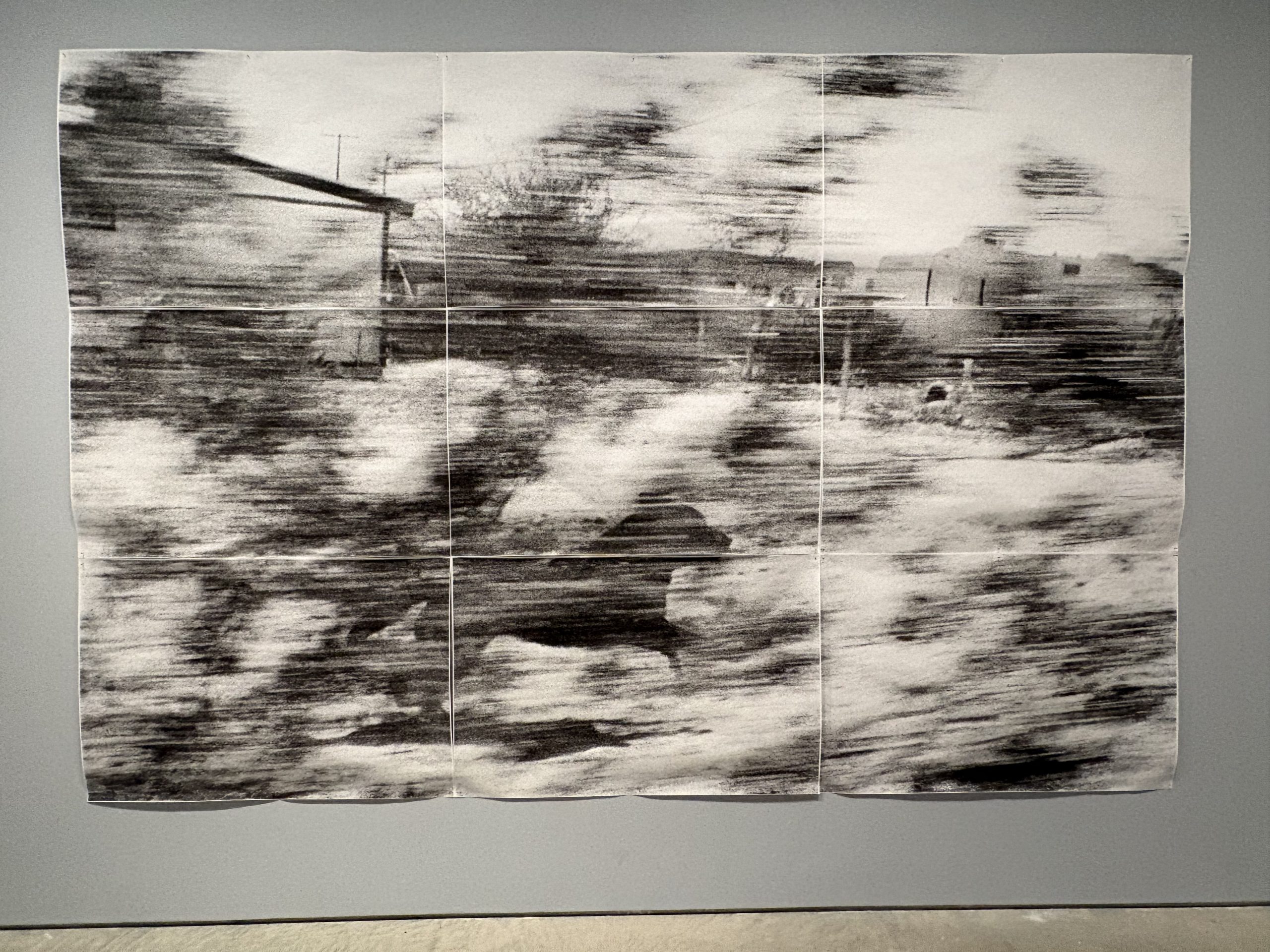
So many contemporary landscape photographers walk this line, from Robert Adams and Richard Misrach to Andreas Gursky and Edward Burtynsky. But it’s not a matter of making politically correct images. The viewer has a responsibility, too, to avoid the easy options of reveling in abstraction for its own sake or denouncing photographers for their lack of engagement. It is a matter of what the musician John Cage, who was deeply affected by Man Ray’s dust image, called “response-ability.”

David Campany


Architecture as Photography

Posted on by David Campany

‘Architecture as Photography: document, publicity, commentary, art’.

An essay written for the book accompanying the exhibition Constructing Worlds: Photography and Architecture in the Modern Age, Barbican Gallery London, 25 September 2014 – 11 January 2015; ArkDes Stockholm, 20 February – 17 May 2015; Museo ICO Madrid, 3 June – 6 September.

A Spanish translation, ‘La arquitectura a través de la fotografía: documentación, publicidad, crónica, arte’  is available in the book Construyendo Mundos: fotografia y arquitectura en la era moderna, published by La Fabrica.


Everyone will have noticed how much easier it is to get hold of a painting, more particularly a sculpture, and especially architecture, in a photograph than in reality. 

Walter Benjamin [i]

It may not be possible to ‘get hold of’ a building, at least not in the way that it might be possible to get hold of a painting or a sculpture. But through photography one might be able to get hold of architecture. By this I mean, and perhaps the cultural critic Walter Benjamin meant, that while a physical building is owned and used, a photograph of it is able to isolate, define, interpret, exaggerate or even invent a cultural value for it. We might even go so far as to say that the cultural value of buildings is what we call ‘architecture’ and that it is inseparable from photography.

Walter Benjamin was writing in 1931, a decade or so into the expansion of the modern mass media. Via illustrated magazines and books, photography was establishing and spreading cultural value. Anything and everything was to be photographed and arranged on the page as a new and perhaps spurious kind of ‘visual knowledge’. Just as Benjamin went on to suggest that the kind of art that will triumph will be the kind of art that looks good in photographic reproduction, architecture will not escape the same fate. In fact he concluded that buildings might be the ultimate art works in this new regime of the image. Of all the fine and applied arts it is built form that has the most to lose to photography (because the camera can never capture it, never ‘get hold of’ it) but as a consequence it also has the most to gain.

Emerging in Europe after the First World War, Modernist architecture travelled unevenly but globally via the printed page. For example, the establishment of what came to be called the International Style could not have happened without photography. Moreover, it is often argued that it was through Modernism that architecture became profoundly, perhaps irreversibly complicit with its camera image. Architects began to design with photographic representation in mind and for good or bad the public began to understand the built world around them in photographic terms.[ii]

View_from_the_Window_at_Le_Gras,_Joseph_Nicéphore_Niépce

View from the Window at Le Gras by Joseph Nicéphore Niépce, 1826-27.

We should remember photography’s attraction to architecture goes back to the very earliest camera pictures. Nicéphore Niépce’s View from the Window at Le Gras (1826) was a lucid demonstration of the new medium’s consummate translation of three dimensions into two, although it lacked the detail that soon became so characteristic. Here is Sir John Robison responding to his first view of a group of fine Daguerreotype images in 1839:

‘The perfection and fidelity of the pictures are such that, on examining them by microscopic power, details are discovered which are not perceivable to the naked eye in the original objects, but which, when searched for there by the aid of optical instruments, are found in perfect accordance; a crack in plaster, a withered leaf lying on a projecting cornice, or an accumulation of dust in a hollow moulding of a distant building, when they exist in the original, are faithfully copied in these wonderful pictures.’[iii]

In noting the cracks and dust, Robison had grasped that the technology of photography belonged to a different order from the aged world around it. Even so, that aging – patina and ruination – was thoroughly photogenic. Through the camera an old building would be subject to ‘a clash with a time not its own.’[iv] Since then, photography has been put to use recording the world’s older buildings and ruins. It has also been used to document and promote new constructions that very much do belong to the time and technology of photography: Victorian bridges and glasshouses, monuments and towers in steel, high-rises and high-tech buildings.

Time and surfaces

While Modernist architecture celebrated industrial smoothness, Modernist photography explored a heightened interest in the surfaces of the world. A gleaming facade and the cracked hands that built it offer themselves up equally to a perfected lens and a glossy print or page. In 1924, Edward Weston, the supreme artist-technician of the high-modern photographic surface, declared: ‘The camera should be used for a recording of life, for rendering the very substance and quintessence of the thing itself, whether it be polished steel or palpitating flesh.’[v] The same year, László Moholy-Nagy spoke of photography’s rendering of ‘the precise magic of the finest texture: in the framework of steel buildings just as much as in the foam of the sea.’[vi] And in 1930 Pierre Mac Orlan observed: ‘On the photosensitive plate, polished steel finds a still sleeker interpretation of its shining richness.’[vii]

Coin rue de Seine, 1924

Eugène Atget, Rue de Seine, Paris 1924


Mac Orlan was writing in a book of photographs by Eugène Atget. Those pictures contained no polished steel. To the contrary, Atget had turned his camera on the remnants of old Paris that had escaped the clash with the modern wrecking ball: old cafés and shop fronts, specimens of historic architecture, conjunctions of buildings accumulating over centuries into ad hoc neighbourhoods. Atget understood the urban fabric as something that exists over generations and is altered by use and weather. Photography and architecture were for him complex repositories of time. There was plenty of polished steel elsewhere in modern cities such as Paris, and plenty of photographers who saw their medium as its publicist or go-between.

Atget made his images quietly, usually on commission but also for himself. He may not have considered photography to be art but it was certainly an art. The medium was unique in its allowing for the intelligent balance of document and interpretation. Atget made images that seemed to lack explicit motive but shared a general condition of openness – a rhetorical muteness, let us say – that awaited completion by whoever bought and used them (industrial designers, urban planners, artists). The Surrealists appreciated Atget’s evocation of a haunted city with its architecture at once inhabited and seemingly dispossessed. And they saw something of their desire for subversion (and subversion of desire) in those laconic and unadorned vistas.

Atget lived on the same street as Man Ray whose darkroom assistant, Berenice Abbott, was captivated by Atget’s pictures. Upon his death in 1927, Abbott acquired a substantial part of Atget’s archive. She took it back to New York where she exhibited it, published two books of it and eventually bequeathed it to the Museum of Modern Art.[viii] Atget’s contemplative disposition struck a chord with those seeking a more reflective relation to architecture, modern time and the city. The 1929 American stock market crash and ensuing crises sharpened the political and social consciousness of many artists. As a result, an equivocal take on progress – looking askance or awry at the white heat of modernisation – became an important part of serious photography. When Berenice Abbott began her own urban documentation in 1935, it was very much in the spirit of Atget. She published her grand project in 1939 as Changing New York. She wrote: ‘How shall the two-dimensional print in black and white suggest the flux of activity of the metropolis, the interaction of human beings and solid architectural constructions, all impinging upon each other in time?’ Abbott mixed images of new buildings with older examples, making bold views in which Manhattan’s layered epochs of beauty and ugliness, of boom and bust, were laid bare. A striking example is House of the Modern Age, Park Avenue & 29th Street (1936).

2007-53

Berenice Abbott, House of the Modern Age, Park Avenue & 29th Street (1936)

Beneath a cluster of towers of varying merit nestles a two-storey show home built with the latest techniques and equipped with state-of-the-art gadgets. The public paid 10 cents each to visit the ten-thousand-dollar house, erected on a million-dollar vacant lot. The house was temporary but Abbott’s photograph preserves the event and offers a pause for reflection. While America’s offices went skyward, its homes would sprawl laterally to become an endless suburbia. The theatrical singularity of that show home belies the sheer quantity and formulaic repetition that came to dominate twentieth-century housing.

Abbott was friendly with Walker Evans, who took up photography in the late 1920s. At first the giant architecture of Manhattan attracted him. He made celebratory images of soaring verticals, dynamic angles and grid-like facades. They were reminiscent of the European New Vision photography of Moholy-Nagy and others, but like Abbott he soon stepped back to develop a more circumspect attitude. Modish affectation gave way to a more neutral, less forced way of thinking and photographing. He focused on provincial towns away from the extravagance of the big cities. A commission to record Victorian houses around Boston allowed him to develop his approach. In 1933 the results were exhibited, essentially as documents, in the Architecture Galleries of the Museum of Modern Art.[ix] Five years later, Evans was the first photographer to be given a solo exhibition in his own name at MoMA, and more than half of his one hundred prints were architectural.

‘Photographic Studies’ by Walker Evans, The Architectural Record, September 1930 1

Page from ‘Photographic Studies’ by Walker Evans, The Architectural Record, September 1930

Walker Evans, Houses and Billboards, Atlanta, 1936 1936

Walker Evans, Houses and Billboards, Atlanta, 1936.

Evans understood that photography and architecture are related sign systems. Gathered as archives or arranged as sequences, images of buildings could be a path toward sophisticated statements about a society and the ways it pictures itself. He used his large-format camera to cut out and miniaturize facades as surfaces to be read.[x] The reading can be symbolic, metaphorical or literal, not least because so often his photographs included writing and commercial signage. Such images can be understood as found montages that make thinkable the new tensions of modern life. Consider Houses and Billboards, Atlanta (1936). Beyond the formal elegance of the picture it is a document thick with information. It shows a brutal barrier shielding houses from the noise of the growing number of automobiles. The porches of the grand but fading homes now have a blocked view, while the upper balconies overlook a charmless strip. The movie billboards lining the barrier are designed not for the residents but to catch the eye of passing motorists. Between the houses we glimpse the flat roofs of more recent buildings, and on the right there is a light-industrial chimney. Despite some architects’ dreams of grand plans, it is pragmatism and happenstance that have defined the look of most of our towns. Evans played off his cool and steady gaze against the speed of unpredictable change, drawing attention to the composition of the world rather than his own compositional prowess. Measured, reflective and unforced, his photographs do not chase after progress: they study its visible symptoms.

Thomas Struth, Clinton Road, London, 1977

Thomas Struth, Clinton Road, London, 1977

Evans swung wide the doors for generations of photographers. American Photographs, the book that accompanied his 1938 exhibition is still in print. One can work in this idiom anywhere without risk of imitation, or the anxiety of influence. For example, Thomas Struth’s city studies of the 1970s echo Evans’ generosity of seeing and his attention to the telling minutiae of the streetscape.[xi] But perhaps the clearest inheritor has been Stephen Shore, whose photographs made across the Midwestern United States in the 1970s share Evans’ affection for American vernacular culture.[xii] Made on long car trips, Shore’s photographs treat buildings and automobiles as expressions of the same social and economic forces. In 1956 the cultural critic Roland Barthes had declared:

‘I think that cars today are almost the exact equivalent of the great Gothic Cathedrals: I mean the supreme creation of an era, conceived with passion by unknown artists, and consumed in image if not in usage by a whole population which appropriates them as a purely magical object.’[xiii]

Stephen Shore, Fifth and Broadway, Eureka, California, September 2, 1974,

Stephen Shore, Fifth and Broadway, Eureka, California, September 2, 1974,

The aesthetic and principles of manufacture of any epoch are common to all its products. Modernity merely accelerates and integrates this. As a consequence, its architects have often been designers of other things as well: furniture, cars, trains, planes, electrical appliances, clothes and graphics. Figures as diverse as Charles Rennie Mackintosh, Mies van der Rohe, Frank Lloyd Wright, Charles and Ray Eames and Raymond Loewy were all exponents of this approach.

Julius Shulman, Case Study House No. 20, Altadena, CA. 1958, Architect Buff, Straub and Hensman

Julius Shulman, Case Study House No. 20, Altadena, CA. 1958, Architect Buff, Straub and Hensman

Photography is often at its most complicit when it is recruited to turn the constructed worlds of integrated design into promotional images. Julius Shulman was one of the most adept photographers of modernist environments. It is through his commissioned images that we have come to ‘know’ the work of Richard Neutra, Charles and Ray Eames, Pierre Koenig, John Lautner, Rudolf Schindler, Raphael Soriano and Frank Lloyd Wright among many others. Forms of architecture and design that have already internalised the look and cultural value of photography are distilled by Shulman into media-friendly icons. But nothing dates more acutely than high style. Like modish advertisements in old copies of Life magazine, Shulman’s photographs share the same aspiration as the designed worlds they represent and are subject to the same historical fate. Today such images do not so much promote as stand as documents of the taste and values of an era.

Second thoughts

NairnOutrage

Spread from ‘Outrage’, June 1955, special issue of Architectural Review, edited by Ian Nairn

It should be said that the architectural profession has always had misgivings about the cosy relationship between buildings and photography, and there has always been dissent. Sometimes it has taken the form of polemics against the conventions of architectural photography.[xiv] Other criticisms have emerged more implicitly within visual essays by architects and writers. For example, between the 1950s and 1970s Ian Nairn wrote excoriating attacks on the shortcomings of UK architects and planners, as well as heartfelt defences of places and ideas that were endangered or out of favour. His texts were often complemented by deliberately perfunctory images devoid of arty ingratiation. One of his most influential tirades was ‘Outrage’, a special issue of The Architectural Review from June 1955. Nairn railed against what he called the Subtopia of the post-war English landscape: ‘[A] mean and middle state, neither country nor town, an even spread of abandoned aerodromes and fake rusticity, wire fences, traffic roundabouts, gratuitous notice-boards, car-parks and Things in Fields.’ Throughout the issue, deadpan snapshots embody the laziness, cynicism and lack of vision Nairn attempts to diagnose. Sometimes a couple of photos and a caption do it all. A notorious page of ‘Outrage’ carries two near-identical views down unloved streets, one captioned ‘leaving Southampton’, the other ‘arriving at Carlisle’, with the entire length of England implied between.

Just as the discipline of art history has intermittent doubts over its use of photography as innocent reproduction, so the field of architecture has sustained an important current of reflection about its use of images. In some respects the critical discourses established in the architectural press of the post-war decades paved the way for the rise of architecture in much wider discussions of culture, politics, art and value. This in turn led several architects to understand their own practices in broader cultural terms. In 1972, Robert Venturi, Denise Scott Brown and Steven Izenour published Learning from Las Vegas, a provocative call for architects to be more in tune with popular taste. The profession should less heroic, less snobbish and more accepting of context and pragmatism, they argued. And they should not have their heads in the sand about the relation between money, built form and image (something perfectly explicit in Las Vegas!) The book’s mix of text and photographs placed it in a long line of widely read but serious architectural manifestos that goes all the way back to Le Corbusier’s Vers une architecture (1923), published in English as Towards a New Architecture (1927). While some see Learning from Las Vegas as an apology for raw capitalism and the market’s dictation of the environment, it can also be read as a critique of all that. In architecture the line between the genuinely popular (i.e. democratic) and the populist (pandering to lowest common denominators of value) is particularly fine and requires constant vigilance.

Stephen Shore 1976 Venturi Signs Of Life

Installation view, showing photographs by Stephen Shore, of Signs of Life: Symbols of the American City. The Smithsonian Institution, Washington DC, 1976

Extending their ideas, Venturi, Scott Brown and Associates staged ‘Signs of Life: Symbols of the American City’ at The Smithsonian Institution, Washington DC in 1976. The exhibition approached the American urban scene as a complex puzzle in need of decoding. Many towns had become postmodern collages of architectural quotation: English village windows and Italianate brackets sharing facades with colonial ironwork and classical balustrades. In the gallery space various images were placed in relation real objects (neon signs, furniture, pieces of architecture). Stephen Shore, who was then deep into his photography of vernacular towns and buildings, was commissioned to make documents. A number of these were blown up and presented as near life-size substitutes for American streetscapes.

Like Atget, Abbott and Evans before him, Stephen Shore was interested in photographing the present for the benefit of the future. Such a task keeps the photographer alert to the interrelation of all the different components that may co-exist in an urban scene. He explains:

‘There is an old Arab saying, ‘The apparent is the bridge to the real.’ For many photographers, architecture serves this function. A building expresses the physical constraints of its materials: a building made of curved I-beams and titanium can look different from one made of sandstone blocks. A building expresses the economic constraints of its construction. A building also expresses the aesthetic parameters of its builder and its culture. This latter is the product of all the diverse elements that make up ‘style’: traditions, aspirations, conditioning, imagination, posturings, perceptions. On a city street, a building is sited between others built or renovated at different times and in different styles. And these buildings are next to still others. And this whole complex scene experiences the pressure of weather and time. This taste of the personality of a society becomes accessible to a camera.’[xv]

Or, as the television critic AA Gill puts it, ‘the built landscape is the great pop-up lexicon of who we are, humanity’s diary. It’s what we thought and hoped for.’[xvi]Yet we cannot assume that being accessible to the camera means the built landscape can be interpreted easily. Over centuries, architecture evolved symbolic languages that allowed buildings to declare their purpose, or at least codify it. Churches looked like churches, houses looked like houses, banks looked like banks and so on. However, with the beginnings of Modernism this began to be replaced by the idea that built form should follow function, along with a truth to the materials used. While this might imply a certain clarity or honesty, the modernising impulse also homogenises, tending towards rationalised modular forms that often cut the ties between function and legibility. This has been felt equally in the ‘high’ architecture of prestige buildings and the ‘low’ architecture of social housing and the factory. The modern show home photographed by Berenice Abbott in 1939 used the same principles as the modern office. In the knee-jerk reaction against such anonymity however, decoration often becomes purely cosmetic. Venturi, Scott Brown and Izenour called this the ‘decorated shed’, but decorated or not, the shed has become a source of anxiety about the runaway forces of rationalisation. Is it what we want everywhere, for everything?

Recodings

Lewis Baltz, 'North Wall Steelcase 1123 Warner Avenue Tustin, 1974' from 'The New Industrial Parks near Irvine, California', 1974

Lewis Baltz, ‘North Wall Steelcase 1123 Warner Avenue Tustin, 1974’ from The New Industrial Parks near Irvine, California, 1974

In his quintessentially postmodern movie, True Stories (1986), David Byrne plays a wide-eyed guide to a world in which surface and meaning have come apart almost entirely. ‘This is the Varicorp building, just outside Virgil’, he tells us. ‘It’s cool. It’s a multipurpose shape. A box. We have no idea what’s inside there.’ Byrne’s disarmingly jolly delivery suggests something is wrong. A decade or so earlier, the California-based photographer Lewis Baltz had come to the same conclusion. His series The New Industrial Parks near Irvine, California (1974) documents the exteriors of small and medium sized industrial units of the kind we now find clustered on the edges of all towns and cities. They are erected quickly according to standardised systems and designed to suit as many commercial needs as possible. The sparsely decorated exteriors give a thin illusion of calm and continuity. In reality the units can be rented to businesses long- or short-term, depending on the volatility of markets. This is Baltz describing his project:

‘I was born in one of the most rapidly urbanising areas in the world: Southern California in the post-war period. You could watch the changes take place; it was astonishing. A new world was being born there, perhaps not a very pleasant world. This homogenised American environment was marching across the land and being exported. And it seemed nobody wanted to confront this. I was looking for the things that were the most typical, the most quotidian, everyday and unremarkable. And I was trying to represent them in a way that was the most quotidian, everyday and unremarkable. I certainly wanted to make my work look like anyone could do it. I didn’t want to have a style; I wanted it to look as mute, and as distant as to appear to be as objective as possible … I tried very hard in this work not to show a point of view. I tried to think of myself as an anthropologist from a different solar system … What I was interested in more was the phenomena of the place. Not the thing itself but the effect of it: the effect of this kind of urbanization, the effect of this kind of living, the effect of this kind of building. What kind of people would come out of this? What kind of new world was being built here? Was it a world people could live in? Really?'[xvii]

Shot in deep focus and fine detail, Baltz’s photographs are highly descriptive, even analytical. Across his series of fifty-one images, the distances between the camera and the subject are kept consistent, as is the light. Frontal and rectilinear, these pictures do not appear to contest the presumed objectivity of photography. Indeed, they provide as good a record as any of the surfaces of the things in front of Baltz’s lens. Instead the problem of representation is displaced on to the world itself: what can we know when the appearance of our environment tells us so little about its meaning and function? As Baltz himself put it: ‘You don’t know whether they are manufacturing pantyhose or megadeath’.

Baltz came to prominence around the same time as Bernhard and Hilla Becher, who photographed in a similar manner but were interested in buildings where function was still inscribed in form and legible: lime kilns, cooling towers, blast-furnaces, winding towers, water towers, gas holders and silos. In a 1970 publication of their work, they state:

BECHER, ANONYME SKULPTUREN 01

Cover of Berhard and Hilla Becher, Anonyme Skulpturen: Eine Typologie Technischer Bauten, 1970

‘We show objects predominantly instrumental in character, whose shapes are the results of calculation, and whose processes of development are optically evident. They are generally buildings where anonymity is accepted to be the style. Their peculiarities originate not in spite of, but because of the lack of design.’[xviii]

That book was titled Anonyme Skulpturen (Anonymous Sculpture) and through it the Becher’s work came to occupy a pivotal place at the intersection of photography, architecture and art. Its reception as art was part of a complex re-embracing of the typological series by a culture fraught with suspicion about utopian rationality. In such a setting, these cool photographic studies associated the documentary image less with the older ‘new sobrieties’ of the 1920s and ‘30s that they clearly echoed, than with the newer ambivalence of Minimalist sculpture and Conceptual Art.[xix] The serial blankness of their work looked considered and random, didactic and obtuse, familiar and odd, smart and dumb. Most artists using photography at the time were opting for the dulled aesthetic of the anonymous, ‘deskilled’ amateur, but working in the guise of trained technicians the Bechers presented an equally rich puzzle for art. Their series or grids of highly crafted images erased all traces of signature style, while even their choice of subject matter was intriguing. Those industrial structures had no place in the official discourses of architecture, let alone art. Since then of course the interest shown in the vernacular by contemporary art, and the interest shown in the vernacular and contemporary art by architecture has grown immeasurably, along with the canonical status of the Bechers’ work.

Nevertheless, it would be misplaced to assume that the Bechers’ work was particularly of its time. In fact the difficulty of defining its time seems to be the source of its enduringly slippery fascination. Beyond subject matter, the characteristic feature is the even, flat light. In such light buildings are, as Richard Sennett put it in a discussion of the work of Thomas Struth, ‘endowed with a life all their own’.[xx] Weak light makes for wilful buildings, renders them insistent but inscrutable. Light is usually the animator of the world and photography its captor, but when the light refuses animate the world appears dead, and the task that befalls the photographer is not to ‘shoot’ so much as embalm. To photograph in milky light is to photograph a world that appears to have already been plucked from time.[xxi]

That Northern Europe, the cradle of modernity’s hurtling progress is for much of the time bathed in a light that almost eliminates shadow may not be without significance. This was the preferred light for much of the rationalised and informational imagery produced in the nineteenth century, where the absence of shadow was equated with impartial judgment. Clear, soft illumination was construed as liberating the world from the prejudice of chiaroscuro and the drama of shadows. Revelling in the wealth of visible detail made available, positivist science deduced objectivity from the inscrutable, and clarity of knowledge from the clarity of appearances. The Bechers stare at things with an air of objectivity so outside fashion that their subjects almost stare back. Resisting the spectacle and modish artifice that has preoccupied Western art since Pop, they have extended and deepened the potential complexities of the impassive ‘document as art’ that were first sensed in the 1920s. Their work belongs to art and transcends it too. Moreover photography’s ticket into the art of the last hundred years has been its flirtation with non-art and the document. The Bechers’ anonymous photography of anonymous architecture fits this perfectly.

The photograph transformed

Through their teaching in Dusseldorf and through their profile in contemporary art, the Bechers have influenced generations of photographers interested in architecture. However, much of the work made in their wake has courted art much more openly and lost a degree of ambiguity on the way. For example while the Bechers infer the sculptural, much of Andreas Gursky’s globetrotting output often makes quite explicit reference to it, while the sheer size of his monumental gallery prints affords them an obvious status as exhibitable objects.

16_Thomas-Ruff,-Ricola-Mulhouse,-1994

Thomas Ruff, Ricola, Mulhouse, 1994

Thomas Ruff’s architectural imagery, typified by a photograph of Herzog & de Meuron’s Ricola building in Mulhouse-Brunstatt, France, operates at a similar scale and is a complex example of the ever-closer alliance between those who make buildings and those who photograph them. In fact the Ricola building features a surface design derived from a photograph of a leaf by Karl Blossfeldt who, along with August Sander and Albert Renger-Patzsch in the 1920s, had championed the New Vision photography inherited by the Bechers. However, Ruff photographs this building at night, with the additional drama of artificial light under an acid purple sky. His image is a document, an art work and an advertisement.

Charting the increasing dominance of photography in the making, promotion and experience of architecture, the American cultural critic Fredric Jameson drew a distinction between what he saw as the openness of the architect’s drawn plans and the closed tyranny of the photograph:

‘The project, the drawing, is… one reified substitute for the real building, but a “good” one, that makes infinite utopian freedom possible. The photograph of the already existing building is another substitute, but let us say a “bad” reification – the illicit substitution of one order of things for another, the transformation of the building into the image of itself, and a spurious image at that … The appetite for architecture today … must in reality be an appetite for something else. I think it is an appetite for photography: what we want to consume today are not the buildings themselves, which you scarcely even recognise as you round the freeway … [M]any are the post-modern buildings that seem to have been designed for photography, where alone they flash into brilliant existence and actuality with all of the phosphorescence of the high-tech orchestra on CD.’[xxii]

Jameson was writing in 1991, at the cusp of a profound transformation that well-nigh collapsed the distinction between architectural design and photographic imaging. At that time several architectural firms were at the forefront of the development of computer software that would enable not just new methods of design but new modes of presentation and publicity. Today, buildings are often preceded by photorealist renderings that even mimic the characteristics of traditional lens-based images such as flare, differential focus and converging verticals. Construction sites are encircled with mural-sized depictions of buildings to come. These are photographic images with a future tense: this architecture will be.

RBL_4055.tif

Rut Blees Luxemburg, From the series London Dust, 2012.

Temporarily at least, the latest global recession has betrayed many such promises. For her series London Dust, Rut Blees Luxemburg has photographed the hoardings around the site of The Pinnacle, in the City of London, a particularly high-profile casualty of the halt on new construction in Europe. The planned 300-metre-high tower has stalled at the seventh floor. London Dust shows the glossy publicity fading and besmirched by the city’s incessant grime.

AB_29

Adam Broomberg  & Oliver Chanarin, from the series Chicago, 2006

The simulation of buildings can also be concrete. After eighteen months of negotiations, in 2005 Adam Broomberg & Oliver Chanarin secured access to a very secret place. Codenamed Chicago, it is a mock-up Arab town built by the Israeli Defence Force for training in urban combat. Hidden from view by the inhospitable Negev desert, Chicago was where the Israeli military practiced its destruction of Palestinian settlements. Granted a matter of hours to photograph the facility, the duo chose the clearest and most optimal views; but rather than grounding this concrete reality, the extreme objectivity of their pictures has an unexpected effect. They flip us into the register of hyper-real simulation of the kind we associate with the aesthetics of ‘virtual reality’. These are the forced monocular perspectives typical of violent video game graphics with their surveying ‘point of view’ shots. Indeed, the photographs share something of the video game’s status as model – a fantasy of worldly control. What took place in Chicago was the safe rehearsal of imaginary mastery, yet these photographs are also documents of a real place which now no longer exists (the Israeli military has since destroyed it and built a new training site).

A Place to Read, 2010 image from video projection, interior

Still from Victor Burgin, A Place to Read, video projection, 2010

With its rather corporate connotations, computer-generated imaging remains largely a tool of mainstream practices, but there are examples of more overtly critical and resistant use. In 2009 the artist Victor Burgin was invited to make a piece of work in response to the city of Istanbul.[xxiii] After several visits he became interested in the Taşlik coffee house and garden, constructed in 1947-48. Designed by Sedad Hakki Eldem, on a site overlooking the Bosphorus, it blends elements of seventeenth-century Ottoman architecture with twentieth-century Modernism. It was open to everyone. Then in 1988 it was dismantled to make way for a luxury Swissôtel. Part of the coffee house was re-built but in a different position, and now serves merely as an orientalist tourist restaurant. Working from drawings and photographs, Burgin resurrected the building virtually.[xxiv] A 3D model conjures it up in all its democratic glory. Presented as a video projection titled A Place to Read, camera movements in and around the space are intercut with texts weaving together historical anecdotes and fictions that encourage the viewer to consider a brief moment in Istanbul’s passage from Empire to contemporary global capitalism. ‘A woman at the opening of the installation at the Archaeological Museum in Istanbul was in tears’, recalled Burgin, ‘she had known the original coffee house as a child.’[xxv] Burgin’s imagery promised no ‘proof’ in the traditional photographic sense, yet it elicited the same emotional charge. An image can resonate no matter what its material or technological base.

Jeff Wall Morning Cleaning, Mies van der Rohe Foundation, Barcelona 1999

Jeff Wall, Morning Cleaning, Mies van der Rohe Foundation, Barcelona 1999

The revisiting of a lost building through archival documents also informs Jeff Wall’s photograph Morning Cleaning, Mies van der Rohe Foundation, Barcelona (1999). The pavilion, designed by Mies van der Rohe for the 1929 International Exposition in Barcelona, is a now a Modernist touchstone. It has a particularly complicated relationship with photography. Rather than housing an exhibit, the structure was intended to be the exhibit, a showcase for Mies’ architectural thinking and ‘an ideal zone of tranquility’, as he put it, set apart from the bustle of the Exposition. It was also intended to be temporary and within a year it was taken down. However, in the ensuing decades its reputation grew, largely through photographs and the consolidation of Mies’ reputation. In 1983 reconstruction began using photographs and original plans. The pavilion reopened in 1986 and in the 1990s several artists were invited to make responses to it, including Victor Burgin, Jeff Wall, Hannah Collins and Günther Förg. Wall photographed a man named Alejandro, one of the team of three responsible for keeping the pavilion clean. The morning routine was shot every day for two weeks, always from the same camera position. Wall’s colour photograph is a composite image that allows the all the detail of the shadows and highlights produced by the strong morning sun to be rendered correctly (something that is beyond a single exposure). The image still celebrates the building but it also sets itself apart. Unlike architectural photography of the 1920s, the point of view here is offset from the pavilion’s geometry. Moreover, Wall pictures the space as a site of both ‘high’ contemplation and ‘low’ work. The cleaners must arrive and leave before the pavilion opens to the paying public. We see the black carpet is rucked, soap bubbles slide down the glass and the ‘Barcelona Chairs’ – designed by Mies for this building – are shifted out of place. This is a commentary on the legacy of high Modernism. As Wall himself notes:

‘[These] buildings require an especially scrupulous level of maintenance. In more traditional spaces a little dirt and grime is not such a shocking contrast to the whole concept. It can even become patina, but these Miesian buildings resist patina as much as they can.’[xxvi]

Such photographs are complex meditations on all too familiar tension between architectural aspiration and lived experience. They show us idealised spaces populated not by idealised occupants or affluent consumers but by those who often remain invisible. Somehow, somewhere along the line, powerful architecture lost sight of the democratic goals of its modern citizenry. Far too often we find ourselves at odds, or in deadlock, with the built world around us.

 Pasts and futures

If we accept that the experience of architecture may now be inseparable from the experience of its imagery, and that photography may now belong to the very same networks of spectacle, it becomes clear that an independent and critical photography of architecture is as vital as it is endangered. My essay thus far has attempted to track something of this critical spirit from its origins in the 1920s. I end with an example that might point us toward future possibilities.

In 2009 the Swiss artist Jules Spinatsch photographed the annual Ball at the Vienna Opera House (the Wiener Staatsoper). Completed in 1869, the style of the building is typically neo-Renaissance, but its form is an idealised expression of mid-nineteenth century spectacle and power. By that time, opera had become an integral part of the social calendar for Europe’s high society and political elites. The plan optimises the number of boxes viewable from each box and from the seats in the stalls. Since 1935 the annual Opera Ball has had an international standing as a rather smug and self-congratulatory dressing-up party for the day’s dubious mix of politicians, businessmen, debutantes and imported celebrities. In the long and luxurious evening, attendees prop up their reputations and grease the wheels of power with an appeal to ‘tradition’. Since the 1960s, the ball has been picketed by various groups objecting to its outdated values. Inside there is barely any need for a performance: all the seats in the stalls are covered over by a ballroom floor, while tiers of extra boxes are erected on the stage to complete the narcissistic, self-gazing circle. In 2009 Spinatsch suspended two interactive network digital cameras in the centre of the Opera House. They were programmed to track incrementally, taking in the entire space, ceiling to floor. One image was recorded every three seconds between the start of the Ball at 8.32pm and its conclusion at 5.17am: 10,008 photographs in total. While doing so, the cameras together completed two full rotations, so every spot in the opera house was covered exactly twice during the evening.

01_VIENNA_Karlsplatz_3250

Jules Spinatsch, Installation view of the circular panorama Vienna MMIX – 10008/7000, Karlsplatz, Vienna, 2011

In 2011 Spinatsch installed his results as a 360° panorama in Vienna’s Resselpark, Karlsplatz. The images were arranged as a chronological grid, the beginning of the evening wrapping around to meet its end. However, instead of placing the spectator at the centre surrounded by the view, Spinatsch put the panorama on the outside, inverting the space of the Opera House to allow viewers to encircle it. The socially exclusive interior is exposed to a democratic exterior. Subversively then, the cavorting elite is put on display for all of Vienna’s citizens to see.

While we ought not overestimate the radicality or ‘impact’ of Spinatsch’s gesture, his rethinking of the twin spectacles of architecture and hi-tech imagery is welcome. And if architecture and photography are destined to remain intertwined then we are obliged ask what it is we want from both.

[i] Walter Benjamin, ‘A Little History of Photography’ (1931), Selected Writings: 19311934, translated by Rodney Livingstone and others, edited by Michael W Jennings (Belknap Press of Harvard University Press, 2005, p523)

[ii] See for example Beatriz Colomina, Privacy and Publicity: Modern Architecture As Mass Media (MIT Press, 1996)

[iii] Sir John Robison, ‘Perfection of the Art, as stated in Notes on Daguerre’s Photography’(The American Journal of Science and Arts, Vol. 37, No. 1, July 1839, pp 183-185)

[iv] As Denis Hollier put it, ‘Like the mutilated classical statue, a photograph seems to result from the art work’s encounter with a scythe of real time, showing the bruise imprinted upon an art work by a clash with a time not its own.’ See Denis Hollier, ‘Beyond Collage: Reflections on the André Malraux of L’Espoir and of Le Musée Imaginaire’ (Art Press, no. 221, 1997.

[v] Edward Weston, entry for 10 March 1924, in The Daybooks of Edward Weston (Aperture, 1973) quoted in Nancy Newhall ed., Edward Weston: the flame of Recognition (Gordon Fraser, 1975, p12.

[vi] László Moholy-Nagy, ‘The Future of the Photographic Process’ (Malerei, Fotografie, Film, 1925), reprinted in English (MIT Press, 1969, p 33)

[vii] Pierre Mac Orlan, Preface to Atget: Photographe de Paris (E Weyhe, 1930). In an article on contemporary photography from 1932, Marcel Fautrad declared: ‘Life … is profoundly marked by Metal. METAL. METAL. Cold contact that bristles. And yet “an aesthetic is born of the surrounding need for metal”’. See Marcel Fautrad ‘The Poetics of Metal’ (June 1932), reprinted in Janus ed., Man Ray: the Photographic Image(Gordon Fraser, 1977, p 219)

[viii] See Atget: Photographe de Paris (E Weyhe, 1930); and Berenice Abbott, The World of Atget (Horizon Press, 1964)

[ix] Walker Evans: Photographs of Nineteenth-Century Houses, Museum of Modern Art, New York, 16 November – 8 December 1933

[x] Clement Greenberg suggested that Evans’ best pictures had ‘backs’ i.e. no receding perspectival space. See Clement Greenberg, ‘The Camera’s Glass Eye: Review of an Exhibition of Edward Weston’ (1946) in Clement Greenberg, The Collected Essays and Criticism, Vol. 2: Arrogant Purpose, 1945–49, ed. John O’Brian, (University of Chicago Press, 1986, pp 60-63). Jean-François Chevrier has called this kind of photograph an ‘image-sign, a document-monument’, and it recurs throughout Evans’ work. Jean-François Chevrier ‘Dual Reading’ in Jean-François Chevrier, Allan Sekula and Benjamin HD Buchloh eds., Walker Evans & Dan Graham (Witte de With, 1992, p19)

[xi] The long list would also include photographers as diverse as Wilhelm Schürmann, Gabriele Basilico, Simon Norfolk and Sze Tsung Leong

[xii] Shore was given a copy of Evans’ American Photographs for his twelfth birthday: ‘It feels much deeper than just an influence. When I saw his work I recognised someone who thought the way I would think if I were mature enough to think that way.’ See ‘Ways of Making Pictures, Stephen Shore in conversation with David Campany’, in Stephen Shore (Fundacio MAPFRE, 2014)

[xiii] Roland Barthes, ‘The New Citroën’ (1956) in Mythologies (1957), (Hill and Wang, 1972). Barthes was prompted to write by the arrival of the streamlined Citroën DS, its curves reminiscent of American designs of the era.

[xiv] See for example Michael Rothenstein, ‘Colour and Modern Architecture, or ‘The Photographic Eye’, (The Architectural Review, vol. XLIV, May 1946); ‘“Bliss it was in that Dawn to be Alive”: An Interview with John Brandon-Jones’ (Architectural Design,vol. 10, no. 11, 1979); and Tom Picton, ‘The Craven Image, or The Apotheosis of the Architectural Photograph’ (The Architects’ Journal, 25 July 1979)

[xv] Stephen Shore, ‘Photography and Architecture’ (1997) in Christy Lange et al, Stephen Shore, (Phaidon Press, 2008)

[xvi] AA Gill, ‘Brutal honesty is always the best policy’ (The Sunday Times, 2 March 2014)

[xvii] Audio interview with Lewis Baltz:http://www.lacma.org/art/nt-baltz.aspx. The early significance and influence of the New Industrial Parks series was secured through its inclusion the in the influential 1975 exhibition and book New Topographics: Photographs of a Man-Altered Landscape (along with the work of Bernhard & Hilla Becher, Frank Gohlke, Henry Wessel, John Schott, Nicholas Nixon and Stephen Shore). See William Jenkins, New Topographics: Photographs of a Man-altered Landscape, International Museum of Photography at George Eastman House, Rochester, New York, 1975

[xviii] Bernhard and Hilla Becher, Anonyme Skulpturen: Eine Typologie Technischer Bauten (Art Press Verlag, 1970)

[xix] An early article on the Bechers by the minimalist sculptor Carl Andre two years later cemented the arrival of their work as art. See Carl Andre, ‘A Note on Bernhard and Hilla Becher’ (Artforum vol. 11, no. 4, December 1972)

[xx] Richard Sennett, ‘Recovery: The Photography of Thomas Struth’ in Thomas Struth, Strangers and Friends (Institute of Contemporary Arts, London/Institute of Contemporary Art, Boston/Art Gallery of Ontario, Toronto, 1994, pp 91-99)

[xxi] It should be said here that there has always been an ‘expressive’ tradition within the photography of architecture. This is Helmut Gernsheim’s little paragraph entitled ‘The Weather’ from his book Focus on Architecture and Sculpture, an original approach to the photography of architecture and sculpture (Fountain Press, 1949): ‘It will be evident from the nature of the work that the weather plays a most important role in the architectural photographer’s life. Generally speaking, outdoor photographs should not be taken on a dull day: only sunlight lends life to form. The photographer may have to wait for days or even weeks until the conditions are as he wants them, but it will repay the trouble. Sometimes I have spent days at a hotel hoping that the sun would break through, and more than once it happened that I returned to London after several days of fruitless waiting, only to find that the very next day was fine and sunny.’

[xxii] Fredric Jameson, ‘Spatial equivalents in the world system’ in Postmodernism, or the Cultural Logic of Late Capitalism (Duke University Press, 1991, pp 97-129)

[xxiii] The occasion was the festival Istanbul 2010: Cultural Capital of Europe

[xxiv] Previously, Burgin had also made a video project in response to the Barcelona Pavilion

[xxv] ‘Other Criteria: Victor Burgin in conversation with David Campany’ (Frieze no. 155, April 2013)

[xxvi] Jeff Wall in Craig Burnett, Jeff Wall (Tate, 2005, pp 90-91)

                                   David Campany


Some views of Constructing Worlds: Photography and Architecture in the Modern Age at the Barbican Gallery, London, 2014/2015. Installation photographs by Chris Jackson.

Installation Of Constructing Worlds: Photography And Architecture In The Modern Age

Installation Of Constructing Worlds: Photography And Architecture In The Modern AgeInstallation Of Constructing Worlds: Photography And Architecture In The Modern Age


Lewis Baltz – Common Objects: Hitchcock, Antonioni, Godard

Posted on by David Campany

An exhibition of key works by Lewis Baltz seen in relation to the cinema of Michelangelo Antonioni, Alfred Hitchcock and Jean-Luc Godard. Curated by Dominique Païni, David Campany and Diane Dufour.

Le Bal, Paris, May 23- August 24

baltz le bal

Accompanying book published by Steidl/Le Bal, with essays by David Campany and Dominique Païni:

A partir du texte “Lewis Baltz ou l’intuition du rien”:
Depuis les débuts de sa carrière artistique à la fin des années 1960, Lewis Baltz explore la relation difficile entre vision et savoir. À quoi ressemblent le monde et les images qu’il produit? Ces apparences, qu’ont-elles à nous dire ? Ce qui importe vraiment, peut-on le représenter visuellement ? Et, dans notre monde moderne, quelle est la relation entre le beau, le laid et le vrai ?
Sous des formes bien différentes, Hitchcock, Antonioni et Godard ont été (sont) des philosophes de l’apparence. Ils « réfléchissent en images » au rapport complexe entre ce qui peut être montré, ce qui peut être pensé et ce qui peut être su. Le plaisir que suscitent leurs films et la provocation qu’ils renferment proviennent de ces moments inattendus où l’image est contestée, mise en doute.
De Hitchcock, nous avons appris que les apparences sont impérieuses mais trompeuses, voire traîtres. Nombre de ses films commencent ainsi symboliquement par des images de façades qui obstruent notre regard, comme les plans extérieurs de la ville de Phoenix (Arizona) qui ouvrent Psychose (1960) ou, le début de Cinquième Colonne (1942), un immense mur d’usine en tôle ondulée.
 Jeff Wall a observé qu’« aucune image – du moins, aucune photographie – ne peut exister aujourd’hui sans porter encore en elle la trace du film dont elle pourrait être issue». Dans la série Candlestick Point de Lewis Baltz, on se prend ainsi à imaginer une scène de film composée de plans dans lesquels on aurait supprimé toutes les images des acteurs. Candlestick Point est la réaction de Baltz face à un paysage postindustriel de détritus et de déjections, face à un lieu saisi quelque part entre son usage passé et son usage futur: un récit fragmentaire suspendu dans lequel des images ont disparu.
Candlestick Point convoque le cinéma de la même façon que, dans le fameux final de L’Éclipse (1962), Antonioni convoque la photographie et livre une série de plans presque statiques qu’il monte de façon à charger l’espace de l’absence des amants. Baltz travaille souvent dans cet état d’esprit. Il met en opposition une plénitude visuelle et le sentiment que ce qui importe vraiment échappe à son objectif et pourrait bien échapper à l’œil humain.
Ce hiatus entre le visible et l’appréhendable atteint son paroxysme avec Ronde de Nuit, un collages-fresques qui associe des vues de sources diverses (surveillance, télévision et cinéma) à des images de corps, de fils électriques et d’installations informatiques.  L’apparence physique de l’ordinateur, une boîte opaque, marque l’éviction définitive de l’information et du sens hors du domaine du visible.  Dans Sites of Technology, les vues prélevées sur les bandes de caméras de surveillance se muent en métaphore ou en allégorie. Sans repère spatial, nomades, ces oeuvres évoquent l’emprise généralisée d’un état technocratique où l’informatique et la statistique menacent de triompher définitivement.
David Campany
A partir du texte ‘Lewis Baltz ou l’intuition du rien’ dans Lewis Baltz – Common Objects (LE BAL/STEIDL 2014)


Lewis Baltz, Cinema and the Intuition of Nothing

Posted on by David Campany

‘Lewis Baltz, Cinema and the Intuition of Nothing’

 – a brief essay written on the occasion of the exhibition Lewis Baltz: Common Objects – Hitchcock, Antonioni, Godard, at Le Bal, Paris, 2014. Published in the accompanying catalogue issued by Steidl/ Le Bal.


‘I have an appointment with Peter at four o’clock. I arrive at the café a quarter of an hour late. Peter is always on time. Will he have waited for me? I look at the room and I say, “He is not here.” Is there an intuition of the absence of Peter, or does the negation come only with judgment? At first sight it seems absurd to speak of intuition here, since there cannot be an intuition of nothing, and since the absence of Peter is precisely this nothing. Everyday language, however, bears witness to this intuition. Do we not say, for example, “I saw right away that he was not there”?’

Jean-Paul Sartre, Being and Nothingness


Since the beginnings of his life as an artist in the late 1960s, Lewis Baltz has explored the difficult relationship between vision and knowledge. What do the world and its images look like? What can these appearances tell us? Can what really matters be depicted visually? And what is the relation between the beautiful, the ugly and the true in modern life? Baltz’s forms and visual strategies have changed a great deal although they have all been lens-based and mostly photographic, and they have addressed these questions unwaveringly.

Born into the mid-nineteenth century, photography was burdened almost immediately with the impossible and absurd task of substituting appearances for meaning. The visual document; the scientific record; reportage; photojournalism; the family snapshot. Authoritative and seductive, photographic images threatened to take the place of understanding. Surface would supplant depth.  But, as photography started to be dislodged from the centre of visual culture in the 1960s, it was adopted by many artists as a medium and subject matter. In their hands it would be less a means to make overtly pictorial art or documents, and more of a reflexive means of analysis of the cultural functions and assumptions of the medium’s social roles. This is the project identified most closely with photography in Conceptual Art.

Lewis Baltz has never belonged to any particular movement although a wide range of affinities can be taken as a sign of his unique place in art and photography.  Certainly his interest in the limits of the photograph as document echoed those of many early conceptual artists. His interest in the spread of modular industrial architecture can be seen in the light of Minimalist sculpture. His exploration of marginal or rejected spaces was shared with Land Art. His interest in American vernacular forms was shared with Pop. His concern with the corporate forces that shape land and real estate chime with the move in documentary photography from the recording of events to the recording of effects or traces. And lastly, the bringing together of different registers and genres of imagery that characterize Baltz’s later work has much in common with postmodern interests in montage, collage and appropriation.

The published writings on and by Baltz invoke references to literature, philosophy, politics, economics, architecture and cinema. Each of these would provide an illuminating perspective from which to consider his oeuvre. However, the range of films and filmmakers invoked is both surprising and telling. It includes Wim Wenders’ The American Friend, Until the End of the World and Paris, Texas; the Bond movie Goldfinger, Derek Jarman’s Wittgenstein; the Indiana Jones series; The Return of Martin Guerre; Citizen Kane; The Body Snatchers; Chris Marker’s La Jetée and Sans Soleil; 2001: a Space Odyssey, Planet of the Apes; Badlands; Blade Runner; Brazil and Alain Resnais’ Hiroshima, Mon Amour. And then there are the three film directors whose names come up frequently: Alfred Hitchcock, Michelangelo Antonioni and Jean-Luc Godard. Why these three? There are many answers.

In very different ways Hitchcock, Antonioni and Godard were (are) philosophers of appearance. They ‘think in images’ about the complex relationship between vision and knowledge, between what can be shown, what can be thought and what can be known. The pleasures and provocations of their films come from those unexpected moments when the image comes under pressure or is thrown into doubt.  Visual revelation gives way to the realization that seeing is partial and incomplete.

From Hitchcock we learned that appearances are compelling but misleading, even treacherous. The obvious example is the character of Madeleine Elster in Vertigo (1958), who we discover is already dead at the outset of the story and is being impersonated by Judy Barton, both of whom are played by Kim Novak. Baltz has written with great eloquence of Novak’s finely judged meta-performance.[i] But we might also think of Hitchcock’s interest in architectural space as an ambiguous stage of social action. So many of his films begin with images of facades that block what we wish to see: the exterior shots of Phoenix Arizona that open Psycho (1960), or the giant factory wall of corrugated sheet metal at the start of Saboteur (1942).

Jean-Luc Godard has restlessly explored the power invested in vision by consumer culture, and the way its images shape society’s habits, desires and expectations. He has spent nearly six decades making films that propose alternative ways of making and experiencing images. For example the early film Les Carabiniers (1963), Godard’s take on the war movie genre, is a political satire about two coarse young men joining a king’s army on the promise of riches and the opportunity to kill. To their girlfriends back home they send banal picture postcards with equally banal comments: ‘We shot seven men then had breakfast’ On their return the soldiers divide up a suitcase of more postcards as if they were conquerors gloating over spoils. ‘We’ve got the world’s treasures!’ boasts one. ‘Monuments. Transportation. Stores. Works of Art. Factories. Natural Wonders. Mountains. Flowers. Deserts. Landscapes. Animals. The five continents. The planets. Naturally each part is divided into several parts that are divided into more parts.’ They slam down endless images of cars, buildings, boats, houses and more. Then come images of women – from art history, pornography and Hollywood – as if they too were commodities promised by the state in exchange for their labour.  Intentionally, the scene goes on far too long, making clear the numbing effects not just of war, but of photographs as casual substitutes for reality.

Antonioni used his movie camera to contemplate and scrutinize interiors, landscapes and townscapes from which the human narrative has been displaced. Think of the lingering shots of the inhospitable rocky shores of the island of Panarea, from which the young woman has disappeared in L’Avventura (1960); or the images of the empty London park in Blow up (1966) where a murder may have happened; or the complex shot circumscribing the scene of death that ends The Passenger (1975).

Cinema has been the art form with which all the other art forms had to make their peace.  It has been a point of reference, or a point of departure, for a wide range of serious photographic practices at least since the 1960s. Jeff Wall has remarked that: “no picture could exist today without having a trace of the film still in it, at least no photograph.”[ii] The form of photography embraced most conspicuously by museums and markets has been the staged photographic tableau. Here, narrative cinema’s techniques of preparation and collaboration (‘staging’) are taken up by photographers working in the ‘directorial mode’.[iii] Cindy Sherman and Jeff Wall are the obvious and best examples. This mode has in general concerned itself with a kind of proscenium theatricality that exploits the photograph’s capacity to show and be about what is shown. While Lewis Baltz appreciates this approach it has not been his chosen path.[iv] There are countless other ways in which the ‘trace of the film still’ may be left, or felt, in photography. Such traces are present in Baltz’s work, but they are never obvious.

When I first saw Baltz’s epic Candlestick Point (1987-89) it seemed to me like a scene from a movie comprised of the shots that might be left if you removed all images of the actors. This remainder would include the establishing shots, mood shots, and the visual notations of place and time of day. Candlestick Point is Baltz’s response to a postindustrial landscape of waste and dejection, a place caught somewhere between its past use and future use. It seems quite appropriate therefore that the artist presents it, or re-presents it, as a suspended narrative of fragments. On the gallery wall Candlestick Point is exhibited as rows of eighty-four small prints interspersed unevenly with gaps of the same size, as if to suggest there are missing images, or missing moments. We must move between the pleasures to be taken in looking at the images and the suggestion of social forces beyond and between the frames.

Candlestick Point evokes the cinematic in the same way that Antonioni evokes the photographic in the celebrated coda of L’Eclisse (1962). The film’s dissolute lovers (played by Monica Vitti and Alain Delon) agree to meet where they have been meeting already, but on this ocassion neither decides to show up. However, the film does keep the promise. Antonioni shoots the location with a series of almost static shots, editing them together in such a way that the space becomes charged with the absence of the lovers. We see “seven minutes where only the objects remain of the adventure”, as Antonioni put it.[v]

Much of Baltz’s work has this disposition. He pits visual plenitude against the feeling that what really matters is escaping the camera and may well escape human sight. There is always a lot to look at in his images but they are haunted by the suggestion that something significant is missing. This was true of even in his earliest photographs. The extended series The Prototype Works (1967-76) comprises full and clear photographic records of bits and pieces of modern Californian urbanism – architectural elevations, cars parked on the street, commercial signage. However, the photography is so straightforward and unadorned that it seems to transform the subject matter into an empty stage set of itself. Flat light drains these spaces of drama. Is this California or a deserted back lot of a Californian movie studio? Baltz’s suggestion that we see these pictures as ‘prototypes’ further suspends their realism, without negating it all together.

Over centuries architecture had evolved a symbolic language that allowed appearance to declare its purpose. Churches looked like churches, houses looked like houses, banks looked like banks and so on.  With the beginnings of Modernism this began to be replaced by the idea that built form should follow function, with a truth to the materials used. But the modernizing impulse also homogenizes, tending towards rationalized forms (variations on the box). Very often these forms cut the ties between appearance and legibility. Baltz’s best-known series The New Industrial Parks near Irvine, California (1974) made thinkable this gap between the seeable and the knowable. Looking at the architectural facades of these monotonous buildings we cannot tell from the outside what is going on inside. As Baltz himself put it: “You don’t know whether they are manufacturing pantyhose or megadeath”.[vi]

This concern reaches its greatest intensity in Sites of Technology (1989-91), a series of photographs of super-computers and frames taken from surveillance footage. The physical appearance of the computer (a designed box containing circuit boards and hard drives) marks the terminal disappearance of information and meaning from the realm of the visible. What can a camera do here? The photographic document must become a metaphor or an allegory.   And what of the ‘evidence’ captured automatically, inhumanly by a surveillance camera? It is a device intended to be both prohibitive and prospective (‘your transgressions might be recorded’).

For nearly a century cinema was identified with a particular mode of viewing: the movie theatre. It had a big screen, dimmed lighting, rows of seats and a characteristic means of cultural and economic organization. Photography was always much more dispersed. It spread rapidly through a multitude of forms – books, albums, archives, magazines, postcards, posters, artworks and so on. Today however, the cinema is only one among many contexts in which films are viewed. It is equally dispersed. The large auditorium takes its place alongside television, computer screens, in flight entertainment, lobbies, shop windows, galleries and mobile phones. Together they form what Victor Burgin calls the ‘cinematic heterotopia’ – a network of separate but overlapping interfaces and viewing habits.[vii] In this environment films are as likely to be viewed in fragments as whole, across a spectrum of attention that runs from the indifferent consumption of bits and pieces to the highly specialized and active ‘reading’ of films. At the same time boundaries between media have all but collapsed, as have the boundaries between contexts, and between public and private life. The continuous image world begins to seep into every corner of existence, just as cameras penetrate ever deeper into the fabric of society.   This was already beginning to happen in the 1980s and by the mid-1990s it was clear that a radical and irreversible shift in the daily experience of images had occurred.

As an artist deeply concerned with the status of the visual, Baltz was quick to register this change. Leaving California for France, his work shifted from images of manmade landscapes to the manmade landscape of images. Projects such as The Politics of Bacteria (1996), Docile Bodies (1994) and Ronde de Nuit (1991-2) are mural-sized collages that bring together visuals from a range of sources (surveillance, television and cinema) along with images of medical procedures, bodies, wires and computer installations. Many readings may be possible of these complex configurations but the sense of menace and pessimism is inescapable. These are placeless, nomadic works that evoke the generalized conditions of the technocratic state in which capitalism, data and statistics threaten to triumph once and for all.

Throughout his life Baltz has responded to this creeping force. In retrospect and with the help of Hitchcock, Antonioni and Godard it is possible to chart Baltz’s careful shift in emphasis from the visible to an explicit concern with watching and being watched. Perhaps this is now what really matters in our visual culture. Just don’t expect everything that is important to be there in the frame.


[i]See ‘Maybe it’s about Kim Novak’, Lewis Baltz, Texts, Steidl, pp. 147-157.

[ii]Jeff Wall  ‘Interview/Lecture’ Transcript, vol. 2 no. 3.

[iii] The phrase comes from A.D Coleman’s prescient essay ‘The Directorial Mode: Notes toward a Definition’, Artforum, September 1976.

[iv] See Baltz’s essay on Jeff Wall’s work, ‘The Painter of Modern Life’ (1996), in Lewis Baltz, Texts, Steidl, pp. 113-118.

[v]Philip Strick, Antonioni, Loughton, Motion, 1963, p. 17.

[vi] See David Campany, Anonymes. L’Amérique sans nom: photographie et cinéma, Steidl/Le Bal, 2010, pp. 24-32.

[vii] Victor Burgin, ‘The Noise of the Marketplace’, The Remembered Film, Reaktion, 2004, pp. 2-28.

Zofia Rydet – The Enigmas of Plain Fact

Posted on by David Campany

The status of the photographic within sociological research remains an open question.  Even if we cannot quite accept that there can be no place for it, none of us knows quite what that place should be. Photographs are essentially ambiguous and open to interpretation. They do not work as tools. The most we can hope for is that the gaps, the failures and the shortcomings tell or at least suggest something about the conditions and conventions of sociology and photography as intersecting practices.

My feeling is that what really fascinates us about sociologically motivated photographic projects is that we don’t know quite how to take them, how to read them, what to make of them. A list comes to mind: Marianne Wex’s Let Us Take Back Our Space (1978); Chauncey Hare’s extensive photographs of American citizens in their homes published as InteriorAmerica (1978) and later expanded as Protest Photographs (2009); Gregory Bateson and Margaret Mead’s book Balinese Character (1942); the photography of the Mass Observation movement in 1930s England; the US government sponsored photography of the effects of the Depression (also in the 1930s); or even the famous book and global exhibition The Family of Man (1955). All are ‘sociological’ in different ways, with different approaches and attitudes (I sense Zofia Rydet’s work has most in common with Chauncey Hare, although I can’t be sure about this). Such projects continue to fascinate and generate intensive discussion more because of their provocative methods than for any clear evidence or ‘data’ they offer. They can force a reflection upon assumptions and they are significant precisely because of their irresolvable complexities. I don’t look at any of these projects simply for ‘information’ the way we might turn on a tap to get water, or go to a dictionary for a definition. I go to them because the tension between the brute clarity of the visual information, combined with a poetics of form and the lack of clarity about what we might do with those things is itself fascinating and challenging.  I cannot quite give up on the idea of drawing conclusions but I don’t know what conclusions to draw.  Yes, I can see repetitions and differences both in the scenes depicted by Rydet and the methods of depicting them. But repetition is an unreliable basis for realism (we should be as skeptical about repetition as much in a photographer’s private obsession as in the mass media).

Of course, there is a very important strand of thought that has tried to address these complications by foregrounding them, and by turning the encounters – between sociologists and their subjects, between audiences and what the sociologist presents to them – into a constitutive part of the whole project. It informs the films of Jean Rouch, Chris Marker, Werner Herzog, Errol Morris, Joshua Oppenheimer, Hito Steyerl and Trinh Minh-Ha, for example. It informs the photography of Allan Sekula but in a different way also the photography of Nan Goldin or LaToya Ruby Frazier. It also informs an important strand of photographic theory that is keen to stress that each and every photograph is the result of an encounter, the terms of which are often obscured and need to be recovered. The writings of Ariella Azoulay on the ‘civil contract’ of photography are a good example. I am attracted to those images by Rydet in which I glimpse, or feel the complications of, her encounters with her subjects. But it may be more to do with encounters with the photographic results of Rydet’s encounters. In fact, it could only be that. I wasn’t there.

As it is presented here – as a purely photographic archive without text, notes, editing or testimony – Rydet’s work is raw. It might be less raw for her, or for people who can measure what they see in her photographs against their own experience. But as documents of experiences that are distant and different from mine (beyond living in a house, having possessions and being subject to a photographer and their camera) they remain tantalizingly opaque.

Of course, as time passes Rydet’s images cannot be measured against experience so readily but might become a substitute for it. They may no longer contribute to an understanding of a present and are instead slipped into the role of stand-in for the past.  This historical and semantic shift is what Jean-François Lyotard had in mind when he spoke of the construction of the ‘reality’ of the past: “Reality succumbs to this reversal: it was the given described by the phrase, it became the archive from which are drawn documents or examples that validate the description.” [i] We should try to stay alert to this slippage. It happens all the time.

[i] Jean-Francois Lyotard, The Differend: Phrases in Dispute (Minneapolis, 1988) p. 41


Walker Evans: the magazine work

Posted on by admin_david

Walker Evans: the magazine work by David Campany

Walker Evans was one of the most important and influential artists of the twentieth century, producing a body of photographs that continues to shape our understanding of the modern era. He worked in every genre and format, in black and white and in colour, but two passions were constant: literature and the printed page.

While his photographic books are among the most significant in the medium’s history, Evans’s more ephemeral pages remain largely unknown. In small avant-garde publications and mainstream titles such as Harper’s Bazaar, Vogue, Architectural Forum, Life and Fortune he produced innovative and independent journalism, often setting his own assignments, editing, writing and designing his pages. Presenting many of his photo-essays in their entirety, Walker Evans: The Magazine Work assembles the unwritten history of this work, allowing us to see how he protected his autonomy, earned a living and found audiences far beyond the museum and gallery.

Screen Shot 2014-11-05 at 09.37.13

Walker Evans the magazine work page sample

Walker-evance-1

Walker-evance-2Walker-evance-4 Walker-evance-5 Walker-evance-6 Walker-evance-7 Walker-evance-8 Walker-evance-9 Walker-evance-10 Walker-evance-11 Walker-evance-12

Walker Evans: the magazine work has won the Deutscher Fotobuchpreis Silver Award:

Fotobuchpreis2014_Evans

Walker Evans: the magazine work was also shortlisted for the PhotoEspana book award, 2015

Lucy Henry in conversation with David Campany, 2013

When did you get interested in Walker Evans’ work for magazines?

I came across his single spread piece ‘Labor Anonymous’ (Fortune, November 1946) on the stall of a street vendor in New York City one summer, years ago. I remember being struck by how sophisticated it was – not just the photography but the layout and writing. It made me wonder what else he’d done.

He worked for a living, right?

Yes, there are only four ways to function as a photographer. Either you are independently wealthy; or you get paid to take pictures (a commercial photographer, with whatever independence of mind you can retain); or you get paid for photographs (i.e. as an artist – this only happened for Evans in the last few years of his life); or your photography is a hobby, a pastime, and you earn your living elsewhere. Evans had little money but was very independent of mind. He worked in American magazine culture but often fought its attitudes and values.

And Evans was a writer too.

Yes. His first ambition was to be a writer. Photography came along for him in the late 1920s but he never lost the desire to write. He found very innovative ways to write and shoot photo-essays.

You have put together a collection of just about everything he published in magazines.

That’s right, not just Fortune but early avant-garde journals, architectural journals, Vogue, Harper’s Bazaar, Sports Illustrated and many others. It took about five years to gather up all the known material, and I came across a few unknown things too. My book reproduces dozens of his photo-essays in facsimile, so you can see his photos, writing and layouts.

What’s so special about Evans’ magazine work?

He never used the pages simply to showcase his talents as an image-maker. He was truly committed to fashioning a counter-commentary on America and its values but from within its mainstream magazine culture. Plus he got himself into a position where he could set his own assignments, write, edit and lay out his pages. That’s extremely rare. Photographers hardly ever get the chance to be involved in those aspects (which is why they are often so desperate to run off and make a book of their work – more control but a smaller audience)

What is the format of your book?

It began just as a visual book with the best of his pages introduced through a short essay by me. My publisher Steidl announced the book was in production and suddenly I had people emailing me wanting to know if the writing was going to explain how Evans managed to do what he did. So I went back and expanded the essay, putting in lots of the detail I picked up during my archival research. Now there’s a pretty comprehensive 25,000 word essay (heavily illustrated). It tells the whole story of Evans’ early love of printed matter, his keen interest in the publications of others and his years at Time Incorporated where he made work for Fortune, Time, Architectural Forum, Sports Illustrated and Life. But the real heart of the book is the second part, which shows a great deal of Evans’ magazine work in full.

This is very different from your previous books.

I’m trying not to repeat myself! I do want each book to be different, not just in its subject matter, but in the form of the writing. I’ve written a book about a single image; a thematic book about stillness and movement; some catalogues for exhibitions I’ve curated; a thematic book about art and photography. The Walker Evans book is a deep historical study. My first and last.

What’s next?

There are three books in the pipeline. One is about photographic modernism and its connection to the printed page, one is about photographic road trips, and one will accompany a show I’m curating in 2015, to be titled A Handful of Dust.

___________________

Read an extract from the introduction to the book:

The career of Walker Evans stretched from 1928 to 1975, perhaps the most important period in the history of photography. In the 1920s the medium asserted its modern significance, spreading to every corner of culture via the growing illustrated press, becoming an art both popular and avant-garde. In the early 1970s, as the power of the illustrated press began to wane, photography secured its place in the museum and gallery. Evans was first published in the American cultural journals of the late 1920s and 30s. After the war he worked for Fortune for twenty years. He also published in Harper’s Bazaar, Vanity Fair, Vogue, SportsIllustrated, Flair, Mademoiselle, Architectural Forum and Life, among others. Where possible he set his own assignments, did his own editing and design, and supplied the accompanying words. A brilliant and idiosyncratic writer, he also penned appreciations of photographers and painters he admired, and wrote reviews for Time magazine and The New York Times.

Although Evans began to exhibit his work around the same time that he began to publish, he did not have many shows in his lifetime. He was uneasy with photography as art and cautious about his image as an artist. He did not even attend the opening night of his now legendary solo exhibition at the Museum of Modern Art in 1938 (but he did lock himself in the night before to ensure the complex sequence of images on the walls was as he wanted). He was just as ambivalent about the printed page. In letters to friends he railed against the crass populist press and compiled for himself a scrapbook of its worst offences. Nevertheless he was formed and fascinated by printed matter, and felt even the most conservative publishing empire might afford the space to make good work with a resistant attitude.

Little of Evans’ magazine work is well known. Unlike a museum’s holdings, or even photographic books, magazines are ephemeral. They are expected to have a short shelf life and when it expires they often take with them the most revealing culture of their time. Despite his long working life most of the photographs upon which Evans’ reputation still rests were made in 1935 and 1936, in the American south. It was an intensively creative period in which, well paid and well resourced for the first time in his life, he focused on the making of pictures that were formally ambitious and layered in meaning. His output was prodigious. He loosened the directives set for him by his commissioners, the U.S. government’s Resettlement Administration (later the Farm Security Administration) and Fortune magazine. Deferring the question of use the images piled up. Perhaps inevitably they came to the museum as exemplary photographs in the “documentary style”, as Evans called it. After the 1930s he did reach those pictorial heights again but he never surpassed them. This is not uncommon among even the greatest photographers. Many achieve their best work early. Either they try to sustain it, which often proves difficult, or they leave for something else.

Evans’ path was different. As his career developed, his commitment to photography extended far beyond the single image to take in the whole craft complex of modern photographic culture. Rather than simply shooting and handing over his pictures to editors or agencies he sought to take much more control. This included editing, writing, design and typography and the development of an acute sense of context. In his first decade (1928–38) he mapped out for himself the enormous possibilities of sequencing and image-text relations. He also established his chief interests: America’s anonymous citizenry and vernacular culture, those emblems of resistance to the creeping values of celebrity, corporate business and consumerism. These interests became passions, explored slowly and carefully across an entire career in print. This is what makes the magazine work such a significant and lasting aspect of Walker Evans’ achievement.

_____


Walker Evans (1903-1975)

Posted on by David Campany

‘Walker Evans (1903-1975)’ by David Campany. Published in Fifty Key Writers on Photography, edited by Mark Durden, Routledge 2013.

A short essay outlining the significance of Walker Evans as a writer. 

50-key-writers-booksm

Walker Evans was one of the most renowned photographers of the last century. His documentary style is often described as ‘literary’ and his reputation rests in part on books produced in conjunction with writers: The Crime of Cuba (with Carleton Beals, 1933); Let Us Now Praise Famous Men: three tenant families (with James Agee, 1941); and The Mangrove Coast: The Story of the West Coast of Florida (with Karl Bickel, 1942). For each Evans provided a discrete folio of photographs.  However, his significance as a writer concerns a small number of unusual texts produced across his career.

As a student Evans followed with great interest modernist writing as it appeared in progressive journals of the 1920s. Dropping out of college he worked in a French language bookstore and at the New York Public Library, securing access to the latest European culture. In 1926 he went to Paris for a year. He enrolled on language and civilization courses and made tentative forays into writing short fiction while translating extracts of Charles Baudelaire, André Gide, Jean Cocteau and others.

Returning to New York he pursued writing and photography in parallel. The journal Alhambra published one of his photographs of skyscraper construction and his translation of part of Blaise Cendrars’ novel Moravagine. For the feature ‘Mr Walker Evans Records a City’s Scene’, published in Creative Art (1930), he combined words with images in various ways: within the picture frame, as dynamic typography, as titles and as captions. In 1931 Hound & Horn published small groupings of his photographs and the remarkably perceptive ‘The Reappearance of Photography’, a review of several recent photographic books. This text can also be read as a statement of intent at the outset of his photographic career. It opens with remarks on photography’s relation to history, time and space, noting that its early promise was followed by a long and moribund development. Recent practice was dominated by “swift chance, disarray, wonder and experiment” (snapshots, disorienting close-ups, the unorthodox angles of the New Vision and Constructivism). This, thought Evans, was already becoming a tiresome gimmick and less significant than the slower, measured procedures of August Sander and most importantly Eugène Atget:

“Certain men of the past century have been renoticed who stood away from this confusion. Atget worked right through a period of utter decadence in photography. He was simply isolated, and his story is a little difficult to understand. Apparently he was oblivious to everything but the necessity of photographing Paris and its environs; but just what vision he carried with him of the monument he was leaving is not clear. It is possible to read into his photographs so many things he may never have formulated to himself. In some of his works he even places himself in a position to be pounced upon by the most unorthodox of surréalistes.” [Four Atget photographs had been reproduced in the journal La Révolution Surréaliste].

The slickly commercial book Steichen the Photographer (1929) was quite the opposite: “photography off track in our own reiterated way of technical impressiveness and spiritual emptiness […] his general tone is money.” Evans also considered Photo-Eye (1929) the influential survey of New Vision photography assembled by the critic Franz Roh and graphic designer Jan Tschichold to coincide with Film und Foto, the huge touring exhibition that debuted in Stuttgart. It was a “nervous and important” publication and he admired its preference for direct documents over art. It included press photos of corpses, “because you like nice things”, wrote Evans sardonically. He found Albert Renger-Patzsch’s Die Welt ist schön (The World is Beautiful, 1928)  “exciting to run through in a shop but disappointing to take home”, a “round-about return to the middle period of photography.” August Sander’s Antlitz Der Zeit (The Face of the Time, 1929) comprising sixty portraits from his survey of the German people was an assembly of “type studies” and “one of the futures foretold by Atget”: a “photographic editing of society, a clinical process.”

‘The Reappearance of Photography’ has much in common with Walter Benjamin’s celebrated essay ‘A Small History of Photography’, published concurrently in Germany. It too was a review of recent photobooks including the Atget, Sander and Renger-Patzsch titles, couched as a diagnosis of the medium’s past and present. Both writers noted nineteenth century photography was undergoing renewed interest. Both noted that early achievements were followed by descent into the populist mire of cartes de visite, narcissistic portraiture, commerce and kitsch. This was the complaint of Charles Baudelaire in his tirade against photography ‘The Salon of 1859’ and both were profoundly influenced by Baudelaire’s ability to look elsewhere, to find the spirit of modernity in its everyday details and vernacular forms. Both also noted an important recent turn toward books of intelligent documents assembled along archival lines that might reward a historically and politically alert audience.

From 1934 Evans worked occasionally for the business and industry magazine Fortune. In 1936 he was commissioned to travel with James Agee to document the lives of poor tenant farmers in the American south. Their overlong and unpublishable material was eventually reworked into the book Let us now Praise Famous Men.

With little paid photographic work during the War, Evans took a job at Time magazine reviewing films, books and art. Although not ideal it satisfied the desire to write. Agee was part of the close-knit staff, as were Louis Kronenberger and Saul Bellow. Time writers were encouraged to be concise, urbane, witty and worldly. Wherever possible Evans championed the aesthetic restraint he admired and took swipes at artiness, including a withering assessment of Georgia O’Keefe’s paintings, whose success was due in no small measure to her partner, the photographer “Dealer Stieglitz” (Evans, 1945). He also highlighted The Bombed Buildings of Britain, a photographic book of war damage, noting the “the peculiar aesthetic” of the “architecture of destruction”, a theme central to his own photography. Honing his short-form prose he published around seventy uncredited reviews.

In 1945 Evans joined Fortune’s staff, remaining until 1965. ‘Homes of Americans’ (Fortune, May 1946) presented an archival trawl of uncaptioned photos of U.S. housing stock. An introductory text showed his interest in testing the limits of photos as documents:

“Photography, that great distorter of things as they are, here as elsewhere, played its particularly disreputable, charming trick. But like the deliberate inflections of men’s voices, they are tricks now and then lifted to an art. Take your time with this array […] it may pay you to incline with Herman Melville to ‘let the ambiguous procession of events reveal their own ambiguousness’”.

In 1948 he became Fortune’s Special Photographic Editor securing a level of autonomy unheard of in American magazines. He set his own assignments, shot the images, wrote the text and designed the layouts, answering not to the art director but to the editor.  He never used the pages as an art gallery but produced subtle photo-essays that subverted magazine convention, addressed marginal subjects and encouraged audiences to think about how photographs function, always resisting the slick narrative style and hegemonic populism of Time Inc.’s flagship illustrated magazine, Life. (Evans and Agee once planned to gain control over several pages of each issue of Life for more experimental forms of journalism but nothing came of it).

‘Main Street Looking North from Courthouse Square’ (Fortune, May 1948) presented turn-of-the-century postcards with a text arguing that as an epoch passes so does its specific mode of self–representation (a idea central to Walter Benjamin). ‘Along the Right of Way’ (Fortune, September 1950), was a series of landscapes shot from train windows, where the nation appears “semi-undressed”, exposing the “anatomy of its living”. His images for ‘Imperial Washington’ (Fortune, February 1952) resemble a tourist’s survey of the capital’s stately architecture but the captions undermine this. The place is a “stage set” of power, indebted more to show business than history:

“The last, large burst of classicism struck Washington as a direct result of the Chicago World’s Fair of 1893. So successful was the midwestern creation in plaster that its chief architects and planners moved on to the capital almost to a man and forever froze the face of the city into its Romanesque Renaissance expression.”

The colour photographs for ‘The Pitch Direct’ (Fortune, October 1958) relish the unsophisticated display to be found outside small shops while Evans’ text is ironic and affectionate:

“The stay-at-home tourist, if his eye is properly and purely to be served, should approach the street fair without any reasonable intention, such as that of actually buying something […] Does this nation overproduce? If so one can get a lot of pleasure and rich sensual enjoyment out of contemplating great bins of slightly defective tap wrenches, coils upon coils of glinty wire and parabolas of hemp line honest and fragrant. A man of good sense may decide after due meditation that a well-placed eggplant (2 for 27 cents) is pigmented with the most voluptuous and assuredly wicked color in the world.”

Evans produced over forty image-text essays for Fortune and seven for Architectural Forum (also part of Time Inc.). ‘Color Accidents’ was a suite of square compositions picked out from weathered walls of a New York street (Architectural Forum, January 1958). The writing compares but distances them from abstract expressionist painting, then at its popular height:

“The pocks and scrawls of abandoned walls recall the style of certain contemporary paintings, with, of course, the fathomless difference that the former are accidents untouched by the hand of consciousness […] Paul Klee would have jumped out of his shoes had he come across the green door below […] Lest the buildings of tomorrow engender no patina whatsoever, certain nicely encrusted objects may well be recorded now. Decorative design itself, such as that on this ponderously charming door – as modish as a celluloid collar – is surely being threatened by the forces of speed and utility.” (Evans 1958a: 110-115). During the 1950s Evans also wrote reviews of books on film and photography for The New York Times.

In 1969 Evans was invited to write the section on photography for Louis Kronenberger’s anthology Quality: Its Image in the Arts (1969). It was his last major statement on the medium.  He chose images taken by Nadar, Cameron, Steichen, Steiglitz, Strand, Brandt, Brassaï, Cartier-Bresson, Levitt, Frank, Friedlander, Arbus and Lunar Orbiter 1, among others. Each double spread carried one image with a text opposite, a format developed by John Szarkowski for his influential book Looking at Photographs (Szarkowski 1973). Although there was great variety in Evans’s selection it conformed to his own photographic aesthetic established forty years earlier:

“ (1) absolute fidelity to the medium itself; that is, full and frank and pure utilization of the camera as the great, the incredible instrument of symbolic actuality that it is; (2) complete realization of natural, uncontrived lighting; (3) rightness of in-camera view-finding, or framing (the operator’s correct, and crucial definition of his picture borders); (4) general but unobtrusive technical mastery.”

Biography

Walker Evans (1903-1975) was born in St. Louis, Missouri. Early ambitions to write took him to Paris for a year. In New York he became part of a literary and artistic scene including Hart Crane and Lincoln Kirstein. His photographs appeared in various journals and he took commissions to document Victorian architecture and African sculpture. In 1933 he photographed Havana for Carleton Beals’s exposé The Crime of Cuba. For the Farm Security Administration and Fortune magazine he photographed the effects of the Depression in the American South. In 1938 he was given a solo exhibition and the Museum of Modern Art, New York. The accompanying publication American Photographs became highly influential. He wrote reviews for Time magazine (1943-45) before producing photo-essays at Fortune for twenty years. In 1965 he took a teaching post at Yale. In 1966 he published two books: Many Are Called and Message From the Interior. Overlooking his publications and focusing largely on the Depression work, a retrospective at MoMA in 1971 sealed Evans’s reputation as a maker of exemplary single photographs in what he called the “documentary style”. His writing and work for the magazine page slipped from public attention.

Bibliography

Primary texts

Cendrars, Blaise (1929), ‘Mad’, translated by Walker Evans, Alhambra, v.1 no.3, August, pp. 34-35, 46,

Evans, Walker (1930), ‘Mr. Walker Evans Records a City’s Scene’, Creative Art, December, pp. 453-6.

– (1931) ‘The Reappearance of Photography’, Hound & Horn, October-December, pp. 125-8.

– (1943), ‘Among the Ruins’, Time, December 27, p. 73

– (1945) ‘Money Is Not Enough’ Time, February 5, p.86.

– (1946) ‘Homes of Americans’, Fortune, April, pp. 148-57.

– (1948a) ‘Main Street Looking North from Courthouse Square’, Fortune, May, pp. 102-6.

– (1948b) ‘Faulkner’s Mississippi’, Vogue, October, pp. 144-9

– (1950) ‘Along the Right of Way’, Fortune, September, pp. 106-13.

– (1952) ‘Imperial Washington’, Fortune, February 1952.

– (1958) ‘Color Accidents’, Architectural Forum, January. pp. 110-5.

– (1958) ‘The Pitch Direct’, Fortune, October, pp. 139-43.

– (1969) ‘Photography’ in Louis Kronenberger ed., Quality: Its Image in the Arts, Atheneum, New York, pp. 169-210.

Secondary texts

Agee, James and Walker Evans (1941) Let us now Praise Famous Men: three tenant families, Houghton Mifflin.

Baier, Lesley K. (1978) Walker Evans at Fortune, Wellesley College Museum (ex. cat.)

Beals, Carleton (1933) The Crime of Cuba, J. B. Lippincott Company.

Benjamin, Walter (1931), ‘Kleine Geschichte der Photographie’ [‘A Little History of Photography’], Die Literarische Welt, 18 & 25 September, 2 October.

Bickel, Karl A. (1942) The Mangrove Coast. The story of the west coast of Florida (Coward-McCann Inc., New York).

Campany, David (2014) Walker Evans: the Magazine Work, Steidl.

Evans, Walker (1948), ‘Chicago: A Camera Exploration’, Fortune, February 1947, pp. 112-21.

– (1960) ‘James Agee in 1936’, Atlantic Monthly, July, pp. 74-5.

– (1962) ‘Walker Evans: The Unposed Portrait’, Harper’s Bazaar, March, pp. 120-5.

Katz, Leslie (1971) ‘Interview with Walker Evans’ Art in America, March-April, pp. 82-89.

Kingston, Rodger (1995), Walker Evans in print: An illustrated bibliography, R.P. Kingston Photographs.

Mellow, James R. (2001) Walker Evans, Perseus.

Rosenheim, Jeff L. and Alexis Schwarzenbach, eds., (2000) Unlcassified: A Walker Evans Anthology, Scalo.

Szarkowski, John (1973) Looking at Photographs:100 Pictures from the Collection the of Museum of Modern Art, The Museum of Modern Art, New York.

The Angel of History in the Age of the Internet

Posted on by David Campany

‘The Angel of History in the Age of the Internet’. An essay on the recent photography of Stan Douglas by David Campany. Published in Leon Krempel, ed., Stan Douglas, Prestel 2014stan-douglas-powell-street-grounds-28-january-1912-2008-sc3a9rie-crowds-riots

 Stan Douglas, Powell Street Grounds, 28 January 1912, 2008, 151,1 x 264,2 cm. Courtesy of the artist and David Zwirner Gallery, New York/London & Victoria Miro Gallery, London.


The Angel of History in the Age of the Internet

Paris changes! but naught in my melancholy

Has stirred! New palaces, scaffolding, blocks of stone,

Old quarters, all become for me an allegory,

And my dear memories are heavier than rocks.

 Charles Baudelaire, 1857[i]

In what turned out to be the last few years of his life, the German critic Walter Benjamin became deeply interested in the idea that moments in history do not remain permanently accessible to posterity. Rather, they lie dormant until a new circumstance makes them understandable and pertinent. “Every now … is the now of a particular recognizability, in which things put on their true—surrealist—face,” he wrote in his opus of notes published as The Arcades Project.[ii] Suddenly and unexpectedly, a past moment may become meaningful to a present that has the means to grasp its deepest character.

The opportunities for this may be very brief and we ought to presume that more often than not they pass us by. But when they are seized, by a society or perhaps by an individual, something like a time tunnel appears to connect two moments, present and past. It’s an illusion of course, because we can never really go back. What happens is better described as an allegorizing of the past by the present, or perhaps an allegorizing of the present by a past it now claims as its own.

_______________

Stan Douglas came of age as an artist in the 1980s, at a time of renewed interest in allegory as an artistic mode. The myths of pure presence and straight speaking that motivated so much modernist art were beginning to frustrate and to reveal their limitations. A “postmodern turn,” as it was named in haste, signaled a range of reconnections between art and everyday life, between high art and popular culture, between the here and the far away, between artistic mediums, and perhaps most significantly between the present and the past.

At the center of this turn were photography and film, two mediums that, although having their own distinctive identity within high modernism, became attractive to artists of many kinds because they seemed to belong everywhere and nowhere in particular. Some critics, notably Craig Owens, went so far as to suggest that photography is inescapably allegorical: it operates at the intersection of numerous rhetorics, genres and discourses, none of which belong to it exclusively, and it offers only a fragmentary account of a world it steals, quotes and even substitutes itself for, with tenuous means of explanation.[iii]

While this is true enough, what really opened up photography to the allegorical imagination had as much to do with the medium’s cultural and historical standing in the closing decades of the twentieth century. Photography was no longer the defining medium of the age, as it had been in the previous era dominated by mass circulation magazines and newspapers. The displacement was long and drawn out. It began with the advent of cinema, was confirmed by the rise of television and sealed by the arrival of the Internet (all mediums in which Stan Douglas has taken an interest). Photography would now be a secondary medium. Not exactly obsolete, but certainly eclipsed. And in the eclipse other possibilities emerged: new ways of using and thinking about photography beyond the burden of authority given to it by news and advertising; new temporalities beyond the charged moment and its cultish power of immediacy; new philosophical questions; new conditions of knowledge and experience; new pictorial problems and new aesthetic realms.

In other words, photography had once been in a position to define the look and value of the age over which it ruled, but now it seemed its role might be to revisit that age, to rethink it, reflect upon it and in the process perhaps even open up alternative ways of understanding the present. We might say then, that photography has undergone a shift, significant but not total, from Emissary of Progress to Angel of History. Here is Walter Benjamin again, in perhaps his most well-known lines:

“This is how one pictures the angel of history. His face is turned toward the past. Where we perceive a chain of events, he sees one single catastrophe which keeps piling wreckage upon wreckage and hurls it in front of his feet. The angel would like to stay, awaken the dead, and make whole what has been smashed. But a storm is blowing from Paradise; it has got caught in his wings with such violence that the angel can no longer close them. The storm irresistibly propels him into the future to which his back is turned, while the pile of debris before him grows skyward. This storm is what we call progress.”[iv]

The allegorical photographer backs into the future. Perhaps his own images pile up before him. Perhaps he scavenges the greater pile produced by the culture around him. Perhaps the new archival technologies of his own moment—today it is the Internet—allow him to reach further down into the pile, further back into the past, to pick out fragments presumed lost or irrelevant. And perhaps with his findings he is prompted to make new images.

Photographs can only be made in the present, although they immediately convert that present into something past. But if the past is to enter into the photographer’s frame it must do so either through the traces it has left behind in the world or through a reimagining. Stan Douglas pursues both approaches. That is to say, he makes fairly “straight” documentary photographs of places where the past might be still discernible and thinkable, and he makes photographs that stage or restage moments from history. He explains:

“The idea I come back to again and again is the habits of a culture or a people being disrupted by something and somehow having to deal with that. Do they deal with it by going back to the old ways, or do they deal with it by finding the new possibilities in this new situation? That’s the key thing in almost every project.”[v]

While that is a neat enough summary, Douglas leaves out the fact that such moments of disruption or transition are easier to see with hindsight. We must presume they are happening all around us, and it is a challenge to our political consciousness to address them. All of Douglas’s projects seem to be triggered by encounters with the remnants of moments from history. They take as their subject or point of departure short-lived occasions from the twentieth century when something significant seemed to hang in the balance. It might be a moment of civic revolt. It might be a moment in the professional or artistic development of photography or film when new forms of expression were taking shape. It might be a moment in which a society paused momentarily to consider its future. It might be a turning point in which a constellation of chance factors produced something precarious and unpredictable. Douglas is unusually but consistently attuned to such moments. He may not be an Angel of History, but over the last three decades he has developed a dialectical means of bridging present and past that aspires to contemplate, through the rearview mirror, the forces of what Benjamin noted we prefer to call “progress.”

It is often assumed that in the golden age of allegorical painting (Europe in the seventeenth and eighteenth centuries) audiences were familiar with the stories, events, and morality tales being depicted. But this was far from always being the case. Very often a compelling depiction could prompt a reconnection. The allegorist revives something presumed dead. In this way their art becomes not an aesthetic end in itself but a starting point, an overture to curious learning.

Stan Douglas is well aware of this activating dimension of allegory. His photographs may point to historical forces, but they do not, cannot, explain anything like their full complexity. Each project begins with an interest in a dense nexus of facts and anecdotes about a past moment. This nexus informs and structures the making of a work that in the end cannot really convey the richness of its motivation. To a greater or lesser extent that task is carried out by catalogue essays, gallery press releases, interviews and artists’ statements which orbit around Douglas’s work as paratexts—bits and pieces of information which are not strictly part of the art but which ground it and open it up.[vi] In this sense Douglas is an exemplary post-conceptual artist, drawing on the now well-oiled relay between the space of the gallery and the space of the art magazine, art book, history book, or Internet search engine. So before I continue, I should outline the general terms of this modus operandi.

Let’s take as an example Douglas’s photograph Abbott & Cordova, 7 August 1971 (made in 2008), a highly artificial-looking image of what might be a clash between police and citizens in a late twentieth-century modern city. Turning to the press release issued by Douglas’s gallery, David Zwirner, we learn that: “Douglas stages a scene from the famous Gastown Riots, which exploded mounting tensions between local hippies and law enforcement. Striving for historical accuracy, the work replicates local businesses, as well as music posters and newspapers from the time.” This gives viewers some context for the work—and perhaps even some tips as to what to look at and “appreciate” in the richness of the image. The numerous monographs that reproduce Abbott & Cordova, 7 August 1971 pass on some of Douglas’s research, set the scene for the historical moment that is being reimagined, and elaborate the process required to bring about that reimagining. Alternatively, even a quick Internet search for “Gastown Riots” will plunge you into a world of archival material, perhaps of the kind Douglas was looking at in the first place. Quite rightly Douglas heads off the accusation that his art demands such in-depth knowledge:

‘People always say: “How can we possibly be expected to know all that?” I don’t expect you to know all that. I do not want the work to simply have a message that is recognizable immediately. What I hope the work can deliver is that it will offer more, the more you spend time with it. As you ask it more questions it will give you more answers.'[vii]

These days, of course, it could hardly be easier to get any number of “answers” at the click of a mouse or even a quick browse through the shop at the art museum. The pile accumulating before us is enormous and more available than ever. Accessing and assembling a sense of a moment from the last century is no longer a specialized professional activity. Artists, viewers and readers—we are all historical researchers. All Angels of History. Potentially.

Abbott & Cordova, 7 August 1971 is one of four works comprising Douglas’s loose series Crowds and Riots. Each image pictures a moment in the history of his hometown of Vancouver, Canada. Powell Street Grounds, 28 January 1912 reimagines a moment from the Free Speech Fight of that date, which broke out in response to a bylaw banning outdoor meetings of the Industrial Workers of the World. After negotiations, free speech was permitted in parks but not on street corners. Ballantyne Pier, 18 June 1935 revisits the Vancouver dockworkers’ strike, which although a failure did eventually pave the way for the unionizing of dockworkers in British Columbia. Hastings Park, 16 July 1955 shows a crowd waiting for a horse race to start. Each tableau is elaborately and conspicuously staged, and very different in appearance from the historical documents that informed Douglas’s research. Indeed, so arch and prepossessing is Douglas’s mise-en-scène, and so manicured are the color palettes, that each looks like a still from one of Hollywood’s recent attempts to make a “quality” historical movie. Except that Hollywood probably wouldn’t touch these subjects, and Douglas isn’t actually making movies here. The stillness and pictorial artifice serve to signal the past rather than summon it forth as authoritative spectacle. For all the period detail on display, there’s little suggestion that “this is how it was.”

These photographs may alert us to particular moments in history, but they also invite a more generalized and contemplative set of questions to do with the status of reenactment in today’s visual culture, in which so much of the past seems accessible and genre hybrids like “drama-documentary” and “advertorials” are ubiquitous. As Bill Nichols has noted, reenactments do not offer historical evidence. Rather they “contribute a vivification of that for which they stand. They make what it feels like to occupy a certain situation, to perform a certain action, to adopt a particular perspective visible and more vivid. Vivification is neither evidence nor explanation. It is, though, a form of interpretation, an inflection that resurrects the past to reanimate it with the force of desire.”[viii]

We should expect “forces of desire” to be capricious and illogical. This becomes apparent in Mid-Century Studio. For this extended suite Douglas takes his cue from North American press photography in the years following World War II. Catalogues and press releases will tell you that after Douglas familiarized himself with the extant work of Raymond Munro—an ex-military pilot who became a press photographer in Vancouver in 1949—the artist visited the extensive archives of the Black Star press photo agency.[ix] He then set about recreating the look, subjects, and milieu of that moment. In the late 1940s many press photographers were still working with the handheld 4×5 Speed Graphic, a clunky and awkward sheet film camera that in anything less than expert hands produced clunky and awkward pictures (although very rich in detail from that large negative size, especially when lit by a flashbulb that allowed for small apertures and great depth of field). The resulting prints were rarely seen directly by the public: they would be cropped down to key details before reproduction in the crude halftone of newsprint. The Black Star Collection is in the care of the Ryerson Image Center in Toronto, but dozens of similar archives accumulated by North American newspapers over decades are currently being destroyed or sold off piecemeal. They are simply not needed. When they go, they take with them an extraordinarily rich anecdotal history. Mid-Century Studio imagines an untrained photographer like Munro who learns on the job in a culture moving swiftly but unevenly from wartime austerity and pragmatism to the wasteful and selfish aspirations of 1950s consumerism. To this end, Douglas’s project includes Weegee-esque crime scenes and shots of raids on gambling dens alongside pictures that might have illustrated local stories about magicians, sportsmen, glamorous people and common citizens as they settled into postwar lives.

On one level, the whole time-consuming, labor-consuming, and money-consuming enterprise undertaken by Douglas (and his skilled team) is quite gratuitous here. Where Crowds and Riots forged an aesthetic distinct from its historical source material, Mid-Century Studio mimics its sources pretty closely. Republishing or exhibiting those original press photos might have been just as effective.[x] Indeed, a comprehensive book about Mid-Century Studio includes archival photographs from the 1940s and ’50s that are every bit as compelling as Douglas’s versions.[xi] Moreover, a quick look on eBay throws up similar gems of mid-century press photography at $10 or $15 apiece. Lavishing great artistic attention on the detailed re-creation of a world according its own representational logic may well seem excessive, but Douglas is not setting out to “copy the masters” here. His “force of desire” leads him to copy a tellingly gauche kind of photographic practice. Not high art but popular local news. And it is precisely this disproportionate amount of effort—the spectacle of labor on display in Mid-Century Studio—that becomes the source of fascination and the unlikely entry point into the historical moment.

For Disco Angola (2012), Douglas once again conjures up the persona of a photographer, but with very different aims and outcomes. This time the results take the form of a hypothesis. What if a photojournalist involved in New York’s burgeoning underground disco scene around 1974 was also travelling to Angola, where a coup d’état had just ended Portuguese rule? Two concurrent but very different moments of “liberation”—one sexual, one national—linked by an imaginary photographer and by the African rhythms to be found in early disco. Within a couple of years disco went mainstream and lost its edge, while Angola was destabilized and plunged into twenty-eight years of civil war. Beyond the particular nuances suggested by the photographs, Disco Angola reflects something of the turn in recent historical consciousness toward looking not so much back and forth through time as across it, connecting events that were happening simultaneously.[xii] In a world economy with its uneven flows of goods, labor, art, and information, an understanding of simultaneity becomes a matter of great urgency. History cannot be grasped or told without this complex transnational braiding of politics, power, and culture. Old habits of linear history-telling must give way to analyses in parallel.

Douglas’s loose series Interiors, which includes Artist’s Cabin (2009), Olde Curio Shop (2010), Kardynal Shoes, and Tosi Foods (both 2011) shows different aspects of the persistence of older ways of doing things (making art, reusing past objects, buying shoes and food from independent stores). These are more or less documentary pictures that also point to the inevitably uneven development and take-up of “progress.” Douglas has been making photographs in this idiom for some time. He’s interested in places which, when photographed, have the potential to strike us as stage sets that dramatize their own historical determinations. Recently in Cuba he photographed architecture that has been repurposed after a revolution that was never completed: a cinema now used as a parking lot, a church used as a bank or music hall, a convent used a school, a cinema turned into a woodworking workshop.

A point of reference here might be Eugène Atget, the photographer who documented those parts of old Paris that were either endangered or ignored by modernity: buildings, interiors, streets, and tradespeople whose very existence testified to a living history of ruptures, shocks, shadows, and vestiges. Even Atget’s bulky camera, glass negatives, and patchy prints were anachronistic, remaining unchanged throughout his decades of activity. Atget’s sober stare and affection for everyday life saw him heralded as a precursor of modernist photography.[xiii] At the same time, his ability to stage space as an uncanny scene of the generalized crime that is capitalism endeared him to surrealists and those attuned to what History suppresses. Walter Benjamin and the photographer Walker Evans were early admirers.

Stan Douglas’s movement between simple documentation and elaborate reconstruction can be taken as a reminder of one of the most humbling and subversive qualities of photography: there is no correspondence between cost of production and artistic merit. A photographer may slave for a year over an image with technicians and budgets at his disposal and be no more or less successful than one who simply goes out to the street and takes a photograph in a matter of seconds. The intelligence and acuity of photography lie in experience and perception. Moreover, Douglas’s interest not just in the past but in photography from the past could well be taken as a conditional acceptance that what is most significant about the medium has little to do with art and a lot to do with its complex status as a source of documents. If we take Douglas at his word, that he is interested in providing prompts to search for “answers,” his is an art that leads us away from art and into other things. Documents, above all.

And yet there is a sense in which we should see even staged photographs as documents—that is to say, as records of their own making. This is why the filmmaker Jean-Luc Godard insisted that even fiction films are documents of historically specific performances and should be approached as such. If photographs and films outlive the immediate moment of their making, they are likely to survive to posterity on the basis of their documentary character. Even “art photographs.” Disco Angola, Mid-Century Studio, and Crowds and Riots will turn out to be as much documents of Stan Douglas’s moment, our moment, as any moment they depict. But in an age that is now so paralyzed in its thinking about the future, and so fascinated and overwhelmed by its apparent access to the past, what exactly is our moment?

Inevitably, allegories are fragile. Like jokes or satire or political broadsides, the more localized they are, the more acutely effective they are. Context is paramount but also unstable. Allegory is the enemy of the Universal. In this sense, allegorical artists are very much artists of their own place and time, however complicated that may be. This is so regardless of their interest in other places and times. For this reason, Stan Douglas’s most focused artistic gesture may well be the permanent display of Abbott and Cordova, August 1971 in a public space in Vancouver close to the site the image depicts.[xiv] Here at least the picture is “for” the people who are the most direct inheritors of that moment in 1971. Their response will be richest, although we can have our response too. For all the investment in photography as a medium of historical record, the presence of photographs in public places is rarely this permanent. While photographs thicken public space, usually as advertising, they come and go to the tempo and turnover of capital.

Nevertheless, it is often argued that photography supplanted the role once held in public consciousness by monuments, those public markers in stone or bronze of civic memory. But a photograph—of war, or unfreedom, or occasionally of gallantry—becomes monumental in its repeated dispersal. Rarely does a photograph occupy the kinds of physical public space we associate with monuments. That is to say, there is usually little overt connection between the place depicted in the image and the place of its consumption.

Photography has become whatever it is precisely through its overturning of the very idea of site-specificity. Moreover, against the claim that a photograph is a historical record, many of the medium’s most outspoken critics (from Walter Benjamin and Siegfried Kracauer, to Guy Debord, Susan Sontag, Roland Barthes, and Jean Baudrillard) have argued that we need to be on guard against the simple equation of photography with memory. Photography may even be the enemy of memory. Just because a photograph is a document it does not follow that its meanings are clear. Far from it. Meaning requires what Stan Douglas calls the “search for answers.”

[i]Paris change! mais rien dans ma mélancolie

N’a bougé! palais neufs, échafaudages, blocs,

Vieux faubourgs, tout pour moi devient allégorie

Et mes chers souvenirs sont plus lourds que des rocs.

Charles Baudelaire, “Le Cygne” (“The Swan”), Les Fleurs du Mal (The Flowers of Evil), 1857.

[ii] Walter Benjamin, Convolute [N3a,3], The Arcades Project, published posthumously by Belknap/Harvard, 1999.

[iii] Craig Owens, “The Allegorical Impulse: Toward a Theory of Postmodernism,” October, vol. 12. (spring 1980).

[iv] Walter Benjamin, “Theses on the Philosophy of History” (1940) in Illuminations (Fontana, London: 1940).

[v] Stan Douglas, International Center of Photography Infinity Awards short film (2012), http://www.icp.org/support-icp/infinity-awards/stan-douglas.

[vi] See Gérard Genette, Paratexts (Cambridge University Press, 1999).

[vii]Stan Douglas, International Center of Photography Infinity Awards short film (2012),

http://www.icp.org/support-icp/infinity-awards/stan-douglas.

[viii] Bill Nichols, “Documentary Reenactment and the Fantasmatic Subject,” Critical Inquiry, vol. 35, no. 1. (2008), pp. 72–89.

[ix] The Black Star archive was gifted to the Ryerson Image Center, Toronto, in 2005. See Peggy Gale, ed., Archival Dialogues: Reading the Black Star Archive (Ryerson Image Center, Toronto: 2012).

[x]One of the landmark photographic projects of the post-1960s era is Larry Sultan and Mike Mandel’s Evidence (1977), a book of fifty photographs gathered from numerous institutional archives made by technician-photographers in the name of science or forensic documentation. The surreal automatism of such documents out of context is compelling, while the book’s undercurrents of paranoia, repression, and secrecy are darkly comic. For the attentive, Evidence also provides a neat schooling in the arcane world of “technician photography.”

[xi]Stan Douglas, Christopher Phillips, and Pablo Sigg, Mid-Century Studio (Ludion, 2011).

[xii] Perhaps the finest example of this in art has been the exhibition 1979: A Monument to Radical Instants, curated by Carles Guerra for La Virreina Barcelona in 2011.

[xiii]See for example the folio “Adjet [sic]: Un Précurseur de la Photographie Moderne,” in L’Art Vivant, January 1, 1928.

[xiv]Abbott and Cordova, August 1971 is installed as a 50 x 30 ft. billboard in the public atrium of the new Woodward’s building in Vancouver.

Boris Mikhailov & Tacita Dean

Posted on by David Campany

PA is a magazine I co-founded and co-edit with Cristina Bechtler. For each issue we invite an artist to select and sequence their own work over as many spreads as they need. They then choose a second artist who is invited to do the same.

For PA issue 4 the artist Tacita Dean invited the photographer Boris Mikhailov to use the oldest known works of representational art – stone carvings – as a starting point for their artistic exchange. In an accompanying text Tacita Dean writes on their project:

“A year or so ago, when I had gone round to see Boris to discuss our co-existence in this magazine, he told me that he thought my films were like the amateur movies taken by Tsar Nicholas II, had there been any. When I asked him last week what exactly he had meant by this, he had forgotten that he had said it. But I remember at the time feeling he was saying something quite astute and that maybe what he was telling me was that my films were unquestioning of their class and at ease with their privilege: unselfconscious too, as it were, but in quite another way. And although for me it is tough to admit to being unequivocally upper middle-class, I know there is truth in what Boris has said. Perhaps what we are doing here with our rock voodoo is trading in respect for each other’s unselfconsciousness across a continent and a society of difference.”

The publication includes texts by Amy Cappellazzo and Philip Ursprung. With an introduction by Cristina Bechtler and David Campany.

Still Searching – blog

Posted on by David Campany

Blog posts commissioned by Fotomuseum Winterthur for their Still Searching project.


PHOTOGRAPHY AND PHOTOGRAPHS

My first post will be quite long but I will make up for it with shorter subsequent posts. I’m hoping they will add up to an essay on a single theme: the relation between photography in general and photographs in particular, although this may change in response to comments and contributions as we go.

I begin with some thoughts about how Still Searching has developed since it launched last year, and what this might say about the ‘Online Discourse on Photography’, as it is subtitled. Back in January 2012 I was invited to be a co-blogger for the first two contributors, Bernd Stiegler and Aveek Sen. Since then I have watched with interest. The discussions have ranged far and wide but I note a polarization between thinking about ‘photography’, which most contributors seem to feel is too complex and contradictory to be a unified field (without quite giving up on the term all together) and considerations of ‘photographs’ (this or that image or specific project). The general and the particular. This is not unusual. The split has haunted photography at least since it became a fully mass medium and modern artistic medium in the 1920s. However, despite Sophie Berrebi’s recent posts there has been much more discussion of photography than of photographs. (And unsurprisingly, the writer mentioned very frequently across the blog is Vilém Flusser, more on whom in a while.)

As a student I once worked in an arts bookshop where, one Sunday afternoon, the writer Susan Sontag was due to give a talk. She got the time wrong and arrived four hours early. So, she pulled up a chair we began a conversation. I admired her writing, especially her early essays, and told her so. When I said I was studying film and photography she asked if I’d read her book On Photography. I think she could tell from my face I wasn’t a fan of that one.

I didn’t mind the book’s suspicious, denunciatory tone. In fact, I thought it summarized pretty well the inevitable distrust that was typical of advanced thinking about the medium by the mid-1970s. At the onset of ‘media studies’ and the rapid expansion of consumer culture, photography was bound to be characterized as unavoidably cruel, voyeuristic and distracting on a grand scale. On Photography remains a bestseller and undergraduate entry point, partly because of its powerful prose, partly because our first critical engagement with ‘photography’ (as opposed to ‘photographs’) usually involves becoming aware of the manipulative banalities of the mass media and the family album. The book delivers sobering news in magisterial, if stentorian sentences. When done well there’s a place for that, and On Photography has occupied it for longer than anything else.

Of course, I didn’t say this to Sontag. What I did say was that I didn’t like the lack of illustrations in the book. She said it was like that for economic reasons: the cost of clearing rights and printing images made it impossible to include images. I replied that it was easier to write a book on photography if it didn’t have photographs in it. Otherwise it might have to be called On Photographs and that may demand a different kind of writing.

When photographs are discussed in their absence, under the name ‘photography’ let’s say, the writer is more likely to take liberties with them than if they were there on the page/screen. The writer is also more likely to generalize. Sontag conceded this was a valid criticism and that at the time she found it difficult to write about photographs. Her honesty surprised me. In her book she did at least call for taking particular images seriously, what she called an ‘erotics of the photograph’, but it was something she knew she could not supply. That would come with the other bestseller of the era, Roland Barthes’ Camera Lucida.

That was a long time ago but I am reminded of that conversation regularly. So much of the writing and thinking we encounter today is split between an engagement with photographs and photography (or ‘the photographic’). More broadly there is a split between writing about images in particular and ‘the image’ in general. I presume there can be no photography without photographs, and no photographs without photography. When we pick up a camera or look at a specific image we always invoke, however provisionally, some wider sense of photography (in fact we are doing this the instant we recognize an image or object as being in some way or other photographic). And when we think about photography in general we are informed by the sum of our particular encounters. Maybe that’s all photography in general really is. Not an abstract a priori, but an accumulation, partly shared, partly subjective.

In a lecture in 2002 Sontag remarked: “I have passions and interests I’ve never been able to get into my work.” That’s quite humbling. We cannot assume we will be capable of writing about all things that interest us, any more than assume we will be capable of photographing all the things or in all the ways that interest us. We are conditioned not just by our interests but by our competence (I can’t write about novels, films or pieces of music, all of which matter to me more than photographs, and far more than ‘photography’). Perhaps those who write about particular photographs have passions and interests in photography more generally but are not so able to express them. And might it be that those who are able to write about photography in general have passions and interests in particular images they cannot express?

Nevertheless, it is clear that certain writing, certain arguments, certain lines of thought, certain theories about photography, and even certain photographic practices require the absence of photographs in the particular. Sontag’s On Photography is an example, as is Vilém Flusser’s now widely read treatise Towards a Philosophy of Photography.

Promisingly, Flusser’s book does have a chapter with the eminently singular title ‘The Photograph’, but then he begins: “Photographs are ubiquitous, in albums, magazines, books, shop windows, on billboards, carrier-bags, cans” and he carries on in this overarching manner, never touching the ground. The writings of Sontag and Flusser are full of jaw-dropping generalizations but readers are encouraged to accept them in good faith because they aim to address photography as a generalized, jaw-dropping cultural condition. It’s the sheer amount of photography in the world that concerns them. Sontag wrote of ‘The Image-World’, Flusser of ‘The Photographic Universe’. It’s worth recalling how Sontag opens her book:

In Godard’s Les Carabiniers (1963), two sluggish lumpen-peasants are lured into joining the King’s Army by the promise that they will be able to loot, rape, kill, or do whatever else they please to the enemy, and get rich. But the suitcase of booty that Michel-Ange and Ulysse triumphantly bring home, years later, to their wives turns out to contain only picture postcards, hundreds of them, of Monuments, Department Stores, Mammals, Wonders of Nature, Methods of Transport, Works of Art, and other classified treasures from around the globe. Godard’s gag vividly parodies the equivocal magic of the photographic image. Photographs are perhaps the most mysterious of all the objects that make up, and thicken, the environment we recognize as modern. Photographs really are experience captured, and the camera is the ideal arm of consciousness in its acquisitive mood.

I recall that Bice, the protagonist of Italo Calvino’s suggestive short story ‘Adventure of a Photographer’ (1958), comes to much the same conclusion:

Perhaps true, total photography, he thought, is a pile of fragments of private images, against the creased background of massacres and coronations. 

But the question remains as to what happens when photography is generalized into ‘total photography’. For a start it always comes out badly. No account of photography in general is positive (just as analyses of ‘the art world’ are always chilling). But what is lost in this way of thinking?

Reading the first English translation of Flusser’s book it seemed to me obvious he was above all a critical stylist and provocateur, a hilarious and gifted rhetorician enjoying wild hyperbole to make his central point: photographic technology is ideologically pre-programmed to produce a consensus complicit with the dominant capitalist/technocratic order that produced it, and there is nothing any individual can do with a camera to sidestep or surmount this. Photography is photography in general and there are no exceptions to the rule. It sounds manic when I put it like this, but there you are. It’s also tautological: all mediums have their pre-programmed conditions and limitations. That’s what a medium is (do correct me if I’m wrong). The point then is just how pre-programmed and what space there is within the given conditions. I, like you, was born into language I didn’t create. Sometimes I bump up against its limiting fixity and feel constrained by it; sometimes I am able to shape it. Perhaps photography is much the same.

The fans of Flusser’s take on photography are multiplying like rabbits but they seem to have missed the humour and the high style of his darkly comic parable (maybe it’s because they’ve read nothing else by him). I imagine these same fans also read Orwell’s novel 1984 completely straight, somehow preferring the cold comfort of the totality he imagines to the greater challenge of heeding his warning and acting upon it in our world. If we are in a position to describe totalities, then they really aren’t quite that total. Yet. “To be truly radical is to make hope possible rather than despair convincing”, declared Raymond Williams.

Like Sontag’s book, Flusser’s book includes no images. In the afterword to a recent reissue, Hubertus von Amelunxen notes: “one should not be surprised that there are no descriptions of photographic images nor are there any photographs included by way of illustration. Flusser is not concerned here with the history of photography, but rather with presenting a way of thinking about history post-photography.” For Flusser the flood of photographic images replaces language, logic, argument, even conscious progress. He’s not really alert to the thorough intertwining of image and language, which is the nature of most of our photographic culture and should really be our chief object of study. I see no evidence of the replacement of language by photography, only new modes of interrelation. I am puzzled as to why photography today is so rarely thought/taught as a matter of image and text (although for a brief time it was).

Looking back, we can see that writings about the ‘flood’ of photographs in society tend to be more prevalent when the flood surges. The advent of halftone printing in the 1880s; the huge growth of the illustrated press in the 1920s and 30s; the 1960s boom in television ownership; the early 1980s boom in commercial/advertising imagery; the 1990s arrival of the internet. All these moments prompted commentaries expressing and exaggerating the tendency towards image proliferation that we have all felt and either succumbed to, worried about or attempted to resist. One can sense a baton being passed from Siegfried Kracauer and Walter Benjamin across the Second World War to (political differences aside) André Malraux, Marshall McLuhan, Guy Debord, Susan Sontag, Jean Baudrillard and Vilém Flusser. So, before we parrot the old cliché, it is worth remembering that we’ve had nearly a century of ‘too many photographs’. Moreover, let’s not forget that it is in the nature of any image to be ‘too much’, to be somewhat wild and excessive. Photographs do not carry meanings the way trucks carry coal. Individual images have the potential to flood us too. As the photographer Lee Friedlander puts it:

I only wanted Uncle Vern standing by his new car (a Hudson) on a clear day. I got him and the car. I also got a bit of Aunt Mary’s laundry and Beau Jack, the dog, peeing on a fence, and a row of potted tuberous begonias on the porch and seventy-eight trees and a million pebbles in the driveway and more. It’s a generous medium, photography.

Perhaps it’s this potential of any photograph stir up pleasures and terrors that is so often displaced onto the abstract idea of ‘photography in general’.

FROM ONE PHOTO TO ANOTHER

We rarely make or see photographs singularly. They come in sets, suites, series, sequences, pairings, iterations, photo-essays, albums, typologies, archives and so on. Daily experience involves moving between one image and another. Editing, the selection and arrangement of images, provides perhaps the most vital bridge between photographs in the particular and photography in general, although more so for image-makers and publishers than for critics and theorists, it seems. I’m struck by how few writings there have been about the complexities of photo editing as it takes shape in mainstream media or in more resistant practices. Aside from occasional essays on the arrangement of a few famous photographic books (Walker Evans’ American Photographs of 1938 and Robert Frank’s The Americans of 1958/9 are the obvious ones) writers have had surprisingly little to say on the matter.

There’s a whole history of editing yet to be addressed, particularly as it becomes so central to photographic culture with the growth of the illustrated press in the 1920s and 30s. Suddenly there was a whole array of professional image handlers: the magazine picture editors and art directors, the new art historians taking advantage of photographic reproductions (e.g. Aby Warburg and Franz Roh), as well as the managers of the fast-growing picture libraries, archives and news agencies.

That said, there have been some notable contributions lately. Jorge Ribalta’s work on what he has called the universal archive expressed by the choreography of huge numbers of images in exhibitions such as Pressa (1928) and Film und Photo (1929), Victor Burgin’s The Remembered Film (2004), Blake Stimson’s The Pivot of The World: Photography and its Nation (2006) and Hito Steyerl’s very recent collection The Wretched of the Screen (2013) come to mind. Nevertheless, even the belated recognition that the photographic page – magazines, journals, books and now screens – has been photography’s primary vehicle does not seem to have prompted much of a reflection on just what is at stake in our movement from one photographic image to the next and the next, at least not without resorting to the generalized criticisms of quantity, overload and spectacle.

When Blake Stimson writes that “The photographic essay was born of the promise of another kind of truth from that given by the individual photograph or image on its own, a truth available only in the interstices between pictures, in the movement from one picture to the next”, he points to perhaps the most vital key to our experience of photographs in particular and photography in general. If he then struggles to conceptualize exactly what is going on between one image and the next, it’s only partly because there’s almost no critical tradition to draw upon. The dearth of writings on photo editing is a symptom of how difficult it is to articulate. But I would maintain that it’s essential to try. Without it we’re left with photographs as dissolute fragments and photography as a totalized mass, precisely what any and every photo-sequence attempts to overcome.

Last year I responded to one of Bernd Stiegler’s suggestive posts on the subject of ‘Order’ with an edited sequence of quotations about photo editing: http://blog.fotomuseum.ch/2012/01/3-order/#respond. It was a kind of meta-commentary on the problem. I had been keeping a file of these remarks as I came across them while putting together a book about the long-standing dialogues between the moving and the still image (Photography and Cinema, 2008). Although it was to be a ‘history and theory’ book, I had wanted images to do a lot of the work on the page. So before I began writing I spent several months selecting and sequencing the 127 illustrations my publisher allowed me. Film stills, posters, constructed tableau photographs, sequences, spreads from various books and magazines, and so forth. The idea was to see if I could apply the qualities of photo-sequencing I was describing to the form of the book itself. Such experiments with editing have been my main challenge and source of pleasure in all the books I’ve published. I do the same with essays for journals and magazines, working out the images first (this blog is an exception, an attempt to bend the stick the other way). It’s partly a fear of the blank page but largely it comes from being an image-maker, writer and occasional curator. Editing is the shared term we use to describe the fashioning and arrangement of words and pictures.

Interestingly, while Photography and Cinema was well received only one reviewer picked up on this, wondering, correctly, if the picture editing had preceded the writing and if it was arranged to express and nuance the book’s central points. I’ve kind of got used to nobody really noticing, and presume that most picture editing has its ineffable effects upon experience anyway, be it in books and magazines or our own ad hoc shifts from one image to another as we move through a city or around the internet. Maybe we only notice when it’s done badly or it somehow jars. And perhaps it is this difficulty with paying attention to editing that is the reason for the lack of critical reflection. But what is photography without editing? As Walker Evans put it:

‘The essence is done very quickly with a flash of the mind, and with a machine. I think too that photography is editing, editing after the taking. After knowing what to take you have to do the editing.’

BACKWARDS AND FORWARDS

For many years I have been looking through the back issues of the 20th century’s illustrated press. Magazines, journals, newspapers. It is really impossible to write or teach the history of photography without doing this. The Sunday Times Magazine from March 24, 1968 carries, among other things, Don McCullin’s celebrated black and white images of soldiers in Vietnam – one throwing a grenade, another lying dead with his possessions spilling out.

It’s a stark if fairly conventional photo essay, although it’s always revelatory to see photojournalism in its original context rather than in coffee table books, hagiographic exhibitions and bad histories. It’s also interesting to see that McCullin wrote the accompanying text and that several of the images were shot and reproduced in colour.

However, a few pages further on in the same issue of the magazine there is a second, very different photo essay. Eve Arnold travelled to North Carolina to document a fake North Vietnamese village, constructed by the American military for training purposes. New recruits were sent here before being shipped out to the war zone. Arnold’s opening spread shows two young men who have been asked to attempt to camouflage themselves. In the fake hospital one smears his face with white cream and ties a pillowcase around his head. In the bushes outside another puts leaves in his hair and rubs grass into his cheeks. Two innocents, encouraged to enter a fantasy of Vietnam before they enter the real thing.

The contents page of the magazine pairs the photo essays by McCullin and Arnold under the heading “America in Vietnam, Vietnam in America”. Two photographers, two visual strategies, two incongruent but equally valid ways to represent the Vietnam war early in 1968. How smart of the editor. And how respectful of the intelligence of the readership!

Contents page, Sunday Times Magazine, March 28, 1968

McCullin’s pictures have been recycled endlessly while Arnold’s are forgotten, never reproduced subsequently. Why is this? McCullin’s pictures fit the narrow – and largely retrospective – idea of what photojournalism should have looked like and how it functioned.

In some respects, we can see Arnold’s approach as a precedent for the more recent ‘conceptual turn’ in documentary photography (a horrible term I know). Think of Broomberg & Chanarin’s Chicago, their series of photographs of the fake Palestinian settlement built by the Israeli military for training; or An-My Lê’s documentation of US preparations in Californian deserts for war in the Gulf; or Sarah Pickering’s images of police and fire department training facilities. But let’s not forget Arnold was doing this in a mainstream magazine, not the sandpit of art with its greater freedoms but far more limited audience.

In fact Arnold’s piece is not that exceptional. If we go back and look for ourselves at the illustrated press of the past we find it is far more diverse, experimental and speculative than the written histories seem to suggest. The whole of Life magazine is now online page by page, and it’s possible to see, for example, its complex and often brave coverage of the civil rights movement, and its experiments with staged photography. (Here you can see Gordon Parks illustrating moments from Ralph Ellison’s novel Invisible Man in 1952, half a century before Jeff Wall had a go: http://books.google.co.uk/books?id=g1YEAAAAMBAJ&pg=PA9&dq=%22invisible+man%22&hl=en&sa=X&ei=WLt_Ub-CE8mAONzPgJAP&ved=0CDgQ6AEwAA#v=onepage&q=%22invisible%20man%22&f=false)

We should go back and see just how much intelligent work was done, and how contemporary it often feels. This way we might perhaps get the history of photography we really deserve. But why do we need one, you may ask, when the illustrated press has been eclipsed by the cultural and economic conditions that characterize the internet? Well, we would be able to see that many of the problems we face have arisen before. Questions to do with the politics of representation, with image/text relations, questions of context and use, pictorial challenges and so forth. This in itself can be salutary and helpful. The discourse of photography has a habit of seeing its own present problems as unique, and its own moment as the most intellectually nuanced and radical. This failing leads it to underestimate continually the sophistication of its past, and to see itself as entirely separate from it. I am reminded of a suggestive and elegant reply Umberto Eco once made to the question about the merits of study:

We often have to explain to young people why study is useful. It’s pointless telling them that it’s for the sake of knowledge, if they don’t care about knowledge. Nor is there any point in telling them that an educated person gets through life better than an ignoramus, because they can always point to some genius who, from their standpoint, leads a wretched life. And so the only answer is that the exercise of knowledge creates relationships, continuity and emotional attachments. It introduces us to parents other than our biological ones. It allows us to live longer, because we don’t just remember our own life but also those of others. It creates an unbroken thread that runs from our adolescence (and sometimes from infancy) to the present day. And all this is very beautiful.


Umberto Eco, “It’s not what you know …” The Guardian, April 3, 2004


OPTICS AND DESIRE

In 1996 I was living in Brixton, south London, during a very hot summer. On July 12 Nelson Mandela came to visit and the crowds turned out to greet him in their thousands. I had been active in the anti-apartheid movement and gathered with some friends opposite the main sports hall where Mandela was due to arrive and address some local dignitaries. As Mandela and his entourage approached the steps of the hall the crowd was ecstatic. I had never seen such emotion and tears of joy. Mandela stood before us. He waved, smiled and then disappeared with the throng around him into the hall. We had waited hours to see him, and in a very real sense many people there had waited decades to see him. Actually setting eyes on the man was intense, to say the least.

The next morning over breakfast my friends and I bought all the daily newspapers to read the coverage. My girlfriend at the time suddenly asked: “Did any of you see Prince Charles yesterday?!” None of us had. She held up one of the newspapers carrying a large photo of the scene on the steps. Yes, there was Prince Charles, the sheepishly grinning dauphin, just behind and to the right of Nelson Mandela. Why had we not seen him? A friend suggested it was because none of us wanted to see him and, somehow, we had all erased him from our experience and memories. Symbolically, British monarchy and Mandela were contradictions that just didn’t add up for us and would have ruined the day. So, we had taken from the event what we had really wanted to take from it. I don’t have that newspaper but you can see a very similar image here: http://www.gettyimages.co.uk/detail/news-photo/prince-charles-and-nelson-mandela-in-brixton-news-photo/52098946

Clearly, we don’t see or look the way cameras do. What we see is informed by experience, desire, ideology and expectation. Moreover what we see is governed by processes that are substantially unconscious. In fact my girlfriend suggested that our total blanking of Prince Charles was one of the few occasions on which we could be genuinely proud of our unconscious! The photo of course, could not blank Prince Charles but I’ve no doubt that, similarly, some people looking at it in the newspaper would have not noticed his presence if they had not wanted to.

That’s an extreme example of ‘motivated’ seeing but to a greater or lesser extent we are all doing this all the time. We can’t avoid doing it. If photographs offer more than we want from them, and they offer it in ways that strike us as mechanical and less prone to subjectivity than we are, then the whole dynamic of looking at photographs becomes somewhat fraught. Speedy consumption is a way of avoiding the anxious stand-off between how we look at the world and how the camera looks at the world.

Currently Jacques Rancière is read widely by the critically engaged parts of the photography and art worlds. His writings have proved to be highly stimulating, provocative, even ‘useful’ for their consideration of the relation of aesthetics to politics and agency. Most of the time Rancière remains quite unspecific, leaving us readers to move as we see fit from his general argument or point to a particular example that may come to mind. When Rancière does talk about particular images I often wonder if he’s really looking at the same things I am looking at, or in the same way. In a now notorious instance to be found in his recent book The Emancipated Spectator, Rancière discusses one of Martha Rosler’s Vietnam-era photomontages from her series House Beautiful: Bringing the War Back Home (1967-72). You can see a reproduction of it here: http://www.moma.org/collection/browse_results.php?criteria=O%3AAD%3AE%3A6832&page_number=1&template_id=1&sort_order=1

Rancière notes that “in the middle of a clear and spacious apartment, a Vietnamese man holding a dead child in his arms. The dead child was the intolerable reality concealed by comfortable American existence…”

Well, I see a woman carrying a living child, and Rosler was making the montages from reportage and advertising images found in the same magazines. Recently an artist friend of mine saw Rancière give a talk on a video by Woody Vasulka. One of the clips in Vasulka’s montage was of an Atom-bomb explosion. Cacti and Joshua trees were prominently silhouetted in the foreground but Rancière kept referring to the “image of Hiroshima”.

I certainly don’t want to single out Rancière as a unique offender and obviously his contributions far outweigh his slips. But our photographic discourse is full of such slips, and I’ve no doubt made many myself. Nevertheless we ought to face the awkward question of whether the contributions and the slips are related, even inseparable at a deeper level not just of competence in writing, but looking and thinking about a medium so vast in its generality, so open in its optics, and yet so specific in its details. When you ‘look for’ something in photography, the more determined you are to see it, the greater your chance of seeing it. Even if it’s not there. And if you don’t want to see something, you often won’t. Then there’s the lazy or hasty reading. Since most of the photographic images we see around us expect to be consumed rapidly we are often tempted to look and draw conclusions at speed. Slow looking becomes an anxious or perverse demand. I have always been struck by this passage from Victor Burgin’s 1980 essay ‘Photography, Phantasy, Function’:

To look at a photograph beyond a certain period of time is to become frustrated: the image which on first looking gave pleasure by degrees becomes a veil behind which we now desire to see. To remain too long with a single photograph is to lose the imaginary command of the look, to relinquish it to that absent other to whom it belongs by right: the camera. The image now no longer receives our look, reassuring us of our founding centrality, it rather, as it were, avoids our gaze. In photography one image does not succeed another in the manner of cinema. As alienation intrudes into our captation by the still image, we can only regain the imaginary, and reinvest our looking with authority, by averting our gaze, redirecting it to another image elsewhere. It is therefore not an arbitrary fact that photographs are deployed so that, almost invariably, another photograph is always already in position to receive the displaced look.

The psychoanalytic terms (the gaze, the imaginary, captation) were relatively new to the discussion of looking at photographs but Burgin describes the familiar experience of a visual culture dominated by the photographic image as distractive spectacle. Photographs are exhausted and discarded well before we have the chance to come into a reflective relationship with them. That is the condition and purpose of the vast majority of photographs presented to us: their meanings are meant to be obvious and formulaic and if there is sustained interest in any particular one it is unpredictable.

But is this distractive gaze simply a matter of cultural habit? That for generations the ubiquitous visual culture to which photography gave rise has been a continuous stream of largely dispensable images? Do we not look at photographs for very long because we do not expect to, because we are not encouraged to? Did the popular press, advertising, cinema, television, the internet or even art’s compulsively serial use of photographs negate the long look? Or were deficiencies there from the start, built into the photograph’s very structure? Is it the coldness of its optics, perhaps? Does its surface fail to hold the gaze? Do its perceived limitations of time and place frustrate extended reflection? For Burgin at least, the position was clear enough: there is something about photographic images that precludes the long look, “therefore” (his word) they are deployed in number and the look is displaced.

There will always be a mismatch between the unconscious and the industrial mechanism of camera vision.

POPULAR, NOT POPULIST

It seems generally accepted now that photography became a modern medium of art in the 1920s. This was when it gave up its resistance to the widespread industrial basis of photography (Pictorialism is thought to have typified that resistance) and came into a close or parallel relation to the medium’s various social functions. Photography triumphed artistically by remaking, diverting, re-presenting or otherwise contemplating its ‘applied’ forms such as the document, the film still, the advertisement, the commercial portrait and the archival image.

Many of the key figures involved in that moment actually worked in the medium’s applied fields. Man Ray, Laure Albin-Guillot, Germaine Krull, Albert Renger-Patzsch, Walker Evans, André Kertész. Others made images that could be taken for applied images (Edward Weston – check out his images of vegetables in the book Fit For a King, László Moholy-Nagy). But as Modernists true to their métier, the aim was to make good photography and the ‘art’ part could be left to take care of itself. Photographers as different as Man Ray and Walker Evans insisted their medium was not art but it could be an art – a distinction lost on many today. Exhibiting or publishing a book of one’s commissioned work might be enough to shift the emphasis from the things depicted to the depiction, from anonymity to named author, from paid work to Works, from applied to fine art. Context, as any photographer will tell you, is key.

For all the mutations in the intervening century there has been some continuity. Describing the role played by photography in art of the 1960s and 1970s, Jeff Wall used the term ‘the art concept of photojournalism’. He was referring to the way the important art of that time understood photography in its worldly condition – as a set of embedded social practices that could be analysed, critiqued, challenged and subverted. Artists probed photography’s assumed role as social fact in news, science and law, opening up a space to reflect upon the authority often given to photographs in daily life.

This turn of photography in art towards a reflection on photography’s roles outside of art remains its most significant mode. Photography has not entered art on an independent footing but as something inextricably bound up with non-art, and with the photographic as it appears across all of culture’s spaces. Today we see practitioners and curators working with ‘art concepts’ of all the various fields of photography. The fashion image; the snapshot; the portrait; the medical photograph, the architectural photograph; the film still; the passport photo; the archival image; the penal image; of kitsch; of the topographic image and so on. The gallery has become the space to look from the sidelines at the general field of the photographic, to engage directly or indirectly with a commentary upon the image world.

The space of art has thus come to function either as an operating table to which the different forms of the photographic are brought for creative reflection, or as a set upon which they can be can be reworked and restaged. These two metaphors – operating table and set – map quite well onto what seem to be the two key impulses of the medium: the forensic interest in detail and the cinematic interest in mise-en-scène or staging. These impulses are so forcefully present today because all photography in art is somehow obliged to enter into a dialogue either with the notion of the photo as visual evidence or with the culture of the moving image in which the still image now finds itself. Or both.

What has changed, or what is assumed to have changed, is the attitude to popular culture, and the idea(l) of an intelligent and reflective cultural commons. I sense art in general has given up on this, so that its relation to photography at large is now high-minded and superior, and its reworkings of photography’s applied forms are now marked by a very different dynamic. Art assumes it holds the cultural and intellectual high ground, and presumes nothing of much intelligence or reflection could be achieved within the space of the applied image. This is not only plain wrong but it becomes a painfully self-fulfilling prophecy, and it skews the discourses around photography.

The book I’m just finishing concerns Walker Evans (1903-1975), a photographer championed still by big museums as a maker of exemplary images in the documentary style. Discrete rectangles framed behind glass. But Evans was uneasy with photography as art and cautious about his image as an artist. He did not even attend the opening night of his now legendary solo exhibition at the Museum of Modern Art (but he did lock himself in the night before to ensure the complex sequence of images on the walls was as he wanted). He was just as ambivalent about the printed page, where he earned his living. Nevertheless, he was formed and fascinated by printed matter, and felt even the most conservative publishing empire might afford the space to make good work with a resistant, reflective, intelligent attitude.

When Life magazine launched in 1936 Evans and his friend the writer James Agee noted its tendency toward spectacle, sentimentalism and consumerist values. Even so, the duo submitted a proposal for a subsection of Life to be devolved to them. As editorial advisors they would provide a space for experimental writing and a visual approach devoid of what Agee called “all ‘art’ and ‘dramatic’ photography and of the plethoric and flabby ends of Leica photography”. They asked for an office and $75 a week each, promising to take care of everything. Life actually considered the idea for a while but eventually declined. Still, the desire to carve out an independent space within mainstream culture never left either man. Such a sizeable audience was too significant to be ignored entirely. Fleeing into small circulation journals, into vanity publishing and into the sanctum of the gallery was not the answer. To give up on the popular, to presume it can only ever be a crudely populist space dominated by the lowest common denominators of ideology, is simply to give up on the very idea of culture.

Eventually Evans found a space with some autonomy within Fortune magazine. For twenty years (1945-1965) he set his own assignments – which were frequently at odds with the general direction of the editors and the readership – did the editing, the writing and the layout. It was a struggle. He recalled:

“I had to fight for it. But in a way I accepted that as a challenge. I had to use my wits there. And I think I did all right. I think I won in the long run. I was very pleased with that because that’s a hard place to win from. That’s a deadly place really, and ghastly. I can’t tell you how horrible that is, that organization [Time Inc.]… But it’s such a large thing for very bright people and you can find places in there that are habitable.”

One might argue say that since there was no art market Evans had no choice but to struggle in the space of commerce (putting aside the glaring fact that the art world is extremely commercialized these days). But how interesting that some of the best, most critical, most long-lasting, most ambitious photographic work ever made came out of that compromise, and could only have come out of that compromise. Weegee, Gordon Parks, Brassaï, Arbus, Krull, Albin-Guillot, to name just a few. But I doubt any of these figures would have simply fled into art had there been a living to be made there. They understood themselves as connected to, invested in, an intelligent popular culture.

Away from art, that struggle over popular culture continues. There are plenty of photographers today who are committed to this struggle in different ways. Moreover, I think this struggle must continue because the alternatives are unthinkable. A crass, exploitative, voyeuristic and reactionary mass culture deserted by every photographer of critical intelligence is too high a price to pay for an art world that thinks it is above it.


Lucas Blalock talks with David Campany

Posted on by David Campany


Publisher’s blurb: ‘Lucas Blalock plays with the conventions of photography by exploring its limits and inherent contradictions. He examines not only the photograph’s subject but also the internal information of its making. Transposing Bertholt Brecht’s theory of alienation into photography by making the mechanics of the tools of production an evident part of the picture, Blalock then forces the viewer to question the conflicting realities set before them and, in turn, the contemporary condition of photography itself.’

http://www.morelbooks.com/lucasblalock.html

The book includes this conversation between Lucas Blalock and David Campany:

David: Lucas, I’d like to dive in and ask you something about surfaces. It seems to me that photography became modern in the 1920s when it accepted its industrial smoothness. In doing so it made itself available to the expanding inventory of surfaces that proliferate in the modern world – plastics, metals, glass, new fabrics. In denying its own surface it became the supreme recorder of the surfaces of the world (I think of Edward Weston declaring: “The camera should be used for a recording of life, for rendering the very substance and quintessence of the thing itself, whether it be polished steel or palpitating flesh.”) Meanwhile modernist painting largely gave up depiction to concentrate on its own surface.  Since then of course things have got more complicated both in photography and painting, as artists move back and forth between the surface of their medium and the surfaces they depict. Does this ring true to you?

Lucas: It does, and it makes me think of the slippage, when describing photographs, between a description of the image content, and one of the physical object. This creates a sort of location problem when talking about photography. I am sympathetic to Weston’s insistence on ‘looking’ but my faith in the camera isn’t his. For me photography is more an act of drawing than one of index or transparency.

In my own work I think this question of surface has been most shaped thinking about collage, and at what point a photograph moves beyond its threshold into another form. I think another way of saying this might be that part of what is at stake in photography’s denial of its surface is a footing in homogeneity and naturalism. I am interested in making pictures that betray these qualities, making heterogeneous or stilted photographs, while at the same time using a consideration of the medium as a boundary.

blalock 2

David: To that end the title of your book is intriguing. Mirrors and Windows: photography since 1960 was of course the title of a MoMA show and book put together by John Szarkowski (in 1984). There Szarkowski seemed to wrong-foot his critics by including all manner of heterogeneous or ‘stilted’ photographs. Robert Cumming’s sculpture/performance photos. John Divola’s theatrical/forensic photos. You’ve added ‘Tabletops’. It makes me think that the tabletop is the classic location for the still-life (plucking and placing) and for collage (cutting and pasting). Then there’s ‘the desktop’ of the computer screen, the location of digital post-production.

Lucas: The title does refer to Szarkowski’s exhibition as well as the table proper in the ways you mentioned. Leo Steinberg’s “flatbed picture plane” (which comes from an essay about Rauschenberg’s collage techniques) was in the air. WINDOWS MIRRORS TABLETOPS is also the neon that emblazons a Silverlake glass shop which I drove by nearly everyday when I was living in California. I kept, rather absently, thinking about the Szarkowski and what this third term might be.  Over the months it started to take on more and more possibilities.

David: What do you plan and what is improvised?

Lucas: Almost everything is improvised, though obviously I often set up the initial terms of that improvisation. For me, being in control of the details doesn’t seem to me to make very good pictures. I am reading Philip Guston’s collected writings and he quotes Paul Valery as saying that bad poetry “vanishes into meaning”. I think some analogue of this is true in photography. To be a bit more specific, when I am working I let the momentum carry my decision making. I set objects on the table but the pictures get made trying to figure out how to look at these things rather than composing them. Shooting in the studio is not so different for me from shooting something outside.

David: Guston had a knack for holding onto remarks that made sense. In an interview from 1960 he recalls something John Cage said to him:

“When you start working everybody is in your studio – the past, your friends, enemies, the art world, and above all, your own ideas – all are there. But as you continue painting, they start leaving, one by one, and you are left completely alone. Then, if you are lucky, even you leave.”

One can’t leave while holding on to every last detail. It’s interesting that historically the street was regarded as the space in which control escaped the photographer while the studio was where it could be regained. That distinction has slowly vanished but what remains is the enigmatic ratio of art, chance and document.

Lucas: I don’t intend to make the claim that the kinds of contingencies at play in the studio are the same as Winogrand’s or Friedlander’s. I shoot with a large format camera and in the end I think that condition informs the pictures as much as where they are made.

David: Of course. There’s a widespread assumption still that the larger the camera format the less contingency there is. Winogrand the speculative hunter-gatherer embracing all chance on 35mm; the large format studio photographer banishing everything unintended (I notice Jeff Wall gets annoyed when people say there’s no chance in his work). Very often I feel the plate camera sitting there stoically on its tripod, is somehow asking to be entertained, daring you to surprise it.

Lucas: It just involves a different attitude. I like this thing Godard said about all films being documentaries because the camera was documenting the performance of the actors (Jeff Wall somewhat echoes this with his idea of the “phantom studio”). Maybe with the large camera it becomes a question of limit instead of encounter – or at least limited encounter or cumbersome encounter. I think about the 4×5 less as stoic than slow and clumsy – even though it can be used in very precise ways.

To return to something else you said, I think that the studio is a site of control. Maybe you could say that Winogrand’s project was about capturing momentary harmony in a situation of seemingly endless contingency; where the studio is more like a laboratory where contingency can be introduced and made variable.  Art historian Svetlana Alpers’ book, The Vexations of Art: Velasquez and Others, deals with the way that the painter’s studio functioned as a site for looking out, or a place for rehearsing how we approach and picture the world. I think that this kind of consideration and picture making invites another set of contingencies, which for me have expanded into the processing capacities of the computer.

David: I think Godard was quite right. Even the modes, methods and materials of artifice are – or become – documents. It makes me wonder whether the criterion by which all art (but particularly photographic art) survives is primarily documentary. A documentary not just of what was before the camera, but of an attitude towards it. This might be as true of a still life photographer as a street photographer. I look at Winogrand’s pictures and I see documents of his world but also documents / examples of particular formal challenges – the stretching of compositional ‘harmony’ until it almost snaps, of becoming ‘stilted’ as you put it. Records of his own undoing, to paraphrase a Scritti Politti lyric. I have that feeling looking through this book too.

Lucas: I hope so, and this “becoming document” is really close to my own thinking about making photographs. One of the things I have thought a lot about in the last few years is what we as viewers bring to looking at photographs now – how Photoshop, digital, the internet, etc. have altered the terms of that looking.

I have put this idea out there before that early jazz audiences not only had familiarity with the standards, but, having come up in a culture where it was expected you could play an instrument or carry a tune, that the technical variations were also widely legible. If you played a tune in 5/4 your audience could hear it, and I think photography is in a similar cultural situation now. Not only do a broad range of people understand the camera, but also, increasingly, the tools of the picture’s digital processing. Imagining and attempting to re-articulate this ground, putting pressure on these expectations (especially your own), is a big part of what it means to make pictures.

David: Improvising with materials before the camera is a kind of photographic jazz people understand. That’s nice. But improvising with Photoshop seems to be a different matter. Photoshop hasn’t reached the ‘jazz phase’ for most people. They use it to standardize, to perfect. A kind of grooming of the image. You don’t take that path at all. You take the same attitude to Photoshop as you take to what you do in front of the camera. It’s experimental.

Lucas: It is. Grooming is a great way to describe its more conventional use! And though, from a practitioner’s standpoint, I totally agree that the software’s possibilities haven’t really been explored until recently, I think that apps like Instagram, celebrity-before-and-after-photos, the Iranian missile picture, and others have really primed us in the software’s potentialities, and it is this literacy I am (possibly optimistically) assuming.

To respond to another part of what you said, there is definitely a through line from how I begin a picture (with the camera) to the way that the digital file is handled. When I first started making pictures that had been fucked with it took me a long time to understand what constituted their limits. The computer is such a powerful tool and in the beginning it felt like there were too many possibilities to make these interventions feel specific or necessary. I found a way forward in Cezanne, Courbet, and Manet and also in Brecht’s writings on theater. This opened to thinking about bringing the offstage of photographic production onstage by parroted procedural corrections gone awry. I was interested in the way that I could make these technologies – designed to have a high degree of transparency (the studio, the camera, and Photoshop) – more opaque. An awareness of the computer’s invisible hand in its “grooming” capacity had already become part of what it meant to look at photographs, and using these tools in a more forward, evident way felt available. All of this was buttressed by seeing work by other young photographers, particularly Florian Maier-Aichen who was using the computer in really inventive ways.

DC: Beneath all this I do see a grounding in realism in your work. Maybe it’s to do with your lighting, which tends to be even, avoiding chiaroscuro or anything expressionistic. From this baseline you are able to foreground the handling of materials and the manipulation of surfaces. It’s a bit like close-up magic: one has to allude to transparency if one is then going to subvert it.

Lucas: Yes, absolutely! A lot of the choices are very direct. I am trying to make a picture “of” something – the thing or situation in front of the camera – and fulfilling this promise of photographs.

It is great that you brought this around to close-up magic. I have been really excited for years about this Adam Gopnik piece from a 2008 New Yorker about just that. I read it as I was just beginning to figure out this work and it really clarified something for me. I still give it to students and friends. It is called The Real Work.

David: It’s a wonderful essay. When I read it I imagined Gopnik thinking: “I know I can write in a way that could really convey something about close-up magic,” maybe because his sentences are so simple and perfect and thus a little mesmerizing. He describes the way one guy works as being “like a man handling cards rather than like a magician handling props.” Now, which of those are you, Lucas?

Lucas: The man with the cards I hope.

David: Because looking like a man handling cards makes for a better magician handling props?

Lucas: I answered that one sort of instinctively… but yes, because it makes for a better magician – or just one of a certain stripe. There is the transcendental strangeness of illusion that is beguiling, but then there is this other strangeness that is much closer at hand. In this latter kind there is a tension between the performance and the work of performing or the prop and its other life off the stage. For me this is where so much takes place.

David: This is a big book. You made the work and lots more over an eighteen-month period. You’ve been going pretty fast. Markets prefer artists to develop slowly and incrementally but photography does allow for rapid work. Huge artistic ground can be covered quickly. I guess most of your thinking is in the doing.

Lucas: It is really a book about just that. Having a studio practice has allowed for thinking in pictures, or by picturing, where problems get worked out through putting them in play. The book is a kind of primary text from that practice. It doesn’t have the distance of a monograph or a collection – it is more like a notebook. And this kind of accumulation has been very important within the work. I am always looping back to pick up underdeveloped ideas.

David: That’s refreshing to hear, and not so common these days. Perhaps there has been something in photo-art education that has tended to nudge young image-makers into pre-rationalization or post-rationalization, and slightly away from ‘thinking as making’.

Lucas: That is totally possible but I think it also rubs up against the desires of the market you mentioned. There is a lot of anxiety. I think ambition is a really complicated thing in this kind of atmosphere. It’s a shame it’s discouraged (even if just implicitly or internally). For some reason it is really easy to talk yourself out of making a picture… But for me this working method is totally indispensable.

David Campany and Lucas Blalock

_________________________


Victor Burgin: A Sense of Place

Posted on by David Campany

Victor Burgin: A Sense of Place

AmbikaP3, 35 Marylebone Road, London.

November 1 – December 1, 2013

Curated by David Campany & Michael Maziere

A Sense of Place is a major exhibition of the work of Victor Burgin. Five recent digital projection pieces are complemented by earlier photo-text works exploring relations between place, memory and image.


IMG_5319

Victor Burgin first came to prominence in the late 1960s as an originator of Conceptual Art, when his work appeared in such key exhibitions as When Attitudes Become Form (1969) and Information (1970). He has since remained one of the most consistently influential artists and art theorists of his generation.

Burgin’s work is concerned with the ways real objects in actual space are mediated through memory and fantasy – the way ‘space’ becomes place. To this end he explores relationships between words and images – which he sees not as separate entities but rather as a hybrid form producing a ‘virtual’, psychological, image.

Burgin’s earlier work offered solutions to formal problems in the Minimalism he inherited from such teachers as Robert Morris and Donald Judd while a student at Yale School of Art and Architecture. The works in the exhibition at Ambika P3 were made after his rejection of the hermeticism of this legacy, and his expansion of its phenomenological concerns to include such issues as class, gender and sexuality.

The built environment – as a theatre of wishes and fears about past, present and future – is at the forefront of Burgin’s works, which move through promenades and panoramas. The image-text pieces progress along the gallery wall, or wrap around an entire space, or (in later projection pieces) exploit tracking and pan movements familiar from film. These later works answer our frenetic media environment with a contemplative conception of the hybrid virtual image  – moving in permanently closed loops, but generating perpetually open spirals of time and memory.

Victor Burgin’s new work for the Ambica P3 exhibition, Mirror Lake, is a response to the Seth Peterson Cottage, designed by Frank Lloyd Wright and built in 1958 in what is now Mirror Lake State Park, Wisconsin. This work shows concurrently with his other new work, Parzival, commissioned by the Geneva Wagner Festival and installed at the Musée d’Art Modern et Contemporain, Geneva.

VBp3email-1

7V7A3045PollyBraden

7V7A3041PollyBraden7V7A3069PollyBraden-2

7V7A3012PollyBraden

7V7A2983PollyBraden-2

7V7A2992PollyBraden

IMG_5519IMG_5551IMG_5462

Victor Burgin: On Paper

Posted on by David Campany

Victor Burgin: On Paper

Curated by David Campany

Richard Saltoun Gallery

111 Great Titchfield Street, London W1W 6RY, 31 October – 6 December 2013


Victor Burgin first came to prominence in the late 1960s as an originator of Conceptual Art, when his work appeared in such key exhibitions as When Attitudes Become Form (1969) at the ICA London, and Information (1970) at MoMA, New York. He has since remained one of the most consistently influential artists and art theorists of his generation.

Burgin’s earlier work offered solutions to formal problems in the Minimalism he inherited from such teachers as Robert Morris and Donald Judd while a student at Yale School of Art and Architecture. He soon rejected the hermeticism of this legacy, expanding its phenomenological concerns to include such issues as class, gender and sexuality. In 1973, Burgin suggested:

A job the artist does which no-one else does is to dismantle existing communication codes and to recombine some of their elements into structures which can be used to generate new pictures of the world.

Here an artist isn’t simply someone who works within the institutions of art; it is someone who works at odds with and in relation to the structures of culture at large. An artist may well exhibit in galleries but may also be a writer, architect, filmmaker, designer, musician, or speaker. Burgin himself has made visual work and written essays for over forty years. His photography and video pieces are visual and textual, and so is his writing.

Drawing on the conventions and rhetoric of mass media imagery, Burgin began to produce allegorical works with photographs and text. These works operated both on the printed page (posters, postcards, books, exhibition invitations, magazine interventions) and the gallery wall.  In 1986 he wrote:

My decision to base my work in contemporary cultural theory rather than traditional aesthetics, has resulted in work whose precise ‘location’ is uncertain, ‘between’: between gallery and book; between ‘visual art’ and ‘theory’; between ‘image’ and ‘narrative’ – ‘work’ providing work between reader and text.

In this sprit Burgin has produced a number publications that defy categorization. Work and Commentary (1973), Between (1986), Some Cities (1996), Venise (1997), Voyage to Italy (2006) and Components of a Practice (2008) are not catalogues, nor monographs, nor “artist’s books”, nor “theory” books narrowly defined. Their hybrid form reflects Burgin’s hybrid thought and work.

In addition Burgin has produced a number of books that anthologize his influential essays and interviews: Two Essays on Photography and Semiotics (1976), Thinking Photography (1982), The End of Art Theory (1986), In/Different Spaces. Place and Memory in Visual Culture (1996), The Remembered Film (2004), Parallel Texts. Interviews and Interventions about Art (2011)


Stephen Shore & David Campany

Posted on by David Campany

7V7A2314PollyBradenPollyBraden

A conversation with Stephen Shore covering 45 years of his career… in 45 minutes.

http://friezefoundation.org/talks

With thanks to Jennifer Higgie and Christy Lange of Frieze magazine.

A much longer conversation between Stephen Shore and David Campany is published in the book of Shore’s work accompanying his retrospective at the Fundacion MAPFRE, Spain, 17 September – 23 November 2014. American co-edition published by Aperture.
Warhol_XX_8_40

ss_p220U

SHORE_NYC_no3


Lee Friedlander, ‘Peter Exline, Spokane, Washington, 1970’

Posted on by David Campany

Lee Frieldander Peter Exline, Spokane Washington 1970

Lee Friedlander, Peter Exline, Spokane, Washington, 1970. Courtesy Fraenkel Gallery.

What happens when a virtuoso photographer enters a domestic situation? Ordinary events may be lifted suddenly into another realm. Here is a photograph by Lee Friedlander. It was taken in 1970 and given the title Peter Exline, Spokane, Washington. Nominally then, it’s a portrait of the man in the dark-rimmed spectacles and buttoned-down shirt. We don’t know the names of the two people in the background but we may assume all three know at least something of each other.

The picture is neither formal nor informal, on that line Friedlander has danced disarmingly for decades now. The artist R.B. Kitaj once described Friedlander and his art as a “cross between the penny-plain and the complexly interesting”. Friedlander is a consummate photographer with a deep love and acute understanding of the amateur’s happy accident. You or I could have taken this picture of friends in our backyard but we didn’t. Or if we did achieve something like it once, we’ve precious little chance of doing it again.  Friedlander has made hundreds like this.

Everything we expect of a domestic photo is present. The relaxed semi-performance of the subjects. The semi-private space. The semi-familiar setting. A photographer belonging to and separate from the scene. But the dynamics are all askew. It’s hard to tell how or if the three are family yet they are co-present and each addresses Friedlander, at least for the instant of exposure. Moreover all three seem to dramatise in different ways the act of photographic seeing. The figure on the left looks back through a camera. The boy on the right is caught behind a flash-lit pillar, a sliver of shadow bisecting his chest to pass over his right eye. And in the middle sits Mr Exline, comically low in the frame, in finely slatted sunshine. On the white shed behind him falls a triangle of light, its apex almost touching the corner of his spectacles. It’s like a diagram from a book on optics. This is so much more than a portrait. It is a meditation on domestic photography and its value, on backyard psychodrama, on picture making, on light, sight, vision, geometry and the transformative nature of photography. Exline sits there wry and enigmatic. Is he in on this brief, layered amusement or is he the butt of it?

The image appears in the book Lee Friedlander Portraits, published in 1985.  At that time portraiture and domestic photography were under attack. Cindy Sherman was reveling in the camera fictions of her invented personae. Jo Spence was unearthing the dark power structures of patriarchal home life. Countless writers were pointing out the pain and tears suppressed by the family album. On the face of it, Friedlander’s pictures belonged to another era or another camp – the work of a more detached ‘photographer’s photographer’. But it’s telling how many artists associated with the overt critique of mainstream representation had great admiration for Friedlander. In 1975 the young Martha Rosler wrote of his ‘cool, gentle disdain’ and ‘guarded strategies’ that left portraiture ‘undercut’. Victor Burgin reworked that mix of compositional verve and reflexive seeing in his allegorical photo-texts, notably US77 and Zoo 78. Friedlander has always understood that photographic seeing is at once technical, pictorial and inescapably ideological. He stretches photographic conventions and social values until they snap back on themselves.

Is there any domestic situation that is not penny-plain and complexly interesting? Each deserves a photograph as sophisticated as this but precious few receive it.

David Campany, 2013

Thanks to Ben Burbridge who commissioned this piece for Photoworks magazine no. 20, a special issue on Family Politics.

Family Politics Photoworks Annual 2013 cover

http://photoworks.org.uk/projects/issue-20-the-first-photoworks-annual/

Gasoline

Posted on by admin_david

gasoline_02 gasoline_03

gasoline_04gasoline_05

http://www.independent.co.uk/news/world/americas/pump-action-why-images-of-gas-stations-capture-all-things-american-8810319.html

http://cnnphotos.blogs.cnn.com/2013/09/08/gasoline-the-end-of-oils-innocence/

http://www.theguardian.com/artanddesign/photography-blog/2013/sep/26/photography-america-vintage-gas-stations

David Campany’s ‘Gasoline’ and the American Temple


T-shirt #021 of the exclusive ‘DoBeDo Photographer Series’ is ‘Gasoline’ by David Campany.

The images for this T-shirt are taken from Campany’s book Gasoline; a collection of press photos of American gas stations published by MACK.

“A news photo of a woman waiting in line to fill her car with gasoline. It was the 1970s, the decade of global oil price instability. Today there are other instabilities. Will the oil run dry before the planet collapses? I bought the photo on eBay for $15. Now it’s a T-shirt.”

The T-shirt has a black and white print on the front, with the writing from the back of the original photograph printed on the back of the T-shirt. It also comes with a poster of a different image from the series.

This Tshirt can also be purchased here (at a discount) as part of the DoBeDo Photographers Series Tshirt Subscription

An extract from a conversation about the book between David Campany and George Kaplan:

George: So these are press photos of gasoline stations? How did you find them?

David: A number of big North American newspapers have been selling off their archives.  I guess they are just a burden for them now. Today press photos are electronic files, but for decades they were 10 x 8 inch glossy prints. I’ve been picking them up here and there.

gasoline_06

gasoline_07

What are the markings on the photos?

Crop marks, usually in grease pen, made by the newspaper’s art director or layout team. Many prints carry two or three sets of marks, showing multiple uses of the same image. On the reverse there is more information. Dates, captions, clippings from the photos as used in the newspaper. Sometimes there is the photographer’s name, but not always.

Gasoline stations are quite banal things. How come they are newsworthy?

Yes, they are banal but when they make the news it’s usually because of an accident, a crime, a shortage or an economic crisis. This makes them a good measure of what’s going on in society. You’d be surprised how much happens at gasoline stations.

gasoline_08

What period is covered by these photos?

The final image in the book is actually the earliest. It’s also the only one that was not taken in North America. It’s from Germany, December 26, 1944. We can’t really deal with North America in isolation from the rest of the world. Until I came across this photo I hadn’t realized Standard Oil was operating in Germany back then. In fact the company had aided the Nazi war effort. That’s a pretty dark chapter. And I wouldn’t have known about it had that image not prompted me into a little research.  The most recent are the pair of aerial photos. They show tornado damage in Great Barrington, western Massachusetts on May 30, 1995. So it’s a span of around fifty years.

gasoline_09

A number of the pictures look like they’re from the 1970s.

That was quite an eventful decade for gas. Oil shortages. Price increases. Geopolitical instability. Road congestion. Choking cities. Growing consciousness about pollution. Dreams of the tank always full and the freeway always empty were coming to an end.

gasoline_10

In the early 1960s the artist Edward Ruscha took a road trip to photograph gasoline stations. He went so far as to describe the images that make up his first book Twentysix Gasoline Stations (1963) as “an extension of Marcel Duchamp’s Readymade in photographic form”.

He took those photographs himself, so if they are like Duchamp’s Readymade it’s on the basis of a style (or stylessness) of the photography that could be appropriated, not the actual photographs. Since there was nothing special about his photographs they may as well have been appropriated. The problem is photographs don’t remain unspecial and style-less for long. In unforeseen ways the passing of time renders them significant. Changes in photographic technology show us that neutral never is very neutral.  Documents aren’t as dumb as we might like to think.

[…]

gasoline_11


935899_481002738660629_355192756_n

Grégoire Pujade-Lauraine signing off the last sheet of GASOLINE

Some snaps of the Gasoline ebook:

gasoline app 1

gasoline app 2

gasoline app 3

A conversation about Gasoline with Stanley Wolokau-Wanambwa of  fine blog The Great Leap Sideways.

The Great Leap Sideways (TGLS): Your book Gasoline forms part of a relatively recent resurgence in what we might at least loosely call archival photographic work. It addresses itself to the selective framing and dissemination of press imagery used to interrogate the daily life of gas stations as ubiquitous outposts in the American landscape. You’ve repurposed that imagery to show the ways that they were interpreted, which makes me think of Sekula’s argument that these sorts of archival images can come to be seen as history rather than as its interpretation. I wonder what motivated you to disassemble these images in the ways that you have, and to ‘re-stage’ them to show how they were put to use? In what ways do these images form a history in your view?

David Campany (DC): There is a long-standing critical tradition of reworking photographic images. It goes back at least to Dada and Surrealism. I think the artist as editor, and indeed the editor as artist, really emerged in the late 1910s and 1920s, in relation to the beginnings of ‘mass media’ –  the magazines and newspapers that once had such a hold over the look and values of society. That said, I do recognize something in what you call a ‘resurgence of archival photographic work’. I suspect this resurgence is related to the end of that 20th century version of the mass media. Press photos, those frequently retouched 10×8 glossy prints and all that they imply about the working practices of newspapers – from employment structures and technologies of layout to filing systems –  all that is now obsolete. Yet we still have a thing called ‘the press’ and the ‘press photograph’.

The question of whether, or how, photographs come to be seen as history rather than its interpretation is fascinating and one of the crucial aspects of any reflective engagement with photography. I think Jean-Francois Lyotard put it best in his book Le Différand: “Reality succumbs to this reversal: it was the given described by the phrase, it became the archive from which are drawn documents or examples that validate the description.” Really, there’s so much at stake in this we could spend a lifetime exploring it. I guess my re-staging of those press images was in part an attempt to explore that process a little, to show something of the means by which photography becomes a substitute for the real, or for history. Maybe it’s this aspect of the archival that’s had a resurgence. I sense there’s a lot of interest in the means through which photographic images are put to use in the culture at large, past and present. That’s healthy.

TGLS: Plainly we are dealing in Gasoline with images made by photojournalists rather than by artists, but your creative intervention in this archive brings to mind John Schott’s remark about Ed Ruscha’s work, wherein he says that Ruscha’s images “are not statements about the world through art, they are statements about art through the world.” I wonder how you think that the contrast Schott draws might relate to this book?

DC: Hmm… interesting. I’ve not come across that remark. It would take me a while to think it through but my first reaction would be that I cannot fully recognize the dichotomy, as least not in photography. What’s always interested me about photography is its negation of a clear line between artwork and document. Photography became an art, in the sense that we understand it post-Ruscha (post-Pop, post-Conceptual Art) through an acceptance that the photographic document always has an aesthetic dimension, and the ‘art-photograph’ never really escapes the document. What does this mean for my book? Well, you mentioned Ruscha. His gasoline station photos are now half a century old. In that time their ‘readymade’ quality – dumb, boring, perfunctory – has almost vanished. As photographs they are of their time (technically, aesthetically) just as the gas stations he photographed were of their time. The wider art world loves them now but for decades they really were just too familiar to be understood. Art requires estrangement. Ruscha did claim he wasn’t interested in the artistic status of this work but I’m suspicious of that. He’s an artist to his bones.  By contrast I’m not sure I care overly about the artistic status of these press photos of gasoline stations in my book. But I am interested in their aesthetic dimension since the aesthetic can be a path towards the critical estrangement / engagement with the document. It can open up something reflective. A reconsideration.

TGLS: Following a little further this idea of art functioning best where it creates an estrangement of a sort — one that highlights that tension ‘between artwork and document’, I wonder what you think about the relation between a perennial desire for newness in art, and the healthy interest you see in the resurgence of archival photographs?

Paradoxical as it may seem, much new contemporary work investigates old photographic archives. Obviously that’s not a new idea per se, but it seems a very contemporary preoccupation with the ‘reality effect’ of photographic imagery. Could it be that since much of our contemporary culture resembles that of prior decades in a sort of retromania, that archives of images from those periods can seem unerringly relevant to the here and now? If the precise appearance and meaning of the here and now is difficult to pin down, is the archive a pre-eminent venue for examining our identity and our historical inheritance?

DC: Any art that we think is good seems to us new, at least on on some level. This is so whether it was made five hundred years ago or yesterday.  However, very often I suspect the ‘desire for newness’ on the part of many artists, collectors and galleries today is either a function of the marketplace or a symptom of no longer being able to, contemplate the idea of an artwork lasting.

Photography’s maturing interest in its own past also seems to be the consequence of two related forces. Photography has been eclipsed as the defining medium of the age (I’m not sure that anyone would say that today we live in the ‘age of photography’ as we once did). This eclipse is what has made photography so comprehensibly available to art. Where once photography ‘made history’ today photographic artists very often make history their subject matter. I’m exaggerating the shift, of course, but I hope the gist is clear.

TGLS: Perhaps another way of thinking about this is to suggest that within the discourse of art and art theory, the issue of reality and objectivity in photographic terms has been thoroughly complicated and extensively critiqued. Therefore for some practitioners, it is easier to make work about the complexity of seeing – the complexity of perception, history, reality, meaning etc –  than to ‘make statements about the world through art’? I absolutely agree that Schott’s remark needs careful analysis, but hopefully the broad strokes of this sort of hypothesis can in any case be helfpul…

DC: Well I think that historically, over the last three centuries or so, realism has always been complicated and provisional. In modernity realism is a moving target. Maybe photography, or those with vested interests in it, thought they could freeze realism the way the shutter freezes action. The hegemony of the mass media magazines did that for a while. But their stranglehold on the conventions for realism is over. This makes form much more of a live issue than it once was.  Realism does not have a form that can be taken for granted. We must fight for it in the midst of things. This too is a reason why art, where form is always a live issue, is now much more interested in photo-archival impulses and in experimental forms of documentary practice.

TGLS: That’s a really intriguing notion, and I suppose in a sense there’s a medium-specificity in archival work that is in keeping with modernism’s conventions, in as much as through them we go back and interrogate the form of realism that was most persuasive when photography was still ascendant in the wider culture.

To backtrack a little, could you perhaps tell us how you came to begin investigating this archive of photographs, what led you to them, and how over time that investigation led to the basis for Gasoline?

DC: One aspect of photography that interested me from a young age was its dependence upon context. I remember in the mid-1980s seeing how every December the glossy magazines of the weekend newspapers would run features on the best news photos of the year. ‘The Year In Pictures’, that kind of thing. It’s still popular. Photos that first appeared as parts of news stories or photo essays would be isolated and treated as significant pictures. Sometimes books of such pictures would be published. Around the same time I started going to exhibitions. I remember seeing a huge show of W. Eugene Smith’s work. Extraordinary photographic prints behind glass, in frames, with captions telling you they were from Life magazine photo stories. I was intrigued about the magazines which were never present back then, the way they are today in the better exhibitions of the work of photojournalists.  When I went to study photography I read a lot of Allan Sekula and John Tagg, who discussed context and archives a great deal. I read a lot of Guy Debord too. I also came into contact with the work of John Heartfield, Andy Warhol, John Baldessari, John Stezaker and the postmodern appropriationists. And Mike Mandel & Larry Sultan’s 1977 book Evidence had a great influence on me, I’m sure: photos from industrial archives plucked and placed enigmatically upon white pages.

At that time I was making interventions on public billboards – pasting blown-up computer generated texts to subvert meanings. Well, that was a long time ago but I’ve remained interested in context as a key factor in photography, and I’ve remained interested in photojournalism, which still doesn’t have the rich written history it deserves. I’ve continued to make photographic work and written about photography, and have come to realise that the shared term in all of this is editing. Editing is something that writers do, that photographers do, artists do. Editing is also a distinct set of professions – newspaper editors, pictures editors, film editors, book editors, curators, collectors. Editing is creative and analytical at the same time. That’s really fascinating. And now the internet is making editors of us all.

So it wasn’t such a leap to find myself interested in press photos. Hundreds of thousands of them are being sold off as newspapers dispose of their archives and go fully digital. It’s a bit like the glut of movies stills than was sold off in the early 70s when film distributors realised they were no longer needed. Artists like Baldessari and Stezaker jumped on them and still do great things with them.

I knew Ed Ruscha’s book Twentysix Gasoline Stations. But I always thought he overemphasised the eventless, banal aspect of them. Gas Stations are actually very eventful places. By chance I came across a photo of a woman with her head in her arms sittings at the wheel of a car. It was a press print made during gas shortage in Baltimore in 1979. I thought it was such a striking, strange, beautiful image. I decided to look for more along the same lines that might help tell a story not just of American Press photography but of American gas dependence. There’s a lot of chance involved in searching. Then there’s the creativity and analysis involved editing what you have.

TGLS: What did you learn about the rhetorical functions of press images from this wide fifty-year period out of which you’ve selected the images in Gasoline? We were talking before about that period in which magazine journalism defined the form of realism, and you’ve purposefully included the annotations on these images that specified which parts were to be used, which to be excised, so I wonder how your labyrinthine search through these collections informed your understanding of how this kind of imagery was made to work?

DC: Allan Sekula once remarked – I think in the essay you quote at the beginning there – that photographers are usually the proletariat in the production of meaning. They are the detail workers. The real power lies in the hands of editors, commissioners, art directors. Looking at press photos you get a sense of the photographer as just one cog in the machine, one stage in the carefully honed production of the newspaper. I think this trumps any revelation about rhetorical functions. An attentive viewer can work all this out from these prints, the fronts of which carry retouching (a significant skill in itself pre-Photoshop) and art directors’ crop marks, while the backs carry captions, dates, agency rubber stamps, cuttings from the final use of the images and, in there somewhere the photographer’s name.

TGLS: Thinking back to your earlier comment about the influential force of Situationism on this work, it’s interesting to note how quickly and easily a sense of irony or absurdity is produced just by the simple act of extracting these images from the context in which they were used. Some re-connection to that context is provided by showing the backs of the images, and the occasional clippings and notes pasted there, but not always and in most instances not in a great measure.

You’ve obviously worked to highlight the real visceral undercurrent of political and societal conflict that surrounds the centrality of this commodity in American culture, as well as the kinds of aggression and damage that it can produce or provoke. Could you perhaps talk more about the editing of this archive in the light of your reading of Debord and Situationist thinking more generally?

DC: There’s no manual for this kind of work. However intellectually grounded, or critically grounded, one is still having to be quite intuitive. I find editing a mysterious business. There’s so little written on the subject and even very astute editors are often not particularly able to say much about their ways of working.  On top of that, I feel I come to images first as a viewer. I like to exercise my imagination and intellect when I’m looking at pictures. John Cage called it ‘Response-ability’, the responsibility the viewer has to play their active part in the making of meaning. Roland Barthes called it the ‘birth of the reader’. I feel I part company with the Situationists on this issue. Situationism was often high-minded, snobbish and pessimistic about the viewer. Since I can’t second-guess what viewers are doing I try to edit in ways that have various levels or points of access. It’s the same approach when I’m writing or curating an exhibition.

TGLS: In your recent interview with John Stezaker, you were discussing with him the surrealist interest in the idea of a collective unconscious as it related to particular types of vernacular photographs, and you asked him a question I’d like to ask you: ‘is the collective unconscious here a dream of the past, about the past, through the past? Can you imagine making archival work from contemporary images?’

DC: I think it’s all three: of, about and through the past. Can I imagine making archival work from contemporary images? Yes, I think so, but the stakes are very different. The advantage of  working with images that belong to what Walter Benjamin called ‘the just forgotten’ of recent culture is that there’s a dialectical push-pull at work, where the images seem to be neither part of the present or consigned to history. In 1948 Walker Evans did a piece for Fortune magazine about turn-of-the-century postcards. He reproduced a dozen or so of the cards and wrote an extraordinary text, very Benjaminian, very Baudelairean, about just this point. The common artefacts of the recently forgotten past have a special potential to illuminate the present and its conception of history.

TGLS: What for you were some of the ways that this archive, and this selection illuminate our present moment and our conception of history? So much is made of our being an image-centric culture (although I know that this has been a lengthy lament since prior to the printing presses) – but do you think that these images are more legible now in the wake of the high point of mass media photojournalism, and in the ascendancy of instagram?

DC: The Greeks have two words for time. ‘Chronos’ is History: time as marked by events. ‘Kairos’ is the stuff in between those events, something close to what has now come to be called the ‘everyday’. Photography is interested in both. We might think of photojournalism as a practice interested in Chronos, whereas a wandering hunter-gatherer photographer like Garry Winogrand or William Eggleston is interested in Kairos. But the distinction is never that clear. What to we make of minor-photojournalism, the coverage of small micro-events for local papers? And what to we make of the fact that the older photographs by Winogrand and Eggleston are now incredibly rich historical documents, even if they weren’t exactly made with that intention? Photography has really complicated our ideas of history because it is equally attracted to event and the non-event; the untypical and the typical. I think the press photos that interest me are somewhere in the middle. They were made as documents of small events (say, a gas shortage in Baltimore in 1979) but those small events are clearly connected to larger events (in global petro-politics). Meanwhile, even when the pictures do seem eventful, they are also full of minor details (of gesture, dress and patina, of industrial design and so forth). I’m thinking on my feet here because I’ve never been exactly sure of the nature of my interests. I don’t think anyone one is, really. It’s stimulating to be asked.

TGLS: Have you had much of an opportunity so far to lecture on this work, or give presentations? What sorts of conversations does it typically provoke (dependent, of course, on the audience you’re confronted by)?

DC: I haven’t spoken about it much. But I’ve been surprised by the amount of press coverage. To be honest I thought it was a specialized little book and hadn’t quite accepted the obvious fact that whatever else it’s about, it’s about cars and gas and Americana of a certain kind.  And there’s always an audience for that.  I’ve also enjoyed the response to the book as an object. I’m pleased with how it turned out. MACK is a very attentive publisher, attuned to all the subtleties of book craft. That said I think there’s an over-obsession with books as objects these days, a reflex response to photos on screens, no doubt. This can can actually overwhelm the images. We were very careful about this. I worked with the designer Grégoire Pujade-Lauraine to find a way of doing things that didn’t make too much of a fetish either of the book or the photographic prints it reproduces. Of course, most of the time if design is really good then people don’t say much about it!

TGLSI wonder also whether as a university professor you spend much time teaching comparable works from contemporary/modern photography, at least loosely construed or periodised? How do students tend to engage this sort of work, and what questions seem for them most urgent in relationship to strategies for reading it now?

DC: I don’t think one can understand photography without some grasp of its archival character so, yes, in my teaching I do address image circulation, re-use, picture agencies, collections, archives, the role of the editor, appropriation, image-text relations. Plus of course we look at the book as a form that has been central to photographic culture. More broadly though, a lot of my teaching is simply a matter of encouraging students to be alert to the powers and nuances of images. The short text in my book refers to a remark made by Colin MacCabe, biographer of Jean-Luc Godard: “…in a world in which we are entertained from cradle to grave whether we like it or not, the ability to rework image and dialogue … may be the key to both psychic and political health.”  I think it’s absolutely necessary to encourage students to have an active relation to the images around them. This may not lead to physically reworking them, but it might lead to a sharpened awareness of them – reworking them mentally, so to speak.

TGLS: It’s a funny coincidence that you mention that Godard quotation, because I’ve just been revisiting Tod Papageorge’s Yale School of Art commencement speech from May of 2004, and he quotes Herzog in relation to some of the issues at work in the MacCabe quotation above. The closing paragraph of that speech runs:

The great German filmmaker, Werner Herzog, said in 1983: “I truly believe that the lack of adequate images is a danger… I have said that before and I repeat it again and again, and as long as I can speak I will speak out for that. If we do not develop adequate images we will die out like dinosaurs.” Whether the images that you go on to make after today will, as Herzog has it, be adequate to save us – or at least alert us to the need to be saved – depends on if we, your audience, engaged in our myriad communities, can find in them some resonating evidence of how we live now.

Film-makers and film critics have often been very illuminating in their observations about the complicated agency of still images, and their relevance to the ways in which we frame our understanding of the world, as much as the ways in which that understanding is framed for us… Could you maybe talk about what you think some of the particular functions and responsibilities are for practitioners and students of the photographic image now, in an era after the ascendancy of the picture magazine and the press image? I’m thinking here, for instance, about the sequence in the book that runs from the double spread of the very large car jam at the gas station and car wash through ‘Sunoco, Phillipps 66, No Gas Happy Holidays’ to ‘Everybody’s Oil Corporation’..?

DC: Herzog is an interesting starting point here. I am convinced he couldn’t make the extraordinary images he makes if he wasn’t fascinated with human nature. Its achievements, its weaknesses. That’s really the starting point both for making significant images and for the intelligent and creative response to them. Semiotics, psychoanalytic theory, phenomenology, theories of ideology – these are indispensable frameworks for helping students to understand the images around them, but if they don’t have a basic curiosity about human nature I think very little is possible. That curiosity is there in all young people but it needs to be cultivated or it dies under the weight of life’s drudgery and commerce. I think this is why my Gasoline project began with one of the most human pictures in the book, the one on the cover. I find that shot of the woman at the wheel really emotional. Look closely and you’ll see the retoucher has paid very close attention to this image, accentuating and defining its details, so that it will reproduce well in the rough halftone of newsprint. There’s a lot of care in that image.

TGLS: Papageorge urges the outgoing class of ‘04 to engage precisely that need earlier in the speech, and I suppose one of the things that’s fascinating both about the image you mention, and a number of others in the book is the way that they intimate the scale of the mismatch between basic individual human aspirations (to get to work, to get home, to do the shopping etc) and the tectonic force of oil in the culture and the landscape. The little boy on the bike, the cluster of four men stood underneath the enormous sign that reads HELL, the teenage boy reclining on the bench in a flooded forecourt…

How broad and varied was the scope of life depicted in the images you collected, and how do you think that these ones point us toward curiosity in human nature?

DC: That’s a very interesting point. There’s a lot of quite intimate detail in these press photos. Much of it gets cropped out or simply doesn’t register in the graphic halftone of newsprint. But at its best – by design or by accident – photography is an extraordinary medium for picturing the interface of the micro and the macro, the tensions between individual human aspiration and the tectonic forces. I feel very drawn to images that allow us to experience and understand those tensions.

Tomorrow’s Headlines Are Today’s Fish and Chip Papers

Posted on by David Campany

Tomorrow’s Headlines Are Today’s Fish and Chip Papers

David Campany  interviewed by Duncan Wooldridge for Either/And website.


Duncan Wooldridge: In your essay ‘Safety in Numbness: Some Remarks on Late Photography’, you wrote about how the contemporary photographic document had changed: it no longer attempted to capture some spectacular momentary instance (that social and technological function being passed to the moving image, television and now the streaming web): instead photography was something ‘late’, emerging after the event. It recorded traces and signs, and engendered thought as well as sheer affect. Now, with many newspapers selling their original archive images, and some, including the Baltimore Sun and Chicago Tribune doing so online via eBay, could we say that methods of reception for photography have changed even further in the light of the accelerated web? Is our reception of photography different?

David Campany: I think there are several temporalities at play here. Some might well be specific to photography’s overtly material forms and contexts, such as the printed image, while others might be specific to the Internet. But there is plenty of crossover.  More to the point I sense our thinking about temporality should be focused not so much on the technological bases but the way in which they are experienced: the temporalities of those habits of seeing, conventions of reading, patterns of cognition and comprehension, modes of attention and so on. These are not ‘defined’ by image technologies in the last instance.  The Internet is no more possessed of ‘a’ temporality than a book or a print.

DW: One thing which seems to occur in a slowed down method of working with photography is a concerted effort by the photographer to make imagery with an expanded sense of time – to anticipate an encounter in the future where the viewer witnesses the past, with a prolonged duration and attention. After considerable amounts of discussion about time being compressed in the 24/7 culture of ‘presentness’, can a photographer or image make time?

DC: Again I don’t think we can ascribe temporalities in advance to any kind of image technology or medium. Uses give rise to temporalities and we cannot know what uses may arise. This is easier to grasp in cinema, where new temporal and spatial forms are shaped by, and in turn shape new experiences. Everyone understands this process on some level. Patterns of editing, shot length, speed of camera movement, cross cut stories and so forth. In still photography it’s less easy for people to discern but it’s there. I do remember in my essay on ‘late photography’, which is a decade old now, describing the way the instant, the decisive moment, was once definitive of photography, or the popular conception of photography. We can see that conception as historically bound, tied to the dominance of the illustrated press. It might be that in a culture of permanent news coverage (which is not the same thing as considered, reflective journalism) there’s little investment in the idea of the summative picture, the instant that encapsulates and symbolizes an event or situation. I sense photographs are more and more associated with the ‘ongoingness’ of our present news culture. Their pastness, their anteriority, their quality of noting ‘what has been’ is modified by the idea that there will be another photo along in a few seconds or a few minutes to update it. Ontologically the photo today is no more or less tied to the past than it was, it’s just that this aspect may not be the source of its significance.

DW: You seem to suggest that we could risk drawing too heavy a distinction between old and new technologies – that it would be a mistake to suggest that something like an epistemological break occurred with the digital image or the web.  But you also seem to place considerable emphasis on reception alongside and even above production.  Perhaps you can say some more about these modes of attention?  Is there a need to return to a more active concern with the quality and even responsibility of viewership? Barthes’ arguments for the birth of the reader don’t seem to have been truly taken on.

DC: Well, put it this way: if you start attributing temporalities to technologies or platforms, before long you end up making a whole set of presumptions about how viewers interact with them. It can be reactionary and very passive. (Do you remember those awful rants about television diminishing concentration spans? They became a total dogma and then, almost out of nowhere, came long–form TV dramas with the complexity of nineteenth century novels, and viewers who embraced them). Why not actually look and think about how viewers behave? I don’t see an ‘epistemological break’ between analogue and digital because it’s not really an epistemological question.

DW: It must be almost a year ago that you introduced me to the phenomenon of newspapers selling their ‘original’ archive prints to any willing buyer online. Perhaps you could say more about this and what you have encountered?

DC: It’s been extraordinary to see major newspapers dump their archives of 10×8 inch news photos (while other archives, such as the Black Star news archive, have found good homes where they will be kept and looked after). Suddenly eBay became a resource not just for buying, but for studying these images. Many of them carry crop marks, indicating how the newspapers used the images. The backs of the images carry all manner of related data: photographer’s names, agencies, captions, clippings. I ended up acquiring images on several themes for different projects that I’m working on. Artistic projects, curatorial projects, book projects. When these things are gone they’re gone. It may turn out to be a peculiar moment when such rich material was pretty much given away.

DW: I like that you regard eBay as a place to study images!  It is as if in this space, the image should also be subject to our considered gaze and given our time, which perhaps goes against the ticking clock which accompanies many objects which are placed on there for sale.  Is there an aspect of rescue to the reuse of this material for you?

DC: The term ‘rescue’ has a whiff of nostalgia about it but I think it can also be much more dialectical, and directed much more to the present and future.  We know what happens to cultures that – as a result of trauma or ideology – pay no regard to their past. They go mad, psychotic. One must live in the past a little, the present a little and the future a little. And finding a way to do that is a real challenge, because we live in a culture that does not encourage it. So yes, as strange as it may seem we can learn a lot from studying images that are unwanted and up for sale. I just wrote a book about the work done for magazines by the photographer-writer Walker Evans. The museum has little regard for that work but I’ve always found it fascinating and important because he made up his own assignments, shot, wrote, edited and designed it. Each piece was published once only (no syndication) and disappeared. But Evans valued that audience. There’s no complete inventory of his magazine work, and on eBay and various old magazine websites I found forgotten stuff. Why is that relevant now? Well, Evans grasped that photographers are often what Allan Sekula once called the ‘proletariat in the production of meaning’ and the power tends to reside with the editors. Evans became his own editor, making a living and negotiating his way through corporate American publishing with his own politics and integrity largely intact. There are lessons to be learned there, even in our very different media climate.

DW: The ripping of an image from its context is something quite distinctly connected to photography, from editorial work to André Malraux and Aby Warburg’s non-linear art histories, built upon selected images.  Since Szarkowski and arguably before, we have understood that the photographic image is in part ‘taken’, extracted or reconfigured. You seem drawn to images that retain signs of their use.

DC: One cannot have photography without ripping, in two senses. Firstly, the photograph rips something of reality out of its temporal and spatial continuums. Secondly, photographs are thoroughly dependent on context for their meaning, yet only ever have a provisional relation, not a permanent relation, to context. In this sense I think the history of photography is, or should be, the history of the image ripped and redeployed. Another name for a ‘ripper’ is an editor. It’s interesting that the image editor emerges with the illustrated press in the 1920s and 30s and becomes dominant for several decades. These editors – magazine editors, archivists, art historians (including Warburg and Malraux), art dealers, movie editors – were an entirely new breed of image professional whose job it was to see and marshal images and in doing so they formed the culture. I think photographers and artists have come to realize this, in the light of these huge corporations that now own so many of the world’s image copyrights. We see it in the renaissance of the photographic book, in which significant editing can be established and fixed in ways different from the Internet, and in the emphasis placed on editing by contemporary artists. I was in New York last week. The ICP’s Photography Triennial is totally dominated by image editors: collagists, found footagists, sequencers. And I’m just back from the Venice Biennale where the main show is titled The Encyclopaedic Palace and features any number of incarnations of this impulse: the artist as collector, taxonomer, archivist, intuitive assembler, critical media allegorist, list-maker and so forth. On the flight between the two I found myself sitting next to a photography collector, in his sixties, who asked why no-one is making ‘strong’ images any more (singular, arresting, formally compelling).  I replied, only semi-flippantly, that it’s easier to edit with weaker ones.

DW: Perhaps we can return to the selling of archived prints from newspapers. What strikes me as particularly interesting is the severing of the printed image from its other rights. It seems more pronounced here. You purchase an image, with all of its histories; the newspapers retain a digital copy, a digital master, and all of the resulting rights to reproduce. The image, that is to say, it’s ability as an image to circulate, is mysteriously outside of our ownership, whereas for the newspaper, the artifact is lost. So we are left with the support and a chemical reaction; the newspaper has the image as data and idea. Does the photograph in this case seem to undergo some osmotic division and become newly multiple?

DC: Well it’s always been the case that physical ownership of an image is not the same thing as ownership of its copyright, or the rights to reproduce. The selling off of newspaper images only highlights this. There’s an interesting parallel with the history of the film still. Stills were dumped by the millions in the early 1970s, because cinema distributors didn’t want them any more. They became a gold mine for artists such as John Baldessari and John Stezaker who picked them up in second-hand stores for next to nothing.  I can foresee a generation of artists making use of these news photos in the same way, although news imagery is a very different thing to Hollywood cinema.

DW: The division between the physical possession of an image and the rights to reproduce forms a gap in which artists can work, that’s for sure. But I wonder if we become aware here of another additional separation at work beyond the rights to use. The film still was a promotional tool and perceived as worthless in itself, wasn’t it?  Like the movie production continuity image (which John Divola has re-presented) it was understood as at the very most a fragment of the film, which remained the actual end result, the product. This doesn’t seem to be the case for these press images: whilst they might be the fragment of a story, the images here are being sold at a cost ($9.95-14.95), that seems very low, but carries some (perhaps repressed) acknowledgement of their value as historical documents.  Clearly their relationship to history is quite explicit, but perhaps our interest in them is quite different?

DC: There’s a whole counter-tradition which runs from Charles Baudelaire up through Walter Benjamin and beyond that calls for a vigilant attention to the minor expressions and ephemeral products of a culture, because they are often much more telling, much more revealing than ‘official history’. That means picking over the rubbish heap, looking for those objects – material or otherwise – that may release a different account of the past and thus prompt us to redefine the horizons of our present and future.

DW: Finally, I wanted to ask you about the direction of the archive, as it continues to develop with increasing comprehensiveness online.  You’ve said that eBay is a space to study images, and this also leads to an emphasis on our roles and responsibilities as viewers of these images, whatever their location.  As the material images that previously constituted an archive are dispersed, does the archive matter in a context of all-encompassing digital storage?

DC: I must admit to a certain impatience with the notion of ‘the’ archive. Countless books and essays are published discussing ‘the’ archive. I’ve never seen or visited the archive, only this or that archive. And they are such varied things. I know there’s a valid line of thinking, best expressed in the brilliant writings of John Tagg, that identifies ‘the archive’ with a will to power expressed in modernity and wielded over the totalized field of objects, images and people. There’s something compelling and true in that. But I feel I need to be much more on my toes when I’m actually in this or that archive, whether it’s eBay or the archive of Victoria & Albert Museum. Expect the unexpected.

As for viewers’ responsibility, anything that increases critical attention to images is to be welcomed and encouraged. You don’t have to be in a museum or the British Library to do that. We must have our way with images before they have their way with us. I’m with the composer John Cage who called for us all to recognise our ‘response-ability’. And of course Roland Barthes’ famous argument on this point was a polemic and he knew full well that the birth, and life, of the reader – the vigilant, imaginative, brave reader – would not be easy. But we have to start somewhere.

Jacques Tati’s Playtime and Photography

Posted on by David Campany

Jacques Tati’s Playtime and Photography

by David Campany. First published Aperture no. 212, Fall 2013.

Playtime (1967) is the great labor of love crafted over three years by the maverick French filmmaker Jacques Tati. It was shot in 70mm on a set purpose-built at the edge of Paris, and its genesis is the stuff of legend.

Tati was a slow-moving perfectionist who had made the international hits Les Vacances de Monsieur Hulot (Mr. Hulot’s Holiday) in 1953 and Mon Oncle, an Academy Award winner, in 1958. In each film Tati plays Hulot, an affable middle-aged bungler at odds with the rhythms and values of contemporary society. Playtime was intended as his magnum opus, an enormous canvas on which to lay out his affection for and misgivings about high-tech modern life.

4

Still from Playtime

LaDefence

La Defense, Paris.

The star of the film was to be a deliriously detailed steel-and-glass cityscape. Constructed at enormous expense, it was dubbed “Tativille” by the press. High winds blew it down and Tati rebuilt it. Shooting was frequently suspended when financial backers got worried. Tati mortgaged the rights to his previous films and sunk all his wealth into the project. The budget spiraled, eventually topping seventeen million francs: it was the most expensive French film ever made up to that time.

Playtime has hardly any plot. Hulot the scatterbrain comes to the sterile city for a meeting. Where is he from? The suburbs? The countryside? The past? All we know is he’s out of step with this place. He interacts with various minor characters—secretaries, elevator attendants, shopkeepers, and bureaucrats. He crosses paths now and again with a young American woman on holiday but there’s no romance. He goes to a newly opened restaurant-nightclub and leaves as dawn breaks on another day. That’s it. The skeletal narrative is the barest excuse to string together a series of moods, observations and set pieces, of which there are plenty. The first cut was 155 minutes long.

Playtime features no well-known actors. Tati reduced even himself to a character in the ensemble cast. There are no close-ups either: it’s mostly filmed in medium and wide shots. Upon initial release, Playtime’s distribution in Europe was limited to movie theaters with 70mm projection and stereo sound. In America it was released in 35mm and monaural, but not until 1973, and in a version cut by almost an hour. Even so, it lost a fortune. While reviewers recognized its brave mastery, technical innovation, and unique take on life, it came to be seen as a great folly: Playtime was the work of a charismatic hero of popular culture undone by vaulting hubris. Today however, it is understood as an idiosyncratic and unrepeatable work. In a recent poll of international directors and critics it was rated the forty-second best film ever made.

Paris loves (and hates) its grands projets, those big statements of civic and cultural pride: new museums, reinvented districts, and show-stopping architectural statements. The largest of these has been La Défense, the business and shopping area built in the west of the city in the 1980s and ’90s. As its grassless concrete piazzas sprawled and its crystal towers sprouted, many commentators were reminded of Tativille. The similarity was striking. Life had imitated art but missed the point. Playtime was a movie, a series of images, a city to be inhabited imaginatively and allegorically, not actually. Today so much of our urban fabric looks great in photographs but is unpleasant to live with. Through the harsh anomie of our city experience, the befuddled bonhomie of Tati feels like a last affectionate moment.

playtime night

Still from Playtime

jeff wall in front of a nightclub

Jeff Wall, In front of a nightclub, 2006

playtime still for website 1

Still from Playtime

Andreas-Gursky-Genoa-1991

Andreas Gursky , Genoa, 1991

More recently Playtime has struck a chord with many photographers, but not always in the same way. For some it’s the epic vistas of ultramodern urbanism, their sharp geometry muted by a palette of blues and grays. Tati wanted the film to look almost as if it were shot in black and white. For some, the incongruously pastoral views of traffic jams and faceless buildings foreshadow the aloof panoramas of Andreas Gursky. For others it’s the way the people of this “everycity” move as one, like a live-action version of a street photograph that can be paused at any time as a frame of formal harmony. Or perhaps it is Tati’s comic body language, performed at a deliberately slow pace so the camera can relish his every bend and twist, like an underwater ballet. This is chaos choreographed, like a complex tableau photograph by Jeff Wall.

playtime photo room

Still from Playtime

Playtime is also a commentary on photography as a social phenomenon. We see an excitable pack of snapping tourists, advancing into this alien world with cameras outstretched before them. Hulot waits in a corporate lobby where the only decoration is a suite of austere portraits of company heads that seem to glare down upon him. There is a comic gaggle of paparazzi at the airport, swirling about their prey. Wistful glimpses of old Paris swing into picture-perfect view when reflected in shining glass doors. The Eiffel Tower and the Sacré-Cœur haunt this new place like spectral images from ancient times.

playtime eiffel tower 2

Still from Playtime

Perhaps photographers enjoy the fact that although this is a film of epic scale, the humanity and charm come from the smallest and most ephemeral things. A luggage label flapping like a tethered bird. A pastor pausing unwittingly beneath the halo of a circular neon light. Two nuns walking down a godless corridor, their wimples bobbing in unison. And Playtime has more gags about the invisibility of glass than the whole history of silent cinema.  But more than anything, I suspect photographers enjoy the overwhelming generosity to the viewer. Each shot offers so much and is held for so long that the eye can wander about the frame. How rare for a movie-goer to be free to take it all in: the variety of surfaces and the array of color-coordinated extras going about their lives in the middle and far distance. It really is a series of pictures in motion.