Conversation between David Campany and Nuits Balnéaires
Nuits Balnéaires, Eboro, Atelier EXB, Paris, 2026






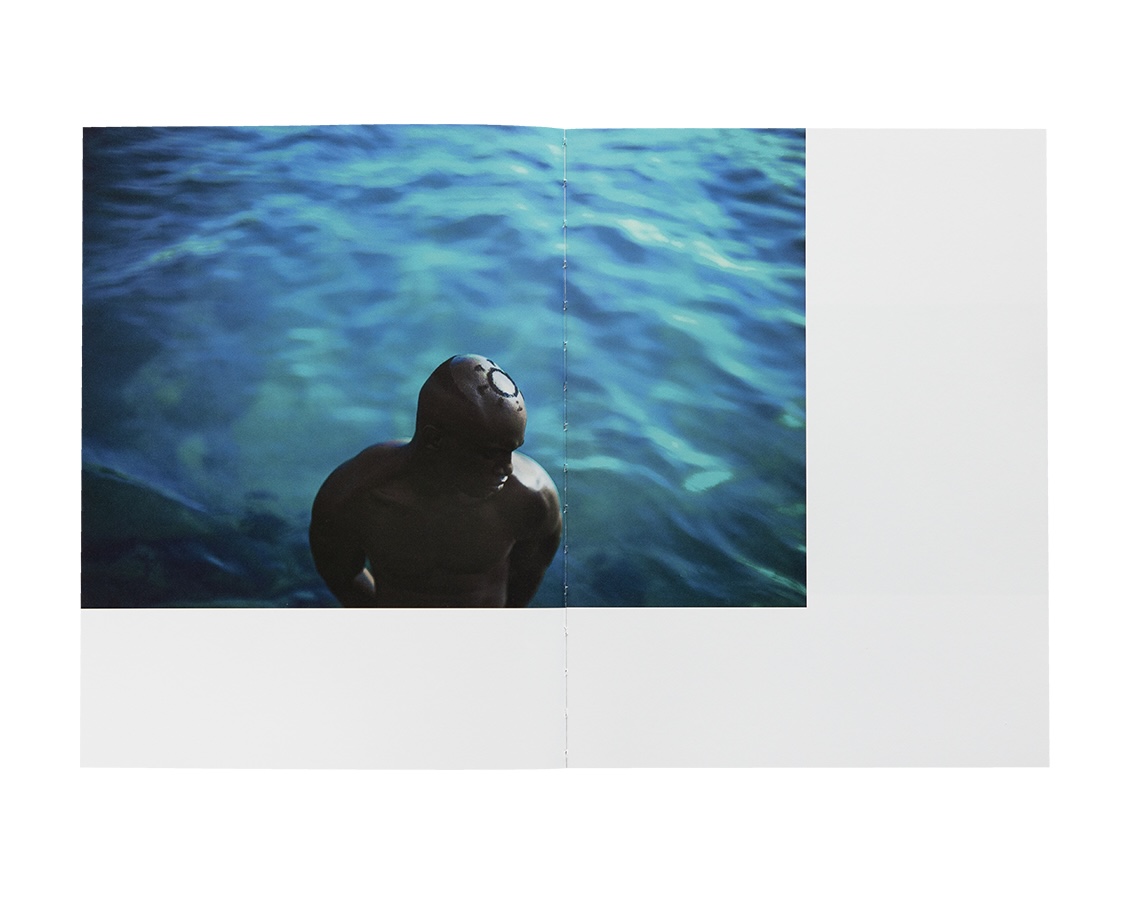
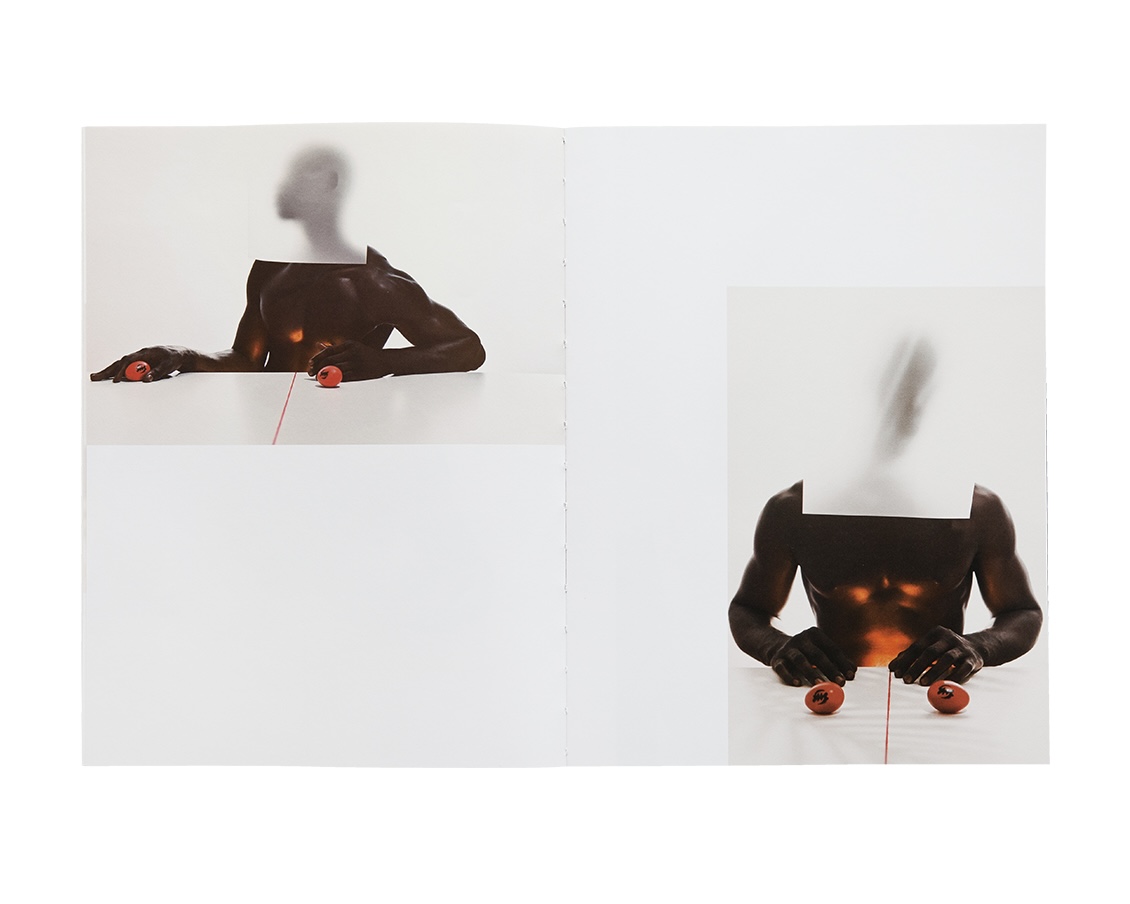
Excerpt:
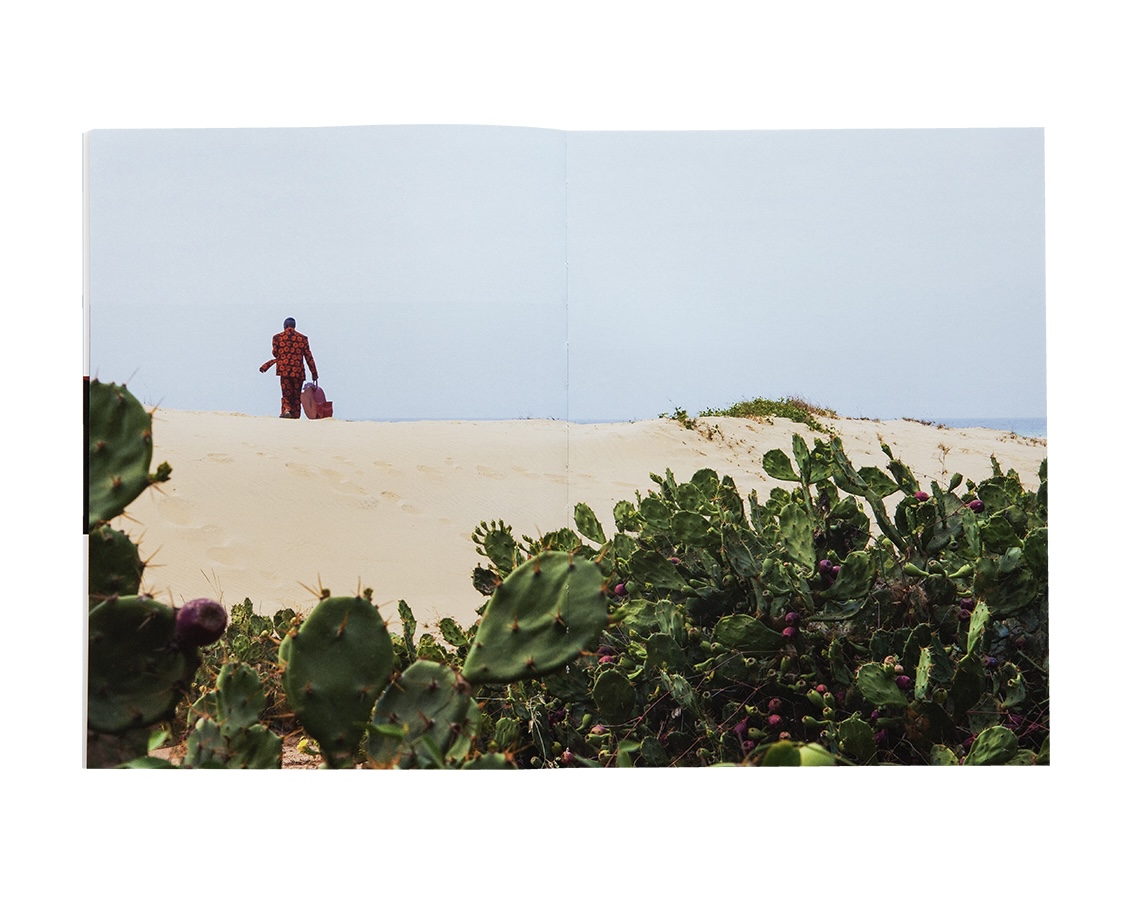
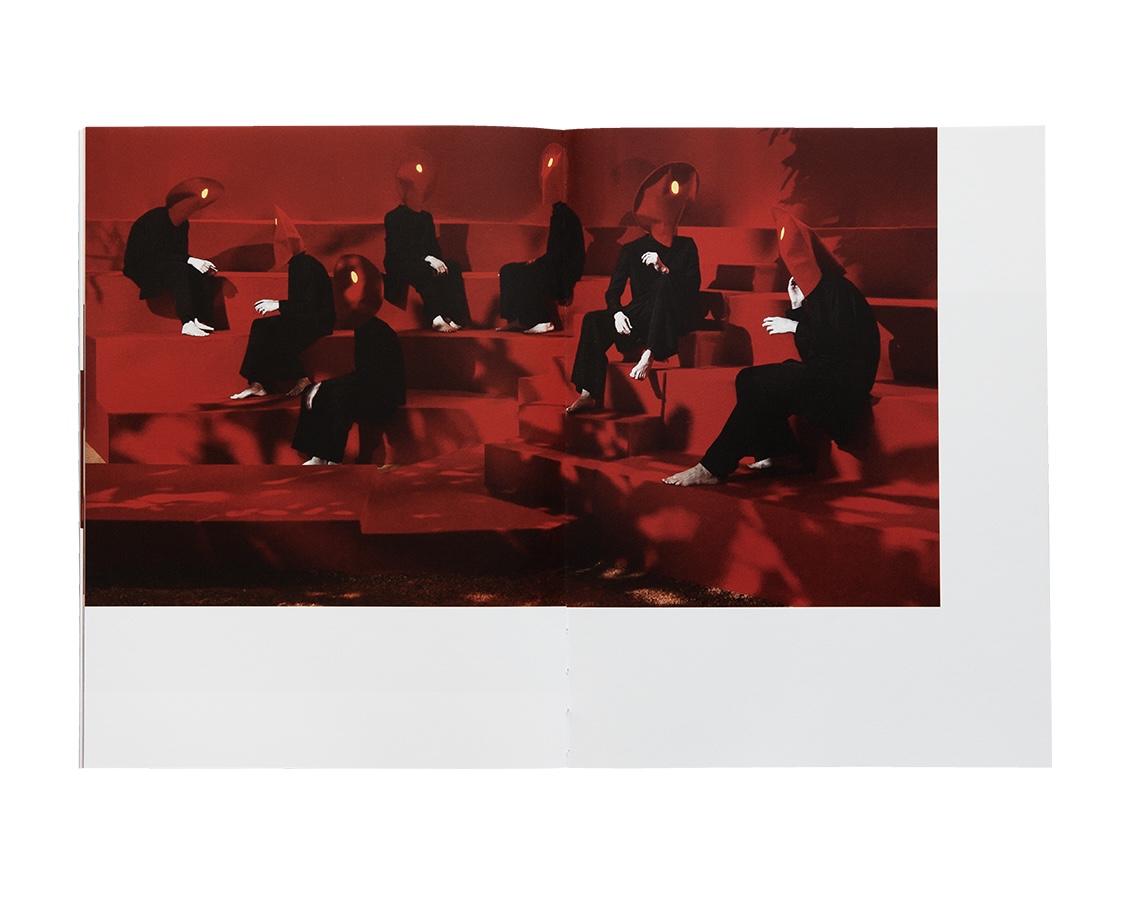
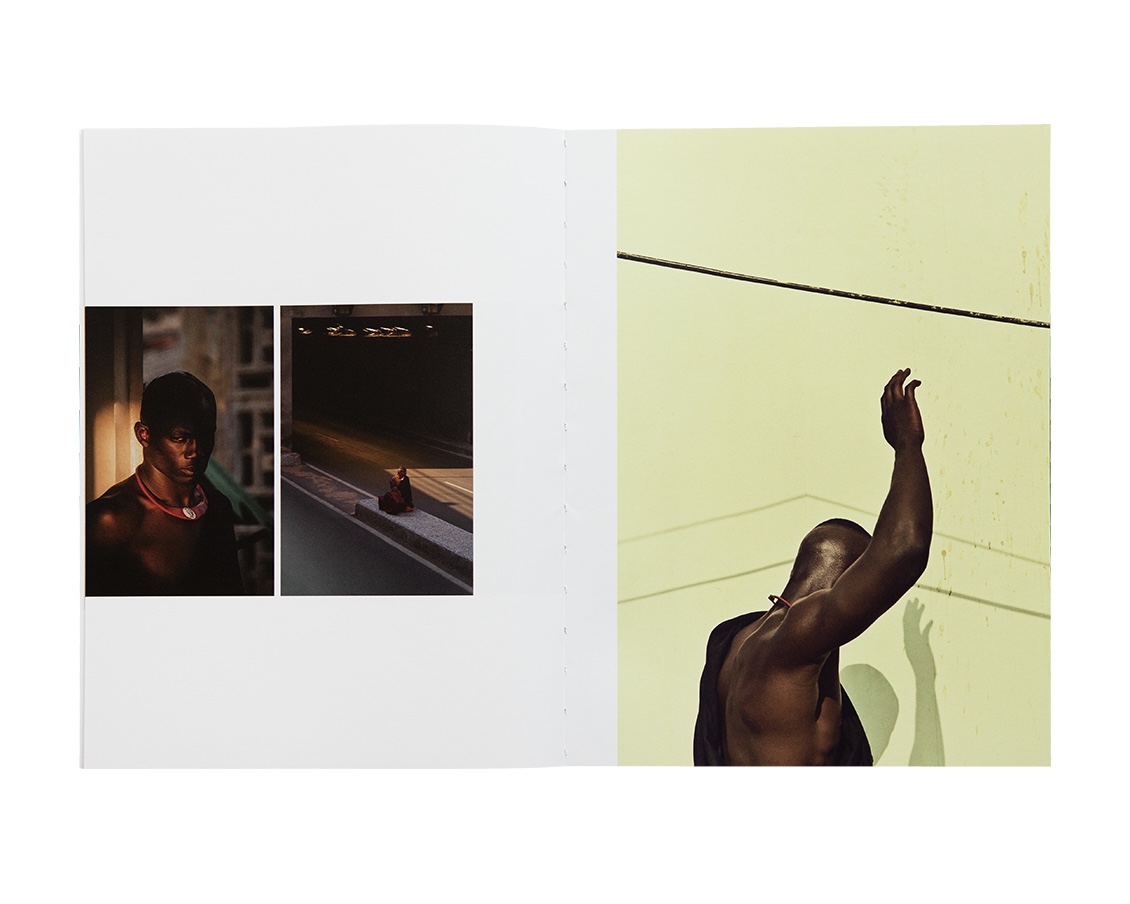
David: Dadi, I remember when I first came to visit you in Grand-Bassam, east of Abidjan. This was 2024. We walked and talked a lot about real geographies, and imaginary geographies that combine different places. We talked about the importance of memory, and how unreliable memory can be, with its slippages and gaps. We talked about photography and filmmaking being fragments that can be put together as a way to make sense of experience but also as a way to make new propositions, new experiences. We talked about image making as a hybrid space where reality and symbols co-exist. The more we talked, the more I felt the shape of your imagination, which is visually so strong and distinctive, and yet the ideas you explore and the stories you want to tell are on a very delicate edge of understanding. At least, this is how it seems to me. Is it like this for you?
Dadi: Indeed, my inner landscape is marked by the complex correlations between memory and geographies, the absurdity of time, its elusiveness and the absurdity of life itself. I have a strong emotional recall that anchors me in certain key atmospheres, which have nourished and continue to nourish my imagination and my perspective on the world. I’m constantly exploring this nostalgia, akin to the idea of saudade, a powerful, incandescent atmosphere. It’s so strong that I never stop wondering why, how and what it’s trying to teach me. I feel an immense romanticism about the melancholy it arouses in me. I know that all these feelings stem from experiences and a time-space that preceded my birth, and were amplified in my childhood through the stories, experiences and multiple influences I received. In Abidjan, where I grew up, I spent more time with my grandmother than with my parents, according to a tradition that is still very much alive. As oral memory is essential in the Ivorian context, I remember the stories told by my Malinké grandmother from the north of the country. Down there, culture is imbued with tales and epics that seek to awaken wisdom in children from an early age. Proverbs and metaphors of great depth and beauty.
When I think of figures like Soundiata Keita, Soumangourou Kanté, Osei Tutu, Touthankamon or Cleopatra, who fascinated me even as a child, I still don’t fully appreciate the extent to which I was nurtured by certain historical and mythological figures. History was my favorite subject at school, along with geography. Very early on, I developed a passion for ancient civilizations and the infinite geographies they could transport us to. All this built up my imagination, which became a parallel planet without borders, where I could travel without fees or visas. Thanks to the literary and digital tools available to me as a child, I could, from my parents’ house in Cocody Vallons, explore the streets of Lima, Tokyo or Oslo, sail the Nile or climb the Himalayas.
At that age, I had little interest in video games. I remember that we had access to very few channels on cable, but enough to allow me to see and appreciate African, French and world cinema. Sporadically, our parents would bring home cassettes, and later DVDs, of the latest American blockbusters that my brothers and I loved. For example, I must have watched “Coming to America” dozens of times. I loved the refinement, but also the idea of bridges between this sublimated Africa and the rest of the world, the refinement of our traditions in the face of Western modernity. Our parents force-fed us books, and I loved those on ancient Egypt.
As a young adult, I quickly felt the need to explore the world. I remember rushing to a travel agency to buy a plane ticket to Morocco on my first well paid photo assignment. I was so young and my mother was so worried. I visited Casablanca, Marrakech and its souks. I was impressed by the eclecticism of these cities and the great and beautiful differences between them. One of the most striking and emotional moments of my life was during an overnight trip to Accra when, for the first time, I set foot in Kumasi, in the heart of Ghana. I had the sensation of stepping back in time, of living through the apogee of the Ashanti Empire in an experience of unsettling realism. For a fragment of a second, I felt as if I were capturing the Africa of yesteryear.
There are also all these stories of migrations, of movements across spaces, experienced by family figures before and after independence. Then, between 2003 and 2004, my brother and I had to join my aunt in Mali to take refuge from the political crisis that was raging in Côte d’Ivoire. I was nine years old. It was the first time I was exposed to such an authentic culture—one to which I belonged by lineage and was finally discovering. People spoke Bambara, and traditional ceremonies played a significant role in daily life in Bamako. But with the language barrier, integration was slow, and there was a persistent feeling of displacement.
This experience allowed me to understand what exile might have meant for my father, who had already been living it for several years due to political reasons. It had been years since he had set foot on the land of his ancestors, to which he was so deeply attached. At that young age, I also became aware of what such an experience entails: the nostalgia for one’s homeland, the sense of loss, the worry, the uncertainty about when we could return, and what would become of our loved ones who had stayed behind.
During this period in Mali, we traveled extensively across the country and its cities. I remember days spent in Koulikoro, where we would go swimming in the Niger River with my aunt and cousins. At the same time, anxieties were rising over the crisis in Côte d’Ivoire. I imagined what was happening there. At the Belgo-Canadian school I attended in Bamako, one of our major concerns, in our childhood conversations, was the start of the war in Iraq, which felt so close because of its constant presence in the media. This conflict, in my eyes, revealed power dynamics between nations, in contrast to the Ivorian crisis, which was rooted in interethnic tensions and social demands deeply embedded in our historical context. I was already questioning these identity dynamics, the oppression and discrimination that some members of my family faced. Beyond that, I was also reflecting on how certain contexts inevitably push us toward an elsewhere.
All these experiences nourish my imagination, whether they stem from the circumstances of my childhood, historical contexts, or religious influences. Just as the physical body allows us to experience limited realities, the mind and imagination are boundless, eclectic, infinite. This is the space I cherish the most.
I perceive life as a living film in which we all take part, and photography as a powerful trace of these fragments of life. For example, I find it exceptional to be able to relive a moment from when I was an infant through family photo albums, despite the absence of these experiences in my conscious memory. That photograph radically connects me not only to my personal experience but also to that of my family. It also reveals the socio-cultural dynamics of that specific context. I would have no way of accessing that moment if it weren’t for this trace, this object (the photo) that is so radical in its essence.
Cinema, on the other hand, fascinates me because it calls upon our quality of presence. It immerses us in the present moment, through all the emotions a film can evoke. It allows us, collectively, to experience a reality—whether real or imagined. These two mediums connect us as human beings, but they can also connect us to ourselves in a way that is profoundly powerful.
Over time, my visual explorations have become a way for me to examine my countless influences, the impact of all these events on my personal trajectory, and our collective history across time. My practice is a space that attempts to decipher why LIFE exists and why it takes the forms it does—for Me, for Us, Here, Elsewhere, and across different eras.