Ken Russell, Teddy Girl, 1955
Harper's Bazaar Italia, May, 2026
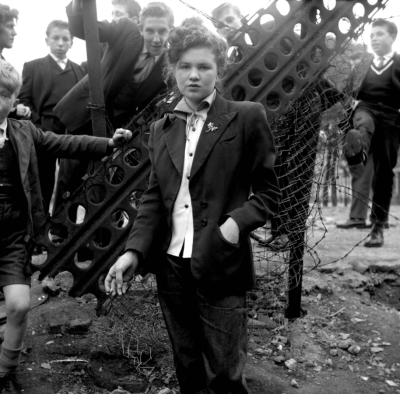
Ken Russell was best known as an iconoclastic film-maker, but he began with a still camera, aged twenty-three, in 1951. He was therefore slightly older than the Teddy Girls he photographed in January 1955. Born a little before or during the Second World War, and living through its hardships, these young people were among the first British ‘teenagers’. 1955 was also the year of James Dean, star of Rebel Without a Cause. British youth looked to American culture, but had its own problems and cultivated its own rebellions. The swagger and chic of the Teddy look was a rejection of the austere post-war years. Food had been rationed by the British government right up until 1954. London’s East End, a working-class area that had suffered l some of the worst bombing, offered little promise. These teenagers were leaving school aged fourteen or fifteen, with few career prospects and little continuity with their parents. Looking different was a great symbolic statement. The Teddies took their name from the high Edwardian clothing they reworked for their own, dandy look. The Edwardian era, roughly 1900 to 1914, was a moment of great style brought to a sudden end by the First World War. Teddy boys were photographed often, but the girls much less so. Russell was l interested in the additional subversion l going on here: these young women were re-tailoring the outfits of men. Their grandfathers. Here is fourteen year-old Jean Rayner, posing amid bomb rubble and twisted metalwork. From a landscape of scattered fragments, a new generation is emerging. Rayner puts herself forward, while the boys hang back. She is insouciant and bold, keen to impress her group and the photographer.
To take the shot, Russell looked straight down into the viewfinder of his twin-lens Rolleiflex, held at waist level. From that angle, Rayner seems imperious. That it was only for a moment does not matter. She gazes at the open aperture and the unknown audience beyond, with the look of studied boredom that soon became the essence of youthful, unimpressed cool. But a camera picks up all kinds of minor tremors. She is also vulnerable.
Adolescence is a perfect subject for photography. It mirrors so many of the tensions within the medium: the awkward fit between appearance and deeper meaning; the limbo between past and future; the anxiety of being misread; the moody silence and the wish to communicate; and the feeling that a moment could die right there, or last an eternity.
Italian:
Ken Russell è conosciuto soprattutto come regista iconoclasta, ma aveva iniziato con una macchina fotografica a 24 anni, nel 1951. Era di un decennio più grande delle Teddy Girl che ritrasse nel gennaio del 1955. Nate durante la Seconda guerra mondiale o negli anni appena precedenti e per questo cresciute tra tante difficoltà, furono tra le prime “teenager” della Gran Bretagna. Era l’anno di Gioventù bruciata, con James Dean: i giovani inglesi guardavano alla cultura americana, anche se avevano problemi tutti loro e coltivavano le proprie ribellioni. La spavalderia e l’eleganza dello stile Teddy rappresentavano un rifiuto dei tempi austeri del dopoguerra: il razionamento alimentare imposto dal governo era terminato solo nel 1954, l’East End di Londra, quartiere operaio che aveva subìto i bombardamenti peggiori, offriva poche prospettive. Questi adolescenti abbandonavano la scuola a 14 o 15 anni, con scarse prospettive di carriera e poca continuità con la vita dei genitori. Sembrare diversi era dunque una forte dichiarazione simbolica.
I Teddy Boy presero il nome da re Edoardo VII, soprannominato appunto Teddy, che aveva tenuto a battesimo un’era di grande ricercatezza stilistica inaugurata nel 1901, con la sua ascesa al trono, e interrotta bruscamente dal primo conflitto mondiale: il loro stile consisteva in una rielaborazione dandy del suo abbigliamento elegante. Ma se i ragazzi di quella sottocultura erano fotografati spesso, le ragazze lo erano molto meno. Russell era interessato perciò all’ulteriore sovversione in atto: queste giovani donne stavano riadattando abiti maschili. Dei loro nonni.
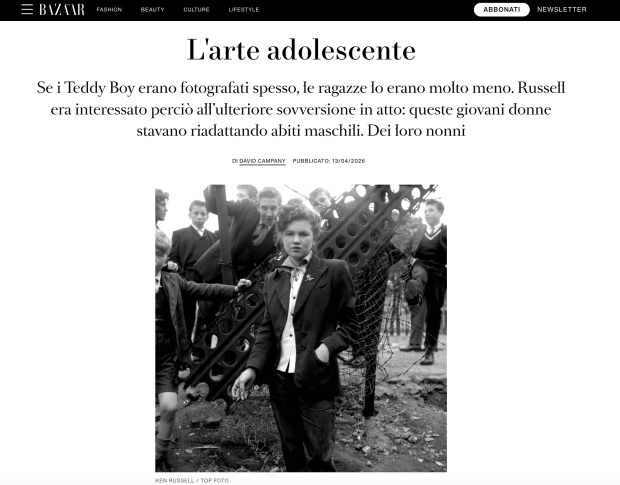
Qui in basso vediamo Jean Rayner, quattordicenne, che posa tra macerie dei bombardamenti e ferri contorti. Da un paesaggio di frammenti dispersi emerge una nuova generazione. Lei è in primo piano, mentre i ragazzi restano sullo sfondo. Si mostra audace e noncurante, vuole impressionare il suo gruppo e il fotografo. Per scattare, Russell tenne all’altezza della vita la sua Rolleiflex, guardando dritto nel mirino. Da quell’angolazione, Rayner appare imperiosa, non importa se solo per un momento. Fissa l’obiettivo e gli sconosciuti spettatori dell’immagine con quell’espressione di studiata noia che presto sarebbe diventata l’essenza della ribellione giovanile. È distaccata, imperturbabile, ma una macchina fotografica coglie ogni minimo tremito: la ragazza è anche vulnerabile.
L’adolescenza è un soggetto perfetto per la fotografia. Rispecchia molte delle tensioni proprie del medium: il difficile adattamento tra apparenza e significato profondo; la sospensione tra passato e futuro; l’ansia di essere fraintesi; il silenzio ombroso e il desiderio di comunicare. La sensazione che un momento possa morire subito, o durare in eterno.