Private Eyes
Aperture magazine n.263, Summer, 2026

Private Eyes
David Campany
What comes to mind when you think of a detective? A loner, doggedly solving a crime with cold logic and brilliant intuition? Such figures have long been familiar in novels, cartoon strips, and cinema, almost to the point of cliché. There is no narrative more archetypal than the whodunit, with a secret to be discovered and, in the process, human character to be revealed. Indeed, the genre is so well-worn that what has really mattered for the better part of a century are the innovations in the form. Think of the almost metaphysical games played with plot structure in the detective novels of Agatha Christie and Raymond Chandler; the camerawork entirely from the detective’s point of view in Robert Montgomery’s
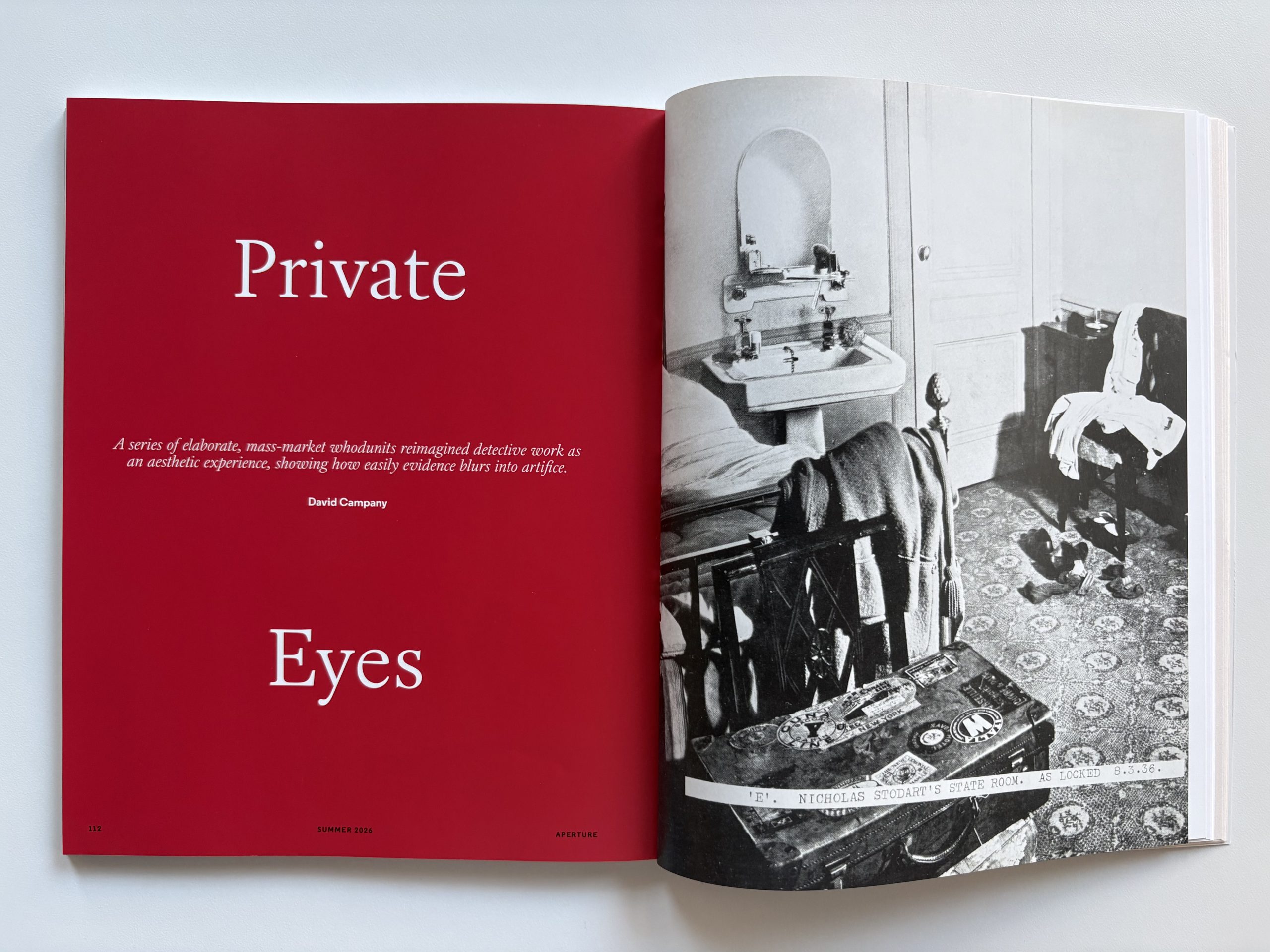
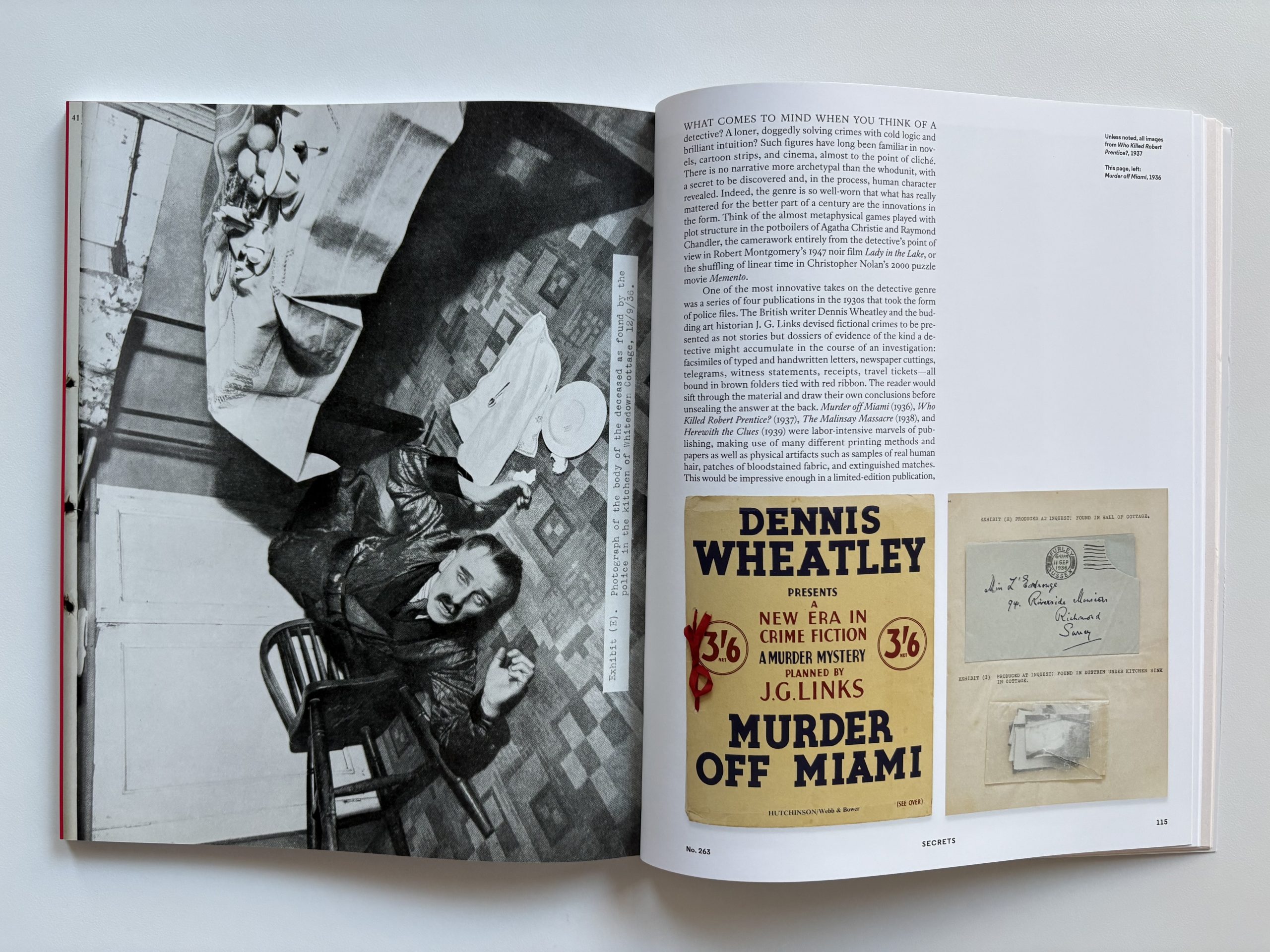
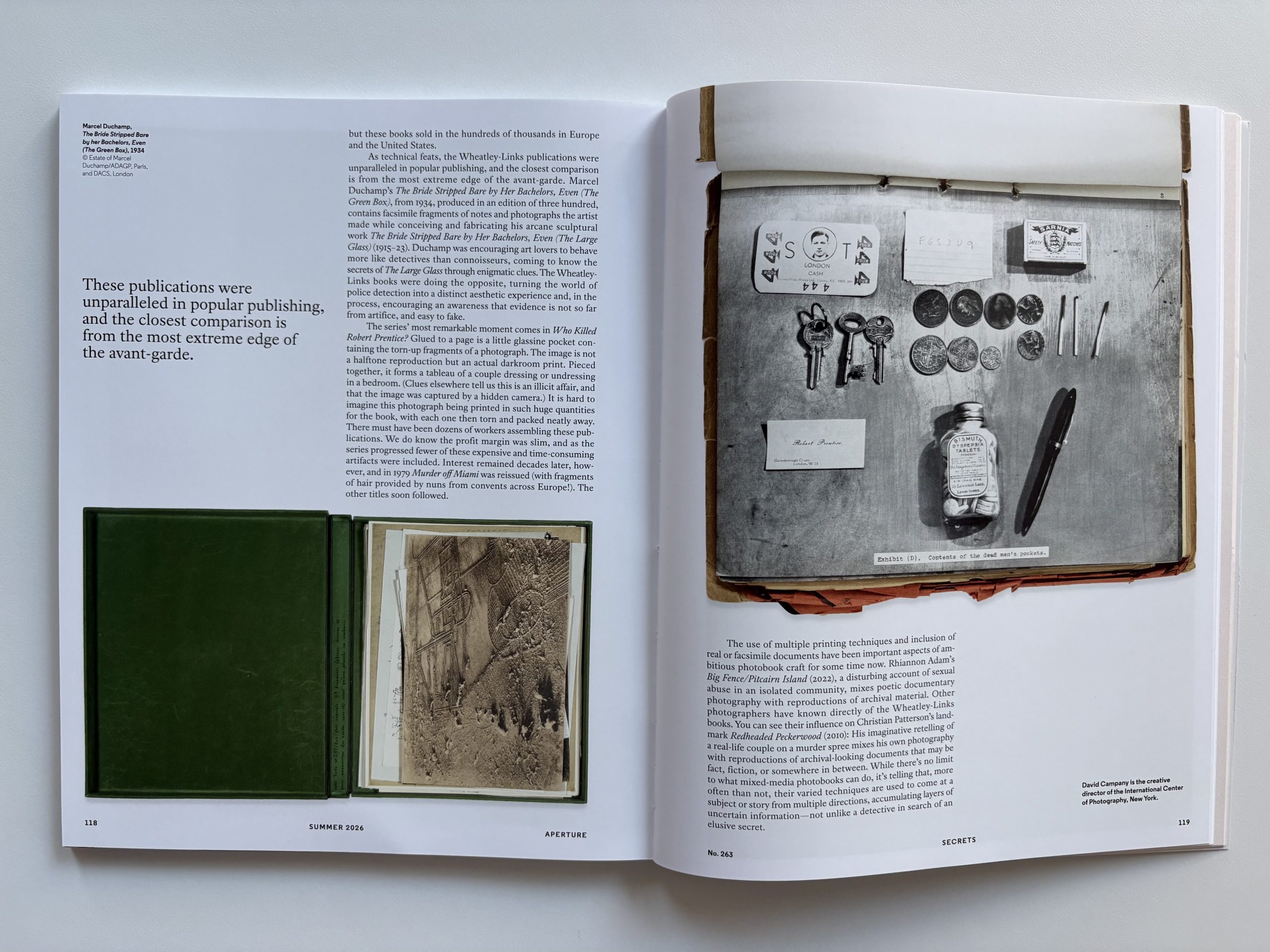
One of the most innovative takes on the detective genre was a series of four publications in the 1930s that took the form of police files. The British writer Dennis Wheatley and the budding art historian J. G. Links devised fictional crimes to be presented not as stories but as dossiers of evidence of the kind a detective might accumulate in the course of an investigation: facsimiles of typed and handwritten letters, newspaper cuttings, telegrams, witness statements, receipts, travel tickets—all bound in brown folders tied with red ribbon. The reader could sift through the material and draw their own conclusions before unsealing the answer at the back. Murder off Miami (1936), Who Killed Robert Prentice? (1937), The Malinsay Massacre (1938), and Herewith the Clues (1939) were labor-intensive marvels of publishing, making use of many different printing methods and papers, as well as physical artifacts such as samples of real human hair, patches of bloodstained fabric, and extinguished matches. This would be impressive enough in a limited-edition publication, but these books sold in the hundreds of thousands in Europe and the United States. Appreciating the sheer ambition of these mass-produced objects was at least as appealing as pretending to be the detective.
As technical feats, the Wheatley-Links publications were unparalleled in popular publishing, and the closest comparison is from the most extreme edge of the avant-garde. Marcel Duchamp’s The Bride Stripped Bare by Her Bachelors, Even (Green Box), from 1934, produced in an edition of three hundred, contains facsimile fragments of notes and photographs the artist made while conceiving and fabricating his arcane sculptural work The Bride Stripped Bare by Her Bachelors, Even (The Large Glass) (1915–23). Duchamp was encouraging art lovers to behave more like detectives than connoisseurs, coming to know the secrets of The Large Glass through enigmatic clues. The Wheatley-Links books were doing the opposite, turning the world of police detection into a distinct aesthetic experience and, in the process, encouraging an awareness that evidence is not so far from artifice, and easy to fake.
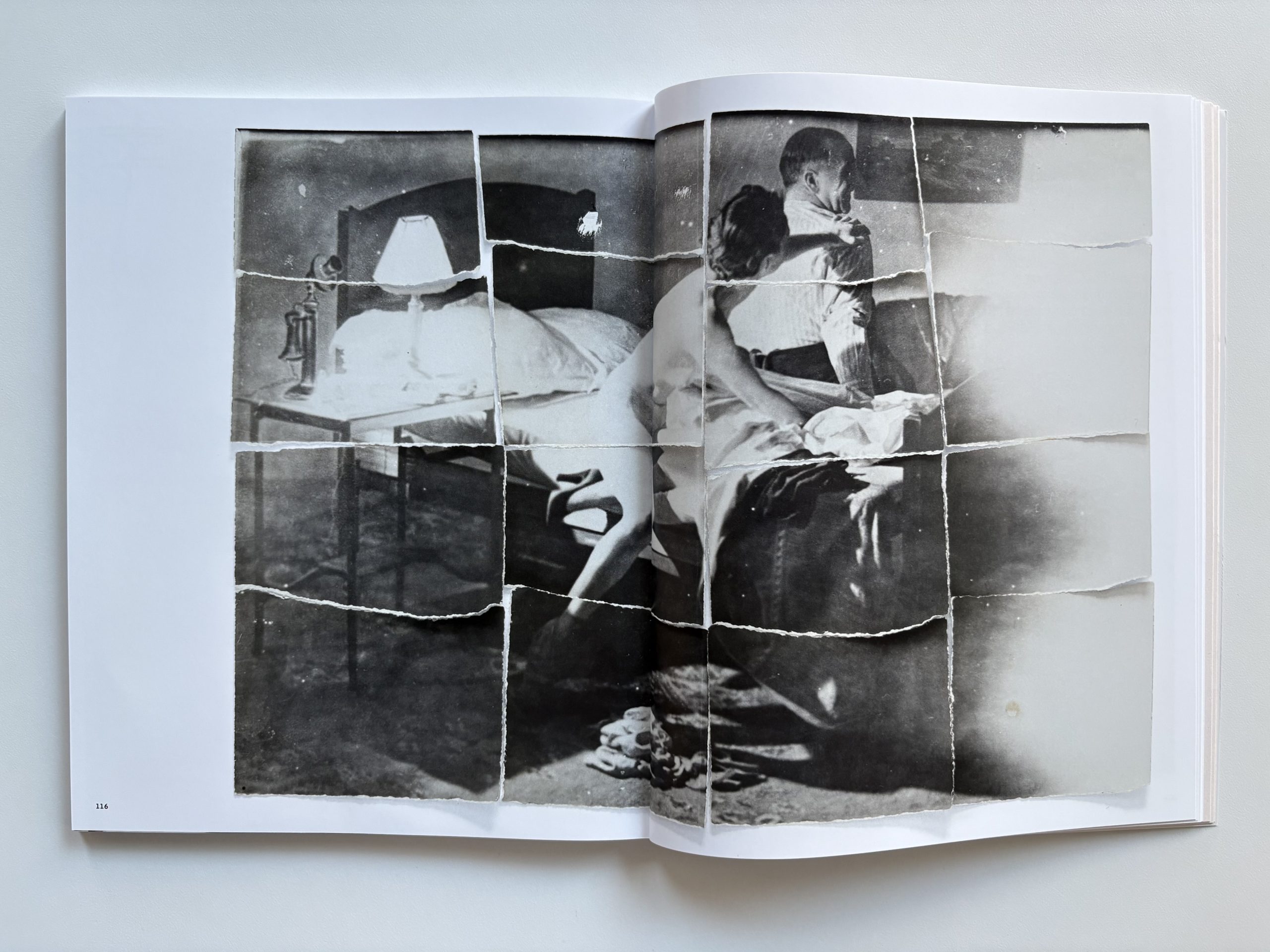
The series’ most remarkable moment comes in Who Killed Robert Prentice? Glued to a page is a little glassine pocket containing the torn-up fragments of a photograph. The image is not a halftone reproduction but an actual darkroom print. Pieced together, it forms a tableau of a couple dressing or undressing in a bedroom. (Clues elsewhere tell us this is an illicit affair, with the photograph taken by a hidden camera.) It is hard to imagine this photograph being printed in such huge quantities for the book, with each one then torn and packed neatly away. There must have been dozens of workers assembling these publications. We do know the profit margin was slim, and as the series progressed there were fewer of these expensive and time-consuming artifacts included in the books. Interest remained decades later, however, and in 1979, Murder of Miami was reissued (with fragments of hair provided by nuns from convents across Europe!). The other titles soon followed.
Using multiple printing techniques and including real or facsimile documents have been important aspects of ambitious photobook craft for a while now. For example, Rhiannon Adam’s Big Fence/Pitcairn Island (2022), a disturbing account of sexual abuse in an isolated community, mixes poetic documentary photography with reproductions of archival material. Other photographers have known directly of the Wheatley-Links books. You can see the influence on Christian Patterson’s landmark Redheaded Peckerwood (2010). His imaginative retelling of a real-life couple on a murder spree mixes his own photography with reproductions of archival-looking documents that may be fact, fiction, or somewhere in between. While there’s no limit to what mixed-media photobooks can do, it’s telling that more often than not the varied techniques are used to come at a subject or story from multiple directions, accumulating layers of uneven information, not unlike a detective in search of an elusive secret.