Deer
Tanya Marcuse, Deer, Roman Nvmerals / MW Editions, 2026
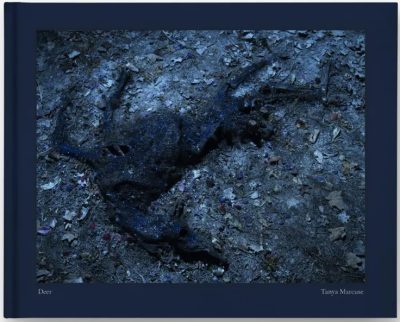
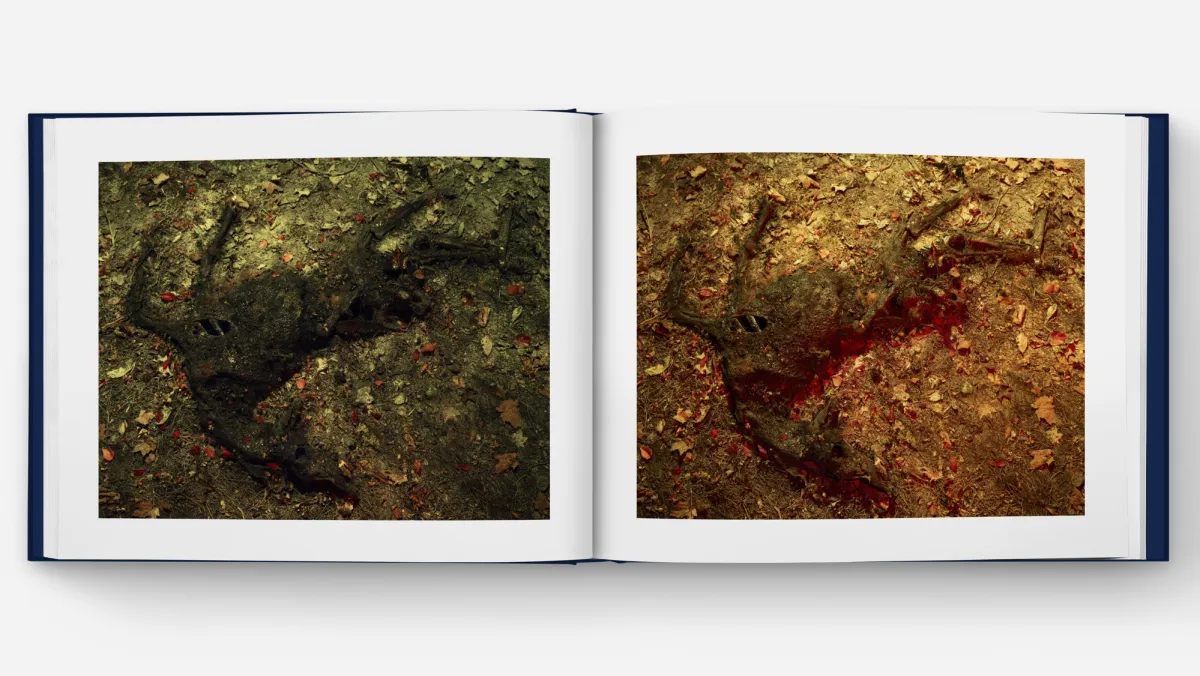
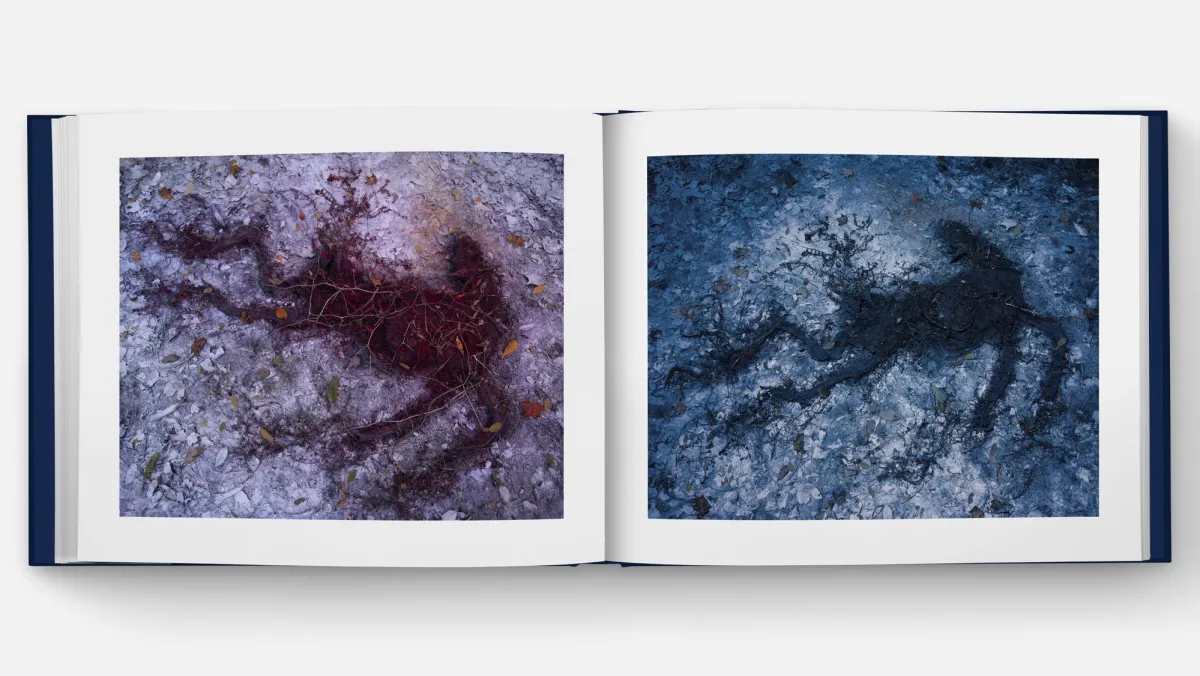
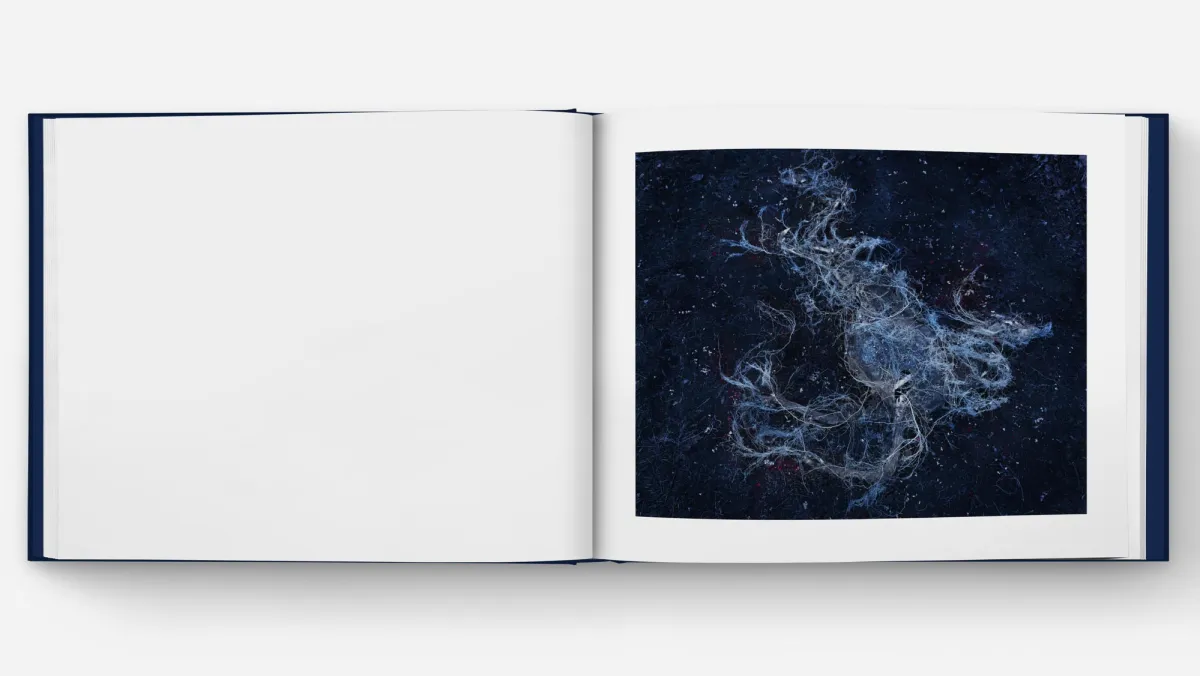
On September 8, 2023, photographer Tanya Marcuse photographed a deer that died in the woods. She returned repeatedly to photograph the deer until its body disappeared nineteen months later, in April 2025. What unfolds in these photographs is not a straightforward chronicle of decomposition, but a metaphysical transformation, as the deer seems to unravel into the universe.
Through embellishments that verge on the alchemical, including the use of fire, Marcuse’s photographs transform the deer’s body into a portal from the terrestrial to the celestial, from matter to myth. Tanya Marcuse’s work investigates cycles of life and decay, and photography’s capacity to probe what lies beyond empirical fact. Deer extends this inquiry to its most distilled form. At once lavish and unflinching, these sixteen images hover between fantasy and fact, evoking an enigmatic hybrid of Ana Mendieta’s ritualistic earthworks and the dense symbolism of medieval tapestries.
David Campany writes in his essay, “Any place photographed becomes a stage, if only because it is in the nature of a camera to dramatize, turning what is photographed, and even the very place itself, into signs. Enigmatic signs, but signs nonetheless. To photograph a corpse in its resting place, then, is to stage its stage, and to image its image.”
Deer features a special insert composed of fragments of Marcuse’s own writings, written in the second person and addressed directly to the deer.
Clothbound with tipped-on image;
10 x 12″ — 36 pages; 16 plates;
Letterpress insert and an accompanying film.
Designed by Jacob Romm;
Printed by Trifolio, S.r.l.
ISBN: 979-8-9879085-2-5
Co-published with MW Editions

The image does not, at first glance, resemble the corpse, but the cadaver’s strangeness is perhaps also that of the image.
Maurice Blanchot
Let us imagine the creature had been resting, and was never again to summon itself to its feet. A place to rest became the final place.
Could it be that in death there is a chance to know an animal in at least something of those ways that eluded us so disarmingly when it lived? Or is the corpse so unknowable that, as Maurice Blanchot suggested, it appears to us in all its strangeness as if it were an image, the mortified flesh resembling life, the way a depiction might resemble life? Perhaps both. Perhaps it is the enigma of life ending in death – the ultimate and only shared fate – that offers the outline of some kind of imaginary kinship. Living things live, and die. A corpse in its resting place becomes the stage of its own enigma, and ours. Maybe that is enough.
Any place photographed becomes a stage, if only because it is in the nature of a camera dramatize, turning what is photographed, and even the very place itself, into signs. Enigmatic signs, but signs nonetheless. To photograph a corpse in its resting place, then, is to stage its stage, and to image its image.
It is to such a stage and such an image that Tanya Marcuse returned, over nineteen months. Each return was to a new set of material facts. The transforming condition of the deer’s body. Different air. Different light. Different temperature. Different thoughts. But hers was not a documentary project, or not only. To the facts, she added. Light, pieces of nature, even fire. Embellishments. And to the images she also returned, pushing what was first captured into other pictorial realms. All of this, a ritual of sorts. Private, but offered at the end.
A corpse can never be only a fact of the now. It is an afterword, a coda to the life that was. Encountering a corpse, it is already too late. One morning in 1937, the artist Edward Weston came across the body of a dead man in the Colorado Desert. We know this because Weston photographed him (I was going to say he photographed ‘it’ but that seems cruel, although it is not quite accurate to say Weston photographed ‘him’, for the body was by then a likeness of the living). It is far too easy to think there is something gruesome or disrespectful in the desire to photograph such a situation, as if the dead factuality of the lifeless is merely and cruelly doubled by the dead factuality of the camera’s machinic image. But even crime scene and forensic photographs cannot help but be marked by a degree of solemnity, even caress, for we are not as cold as our cameras. And it is into that space between cold fact and solemn caress that such photographs can take a viewer. It is not an abyss, but it is a suspension.
Tanya Marcuse dwelt in such a suspension for a long time, accompanying it towards disappearance and closure. Her photographs mark that accompaniment. They also commemorate it, celebrate it, dance it, estrange it, mourn it, contemplate it, and ultimately let it go. Do they fictionalise the suspension? No, not exactly, but they do fantasize it. And who has not fantasized the dead facts in the process of mourning? Is that not in part what we do in the face of the unknown?
David Campany