Robert Frank and The Americans
Espacio Fundaciòn Telefònica, Madrid, 29 May - 1 November, 2026

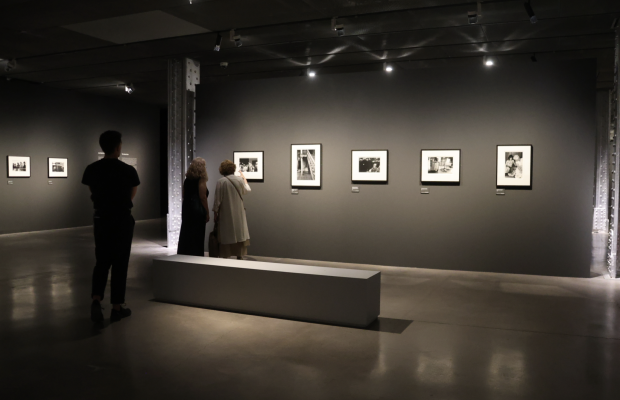
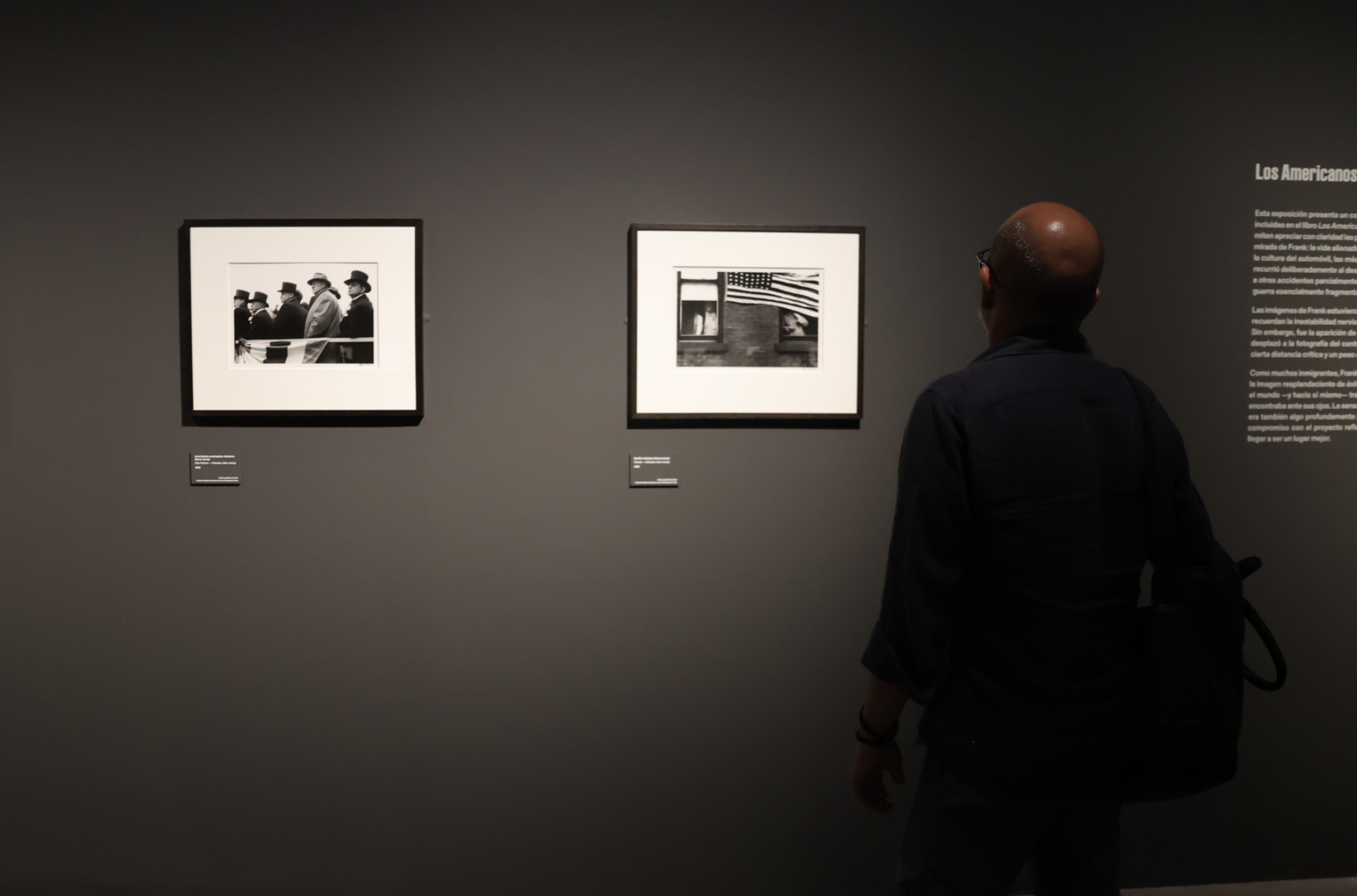
What place does Robert Frank occupy in the history of photography? Is there a before and after ?
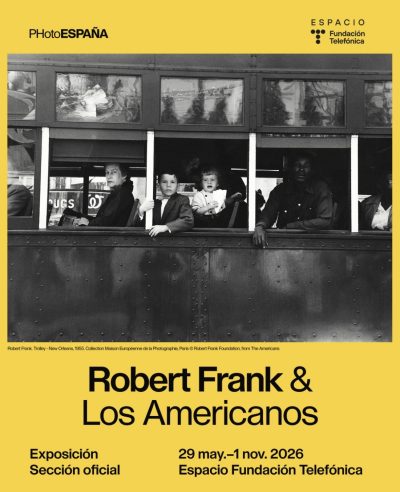
In 1958/59, The Americans was deeply divisive. It broke with the ideals of what ‘good photography’ was supposed to look like. Off-kilter framing, blur, grain, informality. More importantly, it broke with the idea that great art should be separate from politics and social commentary. Arriving from Switzerland with high hopes about the ‘American dream’, Frank was soon disappointed by the USA’s obsessions of money, celebrity, and consumerism, and he was shocked at the depth of the racism.
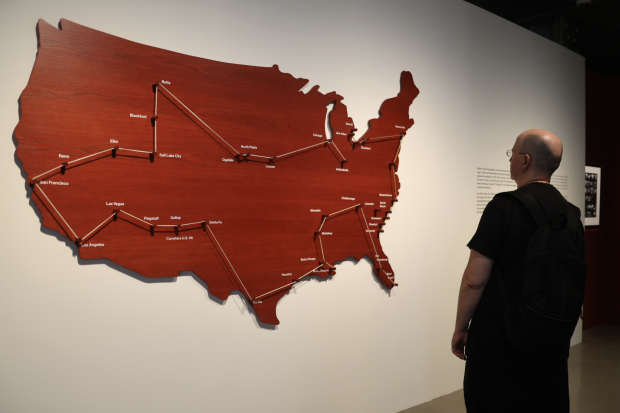
By the end of the 1960s, the small world of photography had come to recognise the importance of Frank’s project. This led a lot of photographers to try to work in his manner, while for others The Americans could not be repeated or imitated. Either way, Frank had indicated that the extended ‘road trip’ could be a fruitful way to come to know and picture the country.
By the 2000s, the USA had begun to see the 1950s less in terms of happy consumerism and more as an era of anxiety, paranoia, and entrenched inequality. Frank’s The Americans began to shift in the popular imagination from a counter-cultural statement to something more like an official record of a divided and troubled country.
Why are his images so symbolic/representative?
Throughout the project certain motifs repeat. The ‘stars and stripes’ flag. People somehow alone in crowds. Cars. Screens. These were already visual cues in American culture, but Frank had recoded them to feel fraught and worrisome rather than heroic or celebratory. But he did so as much with poetry as polemic.
What distinguishes his work from that of other photographers of the time?
Not since Frank’s mentor Walker Evans published American Photographs in 1938 had a photographer attempted anything like a ‘national project’ in the USA. It was risky, almost impossible and was bound to lead to criticism. There’s an extraordinary bravery in The Americans, a willingness to face unpleasant truths while finding a way to be hopeful about the nation, and empathetic with people.
What did the book The Americans represent for him?
Frank worked with intense dedication, staying alert and reactive to the world around him for a long period. This takes its toll on the human nervous system. When it was done, Frank knew it had changed him and he wouldn’t be able to work that way again. His statement about the nation had been made, for good or bad. Rather than looking outward on the road, he looked inward to home and family. He continued to photograph, but with less intensity and turned his attention to filmmaking.
Robert Frank was Swiss—an immigrant, an outsider. Did that shape his perspective when portraying America from a point of view that no American had?
Today, photographers, filmmakers and writers are encouraged to start with what they know. Their own milieu, their own experience. But great work can emerge from being out of one’s comfort zone. In 1957, just before the publication of The Americans, Frank wrote:
With these photographs, I have attempted to show a cross-section of the American population. My effort was to express it simply and without confusion. The view is personal and, therefore, various facets of American life and society have been ignored. […] I have been frequently accused of deliberately twisting subject matter to my point of view. Opinion often consists of a kind of criticism. But criticism can come out of love. It is important to see what is invisible to others. Perhaps the look of hope or the look of sadness. Also, it is always the instantaneous reaction to oneself that produces a photograph.
What is it about a photograph taken 70 years ago that can still affect you as much as one taken today?
No doubt The Americans is absolutely of its time in North American history, in art history, and in Robert Frank’s own creative history. Even so, it continues to resonate profoundly with new audiences and old. And since there is no time travel, there must be something beyond all the period detail that still feels contemporary, that speaks to us now, in our moment. That ‘something’ is partly to do with The Americans being art of the very highest standard. Such work is never confined to its original moment. It is also to do with the bitter feeling that the USA really has not made the progress it could have, should have. It might even be slipping backwards. Decades on, looking at these photographs can still feel like an instantaneous reaction to ourselves.